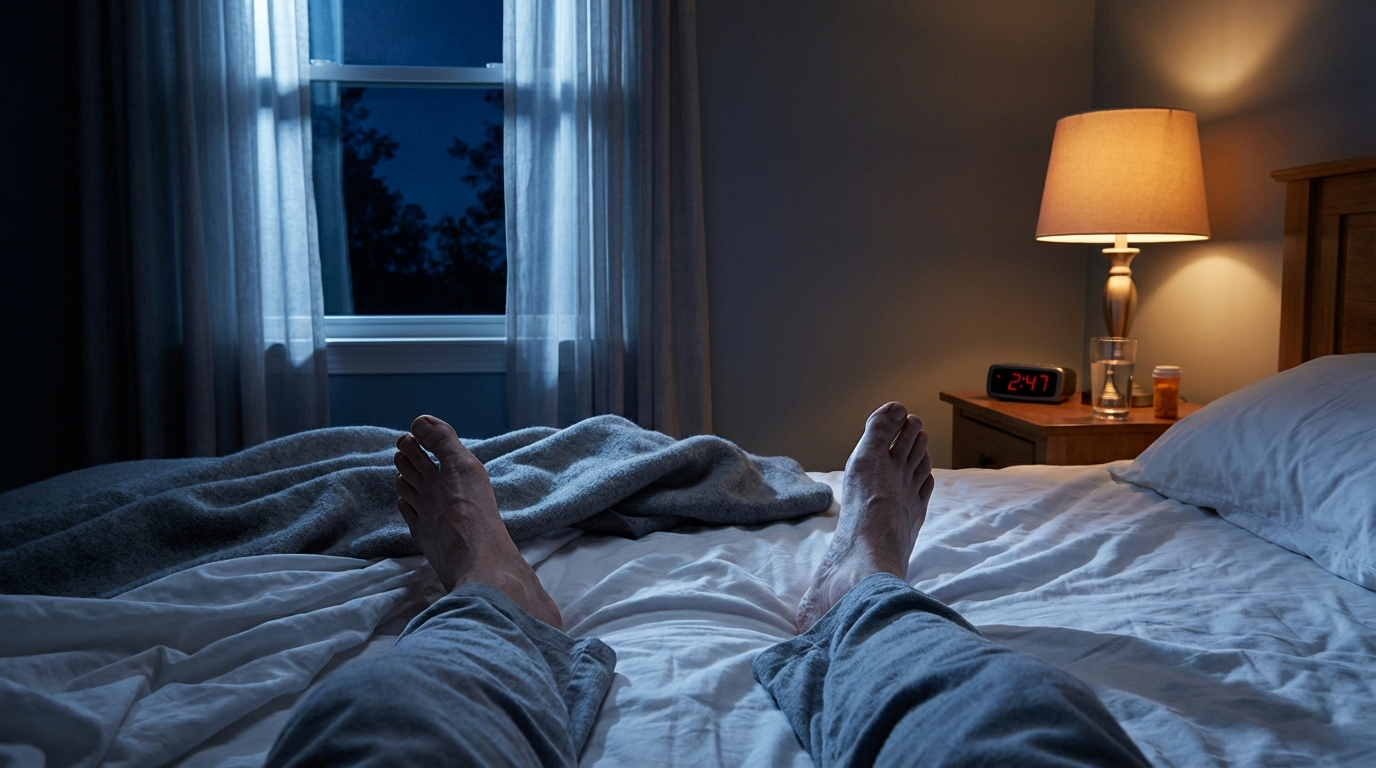
The all-too-familiar 2 AM scenario for those living with neuropathy — feet uncovered, sleep impossible.
It's 2:47 AM and you're staring at the ceiling again.
Your feet are on fire. Or they're tingling so intensely it feels like a thousand tiny needles are going to work on your toes. Or there's that deep, throbbing ache that pulses up through your calves and makes it impossible to find a comfortable position.
You've tried everything. Kicked off the covers because even the weight of a sheet is too much. Put a pillow between your legs. Gotten up to walk around. Nothing helps, or at least not for long.
If this sounds like your nights, I want you to know something: you are not imagining it, and you are not alone.
Neuropathy pain genuinely does get worse at night for many people who have it. There are some likely reasons for this — and once you understand them, you can start fighting back.
I spent nearly two years dreading bedtime before I figured out what was happening and what actually helped. Let me share what I've learned.
That's not bad sleep hygiene and it isn't a low pain threshold. It's a known pattern in peripheral neuropathy — one with possible causes you can name, and most of them have something you can do about them.
Why Does Neuropathy Hurt More at Night?
It seems cruel, doesn't it? All day you manage. You push through. Then the moment you lie down and try to rest, the pain cranks up to ten.
There are several reasons this happens, and usually it's a combination of them:
1. Your brain has fewer distractions
During the day, your brain is processing a flood of information — conversations, visual input, tasks, decisions. All that activity essentially competes with pain signals for your brain's attention.
At night, when you're lying still in a quiet, dark room, there's nothing else for your brain to focus on. Those nerve signals that were running in the background all day suddenly have center stage. The pain didn't necessarily get worse — your awareness of it did.
This isn't “all in your head.” With the day's noise gone, there's simply more room to notice the pain, so you feel more.
Research Says
Fewer distractions may be part of why neuropathy feels worse at night. During the day, sounds, movement and everything around you pull some of your attention away from pain, and studies show pain feels less intense when your mind is on something else. Once you're in bed with the lights out, those nerve signals get more of your attention. This is not imaginary, and it's not “all in your head.”
2. Body temperature drops
Your core body temperature naturally decreases at night as part of your circadian rhythm. Damaged nerves can be sensitive to temperature, but no one has shown that this nightly dip adds to nerve pain.
3. Cortisol levels fall
Cortisol — your body's natural anti-inflammatory hormone — follows a daily cycle. It peaks in the morning and drops to its lowest point around midnight.
Less cortisol means less natural inflammation control. If inflammation is part of your nerve pain, nighttime may be when your body's own defense against it is at its lowest.
4. Blood flow changes when you lie down
When you're upright and moving during the day, gravity and muscle contractions keep blood flowing to your extremities. When you lie down, that circulation changes, and your feet often warm up as your body lets off heat. What that means for neuropathy pain, if anything, isn't clear yet.
5. Lying still can make nerve signals stand out more
Gentle, regular movement throughout the day creates a mild stimulation that can actually modulate pain signals. It's like background music that keeps the nervous system in a balanced state. When you stop moving and lie still, that modulation disappears, and the nerve signals can come through more strongly.
Best Sleeping Positions for Neuropathy Pain
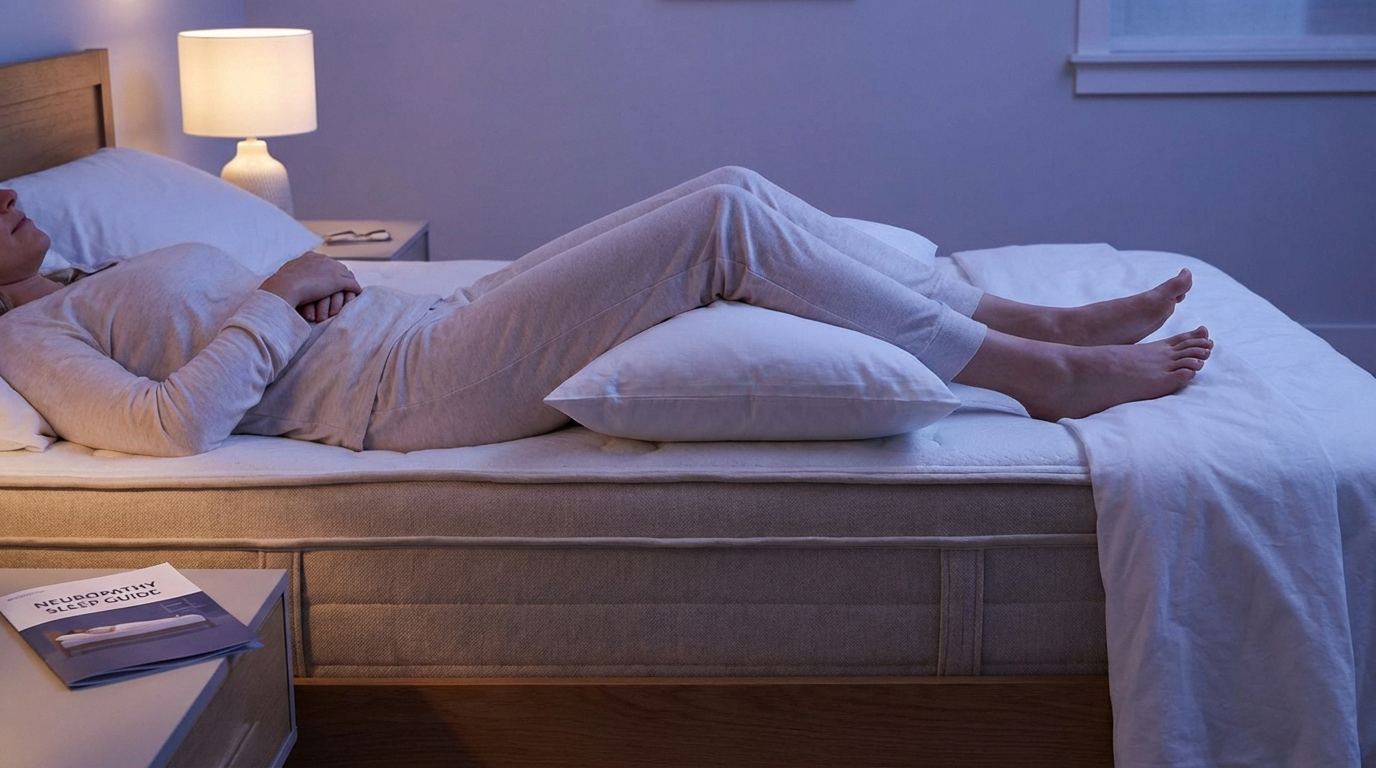
I'll be honest — there's no magic position that eliminates neuropathy pain at night. But some positions are significantly better than others:
On your back with a pillow under your knees: This reduces pressure on the lower spine and can improve circulation to your legs. Keep your feet slightly elevated — even a few inches can help.
On your side with a pillow between your knees: This keeps your spine aligned and prevents your legs from pressing together, which can aggravate sensitive nerves. If your feet are the main issue, try letting your top foot hang slightly off the pillow so it's not compressed.
On your stomach: If it leaves your feet or ankles feeling worse, try a different position.
Keep your feet uncovered or loosely covered. For many of us, even the weight of a blanket is too much. I use a lightweight sheet and keep my feet poking out the end. You can also use a bed cradle or hoop — it's a simple frame that holds the covers off your feet. It sounds like a fussy little thing to buy. It isn't.
7 Ways to Reduce Nighttime Neuropathy Pain
After years of trial and error — both my own and from listening to hundreds of people in my support group — here are the strategies that actually help:
1. Take a warm foot soak before bed
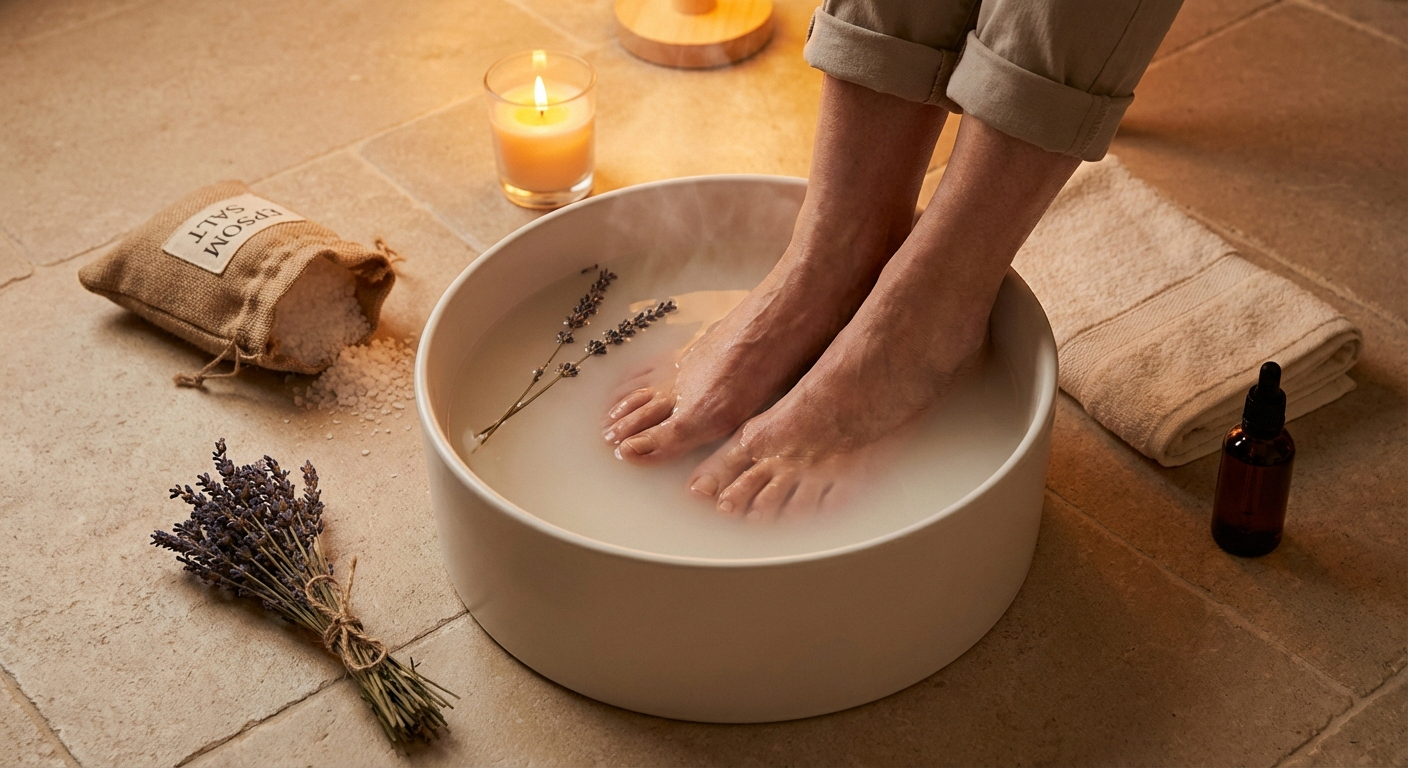
This is my nightly ritual and I genuinely look forward to it. Warm (not hot — damaged nerves can't always tell the difference) water with Epsom salts for 15-20 minutes before bed.
Half of it is the warmth — heat gets circulation moving in feet that have been cold and complaining all evening. The other half is the ritual. My body has learned by now that the basin coming out means sleep is next, and that expectation has become worth about as much to me as the soak itself. Some nights it takes the burning down a couple of notches. Some nights it doesn't touch the pain at all and I do it anyway, because sitting still with my feet in warm water is a decent way to end a hard day.
A few drops of lavender essential oil adds a calming element. I wrote a whole article on neuropathy foot soak recipes if you want more options.
Safety First
If you have significant numbness in your feet, always test the water temperature with your elbow or a thermometer before soaking. Burns are a serious risk when you can't accurately feel heat. Keep the water between 90°F and 95°F. When in doubt, cooler is safer.
2. Apply a topical cream 30 minutes before bed
Some people use topical creams with lidocaine or menthol for localized relief at bedtime, putting them on about 30 minutes before they lie down.
Capsaicin creams are a different story. The low-strength ones sold over the counter don't seem to work any better than a plain cream, and they often irritate the skin.
3. Gentle stretching routine
Five to ten minutes of gentle stretching before bed can make a surprising difference. Focus on:
- Calf stretches (standing or seated)
- Ankle circles — 10 in each direction
- Toe flexion and extension
- Gentle hamstring stretches
The stretching improves blood flow, reduces muscle tension that can compress nerves, and provides that gentle sensory input that helps modulate pain signals.
4. Support your nerves from the inside
What you take in the evening matters. Here are the three I keep coming back to:
- Magnesium glycinate — if you try it, keep supplements at or under 350 mg a day
- Alpha lipoic acid — a widely used antioxidant, though the best long-term studies say it probably does little or nothing for symptoms
- B vitamins — a deficiency here is one of the causes of neuropathy worth finding and correcting
I've covered the research on these in my supplements guide, but an evening dose of magnesium is one change worth asking your doctor about.
5. Control your sleep environment
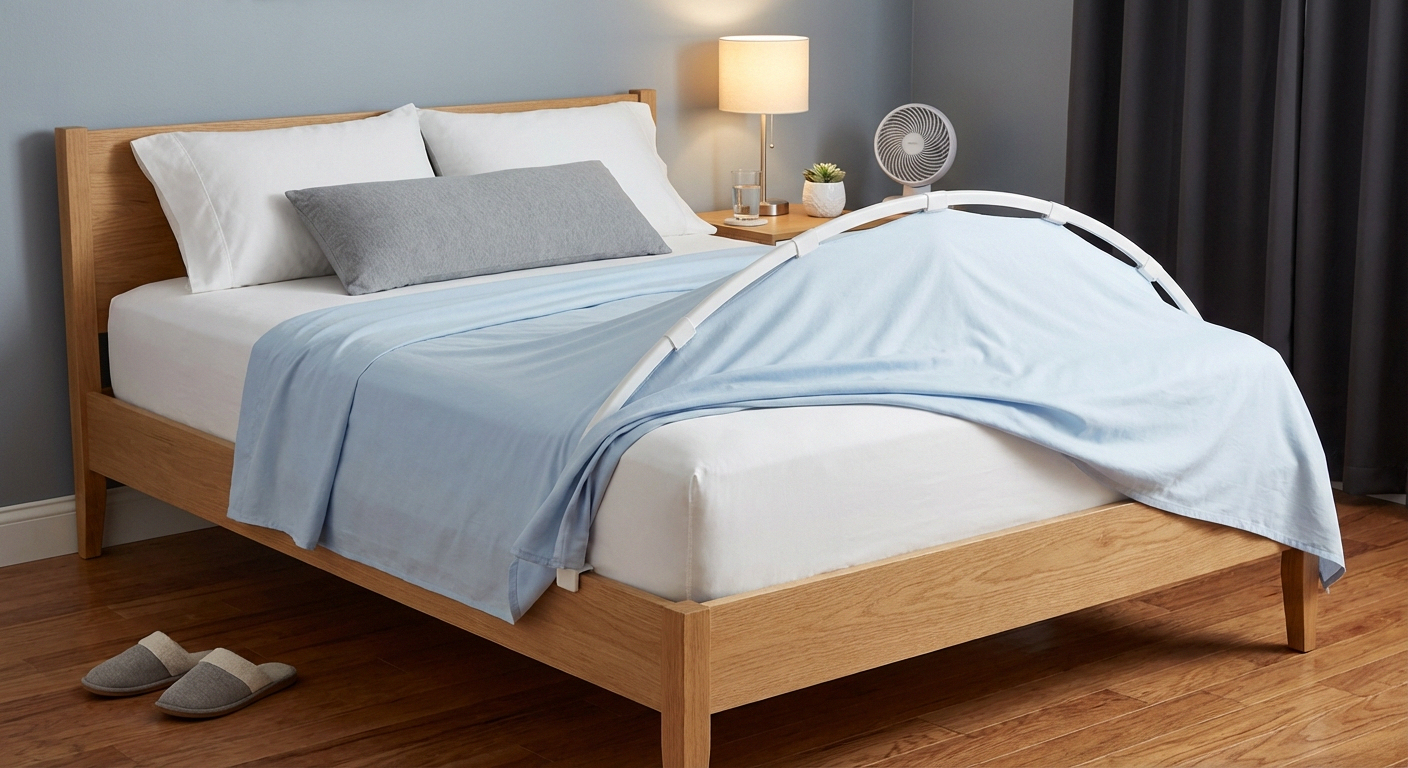
Small adjustments to your bedroom can reduce nerve pain triggers:
- Temperature: Keep the room cool (about 60 to 67°F works well for sleep) but keep your feet at a comfortable temperature. Loose, breathable socks can help if your feet get too cold.
- Bedding: Invest in soft, smooth sheets. High thread count cotton or bamboo sheets create less friction and irritation against sensitive skin.
- Bed cradle: A frame that lifts the covers off your feet. I can't overstate how much this helps if sheet contact bothers you.
- Mattress quality: A supportive mattress that reduces pressure points makes everything better. You spend a third of your life in bed — it's worth the investment.
6. Try a TENS unit
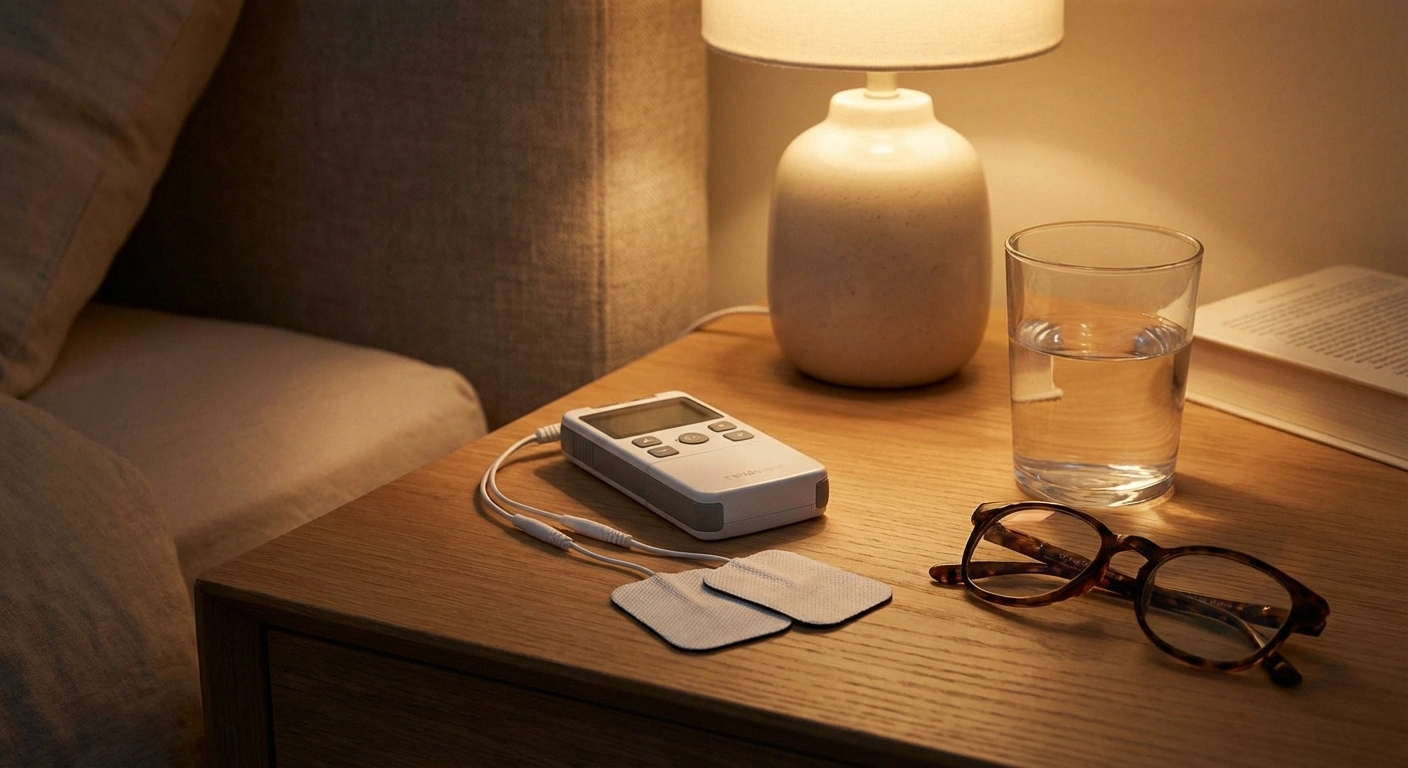
Transcutaneous electrical nerve stimulation (TENS) units use mild electrical pulses to disrupt pain signals. Some people find that using a TENS unit on their feet or legs for 20-30 minutes before bed helps ease their pain at night.
They're available without a prescription and relatively affordable. The settings that work vary from person to person, so experiment with different intensities and electrode placements.
7. Create a wind-down routine your body can count on
This isn't fluffy advice. Having the same relaxing routine before bed each night is one simple habit that can help you sleep better.
My routine: foot soak, gentle stretching, topical cream, chamomile tea, 20 minutes of reading (a real book, not a screen). By the time I'm done, my body knows it's sleep time, and the transition is smoother.
The blue light from phones and tablets disrupts melatonin production. Put the screens away at least an hour before bed.
Key Takeaway
No single strategy eliminates nighttime neuropathy pain — but layering 3-4 approaches together creates a compounding effect that most people find genuinely helpful. Start with what feels most manageable (the foot soak is the easiest entry point), add another strategy each week, and give each combination at least two weeks before judging its effectiveness.
😩 Without a Nighttime Protocol
- Lying awake at 2, 3, 4 AM
- Pain escalates with every quiet hour
- Covers feel unbearable on your feet
- No position feels comfortable
- Exhausted days from poor sleep
- Pain tolerance drops — tomorrow is harder
😌 With a Nighttime Protocol
- Foot soak + stretching prepare your body
- Topical cream starts working before bed
- Bed cradle removes cover pressure
- Consistent routine signals sleep to your nervous system
- More rest → better pain tolerance → easier days
When to Talk to Your Doctor About Night Pain
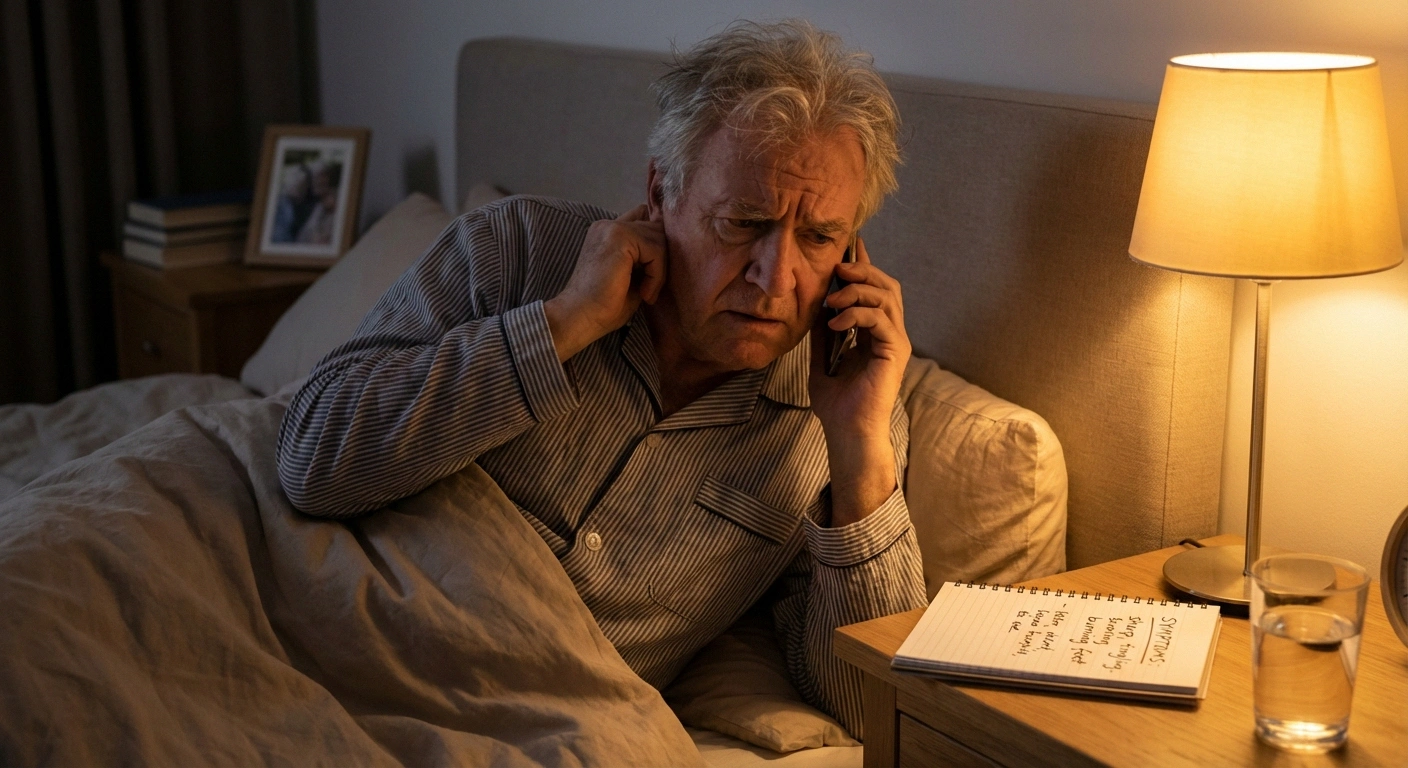
Your doctor may recommend prescription options like gabapentin or pregabalin. Don't suffer in silence — there's no medal for enduring pain you don't have to.
You Deserve a Good Night's Sleep
I know what it's like to dread the end of the day. To watch the clock and feel your anxiety rise as bedtime approaches because you know what's coming. That feeling of exhaustion mixed with the knowledge that rest won't actually come — it's one of the loneliest experiences there is.
But nighttime neuropathy pain can be managed. Not eliminated overnight (no pun intended), but genuinely reduced to the point where sleep becomes possible again.
Start with one or two strategies from this article. Give them a consistent try for two weeks. Then add another. Build your own nighttime protocol that works for your body.
And if you're not sure what's driving your specific symptoms, my neuropathy assessment can help you identify patterns and pinpoint where to focus your efforts.
Sleep is when your body heals. You need it, you deserve it, and with the right approach, you can get it back.
Wishing you peaceful nights,
Janet
Frequently Asked Questions
Browse all our neuropathy symptoms guides for more articles like this one.
About the Author