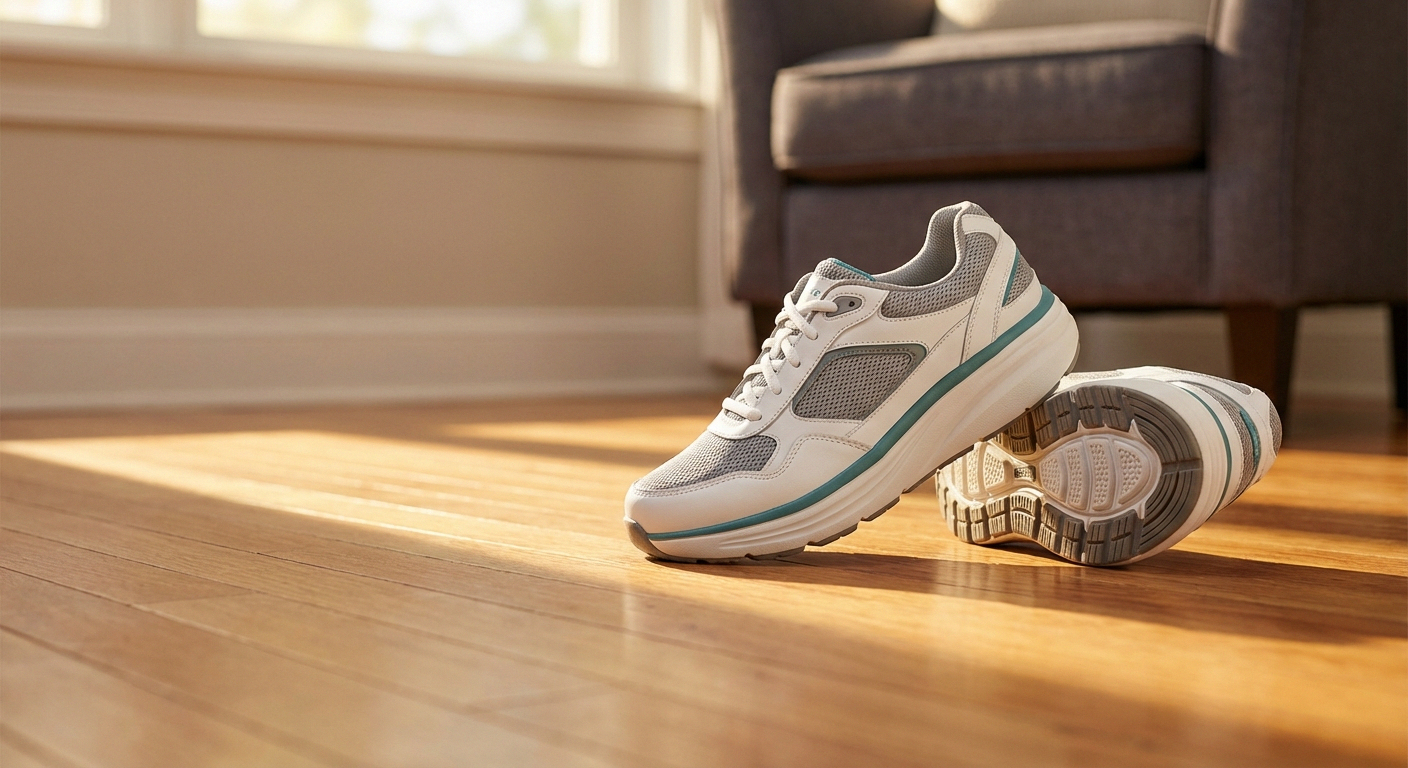
Supportive walking shoes recommended for neuropathy — wide toe box and cushioned sole visible
Why the Right Shoes Matter With Neuropathy
When your nerves are damaged, your feet lose some of their ability to protect themselves: You can’t feel injuries happening. A pebble in your shoe, a seam rubbing against your toe, a pressure point from a too-tight fit — normally you’d feel these immediately and adjust. With neuropathy, you might not notice until you have a blister or sore. Your balance is compromised. Damaged nerves mean less feedback from your feet about where they are in space. The right shoe provides stability that compensates for what your nerves can’t tell you. Pressure distribution matters more. Without normal sensation, you may not shift your weight naturally while standing or walking, leading to pressure points that can cause skin breakdown. Falls are the real danger. Neuropathy is a leading risk factor for falls in older adults. Shoes are one piece of preventing them, and the easiest piece to change.Fall risk with peripheral neuropathy has many causes. Your shoes are one you get to pick.
What to Look for in Neuropathy Shoes
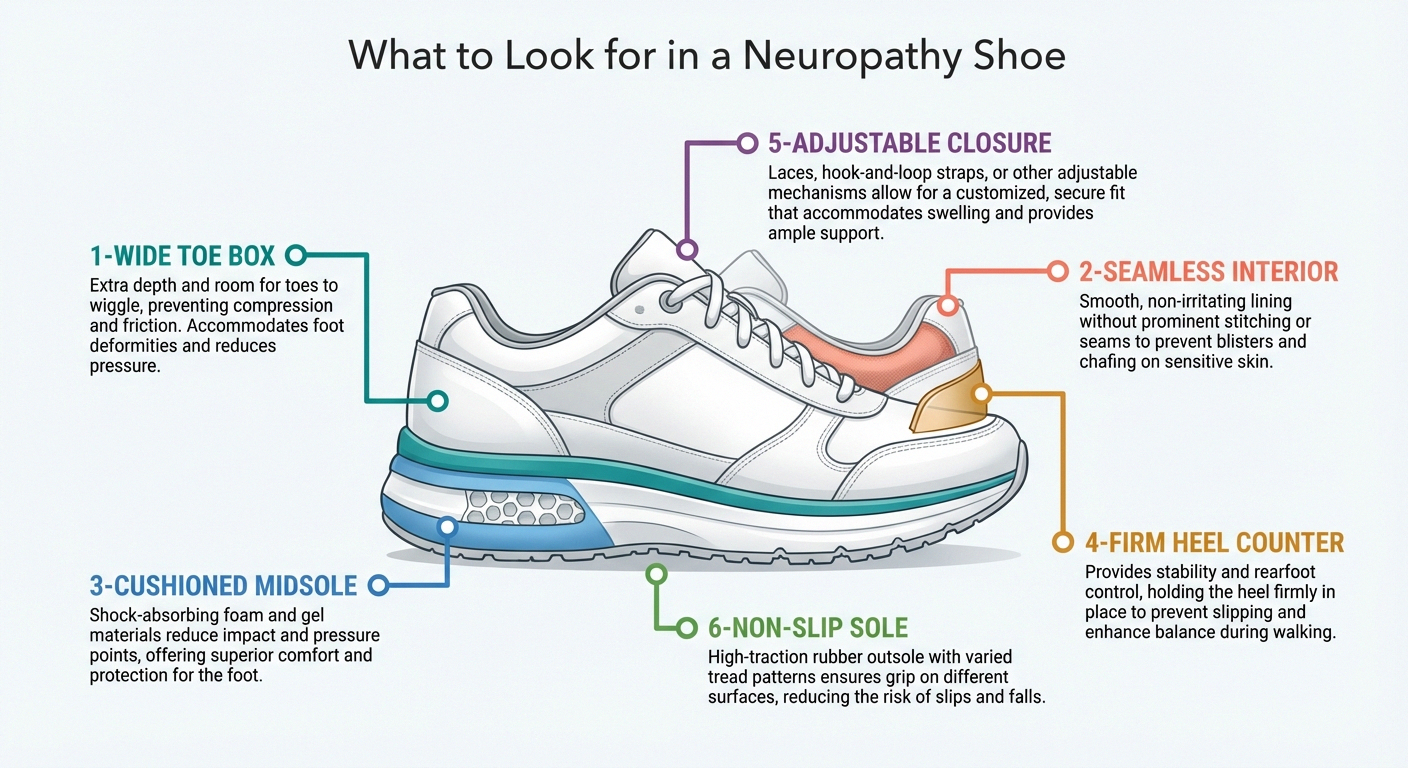
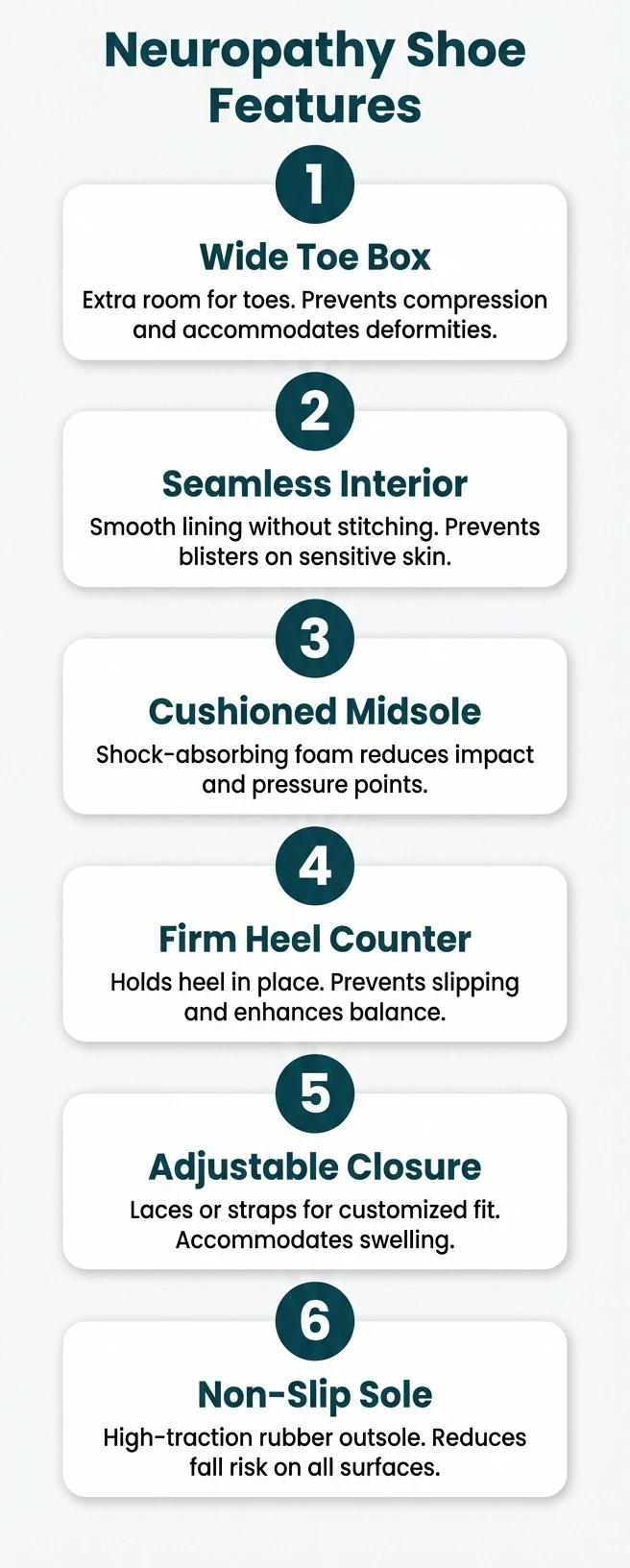
After researching this extensively and talking with podiatrists and physical therapists, here are the features that matter most:Wide Toe Box
Non-negotiable. Your toes need room to spread naturally without being compressed. A narrow toe box increases pressure on already-sensitive nerves and can cause blisters you won’t feel forming.
Firm Heel Counter
The back of the shoe must be rigid enough to hold your heel in place. This prevents your foot from sliding and provides stability your compromised nerves can’t.
Cushioned Midsole
Adequate cushioning absorbs shock and reduces impact forces with every step. Not so much that it feels unstable — but enough to protect sensitive feet.
Seamless Interior
Interior seams rub against skin that can’t feel the irritation building. Run your hand inside the shoe — any raised seams, especially near the toes, means keep looking.
Adjustable Closure
Velcro, laces, or buckles let you customize fit throughout the day. Feet swell with neuropathy — shoes that fit in the morning may be too tight by afternoon.
Non-Slip Sole
A rubber sole with visible tread reduces slip risk on smooth floors and wet surfaces. This single feature can be the difference between a safe step and a fall.
Best Shoes for Men With Neuropathy
For everyday wear: Look for extra-depth walking shoes from brands that specialize in therapeutic footwear. Brands like New Balance (models with extra-wide options), Brooks (Addiction Walker), and Orthofeet are consistently recommended by podiatrists. These provide the wide toe box, cushioning, and stability neuropathy requires. For casual/dress occasions: Clarks and Rockport both offer shoes with good arch support and wider fits that don’t look like medical equipment. The Clarks Cotrell series is a solid option. For active use: New Balance 928v3 and Brooks Beast are popular with neuropathy patients who walk regularly. Both offer motion control and superior cushioning.Key Takeaway
Resist the urge to buy shoes in your “usual” size without trying them on. Neuropathy can change your foot shape over time — get fitted properly, ideally later in the day when your feet are at their largest.
Best Shoes for Women With Neuropathy
For everyday wear: Orthofeet and Vionic are two brands that consistently get recommended for women with neuropathy. They offer wide widths, arch support, and cushioning in styles that actually look like normal shoes. The Vionic Walker is a popular choice. For casual occasions: Clarks and Easy Spirit both make wider-width shoes with decent support. Look for styles with removable insoles (so you can use custom orthotics if needed). For active use: Brooks Addiction Walker (comes in women’s widths), New Balance 928v3, and ASICS Gel-Foundation are solid choices for walking.Important
No heels, no pointed toes, no thin soles — I know that narrows the options, and I understand the frustration. But your feet need protection right now more than they need fashion. Many supportive shoe brands have managed to make styles that actually look respectable.
Best Shoes for Neuropathy and Balance Problems
If balance is your primary concern (and for many of us, it is), prioritize:- Firm heel counter — the stiffer, the better for balance
- Low heel-to-toe drop — a relatively flat shoe keeps you closer to the ground and more stable
- Wider base — shoes with a broader sole provide a more stable platform
- Good ground feel — some cushioning can reduce sensory feedback you need for balance. If balance is your biggest issue, try a shoe that’s supportive but not excessively cushioned
Shoes to Avoid With Neuropathy
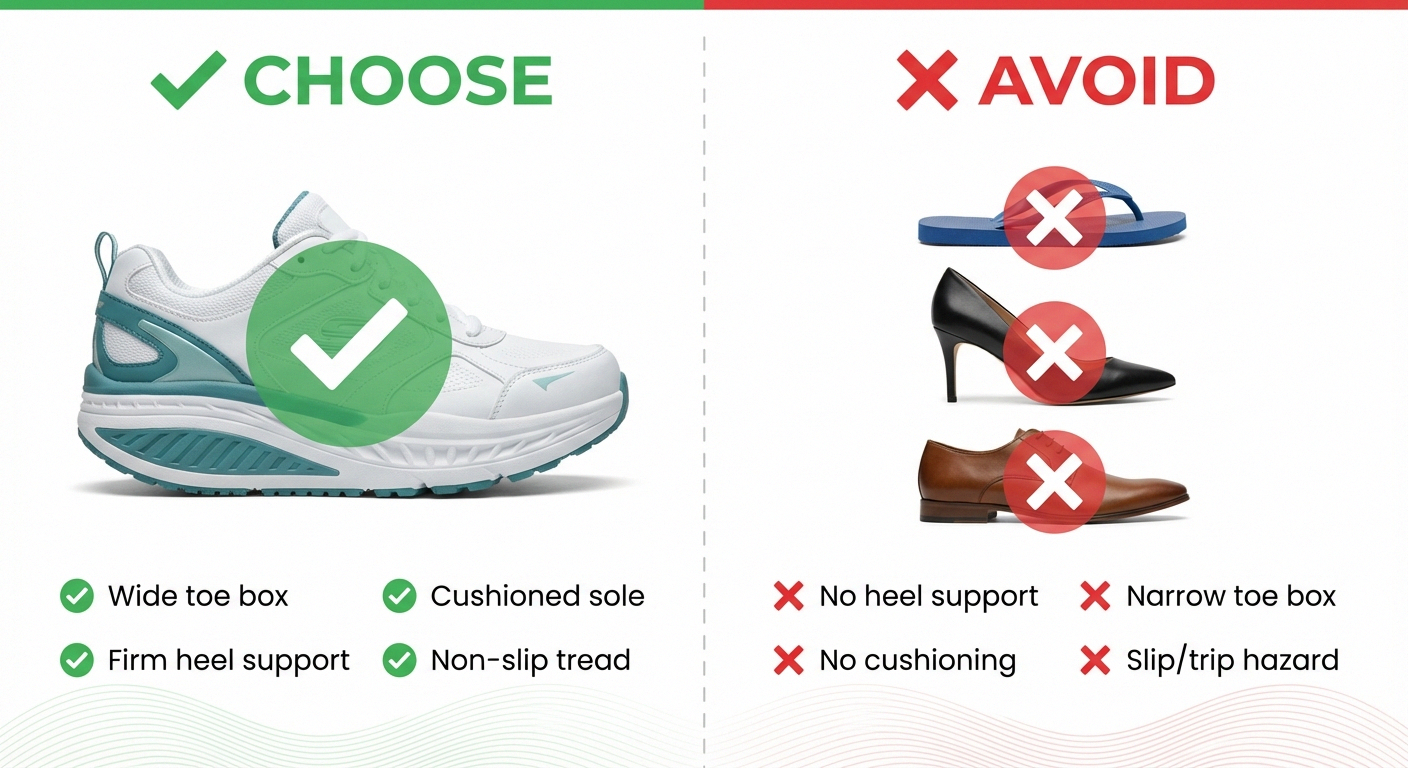
❌ Footwear to Avoid
Flip-flops and backless shoes
No heel support, trip hazard, zero protection for sensitive feet
High heels
Shift weight forward, increase pressure on forefoot, destabilize balance
Narrow or pointed-toe shoes
Compress nerves, cause pressure injuries you may not feel forming
Shoes with interior seams
Create friction points that cause blisters and sores you can’t feel
Worn-out shoes
Even good shoes lose support over time. Replace every 300-500 miles or 6-8 months
Brand new shoes without a break-in period
Never wear new shoes on a long outing first. Break them in gradually and check feet for redness after each wearing
Do Neuropathy Socks Help?
Short answer: they can, especially as a complement to good shoes.✓ What Neuropathy Socks Offer
- Seamless construction — eliminates friction points
- Moisture-wicking material — keeps feet dry, reduces infection risk
- Light compression — improves circulation
- Extra cushioning in the sole area
- Non-binding tops — don’t restrict blood flow
✗ What They Won’t Do
Socks alone won’t compensate for bad shoes. Think of them as the second layer of protection, not the first.
Who benefits most: People with diabetes-related neuropathy, anyone prone to foot sores or blisters, and those whose feet swell during the day.
Should You Wear Shoes in the House?
Yes. I know it goes against the habit of kicking your shoes off when you walk through the door, but for neuropathy patients, going barefoot at home is a risk. You can step on something sharp and not feel it. You lose the stability and cushioning that protect you. And hard floors transmit more impact to already-sensitive feet.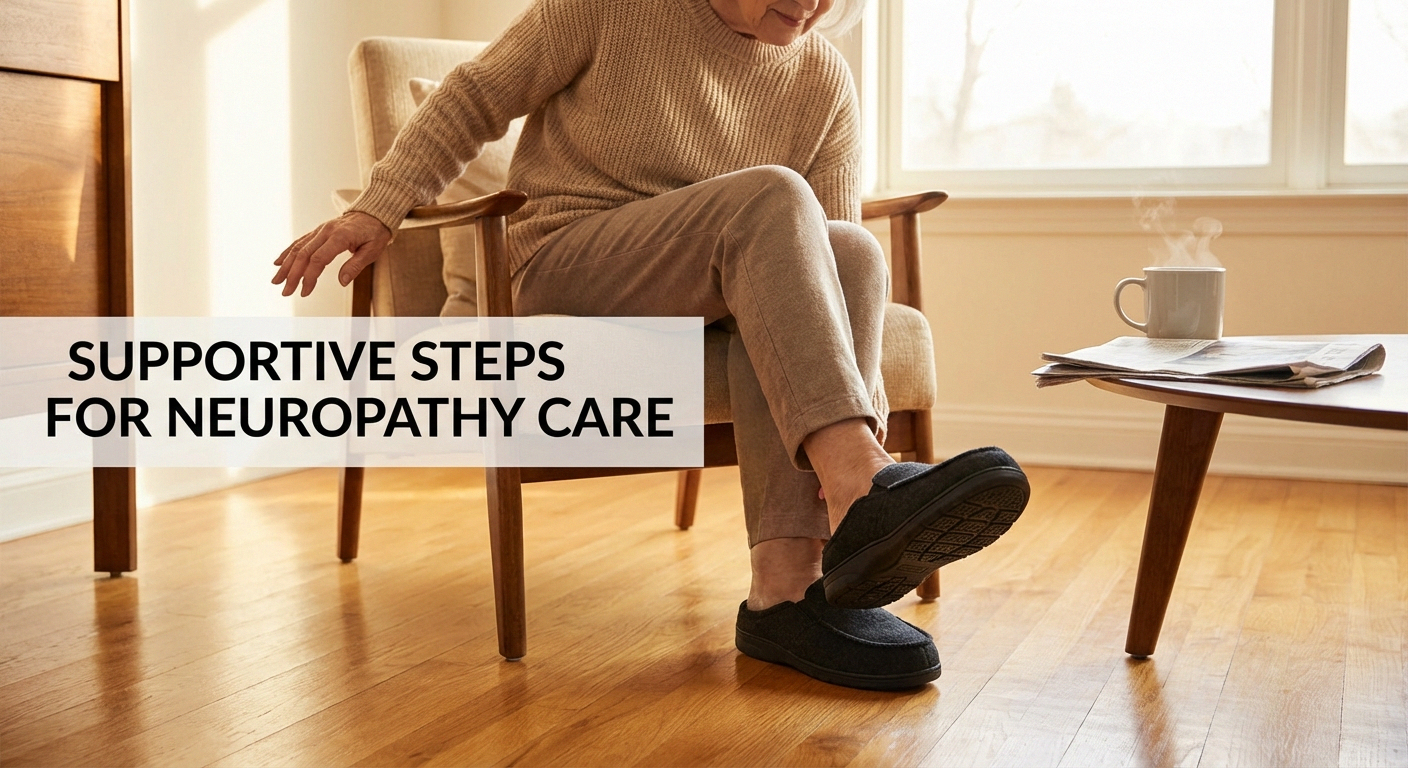
Research Says
Most falls in older adults with neuropathy occur at home, often in familiar environments where people let their guard down. Going barefoot — even to walk a few steps — is one of the highest-risk moments. Keep those indoor shoes on.
Getting the Right Fit
A few tips that make a real difference: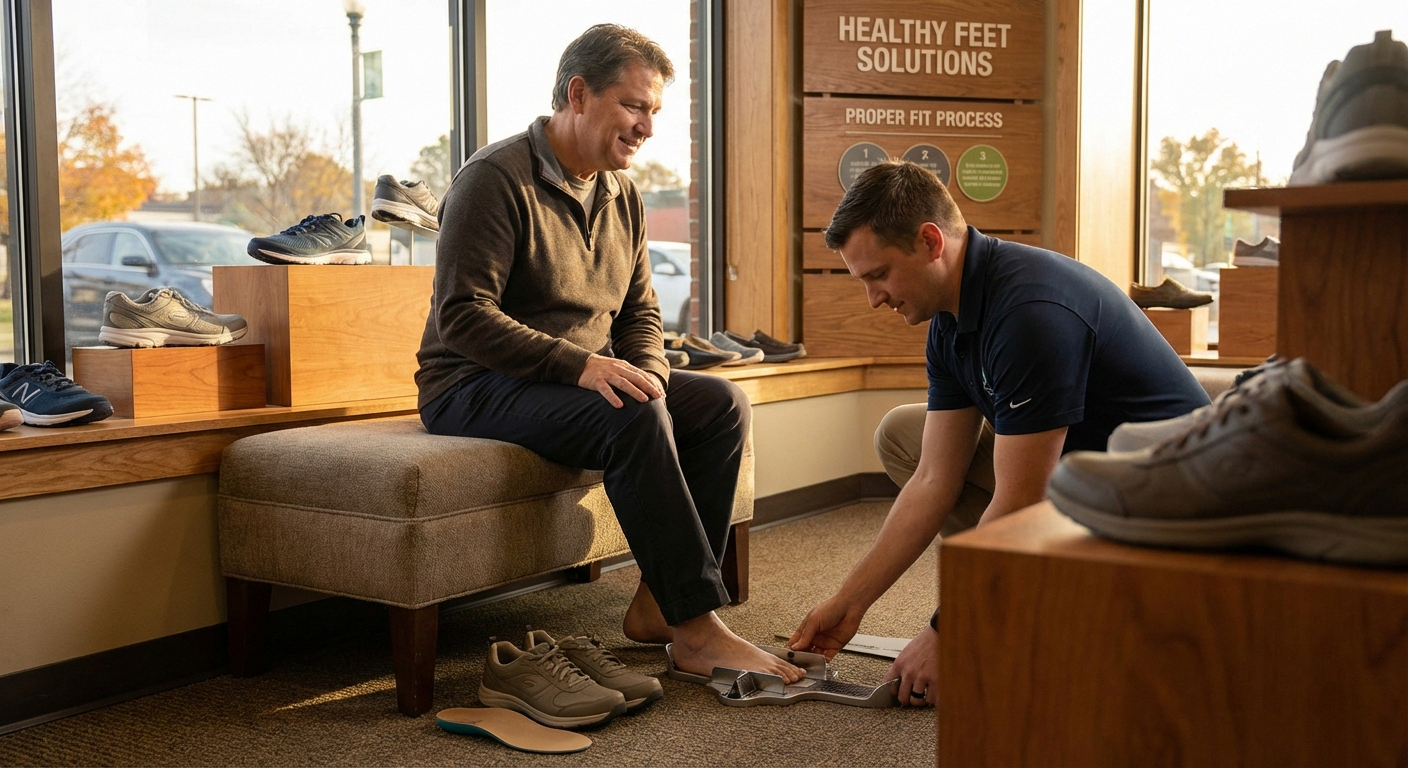
How to Get the Right Shoe Fit
Shop in the afternoon
Your feet are at their largest later in the day. A shoe that fits in the morning may be too tight by evening.
Measure both feet
They’re often different sizes. Always fit the larger foot — don’t force the smaller foot’s size on both.
Bring your orthotics
If you use custom orthotics, bring them to every fitting. A shoe that fits well without them may not work at all with them in.
Walk around the store for at least 5 minutes
Don’t just stand — walk. Problems reveal themselves during movement, not while standing still.
Check your feet afterward
Any redness or pressure marks after trying shoes are warning signs. With neuropathy, you may not feel the irritation — so you have to look for it.
Frequently Asked Questions
About the Author


My feet are so tender socks with any woven material bother my feet please make suggestions
I live in Florida I worked my hole life hard / I retired I’m 62 my feet burn so bad day night I went to e r no help I’m in such pain I soak I. Epson salt sea salt water 💦 I’m cryn now pat (phone number removed) god help me no sleep burn so bad