I’m going to be blunt: foot care is the most overlooked and arguably most important topic in neuropathy management. Nobody gets excited about checking their feet every night. But I’ve watched people in my support groups lose toes — and worse — because they didn’t take it seriously.
Here’s the thing. When you can’t feel pain the way you’re supposed to, your feet lose their built-in alarm system. A blister you’d normally notice in minutes can go undetected for days. A tiny cut can become an infection before you even know it’s there. And infections in feet with poor circulation escalate faster than most people realize.
I’m not trying to scare you. I’m being honest, the way I wish someone had been honest with some of the people I’ve met over the years. The good news? A simple daily routine — maybe ten minutes — can prevent the vast majority of serious complications.
This is your practical, step-by-step guide to taking care of your feet when neuropathy has changed the rules.
Why Foot Care Is Critical When You Have Neuropathy
Neuropathy disrupts your feet’s built-in alarm system. Depending on where you are in the stages of neuropathy, you may have reduced sensation, altered sensation, or near-complete numbness. Your feet need you to do the job your nerves used to do — spotting problems before they escalate.
How should you take care of your feet if you have neuropathy?
The core principle is simple: inspect, protect, and maintain. Check your feet daily for problems you can’t feel. Protect them from injuries they can’t report. Keep the skin and nails in good condition so minor issues don’t become major ones.
A 2019 study in Diabetes Care found that patients who followed a structured daily foot care routine reduced their risk of foot ulcers by 50–60%. The International Working Group on the Diabetic Foot considers daily foot inspection one of the most effective preventive measures available.
The small stuff adds up. Let’s go through it.
reduction in foot ulcer risk for patients who follow a structured daily foot care routine (Diabetes Care, 2019)
The Daily Foot Inspection: What to Look For
This is the foundation of everything else. Every single day, you need to actually look at your feet — tops, bottoms, sides, and between every toe. I know it sounds tedious, but it takes less than two minutes once you get into the habit.
How often should you check your feet with neuropathy?
Once daily, minimum. Most experts recommend the evening, when you’ve been on your feet all day and problems are most visible. But the best time is whatever time you’ll actually do consistently.
Here’s what you’re looking for:
Daily Inspection Checklist: What to Look For
Cuts, scrapes, or punctures — Even tiny ones matter. You may not have felt them happen.
Blisters — Especially around pressure points or where shoes rub.
Redness or warm spots — These can signal friction, pressure damage, or early infection.
Swelling — Compare one foot to the other. New or asymmetric swelling is worth noting.
Color changes — Pale, bluish, or darkened areas can indicate circulation problems.
Cracks in the skin — Especially around the heels, where bacteria can enter.
Ingrown toenails or changes in nail color — Yellowish, thickened, or darkened nails may signal a fungal infection.
Calluses or corns — These are pressure indicators and can break down into ulcers if neglected.
Practical tip: If you can’t easily see the bottom of your feet, use a mirror on the floor or your phone camera. Whatever works — just get eyes on them.
If you notice anything unusual, don’t wait. With neuropathy, “wait and see” often means “wait until it’s a serious problem.”

Washing and Moisturizing: Best Practices
Washing your feet sounds straightforward, but there are a few neuropathy-specific rules that make a real difference.
Water temperature matters — a lot. When you can’t fully feel heat, you can burn your feet without realizing it. Test water with your elbow or a thermometer — lukewarm, around 90–95°F (32–35°C). If you enjoy neuropathy foot soaks, the same rule applies.
Keep it brief. Soaking longer than 10–15 minutes strips natural oils and leads to cracking. Wash gently with mild soap, paying attention between the toes.
Dry thoroughly. Moisture trapped between the toes creates a breeding ground for fungal infections. Pat your feet dry — don’t rub — and make sure the spaces between each toe are completely dry.
What cream is best for neuropathy feet?
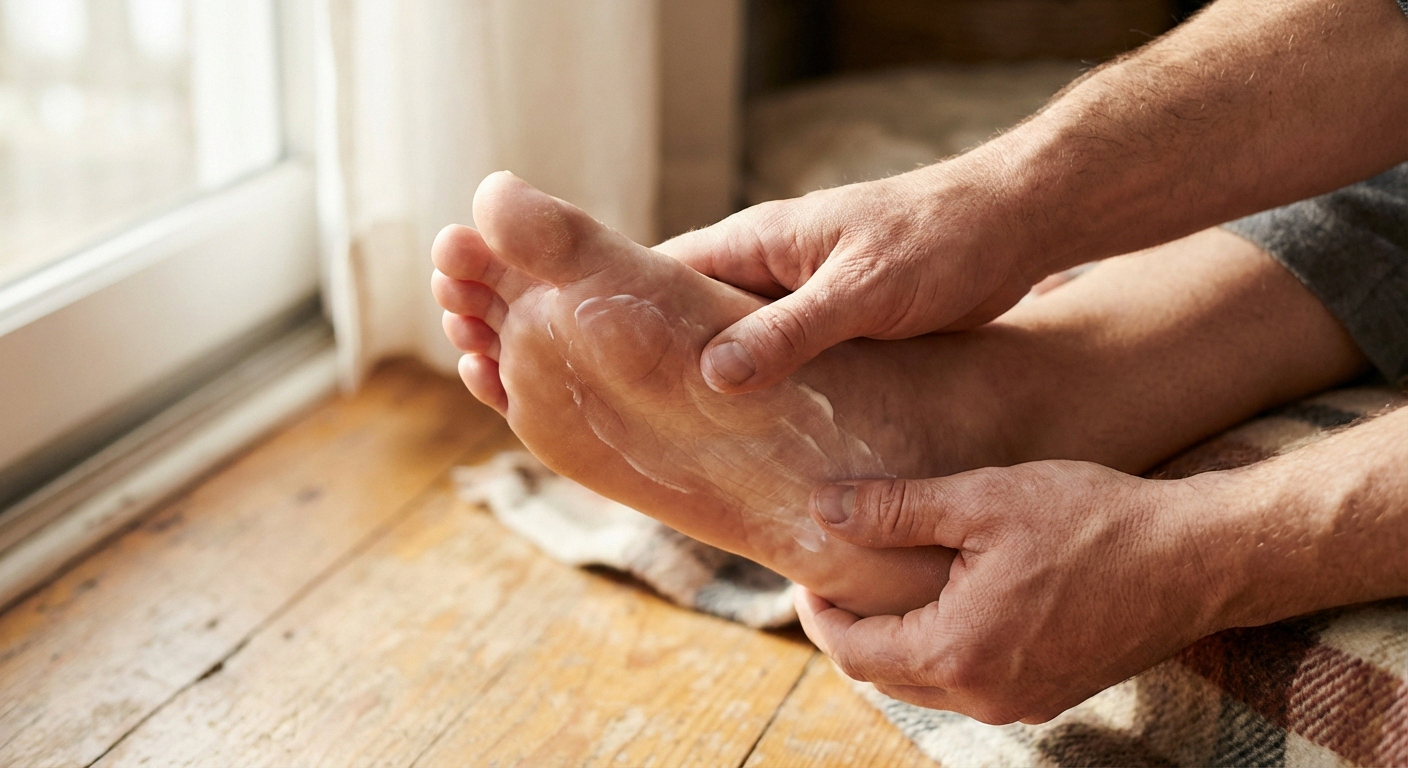
Moisturize your feet every day after washing, but avoid applying lotion between the toes (trapped moisture, again). Use a thick, urea-based cream or an emollient designed for dry, cracked skin. Creams with 10–25% urea are particularly effective because they hydrate and gently soften calluses at the same time.
For creams that also help with neuropathy symptoms — tingling, burning, or discomfort — I’ve reviewed the best options in my guide to neuropathy creams. Some contain capsaicin or lidocaine, which can address both skin care and pain relief in one step.
Avoid scented lotions or products with alcohol, which can dry and irritate the skin.
Key Takeaway
Always test water temperature with your elbow — never your feet. Wash briefly (under 15 minutes), dry thoroughly between toes, then apply a urea-based cream (10–25%) to your feet — but never between the toes. Trapped moisture between toes invites fungal infections.
How to Trim Your Toenails Safely
Improperly cut toenails are one of the most common causes of foot injuries in people with neuropathy. Ingrown toenails lead to infections that escalate quickly when sensation and circulation are compromised.
Here’s the safe way to do it:
- Trim straight across. Don’t round the corners or cut down the sides — that’s how ingrown nails start.
- Don’t cut too short. Leave a small amount of white nail at the tip. You want the nail to be roughly even with the tip of the toe.
- Use proper nail clippers or nippers, not scissors. A straight-edge clipper designed for toenails gives you the most control.
- Trim after bathing, when nails are softer and less likely to crack or split.
- File any sharp edges with an emery board to prevent them from catching on socks or scratching adjacent toes.
What should you never do with neuropathic feet?
This is a big list, and toenails are part of it:
Never Do These With Neuropathic Feet
- Never use sharp instruments to dig under nails or remove calluses. No razor blades, corn removers with acid, or “bathroom surgery” — this is how serious infections start.
- Never walk barefoot — not at home, not at the beach, not by the pool. Your feet can’t warn you about sharp objects, hot surfaces, or rough ground.
- Never use heating pads or hot water bottles on your feet. Burns can happen without you feeling them.
- Never ignore a small wound and assume it will heal on its own. Get it looked at.
- Never wear shoes without checking inside them first. Shake them out and run your hand inside to check for pebbles, seams, or rough spots.
If you’re uncomfortable trimming your own nails — especially if you have thickened nails, poor vision, or difficulty reaching your feet — have a podiatrist do it. There’s no shame in that, and it’s genuinely safer.

Choosing the Right Socks for Neuropathy
Socks are your feet’s first layer of defense, and the wrong ones can cause as many problems as they prevent.
What to look for:
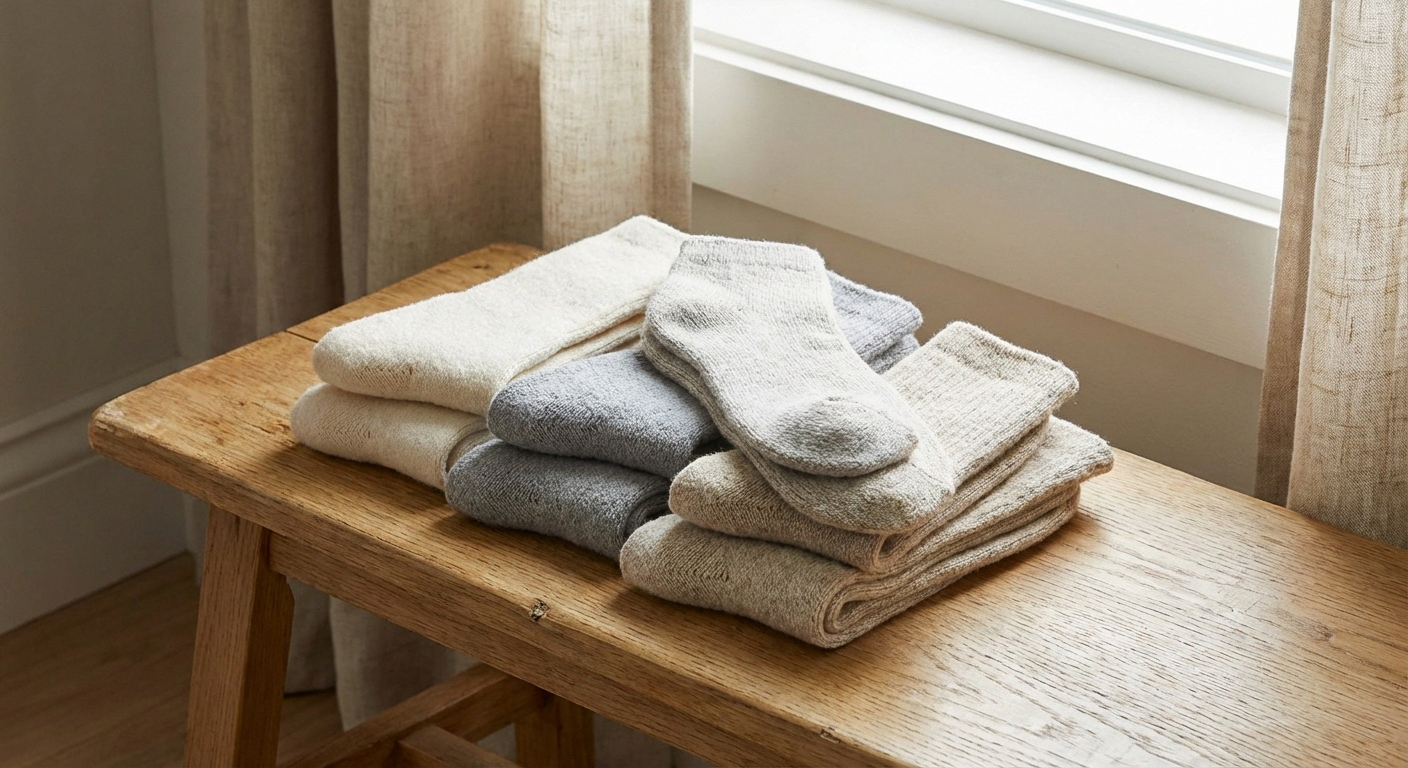
- Seamless or flat-seam construction. Raised seams create friction points you can’t feel.
- Moisture-wicking materials. Cotton holds moisture. Look for bamboo, merino wool, or synthetic wicking fibers.
- Non-binding fit. Tight elastic bands restrict circulation — the last thing neuropathic feet need.
- Cushioning in the sole and heel to absorb impact and reduce pressure.
- Light colors. White or light socks make it easier to spot drainage from a wound you didn’t know you had.
What to avoid: socks with thick seams, tight dress socks that leave marks, and going sockless in shoes.
Good socks paired with proper shoes for neuropathy form the core of everyday foot protection. Neither works as well without the other.
Preventing Blisters, Calluses, and Ulcers
Blisters and calluses are your feet’s response to friction and pressure. In healthy feet, they’re minor inconveniences. In neuropathic feet, they’re potential gateways to ulcers and infections.
Blisters usually form from shoes that don’t fit properly. The best prevention is well-fitting shoes and seamless socks. If a blister does form, don’t pop it. Keep it clean, bandage it, and monitor daily. Signs of infection — increasing redness, warmth, or discharge — mean call your doctor.
Calluses develop from repeated pressure. When they build up too thick, the skin underneath can break down into an ulcer.
- Use a pumice stone gently after bathing — never a blade or sharp callus remover
- Moisturize callused areas daily with urea-based cream
- Have a podiatrist trim thick calluses professionally
Ulcers are the complication everyone wants to avoid. The American Diabetes Association reports that approximately 15% of people with diabetic neuropathy develop a foot ulcer, and ulcers precede 85% of diabetes-related amputations. These numbers aren’t meant to frighten you — they’re meant to motivate you. Daily care prevents the vast majority of these outcomes.
Research Says
~15% of people with diabetic neuropathy develop a foot ulcer. Those ulcers precede 85% of diabetes-related amputations. Yet the majority are preventable — a blister or callus caught early almost never becomes an amputation. Daily inspection is your first and most powerful line of defense.
When to See a Podiatrist
A podiatrist should be part of your care team if you have neuropathy in your feet. Period. Some things you can manage at home. Others need a professional.
See a podiatrist regularly for:
- Comprehensive foot exams (at least once a year)
- Toenail trimming if you can’t do it safely yourself
- Callus management and custom orthotics
- Monitoring for changes in foot structure (Charcot foot, hammertoes)
See a podiatrist urgently for:
- Any wound or sore that isn’t healing within a few days
- Signs of infection — spreading redness, warmth, swelling, pus, or fever
- A sudden change in foot shape or significant new swelling
- Any color change (darkening) in a toe or part of the foot
Can you get a pedicure if you have neuropathy?
This comes up a lot in my groups: proceed with extreme caution, or skip it entirely. The risks include infection from improperly sterilized tools, cuts from aggressive cuticle work, and burns from hot water you can’t gauge.
If you do go, bring your own tools, skip the cuticle cutting and callus razor, and test the water yourself. Most podiatrists I’ve spoken with recommend a medical pedicure specialist instead.
A Simple Daily Foot Care Routine (Checklist)
Here’s the routine I recommend — it takes about ten minutes, and it can save you from outcomes that take months to recover from.
Your Daily Foot Care Routine
Morning
- Check inside shoes — shake out and feel for debris
- Put on clean, seamless, moisture-wicking socks
- Wear supportive, well-fitting shoes — never go barefoot
Evening
- Wash feet in lukewarm water with mild soap (test temperature first)
- Dry thoroughly — especially between toes
- Inspect every surface: tops, bottoms, sides, between toes
- Apply urea-based moisturizer (avoid between toes)
- Note any changes — redness, swelling, cuts, color changes
- Trim nails as needed: straight across, not too short
Weekly & Ongoing
- Gently use a pumice stone on callused areas after bathing
- Check socks and shoes for wear, rough spots, or damage
- Keep blood sugar controlled if diabetic
- Stay active with gentle exercise to support circulation
- Report any concerns to your doctor or podiatrist promptly
This isn’t complicated or expensive. But it requires consistency, and that’s where most people struggle. Build it into your existing routine — pair it with brushing your teeth or watching the evening news — and it becomes automatic.
If you want to track how your symptoms are changing over time, my symptom assessment can help you organize what you’re experiencing before your next appointment.
Your feet carried you this far. Take care of them now, and they’ll keep carrying you.
Take care of yourself, Janet
Frequently Asked Questions
About the Author