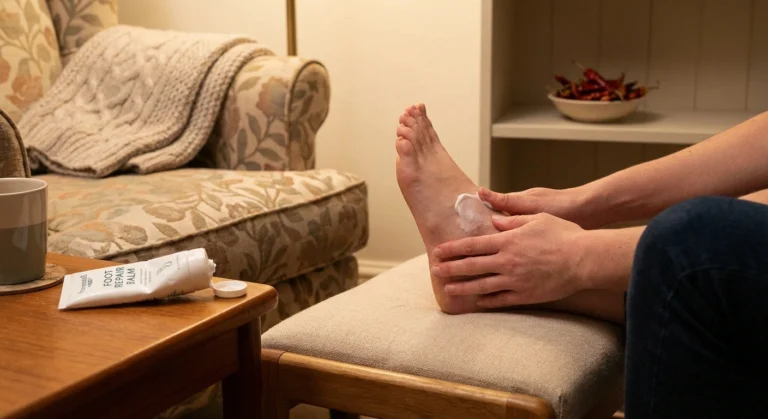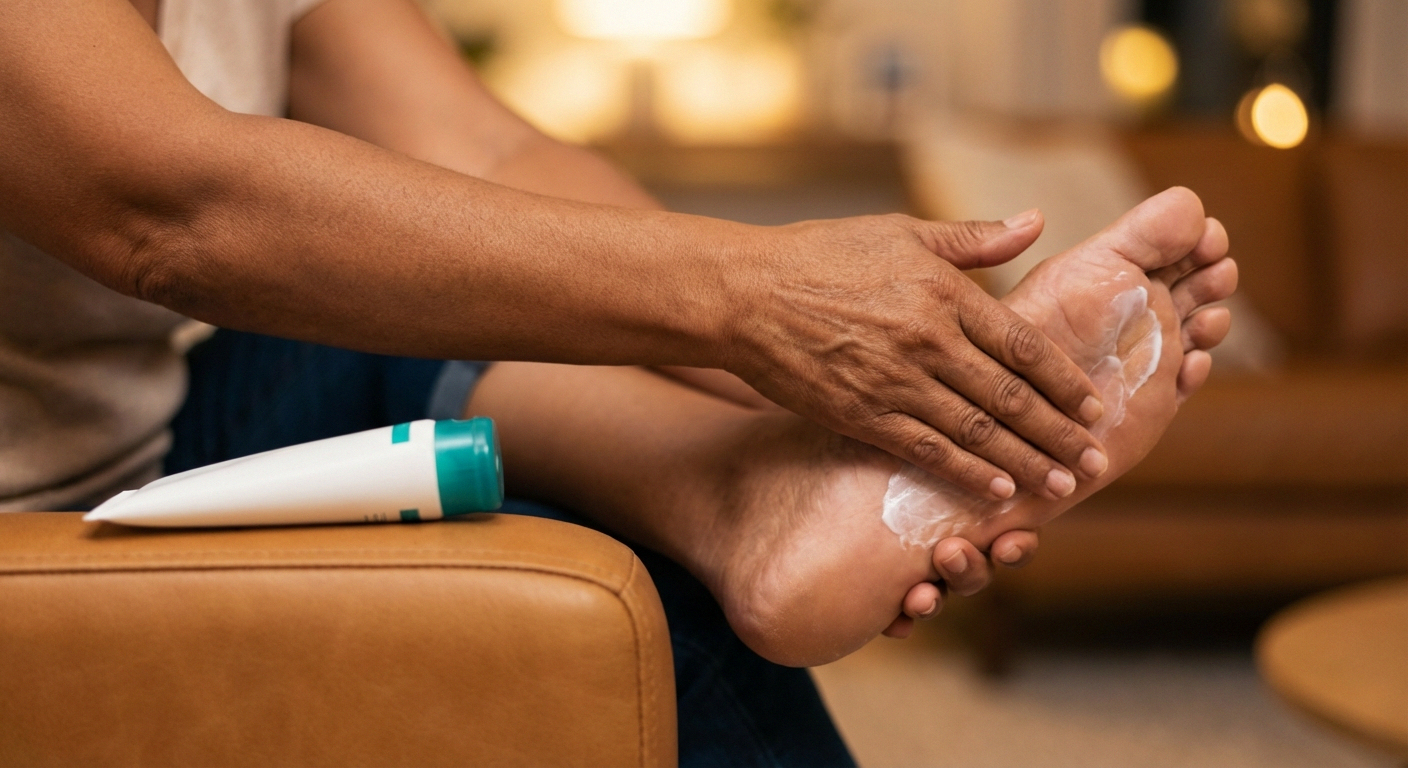
Self-care routine: applying neuropathy cream to feet for pain relief.
I'll never forget the first time a topical treatments for arm nerve pain actually helped my feet. For more, see our guide on natural remedies for neuropathy. For more, see our guide on the stage of neuropathy.
Some people also find relief with cannabidiol for neuropathy, available in both oral and topical forms.
For more natural topical options, explore our guide to essential oils for neuropathy.
I'd tried three or four different products by that point — all promising relief, all leaving me with nothing but greasy feet and a lighter wallet. I'd almost given up on topicals entirely. Then a woman in my support group pressed a small tube into my hands and said, “Just try it. Give it two weeks.”
Two weeks later, I understood why she was so insistent.
Now, I want to be upfront with you: no cream is going to cure neuropathy. If anyone tells you otherwise, walk away. But the right topical treatment can meaningfully reduce pain, burning, and tingling — especially in the feet, where neuropathy hits most of us hardest.
The problem is figuring out which ones actually work and which are just expensive moisturizers with bold claims on the label. That's what this article is for.
How Topical Creams Help Neuropathy Pain
Before we get into specific products, it helps to understand why putting something on your skin can affect nerve pain happening beneath it.
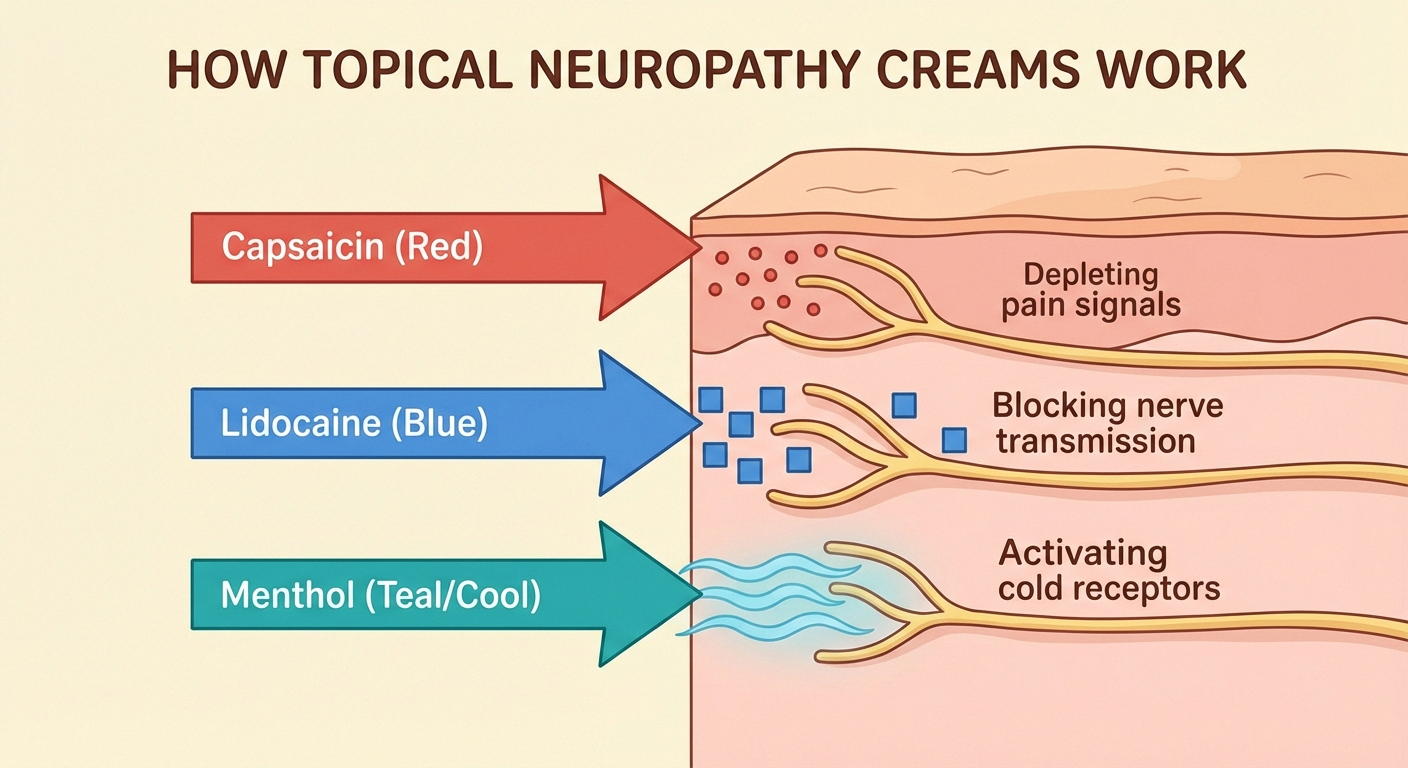
Your skin is more than just a barrier — it's packed with nerve endings, and it's surprisingly good at absorbing certain compounds. Topical neuropathy creams work through several different mechanisms:
capsaicin cream for nerve pain (from chili peppers) depletes a chemical called substance P from your nerve endings. Substance P is one of the main messengers that transmits pain signals to your brain. Less substance P = fewer pain signals reaching your brain. The catch? It takes consistent use over 1-2 weeks before the depletion is significant enough to feel the difference. And yes, it burns at first. Stick with it.
prescription lidocaine patches is a local anesthetic that temporarily blocks nerve signals in the area where it's applied. It doesn't address the underlying cause, but it provides real, fast relief — particularly useful at night or during managing neuropathy flare-ups-ups. For more, see our guide on nighttime neuropathy flare-ups.
Menthol and camphor create a cooling sensation that essentially “distracts” your nerves. This is called counter-irritation — the cooling signal competes with pain signals for your brain's attention. Simple, but surprisingly effective for mild to moderate symptoms.
Alpha lipoic acid (topical) — some newer creams include this antioxidant, which may help reduce oxidative stress on nerve endings at the skin level.
Research Says
A 2017 Cochrane review confirmed capsaicin cream's effectiveness for peripheral neuropathic pain, with clinical trials showing 40–60% pain reduction after 8 weeks of regular use. Lidocaine patches are recommended in multiple clinical guidelines as a first-line topical treatment, with studies showing 30–50% pain reduction.
What to Look For in a Neuropathy Cream
Not all creams are created equal. Here's what I look for after years of trying different products:
Active ingredients that match your symptoms. Burning pain responds best to capsaicin or cooling agents. Sharp, shooting pain may respond better to lidocaine. General discomfort and tingling can improve with menthol-based formulas. Know your primary symptom and choose accordingly.
Adequate concentration. Many “neuropathy creams” use such low concentrations of active ingredients that they can't possibly do much. For capsaicin, look for 0.025% to 0.1%. For lidocaine, 4% to 5%. Anything significantly lower is likely marketing more than medicine.
Fragrance-free options. Our feet are often sensitive enough without adding artificial fragrances. If your skin is reactive, look for fragrance-free formulas. Learn more about burning sensation in your feet.
Good absorption. A cream that sits on top of your skin in a greasy film isn't delivering its ingredients where they need to go. The best neuropathy creams absorb cleanly without leaving a heavy residue.
No outrageous claims. If a cream claims to “reverse nerve damage” or “cure neuropathy,” it's lying. Creams manage symptoms. That's valuable — but it's not a cure.

Key Takeaway
Match the cream to your primary symptom: capsaicin or lidocaine for burning pain, lidocaine for sharp/shooting pain, menthol for tingling and mild discomfort. Check that active ingredient concentrations are therapeutic — capsaicin at 0.025–0.1%, lidocaine at 4–5%.
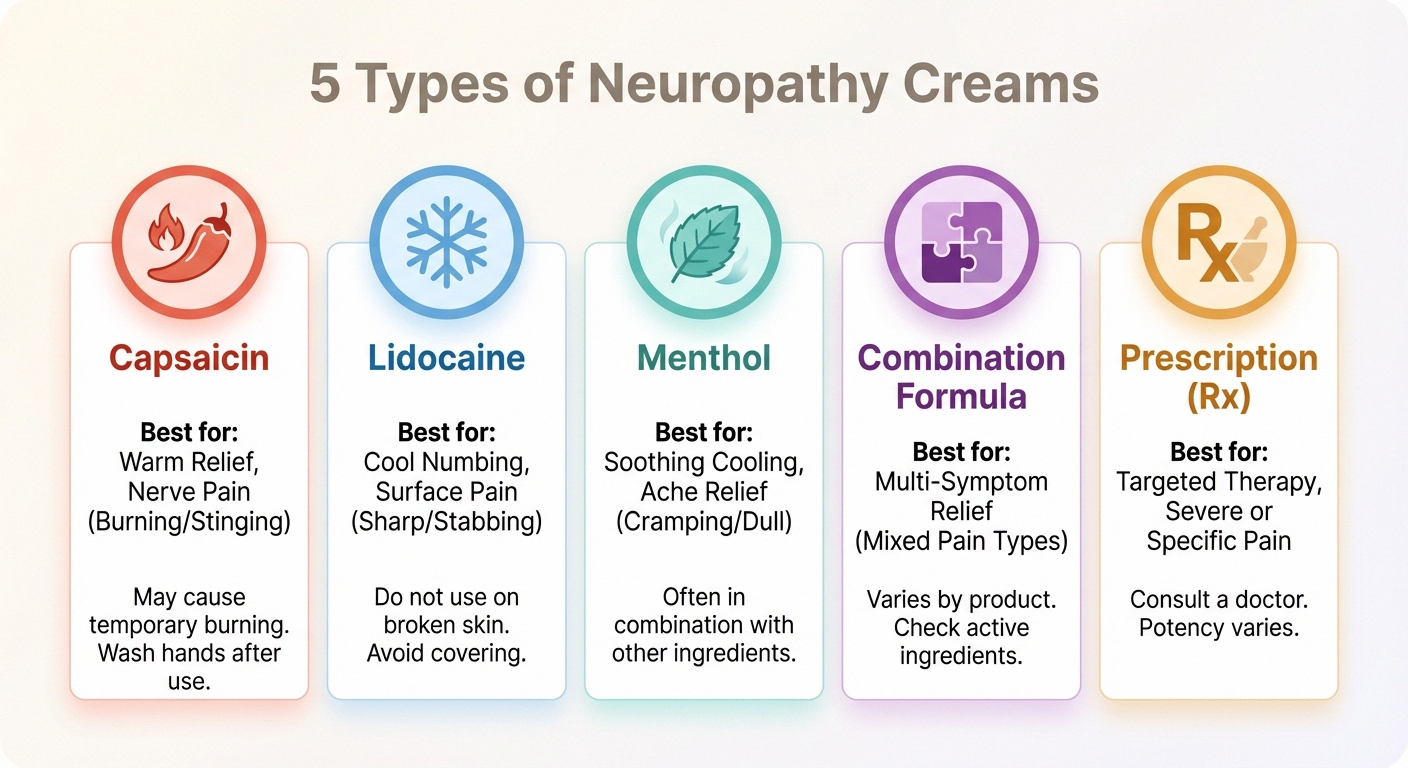
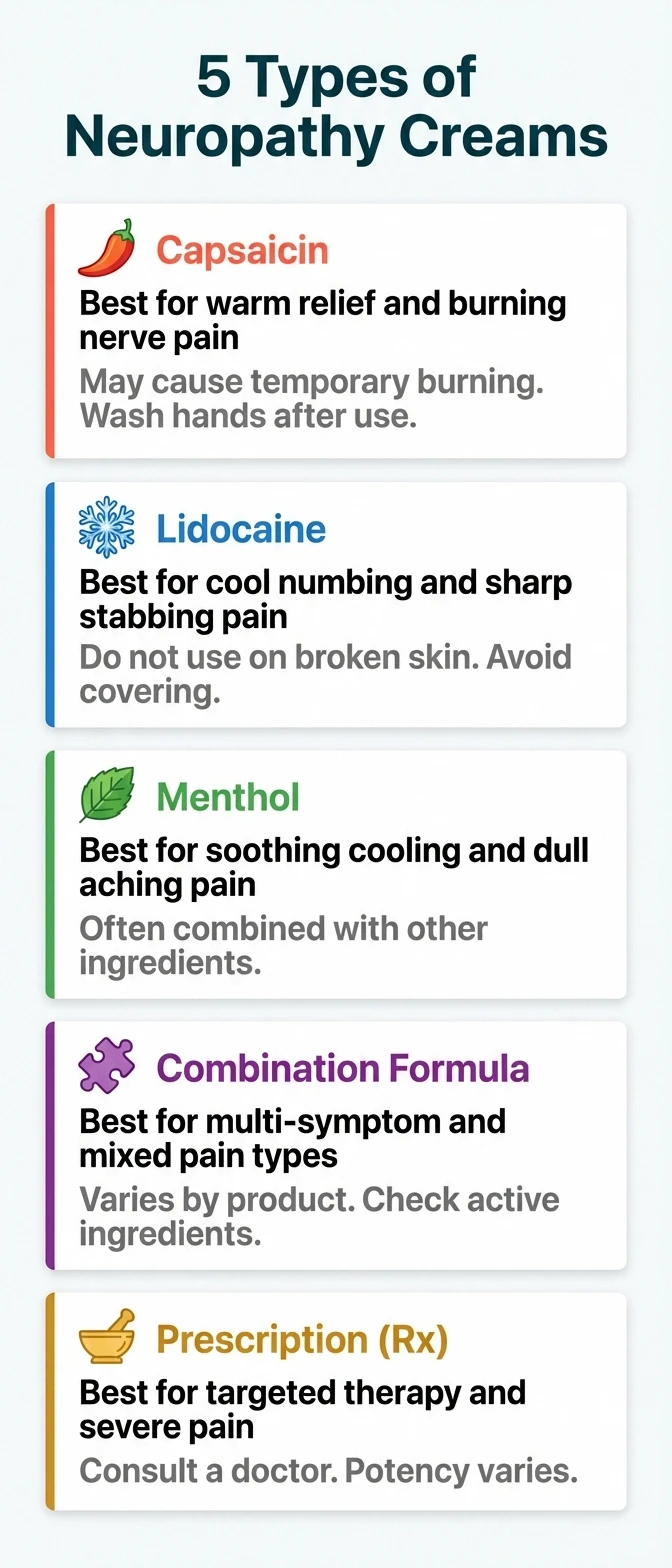
5 Types of Neuropathy Creams That Actually Work
Rather than naming specific brands that may change or become unavailable, let me walk you through the five categories that have genuine evidence behind them. This way, you can make an informed choice no matter what's on your pharmacy shelf.
reduction in neuropathy pain with consistent capsaicin cream use over 8 weeks (Cochrane review, 2017)
1. Capsaicin Creams — Best for Burning Pain
How they work: Deplete substance P from nerve endings, reducing pain signal transmission over time.
What to expect: The first few applications will cause a burning or warming sensation. This is normal and actually means it's working. Most people find the initial discomfort fades after 3-5 days of regular use, and meaningful pain relief kicks in after 1-2 weeks.
Best for: Burning neuropathy pain, diabetic neuropathy, chronic foot pain. For more, see our guide on soothing foot soaks.
Tips for use: Apply 3-4 times daily for the first 2 weeks (consistency is everything). Wear disposable gloves during application — capsaicin in your eyes is an experience you want to avoid. Wash hands thoroughly even after removing gloves. Don't apply to broken skin. Stick with it through the initial burning phase — most people who give up do so right before it starts working.
2. Lidocaine Creams and Patches — Best for Quick Relief
How they work: Temporarily numb the nerve endings in the application area, blocking pain signals for several hours.
What to expect: Relief typically begins within 30-60 minutes and lasts 4-8 hours depending on the concentration and how much you apply.
Best for: Nighttime pain, flare-ups, sharp or shooting pain, and areas where even light touch hurts.
Tips for use: Apply about 30 minutes before you need relief (before bed, before a long outing). Don't exceed the recommended area of application — lidocaine is absorbed systemically. Available over-the-counter at 4% (creams) or by prescription at 5% (patches). Patches can be particularly convenient for nighttime use.
3. Menthol-Based Creams — Best for Tingling and Mild Pain
How they work: Create a cooling sensation that activates cold-sensitive receptors, providing counter-irritation that competes with pain and tingling signals.
What to expect: Immediate cooling relief within minutes. Effects typically last 1-2 hours. Best used as needed rather than on a set schedule.
Best for: Tingling, mild burning, general discomfort, daytime use when you need quick but temporary relief.
Tips for use: Look for menthol concentration of at least 3-5% for meaningful effect. Can be combined with other treatments — use menthol for quick daytime relief, capsaicin for long-term management. Available widely and affordably at most pharmacies.
4. Combination Formulas — Best for Multiple Symptoms
How they work: Combine several active ingredients to address pain, inflammation, and nerve sensitivity simultaneously.
What to expect: Results vary based on the specific combination, but many people find these more effective than single-ingredient creams because neuropathy symptoms are rarely one-dimensional.
Best for: People with multiple symptom types (burning + tingling + aching) who want one product instead of several.
What to look for: The most effective combinations typically include some mix of capsaicin, menthol, alpha lipoic acid, B vitamins, or anti-inflammatory botanicals like arnica or turmeric.
5. Prescription Compounded Creams — For Stubborn Pain
How they work: Compounding pharmacies can create custom cream formulations prescribed by your doctor, combining multiple prescription-strength ingredients.
What to expect: These tend to be more potent than OTC options and can be tailored to your specific symptoms.
Common ingredients include: Ketamine (blocks pain receptors), gabapentin (reduces nerve firing), baclofen (muscle relaxant), higher-concentration lidocaine, and amitriptyline (affects pain signaling).
Best for: People who haven't found adequate relief from over-the-counter options. Talk to your doctor or a pain specialist about whether a compounded cream might be appropriate.
Prescription vs. OTC: Which Do You Need?
For most people, starting with over-the-counter options makes sense. Capsaicin and lidocaine creams are effective, affordable, and widely available. Give them a genuine trial — at least 2-4 weeks of consistent use — before deciding they don't work.
If OTC creams aren't providing enough relief, prescription options (5% lidocaine patches or compounded creams) are the next step. They're not dramatically more expensive, but they do require a doctor's visit.
My personal recommendation: start with capsaicin cream for daily management and keep lidocaine cream or patches on hand for nighttime or flare-ups. This two-pronged approach covers both the long-term reduction in pain signaling and the need for immediate relief.

Talk to Your Doctor
Before starting any new topical treatment, let your doctor or pharmacist know — especially if you take blood thinners, have kidney or liver conditions, or have broken skin or open wounds on your feet. Lidocaine is absorbed into the bloodstream and can interact with cardiac medications. Prescription compounded creams should always be supervised by your prescriber.
How to Apply Cream for Maximum Relief
This might seem obvious, but application technique actually matters. Done right, you'll get more absorption, better results, and fewer wasted tubes.
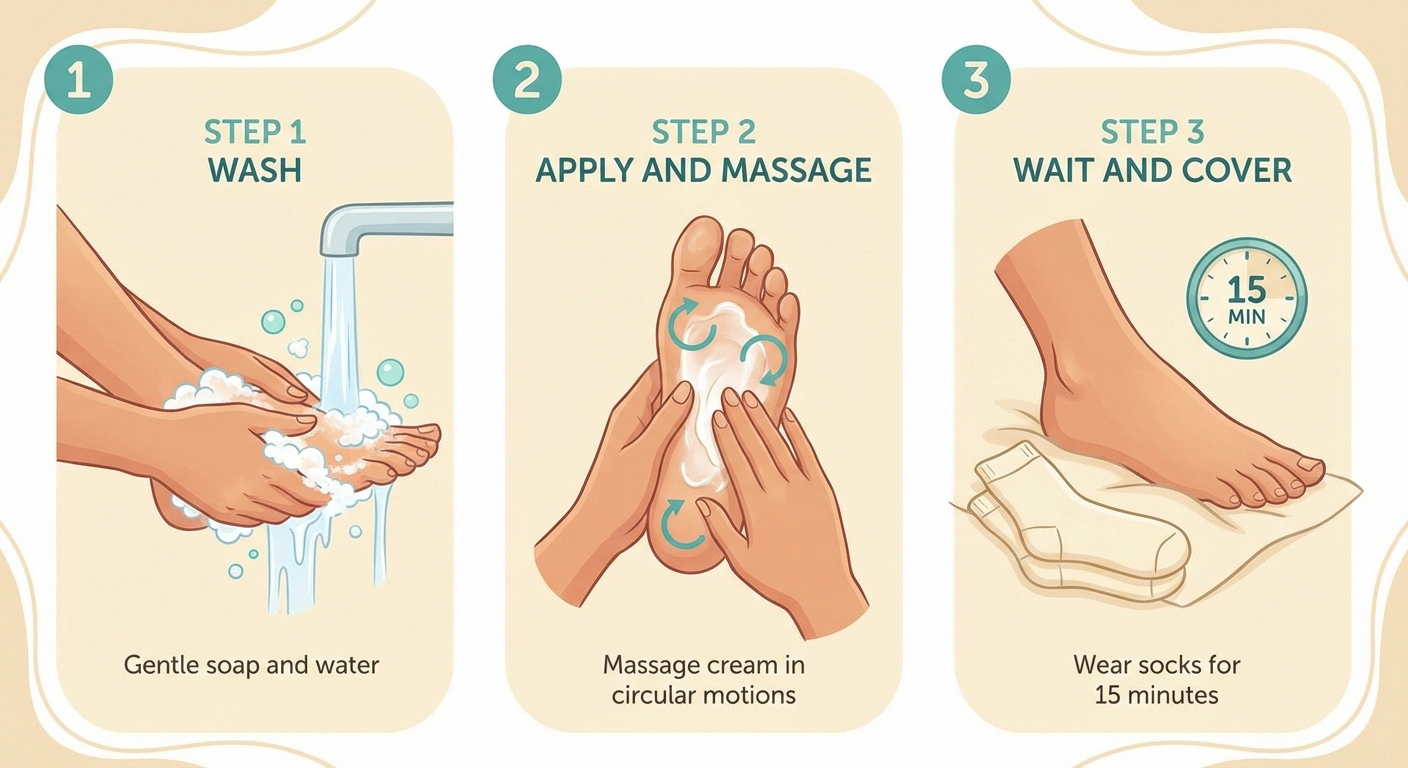
6 Steps for Maximum Absorption
Wash and dry your feet first
Clean skin absorbs better than skin covered in lotions, sweat, or dead cells.
Apply a thin, even layer
More isn't better — a thin layer absorbs more efficiently than a thick glob.
Massage gently for 1-2 minutes
Use circular motions, working from the toes up toward the ankle. The motion improves circulation and helps the cream penetrate.
Give it 10-15 minutes to absorb
Wait before putting on socks or shoes so the cream can fully penetrate rather than wipe off.
Be consistent — every day
Capsaicin only works with regular, repeated application. Skipping days resets the substance P depletion process.
Keep a pain log for the first month
Note which cream you used, when, and rate your pain before and 1-2 hours after. This data helps you figure out what's actually working.
Creams vs. Other Treatments: What Works Better?
Topical creams are one piece of the puzzle, not the whole solution. Here's how they fit into the bigger picture:
Creams + oral supplements = better than either alone. A cream treats pain at the surface while supplements like alpha lipoic acid and B vitamins support nerve health from the inside. I always recommend both. My supplement guide covers the best options.
Creams + lifestyle changes = the foundation. Diet, exercise, stress management, and addressing underlying causes (like blood sugar control) create the conditions for nerve healing. Creams manage symptoms while you do the deeper work.
Creams vs. oral pain medications: Creams have far fewer systemic side effects than medications like gabapentin or pregabalin. For mild to moderate symptoms, they may be all you need. For more severe pain, they can be used alongside oral medications to potentially reduce the dose needed.

❌ Creams Alone
Surface-level symptom management. May provide good relief, but the underlying nerves aren't receiving the nutritional and lifestyle support needed for longer-term improvement.
✓ Creams + Full Approach
Topical pain relief combined with nerve-supporting supplements, blood sugar management, gentle exercise, and anti-inflammatory diet. Most people experience noticeably better outcomes with this comprehensive approach.
Finding What Works for You
Neuropathy is personal. What works beautifully for one person may do nothing for another. The only way to find your answer is to try methodically.
Start with capsaicin or lidocaine (based on your primary symptoms), give it a real trial, and keep notes. If you need help identifying exactly what type of symptoms you're dealing with and what approaches might work best, my neuropathy assessment tool can point you in the right direction.
Your feet carried you through your whole life. They deserve some attention now.
Take care,
Janet
Frequently Asked Questions
Browse all our natural remedies guides for more articles like this one.
About the Author