Neuropathy and Driving: When Is It Safe and When Should You Stop?
Few things hit harder than the realization that your neuropathy might affect your ability to drive. Driving represents independence—the freedom to go where you want, when you want, without depending on anyone else. So when a member of my support group told us about the night he couldn't find the brake pedal and his car rolled into the garage door, every person in the room felt that fear in their gut.
Here's what the research tells us: a survey of 260 neuropathy patients across three medical centers found their motor vehicle accident rate was approximately 10.8 accidents per million vehicle miles traveled—nearly three times higher than the rate for age-matched drivers in the general population. Over 72% of those involved in accidents cited their neuropathy as a contributing factor, and 55% cited their neuropathy medications as well.
But here's the other side of that data: the majority of neuropathy patients still drive safely, and 51.6% had already changed their driving habits to compensate for their symptoms. This isn't an all-or-nothing situation. The question isn't simply “can people with neuropathy drive?”—it's “what specific symptoms affect driving safety, and what can you do about them?”
How Neuropathy Affects Your Ability to Drive
Driving requires a complex set of physical and cognitive abilities: feeling the pedals under your feet, reacting quickly to changes, maintaining coordination, and making split-second decisions. Peripheral neuropathy can interfere with several of these abilities simultaneously.
Loss of Sensation in the Feet
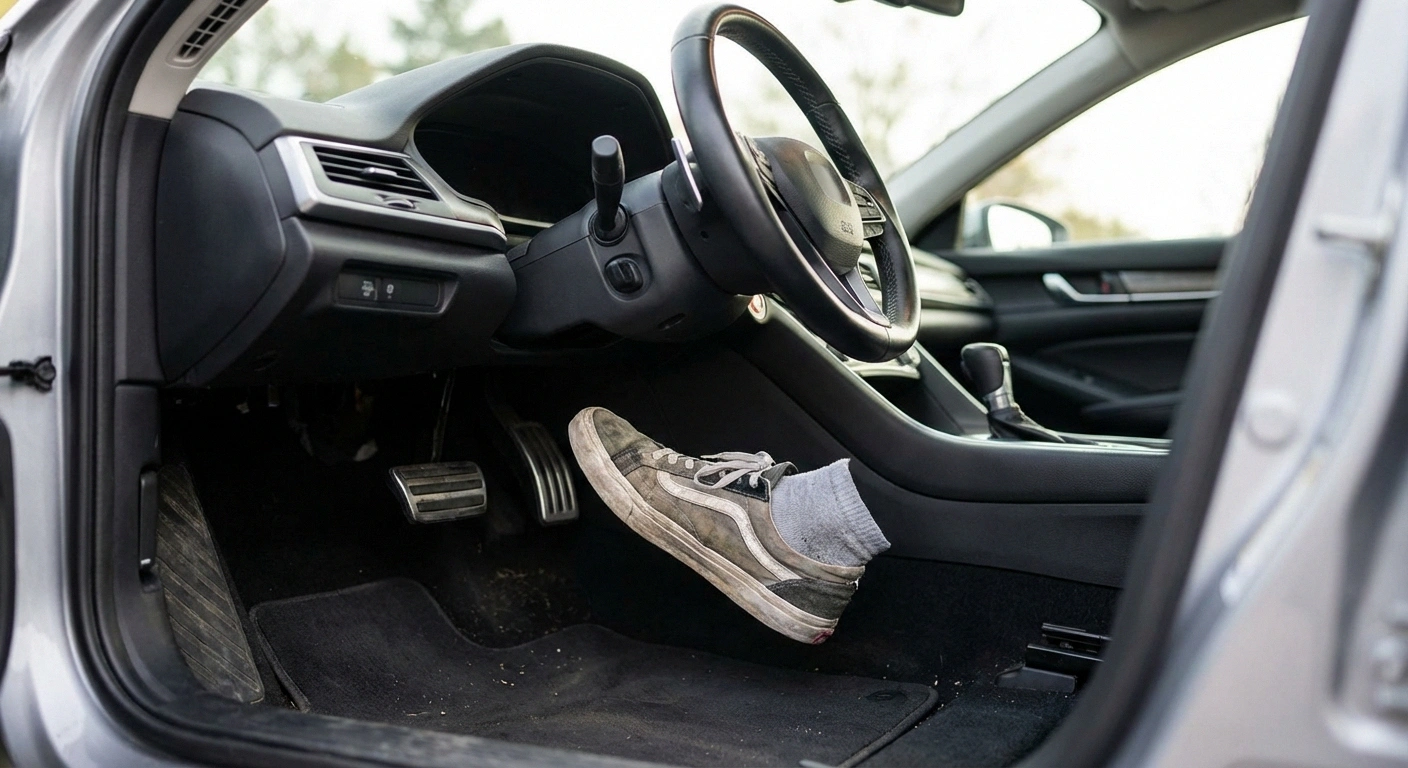
This is the most directly dangerous symptom for driving. When you can't feel the gas or brake pedal, you lose the unconscious feedback loop that allows you to modulate pressure smoothly. A 2020 driving simulator study found that participants with diabetic peripheral neuropathy had altered accelerator pedal control, with more abrupt pressure changes and less smooth speed regulation compared to people without neuropathy.
Practical effects include:
- Difficulty finding the pedals—you may fumble or miss the brake when switching from the accelerator
- Inconsistent pressure—jerky acceleration and sudden braking because you can't feel how hard you're pressing
- Delayed braking—the fraction of a second it takes to consciously locate the brake pedal (rather than reflexively pressing it) can significantly increase stopping distance
- Difficulty sensing road surface—subtle vibrations through the pedals that tell you about road conditions (gravel, ice, wet pavement) may not register
Pain and Distraction
Neuropathy pain—whether burning feet, shooting electric shocks, or constant aching—is a significant distraction while driving. Sudden shooting pain can cause you to flinch, momentarily taking your attention and possibly your hands off the wheel. Chronic pain is mentally exhausting, which affects concentration and reaction time even when the pain isn't at its worst.
Muscle Weakness and Foot Drop
Motor neuropathy can weaken the muscles in your feet and legs. Foot drop—the inability to properly lift the front of your foot—makes it difficult to move your foot from the accelerator to the brake pedal quickly and accurately. Leg weakness may also make it harder to apply consistent pressure to the pedals, especially during extended driving.
higher accident rate for neuropathy patients compared to age-matched drivers
Impaired Proprioception
Proprioception is your body's ability to sense where your limbs are in space without looking. Neuropathy damages this sense, meaning you may not know exactly where your foot is relative to the pedals without looking down—which takes your eyes off the road. People with impaired proprioception often describe driving as requiring much more conscious effort than it used to.
Medication Side Effects
Many common neuropathy medications can affect your ability to drive safely. Gabapentin and pregabalin can cause drowsiness, dizziness, and impaired concentration. Duloxetine may cause fatigue and blurred vision. Opioid pain medications significantly impair reaction time and judgment. If you're starting a new medication or adjusting a dose, avoid driving until you understand how it affects you.
Warning Signs That Driving May Be Unsafe
Be honest with yourself about whether you've experienced any of the following. These are signals that your neuropathy may be affecting your driving safety:
- You've hit the wrong pedal (accelerator instead of brake, or vice versa)
- You can't feel which pedal your foot is on without looking down
- You've over-accelerated because you couldn't feel how hard you were pressing the gas
- Your foot has slipped off the brake or accelerator pedal
- You've experienced sudden, intense pain while driving that distracted you
- You've had a near-miss or actual accident that you attribute to numbness or pain
- You feel exhausted or anxious after short drives
- Passengers have commented on your driving (sudden stops, jerky acceleration, drifting)
- You avoid driving at night, in rain, or on highways because you feel unsafe
- You find yourself gripping the steering wheel much harder than you used to—compensating for reduced feel
If you recognized yourself in even one or two of these scenarios, it's time to take action. That doesn't necessarily mean giving up driving—but it does mean evaluating your situation and exploring your options.
Steps to Take Before Giving Up the Keys
If your neuropathy is affecting your driving, there's a structured process you can follow before making any drastic decisions:
⚠️ Driving Safety Self-Check
I've hit the wrong pedal (gas instead of brake)
I can't feel which pedal my foot is on without looking
My foot has slipped off the brake or accelerator
Sudden pain while driving has distracted me
I've had a near-miss or accident due to numbness/pain
Passengers have commented on my sudden stops or jerky driving
I avoid night, rain, or highway driving because I feel unsafe
If you checked even 1–2 items, consider a professional driving evaluation.
1. Get a Comprehensive Driving Evaluation
An Occupational Therapy Driver Rehabilitation Specialist (OT-DRS) can perform a comprehensive driving evaluation that assesses exactly how your neuropathy affects your driving. This evaluation typically includes:
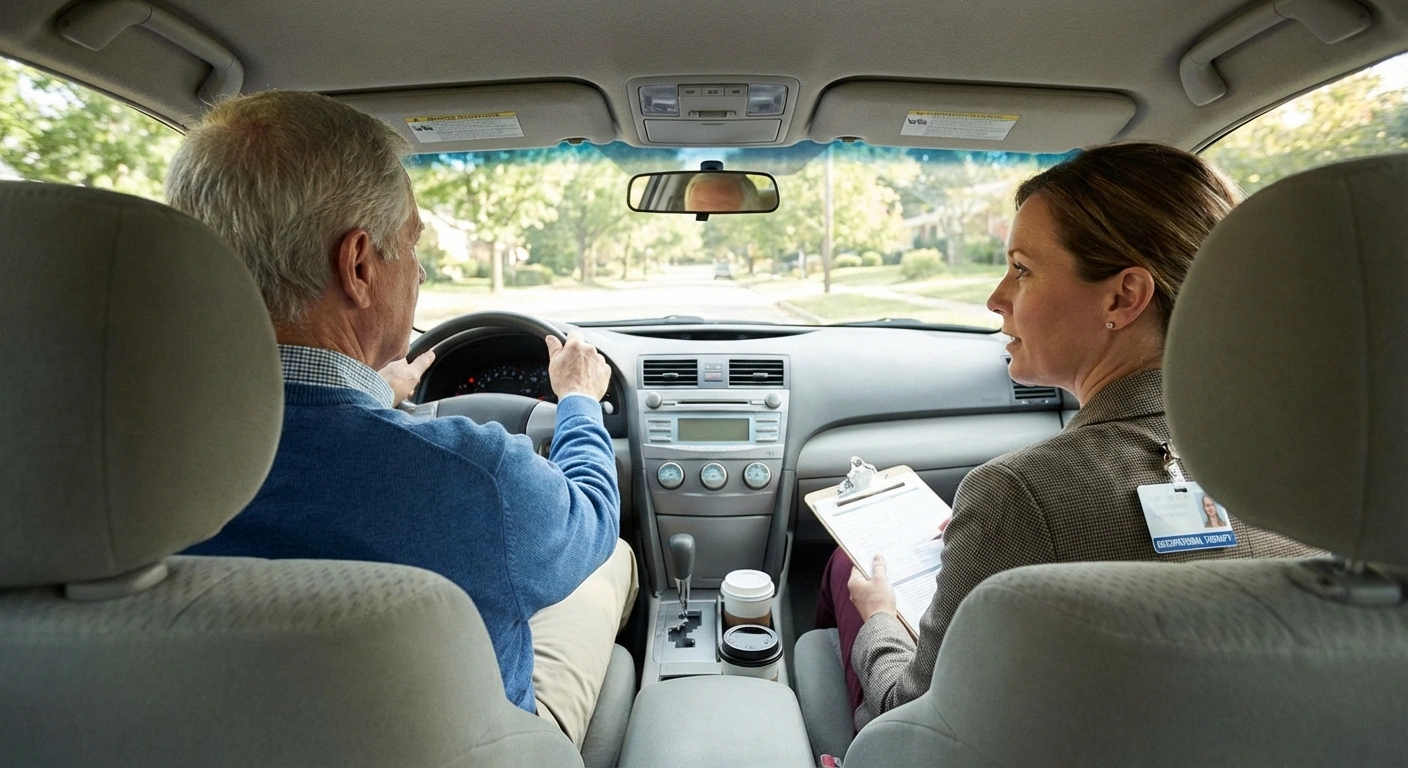
- Clinical assessment: Testing your sensation, strength, coordination, reaction time, and vision
- Cognitive screening: Evaluating attention, processing speed, and decision-making
- Behind-the-wheel assessment: Observing your actual driving in controlled conditions
- Medication review: Evaluating how your current medications may affect driving
The OT-DRS can then recommend specific solutions—from simple technique changes to adaptive equipment—tailored to your exact deficits. You can find a certified driver rehabilitation specialist through the Association for Driver Rehabilitation Specialists (ADED) at aded.net.
2. Talk to Your Doctor About Symptom Management
Sometimes improving your neuropathy management can improve your driving safety. Ask your doctor about:
- Adjusting medications that cause drowsiness—perhaps timing doses differently so peak sedation doesn't coincide with driving
- Switching to medications with fewer cognitive side effects
- Addressing the underlying cause of your neuropathy more aggressively
- Treatments that may improve sensation, such as alpha-lipoic acid or B12 supplementation if deficiency is a factor
3. Explore Adaptive Driving Equipment
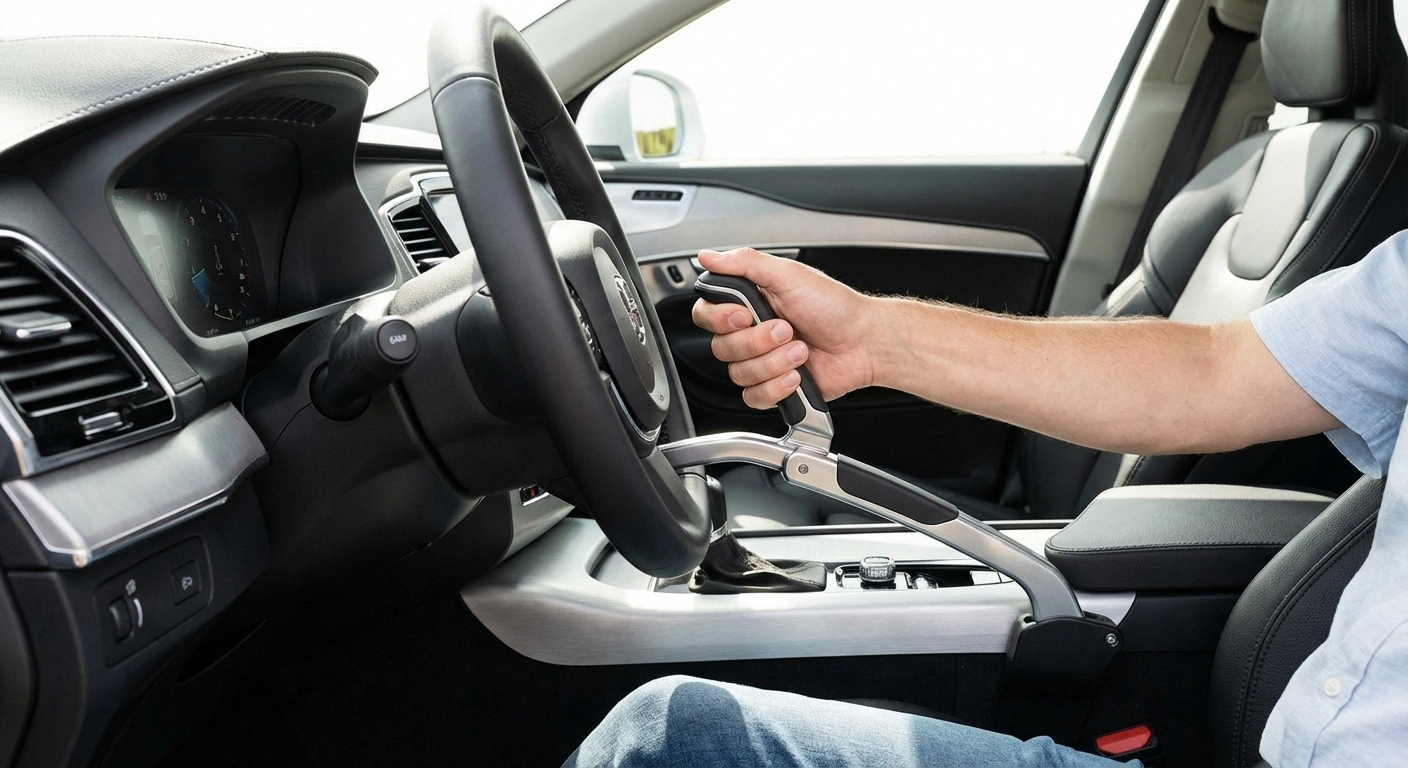
If your feet are the problem, you can take your feet out of the equation. Modern adaptive driving equipment allows people with significant lower-limb impairment to drive safely using their hands instead. Options include:
Hand controls are the most common adaptation for people with neuropathy in their feet. These devices allow you to operate the gas and brake using a lever mounted near the steering column. Push forward to brake, pull back to accelerate (or similar configurations). They can be installed in most vehicles and typically include a “lockout” feature so other drivers can use the vehicle normally with foot pedals.
Steps Before Giving Up the Keys
Get a Professional Driving Evaluation
An OT Driver Rehabilitation Specialist tests sensation, strength, reaction time, and behind-the-wheel performance. Find one at aded.net.
Optimize Symptom Management
Adjust medication timing, switch to less sedating options, address underlying causes. Better neuropathy management = safer driving.
Explore Adaptive Equipment
Hand controls ($1K–$3K installed) let you drive with your hands instead of feet. Left-foot accelerators, pedal guards, and steering aids also available.
Practice in Safe Environments
Empty parking lots, quiet residential streets, familiar routes. Research shows neuropathy drivers improve with targeted practice.
Left-foot accelerators may be an option if your right foot is more severely affected than your left. This device adds a second accelerator pedal on the left side, allowing you to use your left foot for gas while keeping your right foot on the brake—or vice versa.
Pedal extensions and pedal guards can help if the issue is primarily foot placement—reducing the distance your foot needs to travel between pedals or preventing accidental pedal contact.
Steering wheel modifications like spinner knobs can help if neuropathy affects your hands, making it easier to maintain grip and control with reduced hand strength or sensation.
4. Practice in Safe Environments
Interestingly, driving simulator research has shown that people with neuropathy can improve their driving performance with practice, especially when driving familiar routes. If you're adapting to new equipment or techniques, practice in:
- Empty parking lots during off-hours
- Quiet residential streets you know well
- With a calm, supportive passenger who can serve as a second set of eyes
Costs and Funding for Adaptive Equipment
The cost of adaptive driving equipment varies widely:
Key Takeaway
Having neuropathy does not automatically mean you must stop driving. Many people drive safely with modified habits or adaptive equipment. The key is getting a professional evaluation, being honest about your symptoms, and making informed decisions — not waiting for a scary close call.
- Hand controls: $1,000–$3,000 installed (basic mechanical systems are on the lower end; electronic systems cost more)
- Left-foot accelerator: $300–$1,000 installed
- Comprehensive driving evaluation: $300–$700 (may be partially covered by insurance or Medicare)
- Training with adaptive equipment: $100–$200 per session (typically 2-4 sessions needed)
Several funding options may help offset these costs:
- Medicare may cover the driving evaluation if performed by a qualified occupational therapist and ordered by your physician
- Medicaid coverage varies by state—some states cover adaptive equipment
- State vocational rehabilitation agencies may provide funding if driving is essential for employment
- Nonprofit organizations like local Centers for Independent Living may offer grants or low-interest loans
- Auto manufacturer programs: Several major automakers offer rebates of $1,000-$2,500 on adaptive equipment installed in their vehicles
- Tax deductions: Adaptive equipment may qualify as a medical expense deduction. Consult your tax advisor
Practical Tips for Safer Driving With Neuropathy
Whether or not you use adaptive equipment, these strategies can help you drive more safely with neuropathy:
Before You Drive
- Check your feet: Do a quick sensory check—can you feel the floor? Wiggle your toes? If numbness is particularly bad today, consider whether this is a good day to drive.
- Wear appropriate footwear: Firm-soled shoes with a thin, flat sole provide better pedal feedback than thick cushioned soles or bare feet. Avoid flip-flops, high heels, or slippers.
- Check medication timing: If your neuropathy medications cause drowsiness, plan your driving around the times when side effects are least intense.
- Adjust your seat: Position your seat so you can easily reach the pedals without stretching. Your heel should rest comfortably on the floor with the ball of your foot on the brake pedal.
While Driving
- Increase following distance: Give yourself more room to react. If you normally follow at 3 seconds, increase to 4-5 seconds.
- Avoid distractions: Keep the radio at a reasonable volume, don't eat while driving, and minimize phone use (even hands-free calls require cognitive bandwidth you may need).
- Drive familiar routes: Research shows that neuropathy patients perform better on routes they know well. When possible, stick to familiar roads.
- Limit driving duration: Fatigue worsens neuropathy symptoms. Take breaks every 45-60 minutes on longer drives.
- Consider timing: Many people with neuropathy find symptoms are worse in the evening and at night. Drive during your best hours—typically mid-morning to early afternoon.
- Be extra cautious in challenging conditions: Rain, snow, heavy traffic, and nighttime driving all require more reaction time and sensation feedback. Reduce speed and increase alertness.
When It's Time to Stop Driving
Sometimes, despite best efforts and adaptive equipment, neuropathy progresses to a point where driving is no longer safe. This is one of the hardest decisions a person can face, and it deserves to be approached with compassion and honesty.
Consider stopping driving if:
- A driver rehabilitation specialist recommends against driving
- You've had multiple close calls or accidents related to your neuropathy symptoms
- You can't safely operate adaptive equipment
- Your neuropathy medications significantly impair your cognition and no alternatives are available
- You feel genuine fear or anxiety every time you drive
- The people who ride with you regularly express safety concerns
Giving up driving doesn't mean giving up independence. Explore alternatives: ride-sharing services, public transportation, volunteer driver programs (many communities have these for seniors and people with disabilities), and family and friend networks. Many people discover that the relief from driving anxiety actually improves their overall quality of life.
✓ May Still Drive Safely
Mild numbness, well-managed symptoms, passed professional evaluation, willing to use adaptive equipment, and modified driving habits.
❌ Consider Stopping
Multiple accidents or close calls, failed professional evaluation, can't use adaptive controls, significant medication impairment, or persistent driving anxiety.
Legal Considerations
The legal landscape around driving with neuropathy varies significantly by state and country:
- Most U.S. states do not require you to report neuropathy to your Department of Motor Vehicles, though some states have medical reporting requirements for conditions that affect driving ability
- Your doctor is generally not required to report your condition (except in states with mandatory physician reporting laws), but they may advise you not to drive
- If you have an accident and it's determined that a known medical condition contributed, there could be legal and insurance implications
- Using adaptive equipment typically requires a restricted license that specifies the equipment must be present in any vehicle you drive
Check with your state's DMV for specific requirements in your area. If you've been evaluated by a driver rehabilitation specialist and deemed safe to drive (with or without adaptive equipment), having that documentation can protect you legally.
Frequently Asked Questions
Is it illegal to drive with neuropathy?
No, having neuropathy alone does not make driving illegal in any U.S. state. However, if your symptoms impair your ability to drive safely and you cause an accident, you could face legal consequences. Some states require you to report conditions that affect driving ability to the DMV, which may lead to a medical evaluation or restricted license. The safest approach is to get a professional driving evaluation and follow the recommendations.
Can I get disability accommodations for driving with neuropathy?
Yes. Adaptive driving equipment is considered a reasonable accommodation for people with disabilities. A driver rehabilitation specialist can prescribe the specific equipment you need, and you can obtain a restricted drivers license that notes the requirement for adaptive controls. Many states also offer handicap parking permits for people with neuropathy that significantly affects their mobility.
Will my insurance cover adaptive driving equipment?
Auto insurance typically does not cover adaptive equipment directly. However, Medicare may cover the occupational therapy driving evaluation if prescribed by your physician. Medicaid coverage for equipment varies by state. Some private health insurance plans cover adaptive equipment as durable medical equipment. Check with your specific plan and your state vocational rehabilitation office for available funding sources.
Does neuropathy affect reaction time?
Yes. Loss of sensation in the feet means you rely on visual and conscious motor planning rather than the fast, automatic reflexes that normally control pedal movement. This adds a fraction of a second to reaction time—which at highway speeds can translate to significant additional stopping distance. Pain can also slow reaction time by diverting attention, and many neuropathy medications cause drowsiness that further impairs response speed.
What about neuropathy in the hands—does that affect driving?
Neuropathy in the hands can affect your ability to grip the steering wheel, operate turn signals and controls, and feel the steering feedback that tells you about road conditions. Spinner knobs, steering wheel covers that improve grip, and built-up control handles can help. A driver rehabilitation specialist can evaluate whether your hand symptoms affect driving safety and recommend appropriate adaptations.
How often should I be re-evaluated for driving safety?
If you have progressive neuropathy, an annual driving evaluation is a good idea. If your neuropathy is stable (the underlying cause is controlled), less frequent evaluation may be sufficient. Any time you notice a significant change in your symptoms—worsening numbness, new weakness, increased medication side effects—schedule an evaluation before it affects your driving safety.
Maintaining Independence
The most important message I want to leave you with is this: having neuropathy does not automatically mean you have to stop driving. Many people with neuropathy continue to drive safely for years—some with adaptive equipment, some with modified habits, and some whose symptoms are well-managed enough that no special accommodations are needed.
The key is being proactive rather than waiting for a scary close call to force the conversation. Get evaluated. Explore your options. Make informed decisions based on professional assessment rather than fear or denial. And if the time does come to stop driving, know that it reflects responsible self-awareness, not defeat.
Whether you're behind the wheel or riding as a passenger, what matters most is that you're safe—and that you continue living as fully as your neuropathy allows.
About the Author