
The private moment every SFN patient knows: checking whether you can feel your own skin.
What Is Small Fiber Neuropathy?
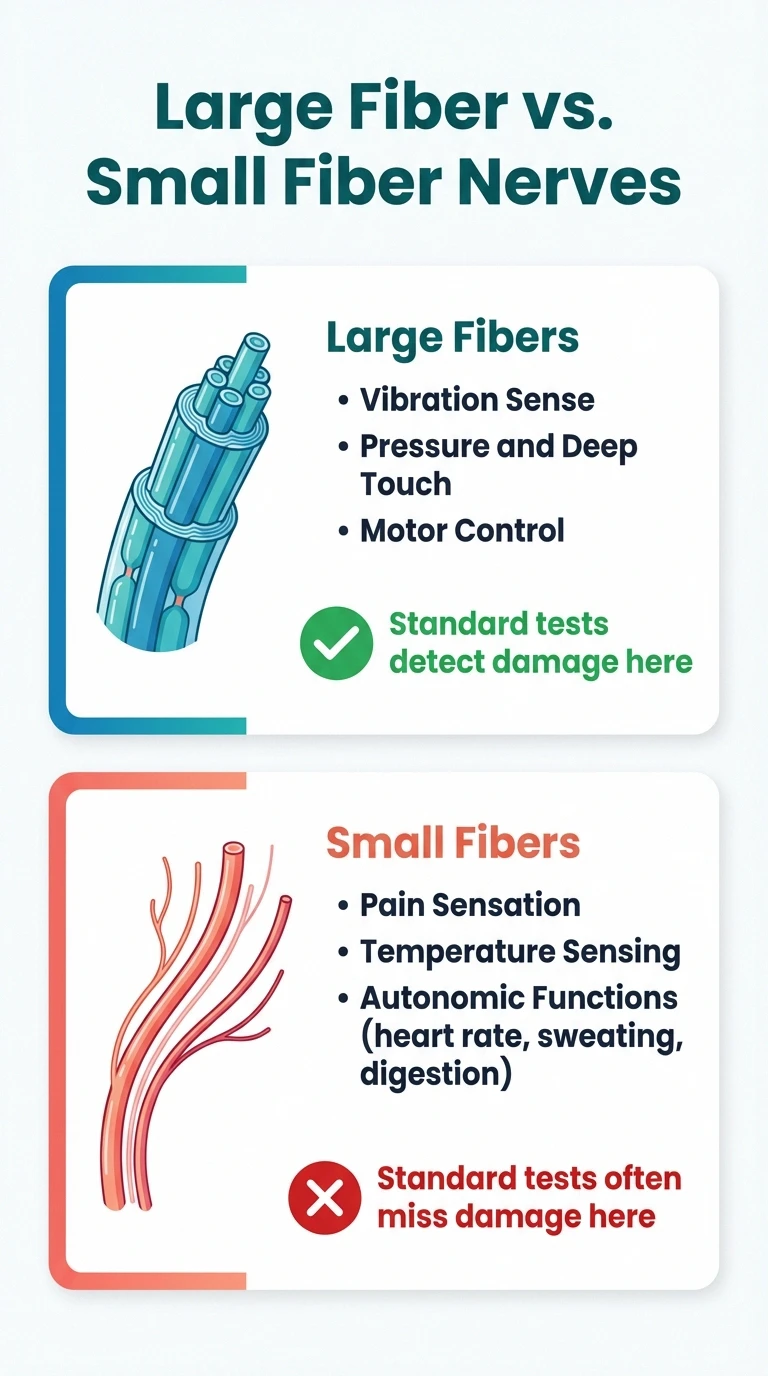
To understand SFN, it helps to know that you have two types of nerve fibers in your peripheral nervous system: Large fibers handle vibration, pressure, touch, and motor control (muscle movement). These are the fibers tested by standard nerve conduction studies — the test where they zap your nerves with small electrical impulses. Small fibers handle pain, temperature sensation, and autonomic functions (the things your body does automatically). These fibers are too thin and too numerous for standard nerve conduction studies to detect.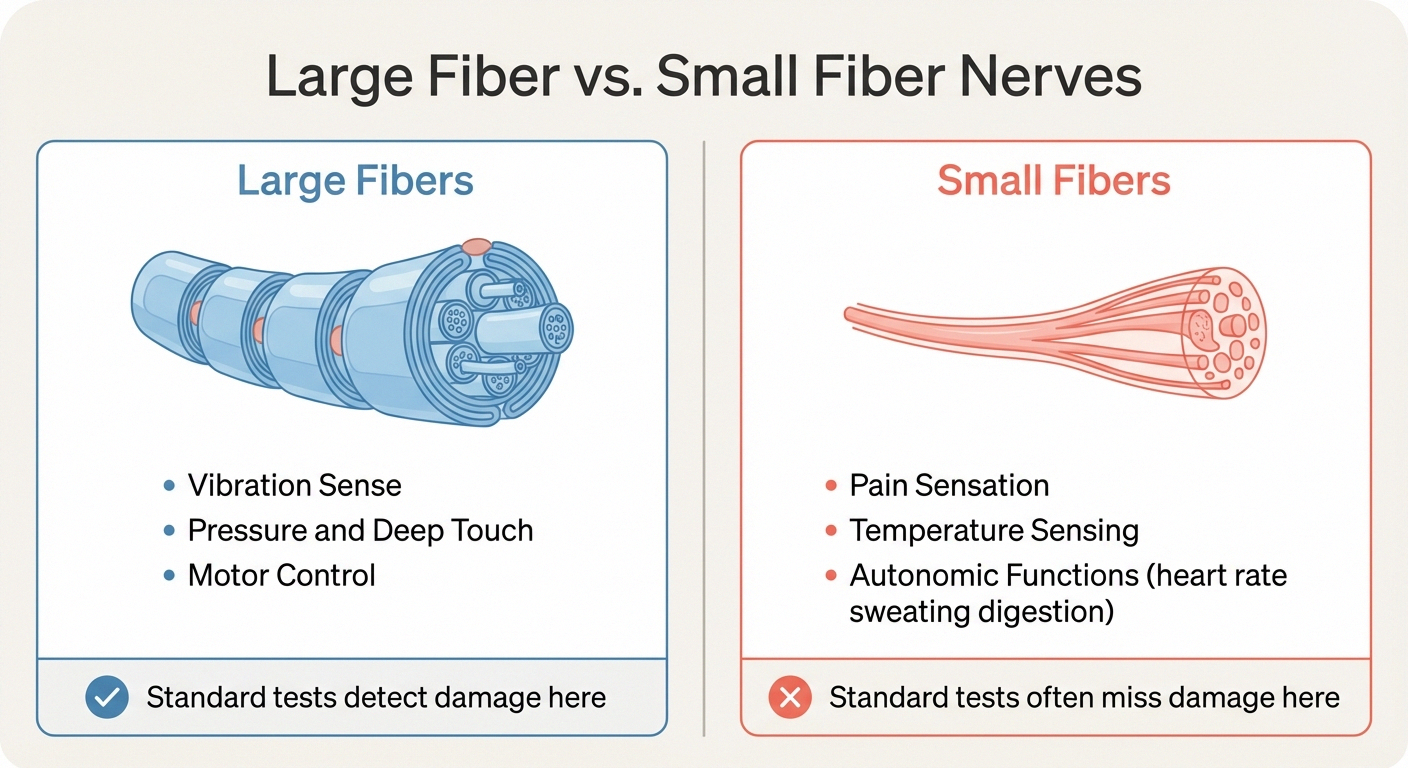
Key Takeaway
Standard nerve conduction studies test large fibers only. If you have SFN, those tests can look completely normal while you're in significant pain. The right test for small fiber neuropathy is a skin punch biopsy — a minor procedure that directly counts the nerve fibers in your skin. For more, see our guide on stages of neuropathy progression. For more, see our guide on nutritional causes of neuropathy.
SFN can also affect the hands — see our guide on neuropathy in hands.
Many SFN cases remain unexplained — read more about idiopathic neuropathy.
How SFN Feels Different From Other Neuropathy
Small fiber neuropathy has its own distinctive flavor of misery. While there's overlap with other types of neuropathy, certain symptoms are more characteristic of SFN:
The pain is often the dominant symptom
Unlike large fiber neuropathy where numbness and weakness tend to come first, SFN usually announces itself with pain — and often intense pain that seems disproportionate to what you'd expect.The pattern can be unusual
While most neuropathy follows a “stocking and glove” pattern (starting in the feet and hands), SFN can sometimes be patchy — affecting random areas of the body — or widespread, extending to the face, torso, or scalp (rare in other neuropathy types).Autonomic symptoms are common
Because small fibers also control automatic body functions, SFN often comes with symptoms that seem unrelated to nerve damage. If you have nerve pain plus a constellation of autonomic symptoms, SFN should be on the radar.SFN Symptom Checklist
Burning pain in feet or hands that feels like they're on fire For more, see our guide on differentiating nerve pain from vascular pain.
Stabbing or electric shock sensations that come out of nowhere
Allodynia — pain from bedsheets touching your feet or clothing against your skin
Temperature sensitivity — even mild cold or warmth triggers significant pain
Sweating abnormalities — too much, too little, or sweating in unusual patterns
Lightheadedness when standing up (orthostatic intolerance)
Heart rate irregularities — racing heart, especially upon standing
Digestive issues — bloating, constipation, or gastroparesis (slow stomach emptying)
If several of these sound familiar, discuss small fiber neuropathy specifically with your doctor.
Common Causes (And the Frustrating 50%)
Here's the difficult truth: in roughly half of all SFN cases, no cause is ever identified. This is called idiopathic small fiber neuropathy, and it's maddening for patients who want — who need — an answer.
of hand tingling from small fiber neuropathy neuropathy cases have no identified cause — called idiopathic SFN. A EMG limitations for small fiber testing is still meaningful and opens the door to symptom management. Learn more about potential for nerve regeneration.
How Small Fiber Neuropathy Is Diagnosed
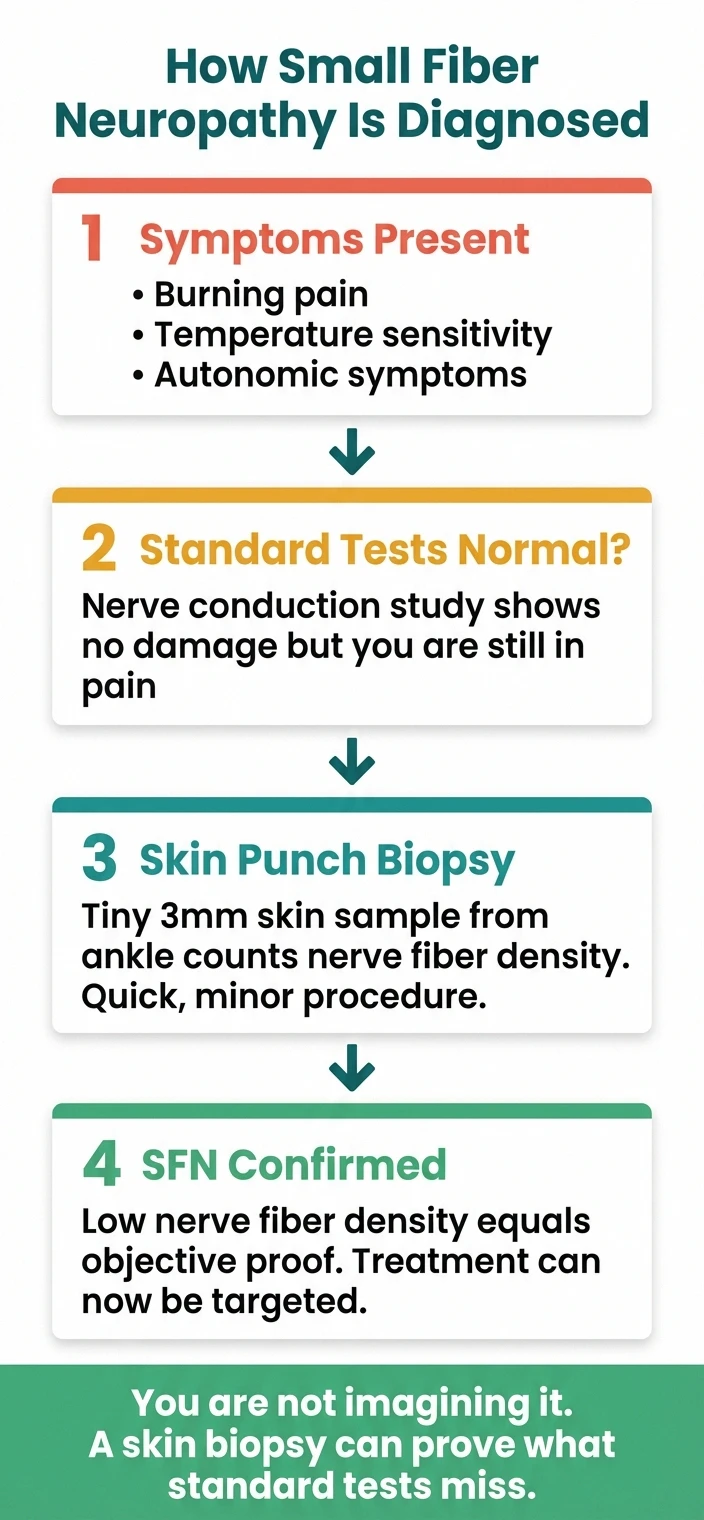
If standard nerve conduction studies are normal but you're clearly suffering, here's what can actually detect SFN:Skin Punch Biopsy — The Gold Standard
This is the most reliable test for SFN. A tiny (3mm) punch of skin is taken, usually from the ankle and sometimes the thigh, and sent to a lab where they count the small nerve fibers (intraepidermal nerve fiber density, or IENFD). If the count is below the normal range for your age, you have objective proof of small fiber damage. The biopsy itself is minor — a small pinch with local anesthesia, a tiny bandage afterward, and it heals within a week or two. Don't let the word “biopsy” scare you.Quantitative Sensory Testing (QST)
This tests your ability to detect temperature changes and vibration with precision instruments. It can identify abnormalities in small fiber function even before the fibers are structurally damaged.Sudomotor and Autonomic Testing
Tests your sweat glands (controlled by small fibers) to confirm small fiber involvement and autonomic dysfunction. Heart rate variability testing and tilt table testing can identify the full scope of small fiber damage beyond just pain.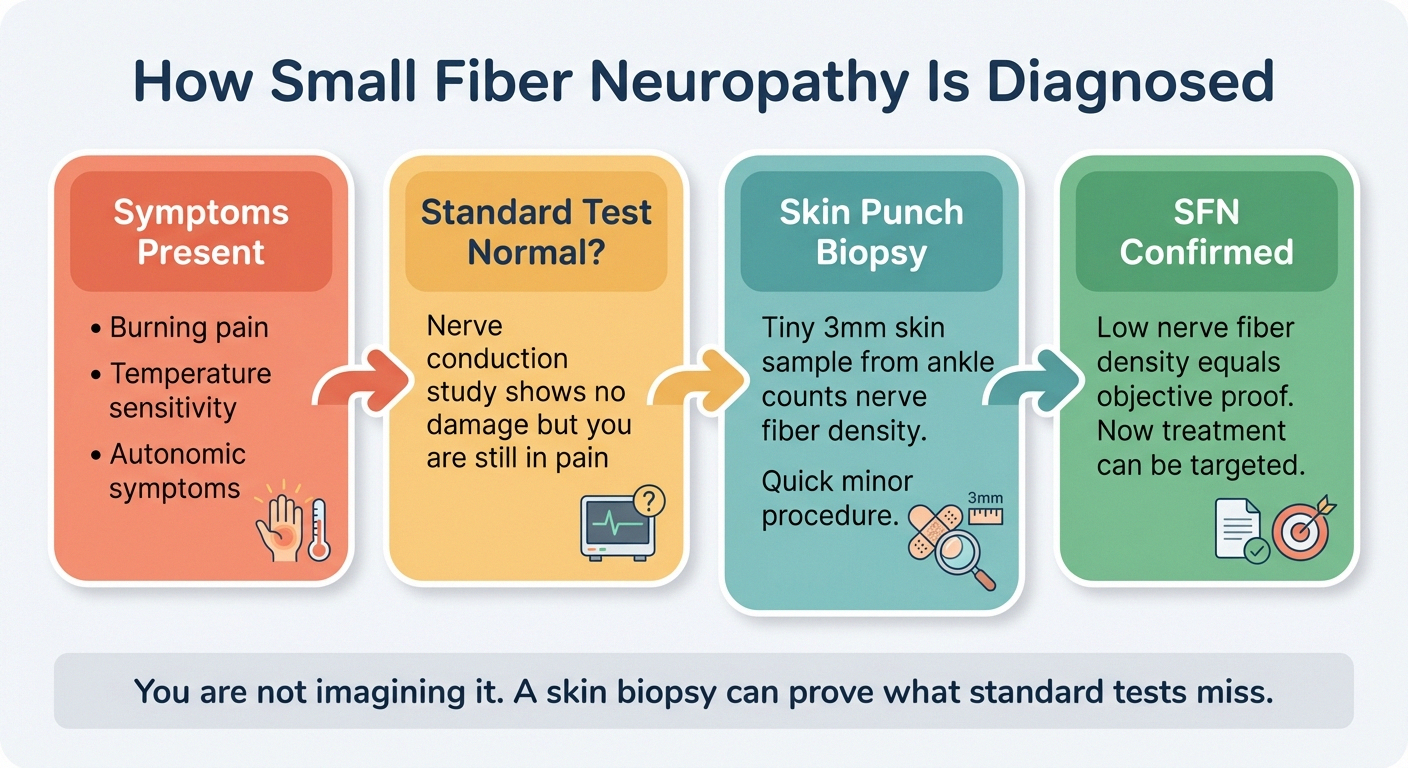
Talk to Your Doctor
Not all neurologists are well-versed in SFN. If your standard tests are normal but your symptoms are real, ask specifically about a skin punch biopsy. If your neurologist isn't familiar with it, seek a neuromuscular specialist or a clinic that specializes in neuropathy. You have the right to pursue a complete evaluation.
Treatment Options
Treatment for SFN follows two paths: addressing the underlying cause (if found) and managing symptoms.Treating the cause
Blood sugar control if diabetes or pre-diabetes is the driver. Immunotherapy (IVIG or immunosuppressants) if an autoimmune cause is identified — some patients see dramatic improvement. Vitamin supplementation if deficiency is found. Treating underlying infection. Stopping the offending medication when possible.Managing symptoms
Medications commonly used for SFN pain include gabapentin or pregabalin (reduce nerve firing), duloxetine or amitriptyline (affect pain processing), topical lidocaine (numbs the area), topical capsaicin (depletes pain-signaling chemicals), and low-dose naltrexone (emerging evidence for neuroinflammation). Standard pain medications like ibuprofen and acetaminophen typically do very little for nerve pain — nerve pain requires nerve-specific medications.Natural Approaches That May Help
Many of the natural approaches that help neuropathy generally also apply to SFN: alpha lipoic acid (600 mg daily) for antioxidant protection, B vitamins especially B12 (methylcobalamin) and B1 (benfotiamine) for nerve support, an anti-inflammatory diet, regular gentle exercise, stress management, and foot soaks for localized pain relief.
❌ Without Proper Treatment
Ongoing burning pain, worsening autonomic symptoms, sleep disruption, and reduced disability benefits for small fiber neuropathy. Without treating an underlying cause, nerve fiber loss may continue.
✓ With Targeted Treatment
Reduced pain intensity, improved autonomic function, and in some cases actual nerve fiber regeneration. People with treated underlying causes often see the most significant improvements.
Living With SFN: What to Expect Long-Term
I won't sugarcoat this: small fiber neuropathy is a chronic condition for most people. But chronic doesn't mean hopeless. SFN rarely causes the muscle weakness and complete numbness that large fiber neuropathy can cause. The autonomic symptoms can be as challenging as the pain — pay attention to hydration, salt intake (for orthostatic intolerance), and positional changes. Finding the right treatment combination often takes time and patience. There will be good days and bad days, and flare-ups are common — often triggered by stress, poor sleep, or illness.
Research Says
Small nerve fibers are among the most regenerative in the peripheral nervous system. Unlike large fibers, which regenerate slowly and incompletely, small fibers can regrow — and research has documented measurable increases in nerve fiber density following successful treatment of the underlying cause. This is one reason why early diagnosis and cause identification matter so much.
You're Not Crazy. This Is Real.
If you've been suffering with burning pain, strange sensations, and autonomic symptoms while being told your nerve tests are normal — you are not imagining it. Small fiber neuropathy is a real, diagnosable condition with real treatment options. Ask about a skin punch biopsy. Find a specialist who understands SFN. And don't give up on finding answers. If you want to understand your symptoms better before your next appointment, my neuropathy assessment tool can help you organize what you're experiencing and identify the right questions to ask. For broader supplement options, my supplement guide covers what has research behind it. You deserve answers. Keep pushing for them. JanetFrequently Asked Questions
Browse all our types and causes of neuropathy guides for more articles like this one.
About the Author