If you've spent any time researching neuropathy vitamin D alongside other supplementss, you've seen alpha-lipoic acid — an out-of-pocket neuropathy supplement acid mentioned. Probably a lot. For more, see our guide on diet for nerve health.
ALA has shown promise for cancer survivors dealing with chemo-induced neuropathy.
If you're also considering medication, our gabapentin for neuropathy guide covers what to expect.
And you might be wondering what I wondered when I first came across it: Is this actually legitimate, or is it just another supplement that sounds good on paper but does nothing in real life?
After two years of taking it myself and watching others in my support group try it, here's my honest answer: alpha lipoic acid is one of the few supplements with real clinical evidence behind it for neuropathy. Not the only one. Not a miracle. But genuinely one of the more research-backed options available.
Let me walk you through what it is, what the studies actually show, and what you can realistically expect if you try it.
What Is Alpha Lipoic Acid?
Alpha lipoic acid (ALA) is an melatonin alongside alpha-lipoic acid for neuropathy that your body produces naturally in small amounts. It's found in every cell, where it helps convert glucose into energy.
What makes ALA unusual — and particularly interesting for neuropathy — is that it's both water-soluble and fat-soluble. Most dietary antioxidants for nerve protections are one or the other. This means ALA can work throughout your entire body, including inside nerve cells and along the fatty myelin sheath that protects them.
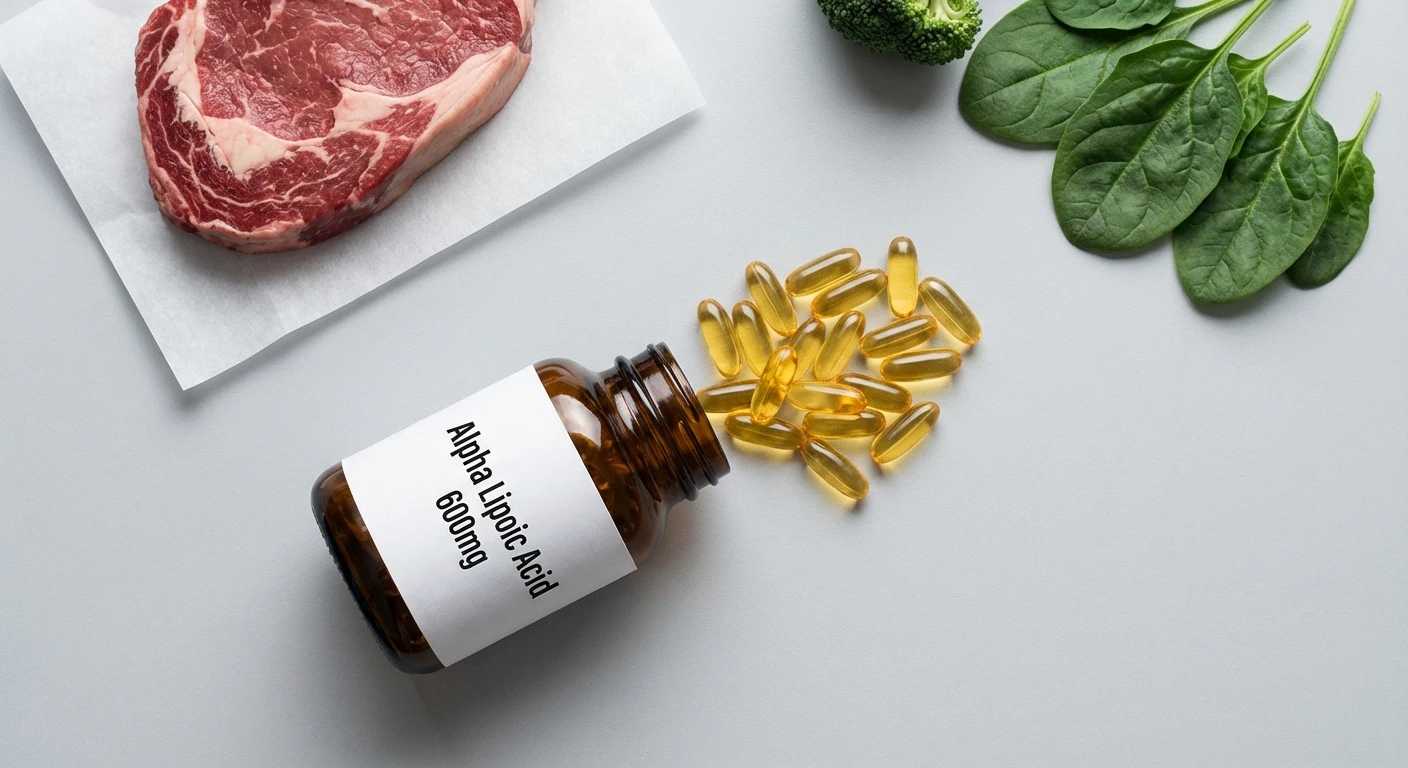
Your body produces ALA, but the amounts decrease as you age. You can get small amounts from food — red meat, organ meats, foods rich in alpha-lipoic acid, broccoli, and Brussels sprouts — but the quantities are far below what the neuropathy studies used. Which is why supplementation is necessary if you want the therapeutic effects.
Key Takeaway
What makes ALA uniquely powerful for nerve health is that it's both water-soluble and fat-soluble — most antioxidants are only one or the other. This means ALA can work inside nerve cells, along the fatty myelin sheath that protects them, and throughout your bloodstream simultaneously. It's a rare combination.
The Evidence: What Studies Actually Show About ALA and Neuropathy
This is where ALA separates itself from most neuropathy supplements. The evidence isn't just anecdotal — there are actual large-scale clinical trials.
The NATHAN Studies
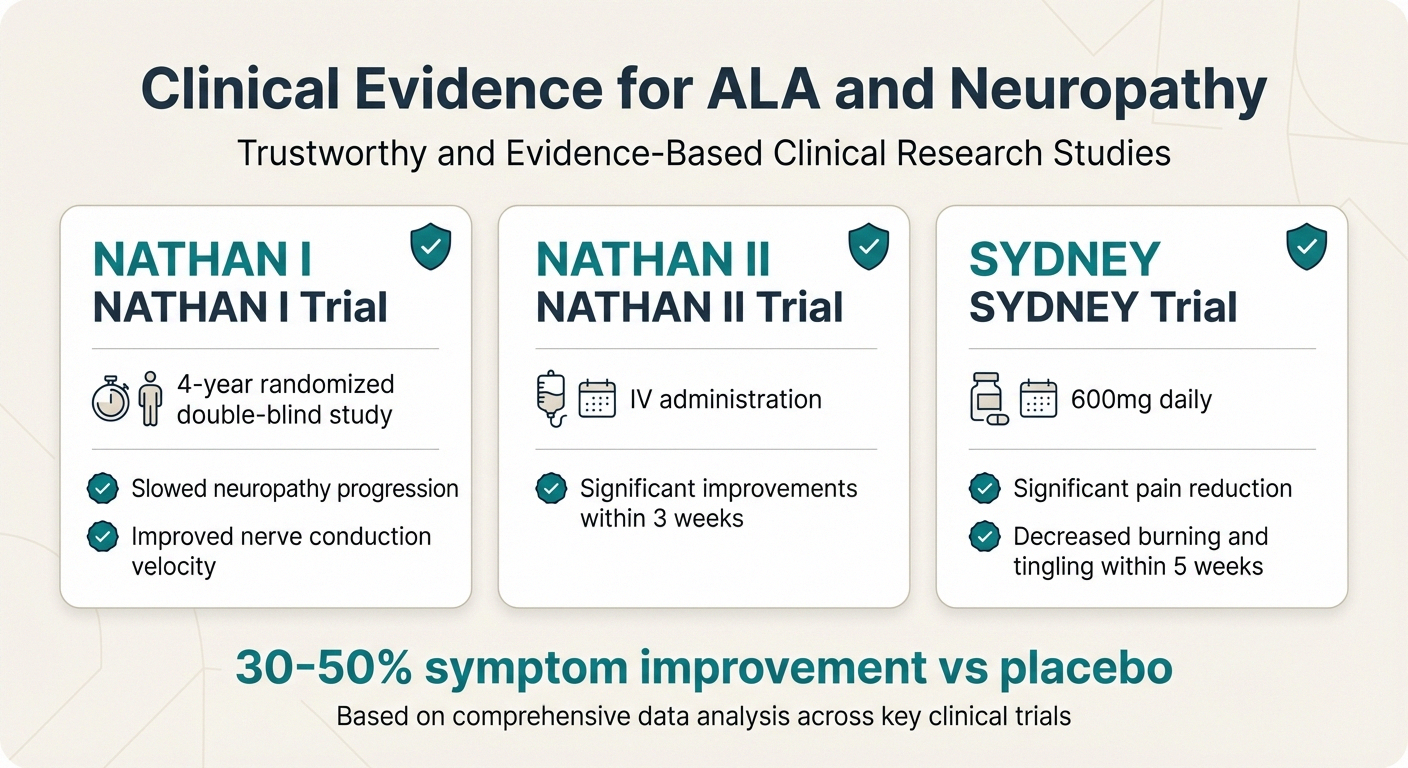
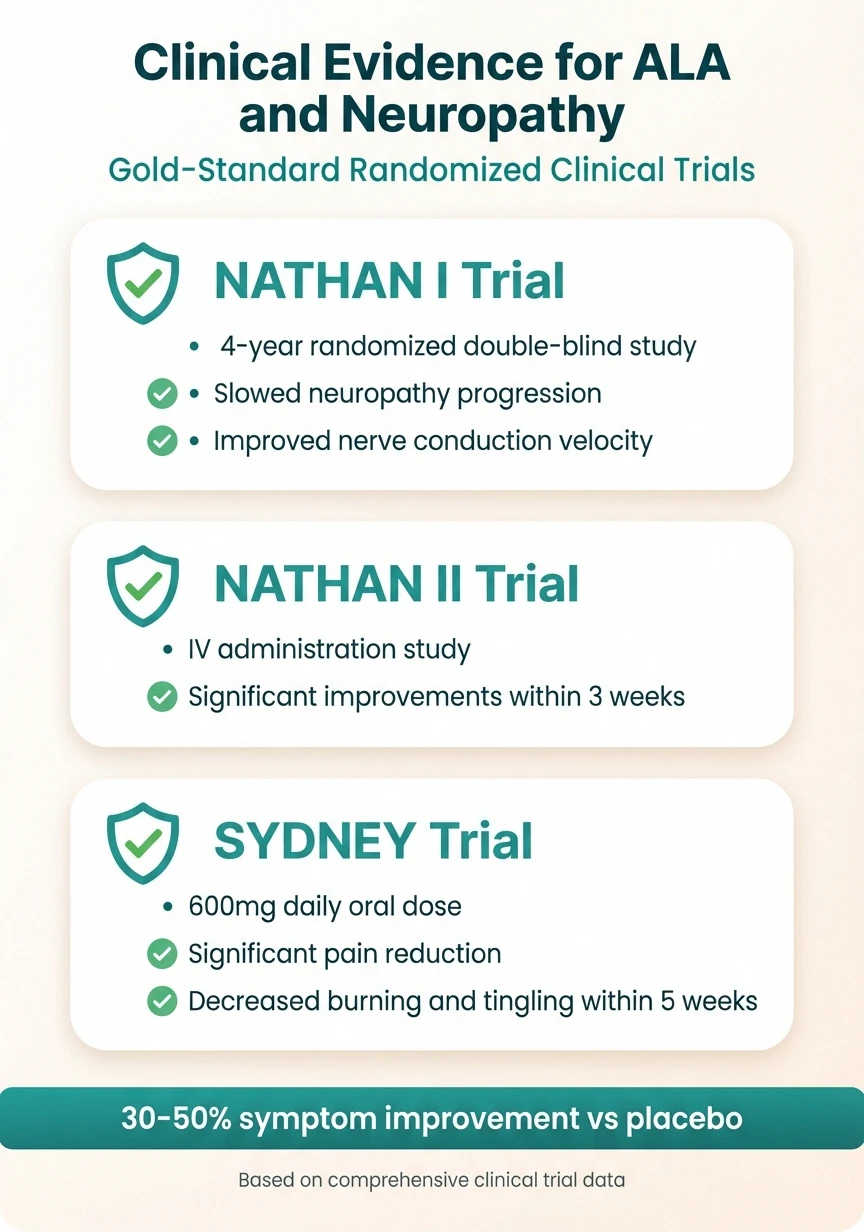
The NATHAN I and NATHAN II trials are the gold standard for ALA research in neuropathy. These were randomized, double-blind, placebo-controlled studies (the type of research that carries the most weight) involving hundreds of patients with diabetic neuropathy.
NATHAN I found that 600 mg of ALA taken daily for four years slowed the progression of neuropathy and improved nerve function measures. Patients showed improvement in nerve conduction velocity (how fast signals travel through nerves) compared to placebo.
NATHAN II focused on intravenous ALA and found significant improvements in neuropathy symptoms after just three weeks of treatment.
The SYDNEY Trial
The SYDNEY trial tested 600 mg of ALA daily in diabetic neuropathy patients and found significant reduction in pain, decreased burning and tingling, improved numbness scores, and benefits appearing within 5 weeks of treatment.
What the Meta-Analyses Say
When researchers combine data from multiple studies (meta-analysis), the pattern is consistent: 600 mg of oral ALA daily reduces neuropathy symptoms — particularly pain, burning, and tingling — significantly more than placebo.
Research Says
The SYDNEY trial found that 600 mg of ALA daily produced significant reductions in pain, burning, and tingling within just 5 weeks — and when researchers combine data from multiple studies, the pattern is consistent: ALA reduces neuropathy symptoms significantly more than placebo, with most patients reporting 30–50% improvement in their primary symptoms.
symptom improvement reported in clinical trials at 600 mg/day
Based on meta-analysis of NATHAN and SYDNEY trial data — individual results vary
How ALA Helps Nerve Pain: The Mechanisms
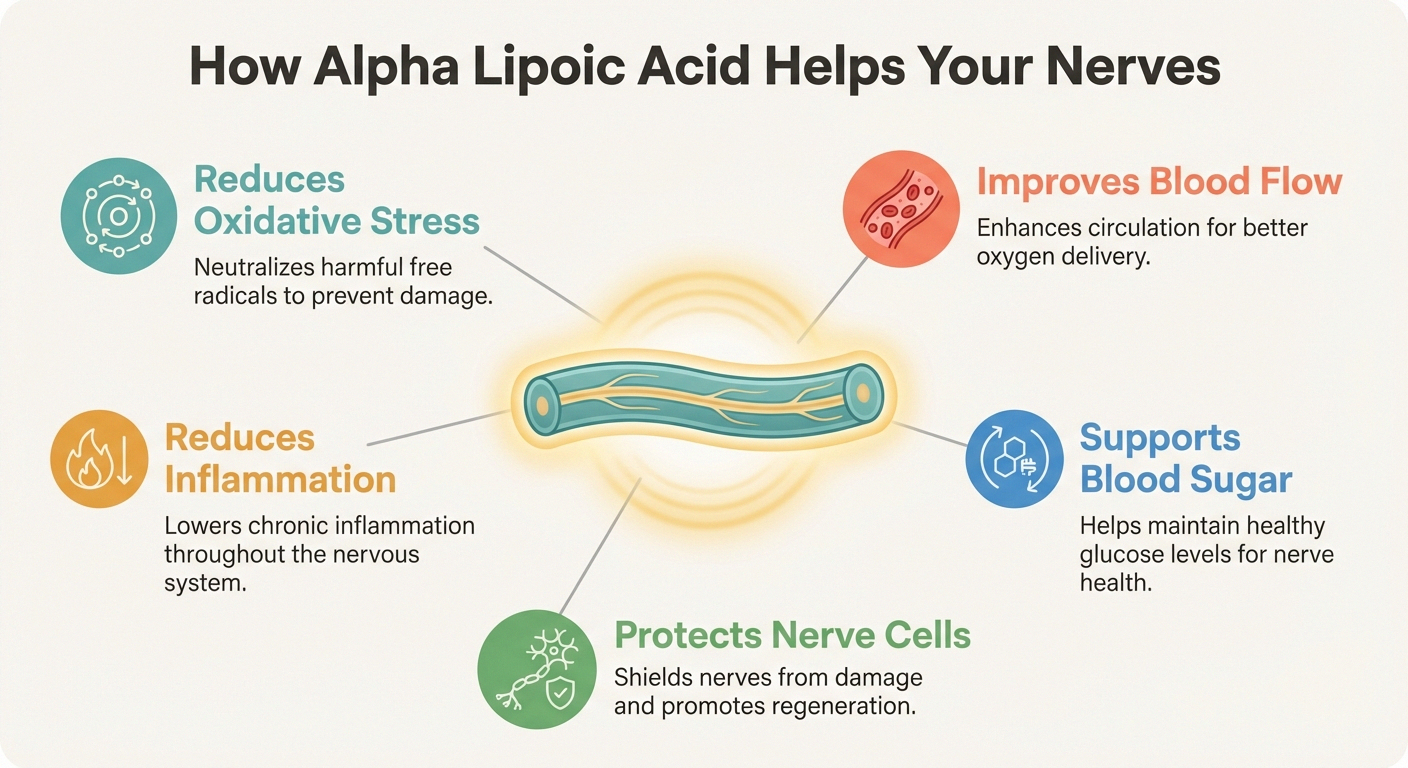
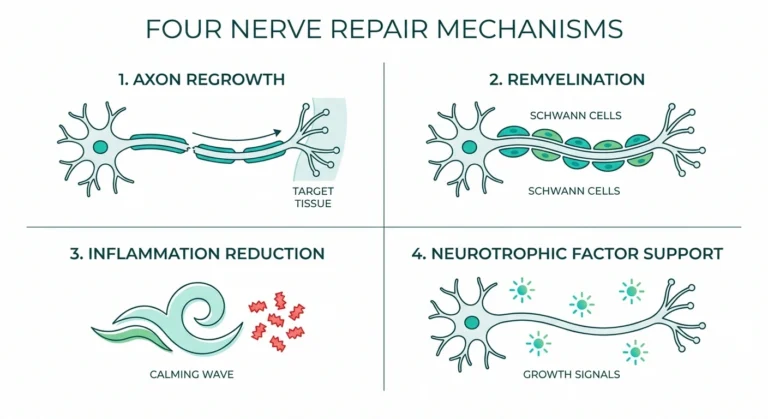
ALA doesn't just mask symptoms. It works through several pathways that address underlying nerve damage:
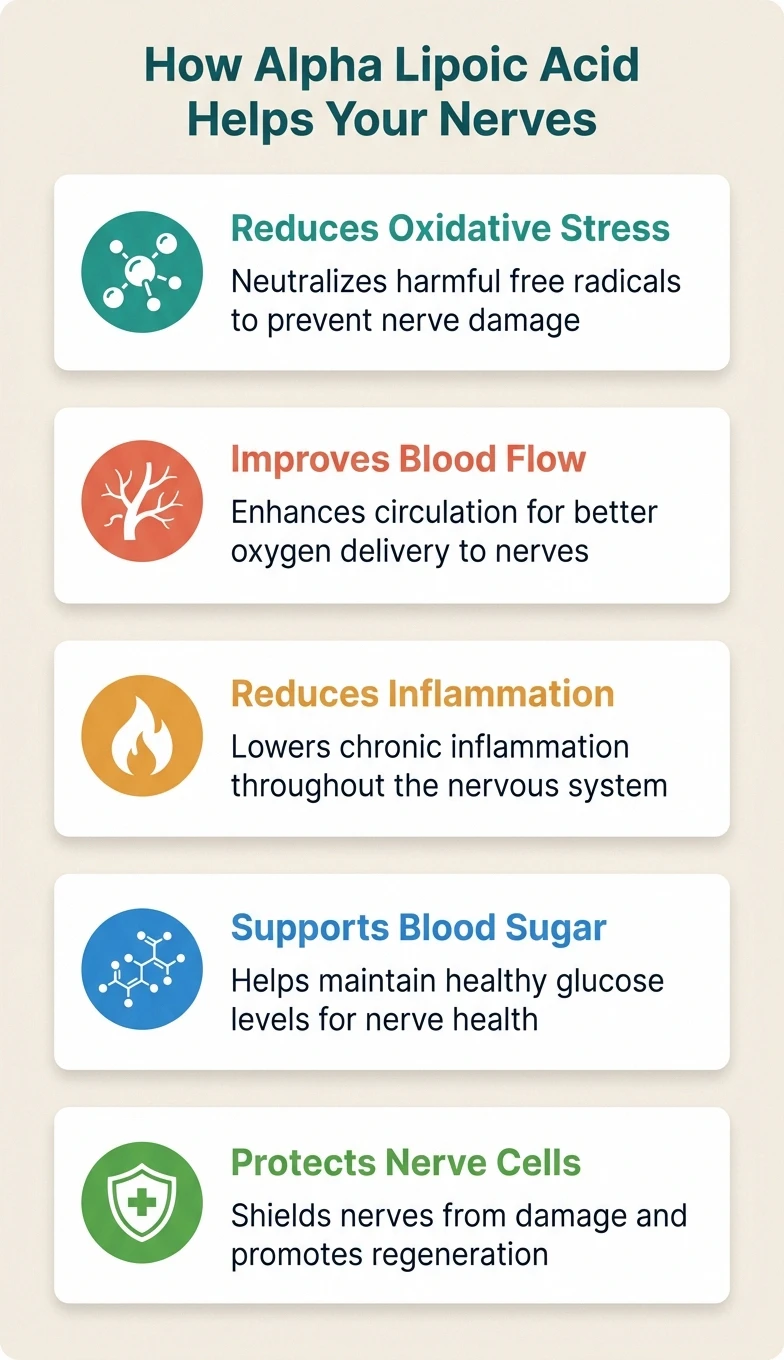
1. Oxidative stress reduction. Nerve damage in neuropathy is partly driven by oxidative stress — an accumulation of damaging molecules called free radicals. ALA is one of the most potent antioxidants known, and uniquely, it can also regenerate other antioxidants in your body (like vitamins C and E), amplifying their protective effects.
2. Improved blood flow. ALA enhances the function of the endothelium (the lining of your blood vessels), improving blood flow to peripheral nerves. Better blood flow means more oxygen and nutrients reaching damaged nerves.
3. Reduced inflammation. Chronic inflammation is a driver of nerve damage and pain. ALA has been shown to reduce inflammatory markers in nerve tissue.
4. Blood sugar regulation. For people with diabetic neuropathy, ALA improves insulin sensitivity and helps lower blood sugar levels. Since high blood sugar is the primary driver of diabetic nerve damage, this is a significant benefit.
5. Direct nerve protection. ALA appears to protect nerve cells from further damage and may even support the early stages of nerve repair. For more, see our guide on the stages of neuropathy.
Recommended Dosage for Neuropathy
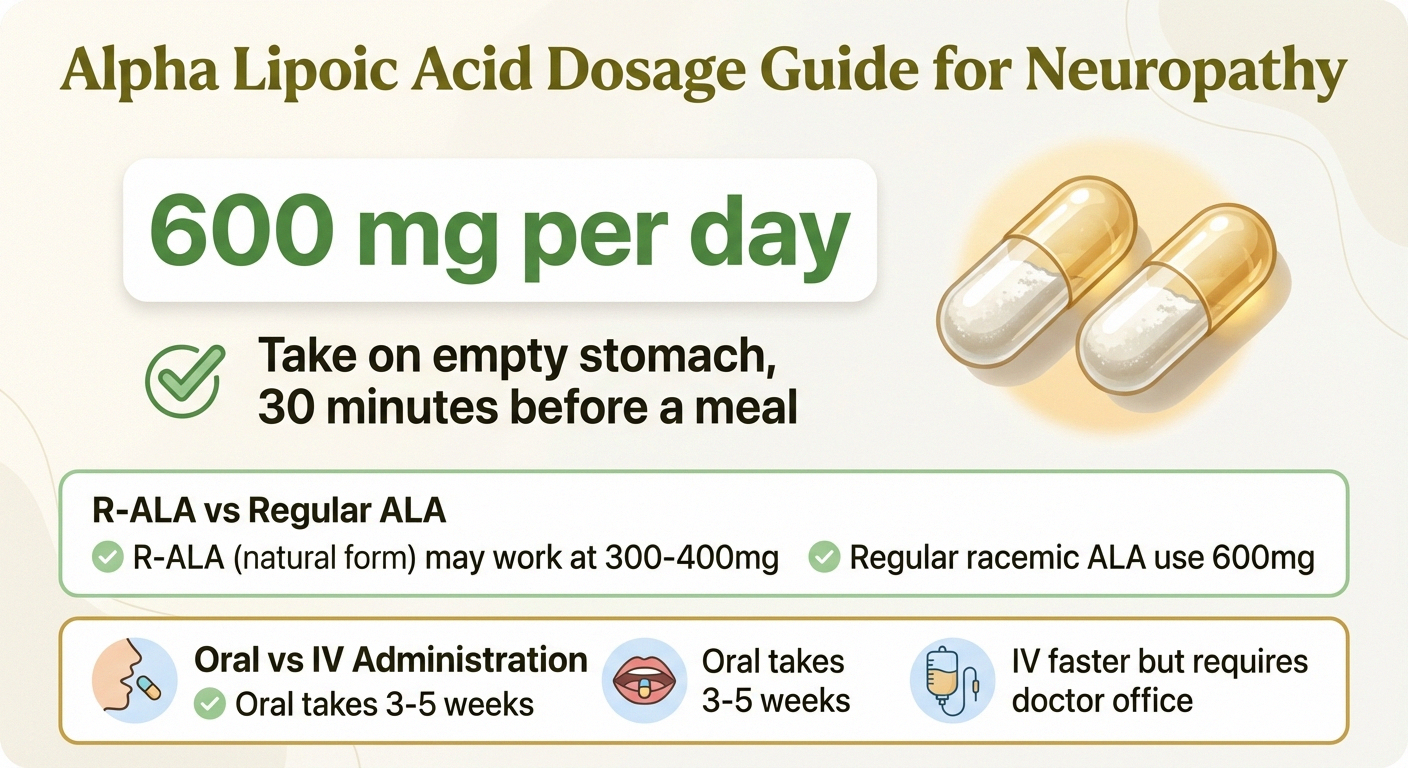
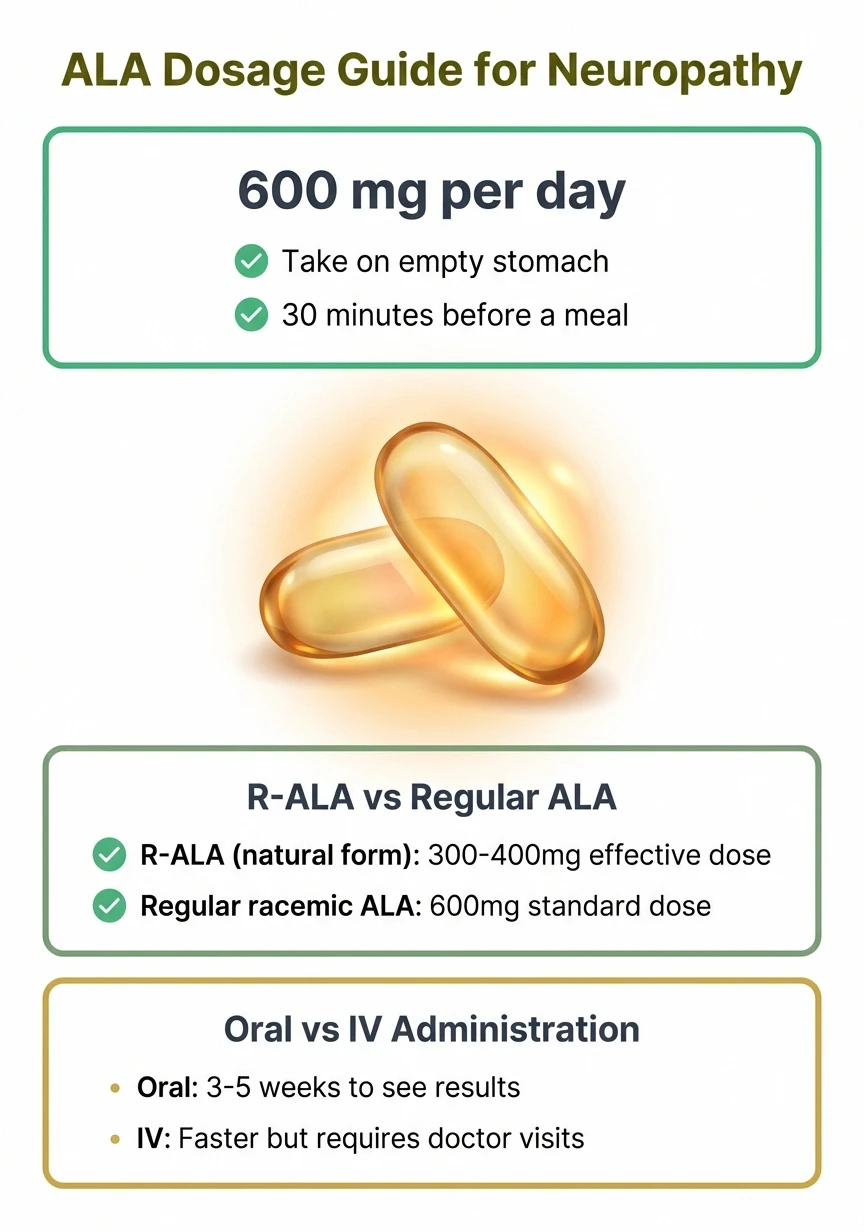
The dosage used in most positive clinical trials is consistent: 600 mg per day.
Some studies tested higher doses (1,200 mg and 1,800 mg per day), and while they showed benefit, the improvement wasn't dramatically better than 600 mg — and the higher doses caused more gastrointestinal side effects.
My recommendation based on the research: Start with 600 mg once daily, taken on an empty stomach (30 minutes before a meal for best absorption). If you tolerate it well after 2 weeks, you can stay at 600 mg or try 1,200 mg (split into two 600 mg doses, one morning and one afternoon). Take it consistently — the benefits build over weeks, not days.
Oral vs. IV: The research shows that IV administration produces faster results (improvements within 3 weeks), while oral supplements typically take 3-5 weeks to show meaningful effects. IV treatment requires a doctor's office and is significantly more expensive. For most people, oral supplementation at 600 mg daily is the practical choice.
R-ALA vs. Regular ALA
ALA comes in two forms: R-ALA (the form your body produces naturally) and S-ALA. Most supplements contain a 50/50 mix of both (called racemic ALA). Some products offer pure R-ALA, which is the biologically active form and may be more effective at lower doses. If you find an R-ALA supplement, you may need only 300-400 mg for equivalent effect. But racemic ALA at 600 mg is what was used in most clinical trials, so either approach is valid.
How to Start ALA Supplementation
Start at 600 mg once daily
Take on an empty stomach, 30 minutes before a meal, for best absorption. Learn more about broader natural treatment options for neuropathy. Learn more about home treatment options for neuropathy.
Be patient for weeks 1–2
Your body is building up ALA levels. Mild nausea may occur but usually fades within a week.
Watch for improvements at weeks 3–5
Pain, burning, and tingling typically begin to decrease. Track your symptoms to gauge progress.
Evaluate at weeks 6–12 and continue
Clear improvement should be evident by this point. Continue use to maintain benefits — stopping ALA often leads to gradual symptom return over weeks to months.
Side Effects and Who Should Be Cautious
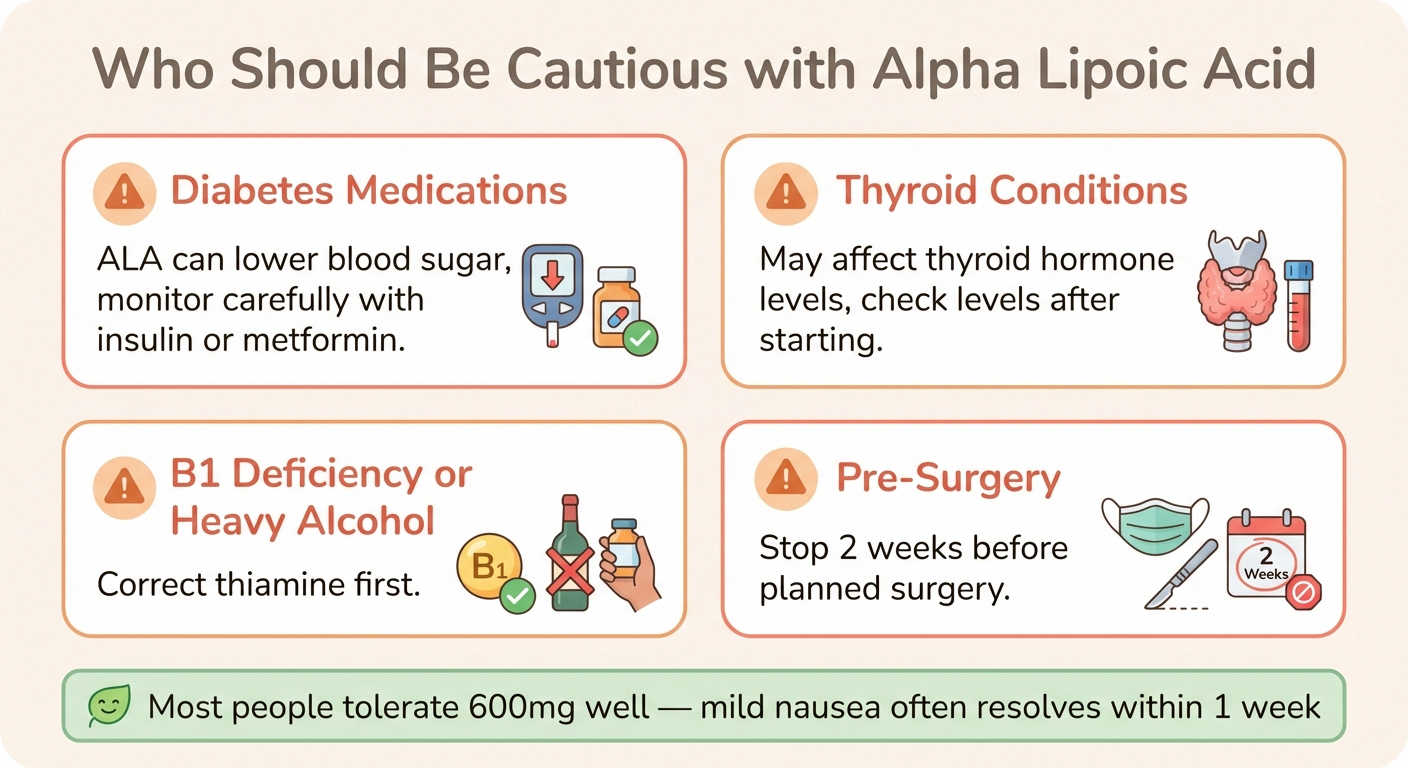
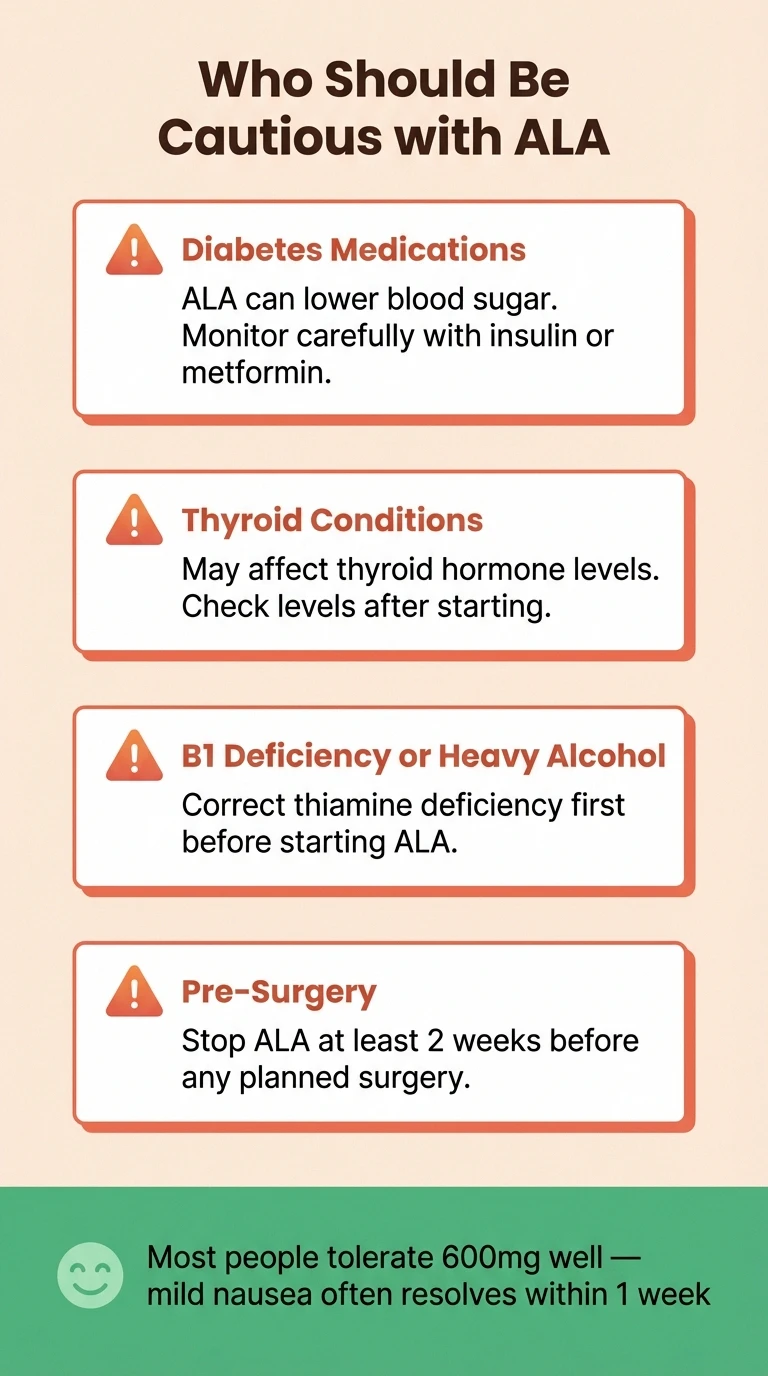
ALA is generally well-tolerated. The most common side effects at 600 mg are mild: nausea (usually diminishes after the first week) and stomach discomfort (reduced by taking with a small amount of food, though absorption is better on an empty stomach). Skin rash is rare.
Talk to Your Doctor First If…
- You take insulin or metformin — ALA can lower blood sugar, potentially causing hypoglycemia when combined with diabetes medications.
- You have a thyroid condition — ALA may affect thyroid hormone levels; have levels checked after starting.
- You drink heavily or have B1 deficiency — Correct thiamine first or supplement B1 alongside ALA.
- You have surgery planned — Stop ALA at least 2 weeks before any planned procedure.
ALA vs. Other Neuropathy Supplements
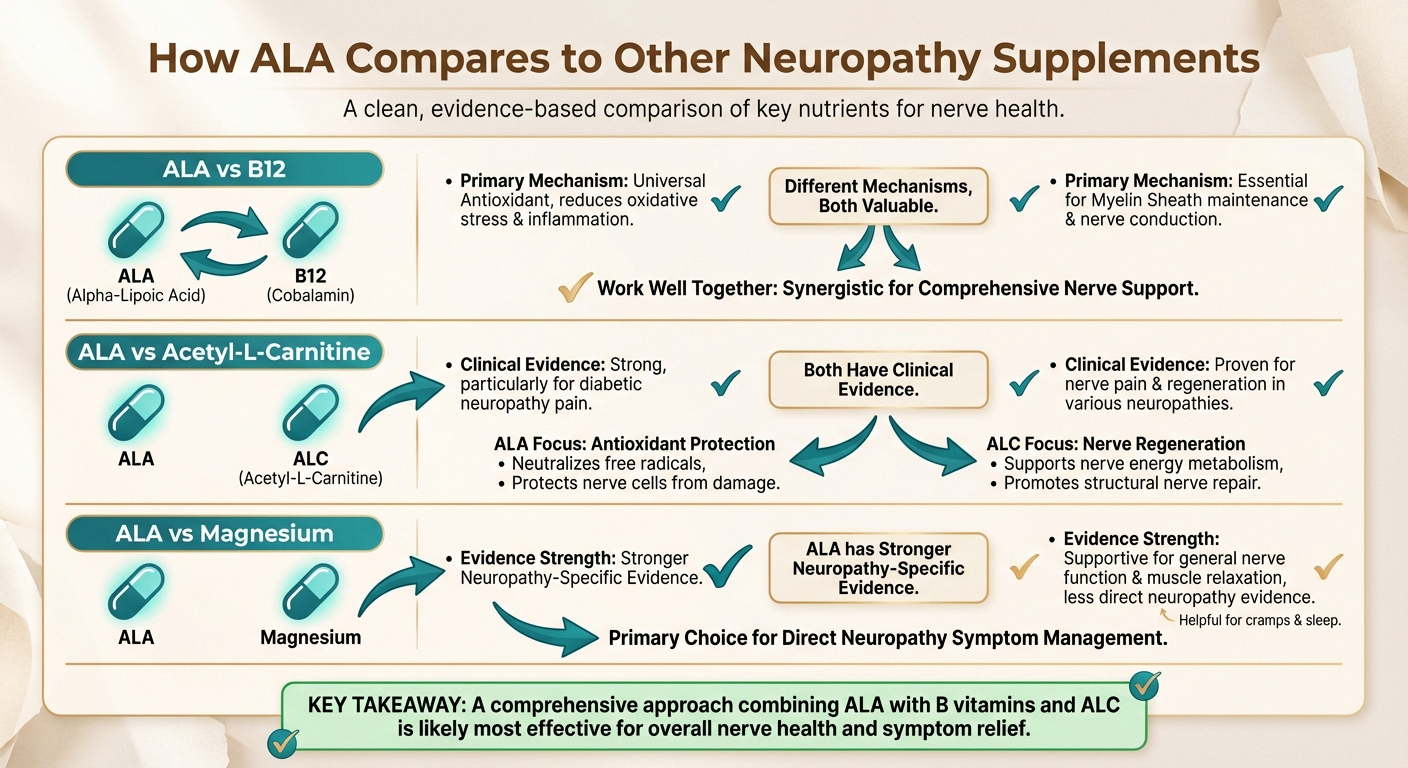
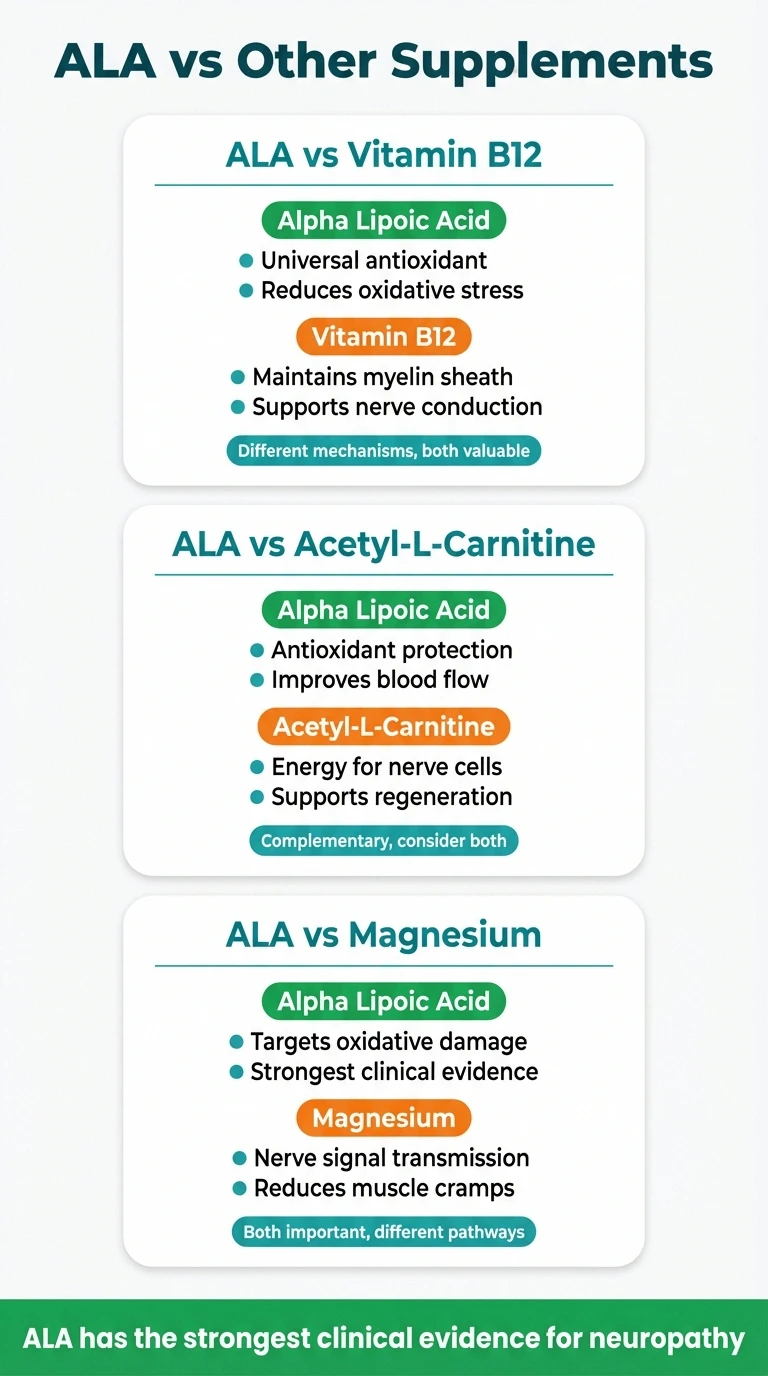
How does ALA stack up against other commonly recommended supplements?
How ALA Compares to Other Neuropathy Supplements
ALA vs. Vitamin B12
Different mechanisms — both valuable. B12 maintains myelin and supports nerve cell reproduction; ALA addresses oxidative stress and blood flow. They complement each other well.
ALA vs. Acetyl-L-Carnitine
Both have clinical evidence. ALC focuses on nerve regeneration and energy production; ALA focuses on antioxidant protection and blood flow. Many practitioners recommend both.
ALA vs. Magnesium
Magnesium is important for nerve signaling and muscle function, but its evidence specifically for neuropathy symptom reduction is weaker than ALA's. Best viewed as a supporting player.
The bottom line: ALA has stronger and more specific evidence for neuropathy than most individual supplements. But nerves need multiple things to heal — B vitamins, antioxidants, anti-inflammatory support, and proper blood flow. A comprehensive approach that includes ALA alongside B12, B1, and possibly acetyl-L-carnitine is likely more effective than any single supplement alone.
I've covered the full picture in my comprehensive supplement guide.
How to Choose a Quality ALA Supplement
Not all ALA supplements are equal. Here's what to look for:
- 600 mg per serving (matching the clinical trial dosage)
- From a reputable manufacturer with third-party testing (look for USP, NSF, or ConsumerLab verification)
- Minimal unnecessary fillers and additives
- R-ALA or racemic ALA — both work; R-ALA may be slightly more bioavailable
- Capsules over tablets — generally better absorption
Avoid products with proprietary blends that don't specify the actual amount of ALA. If the label doesn't tell you exactly how much ALA you're getting per serving, move on.
What to Realistically Expect
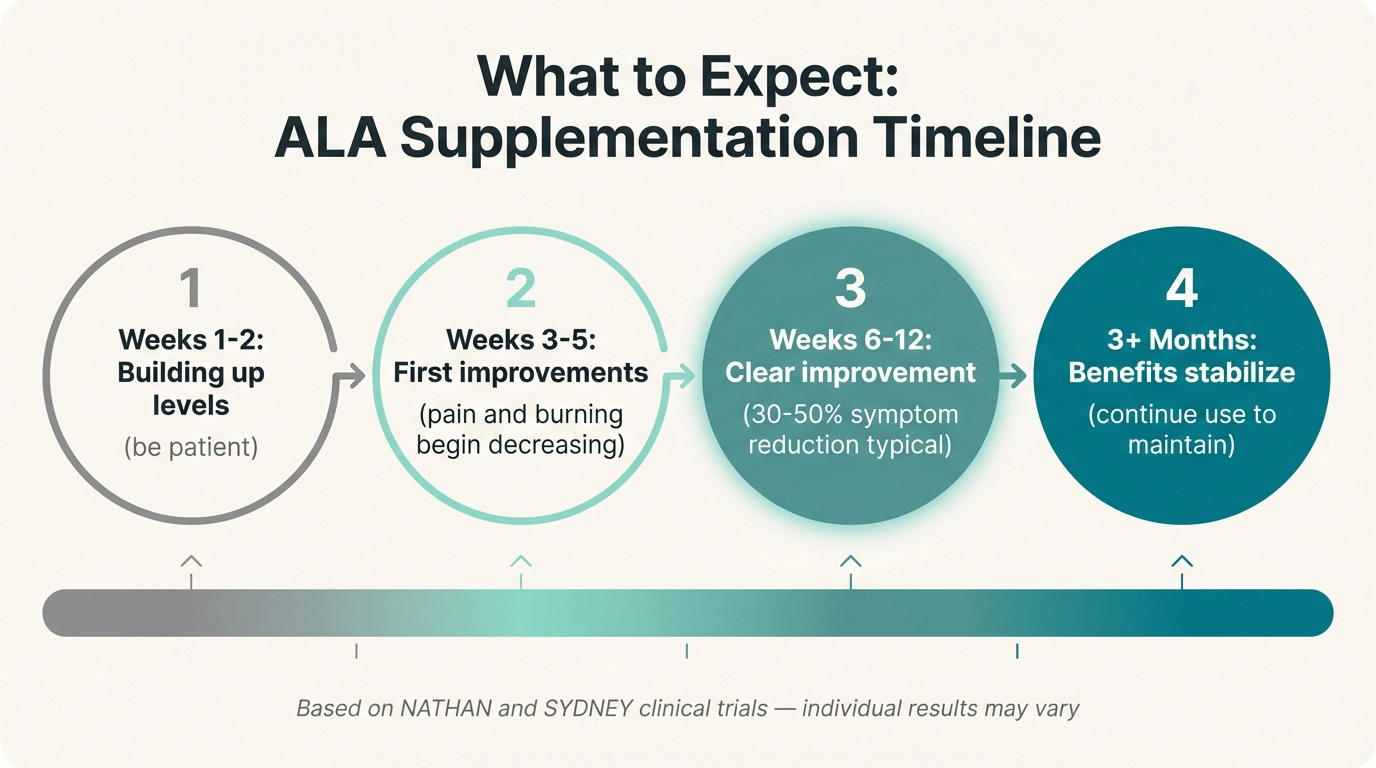
If you decide to try ALA, here's an honest timeline:
Weeks 1-2: You probably won't notice much. Your body is building up ALA levels. You might experience mild nausea as you adjust.
Weeks 3-5: This is where most people in the clinical trials started noticing improvements. Pain may decrease. Burning and tingling may become less intense. The changes may be subtle at first.
Weeks 6-12: If ALA is going to work for you, you should see clear improvement by this point. Many people report 30-50% reduction in their primary symptoms.
After 3 months: The benefits typically stabilize. Continued use maintains the improvements. Stopping ALA often leads to a gradual return of symptoms over weeks to months.
Important: ALA works best when combined with addressing the underlying cause of your neuropathy (blood sugar management, correcting deficiencies, etc.) and other supportive measures. It's not meant to carry the whole load on its own.
If you've been trying various approaches and want help figuring out what's actually driving your symptoms, my neuropathy assessment can help you identify priorities and talk to your doctor more effectively.
Worth Trying?
In my opinion — yes, absolutely. ALA is one of the few neuropathy supplements where I can point to real clinical trials (not just animal studies or testimonials) showing meaningful benefit. The side effect profile is mild. The cost is reasonable. And the mechanism of action makes biological sense.
It's not magic. But for something you can buy without a prescription that has legitimate science behind it, alpha lipoic acid is about as good as it gets.
Hoping this helps,
Janet
Frequently Asked Questions
Browse all our neuropathy supplements and nutrition guides for more articles like this one.
About the Author