Knitting and Crocheting with Neuropathy in Your Hands: Adaptations That Let You Keep Creating
When neuropathy moves into your hands, it doesn't just take sensation — it threatens the activities that give your life texture. For those of us who knit or crochet, the diagnosis can feel like a sentence: how can you work with yarn when you can't feel your fingers, when your grip gives out unpredictably, when the tingling makes it hard to tell if you're holding a needle or not?
Here's what I want you to hear: people with neuropathy knit and crochet every single day. They don't do it the way they used to — and that's the key. With the right tools, techniques, and mindset, you can adapt your craft to work with your changed hands rather than fighting against them. I've watched members of my support groups rediscover their love for fiber arts after thinking they'd lost it forever.
This guide covers everything: which tools actually help, how to modify your technique, when to push through and when to stop, and alternative approaches for days when traditional knitting or crochet just isn't possible.
Understanding How Neuropathy Changes Your Hands for Crafting
Before jumping into solutions, it helps to understand exactly which aspects of hand neuropathy affect knitting and crocheting — because different problems require different adaptations.
The Core Principle
Adapting your craft means working WITH your changed hands, not fighting against them. Most people with hand neuropathy experience a mix of reduced sensation, tingling/pain, grip weakness, and fine motor changes. The adaptations below address each one — and a combination of strategies usually works better than any single change.
Reduced sensation means you can't always feel the yarn, the needles, or the tension in your stitches. You rely more on visual feedback to confirm your fingers are doing what you intend. This is frustrating but workable — many experienced knitters already rely heavily on muscle memory and visual monitoring rather than tactile feedback.
Tingling and pain create the opposite problem — your hands feel too much, and the constant stimulation of yarn against sensitive skin becomes uncomfortable or painful. Certain yarn textures that never bothered you before may now feel abrasive or triggering.
Grip weakness makes it hard to maintain consistent tension and hold needles or hooks securely. You may drop stitches more frequently, and your hands fatigue faster than they used to.
Fine motor changes affect the small, precise movements that knitting and crocheting demand — picking up stitches, working decreases, managing complex stitch patterns. These movements require coordination between multiple finger joints that neuropathy can disrupt.
Most people with hand neuropathy experience some combination of these. The adaptations below address each one, and you'll likely find that a mix of strategies works better than any single change.
Essential Tool Adaptations
The right tools can transform your crafting experience. These aren't expensive gimmicks — they're proven modifications that occupational therapists recommend for hand dexterity challenges.
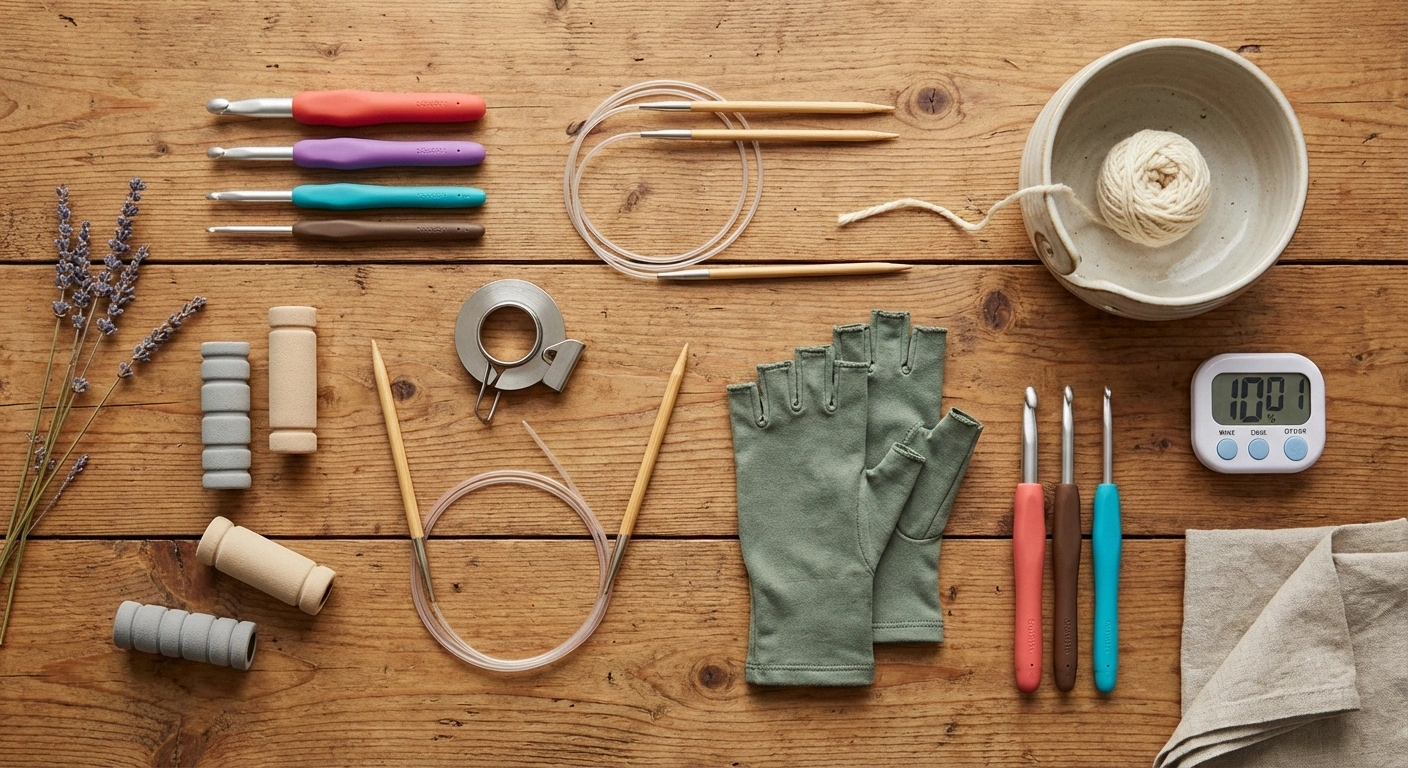
Needles and Hooks That Work With Neuropathy
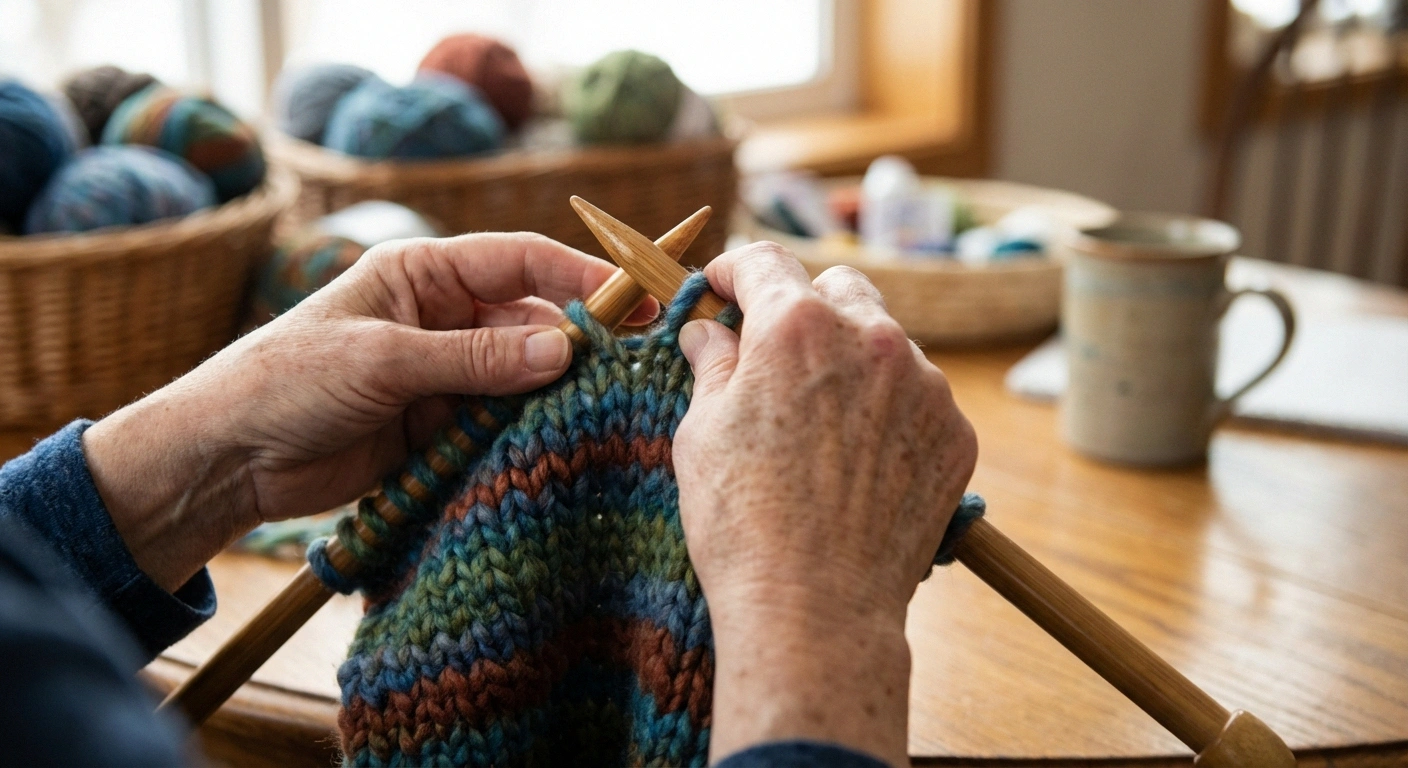
Go larger. Switching from US size 5 needles to US size 10 or larger reduces the precision required for each stitch. Larger needles also mean fewer stitches per inch, so projects grow faster — which provides positive reinforcement when frustration is high. Chunky and super bulky yarns (weight 5-6) work beautifully with large needles and require less fine motor control.
✓ Best for Neuropathy
Bamboo/wood needles (warm, lightweight, natural grip) • Circular needles (project rests in lap) • Large sizes US 10+ (less precision needed) • Ergonomic hooks with cushioned grips • Foam grip attachments
❌ Avoid If Possible
Metal needles (cold, slippery) • Small sizes under US 7 (too much precision) • Thin straight needles (weight hangs from tips) • Tiny crochet hooks without handles • DPNs for small circumferences
Choose ergonomic grips. Ergonomic crochet hooks with thick, cushioned handles (like Clover Amour or Furls Odyssey) reduce the grip force needed to hold the tool. For knitting needles, look for bamboo or wood options — they're warmer to the touch than metal (less triggering for temperature-sensitive hands), lighter weight, and have a slight natural grip that keeps yarn from sliding off unexpectedly.
Add foam grips to existing needles. If you have favorite needles you don't want to replace, pipe insulation foam or purpose-made needle grips (available at most craft stores) slide over the shaft and dramatically increase the grip diameter. This reduces the force needed to hold the needle and puts less strain on your finger joints.
Try circular needles for everything. Even for flat projects, circular needles with a 24-inch or longer cable let the weight of your project rest in your lap rather than hanging from the needle tips. This removes a significant source of hand strain. Many knitters with hand issues report that switching to circulars alone made their biggest difference.
Yarn Selection for Sensitive Hands
Yarn choice matters more when your hands have neuropathy. The wrong yarn can make a session miserable; the right yarn can make it surprisingly comfortable.
Choose smooth, soft fibers. Baby-weight acrylic, superwash merino, cotton blends, and chenille yarns glide through your fingers with minimal friction. Avoid rough wools, splitty yarns, textured novelty yarns, and anything with a halo (like mohair) that obscures your stitches and makes them harder to see and feel.
Go for medium to bulky weight. Thin yarns (fingering, lace weight) demand more fine motor precision and produce smaller stitches that are harder to see and manipulate. Worsted weight (size 4) is the minimum most people with hand neuropathy find comfortable. Bulky (size 5) and super bulky (size 6) are even easier to work with.
Test before buying. If you're shopping in person, hold a skein for a full minute. Notice whether the texture triggers tingling, burning, or discomfort. Order sample skeins online before committing to enough yarn for a full project. Your hands' tolerance may vary from day to day, so test on both good and bad symptom days.
Assistive Tools and Accessories
Yarn tension rings sit on your finger and guide yarn at consistent tension without requiring you to wrap it manually around your fingers. They're inexpensive and can be a game-changer for people whose finger numbness makes maintaining even tension difficult.
Yarn bowls prevent your skein from rolling around, eliminating the need to chase and reposition your yarn ball — which means fewer hand movements outside of the actual stitching.
Compression gloves — the fingerless kind designed for arthritis — can help neuropathy too. They provide gentle pressure that may reduce tingling and support joint stability, while leaving your fingertips free to work. Some knitters wear them during sessions and report less pain and longer comfortable working times.
Lap trays or pillow supports position your work at a comfortable height and angle, reducing the amount of wrist bending and hand elevation required. This is especially helpful if you're working from a recliner or bed during flare-ups.
Technique Modifications That Reduce Hand Strain
Beyond tools, how you knit or crochet matters as much as what you use. These technique modifications reduce the physical demands on neuropathy-affected hands.
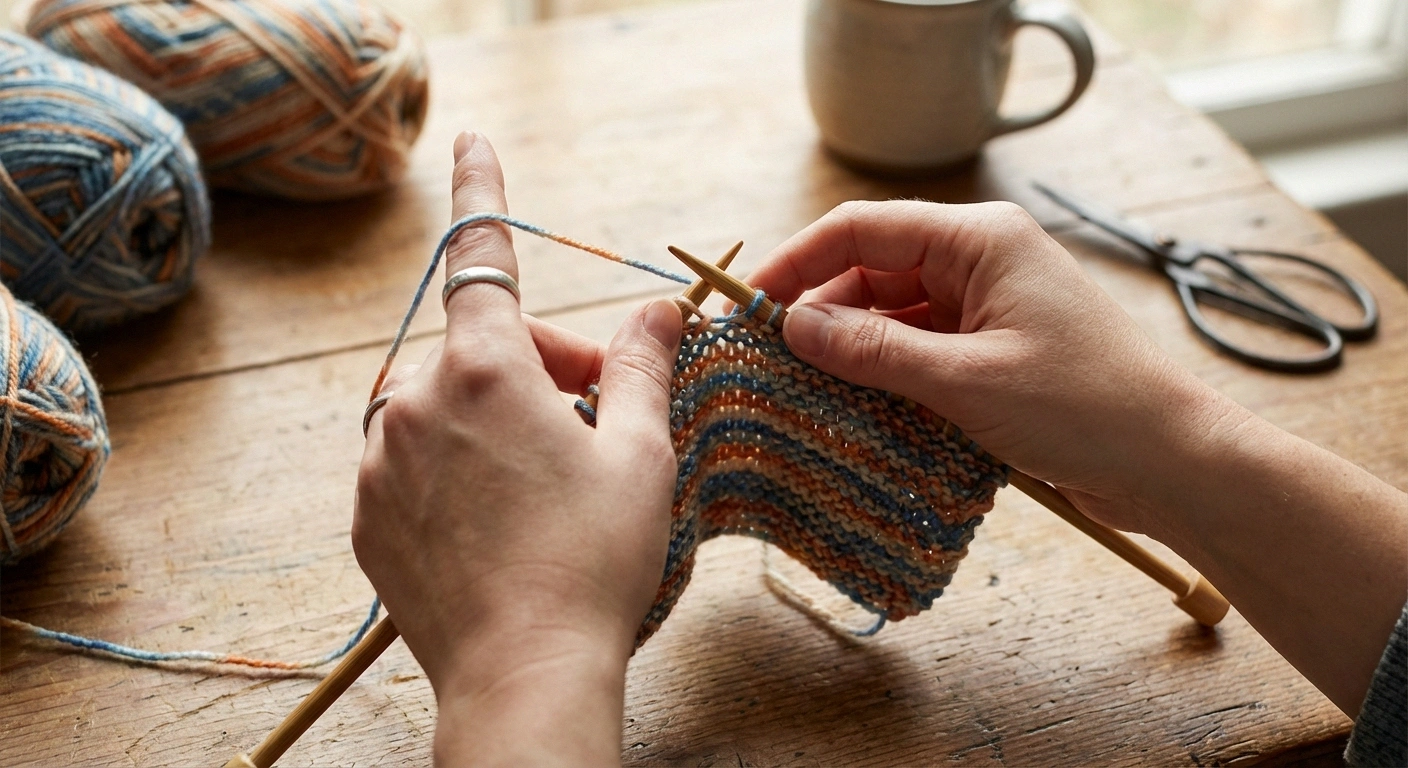
Switch Your Knitting Style
If you've always knitted English style (yarn held in the right hand, “throwing” each stitch), try Continental style (yarn held in the left hand, “picking” each stitch). Continental requires less hand and wrist movement per stitch. Some people with neuropathy find that switching styles distributes the work differently across their hands and reduces strain on the dominant hand.
Conversely, if Continental has become difficult due to left-hand numbness, English style or even Portuguese-style knitting (where yarn tensions around the neck) may work better. The point isn't that one style is universally better — it's that changing styles changes which muscles and nerves are doing the most work, and spreading the load can make a significant difference.
Simplify Your Patterns
Complex stitch patterns — cables, lace, colorwork — demand more cognitive focus and fine motor precision. When neuropathy makes your hands unreliable, simple doesn't mean boring. Garter stitch, stockinette, seed stitch, and basic ribbing produce beautiful results with minimal hand complexity.
Choose patterns with long stretches of repetitive stitching rather than row-by-row pattern changes. Once your hands find their rhythm in a repetitive pattern, muscle memory takes over and you need less conscious effort per stitch.
The 15-Minute Rule
This is the single most important adaptation, and the one most people resist. Set a timer for 15 minutes. When it goes off, stop — even if you feel fine. Put your project down, stretch your hands, flex your fingers, and rest for at least 5 minutes before resuming.
The 15-Minute Rule
Set a timer. Stop when it rings — even if you feel fine. Rest 5 minutes, then resume. Neuropathy-affected hands don't send accurate fatigue signals until it's too late. Many crafters can comfortably work 45-60 total minutes with intervals who couldn't manage 30 minutes straight.
The reason this matters: neuropathy-affected hands often don't give accurate “I'm tired” signals until they're already in trouble. By the time you notice fatigue, pain, or increased tingling, you've already pushed past the point of easy recovery. Short sessions with consistent breaks prevent the crash-and-burn cycle that leads to days of recovery after a single long crafting session.
Many people find they can comfortably craft for 45 minutes to an hour total using 15-minute intervals, when they couldn't do 30 minutes straight without triggering a flare.
Hand Exercises and Warm-Ups for Crafters
Warming up your hands before crafting and stretching during breaks can extend your comfortable working time and reduce symptom flares.
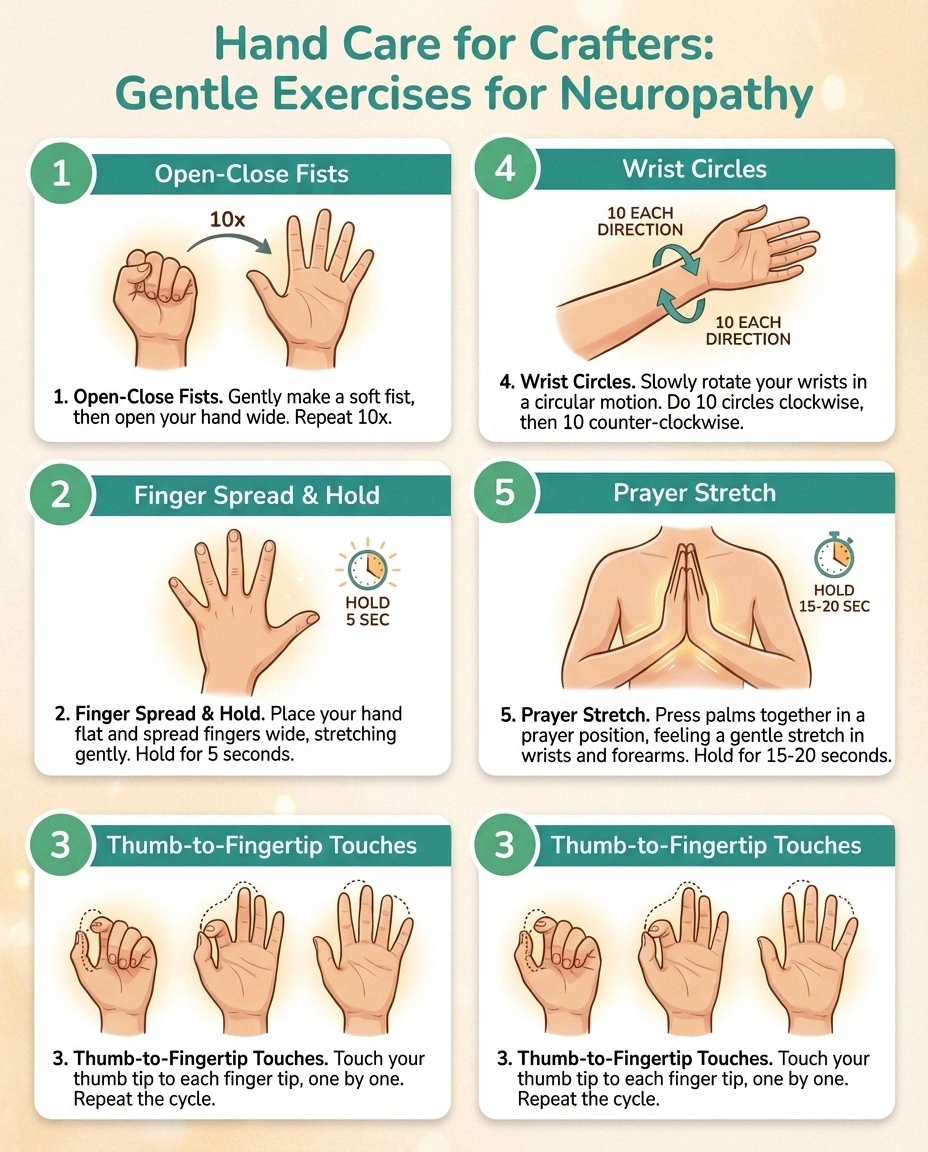
Before You Start
Warm water soak: Soak your hands in warm (not hot) water for 5-10 minutes before starting. This increases blood flow, reduces stiffness, and can temporarily calm tingling. Add Epsom salts if you find them soothing — some people report additional relief.
Finger stretches: Open and close your fists slowly, 10 times. Then spread your fingers wide and hold for 5 seconds, relax, repeat 5 times. Touch your thumb to each fingertip sequentially, then reverse direction.
Wrist circles: Gently rotate your wrists in full circles — 10 in each direction. This loosens the wrist joints and tendons that are heavily used in knitting and crocheting.
During Breaks
Prayer stretch: Press your palms together at chest height, fingers pointing up. Slowly lower your hands while keeping palms pressed together until you feel a gentle stretch in your wrists and forearms. Hold 15-20 seconds.
Forearm stretch: Extend one arm straight out, palm up. Use your other hand to gently press your fingers downward toward the floor. Hold 15-20 seconds, then switch arms.
Tendon glides: Start with fingers straight out. Bend fingers at the middle joints (making a “hook”), return to straight. Then make a full fist, return to straight. Then touch fingertips to the base of your fingers (a “tabletop” position), return to straight. Repeat the full sequence 5 times. These movements keep the tendons in your fingers and wrists mobile.
When Traditional Knitting and Crochet Aren't Possible
Some days — or some stages of neuropathy — make needle-and-hook work genuinely impossible. That doesn't mean you have to give up fiber arts entirely. These alternatives use different muscle groups and require less fine motor precision.
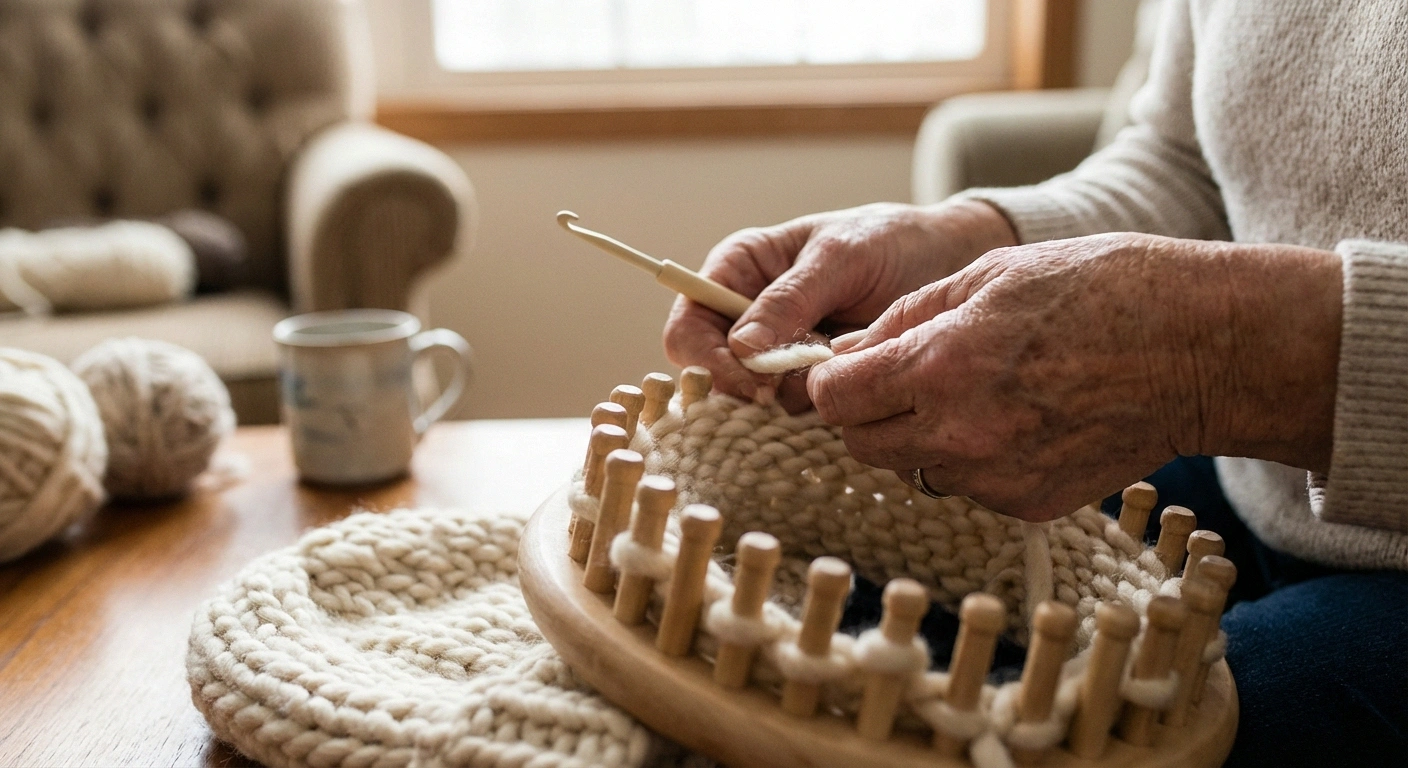
Loom Knitting
Knitting looms use pegs instead of needles. You wrap yarn around the pegs and use a simple hook tool to lift loops over each other. The movements are larger, more gross-motor than fine-motor, and the loom holds all your stitches for you — no risk of dropping them.
Loom knitting produces real, legitimate knitted fabric. You can make hats, scarves, blankets, socks, and even sweaters. The results look like traditional knitting, and the learning curve is gentle — most people produce a wearable item within their first session.
Arm Knitting and Finger Knitting
Arm knitting uses your arms as the needles, working with super-chunky yarn or roving. The movements are large and don't require fine finger work. It's excellent for blankets and chunky scarves. Finger knitting uses even simpler motions — weaving yarn between your fingers to create a knitted chain. Both can be done even on days when your finger dexterity is at its worst.
Machine Knitting
Simple manual knitting machines (like the Sentro or Addi Express) let you crank a handle to produce knitted fabric. Your hands guide the yarn but don't do the fine stitch manipulation. The creative decisions — color choices, pattern planning, finishing — remain yours, while the mechanical repetitive motion is handled by the machine.
Managing Flare-Ups During Crafting Sessions
Even with perfect preparation, flare-ups happen. Knowing how to respond when your hands start protesting mid-project prevents a bad moment from becoming a bad week.
When a Flare Hits Mid-Project
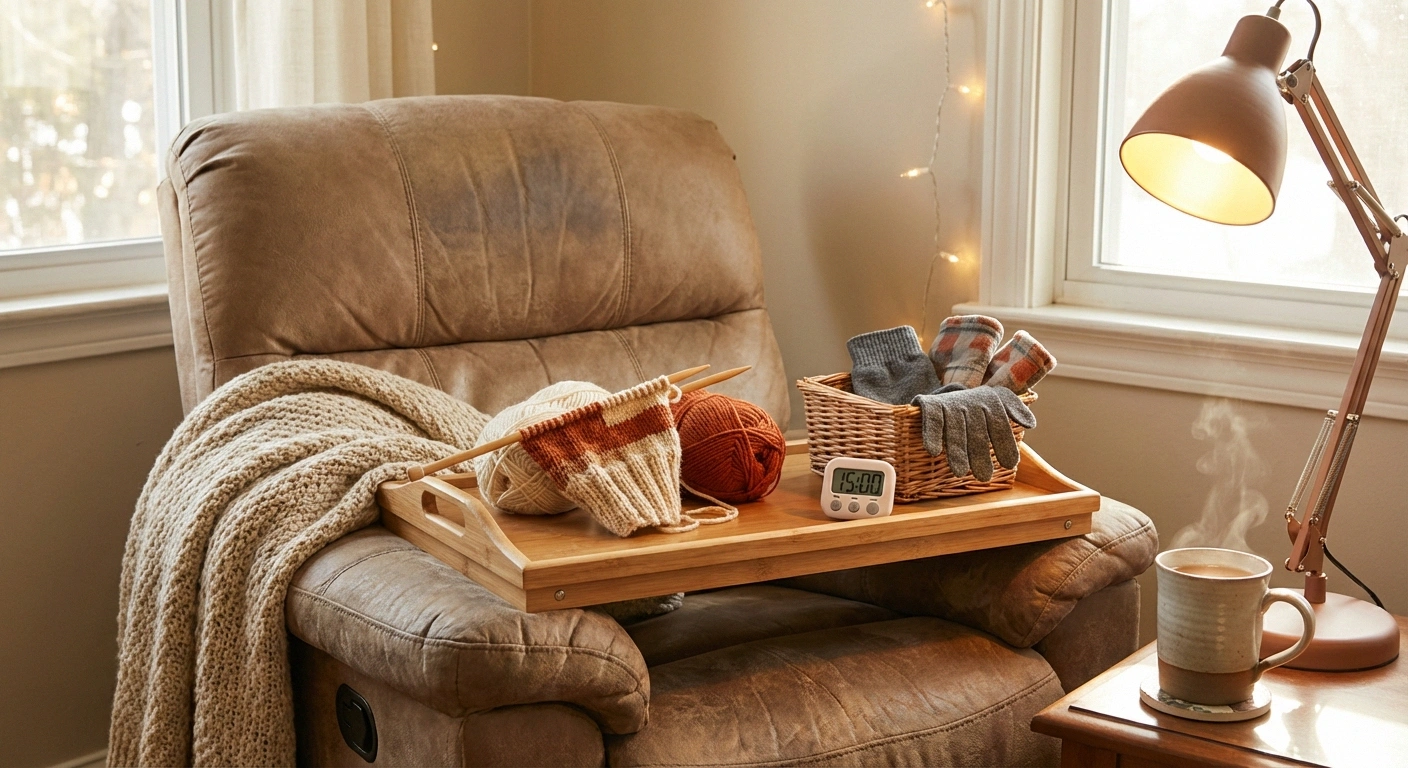
Stop immediately — don't try to finish “just one more row.” The cost of pushing through is always higher than the cost of stopping. Secure your stitches with a holder, apply gentle warmth or cold (whichever helps YOUR neuropathy), stretch gently, and wait 15-30 minutes before assessing whether to resume.
Stop immediately. Don't try to finish “just one more row.” The cost of pushing through is always higher than the cost of stopping. Secure your stitches (a stitch holder or spare needle through your live stitches takes 30 seconds) and put the project down.
Apply gentle warmth or cold — whichever helps YOUR neuropathy. Some people respond to warming their hands; others find that cool compresses calm the tingling. Know your pattern and have your preferred option ready at your crafting station.
Stretch gently. Use the break-time stretches described above. Don't massage aggressively — let the stretches do the work.
Assess before resuming. After 15-30 minutes, check in with your hands honestly. If the tingling, numbness, or pain has returned to your baseline level, you may be able to resume with a shorter session (10 minutes instead of 15). If it hasn't settled, call it done for the day. There will be another day.
The Emotional Side: Grieving Your Old Craft Practice
Let's be honest about something: adapting your knitting or crocheting practice means letting go of the way you used to do it. And that's a loss. If you used to lose yourself in complex lace patterns for hours, switching to simple garter stitch in 15-minute intervals can feel like a downgrade — even if it's the smart choice.
A Shift in Perspective
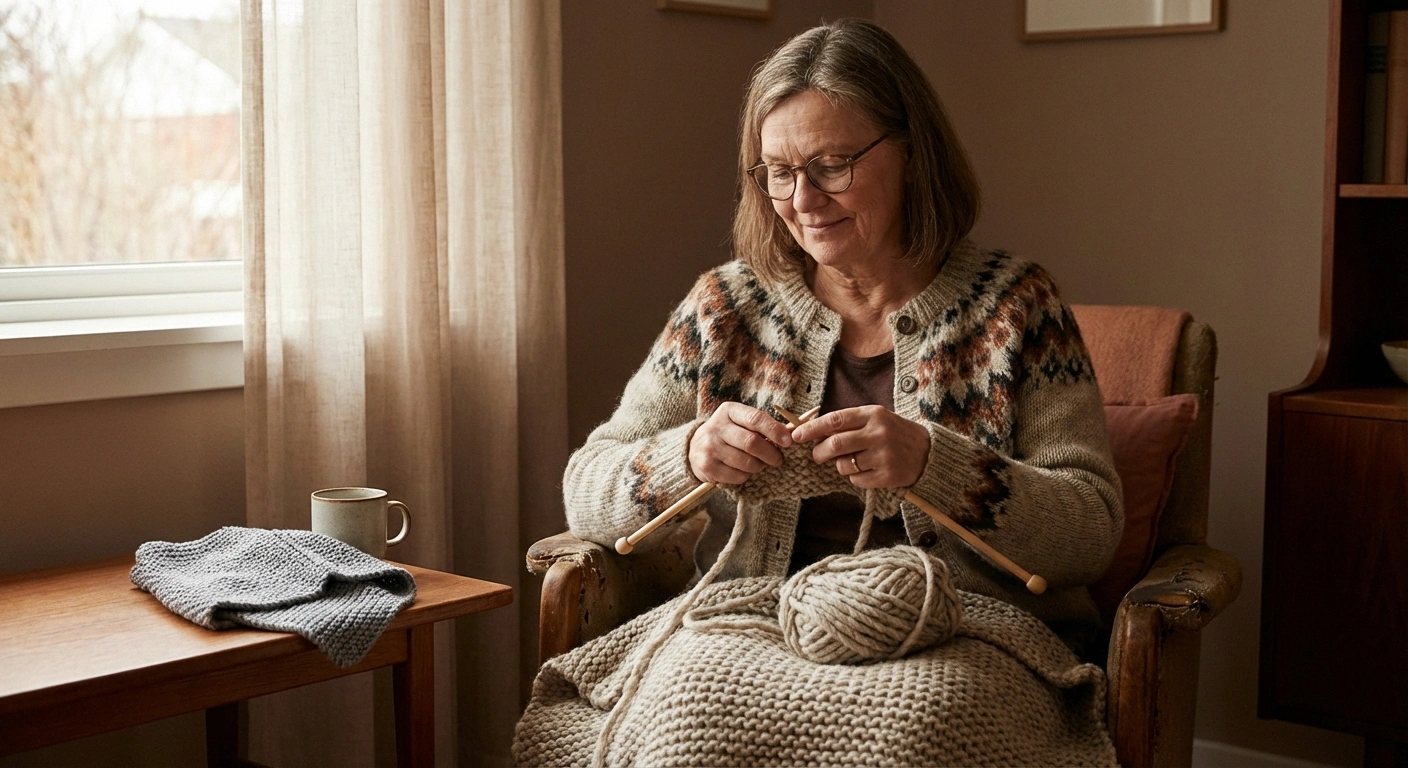
Many crafters in support groups describe initially resisting adaptations, then reluctantly trying them, and eventually finding genuine satisfaction in a modified practice. Some discovered that simpler projects, made with intention and adapted to their current abilities, felt more meaningful than the complex projects they used to rush through.
The grief is real. Allow yourself to feel it without letting it stop you entirely. Many crafters in my support groups have described a process of initially resisting the adaptations, then reluctantly trying them, and eventually finding genuine satisfaction in a modified practice. Some discovered that simpler projects, made with intention and adapted to their current abilities, felt more meaningful than the complex projects they used to rush through.
If the emotional weight of adapting feels heavy, you're in good company. The crafting community — both online and in local groups — includes many people navigating the same transition. Connecting with them can help normalize the adjustment.
Building a Sustainable Crafting Routine
The goal isn't to knit or crochet the way you used to. The goal is to build a practice that fits the hands you have now — one that brings you genuine satisfaction without making your symptoms worse.
Remember This
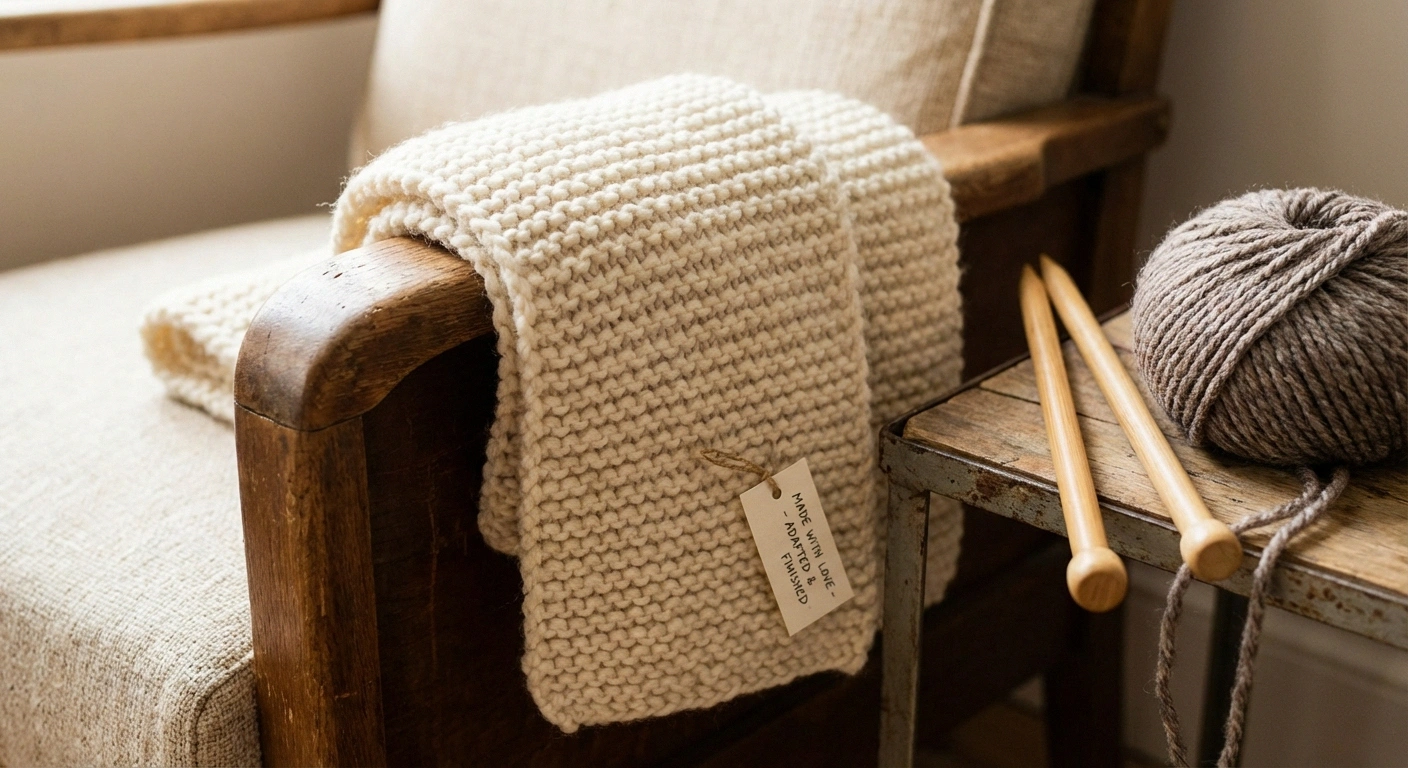
A dishcloth knitted with adapted technique by hands that weren't sure they could still create is a genuine achievement. The goal isn't to knit the way you used to — it's to build a practice that fits the hands you have now. Celebrate what you make.
Track your patterns. Keep a simple log: what time of day did you craft, how long, what were your hands like before and after? After a week or two, patterns emerge. Maybe mornings are better. Maybe your left hand fatigues before your right. Maybe certain yarn textures are fine for 10 minutes but problematic after 20. This data helps you design a routine around your actual capabilities.
Plan projects for your current hands. Choose patterns that match your current ability level, not your pre-neuropathy level. Starting a project you can't finish is more demoralizing than choosing a simpler project and completing it beautifully. Finished objects build confidence. Abandoned projects drain it.
Create your crafting station. Set up a dedicated spot with everything you need within arm's reach: ergonomic needles/hooks, selected yarn, yarn bowl, timer, compression gloves, hand warmers, stretching guide, good lighting. Eliminating setup friction makes it easier to start — and easier to take breaks without losing momentum.
Celebrate what you make. A dishcloth knitted with adapted technique by hands that weren't sure they could still create is a genuine achievement. Treat it as one.
Frequently Asked Questions
Can knitting or crocheting actually help neuropathy symptoms?
Some people report that gentle, regular hand movement through knitting or crocheting helps maintain finger dexterity, promotes circulation, and provides a meditative distraction from pain. Research on repetitive hand activities and fine motor maintenance is limited but generally supportive. The key word is “gentle” — aggressive or prolonged sessions can worsen symptoms. Think of it as physical therapy with a creative reward, not a cure for neuropathy. The mental health benefits of staying engaged in a meaningful hobby are also well-documented and significant.
What is the best type of knitting needle for neuropathy?
Bamboo or wooden circular needles in larger sizes (US 10 or larger) are generally the best starting point. They are lightweight, warm to the touch, and have natural grip that prevents stitches from sliding off. Circular needles let the project weight rest in your lap rather than hanging from the needle tips. If grip is your main challenge, add foam grips or look for needles with ergonomic handles. Metal needles are faster but colder and slipperier, which can be problematic for hands with reduced sensation.
How long should I knit at a time with hand neuropathy?
Start with 15-minute sessions with 5-minute breaks between them. Many people can comfortably work for 45 to 60 total minutes per day using this interval approach when they could not do 30 continuous minutes without triggering symptoms. Neuropathy-affected hands often do not send accurate fatigue signals until damage is already done, so timing your sessions rather than relying on how your hands feel is the safer approach. Adjust based on your own patterns — some people do well with 20-minute intervals, others need 10.
Should I wear compression gloves while knitting?
Fingerless compression gloves designed for arthritis can help with neuropathy crafting too. They provide gentle pressure that may reduce tingling and support joint stability, while leaving your fingertips free to work. Some people find them helpful during crafting sessions, while others prefer to wear them after crafting to reduce post-session symptoms. Try both approaches to see what works for you. Make sure the gloves fit properly — too tight and they restrict circulation, too loose and they provide no benefit.
What if my neuropathy is too severe for any kind of hand knitting?
Explore loom knitting first, as it requires the least fine motor precision of any knitting method. Knitting looms hold your stitches on pegs and use a simple hook tool for larger movements. If that is still too much, arm knitting uses your arms instead of your hands for the stitch formation, and simple knitting machines let you crank a handle while guiding yarn. Many people also find that their hand function varies throughout the day and week — crafting during your best windows and resting during your worst can extend how long you can stay active in fiber arts.
Are there online communities for crafters with neuropathy?
Yes. The Reddit communities for knitting and crochet have regular discussions about crafting with chronic conditions. Ravelry, the largest knitting and crocheting community, has groups for crafters with chronic pain and disability. Search for “adaptive knitting” or “knitting with chronic pain” in any social media platform. In-person, many local yarn shops host knitting circles that are welcoming and can be a source of practical advice from fellow crafters who have navigated similar challenges. Neuropathy support groups also sometimes include crafting activities.
About the Author