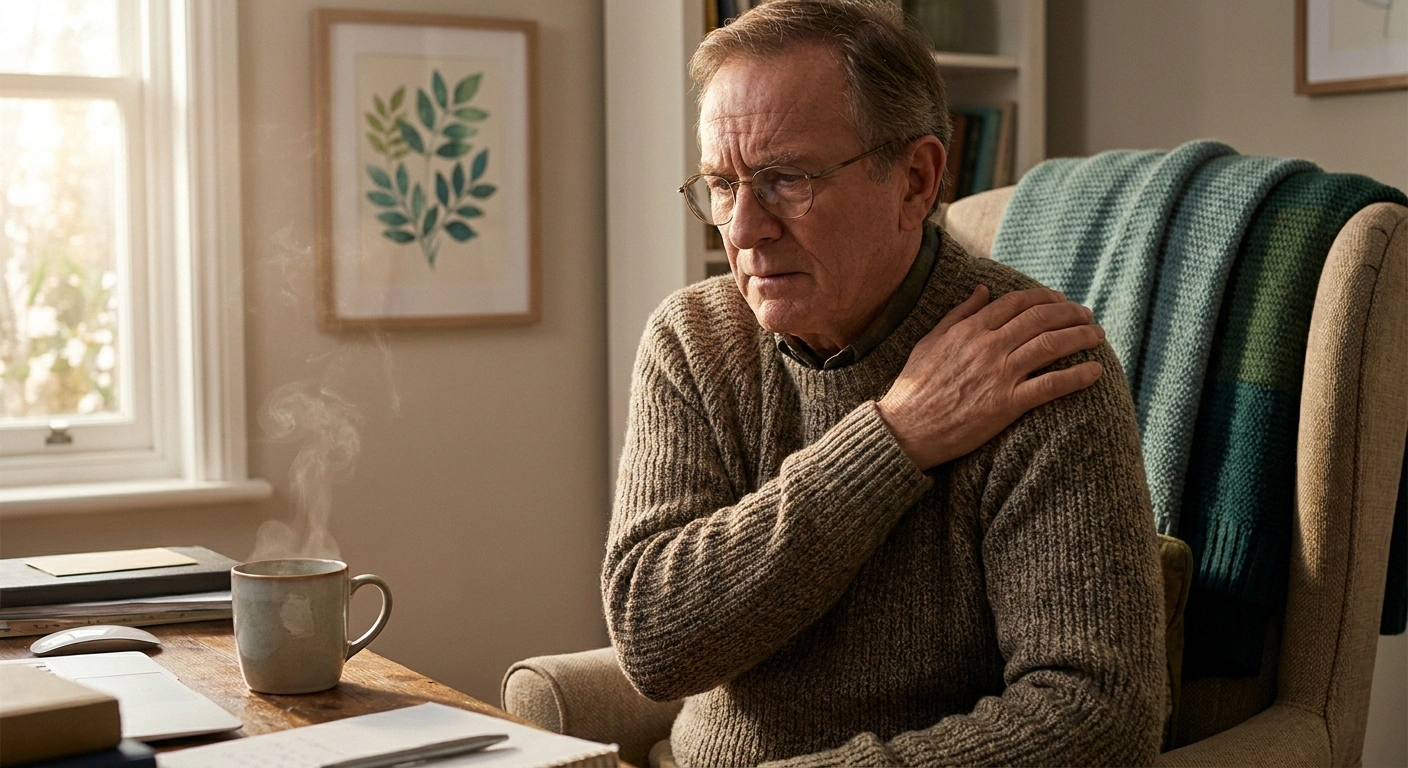
James came to our support group about a year ago, his right arm hanging slightly differently than his left and a story to tell that he had been told too many times. Three months earlier, he had woken up at three in the morning with a pain in his right shoulder so intense he thought he was having a heart attack. He drove himself to the emergency room. They ruled out a heart attack — good and right, that was the first thing to rule out — and sent him home with painkillers and a referral to an orthopedist for what they assumed was a torn rotator cuff. The shoulder MRI came back clean. He saw a physical therapist for six weeks. The pain finally eased. But by then his arm did not work the way it used to. His shoulder blade stuck out from his back when he reached forward, and he could not lift his arm above his head. Nobody had a good explanation. Nine weeks after his pain started, a neurologist he saw on a friend's recommendation listened to his story for ten minutes and said, “I think you have Parsonage-Turner syndrome.”
If you have not heard of Parsonage-Turner syndrome, you are in good company. It goes by several names — brachial neuritis, neuralgic amyotrophy, idiopathic brachial plexopathy — and it is one of the most commonly missed causes of severe shoulder and arm pain followed by weakness in adults. Most patients spend weeks to months being told they have something else. This article exists to give you the vocabulary, the pattern, and the diagnostic path that James wished someone had explained to him.
I am a patient advocate, not a medical professional. The aim here is to help you recognize a specific pattern of symptoms and push for the right kind of specialist evaluation if that pattern fits. I want to be very direct about one thing up front: if you are currently in the middle of new, severe, unexplained shoulder or arm pain — especially on the left side — and you have not been evaluated yet, stop reading this article and call your doctor or go to the emergency room. Heart attacks and strokes get ruled out first, every time. Parsonage-Turner is the diagnosis you arrive at after the dangerous things have been excluded.
What Parsonage-Turner Syndrome Actually Is
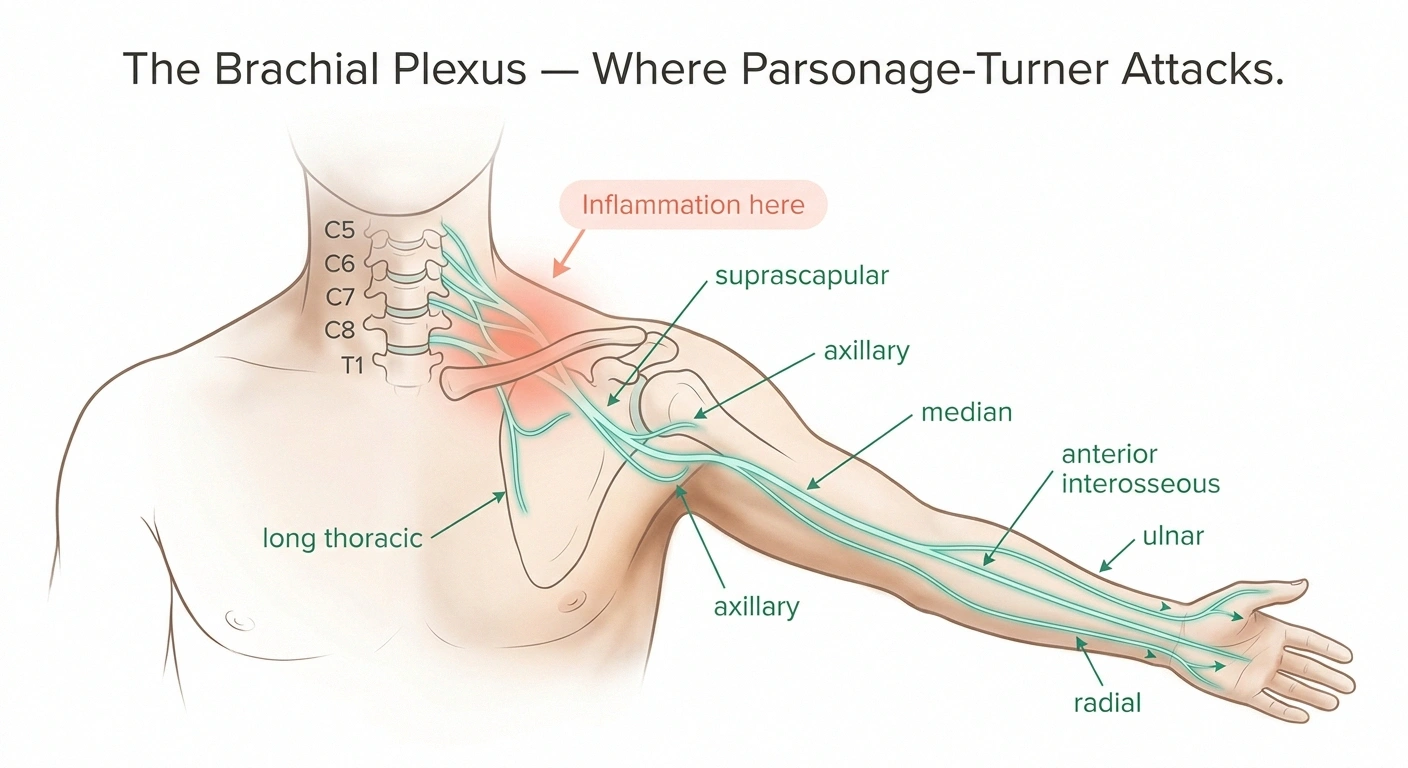
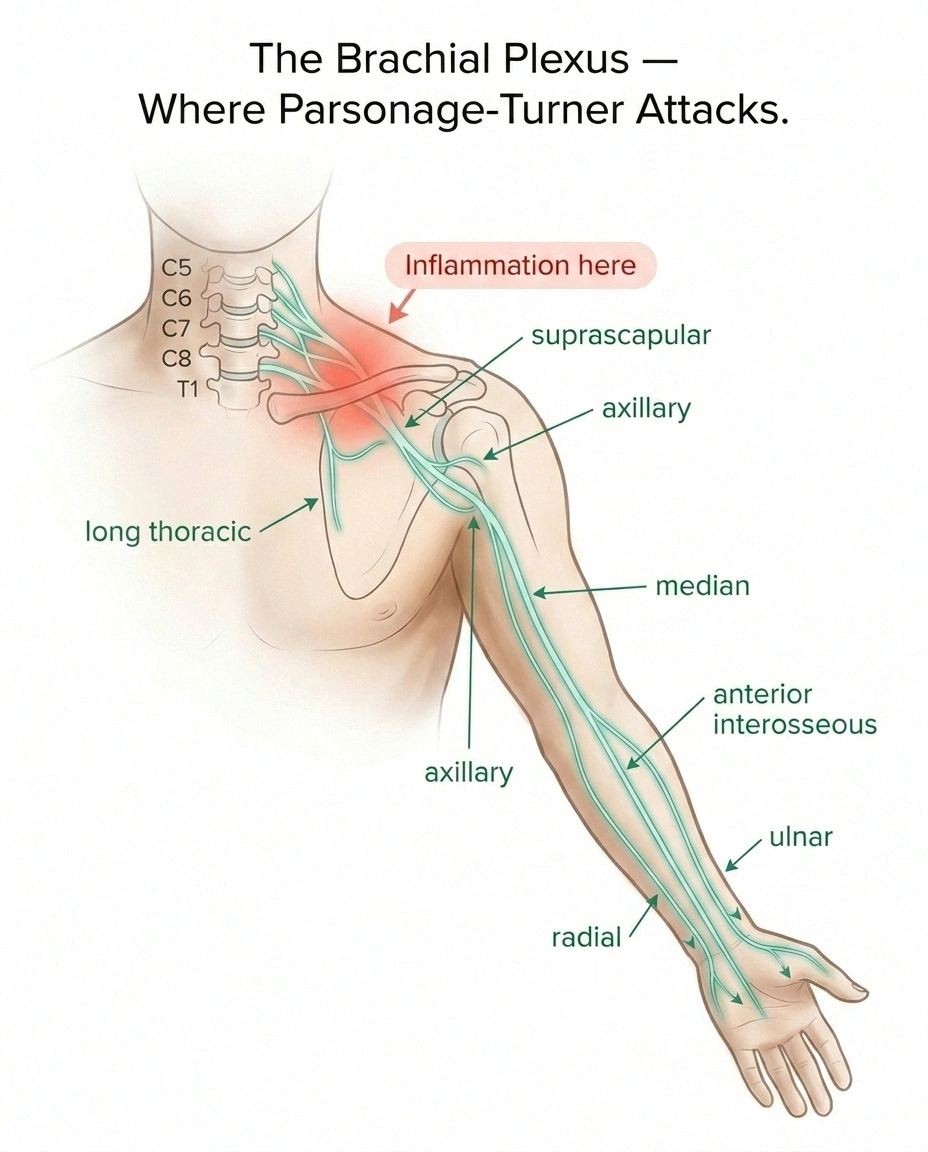
Parsonage-Turner syndrome is an inflammatory condition that attacks the nerves of the brachial plexus — the bundle of nerves that runs from the lower neck, down through the shoulder, and into the arm and hand. It was first described in detail by two British neurologists, Maurice Parsonage and John Turner, in 1948, in a case series of military patients who had developed the same unusual pattern of shoulder pain followed by arm weakness during World War II. Their names stuck to the condition.
Key Takeaway
Parsonage-Turner is an immune-mediated attack on the brachial plexus nerves, usually triggered by a virus, vaccine, surgery, or other immunologic event in the days-to-weeks before symptoms start. The body eventually stops the attack on its own. The acute window is short, the recovery window is long, and the diagnosis is most often delayed because the pattern is unfamiliar to non-neurologists.
The current understanding is that the syndrome is immune-mediated. Something — most often a viral infection, a vaccination, a surgery, childbirth, intense exercise, or even significant emotional stress — happens in the days or weeks before the pain starts, and that trigger seems to provoke the immune system into attacking the brachial plexus nerves on one side (occasionally both). The result is inflammation and damage to specific peripheral nerves, which produces the dramatic pattern of severe pain followed by focal weakness.
The good news, sort of, is that the immune attack is usually self-limited. The body eventually stops attacking the nerves, and the nerves slowly begin to recover. The frustrating news is that recovery takes one to three years on average, the recovery is rarely complete, and there is no medication we currently have that reliably alters the underlying immune process. We can treat the pain. We can support the weakness with physical therapy. We mostly cannot make the underlying damage repair faster.
The Signature Pattern — Severe Pain First, Then Weakness
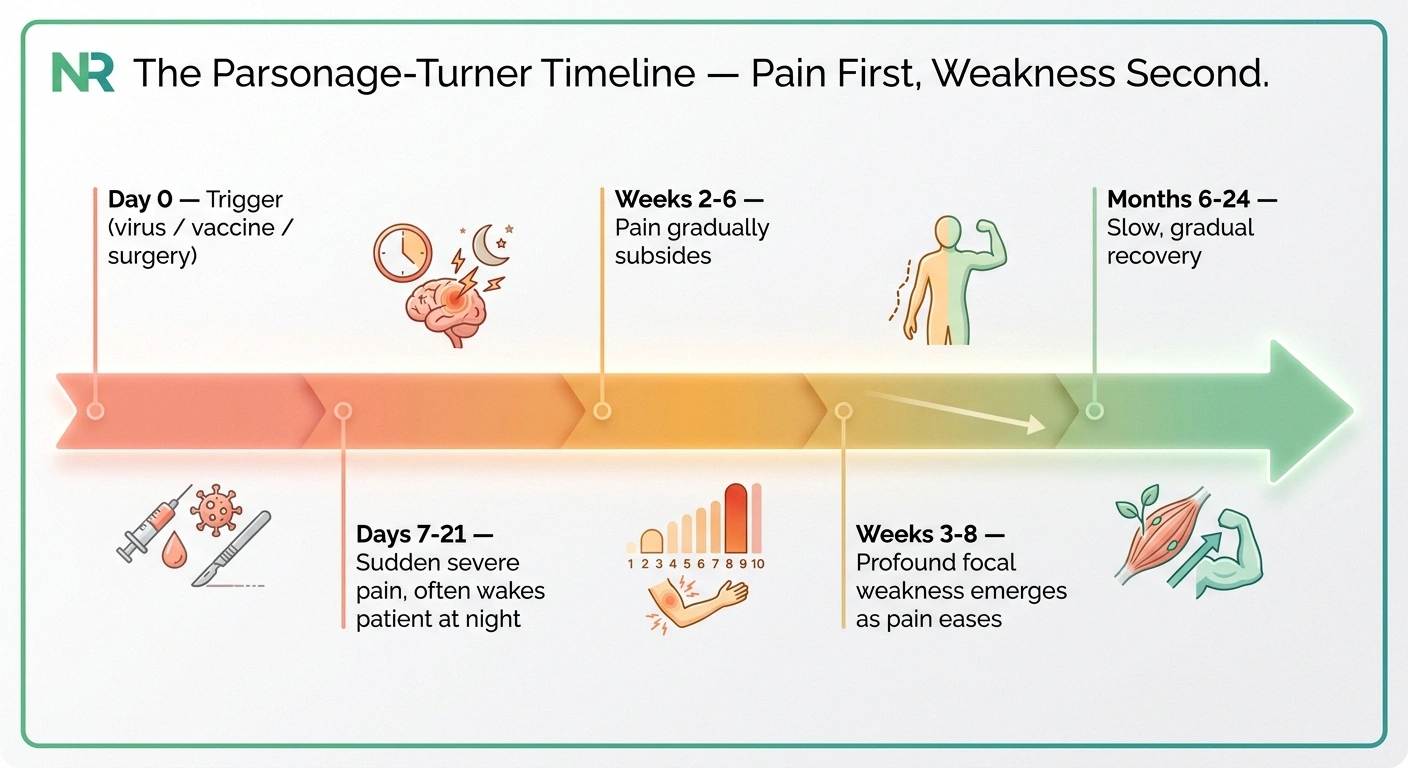
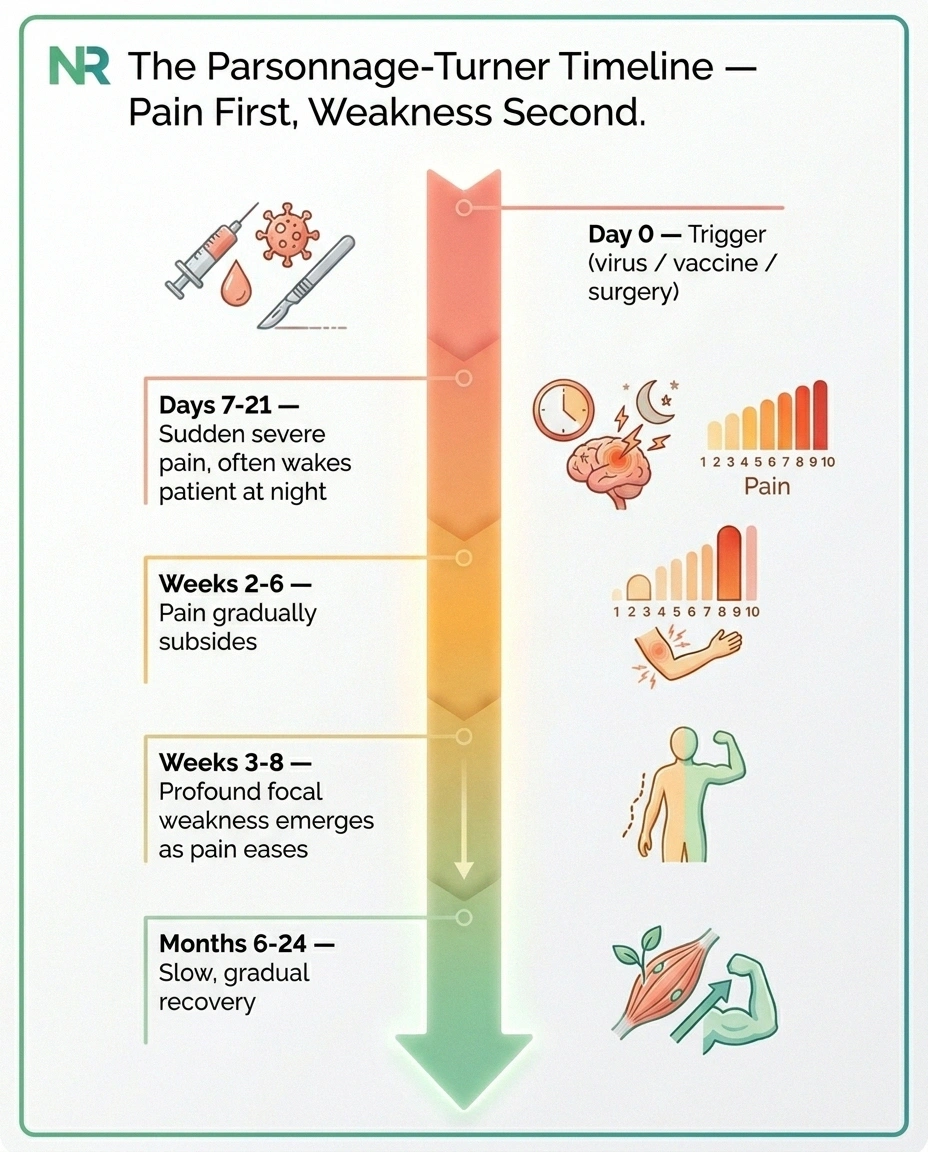
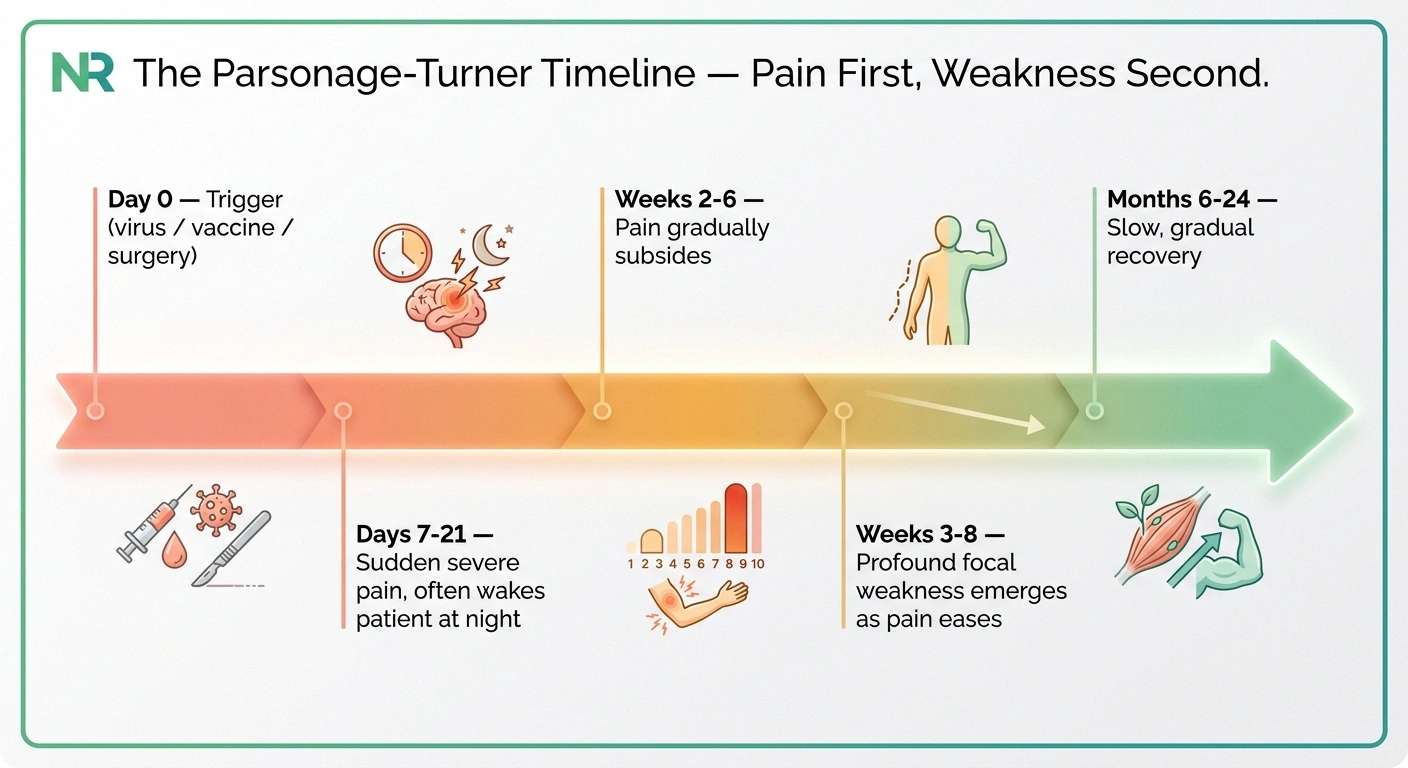
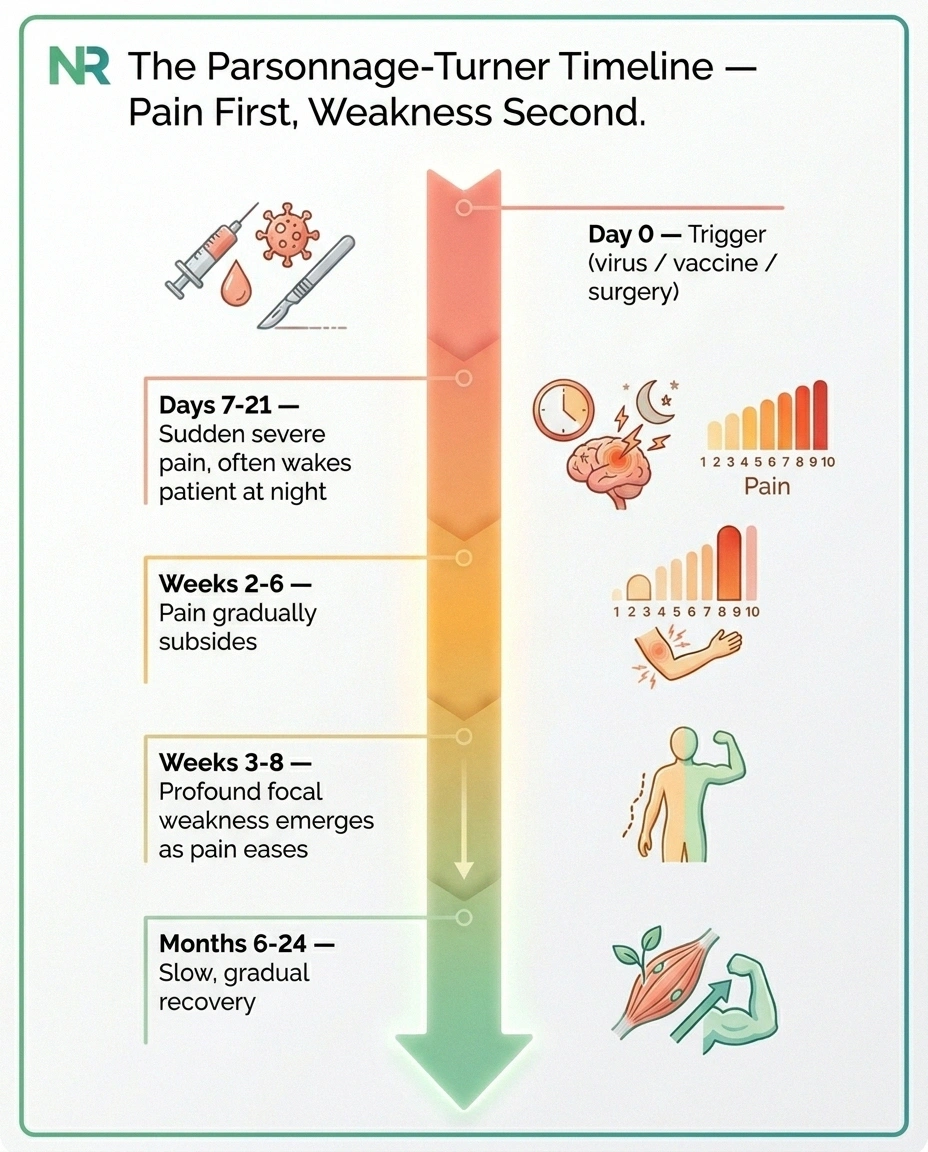
The most important thing to learn about Parsonage-Turner is its very specific temporal pattern. Almost no other condition affecting the shoulder and arm follows this sequence.
Severe New Arm Pain — Rule Out the Heart First
If you are currently in the middle of new, severe, unexplained left-side shoulder or arm pain, stop reading and call your doctor or go to the ER. Heart attacks get ruled out FIRST, every time.
Parsonage-Turner is the diagnosis you arrive at after the dangerous things have been excluded. A missed MI can kill; a delayed Parsonage-Turner diagnosis only delays treatment that does not exist yet anyway.
Phase one — the pain phase. The condition typically begins with sudden, severe, deep, aching pain in one shoulder, sometimes radiating down the arm. Patients consistently describe it as one of the worst pains they have ever felt. It often wakes them from sleep in the early hours of the morning. It is constant rather than worse with movement (though movement makes it sharper). It does not respond well to typical pain medications. This phase lasts anywhere from a few days to several weeks, and during it, the arm and shoulder may look completely normal from the outside.
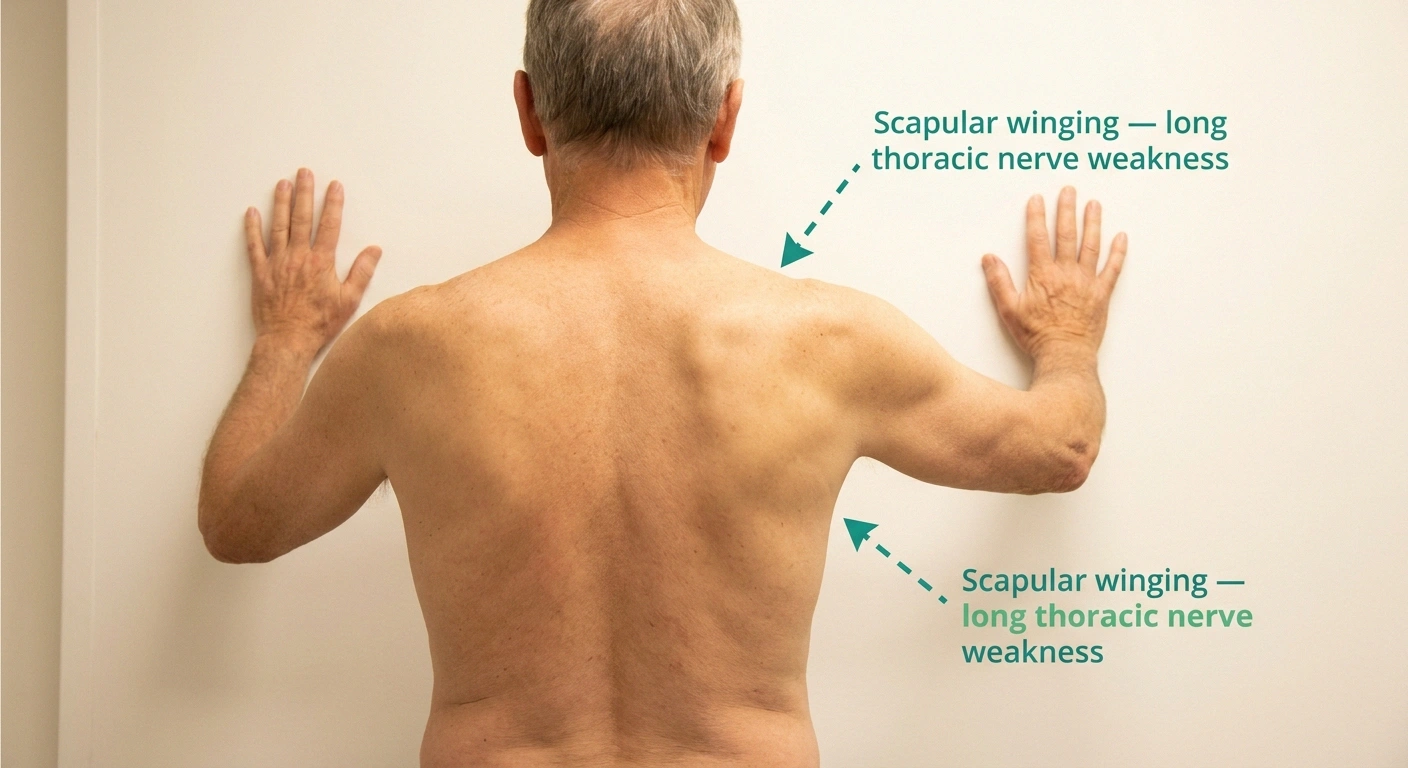
Phase two — the weakness phase. As the severe pain begins to subside, often gradually over days, profound and focal weakness emerges. Patients suddenly notice they cannot lift their arm overhead, or they cannot push the door of a car shut, or their shoulder blade is sticking out from their back like a wing. The weakness can be dramatic and dispiriting because it appears at the very moment the pain is finally easing — just when you thought you were getting better.
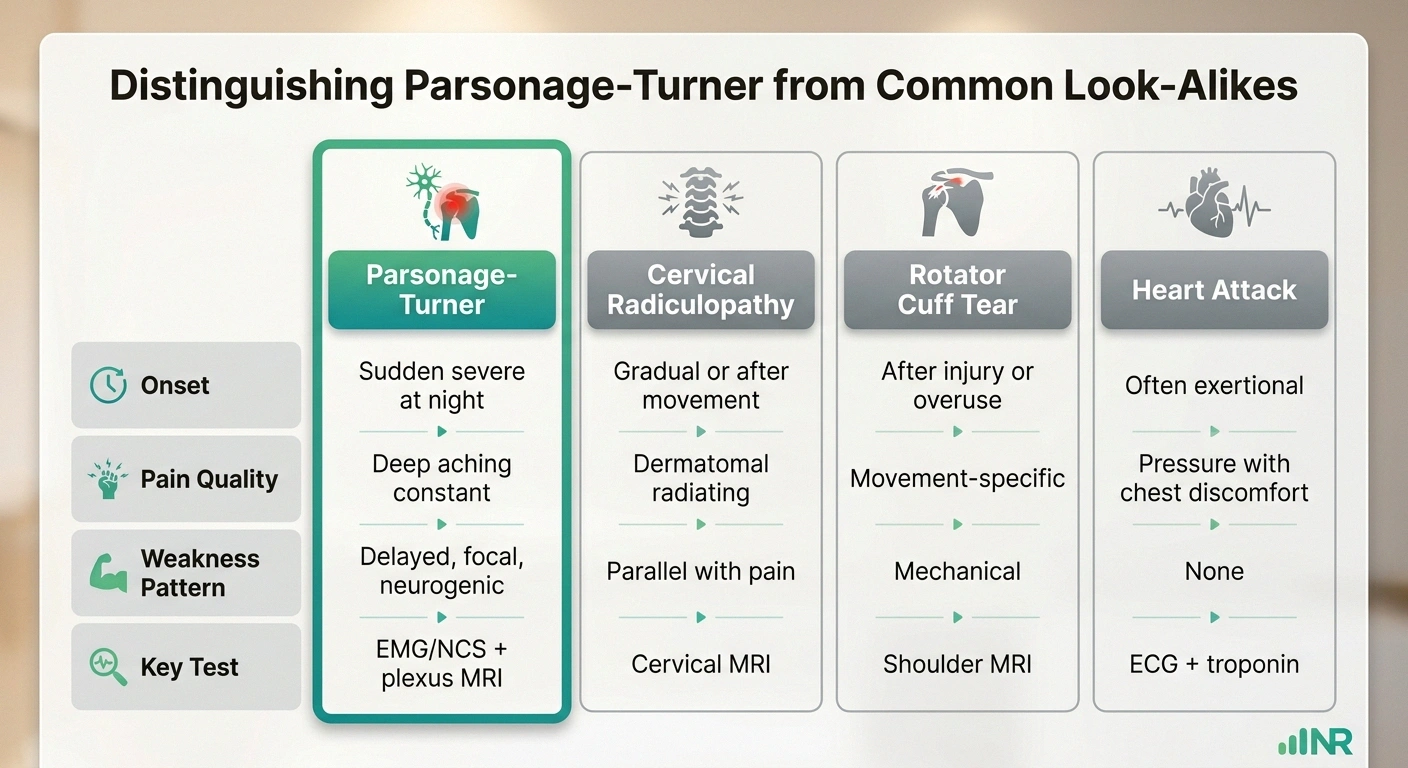
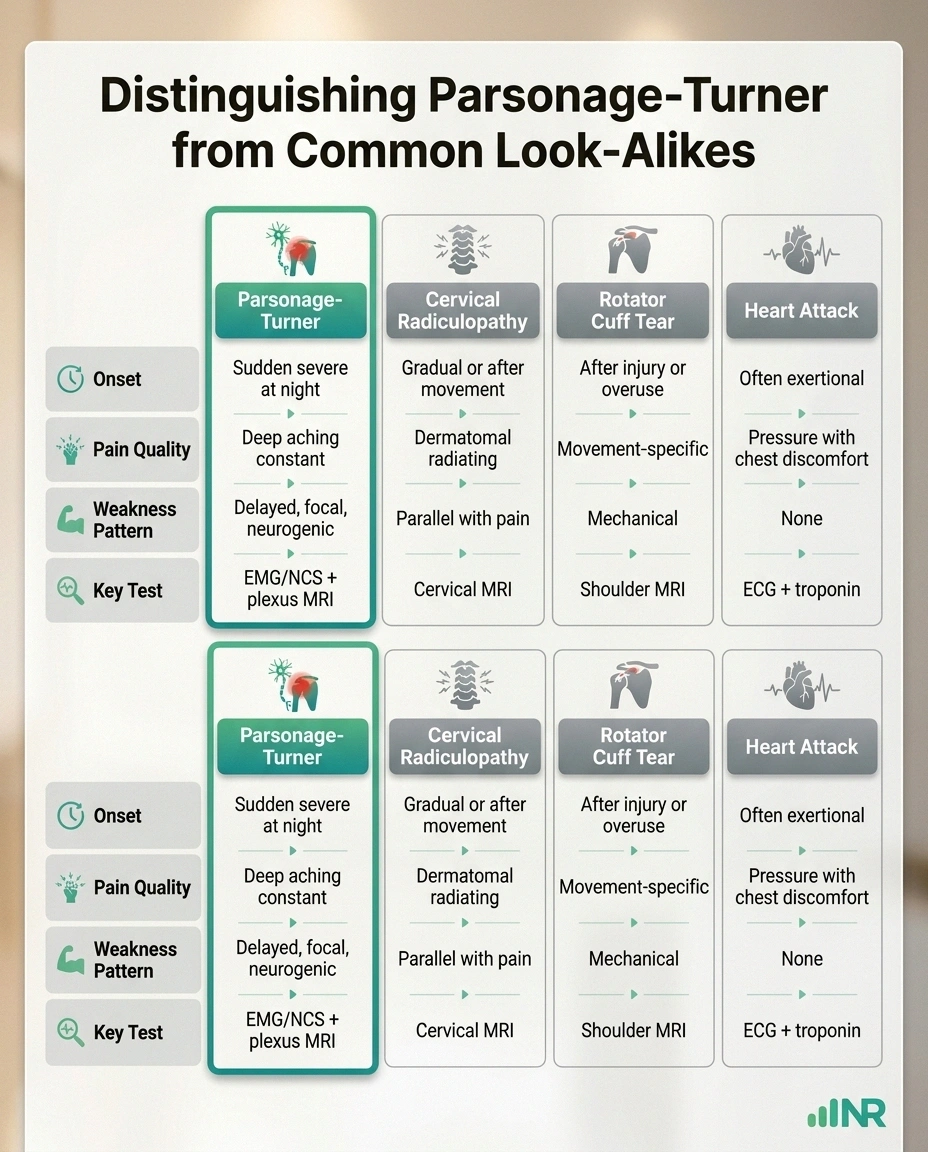
This pain-first, weakness-second pattern is unlike a pinched nerve in the neck (cervical radiculopathy), where pain and weakness rise together and stay in proportion. It is unlike a rotator cuff tear, where pain and weakness both follow an injury and are connected to specific movements. It is unlike heart-related arm pain, which is exertional and usually accompanied by chest pressure. The pain-then-weakness sequence is, in many patients, the single most important clue.
Which Muscles Tend to Be Affected — And Why It Looks So Specific
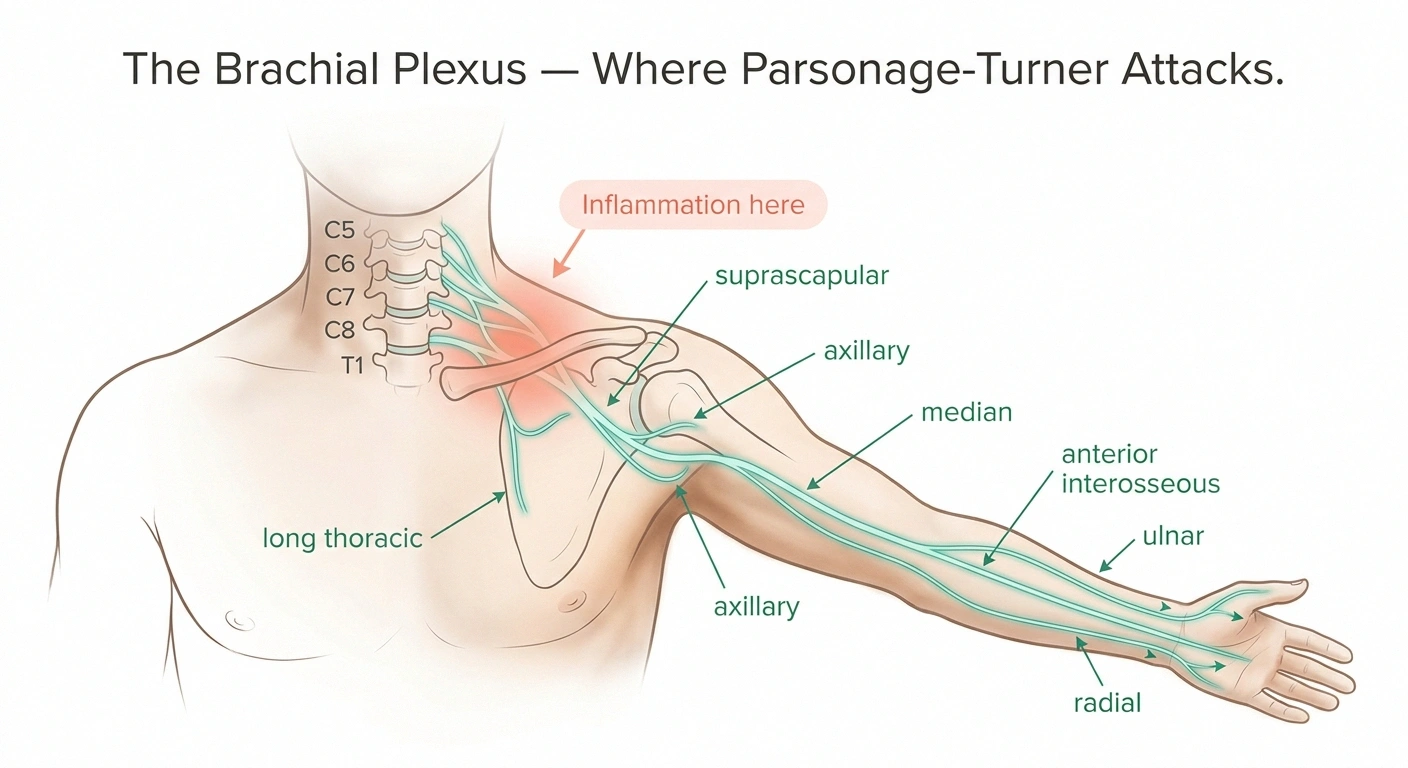
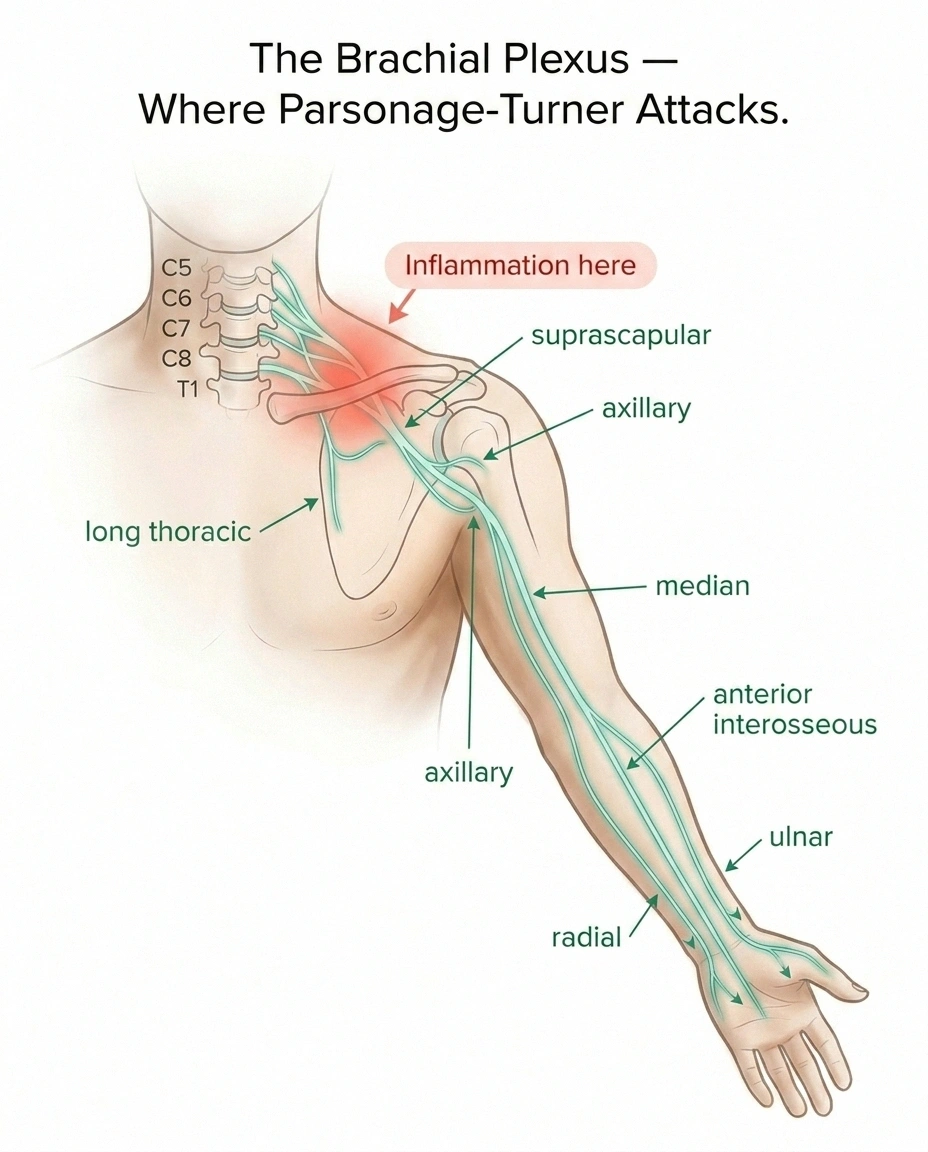
The brachial plexus contains many individual nerves, and Parsonage-Turner does not attack all of them equally. Certain nerves are involved over and over in this condition, and the resulting muscle weakness has very specific and recognizable patterns.
The Four Signature Nerves Most Commonly Attacked
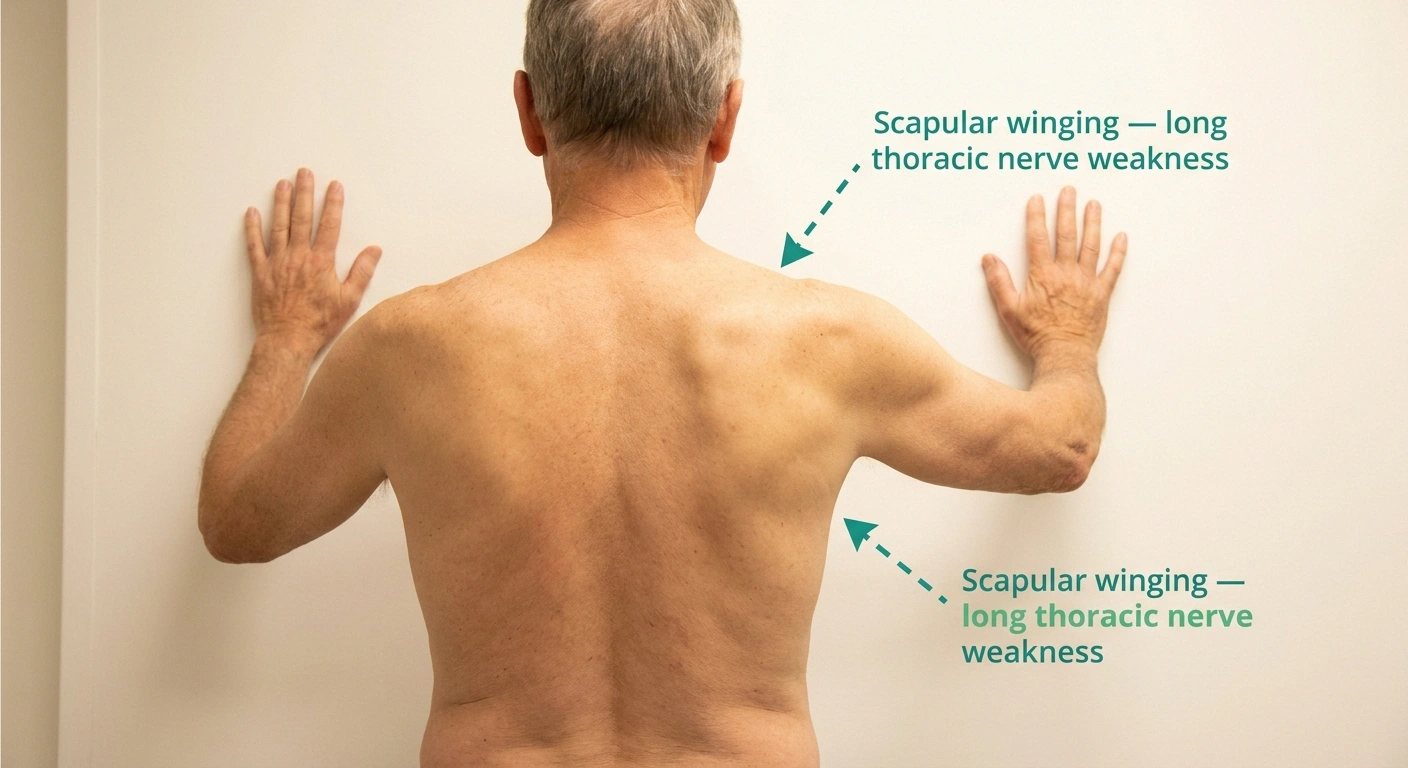
Serratus anterior weakness → scapular winging visible from behind.
Cannot lift arm to the side or rotate it outward — reach-behind-the-back fails.
Cannot make the “OK” sign — thumb and index pinch flat instead of round.
Deltoid weakness — cannot raise arm to the side at the shoulder joint.
The long thoracic nerve supplies the serratus anterior muscle, which holds the shoulder blade flat against the back of the chest. When this nerve is damaged, the shoulder blade lifts away from the rib cage when the arm is pushed forward — a finding called “scapular winging.” Patients sometimes notice this first in the mirror, or a partner notices it when they hug them from behind.
The suprascapular nerve supplies the supraspinatus and infraspinatus muscles, which lift the arm out to the side and rotate it outward. Damage produces weakness when raising the arm from the body and difficulty reaching behind your back to scratch or to get something from a back pocket.
The anterior interosseous nerve, a branch of the median nerve, supplies the muscles that bend the tip of the thumb and the tip of the index finger. When it is involved, patients cannot make an “OK” sign — when they try, the thumb and index finger pinch into a flat shape rather than a round circle. This is a striking finding once you know to look for it.
The axillary nerve supplies the deltoid, the big rounded muscle on the outside of the shoulder. Weakness here means you cannot lift your arm to the side at the shoulder.
What is typical of Parsonage-Turner is that the involvement is patchy. One patient might have winging of the shoulder blade and a weak deltoid; another might have a perfectly normal shoulder blade but cannot make the OK sign. The pattern is unusual enough that a neurologist or physical therapist who has seen it before will often suspect the diagnosis on physical exam alone.
The Triggers — What Seems to Set It Off
One of the questions patients ask most often is “why did this happen to me?” The honest answer is that we do not fully understand the mechanism, but we do see clear patterns of triggering events in the days to weeks before symptoms start. In a substantial fraction of cases, no trigger can be identified, but in the remainder, a few patterns recur.
Research Says
In documented case series of Parsonage-Turner syndrome, an identifiable trigger event in the 2-4 weeks before onset is found in roughly half of patients — most commonly a viral infection, a vaccination, a surgical procedure, childbirth, intense exercise, or a major emotional stressor. The other half have no identifiable trigger. The current understanding is that the syndrome reflects an immune-mediated attack on the brachial plexus nerves, with the trigger acting as the immunologic perturbation rather than as the direct cause of nerve damage.
Viral infections. A respiratory virus, a stomach virus, a flu-like illness in the two to four weeks before the shoulder pain started is one of the most common reported triggers. The viral particles seem to prime the immune system in a way that occasionally cross-reacts with the brachial plexus nerves.
Vaccinations. Any kind — flu shots, tetanus, even routine childhood boosters — have been associated with Parsonage-Turner in case reports. This is not a reason to avoid vaccinations; the absolute risk is very small, and the benefits of vaccination remain overwhelmingly positive. But if someone develops new severe shoulder pain in the days to weeks after a vaccination, the connection is worth noting for the diagnostic workup.
Surgery. Sometimes the surgery is on the same side as the shoulder pain (a shoulder arthroscopy, for example), but Parsonage-Turner has also been described after surgeries far from the shoulder — knee replacements, abdominal surgeries, even dental procedures. The proposed mechanism is generalized immune perturbation rather than direct nerve injury.
Childbirth. Postpartum onset is well-described, often in the first few weeks after delivery.
Intense exercise. Some patients report a particularly hard workout, a heavy lift, or a long hike in the days before the pain started. Whether this is a direct trigger or just coincidence is debated.
Emotional stress. Major life events, periods of intense stress, sleep deprivation — these have also been reported in association with onset.
The takeaway is that the trigger is not your fault. The immune system did something idiosyncratic. Most people who get the same triggers do not develop Parsonage-Turner. The question of “why me” is, for most patients, ultimately unanswerable.
The Hereditary Form — When It Runs in Families
There is a hereditary version of Parsonage-Turner called hereditary neuralgic amyotrophy (HNA). It is caused by mutations in a gene called SEPT9 and is inherited in an autosomal dominant pattern — meaning a parent with the condition has a 50% chance of passing it on to each child. People with HNA tend to have recurrent attacks throughout their lives, often triggered by the same kinds of events that trigger sporadic cases.
You should ask your family about this if you have just been diagnosed with Parsonage-Turner. A family history of “shoulder paralysis after a virus” or recurring shoulder weakness episodes in a parent or sibling raises suspicion. If the pattern fits, a genetic neurologist can discuss whether testing for SEPT9 mutations is appropriate. Knowing about HNA matters because it affects expectations about recurrence and because adult children can be informed about the genetic risk.
How the Diagnosis Actually Gets Made
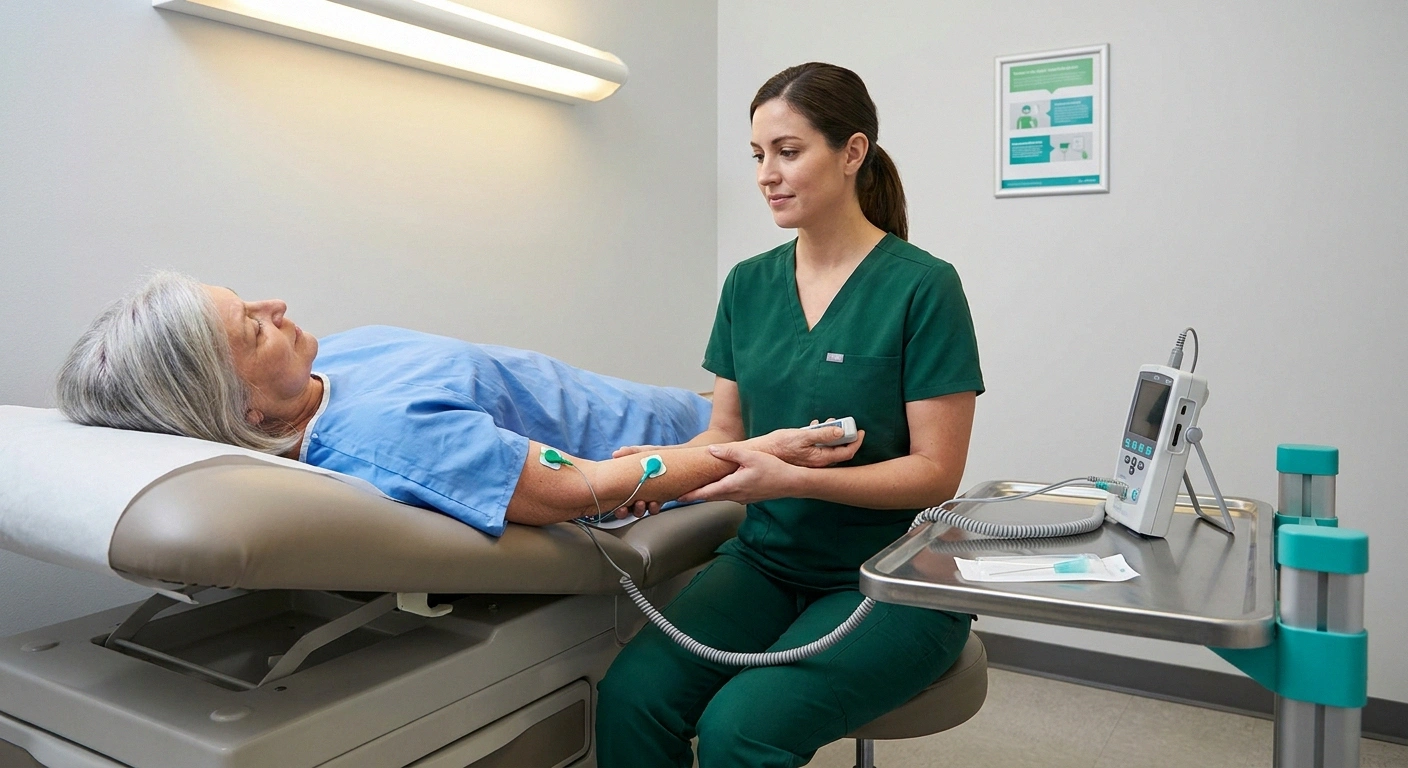
This is the part of the article where I want to be most practical, because the diagnostic delay is the single biggest source of patient frustration with this condition. Let me walk through what a good workup looks like.
EMG findings characteristic of denervation take 2-3 weeks to develop after the initial nerve damage. If your test was done in the first week and looked normal, the diagnosis can still be there — ask about a repeat study at 3-4 weeks if the clinical pattern still fits.
The clinical history is the most important diagnostic tool. A skilled neurologist who hears “I had a virus three weeks ago, then woke up at 3 a.m. with the worst shoulder pain of my life, the pain has finally eased, and now I cannot lift my arm” is already most of the way to the diagnosis before any test is run. The pattern is that distinctive when it is described carefully. Be specific when you tell the story. Bring a timeline written out if you can.
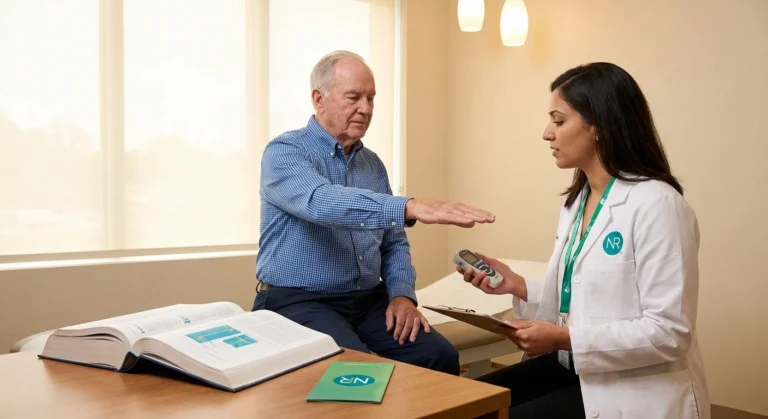
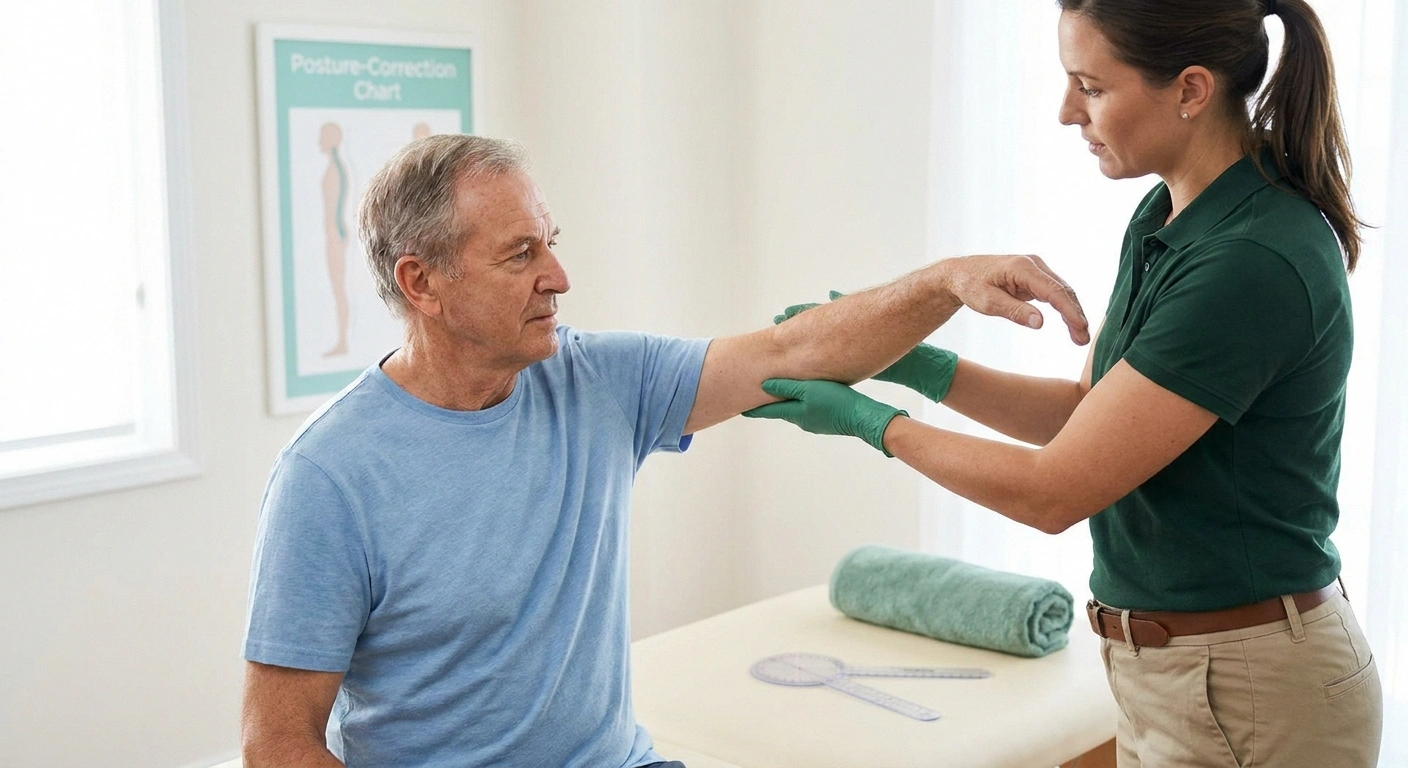
The physical exam looks for the specific patterns of muscle weakness described above. The clinician will test individual muscles methodically and look for the signature findings — scapular winging, the abnormal OK sign, focal deltoid weakness, the patchy distribution. They will compare reflexes side to side. They will check sensation carefully (which is often less affected than the motor weakness).
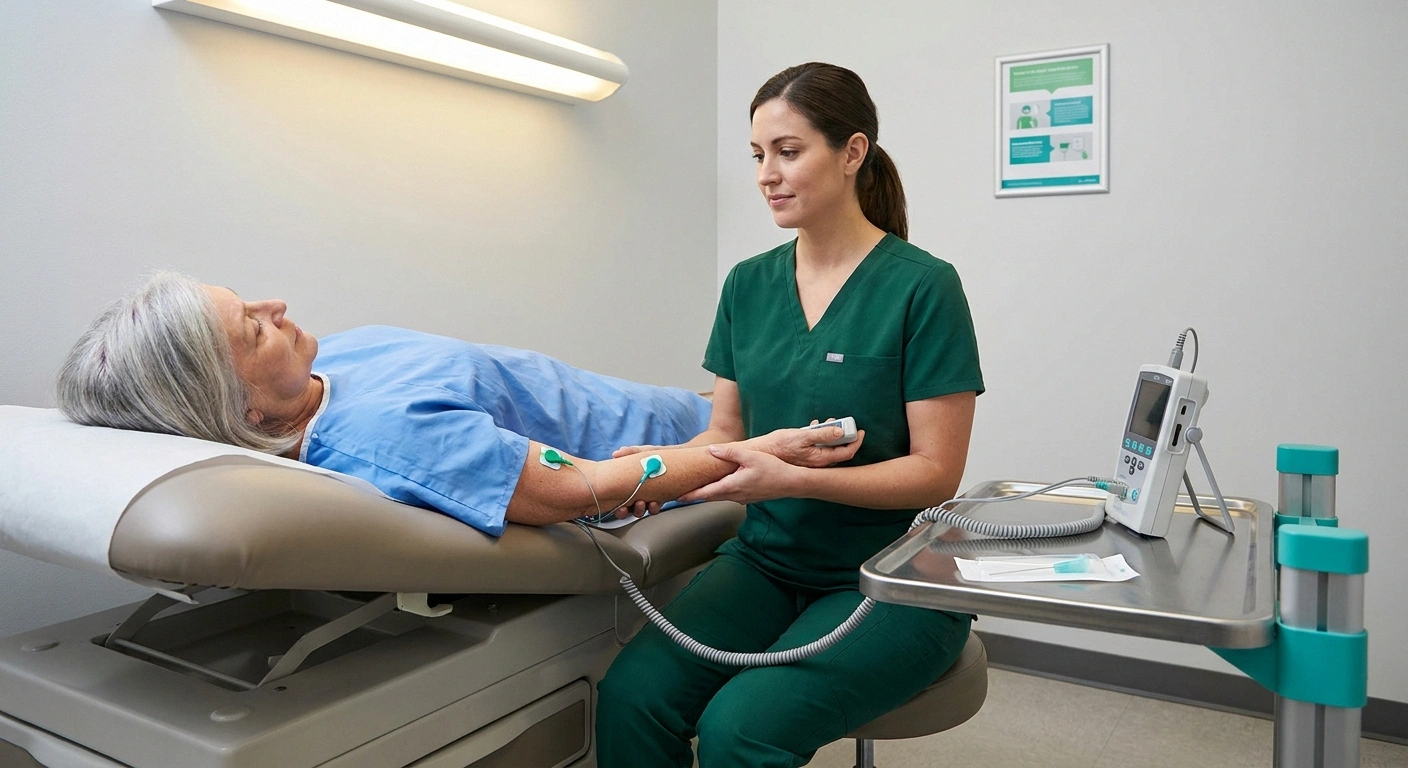
EMG and nerve conduction studies (NCS). This is the single most important test for confirming the diagnosis. An EMG and NCS can demonstrate that the problem is in the peripheral nerves of the brachial plexus rather than at the level of the cervical nerve roots in the neck. The pattern of findings — which specific muscles are denervated, which nerves show abnormalities — is often diagnostic. The timing matters: EMG findings are most informative two to three weeks after symptom onset, because that is when nerve damage produces characteristic changes that the test can detect.
MRI of the brachial plexus with contrast can show thickening and enhancement of the involved nerves, supporting the diagnosis. Standard cervical spine MRIs are usually unhelpful — they are looking at a different anatomic region — though they may be ordered to rule out cervical radiculopathy as a differential.
Blood work may be done to rule out infections, autoimmune conditions, and certain rare causes, but there is no single blood test that diagnoses Parsonage-Turner.
If the pain-then-weakness pattern fits your story and your primary care physician or orthopedist is heading down the “rotator cuff tear” path, the request to make is: “Can you refer me to a neurologist, ideally one with neuromuscular subspecialty experience, for evaluation of possible brachial plexopathy?” An EMG should not be far behind that referral.
What It Is Not — The Conditions Parsonage-Turner Gets Confused With
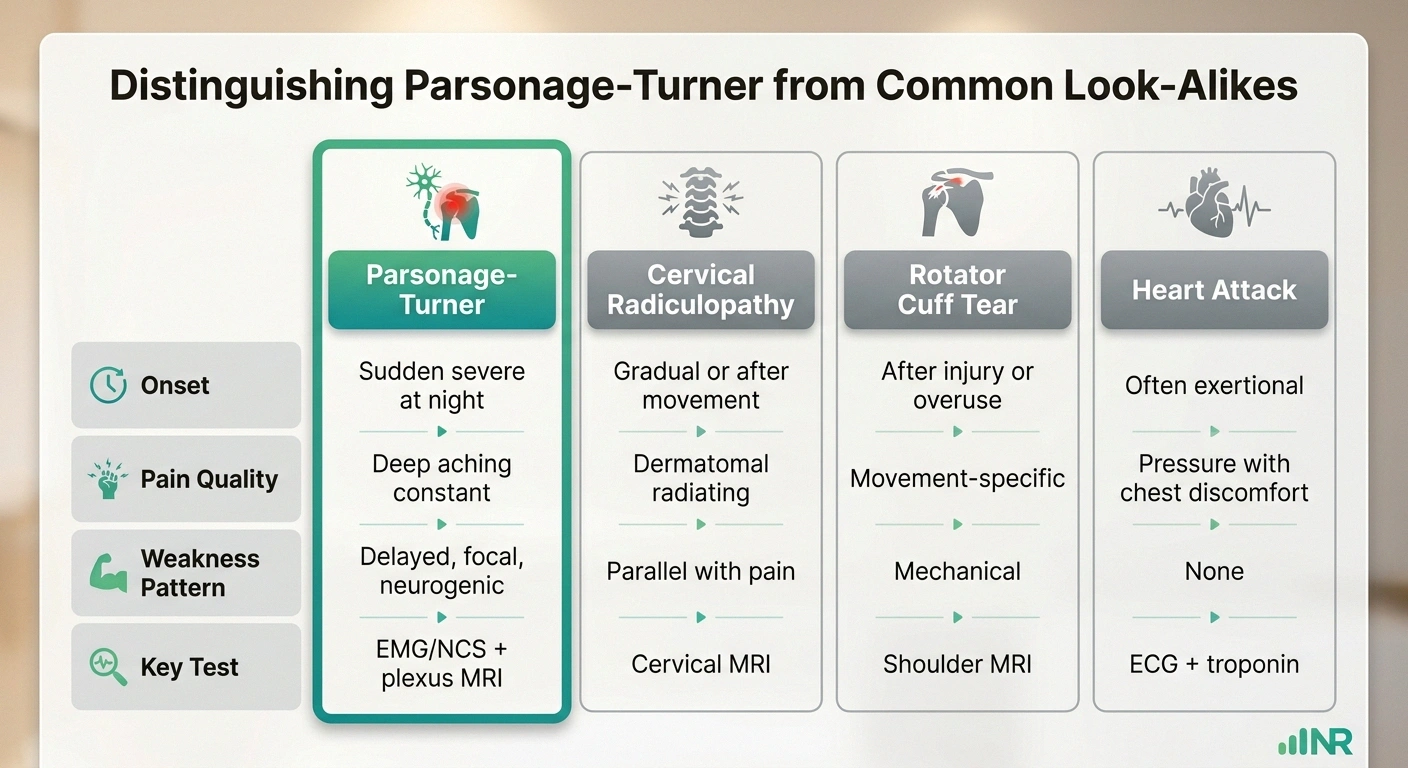
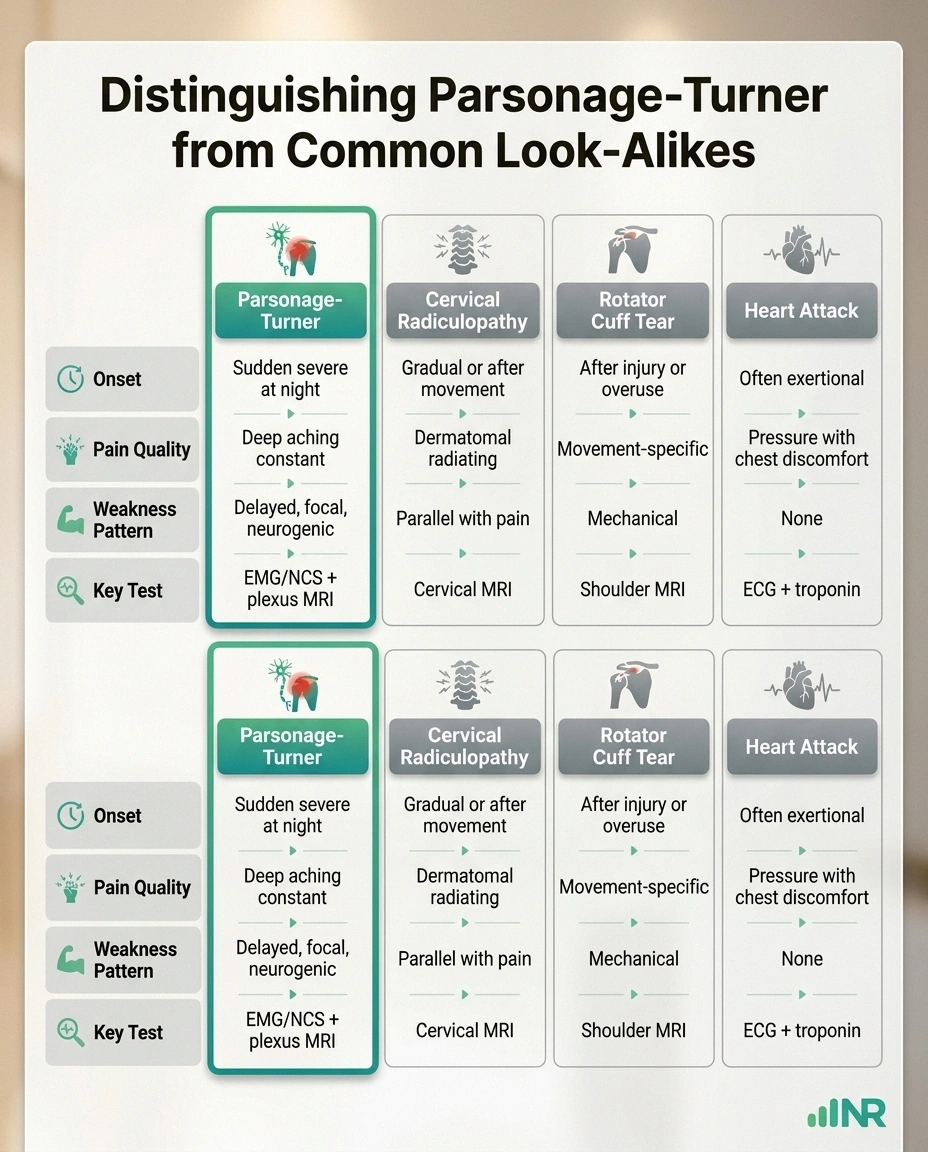
Because the diagnostic delay is so common, it helps to understand what Parsonage-Turner is most often mistaken for, and how the distinguishing features differ.
Cervical radiculopathy (“pinched nerve in the neck”) is the most common misdiagnosis. In radiculopathy, the pain and weakness rise together rather than the dramatic pain-first-then-weakness sequence. The pain in radiculopathy often follows a specific dermatomal pattern down the arm, made worse by neck movements and improved by certain head positions. Cervical MRI shows nerve root compression in radiculopathy; in Parsonage-Turner, cervical MRI is typically unremarkable or shows only age-appropriate changes that do not match the clinical picture.
Rotator cuff tears are the second-most-common misdiagnosis. A torn rotator cuff usually follows an injury or overuse and produces pain with specific movements (reaching overhead, sleeping on the affected side). Shoulder MRI shows the tear. The muscle weakness from a rotator cuff tear is mechanical — the tendon cannot pull — not neurogenic. A neurologically intact rotator cuff weakness behaves differently on exam from neurogenic weakness, and an experienced examiner can usually distinguish them.
Heart attack is the ALWAYS-RULE-OUT-FIRST diagnosis, especially for left-sided arm and shoulder pain. Cardiac pain is usually exertional, often accompanied by chest pressure, shortness of breath, sweating, or nausea, and improves with rest. Parsonage-Turner pain is constant rather than exertional, deep and aching rather than pressure-like, and not relieved by rest. But because a missed heart attack kills people and a missed Parsonage-Turner only delays diagnosis, the cardiac workup happens first, every time. Do not skip the emergency room evaluation when severe new arm pain starts.
Amyotrophic lateral sclerosis (ALS) can also cause arm weakness, and patients sometimes panic when they read about progressive arm weakness. ALS typically begins insidiously and painlessly, progresses gradually over many months, often involves both upper motor neuron signs (spasticity, brisk reflexes) and lower motor neuron signs (atrophy), and is usually bilateral over time. Parsonage-Turner is acute, painful, focal, and one-sided. A good neurologic exam and EMG can distinguish them clearly.
Stroke can produce sudden arm weakness, but it is usually accompanied by face droop, speech changes, or weakness on one whole side of the body. Stroke is also painless. If anyone has sudden one-sided weakness, sudden speech changes, or sudden face droop, that is a 911 call regardless of any other diagnosis being considered.
Treatment — What Actually Helps
Here is where I have to be honest, because the absence of a curative treatment is hard to hear. We have no medication that reliably alters the underlying immune attack on the brachial plexus. The body has to work through it on its own time. What we can do is treat the pain, support the weakness, and prevent secondary complications like frozen shoulder.
Pain control in the acute phase. The pain of Parsonage-Turner in the first days to weeks can be severe enough to require strong medications. Short-course opioid use is sometimes appropriate, recognizing the risks. As the pain transitions from acute to subacute, neuropathic pain medications like gabapentin, pregabalin, duloxetine, or amitriptyline can be helpful. NSAIDs may take the edge off but are usually not enough alone for the early severe pain.
Corticosteroids. Some neurologists prescribe a short course of oral prednisone if the patient is seen within the first two weeks of symptom onset, on the theory that suppressing the immune attack early may limit nerve damage. The evidence for this is mixed, and there are real side effects to consider, but in patients who present early, it is a reasonable conversation to have with a neurologist.
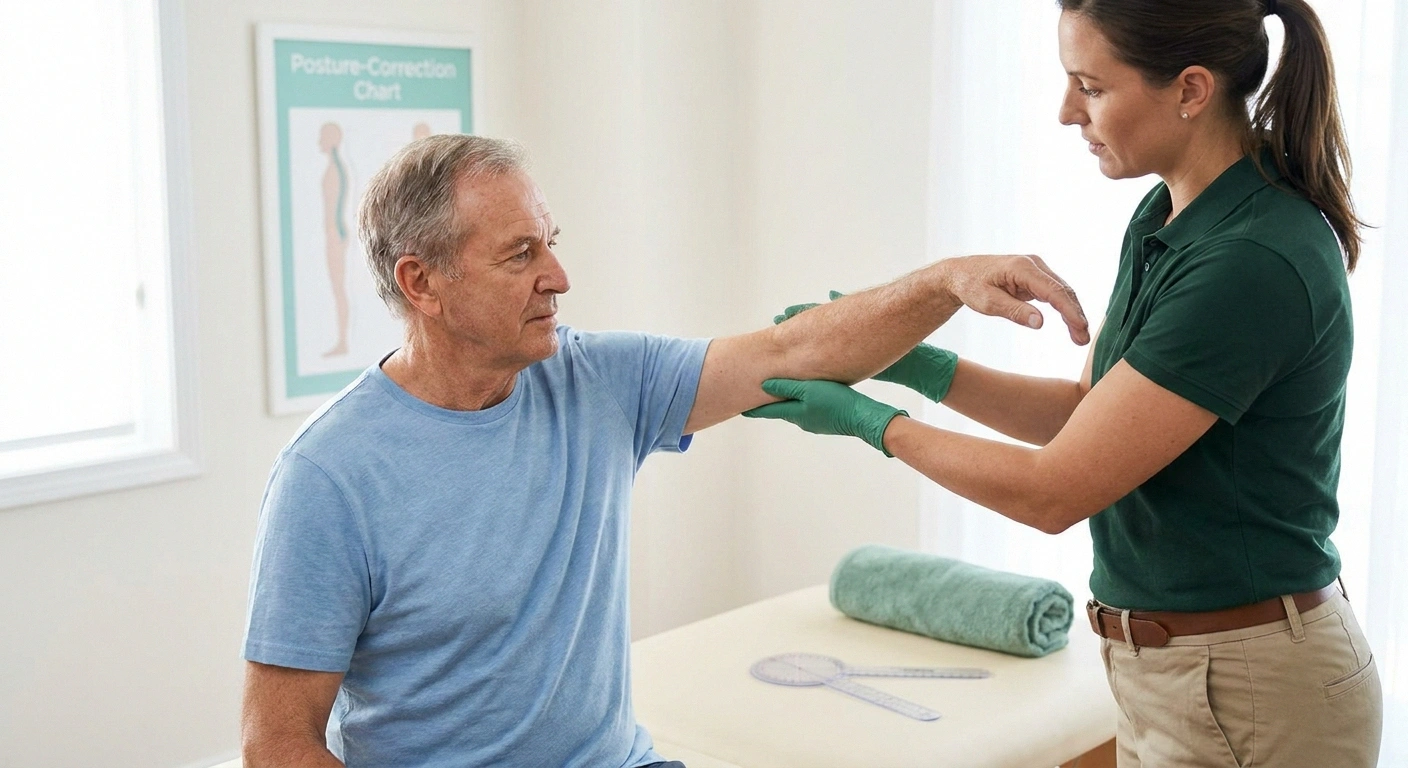
Physical therapy. As the pain eases and the weakness becomes the dominant problem, physical therapy takes center stage. The goals are to maintain range of motion (preventing the shoulder from becoming “frozen”), to strengthen the muscles that are still working normally, and to gradually retrain the muscles whose nerves are recovering. A physical therapist familiar with brachial plexopathies is worth seeking out. Generic shoulder PT can be counterproductive if it pushes painful exercises too early or focuses on rotator cuff strengthening when the actual problem is denervation.
Patience and time. The bulk of recovery happens over the first year, with continued improvement often into year two and three. Nerves regrow slowly — about one millimeter per day in healthy tissue — and the recovery is gradual. Patients who track functional milestones (when they could lift their arm overhead again, when they could open a door, when they could go back to work) usually find that progress is happening even when day-to-day changes are imperceptible.
The Realistic Prognosis
I want to give you the honest version of what to expect, because the rosy “you will be fine” framing and the doom-and-gloom “you will be disabled” framing both miss what the data actually show.
Most patients with Parsonage-Turner experience significant functional recovery over one to three years. About half regain near-normal strength and function. About a third have some residual weakness or fatigue but can do most of what they want to do. About one in five have more significant lasting weakness, particularly if multiple nerves were severely involved or if the diagnosis and supportive care were delayed. The dominant variable in outcome is the extent of the initial nerve damage, which is not something the patient can change.
Recurrence is possible. Sporadic Parsonage-Turner recurs in about 5-10% of cases. The hereditary form recurs in a higher fraction. Recurrences can be on the same side or the opposite side, and they tend to be a little less severe than the initial attack.
The emotional course is often harder than the physical one. Patients describe the months of “is this ever going to get better” as among the hardest parts of the experience. Connecting with others who have been through it, working with a therapist on the chronic-illness grief piece, and finding meaningful activity that does not depend on the affected arm all help. Living with a condition you did not cause and cannot directly treat is its own work.
What Patients Wish They Had Known From the Start
From the people who have come through our group with Parsonage-Turner, here are the things they wished they had heard at the beginning.
If This Sounds Like You — The Right Sequence
Severe new arm pain (especially left-side) → ER same day to rule out cardiac causes.
Recent illness, vaccine, surgery, exercise, or stress in the 4-6 weeks before pain started. Write it down.
Ask explicitly: “Could this be brachial plexitis or Parsonage-Turner? Can I see a neurologist for an EMG?”
1-3 years typical recovery arc. PT with a brachial plexus specialist. Patience and steady progress beats heroic effort.
Push for the EMG sooner. If the pattern fits — sudden severe shoulder pain that has eased into focal weakness — do not let the diagnostic workup stay stuck at “rotator cuff” for more than a few weeks. Ask for the neurology referral. Ask for the EMG. The diagnosis matters because it shifts the treatment focus appropriately and because it sets your expectations for the recovery timeline.
Get pain controlled aggressively in the first few weeks. The acute pain is severe enough that under-treatment is common. Talk to your provider about a real pain control plan rather than soldiering through it. Pain control also makes the early physical therapy more tolerable.
Find a physical therapist familiar with brachial plexopathies. Generic shoulder PT is not the right approach. A specialist understands the difference between neurogenic and mechanical weakness and tailors the program accordingly.
Take photos and videos of your arm. Range of motion videos every few weeks let you see progress that day-to-day awareness misses. They are also useful for your medical team.
Be honest with the people around you about what you can and cannot do. The injury is invisible — the arm looks normal — but the function is impaired. Explaining what is going on to family, coworkers, and friends prevents unhelpful expectations and helps people offer the support they would actually offer if they understood.
Connect with others who have been through it. Online forums, support groups, and Facebook groups exist specifically for Parsonage-Turner. The shared experience of “this is going to take time and it is okay” from someone two years out is worth a great deal.
If You Think This Might Be Happening to You Right Now
If you are reading this article in the middle of new severe shoulder or arm pain, here is the most important sequence:
The Realistic Prognosis
Roughly half of patients regain near-normal strength. A third have residual weakness but can do most of what they want to do. One in five have more significant lasting impairment, especially with delayed diagnosis or severe multi-nerve involvement.
Recovery is slow but real — nerves grow at about a millimeter per day. Most people get back to a life they recognize, even if the road takes 1-3 years.
First, rule out the dangerous stuff. Severe new arm pain — especially left-sided — needs same-day evaluation to rule out cardiac causes. Sudden one-sided weakness, sudden face droop, sudden speech changes, sudden severe headache need 911. Heart attack and stroke get ruled out first, always.
Second, document the timeline. Write down when the pain started, what triggered it (if anything), how it has progressed, what makes it better or worse. Write down any recent illnesses, vaccinations, surgeries, exercise events, or major stressors in the four to six weeks before onset.
Third, push for a neurologist if the pain-then-weakness pattern emerges. Do not stay stuck at “rotator cuff” for more than a few weeks if the pattern is not matching what an orthopedist would expect. Ask explicitly: “Could this be brachial plexitis or Parsonage-Turner syndrome? Should I see a neurologist?” Make the question concrete and the diagnosis they need to either confirm or rule out specific.
Fourth, be patient with the recovery once the diagnosis is made. One to three years is the typical recovery arc. There is no shortcut. There is good support along the way. Most people get back to a life they recognize.
Frequently Asked Questions
What is Parsonage-Turner syndrome in plain language?
Parsonage-Turner syndrome is an immune-mediated inflammatory attack on the nerves of the brachial plexus — the bundle of nerves that runs from the lower neck through the shoulder and into the arm. It causes sudden severe shoulder pain that lasts days to weeks, followed by profound weakness in specific arm or shoulder muscles. It is also called neuralgic amyotrophy or brachial neuritis. It is often triggered by a recent viral infection, vaccination, surgery, childbirth, intense exercise, or significant stress, though sometimes no trigger can be identified. Recovery usually takes one to three years, and while most people regain significant function, residual weakness is common.
How long does Parsonage-Turner pain last?
The acute severe pain phase typically lasts a few days to several weeks, though for some patients it can persist for months at a lower intensity. The pain is most severe in the first one to two weeks and gradually transitions from a sharp, deep, aching pain to a more chronic, low-grade discomfort as the weakness phase takes over. Aggressive early pain control matters, both for quality of life during the acute phase and to allow the patient to participate in physical therapy as the weakness emerges. Neuropathic pain medications, NSAIDs, and short-course opioids in the acute phase are common parts of the pain management plan.
Can Parsonage-Turner be cured?
There is no cure in the sense of a medication that stops or reverses the underlying immune attack. The condition is, however, usually self-limited — the body eventually stops attacking the nerves on its own. What we have are supportive treatments: pain management during the acute phase, sometimes short-course corticosteroids if the patient presents in the first one to two weeks, and structured physical therapy as the weakness emerges. Most patients recover significantly over one to three years, though recovery is rarely complete and some residual weakness or fatigue is common. The honest framing is that you treat the symptoms and support the body's own slow repair, rather than curing the underlying disease.
Is it possible for Parsonage-Turner to come back?
Yes. Sporadic Parsonage-Turner has a recurrence rate of about 5 to 10% across published series. The hereditary form, hereditary neuralgic amyotrophy or HNA, has a much higher recurrence rate and tends to produce repeated attacks throughout a person's life. Recurrences can happen on the same side or on the opposite side, and they are often a little less severe than the initial attack. If you have had Parsonage-Turner and you develop new severe shoulder or arm pain, mention the history to your provider promptly so the workup can move faster the second time.
What kind of doctor diagnoses Parsonage-Turner?
A neurologist is the right specialist, ideally one with neuromuscular subspecialty experience. Primary care physicians and orthopedists can suspect the diagnosis if they recognize the pain-then-weakness pattern, but the definitive workup — EMG and nerve conduction studies, MRI of the brachial plexus, and the detailed neurologic exam — is best done by neurology. If your initial workup has stayed at “rotator cuff” or “pinched nerve” and the pattern is not fitting, ask explicitly for a neurology referral and for an EMG study. That request often gets the workup moving in the right direction.
Should I get an MRI for Parsonage-Turner?
The most useful imaging study is an MRI of the brachial plexus with contrast, which can show thickening and enhancement of the affected nerves and support the diagnosis. A cervical spine MRI is often ordered as part of the differential workup to rule out cervical radiculopathy, but it usually does not show findings that explain Parsonage-Turner because the problem is below the level the cervical MRI is examining. The decision about which imaging to order is best made by the neurologist evaluating you, in conjunction with EMG and nerve conduction studies, which are typically more diagnostically informative than imaging.
Can vaccines cause Parsonage-Turner syndrome?
Vaccines have been associated with Parsonage-Turner in case reports for many different kinds of vaccines, including flu shots, tetanus boosters, and various other routine immunizations. The mechanism is believed to be immune activation that, in a small number of susceptible people, triggers the inflammatory attack on the brachial plexus. The absolute risk is very small — far smaller than the risk of complications from the infections the vaccines prevent. This is not a reason to avoid vaccinations. But it is reasonable to note recent vaccination history when discussing the workup with your provider, because it can help establish the temporal pattern and trigger the right diagnostic considerations earlier.
What is the difference between Parsonage-Turner syndrome and a pinched nerve in the neck?
The two conditions can produce overlapping symptoms but have different patterns. A pinched cervical nerve (radiculopathy) typically produces pain that radiates down the arm in a specific pattern matching the affected nerve root, is often made worse by certain neck positions, and produces weakness that rises together with the pain rather than separately. MRI of the cervical spine usually shows the compression. Parsonage-Turner produces severe shoulder pain that comes first and is followed days to weeks later by profound focal weakness as the pain eases. The cervical MRI is usually normal or shows changes that do not match the clinical picture. EMG and nerve conduction studies can distinguish them by localizing the nerve damage to the brachial plexus rather than to the cervical roots.
About the Author