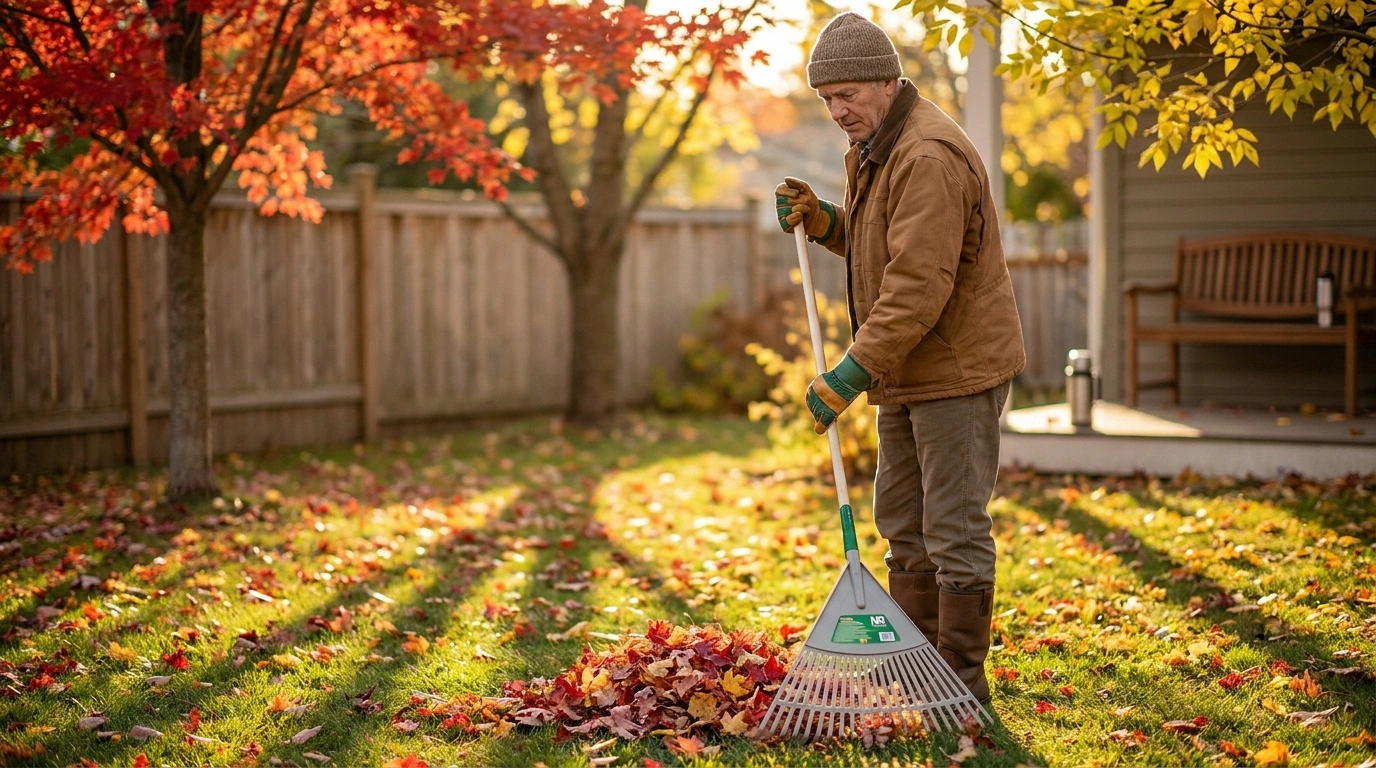
There is a week every October where the maples turn all at once and the yard fills up before I can blink. I love that week. I also used to dread it, because the two-day flare after a Saturday marathon of raking was not worth the tidy lawn. I finally figured out the problem was not the yard work. It was the way I was doing it.
I’m Janet Ellis. I have lived with peripheral neuropathy for years, and I still garden, still rake, still bag leaves in the fall. I am not a doctor, just someone who has traded a lot of notes with our support group about what helps. If your feet feel unreliable and your hands do not grip like they used to, the answer for most of us is yes, you can still do this, just not the same way.
Why Fall Yard Work Hits Different When You Have Neuropathy
Three things line up in October that do not line up any other season, and each of them is harder for a foot or a hand with reduced sensation.
Upgrading the tools, wearing boots with real tread, and pacing yourself with the 15/5 rule handle most of what makes fall yard work hard with neuropathy. Splitting the job across two or three afternoons rather than one Saturday marathon is often the single biggest change.
First, the ground stops giving you feedback. Dry leaves are soft and forgiving; wet leaves are essentially a lubricated tarp laid over the ground. Wet leaves are one of the slipperiest natural surfaces there is, and a foot with reduced sensation will not tell you it is sliding until the slide is already underway. Our piece on neuropathy, balance, and fall prevention covers the math.
Second, raking is a small motion repeated hundreds of times, exactly the recipe that flares hand and forearm symptoms. Constant vibration through a wooden shaft is felt (or not fully felt) by hands that already run hot and buzzy. Our guide to neuropathy in the hands covers the mechanics; field version, an hour of aggressive raking costs you a day of hand pain if you are not careful.
Third, fall weather is cold and wet, and cold makes most people’s neuropathy louder. Numb feet get number. Fingers stop cooperating with the rake.
Choosing Tools That Do the Heavy Lifting For You
The single biggest change most people can make is upgrading the tools. Gear marketed to arthritis sufferers is quietly perfect for anyone with hand or foot neuropathy.
Rake vs Ergonomic Rake vs Electric Blower
- A lightweight ergonomic rake. Fiberglass or aluminum shaft (much lighter than wood), a wider head in the 24 to 30 inch range (fewer swings for the same coverage), cushioned grip.
- A stand-up leaf grabber. Two-handled jaw-style tools that scoop a pile without bending. If standing up ten times an hour wrecks you, this changes the day.
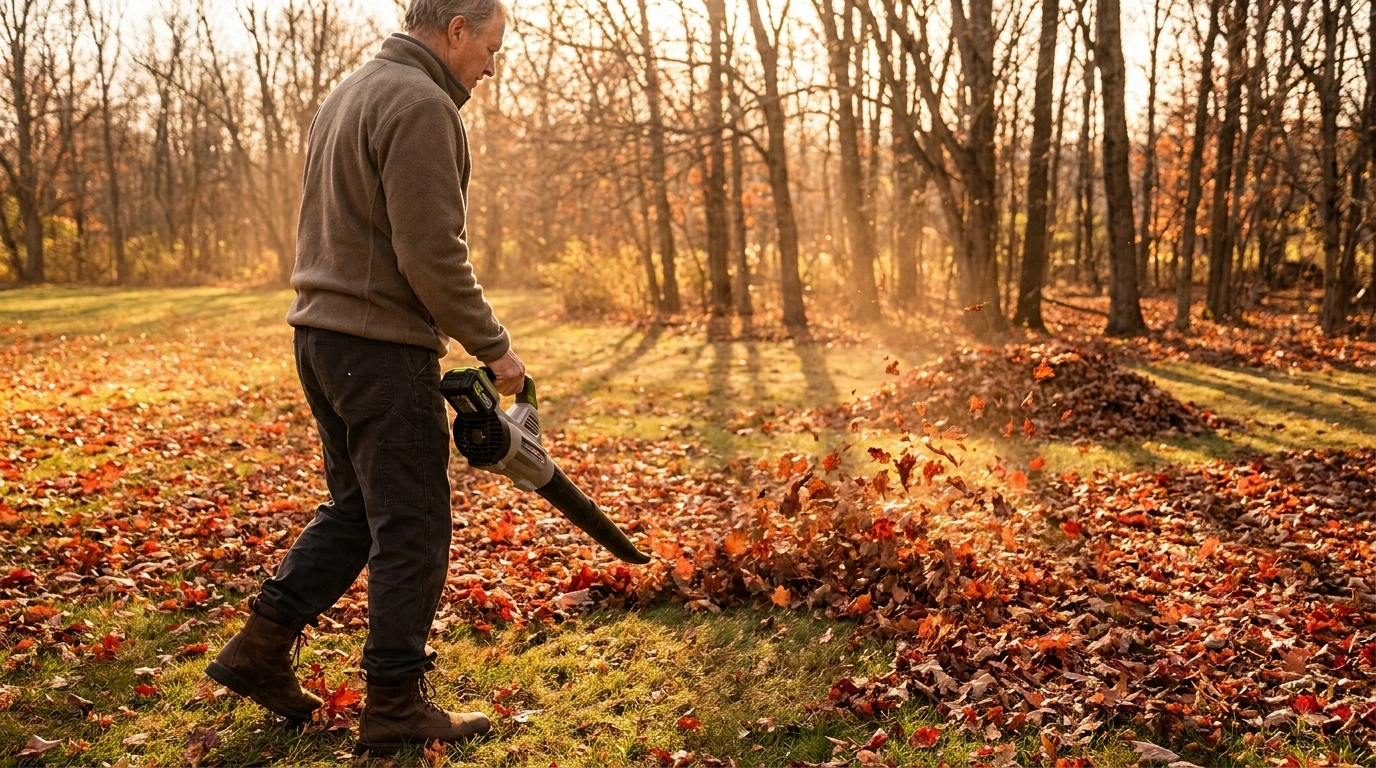
- An electric leaf blower. Blowers do most of the work of a rake with almost none of the shoulder or wrist strain. Electric models (corded or battery) are quieter and vibrate less than gas. Windrow leaves into a pile rather than raking, and you save enormous effort.
- A leaf tarp. Rake or blow leaves onto it, then drag rather than lift. Dragging uses your body weight; lifting a full bag uses your grip and back.
- A two-wheel wheelbarrow. Two-wheeled models balance themselves rather than requiring you to. For anyone whose balance is not what it was, that helps.
- Paper leaf bags with a stand-up frame. A wire frame holds the bag open at knee height. No more wrestling a slumping bag.
You do not need all of these. Pick the one or two that address your specific bottleneck.
The Right Gloves and Boots Make Everything Safer
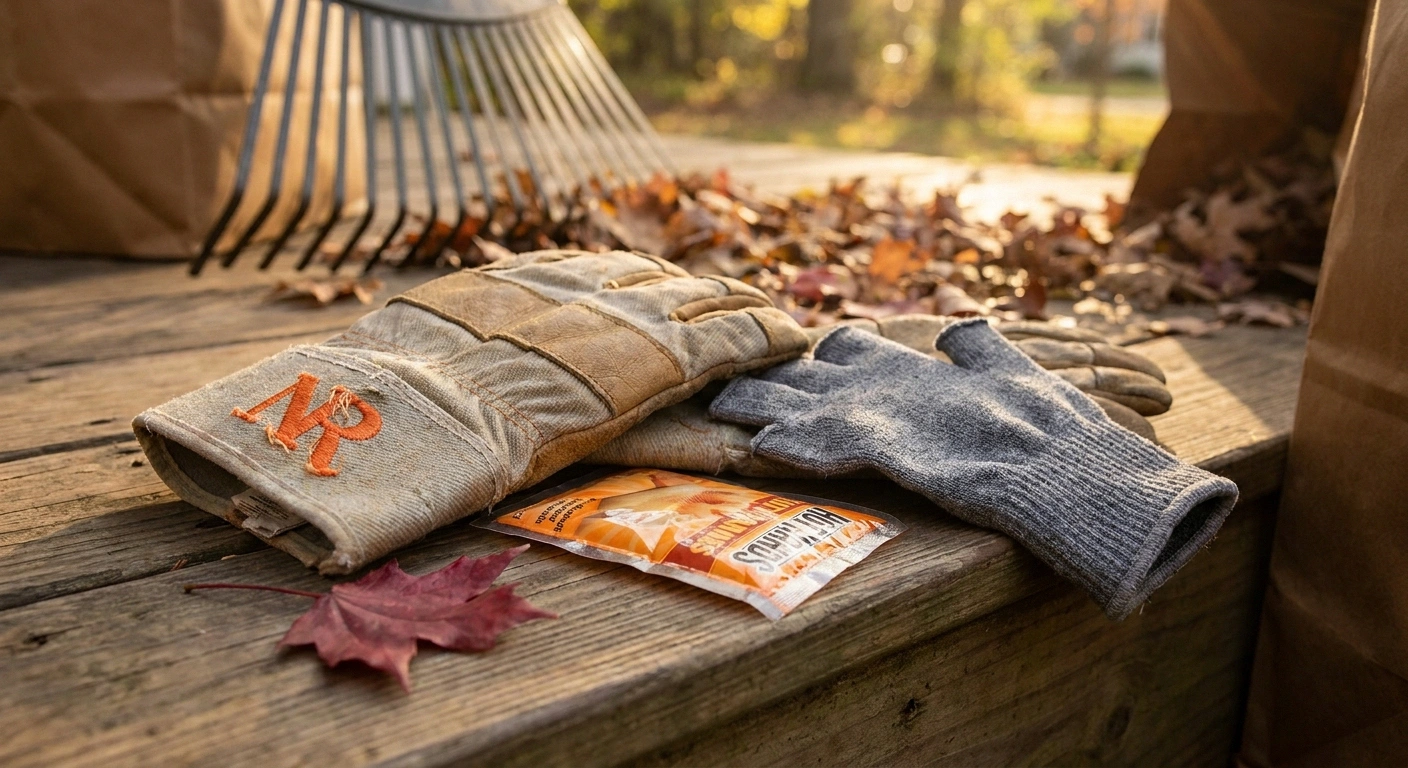
Gloves. Look for leather-palm gardening gloves with padding across the palm and fingers. The padding gives you grip your hands may not fully register on their own. Avoid loose gloves, because a glove that slides on your hand slides on the rake handle too, and you find out about it when the rake gets away from you. Snug through the wrist.
The Fall Yard-Work Gear Checklist
Boots. This is the one that matters most, and the one most people get wrong. Wet leaves are extraordinarily slippery. You want a closed-toe, rubber-soled boot or trail shoe with deep tread. Not sandals. Not slip-on garden clogs. Not tall rain boots without ankle support. A short lug-soled boot with a defined heel and ankle coverage is what keeps you upright. Our guide to shoes for neuropathy covers fit; for fall, add “aggressive tread” to the checklist.
Pacing Your Yard Cleanup: The 15/5 Rule
The leaves will still be there next weekend. The single biggest mistake I made in my first few autumns with neuropathy was treating the yard as a one-Saturday job. Splitting it across two or three shorter sessions costs you nothing (the leaves do not care) and saves you the flare.
Repeat as many cycles as feel good, no more. Set a timer so you do not talk yourself into “just five more minutes.” A yard that would take one exhausting Saturday can take three easy hours across three afternoons — same total time, dramatically less flare.
The pacing rule that has held up across our group is 15/5: fifteen to twenty minutes of active work, then five to ten minutes of sit-down rest. Actually sit down. Actually set a timer so you do not talk yourself into “just five more minutes” that turns into forty.
- Hydrate every break. A water bottle at your break bench is a good anchor.
- Watch for the early warning signs. If foot numbness noticeably worsens mid-session, or your grip is slipping on the rake handle for no obvious reason, that is the signal to stop for the day.
- Split the job across days. A yard that would take one exhausting Saturday can take three easy hours across three afternoons. Same total time, dramatically less flare.
- Front-load the hard parts. Physical work in the first half of the session when you are fresher; bagging and cleanup in the second half.
Working With Your Body, Not Against It
- Face the pile, not the side. Raking sideways twists your spine hundreds of times. Square your shoulders to the direction you are pulling.
- Bend with your legs, not your back. When you scoop leaves or set down a bag, drop your hips and bend your knees. It is the difference between a pleasant afternoon and a lower-back day tomorrow.
- Alternate your leading hand every few minutes. If your right hand is always at the top of the shaft, your right shoulder is doing double duty. Swap sides on purpose.
- Keep the rake close. Reaching out over your toes strains the shoulder. Take small steps forward instead of long reaches; let your feet do the traveling.
- Blow, do not rake, when you can. Windrowing with a blower is dramatically less demanding on shoulders and grip. Save the rake for the final tidy near flower beds and edges.
Watching Out for Fall’s Hidden Hazards
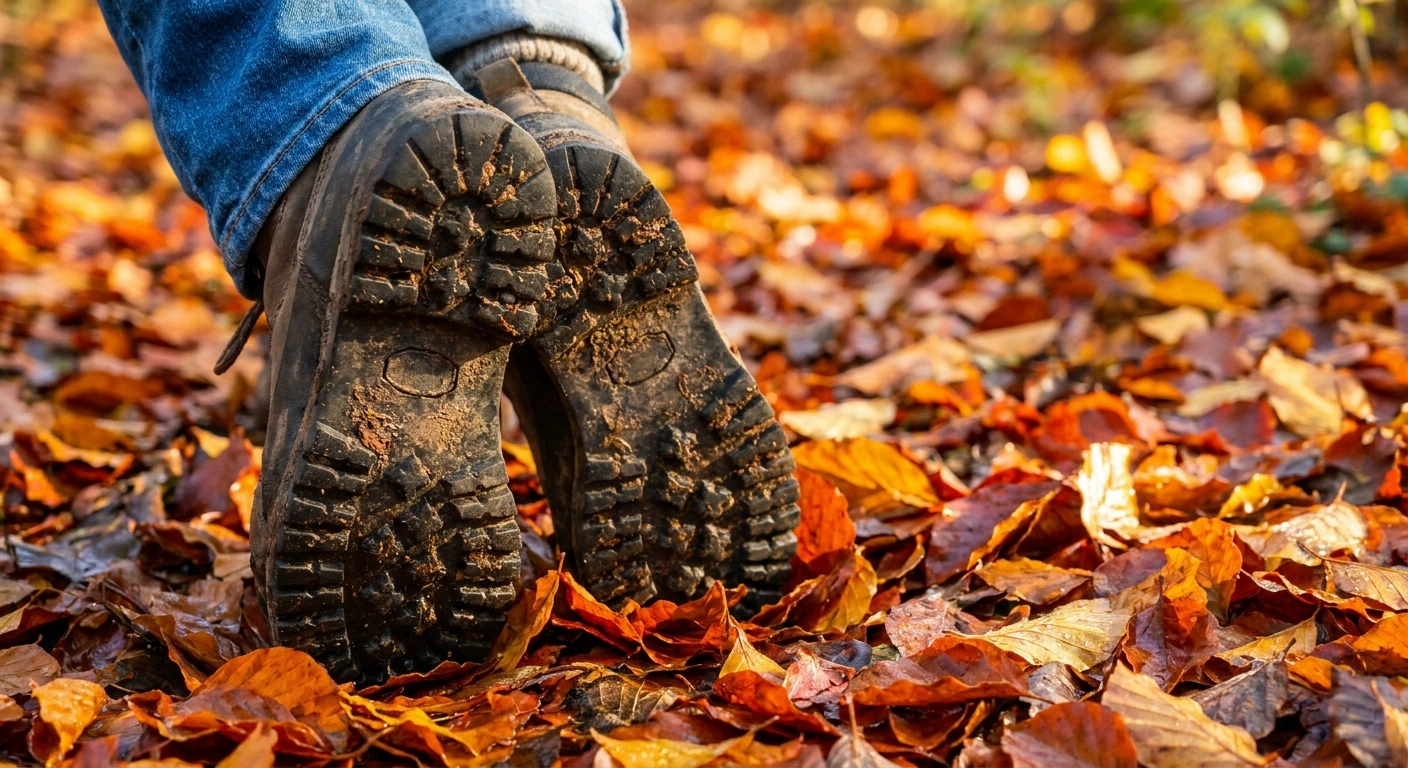
The yard in October hides things a summer lawn does not. Most of the falls I have heard about started here.
Wet leaves are one of the slipperiest natural surfaces there is, and a foot with reduced sensation will not warn you before the slide starts. Adjust the day accordingly:
- Work mid-morning to mid-afternoon, after dew burns off and before evening damp
- Give the yard an extra hour to dry if it rained overnight
- Clear the walking path first to expose hidden acorns, sticks, hoses
- Save any slope for a dry day; skip it entirely on a marginal one
- On a wet-and-windy forecast, the yard can wait
Wet leaves are the big one. Work after the morning dew has burned off and before evening damp settles back in; mid-morning to mid-afternoon is the sweet spot. If it rained overnight, give the yard an extra hour. On a wet-and-windy day, the yard can wait.
Clear the walking path first. Before deep-raking, clear a path across the areas you will walk. This exposes anything hidden underneath: acorns, sticks, hoses, sprinkler heads, roots. Any one of those can roll a foot with reduced sensation.
Skip the slope on a wet day. If you have a slope, save it for a dry day and do it early in the session when you are freshest. There is no leaf pile worth a fall down a slope.
When Cold Hands Slow You Down
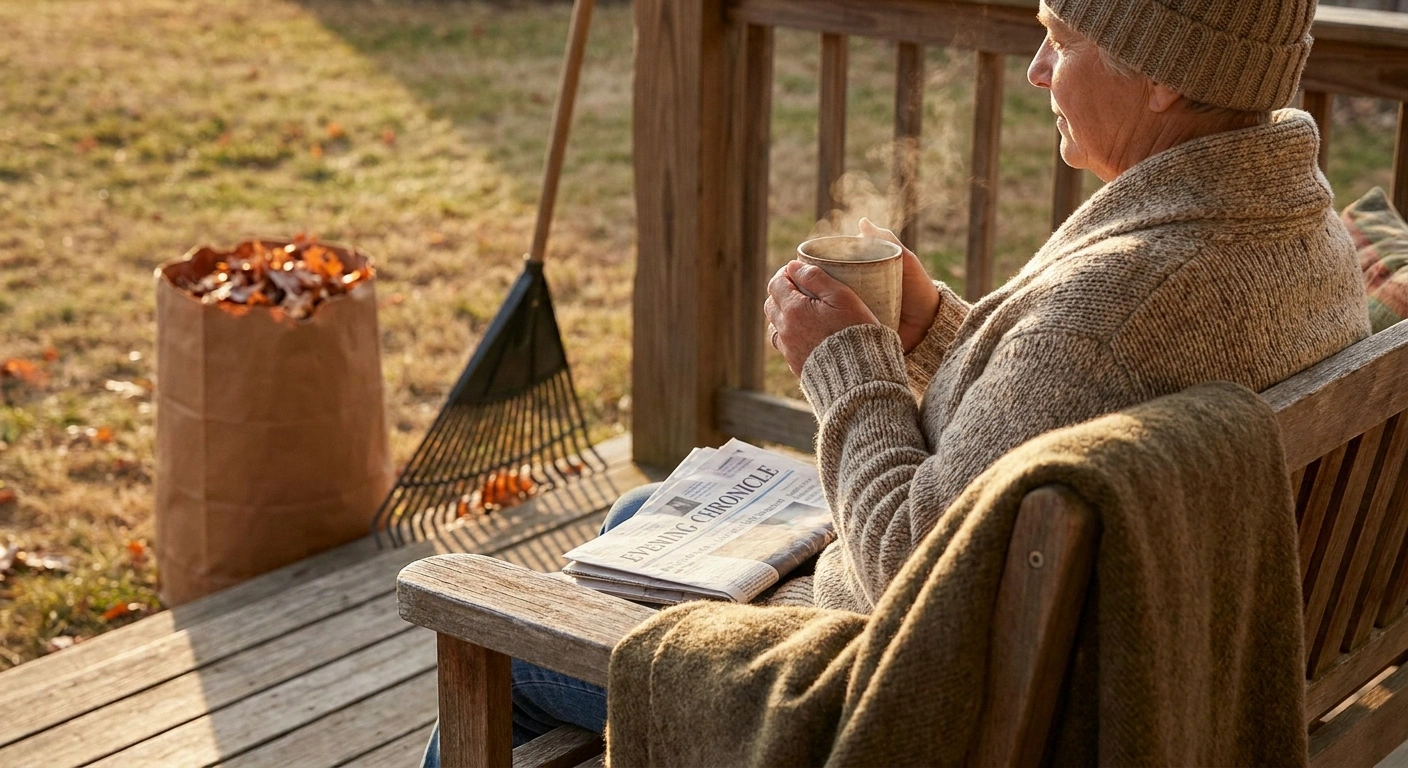
- Fingerless compression gloves under your work gloves. The compression layer improves proprioceptive feedback and adds warmth. Similar principle to our piece on compression socks for neuropathy, applied to hands.
- Hand-warmer packets in your coat pockets. Not against the skin (in the pocket, so you can pull a hand out to warm up).
- Warm-water rinse breaks. A minute at the kitchen sink with warm (not hot) water resets stiff fingers. Test the temperature with a wrist first, since neuropathic fingers can be burned without feeling it.
- Start when it warms up. If a morning is cold, start after 10 or 11 a.m. That small delay can make an hour of work feel entirely different.
Knowing When to Call for Help
Some yards, some days, some seasons, the right answer is to ask someone else. That is not defeat, that is good judgment.
Twenty bucks for a neighbor’s kid trades money for not-being-in-pain. Good trade.
- Two or more acres of active leaf drop. The math stops working. That is a job for a neighbor’s teenager, a lawn service, or a family member you feed dinner in exchange.
- Wet-and-windy forecast. Wet-and-windy is a category worse than either alone.
- Back-to-back flare days already this week. Doing yard work into a flare deepens the flare.
- Any tree that will take more than three hours. Break it across sessions, or share it.
- Anything that requires a ladder. Gutter cleanup, high branches, tarps stuck in a tree. Neuropathy plus ladders is not a combination I recommend. Hire that piece out.
Asking a neighbor’s kid to rake for twenty bucks is not surrender. It is trading a small amount of money for a large amount of not-being-in-pain.
Recovering Well After a Yard Session
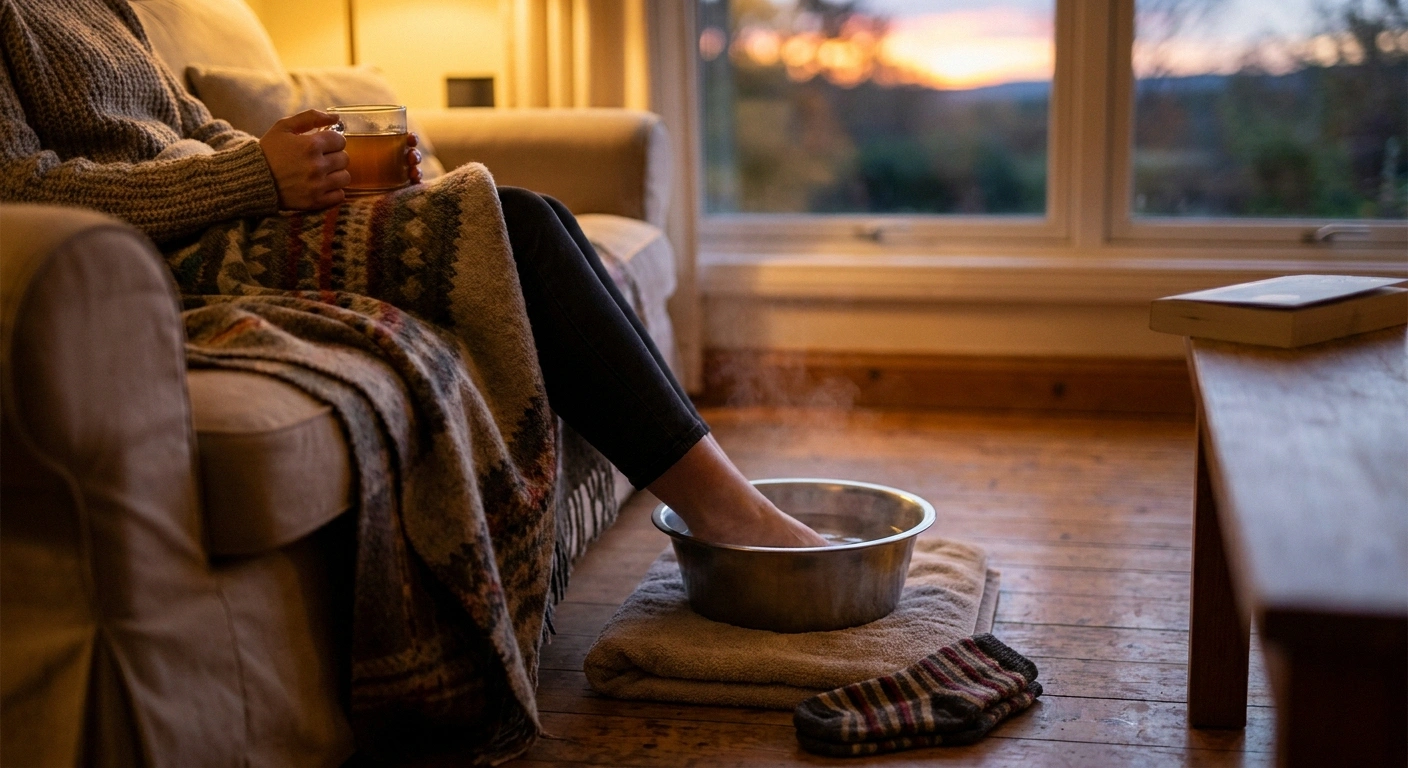
What you do in the hour after you come inside matters almost as much as what you did outside.
- Warm foot soak. A basin of warm (not hot) water with a splash of Epsom salt for ten to fifteen minutes helps circulation. Test the temperature with your wrist first. Our piece on foot massage for neuropathy covers adjacent techniques.
- Elevation. Feet up on a pillow for twenty minutes helps reduce swelling from a long standing session.
- Hydration and food. Water and a real meal. Nerves recover better when the tank is full.
- Foot check before bed. Look at your feet under good light for blisters, red spots, or small cuts from a hidden acorn. You may not have felt any of it happen. Our foot care basics walks through the daily check.
- Symptom diary note. One line: what you did, for how long, how your feet and hands feel tonight. Over a season this tells you exactly how long you can work before it costs you. If symptoms spike after activity, our piece on why neuropathy worsens at night covers the pattern.
Frequently Asked Questions
Is raking leaves bad for someone with neuropathy?
Not inherently. Raking is repetitive-motion work in variable weather on uneven ground, all of which make it harder with neuropathy, but none of that means you cannot do it safely. Ergonomic tools, the right footwear on wet leaves, and the 15/5 pacing rule handle most of the difficulty. Splitting the job across two or three afternoons rather than one Saturday marathon is often the single biggest change that keeps it possible.
What is the easiest way to rake leaves with hand or foot neuropathy?
Use an electric leaf blower to windrow leaves into a single pile, a stand-up leaf grabber to lift the pile onto a tarp, then drag the tarp to the disposal spot rather than lifting bags. This replaces repeated raking, bending, and heavy lifting with a small number of larger, more efficient motions. A wire stand-up frame at the tarp end lets you transfer into a paper bag without holding a slumping bag open.
Are electric leaf blowers easier on the hands than gas ones?
For most people with neuropathy, yes. Electric blowers (corded or battery) are lighter, quieter, and vibrate less than gas. Vibration is felt poorly by hands with reduced sensation but still causes cumulative strain, so lower vibration is a meaningful comfort upgrade.
What boots should I wear for raking leaves on wet ground?
Closed-toe, rubber-soled boots or trail shoes with deep, aggressive tread and a defined heel. Wet leaves are one of the slipperiest natural surfaces there is, and a shoe with worn or shallow tread will slide. Avoid sandals, garden clogs without a heel counter, and tall rain boots that lack ankle support.
How long can I safely rake before I need to stop?
A useful starting point is the 15/5 rule: fifteen to twenty minutes of active work followed by five to ten minutes of sit-down rest, repeated. The clearer signal than any clock is your own body: if foot numbness noticeably worsens, if your grip starts slipping, or if you feel a familiar flare beginning, that is the sign to stop for the day.
Should I ask for help with yard work if I have neuropathy?
If your yard is more than about two acres of active leaf drop, if the forecast is wet and windy, if you have had back-to-back flare days already this week, or if any part of the job requires a ladder, yes. Hiring a neighbor or a small service for the harder pieces is not defeat; it is trading a small amount of money for a large amount of not-being-in-pain.
The goal in the fall is not a magazine-perfect yard. The goal is a good afternoon outside, breathing the cool air, and coming inside without paying for it tomorrow. Build a small kit of the right tools, keep the 15/5 timer running, wear the boots with real tread, and know which jobs to hand off. The maples are showing off for you. Go watch them, rake a little, come sit on the porch. That is a good day.
About the Author