I'll never forget the moment I realized how much neuropathy had changed my relationship with the ground beneath my feet. I was walking to the mailbox — something I'd done thousands of times — when my foot caught on a crack in the sidewalk I couldn't even feel. I stumbled, caught myself on the railing, and stood there shaking. Not from pain, but from fear. That quiet, creeping fear that whispers, “What if next time, you don't catch yourself?”
If that story sounds familiar, I want you to know: you are not alone. Neuropathy and balance problems go hand in hand, and the fear of falling is one of the most common — and least talked about — challenges people with peripheral neuropathy face every single day. But here's the good news I wish someone had told me sooner: there are real, practical strategies that may help you stay on your feet, rebuild your confidence, and take back the independence that neuropathy tries to steal.
As a patient advocate (not a doctor — I always want to be clear about that), I've spent years talking with people living with neuropathy, learning from medical professionals, and gathering the strategies that actually make a difference. This guide is everything I wish I'd known when I first started losing my footing.
Why Neuropathy Makes You Unsteady: Understanding the Balance Connection
To understand why neuropathy affects balance, it helps to know how your body keeps you upright in the first place. Your balance relies on three systems working together like a well-rehearsed team:
Your visual system — your eyes tell your brain where you are in relation to the world around you
Your vestibular system — sensors in your inner ear detect motion, direction, and your orientation to gravity
Your proprioceptive system — nerve endings in your muscles, joints, and especially the soles of your feet send constant signals about where your body is in space
When peripheral neuropathy damages the nerves in your feet and legs, it disrupts that third system — proprioception. Suddenly, your brain is getting incomplete or delayed information about where your feet are, whether the surface beneath you is level, and how much pressure you're putting on each step. According to the Foundation for Peripheral Neuropathy, this disruption of sensory feedback from the peripheral nerves is a primary reason balance becomes impaired.
But it doesn't stop there. Neuropathy can also cause muscle weakness in the legs and feet, making it harder to stabilize yourself. It can slow your reflexes, so your body can't make those split-second corrections when you trip or stumble. And it can impair coordination — the smooth teamwork between your muscles, joints, and nerves that most people take for granted.
If you've noticed that your neuropathy has been progressing, the balance challenges often progress along with it. That's why addressing balance early — before a serious fall — is so important.
The Numbers That Changed How I Think About Falls
I used to think of falls as something embarrassing but ultimately harmless. Then I started looking at the research, and the numbers stopped me in my tracks.
3×
higher fall risk for people with diabetic peripheral neuropathy compared to those without neuropathy
According to the Centers for Disease Control and Prevention (CDC), falls are the leading cause of injury among adults 65 and older, and they kill more than 18,000 older adults each year in the United States alone. One out of every ten falls results in an injury serious enough to require medical attention or restrict daily activities.
Now here's the number that really got my attention: research published in Drugs in Context found that individuals with diabetic peripheral neuropathy are three times more likely to experience a fall compared to those without neuropathy. Three times. And a study in the Oncology Nursing Forum confirmed that neuropathy — whether from diabetes, chemotherapy, or other causes — is a genuine, independent risk factor for falls.
These aren't just statistics. Behind every number is someone like you or me, someone who was just trying to get to the kitchen, walk the dog, or step out of the shower. Falls can lead to broken bones, head injuries, surgery, months of rehabilitation — and for many people, a permanent loss of independence. That's why fall prevention isn't a luxury. It's a necessity.
The Fear-of-Falling Cycle (And How to Break It)
Here's something most neuropathy websites don't talk about: the emotional weight of being afraid to fall. And I think it's one of the most important things we can discuss, because the fear itself can make everything worse.
⚠️
The Fear-Avoidance Trap
Moving less to avoid falls actually makes your balance worse — weaker muscles, stiffer joints, and declining confidence create a downward spiral. The safest path forward is gradual, supported activity, not avoidance.
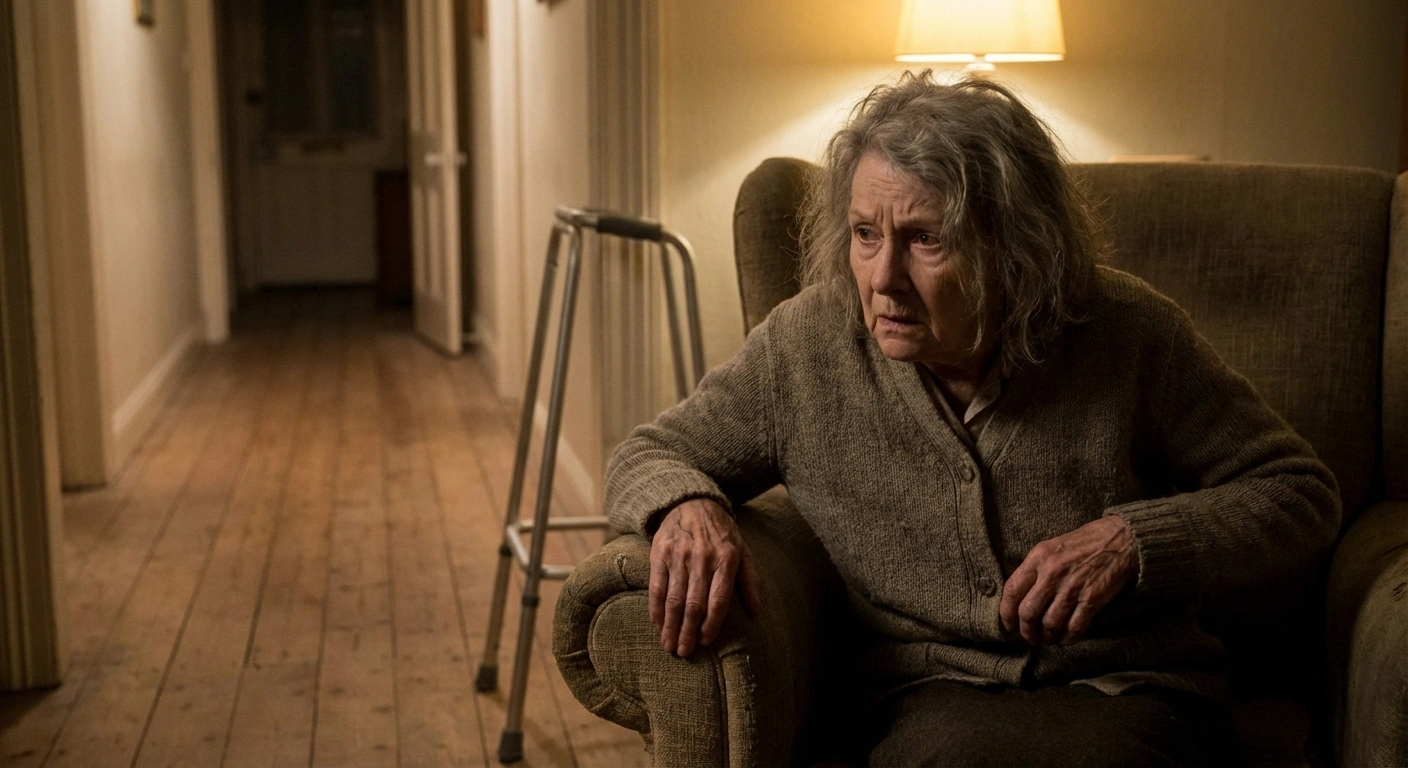
It works like this: you have a close call or a fall, and suddenly you become hyperaware of every step. You start avoiding activities. You stop walking as much. You decline invitations. You sit more. And here's the cruel irony — the less you move, the weaker your muscles become, the stiffer your joints get, and the worse your balance becomes. The very thing you're doing to stay safe is actually making you less safe.
Researchers call this the “fear-avoidance cycle,” and it's incredibly common among people with neuropathy. A study published in Frontiers in Endocrinology found that reduced balance confidence is directly linked to higher fall risk in patients with diabetic peripheral neuropathy — meaning that how confident you feel about your balance actually affects how well you maintain it.
If you've been caught in this cycle, please know that it's not a personal failure. It's a natural human response. But it is something you can work to change — and the strategies below may help. If you're also dealing with anxiety or depression related to your neuropathy, I encourage you to read our guide on neuropathy and mental health, because your emotional wellbeing matters just as much as your physical safety.
Balance Exercises That May Help (Start Where You Are) (Start Where You Are)
Exercise is one of the most powerful tools available for improving balance with neuropathy. A systematic review in the Oncology Nursing Forum found that strength and balance training is safe and effective at reducing falls and improving lower extremity strength in adults aged 50 and older — including those with peripheral neuropathy.
Your Balance Exercise Progression
1
Beginner — Seated Exercises
Heel raises, toe taps, and sit-to-stand from a sturdy chair. Build strength with zero balance risk.
↓
2
Intermediate — Standing With Support
Standing heel raises, weight shifts, and heel-to-toe walking along a wall. Challenge balance while keeping support nearby.
↓
3
Advanced — Building Confidence
Single-leg stands, tandem standing, and gentle squats. Gradually loosen your grip on support as stability improves.
The key is to start where you are, not where you think you should be. Here are exercises that many people with neuropathy find helpful, organized from gentler to more challenging. Always talk to your doctor or physical therapist before starting a new exercise program, and always have something sturdy nearby to hold onto.
Beginner Level: Building Your Foundation
Seated heel raises — Sit in a sturdy chair with feet flat on the floor. Slowly raise your heels, pressing through the balls of your feet, then lower. Repeat 10–15 times. This strengthens calf muscles without balance risk.
Seated toe taps — From the same seated position, lift your toes while keeping heels on the floor, then lower. This wakes up the muscles in your shins and feet.
Sit-to-stand — Using a sturdy chair (no wheels!), practice standing up and sitting down slowly and with control. Use your arms for support if needed, working toward doing it hands-free over time.
Intermediate Level: Challenging Your Balance
Standing heel raises — Hold onto a counter or sturdy chair back. Rise up on your toes, hold for 2–3 seconds, then slowly lower. Repeat 10 times.
Weight shifts — Stand with feet hip-width apart, holding onto a support. Slowly shift your weight to the right foot, hold for 5 seconds, then shift to the left. This teaches your body to manage weight transfer — exactly what happens with every step you take.
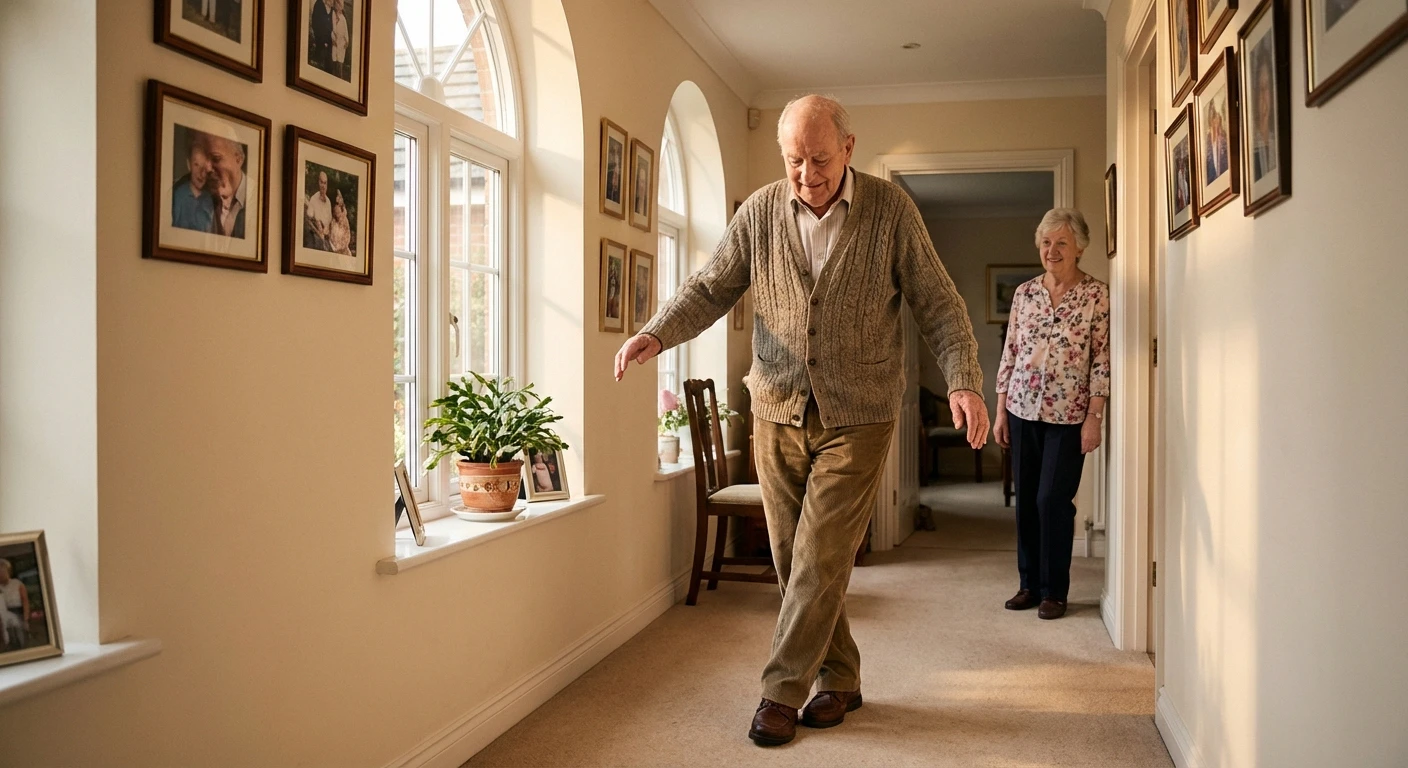
Heel-to-toe walking — Place one foot directly in front of the other, heel touching toes, like walking a tightrope. Do this along a hallway wall so you can reach out for support. Start with 10 steps.
Advanced Level: Building Confidence
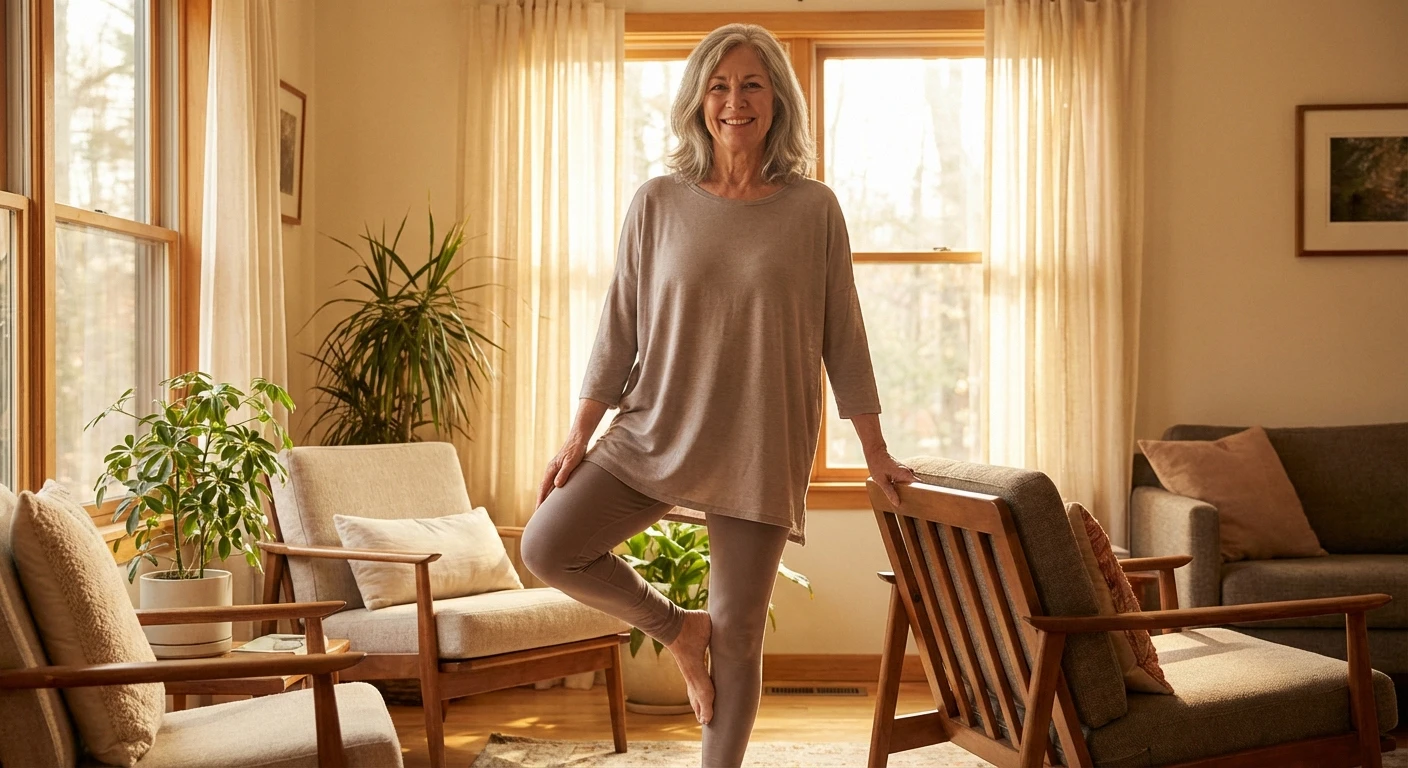
Single-leg stands — Hold onto a support and lift one foot slightly off the ground. Hold for 10–30 seconds, then switch sides. As you improve, try loosening your grip on the support.
Tandem standing — Stand with one foot directly in front of the other (heel to toe) and hold the position for 15–30 seconds. Progress to doing this with eyes closed only if you have a spotter or solid support nearby.
Gentle squats — With a chair behind you for safety, lower into a shallow squat and return to standing. This builds the leg and core strength that keeps you stable.
For more exercise ideas specifically designed for people with neuropathy, take a look at our guide to neuropathy exercises for seniors. And if you're wondering whether regular walking can help, the short answer is yes — our article on whether walking helps neuropathy explores the evidence.
Tai Chi, Water Aerobics, and Yoga: Gentle Movement That Makes a Difference
If traditional exercises feel intimidating or if you're looking for something that combines balance work with relaxation, these three activities deserve special attention.
Tai Chi
Tai chi is the closest thing to a “balance miracle” I've come across in my years as an advocate. This gentle, flowing martial art involves slow, deliberate movements that shift weight from one leg to the other — essentially a moving balance exercise. The Foundation for Peripheral Neuropathy reports that clinical studies have shown tai chi helps stabilize gait, improve balance, and reduce falls among people with peripheral neuropathy. Many community centers and senior centers offer tai chi classes, and there are excellent beginner programs available online.
Exercising in water is a game-changer for people worried about falling during exercise. The water supports your body weight, reduces impact on joints, and provides natural resistance for strengthening muscles. The buoyancy means that even if you lose your balance, you won't fall hard. Many people with neuropathy tell me that water exercise classes are where they finally felt safe enough to really challenge themselves.
Yoga (Adapted)
Chair yoga or gentle standing yoga (using a wall or barre for support) can improve flexibility, core strength, and body awareness — all of which contribute to better balance. Some yoga poses specifically target proprioception, helping your brain relearn where your body is in space despite reduced nerve signals from your feet.
Making Your Home a Safer Place
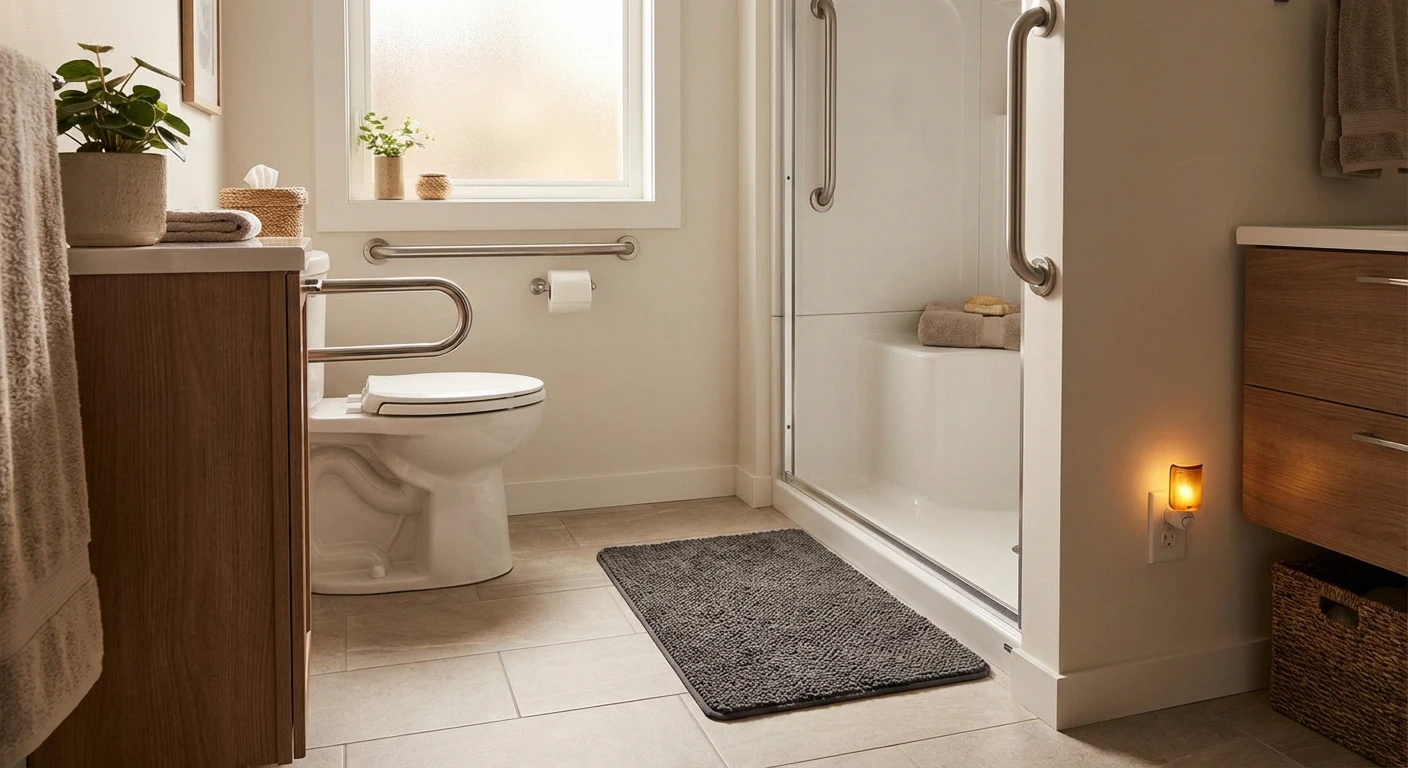
You can exercise every day and still fall if your home is full of hidden hazards. Home modifications are one of the most effective — and most overlooked — fall prevention strategies. Here's a room-by-room guide:
🏠 Quick Home Safety Checklist
☐
Loose rugs removed or secured with non-slip backing
☐
Bright lighting throughout — especially hallways, stairs, bathrooms
☐
Grab bars installed next to toilet and in shower/tub
☐
Non-slip mats in tub/shower and on bathroom floor
☐
All walkways clear of cords, shoes, and clutter
☐
Color-contrast tape on stair edges
☐
Motion-activated nightlights in hallways and bathroom
☐
Bed height allows feet flat on floor when sitting on edge
Throughout the House
Remove loose rugs or secure them with non-slip backing. This is the single most common trip hazard I hear about.
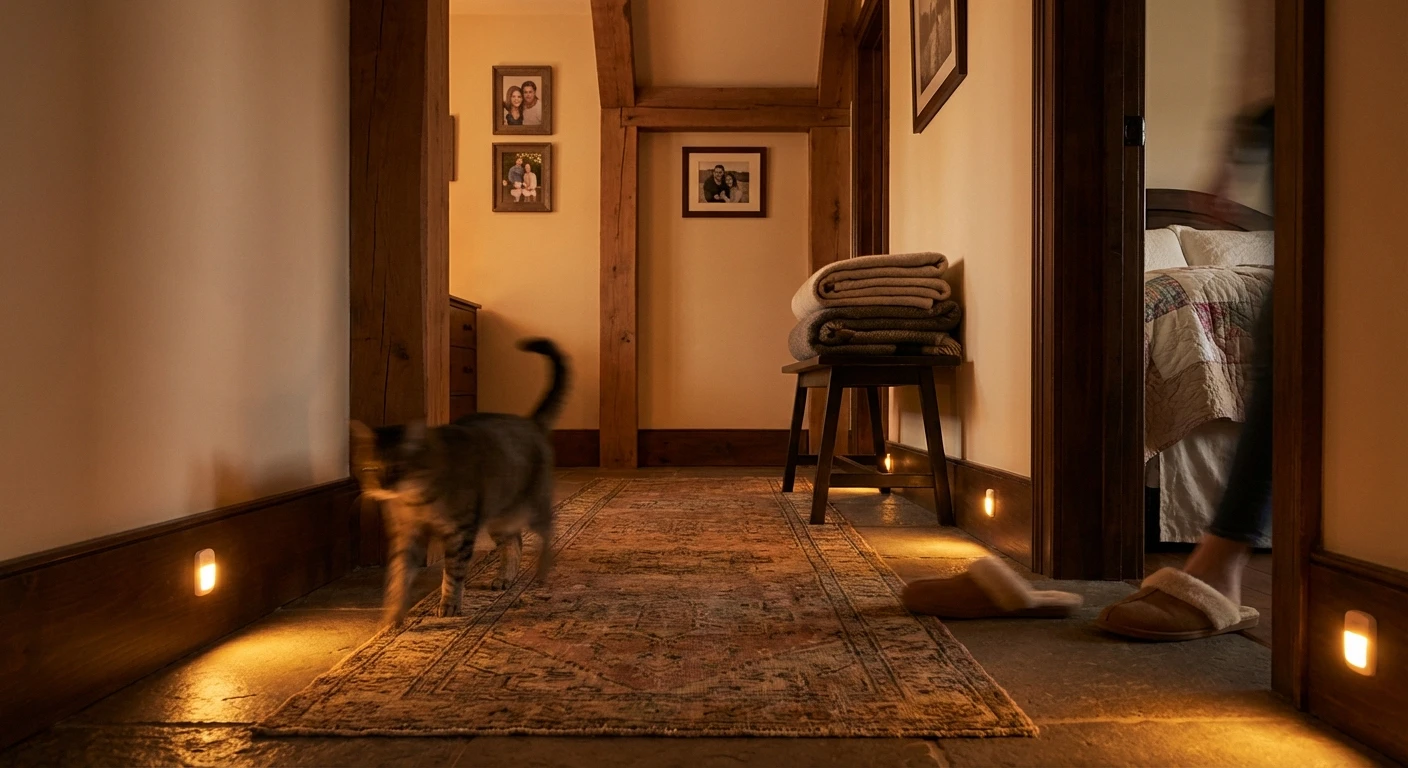
Improve lighting everywhere. Install bright LED bulbs and add motion-activated night lights in hallways, bathrooms, and bedrooms. When you can't fully feel the floor, your eyes need to work overtime — and they can't do that in the dark.
Clear pathways. No cords across walkways, no shoes by the door, no clutter on stairs.
Use color contrast. Place brightly colored tape on stair edges and at floor-level transitions. This helps with depth perception, especially in dim light.
Bathroom (The Most Dangerous Room)
Install grab bars next to the toilet and inside the shower or tub. (The towel bar is not a grab bar — please don't learn this the hard way.)
Use a non-slip bath mat with suction cups inside the tub and a non-slip rug outside.
Consider a shower chair or bench — this removes the need to balance on wet, slippery surfaces while also managing soap and shampoo.
Make sure your bed height allows you to sit on the edge with feet flat on the floor. Too high or too low increases fall risk when getting up.
Keep a nightlight or touch-activated lamp within arm's reach.
If you get up frequently at night, keep the path to the bathroom completely clear and well-lit.
Kitchen
Keep frequently used items at counter height — no reaching overhead or bending to low cabinets.
Use a sturdy step stool with a handrail if you must reach high shelves.
Wipe up spills immediately. With reduced sensation in your feet, you may not notice a wet floor until you're already sliding.
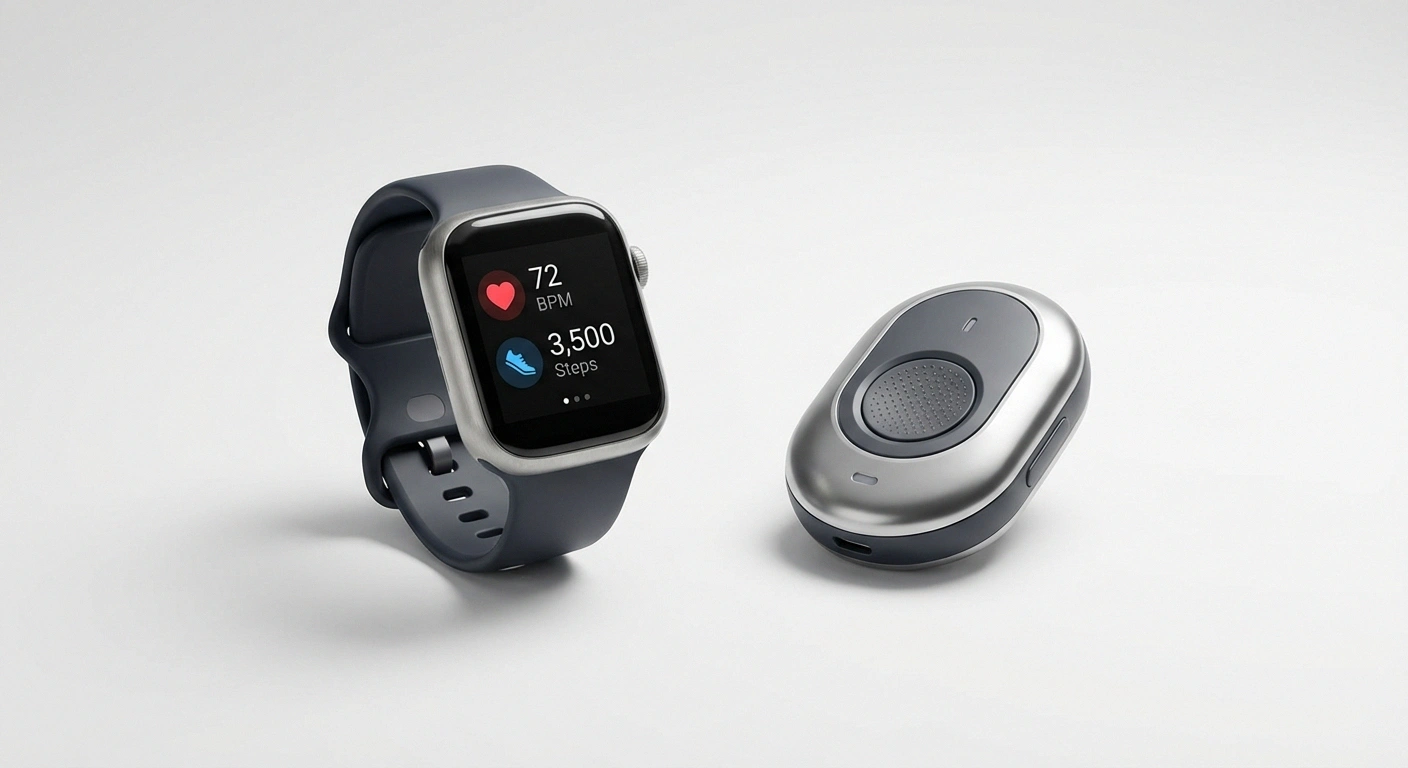
Smart Technology for Fall Prevention
This is an area that's evolved dramatically in recent years, and I think it's worth exploring — especially for people living alone.
Motion-activated lights — Install these in hallways, stairways, and bathrooms so you never have to fumble for a switch in the dark.
Medical alert systems — Wearable devices (pendants or watches) with fall-detection technology can automatically alert emergency services or family members if you fall and can't get up. Many modern systems use GPS, so they work outside the home too.
Voice-activated assistants — Devices like Amazon Echo or Google Home let you turn on lights, call for help, or set medication reminders hands-free. This means less reaching, less fumbling, less risk.
Smart sensors — Placed near doors or in rooms, these can notify caregivers about unusual activity patterns that might indicate a fall.
Technology isn't a substitute for exercise and home safety, but it adds a valuable layer of protection — and peace of mind.
Choosing the Right Footwear (It Matters More Than You Think)
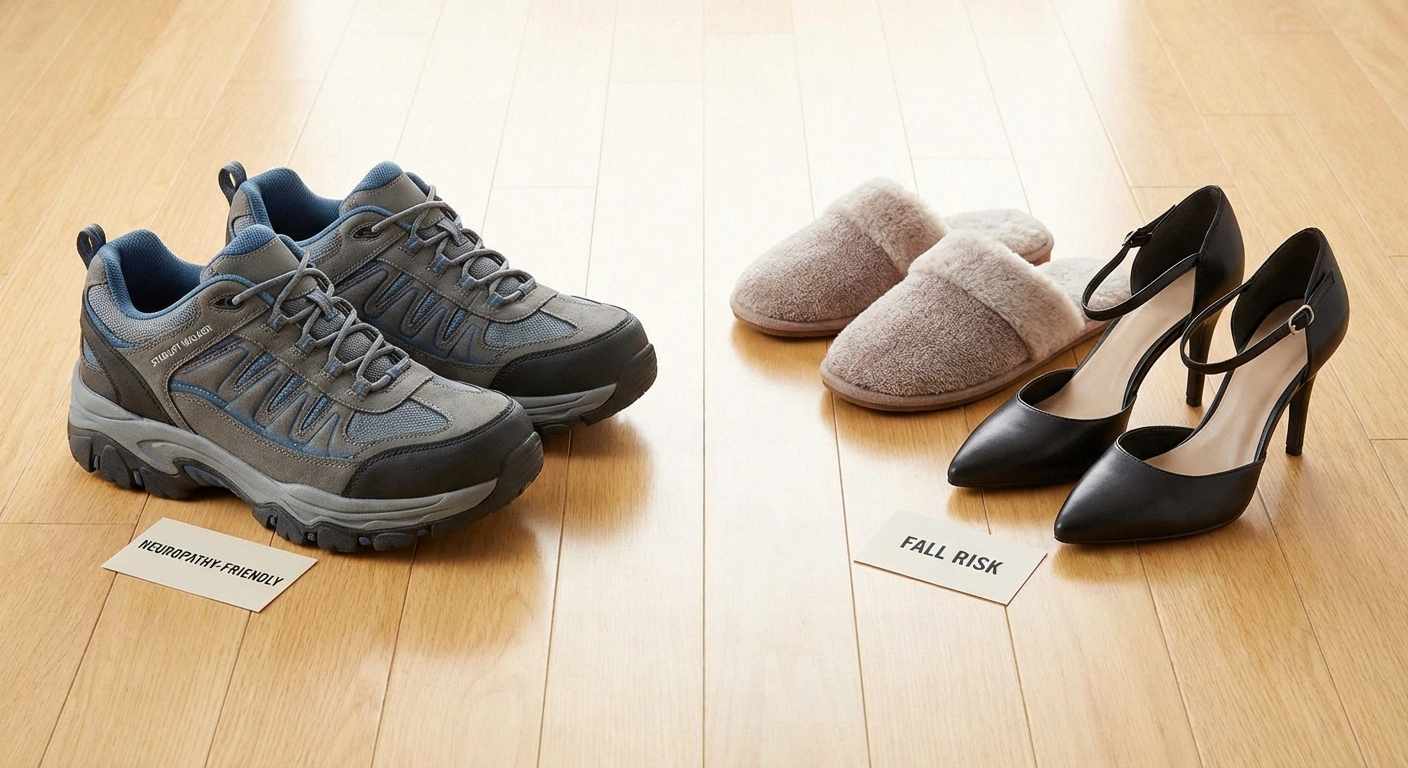
I cannot stress this enough: what you put on your feet directly affects your balance. When neuropathy has reduced the sensation in your feet, your shoes become your connection to the ground. The wrong shoes can be as dangerous as a loose rug.
👟
Footwear Rule
Never go barefoot — even at home. Keep supportive house shoes with non-slip soles by your bed. Your shoes are your connection to the ground when your nerves can't fully do the job.
Here's what to look for:
Firm, supportive soles — Thin, flexible soles don't provide enough feedback. You want a sole that's firm enough to help you feel the ground's contour.
Good tread — Non-slip treads are essential, especially on smooth or wet surfaces.
Low heels — Even a moderate heel shifts your center of gravity forward and increases fall risk.
Secure fit — Shoes should fasten with laces, Velcro, or buckles. Slip-on shoes and flip-flops can come off or shift mid-step.
Wide toe box — Neuropathic feet often swell or change shape. A roomy toe box prevents pressure points and blisters you might not feel.
Consider custom orthotics — If your podiatrist recommends them, orthotics can improve foot alignment and provide additional sensory feedback.
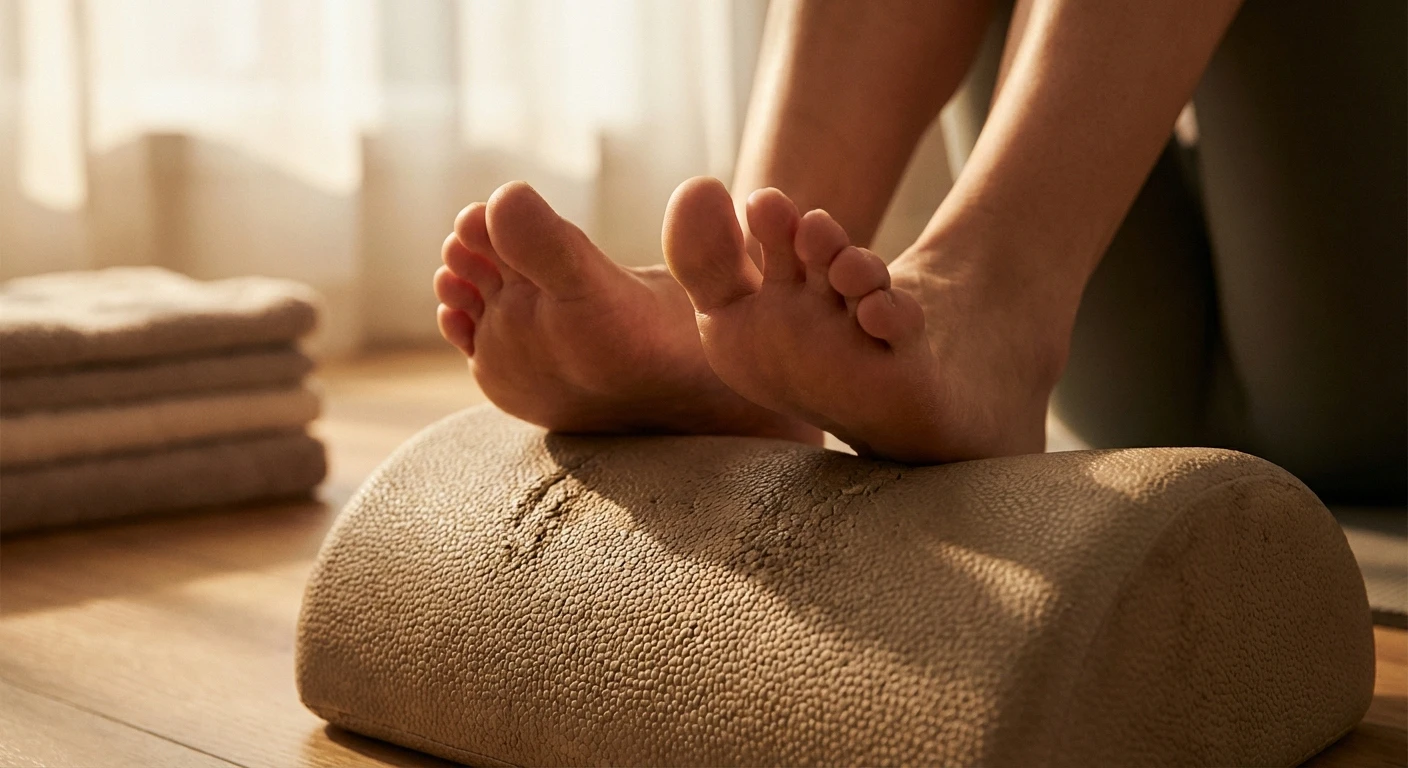
Never go barefoot — even at home. Without sensation, you won't feel a sharp object, a wet spot, or the edge of a step. Keep supportive house shoes or slippers with non-slip soles by your bed. For a deeper dive into finding the right shoes, check out our guide to the best shoes for neuropathy.
Night-Time Fall Prevention: When You're Most Vulnerable
Many of the worst falls happen at night. You're groggy, the lights are off, your muscles are stiff from sleep, and your feet — which are already compromised by neuropathy — are providing even less feedback than usual. Night-time falls deserve their own strategy.
Light the path — Motion-activated night lights from bedroom to bathroom. No exceptions.
Keep shoes at bedside — Have your supportive slippers right where your feet will land when you get out of bed.
Sit before standing — When you wake up, sit on the edge of the bed for 15–30 seconds before standing. This prevents the dizziness that can come from standing too quickly, especially if you take blood pressure medication.
Consider a bedside commode — If the bathroom is far away or involves stairs, a bedside commode may be safer for nighttime use. There's no shame in this — it's practical and it may prevent a serious injury.
Limit fluids before bed — If you can (check with your doctor), reducing fluids in the evening may mean fewer nighttime bathroom trips.
When to Ask Your Doctor for Help
I always encourage people to be proactive about discussing balance concerns with their healthcare team. Don't wait for a fall to bring it up. Here are specific situations where a conversation with your doctor is especially important:
⚠️
Talk to Your Doctor
If you've had a fall or near-fall recently, feel unsteady at home, or have started avoiding activities due to balance fears, bring it up at your next appointment. A physical therapist referral may be one of the most impactful steps you can take.
You've had a fall or near-fall in the past three months
You find yourself holding onto furniture or walls to walk through your home
You've started avoiding activities because you're afraid of falling
You feel dizzy or lightheaded when standing up (this could be related to blood pressure, medications, or autonomic neuropathy)
Your neuropathy symptoms have worsened — increased numbness, new weakness, or pain spreading to new areas
You haven't had your vision checked in over a year — remember, your eyes are working extra hard to compensate for lost proprioception
Your doctor may refer you to a physical therapist who specializes in balance and vestibular rehabilitation. A PT can assess your specific balance deficits, create a personalized exercise program, evaluate whether you'd benefit from assistive devices like a cane or walker, and teach you how to use them properly. Many people resist the idea of a cane, but I've seen it give people their freedom back — the freedom to walk confidently, to go out, to live their lives.
Also make sure all of your doctors and your pharmacist know every medication you're taking, including over-the-counter supplements. Some medications can cause dizziness or drowsiness that compounds neuropathy-related balance problems. Sometimes a simple medication adjustment can make a noticeable difference.
Don't Forget Your Feet: Daily Care That Supports Balance
Proper neuropathy foot care isn't just about preventing wounds and infections — it's about maintaining the foundation your balance depends on. Check your feet daily for blisters, cuts, or swelling you might not feel. Keep toenails trimmed (or have a podiatrist do it) to prevent tripping. Moisturize to prevent cracking, but avoid putting lotion between your toes where moisture can lead to fungal infections.
If you also experience neuropathy in your hands, it may affect your grip strength — which means holding onto railings and support devices becomes more challenging. Discuss this with your care team so they can recommend hand-strengthening exercises or adaptive equipment.
Frequently Asked Questions
Can neuropathy cause balance problems even if I don't have foot pain?+
Absolutely. Pain and balance are controlled by different types of nerve fibers. You can have significant damage to the sensory nerves responsible for proprioception without experiencing much pain at all. If you're feeling unsteady, it's worth talking to your doctor about whether neuropathy could be a contributing factor.
What are the best exercises to improve balance with neuropathy?+
The most commonly recommended exercises include heel-to-toe walking, single-leg stands, sit-to-stand repetitions, weight shifts, and heel raises. Tai chi has particularly strong evidence for improving balance in people with neuropathy. Water aerobics is excellent because the water supports you and reduces fall risk during exercise. Start at your current level and progress gradually.
How can I make my home safer to prevent falls?+
Start with the biggest hazards: remove loose rugs or secure them with non-slip backing, improve lighting throughout your home, and install grab bars in the bathroom. Clear all pathways of clutter and cords. Use color-contrasting tape on stair edges. Consider motion-activated night lights for nighttime navigation.
Does neuropathy-related balance get worse over time?+
It can, particularly if the underlying cause isn't being managed. However, research shows that targeted balance training, regular exercise, and proper medical care may help slow the decline and even improve stability over time. The earlier you start addressing balance, the better your outcomes are likely to be.
What type of shoes are best for balance when you have neuropathy?+
Look for shoes with firm, supportive soles, good non-slip tread, low heels, and a secure fastening system like laces or Velcro. A wide toe box is important because neuropathic feet can swell. Avoid going barefoot, wearing flip-flops, or using loose-fitting slippers.
Should I use a cane or walker if neuropathy affects my balance?+
Assistive devices can be tremendously helpful. A physical therapist can assess whether you'd benefit from one and teach you how to use it correctly. Using a properly fitted device proactively is a sign of wisdom, not weakness — think of it like wearing a seatbelt.
Can the fear of falling actually make balance worse?+
Yes. When you become afraid of falling, the natural response is to move less. But reduced activity leads to muscle weakness, stiff joints, and deconditioning — all of which make balance worse. The way to break this cycle is to stay active with appropriate precautions: use supports, exercise in safe environments, and build up gradually.
Taking It One Step at a Time
Living with neuropathy and balance challenges can feel overwhelming. Some days, the ground itself feels like the enemy. But I want to leave you with something I've learned from years of conversations with people who are living well despite their neuropathy: small, consistent actions add up to big changes.
You don't have to overhaul your entire life tomorrow. Start with one thing. Maybe it's doing heel raises while you brush your teeth. Maybe it's finally removing that loose rug in the hallway. Maybe it's calling your doctor to ask about a physical therapy referral. Whatever it is, take that one step today.
Every exercise you do, every hazard you remove, every conversation you have with your healthcare team is an investment in your safety, your independence, and your quality of life. You deserve to walk through your own home — and through the world — with confidence.
And remember: I'm a patient advocate sharing what I've learned, not a medical professional. The strategies in this article are based on research and expert recommendations, but your situation is unique. Please talk with your doctor or physical therapist to create a fall prevention plan that's right for you. You've got this — one step at a time.
Patient advocate and neuropathy support group leader with over a decade of personal experience managing peripheral neuropathy. I started Neuropathy Resource to create the resource I wish had existed when I was first diagnosed — honest, accessible information written by someone who actually lives with this condition. Everything here comes from personal experience, published medical research, and conversations with healthcare providers. I am not a medical professional — I'm someone who has walked this road and wants to help others navigate it.