You had surgery. The operation went fine — no complications noted, discharge instructions in hand. But two weeks in, something is wrong that no one warned you about. There is a burning, stabbing, or heavy-weakness sensation in a part of your body the surgeon never touched. The pain sometimes crosses to the opposite side of your body from where you had the operation. Or a limb feels numb and won’t work the way it should, in a distribution that doesn’t match anything anatomical you can explain. And when you called the office, someone told you this was “part of recovery” and you should give it more time.
I’m Janet Ellis, and I want to be direct — I’m not a doctor. I’m a patient advocate who lives with peripheral neuropathy and translates medical research into language that helps people navigate their care. What you are describing has a name that most surgical patients — and a surprising number of general practitioners — have never heard. It is called postsurgical inflammatory neuropathy, and it is a specific, treatable condition often mistaken for ordinary post-operative discomfort until months of possible recovery have quietly slipped past. This article walks through what it is, how it differs from the common positioning nerve injury that resolves on its own, why the immune system would attack a nerve after a stressful surgery, and what to do about it while treatment can still change the outcome.
What “Postsurgical Inflammatory Neuropathy” Means and Why It Matters
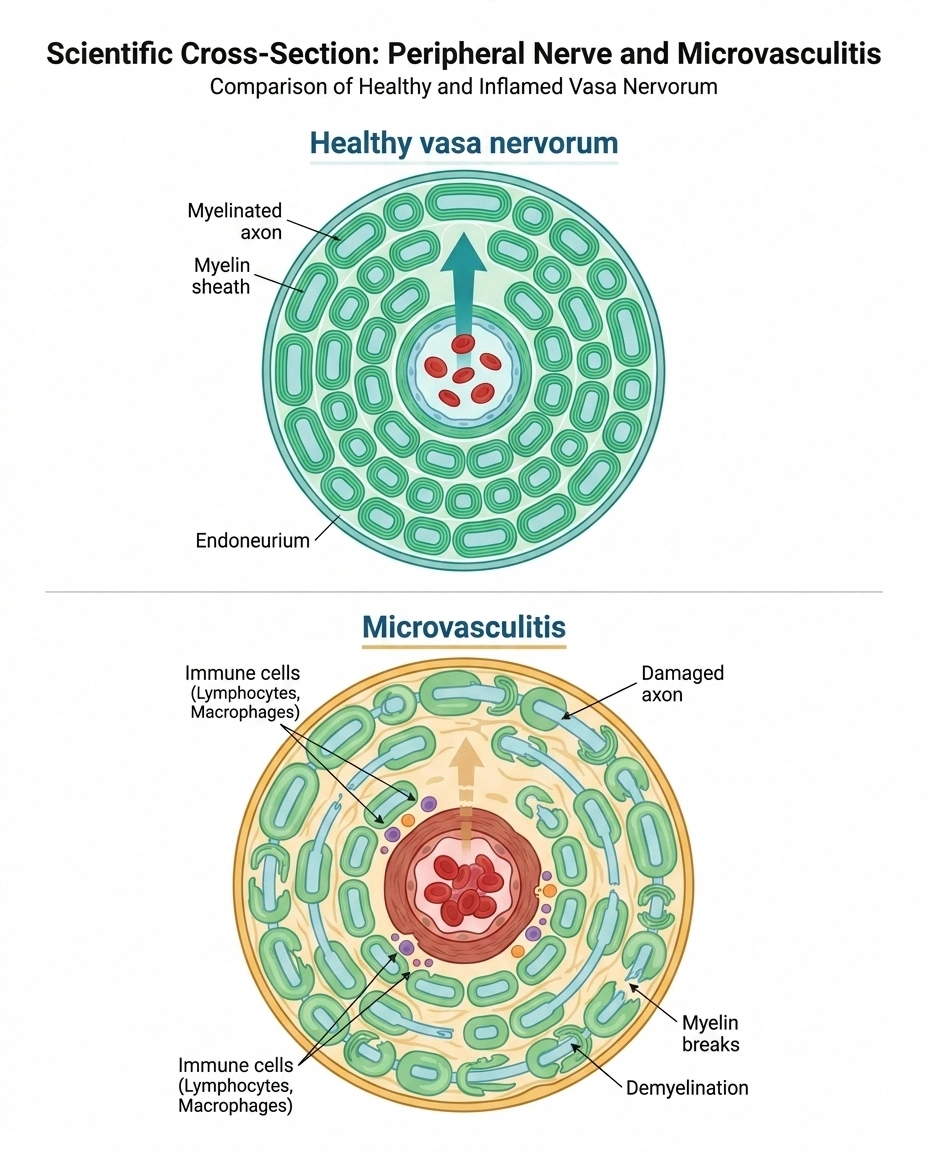
Postsurgical inflammatory neuropathy — abbreviated PSIN — is nerve damage that starts within days to weeks after a surgical procedure, driven by the immune system attacking peripheral nerves rather than by direct mechanical injury during the operation. It was formally characterized by a Mayo Clinic team led by Nathan Staff and P. James B. Dyck, whose 2010 paper in the journal Brain examined patients who developed unexplained new neuropathies after surgery and found that most nerve biopsies showed a specific pattern of inflammation and microvasculitis — small-vessel inflammation inside the nerve itself.
Postsurgical inflammatory neuropathy is an immune-mediated nerve injury that follows surgery days to weeks later — in nerves the operation never touched. Unlike positioning injuries, it usually keeps worsening without treatment, and early corticosteroids or IVIG can meaningfully change the trajectory.
Before that paper, when a patient developed new nerve symptoms after surgery the assumption was nearly automatic — it must be positioning, a compressed nerve, or swelling that would resolve on its own. Sometimes that is right. But the Mayo group showed that a meaningful subset of these post-operative neuropathies are not compression injuries at all — they are immune-mediated inflammatory attacks on nerve tissue that the surgery seemed to trigger.
This matters for one central reason. Compression and inflammatory injuries look similar on the surface but behave very differently over time and call for completely different treatment. Compression tends to improve on its own with time, physical therapy, and patience. Inflammatory injury tends to keep progressing without treatment, and the treatment window is time-sensitive. The Mayo group and others describe PSIN as an “underappreciated but critical and treatable cause of postoperative neuropathy” — treatable being the word that changes everything.
The Two Kinds of Nerve Damage After Surgery — Positioning vs Inflammatory
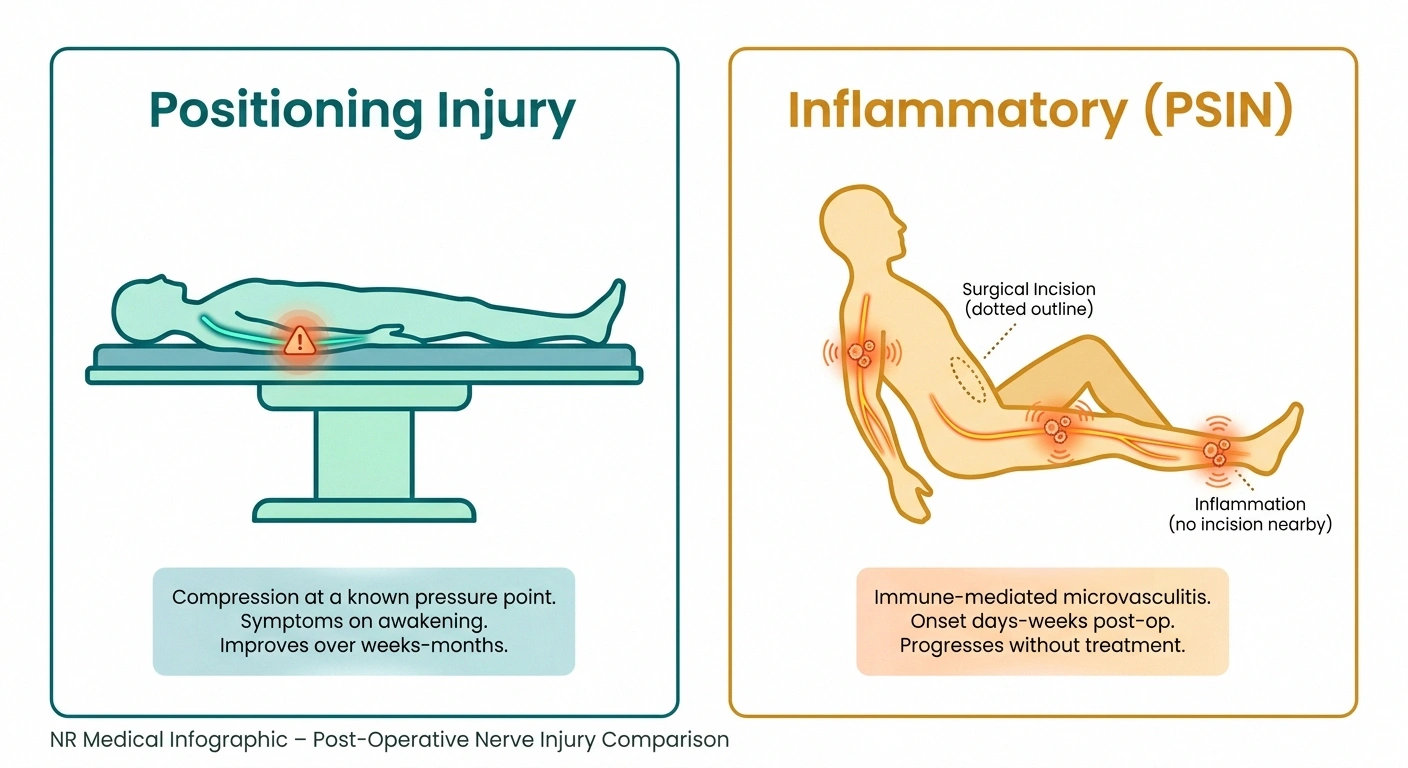
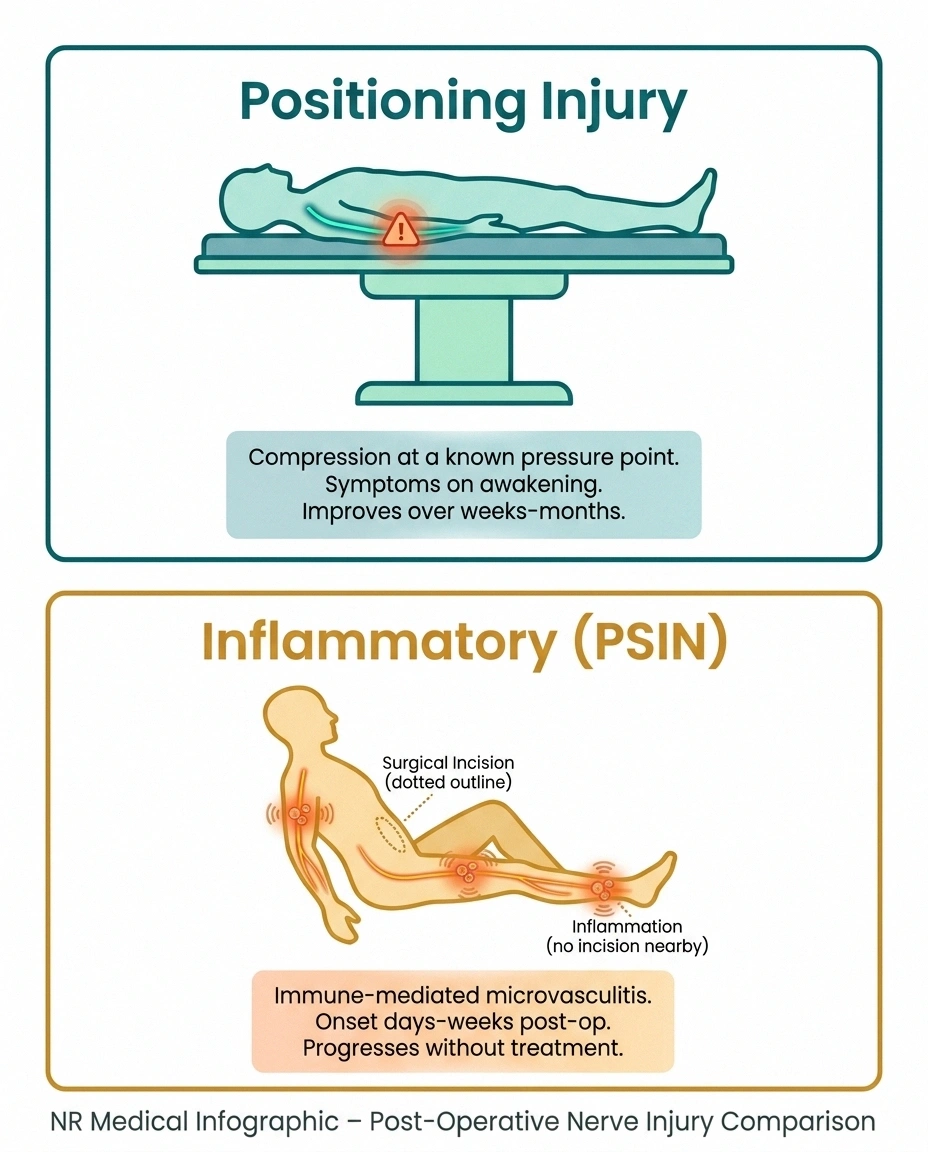
To understand why postsurgical inflammatory neuropathy is worth knowing about, you have to see it against its more common cousin — positioning nerve injury. Both cause new nerve symptoms after an operation. They are not the same thing. The differences matter for how you and your care team should respond.
New post-op nerve symptoms in an unexpected distribution deserve a neurology referral — not “give it more time.”
Escalate any of these signals within days, not months: new nerve symptoms outside the operative field, symptoms getting worse rather than better over 2–3 weeks, rapidly progressive weakness, or spread to new areas. Treatment effectiveness declines as axons die.
Positioning nerve injury happens because a nerve was compressed or stretched while you were under anesthesia. Under general anesthesia, your muscles relax completely and your body loses the normal reflexive shifts that keep pressure off vulnerable nerves during a long procedure. Certain nerves are predictable casualties. The ulnar nerve at the elbow can be pinched against the operating table. The common peroneal nerve at the outside of the knee can be compressed in lithotomy positioning. The brachial plexus in the armpit can be stretched when the arm is abducted for a long shoulder or breast operation. The femoral nerve can be stretched by lithotomy stirrups. In each case, the nerve is affected in the distribution you would predict from the compression point, and the symptoms are usually there when you wake up.
Postsurgical inflammatory neuropathy behaves differently. Onset is typically days to weeks after the operation, with a median of about two weeks — rarely immediate. Symptoms appear in nerves nowhere near the operative field or the positioning-vulnerable pressure points, the pattern hits multiple limbs simultaneously, or the distribution is patchy in ways that do not map to any single compression point. A patient recovering from an abdominal hysterectomy who develops right-arm weakness ten days later — that is not a positioning story, because nothing about the surgery could have compressed a right-arm nerve.
The trajectory matters too. Positioning injuries usually improve steadily over weeks to months. Inflammatory neuropathies often keep worsening for days to weeks after they start, with pain sometimes preceding the weakness, and rarely improve on their own without treatment aimed at the underlying inflammation. If new post-op nerve symptoms are getting worse rather than better over the first two to three weeks after they appear, that alone is a signal worth naming.
Why an Immune Response Would Attack a Nerve After Surgery
Surgery is a controlled physical injury. Even a well-performed operation carries a large inflammatory footprint — tissue is cut, blood vessels are cauterized, stress hormones surge, and the immune system floods the operative area with signaling molecules to coordinate healing. In most people this systemic inflammation resolves as recovery proceeds. In a minority, the immune response fails to stay contained.
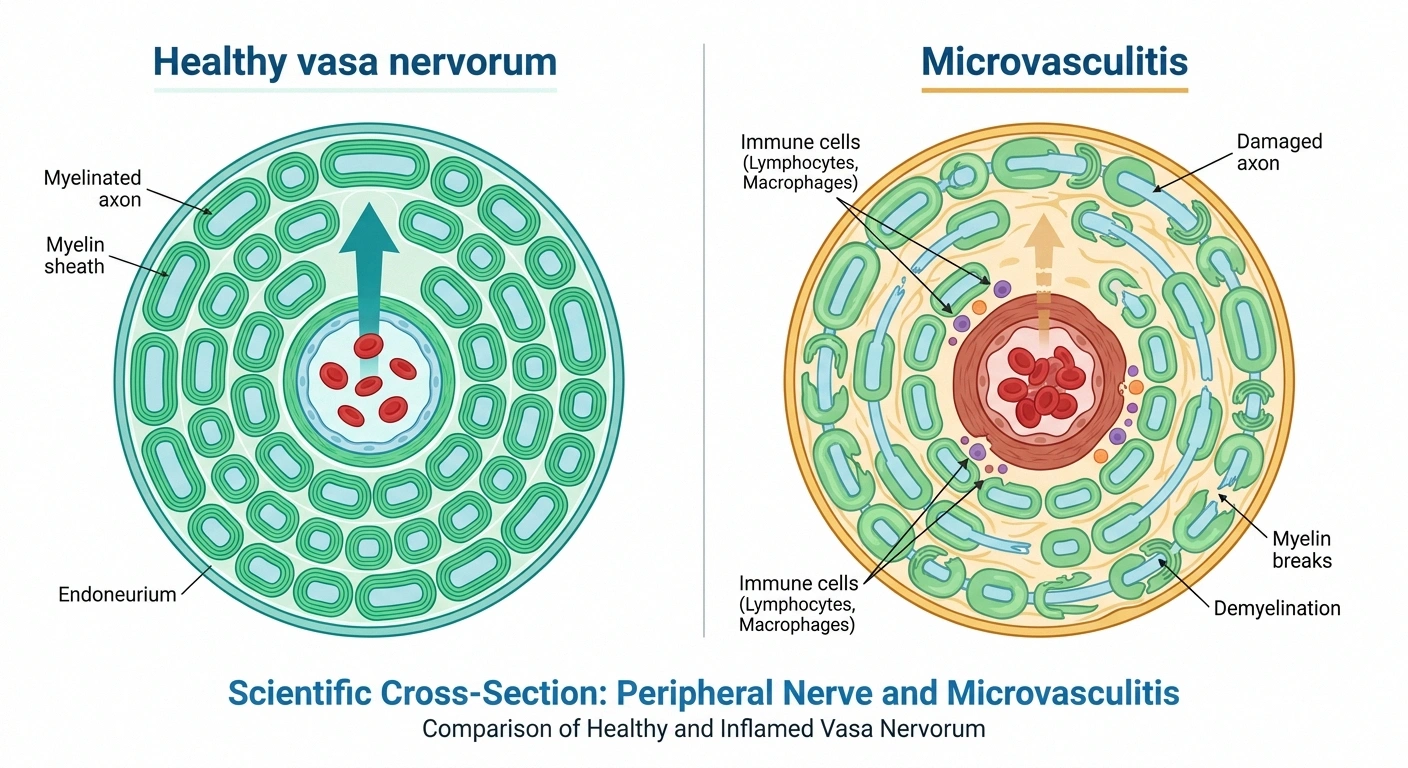
nerve biopsies from patients with unexplained new post-op neuropathy showed epineurial and endoneurial microvasculitis — an inflammatory attack on the small vessels feeding peripheral nerves.
Staff NP, Dyck PJB, et al. Brain, 2010
The most-cited mechanism for PSIN is microvasculitis — inflammation of the small blood vessels that supply oxygen and nutrients to peripheral nerves. In the Staff/Dyck biopsy series, inflammatory cells infiltrated the layers around these tiny vessels, sometimes with visible damage to the vessel walls. When the vessels are inflamed, blood flow to the nerves they supply is compromised — and starved axons die back the same way brain tissue does in a small stroke.
Why the immune system chooses to attack these tiny vessels after a surgery is a question with hypotheses rather than certainty. The most discussed is molecular mimicry — surgical tissue injury releases proteins that the immune system, in its heightened post-operative state, learns to recognize as foreign, and some of those proteins may resemble structures on nerves or their supporting vessels. Other proposed contributors include the massive cytokine cascade surgery triggers, effects of anesthetic agents on immune signaling, and pre-existing autoimmune tendencies that surgery unmasks. What matters clinically is that this is an immune-driven process, which is why immune-modulating treatment can meaningfully change the course of the disease — a fact that sets PSIN apart from the great majority of nerve injuries where no such option exists.
The Distinctive Symptom Picture — Timeline, Distribution, Warning Signs

The symptoms of postsurgical inflammatory neuropathy share features that, when they cluster together, should push you and your care team toward suspicion rather than reassurance. There is no single test result that flashes red — the diagnosis is built out of the story, the distribution, and the trajectory.
Positioning Injury vs Postsurgical Inflammatory Neuropathy
Timing is the first anchor. Symptoms should begin within 30 days of surgery, most commonly between three days and three weeks. New nerve symptoms starting months later are almost never PSIN — those need a different workup. Symptoms fully present on awakening and stable afterward are more typical of positioning. Symptoms that appear a week or two in and get worse over subsequent days are the classic PSIN trajectory.
Distribution is the second anchor. The symptoms show up in a nerve, plexus, or region that cannot be explained by anything the surgery physically did — a knee replacement patient developing new sciatic weakness in the opposite leg, a gallbladder patient developing brachial plexus weakness in a shoulder, a hip surgery patient with patchy sensory loss across three different nerve territories. The pattern is wrong for a mechanical explanation, and that wrongness is what should raise the question.
The character tends to include prominent pain — deep, aching, burning, or stabbing pain out of proportion to whatever tissue insult would explain it. In some patients the pain precedes the weakness by days. Numbness, tingling, weakness, and loss of fine motor control follow. If the symptoms are in the arm or hand, this is often an unusual upper-extremity nerve pattern that needs proper neurology evaluation rather than a wrist splint.
The warning-sign profile is any new nerve symptom outside the operative field, any nerve symptom worsening rather than improving over the first two to three weeks after onset, and any weakness that is spreading rather than staying localized. Any one of those calls for a neurology referral, not a return-to-clinic in three months.
How Doctors Actually Diagnose It

The diagnostic workup for postsurgical inflammatory neuropathy has a specific shape. Understanding what it looks like helps you know whether your evaluation has been thorough or whether it has skipped a step you should ask about.
The PSIN Diagnostic Pathway
The first stage is clinical — a careful history of exactly when symptoms started relative to the surgery, exactly which nerves are involved, and how the pattern has evolved. A skilled examiner will map out which muscle groups are weak, which sensory territories are affected, and what the reflexes are doing. This physical mapping is what tells them whether the pattern is a single nerve, a plexus, a nerve root, or multifocal — and it is the piece that determines the whole rest of the workup.
The second stage is imaging — MRI of the surgical site and, when the presentation warrants it, MRI of the involved plexus or nerve root. The purpose is not usually to diagnose PSIN but to rule out things that mimic it — a hematoma pressing on a nerve, misplaced surgical hardware, a fluid collection compressing a plexus. If those are found, they usually need urgent intervention. If the imaging of the mechanical possibilities is clean, the door to an inflammatory diagnosis opens wider.
The third stage is electrodiagnostic testing — nerve conduction studies and electromyography. Done too early they can miss changes, so most electromyographers wait at least three weeks from symptom onset. In the right window, EMG typically shows patchy axonal damage — reduced amplitudes and denervation potentials — often in a distribution that includes nerves outside the operative field. This is part of what makes the standard neuropathy workup pathway worth understanding before you walk into the appointment.
The fourth stage is laboratory work to rule out systemic causes — CBC, sedimentation rate and C-reactive protein, blood sugar and HbA1c, B12, thyroid, kidney and liver function, and autoimmune markers if there are hints of systemic disease. Medication history matters here too — some drugs used around surgery can themselves cause a neuropathy, which overlaps with the topic of peri-operative medications with a known neuropathy risk.
The fifth stage, reserved for cases where the diagnosis is uncertain, is nerve biopsy. A small fascicle of the sural nerve or the superficial peroneal nerve is removed and examined. In PSIN the pathology shows inflammatory infiltrates around small vessels within the nerve, sometimes with visible vasculitis and ischemic axonal damage. Biopsy is not routine — most cases are diagnosed on history, distribution, imaging, and EMG.
Parsonage-Turner Syndrome and Related Cousins
The best-known presentation of postsurgical inflammatory neuropathy predates the general concept by more than half a century — Parsonage-Turner syndrome, also called idiopathic brachial neuritis or neuralgic amyotrophy. When Parsonage and Turner described it in 1948, they noticed a distinctive pattern of patients who developed abrupt severe shoulder or arm pain, often awakening them at night, followed within days to weeks by weakness in a patchy distribution across the brachial plexus and its branches.
What has become clearer since is how often surgery precipitates it. Medical and surgical procedures account for roughly a quarter to a third of identified triggers depending on the series — orthopedic surgery, coronary artery bypass, hysteroscopy, oral and dental procedures, and general anesthesia for a wide variety of unrelated operations. The window between surgery and pain onset is 48 hours to four weeks, matching the broader PSIN timeline.
The presentation is memorable. A patient recovering from an unrelated procedure develops sudden severe pain in a shoulder or arm — often described as one of the worst pains they have experienced. As the pain fades over days to weeks, weakness becomes obvious in muscles supplied by the suprascapular, axillary, long thoracic, or anterior interosseous branches — a winging scapula, a wrist that drops, a thumb that will not oppose. That atypical distribution is what makes it Parsonage-Turner rather than a common compression neuropathy. A parallel lumbosacral form exists — often mistaken for post-op sciatica — and shares the same treatment principles.
Treatment That Can Change the Trajectory
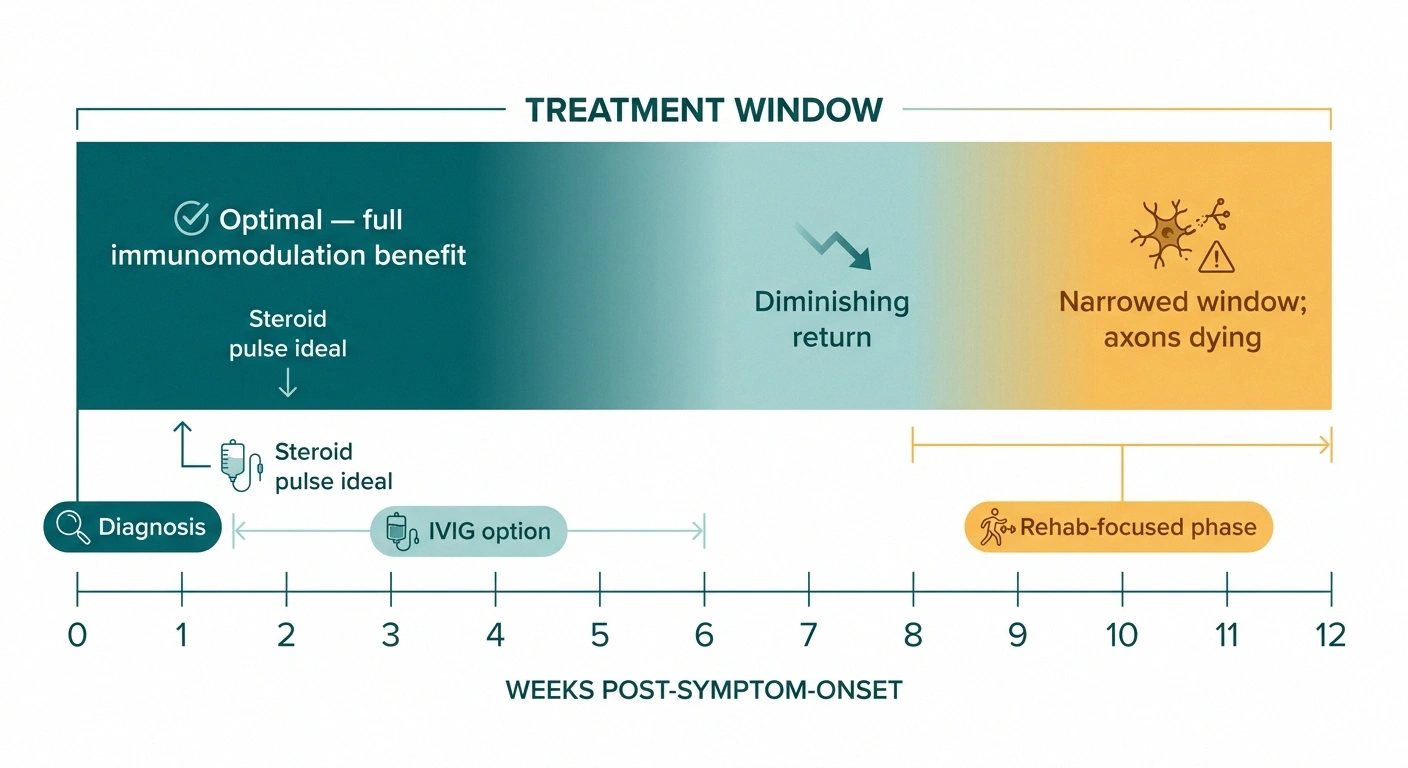
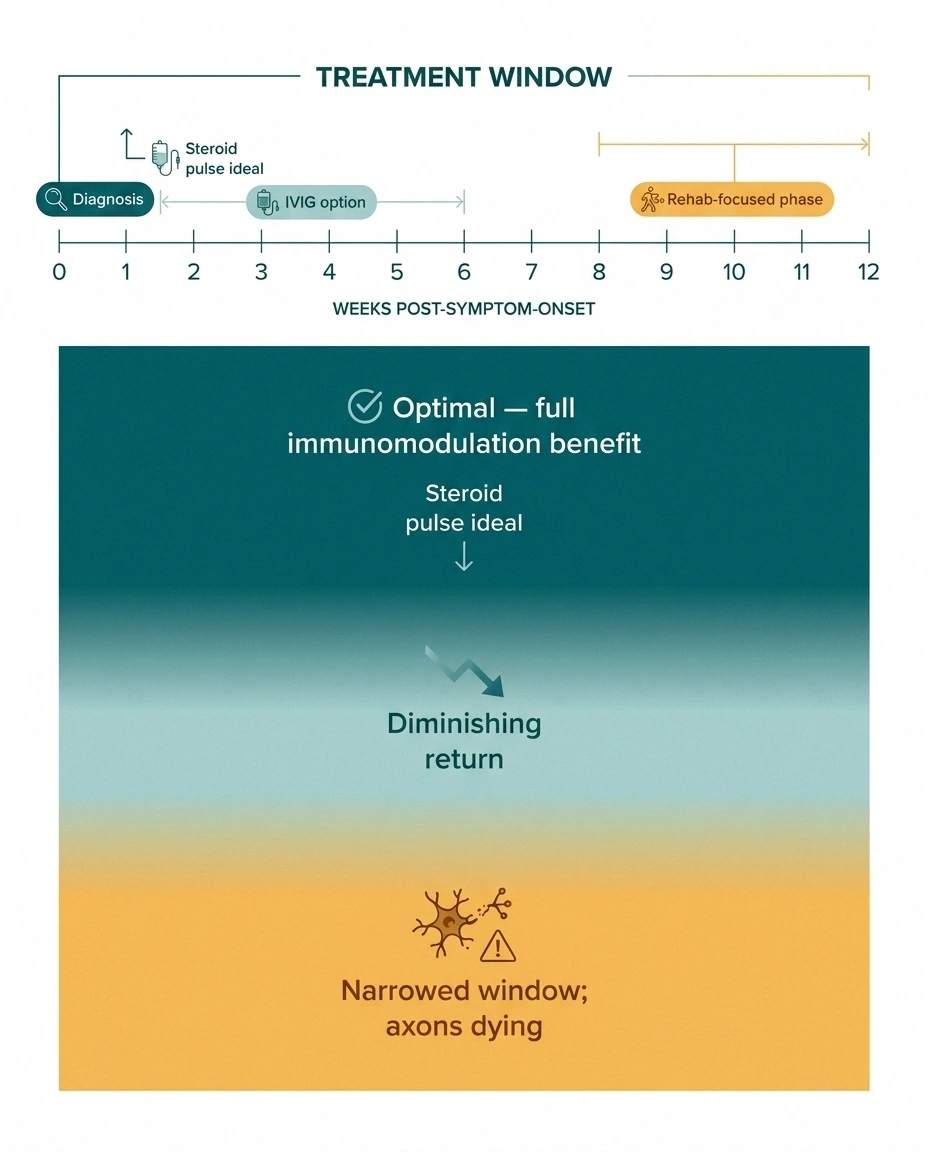
The core of postsurgical inflammatory neuropathy treatment is anti-inflammatory and immune-modulating therapy, layered with pain management and physical rehabilitation. Because the process is time-sensitive — the axonal damage accumulates while inflammation continues — earlier treatment is associated with better outcomes.
The Treatment Ladder
Earlier treatment (within 4 weeks of symptom onset) is associated with better outcomes. The window narrows as axons die.
The first-line intervention in most cases is high-dose corticosteroids, typically starting with intravenous methylprednisolone for three to five days followed by an oral prednisone taper over several weeks. The rationale is fast, powerful suppression of the microvasculitis before more axons die. Corticosteroids at these doses carry a familiar side-effect list — mood swings, insomnia, blood sugar spikes, temporary weight gain — but for the short courses used in PSIN, the trade-off usually favors treatment. Diabetic patients need particular attention because the steroid-induced blood sugar rise can be significant.
When corticosteroids are contraindicated, not tolerated, or insufficient, the next step is often intravenous immunoglobulin (IVIG) — a purified antibody product dosed at 2 grams per kilogram over two to five days that broadly modulates the immune response. Some clinicians go to IVIG earlier for severe presentations, rapidly progressing weakness, or a poor response to initial steroid pulses. Plasma exchange is occasionally considered for refractory cases.
Symptomatic pain management runs alongside the disease-modifying treatment because untreated pain interferes with recovery. The mainstays are the standard neuropathic pain agents — gabapentin works well for many patients with dose adjustments for sedation, pregabalin covers similar territory with sometimes cleaner titration, and duloxetine works on the pain signal from the opposite direction and treats co-occurring depression. Low-dose tricyclics, topical lidocaine patches, and short opioid courses for severe pain are also options.
Physical and occupational therapy are essential. Denervated muscles will contract and lose range of motion quickly if they are not moved. A therapist with neuromuscular experience will design a program that preserves joint mobility, prevents contractures, and gradually re-strengthens affected muscles as reinnervation proceeds. The rehabilitation part of PSIN treatment continues for many months and is a major determinant of the eventual functional outcome.
What Recovery Looks Like
Recovery from postsurgical inflammatory neuropathy is real but usually not complete. Most patients regain meaningful function over months to a year. A minority make near-full recoveries. Another meaningful minority retain some persistent deficit — a muscle that never fully returns, a patch of altered sensation, residual pain that stays managed rather than eliminated. The trajectory is influenced by how severe the initial damage was, how quickly treatment was started, and which nerves were affected.
The Recovery Timeline
The tempo tests patience. Peripheral nerves regenerate at approximately one millimeter per day, so a nerve reconnecting over thirty centimeters may take the better part of a year even in a best case. Motor recovery can continue slowly for twelve to twenty-four months after the acute inflammation is controlled. Sensory changes often improve faster than motor ones, but both are on the same slow biological clock.
The question of full reversibility comes up in almost every consultation. The honest answer is that reversibility depends on how much axonal damage occurred before treatment began. Catch the immune attack early and near-full recovery is possible; delay treatment and dead axons will not return. This is why the time-sensitive language around PSIN matters — the difference between recognizing the diagnosis at three weeks and at three months can be the difference between substantial recovery and persistent residual.
The emotional layer is also real. Post-op depression and anxiety are common under any circumstance, and a surprise nerve complication on top of a surgery that was supposed to help you does not make it easier. If any of that is your experience, the mental health toll of nerve pain is a legitimate part of treatment, not a personal failing to push through.
What to Tell Your Surgeon or Neurologist

If you suspect PSIN, the specific language you use matters. Surgeons and primary care doctors who are not neurologists may not have seen it before, and using the correct terminology helps them recognize when a neurology referral is warranted rather than another watchful-waiting cycle.
Start with the timeline. Give the exact date of surgery and the exact date the new nerve symptoms began — “twelve days after my hip replacement, I developed severe shoulder pain and weakness on the opposite side.” That specificity lets a doctor fit your case to the temporal criteria. Then describe the distribution in bodily terms — what part is affected, whether it is on the same side as the surgery or the opposite, whether it is anywhere near the incision or positioning. The more you can say “this is nowhere the surgery went,” the more the diagnosis moves up on the differential.
Ask specifically for a neurology referral and use “postsurgical inflammatory neuropathy” and, if appropriate, “Parsonage-Turner syndrome” by name. Ask whether nerve conduction studies and EMG are being ordered, whether MRI has ruled out compression, and whether early corticosteroid treatment is being considered. Escalate immediately if symptoms are worsening — rapidly progressive weakness, spread to new areas, or bladder or bowel dysfunction warrant same-day evaluation. Bringing a citation to the Staff and Dyck 2010 Brain paper is not out of place if the clinician seems unfamiliar with the diagnosis.
Frequently Asked Questions
How common is postsurgical inflammatory neuropathy?
Precise incidence is hard to pin down because the diagnosis is often missed, but it is uncommon rather than rare. The Mayo group who characterized it estimates that a meaningful subset of postoperative neuropathies traditionally attributed to positioning are actually inflammatory. Any large-volume orthopedic, cardiothoracic, or general surgery service will encounter cases every year.
Can it happen after minor surgery?
Yes. PSIN has been described after joint replacements, cardiac surgery, abdominal and pelvic surgeries, dental and oral procedures, hysteroscopy, and even outpatient procedures done under regional anesthesia. The severity of the surgery does not predict who develops PSIN — the immune trigger appears independent of the physical scale of the operation, which is one reason it catches patients and doctors off guard after what should have been a routine procedure.
Does the type of anesthesia matter?
PSIN has been reported after general anesthesia, regional blocks, spinal and epidural anesthesia, and combinations. No single anesthesia type is clearly implicated — the operating factor appears to be the systemic inflammatory response to the surgery itself rather than the anesthetic. When symptoms occur in a limb that had a regional block, the block procedure itself sometimes needs to be considered as a potential direct injury, which is a separate diagnostic question.
Is postsurgical inflammatory neuropathy the same as Parsonage-Turner syndrome?
They overlap significantly but are not identical. Parsonage-Turner is a specific pattern — abrupt severe upper-extremity pain followed by patchy brachial plexus weakness — that can be triggered by surgery, viral illness, vaccination, or occur idiopathically. When the trigger is surgery, most experts consider it a specific presentation within the broader PSIN category.
What should I do if my surgeon says it’s just positioning?
If the timing, distribution, or trajectory do not fit a positioning story, ask specifically for a neurology referral. Positioning injuries typically appear on awakening, affect predictable nerves, and improve steadily. Symptoms that appeared a week or two after surgery, in a region unrelated to positioning, or that have been worsening rather than improving are worth a formal neurology evaluation. A referral does not commit you to any diagnosis or treatment — it just puts you in front of the specialist who can determine whether the pattern is compression or inflammation.
How quickly do I need to be seen?
Sooner is better because treatment effectiveness declines as time passes and axons die. Within the first month of symptom onset is the window most PSIN experts consider optimal for starting immune-modulating treatment. If you suspect PSIN, escalate to get a neurology appointment within days to weeks rather than waiting for a routine slot months out. If symptoms are severe or rapidly progressing, urgent evaluation is warranted.
Will I need a nerve biopsy?
Most patients will not. Nerve biopsies are done in the minority of cases where the diagnosis is uncertain after clinical evaluation, imaging, and electrodiagnostic testing. The procedure takes a small piece of a sensory nerve at the ankle, leaves a small area of numbness in the foot, and carries a small risk of infection or persistent pain — but it can provide definitive evidence of the microvasculitic pattern when that certainty is needed to justify long-term immunotherapy.
Can this happen again with future surgeries?
Recurrence is possible but not the norm. Some patients who have had PSIN develop it again with subsequent surgeries. If you have had documented PSIN, share it with any future surgical team so pre-operative planning can include awareness and a lower threshold for early neurology involvement. There is not enough evidence to routinely recommend preventive corticosteroids, but the informed team is the well-prepared team.
About the Author