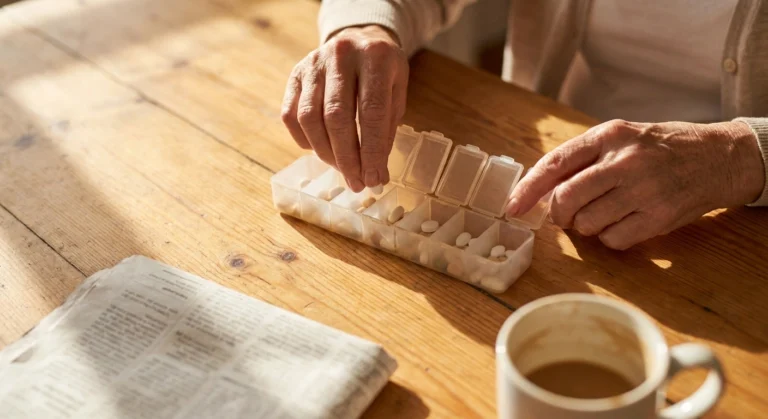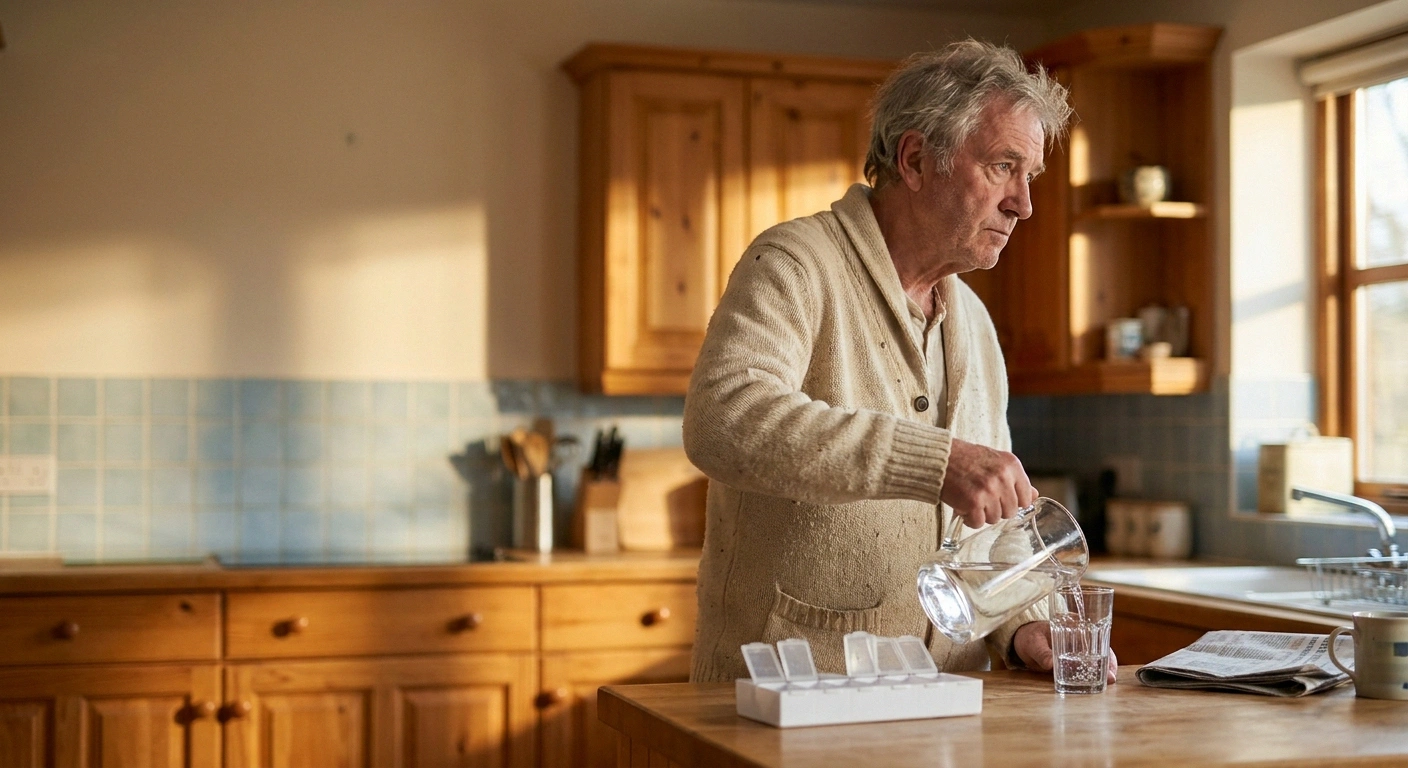
Look at the bottle. Same small tablets, same instruction, same pharmacy sticker with a date that keeps getting reprinted. Colchicine is one of those prescriptions that settles quietly into a life and then stops being noticed. It works. The gout attacks stopped. Nobody has a reason to revisit it.
That steadiness is the whole problem.
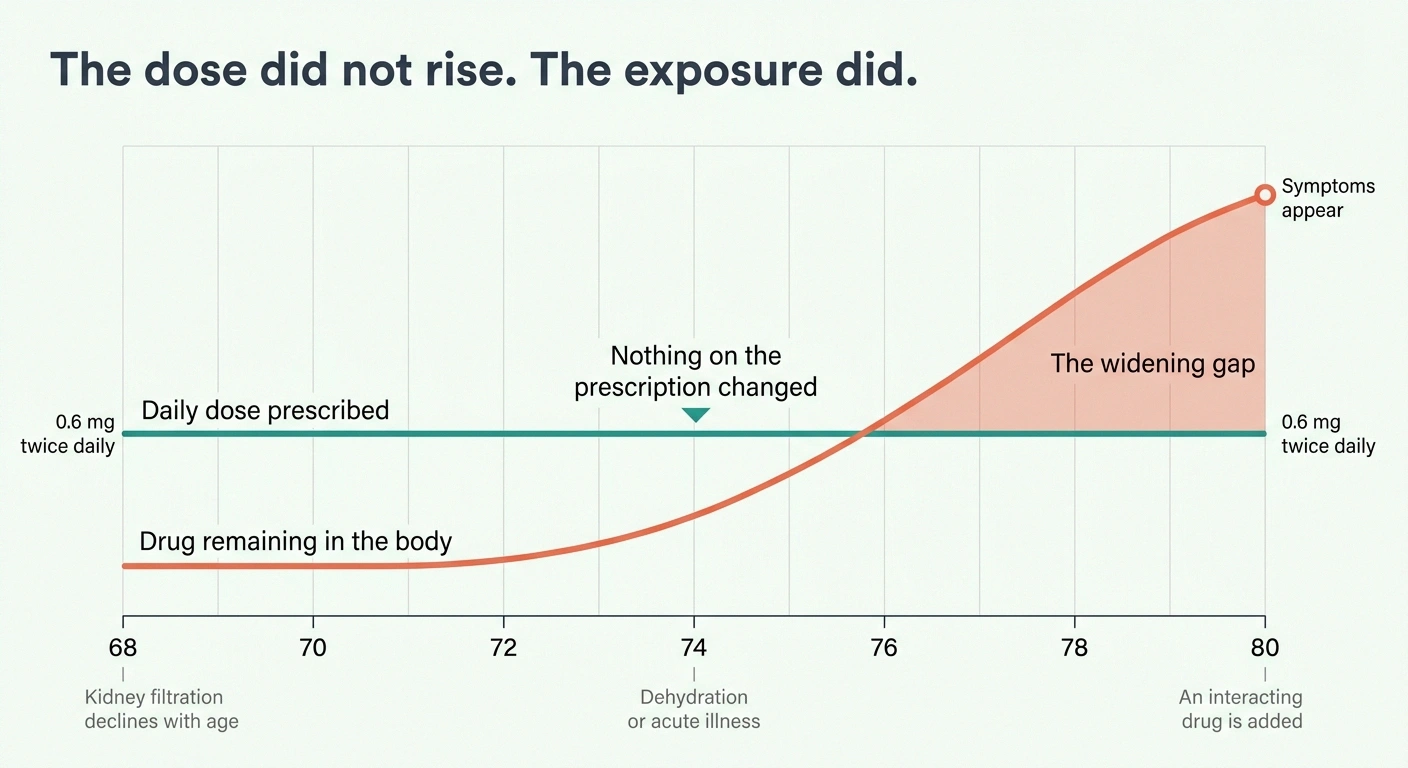
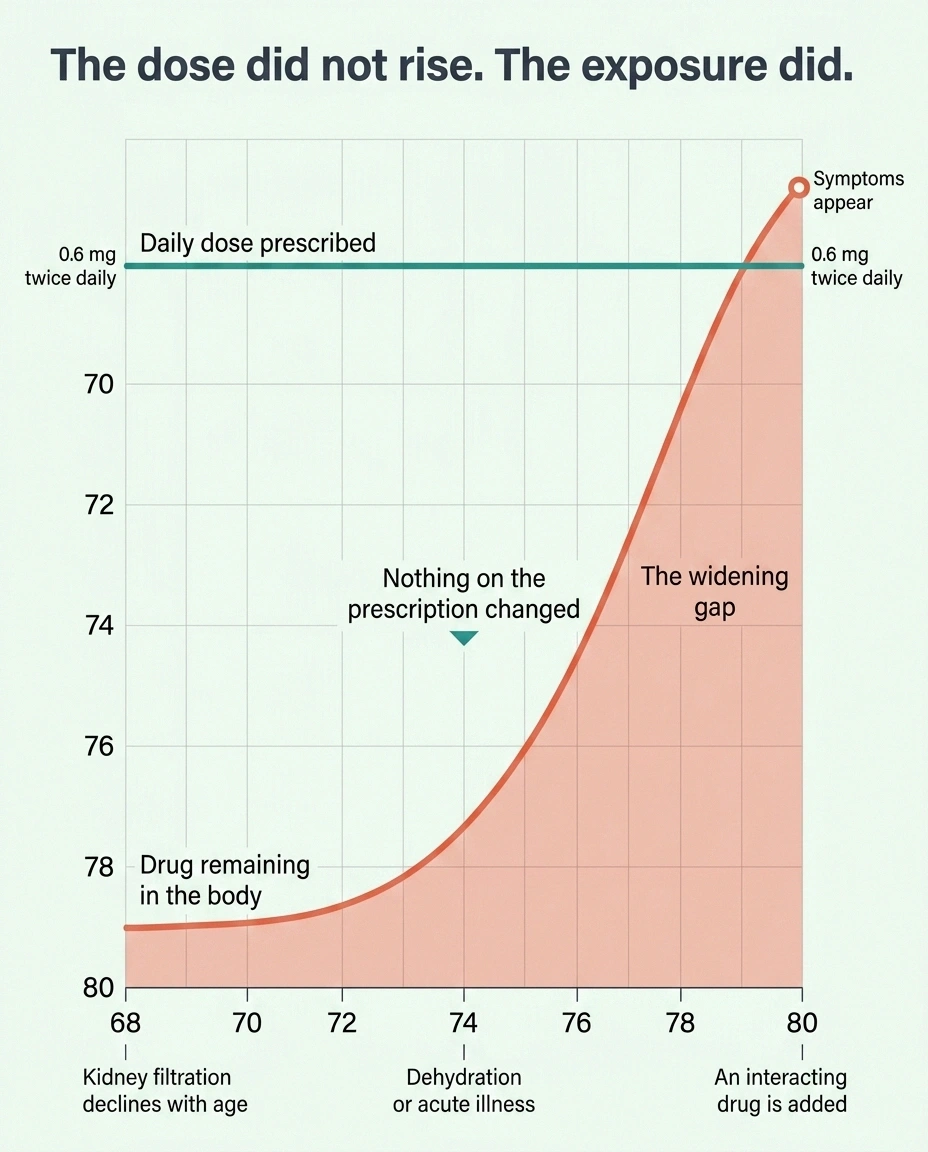
Colchicine can injure both muscle and nerve, and when it does, the dose involved is almost always the dose the person has been taking uneventfully for years. Nothing on the prescription changed. What changed was the body's ability to clear the drug, or a second medication that arrived from a different doctor and quietly multiplied how much of it stayed in the bloodstream.
The condition has a name. Colchicine neuromyopathy: weak thighs, heavy stairs, numb feet, all at once. It is uncommon. It reverses in most people who catch it. And it gets missed constantly, because it looks like half a dozen other things that happen to older adults taking several medications.
The Prescription That Never Changed
Colchicine has been in use, in one form or another, for a very long time. It remains a first-line option for acute gout flares and for preventing them. It also treats familial Mediterranean fever, recurrent pericarditis, and Behçet's disease, and a low-dose version is now prescribed to lower cardiovascular risk in some people with coronary artery disease.
Those are not short courses. A person on colchicine for gout prevention may take it for a decade. Someone with familial Mediterranean fever may take it for life. Someone on it for heart protection expects to stay on it indefinitely. This is a drug people live alongside, not one they finish.
Which makes the numbers from the research worth sitting with. A systematic review of reported colchicine neuromyopathy cases found the average total daily dose was about 1.25 mg. That is a completely ordinary prescribing amount, not an overdose. And 48% of those people had been taking colchicine for more than 12 months before symptoms brought them in.
So this is not a story about someone swallowing too many pills. It is a story about accumulation. Colchicine leaves the body through the liver and the kidneys, with help from a cellular pump that escorts it back out of tissue. When any part of that exit route slows down, the same daily tablet starts stacking up a little higher each day than it did the day before. The prescription stays fixed. The exposure does not.
What Colchicine Does to a Cell
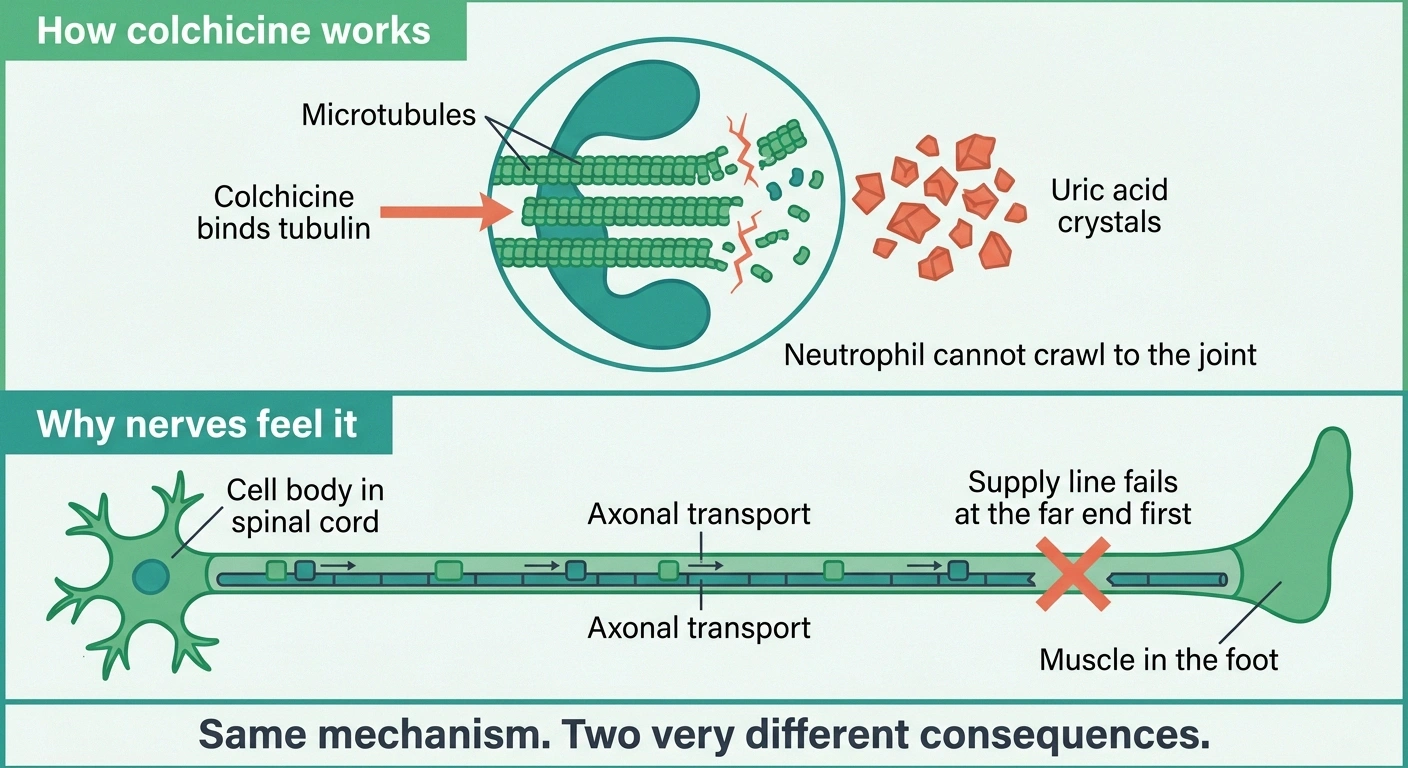
To understand why nerve and muscle are the tissues that complain, it helps to know the one trick colchicine performs.
Colchicine binds to a protein called tubulin and prevents it from assembling into microtubules. Microtubules are the internal scaffolding of a cell. They give it shape, they pull chromosomes apart during division, and, most relevant here, they act as the rails along which a cell moves cargo from one end of itself to the other.
In gout, that is exactly the desired effect. Neutrophils, the white blood cells that swarm a joint and produce the searing pain of a flare, need functioning microtubules to crawl toward the crystals. Disable the scaffolding and the swarm never arrives. The joint stays quiet.
Now apply the same effect to a peripheral nerve. A motor neuron whose cell body sits in your spinal cord and whose axon reaches all the way to a muscle in your foot is, in engineering terms, an absurd shipping problem. Everything that axon needs has to be manufactured at one end and hauled the entire length. That haulage runs on microtubules. Slow the rails and the far end of the line runs short of supplies first, which is why the feet and lower legs report the damage before anywhere else. This distance-driven pattern shows up across many kinds of nerve injury, and it is the same reason the stages of neuropathy tend to progress from the toes upward rather than in random patches.
Muscle cells run into a different version of the same trouble. They rely on microtubules to move waste into their disposal system, and when that traffic stalls, the debris collects inside the fiber. Under a microscope, a muscle biopsy from someone with colchicine myopathy shows fibers pocketed with small vacuoles: the cellular equivalent of garbage bags piling up because nobody came to collect them.
Weak Legs and Numb Feet, Arriving Together

The muscle half usually announces itself first, and it announces itself in a very specific place: close to the trunk rather than out at the extremities.
Five words you will see on the paperwork
These turn up in visit notes and lab reports around this diagnosis. Knowing them lets you read your own results before anyone explains them.
- Proximal
- Close to the trunk. Hips, thighs, shoulders. The opposite of distal, which means out at the hands and feet. Colchicine weakness is proximal, which is why grip usually stays normal.
- Neuromyopathy
- Nerve and muscle involved at once. Written as one word because here they share a single cause rather than being two coincidental problems.
- CK, or creatine kinase
- An enzyme that leaks from injured muscle into the blood. A routine, inexpensive test. Rises during the injury, falls once the cause is removed, which makes it useful for tracking as well as detecting.
- Axonal
- The nerve fiber itself is degenerating, rather than losing its myelin insulation. Recovery requires regrowth, which is slow, and this word is the reason your sensation lags behind your strength.
- Areflexia
- An absent reflex when the ankle tendon is tapped. Painless to check, takes seconds, and often the first objective sign anyone records.
People describe stairs becoming a project. Getting out of a low chair now requires a push off the armrests. Lifting a saucepan onto a high shelf, or reaching up to wash their own hair, starts to feel like work. Thighs, hips and shoulders are the regions involved. Grip strength is usually preserved early on, which is one of the tells.
The nerve half arrives from the opposite direction. Numbness and tingling in the toes and soles. A dulled sense of where the feet are in space. Sometimes an unpleasant burning quality, sometimes nothing but a muffled absence of sensation, similar to what people describe with burning feet syndrome from other causes. Reflexes at the ankle fade. On testing, this shows up as an axonal sensory or sensorimotor neuropathy, meaning the nerve fiber itself is deteriorating rather than losing its insulation.
Put the two together and you get a person who cannot push off well from the hip and cannot feel the ground accurately at the same time. That combination is far more destabilizing than either problem alone, and it moves this squarely into fall-prevention territory rather than being a nuisance to monitor.
There is one laboratory finding that ties it together, and it is cheap and ordinary: creatine kinase, usually written CK on a lab report. CK is an enzyme that leaks out of damaged muscle, so the level rises when muscle is being injured. In colchicine myopathy it is typically elevated, sometimes dramatically. A person reporting new weakness while on long-term colchicine, with a raised CK and a creatinine that has crept up, is describing a fairly recognizable picture to anyone who has the whole medication list in front of them.
Your Kidneys Set the Real Dose
If there is one risk factor that matters more than the rest, it is kidney function.
When this stops being a next-appointment question
Gradual weakness over weeks is worth raising at a scheduled visit. The following are not. They suggest muscle breaking down fast enough to threaten the kidneys, which turns a medication review into an urgent one.
- Urine that has turned dark brown or the color of strong tea
- Severe muscle pain or swelling, especially in the thighs
- Weakness that worsens noticeably over days rather than months
- Passing much less urine than usual
- Severe or bloody diarrhea alongside new weakness, particularly within days of starting a new medication
Bring the full medication list, including anything started in the last month by any prescriber. That list is the fastest route to the answer.
Across the case literature, chronic kidney impairment is the most consistent predisposing feature, with a serum creatinine above roughly 1.6 mg/dL repeatedly flagged as the threshold where risk climbs. Liver impairment and diuretic use appear alongside it. The mechanism is not complicated. Colchicine leaves partly through the kidneys, and a kidney that filters less returns less of the drug to the outside world.
What makes this genuinely difficult for patients is that kidney function does not announce its decline. There is no symptom. A person feels precisely the same at an eGFR of 45 as they did at 75. It shows up on a blood test or it shows up nowhere, and the drift often happens over years, quietly, as a normal feature of aging, or of diabetes, or of long-standing high blood pressure.
So the sequence that produces trouble is unremarkable from the inside. Someone starts colchicine at 68 with good kidney function. They take it without incident. At 76 their kidneys are doing meaningfully less filtering than they were, and no one has re-examined a prescription that has been working fine for eight years. The tablet did not get stronger. The person got less able to clear it.
Acute illness can compress that timeline into days. Dehydration from a stomach bug, a heat wave, a spell of poor fluid intake, a new water pill: any of these can drop kidney function temporarily and lift colchicine levels along with it.
The Medicines That Quietly Multiply It

The second driver is interaction, and this one can arrive overnight.
One sentence, said at the right moment
The interaction is created the moment a new prescription is written, not when it is swallowed. That is the window where speaking costs nothing.
“Before you send that over, I take colchicine daily. Can you check whether it interacts?”
The prescribers least likely to know about a years-old gout prescription, and therefore the ones most worth saying it to:
- Dentists reaching for an antibiotic before or after a procedure
- Urgent care and walk-in clinics, which rarely see your full chart
- A new cardiologist adding a rate-control drug such as verapamil or diltiazem
- Anyone treating a fungal infection, including nail or skin infections
Colchicine is broken down by a liver enzyme called CYP3A4 and pumped out of cells by a transporter called P-glycoprotein. Block either one and colchicine levels rise. Block both and they rise steeply.
The clearest example in the research is clarithromycin, an antibiotic commonly prescribed for respiratory and dental infections. When taken alongside steady-state clarithromycin, colchicine's peak blood concentration rose by 167%, total exposure rose by 250%, and the time it took the body to clear half the drug increased by 233%. Apparent clearance fell by 75%. Guidance is to cut the colchicine dose substantially when the two are combined, and there are published cases of neuromyopathy appearing within days of that pairing.
Clarithromycin is not alone. Other CYP3A4 or P-glycoprotein inhibitors that turn up on ordinary medication lists include:
- Heart-rate and blood-pressure drugs: verapamil and diltiazem
- Antifungals: ketoconazole and itraconazole
- Antivirals: ritonavir and drugs boosted with it
- Other antibiotics: erythromycin
- Food: grapefruit and grapefruit juice, which inhibit intestinal CYP3A4 directly
Statins deserve their own line. Colchicine and statins both carry a risk of muscle injury, and combining them compounds it. The published guidance points toward rosuvastatin as the statin least likely to interact, while atorvastatin and simvastatin call for more caution and closer watching. Since a large share of people taking colchicine for cardiovascular protection are also taking a statin by definition, this pairing is extremely common.
The practical trap is that these prescriptions rarely come from the same person. A cardiologist adds verapamil. A dentist prescribes clarithromycin for an abscess. An urgent care clinic starts an antifungal. Each is making a reasonable decision about the problem in front of them, and none of them is looking at a gout prescription written six years ago by someone else. This is a broader pattern worth understanding, since a surprising number of common medications can affect the nerves, alone or in combination.
Why This Gets Called Something Else First
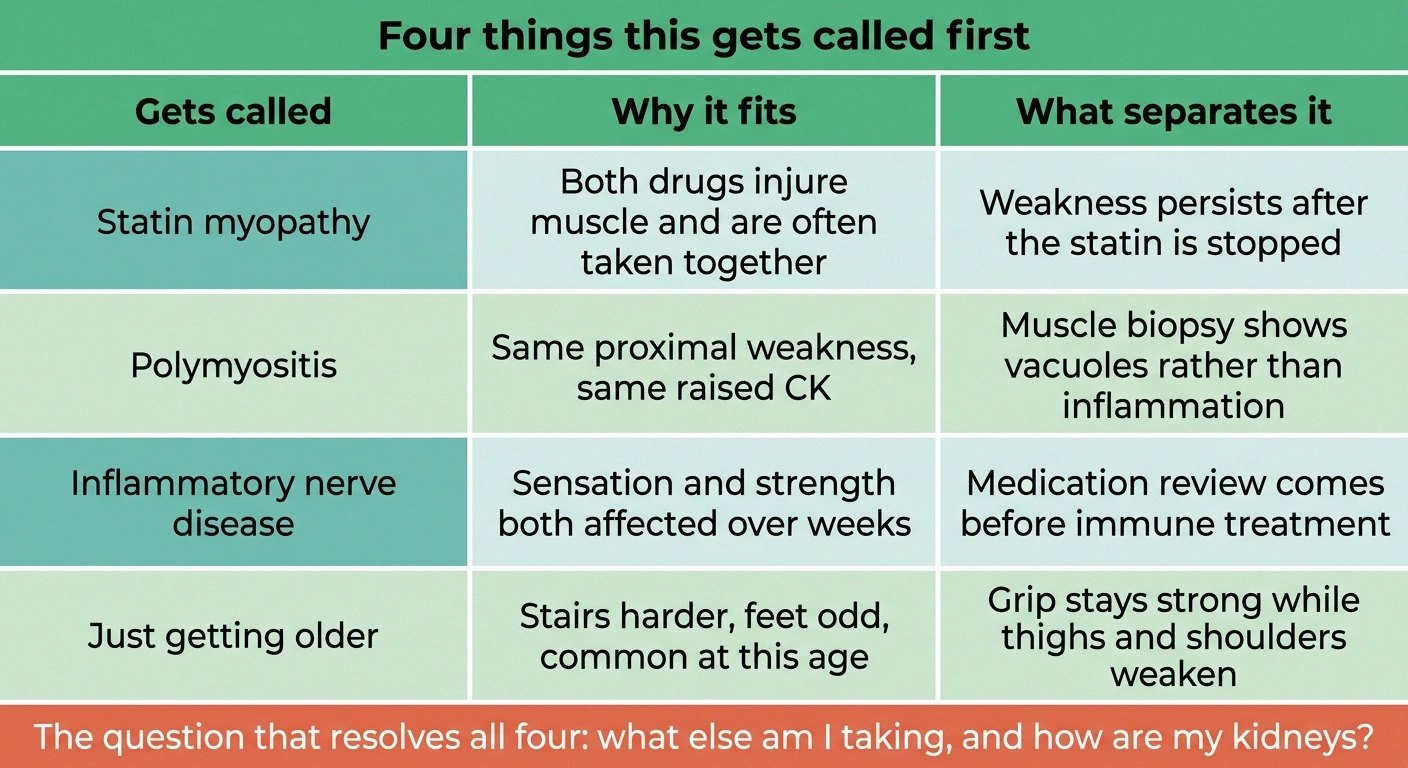
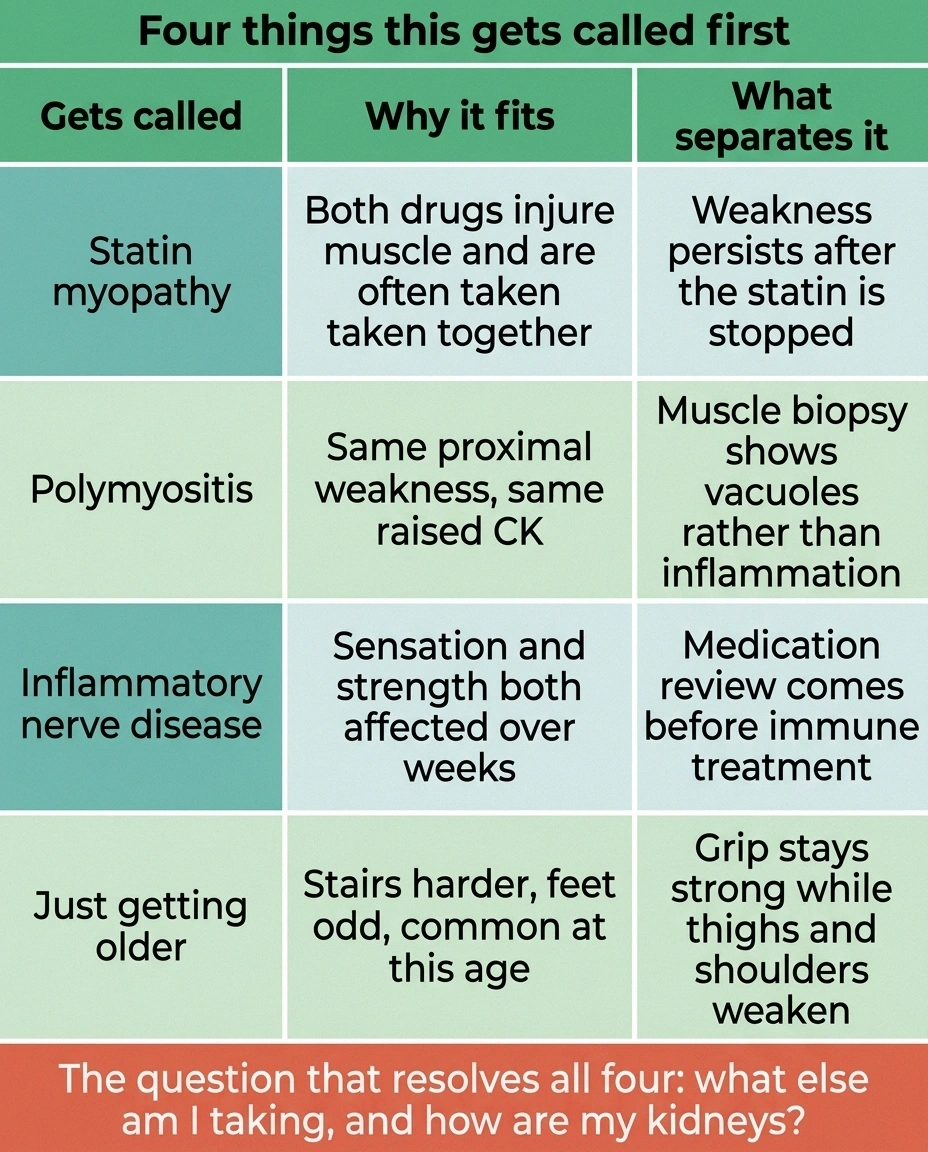
Colchicine neuromyopathy has an unusually crowded field of imitators, and most of them are more common.
Statin myopathy is the first alternative most clinicians reach for, and reasonably so, because the two drugs are frequently taken together and produce overlapping muscle symptoms. Stopping the statin and watching what happens is a sensible test, but if the colchicine is doing the damage, the weakness persists and the trail goes cold.
Polymyositis, an inflammatory muscle disease, produces the same proximal weakness and the same raised CK. Telling them apart may require a biopsy, which is exactly where the vacuoles of colchicine toxicity become the deciding evidence.
The neuropathy half gets mistaken for its own set of conditions. Because it can develop over weeks and involves both sensation and strength, it has been reported as mimicking inflammatory nerve conditions like polyradiculoneuropathy, which leads toward immune treatments rather than toward a medication review.
Then there is the most common misattribution of all, which is not a diagnosis at all. An eighty-year-old reporting that stairs are harder and their feet feel odd is describing something a great many people around them are also experiencing. It gets filed under aging, or arthritis, or being less active than they used to be. The medication list never comes up. If you are working through this kind of uncertainty, understanding what the standard tests can and cannot show makes it much easier to ask for the right one.
What Getting Better Looks Like

The encouraging part of this topic is genuinely encouraging: stopping colchicine generally leads to full resolution.
Recovery runs on two clocks, not one
Knowing the staggered order in advance keeps a normal recovery from reading as a failed one.
| What changes | Rough timing | How you notice |
|---|---|---|
| CK level falls | Days | On a repeat blood test, before you feel any different |
| Proximal strength returns | Weeks | Stairs stop being a decision; you rise from a chair without the armrests |
| Sensation returns | Months | Numbness recedes slowly from the toes upward, often unevenly |
| Nerve testing normalizes | Last, if at all | Study results can stay abnormal after you feel fine. Expected, not a setback |
Protect the feet throughout. Sensation is the last thing to come back, and a numb foot is at its most vulnerable during the months it is still recovering.
The two halves recover on different schedules, though, and knowing that in advance prevents a lot of unnecessary alarm.
Muscle recovers first and fastest. CK levels usually begin falling within days once the drug is withdrawn, and proximal strength tends to return over a few weeks. People notice stairs getting easier before they notice anything else changing. Muscle is well supplied with blood and capable of repairing itself efficiently.
Nerve takes considerably longer. An axon that has degenerated has to regrow, and it regrows at a pace measured in millimeters per day along a path that may be a meter long. Numbness and tingling in the feet can persist for months after the muscle symptoms have resolved completely, and nerve conduction abnormalities can linger on testing even after a person reports feeling normal. That lag is expected. It is not evidence that stopping the drug failed, and it follows the same general arithmetic that governs whether nerve damage recovers in other settings.
There is also good news for people who genuinely need the drug. In the reviewed cases where colchicine was restarted at a reduced dose after recovery, 73% had no recurrence of symptoms. And a 2024 study of hospitalized patients with severe kidney disease found that reduced-dose colchicine, at 0.5 mg per day or less in three quarters of cases, was effective for 83% of crystal-arthritis flares and well tolerated in 77%, with no serious adverse events reported. The modern answer to colchicine plus a struggling kidney is a smaller dose with monitoring, not abandonment of a drug that works.
Bringing It Up Before the Next Refill
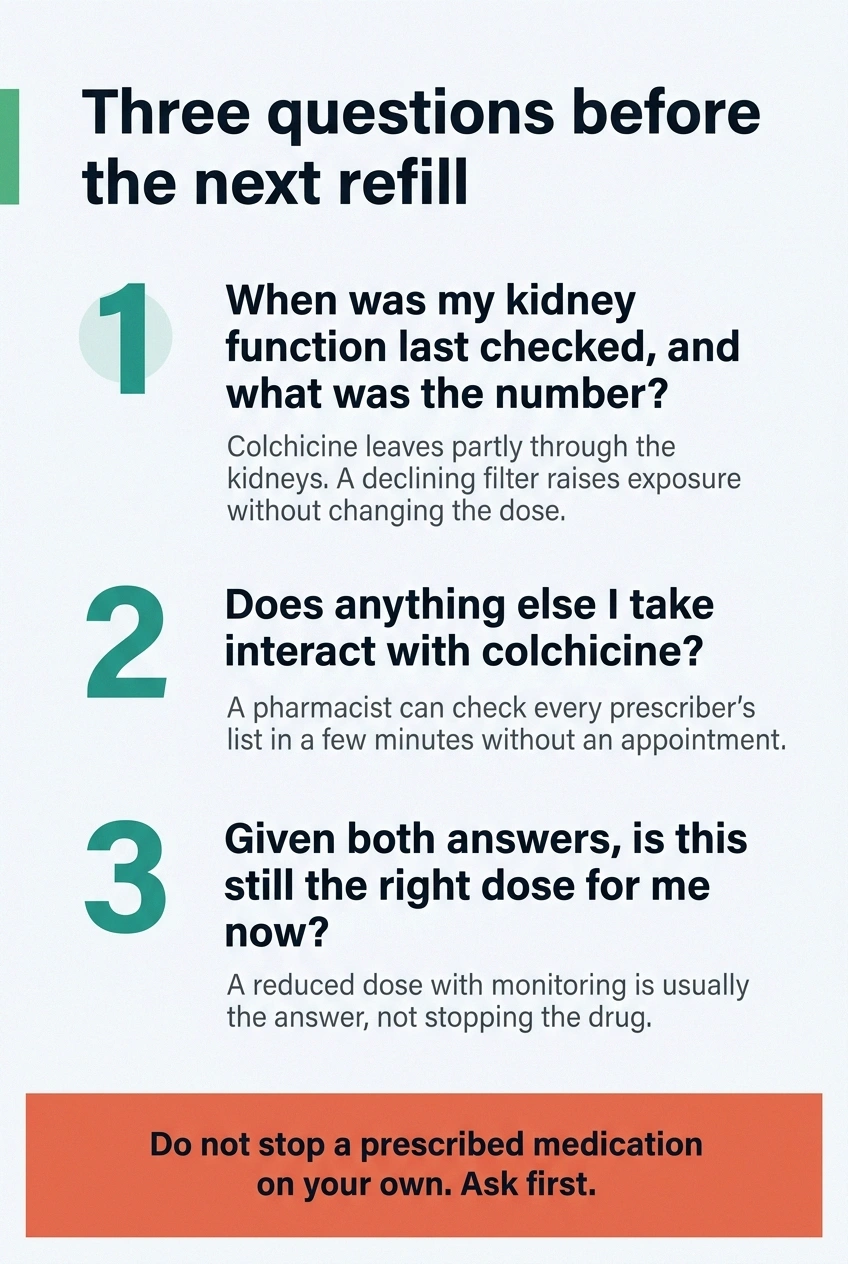
None of this requires anyone to stop a medication on their own, and doing so with a drug that prevents gout flares or protects a heart would be its own kind of harm. What it does justify is a conversation, and a specific one.
Three questions carry most of the weight. When was my kidney function last checked, and what was it? Does anything else on my current list interact with colchicine? Given both answers, is this still the right dose for me now?
A pharmacist is often the fastest route to the second question and does not require an appointment. They can run a full interaction check across every prescriber in a few minutes, which is something no single doctor's chart reliably captures.
It is also worth carrying colchicine near the top of your spoken medication list rather than letting it live at the bottom as an afterthought. When a dentist reaches for an antibiotic or an urgent care clinician reaches for an antifungal, that is the moment the interaction is created, and that is the moment naming it out loud costs nothing and prevents the most.
Meanwhile, if your feet have already lost some sensation, the ordinary protections apply regardless of the cause. Daily foot inspection and skin care matter more once the feet have stopped reliably reporting injury, and they matter during a recovery period that may run for months.
Frequently Asked Questions
Can colchicine cause permanent nerve damage?
In most reported cases the damage is reversible once the drug is stopped, though the nerve component recovers much more slowly than the muscle component. Muscle strength typically returns over weeks. Numbness and tingling in the feet can take months, and nerve conduction studies may show lingering abnormalities even after symptoms have settled. Cases involving prolonged high exposure before recognition carry a greater chance of incomplete recovery, which is the practical argument for catching it early rather than waiting to see whether it improves.
How quickly does colchicine neuromyopathy develop?
It varies enormously, and the variation depends on why exposure rose. When a person on stable long-term colchicine develops kidney decline, symptoms build gradually over months, and nearly half of reported cases had been on the drug more than a year. When an interacting medication like clarithromycin is added, levels can climb within days and symptoms have been reported that quickly. A sudden change in leg strength shortly after any new prescription is worth reporting promptly.
What is usually the first sign?
Weakness in the muscles closest to the trunk, most often noticed as difficulty with stairs or rising from a low chair without using the arms. Because this feels like general deconditioning, it is commonly attributed to age or inactivity. Numbness and tingling in the feet often follow, and sometimes both are present by the time anyone connects them. Grip strength staying normal while thighs and shoulders weaken is a useful distinguishing detail.
Does everyone taking colchicine need to worry about this?
No. Neuromyopathy is an uncommon complication, and the vast majority of people take colchicine for years without any neuromuscular problem. Risk concentrates in identifiable groups: people with reduced kidney or liver function, people taking CYP3A4 or P-glycoprotein inhibitors, and people on long-term rather than short-course therapy. If none of those apply, the baseline risk is low. If several apply at once, periodic monitoring is a reasonable request.
Which blood test would show it?
Creatine kinase, or CK, is the standard marker, and it is a routine inexpensive test. It rises when muscle is being damaged and generally falls once the offending drug is withdrawn. Kidney function testing matters just as much, because a rising creatinine explains why exposure increased in the first place. Neither test diagnoses the condition by itself; both make the picture legible when combined with the symptoms and the medication list.
Is grapefruit really a problem with colchicine?
Grapefruit and grapefruit juice inhibit the CYP3A4 enzyme in the intestinal wall, which is one of the routes colchicine is broken down through. The effect is real and can raise blood levels of drugs that depend on that pathway. It is far less powerful than a dedicated inhibitor like clarithromycin, and for most people at standard doses the practical risk is modest, but it becomes more relevant if kidney function is reduced or another interacting drug is already on board. A pharmacist can tell you whether it matters in your specific combination.
If I stop colchicine, can I ever take it again?
Often yes, at a lower dose. Among reviewed cases where colchicine was restarted after recovery at a reduced dose, 73% had no return of symptoms. That matters because for conditions like familial Mediterranean fever or recurrent pericarditis, the alternatives are genuinely worse than a carefully dosed colchicine regimen. The decision belongs with the prescriber who knows why the drug was started, and it usually pairs a smaller dose with checks on kidney function and a review of everything else being taken.
About the Author