A member of our neuropathy support group first mentioned lion's mane mushroom to me about two years ago. She'd been reading about it after her husband's diabetic neuropathy had plateaued — his pain was managed, but the numbness and nerve sensitivity weren't improving. She was looking for something that might actually support nerve repair, not just mask the symptoms.
I'll be honest: I was skeptical. The supplement world is full of things that sound promising and deliver very little. But the more I looked into lion's mane, the more I understood why serious researchers were paying attention. This isn't a trendy mushroom extract with vague “supports wellness” claims. There's a specific, well-studied biological mechanism behind it — one that's directly relevant to what happens to nerves in neuropathy.
Let me walk you through what we know, what we don't, and how to think about it as one piece of a neuropathy supplement strategy.
What Is Lion's Mane Mushroom?
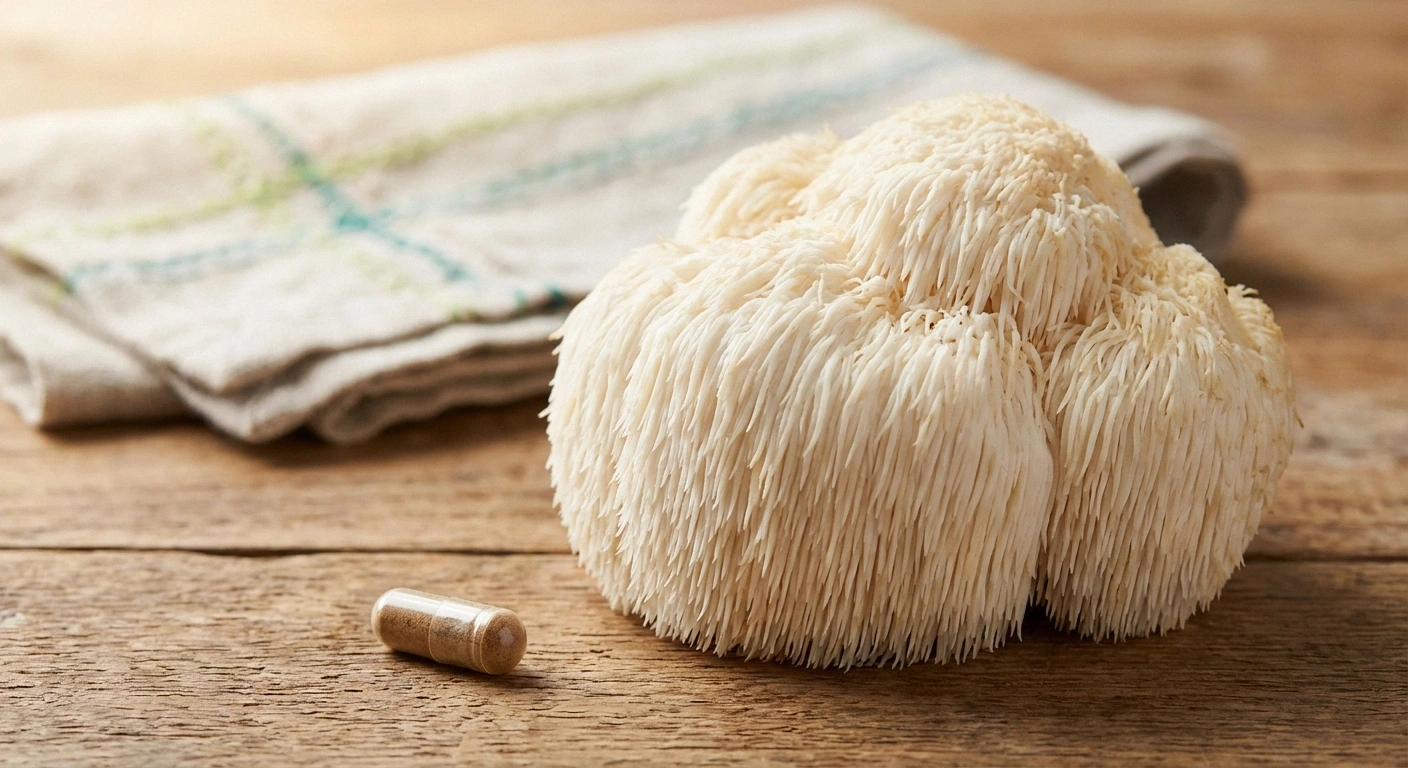
Lion's mane (Hericium erinaceus) is a large, white, shaggy mushroom native to North America, Europe, and Asia. It's been used in traditional Chinese and Japanese medicine for centuries, primarily for digestive health and cognitive support. The long white cascading spines give it its distinctive appearance — and its name.
In recent decades, researchers have focused on two groups of bioactive compounds found in lion's mane that appear to have significant effects on the nervous system: hericenones (found in the fruiting body) and erinacines (found in the mycelium). These aren't just antioxidants or vague anti-inflammatory agents — they stimulate something called Nerve Growth Factor, or NGF, which turns out to be central to the question of nerve repair.
The NGF Connection: Why Researchers Are Excited
Nerve Growth Factor is a protein that your body naturally produces to support the survival, maintenance, and regrowth of nerve cells. NGF plays a crucial role in the development of the nervous system, but it remains important throughout life — particularly for sensory neurons (the type most commonly damaged in peripheral neuropathy).
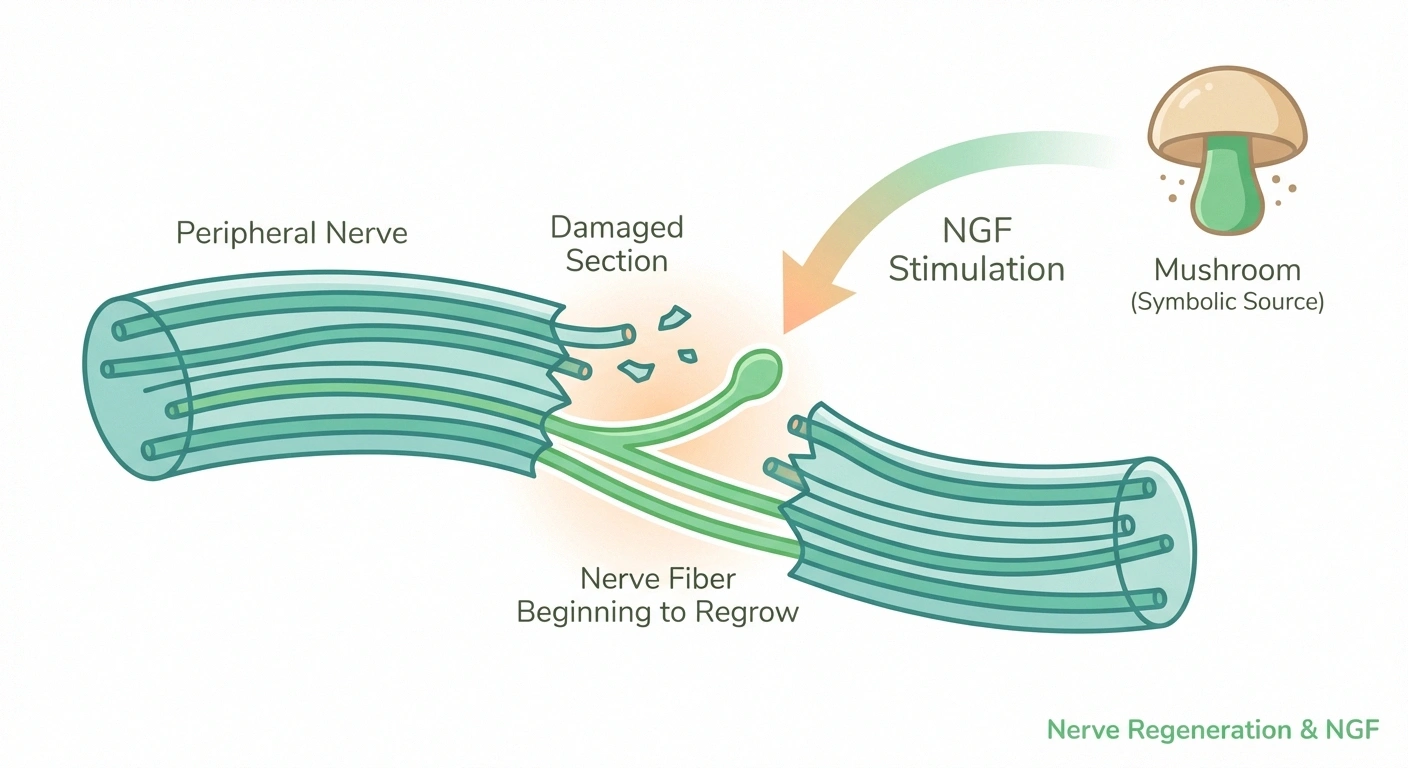
Here's why this matters for neuropathy: damaged peripheral nerves are capable of regeneration under the right conditions, but that regeneration is slow and depends heavily on adequate NGF signaling. When NGF levels are low or the regeneration environment is compromised — as is common in diabetes, aging, and chronic inflammation — nerve repair slows dramatically.
Lion's mane doesn't contain NGF itself. Instead, its active compounds stimulate your body to produce more NGF. This is a meaningful distinction — external NGF can't easily cross the blood-brain barrier, but erinacines from lion's mane mycelium can. They enter the central nervous system and trigger NGF synthesis from within.
Key Takeaway
Lion's mane mushroom contains compounds (hericenones and erinacines) that stimulate Nerve Growth Factor — a protein essential for nerve survival and repair. Animal studies show clear nerve regeneration benefits. Human trials are limited but trending positive. This makes it one of the few supplements with a plausible biological mechanism for nerve repair, not just symptom management.
For peripheral nerve repair, the hericenones also appear to stimulate NGF production in ways that support axonal growth — the regrowth of damaged nerve fibers. This is the biological mechanism that has researchers interested in lion's mane as a potential tool for nerve regeneration.
What the Animal Research Shows
The strongest research on lion's mane and peripheral nerve repair comes from animal studies, and the results are genuinely encouraging — even if animal data doesn't always translate directly to humans.

In peripheral nerve crush injury models, rats treated with lion's mane extract showed faster functional recovery than control groups. Researchers documented improved gait patterns, accelerated axonal regrowth, and upregulation of regenerative signaling pathways (specifically the Akt/MAPK pathways that govern nerve repair). These aren't subtle effects — they represent measurable, faster recovery from significant nerve damage.
In models relevant to diabetic neuropathy, erinacine-rich extracts reduced oxidative stress markers and improved pain thresholds in animals with induced diabetes. Oxidative damage to the myelin sheath (the protective coating around nerves) is one of the primary mechanisms by which high blood sugar destroys nerves — so a supplement that reduces that oxidative stress while simultaneously stimulating NGF has a plausible dual mechanism of action.
A paper in Evidence-Based Complementary and Alternative Medicine reviewed the neuroregenerative potential of Hericium erinaceus in peripheral nerve injury, describing it as having “remarkable potential” based on the consistency of findings across multiple animal studies.
Evidence Summary: Lion's Mane for Nerve Health
| Area | Evidence Strength | Key Finding |
|---|---|---|
| NGF Stimulation | Strong (lab) | Hericenones & erinacines reliably stimulate NGF synthesis |
| Peripheral Nerve Repair | Strong (animal) | Faster axonal regrowth, improved gait in crush models |
| Diabetic Neuropathy | Moderate (animal) | Reduced oxidative stress, improved pain thresholds in diabetic models |
| Human Cognitive Trials | Moderate (human) | Significantly better cognitive scores vs. placebo over 16 weeks |
| Human Neuropathy Trials | Limited | No dedicated RCTs for peripheral neuropathy yet — awaited |
Human Clinical Evidence: Where Things Stand
This is where I want to be straightforward with you: the human research is promising but limited. There are no large, high-quality randomized controlled trials specifically studying lion's mane for peripheral neuropathy in humans. Anyone telling you otherwise is overstating the evidence.
What we do have:
- A well-known trial published in Biomedical Research found that older adults with mild cognitive impairment who took 250mg of lion's mane three times daily for 16 weeks showed significantly higher cognitive function scores than the placebo group — and those improvements declined when supplementation stopped.
- More recent pilot work (2023–2024) with erinacine-enriched mycelium extracts has documented faster cognitive processing speeds and favorable microbiome changes in adults with early cognitive decline.
- A ResearchGate-published paper specifically examined lion's mane as a potential therapy for peripheral neuropathy, concluding it offers “new hope” based on mechanism and animal data — but stopping short of clinical recommendations pending human trials.
The honest summary: the mechanism is sound, the animal data is consistent, and the limited human data trends positive. But we're waiting for dedicated human neuropathy trials to know how much benefit to realistically expect.
That said, many people in the neuropathy community report meaningful improvements in burning, tingling, and sensitivity after consistent use — typically over three to six months. These are anecdotal reports, not clinical data, but they align with what the mechanism would predict: nerve-supporting effects that develop gradually as NGF levels rise and repair processes accelerate.
How Lion's Mane Compares to Other Neuropathy Supplements
Lion's mane occupies a distinct niche in the neuropathy supplement landscape. Most of the better-studied supplements work through antioxidant or anti-inflammatory mechanisms. Lion's mane has those properties too, but its primary claim to interest is its potential to actively stimulate nerve repair — something that very few supplements can credibly claim.
How to Choose a Quality Lion's Mane Product
Fruiting body extract — not just “mycelium biomass on grain”
Dual extraction (hot water + alcohol) to capture all active compounds
Standardized beta-glucans — at least 25–30% listed on the label
Third-party tested for purity, potency, and contaminants
Avoid “lion's mane powder 500mg” with no extraction info — likely just ground-up substrate filler
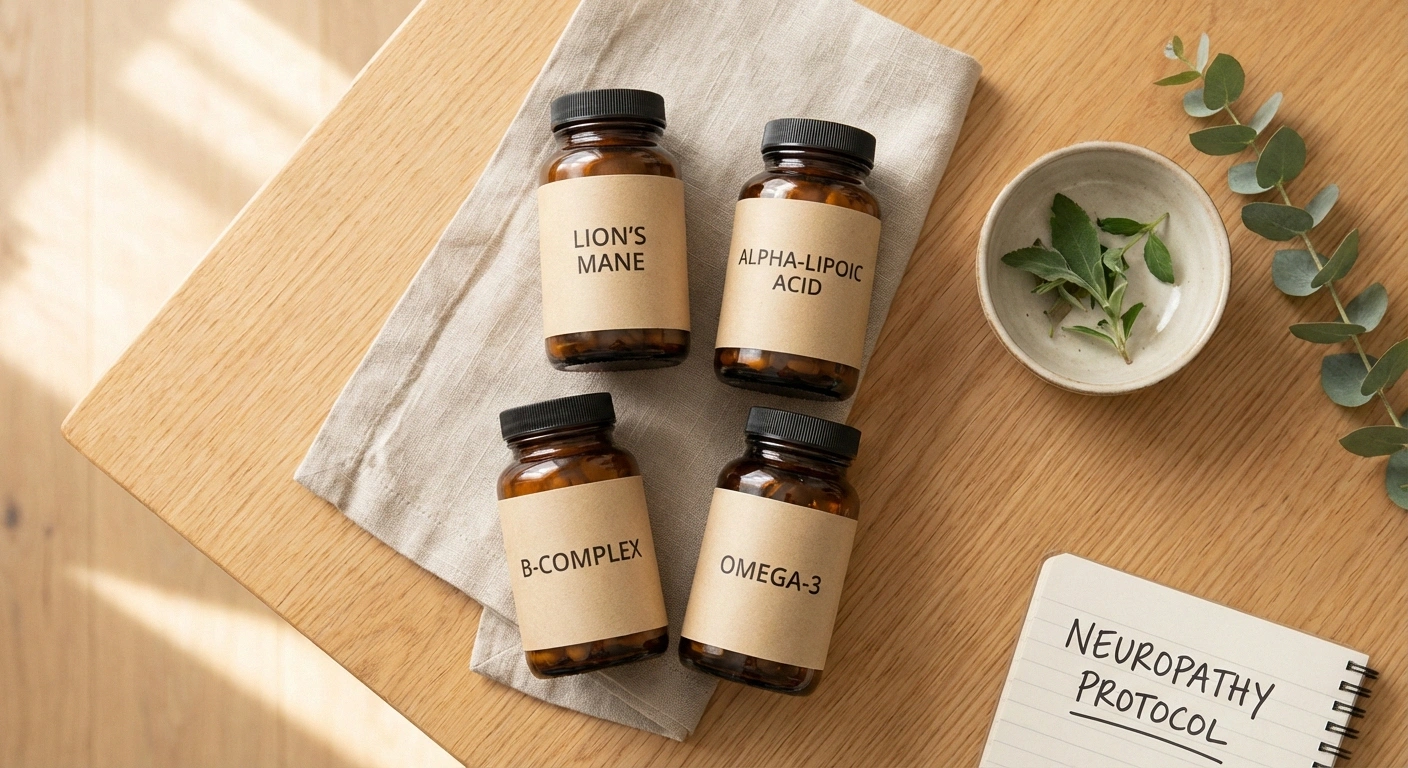
- Alpha-lipoic acid — powerful antioxidant, reduces oxidative nerve damage, most studied supplement for diabetic neuropathy. Works through a different mechanism (direct antioxidant action) rather than NGF stimulation.
- Acetyl-L-carnitine — supports nerve cell energy production, has shown nerve repair properties in some studies. Closest to lion's mane in its nerve-regeneration focus.
- B vitamins (especially B1, B6, B12) — essential for nerve function and myelin maintenance. Deficiency is a direct cause of neuropathy. More “foundational” than lion's mane.
- Omega-3 fatty acids — reduce neuroinflammation, support myelin structure. Complementary mechanism to lion's mane.
Many practitioners and researchers suggest thinking of these as complementary rather than competing. See our guide to supplements for nerve repair for a broader overview of how to build a evidence-informed supplement protocol.
Choosing a Quality Lion's Mane Product
This is where many people go wrong, and it matters significantly. The lion's mane supplement market has a quality problem: many products are primarily mycelium grown on grain substrate, then powdered without extraction. These products contain significant starch filler and low concentrations of the active hericenones and erinacines. You may be buying expensive oatmeal with a mushroom label.
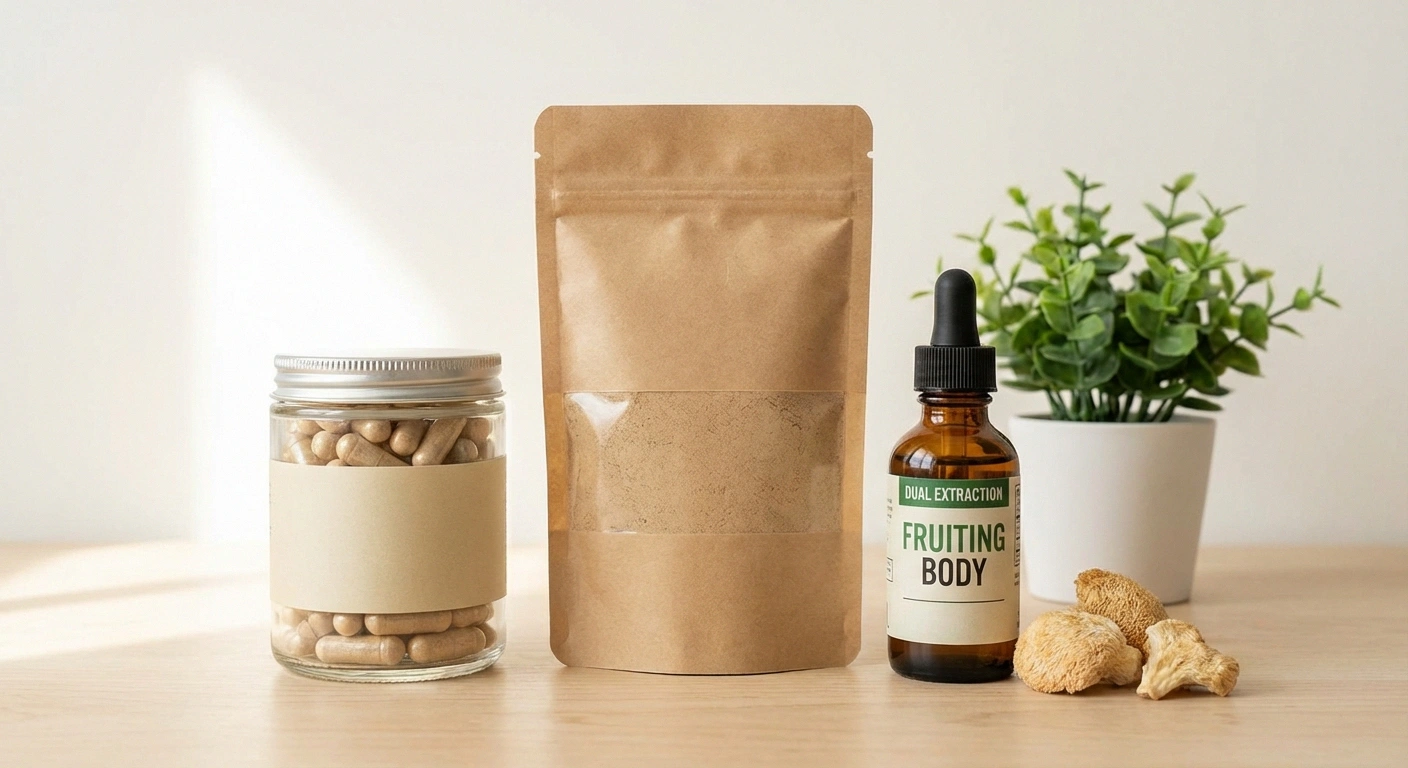
What to look for on a label:
- Fruiting body extract — not just “mycelium biomass.” Fruiting body has higher hericenone content. If only mycelium, look for erinacine standardization.
- Dual extraction — hot water extraction captures beta-glucans; alcohol extraction captures hericenones. Products using only one method will miss some actives.
- Standardized actives — look for products that list a percentage of beta-glucans (at least 25–30%) or specific polysaccharide content. This indicates actual extraction, not just powdering.
- Third-party testing — independent verification of purity and potency.
- Country of origin — Chinese-grown mushrooms are common and can be high quality, but look for brands that test for heavy metals and contaminants.
Reputable brands in the functional mushroom space typically include more information on their extraction process than commodity brands. If a product just says “lion's mane powder 500mg” with no extraction ratio or standardization information, it's probably not a high-quality extract.
Dosage: What Studies Have Used
The most commonly studied dose in human trials has been 250–1000mg taken two to three times daily (500mg to 3g total daily), typically as a standardized extract. The Biomedical Research cognitive trial used 250mg three times daily — a relatively modest dose by supplement standards. Some practitioners in integrative medicine suggest higher doses of 1–3g per day for neuropathy support, based on the animal literature.
Research Says
In peripheral nerve crush injury animal models, rats treated with lion's mane extract showed faster functional recovery, improved gait patterns, and accelerated axonal regrowth compared to controls. Erinacine-rich extracts also reduced oxidative stress markers and improved pain thresholds in diabetic nerve damage models. Human cognitive trials show significant benefits at 250–750mg/day over 16 weeks.

Important practical points:
- Consistency matters more than dose — lion's mane works through gradual NGF stimulation, not immediate symptom relief. Expect to take it for at least three months before evaluating whether it's helping.
- With food — most people tolerate it best taken with meals, which can also improve absorption of the fat-soluble components.
- Morning preferred — some people find it mildly stimulating (due to the cognitive effects), so morning or early afternoon is often better than evening.
Safety and Who Should Be Careful
Lion's mane has a good safety record in studies and traditional use. Side effects are uncommon but can include:
- Mild gastrointestinal upset at higher doses (usually resolves if dose is reduced and reintroduced gradually)
- Rare allergic reactions — particularly in people with mushroom allergies
- Possible mild dizziness in some people
Groups who should be particularly careful:
- People on blood thinners (warfarin, aspirin, etc.) — lion's mane may have mild anticoagulant properties. Consult your doctor before starting.
- People scheduled for surgery — standard recommendation is to discontinue two weeks before any surgical procedure.
- People with mushroom allergies — obvious but worth stating.
- Those who are pregnant or nursing — insufficient safety data; best to avoid.
- Anyone on immunosuppressant medications — lion's mane has immune-modulating effects; potential interactions are not well characterized.
As with any supplement, talk to your doctor or neurologist before starting — especially if you're managing small fiber neuropathy or neuropathy associated with an autoimmune or systemic condition where immune effects could matter.
What Realistic Expectations Look Like
I want to be careful here, because hope is valuable but unrealistic expectations lead to disappointment — and sometimes to abandoning something that might have been helping if given enough time.
Suggested Starting Protocol
Weeks 1–2: 500mg standardized extract once daily with food (morning)
Week 3+: Increase to 500mg twice daily (morning + midday) if well tolerated
Months 3–6: Evaluate — benefits from NGF stimulation develop gradually over this timeline
Note: Run a symptom journal — slow improvements are easy to miss without a written baseline
Lion's mane is not a pain medication. It doesn't block pain signals the way gabapentin or pregabalin do. If you're starting it hoping for rapid relief of burning or electric shock sensations, you're likely to be disappointed, and I'd rather set the right expectations upfront.
What it might reasonably do — based on mechanism and anecdotal reports from the neuropathy community:
- Gradually reduce burning and tingling over three to six months of consistent use
- Support very slow nerve fiber recovery in conjunction with addressing the underlying cause of neuropathy
- Potentially slow the rate of nerve damage progression (through anti-inflammatory and antioxidant effects)
- Improve cognitive clarity and reduce brain fog that often accompanies chronic pain conditions
The people who tend to report the most benefit are those who combine it with addressing their underlying cause (blood sugar control, stopping alcohol, treating vitamin deficiencies), using complementary supplements for nerve inflammation, and taking it consistently for at least four to six months.
Frequently Asked Questions
Can lion's mane actually repair damaged nerves?
Animal studies show it supports nerve fiber regrowth through NGF stimulation. Human trials specifically for peripheral neuropathy haven't been completed yet, but the biological mechanism is real and well-described. It's more accurate to say it may support the conditions for nerve repair rather than guarantee it. Results in humans are likely to be more modest than what's seen in accelerated animal models.
How long before I might notice any difference?
Most people who report benefit describe noticing changes around three to six months of consistent use. NGF stimulation works through gradual biological processes, not rapid symptom relief. Give it at least three months before deciding it isn't helping.
Set Realistic Expectations
Lion's mane is not a pain medication and won't provide rapid symptom relief. It works through gradual NGF stimulation over months. If you're starting it hoping for fast relief of burning or electric sensations, you're likely to be disappointed. Give it at least 3 months of consistent use before evaluating its effect. Keep a symptom journal — improvements this slow are hard to notice without a baseline.
Is fruiting body or mycelium better for neuropathy?
Fruiting body extracts are generally considered better for hericenone content. Mycelium extracts (especially erinacine-enriched varieties from specific strains) may offer better central nervous system effects because erinacines cross the blood-brain barrier more effectively. A high-quality dual-extraction product combining both is often the practical recommendation.
Can I combine lion's mane with alpha-lipoic acid or other neuropathy supplements?
Yes — there's no known interaction between lion's mane and alpha-lipoic acid, B vitamins, acetyl-L-carnitine, or omega-3s. Many people use these together as part of a comprehensive nerve support protocol. Check with your doctor about any medications before adding supplements, particularly if you're on blood thinners or immunosuppressants.
Is lion's mane safe for diabetic neuropathy specifically?
It appears to be safe for people with diabetes, and animal models of diabetic neuropathy have shown positive results with lion's mane. However, if you have kidney disease as a diabetic complication, check with your healthcare provider about any new supplements. Blood sugar monitoring is generally not affected by lion's mane, but if you're on diabetes medications, let your doctor know you're adding a supplement.
What dose should I start with?
A common starting protocol is 500mg of a standardized extract once daily with food for the first two weeks, then increasing to 500mg twice daily. Some people eventually use 1000mg twice daily. Start lower and increase gradually to minimize any GI adjustment period.
Can lion's mane help with the brain fog that comes with chronic neuropathy pain?
The cognitive benefits of lion's mane are actually among the more well-documented effects in human trials. Chronic pain conditions, including neuropathy, often impair memory and cognitive clarity. Multiple studies have found lion's mane improves cognitive function and processing speed — which may be a meaningful secondary benefit even if the direct nerve-repair effects in humans are still being studied.
Are there any signs that lion's mane is working?
People who find lion's mane helpful often describe a gradual reduction in the intensity of burning or tingling over months, occasionally a slight improvement in sensation in very numb areas, and sometimes improved sleep due to reduced nighttime symptoms. If cognitive fog is part of your picture, that often shows earlier — sometimes within four to eight weeks. Keep a simple symptom journal to track changes objectively, since improvements this gradual can be hard to notice without a baseline.
About the Author