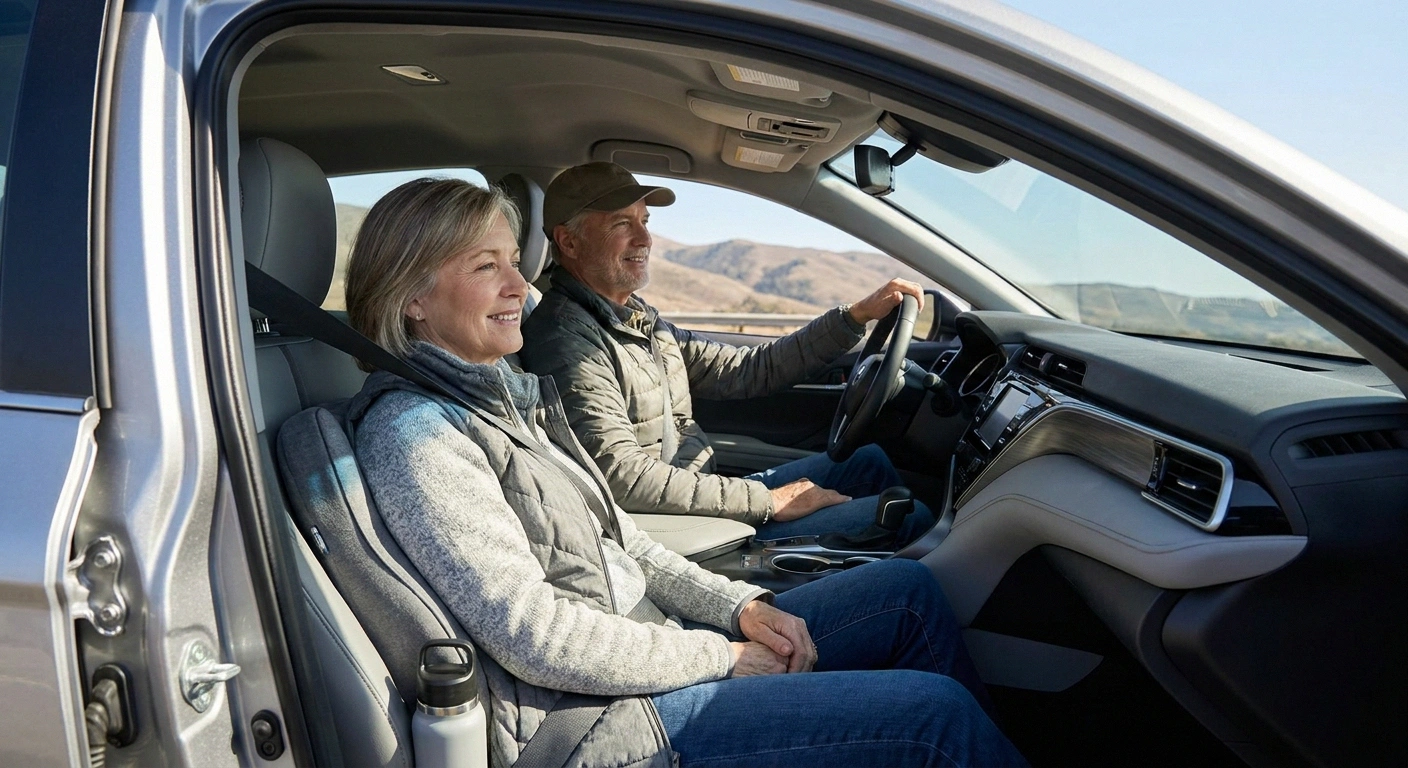
My grandkids live four hours away, and for a while I genuinely thought neuropathy had taken that drive away from me. The first long trip after my symptoms got bad, I arrived with feet on fire, legs swollen, and a flare that cost me the next two days of the visit I'd driven all that way for. I almost decided long drives just weren't for me anymore. They are. I just had to stop treating a road trip like the drive was the only thing happening and start treating it like an athletic event I needed to pace.
This guide is everything I've learned since — the seat, the breaks, the shoes, the small kit on the passenger seat — whether you're the one driving or the one riding along. None of it is complicated. All of it is the difference between arriving wrung out and arriving able to actually enjoy where you went.
Why a Long Drive Is Hard on Neuropathy
It helps to name exactly what a car does to neuropathic legs and feet, because every fix below targets one of these. You're holding one position for a long time, which lets blood pool and stiffness set in. Your legs are dependent — hanging down — for hours, which encourages swelling that presses on already-irritated nerves. There's constant low-level vibration through the floor and pedals. The cabin runs hot or cold, and temperature extremes reliably crank up nerve symptoms. And if you're driving, one foot is doing fine, repetitive work on a pedal it can't fully feel.
Treat a road trip like an event you pace, not just a drive
Stillness, dependent legs, vibration, cabin temperature, and pedal work each have a fix. You don't need all of them — just the few that match your body — to arrive able to enjoy where you went.
Stack those together over four or six hours and you get the wrung-out, on-fire arrival I described. The good news hiding in that list: every single item has a countermeasure, and you don't need all of them — just the few that match your body.
Set Up the Seat Before You Pull Out
The five minutes you spend on seat position before you leave pays off for the entire trip. Set the seat so you can reach the pedals comfortably without stretching or straining — your heel resting on the floor, the ball of your foot on the pedal, and your hips, knees, and ankles in a relaxed, controlled position rather than reaching for anything. A seat that forces you to point your toes or lock your knee will quietly punish you an hour later.
Add support where the car skimps. A gel or memory-foam cushion takes the edge off vibration and pressure; a small lumbar roll keeps you from sinking into a slumped position that strains everything downstream. Here's a trick I love if your car has power seats: every hour or so, change the seat position very slightly — a touch forward or back. It sounds trivial. It moves the loaded, pressured point so no single spot bears the brunt for the whole drive. Comfortable, supportive footwear matters here too; our guide to the best shoes for neuropathy covers what to look for, and for driving you want enough sole to protect your foot but not so thick you can't sense the pedal.
The 45-Minute Rule: Move Before You Need To
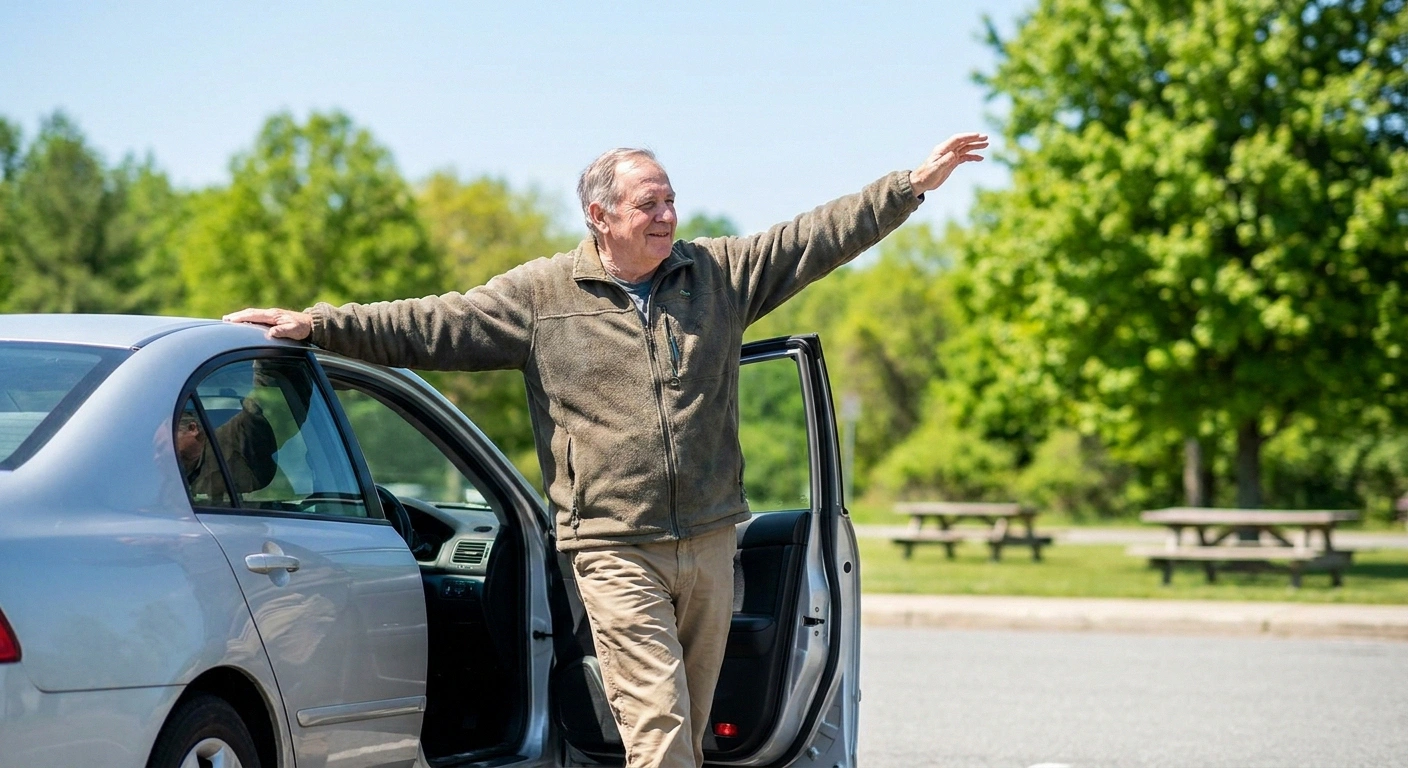
This is the single highest-value habit in the whole article, so I'll be emphatic: stop and move before your body tells you to, not after. Plan a real break every 45 minutes or so — and not a stay-in-the-seat break. Get fully out, stand up, and walk for a few minutes to flush circulation back through your legs and feet. Even ankle circles and a few calf raises at a rest area make a real difference; the gentle movement principle in our piece on whether walking helps neuropathy is exactly what you're doing in miniature at every stop.
Every 45 Minutes — Make It a Real Break
Get fully out of the car — not a stay-in-the-seat pause.
Stand and walk a few minutes to flush circulation through your feet.
Ankle circles and a few calf raises; briefly elevate your legs.
Go by the clock, not by sensation — stop before the burning is loud.
The reason for “before you need to” is that with neuropathy, by the time the burning is loud, you're already behind and a flare is brewing — and you can't always feel the early warning the way someone else would. So you go by the clock, not by sensation. Build the extra time into the trip honestly. A drive with four real movement breaks takes longer on paper and is dramatically better on arrival. Watch your footing at unfamiliar rest stops, too — the strategies in our guide to balance and fall prevention apply to stepping down from a high vehicle onto strange ground.
What to Wear From the Waist Down
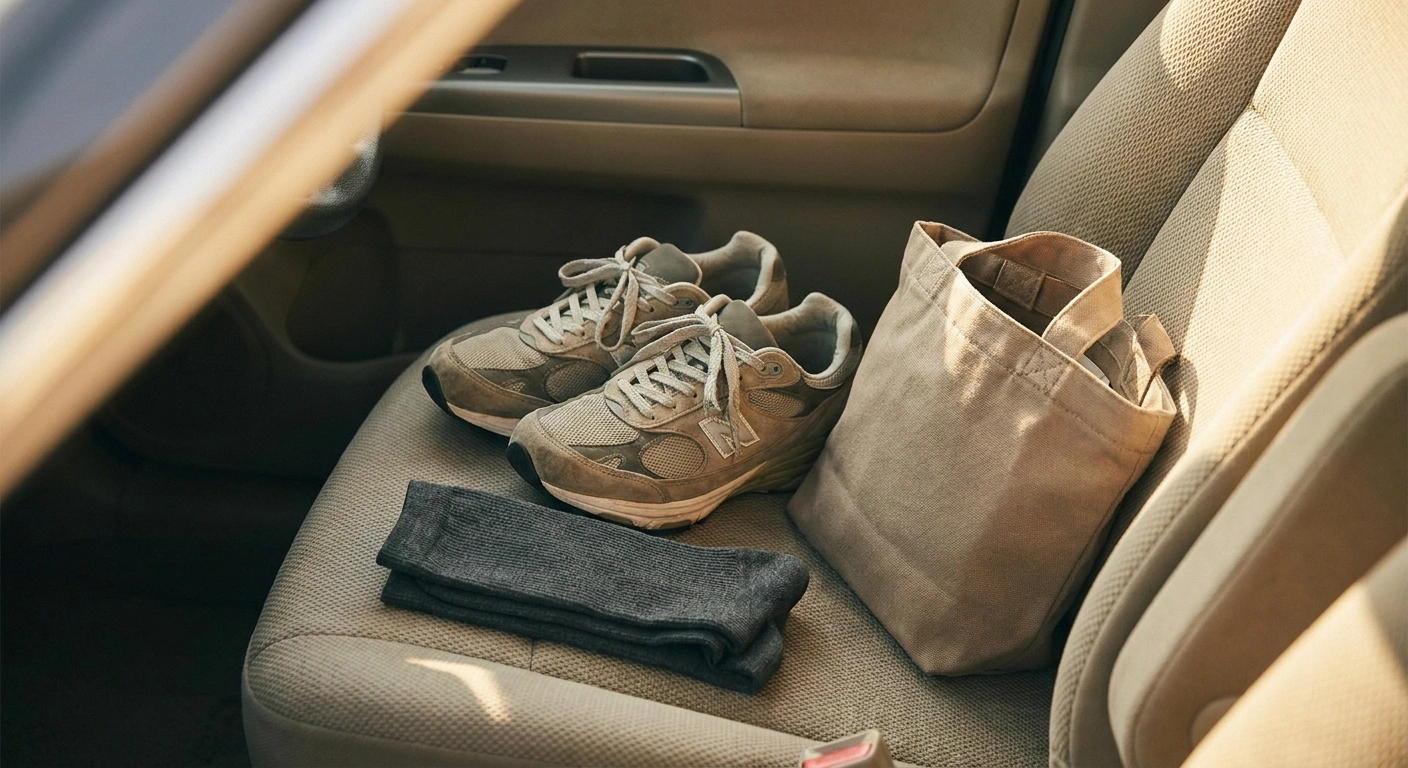
Dress for the legs you'll have at hour three, not hour one. Loose, non-binding clothing around the waist, knees, and ankles keeps anything from cutting into tissue that's going to swell. For longer sits — especially as a passenger — graduated compression socks genuinely help by fighting the blood pooling and swelling that aggravates nerves; our overview of compression socks for neuropathy explains how to choose and use them, and a long drive is one of the clearest cases for them.
Loose, non-binding clothing and graduated compression socks fight the pooling and swelling that aggravate nerves on a long sit. A roomy backup pair of shoes for the second half of the trip — when your “morning” shoes stop being friends — is a small thing that changes the whole arrival.
Footwear deserves its own thought. If you're driving, you want a shoe supportive and roomy in the toe box but with enough pedal feel — skip flip-flops and anything that can slip off onto a pedal. If you're a passenger, bring a comfortable pair you can slip off entirely so your feet can move freely, plus room for them to swell. I keep a soft backup pair in the car specifically for the second half of any long trip, when my “morning” shoes stop being friends.
Hydration, Swelling, and the Cabin Itself
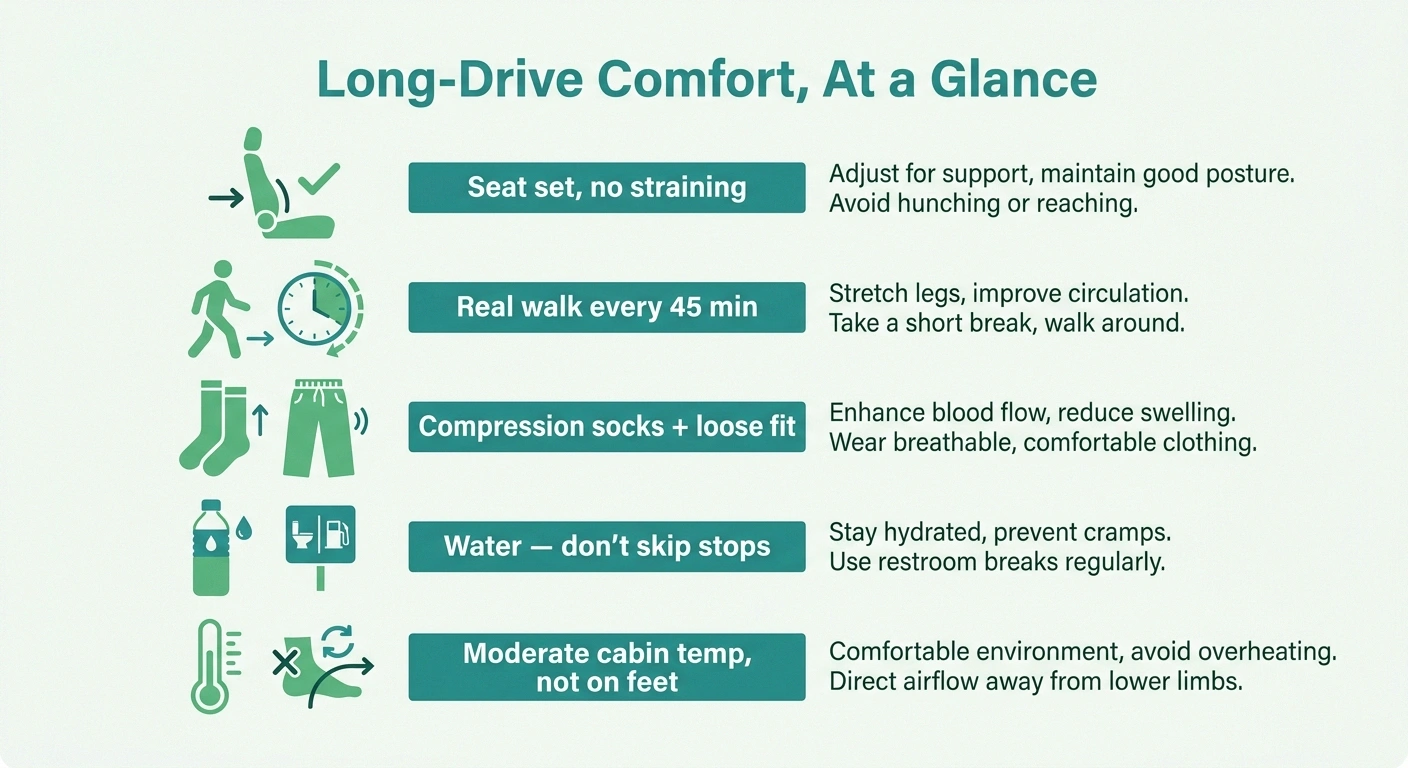
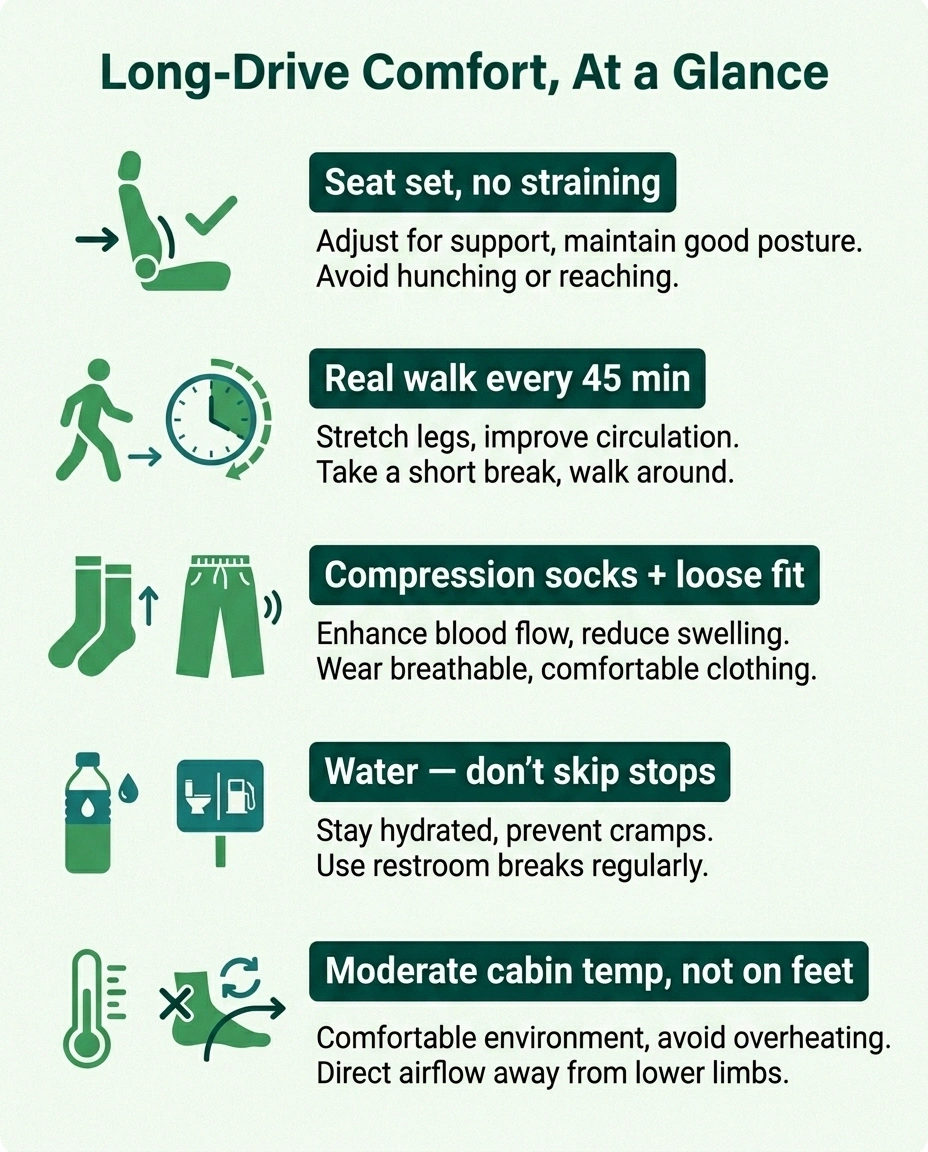
Drink water on the trip — real water, regularly. People with neuropathy often under-drink on long drives specifically to avoid bathroom stops, and it backfires: dehydration makes cramps and fatigue worse, and you needed those stops anyway as your movement breaks. Reframe the bathroom stop as the built-in excuse to do your 45-minute walk. They're the same stop.
Don't Under-Drink to Skip Stops
Cutting water to avoid bathroom breaks backfires — dehydration worsens cramps and fatigue, and you needed those stops as movement breaks anyway. The bathroom stop and the 45-minute walk are the same stop. And keep the AC and heater off your feet — temperature extremes reliably spike nerve symptoms.
Mind the cabin climate, because temperature extremes are a reliable symptom trigger. Don't aim the air conditioning straight down at your feet, and don't let the floor heater bake them either; a moderate, steady cabin temperature is kinder to nerves than blasts of hot or cold. When you stop, take thirty seconds to elevate your legs if you can — even propping them on a curb or the open car doorframe helps drain the pooled fluid before you load back in.
Driver or Passenger — Different Jobs
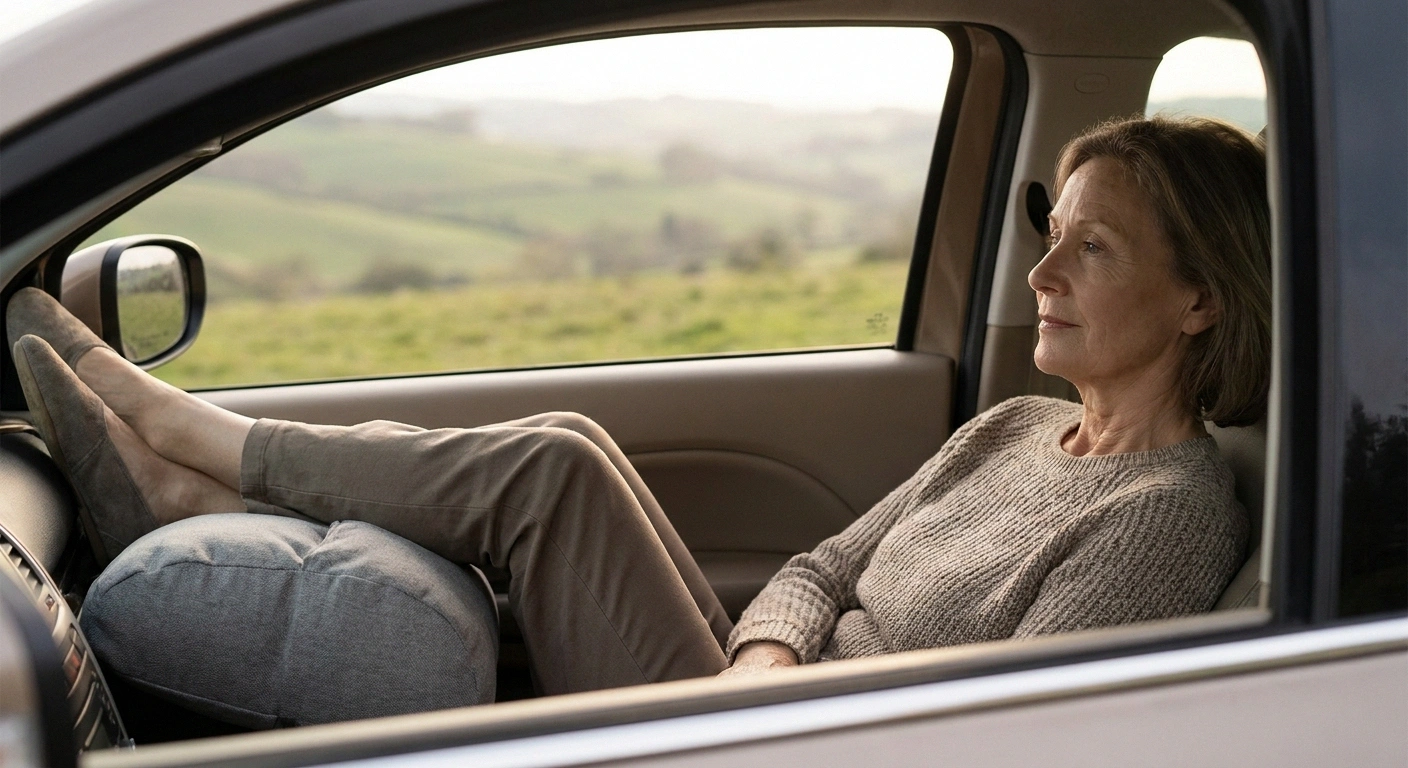
These two roles need different plans, and people often miss the passenger half. As the driver, your job is unrelenting in a quiet way: a still foot doing fine pedal work it can't fully feel, plus the focus the road demands. If your pedal sensation is genuinely unreliable, that's not just a comfort question — it's a safety one, and it deserves an honest read of our guide to driving safely with neuropathy and a conversation with your doctor about whether hand controls or sharing the driving is the smarter call. There's no shame in trading off the wheel every couple of hours.
It's a trap: as a passenger you can get so comfortable you barely move for hours — worse for pooling and stiffness than driving. Take the exact same walking breaks the driver does, even when you don't feel you “need” them.
As the passenger, the trap is the opposite: you can get so comfortable you barely move for hours, which is actually worse for pooling and stiffness than driving is. Recline slightly, use a footrest or cushion to change your leg angle often, and — this is the key — take the exact same walking breaks the driver does, even though you don't “need” them in the moment. Our dedicated guide to long car rides as a passenger goes deeper on staying comfortable in that seat.
Pace the Whole Trip, Not Just the Drive
Here's the mindset shift that changed everything for me, and it's worth slowing down on. The drive is one segment of a multi-segment day. If you spend every reserve you have getting there “in good time,” you have nothing left for the actual reason you went — the visit, the trip, the people. So plan the whole arc backward from arriving with something in the tank.
Concretely: split a very long drive across more hours, or even two days with an overnight, rather than powering through. Time your medication around the drive, not the other way around. Plan to arrive earlier than the event so you have a buffer to rest and recover before anything is asked of you. And give yourself blanket permission to make “bad time” — the schedule is not the boss of your nervous system. Pushing through is exactly how a manageable drive becomes a multi-day flare; knowing your own triggers from our guide to neuropathy flare-ups before a big travel day is well worth it, and the broader pacing ideas in our neuropathy travel tips apply to the trip on either side of the drive.
Build a Simple Road-Trip Comfort Kit
Almost everything above gets easier if it's already packed in one place, on the seat beside you, not buried in the trunk. My kit is nothing fancy: a good seat cushion and a small lumbar roll; a soft backup pair of shoes; compression socks; a refillable water bottle; a small soft cooler with that day's medication and a snack; a light layer for the over-air-conditioned stretches; and my phone with a recurring 45-minute reminder set so the break isn't a decision I have to keep re-making while tired.
Preparation over willpower
Keep the cushion, socks, water, meds, layer, and a 45-minute phone reminder in one road-trip box on the seat. You're not less capable of seeing the people and places you love — you just get there on your terms now, and that's a perfectly good way to arrive.
Assemble it once and leave it as your “road-trip box” so the next long drive starts with everything ready instead of everything forgotten. That single habit — preparation over willpower — is the quiet theme of this whole guide. You are not less capable of seeing the people and places you love. You just get there on your terms now, and that's a perfectly good way to arrive.
Frequently Asked Questions
How often should I stop on a long drive with neuropathy?
A good rule is a real break roughly every 45 minutes, and to stop before your symptoms get loud rather than after. The break should not be a stay-in-the-seat pause: get fully out of the car, stand, and walk for a few minutes to restore circulation through your legs and feet, plus a few ankle circles or calf raises. Going by the clock rather than by how your feet feel matters, because neuropathy can dull the early warning that would otherwise tell you to move.
How should I set up the car seat to reduce foot and leg pain?
Position the seat so you can reach the pedals without stretching, with your heel resting on the floor and your hips, knees, and ankles relaxed rather than straining. Add a gel or memory-foam cushion to reduce vibration and pressure and a small lumbar roll to prevent slumping. If your car has power seats, change the position very slightly every hour or so to shift the pressured point. Wear supportive footwear with enough pedal feel and a roomy toe box.
Should I wear compression socks for a long car trip?
For many people, yes, especially as a passenger on a long sit. Graduated compression socks help counter the blood pooling and swelling that hours of dependent, still legs cause, and that swelling is part of what aggravates already-irritated nerves. Pair them with loose, non-binding clothing around the waist, knees, and ankles, and elevate your legs briefly at stops. If you have circulation conditions, confirm compression is appropriate for you with your doctor first.
Is it safe to drive long distances with neuropathy in my feet?
It depends on whether you can reliably feel and control the pedals. Comfort strategies help with endurance, but if your pedal sensation is unreliable, that is a safety question, not just a comfort one. It deserves an honest conversation with your doctor about options such as hand controls or sharing the driving, and a careful read of dedicated guidance on driving safely with neuropathy. Trading off the wheel every couple of hours is a reasonable and common adjustment.
Why do my feet swell and burn more on road trips?
Several things stack up: holding one position for hours, legs hanging down so fluid pools, constant vibration, and cabin temperature extremes that trigger nerve symptoms. Together they increase swelling that presses on irritated nerves and intensify burning and tingling. The countermeasures are frequent movement breaks, compression and loose clothing, brief leg elevation at stops, steady moderate cabin temperature, and good hydration so cramps and fatigue do not compound the problem.
What should I pack to stay comfortable on a long drive?
Keep a simple road-trip comfort kit on the seat, not in the trunk: a seat cushion and small lumbar roll, a soft backup pair of shoes, compression socks, a refillable water bottle, a small cooler with that day's medication and a snack, a light layer for over-cooled stretches, and a phone reminder set for 45-minute movement breaks. Assembling it once and reusing it makes preparation, rather than willpower, the thing carrying you through the trip.
About the Author


