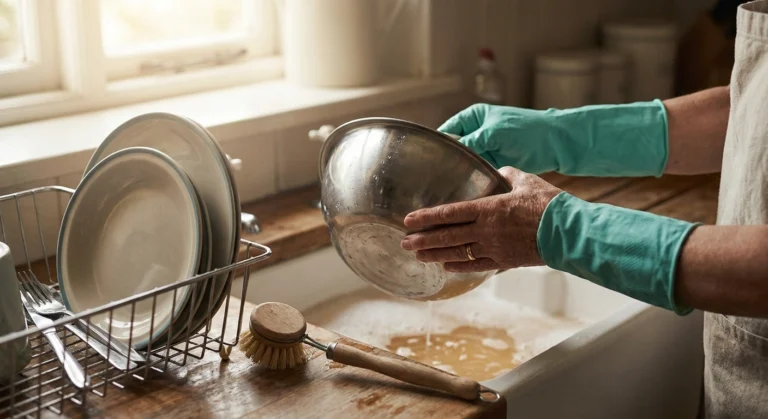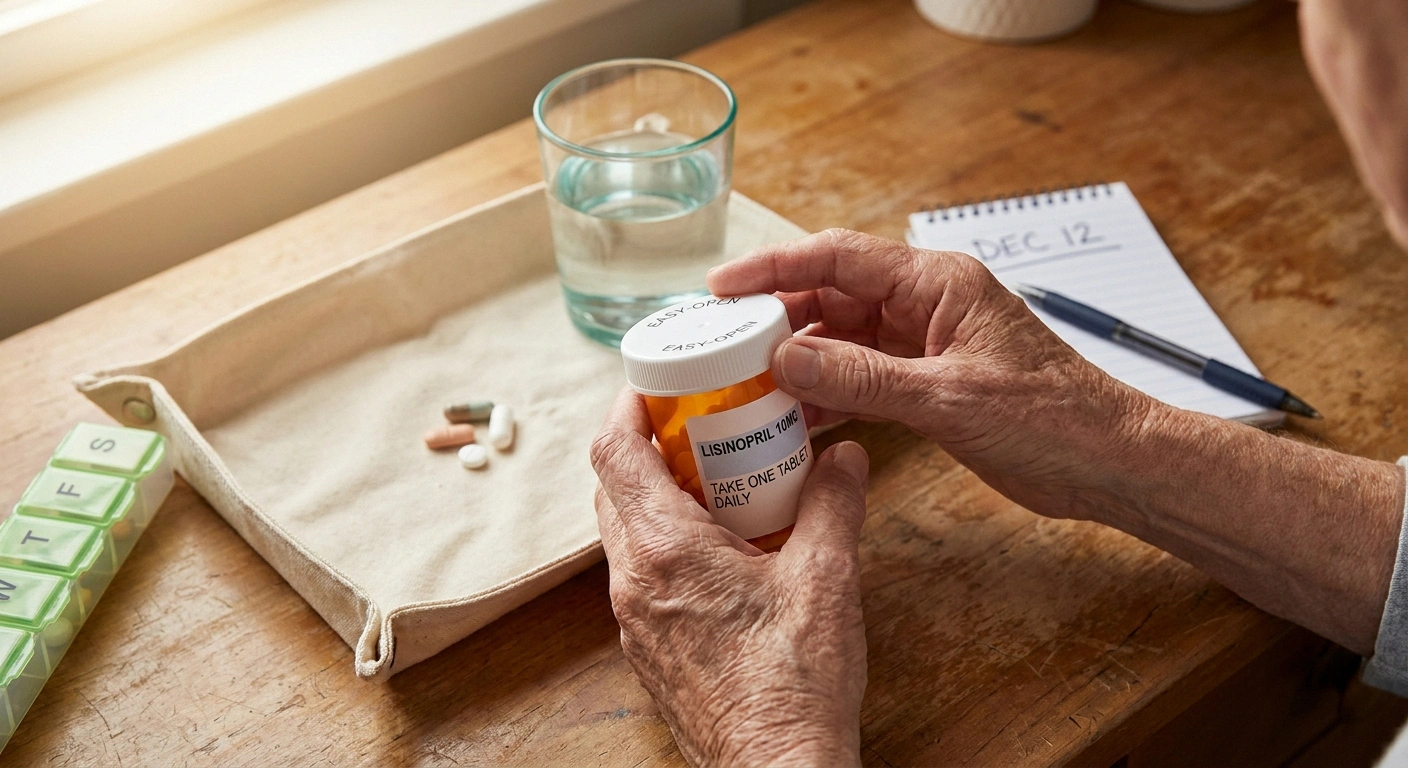
If you've ever stood at the kitchen counter for ten minutes trying to open a prescription bottle, you know this is not a small problem. It's morning. You need your medications. Your fingers are numb, your grip is weaker than it used to be, and the child-resistant cap was designed by someone who clearly never had neuropathy. By the time you finally pop the lid off — usually with both hands, a kitchen towel, and a little bit of language — you're frustrated, you've sometimes scattered pills across the counter, and you've started the day already behind.
This is one of the most common, most under-discussed quality-of-life problems in neuropathy. Not the pain. Not the burning. The simple, daily, “I can't get my medicine out of the bottle.” And it doesn't just frustrate people — it causes real harm. Missed doses. Wrong doses. Pills sitting in too-loose containers that grandchildren can reach. Pharmacies dispensing into the wrong kind of cap by default because no one ever asked.
I've put together everything I've learned from my own experience and from talking with hundreds of people in the support community. Most of these fixes are cheap or free. A few involve a phone call. None of them require you to suffer through one more morning of fighting a pill bottle. Let's go through it.
Why Pill Bottles Are So Hard With Numb or Weak Hands
Before the solutions, it helps to understand exactly what's breaking down. When neuropathy affects the hands, three things often happen at once.
Fighting pill bottles every morning is solvable. The single biggest fix is asking your pharmacy for non-child-resistant (“easy-open”) caps — free, federally allowed, no doctor's note needed. Pair that with a quality weekly organizer and you've eliminated 90% of the daily frustration before breakfast.
First, grip strength drops. The small muscles in your hand and forearm lose strength as nerve signals weaken. You may still be able to make a fist, but the squeezing pressure that pill bottle caps require — especially the “push down and turn” child-resistant kind — is exactly the kind of strength that fades first.
Second, fine motor control gets shaky. The precise coordination needed to line up the cap, push the right amount, twist the right amount, and not let it slip — all of that depends on nerve signals that have lost some of their precision.
Third, sensory feedback drops out. You can't feel the cap as clearly. You can't tell whether you're pushing hard enough or barely at all. You can't sense when the cap has clicked past the lock and is about to twist. The brain is trying to do a precision task with a blurry signal.
None of this means you've lost your independence. It means the design of the bottle is wrong for your hands. The fix isn't to try harder. It's to change the equipment.
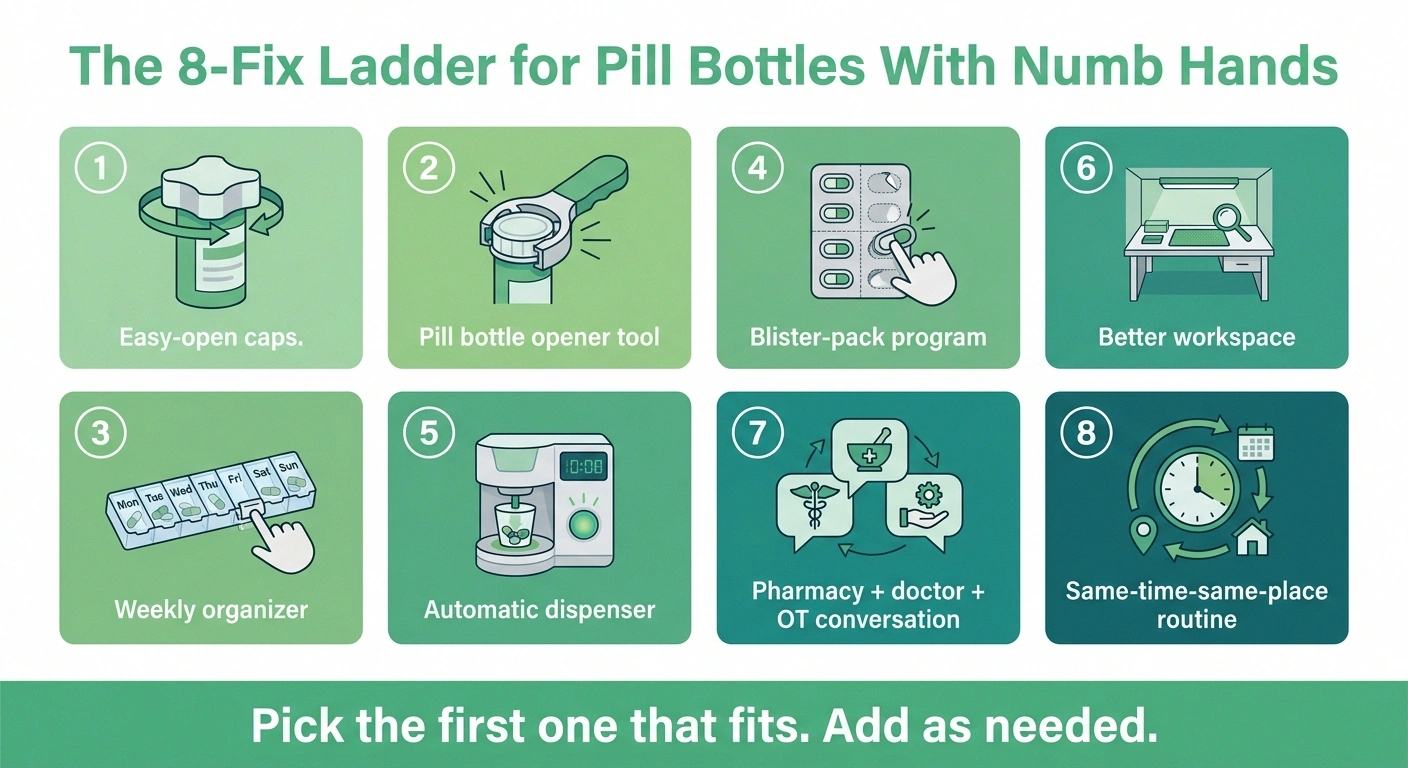
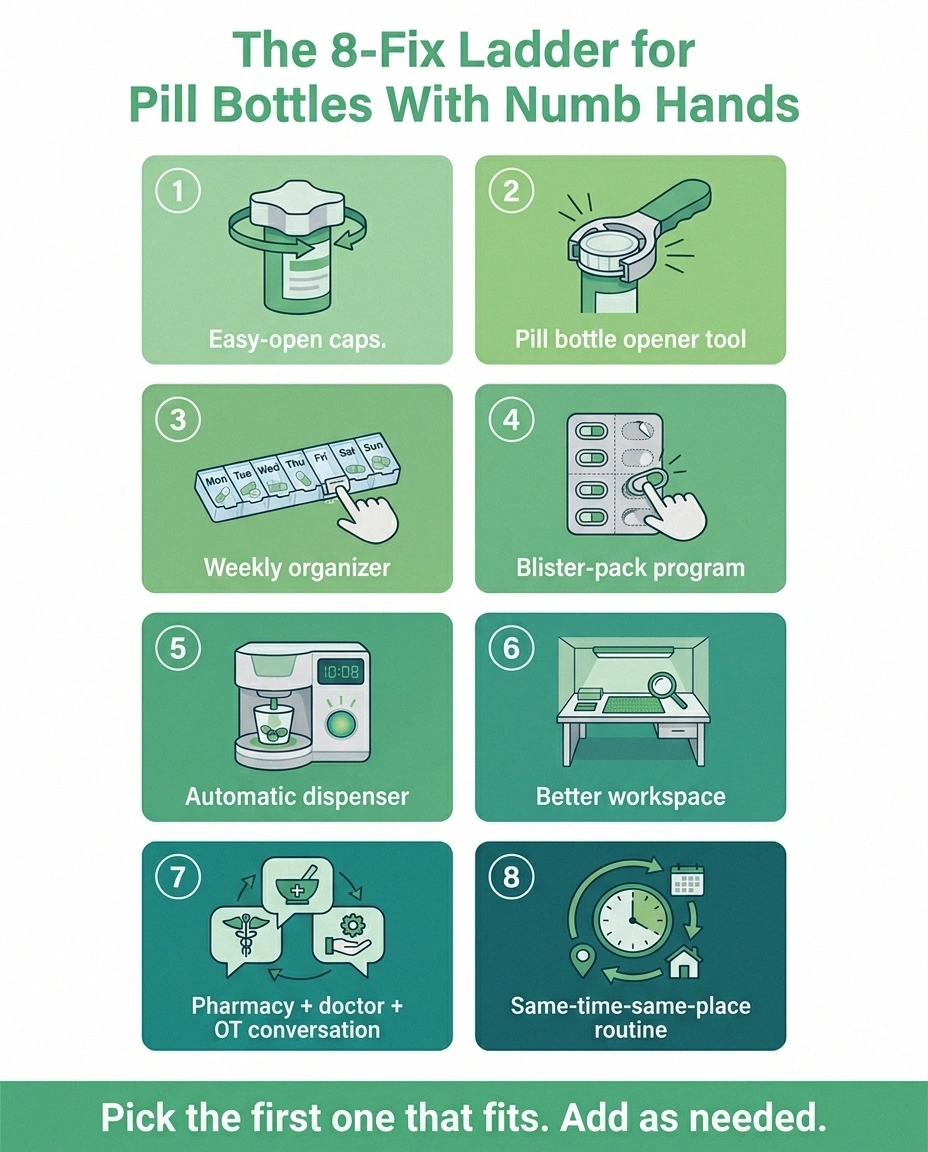
Fix #1: Ask Your Pharmacy for Easy-Open Caps
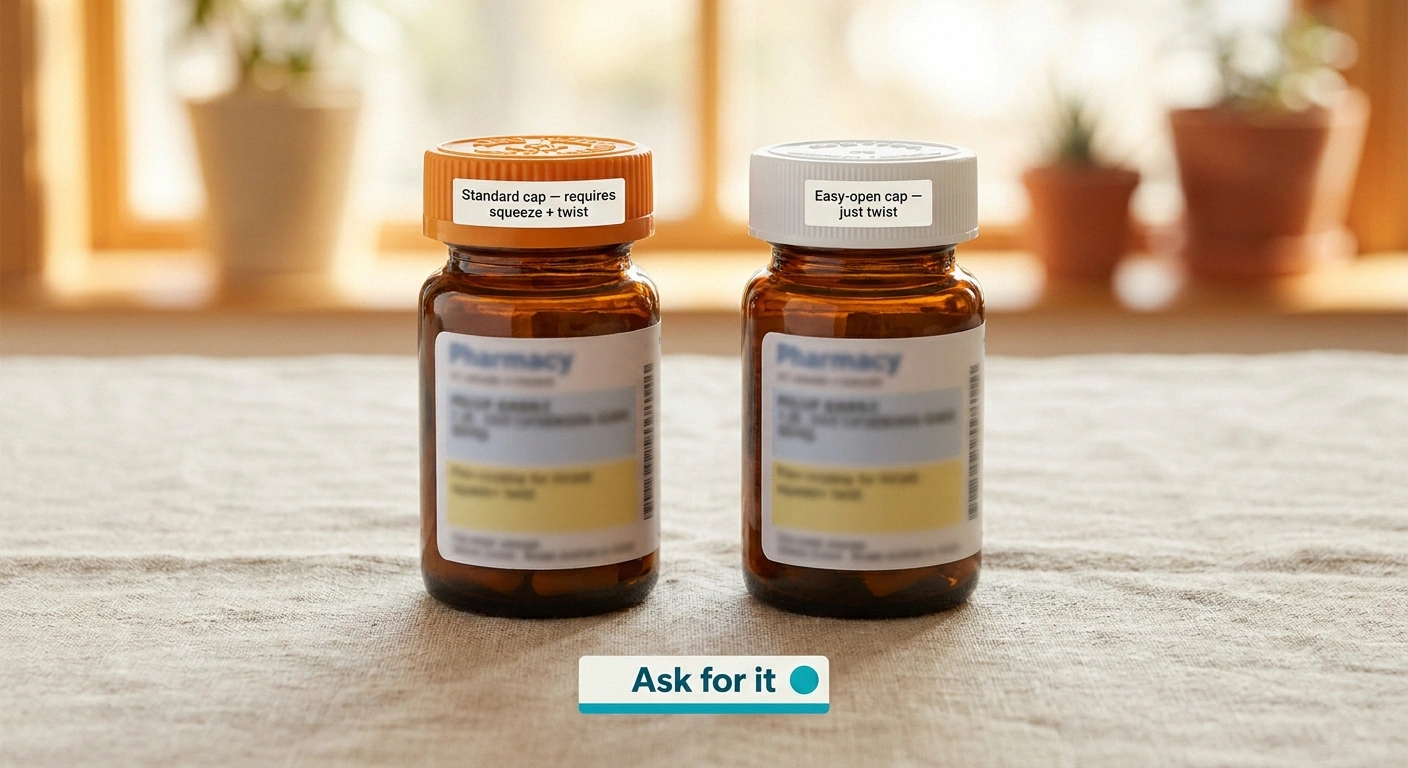
This is the single biggest, easiest fix, and most people don't know about it. Federal law in the United States allows you to request non-child-resistant (“easy-open”) caps on your prescription medications. The pharmacy will switch you over with no extra paperwork, no doctor's note, and no extra cost.
You can ask in two ways. You can call your pharmacy and request that your account be flagged so all your prescriptions automatically come with easy-open caps. Or you can ask each time you pick up — at the counter, just say “easy-open cap, please.” Most pharmacy staff handle this all day. They will not push back.
The easy-open cap is a simple flat lid that twists off without any squeezing or pushing. With practice, even very numb fingers can open one. If you live alone, or if there are no young children or curious pets in the home, switching is one of the highest-payoff changes you can make for your morning routine.
If grandchildren visit sometimes and you're concerned about safety during those visits, the simple solution is to store your medications in a lockable medication box or cabinet between visits, rather than fighting child-resistant caps every day for an “in case” that's rare. Locked storage is far more reliable than a cap any motivated three-year-old can defeat.
Fix #2: Use a Pill Bottle Opener Tool
If easy-open caps aren't an option for some bottles (over-the-counter products, for example), a $5–$15 pill bottle opener does most of the work for you. There are a few useful types.
The first is a leverage gripper — a small plastic device that wraps around the cap and uses lever arms to provide the squeezing pressure for you. You push down on the levers and twist. Your hand barely has to grip the cap at all. Brand names include “Ezy Dose Easy Pill Bottle Opener” and similar.
The second is a rubber bottle-cap grip — a thick silicone or rubber disc that goes between your palm and the cap to multiply your grip. It's the same concept as the rubber sheet your grandmother used to open jam jars. For mild neuropathy, this alone can solve the problem.
The third is a combination tool that handles multiple bottle sizes and sometimes includes a built-in pill cutter and pill splitter. These multi-tools are useful if you're managing a complex medication routine.
Look for tools with a non-slip grip and large handles. Tiny handles work against you when grip strength is reduced.
Fix #3: Repackage Into Easier Containers
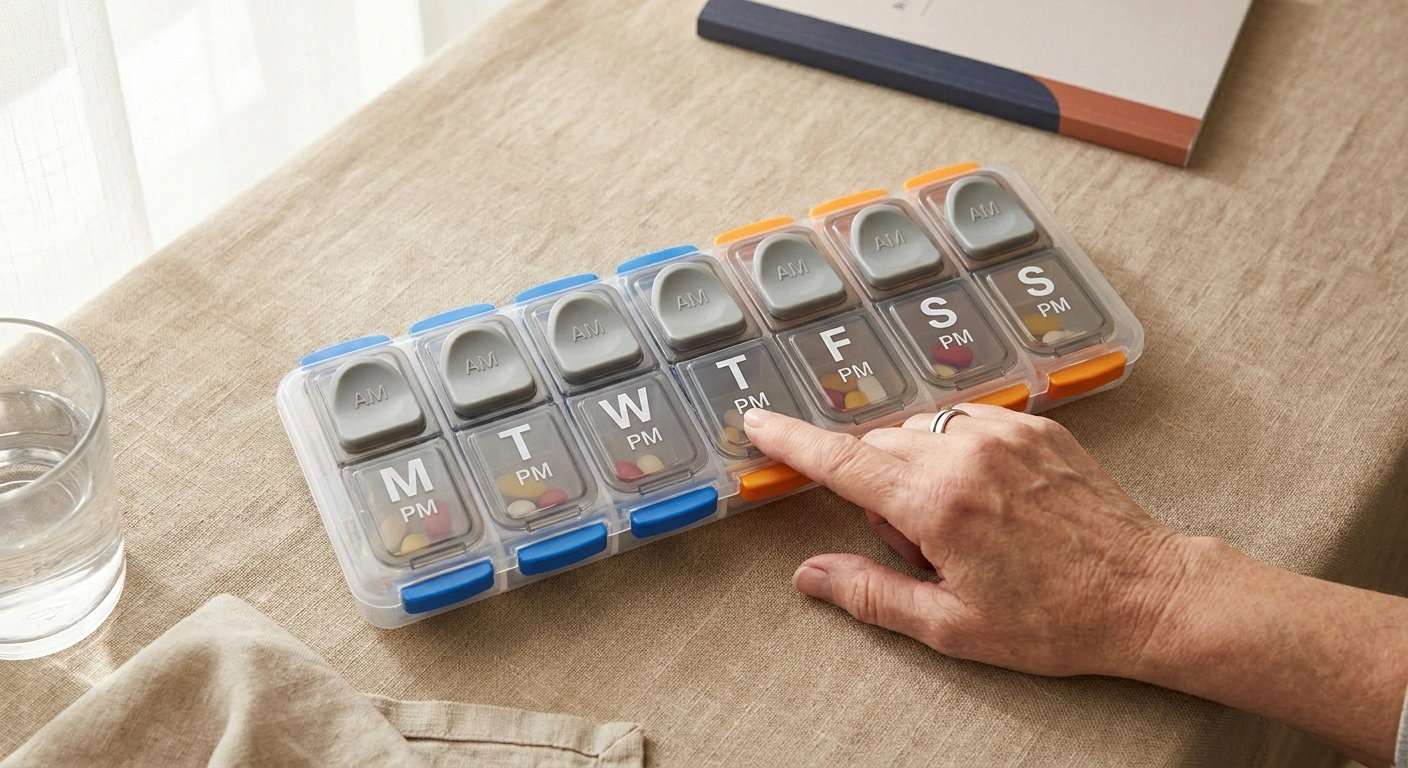
This is one of the most powerful changes and one of the least talked about. You do not have to keep your medications in the original prescription bottles between doses. As long as you keep the original label and information accessible somewhere, you can move pills into containers that are far easier to open and use.
The most common repackaging system is a weekly pill organizer. These run from $5 to $30 depending on features. Look for these key features when neuropathy is in the picture:
- Large compartments — small “claw the pill out with one fingernail” compartments are useless if your fingertips are numb. Look for wide-mouth compartments you can dump into your palm.
- Soft hinged lids — flip-up lids on each day's section. Avoid sliding lids or push-to-pop lids that need precise pressure.
- Easy-grip tabs — raised tabs make it easy to lift each lid even with reduced sensation.
- Multiple doses per day — if you take medications more than once a day, pick an organizer with separate AM/noon/PM/bedtime compartments rather than just one compartment per day.
- Travel sections — pop-out daily sections you can take out of the house in a pocket or purse.
You only fight the original prescription bottles once a week, when you refill the organizer. Every other day, you're opening soft, easy lids. For many people, this single change is the difference between dreading medication time and not thinking about it.
If filling the organizer is itself difficult — say you take a dozen different prescriptions, or your hands shake more on some days than others — a family member, friend, or in some cases your pharmacist can help with the weekly setup. Some pharmacies will fill blister packs or pre-packaged daily doses for you, particularly if you ask.
Fix #4: Consider Blister-Pack Pharmacy Programs
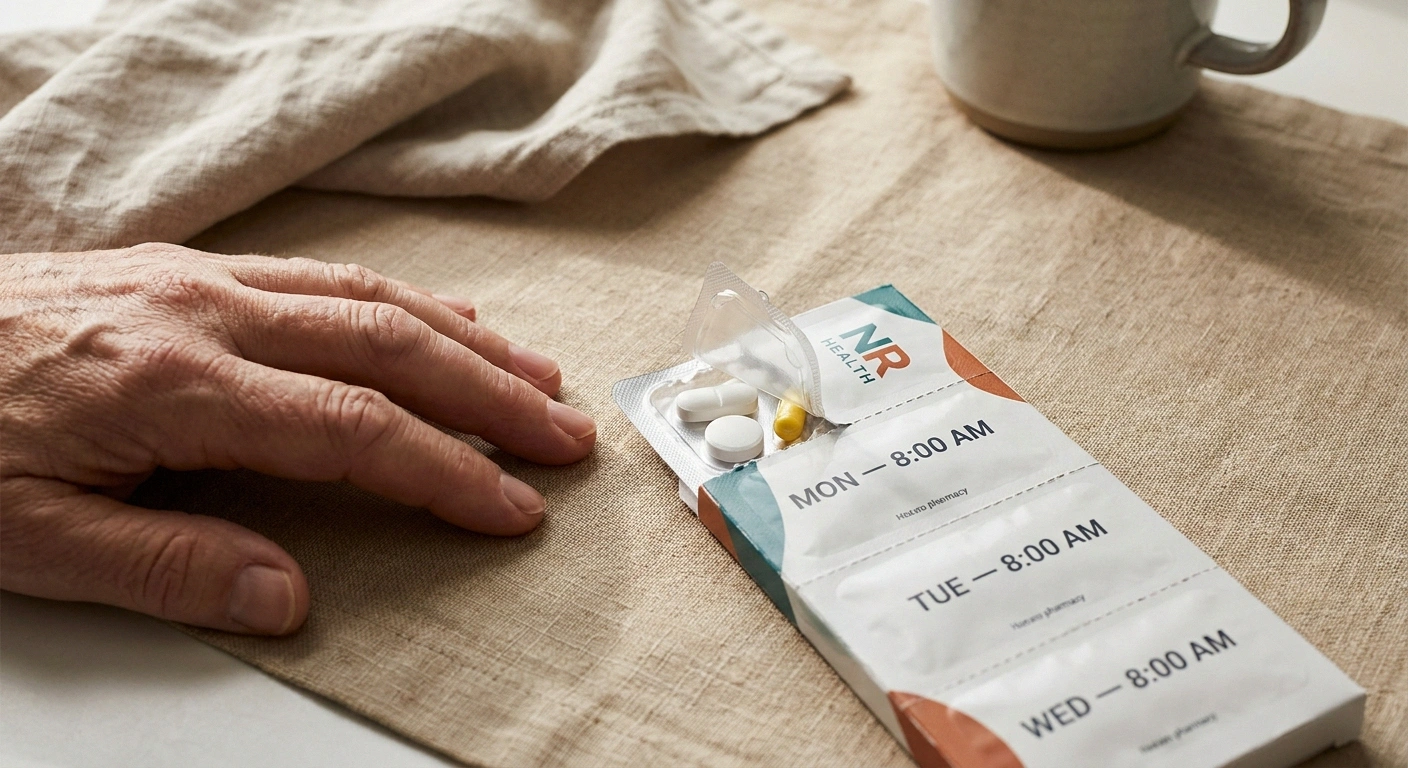
Several major pharmacy chains and many mail-order pharmacies now offer “adherence packaging” or “blister pack” programs where the pharmacy organizes all your medications into pre-sorted daily packets. You receive a multi-week strip of clearly labeled packets — each one containing exactly the pills you need to take at a specific time on a specific day. You tear off the day's packet and open it like a small candy wrapper. No bottles. No organizing.
Programs to ask about by name include CVS Multi-Dose Packaging, Walgreens prescription packaging, PillPack (Amazon Pharmacy's adherence service), and various independent pharmacies that offer similar programs. Some local pharmacies will set this up for you free of charge with no separate enrollment.
For people taking five or more daily medications, especially with reduced hand function, this is often the single biggest quality-of-life upgrade available. It eliminates the daily bottle problem entirely.
One thing to ask about up front — how easy is the packet itself to open? Most are designed to be torn or peeled, but the specifics vary. If possible, ask to see a sample before committing.
Fix #5: Switch to Subscription Pill Dispensers (For More Complex Routines)
For people on multiple medications who also have memory concerns, balance issues, or family who worry about missed doses, automatic pill dispensers are worth considering. These devices range from simple beeping timers ($30–$60) to fully automatic locked dispensers ($200–$700, sometimes with a monthly subscription) that release exactly the right pills at exactly the right time.
The basic versions sit on a counter, have a multi-compartment carousel inside, and at each scheduled dose time, beep and rotate to expose only the next dose. You tip the device into your palm. Done. The automatic locking is helpful if there's any concern about taking the wrong dose at the wrong time.
The more advanced versions connect to a phone app, alert family members if a dose is missed, and can be filled by a caregiver remotely. Hero, MedMinder, and PillDrill are well-known brands. Some Medicare Advantage plans now cover medication dispensers as a supplemental benefit; it's worth asking your plan.
This level of automation isn't right for everyone — for most people, an easy-open cap plus a good weekly organizer is plenty. But for someone managing complex polypharmacy with shaky hands, the automatic dispenser is a real option.
Fix #6: Make the Workspace Work For You
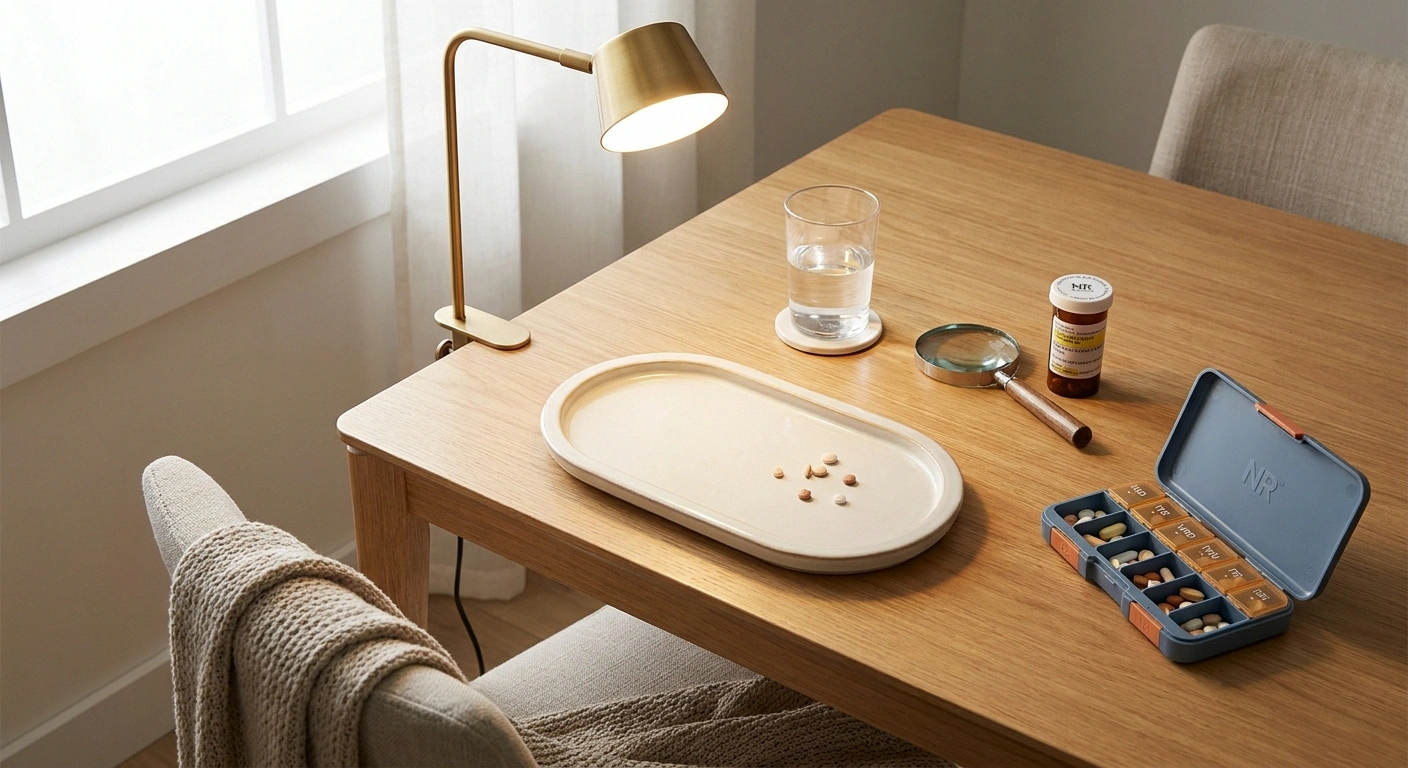
Beyond the bottle itself, where and how you set up medication time matters more than people realize.
Use a tray with a lip. A simple cafeteria-style tray, baking sheet, or shallow basket on the counter catches any pills you drop. With numb fingers, pills will sometimes leap out of bottles unexpectedly. A tray with a raised edge means you don't lose them under the fridge.
Bright light. Most kitchen counter lighting is too dim for reading pill labels with aging eyes and shaky hands. A small under-cabinet LED strip or a counter task lamp aimed at your medication area solves this. You will make fewer mistakes when you can clearly see what you're taking.
Stable surface, seated if possible. If your balance is shaky or your hands are weakest in the morning, sit at the kitchen table for medication time rather than standing at the counter. Both hands free to focus on the task, no risk of dropping a bottle and bending down to pick it up.
Use a magnifying glass for small pills. A simple $5 magnifier kept with your medications helps you read pill markings and confirm you have the right tablet. A nearly-numb fingertip plus a tiny round white pill is a recipe for confusion; a magnifier helps you check by sight.
Have water within reach before you start. Fill the glass first. Then open the bottle. Trying to open a pill bottle one-handed while balancing a glass of water is a setup for a dropped pill or a spilled glass.
Fix #7: Get the Right Person Involved
If pill bottles have become a daily fight, this is a conversation to have with two people.
Take these four questions to your pharmacist:
- Can you flag my account for easy-open caps on all prescriptions?
- Do you offer adherence packaging or a blister-pack program?
- Are any of my medications available in once-daily or combination formulations?
- Which of my medications come in liquid or patch form if pills get too hard?
A 5-minute pharmacy conversation can simplify the next 5 years of mornings.
Your pharmacist is the first. They are the experts on the packaging your medications come in and the alternatives available. Walk in (or call) and say specifically: “My hands aren't what they were. What can you do about the caps and the packaging?” Many pharmacists are happy to switch you to easy-open caps for everything, suggest blister-pack programs, identify medications that come in different formats (some are available as liquid, some as transdermal patches), and flag medications where dose timing is critical so you know which ones really matter.
Your doctor is the second. If you're on multiple medications, ask whether your routine could be simplified. Some medications can be consolidated. Some can be moved to once-daily formulations rather than three-times-daily. Some can be replaced with combinations (a single pill that contains two drugs). Reducing the number of pill bottles you handle each day is itself a quality-of-life intervention.
An occupational therapy referral can also help. OTs are specifically trained in adapting daily tasks for reduced hand function. A single OT visit focused on “I need a setup that works for me” can produce solutions you wouldn't think of on your own — including, sometimes, custom-made grippers or splints for specific bottle types.
Fix #8: Build the Routine So You Don't Have to Think
The last layer, after the equipment is right, is the routine. Medication management gets dramatically easier when it's the same time, same place, same sequence every day.
A weekly Sunday-evening “set up the week” ritual works for many people. Make a cup of tea. Sit at the table. Refill the weekly organizer from your prescription bottles. Note any prescriptions running low so you can call for refills. The 15 minutes once a week saves you 15 minutes of fumbling every morning.
A consistent daily location for the organizer matters too. Same spot on the counter. Same direction. Same sequence — morning compartment first, evening last. The repetition allows the routine to run almost on autopilot, which is exactly what you want when your hands are at their numbest first thing in the morning.
If you've ever forgotten whether you took your morning dose, the right answer is not to take another “just in case.” It's to set up an organizer so the answer is always visible — if the compartment is empty, you took it. If the compartment is full, you didn't. This single feature has prevented countless accidental double-doses.
What to Watch For — When the Hand Problem Is Bigger
I'll mention this gently because it's important. Trouble with pill bottles is usually a symptom of neuropathy that's already known. But sudden new difficulty — a hand that's working noticeably worse this week than last week, or one hand that's lost function while the other is fine — is worth bringing up with your doctor.
Sudden new hand weakness combined with any of these is a stroke warning, not neuropathy progression:
- Slurred or garbled speech
- Facial droop on one side
- Sudden vision change in one or both eyes
- Sudden confusion or trouble understanding
- One hand or arm working noticeably differently from the other
Gradual hand neuropathy is a quality-of-life problem with solutions. Sudden change is an emergency.
Sudden one-sided weakness can have causes other than neuropathy progression, including stroke, nerve compression in the neck or arm, or other neurological problems. Gradual progression of hand neuropathy is unfortunately normal. Abrupt change isn't, and it deserves a same-week appointment, not a “I'll mention it next time.”
The same goes for new numbness or weakness alongside changes in speech, vision, facial droop, or confusion — those are stroke warning signs, not neuropathy, and they need emergency evaluation.
Everyday neuropathy that makes pill bottles harder year over year is a quality-of-life problem with solutions. Sudden change is a different conversation.
The Bigger Point
For a long time, I treated the pill bottle problem as a minor annoyance. Just another thing about getting older. Just a price I paid for being on the medications I needed. It took longer than it should have for me to realize that this was solvable, and that the right combination of an easy-open cap, a good organizer, and a few minutes of pharmacy conversation could give me back ten minutes of frustration every morning and reduce the chance of a missed dose to nearly zero.
If you've been fighting your pill bottles for a while, please don't accept it as the way things are. The fixes are mostly cheap, mostly fast, and waiting at your pharmacy counter the next time you go in.
Frequently Asked Questions
Can I really request non-child-resistant caps from the pharmacy? Yes. Federal law in the United States explicitly allows adults to request easy-open caps on prescription medications. You can have your account flagged so all future prescriptions come with easy-open caps automatically, or you can request it each time. There is no charge, no doctor's note required, and pharmacy staff are trained to handle the request without follow-up questions.
Are easy-open caps less safe? They're less child-resistant — that's the trade-off. If young children or curious pets live with you or visit often, storing medications in a locked medication box or cabinet between uses is more reliable than a cap, because child-resistant caps are not childproof. For adults living alone, with adult-only households, or with no curious visitors, easy-open caps don't meaningfully change safety.
What is the best pill organizer for neuropathy? Look for one with large compartments, soft flip-up lids (not sliding lids), raised easy-grip tabs, separate AM/noon/PM/bedtime sections if needed, and removable daily sections for travel. Brands like Sagely Smart XL, Ezy Dose, and Tablet to Go make organizers designed with reduced hand function in mind. Avoid the small “claw it out with a fingernail” style.
Does Medicare cover blister-pack pharmacy services? Some Medicare Advantage plans cover adherence packaging programs as a supplemental benefit. Original Medicare Part D doesn't typically cover the packaging itself separately. Many pharmacies offer the service free as a customer-loyalty feature. Ask both your plan and your local pharmacy what's available.
What if my hands shake too much for a pill organizer? Tremor and weakness are different problems with different fixes. If shaking is the main issue, automatic locked dispensers (Hero, MedMinder) handle the pill-handling for you — they release the right dose at the right time and you only tip them into your palm. Some people also do well with liquid formulations of certain medications, dispensed with a medicine dropper or oral syringe, since the precision required is lower.
Can I cut my own pills if my fingers can't manage small tablets? Pill splitters and pill crushers are available cheaply at pharmacies and online. Some pills can be safely split or crushed; others cannot — extended-release tablets, enteric-coated tablets, and certain capsules should not be broken. Ask your pharmacist before splitting any tablet. They can also tell you which of your medications come in lower-strength formulations that might not need splitting.
How do I open prescription tube creams with numb hands? Tubes can be just as hard as bottles. A small key-style tube wringer (the kind used for toothpaste) gives you mechanical leverage. For caps that twist, a rubber jar opener helps. For very stubborn tubes, a pharmacy can often dispense the same medication in a wider-mouth jar formulation — ask.
Is there an app that can help me track medications? Yes — Medisafe, MyTherapy, and Round Health are all well-rated free apps that send reminders, track adherence, and let a family member monitor remotely if you want them to. They don't fix the bottle problem itself, but they can complement a good physical setup by making sure timing and tracking work even on hard hand days.
About the Author