When dealing with chronic pain, it's easy to feel overwhelmed by all the terms doctors and specialists...
Understanding Neuropathy

Your Neuropathy Journey
1
Early Signs
Tingling, numbness, or burning sensations often appear in the feet and hands first.
→
2
Getting Diagnosed
A neurologist confirms neuropathy through exams, nerve conduction studies, and blood work.
→
3
Treatment Options
Medications, physical therapy, supplements, and lifestyle changes can reduce symptoms significantly.
→
4
Daily Management
Building routines around foot care, exercise, and pain management improves quality of life long-term.
When I was first told I had peripheral neuropathy, I didn’t even know what that meant. The doctor handed me a pamphlet, mentioned something about damaged nerves, and sent me on my way. I went home with more questions than answers — and I suspect you might be in the same place right now.
This section is where I’d start if I were you. Before you can manage neuropathy effectively, you need to understand what’s actually happening in your body. Not in an overwhelming, medical-textbook way — but in a “finally, this makes sense” way. Once you get the basics down, everything else — the treatments, the lifestyle changes, the conversations with your doctor — starts to click.
Neuropathy is damage to the peripheral nerves — the vast network that carries signals between your brain, spinal cord, and the rest of your body. When those signals get scrambled or cut off, you experience the tingling, burning, numbness, and pain that’s probably brought you here.
But neuropathy isn’t one thing. It progresses through stages, shows up differently in different people, and whether it can be reversed often depends heavily on the underlying cause.
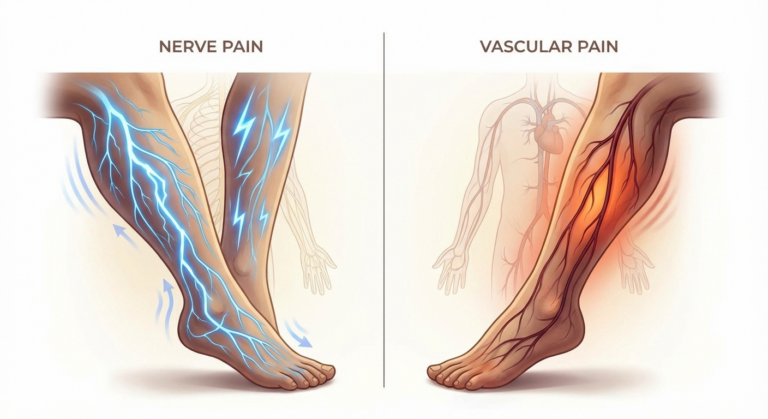
One of the most important early questions to sort out: is what you’re experiencing nerve pain or vascular pain? They can feel remarkably similar, but they’re treated very differently. Getting that distinction right early can save you months of chasing the wrong solutions.
I also want to address the question I see most often in support groups: Can neuropathy actually be reversed? The honest answer is: sometimes, yes — but it depends on catching it early, identifying the cause, and taking action. I’ll share what the research actually says, without sugarcoating it or giving false hope.
Start Here
These three articles give you the foundation. Read them in order if you can.
- How Neuropathy Is Diagnosed: What to Expect and What to Ask — Understanding the diagnostic process helps you advocate for yourself at every appointment.
- The Stages of Neuropathy: From Early Warning Signs to Advanced Symptoms — Knowing where you are in the progression changes everything about how you respond.
- Can Neuropathy Be Reversed? What the Research Actually Says — A clear-eyed look at what’s possible and what factors determine your chances.
Also Worth Reading
Once you’ve covered the basics, these articles fill in important gaps.
- Nerve Pain vs. Vascular Pain: How to Tell the Difference — Critical early reading if you’re still figuring out what’s causing your symptoms.
- Does Walking Help Neuropathy? What You Should Know Before You Start — Simple movement can be powerful — but there’s a right and wrong way to approach it.
- Neuropathy, Balance Problems, and Fall Prevention — Often overlooked until it becomes urgent. Worth reading early.
- Can You Reverse Neuropathy in 7 Days? Separating Fact from Fiction — You’ll see this claim everywhere. Here’s what’s real and what’s marketing.
You don’t have to read everything at once. Start with the diagnosis and staging articles, then follow your curiosity from there. The goal is to build a solid foundation — because an informed patient gets better care, asks better questions, and makes smarter decisions about their own body.
I’ve been navigating this for years, and I can tell you: understanding your condition isn’t just academic. It’s one of the most practical things you can do.

Neuropathy, a condition marked by tingling, burning, and numbing sensations, affects millions of people worldwide. Whether caused...