A woman in my support group — I'll call her Carol — stopped taking the bus for almost a year. Not because she couldn't get to the stop, but because of one specific moment: the step up onto the bus, the one where you can't quite see your own foot and you can't quite feel it land. With numb feet, that small step had become the scariest six inches of her day. So she just… stopped going places. The isolation cost her far more than the bus ever could.
I'm telling you Carol's story first because if public transit has quietly shrunk your world the way it shrank hers, this article is for you. Buses, trains, and rideshares are absolutely doable with neuropathy. They mostly require knowing where the genuine danger spots are — and there are only a few — and setting yourself up so those moments are managed instead of feared. Let's go through it the way I went through it with Carol.
Why Public Transit Is Uniquely Tricky With Neuropathy
It helps to name exactly what's hard, because each piece has a fix. Neuropathy dulls the position-and-pressure information your feet normally send your brain — the very information you'd use to judge a step or the edge of a curb. Now put that on a vehicle that moves: a bus that lurches from a stop, a train that sways, a floor that takes away the steady feedback you'd normally balance against. And add a few seconds of pressure — a line behind you, a fare to pay, a driver waiting — right at the moment your balance is most challenged.
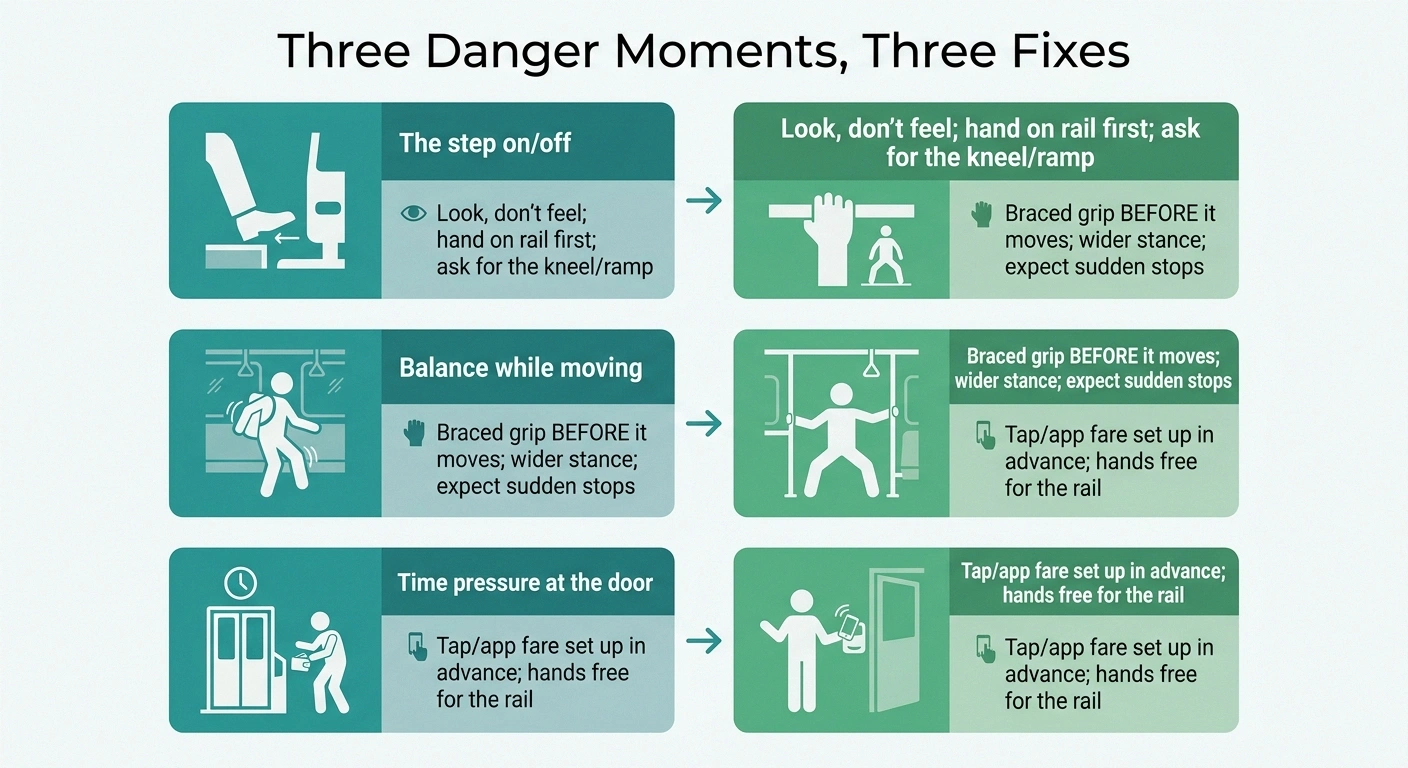
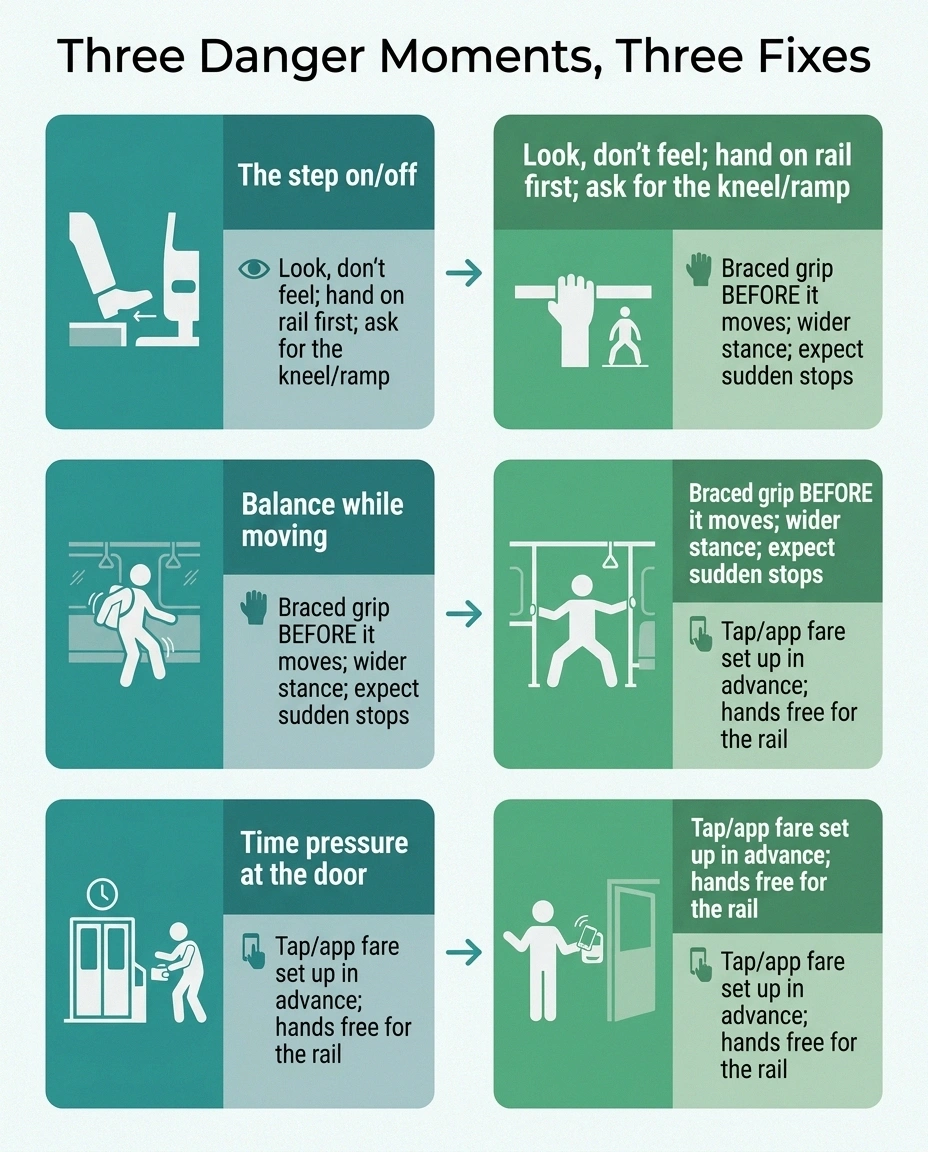
The step on and off, balance while moving, time pressure at the door
That's the whole list of real danger moments. Set yourself up for those three and public transit goes back to being ordinary — and your world stops shrinking.
That sounds like a lot, but notice it's really just three things: the step on and off, balance while the vehicle is moving, and time pressure at the door. Almost everything below is aimed at one of those three. Solve them and public transit goes back to being ordinary.
Plan the Trip Before You Leave the House
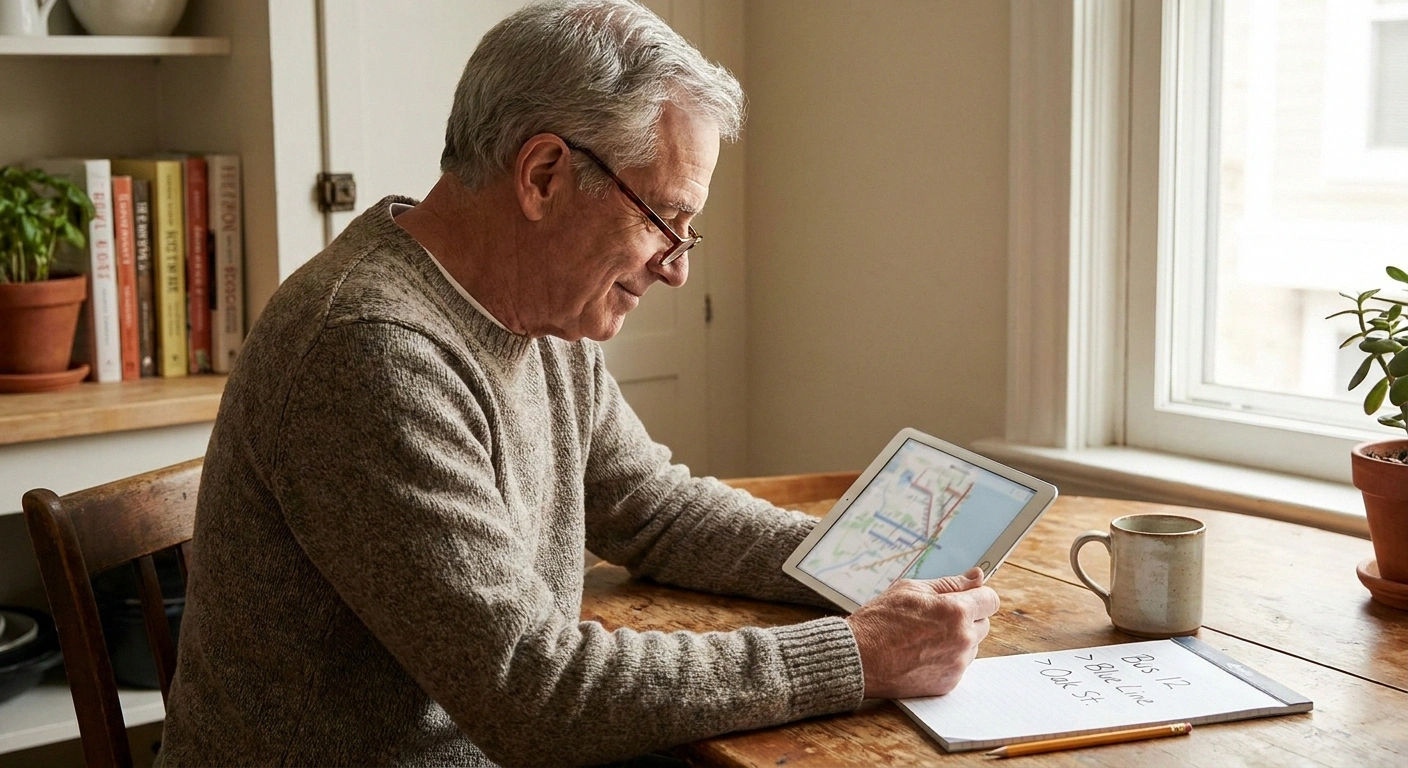
The single highest-value habit is planning the route while you're calm at home, not improvising it on a cold platform. Map the simplest version: the fewest transfers, the most direct line, stops you know. Each transfer is another step-on, another step-off, another balance moment, so a slightly longer one-bus route often beats a “faster” trip with two changes. Check schedules so you're not stranded standing for ages, note where the accessible entrances and elevators are, and have a backup in mind if a connection fails. Knowing the shape of the trip in advance removes the rushing — and rushing, far more than the bus itself, is what causes falls.
Every transfer is another step-on, another step-off, another balance moment. A slightly longer one-bus route often beats a “faster” trip with two changes. Planning while calm at home removes the rushing — and rushing, far more than the bus itself, is what causes falls.
Timing: Don't Travel in the Crush
If your schedule allows it at all, travel in the calm middle of the day rather than rush hour. This one choice quietly solves several problems at once. Off-peak, you're far more likely to get a seat instead of standing on a moving vehicle. The driver isn't under pressure and can give you the few seconds you need. There's room to move without being jostled, and room for a cane or walker without an audience. A mid-morning or early-afternoon trip is a completely different, gentler experience than the 5 p.m. scrum — and you're allowed to simply opt out of the hard version.
Boarding and Stepping Off: The Riskiest Moments
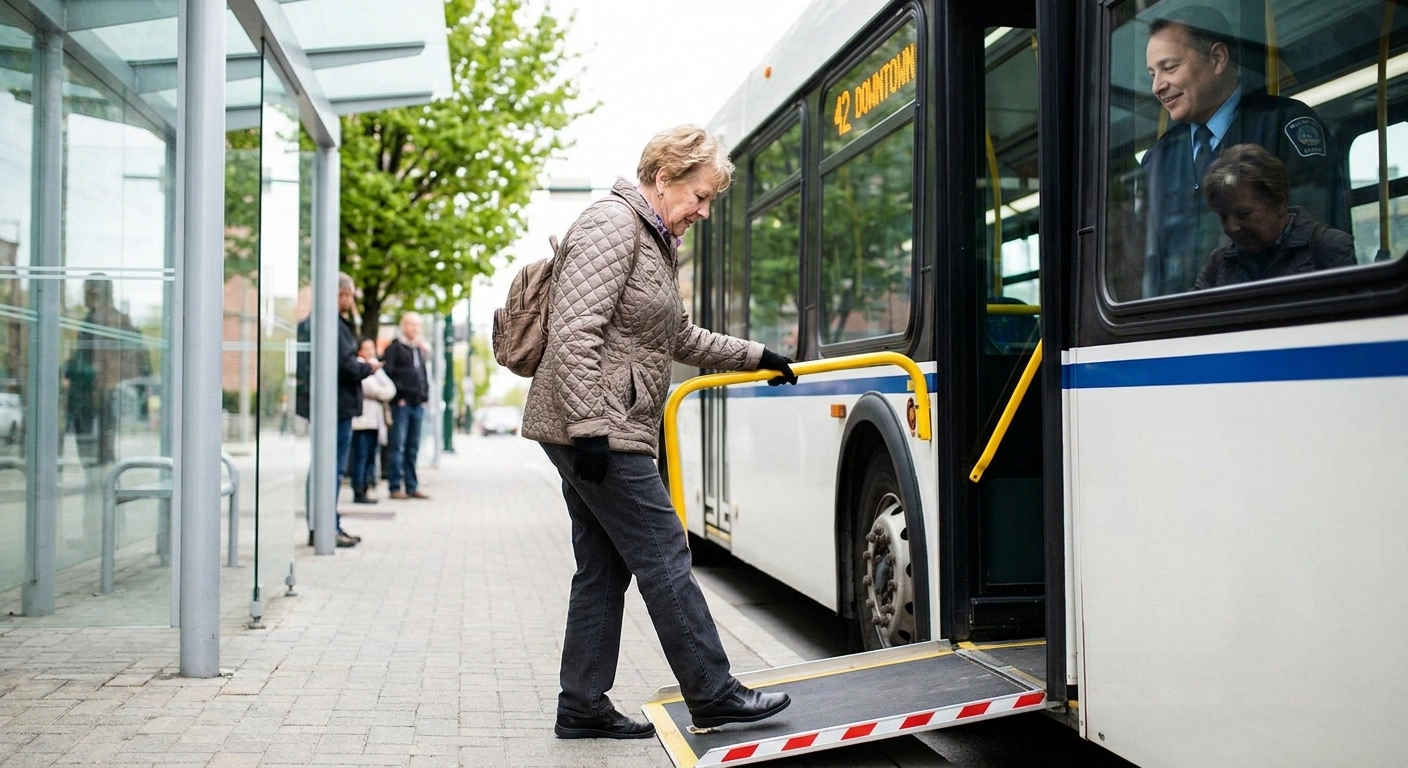
Be honest with yourself that this is the danger zone, because respecting it is exactly what makes it safe. With numb feet you cannot rely on feeling the step or the gap — so you lead with your eyes instead. Look directly at the step or the platform gap, place your foot deliberately, and don't move your weight onto it until you can see it's solidly down. Always have a hand on the handrail or door pole before you commit your weight, and keep it there until both feet are settled.
Boarding, Step by Step
Ask the driver to kneel the bus or deploy the ramp — a normal request, not a fuss.
Hand firmly on the rail before you commit any weight.
Look directly at the step or gap — lead with your eyes, not feeling.
“One moment, please” — be fully seated or stable before the vehicle moves.
Two things make this dramatically easier and you are fully entitled to both. First, most buses can “kneel” (lower the entrance) or deploy a ramp — you can ask the driver for this, and it is a normal request, not a fuss. Second, you do not have to rush. It is completely acceptable to tell the driver “one moment, please” and to be fully seated or stable before the vehicle moves; drivers are trained for this. If your balance is genuinely unreliable, this is precisely the situation a cane or walker is for — our guide to choosing a walking aid can help, and the broader strategies in our piece on balance and fall prevention with neuropathy apply directly to that step.
Where to Sit — and What to Do If You Have to Stand
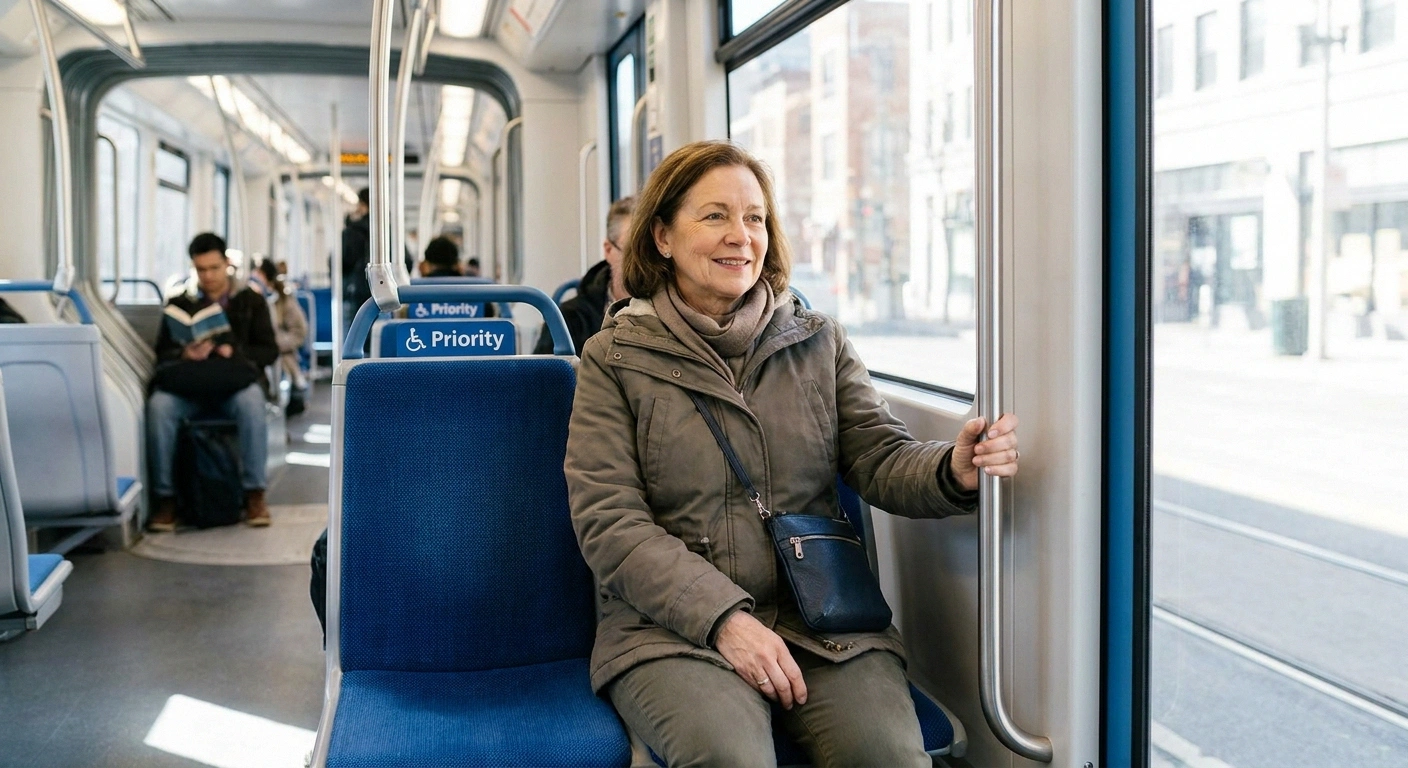
Sit toward the front, near the entrance, in the priority or accessible seating. This isn't only about less walking on a moving vehicle (though it is that) — it also keeps you in the driver's sight and near the door for your stop. Those priority seats exist specifically for riders like you; using them is the system working as intended, not taking something you shouldn't.
If You Have to Stand, Treat It as a Balance Task
Get a firm braced grip on a pole or strap before the vehicle moves, plant your feet wider than usual, and stay braced — assume a sudden stop is coming, because you can't anticipate it the way you'd anticipate your own steps. Stand near a pole, never in the open middle of the aisle.
If you must stand, treat it like a balance task, because it is one. Get a firm two-handed or braced grip on a pole or strap before the vehicle moves, plant your feet a little wider than usual for a stable base, and stay braced — assume a sudden stop is coming, because you can't anticipate it the way you'd anticipate your own steps. Stand near a pole, never in the open middle of the aisle. And there is nothing wrong with quietly asking a seated passenger if you might take the seat; most people are glad to, especially if you mention a balance condition.
Pay and Handle Your Things Without Fumbling
Here's a small thing that causes outsized stress: standing in the doorway with numb fingers, trying to dig out exact change or find a fare card while a line forms behind you. Eliminate it in advance. Set up the easiest possible payment before you travel — a tap card, a transit app, or a preloaded stored-value card kept in the same easy-to-reach pocket every single time, so boarding is one smooth motion instead of a search. Keep both hands as free as you can: a small crossbody bag or backpack beats handfuls of bags, because you want a hand available for the rail at all times. If cold makes your hands clumsy, thin gloves you can still tap a card through are worth it; cold metal poles and strong air conditioning reliably make nerve symptoms worse, so a light layer is a practical tool, not vanity.
Rideshares and Paratransit: Your Other Options
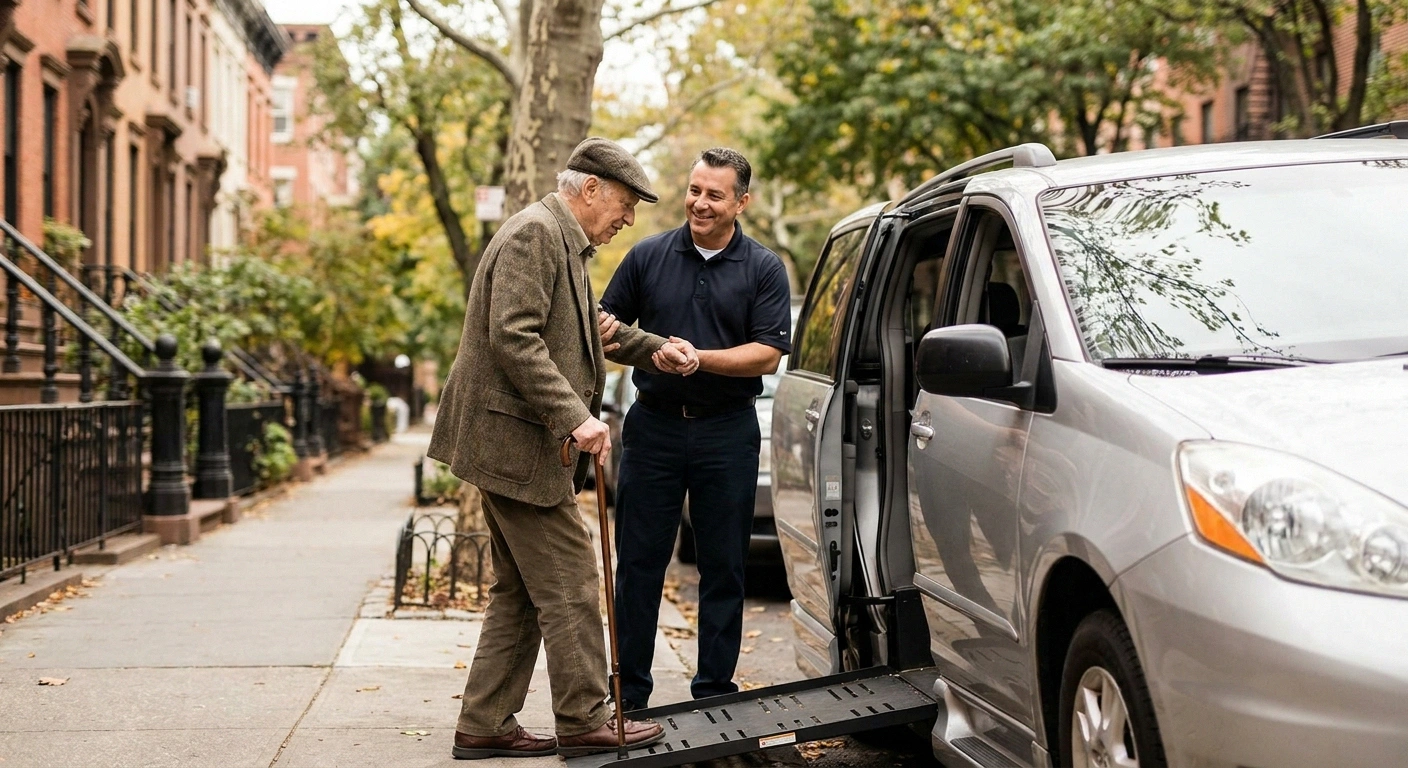
Public transit isn't all-or-nothing. On a high-symptom day, or for a trip with an awkward connection, a rideshare or taxi door-to-door can be the smart call — it removes the walk to the stop and the step onto a high vehicle entirely. Many of the same comfort ideas from our guide to long car rides as a passenger apply here too.
Most US transit systems are required to offer curb-to-curb paratransit, alongside reduced senior and disability fares and accessible low-floor buses. These exist for riders exactly like you. One phone call to your local agency can quietly reopen a world that felt closed.
And don't overlook paratransit. If a disability or condition makes fixed-route buses and trains difficult, most US transit systems are required to offer a curb-to-curb paratransit service, usually with reduced fares, alongside reduced senior fares and accessible low-floor buses. These are entitlements, not charity — it's worth a phone call to your local transit agency to ask what you qualify for. If transit has felt closed to you, the right service may quietly reopen it. And if driving yourself is still sometimes on the table, our guide to driving safely with neuropathy covers when that is and isn't the better choice.
It's Okay to Ask for Help
I want to slow down on this one, because it's the part people resist most and benefit from most. Transit drivers and station staff are trained to assist riders — lowering the bus, holding it until you're seated, helping you find the right platform. Asking is using the system correctly, not failing at it. You do not owe anyone your medical history; “I have a condition that affects my balance, could you lower the bus and give me a moment?” is complete and more than enough. The independence that matters is getting where you're going safely — not white-knuckling a step alone to avoid a fifteen-second request.
Pack a Small “Outing” Kit and Pace the Whole Day
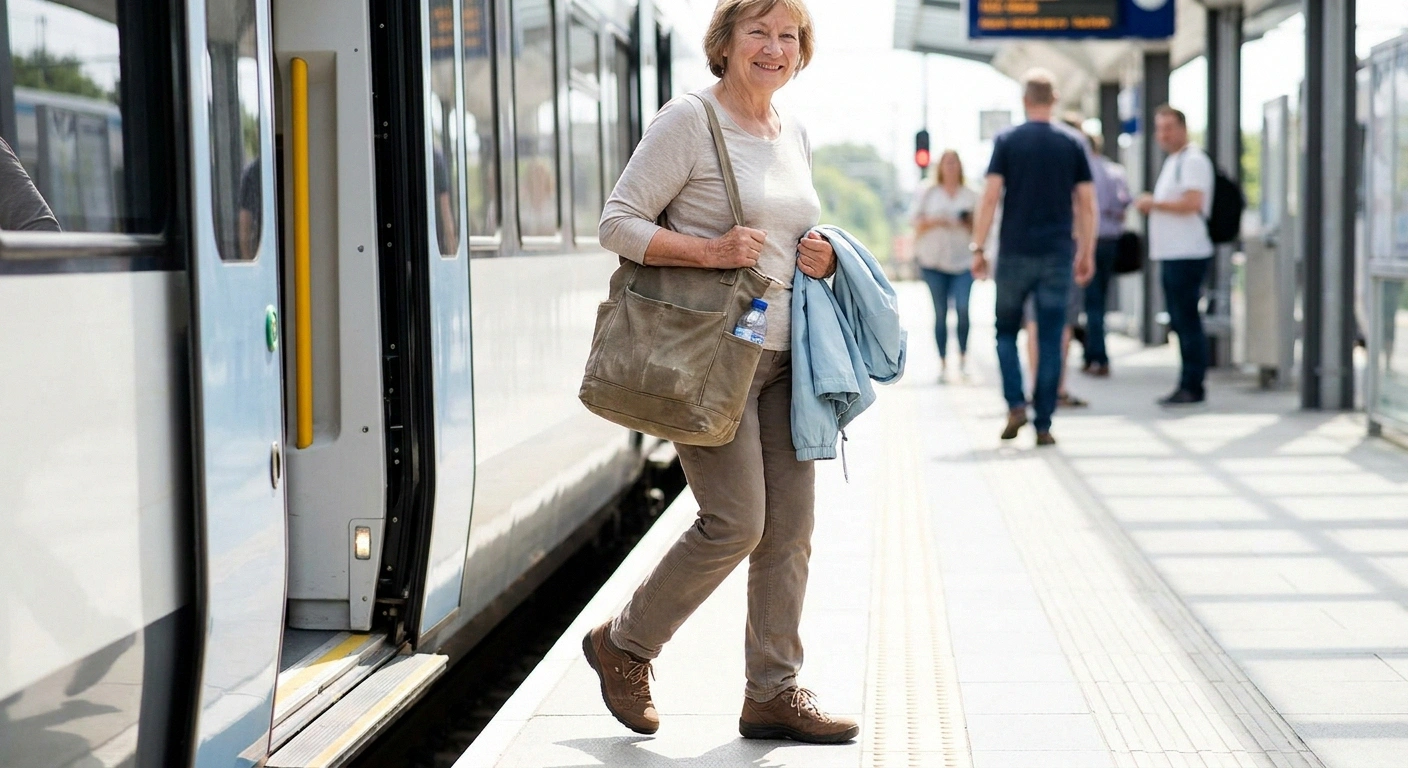
The transit ride is almost never the only thing happening that day, so plan the whole arc, not just the bus. Wear supportive, secure shoes — laced or strapped, not loose slip-ons that can shift on a step; our guide to the best shoes for neuropathy covers what to look for. Bring water, any midday medication, and a light layer for cold vehicles. Build in genuine buffer time so nothing is rushed. And give yourself permission to keep the outing shorter than you think it “should” be — the same pacing mindset that helps with grocery trips applies here. Overspending your energy because the schedule said so is exactly how a manageable day turns into a multi-day flare; the triggers in our guide to neuropathy flare-ups are worth knowing before a big travel day.
Don't let six inches shrink your world
Plan a simple route, travel off-peak, respect the step, brace before it moves, set up your fare in advance, and ask for help without apology. The independence that matters is getting where you're going safely — not white-knuckling it alone.
Frequently Asked Questions
Is it safe to ride the bus or train with neuropathy and balance problems?
For most people, yes, with preparation. The genuine risk concentrates in a few moments: the step on and off, balancing while the vehicle moves, and time pressure at the door. Holding a handrail before committing your weight, using a mobility aid if your balance is unreliable, asking the driver to lower the bus and wait until you are seated, and traveling off-peak so you get a seat all substantially reduce that risk. If your balance is significantly impaired, discuss it with your doctor and consider paratransit options.
How do I get on a bus safely if my feet are numb?
Lead with your eyes, not feeling. Look directly at the step or platform gap, place your foot deliberately, and do not shift your weight onto it until you can see it is solidly down. Always have a hand on the handrail or pole before committing your weight. Ask the driver to kneel the bus or deploy the ramp, which is a normal request, and take the time you need to be stable before the vehicle moves rather than rushing.
Where should I sit on public transit with neuropathy?
Sit toward the front near the entrance, in the priority or accessible seating that exists for exactly this purpose. It minimizes walking on a moving vehicle, keeps you in the driver's sight, and keeps you near the door for your stop. If you must stand, get a firm braced grip on a pole before the vehicle moves, widen your stance for stability, and stay braced for sudden stops you cannot anticipate.
What is paratransit and how do I know if I qualify?
Paratransit is a curb-to-curb transportation service most US transit systems are required to provide for people whose disability or condition makes fixed-route buses and trains difficult, often at reduced fares. Eligibility and how to apply vary by area, so the practical step is to call your local transit agency and ask what you qualify for, including reduced senior or disability fares and accessible vehicle options. These are entitlements, not charity.
How do I avoid fumbling with fare payment with numb hands?
Set up the easiest payment before you travel and keep it in the same easy-to-reach pocket every time. A tap card, transit app, or preloaded stored-value card turns boarding into one smooth motion instead of a search while a line forms. Keep your hands as free as possible with a crossbody bag or backpack so a hand is always available for the handrail, and use thin gloves if cold makes your fingers clumsy.
Should I use a rideshare instead of the bus on a bad day?
That can be a smart choice. On a high-symptom day or for a trip with an awkward connection, a rideshare or taxi door-to-door removes the walk to the stop and the step onto a high vehicle entirely. Public transit is not all-or-nothing; mixing modes based on how your body feels that day is sensible pacing, not failure, and paratransit is another door-to-door option worth setting up in advance.
About the Author