This is one of the questions I get most often in my support group. Someone has been on gabapentin for a year, getting partial relief, and their doctor mentions Lyrica as a possible next step. Or someone is newly diagnosed and the pharmacy hands them a Lyrica prescription, and they wonder why it costs so much more than the generic their friend takes. Or someone is paying out of pocket and trying to decide whether the price difference is worth it.
Both of these medications work for nerve pain. Both have helped enormous numbers of people in real measurable ways. But they are not the same drug, and the differences matter — especially when you’re the person trying to balance pain relief against side effects, cost, and the realities of daily life.
I want to walk you through what I’ve learned from sitting with this question alongside hundreds of people in the community, plus what the research actually shows. By the end, you’ll have a much clearer sense of which conversation to have with your doctor at your next appointment.
One thing first: I am writing as a patient advocate, not a pharmacist or a prescriber. Never start, stop, or switch either of these medications without working with the doctor who knows your full medical picture. Both drugs can cause withdrawal if stopped abruptly, and both require dose adjustments in certain situations. That part is non-negotiable.
The Short Answer Most People Are Looking For
If you want the punchline before the details:
Pregabalin (Lyrica) tends to work faster, at lower doses, with slightly fewer side effects per pill, and is FDA-approved specifically for diabetic neuropathy. The catch is cost and the fact that it’s a controlled substance.
Gabapentin (Neurontin) tends to be far cheaper, more familiar to your doctor, and works perfectly well for most people who can tolerate the higher doses and three-times-daily schedule. The catch is the slower onset, less convenient dosing, and more variable absorption.
Both medications belong to the same family — gabapentinoids — and they work by the same general mechanism. Pregabalin is essentially the chemical cousin gabapentin that’s been refined to absorb more reliably. For many patients, that refinement is worth the extra cost. For many others, gabapentin is a fine first-line choice and there’s no reason to switch unless it isn’t working.
Now let me show you how I think about each of the dimensions that actually matter.
How They Both Work, In Plain Language
Both gabapentin and pregabalin work by attaching to a specific part of your nerve cells called the alpha-2-delta subunit of voltage-gated calcium channels. That mouthful aside, here’s what it means: these drugs make your damaged nerves less excitable. They calm the misfiring signals that produce burning, tingling, electric-shock sensations, and other classic nerve pain symptoms.
| Feature | Gabapentin (Neurontin) | Pregabalin (Lyrica) |
|---|---|---|
| FDA-approved for DPN | Off-label | Yes (approved) |
| Bioavailability | 33-60% (saturates at higher doses) | ≥90% (linear, predictable) |
| Peak onset | 3-4 hours | ~1 hour |
| Doses per day | 3 | 2 |
| Controlled substance | State-level only (some states) | Schedule V federal |
| Monthly cost (generic) | $10-25 | $20-60 |
What they don’t do is repair the underlying nerve damage. They’re symptom modifiers, not nerve regenerators. If your diabetic neuropathy is being driven by uncontrolled blood sugar, these drugs will quiet the pain but won’t stop the progression. The same applies to chemotherapy-induced neuropathy after the chemotherapy has stopped, or to post-herpetic neuralgia from shingles. Treating the cause and treating the symptoms are different jobs.
This is the framing that helps me when I think about either drug: I’m buying calmer nerves so I can sleep, walk, focus, and live my life. That’s a worthwhile thing to buy, and these drugs deliver it for a meaningful portion of people who take them. But the underlying disease management is its own separate project.
Effectiveness: What the Research Actually Shows
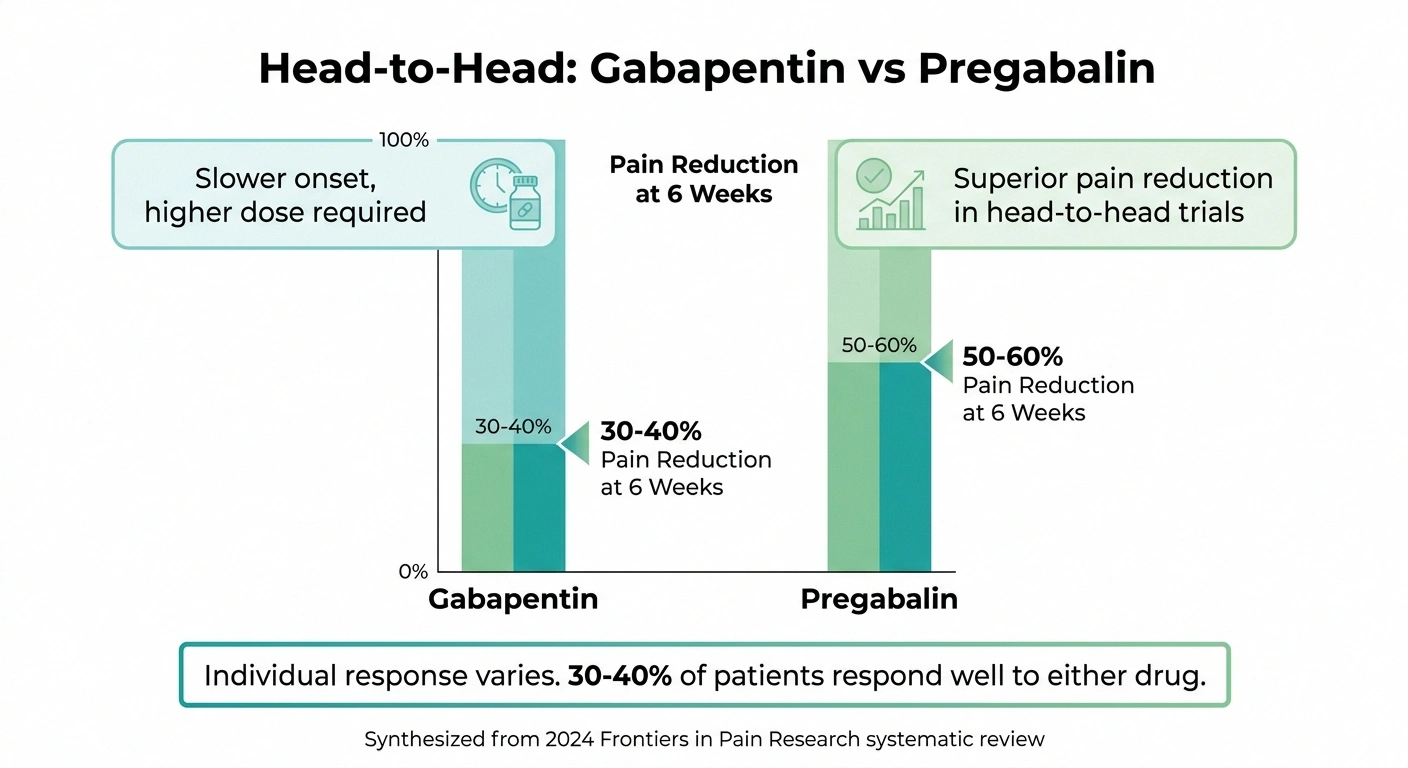
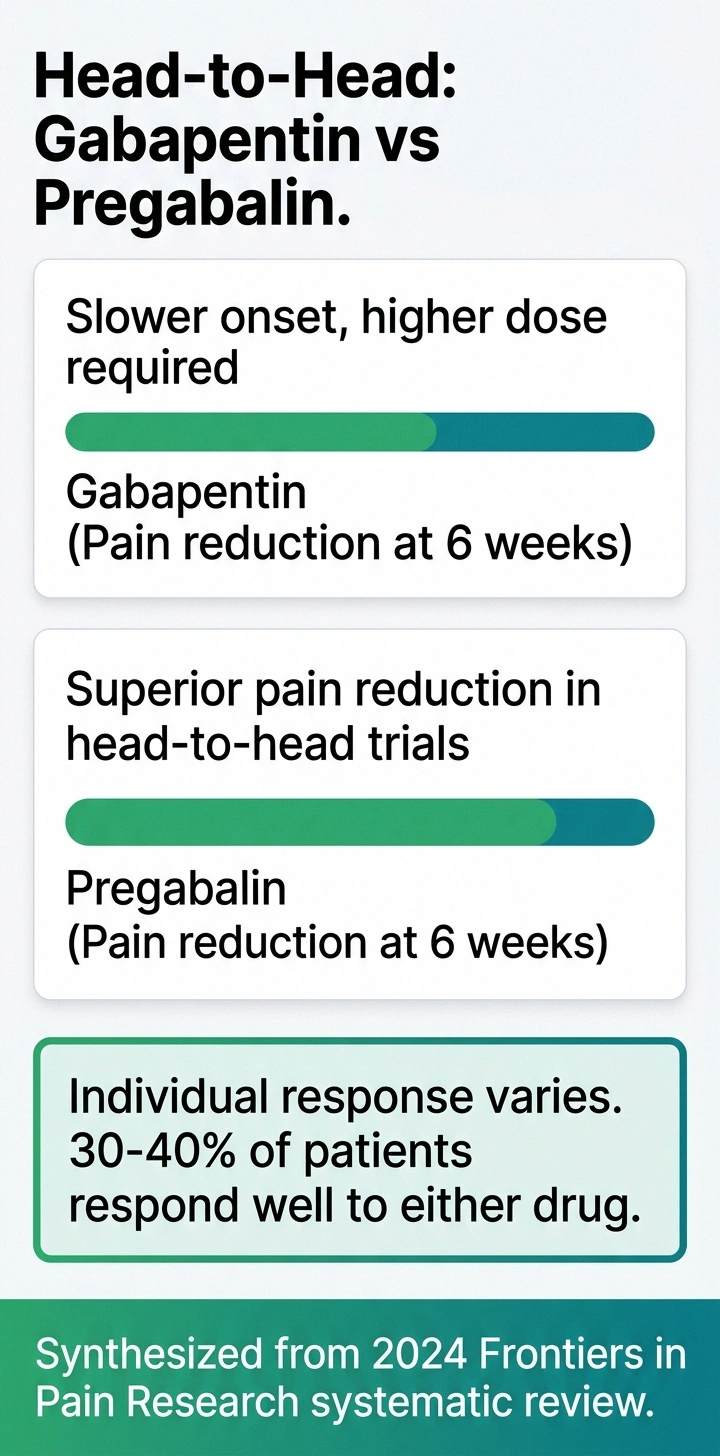
The most comprehensive recent comparison is a 2024 systematic review and meta-analysis published in the journal Frontiers in Pain Research, which pooled data from multiple randomized trials comparing the two drugs directly.
The findings, in plain terms:
- Pregabalin produced superior pain reduction compared to gabapentin at most time points measured, with the largest gaps appearing in the first 6 to 8 weeks of treatment.
- Patients on pregabalin reported more days with no pain or only mild pain, and fewer days with severe pain.
- The total burden of side effects was actually slightly lower with pregabalin, despite it being the more potent drug.
- The advantage of pregabalin was most pronounced for diabetic peripheral neuropathy and post-herpetic neuralgia — the two FDA-approved indications.
So on average, in the head-to-head studies, pregabalin wins. But — and this matters — “wins on average” is not the same as “wins for every patient.” A meaningful number of people respond beautifully to gabapentin and would never see additional benefit from switching. A meaningful number have intolerable side effects on pregabalin but tolerate gabapentin fine. The averages tell you which way to start. The individual response tells you whether to stay.
This is one of those situations where the only way to know is to try. If your doctor starts you on gabapentin and you get good relief with manageable side effects at a reasonable dose, that’s a successful treatment regardless of what the meta-analyses say about the average patient.
Speed of Onset: When Will You Feel a Difference?
Both drugs share an honest reality: they don’t work the way ibuprofen works. You don’t take a pill and feel relief in 20 minutes. The nervous system needs time to settle into a new baseline.
That said, the time-to-effect is genuinely different.
Pregabalin peaks in your bloodstream in about 1 hour. People often notice some calming effect within the first few days at therapeutic dose. Full pain relief usually settles in by 1 to 2 weeks. The faster pharmacokinetics is part of why pregabalin tends to win in clinical trials — the relief shows up sooner, and patients are more likely to feel rewarded for taking the pill.
Gabapentin peaks in 3 to 4 hours, with a longer titration period to reach an effective dose. Most people are still climbing the dose ladder at the 4-week mark, and full effect may not be felt until 6 to 8 weeks in. The slower curve is a real frustration in practice — people often quit gabapentin during the titration phase thinking it isn’t working, when in fact they just haven’t reached an effective dose yet.
If you start either medication and feel discouraged in the first two weeks, that’s normal. Don’t quit too soon. Track your pain on a 0 to 10 scale daily — even a modest improvement from 7 to 5 is meaningful and worth continuing to build on.
Dosing: The Practical Difference at the Pharmacy Counter
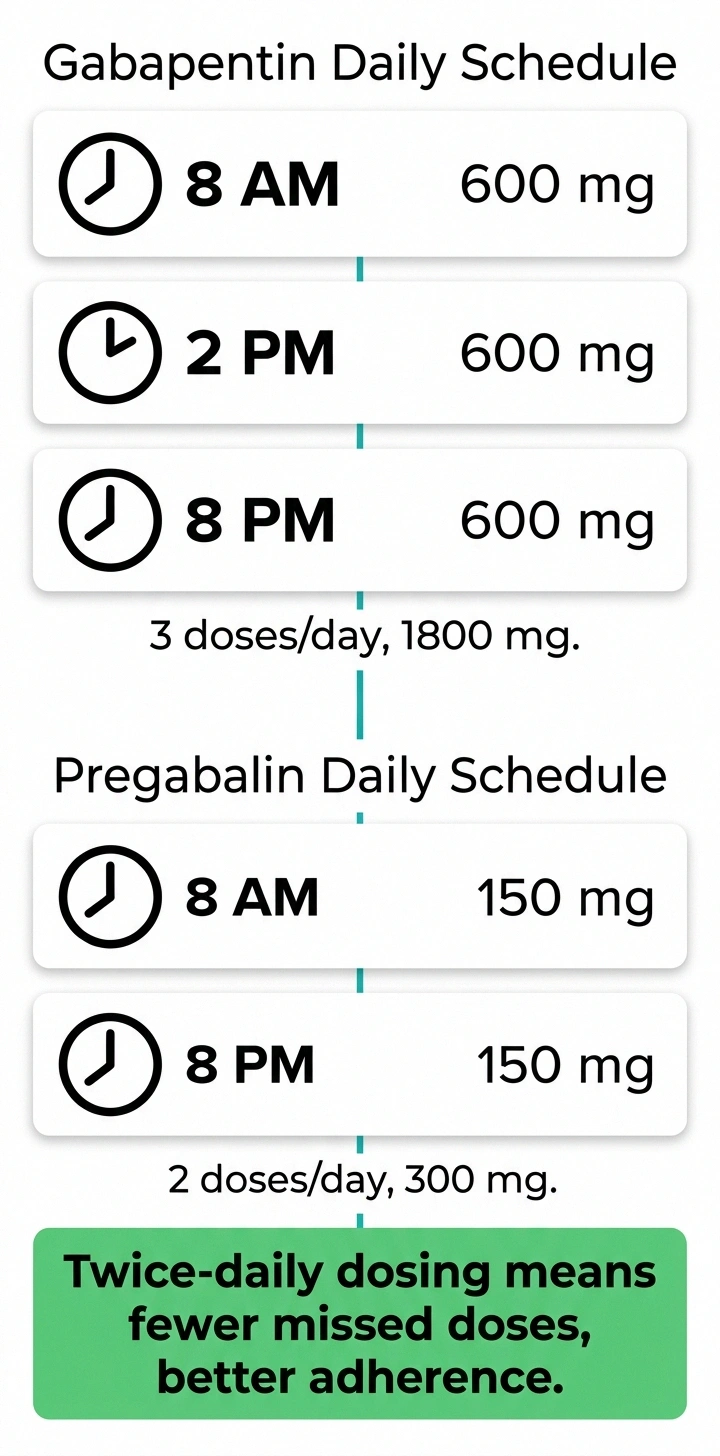
This is where the day-to-day reality of life on either drug shows up. The pill schedule matters more than people expect.
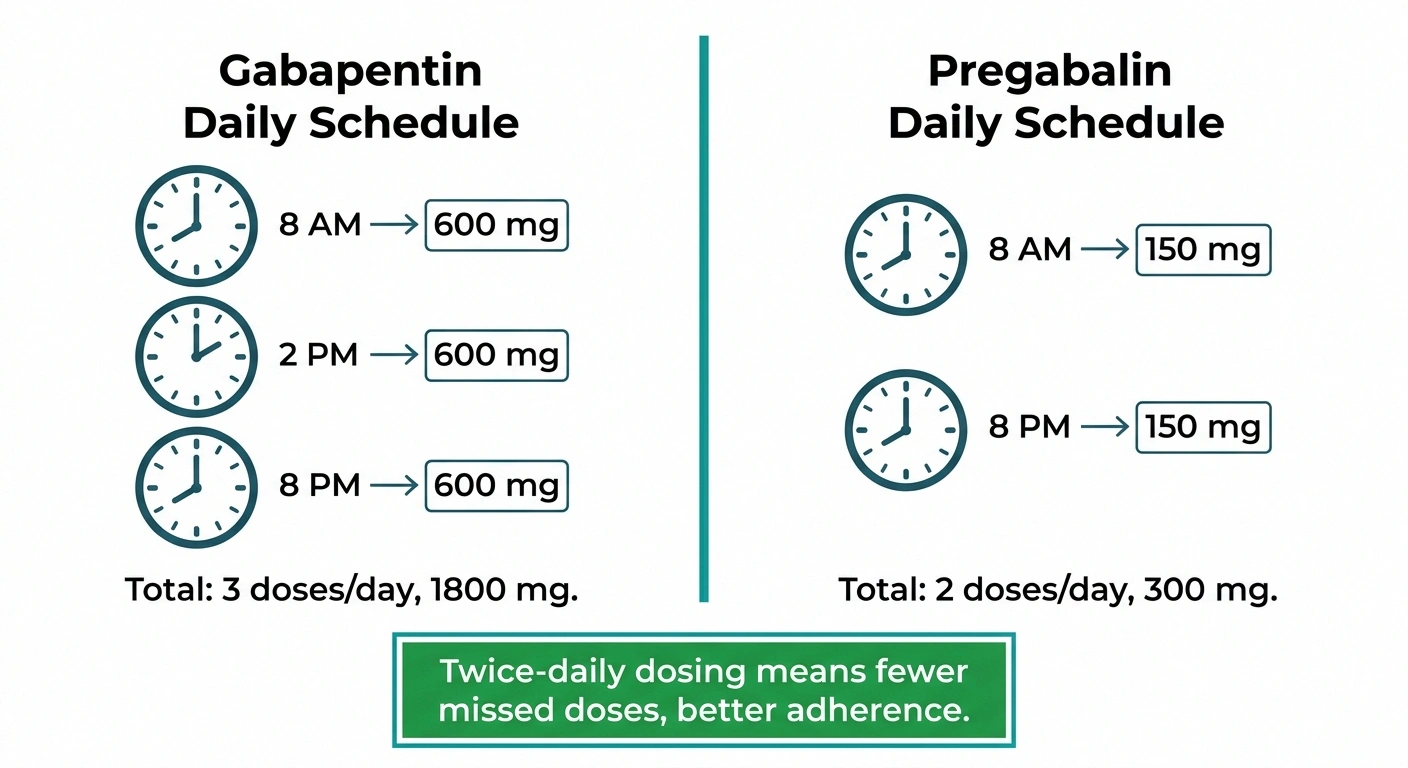
Pregabalin is typically dosed twice a day — morning and evening, ideally 12 hours apart. Starting dose is usually 75 mg twice a day, working up to 150 mg twice a day by week 2. Maximum dose for diabetic neuropathy is 300 mg twice a day. That’s 2 pills a day at maintenance — easier to remember, easier to take.
Gabapentin is typically dosed three times a day. Starting dose is often 100 to 300 mg at bedtime for the first few nights, then gradually adding morning and afternoon doses. A typical maintenance dose for neuropathy is 600 to 1200 mg three times daily, with some patients going as high as 1200 mg three times daily (3600 mg total). That’s 3 to 9 pills a day depending on dose. Easy to skip a dose. Harder to keep on schedule.
For my friends and support-group members who travel, work, or simply struggle with complicated medication routines, the twice-daily schedule of pregabalin is a real quality-of-life advantage. The math seems trivial — just three pills a day instead of two — but the cognitive load and the missed-dose risk add up over months and years.
Cost: The Number That Often Decides Things
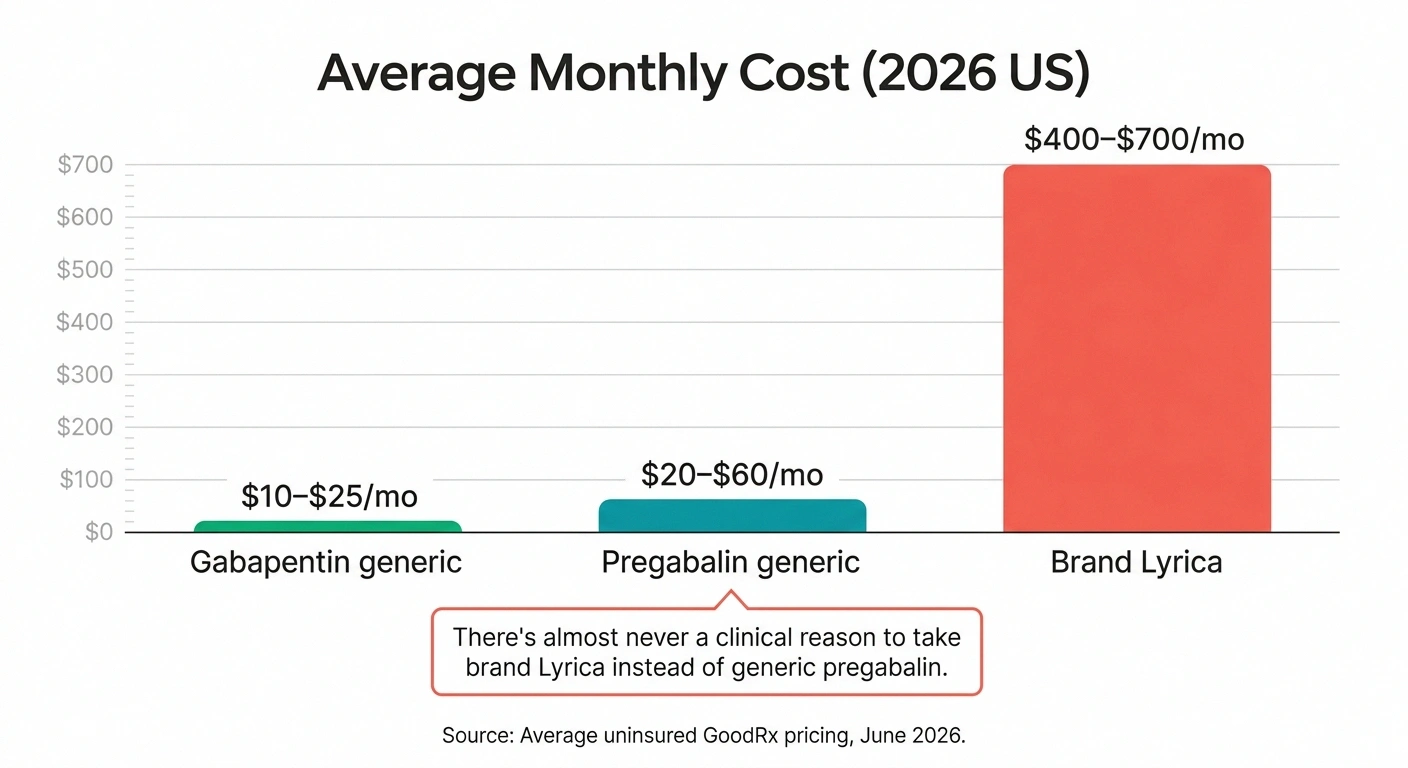
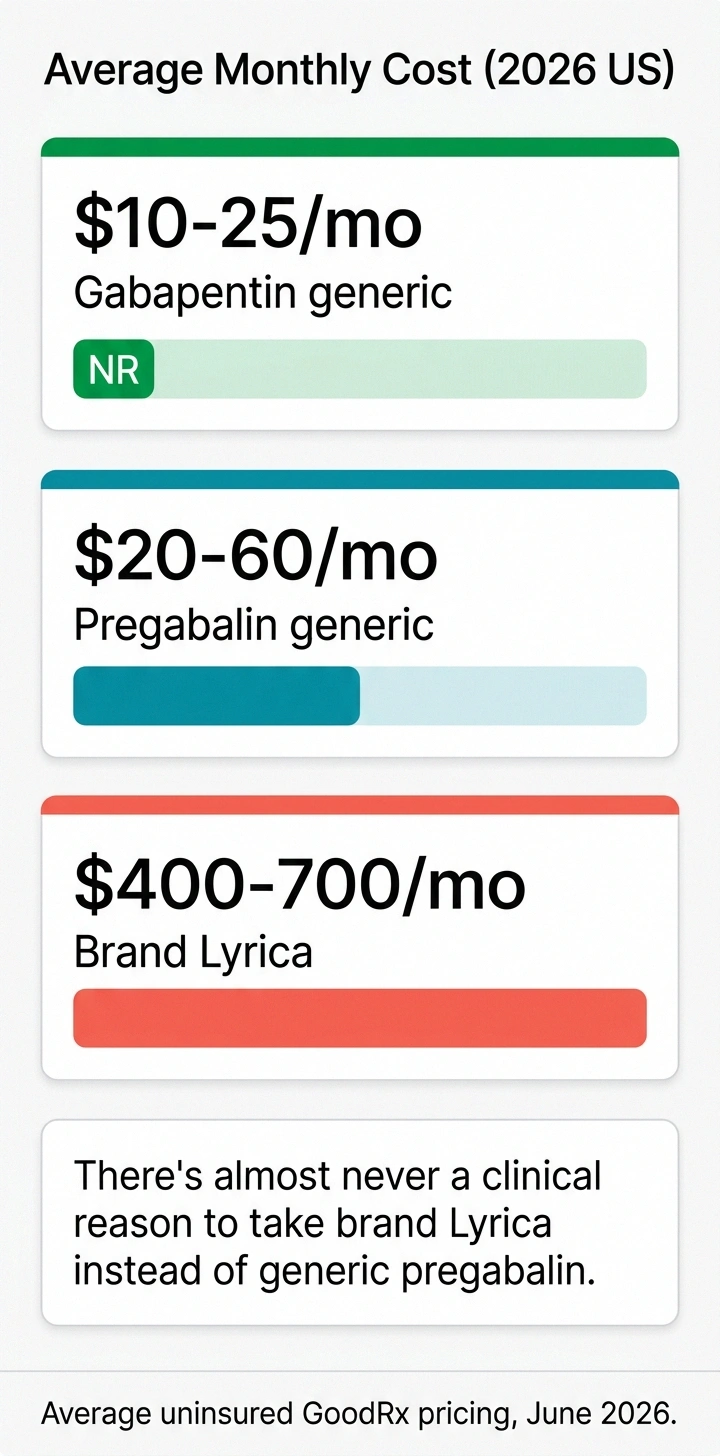
I’ll be transparent about the price differences because they catch people off guard.
Gabapentin generic at a typical neuropathy dose runs roughly $10 to $25 per month with most insurance plans, and even uninsured cash prices through GoodRx and similar discount programs run about $15 to $40 per month. It’s one of the cheapest neuropathy medications available.
Pregabalin generic at a typical dose runs roughly $20 to $60 per month with most insurance, and uninsured cash prices through discount programs run $30 to $100 per month.
Brand-name Lyrica is dramatically more expensive — often $400 to $700 per month without good insurance coverage. The brand patent has expired, so most insurance plans now cover the generic. There’s almost never a clinical reason to take brand Lyrica instead of generic pregabalin.
For people on fixed incomes or paying out of pocket, the gabapentin price advantage is substantial. A $30 monthly savings becomes $360 a year. For some people that’s the deciding factor, and that’s a reasonable basis for the decision. Don’t let anyone make you feel bad about choosing the more affordable option when both medications can produce good results.
Side Effects: Real Talk About What to Expect
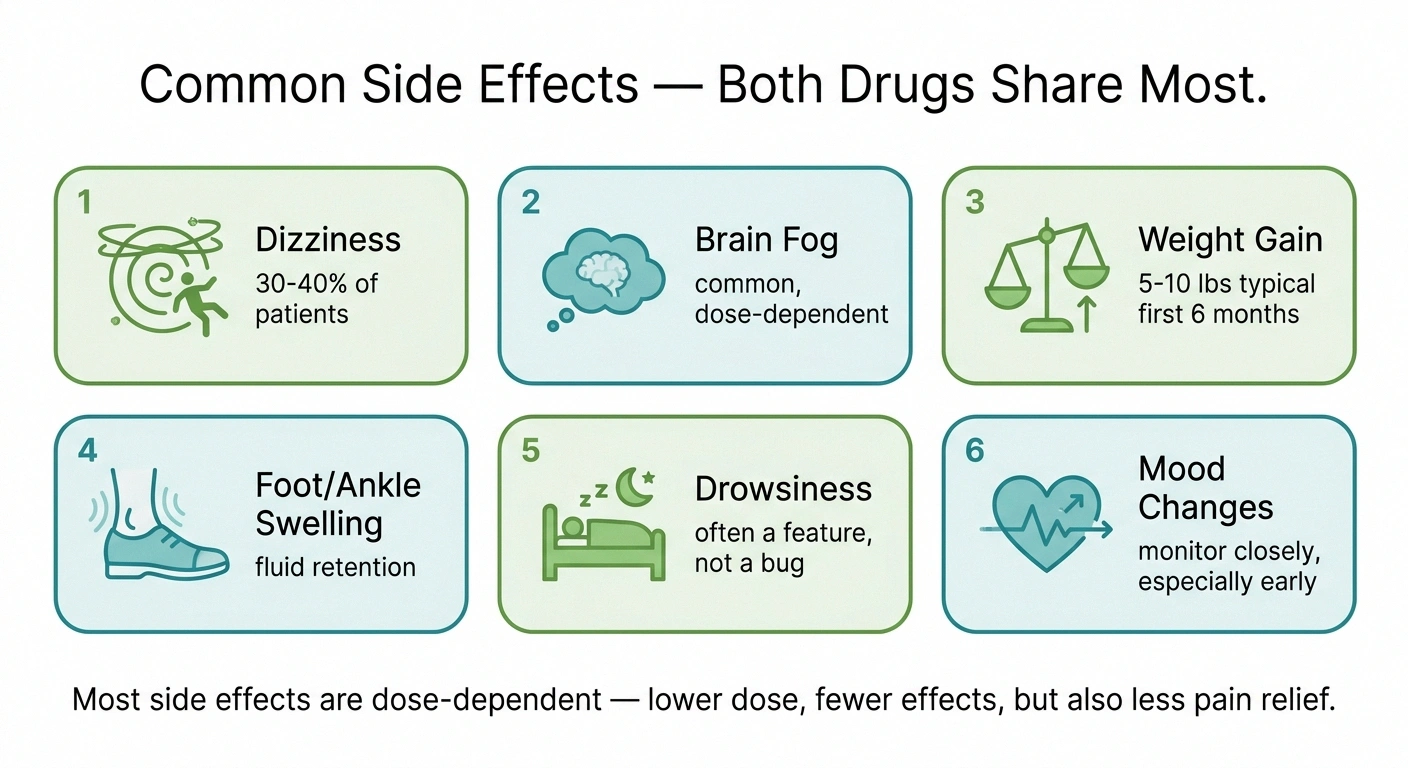
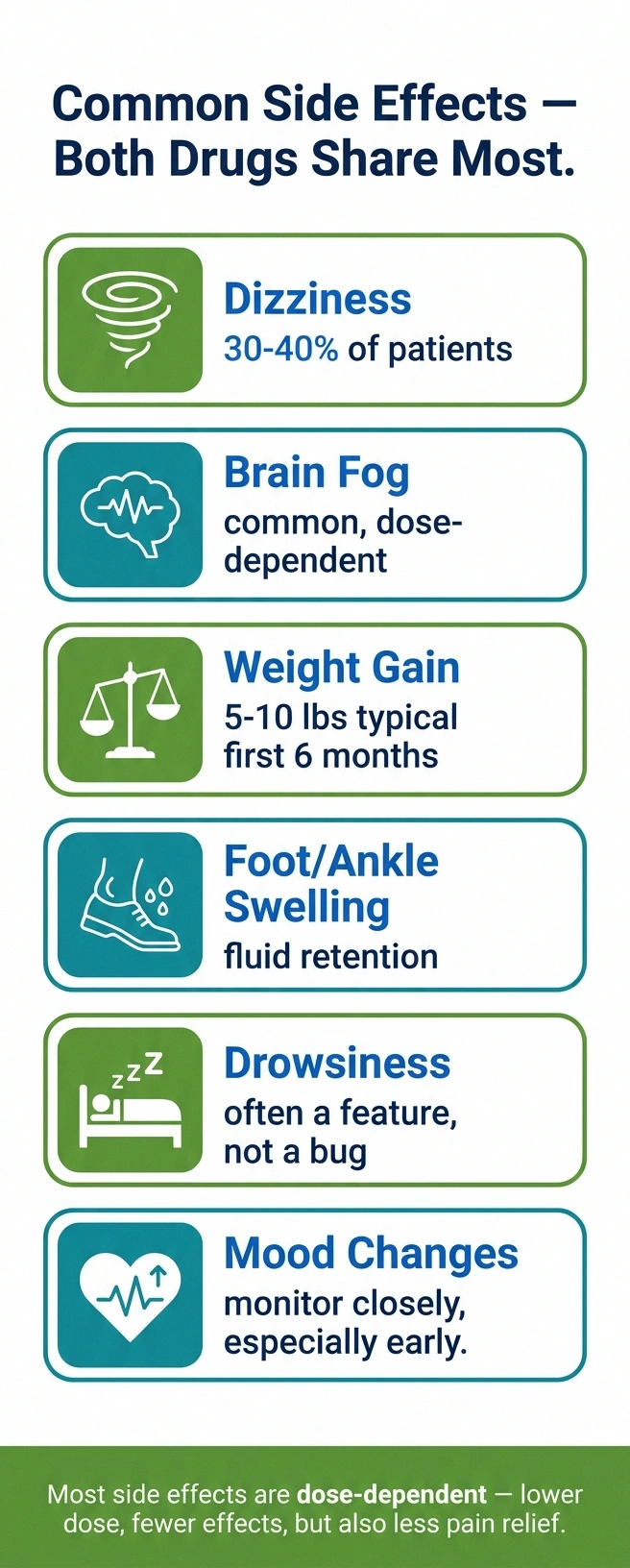
Both medications share the same set of common side effects, just at slightly different rates and intensities. The honest list:
Dizziness and unsteadiness — the most common side effect for both drugs, especially during titration. This is a big deal for people who already have balance and fall concerns from neuropathy. Take your bedtime dose at bedtime so the peak effect coincides with sleep, not standing up to walk to the bathroom.
Sleepiness or sedation — often a feature, not a bug, especially when nerve pain has been wrecking your sleep. Many people sleep better on these drugs once dose-tolerant. But daytime sleepiness can be a problem if the dose is too high or the titration is too fast.
Weight gain — both drugs can cause weight gain. The mechanism isn’t fully understood; it may be a mix of appetite changes, fluid retention, and reduced activity from sedation. Some studies suggest pregabalin produces slightly more weight gain than gabapentin. In practice, watch for it during the first 3 to 6 months and adjust diet and activity accordingly.
Swelling in the feet and ankles (peripheral edema) — both drugs can cause fluid retention. If your shoes start feeling tight or you see indentations from your socks, tell your doctor. Sometimes a lower dose resolves it.
Brain fog or cognitive slowing — frequently reported, often called “gabaheads” or “Lyrica brain” in patient communities. For some people, the trade is acceptable: less pain, less sharpness. For others, it’s a dealbreaker. The good news is that lowering the dose often clears it without losing all the pain benefit.
Constipation, dry mouth, blurred vision — less common but possible. Usually manageable with simple measures.
Mood changes — both drugs carry FDA boxed warnings about suicidality risk (a class effect of anti-epileptic drugs). The absolute risk is small but real. If you have a history of depression or notice mood changes after starting, tell your doctor promptly. Neuropathy itself is closely linked to depression and anxiety, so the mental health monitoring is doubly important.
Most side effects are dose-dependent. Lower dose, fewer side effects — but also less pain relief. That’s the negotiation you and your doctor will be working through.
The Controlled Substance Question
Pregabalin became a Schedule V controlled substance in 2005 because of the potential for misuse. Schedule V is the lowest level of federal scheduling, much milder than opioids or benzodiazepines. In practice it means a few things for you as a patient:
- Pharmacies cannot refill your prescription early, even by a day or two.
- Some pharmacies require you to pick up the prescription in person each time.
- Mail-order pharmacies handle the prescription differently — usually doable but with more paperwork.
- If you travel internationally, you need to carry the original prescription bottle and possibly a doctor’s letter.
Gabapentin is not federally controlled, but as of 2026 it is controlled at the state level in a growing number of states — Kentucky, Tennessee, Virginia, Michigan, Alabama, North Dakota, Utah, West Virginia, and others have added it to their state controlled-substance schedules. The practical impact is similar to pregabalin in those states. Ask your pharmacist about the rules where you live.
For most patients, the controlled-substance status is an inconvenience, not a true barrier. But if you have a history of substance use disorder, your doctor may have additional considerations. Be honest about that history — it doesn’t disqualify you from treatment, it just shapes the conversation.
Kidney Function: A Real Safety Consideration
Both gabapentin and pregabalin are cleared by the kidneys. If your kidney function is reduced — which is unfortunately common in older adults and people with long-standing diabetes — the drugs accumulate in your system. The doses that work safely in a young healthy adult can cause severe sedation, confusion, or even respiratory depression in an older adult with reduced kidney function.
Before starting either medication, your doctor should know your estimated glomerular filtration rate (eGFR). If your eGFR is below 60, you need a reduced starting dose. If it’s below 30, you need substantially reduced doses and very careful monitoring.
This is one of the most common medication-management mistakes I see in the support group: someone gets started on a standard dose, has their kidney function drift downward over the years, and the dose never gets re-adjusted. Annual kidney function checks are standard care if you’re on either drug long-term.
Switching From Gabapentin to Pregabalin (Or Vice Versa)
If you’ve been on one and are considering switching to the other, here’s the general framework — to be implemented only with your prescriber’s guidance.
The rough equivalence is about 6:1, meaning 300 mg of gabapentin is roughly equivalent to 50 mg of pregabalin. So someone on 1800 mg of gabapentin daily might switch to roughly 300 mg of pregabalin daily, divided into morning and evening doses.
Most prescribers handle the switch as a quick cross-titration: stop one, start the other at the equivalent dose, with both drugs covered for 24 to 48 hours during the transition. Some patients do a slower taper of one while ramping up the other. Either approach can work; the right choice depends on the specific clinical picture.
What you should not do is stop one cold turkey before starting the other. Both drugs cause a real withdrawal syndrome — anxiety, insomnia, sweating, GI upset, increased pain — and the gap can be unpleasant. Plan the switch with your prescriber so there’s continuous coverage.
When Neither Is the Right Answer
A small but important point: neither gabapentin nor pregabalin works for every person with neuropathy. Roughly 30 to 40% of patients get good relief from these drugs. Another 30 to 40% get partial relief. The remaining 20 to 30% get essentially no benefit.
If you’ve given both drugs a fair trial — appropriate dose, appropriate duration, dose-adjusted as tolerated — and neither produced meaningful relief, that’s important information. It means your nerve pain probably has a different mechanism than the kind these drugs target, and you need to explore other options.
Other first-line options include duloxetine (Cymbalta), which works on a completely different pathway and can succeed where gabapentinoids fail. Topical lidocaine patches are excellent for focal nerve pain. Topical capsaicin works for some people. Tricyclic antidepressants like amitriptyline and nortriptyline help certain patients enormously. TENS units add a non-medication option that some people swear by.
The point is that the gabapentin-versus-pregabalin question is one step in a longer staircase. If neither works for you, you have not failed treatment — you’ve narrowed the search.
How to Talk to Your Doctor About This Choice

If you’re going into an appointment and want to have this conversation productively, here are the questions and statements that move things forward:
- 1Which one would you start me on, and why?
- 2What’s my kidney function, and have you factored it into the dose?
- 3How quickly will we know if it’s working?
- 4If this one doesn’t work, what’s the next step?
- 5What’s the cost going to be for me out of pocket?
- 6How will we taper if I need to stop?
- “Which one would you start me on, and why?” A specific recommendation tells you a lot about how your doctor is weighing the variables. There’s no single right answer.
- “What’s my kidney function, and have you factored that into the dose?” Forces the safety conversation explicitly.
- “How quickly will we know if it’s working?” Sets shared expectations about timeline.
- “If this one doesn’t work, what’s the next step?” Establishes a treatment plan rather than a single trial.
- “What’s the cost going to be for me out of pocket?” Worth asking before you find out at the pharmacy.
- “How will we taper if I need to stop?” Sets expectation that you won’t be stopping cold turkey.
Bring a written pain log if you can — even just a week of pain scores morning and evening. It gives your doctor objective data to work with instead of subjective recollection.
My Honest Take If I Were Choosing Today
If a friend asked me which I’d start with, and money was not a factor, I’d lean pregabalin. The faster onset, simpler dosing, slightly better efficacy in head-to-head studies, and somewhat fewer side effects make it the better starting point for most people.
If money is a real constraint, I’d start with gabapentin without hesitation. The relief gap is modest, and an effective medication you can afford is far better than an effective medication you can’t fill. Many people get terrific relief from gabapentin at $15 a month and never need to consider switching.
If you start with one and it doesn’t deliver — meaning you’re at a reasonable maintenance dose for at least 6 weeks with limited improvement — the switch to the other is well worth trying. Roughly 30% of patients who fail one of these drugs respond to the other.
And if both fail you, that’s not the end of the road. It just means your particular nerve pain has a different fingerprint, and the next medication class is the better fit. Knowing what medications can also cause or worsen neuropathy is part of staying out of avoidable traps along the way.
This isn’t a decision you make once and live with forever. It’s a working hypothesis you and your doctor test, adjust, and revisit as your situation changes. The right medication today may not be the right medication in five years. That’s normal, not failure.
Frequently Asked Questions
Which is stronger, gabapentin or Lyrica?
On a milligram-for-milligram basis, pregabalin is far more potent than gabapentin. Roughly 50 mg of pregabalin is equivalent to 300 mg of gabapentin. But “stronger” in the practical sense of better pain relief is a more nuanced question. In head-to-head studies, pregabalin tends to produce somewhat better pain reduction at equivalent doses, particularly for diabetic neuropathy. For some patients, gabapentin actually works better. The most useful comparison is the one in your own body.
Can I switch from gabapentin to pregabalin on my own?
No. Both drugs cause a real withdrawal syndrome if stopped abruptly, and the conversion between them needs to be timed correctly to avoid a coverage gap. Always switch under your prescriber’s guidance. The transition is usually straightforward — sometimes a same-day swap at equivalent doses, sometimes a slower cross-taper — but the timing matters and the doses must be matched to your kidney function.
Why is Lyrica so much more expensive than gabapentin?
Mostly because gabapentin has been generic since 2004, while pregabalin only became available as a generic in 2019. The brand-name Lyrica is still produced and marketed, and brand pricing remains high. Generic pregabalin is much more affordable than brand Lyrica but still costs more than gabapentin. There’s almost never a medical reason to take brand-name Lyrica instead of generic pregabalin.
How quickly does Lyrica work for nerve pain?
Pregabalin peaks in the bloodstream in about 1 hour and starts having a measurable effect within the first few days at therapeutic dose. Most people who respond to it notice meaningful relief by the end of the second week. If you’ve been at a stable therapeutic dose for 4 weeks and feel no improvement, the drug is unlikely to start working with more time.
Is gabapentin a controlled substance?
Not at the federal level, but it is controlled at the state level in a growing list of states including Kentucky, Tennessee, Virginia, Michigan, Alabama, North Dakota, Utah, and West Virginia. The practical impact in those states is similar to a Schedule V drug — no early refills, identification required for pickup, and more record-keeping. Ask your pharmacist about the rules where you live. Pregabalin is federally controlled as Schedule V everywhere in the U.S.
Can you take gabapentin and Lyrica together?
This is rarely done. Because both drugs work on the same calcium-channel target, combining them generally just stacks the side effects without much added pain benefit. There are rare situations where a brief overlap is used during a switch from one to the other, under close prescriber supervision. Outside of those switching transitions, doctors almost always pick one or the other.
What’s the equivalent dose between the two drugs?
The conversion most prescribers use is approximately 6:1 by milligram — 300 mg of gabapentin is roughly equivalent to 50 mg of pregabalin. So 1800 mg of daily gabapentin converts to roughly 300 mg of daily pregabalin, divided into morning and evening doses. The conversion is approximate and individual response varies. Your prescriber will fine-tune the dose after the initial switch based on how you respond.
Do these drugs cause permanent side effects?
Almost never. Most side effects resolve when the dose is reduced or the drug is discontinued. The weight gain that some people experience can be slow to reverse and may require dietary adjustment after stopping. Cognitive effects like brain fog typically clear within a few weeks of stopping or dose reduction. Withdrawal symptoms from sudden discontinuation are temporary but unpleasant — always taper under medical supervision.
About the Author