
The first time someone in our community forwarded me a headline about “ATX01,” I had to read it twice. The subject line was a little breathless — “a cream for chemo neuropathy that actually works?” — and I felt that familiar pull of hope-and-caution I've come to know so well after years of writing about neuropathy. Because I've watched a lot of promising-sounding early news turn out to be a long way from the pharmacy shelf, and I've also watched real, meaningful advances slip past patients who never heard about them until years later.
So I did what I always do. I made a cup of tea, opened a dozen tabs, and started reading. What I learned about ATX01 — a high-dose topical amitriptyline being studied for painful peripheral neuropathies — is worth sharing carefully, because there is real science happening here, and there are also real reasons not to get ahead of it.
Let's walk through it together, gently and honestly. I want you to leave this page understanding what ATX01 is, why the “topical” part matters so much, what the trial data has shown so far, and — importantly — what all of this does and does not mean for you or someone you love who is dealing with nerve pain right now.
What ATX01 Is
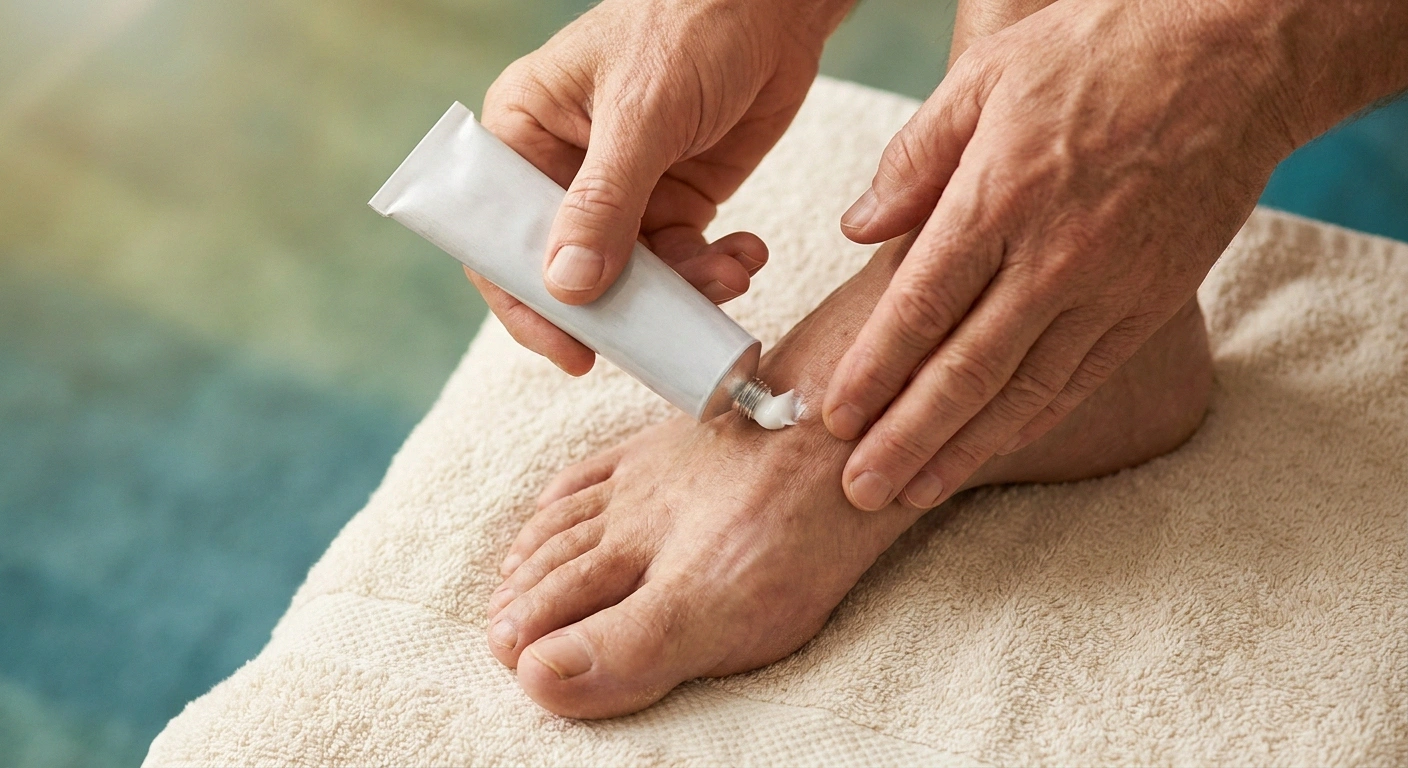
ATX01 is the development name for a high-dose topical amitriptyline formulation — a cream or gel applied to the skin over painful areas — that is being investigated as a treatment for painful peripheral neuropathies, with chemotherapy-induced peripheral neuropathy (CIPN) as the lead indication in the clinical trials.
Key takeaway
ATX01 is a high-dose topical amitriptyline cream being studied for chemotherapy-induced peripheral neuropathy. Amitriptyline itself is not new — it has been used orally for nerve pain for decades. What is new is the attempt to deliver it directly through the skin to the painful nerve endings, in a standardized, clinical-trial-tested formulation, without most of the systemic side effects that limit the pill. It is investigational, not FDA-approved, and not available at pharmacies for this use.
Amitriptyline itself is not new. It's a tricyclic antidepressant (a TCA) that has been around since the 1960s. It's approved by the FDA for depression, but for decades doctors have prescribed it off-label at lower doses for nerve pain — often at bedtime, because it also helps with sleep and has a calming effect on the way the nervous system processes pain signals. Guidelines for neuropathic pain in many parts of the world list amitriptyline as one of the first-line options.
The problem, as most people who have tried oral amitriptyline for nerve pain can tell you, is the side effects. Dry mouth. Drowsiness. Constipation. Difficulty concentrating. In older adults, occasional trouble with balance and memory. In some patients, a real cardiac concern. The medicine works — for some people, remarkably well — but the trade-off is a body full of side effects because the pill has to travel through your bloodstream to reach the nerves in your feet or hands.
What ATX01 is trying to do is elegant in its simplicity: put the amitriptyline where the pain is. Apply it to the skin. Let it reach the peripheral nerve endings directly, without needing to circulate through the whole body first. If it works the way its developers hope, you would get the nerve-quieting benefit without most of the systemic side effects that limit oral use.
Please understand: ATX01 is investigational. That word matters. It is not approved by the FDA for chemotherapy-induced neuropathy or any other painful neuropathy. It is not sold at CVS or Walgreens for this use. And there are still real questions to be answered about how well it works in larger, longer, more rigorous studies. What follows is the honest picture as it stands today.
Why “Topical” Matters for a TCA Like Amitriptyline
To understand why so many people in the neuropathy world are watching ATX01 with interest, you have to understand what the “topical” delivery is actually solving.
When you swallow a tablet of amitriptyline, the drug is absorbed through your gastrointestinal tract, processed by your liver, and distributed everywhere your blood goes. That includes the peripheral nerves in your feet — which is what you're aiming for — but it also includes your brain, your heart's electrical system, your salivary glands, your bladder, your bowels, and everything else the medication happens to pass. Amitriptyline is not a picky molecule. It binds to a lot of different receptors, and it does so wherever it finds them.
That's where the side effects come from. Dry mouth isn't a mystery — it's amitriptyline blocking acetylcholine receptors in your salivary glands. Sedation is amitriptyline crossing into your brain. Constipation and urinary retention are the same anticholinergic effect showing up in your bowels and bladder. The cardiac concern is amitriptyline affecting the electrical signal in your heart. All of these are the price of getting enough drug into the bloodstream to also treat the nerve pain.
A topical formulation flips the equation. If you can deliver enough amitriptyline through the skin to reach the small nerve fibers just beneath the surface — the very nerves that are firing painfully in small fiber neuropathy and CIPN — then you don't need it circulating through the rest of the body at high concentration. The dose that reaches the mouth, brain, and heart drops dramatically. The dose that reaches the painful nerve endings, ideally, stays therapeutic.
This isn't a theoretical trick. Compounding pharmacies have been making topical amitriptyline creams for years, often combined with other agents like ketamine or baclofen, for patients whose systemic side effects are intolerable. Those compounded formulations have helped some people. But they've never been standardized, never been evaluated in the kind of large, controlled clinical trial that supports FDA approval, and never been consistent from one pharmacy to another. What ATX01 represents is the attempt to take that clinical intuition and build a proprietary, standardized, high-dose formulation that could be rigorously tested and, if the data supports it, eventually made available as an approved product.
How Amitriptyline Works Against Nerve Pain (In Plain Language)
I'm not a doctor, but I've read enough of the pharmacology to be able to explain how this class of medicine calms neuropathic pain — and understanding the mechanism helps me think about why a topical formulation could plausibly work.
Damaged nerves fire the wrong signals at the wrong times. That's what neuropathy is at its core. Whether the damage came from chemotherapy, from diabetes, from a virus, or from a cause nobody has been able to pin down, the result is small sensory nerves in the feet, hands, or elsewhere that behave like a stuck alarm system — sending burning, tingling, electric-shock, or aching signals to the brain even when nothing painful is happening.
Amitriptyline works on that alarm system in several ways at once:
- It quiets the firing of damaged nerves. Amitriptyline blocks certain sodium channels in nerve cells. Sodium channels are what let a nerve generate an electrical signal. When they're partly blocked, the nerve fires less easily — and the misfiring quiets down.
- It strengthens the brain's built-in pain-suppression system. By boosting the availability of two neurotransmitters (serotonin and norepinephrine), amitriptyline helps the descending pathways from your brain that naturally dampen pain signals from the spinal cord. This is the same mechanism behind duloxetine — the one drug the American Society of Clinical Oncology currently recommends for CIPN, discussed in our overview of duloxetine for neuropathy.
- It modulates other pain-related receptors. Amitriptyline touches NMDA receptors and adrenergic receptors — both of which play roles in how pain is processed and how nerves become sensitized over time.
When amitriptyline is delivered topically to a painful area, the sodium-channel effect on the local peripheral nerves is likely the dominant one. You aren't getting much of the drug into your brain, so the descending-pathway effect is smaller. But for many people with neuropathic pain — especially the burning, prickling, electric variety — quieting the local misfiring of the small nerves under the skin may be enough to make a meaningful difference in daily life. That, at least, is what the ATX01 developers are betting on, and the early trials are testing.
What the Trial Data Shows So Far

Here is where I want to be especially careful, because I have seen too many early trial results get repackaged into cure-tomorrow headlines, and I don't want to add to that noise.
Research says
Publicly reported Phase 2 results for ATX01 in chemotherapy-induced peripheral neuropathy have shown a reduction in average daily pain scores compared with placebo cream, alongside a side-effect profile much closer to placebo than oral amitriptyline. Phase 2 signals in neuropathic pain, however, frequently shrink in larger Phase 3 trials, and full peer-reviewed publication is what most clinicians will look for before treating the picture as settled.
The public data on ATX01 comes from Phase 2 studies — that's the middle phase of clinical development, after basic safety has been established and before the large, confirmatory Phase 3 trials that are typically needed for FDA approval. Phase 2 is where you look for a signal that a drug is doing what it's supposed to do, in enough people to justify moving forward.
The reported Phase 2 signal, based on what the sponsors have shared publicly, is a reduction in average daily pain scores compared to placebo cream, in patients living with chemotherapy-induced peripheral neuropathy. The side-effect profile — importantly — has looked much closer to placebo than what you'd see with oral amitriptyline, which is what you'd hope for from a topical delivery that stays largely local.
That is genuinely encouraging. It is also not the same as “this drug works.” A few important cautions, in the same voice my own neurologist would use if I asked her over coffee:
- Phase 2 signals often shrink in Phase 3. The larger, more diverse trial populations, and the more rigorous statistical bar, frequently reveal that an effect looked bigger in a small study than it turns out to be at scale. This has happened many times in neuropathic pain drugs specifically.
- Blinding is hard with topical products. If a cream produces even a faint sensation on the skin, patients may guess whether they're on active drug or placebo — which can bias reported pain scores. Well-designed trials use vehicle placebos matched as closely as possible, but this is a recognized challenge.
- CIPN pain fluctuates. It can improve on its own as time passes after chemotherapy ends, and it can flare with fatigue, cold, or activity. Trials have to be long enough and controlled enough to see through that noise.
- Peer review and regulatory review matter. Sponsor press releases and topline results are not the same as fully published, independently reviewed clinical trial data with all the details on how patients were selected, how pain was measured, and how the analysis was done.
None of that is a reason to dismiss ATX01. It's a reason to hold it carefully — with the interest it deserves and the reservation any Phase 2 result requires.
ATX01 vs. Oral Amitriptyline: The Side-Effect Difference

One of the clearest reasons ATX01 has drawn attention is what it might spare people from. If you or someone you love has tried oral amitriptyline for nerve pain, you likely already know the trade-offs. Here's how the two forms compare, based on what has been reported and what the topical rationale is designed to achieve:
Oral amitriptyline vs. ATX01 (topical, investigational)
| Feature | Oral amitriptyline | ATX01 (topical) |
|---|---|---|
| Approval status | Prescription; off-label for nerve pain | Investigational; not FDA-approved |
| How it's taken | Swallowed as a tablet | Applied to skin over painful area |
| Systemic absorption | High — reaches whole body | Designed to be low |
| Dry mouth & sedation | Very common; often dose-limiting | Substantially reduced (per Phase 2) |
| Cardiac concern (QT) | Meaningful in some patients | Substantially reduced (per Phase 2) |
| Cognitive fog in older adults | Concerning; on Beers Criteria | Substantially reduced (per Phase 2) |
| Available today? | Yes, with a prescription | No — clinical trials only |
Oral amitriptyline reaches your feet, but it also reaches your mouth, your brain, your heart, your bowels, and your bladder. That's why so many people who benefit from it still end up cutting the dose, splitting tablets, or stopping altogether after a few months. In older adults, oral amitriptyline is on the Beers Criteria — a list of medications that geriatricians consider potentially inappropriate for people 65 and older because of cognitive and fall risks. That doesn't mean it's never used in older patients, but it does mean the conversation is more careful.
ATX01, in the reported Phase 2 data, appears to keep systemic amitriptyline levels low. That means much less dry mouth, less sedation, less cognitive fog, less impact on the heart's electrical system, and less concern about interactions with the many other medications older patients often take. If those signals hold up in Phase 3, and if the drug is eventually approved, this is where the meaningful difference for patients would live.
What ATX01 would not do — and here I want to be honest with you — is replace all of the roles that oral amitriptyline plays for some patients. Oral amitriptyline's calming effect on sleep, mood, and the descending pain pathways in the spinal cord may not be replicated by a topical formulation. For patients who benefit from those systemic effects, oral will still have a role. For patients who couldn't tolerate the systemic side effects, ATX01 could open a door that's currently closed.
ATX01 vs. Other Topical Options You Can Already Get
ATX01 isn't the only topical option that gets discussed in the neuropathy world. Before I get too excited about anything investigational, I always try to remind myself what's already on the shelf or already prescribable today, because sometimes the best answer is one that's already available.
Topical options for painful peripheral neuropathy
| Product | How you get it | Where it fits |
|---|---|---|
| ATX01 (topical amitriptyline) | Clinical trials only | Investigational; Phase 2 signal in CIPN |
| Capsaicin cream (0.025–0.075%) | Over the counter | Slow to work; burning during use is a barrier |
| Capsaicin 8% patch (Qutenza) | Prescription; office-applied | Approved for PHN and painful diabetic neuropathy of the feet |
| Lidocaine 5% patch | Prescription (4% OTC) | Approved for PHN; often used off-label for localized nerve pain |
| Compounded amitriptyline / ketamine cream | Rx via compounding pharmacy | Not FDA-approved as a product; quality varies |
| CBD topicals | Over the counter | Weak evidence in neuropathic pain |
| Menthol 1% cream | Over the counter | Some Phase 2 signal in CIPN; low risk to try |
Here's how ATX01 fits alongside what already exists:
- Capsaicin creams (0.025%–0.075%) — available over the counter. Made from the compound that makes chili peppers hot. Works by depleting substance P, a signaling molecule involved in pain. Slow to work (often weeks), and the burning sensation during application is a barrier for many. Modest evidence in some neuropathic conditions.
- Capsaicin 8% patch (Qutenza) — prescription only, applied in a doctor's office, one treatment can provide months of relief for some. FDA-approved for post-herpetic neuralgia and painful diabetic neuropathy of the feet.
- Lidocaine 5% patch — prescription; a 4% version is over the counter. Works by blocking sodium channels locally (similar in spirit to what topical amitriptyline does). Approved for post-herpetic neuralgia. Often used off-label for other localized nerve pain.
- Compounded topical amitriptyline and ketamine — available today through compounding pharmacies with a prescription. Not FDA-approved, not standardized, and quality varies from pharmacy to pharmacy. Some patients report meaningful help; controlled trial results have been mixed.
- CBD topicals — see our fuller look at CBD for neuropathy. Evidence for neuropathic pain specifically remains weak, though some patients find them helpful.
- Menthol-based creams — some Phase 2 data in CIPN suggests possible benefit; low risk to try.
If you want the fuller landscape of what's on the shelf right now, our guide to the best neuropathy creams walks through the main categories with more detail. The reason ATX01 has generated interest, in that context, is that it aims to offer a mechanistically well-understood, high-dose topical delivery of a drug we already know works systemically — with a standardized product and clinical trial data behind it. That combination is uncommon in the topical pain space.
Where Development Stands Right Now

This is the section I update in my head every few months, because clinical development moves and I don't want to leave anyone with an outdated picture. Here is the honest state of things as best as I can piece it together in mid-2026:
Be careful about “get ATX01 today” claims
ATX01 is not commercially available for the treatment of neuropathy anywhere in the world. The only legitimate way to receive ATX01 today is through enrollment in an active clinical trial. Any website, overseas pharmacy, or seller claiming to offer ATX01 for purchase is not selling the real product, is not selling it legally, or both. If you see a claim that promises access, please bring it to your care team before spending money, and consider reporting it.
ATX01 has completed Phase 2 studies in chemotherapy-induced peripheral neuropathy, with public communications from the sponsor describing positive topline results — pain reduction versus placebo, with a favorable safety profile. Discussions of moving toward Phase 3 have been reported. Additional indications, including diabetic peripheral neuropathy and other painful peripheral neuropathies, have been mentioned as potential future targets.
What has not happened as of this writing:
- ATX01 is not FDA-approved for any indication.
- It is not available at retail pharmacies for the treatment of neuropathy.
- There is no announced launch date. Even if the ongoing development pathway proceeds smoothly, approval and commercial availability are typically several years out from the point where a Phase 2 signal has been reported.
- Insurance coverage, cost, and prescribing patterns are all downstream questions that depend on approval first.
I say all of this not to dampen hope — it's real hope, and I share it — but because I've watched people spend real money on compounded knockoffs, unregulated overseas products, or “get it now” pitches that lean on early trial results and prey on desperation. Please be careful with anything that promises access to ATX01 today. There isn't a legitimate consumer pathway to ATX01 today outside of enrollment in an active clinical trial.
What This Could Mean for CIPN Patients Waiting Today

If you're reading this because you or someone you love is living with chemotherapy-induced peripheral neuropathy right now, I want to speak to you directly, because I know the waiting is exhausting.
While the science is still catching up
The best thing you can do while ATX01 works its way through Phase 3 is stay in a working relationship with your oncology and neurology team, ask directly about clinical trials at every visit, and keep your current treatment plan honest — real conversations about whether your current medications are helping, real daily foot care, real attention to what makes symptoms better or worse. Hope for the next drug is fair. Neglecting the care available today is not.
CIPN is one of the most stubborn kinds of nerve pain in modern medicine. Chemotherapy saved a life — that's the deal — but the price of that deal was neuropathy that may not fully resolve on its own. The current landscape of what we can offer patients is thin. The American Society of Clinical Oncology's most recent guideline recommends duloxetine as the one drug supported by moderate-quality evidence, with everything else offered as reasonable options in the absence of stronger data. Gabapentin and pregabalin are used commonly but with mixed evidence in CIPN specifically. Topical options today are limited in the ways I described above.
In that landscape, ATX01 represents something real: a purpose-built topical delivery of a well-understood analgesic, with a Phase 2 signal in exactly the condition patients need help with, and a side-effect profile that could be tolerable for the older adults and medically complex patients where oral options are hardest to use. Even at Phase 2, that's worth watching closely.
What you can do while you wait, based on the conversations I've had with clinicians and patients in our community:
- Talk to your oncologist and neurologist about current options. If duloxetine hasn't been discussed and it fits your situation, that conversation is worth having. If you've already tried it, ask what your team thinks about layered approaches — some combination of medication, targeted physical therapy, exercise, and non-drug approaches like acupuncture or scrambler therapy.
- Ask about clinical trials. Your oncology center may know of active ATX01 trials or related studies you might be eligible for. There is no downside to asking.
- Search ClinicalTrials.gov yourself. Type “ATX01” or “topical amitriptyline” and “peripheral neuropathy” into the search bar. Trials that are actively recruiting will show up with locations and eligibility criteria. Your care team can help you interpret whether any of them fit you.
- Consider whether a compounded topical amitriptyline could be a reasonable interim. This is a real conversation to have with a pain-management physician who knows compounding well. The compounded product isn't ATX01 and doesn't have the same evidence, but it is an option some patients pursue. Please have the conversation with a physician, not a marketer.
- Watch for peer-reviewed publications. When Phase 2 or Phase 3 data is published in a full journal article (not just a press release), that's when the picture becomes much clearer. Your oncology team will see those before most patients do — ask them at your next visit whether anything new has come across their desks.
And please, don't let the hope of a future treatment keep you from managing the neuropathy you have today. Solid daily foot care, protection of skin that has lost normal sensation, a clear-eyed conversation with your team about whether any of your current medications could be worsening the nerve damage, and a plan for whether and how neuropathy might improve — the honest answer to whether neuropathy can be reversed is nuanced and worth understanding — all of these still matter, and they matter today, not in some hoped-for future.
Sitting with the printouts of the ATX01 news in front of me, I felt a little of what I remember feeling when duloxetine first started getting attention as a CIPN option years ago. Cautious optimism. A quiet hope. A determination not to let anyone in our community miss the moment when the science actually catches up to the need. If ATX01 makes it through the next stages of testing and lands as an approved treatment, I'll be one of the people writing about how to access it, what to expect, and how it compares in real-world use.
Until then, please share what you learn with your own care team. They know you, they know your medications, they know your history, and they will know how to think about anything I've written here in the specific context of your life. Nothing on this page is a substitute for that conversation — it's just my way of walking you through what I've been reading, so you can walk into your next appointment with better questions to ask.
Frequently Asked Questions
Is ATX01 available at pharmacies right now?
No. ATX01 is an investigational drug that is being studied in clinical trials. It has not been approved by the FDA for chemotherapy-induced peripheral neuropathy or any other painful neuropathy, and it is not sold at retail or specialty pharmacies for this use. Beware of any website or seller that claims to offer ATX01 today.
Is ATX01 the same thing as a compounded topical amitriptyline cream from a compounding pharmacy?
No. Compounded topical amitriptyline formulations have existed for years and are made by compounding pharmacies under a physician prescription. They are not standardized, not the same concentration or formulation as ATX01, and have not been studied in the same way. Some patients report benefit from compounded creams, but they are not the same product and do not share the same clinical trial evidence.
Has ATX01 been shown to work for chemotherapy-induced peripheral neuropathy?
The publicly available information suggests that a Phase 2 trial showed a reduction in pain scores compared to placebo, with a favorable safety profile. That is a promising early signal, but Phase 2 results in neuropathic pain often shrink in the larger, more rigorous Phase 3 trials that are needed for FDA approval. It is fair to say the early evidence is encouraging. It is not yet fair to say the drug works.
Would ATX01 have fewer side effects than oral amitriptyline?
That is the whole idea of the topical formulation and the reported Phase 2 data supports it. By staying largely on and near the skin instead of circulating through the whole body, ATX01 appears to cause much less dry mouth, sedation, cognitive fog, and cardiac impact than oral amitriptyline. This is one of the main reasons the drug is being developed, and it is what makes it especially interesting for older adults and patients who take many other medications.
Could ATX01 be used for diabetic neuropathy or post-herpetic neuralgia, not just CIPN?
The lead trials have focused on chemotherapy-induced peripheral neuropathy, but the mechanism of action would in theory apply to other painful peripheral neuropathies, including diabetic peripheral neuropathy and post-herpetic neuralgia. Sponsor communications have mentioned interest in additional indications. Any expansion of use to other conditions would need its own clinical trials and FDA review.
How can I follow the ATX01 clinical trial progress?
Search ClinicalTrials.gov for terms like ATX01, topical amitriptyline, and painful peripheral neuropathy. Trials that are actively recruiting will show up with study locations, eligibility criteria, and contact information. Your oncologist or neurologist may also know of studies you could ask about. Peer-reviewed publications and major oncology conference presentations are the two other places where updated data typically appears.
If ATX01 is not available yet, is there anything similar I can try today?
A conversation with your care team is the right starting point. For CIPN, current guidelines mention duloxetine as the drug with the most evidence, with several other medications and non-drug options considered case-by-case. Compounded topical amitriptyline is available with a prescription through some pain-management physicians and compounding pharmacies. Over-the-counter topical options like capsaicin creams and menthol-based products are lower risk to try but have modest evidence. Please make these choices with a clinician who knows you, not from a webpage.
Is ATX01 safe for older adults?
The whole point of the topical formulation is to reduce the systemic exposure that makes oral amitriptyline concerning in older adults. The reported Phase 2 side-effect profile has looked much closer to placebo than what you would see with oral use, which is a positive signal for older-adult use if the drug is ultimately approved. However, older adults were not the only population studied, and any use in older adults would be a conversation to have with the prescribing clinician when and if the drug becomes available.
About the Author