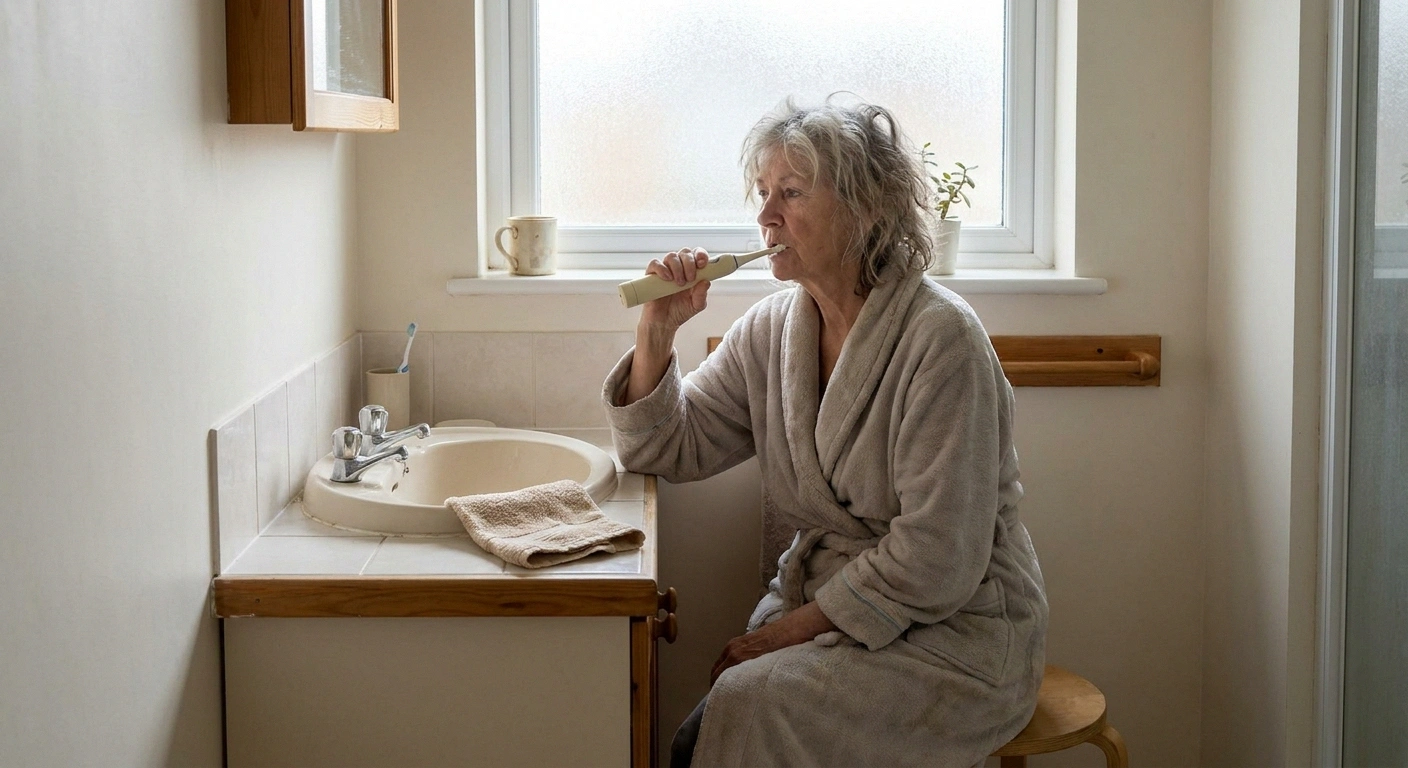
A woman in my support group once asked a question I haven't stopped thinking about. Her gums had started bleeding, and her dentist said they were pulling back from her teeth. “I don't understand it,” she said. “I've been brushing harder than ever.”
That was very likely the answer — she just couldn't feel it.
When your fingertips go numb, the pressure you put on a toothbrush stops reporting back to you. Most of us respond by gripping tighter and scrubbing harder, because it feels like nothing is happening. Meanwhile, the clumsiness that comes with numb hands means some spots never get reached at all. You end up with two problems at once — gums scrubbed raw in some places and plaque left behind in others.
Add in the brush that slips out of your hand and clatters into the sink, floss you can't wind around fingers you can't feel, a mouth that may be numb or dry from medication, and the link between gum disease and blood sugar, and daily oral care turns out to be one of the more quietly difficult parts of living with neuropathy. It's also one of the most fixable. Here's what has worked for people I know, along with what the research says about it.
Why Numb Hands Brush Too Hard
Your fingertips are constantly measuring grip. They tell your brain how hard you're squeezing and whether the handle is starting to slip. When neuropathy in the hands dulls that signal, the brain plays it safe and clamps down. People with reduced fingertip feeling tend to hold objects with more force than they need, and a toothbrush is no exception.
- Bristles splay outward within a few weeks
- Teeth look longer as gums pull back
- Small notches right at the gumline
- New twinges with cold drinks
- Pink in the sink when you brush or floss
- Red, puffy gums around back teeth
- A fuzzy film you can see in the mirror by evening
- Bad breath that returns soon after brushing
A tight grip usually means a heavy scrub. Over months, hard brushing can wear the gums back from the teeth and scuff the softer root surfaces that get exposed. Sensitivity to cold water, a notch near the gumline, or gums that look longer on one side are all clues.
At the same time, bleeding gums don't always mean you're brushing too hard. Bleeding is also the classic sign of gingivitis, the early stage of gum disease, which comes from plaque that's been left behind. With numb hands, it's common to have both: too much pressure on the teeth you can easily reach, and too little attention on the ones you can't. The back molars and the inside surfaces of the lower front teeth are the usual blind spots.
The goal, then, isn't to brush harder or softer — it's to brush with a light, controlled touch that reaches everywhere, and to use your eyes and some clever tools to replace the feedback your fingers used to give you. Always choose a soft-bristled brush, whatever else you decide.
Choosing a Toothbrush You Can Actually Control
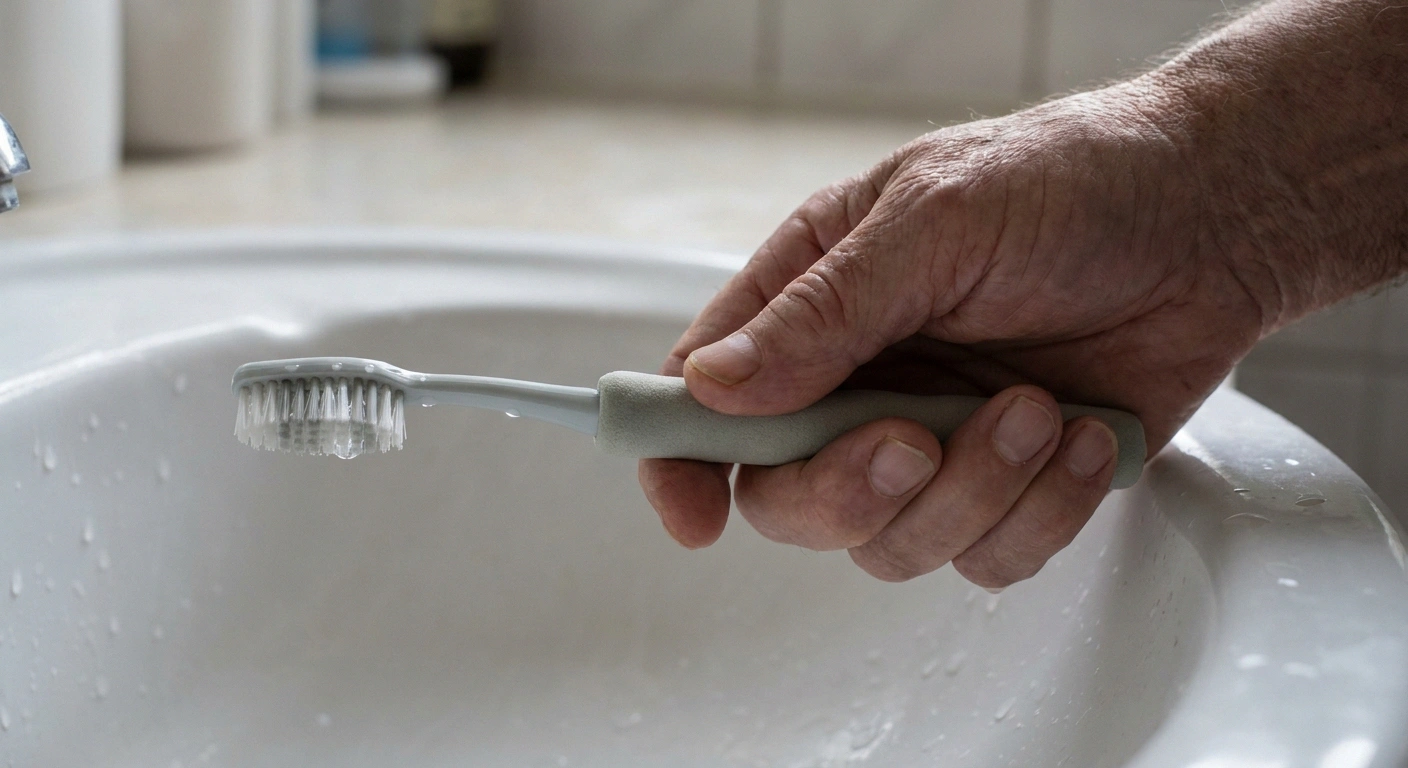
If you can afford one, a powered toothbrush is the single biggest upgrade for numb hands. A large Cochrane review pooled 56 trials with more than 5,000 people and found that, compared with manual brushing, powered brushes removed 21 percent more plaque and reduced gingivitis by 11 percent after three months of use.
- A short length of foam pipe insulation slid over the handle
- A rubber bicycle handlebar grip
- A tennis ball with a slit cut through it, pushed onto the handle
- Several wide rubber bands wrapped around the handle for traction
- A washcloth wrapped around the handle and secured with medical tape
For neuropathy, the features matter as much as the motor:
- A thicker, heavier handle is easier to hold with weak or numb fingers than a slim plastic stick.
- A built-in two-minute timer that pulses every 30 seconds tells you when to move to the next quarter of your mouth.
- A pressure sensor, found on many models, lights up or changes its buzz when you press too hard. That's a direct replacement for the feedback your fingers stopped giving you.
- A charging base means you're not fiddling with tiny batteries.
If you prefer a manual brush, make the handle work for you. Wide, cushioned handles are sold as adaptive toothbrushes, and foam grip tubing from a pharmacy or medical supply store slides over an ordinary brush in seconds. Some people like brushes with three rows of bristles set at angles, which clean the front, back, and top of a tooth in one pass. An occupational therapist can fit you with a strap-style cuff if your grip is very weak. My article on occupational therapy for neuropathy explains what that kind of visit looks like.
Whatever you choose, swap the brush or brush head every three to four months, or sooner if the bristles splay.
A Two-Minute Routine That Works With Numb Fingers
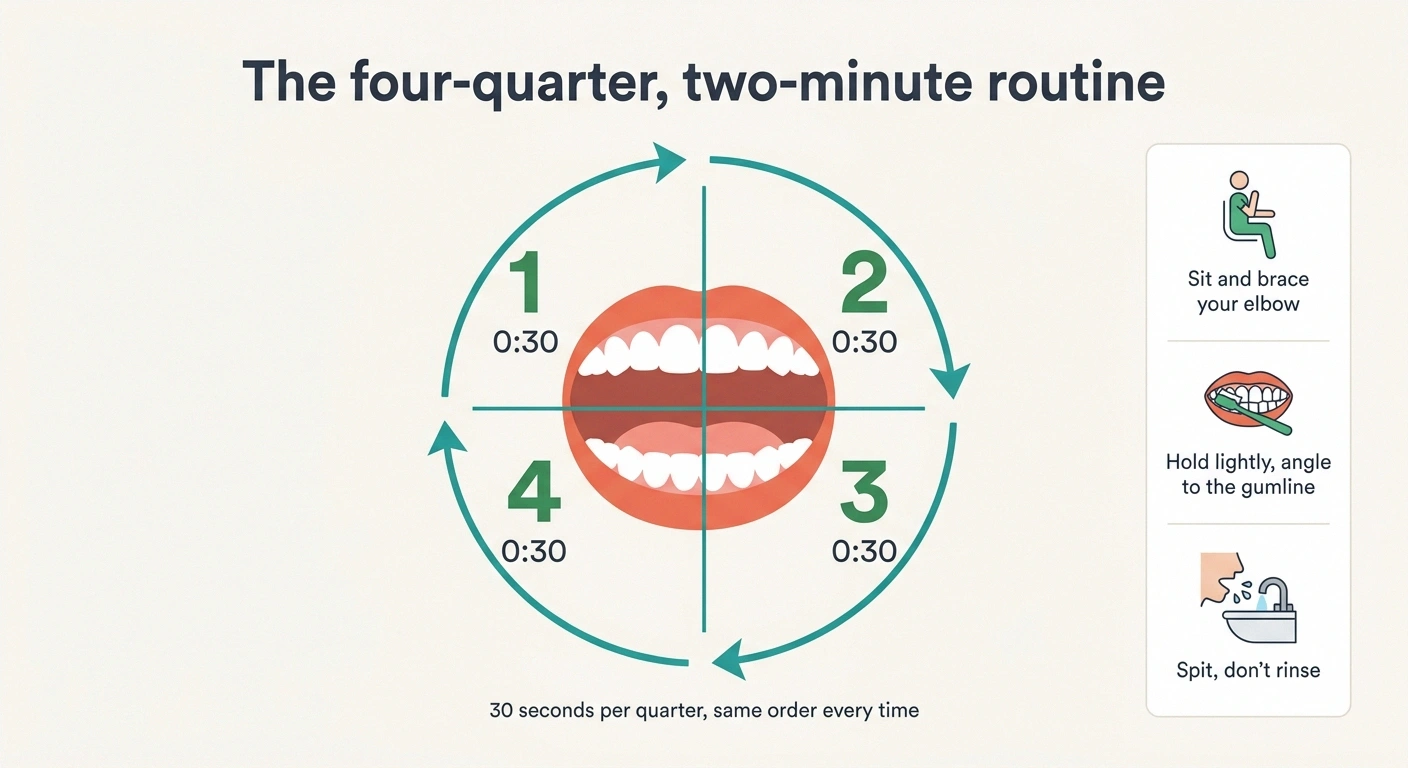
The routine matters as much as the tool. This is the one I'd suggest, and it's built around one idea — when you can't trust your fingers, let your eyes and a timer do the checking.
- Sit down. A sturdy chair or stool at the sink takes balance out of the equation. Bathrooms are where many neuropathy falls happen, and you don't need to stand to brush.
- Brace your elbow. Resting your elbow on the counter steadies your hand far better than holding your arm in the air.
- Get light and a mirror. A bright light over the sink and a magnifying mirror at face height let you see where the bristles actually are.
- Use a pea-sized amount of fluoride toothpaste. A pump dispenser or a flip-top cap is easier than a screw cap.
- Divide your mouth into four quarters. Spend about 30 seconds on each, going around in the same order every time: the top teeth on one side, the top teeth on the other, the bottom teeth below them, then the bottom teeth on the side where you started.
- Hold the brush loosely and guide it slowly along the gumline at a slight angle. With a powered brush, just rest it on each tooth; don't scrub.
- Finish with your tongue, then spit out the extra toothpaste. Many dentists suggest not rinsing right away, so the fluoride stays on your teeth longer.
Do it twice a day, morning and night. If your hands are stiff or shaky first thing in the morning, there's nothing wrong with brushing after breakfast once your hands have warmed up. Nobody's grading the timing. My piece on bathroom safety with neuropathy covers grab bars, lighting, and other changes that make the whole room easier to use.
Flossing Without Wrapping String Around Your Fingers

The American Dental Association recommends cleaning between your teeth once a day. With numb fingertips, the classic method (a long piece of string wound around two fingers and guided between each tooth) can feel like threading a needle with mittens on. Happily, the ADA accepts other ways of cleaning between teeth, and several are much easier with neuropathy.
- Floss holders and picks. A plastic handle holds a short, tight piece of floss, so you steer the handle instead of the string. Long-handled versions reach the back teeth without putting your fingers in your mouth.
- Interdental brushes. These look like tiny bottle brushes. They come in different widths, are easy to grip, and many dental hygienists prefer them for people with gaps between their teeth. Ask which size fits you.
- Water flossers. A thin stream of pulsing water cleans between the teeth and along the gumline. You only have to point the tip, which makes them a popular choice for people with limited dexterity. Some carry the ADA Seal of Acceptance, meaning the maker showed they're safe and reduce plaque and gingivitis.
Two tips if you try a water flosser. Start on the lowest pressure setting, especially if your gums or lips are numb, because you can't feel whether the stream is too strong. And fill the tank with lukewarm water rather than cold — it's more comfortable, and for a few people I'll mention in a moment, it matters a lot.
When Your Mouth Is Numb, Too
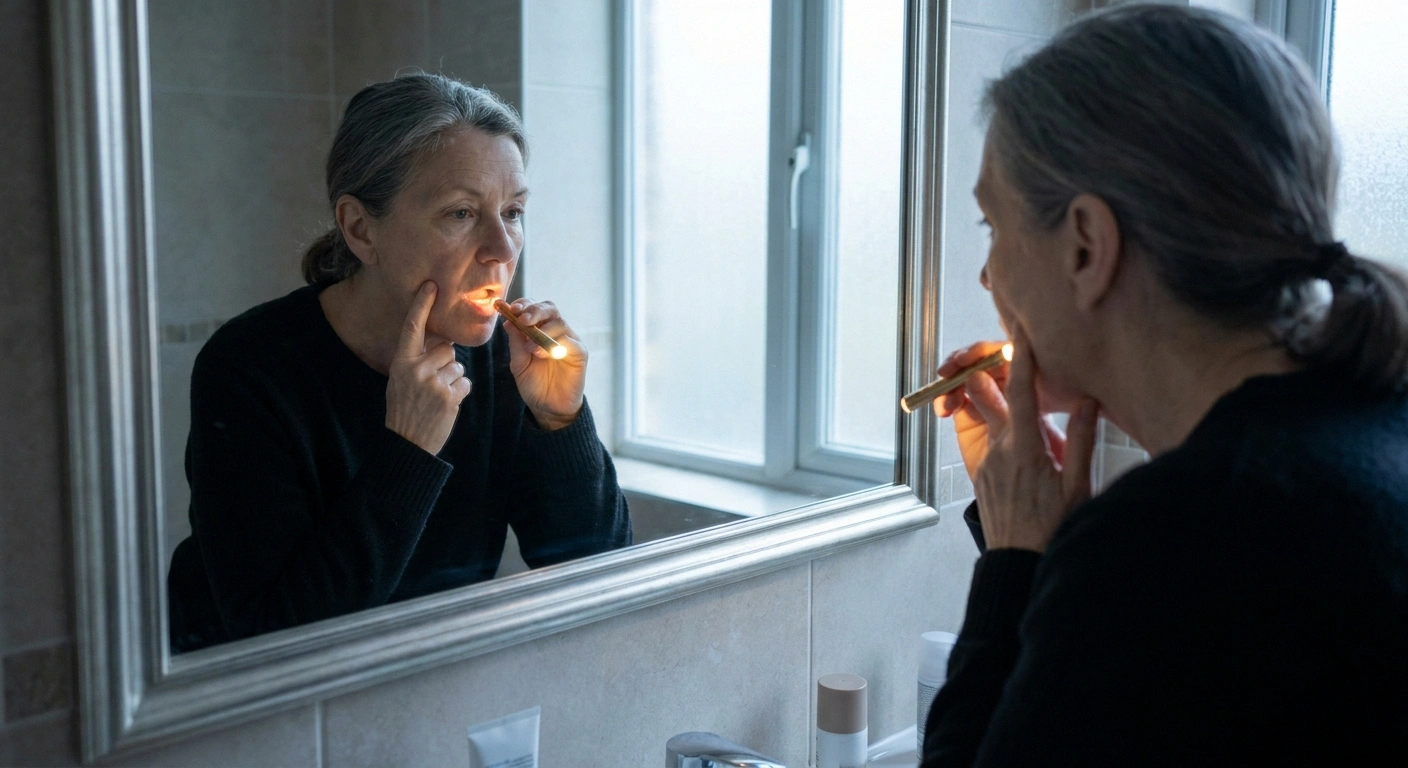
Neuropathy doesn't always stop at the hands and feet. Some people have patches of numbness around the lips, chin, tongue, or inside the cheeks — from a nerve disorder affecting the face, from certain chemotherapy drugs, or from other causes. A numb mouth brings its own set of risks.
- Burns. You may not feel that coffee or soup is too hot until the damage is done. Let hot drinks and soups cool for a few minutes before you sip. If you check the temperature on your skin, use a spot where your feeling is still normal, not a numb lip or fingertip.
- Bites. It's easy to chew the inside of a numb cheek or the side of your tongue without noticing.
- Missed problems. A sore from a denture, a chipped tooth, or a small cut can go unnoticed for days.
At meals, cutting food into smaller pieces and chewing slowly gives you more time to notice where your tongue and cheeks are. A sip of water between bites also helps clear the food that tends to pocket in a numb cheek.
The fix is a weekly look. Once a week, use a small flashlight and a mirror to check your gums, cheeks, tongue, and the roof of your mouth. Any sore, white or red patch, or lump that hasn't healed within two weeks deserves a dental visit.
Two groups need special care with temperature. People getting oxaliplatin chemotherapy can have cold-triggered tingling or tightness in the throat and jaw, so room-temperature water for brushing and rinsing is kinder during treatment weeks. My article on oxaliplatin cold sensitivity explains why. And for people with trigeminal neuralgia, brushing is one of the classic triggers for an attack. A soft or extra-soft brush, lukewarm water, and slow, gentle strokes all help, as does starting on the side of your mouth that's less sensitive.
Dry Mouth From Nerve Pain Medicines
Saliva is your mouth's built-in defense system. It rinses away food, neutralizes acid, and carries minerals that help repair early damage to tooth enamel. When saliva dries up, cavities can develop surprisingly fast, especially along the gumline and around old fillings.
- Needing water to swallow crackers or bread
- Cracked lips or sore corners of the mouth
- A tongue that feels rough, sticky, or burns
- Dentures that suddenly won't stay in place
- New cavities along the gumline after years without any
Several medicines commonly used for nerve pain reduce saliva. The older tricyclic antidepressants, such as amitriptyline and nortriptyline, are well known for it. In pooled clinical trials of duloxetine, 13 percent of people reported dry mouth, compared with 5 percent on placebo. Gabapentin caused it less often, in about 5 percent of people in trials for nerve pain after shingles, compared with 1 percent on placebo. Some conditions linked to neuropathy, like Sjögren's syndrome, cause dry mouth on their own.
If your mouth feels dry, sticky, or burns more by evening, try these:
- Sip water through the day, and keep a glass by the bed.
- Chew sugar-free gum or suck sugar-free lozenges, especially ones sweetened with xylitol, to get saliva flowing.
- Choose an alcohol-free mouthwash; alcohol-based ones can dry the mouth further.
- Run a humidifier in the bedroom at night.
- Ask your dentist about a prescription-strength fluoride toothpaste and saliva substitutes.
Don't stop a nerve pain medicine because of dry mouth without talking it over with whoever prescribed it. Sometimes a change in dose, timing, or medicine solves the problem. If you take amitriptyline, my guide to amitriptyline for neuropathy covers its other side effects too.
Gum Health and Blood Sugar Work Both Ways
If your neuropathy comes from diabetes, your gums deserve extra attention. People with diabetes are more prone to gum disease, and the relationship runs in both directions: inflamed, infected gums can make blood sugar harder to control.
| Bring | Why it helps |
|---|---|
| Your latest A1c result | Guides how often cleanings make sense |
| A full medication list | Flags drying medicines and blood thinners |
| A note of any numb areas in your mouth | Helps the dentist check places you can't feel |
| Your toothbrush and flossing tool | The hygienist can watch your technique and adjust it |
The good news is that treating gum disease seems to help. A 2022 Cochrane review of 30 studies involving more than 2,400 people with diabetes found that professional treatment for periodontitis lowered A1c by about 0.4 percentage points three to four months later. The reviewers rated that evidence as moderate in certainty. It isn't a substitute for diabetes care — but it's a real, measurable benefit from something as unglamorous as a deep cleaning.
If your dentist recommends that kind of deep cleaning, it usually goes by the name scaling and root planing. The hygienist cleans below the gumline and smooths the root surfaces, typically with numbing medicine, over one or two visits. If sitting with your mouth open for a long stretch is hard on your jaw or your back, ask whether the work can be split into shorter appointments.
Watch for the signs of gum disease: gums that bleed easily, look red or swollen, pull back from the teeth, or are tender; persistent bad breath; and teeth that feel loose or have shifted. Keep your regular cleanings, and ask whether you'd benefit from more frequent ones. My tips for more comfortable dental visits can make those appointments easier. For more on how diabetes affects nerves, see my overview of diabetic neuropathy.
Dentures and Partials With Numb Hands
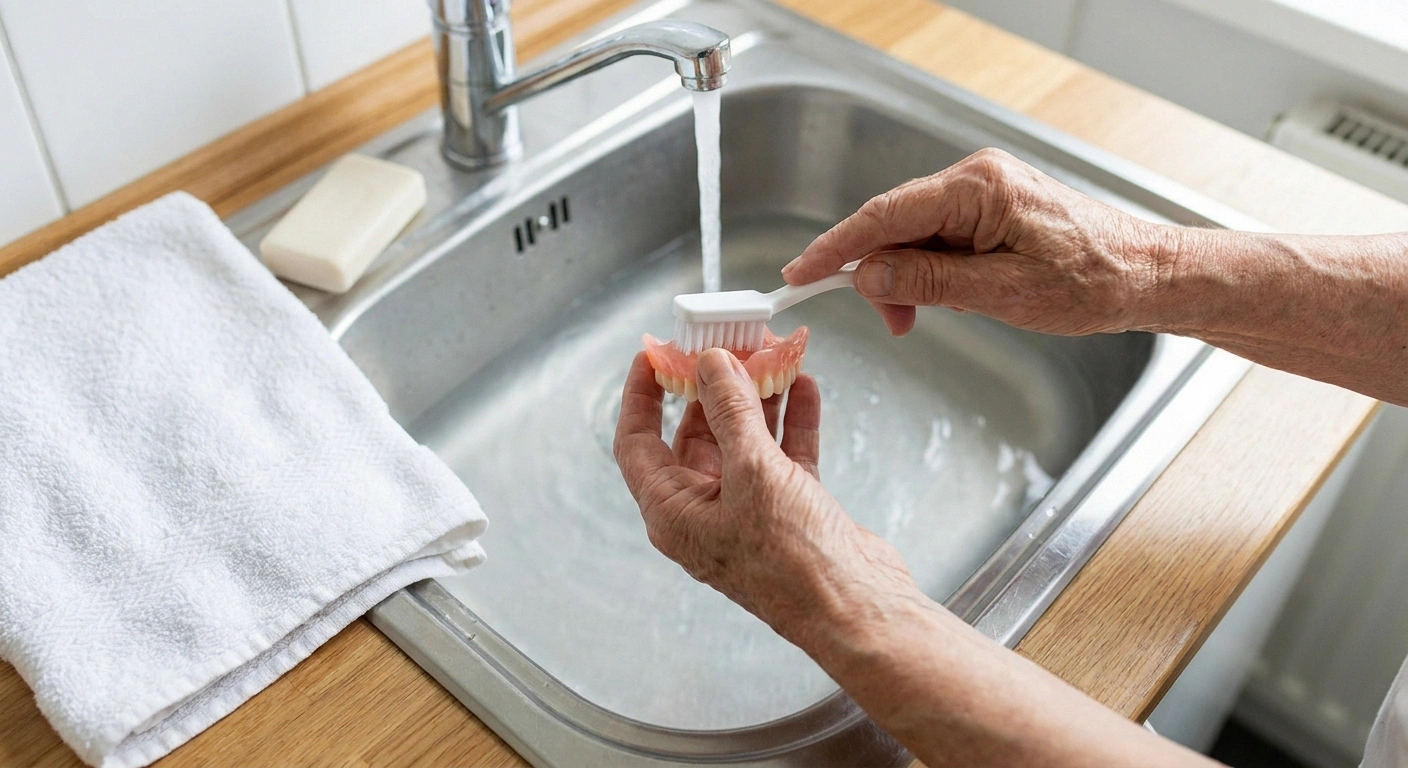
Dentures bring their own challenge: they're slippery, surprisingly expensive, and easy to drop when you can't feel your grip.
Clean them over a sink half-filled with water or over a folded towel, so a slip doesn't mean a cracked plate. A denture brush with suction cups on its base can be stuck to the sink or counter, letting you scrub the denture against the brush with one hand instead of holding both. Follow your dentist's instructions for overnight soaking.
Numb gums also hide sore spots. A denture that has started to rub can cause an ulcer you don't feel. Once a week, take the denture out and look at your gums with a mirror and a flashlight. Red, raw, or white areas mean it's time for an adjustment — don't just wait for them to heal on their own.
When a Caregiver Takes Over

For some people, brushing their own teeth eventually becomes too hard, and a spouse, adult child, or aide steps in. It's an intimate task, and a little technique makes it easier on both of you.
- Stand slightly behind and to the side of the person, who sits in a supportive chair. That position lets you see into the mouth and keeps the head steady.
- Use a small, soft brush and a pea-sized amount of toothpaste, and work through one section at a time.
- Keep the pace unhurried and explain what you're doing. Numbness can make a brush feel strange or startling.
- If spitting is difficult, ask a dental office about suction toothbrushes, which remove fluid as you brush.
A dental hygienist can show you the technique at the next cleaning, and most are glad to be asked. And if you're the one doing the caring, remember that the same routine works for you: a soft brush, a light touch, and a timer beat effort every time.
Frequently Asked Questions
Is an electric toothbrush better if I have neuropathy in my hands?
For many people, yes. A Cochrane review found powered brushes removed more plaque and reduced gingivitis more than manual brushes after three months, and features like thicker handles, timers, and pressure sensors help make up for reduced finger feeling.
How can I floss if I can't feel my fingers?
Floss holders or picks, small interdental brushes, and water flossers all avoid wrapping string around your fingers. The American Dental Association accepts these alternatives for cleaning between the teeth once a day.
Why do my gums bleed when I brush?
Bleeding can come from brushing too hard, which is common when numb fingers squeeze the brush, or from gingivitis caused by plaque left in hard-to-reach spots. A soft brush, a lighter grip, daily cleaning between the teeth, and a dental checkup help sort out the cause.
Can neuropathy affect my mouth and teeth?
It can. Some neuropathies cause numbness around the lips, tongue, or cheeks, which raises the risk of burns and bites. Medicines used for nerve pain can also cause dry mouth, which increases the risk of cavities.
Do nerve pain medications cause dry mouth?
Several do. Tricyclic antidepressants such as amitriptyline are well known for it, duloxetine caused dry mouth in about 13 percent of people in pooled trials, and gabapentin caused it in about 5 percent in one set of trials.
How often should I see the dentist if I have diabetic neuropathy?
At least as often as your dentist recommends for routine cleanings, and more often if you have signs of gum disease. Treating gum disease has been shown to modestly improve blood sugar control in people with diabetes.
About the Author