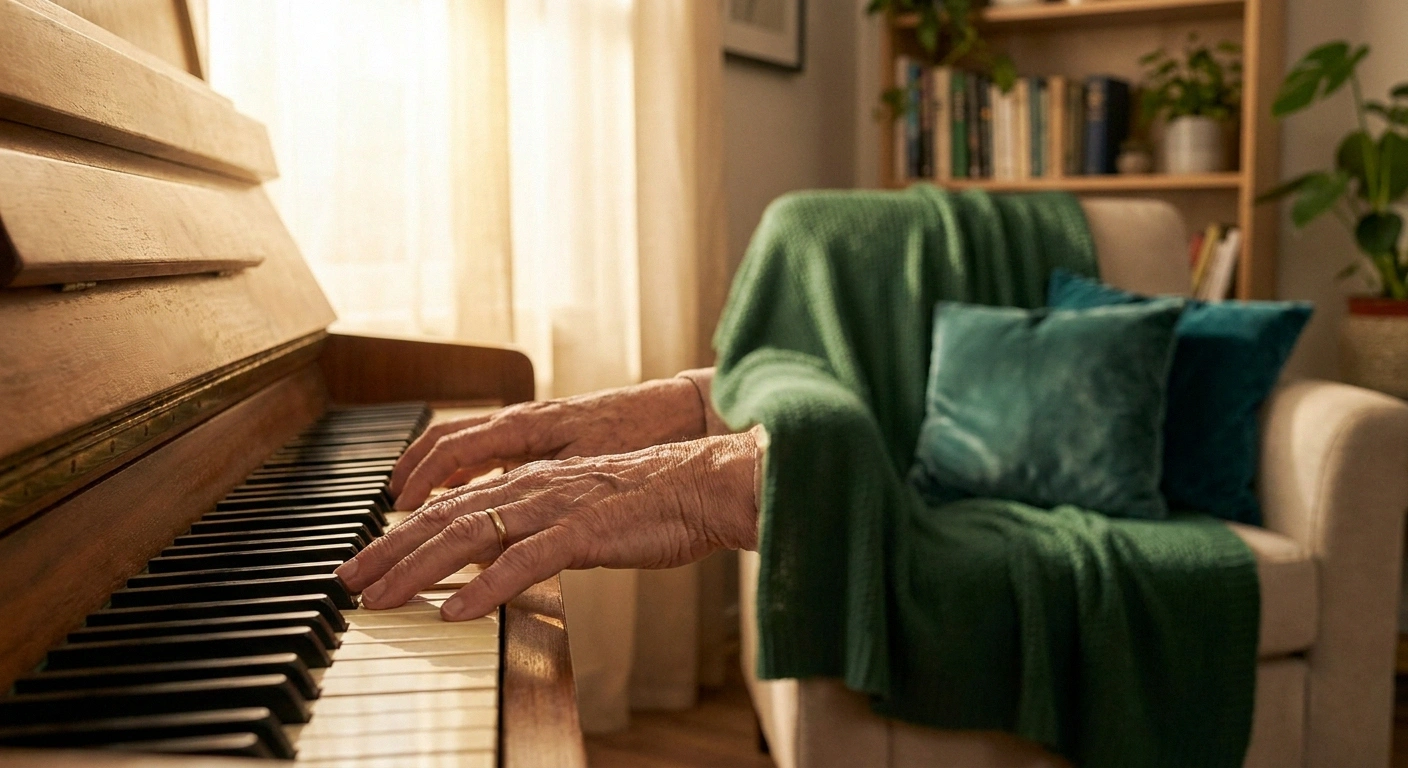
My friend Marge has played piano since she was seven years old. Not lessons-then-quit piano — real piano, the kind where Bach lived in her hands the way other people carry a favorite song in their head. When her neuropathy moved from her feet into her fingers a few years ago, she called me crying. Not because a doctor had said anything dramatic, but because she’d sat down to play a piece she’d known for forty years and couldn’t find the edge of the black keys. Her fingers were there. She just couldn’t feel them being there.
I hear some version of Marge’s story often in this community — knitters who can’t feel the yarn, gardeners who can’t feel the soil, and pianists who can’t feel the keys the way they used to. Piano seems to hit people especially hard, and I understand why. It isn’t a hobby you casually set down. It’s muscle memory built over decades, it’s emotion you access nowhere else, and for a lot of people it’s tangled up with who they are. Losing sensitivity in your fingertips can feel like losing a piece of yourself, and that grief is real. It deserves to be acknowledged, not brushed past with a tips list — if this is stirring something up for you, our piece on neuropathy and mental health is worth reading too.
But here’s what I’ve also learned, both from Marge and from years of collecting stories in this community: hand neuropathy doesn’t have to be the end of playing. It usually means a different way of playing. So let’s go through what actually changes, and then — the part I really want you to stick around for — everything you can do about it.
When Neuropathy Reaches Your Hands: What Changes at the Piano
Piano is one of the most sensation-dependent instruments there is, which is part of why hand neuropathy hits it so hard. Understanding exactly what’s changing helps you stop blaming yourself for “getting worse” at something you’ve played for decades — you’re not getting worse, your input signal is.
Key takeaway
You can keep playing piano with neuropathy — the technique adapts to you, not the other way around. Loss of sensation changes how you play, not whether you can. Bench height, hand shape, warm-up ritual, instrument choice, and repertoire are all adjustable. Your years of muscle memory are not gone.
Loss of light-touch sensation makes it harder to find the edges of the keys without looking down, especially the narrow spaces between the black keys.
Loss of proprioception — your sense of where your fingers are without watching them — quietly undermines fingering accuracy. You might land a G when you meant an A, not because you don’t know the piece, but because your hand didn’t report back where it actually landed.
Tingling and burning can build during long practice sessions, sometimes gradually and sometimes as flares that seem to appear out of nowhere partway through a piece.
Grip weakness shows up especially in octaves and wide chord stretches, tasks that ask a lot from the small hand muscles neuropathy often affects early.
Cold fingers stiffen fast, and stiff fingers move slower and less precisely, which compounds everything above.
And then there’s the one almost nobody warns you about: sudden buzzing or electric jolts that interrupt a phrase out of nowhere. If you’ve felt this, you’re not imagining it. Our guide to neuropathy in the hands goes deeper into why these sensations happen. And if your pattern feels patchy or one-sided rather than the classic “glove” distribution, it’s worth reading about small fiber neuropathy, which often shows up this way in the hands first.
Warming Up Smart: Your Pre-Practice Ritual
This is the section I wish someone had handed Marge on day one, because most of what she was struggling with wasn’t really her neuropathy getting worse — it was walking to the piano cold and expecting her hands to perform like it was 1995.
Your pre-practice routine
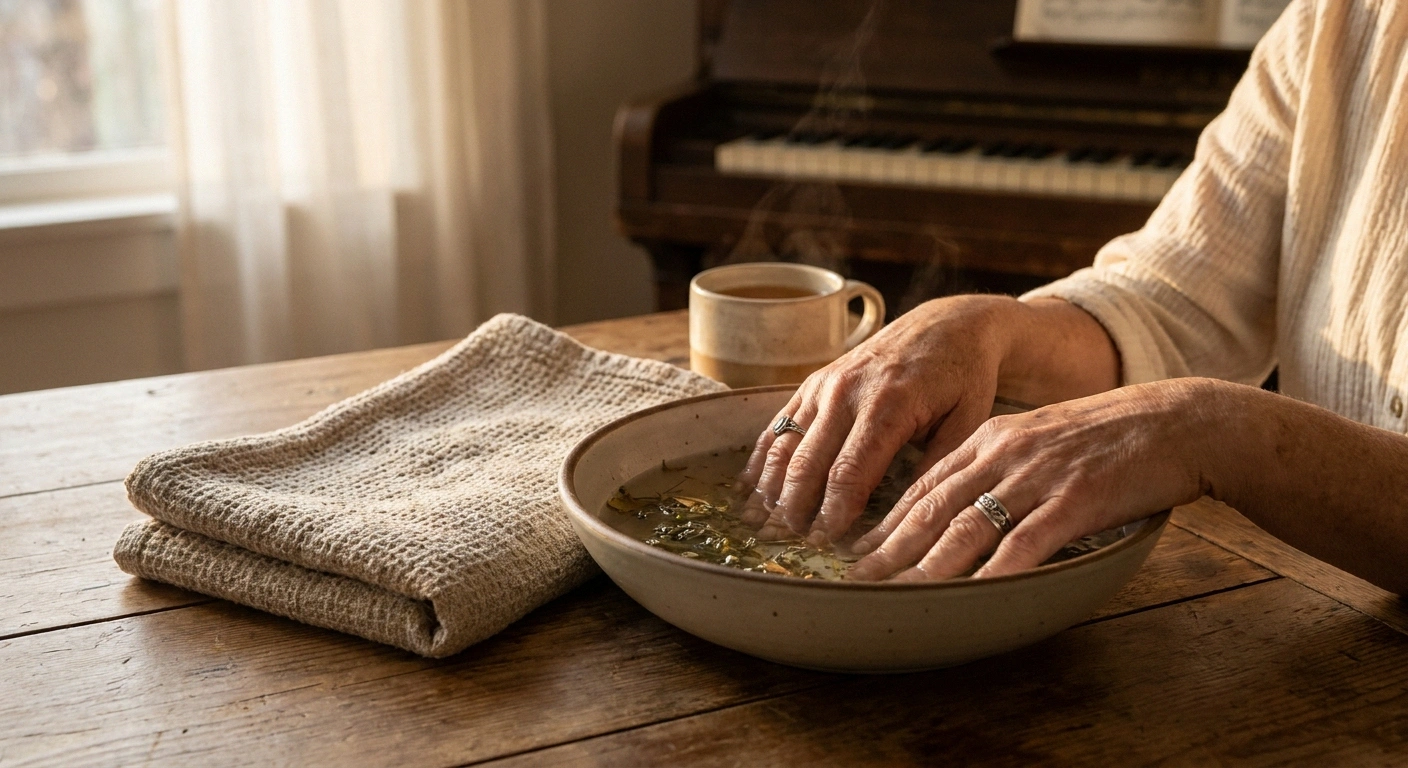
Start with a slow, warm-water hand soak, five to ten minutes, before you sit down. Warm water genuinely improves circulation to the fingertips and takes stiffness out of joints neuropathy already makes uncooperative. I keep a heating pad on my own piano bench in the winter for the same reason — sometimes a soak isn’t practical, and warmth is warmth.
Follow it with gentle hand and wrist stretches: flex your fingers into a soft fist and open them wide, five times. Extend your wrist up and down slowly. Spread your fingers apart and hold for a few seconds. Circle each wrist in both directions. None of this should hurt — if it does, back off.
Some people find a warming topical helps too, applied a few minutes before playing. Our roundup of neuropathy creams covers which ingredients bring warmth versus numbness — you want warmth here, not something that further dulls sensation right before you need what feedback you have. The same gentle massage principles we cover for feet in our piece on self-massage for neuropathy apply just as well to hands — a few minutes working the palm and each finger before playing wakes up circulation the same way it does for tired feet.
Then start with something slow and familiar — Hanon-style patterns, a one-octave scale, a Bach two-part invention you know by heart. Resist opening with your hardest piece. Cold hands and technical demand together are exactly the combination that triggers flares. Warm up from easy to challenging, every time, especially on days your hands feel fine — that’s when people skip the ritual and pay for it twenty minutes later.
Adaptive Technique: Small Changes That Protect Your Hands
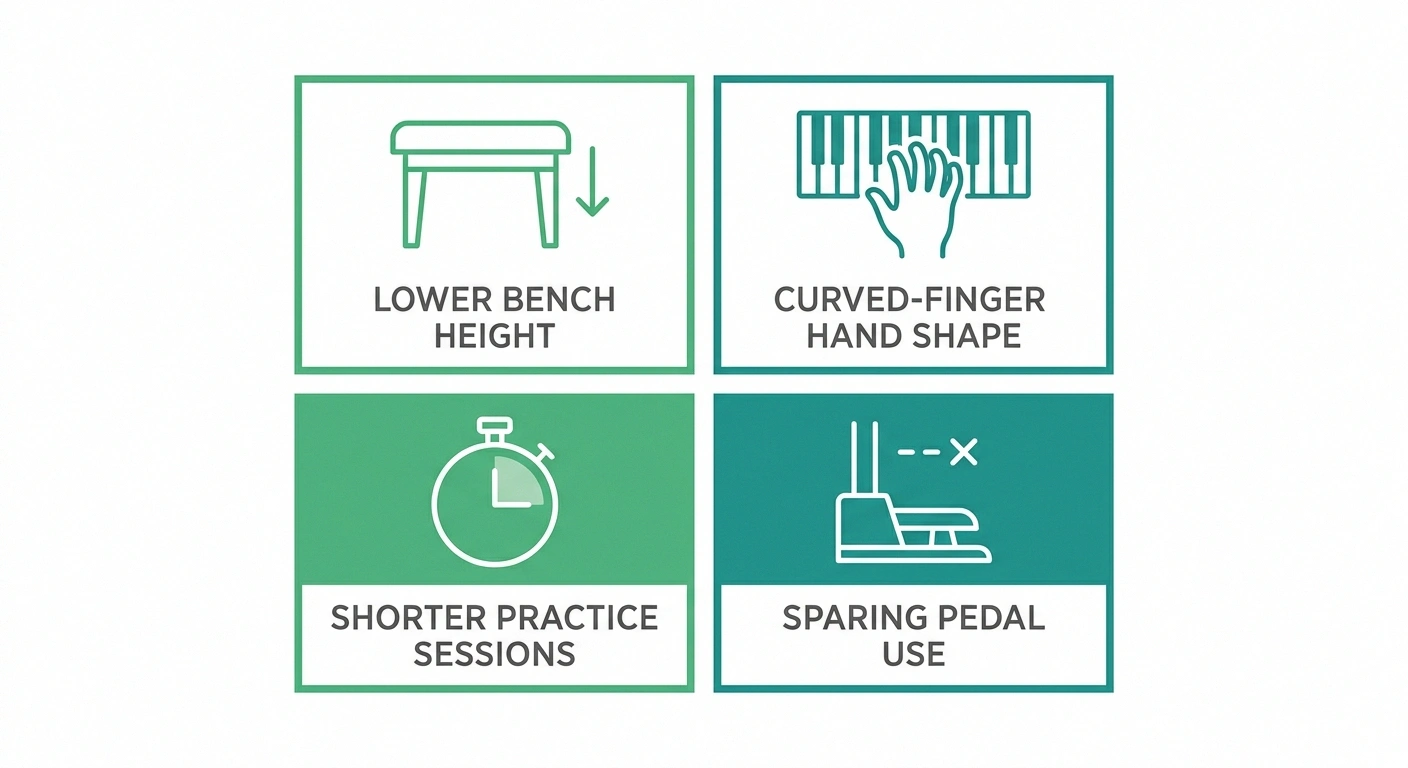
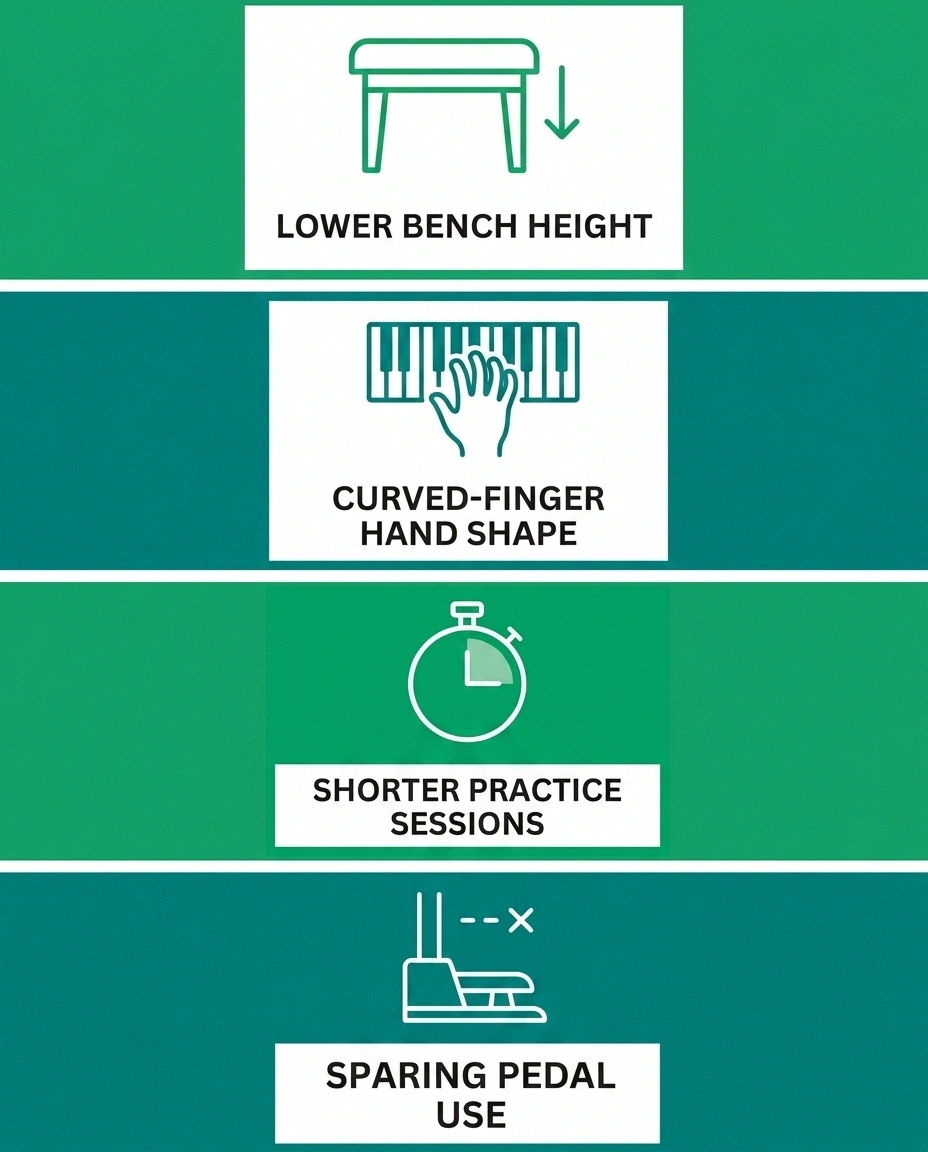
A few adjustments to how you actually play make an outsized difference, and none require you to sound like a beginner again.
Lower your bench slightly. A small drop reduces wrist extension, taking pressure off nerves that are already irritable.
Curve your fingers rather than playing with a flat hand. A rounded hand shape gives better fingertip proprioception — your brain gets a clearer signal about where the key actually is — than a flat, splayed approach.
Shorten your sessions to fifteen or twenty-five minutes, then take a real break. Long, uninterrupted sessions push a manageable tingle into a flare that costs you the next few days.
Slow the tempo down and let accuracy lead. Speed is the last thing you add back, not the first thing you chase.
Use the pedal more sparingly while learning a piece. It feels counterintuitive, but relying on it early hides sloppy finger release. Playing cleaner with less pedal at first, then adding it back once the fingering is secure, helps you compensate later for the less-precise release neuropathy can cause.
Try a lighter-action keyboard if your regular instrument, especially a grand, feels like you’re fighting it. Heavier key action asks more from finger strength and control than many neuropathic hands can reliably give on a given day.
Choosing (or Adjusting) Your Instrument
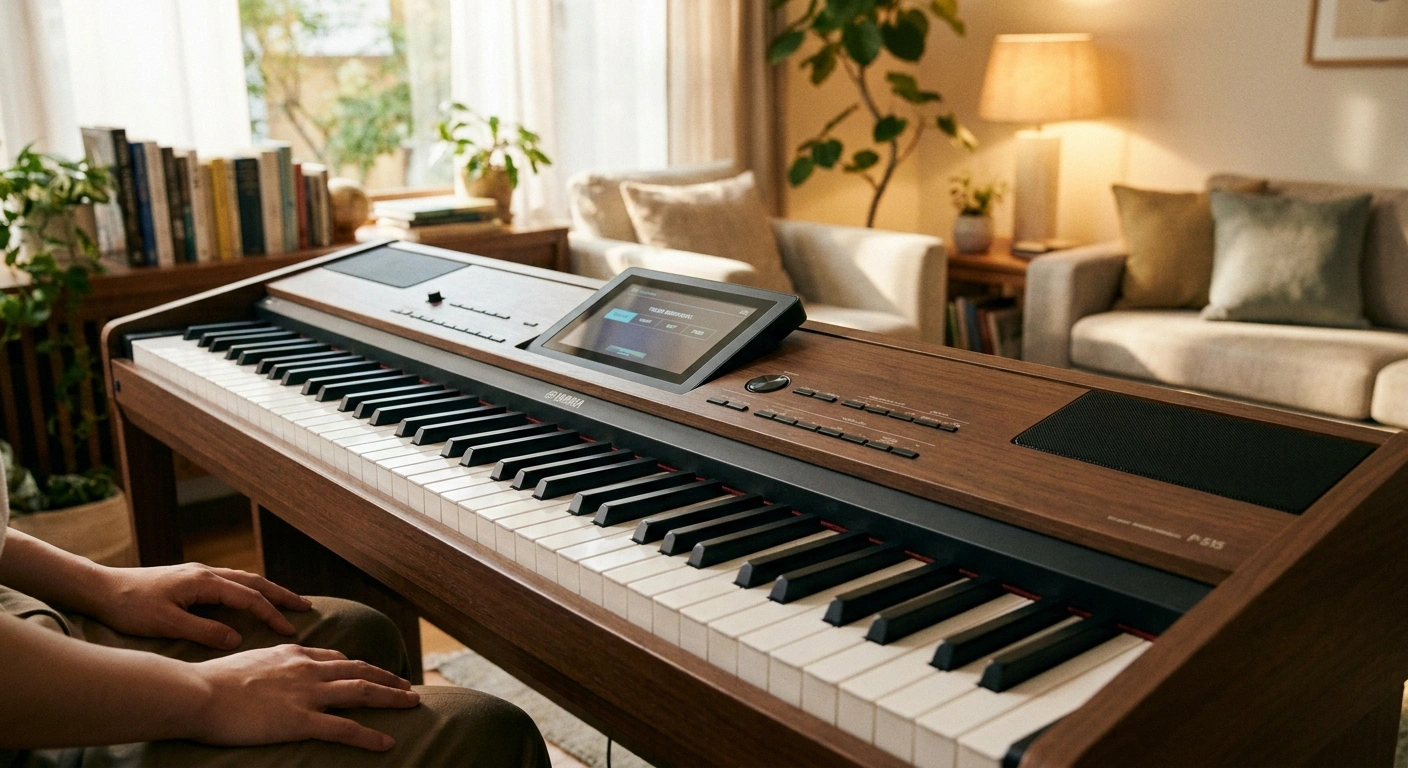
This is the conversation Marge avoided for two years, mostly out of loyalty to a grand piano she’d owned since her thirties. She finally sold it and bought a digital piano with adjustable touch settings, and she has never once regretted it. If your instrument is fighting you, it might not be your hands that need to change first.
Acoustic vs. digital: what changes with neuropathy
Digital pianos with adjustable key sensitivity and weight let you dial in exactly how much force and precision the keyboard demands, which acoustic instruments can’t offer. On a hard flare day, lighten the touch response. On a good day, bring it back up.
Weighted actions that are still lighter than a true acoustic — many mid-tier and premium digital pianos offer this — give you the feel of a real piano without the full physical demand of hammer-and-string mechanics.
Hybrid pianos, which pair acoustic-feel actions with digital touch-sensitivity controls, are worth a look if you want something closer to your old instrument that still adjusts with you.
Beyond the keyboard itself: check your bench height and cushion. A firmer or better-padded bench, plus a small back support, reduces the compensatory tension that builds when your hands are working harder than they used to.
Gear That Helps You Play Longer
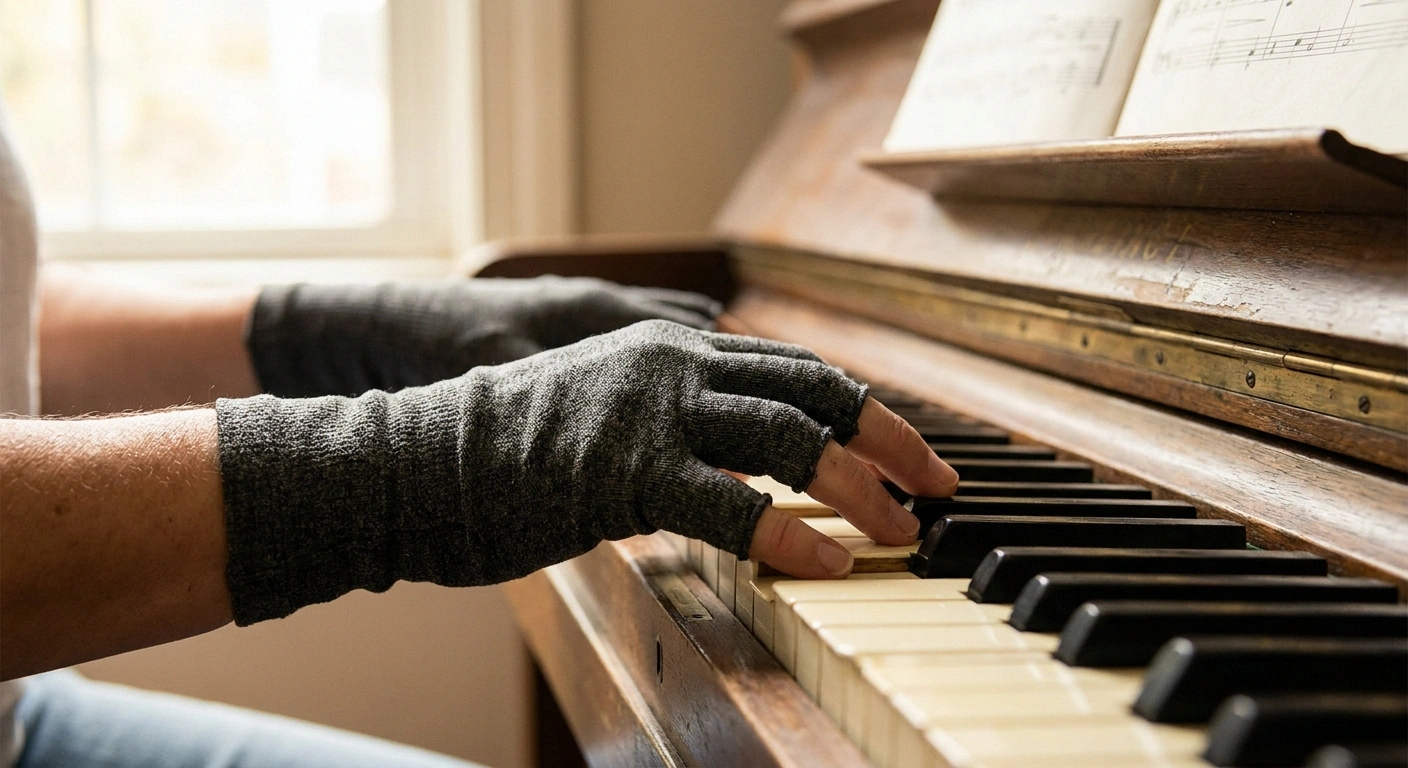
Fingerless compression gloves are probably the single most useful piece of gear I recommend to pianists with hand neuropathy. They keep hands warm and add a small amount of proprioceptive feedback through gentle, consistent pressure, all while leaving fingertips fully exposed to actually touch the keys. Our full guide to compression gloves for neuropathy covers fit, compression level, and how to tell if they’re helping versus just adding bulk.
Wrist warmers handle the forearm and wrist without interfering with finger dexterity, making them an easy layer under fingerless gloves in cold months.
Small hand-warmer packets, the kind used for skiing, tucked into your palms for a few minutes before a session is a low-cost trick that works better than people expect.
A portable space heater near the piano bench in winter solves the root problem instead of managing around it — a cold room undoes a warm-water soak within minutes.
Silicone or fabric key covers help if slippery keys are part of your problem. Textured key markers, small raised dots at reference points like middle C, help you find position by feel rather than sight — genuinely useful when your fingertips aren’t reporting back reliably.
Repertoire That Works With Your Hands, Not Against Them
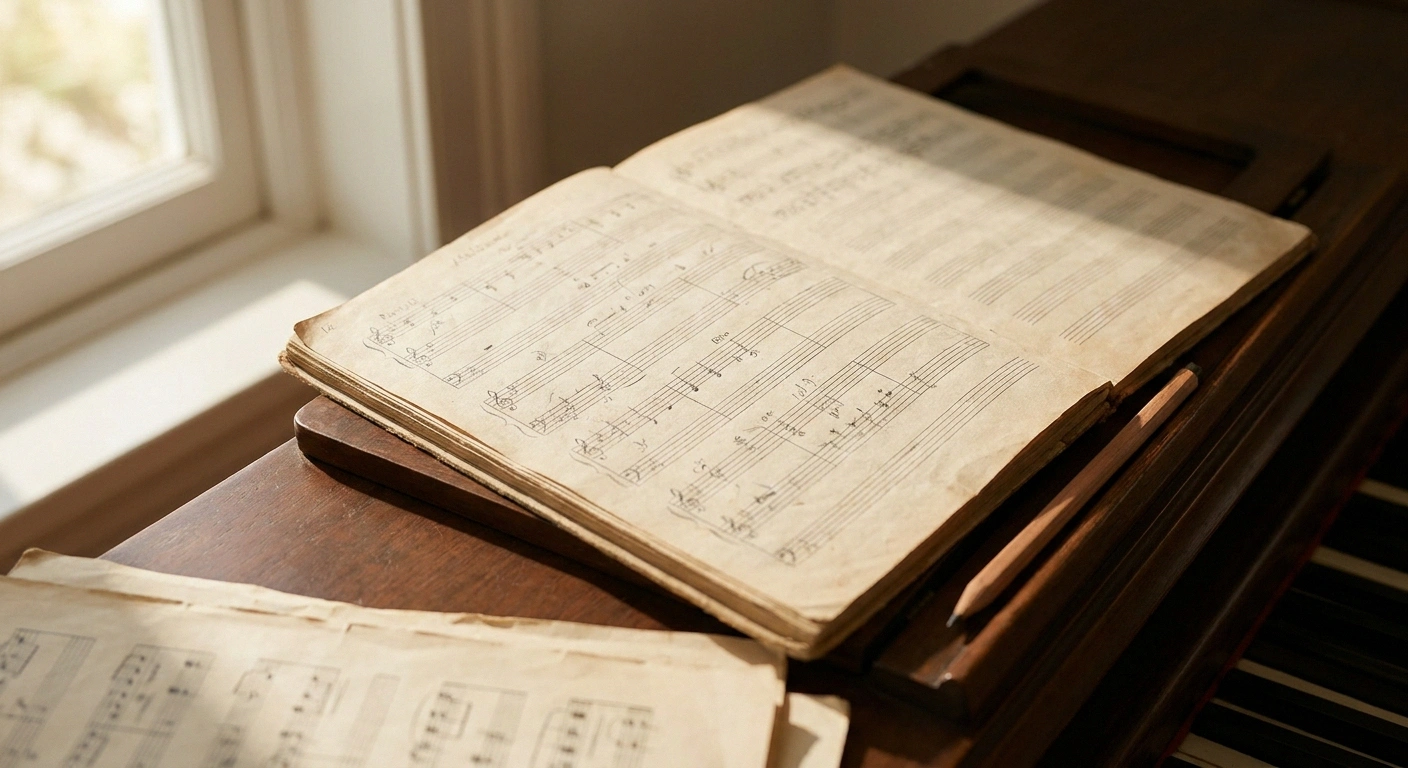
What you choose to play matters almost as much as how you play it. Some music asks your hands for precision they may not reliably have right now. Other music forgives exactly the kind of imprecision neuropathy introduces.
Favor legato, melodic music over percussive or heavily staccato pieces. Bach chorales, Chopin nocturnes, hymn arrangements, and jazz ballads lean on sustained, connected phrases rather than crisp, separated attacks, which is far more forgiving of fingers that don’t always land exactly where they’re told. Debussy’s impressionist writing is particularly kind here — the blurred, atmospheric harmony absorbs slight rhythmic imprecision instead of exposing it.
Set aside, at least for now, fast Prokofiev, aggressive Bartók, and thick Rachmaninoff chords built on stretches wider than your hand comfortably holds. These aren’t off-limits forever, just off-limits until you know exactly what your hands can and can’t reliably do.
Simplify where it counts. Play a chord voicing with three notes instead of five. Let the sustain pedal carry a lower octave your hand can’t comfortably stretch to anymore. Nobody in the room is grading you against the printed score, and most simplified voicings sound just as beautiful.
Memorized vs. Sight-Read: Why Muscle Memory Becomes Your Ally
Here’s something that surprised me when I first heard it from a piano teacher who works with older adults: memorized pieces often play better than sight-read ones once hand sensation is unreliable, and it’s not about familiarity alone.
When you sight-read, you’re relying on two systems at once — your eyes reading the score, and your fingers reporting back where they landed. If the second system is giving you unreliable information, you’re compounding one shaky input with another.
A memorized piece removes half that burden. Your body already knows the shape of the piece — the muscle memory built over months or years of practice is still there even when fingertip sensation isn’t. You’re not asking your hands to confirm position in real time; you’re trusting a pattern they’ve done a thousand times.
This doesn’t mean give up sight-reading. It means be strategic: build your working repertoire — the pieces you play for yourself, for family, for the joy of it — from things you’ve committed to memory, and treat sight-reading as a slower, separate skill you practice without performance pressure attached.
Practicing When It Hurts: Rest, Rules, and Real Talk
I need to say this plainly because I know the instinct to push through: pain is a signal to stop, not a hurdle to push past. Playing through burning or sharp electric sensations doesn’t build discipline. It builds a longer recovery and a worse relationship with the instrument you’re trying to protect.
Research says
Performing arts medicine, the field that studies musicians’ injuries and recovery, has repeatedly found two things that apply directly here: hand-warming measurably improves fine-motor accuracy before playing, and mental practice — reading a score and visualizing fingerings without touching an instrument — reinforces the same neural patterns as physical practice. On a rest day, both are legitimate ways to stay connected to a piece.
Track what triggers your flares. A cold room, a session that ran too long, a piece with a lot of octave stretches, even the time of day — patterns show up faster than you’d think once you’re writing them down instead of trying to remember them. A simple neuropathy symptom diary works well for this; you don’t need anything elaborate, just a few lines after each session.
Rest days matter more than heroic streaks. A consistent, moderate practice schedule with real rest built in gets you further over a year than a punishing daily streak that ends in a two-week shutdown.
On a flare day, a slow warm-water soak isn’t just a pre-practice ritual, it’s a legitimate form of care on its own, even when you don’t touch the keys at all.
And here’s good news that performing arts medicine research backs up: mental practice counts. Reading the score, visualizing your fingerings, hearing the piece in your head without touching a key — this genuinely reinforces the neural patterns involved in playing, even on days your hands need to fully rest. It’s not a consolation prize. It’s real practice.
Community, Joy, and Why You Keep Showing Up
Somewhere in all this adaptation talk, don’t lose the actual point, which is joy. Casual playing for family and friends is often far more sustainable, and honestly more fun, than chasing a performance standard you set for yourself decades ago under completely different circumstances.
Look for adult amateur piano groups in your area or online — they tend to be warm, unpretentious, and full of people managing their own version of “my hands don’t do what they used to.” If you’re looking for a teacher, ask specifically for one experienced with older adults or students managing a physical condition. They exist, they understand adaptation isn’t a downgrade, and they’ll meet you where your hands actually are today.
Record yourself once in a while. Hearing your own progress is motivating in a way that’s hard to replicate otherwise, especially on days your fingers can’t fully confirm to you that you’re improving. Your ears will tell you what your hands can’t.
If you’re also managing nerve health more broadly, our overview of supplements for nerve health is a reasonable place to start that conversation with your doctor, alongside everything here that addresses the piano bench directly.
Marge still plays every single day, on her digital piano, in fifteen-to-twenty-five-minute stretches, gloves on in the winter, warm-up ritual non-negotiable. She’s not the pianist she was in her thirties. She’s still very much a pianist. The piano is still worth showing up for, on the days you can — adaptation, not surrender, is what keeps that true.
Frequently Asked Questions
Can I still play piano if I have severe hand neuropathy?
In most cases, yes, though what playing looks like may change. Many people with significant hand neuropathy continue to play by relying more on memorized pieces, adaptive technique, and instrument adjustments rather than pure sensation and sight-reading. If you have significant weakness or loss of motor function rather than just sensory symptoms, talk with your neurologist or a hand therapist about what is realistic and safe for your specific situation.
Do fingerless compression gloves actually help with piano playing?
Many pianists with neuropathy find them helpful, mainly by keeping hands warm and adding a small amount of proprioceptive feedback through gentle pressure, while leaving fingertips uncovered to touch the keys normally. They are not a guaranteed fix, but they are inexpensive and low-risk to try, and most people know within a few sessions whether they help.
Should I switch from an acoustic piano to a digital one?
It depends on how much your acoustic piano’s touch weight is working against you. If you find yourself avoiding practice because the instrument feels physically demanding, a digital piano with adjustable key sensitivity is worth trying. Some people keep their acoustic for its sound and feel, and add a lighter digital keyboard for daily practice on harder symptom days.
How long should I practice each session with hand neuropathy?
Fifteen to twenty-five minutes with a real break tends to work better than one long session, since extended playing is a common flare trigger. Several short sessions across a day generally build skill just as effectively as one long session, with far less symptom cost.
What should I do if my fingers go numb or start burning mid-practice?
Stop and rest. Playing through it does not build tolerance, it usually extends recovery time instead. Note what you were doing when it started in a symptom diary, gently stretch and warm your hands, and pick back up later or the next day at a slower tempo.
Can playing piano make neuropathy worse?
Playing itself does not damage nerves, but pushing through pain, playing in a cold room, or holding tense positions for long stretches can worsen symptoms temporarily and make flares more frequent. Warming up properly, taking breaks, and adjusting technique are what keep piano playing sustainable rather than aggravating.
About the Author