The first time a woman in my support group described it, she said, “It’s like someone is holding a hot iron against the tops of my feet and won’t take it off, and my feet look like they’re glowing.” She had spent two years being told she had anxiety, that it was menopause, that she probably just needed better shoes. She’d started sleeping with her feet hanging off the end of the bed in a fan, then sitting with them in a bucket of ice water, and by the time she finally got in front of a neurologist who recognized what she had, the skin on her heels had started to break down from the cold.
Her diagnosis was erythromelalgia. And I want to tell you her story right up front, because it captures almost everything you need to understand about this condition. It’s real. It’s often missed. The instinct to cool the burning is exactly right in the moment and exactly wrong as a long-term strategy. And the road to getting properly diagnosed and treated is shorter when you know what to ask for. I’m Janet. I write about peripheral neuropathy from the patient’s chair, not the doctor’s, and my goal in this article is to give you a clear picture of what erythromelalgia is, what’s happening in your nerves, and what actually helps.
What Erythromelalgia Actually Is
Erythromelalgia is a nerve disorder that produces a very specific and very unmistakable triad of symptoms in the extremities, almost always the feet, sometimes the hands: redness, warmth, and a burning pain that ranges from uncomfortable to genuinely disabling. The name itself is a description in Greek. Erythros means red. Melos means limb. Algos means pain. Red-limb-pain. It was named in 1878 by an American neurologist named Silas Weir Mitchell, who was one of the first physicians to take chronic nerve pain seriously as its own category of illness. You’ll sometimes hear it called Mitchell’s disease for that reason.
Key Takeaway
Erythromelalgia is a specific diagnosis, not a description of any burning feet. If your feet flare red, hot, and burning with warmth or activity and cool down with air or elevation, the pattern deserves a targeted neurology workup rather than generic pain management. Getting the classification right is what unlocks the right treatment.
The classic episode looks like this. Your feet, or sometimes your hands, become visibly red or dusky, hot to the touch, and painful. It may be episodic, flaring for minutes to hours before settling, or it may be nearly continuous. It’s typically triggered or worsened by anything that warms the affected limb, which includes exercise, standing for a while, a warm room, wearing socks, sitting under a blanket, or the natural circadian rise in body temperature that happens in the evening. It’s typically relieved by cooling, which is where the trouble often starts, and I’ll come back to that.
Erythromelalgia is uncommon. Population-based estimates from the Mayo Clinic’s Olmsted County data put the incidence somewhere around 1.3 cases per 100,000 person-years, with combined primary and secondary prevalence estimates in the range of 0.36 to 2 per 100,000 people. It’s classified as a rare disease, but “rare” here means “you may be the first case your primary care doctor has ever seen,” not “it doesn’t happen.” Given how easily it’s misattributed to anxiety, hormones, footwear, or generic burning feet syndrome, the true prevalence is probably somewhat higher than the numbers suggest.
Primary vs. Secondary Erythromelalgia — the Two Very Different Origins
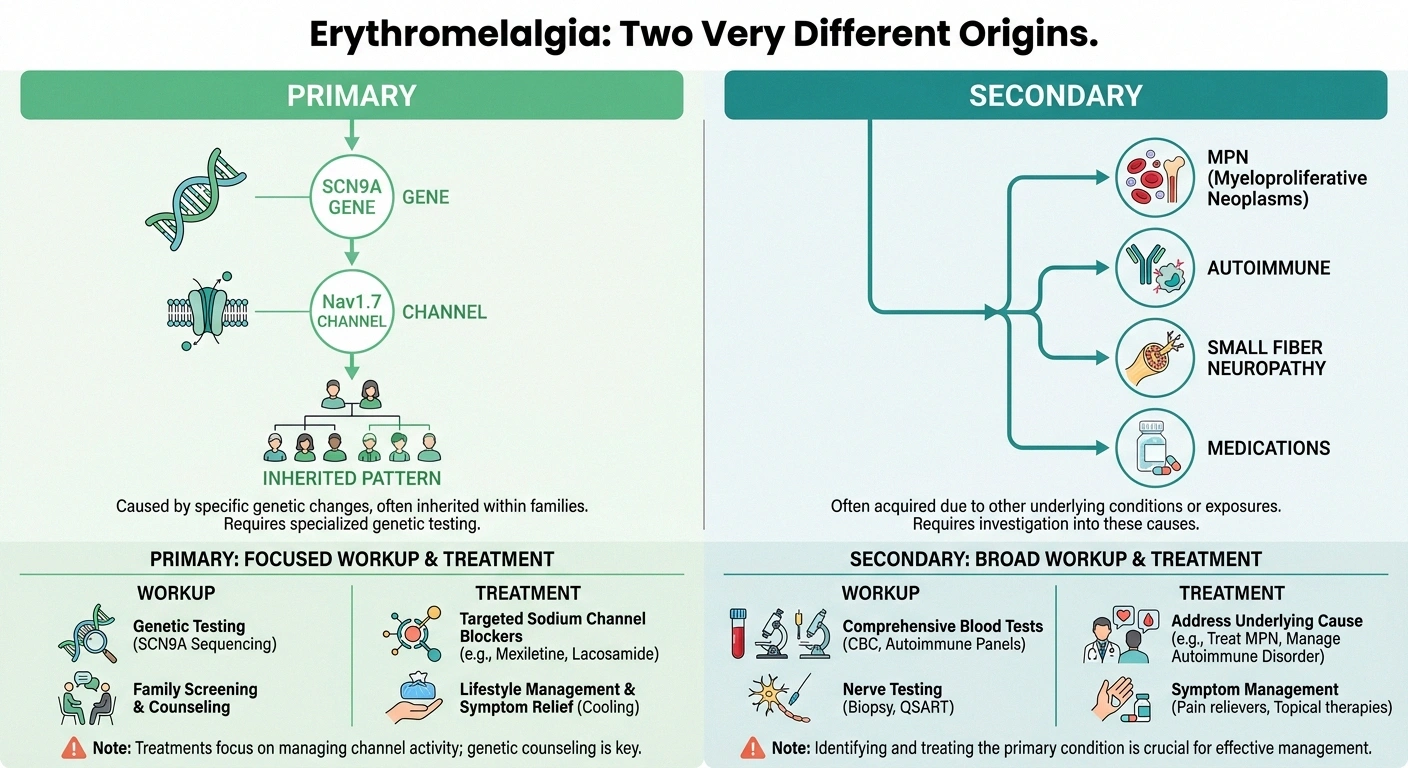
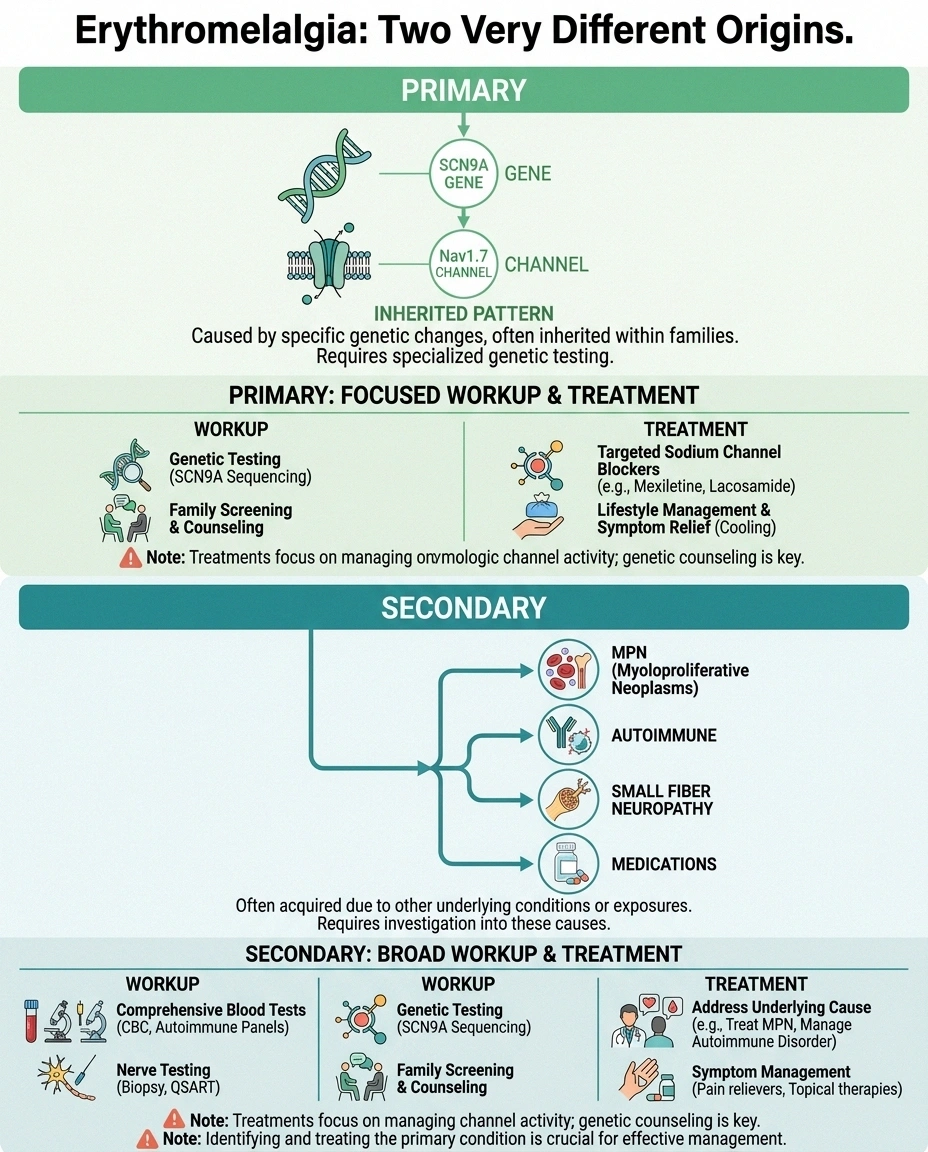
This is the single most important distinction to understand, because the workup and the treatment change depending on which one you have. Erythromelalgia isn’t one disease. It’s a syndrome, meaning a recognizable pattern of symptoms, that can arise from two very different underlying causes.
Primary vs. Secondary Erythromelalgia at a Glance
| Primary Erythromelalgia | Secondary Erythromelalgia | |
|---|---|---|
| Underlying cause | SCN9A gene mutation, Nav1.7 sodium-channel malfunction | MPN, autoimmune disease, small fiber neuropathy, medications |
| Typical onset | Often childhood or adolescence; family history common | Adult onset alongside another condition or drug exposure |
| Aspirin response | Generally not helpful | Often dramatic in MPN-driven cases (nearly diagnostic) |
| First-line systemic drug | Mexiletine (sodium-channel blocker) | Treat the underlying condition |
| Workup priority | SCN9A genetic testing, family history | CBC, JAK2, autoimmune panel, medication review |
Primary erythromelalgia is a nerve channelopathy. That means the problem is a malfunction in one of the specific ion channels that sensory nerves use to fire pain signals. In inherited primary erythromelalgia, the malfunction is caused by a mutation in a gene called SCN9A, which codes for a sodium channel called Nav1.7 that lives on pain-sensing nerves. Some primary cases appear sporadically, without a family history, and researchers are still identifying the full range of channel variants that can cause them. But when someone in a family has erythromelalgia and one of their parents or grandparents had it too, the pattern is usually autosomal-dominant SCN9A inheritance.
Secondary erythromelalgia is triggered by another underlying condition. The most important of these are the myeloproliferative neoplasms, especially polycythemia vera and essential thrombocythemia, which are chronic blood disorders that cause the bone marrow to overproduce red cells or platelets. It can also be triggered by autoimmune conditions like lupus, by small fiber neuropathy from various causes, and by a small number of medications. In secondary erythromelalgia, treating the underlying cause often treats the burning feet.
Why does this distinction matter so much? Because the treatments diverge. Aspirin, which is dramatically effective in secondary erythromelalgia caused by a myeloproliferative neoplasm, doesn’t do much for the primary genetic form. And the sodium-channel blockers that work well for primary erythromelalgia aren’t first-line for the MPN-driven form. Getting the classification right is what unlocks the right treatment.
The Nav1.7 Sodium Channel — Why This Gene Matters So Much
Let me try to explain Nav1.7 in a way that actually makes sense, because the biology here is one of the most elegant and important stories in modern pain research, and it changed how scientists think about chronic pain in general.
Research Says
The 2004 study by Yang and colleagues in the Journal of Medical Genetics was the first to link SCN9A mutations to primary erythromelalgia in two Chinese families. Follow-up work by the Waxman lab at Yale published in the Journal of Neuroscience that same year showed the mutant Nav1.7 channels caused pain neurons to fire spontaneously at high frequency.
This was the first proof that a single sodium-channel gene mutation could produce a severe chronic pain disorder in an otherwise healthy person — a discovery that reshaped the pain-research field.
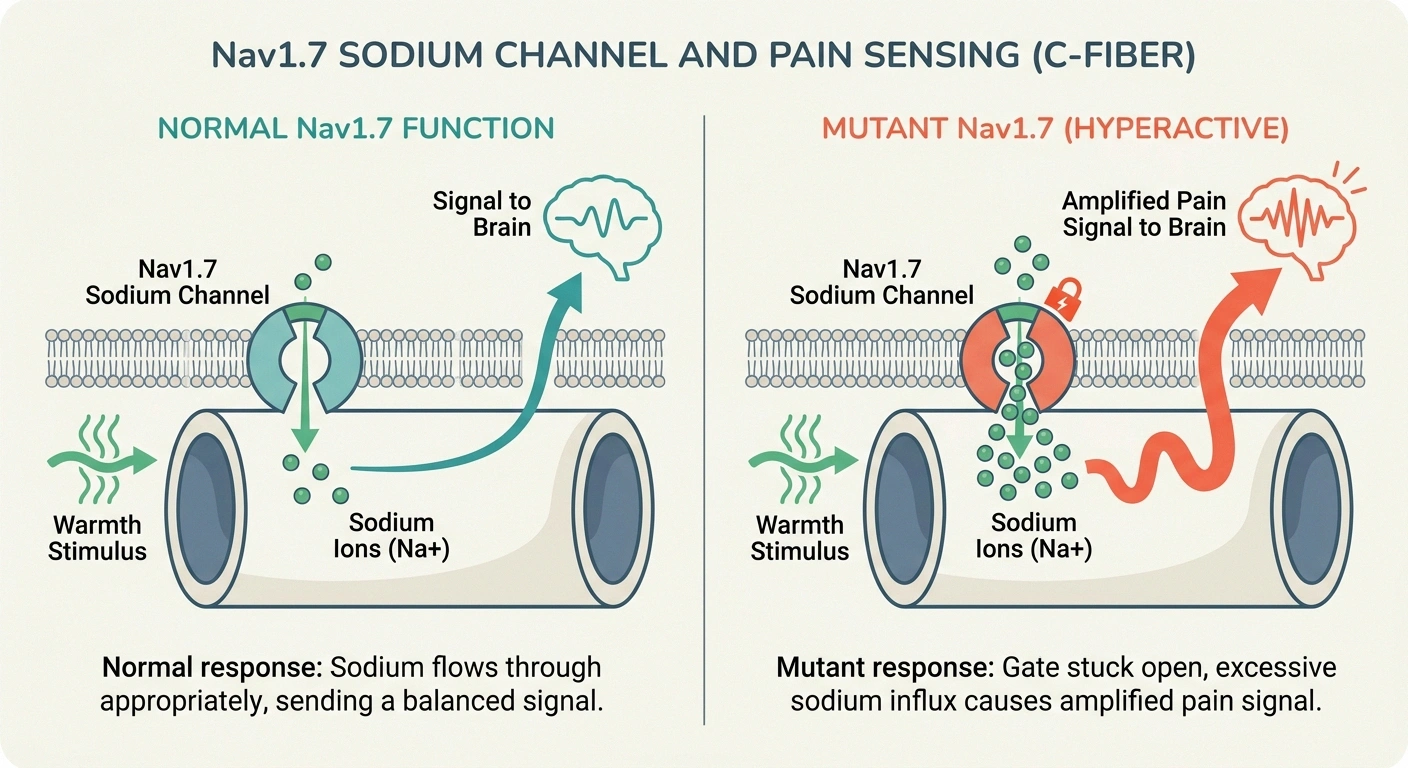
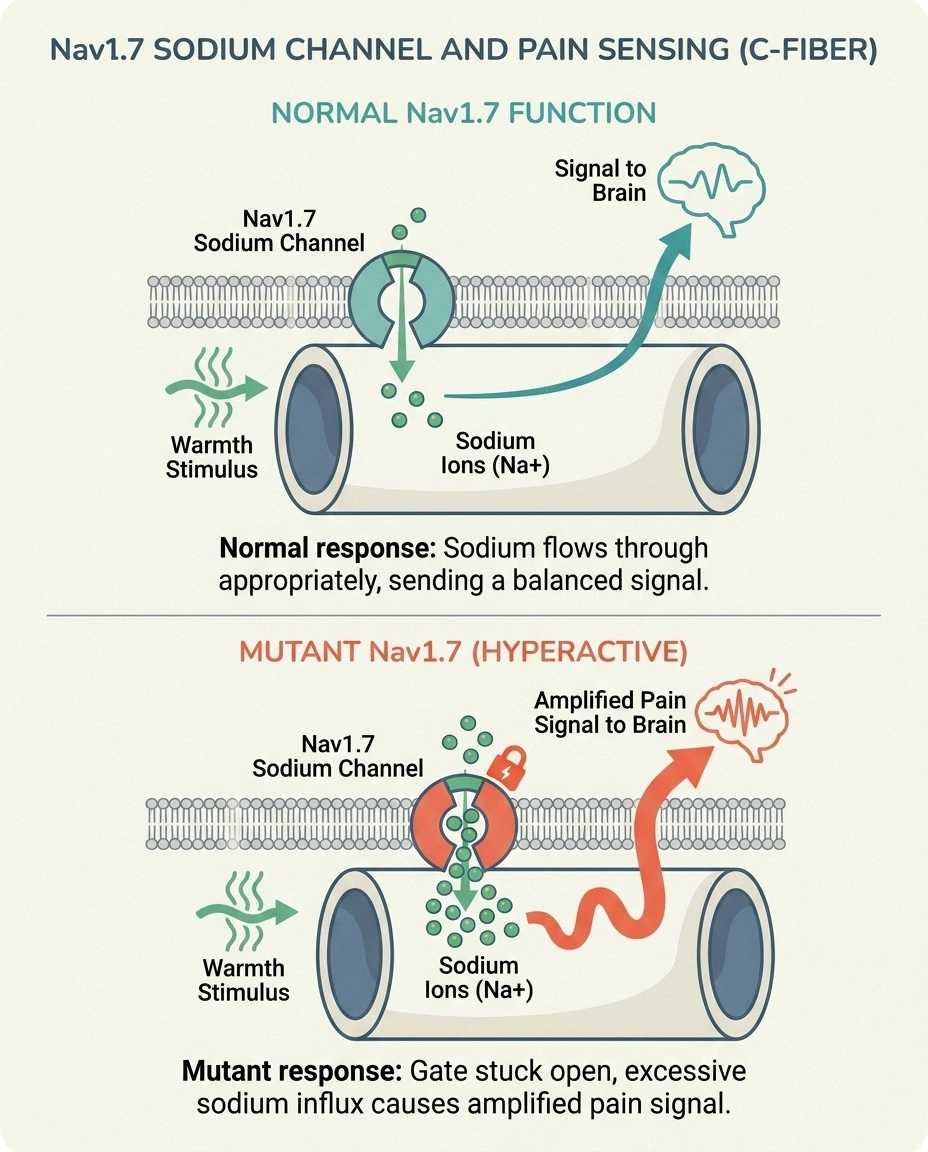
Every nerve fiber in your body communicates by firing tiny electrical signals. To do that, it uses proteins called ion channels that sit on the surface of the nerve cell like tiny gates. When one of these gates opens, sodium ions flood into the cell, which triggers the electrical spike that gets passed down the nerve to the spinal cord and up to the brain. Different nerves use different combinations of these channels.
Nav1.7 is a voltage-gated sodium channel that’s found almost exclusively on pain-sensing nerve endings, particularly the small unmyelinated C-fibers in your skin and the dorsal root ganglia where those fibers gather near your spinal cord. Think of Nav1.7 as an amplifier that sits between the tiny signals your pain fibers pick up from the outside world and the full-scale electrical pulse that actually gets sent to the brain. If Nav1.7 is working normally, it filters and boosts pain signals appropriately, and you feel pain when there’s a real threat to your tissue.
In inherited erythromelalgia, the SCN9A gene mutation produces a Nav1.7 channel that opens too easily and stays open too long. In the 2004 paper by Yang and colleagues in the Journal of Medical Genetics that first identified this connection in two Chinese families with primary erythromelalgia, the mutations shifted the voltage threshold at which the channel activates, making pain neurons hyperexcitable. The Waxman lab at Yale, in a series of foundational papers starting with Cummins, Dib-Hajj, and Waxman in the Journal of Neuroscience in 2004, then showed that these mutant channels cause dorsal root ganglion neurons to fire spontaneously and at high frequency when they’d normally be quiet. Small warmth-induced signals that would ordinarily register as mild sensation get amplified into severe burning pain. The volume knob on your pain fibers is stuck too far up.
The reason this matters beyond erythromelalgia itself is that it demonstrated for the first time that a single gene mutation in a single ion channel could produce severe, life-altering chronic pain in an otherwise healthy person. That opened the door to research on Nav1.7 as a pain target for the general population, and a whole class of Nav1.7-selective drugs has since entered clinical trials for various pain conditions. Progress has been mixed, but the mechanism is now well-understood, and the door remains open.
When Erythromelalgia Is Really a Warning Sign of Something Else
Secondary erythromelalgia can be the first visible sign of an underlying condition that needs treatment in its own right, and this is why any new-onset erythromelalgia in an adult deserves a thorough workup rather than symptomatic treatment alone.
Myeloproliferative neoplasms. Polycythemia vera and essential thrombocythemia are chronic blood disorders in which the bone marrow overproduces red blood cells or platelets, respectively. Both are associated with a mutation in a gene called JAK2. When platelets are elevated and overly reactive, they can cause tiny clots in the small vessels of the feet and hands, producing exactly the red, hot, painful presentation of erythromelalgia. The clue that this is what you’re dealing with is often the response to aspirin, which is nearly diagnostic. Low-dose aspirin inhibits the platelet enzyme cyclooxygenase-1 and can produce dramatic and rapid relief of the burning in a way that primary erythromelalgia simply does not respond to. This is why a complete blood count and often JAK2 mutation testing belong in the workup of any adult with new erythromelalgia.
Small fiber neuropathy. There is significant overlap between erythromelalgia and small fiber neuropathy, and telling them apart can be genuinely hard. In small fiber neuropathy, the small pain-sensing nerve fibers in the skin are damaged from causes like diabetes, autoimmunity, or often unknown reasons. Some patients with small fiber neuropathy develop erythromelalgia-like flares. The classification matters because the workup for underlying causes of small fiber neuropathy is broader than for primary erythromelalgia alone. If you’ve been told you have idiopathic neuropathy and you also have flares of red hot painful feet, it’s worth asking your neurologist whether erythromelalgia should be formally considered.
Autoimmune conditions. Lupus, Sjögren’s syndrome, and other autoimmune disorders can produce a small vessel or small fiber injury pattern that presents as erythromelalgia. If there are other systemic clues (joint pain, rashes, dry eyes and mouth, fatigue that seems out of proportion), an autoimmune workup makes sense.
Medications. A handful of drugs have been reported to trigger or worsen erythromelalgia. Calcium channel blockers used for blood pressure (particularly nifedipine and amlodipine) are the most well-documented offenders. Bromocriptine, verapamil, and some others show up in case reports. If your erythromelalgia symptoms started within weeks to months of beginning a new medication, that’s a critical conversation to have with your prescribing physician. See medications that cause neuropathy for a wider look at drug-induced nerve conditions.
What an Attack Feels Like and What Triggers It
Patient descriptions of an erythromelalgia attack are remarkably consistent. Burning is the word almost everyone uses. Some say it feels like their feet are on fire, or like they’re standing on hot coals, or like their skin is being scalded from the inside. The affected skin looks visibly red or sometimes a deeper purplish-red, and it’s noticeably warm to the touch. It’s not just uncomfortable. During a bad flare, walking becomes difficult, sleep is impossible without cooling, and cognitive function suffers because pain of that intensity crowds out everything else.
Trigger Avoidance Checklist for Erythromelalgia
The most common triggers are heat and anything that increases blood flow to the extremity. That includes:
- Warm environments — hot weather, a heated room, a warm car, standing near a radiator
- Exercise or physical activity that raises core body temperature
- Standing or walking for extended periods (gravity pools blood in the feet)
- Wearing socks, especially thick or synthetic ones, or shoes that are tight or non-breathable
- Compression garments, including compression socks that are often prescribed for other conditions
- Alcohol, which dilates blood vessels
- Spicy food, which raises core temperature
- Stress and emotional distress, which can precipitate flares
- The natural evening temperature rise, which is why many patients notice symptoms worse at night
- Hormonal cycles in some women, particularly during ovulation or the luteal phase
A caution here that surprises many people: graduated compression socks, often recommended for circulation problems, can actively trigger erythromelalgia attacks. If you have burning red feet and you’ve been given compression socks by someone treating you for peripheral vascular disease or venous insufficiency, and the socks made things worse, that’s a data point worth bringing to a neurologist.
The attacks tend to build during the day, peak in the evening and early night, and settle in the cooler hours before dawn. Some patients have brief flares of minutes to an hour. Others have continuous burning that never fully resolves. The severity ranges from a nuisance that interferes with certain activities to a life-organizing disability that forces people out of work and out of social life.
How Doctors Actually Diagnose It
There’s no single test for erythromelalgia. Diagnosis is clinical, meaning it rests on the pattern of symptoms and physical exam findings, supported by tests that either confirm nerve involvement or rule out secondary causes. The clinical criteria most commonly used require the presence of episodic or continuous redness, warmth, and burning pain in the extremities, worsened by heat or activity and relieved by cooling.
The Erythromelalgia Diagnostic Pathway
STEP 1
Clinical Pattern
Red, hot, burning extremities worsened by warmth and relieved by cooling. Photograph flares.
STEP 2
Rule Out Secondary
CBC with platelets, JAK2 testing, autoimmune panel, medication review.
STEP 3
Assess Nerve Involvement
Skin biopsy for IENFD, autonomic testing (QSART, thermoregulatory sweat).
STEP 4
Confirm Primary
SCN9A genetic testing when family history or early onset suggests inherited disease.
The workup a knowledgeable neurologist will typically pursue includes:
- Complete blood count with differential and platelet count to screen for myeloproliferative neoplasms
- JAK2 V617F mutation testing if the CBC suggests polycythemia vera or essential thrombocythemia
- Autoimmune panel (ANA, complement levels, sometimes Sjögren’s antibodies) if systemic clues are present
- Skin biopsy for intraepidermal nerve fiber density (IENFD), which can identify overlapping small fiber neuropathy. About 10% of erythromelalgia patients show reduced fiber density on distal leg biopsy
- Autonomic testing including QSART (quantitative sudomotor axon reflex test) and thermoregulatory sweat testing, which can be abnormal in a substantial proportion of erythromelalgia patients
- SCN9A gene testing when primary erythromelalgia is suspected, particularly with a family history or young age of onset. This testing is offered by specialty labs and by some academic neurology centers
- Nerve conduction studies and EMG to rule out large-fiber neuropathies (usually normal in isolated erythromelalgia)
You want to be seen by someone who does this workup regularly. That usually means a neurologist with peripheral nerve subspecialty training, or a large-center neurology practice that runs a small fiber neuropathy or pain clinic. If you’re being told your burning feet are just aging, anxiety, or menopause without any of the tests above being ordered, that’s a signal to push for a proper referral. The full neuropathy diagnosis pathway is worth understanding.
Treatment That Works — and the Cooling Mistake to Avoid
Treatment of erythromelalgia depends on the cause. For secondary erythromelalgia driven by a myeloproliferative neoplasm, low-dose aspirin is often dramatically effective, and treating the underlying hematologic disorder addresses the root problem. For primary erythromelalgia, treatment follows a ladder that starts with trigger avoidance and topical measures and escalates to systemic sodium-channel blockade for patients who need it.
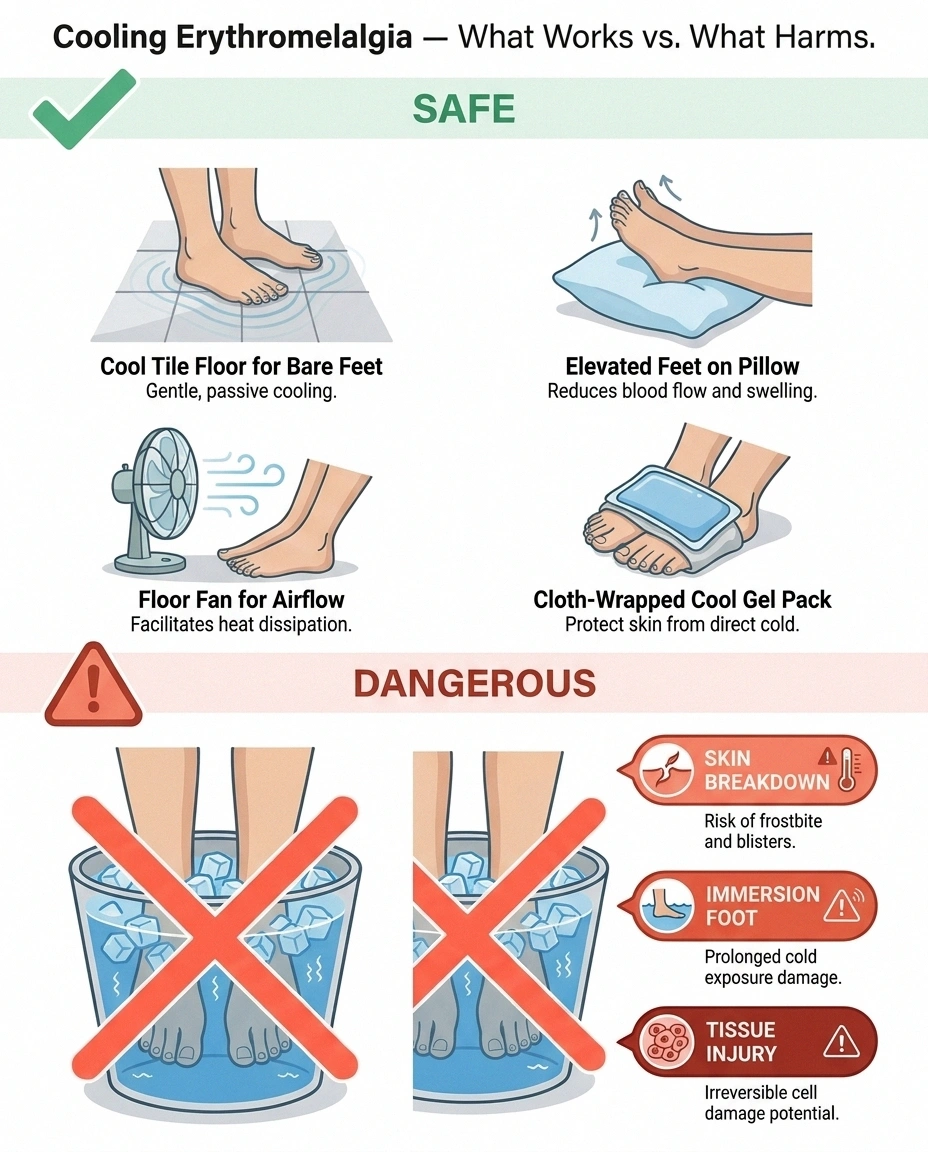
Warning: Do Not Ice-Immerse
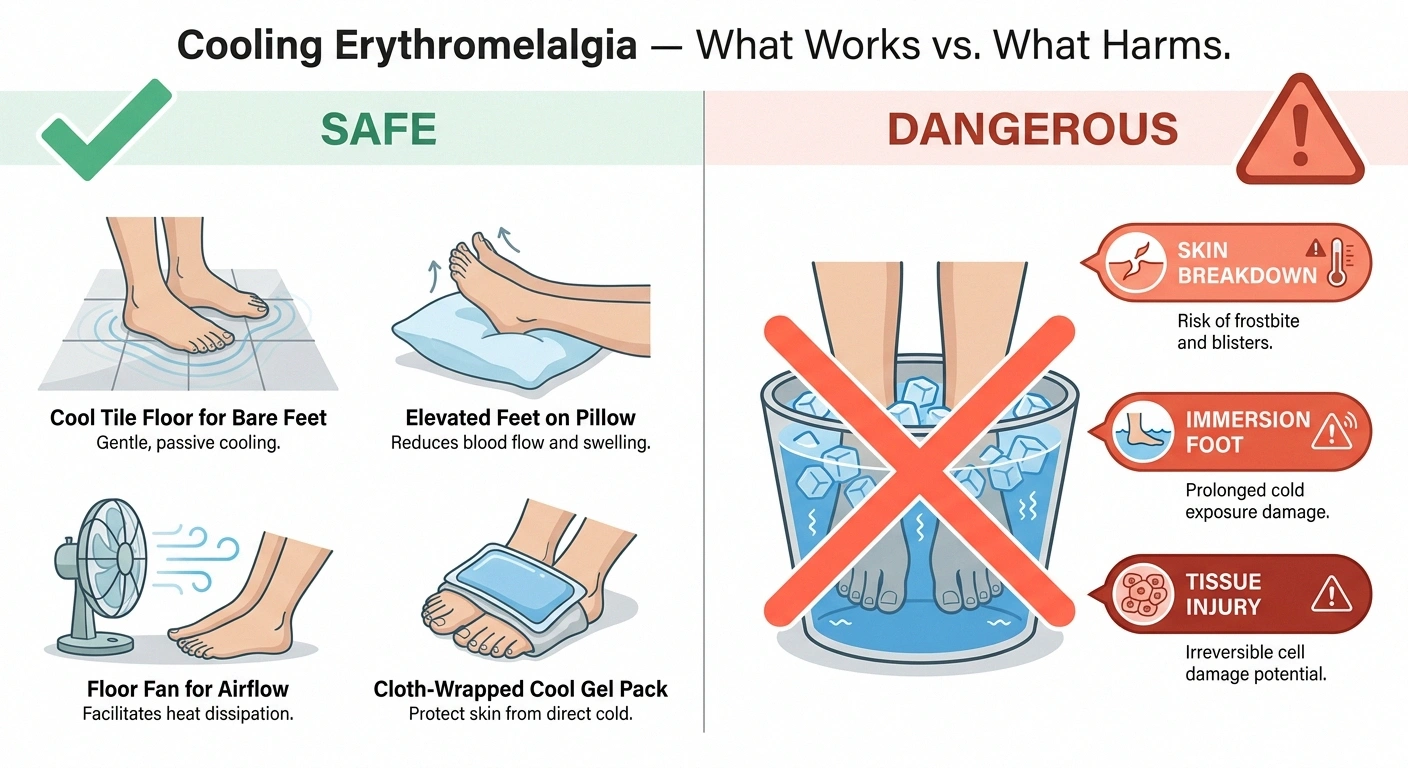
Prolonged or repeated ice-water immersion of burning feet is one of the most dangerous mistakes in erythromelalgia self-management. It feels effective in the moment. It causes documented tissue injury over time, including immersion foot, skin breakdown, ulceration, infection, and in severe cases tissue death.
Safer alternatives: floor fan on bare feet, cool tile or hardwood floor, elevation, brief application of cool (not frozen) gel packs wrapped in a cloth barrier, and room air conditioning. Never submerge feet in ice or ice water.
Before I go any further, I need to say something clearly and directly, because it’s the single most consequential thing to know about managing erythromelalgia:
Do not treat your burning feet with prolonged ice-water immersion. This is the mistake that turns a bad situation into a catastrophic one. When your feet are on fire, plunging them into ice water gives immediate relief, and every instinct in your body is going to push you toward doing it. But the tissue damage from repeated or prolonged cold immersion is well-documented and dangerous. Davis and colleagues at Mayo Clinic published a series in the Journal of the American Academy of Dermatology in 2013 describing patients who developed immersion foot, ulcerations, tissue necrosis, and in some cases gangrene from chronic ice-water cooling. The damaged skin doesn’t heal, gets infected, and the cycle of pain and cooling accelerates. The good news from that study was that discontinuing constant cooling allowed the ulcerations to heal.
Safer cooling strategies include a fan directed at bare feet, cool tile or hardwood floors to rest feet on, refrigerated (not frozen) gel packs wrapped in a cloth barrier and applied for limited periods, room air conditioning, and elevation of the affected limb. The goal is temperature reduction without prolonged contact between wet skin and cold, and never with ice.
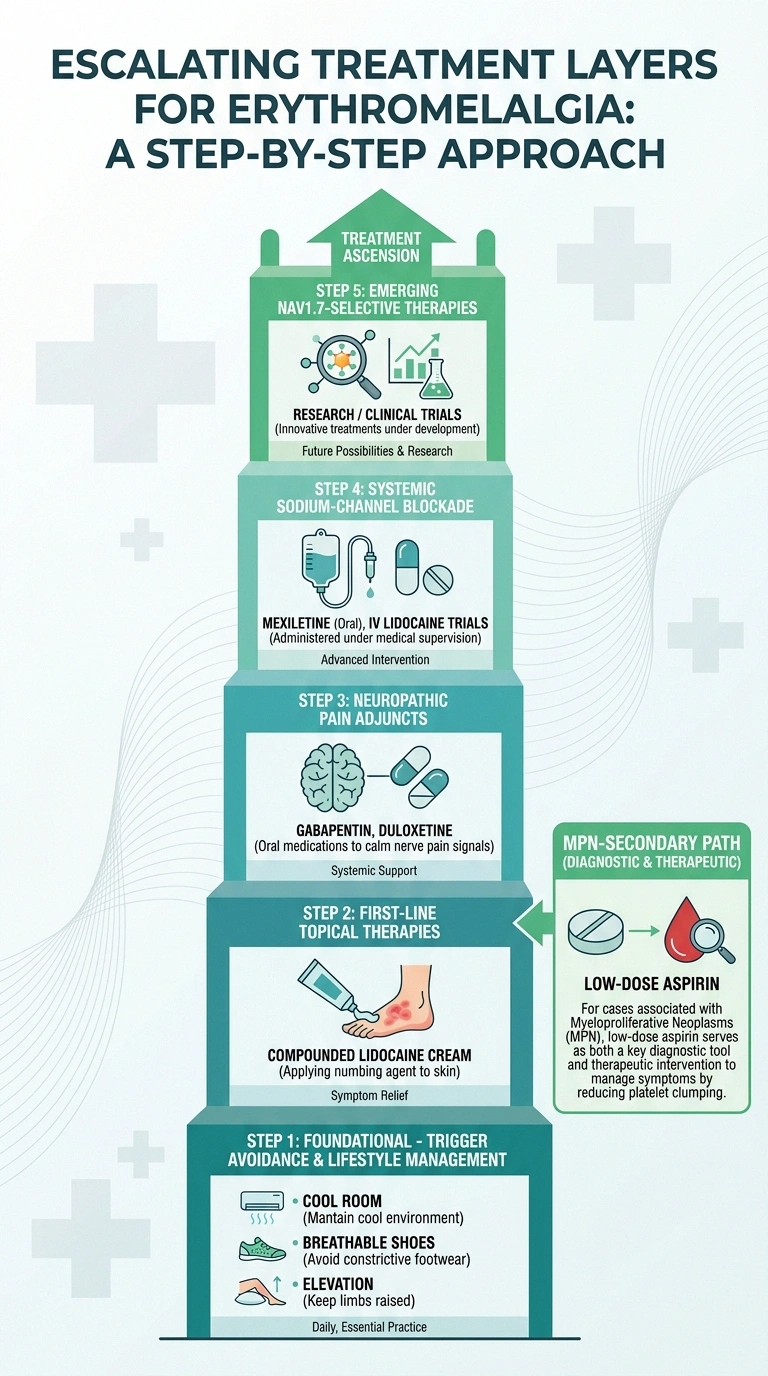
Beyond safer cooling, the treatment ladder looks like this:
Topical therapies. Compounded topical creams containing lidocaine, sometimes combined with amitriptyline or ketamine, are the usual first pharmacologic step and can meaningfully reduce local pain without systemic side effects. Some patients also benefit from lidocaine patches applied to the most affected areas.
Systemic sodium-channel blockade. Mexiletine, a drug originally developed for cardiac arrhythmias, has emerged over the last two decades as the most effective oral treatment for primary erythromelalgia. It works by partially blocking voltage-gated sodium channels including Nav1.7, effectively turning down the volume on the hyperexcitable pain fibers. The Mayo Clinic’s Kuhnert and colleagues published the foundational work on this approach in Archives of Dermatology in 1999, and it’s since been supported by multiple case series and the sodium-channel biology. IV lidocaine infusions are sometimes used as an initial trial, both for immediate relief and as an indicator of whether oral mexiletine will help. Dosing is individualized and must be managed by a physician familiar with mexiletine’s cardiac monitoring requirements.
Neuropathic pain adjuncts. Gabapentin, pregabalin, and SNRIs like duloxetine are often layered in as adjuncts, particularly for the persistent aching between flares or for the substantial overlap that many patients have with generalized neuropathic pain. They’re rarely sufficient as monotherapy for classic primary erythromelalgia but can improve overall quality of life.
Aspirin is dramatic in MPN-driven secondary erythromelalgia and diagnostic when it works. It’s generally not helpful in primary erythromelalgia and is not usually prescribed for that indication.
Emerging Nav1.7-selective inhibitors including funapide and vixotrigine have been studied in clinical trials for erythromelalgia. Results have been mixed and the drugs are not yet standard of care, but this is an active area of research and worth asking your neurologist about if you’re a candidate for clinical trials.
Opioids are generally avoided as a long-term strategy given the risk-benefit profile in a chronic condition, though short-term use in severe flares is sometimes appropriate.
Living With Erythromelalgia — Practical Daily Layer
Beyond medication, the difference between a bad day and a manageable day with erythromelalgia is often down to environmental and behavioral adjustments that reduce trigger exposure. These aren’t cures. They’re the daily layer that patients I know have found genuinely help.
Erythromelalgia Treatment Ladder (Primary Disease)
TIER 1 · FOUNDATION
Trigger avoidance: cool environment, breathable footwear, elevation, timing activity
TIER 2 · TOPICAL
Compounded topical lidocaine (often combined with amitriptyline or ketamine), lidocaine patches
TIER 3 · NEUROPATHIC ADJUNCTS
Gabapentin, pregabalin, duloxetine, tricyclic antidepressants (for background pain and overlap)
TIER 4 · SYSTEMIC SODIUM-CHANNEL BLOCKADE
Oral mexiletine (Mayo protocol standard), IV lidocaine infusion trials
TIER 5 · EMERGING / CLINICAL TRIAL
Nav1.7-selective inhibitors (funapide, vixotrigine) in ongoing research programs
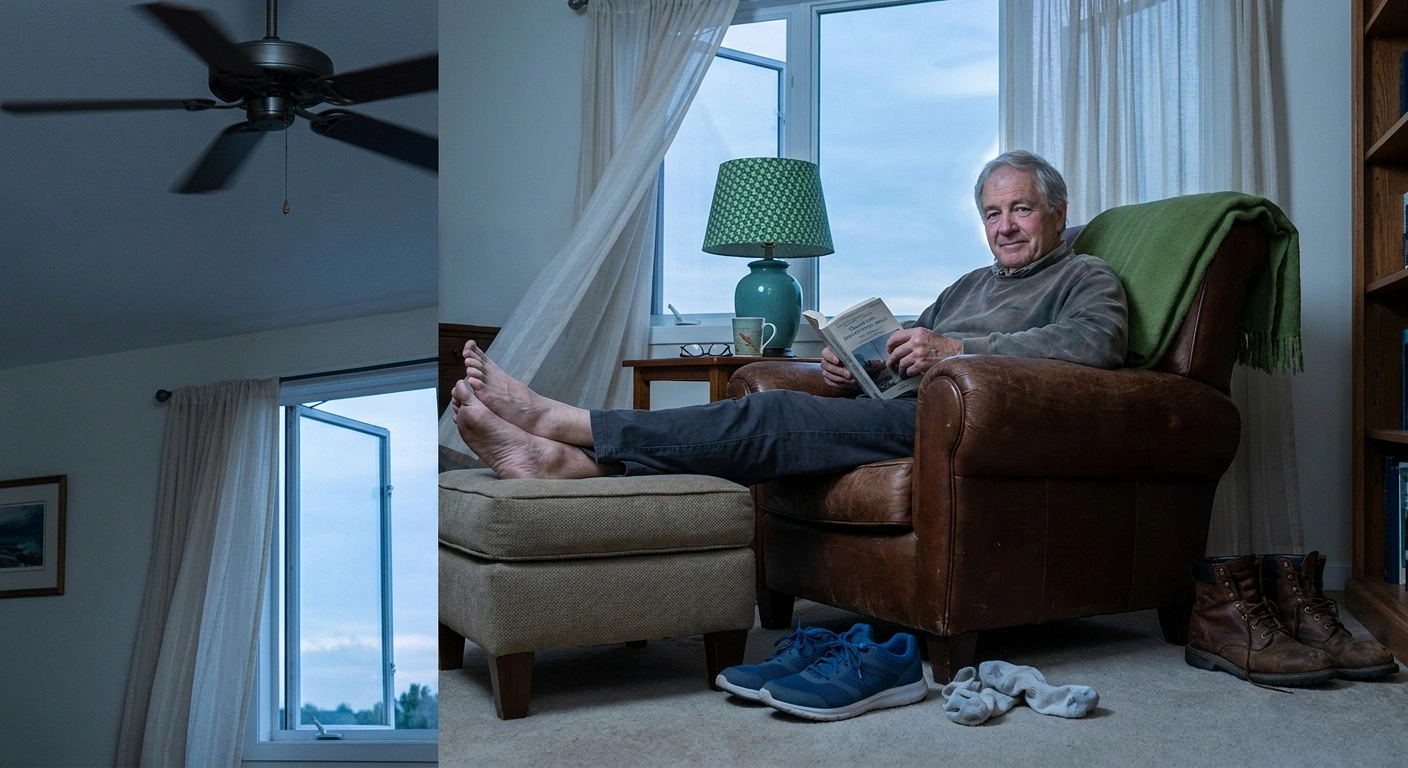
Keep your environment cool. A bedroom kept at 65 to 68 degrees, hardwood or tile floors under the feet whenever possible, and a personal fan trained on the feet at night can meaningfully reduce nighttime flares. Ceiling fans and window air conditioners are worth the investment.
Rethink your footwear entirely. Tight, hot, non-breathable shoes are among the most reliable triggers. Open-toed sandals, mesh athletic shoes, and shoes with good ventilation are usually much better tolerated than dress shoes or boots. Cotton, wool-blend, or bamboo socks in a loose weave are better than synthetics. See the guidance on best shoes for neuropathy for a fuller footwear framework, keeping in mind that erythromelalgia adds a heat-avoidance layer on top of standard neuropathy considerations.
Elevate. Keeping the feet elevated when sitting or lying down reduces the blood pooling that worsens flares. A footrest at the desk, elevation on a pillow when reading, a wedge under the mattress at night. Small adjustments add up.
Time your activity to the cooler parts of the day. Errands, walks, and outdoor time in the early morning or late evening are usually better tolerated than midday activity in warm months.
Address the emotional load honestly. Chronic pain of this intensity takes a real toll. Anxiety about the next flare, disrupted sleep, social withdrawal, and depression are all common travelers with erythromelalgia. Talking with a mental health professional who has experience with chronic pain isn’t a sign that the pain is psychological. It’s a recognition that the load is heavier than one person carries well alone. The relationship between neuropathy and mental health is bidirectional, and treating both makes both easier to bear.
What Recovery and Long-Term Outlook Look Like
The long-term course of erythromelalgia varies by cause. Secondary erythromelalgia can resolve entirely when the underlying condition is treated: an MPN-driven case may become completely quiet on aspirin plus treatment of the hematologic disorder, and a drug-induced case can resolve when the offending medication is stopped.
Primary erythromelalgia is generally chronic, but chronic doesn’t mean unrelenting. Many patients achieve substantial reductions in flare frequency and intensity through trigger avoidance and appropriate medication. Some inherited cases are lifelong and severe; others are milder and manageable with topical measures alone. The realistic framing I offer people newly diagnosed is that the goal is control, not cure. Most patients on well-selected treatment get a substantial portion of their life back, though complete symptom elimination is uncommon for primary disease. For a broader look at what recovery means in nerve conditions, see the discussion on whether neuropathy can be reversed.
What tends to make outcomes worse is delayed diagnosis, prolonged ice-water cooling leading to skin injury, and untreated underlying MPN. What tends to make outcomes better is early recognition, a proper workup, informed medication choices, and a household environment set up to reduce trigger exposure.
What to Tell Your Doctor to Get Taken Seriously
Because erythromelalgia is uncommon and often misattributed, the words you use in the exam room matter. If you suspect you have this condition and you’re preparing for an appointment, here’s what I’d bring in.

A clear symptom description. “I have episodes of burning, red, hot feet that come on with warmth or exercise and are relieved by cooling. My symptoms fit the classic triad of erythromelalgia, and I’d like to be evaluated for it.” Specific vocabulary signals that you’ve done the reading and this isn’t a vague complaint.
Photographs of your feet during an active flare. The visible redness is a huge diagnostic clue. If you can capture your feet at their worst on your phone, bring the images to the visit. Between-flare exams often look normal, which is why doctors sometimes dismiss the concern.
A family history and a medication history. If a relative has had burning feet, painful red hands, or unexplained nerve pain, that raises suspicion of inherited erythromelalgia and supports SCN9A genetic testing. And list every medication you’ve taken in the year before symptom onset, particularly calcium channel blockers.
Specific requests. Ask for a complete blood count with differential and platelet count. Ask whether JAK2 testing is appropriate. Ask about referral to a peripheral nerve subspecialist if the primary care evaluation is inconclusive. Ask whether a trial of a topical lidocaine compound is reasonable. Ask, if primary erythromelalgia is suspected, about mexiletine and about whether SCN9A genetic testing is available.
You’re not being pushy. You’re being informed. Physicians who know this condition appreciate a patient who has done the homework, and it shortens the road to the right diagnosis. If a physician isn’t willing to consider the diagnosis or refer you, that’s the signal to find another who will.
Frequently Asked Questions
Is erythromelalgia the same as Mitchell’s disease?
Yes. The name Mitchell’s disease honors Silas Weir Mitchell, the American neurologist who first described and named the condition in 1878. Both names refer to the same disorder. Erythromelalgia is the more commonly used term in modern medical literature, while Mitchell’s disease appears more often in older texts and in patient communities.
Is erythromelalgia hereditary?
Sometimes. Primary erythromelalgia is often inherited in an autosomal-dominant pattern caused by mutations in the SCN9A gene that encodes the Nav1.7 sodium channel. If a parent has the condition, each child has about a 50 percent chance of inheriting the mutation. However, some primary cases arise spontaneously without a family history, and secondary erythromelalgia caused by other underlying conditions is not inherited. Family history combined with age of onset in childhood or adolescence raises suspicion for the inherited form.
Can erythromelalgia be cured?
Secondary erythromelalgia can sometimes resolve entirely when the underlying cause is treated. For example, MPN-associated cases often become quiet on low-dose aspirin plus treatment of the blood disorder, and drug-induced cases may resolve completely when the offending medication is stopped. Primary erythromelalgia caused by SCN9A mutations is generally considered a chronic condition without a cure at this time, but well-selected treatment can substantially reduce flare frequency and severity for most patients.
Why does ice make erythromelalgia worse in the long run?
Ice-water immersion feels dramatically effective in the moment because it cools the affected tissue quickly. But prolonged or repeated cold immersion causes skin breakdown, ulceration, and tissue injury known as immersion foot, and can lead to secondary infection or in severe cases tissue death. Once the skin is damaged, the pain worsens, the cooling behavior increases, and the cycle accelerates. Safer cooling methods like fans, cool floors, elevation, and short applications of cool gel packs with a cloth barrier can achieve relief without the tissue damage.
Does aspirin cure erythromelalgia?
Aspirin is often dramatically effective for secondary erythromelalgia caused by myeloproliferative neoplasms like polycythemia vera and essential thrombocythemia. The response is so characteristic that a dramatic improvement with low-dose aspirin is often considered supportive of an underlying MPN and prompts further hematology workup. Aspirin is generally not helpful for primary erythromelalgia caused by SCN9A mutations, which typically requires sodium-channel blockers like mexiletine instead. This is one of the reasons distinguishing primary from secondary disease matters so much.
What is the best doctor to see for erythromelalgia?
A neurologist with peripheral nerve subspecialty training is generally the best fit, particularly one associated with a large academic center that can order SCN9A genetic testing and offer intravenous lidocaine trials. Peripheral nerve specialists, pain medicine physicians with neuropathic pain experience, or dermatologists with a research interest in erythromelalgia can also be appropriate. If your local neurologist is unfamiliar with the condition, requesting referral to a specialty center is reasonable and often necessary for proper diagnosis and management.
Does erythromelalgia only affect the feet?
Feet are the most common location, but erythromelalgia can also affect the hands and, less commonly, the ears, face, or knees. Bilateral involvement of both feet is the classic presentation, but asymmetric or one-sided cases occur. When the hands are involved, activities like typing, gripping, or holding warm objects can trigger flares.
Are compression socks safe for erythromelalgia?
Generally no. Tight compression garments including graduated compression socks are a well-recognized trigger for erythromelalgia flares. The compression, combined with the heat retention that comes from a snug synthetic garment, can precipitate an attack. Patients who have been prescribed compression socks for other conditions like venous insufficiency and who have erythromelalgia should discuss this carefully with their prescribing physician, as the balance of benefit and harm may tilt against compression in this specific situation.
About the Author