
Somewhere in the middle of my second neurologist appointment, the doctor said something I have thought about often since. “Your nerves need blood, Janet. They are among the hungriest tissues in your body. When the tiny vessels that feed them are struggling, the nerves struggle too.” That sentence rearranged how I thought about neuropathy in the space of about ten seconds. I had been picturing my nerves as a wiring problem — bad wires, faulty signals. What she was describing was a plumbing problem — starved wires, insufficient supply.
I am Janet Ellis. If you have heard your doctor use the words “microvascular” or “small vessel disease” or “vasa nervorum” in connection with your neuropathy, and it felt like a whole extra layer of vocabulary landed on you at once, this is the plain conversation I wish someone had walked me through. The plumbing story turns out to be one of the most important stories in neuropathy — and one of the most hopeful, because parts of it are things you can act on.
What “Vasa Nervorum” Actually Means
Vasa nervorum is Latin for “vessels of the nerves.” That is the whole term. It refers to the tiny arteries, arterioles, and capillaries that carry blood specifically to peripheral nerves — the ones running through your arms, legs, torso, and organs.
Every nerve in your body is a bundle of nerve fibers wrapped in protective connective tissue layers, like a very thin, very long cable made of many even thinner wires. All those fibers need oxygen, glucose, and a steady removal of waste products. That work is done by two overlapping networks of blood vessels.
The extrinsic vasa nervorum are the larger vessels that run along the outside of a nerve, in the epineurium (the outer wrapping). Think of them as the main utility lines running along the outside of a building.
The intrinsic vasa nervorum are the tiny arterioles and capillaries that penetrate the nerve and feed its individual fiber bundles from the inside. These are the vessels that actually deliver oxygen to your axons and to the Schwann cells that make the myelin sheath. Think of them as the pipes and wires running inside the building walls.
When neurologists talk about “microvascular” nerve disease, this second network — the intrinsic vasa nervorum, the small internal supply — is what they usually mean. And it turns out these tiny vessels are unusually vulnerable to a specific list of insults that also happens to include some of the most common conditions in the aging population.
Why Nerves Are Especially Vulnerable to Blood-Supply Problems
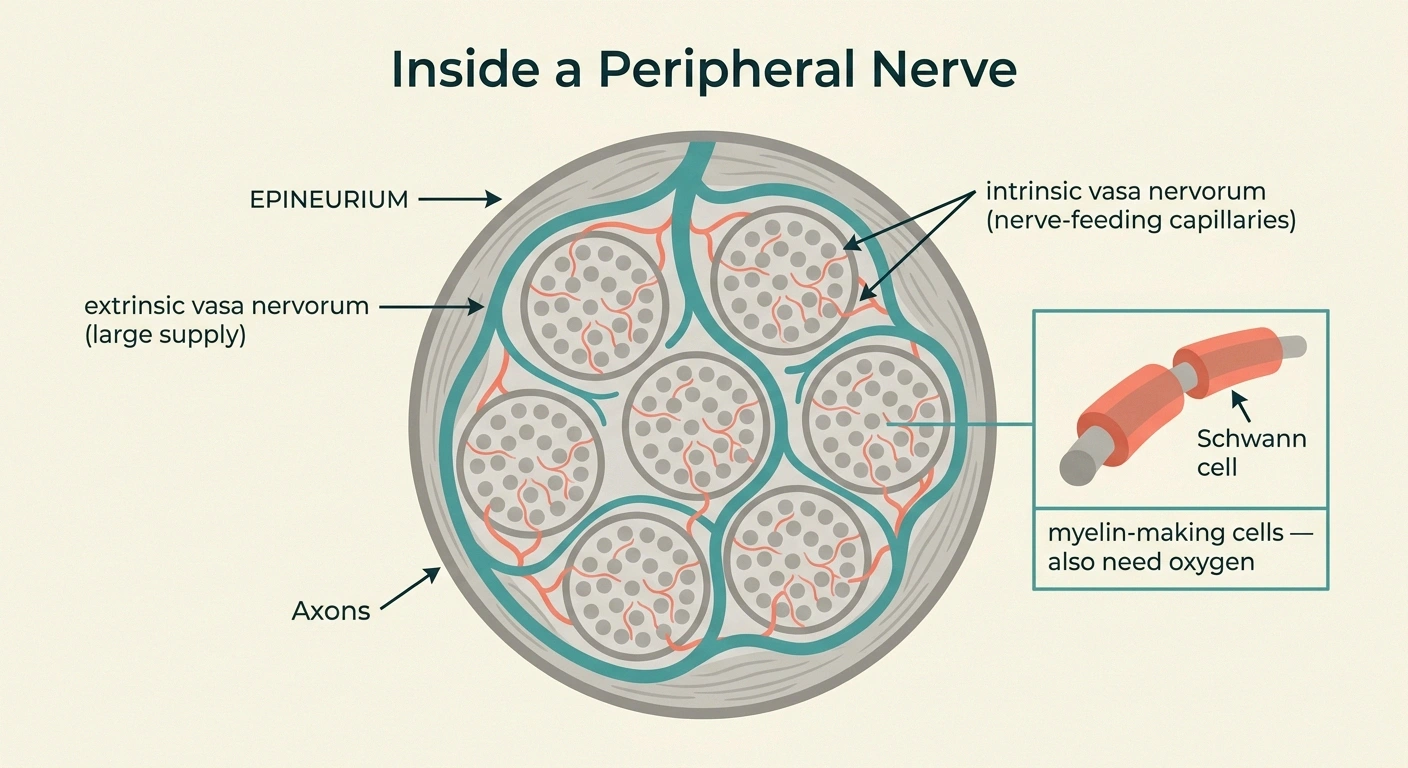
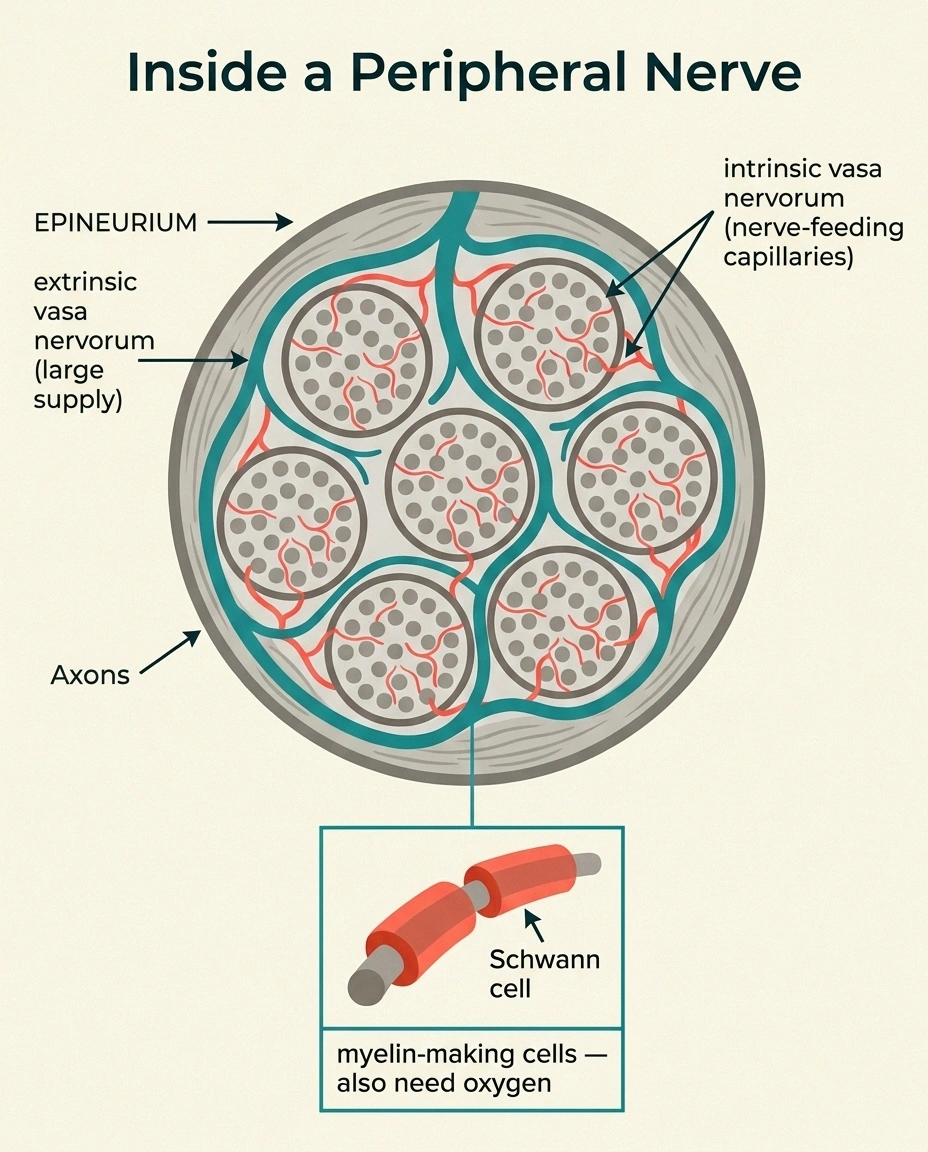
Peripheral nerves have a metabolism problem, in a sense. They are long — the sciatic nerve alone runs from your lower spine to your foot — and they have to keep an axon alive from cell body to endplate the whole way. That takes energy. Nerves consume a lot of oxygen and glucose per unit weight, more than most other tissues, and they have limited ability to store energy locally.
Peripheral nerves consume high amounts of oxygen and glucose per unit weight — more than most tissues — with limited local energy storage. That is why they are unusually sensitive to microvascular supply problems.
When the intrinsic vasa nervorum are working well, this is not a problem. The tiny vessels deliver a steady supply, waste products get cleared, and axons hum along. When those vessels are narrowed, thickened, spasming, or blocked, the nerve enters what physiologists call endoneurial hypoxia — low oxygen inside the nerve. Axons dysfunction. Signaling gets sluggish. Repair mechanisms slow down. Over time, fibers begin to die back from the ends inward, which is why length-dependent neuropathy classically starts in the feet — the farthest, most vulnerable ends of the longest nerves get hit first when supply drops.
A brief episode of low blood flow, the nerve can usually recover from. Sustained low blood flow — the kind that develops slowly with diabetes, high blood pressure, high cholesterol, and years of vascular wear-and-tear — is what does the lasting damage.
How Diabetes Attacks the Vasa Nervorum
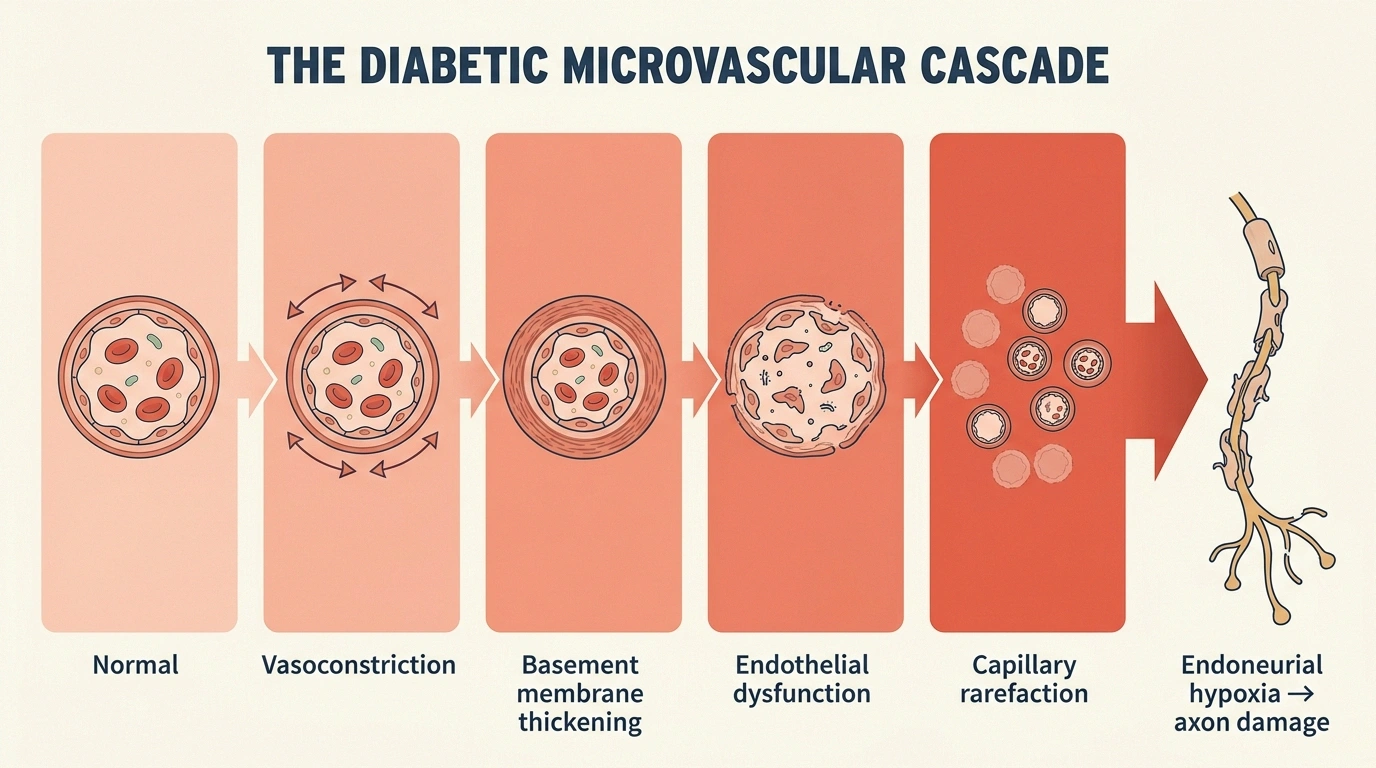
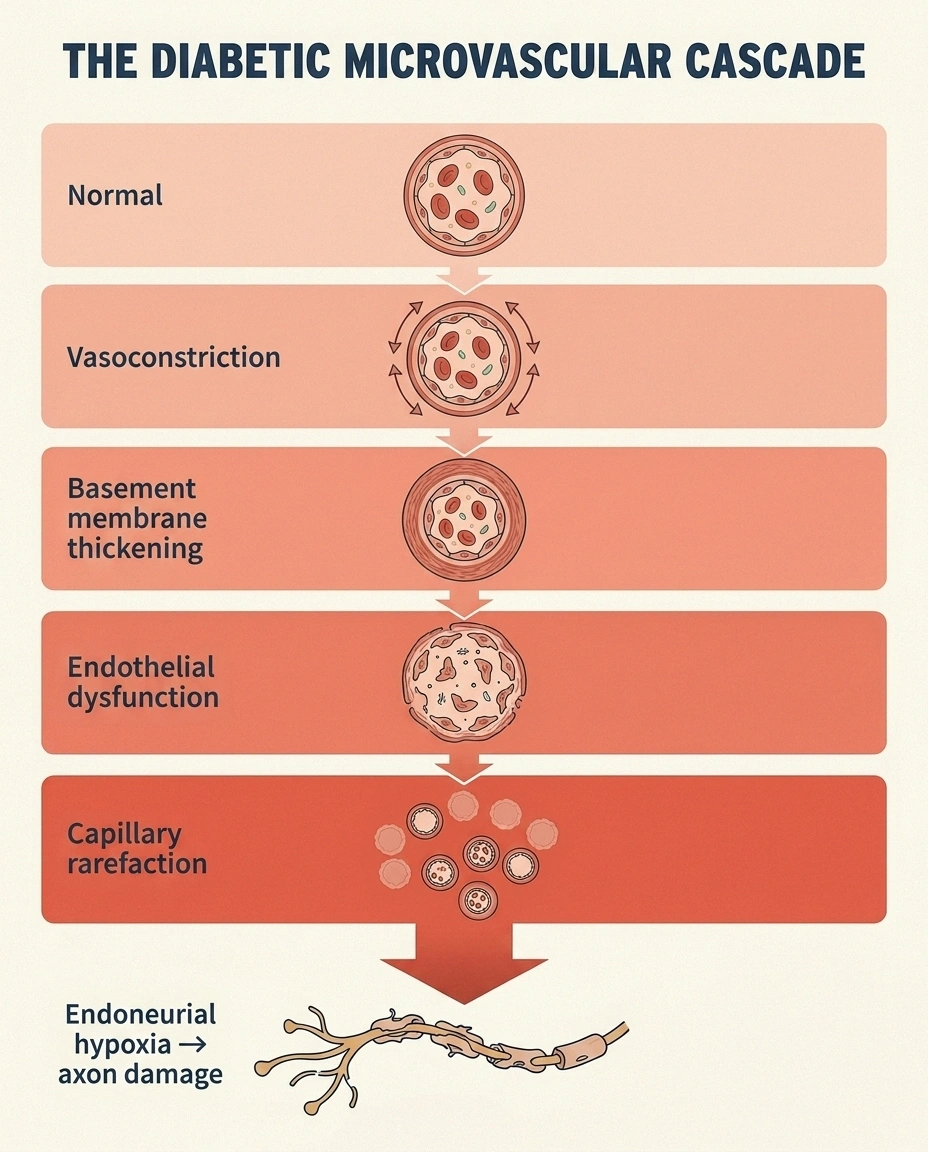
Diabetes is the largest single cause of peripheral neuropathy worldwide, and the mechanism is heavily microvascular. Here is what the research has pieced together, translated into plain terms.
Vasa nervorum are the tiny arteries and capillaries feeding your peripheral nerves. Neuropathy is often not a wiring problem but a plumbing problem — starved nerve fibers rather than faulty ones. Diabetes, high blood pressure, smoking, and vascular disease all narrow these tiny vessels first. The good news: many of the levers on microvascular health are modifiable.
Step 1: Vasoconstriction. One of the earliest detectable changes in the diabetic nerve microvasculature is that the tiny vessels feeding the nerves start to spasm and narrow more than they should. Blood flow drops before any structural damage is visible.
Step 2: Basement membrane thickening. Over months and years of high blood sugar, the walls of the tiny vessels thicken. The basement membrane — a thin layer that normally lets oxygen and nutrients pass easily through the vessel wall to the surrounding tissue — becomes stiffer and less permeable. Even when blood is flowing through the vessel, less oxygen crosses into the nerve.
Step 3: Endothelial cell dysfunction. The cells that line the inside of blood vessels (endothelial cells) start to malfunction. They lose the ability to release the natural chemicals that widen the vessel when blood flow needs to increase. In healthy tissue, when a muscle or nerve needs more blood, endothelial cells release nitric oxide and the vessel widens. In diabetic microvasculature, that response weakens.
Step 4: Capillary rarefaction. Over years, the actual number of functional tiny vessels drops. The nerve is left with fewer supply lines than it started with.
Step 5: Sustained hypoxia and oxidative stress. With supply chronically low, the nerve accumulates oxidative damage — a kind of chemical rust that impairs axons and their myelin sheaths from the inside. Antioxidant defenses inside the nerve get overwhelmed. This is where fibers begin to die.
This whole cascade is why the classic pattern of diabetic peripheral neuropathy is symmetric, starts distally in the toes, and slowly climbs upward — the microvasculature at the farthest ends is the first and most exposed to the sustained supply shortfall.
Vascular Pain Versus Nerve Pain — And Where They Overlap
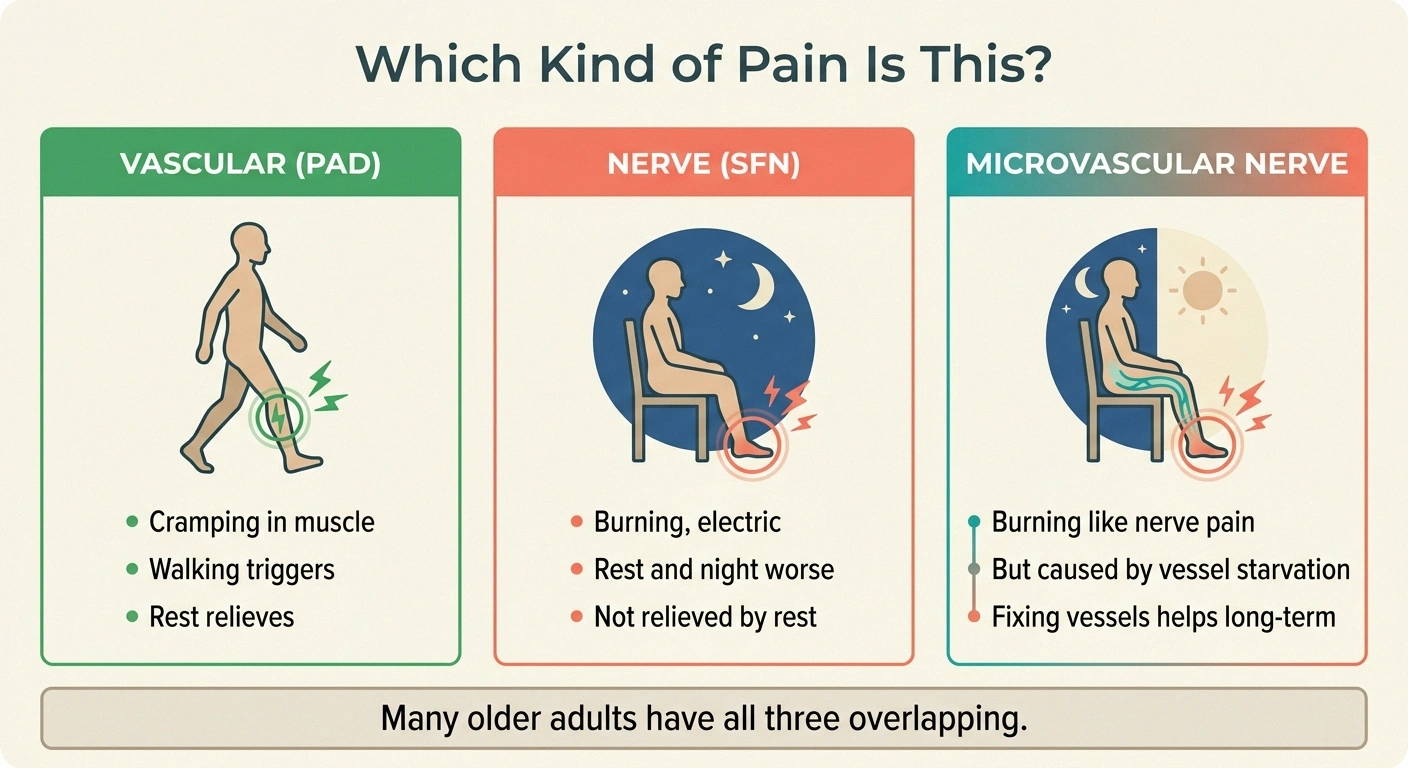
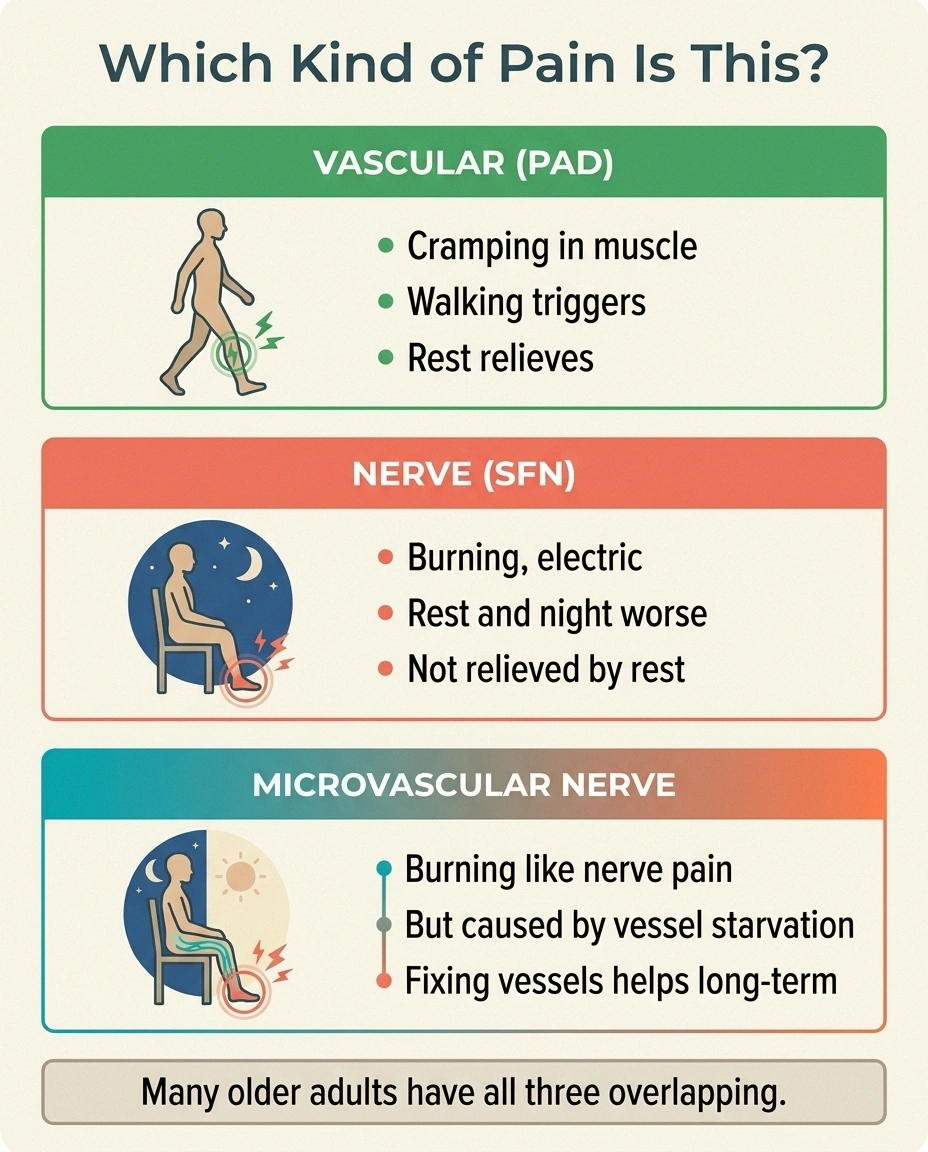
This is one of the most confusing distinctions for patients, in part because the vocabulary sounds similar. Vascular pain and nerve pain are different phenomena, and the vasa nervorum sits right at the intersection.
| Feature | Classic vascular (PAD) | Classic nerve | Microvascular nerve |
|---|---|---|---|
| Pain quality | Cramping, aching in muscle | Burning, electric, tingling | Burning, electric (nerve-type) |
| When it hurts | Walking / exertion | Rest, especially at night | Rest, especially at night |
| Relieved by | Stopping and resting | Not by rest | Not by rest |
| Underlying problem | Large-artery narrowing | Damaged nerve fibers | Tiny-vessel starvation of nerves |
| Main treatment target | Restore artery flow | Calm the nerve signals | Both — protect vessels + calm nerves |
Many older adults have all three overlapping. The vasa nervorum sits at the intersection — a nerve injury caused by a vascular mechanism.
Classic vascular pain — from peripheral arterial disease (PAD), for example — is caused by the LARGE arteries not delivering enough blood to a working muscle. The pain shows up when you walk and stops when you stop. It is called intermittent claudication. It is a supply-demand problem: the muscle demands more blood, the artery cannot deliver, the muscle sends a pain signal, you stop walking, supply catches up with demand, pain resolves.
Classic nerve pain — from small-fiber neuropathy, for example — is caused by damaged nerve fibers misfiring. The pain is burning, tingling, electric. It is often WORSE at rest, especially at night. It is not driven by supply and demand of oxygen to a working muscle. The fibers themselves are damaged and generating pain signals whether or not you are moving.
Now here is where the vasa nervorum makes it complicated. Microvascular nerve disease has features of BOTH. The underlying cause is a vascular problem (tiny vessels not delivering enough blood to the nerve). The resulting symptom is a nerve problem (damaged fibers producing burning pain, numbness, and misfiring). It is a nerve injury caused by a vascular mechanism, expressed as nerve symptoms.
Our page on nerve pain versus vascular pain walks through the practical bedside distinction in more detail. The short version: if your foot pain is worse at rest, especially at night, and feels burning or electric, it is likely nerve pain. If your calf pain shows up when you walk and stops when you stop, it is likely vascular. Many older adults have both — nerve pain layered on top of vascular pain — and treating each requires knowing which is which.
Other Diseases That Damage the Vasa Nervorum
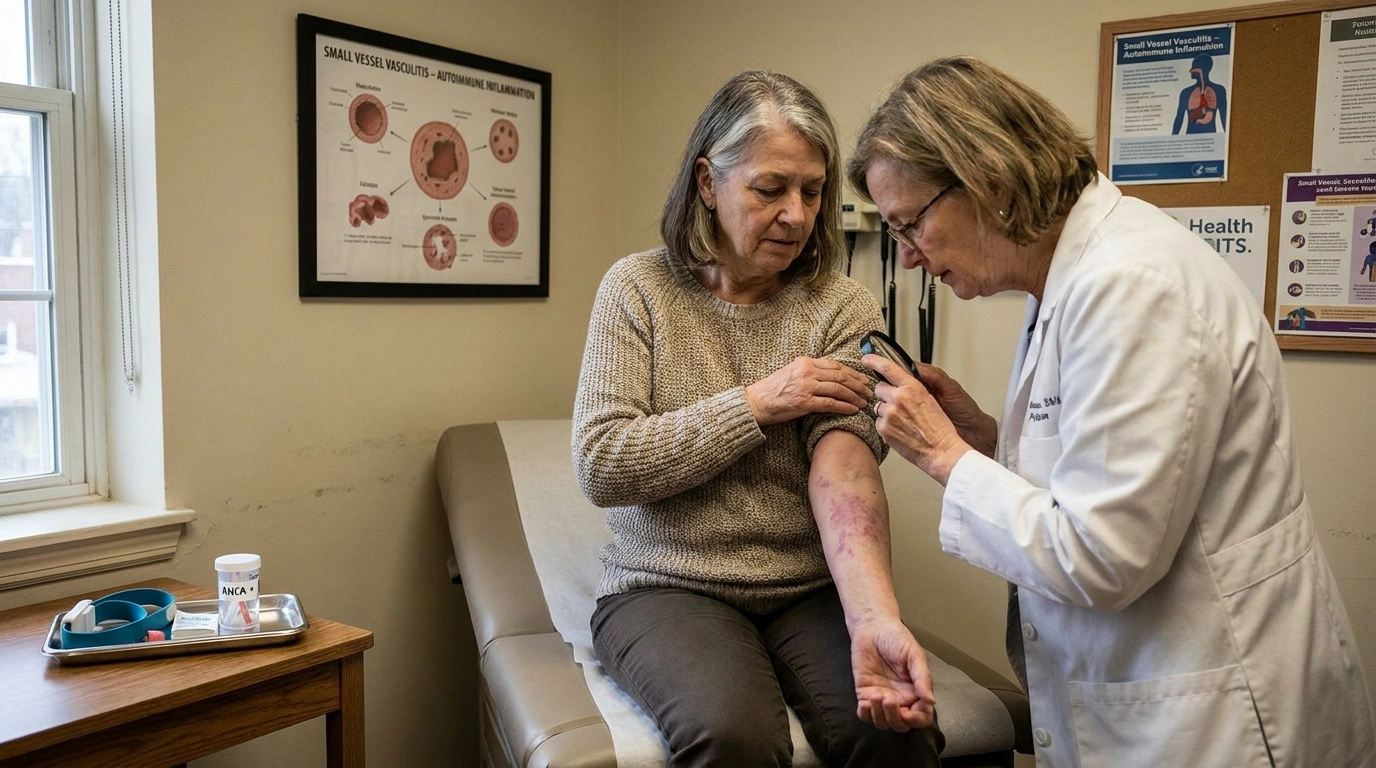
Diabetes is the biggest single cause of vasa nervorum injury, but it is not the only one. Understanding the broader list helps clarify why “microvascular neuropathy” is a category of disease rather than a single condition.
- Peripheral arterial disease — reduced upstream flow starves the vasa nervorum
- Vasculitis — autoimmune inflammation attacks the vessel walls directly (rheumatology emergency)
- Chronic kidney disease — uremia damages small vessels body-wide
- Amyloidosis — amyloid protein deposits narrow the vessels
- Compartment syndrome — acute pressure crushes the vessels
- Cocaine, methamphetamine — severe vasoconstriction cuts flow
- Smoking — nicotine vasoconstricts immediately, damages vessels chronically
Peripheral arterial disease (PAD). Chronic reduction in blood flow through the larger arteries also reduces perfusion into the vasa nervorum downstream. Long-standing PAD is a well-recognized cause of ischemic peripheral neuropathy, particularly in the legs and feet.
Vasculitis. Autoimmune diseases that inflame small blood vessels (polyarteritis nodosa, granulomatosis with polyangiitis, Churg-Strauss syndrome, cryoglobulinemic vasculitis) can attack the vasa nervorum directly. The resulting neuropathy is often “mononeuritis multiplex” — patchy, asymmetric nerve damage that follows the specific vessels the immune system has attacked.
Chronic kidney disease. Uremia damages small vessels throughout the body, including the vasa nervorum, contributing to the neuropathy commonly seen in patients on dialysis.
Amyloidosis. Abnormal amyloid protein deposits in the walls of small blood vessels, including vasa nervorum, narrowing them and reducing nerve perfusion. This is one of the mechanisms behind amyloid neuropathy.
Compartment syndrome. Acute rise in pressure within a limb compartment can compress vasa nervorum, producing rapid ischemic nerve damage.
Cocaine, methamphetamine, and other severely vasoconstrictive substances can trigger episodes of ischemic nerve injury.
Smoking. Nicotine is a potent vasoconstrictor. Chronic smoking narrows peripheral vessels including the vasa nervorum, worsens diabetic microvascular disease, and independently contributes to nerve fiber loss. This is one of the fastest-acting modifiable risk factors in the whole list.
Vasa Nervorum and Nerve Repair
There is a second, less-discussed reason microvascular health matters: nerve repair. When a nerve fiber is damaged, whether by injury, chemotherapy, autoimmune attack, or metabolic stress, the repair machinery relies heavily on adequate local blood flow to bring in the raw materials for regrowth.
Schwann cells (the cells that make the myelin sheath and support axon regeneration) are metabolically active during repair. They need oxygen. Growth factors that guide axon regrowth are delivered by blood. Waste from the injured segment has to be cleared. All of that is vasa-nervorum work.
In healthy microvasculature, a damaged nerve fiber can regrow at roughly a millimeter a day. In diabetic microvasculature, or in any nerve with compromised vasa nervorum, regeneration slows down, becomes disorganized, or fails altogether. This is one of the reasons diabetic patients have a harder time recovering from any peripheral nerve injury, and one of the reasons the same chemotherapy that produces mild, reversible neuropathy in a healthy patient can produce severe, permanent neuropathy in a diabetic one.
The practical corollary: anything you do to improve microvascular health is not just prevention. It is also a support for whatever repair capacity your nerves still have.
What You Can Actually Do About Microvascular Nerve Health

Here is where the story turns hopeful, because a meaningful chunk of vasa nervorum health is downstream of things you can influence.
Blood sugar control. This is the single largest lever for anyone with diabetes or prediabetes. Every study of diabetic microvascular complications shows the same pattern: tighter glucose control slows the microvascular damage that drives neuropathy. It does not reverse advanced disease, but it slows and sometimes halts progression. Working with an endocrinologist or diabetes educator on your A1C target is one of the highest-leverage things you can do.
Blood pressure control. High blood pressure damages small vessels throughout the body, including the vasa nervorum. Bringing blood pressure to target — usually below 130/80 for adults with diabetes — protects both the nerves and everything else the microvasculature feeds.
Lipid control. Elevated cholesterol contributes to microvascular disease and endothelial dysfunction. Statins have their own separate neuropathy considerations, but generally, keeping LDL cholesterol in the recommended range helps the vessels.
Stop smoking. If you smoke, this is the single fastest thing you can do to widen the vasa nervorum. Nicotine causes immediate vasoconstriction; quitting produces measurable improvement in microcirculation within weeks. It is hard. It is also, in this specific context, extremely worth it.
Move regularly. Exercise improves microvascular function through several mechanisms — better endothelial function, more nitric oxide production, better glucose control, better weight management. It does not have to be intense. See our page on does walking help neuropathy for the practical approach.
Address weight if it is a factor. Excess weight worsens insulin resistance, blood pressure, and lipids — all three microvascular stressors at once. Even modest weight loss produces disproportionate microvascular benefit.
Eat for vessel health. A Mediterranean-style eating pattern with plentiful vegetables, fatty fish, olive oil, nuts, and minimal processed food is the most consistently vessel-protective diet in the research. Our page on the best neuropathy diet covers this in more detail.
Alpha-lipoic acid. An antioxidant supplement with the strongest research base of any nutraceutical for diabetic neuropathy specifically. It targets the oxidative stress downstream of microvascular hypoxia. See our page on alpha lipoic acid for neuropathy. Not a replacement for the underlying vascular work, but a useful adjunct.
Compression at the feet and legs. Compression stockings improve venous return and, indirectly, arterial perfusion in some patients. Our page on compression socks and gloves for neuropathy walks through when this helps and when it does not.
Medications That Target the Vasa Nervorum
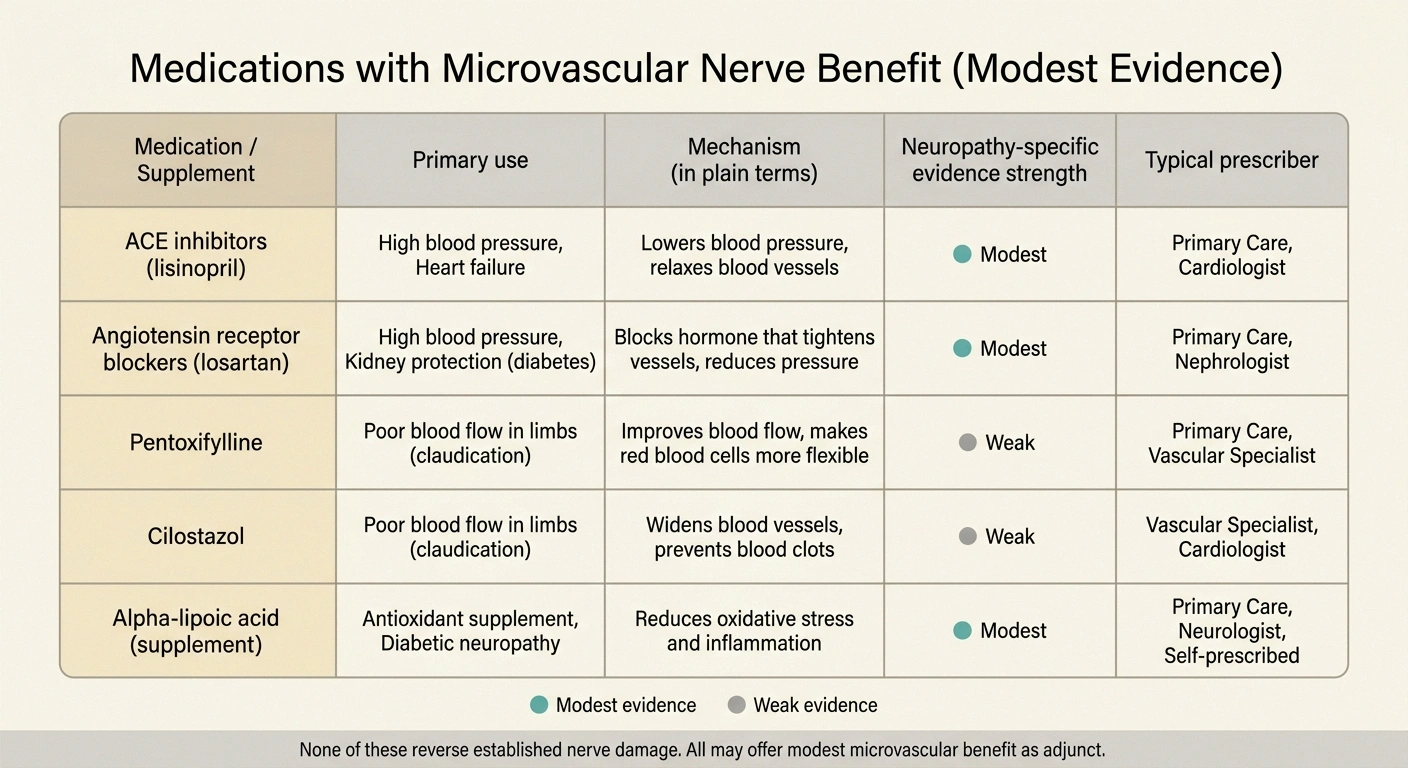
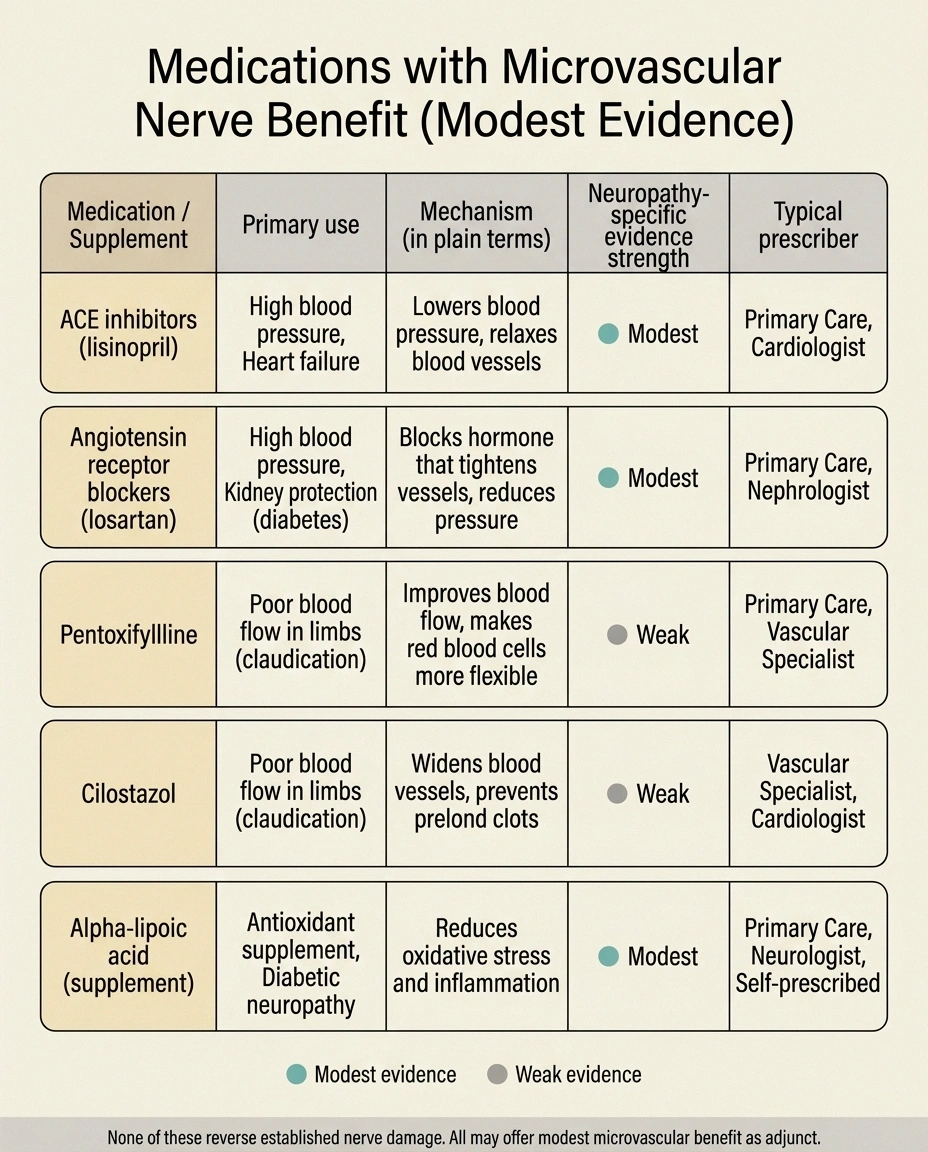
Beyond lifestyle work, there is a small but interesting research literature on medications that improve blood flow through the vasa nervorum.
ACE inhibitors and angiotensin receptor blockers (drugs like lisinopril, losartan, valsartan) that are commonly prescribed for blood pressure and diabetes have shown modest improvements in nerve conduction velocity in some trials, likely through their vasodilator effects.
Pentoxifylline is an older medication that reduces blood viscosity and improves microcirculation. It has been studied in peripheral vascular disease and diabetic neuropathy with modest results.
Cilostazol is a similar vasodilator used more commonly for peripheral arterial disease with intermittent claudication.
These are not primary neuropathy treatments and are not routinely prescribed to reverse nerve damage. But if you are already on one of them for another indication, know that there may be a modest microvascular nerve benefit as a bonus. If your neuropathy is progressing despite the standard interventions, this is a worthwhile conversation to have with your doctor.
When It Is Vasculitis Instead of Chronic Microvascular Disease
One category is important to flag separately because it is treated very differently: vasculitic neuropathy.
If your neuropathy came on rapidly (weeks, not years), in a patchy or asymmetric pattern (one wrist, then one ankle), and is accompanied by fatigue, weight loss, joint pain, rash, or kidney/lung symptoms, this is not typical microvascular disease.
Ask specifically: “Should we work up a vasculitis?” Vasculitic neuropathy is a rheumatology emergency that responds to immunosuppression — but only if diagnosed promptly.
If the vasa nervorum are being attacked by an autoimmune inflammatory process (as in polyarteritis nodosa, ANCA-associated vasculitis, or cryoglobulinemic vasculitis), the picture usually looks different from slow diabetic microvascular disease. It comes on faster (weeks to months rather than years), the pattern is often patchy and asymmetric (one wrist, then two months later one ankle), and it is often accompanied by systemic symptoms — fatigue, weight loss, joint pain, rash, kidney or lung involvement.
Vasculitic neuropathy is a rheumatology emergency. It responds to immunosuppression (high-dose steroids, sometimes IVIG, rituximab, or cyclophosphamide depending on the specific vasculitis) but only if diagnosed and treated promptly. If your neuropathy came on rapidly, in an asymmetric pattern, and is accompanied by unusual systemic symptoms, ask your doctor specifically whether a vasculitis workup is warranted. A nerve biopsy is sometimes needed to confirm.
This is a small subset of vasa nervorum disease but a very important one to distinguish from the much more common chronic microvascular picture.
What This Framework Changes About How You Think About Neuropathy
If there is one thing I wish more of us understood earlier, it is this: neuropathy is almost never just a nerve problem. It is a nerve problem with an upstream story. The upstream story is often vascular. Sometimes autoimmune. Sometimes metabolic. Sometimes toxic. Sometimes hereditary.
The vasa nervorum framework matters because it gives you leverage in a place where the pain-management framework does not. Managing burning-foot pain with medication is treating a symptom. Improving blood flow through the vasa nervorum is treating a mechanism. The two work together. The mechanism work — the glucose control, the blood pressure control, the walking, the not-smoking, the vessel-friendly eating — is slower and less visible than a pill for burning feet, but it is where the long-term trajectory of your nerve health gets decided.
For anyone reading this who is early in a neuropathy diagnosis, or for a family member trying to understand what is happening to someone they love, this is where I would put the emphasis. Get on top of the microvascular story. Ask your doctor which parts of your specific picture are driving the microvascular strain, and address those directly. Do the small daily things that keep tiny vessels open and delivering oxygen. Those are the things that show up years later as either a slow, manageable neuropathy or a fast, disabling one.
The wiring will do what it can. But it needs its plumbing to work. Look after the plumbing.
Where This Fits in the Bigger Neuropathy Picture
Vasa nervorum health is one important layer in the neuropathy story. It sits alongside other framing pieces: what fiber types are affected, how far along the disease has progressed (see what are the stages of neuropathy), whether the underlying cause is treatable, and whether any of the damage is reversible (see can neuropathy be reversed). For a comprehensive nutrition-based approach to nerve health, our page on the best neuropathy supplements for nerve health covers the supplement layer. For the mental-health side of long-term neuropathy management, see our page on neuropathy and mental health. For the specific challenge of managing burning-feet symptoms while the microvascular work happens in the background, see our page on burning feet syndrome.
Frequently Asked Questions
What are the vasa nervorum?
The vasa nervorum are the tiny blood vessels that supply peripheral nerves with oxygen and nutrients. The term is Latin for “vessels of the nerves.” Nerves have both external supply vessels (running along the outside) and internal supply vessels (penetrating the nerve to feed individual fibers and Schwann cells).
How does diabetes damage the vasa nervorum?
Diabetes damages the vasa nervorum through a multi-step process: early vasoconstriction reduces blood flow, chronic high blood sugar thickens the vessel walls (basement membrane thickening), endothelial cells lose their ability to widen vessels normally, and the actual number of functional tiny vessels drops over time. The end result is chronic low oxygen inside the nerve, oxidative stress, and progressive fiber damage.
Is diabetic peripheral neuropathy the same as microvascular disease?
Diabetic peripheral neuropathy is largely driven by microvascular damage to the vasa nervorum, but it is not identical to microvascular disease. Metabolic factors (advanced glycation end-products, oxidative stress, mitochondrial dysfunction) also contribute independently of blood flow. The microvascular mechanism is a major piece but not the whole picture.
Can improving circulation reverse neuropathy?
Improving circulation can slow progression of neuropathy and support whatever repair capacity your nerves still have. It usually does not fully reverse established fiber damage. The gains from improved microvascular health show up gradually over months and years and are more about preventing worsening than about restoring lost function. For an overview see our page on whether neuropathy can be reversed.
Does smoking make neuropathy worse?
Yes. Nicotine is a potent vasoconstrictor that narrows the vasa nervorum immediately, and chronic smoking damages small vessels throughout the body. Smoking is an independent risk factor for peripheral neuropathy and significantly worsens diabetic microvascular disease. Quitting produces measurable improvement in microcirculation within weeks.
What is vasculitic neuropathy and how is it different?
Vasculitic neuropathy is caused by an autoimmune inflammatory attack on the vasa nervorum, rather than by slow metabolic damage. It typically comes on faster (weeks to months), in an asymmetric patchy pattern (one wrist, then one ankle), and is often accompanied by systemic symptoms like fatigue, weight loss, joint pain, or rash. It is treated with immunosuppression and requires prompt diagnosis. Vasculitic neuropathy accounts for a small subset of vasa nervorum disease but must be distinguished from the much more common chronic microvascular picture.
Do vasodilator medications help neuropathy?
Some vasodilators have shown modest improvements in nerve conduction in research settings. ACE inhibitors and angiotensin receptor blockers used for blood pressure control may offer a small neuropathy benefit. Pentoxifylline and cilostazol improve microcirculation and have been studied in vascular disease with modest results. None of these are primary neuropathy treatments, but they may provide adjunct benefit if you are on them for another indication.
Should I take alpha-lipoic acid for microvascular neuropathy?
Alpha-lipoic acid is an antioxidant supplement with the strongest research base of any nutraceutical for diabetic neuropathy. It targets oxidative stress downstream of microvascular hypoxia. It is not a replacement for the underlying vascular and metabolic work, but it is a useful adjunct with modest evidence for symptom relief in diabetic neuropathy specifically.
About the Author