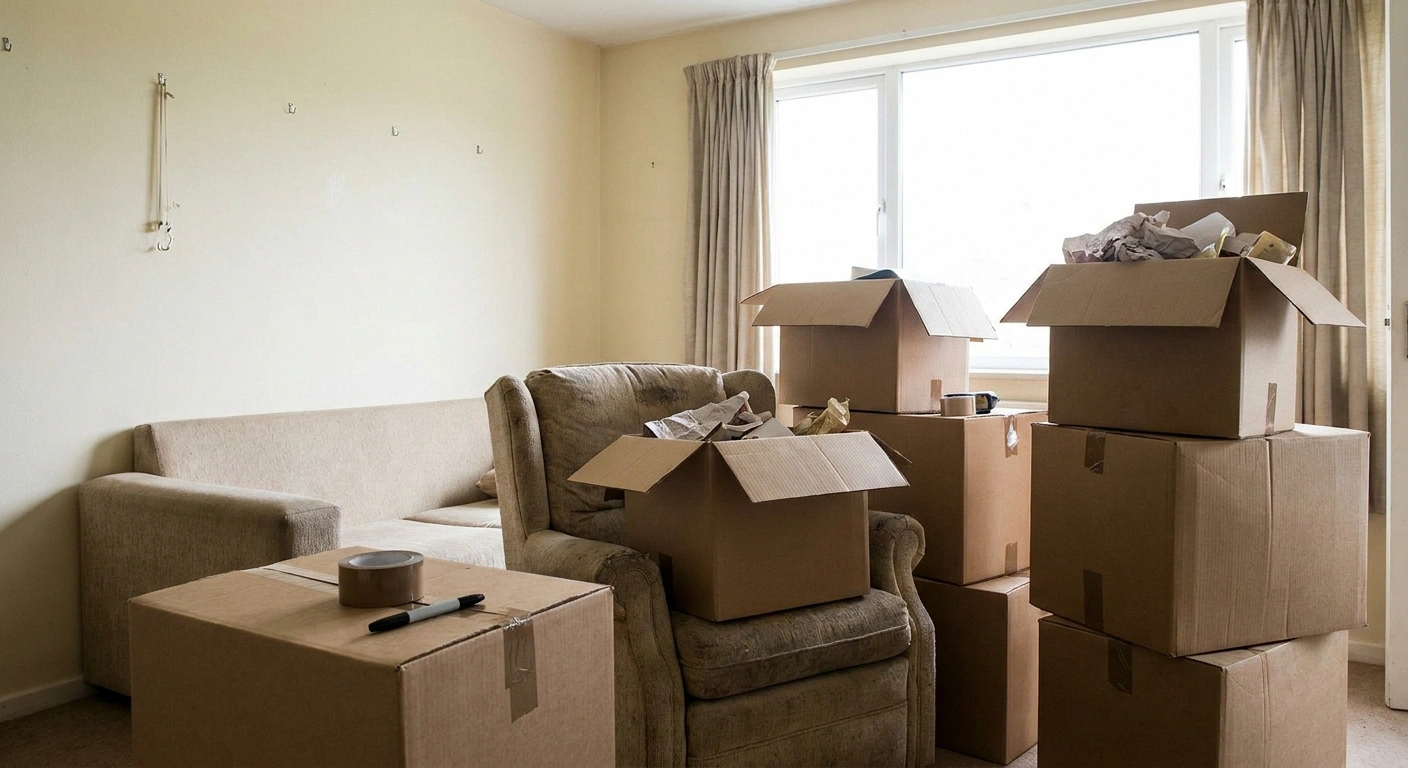
Moving is not one big lift. That’s the thing that catches people out.
A move is four hundred small trips — cupboard to box, box to hallway, hallway to car, car to door, door to room. Every one of them is short. Every one of them is on your feet. And when you total them up across a Saturday, you’ve walked further and stood longer than you have in months, on the exact surfaces that are hardest on numb feet: unfamiliar floors, thresholds you don’t know, and stairs with a box blocking your view of them.
I’ve helped two people in my support group through moves, and both said the same thing afterward. The lifting wasn’t what hurt them. The accumulation was.
So this is the version that accounts for that. Some of it starts eight weeks out, which sounds excessive right up until the week you’re grateful you did it.
If You’re Still Choosing the Place
The features that matter most with neuropathy aren’t the ones on the listing. A few worth walking through deliberately, with your shoes off if the seller allows it.
Count the stairs, including the ones outside. Not just the staircase inside. The three steps to the front door, the step down to the garage, the lip at the patio door. Single steps are the ones people trip on, because they don’t register as stairs. If you’re choosing between properties, a home where you can live entirely on one floor changes your daily life more than square footage does.
Walk the floors in socks. Hard tile is unforgiving on painful feet and slick when wet. Deep pile carpet sounds kind and is actually a balance problem, since it hides where the floor really is. Cork, vinyl plank, and low-pile carpet are the friendliest.
Look at the bathroom before anything else. Is there room to add grab bars? Is there a shower you can walk into rather than step over? A high-sided tub as the only bathing option is a genuine daily obstacle, and our guide to bathroom safety with neuropathy covers what makes one workable.
Check the path from the car to the door. In winter, in the dark. Uneven pavers, an unlit walkway, or a long distance from parking to entry becomes a problem four months in.
Find the bedroom-to-bathroom line. The overnight trip is where falls happen. A short, straight route with somewhere to add a night light beats a beautiful bedroom at the far end of a hallway with a turn in it.
The Eight-Week Slow Pack
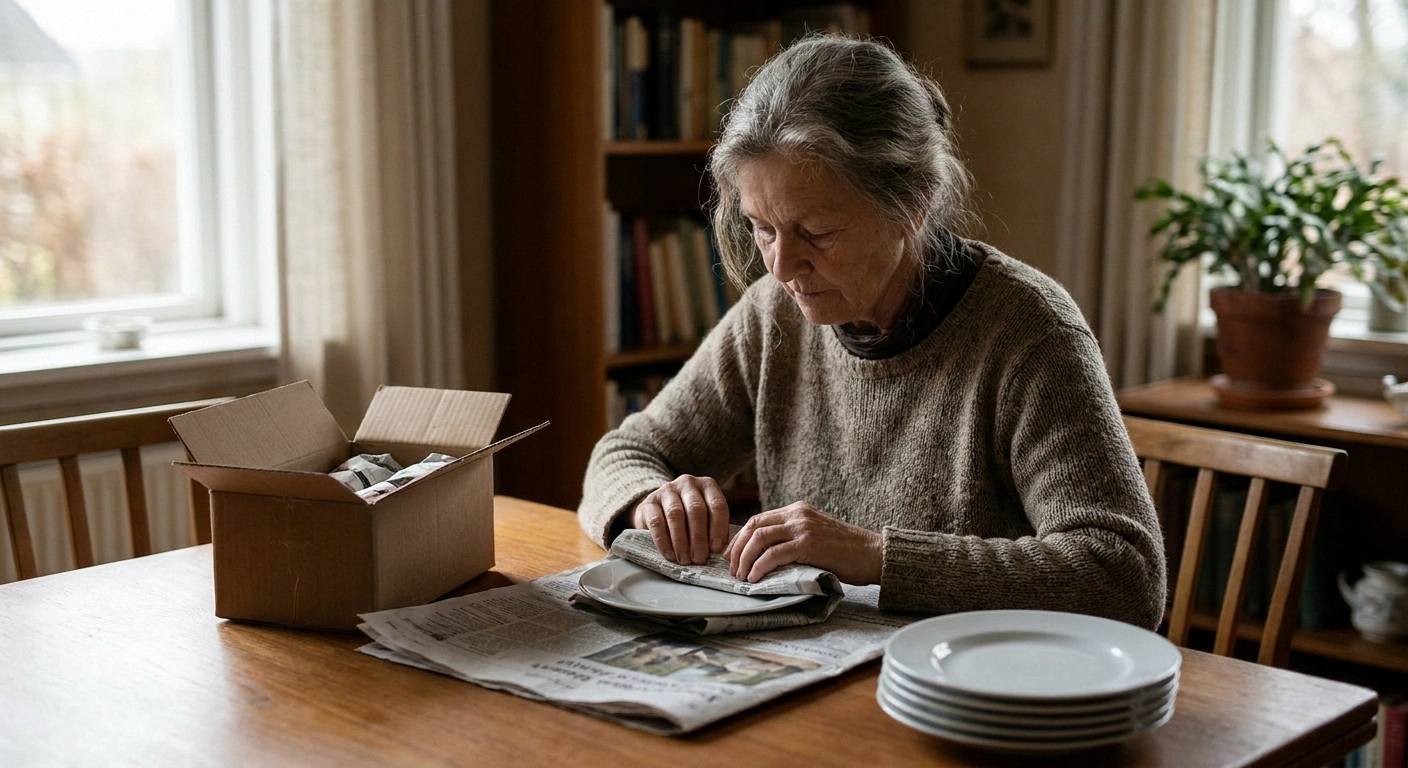
The single biggest change you can make is to stop treating packing as an event. Spread across weeks, it’s manageable. Compressed into a weekend, it’s a flare.
Roughly 45 boxes for a three-bedroom house at one a day with rest days built in. If you are further out than eight weeks, add the slack at the front, never at the end.
| Week | What goes in boxes | Decisions required |
|---|---|---|
| 8 to 6 | Books, off-season clothes, decorations, spare linens, good dishes | Almost none |
| 5 to 3 | Most of the kitchen, most of the closet, the garage | Keep or donate, constantly |
| 2 | Paperwork, prescriptions transferred, utilities booked | Phone calls, not lifting |
| 1 | Daily-use items. Essentials box packed and set aside. | Keep out one week of ordinary life |
The stopping rule matters more than the schedule: end each session while you still feel fine. Neuropathy overexertion bills you that night, not while you are working.
The rule I’d give anyone: one box a day, and stop while you still feel fine. Not when you’re tired. While you still feel fine. The cost of neuropathy overexertion doesn’t arrive during the activity — it arrives that night and the next day, which makes it very easy to overshoot without noticing.
Work in this order, since it goes from easiest to hardest:
Weeks eight to six: the things you won’t miss. Books, off-season clothes, decorations, spare linens, the good dishes. Nothing here is urgent, nothing needs decisions, and it builds momentum.
Weeks five to three: the middle ground. Most of the kitchen, most of the closet, the garage. This is where decisions start, and decisions are more tiring than they look.
Weeks two to one: the daily-use things. Keep out what you’d need for a week’s ordinary life. Pack the rest.
Some practical details that matter more than they seem to:
Small boxes only. Book boxes, not moving boxes. A big box gets filled, then can’t be lifted, then gets dragged, and dragging is how backs go. If you can’t lift it comfortably with two hands from a chair, it’s too heavy.
Pack sitting down. Bring the contents to a table and work seated. Standing at an open cupboard for forty minutes is the exact posture that wrecks feet.
Label the top and one side, in thick marker, with the room and three words of contents. “Kitchen — pans, lids, colander.” On moving day this saves you the standing-and-searching that costs the most.
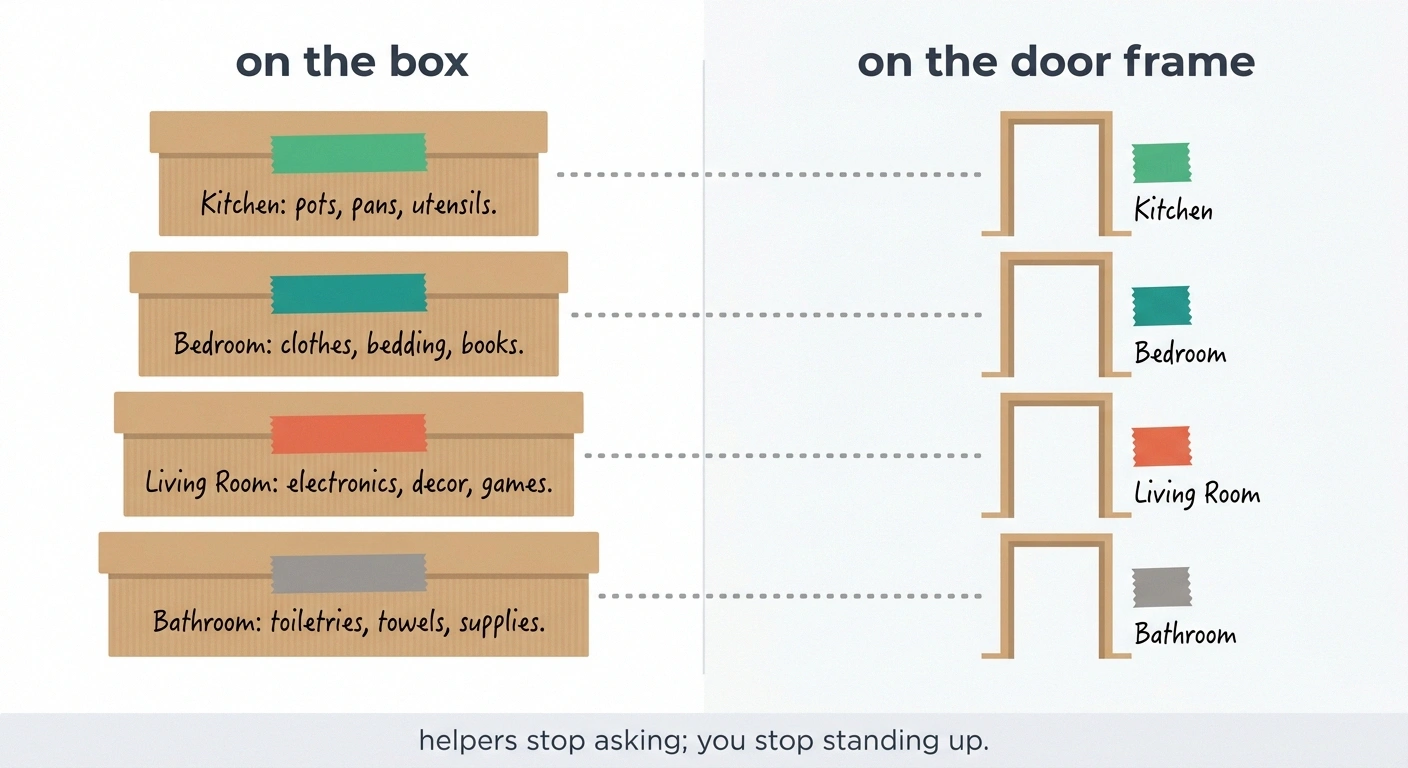
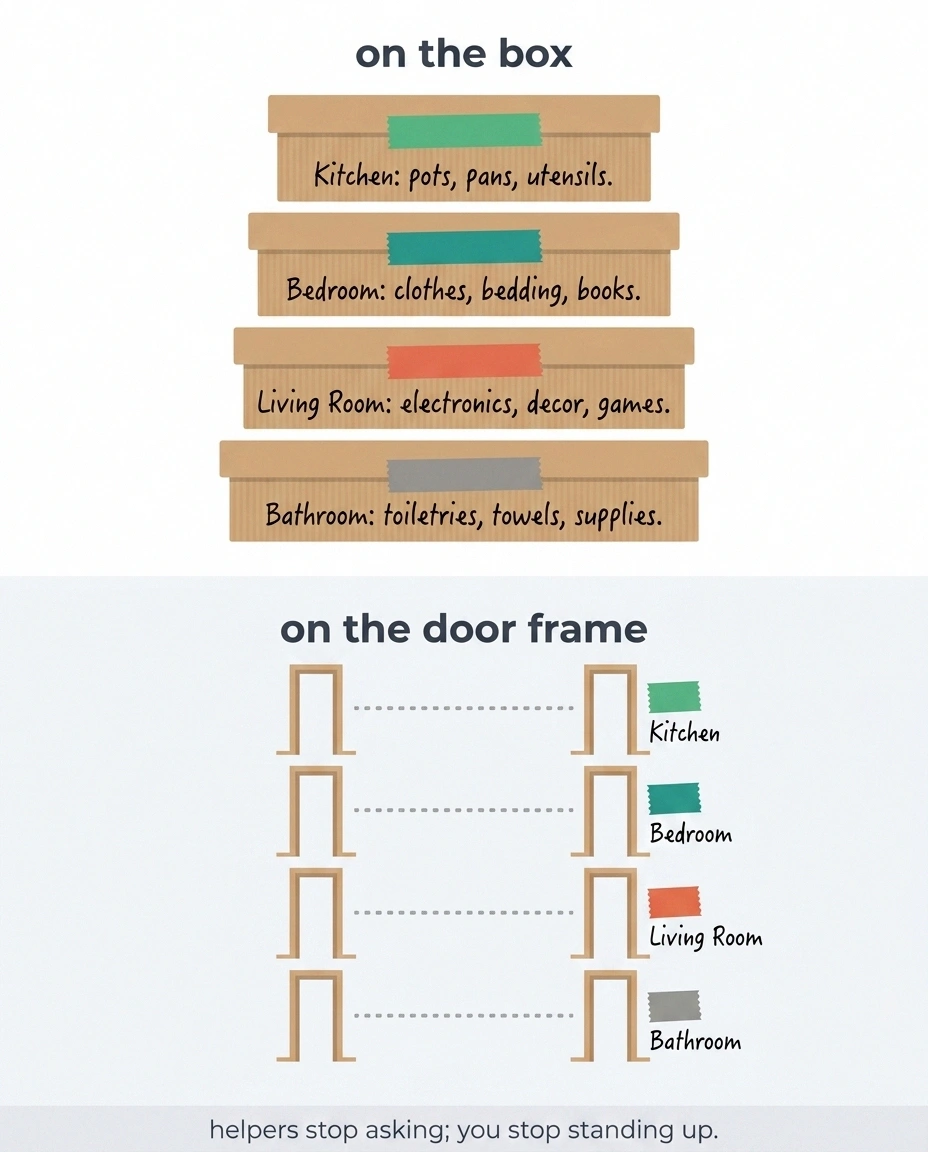
Colored tape per room. A roll of colored tape on each box, matched to a sheet of the same tape on each door frame in the new place, means helpers don’t have to ask you anything. Every question they don’t ask is thirty seconds you don’t spend standing.
Keep a numbered list. Number the boxes and jot what’s in each on a phone note or a notebook. Searching for one specific thing across forty identical boxes in week two is where a lot of people finally overdo it.
If pacing is something you already struggle with, our guide to pacing and neuropathy fatigue has the framework this whole schedule is built on.
What to Pay Someone Else to Do
This is the section people skip, and it’s the one with the best return.
Written for someone who cannot spend the day on their feet. The times are a template, not a prescription, but the sequence is what keeps the standing to a minimum.
Get three quotes and ask each specifically for labor-only pricing, which many companies quote but few advertise. Then compare it against what a two-week flare has actually cost you before.
1. Loading and unloading only. Often a two or three hour minimum with two crew. Removes the heaviest and highest-risk part of the entire move. Buy this first even if you buy nothing else.
2. Kitchen packing. The most box-intensive room by a wide margin, and the one where sitting down to work is hardest.
3. Furniture disassembly and reassembly. Ask for the bed to be reassembled first at the new place, before anything else comes off the truck.
4. End-of-tenancy cleaning. Kneeling and scrubbing after you are already spent, on a deadline you cannot move.
Movers are usually cheaper than expected relative to what a bad flare actually costs you — days lost, sleep lost, and sometimes weeks of setback. When you price it, price the alternative honestly.
Worth paying for, roughly in order of value:
Loading and unloading. The single highest-value hire. Even a two-hour crew for the heavy items changes the day completely.
Packing the kitchen. It’s the most box-intensive, most fragile, most fiddly room in any house, and professional packers do it in a fraction of the time.
Furniture disassembly and reassembly. Bed frames especially. Doing this on the floor with tools, at the end of a moving day, is a recipe for a bad night.
Cleaning the old place. Bending, kneeling, scrubbing, all after you’re already spent. Our piece on pacing house cleaning makes the case better than I can here.
And if hiring isn’t in the budget, ask people directly and specifically. “Could you come Saturday from ten to one and do the boxes in the garage” gets a yes far more often than “let me know if you’re free to help sometime.” Specific asks are easier to say yes to. Most people want to help and simply don’t know what to offer. If your circle is thin, a local support group is often more practically useful than people expect.
The Box That Rides With You
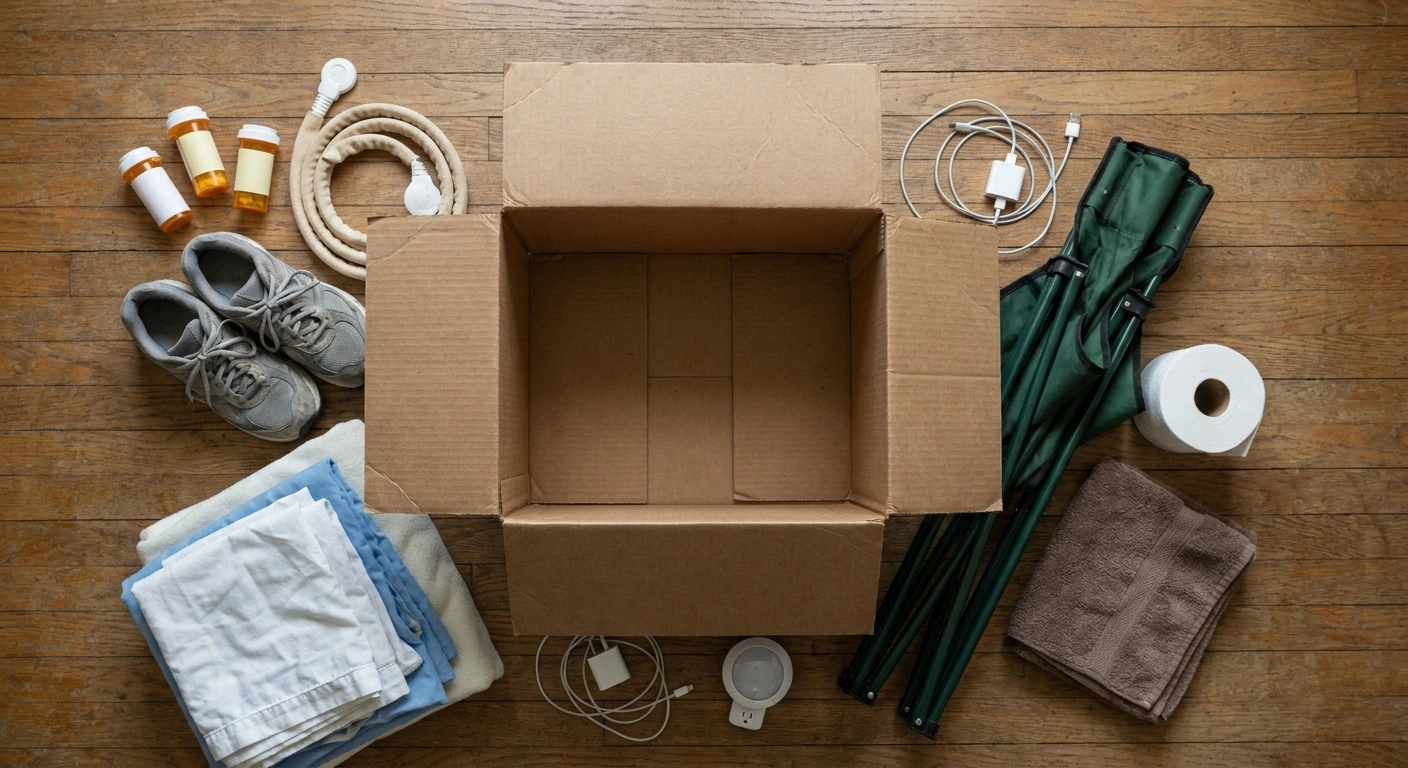
One box, clearly marked, that never goes on the truck. It travels in your car and comes into the new house first. This is the most important box you’ll pack.
In it:
All medications, in their original bottles, with enough for at least a week beyond your expected settling date. Never on the truck. Trucks get delayed, and pharmacies in a new town take days to sort out.
Whatever you use for a bad night. Heating pad, cooling gel, TENS unit, compression socks, foot cream, the specific blanket. Moving night is statistically likely to be a bad night, and hunting through boxes at eleven for the one thing that helps is miserable.
Your good shoes. Not packed. Worn, plus a spare pair to change into partway through the day. Swapping shoes at lunchtime genuinely helps, since it shifts the pressure points around.
Bedding for one bed, made up as the very first thing you do in the new house. Before unpacking anything else. A made bed at the end of moving day is worth more than any other single hour of work.
A folding chair. Sounds odd. Isn’t. In an empty house there is nowhere to sit, and the ability to sit down for five minutes wherever you happen to be is the difference between pacing yourself and pushing through.
Toilet paper, hand soap, a towel, phone chargers, a night light, and snacks. The night light matters more than it sounds — an unfamiliar house in the dark is a fall risk before you’ve learned where anything is.
The Admin Nobody Schedules
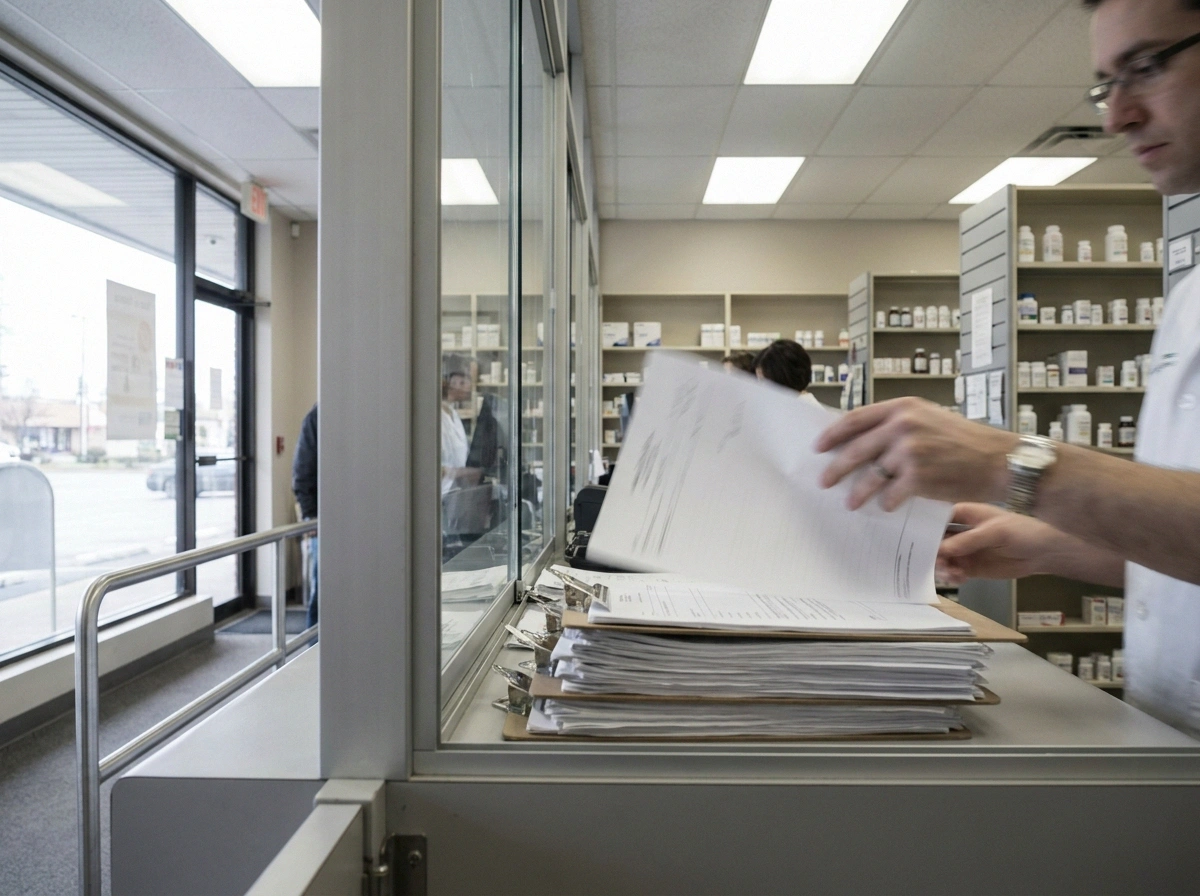
Two weeks out, the paperwork starts competing with the boxes, and it tends to win because it has deadlines. Do these early and the last fortnight gets much quieter.
Prescriptions, first. Ask your pharmacy for the longest fill your insurance allows before you go, and get the transfer to the new pharmacy started rather than assuming it happens automatically. If you’re moving out of state, check whether any of your medications need a new prescriber, since the rules differ and it’s an unpleasant thing to discover when you’re down to four days of supply.
Records, requested in writing. Nerve conduction results, recent bloodwork, imaging, and the list of what you’ve already tried and how it went. That last one is worth writing yourself. A new neurologist reading “gabapentin, three months, dizziness at 900mg daily, stopped” learns more in one line than they will from a year of chart notes.
Utilities on before you arrive. Especially heat and hot water. Arriving to a cold house on moving night, when your feet are already unhappy, is a small disaster that’s entirely avoidable with one phone call.
A parking permit or reserved space, if your new street needs one. The difference between unloading twenty feet from the door and unloading half a block away is the difference between a hard day and a very hard one.
Somewhere to sleep that first night that isn’t a mattress on the floor. If the bed can’t be up, a hotel for one night is money well spent, and getting up off a floor mattress with numb feet is harder than it sounds. Once the bed is up, the setup in our guide to a neuropathy-friendly bedroom is worth recreating early rather than eventually.
Moving Day
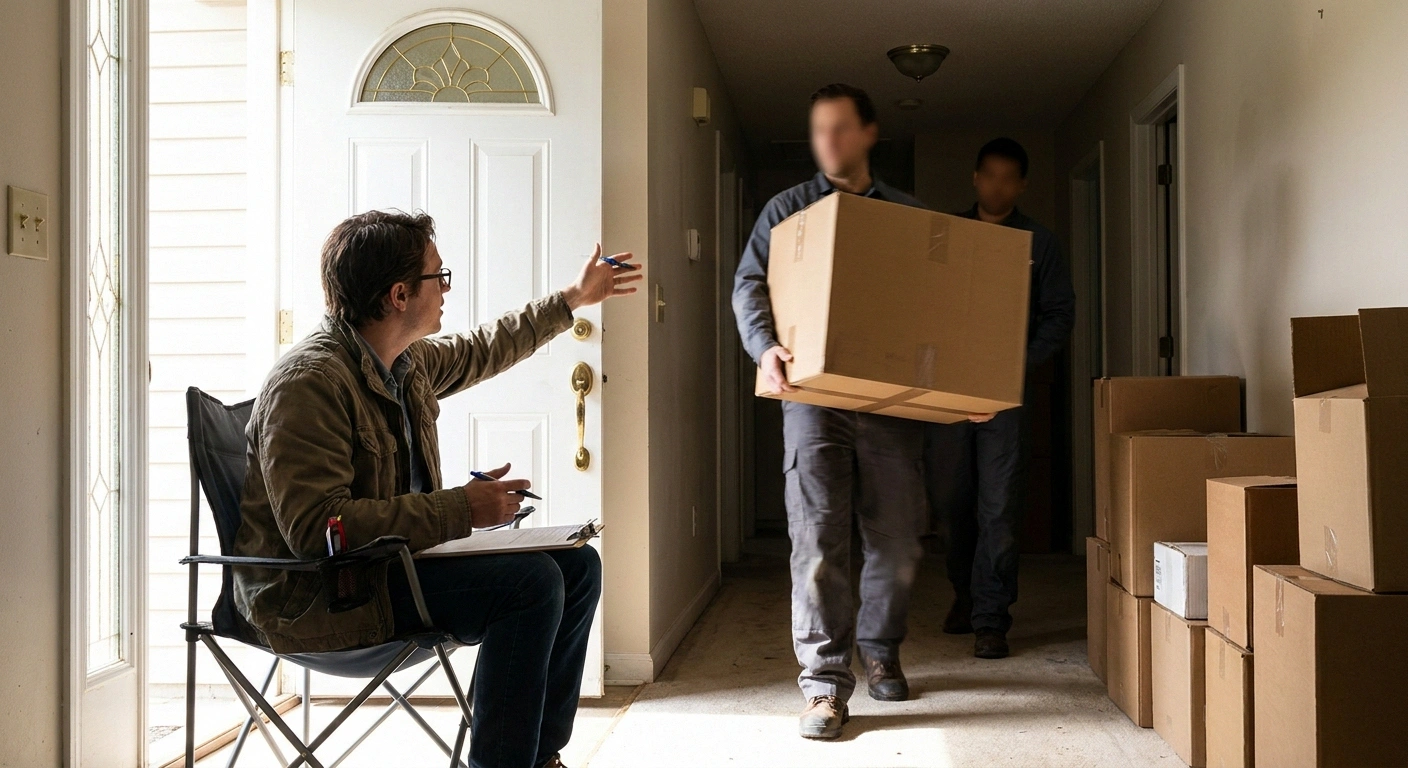
The plan for the day itself is short, because the goal is for you to do very little.
Take the coordinator job, not the carrying job. Sit somewhere central with your box list and direct traffic. This is a real contribution and it keeps you off your feet. It’s also the role people will let you have if you claim it early — showing up and then declining to lift things is harder than arriving with a stated job.
Set a chair in each room at the new place before the boxes start arriving.
Watch thresholds. Doorway lips, the edge of the truck ramp, the step at the back door. These are where people trip while carrying something, and neuropathy plus an obstructed view is exactly the combination that ends badly. The principles in our guide to balance and fall prevention apply all day.
Eat and drink on a schedule. Set phone alarms if you have to. On moving day people forget both, and dehydration makes nerve pain worse in a way that’s easy to miss until you’re deep in it.
Take a real break every ninety minutes. Sitting, feet up, fifteen minutes, before you feel like you need it.
Decide in advance when the day ends. Pick a time. When it arrives, stop, even with boxes left. The bed is made. The rest keeps.
The First Week
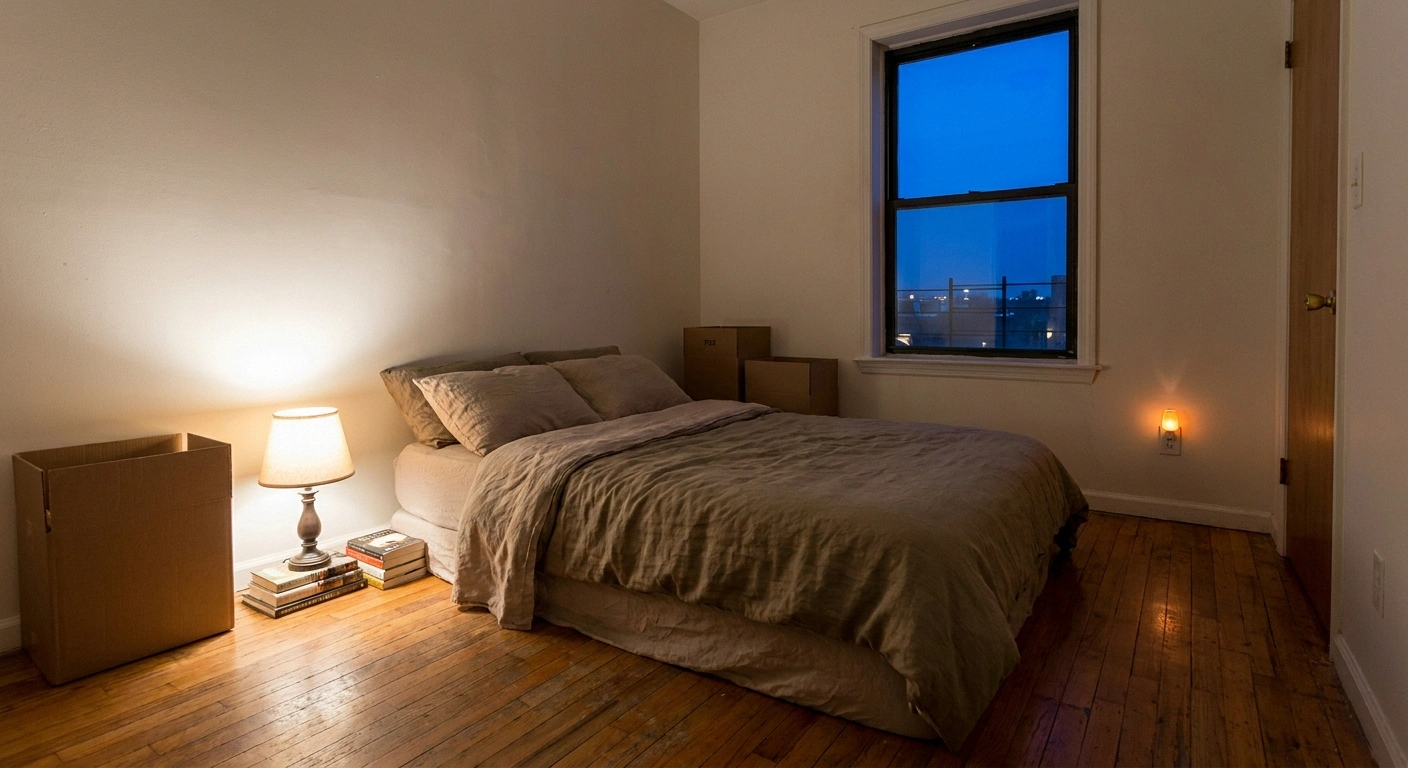
The temptation to unpack the whole house in three days is enormous, and it’s the most common way people turn a hard weekend into a hard month.
One per day, none taking more than twenty minutes. Falls in a new home cluster in the first fortnight, while your feet are still learning a floor plan they cannot feel.
- Night lights on the bedroom-to-bathroom route and at both ends of any staircase.
- Every loose rug either taped down properly or rolled up and stored.
- Lean hard on each handrail with both hands. Loose ones get fixed before they get used.
- Grab bars ordered, even if installation is weeks out.
- Walk each threshold barefoot in daylight so your eyes learn where your feet cannot.
- Prescriptions transferred and the new pharmacy’s hours written on the fridge.
- Nearest urgent care address and drive time noted somewhere visible.
Unpack in this order:
Bed and bedroom first, since sleep is what everything else depends on. Then the bathroom, so that the overnight trip is safe by night one. Then the kitchen basics — kettle, one pan, plates for two. Then everything else, at whatever pace suits, over a month if it takes a month.
While you’re at it, do the safety pass early rather than someday:
Night lights, the first evening. Bedroom to bathroom, plus the top and bottom of any stairs.
Rugs. Either secured with proper double-sided tape or rolled up and put away. Loose rugs on unfamiliar floors are the single most common trip hazard in a new home.
Stair handrails, tested by leaning on them properly. Old handrails are often loose, and you find out at the wrong moment. Our stairs safety guide covers what a good one looks like.
Bathroom grab bars, ordered in the first week even if fitting takes longer. Towel rails are not grab bars and will come off the wall.
The wider set of adjustments in our room-by-room home safety guide is worth reading in the new place rather than the old one, since the answers change with the layout.
And give yourself the boring practical wins early: new pharmacy chosen and prescriptions transferred, new doctor’s office identified, and a note somewhere visible of the nearest urgent care. Doing that in week one, while you have momentum, beats doing it in a hurry three months later.
Moving with neuropathy takes longer and costs a bit more than it does for other people. But the version where you spread it over eight weeks, hire the lifting, and defend one made bed and one box of essentials is a genuinely manageable thing — and a much better story than the version where you do it all in a weekend and spend the next fortnight recovering in a house full of boxes.
Frequently Asked Questions
How far in advance should I start packing if I have neuropathy?
Eight weeks is a comfortable runway for a full house at one box a day. Six weeks works for a smaller place or if you have help. The point isn’t the exact number, it’s converting a marathon weekend into short daily sessions that end before you’re tired rather than after.
Is it worth hiring movers if money is tight?
If you have to choose one thing to pay for, pay for loading and unloading. Even a two-hour crew for the heavy items removes the highest-risk part of the day. Price it against what a bad flare actually costs you in lost days rather than against zero.
What should I absolutely not pack on the moving truck?
Medications, anything you use for a bad pain night, your good shoes, bedding for one bed, chargers, a night light, and basic bathroom supplies. Trucks get delayed and boxes get buried, and every one of those items is something you’ll want on the first night rather than the third day.
Should I choose a single-story home?
If you can, it removes a daily risk and a daily energy cost. But a two-story home where the bedroom, a full bathroom, and the kitchen are all on the entry level works nearly as well. What matters is whether you can live your ordinary day without stairs, not whether stairs exist.
How do I ask for help without feeling like a burden?
Ask for something specific with a start and end time. “Saturday, ten to one, the garage boxes” is far easier for someone to say yes to than an open-ended request. Most people genuinely want to help and are simply waiting to be told what would be useful.
What’s the best order to unpack in?
Bedroom, then bathroom, then a minimal kitchen, then everything else at whatever pace suits. Sleep and a safe overnight bathroom trip are what the rest of your recovery depends on, and there’s no prize for having the bookshelves done by Tuesday.
Will a move set my neuropathy back permanently?
A hard few weeks from overexertion is common and usually settles as you return to your normal routine. What tends to cause lasting trouble is an injury from a fall rather than the exertion itself, which is why the threshold-watching, the night lights, and the loose-rug pass in week one are worth more than any amount of pushing through.
About the Author