Your eye appointment is a balance appointment. Nobody tells you that, and it changes what you should ask for.
Here is the reasoning. Standing upright runs on three inputs: the inner ear, the eyes, and sensation from the feet. When neuropathy quiets the feet, the eyes take on more of the work, usually without you noticing the handover. It shows up as the dark hallway being harder than the lit one, or the shower feeling risky the moment you close your eyes to rinse.
Which means the person adjusting your glasses is adjusting your primary balance system. Most eye appointments never touch that subject, and there are six things worth raising that will not come up unless you raise them.
Why This Is Also a Balance Appointment
The handover from feet to eyes happens gradually, so most people never register it as a change. It becomes obvious only in the moments vision is unavailable.
The ten-second test, and what the result tells the eye doctor
Stand beside a counter with something solid within reach. Feet together, eyes open, settle. Then close your eyes and count to ten.
Steady with eyes closed
Your feet are still reporting position. Vision is a backup rather than the main line.
Immediate wobble
Vision has taken over the job. Every request on this page applies to you, starting with the glasses one.
Have a hand near the counter. This is a test, not a challenge, and there is nothing to prove by riding out a sway.
You can test it yourself in about ten seconds, standing next to a counter with something solid to grab. Feet together, eyes open, get steady. Then close your eyes.
If the wobble arrives immediately, that is the measurement. Someone with intact foot sensation stays reasonably steady with eyes closed because their feet keep reporting. Someone with significant proprioception loss has been running on vision, and closing the eyes removes it.
Mention that result at the eye appointment. It reframes the visit for whoever is examining you, and it makes the requests below land as clinical rather than fussy.
The Glasses Question Almost Nobody Raises
This is the highest-value item on the page and the one with the most evidence behind it.
Which pair for which situation
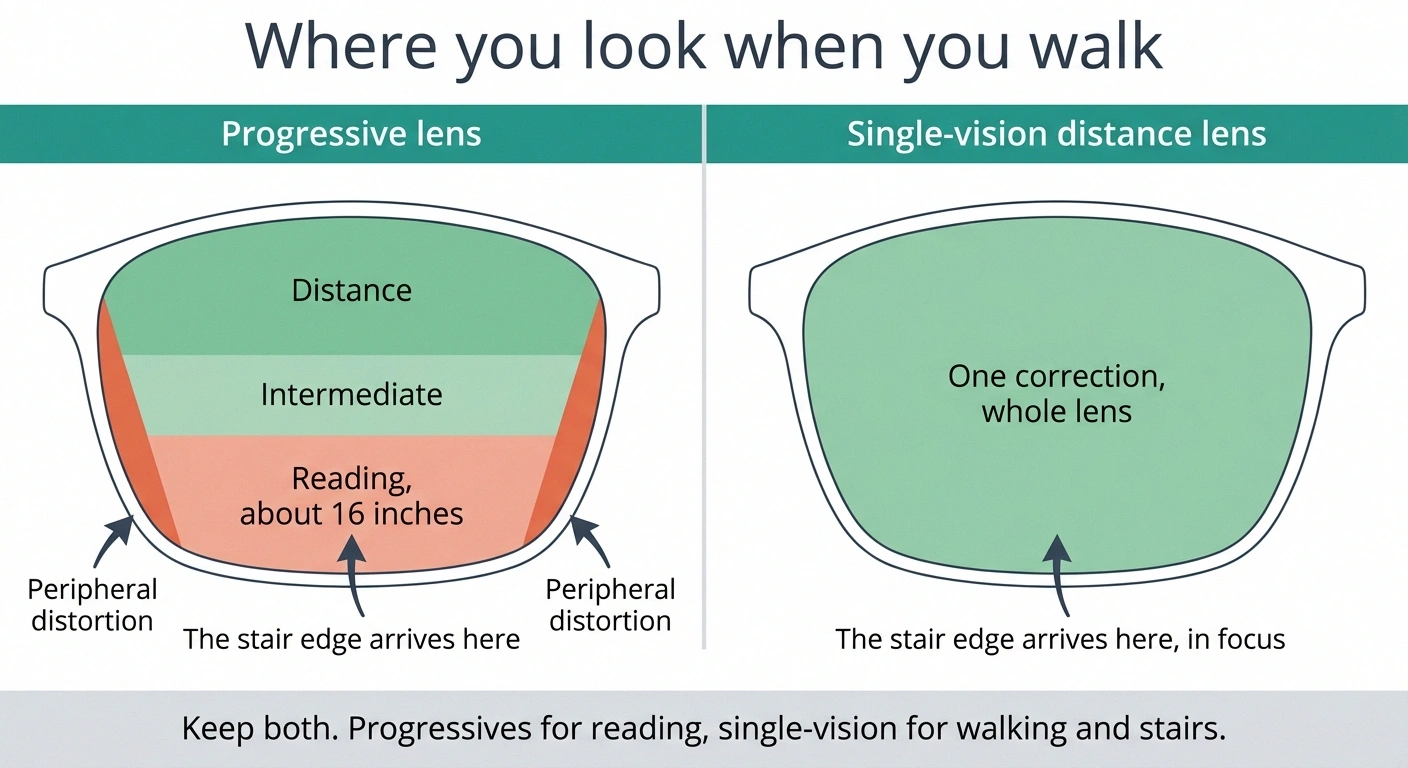
The fix is not giving up progressives. It is having somewhere else to look through when you are moving.
| Situation | Which pair | Why |
|---|---|---|
| Stairs, curbs, uneven ground | Single-vision distance | The stair edge sits in the reading zone of a progressive lens, blurred and slightly distorted |
| Walking outdoors, unfamiliar places | Single-vision distance | Outdoor falls carry the strongest association with multifocal use |
| Reading, desk, kitchen counter | Progressives are fine | Stationary, familiar, and the near correction is doing useful work |
| Moving around a familiar home | Either, with lighting | Light levels matter more than lens type here |
Single-vision lenses are the least expensive thing an optical shop makes. Keep that pair by the door with your shoes.
Multifocal lenses, meaning bifocals, trifocals, and progressives, are associated with a higher rate of trips and falls in older adults. The effect is concentrated on stairs and in unfamiliar places. Estimates of population attributable risk put multifocal use behind roughly 35 percent of falls generally and 41 percent of falls outside the home. Progressive lens wearers appear to fall at around twice the rate of other multifocal wearers.
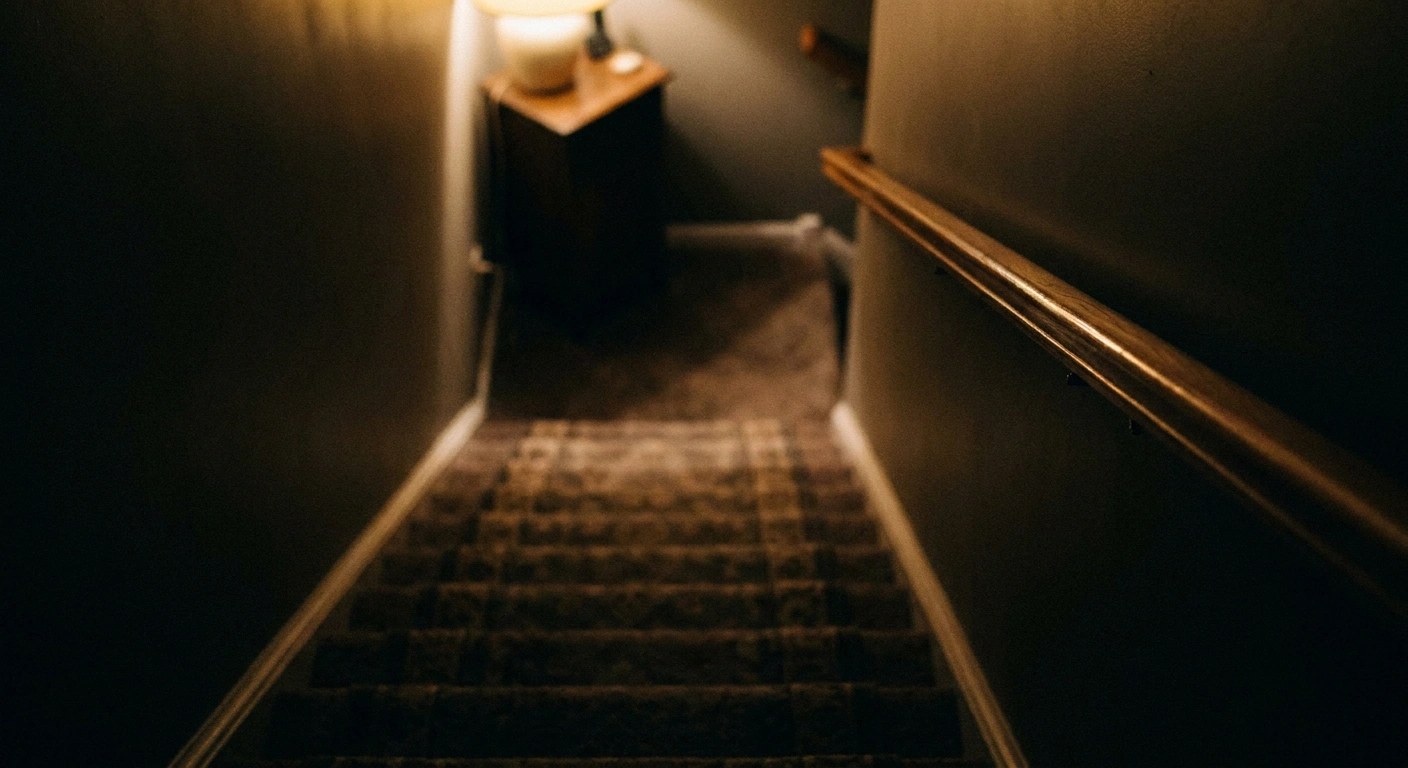
The mechanism is straightforward once stated. Progressive lenses put the reading correction in the bottom of the lens, because that is where you look when reading. The bottom of your visual field is also where the ground is. So the stair edge, the curb, and the raised threshold arrive in the part of the lens that is optimized for something 16 inches from your face, blurred and slightly distorted.
For most people that is a manageable nuisance. For someone whose feet cannot confirm what the eyes are reporting, both channels are now degraded at the same moment, in the same place.
The ask: a second pair of single-vision distance glasses, for walking, stairs, and being outdoors.
Providing exactly that to multifocal wearers produced roughly an 8 percent reduction in falls in a controlled trial. Single-vision lenses are the cheapest thing an optical shop sells. Keep them by the door, wear them for walks and errands, and keep the progressives for indoors and desk work.
Say it in these words: “I have peripheral neuropathy and reduced sensation in my feet, so I rely on vision for balance. Given the fall data on progressive lenses, should I have a separate pair of single-vision distance glasses for walking and stairs?”
That sentence gets a serious answer. “Do you think my glasses are okay” does not. If stairs are already a known problem for you, this pairs directly with the other changes that make stairs safer with neuropathy, and the glasses are usually the cheapest of them.
Dilation Costs You More Than It Costs Other People
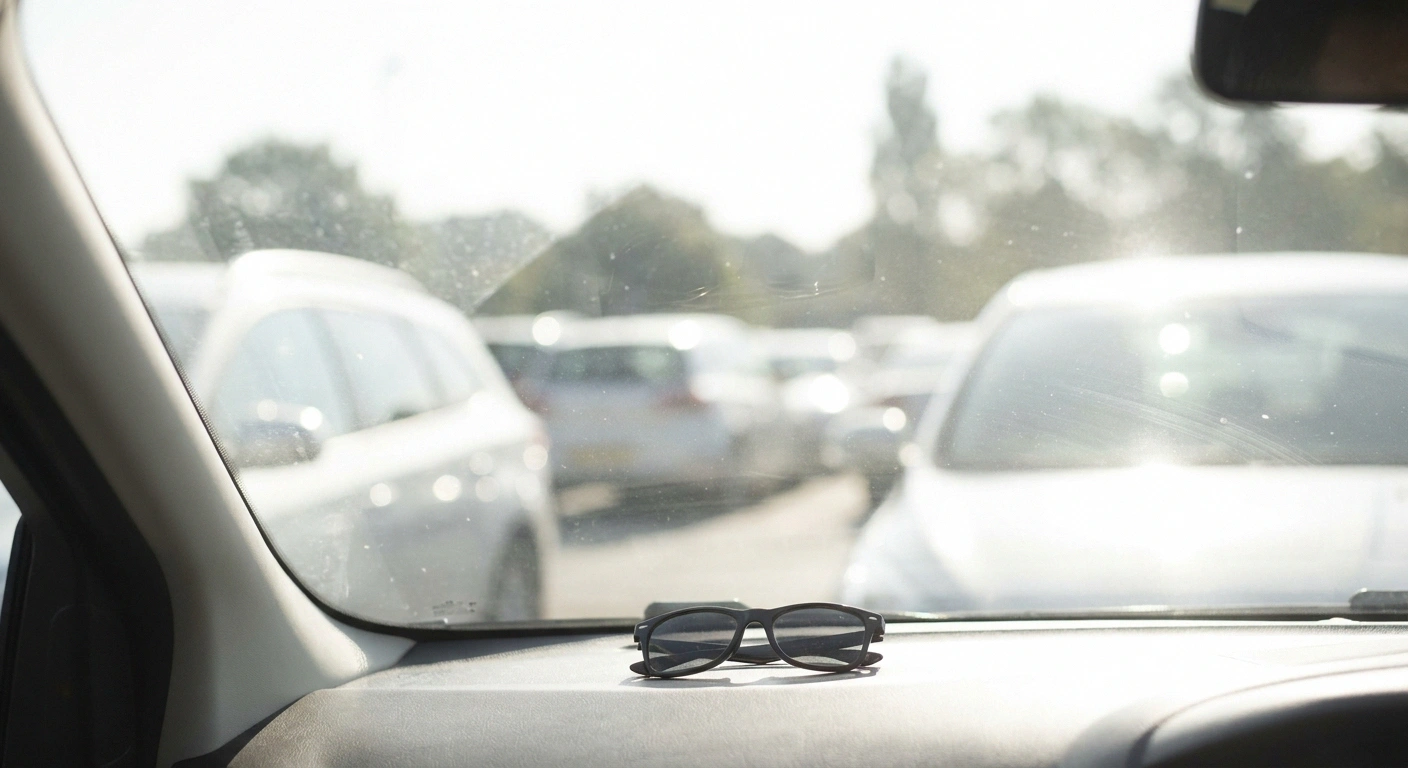
Dilating drops blur your near vision and leave you light-sensitive for several hours. Everyone gets told not to drive afterward.
What nobody adds is that for the next few hours you are operating with a degraded version of the system that has been compensating for your feet. Blurred edges and glare, in an environment you did not choose, with feet that cannot confirm where the floor is.
The practical response is to treat the two or three hours after the appointment as time to be somewhere safe rather than time to run errands.
- Arrange the ride before the appointment. Not just to get home. Assume you are not walking anywhere unfamiliar afterward either. The general rules about driving safely with neuropathy apply with more force when your vision is temporarily out.
- Book it for a morning you have nothing after. Grocery shopping with dilated pupils and numb feet is an avoidable combination.
- Bring proper sunglasses. The disposable plastic shields they hand out are better than nothing and worse than your own. Glare is not just uncomfortable here, it is washing out the contrast you use to see edges.
- Ask whether dilation is needed at this visit. Some practices have wide-field retinal imaging that reduces how often drops are required. Worth one question.
- Take the stairs at home slowly for the rest of the day. Handrail, one step at a time. This is the specific window where a fall is most likely.
Bring Your Medication List Here Too
People bring their medication list to the neurologist and leave it at home for the eye doctor. The nerve medications belong in that room.
Booking around your dose
A refraction captures whatever your vision is doing that hour. Two years of glasses come out of it.
- Before you book
- Notice, over a few days, whether your vision is softer at a particular point after a gabapentin or pregabalin dose. If it is, avoid that window.
- During the exam
- Say the dose and the timing out loud: what you take, and how long ago. Blurred vision appears in gabapentin labeling at roughly 3 to 4 percent, and higher for pregabalin.
- If the new prescription feels wrong
- Go back inside the recheck window rather than adapting to it. Most practices allow a re-examination, and a medication-day refraction is exactly the case that warrants one.
Gabapentin lists blurred vision in its labeling, reported in roughly 3 to 4 percent of trial participants, and nystagmus, double vision, and visual field changes have all been documented. Pregabalin is associated with blurred vision at higher rates still, along with double vision and problems with coordination and balance. There is also a reported association between pregabalin and angle-closure, which is uncommon and worth an eye doctor knowing about.
Two consequences follow.
Do not get refracted on a bad vision day. If your dose timing means your vision is at its blurriest two hours after taking it, do not schedule the exam for that window. A prescription written on a medication-blurred day is a prescription you will wear for two years.
Say the timing out loud during the exam. “I take gabapentin, my last dose was about ninety minutes ago, and my vision is sometimes softer at this point in the cycle.” That single sentence prevents a drug effect from being written down as a change in your eyes.
Include supplements. High-dose B6 is worth flagging in any conversation about nerves, since excess causes neuropathy just as deficiency does, and it turns up in a lot of nerve-support formulas.
Dry Eyes Are Not Always Just Dry Eyes
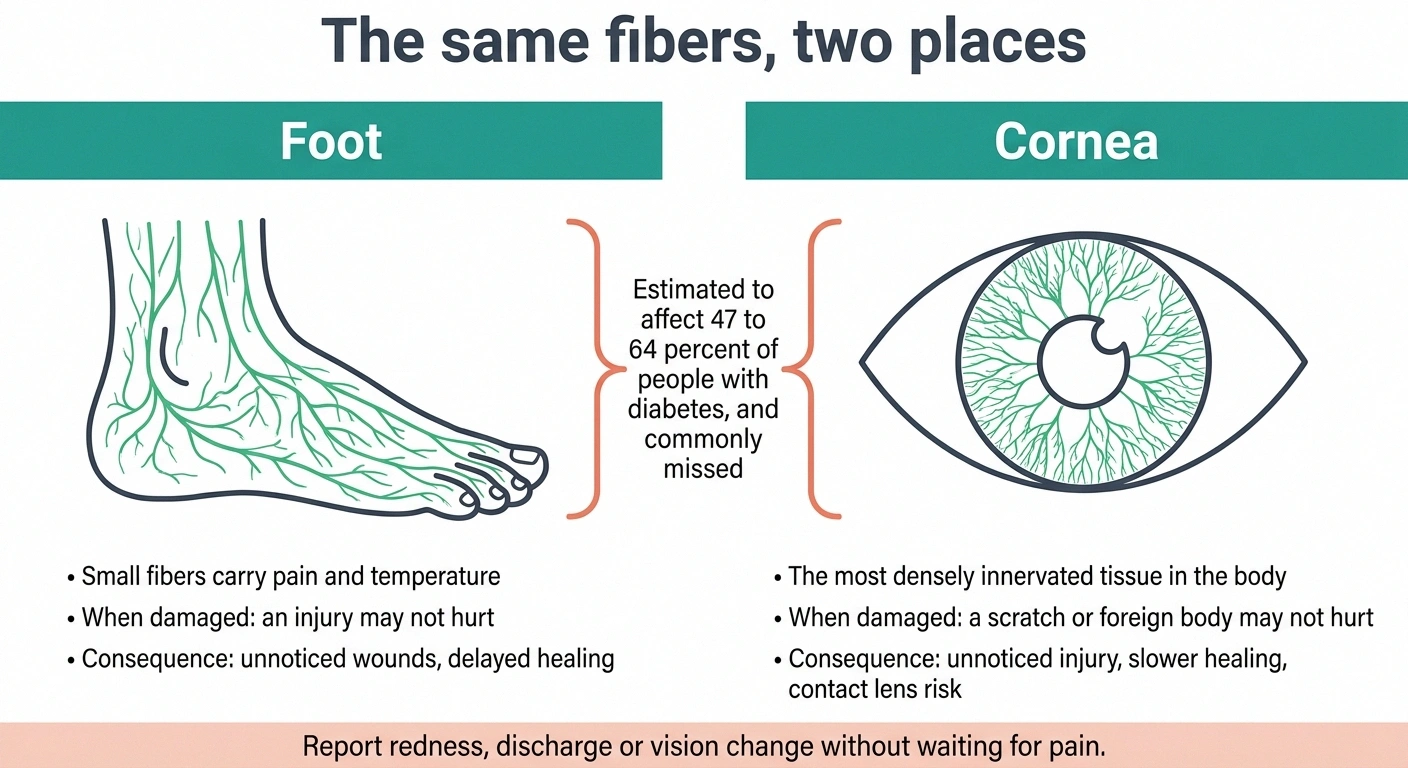
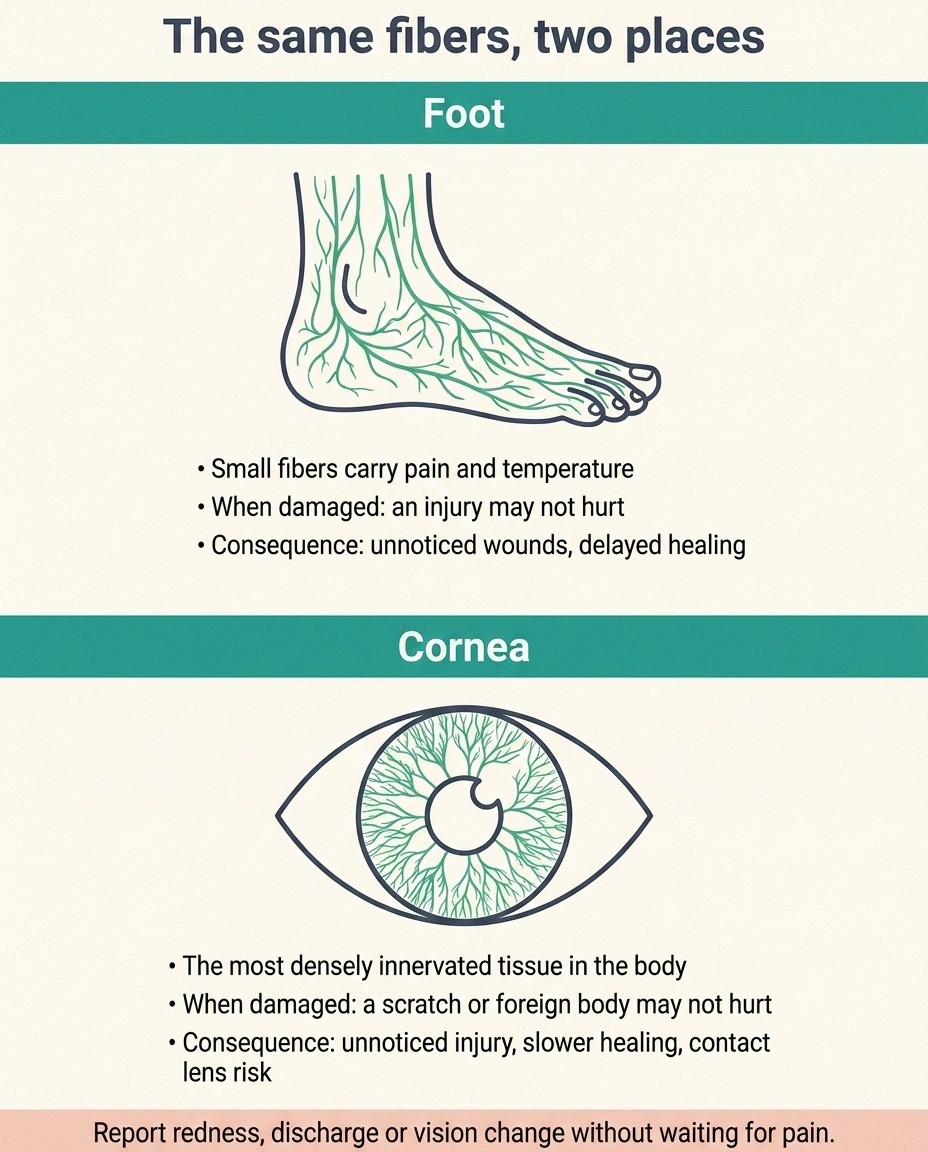
The cornea is the most densely innervated tissue in the body. Those are small nerve fibers, the same population affected in small fiber neuropathy.
Which is why corneal nerve involvement is common in people with diabetes, affecting somewhere between 47 and 64 percent by published estimates, and is largely underdiagnosed. It presents as dryness, grittiness, burning, or fluctuating vision, and it usually gets treated as ordinary dry eye without anyone asking why.
The part that matters practically is the same principle you already know from your feet. Reduced corneal sensation means reduced pain signaling from an injury. A scratch, a foreign body, or a contact lens problem may not hurt the way it should. That is precisely the mechanism behind foot ulcers going unnoticed in neuropathy, relocated to the eye, and it is compounded by slower healing.
What to raise:
- Tell them you have peripheral neuropathy, in those words. It is directly relevant and it will not be in the chart otherwise.
- Ask whether corneal sensation has been checked. It is a quick bedside test.
- Ask specifically before starting or continuing contact lenses. Reduced sensation plus slower healing changes that risk calculation.
- Report redness, discharge, or vision change immediately rather than waiting for it to hurt, on the same logic you use for checking your feet.
- Treat dryness properly rather than reaching for whatever drops are nearest. Standard artificial tears are often not enough here.
Ask Them to Test More Than the Letter Chart
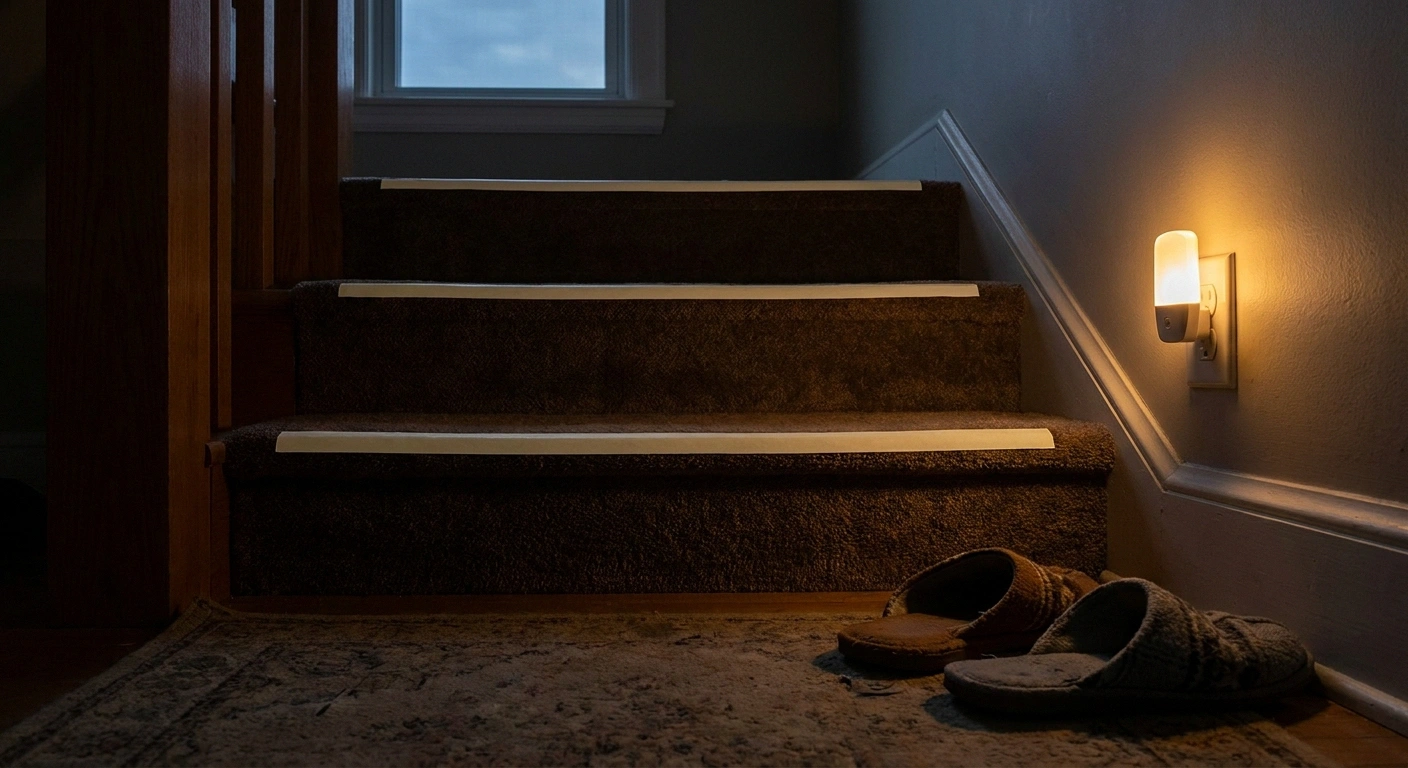
The eye chart is black letters on a white background, which is the easiest visual task that exists. Real life is a grey stair edge on a grey carpet at dusk.
That is contrast sensitivity, and it is a separate measurement from acuity. People can read the 20/20 line and still struggle to see a curb in low light, which is exactly the failure mode that matters when your feet cannot back up what you are seeing.
Ask for it by name. Then ask the follow-up: given my results, what lighting do I actually need at home, and where.
The answers tend to be practical and cheap. Brighter bulbs at the top and bottom of stairs. A nightlight on the route to the bathroom. Contrast tape on the edge of a step that blends into the floor. None of this comes up if the appointment ends at the prescription, and all of it feeds into the broader work of reducing fall risk with neuropathy.
If You Have Diabetes
Most of the above applies to anyone with neuropathy. Diabetes adds a layer.
Retinopathy screening is the reason the appointment exists in the first place, and it is not optional. Retinal damage progresses without symptoms until it is advanced, which is the entire argument for screening on a schedule rather than when something feels wrong. Standard guidance is an exam every one to two years with a provider experienced in diabetes care, and more often if there are findings.
Two connections worth knowing. Retinopathy severity tracks with corneal nerve changes and with ocular discomfort, so the dryness and the retina are not unrelated problems. And better glucose control is associated with corneal nerve regeneration, which is one of the few places in the whole neuropathy conversation where nerves are documented growing back.
If you are already managing diabetic neuropathy, mention what your recent control has looked like. It is relevant context for what the examiner is seeing.
The Night Before, and the Hour After
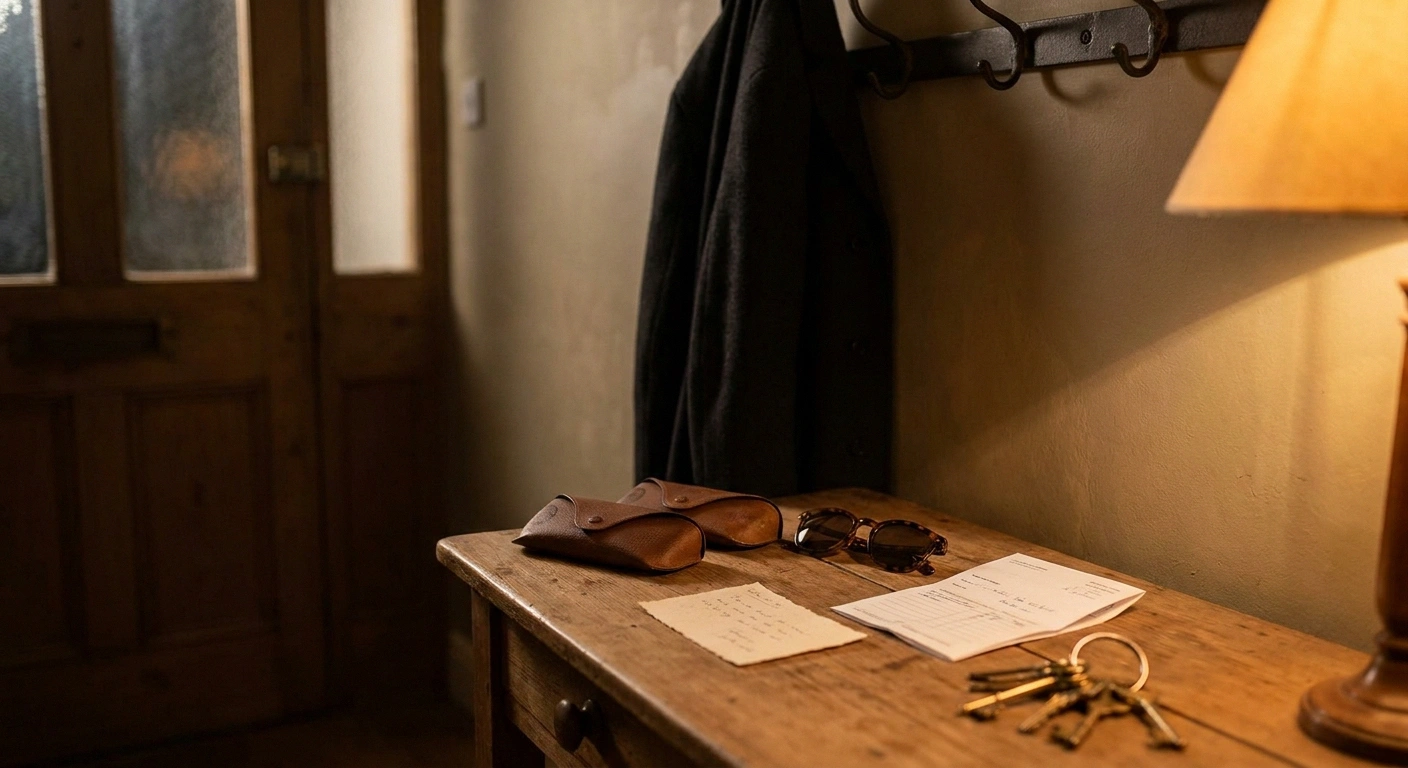
Short version, if you skip everything else.
Copy this onto a card
Hand it over at check-in if saying it out loud feels awkward. It works either way.
I have peripheral neuropathy with reduced sensation in my feet. I rely on vision for balance.
Should I have a separate pair of single-vision distance glasses for walking and stairs?
Can we check contrast sensitivity, not just acuity? And what lighting do my results suggest at home?
Has my corneal sensation been checked? I want to know before considering contact lenses.
On the back, write your medications with dose times, the date of your last A1c if you have diabetes, and any falls or near-falls in the past year.
Put by the door: your current glasses, including any older pairs you still use; your full medication and supplement list with dose times; your sunglasses; and a note of your last A1c if you have diabetes.
Sort out beforehand: whether you have a ride, whether the rest of the day is clear, and whether the appointment sits at a good point in your medication cycle.
Write down these four sentences and take them in:
- “I have peripheral neuropathy and reduced sensation in my feet, so I depend on vision for balance.”
- “Should I have single-vision distance glasses for walking and stairs?”
- “Can we check contrast sensitivity, not just acuity?”
- “Has my corneal sensation been checked?”
Afterward: go home, stay there while the drops wear off, use the handrail, and leave the errands for tomorrow.
Four sentences and a clear afternoon. That is the whole intervention, and the glasses question alone is worth the trip.
Frequently Asked Questions
Can an eye exam detect neuropathy?
Indirectly, and increasingly so. The cornea contains the densest concentration of small nerve fibers in the body, the same fiber type affected in small fiber neuropathy. Corneal confocal microscopy can image those fibers and is used in research as a marker for small fiber nerve damage, though it is not yet a standard diagnostic test and is not widely available. A routine eye exam will not diagnose neuropathy, but corneal changes and dry eye can be an early clue worth mentioning to whoever manages your nerve care.
Should I get progressive lenses if I have neuropathy and balance problems?
Discuss it specifically with your eye doctor, because the evidence gives them something concrete to work with. Multifocal lenses including progressives are associated with more falls in older adults, particularly on stairs and outdoors, with progressive wearers falling at roughly twice the rate of other multifocal wearers. The common solution is not giving them up but adding a second pair of single-vision distance glasses for walking and outdoor activity, which reduced falls by about 8 percent in a controlled trial. Keep the progressives for indoors and reading.
Does gabapentin cause blurred vision?
It can. Blurred vision appears in gabapentin labeling, reported in roughly 3 to 4 percent of trial participants, and nystagmus, double vision and visual field changes have also been documented. Pregabalin is associated with blurred vision at higher rates. Tell your eye doctor what you take and when your last dose was, particularly before a refraction, so a medication effect does not get written into your glasses prescription.
Is it safe to drive after having my eyes dilated?
No, arrange a ride. Dilation blurs near vision and causes light sensitivity for several hours. If you have neuropathy the caution extends beyond driving, because vision has been compensating for reduced foot sensation and is now temporarily degraded. Plan for a few hours at home rather than errands, take stairs slowly with a handrail, and bring proper sunglasses rather than relying on the disposable shields.
How often should someone with diabetic neuropathy have an eye exam?
Standard guidance is every one to two years with an eye doctor experienced in diabetes care, and more frequently if any changes are found. Diabetic retinopathy progresses without symptoms until it is advanced, which is why screening runs on a schedule rather than in response to noticing something. If you have peripheral neuropathy, say so at the visit, because corneal nerve involvement affects an estimated 47 to 64 percent of people with diabetes and is commonly missed.
Can neuropathy affect your eyes?
Yes. The small nerve fibers in the cornea can be affected by the same processes that damage nerves elsewhere, producing dryness, grittiness, burning or fluctuating vision. The more important consequence is reduced corneal sensation, meaning an injury or foreign body may not hurt the way it should, in the same way a foot injury can go unnoticed. Report redness, discharge or vision changes promptly rather than waiting for pain.
What should I tell my eye doctor about my neuropathy?
Say that you have peripheral neuropathy with reduced sensation in your feet, and that you rely on vision for balance as a result. Add your full medication and supplement list with dose timing, any falls or near-falls, whether you have noticed more difficulty in dim light, and your recent glucose control if you have diabetes. That context changes what they look for and what they recommend.
What is contrast sensitivity and why does it matter more with neuropathy?
Contrast sensitivity is the ability to distinguish an object from a background of similar tone, which is different from the acuity measured by the letter chart. The chart uses black on white, the easiest possible task. Real hazards look like a grey stair edge against grey carpet in low light. It matters more with neuropathy because your feet can no longer confirm what your eyes are reporting, so a missed edge has less backup. Ask for the test by name and ask what lighting changes your results suggest.
About the Author