
Count the bottles on the shelf. For most people who have had neuropathy more than a year or two, the number lands somewhere between six and fourteen, accumulated one at a time from a magazine article, a forum thread, or a well-meaning relative.
The hard part is not finding recommendations. It is that almost every supplement page ranks products without telling you how confident anyone actually is in each one, and confidence is the whole question when you are deciding which four of those fourteen bottles are worth the shelf space.
This chart is organized around that. Not by popularity, not by how promising something sounds, but by what the research supports and how sure the researchers themselves are. Two distinctions run through it that most roundups skip entirely, and they change the answers more than any individual study does.
The Two Distinctions That Reorganize the Whole Chart
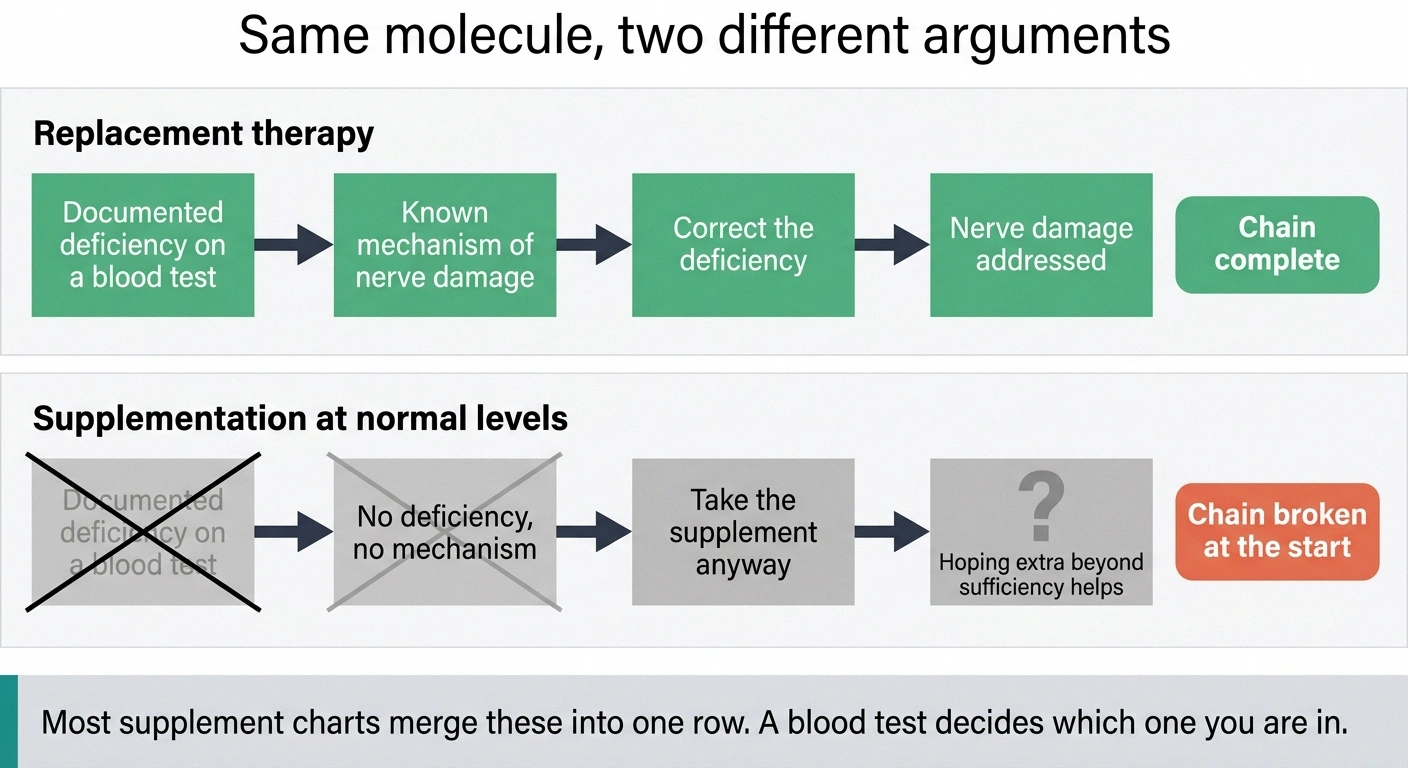
First: replacement is not the same intervention as supplementation.
The test list that sorts you into a tier
Tier 1 is the strongest reasoning on this page and it only applies to people who test low. These are the specific requests.
- Serum B12, plus methylmalonic acid if the B12 lands in the low-normal range, since that range can still be functionally insufficient
- Folate, which interacts with B12 interpretation and can mask a deficiency
- 25-hydroxy vitamin D, the storage form rather than the active one
- TSH, since thyroid disease is both a neuropathy cause and a common miss
- Fasting glucose and HbA1c, and an oral glucose tolerance test if either sits at the borderline
- Serum copper and ceruloplasmin, worth requesting specifically if you have taken zinc daily for more than a year
Ask for the actual numbers rather than a normal or abnormal summary. Reference ranges vary between laboratories, and a result reported as normal in one range can sit at the bottom of another.
Giving B12 to someone with a documented B12 deficiency is replacement therapy. There is a known deficiency, a known mechanism by which it damages nerves, and a known correction. The reasoning is complete end to end.
Giving the same B12 to someone whose levels are normal is a different proposition entirely, resting on the hope that extra beyond sufficiency produces additional benefit. That is a much weaker bet, and it usually does not hold.
Nearly every supplement chart merges these into one row reading “B12: helps neuropathy.” That row is true in one case and unsupported in the other, and which case you are in is determined by a blood test, not by your symptoms.
Second: route of administration can carry the entire result.
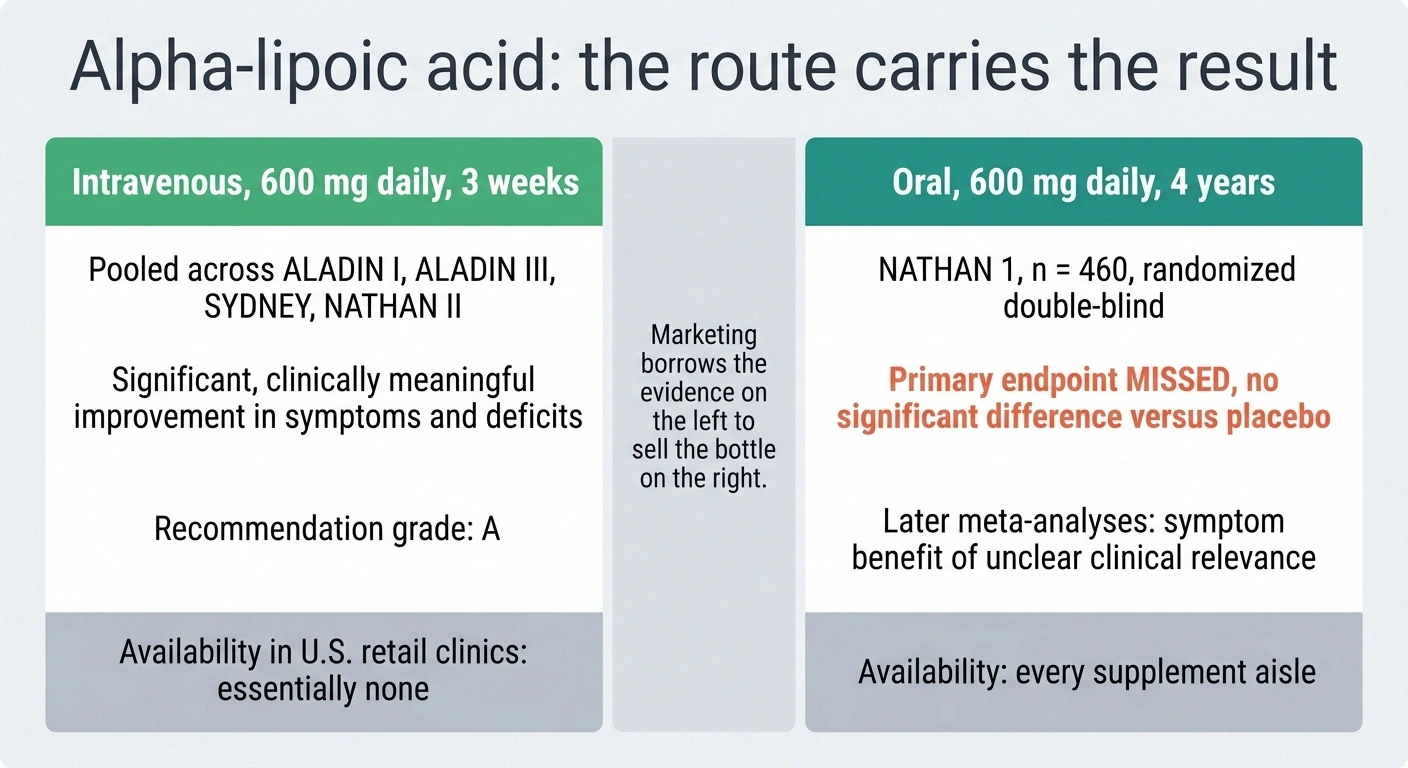
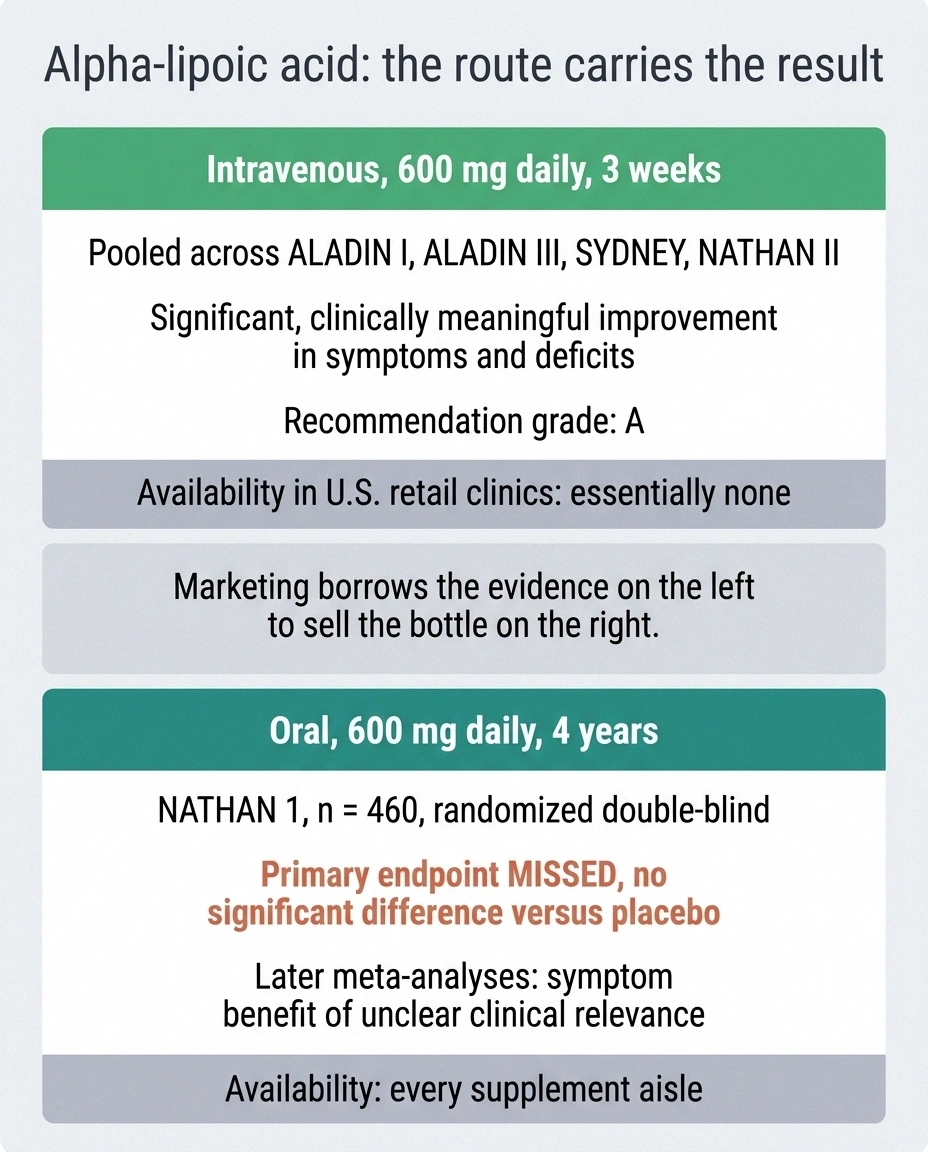
Alpha-lipoic acid is the clearest example on this page, and the detail is striking once you see it. The strong evidence is for intravenous ALA. The oral evidence is considerably weaker. The bottle on the shelf is oral. Marketing borrows the strength of the first to sell the second.
Any chart that lists “ALA: effective” without that split is describing a treatment most readers cannot get.
How the Tiers Work
Four tiers, sorted by strength of evidence rather than by popularity.
- Tier 1, replacement therapy: A documented deficiency exists, correcting it has a known mechanism, and correcting it is standard care. The strongest reasoning on the page, and it applies only to people who test deficient.
- Tier 2, real trials, modest and uncertain results: Human randomized trials exist. Benefits appear but are small, or the certainty of the evidence is rated low, or the result depends on a route most people do not receive.
- Tier 3, thin or preliminary: Small studies, short duration, animal work, or plausible mechanism without confirmatory human trials. Not disproven. Not established.
- Tier 4, cap or avoid: Where the supplement itself can cause harm to nerves.
Tier 1: Correcting a Documented Deficiency
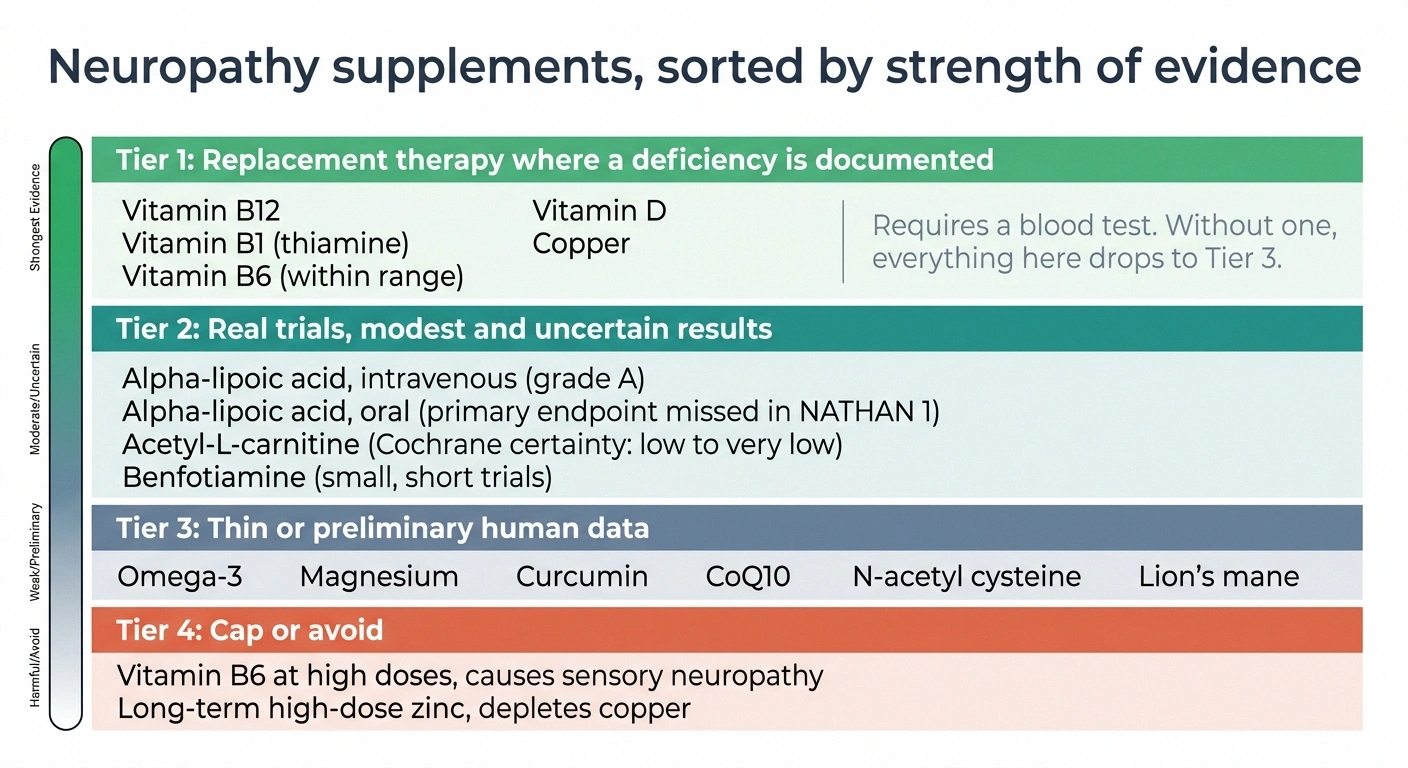
Vitamin B12. B12 deficiency causes a specific, recognizable neuropathy, and it is one of the genuinely reversible causes if caught before the damage becomes permanent. Correction is standard medical care, not alternative medicine. The nuance that matters: absorption problems, not dietary intake, cause most deficiency, which is why oral doses sometimes fail where injections succeed. Our comparison of B12 injections versus oral supplements covers when each route makes sense. Anyone on long-term metformin or acid-reducing medication should have levels checked regardless of diet.
Vitamin B1, thiamine. Deficiency causes beriberi, which includes peripheral neuropathy. Relevant in heavy alcohol use, after bariatric surgery, and with poor nutrition. Correction is unambiguous where deficiency is present.
Vitamin B6, within range. B6 belongs in Tier 1 and Tier 4 at the same time, which is unusual enough to be worth stating twice. Deficiency causes neuropathy and correcting it helps. Excess also causes neuropathy. See Tier 4.
Vitamin D. Deficiency is common and associated with worse neuropathy symptoms in several studies, though whether correcting it improves symptoms independently is less settled than for B12. Reasonable to test and correct. Weaker claim than the B vitamins above it.
Copper. Rare but genuinely important. Copper deficiency produces a myelopathy and neuropathy that can look like B12 deficiency, and it is a documented complication of long-term high-dose zinc supplementation. A relevant question for anyone who has been taking zinc daily for years.
What Tier 1 asks of you: a blood test first. Our overview of which vitamin deficiencies cause neuropathy covers what to request. Without testing, every item in this tier drops to Tier 3, because you are guessing at whether the mechanism applies to you.
Tier 2: Real Trials, Modest Results
Alpha-lipoic acid. The most-studied supplement in this space and the one that most rewards reading carefully.
What reviewers mean by certainty
These are formal ratings with defined meanings, not editorial adjectives. Acetyl-L-carnitine sits at the bottom two rungs.
High certainty
Further research is very unlikely to change the estimate.
Moderate certainty
Further research may well change the estimate. The direction is probably right.
Low certainty
Further research is likely to change the estimate, and could change it substantially.
Very low certainty
Any estimate of effect is very uncertain. The reviewers are declining to make a claim.
Nothing in the supplement literature for neuropathy currently sits on the top rung. That absence is itself a finding, and it is why this page has four tiers instead of a ranked list.
Intravenous ALA at 600 mg daily for three weeks has been pooled across several randomized trials, including ALADIN I, ALADIN III, SYDNEY and NATHAN II, showing significant and clinically meaningful improvement in both symptoms and neurological deficits. That body of work carries a grade A recommendation.
Oral ALA is a different story. NATHAN 1 was the trial designed to settle it: 460 patients, 600 mg daily by mouth, four years, randomized and double-blind. It missed its primary endpoint, with no significant difference between the treatment and placebo groups on the main outcome measure. Later meta-analyses of oral doses from 600 to 1,800 mg do report symptom improvement, but reviewers describe the clinical relevance of that improvement as unclear.
The honest summary: oral ALA has a plausible case and a real trial record, and its best evidence belongs to a route sold in almost no U.S. clinic. Our full breakdown lives in alpha-lipoic acid for neuropathy.
Acetyl-L-carnitine. A Cochrane review, which is about as rigorous as evidence synthesis gets, examined four trials totaling 906 adults with diabetes. It found pain reduction versus placebo on a 0 to 100 mm scale. It also rated the certainty of that evidence as low to very low, and the authors’ own wording is that they are “very uncertain whether ALC causes a reduction in pain after 6 to 12 months.”
Separately, a head-to-head trial of ALC at 1,500 mg daily against methylcobalamin at 1.5 mg daily in 232 patients over 24 weeks found the two comparable on both symptoms and nerve conduction measures. Adverse events were nearly identical between arms, at 29.1% and 28.7%. Details in acetyl-L-carnitine for neuropathy.
Benfotiamine. A lipid-soluble form of B1 with better absorption than standard thiamine. Trials report improvement in sensory symptoms and nerve conduction parameters. The limitation is scale: the studies are small and short, which places it at the lower boundary of this tier rather than alongside ALA. See benfotiamine for neuropathy.
Tier 3: Preliminary or Thin

Everything here is plausible and none of it is established. That is a real category and it deserves to be stated without either dismissal or inflation.
Omega-3 fatty acids. Anti-inflammatory mechanism, some small trials in diabetic neuropathy with encouraging signals on corneal nerve fiber measures. Not yet replicated at the scale needed. Good general cardiovascular case independent of nerves. More in omega-3 for neuropathy.
Magnesium. Genuine role in nerve and muscle function, frequently low in people with diabetes, helpful for cramping. Direct evidence for neuropathy symptoms specifically is thin. Covered in magnesium for neuropathy.
Curcumin. Strong anti-inflammatory and antioxidant activity in the laboratory, poor oral bioavailability in humans, mostly animal evidence for nerve outcomes. The bioavailability problem is the central obstacle, not the mechanism. See turmeric and curcumin for nerve pain.
CoQ10. Mitochondrial mechanism that fits the biology of nerve injury well. Human trials in neuropathy are limited. Worth noting for anyone on a statin, where the depletion mechanism is separately documented. More in CoQ10 for neuropathy.
N-acetyl cysteine. Antioxidant precursor with promising animal data in chemotherapy-induced nerve damage. Human trials are few and small.
Lion’s mane. Laboratory work shows stimulation of nerve growth factor. The gap between that finding and a clinical result in a person with neuropathy is wide, and no trial has yet closed it.
Tier 4: The One That Causes What You Are Treating
Vitamin B6, at high doses. This entry is the reason this chart exists in this form.
Products to check before adding anything else
Read the label on each of these. B6 appears under several names, and the total is what matters.
| Where to look | Why it is easy to miss |
|---|---|
| B-complex products | Usually the largest single contributor, and the one people think of as gentle |
| Nerve support formulas | Marketed for the exact symptom high-dose B6 can cause |
| Daily multivitamins | Small on its own, but it is a daily addition to everything else |
| Energy drinks and fortified shakes | Not thought of as supplements, and frequently fortified with B vitamins |
| Anything listing pyridoxine, pyridoxal-5-phosphate or P5P | All three are B6. A label using a different name still counts toward the total |
If your numbness worsened after starting a nerve formula, this total is worth adding up before concluding the neuropathy is progressing.
Pyridoxine at sustained high intake causes a sensory neuropathy. Not a theoretical risk, a documented and reasonably well-characterized one. Symptoms include numbness, tingling and loss of position sense, which is to say it produces the exact complaint the reader is trying to fix.
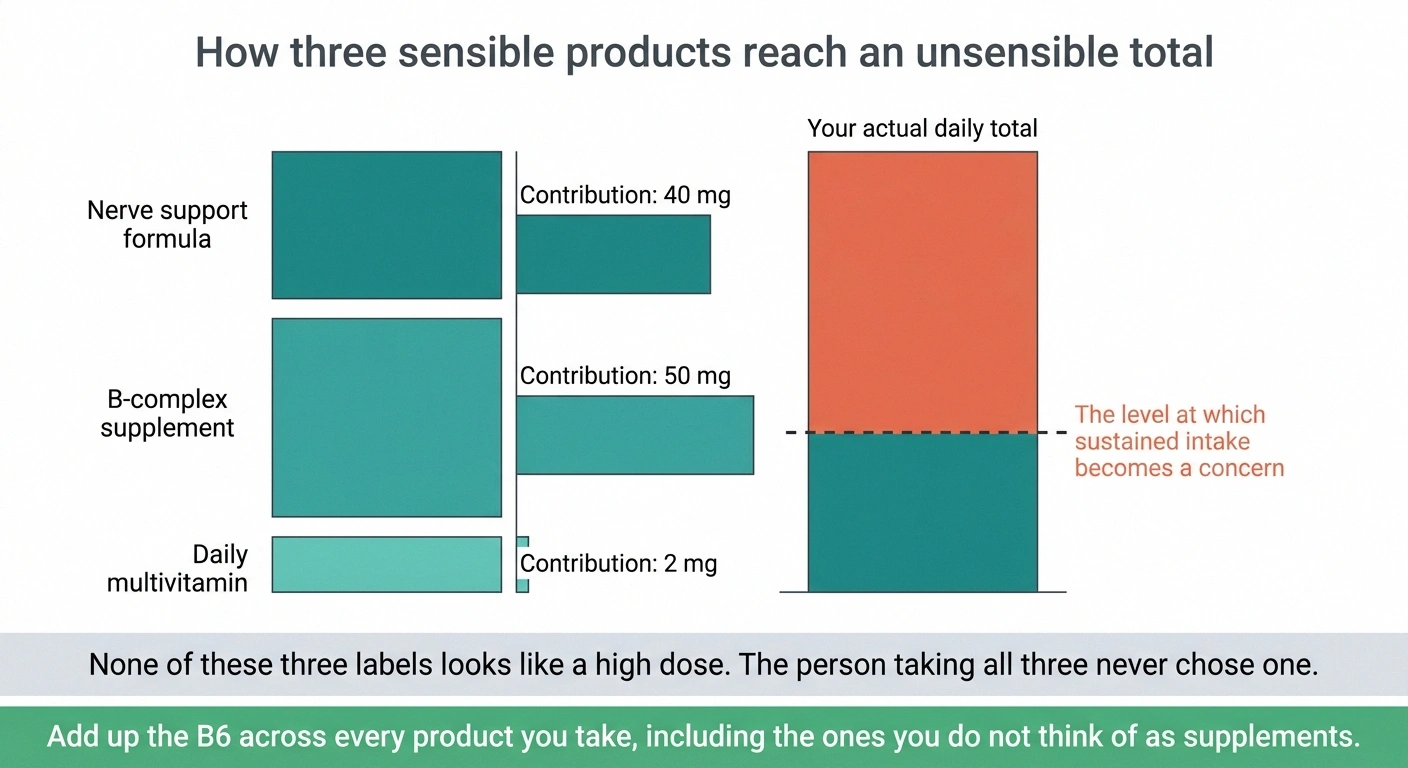
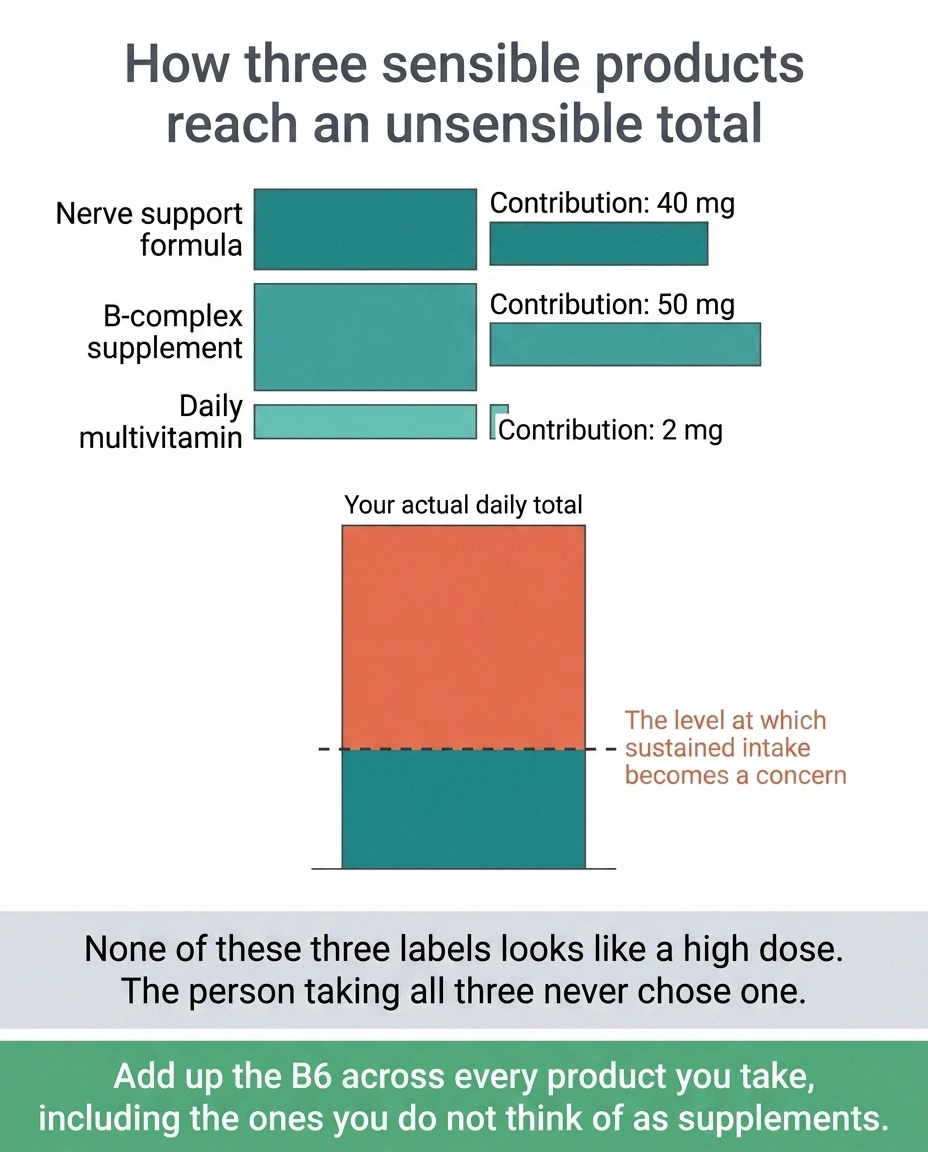
The trap is structural. B6 appears in nearly every B-complex product, in most nerve support formulas, and in many multivitamins. A person taking three sensible-looking products can accumulate a daily total well beyond what any of the labels suggest, without ever choosing to take a high dose of anything.
The action item is concrete: add up the B6 across every product you take, including the ones you do not think of as supplements. Our full writeup is at vitamin B6 toxicity neuropathy. The reassuring part is that it typically improves after stopping, though recovery can take many months.
Interactions the Chart Does Not Show
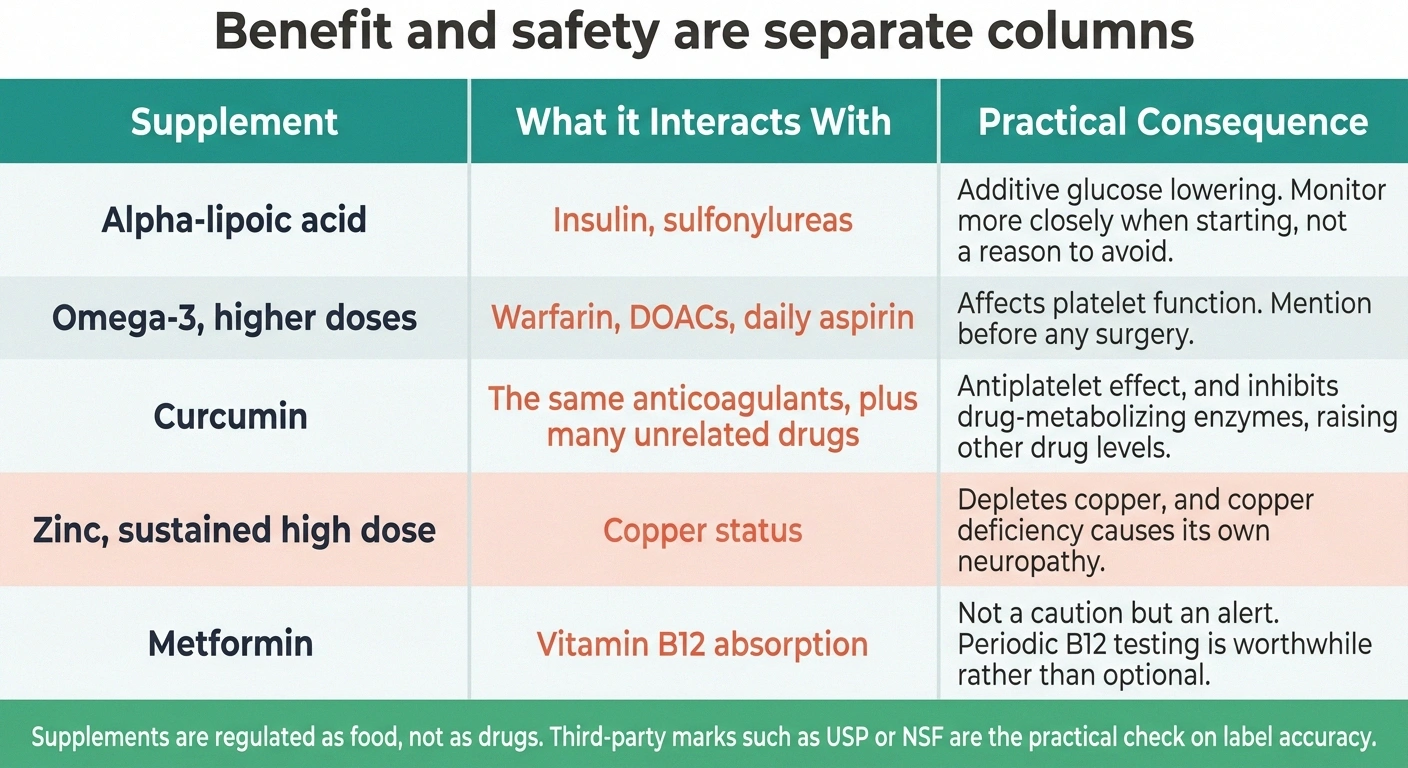
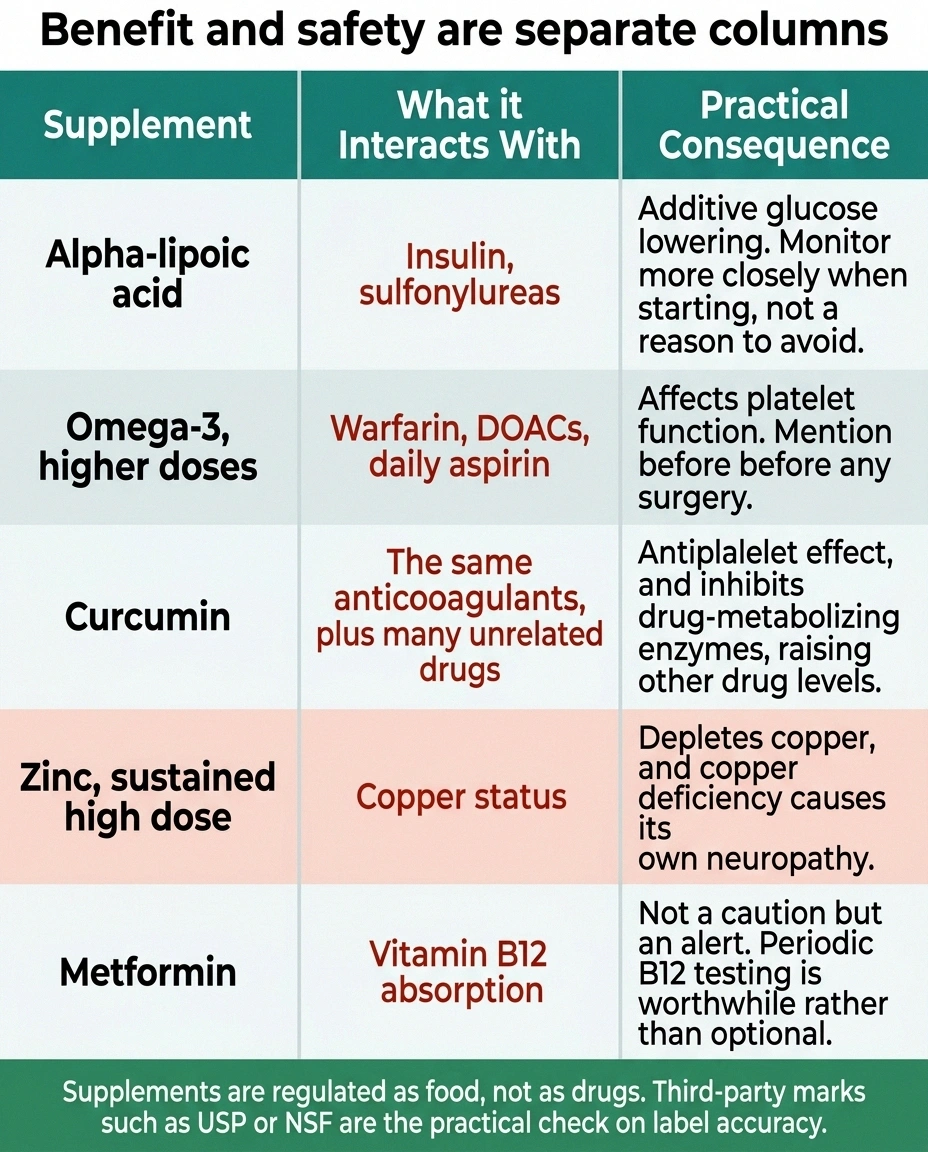
Evidence of benefit and safety in your specific situation are two different columns, and a supplement can score well on the first while being a poor choice on the second.
The ones that come up most often in this population:
- Alpha-lipoic acid and blood sugar. ALA can lower glucose. For someone on insulin or a sulfonylurea, that is an additive effect and a reason to monitor more closely when starting, not a reason to avoid it.
- Omega-3 and anticoagulants. At higher doses, fish oil affects platelet function. Relevant for anyone on warfarin, a direct oral anticoagulant, or daily aspirin, and worth mentioning before any surgery.
- Curcumin and the same category. Similar antiplatelet consideration, plus it inhibits several drug-metabolizing enzymes, which can raise levels of unrelated medications.
- Zinc and copper. Sustained high-dose zinc depletes copper, and copper deficiency causes its own neuropathy. This is one of the few ways a supplement routine creates the very problem it was assembled to treat.
- B12 and metformin. Not a caution so much as an alert. Long-term metformin impairs B12 absorption, which makes periodic testing worthwhile rather than optional for anyone on it.
Worth noting that supplements are regulated as food rather than as drugs, so label accuracy is not independently verified before sale. Third-party testing marks such as USP or NSF are the practical workaround, and they matter more for a product you intend to take daily for years than for anything short-term.
Reading Any Supplement Study Without Being Fooled
Four questions handle most of the interpretation work, and they generalize past this page.
Was there a placebo group? Pain conditions produce large placebo responses, often 30% or more. Without a control arm, a study cannot distinguish the supplement from the expectation of the supplement.
What was the primary endpoint, and was it met? NATHAN 1 is the teaching case. It reported improvements on secondary measures while missing its primary endpoint, and it gets cited both as supporting ALA and as refuting it depending on who is citing it. The primary endpoint is the one the researchers committed to in advance, which is precisely what makes it the honest measure.
What certainty rating did reviewers assign? “Low certainty” in a Cochrane review is not a formality. It means further research is likely to change the estimate. It is a genuinely different statement from “this works.”
How long, and how many people? Neuropathy changes slowly. A six-week study in 40 people cannot detect what a supplement does over the years you would actually be taking it.
Building an Actual Shelf

Turning the chart into a decision.
Running your own single-variable trial
- Record two weeks before you start
- Without a baseline there is nothing to compare against, and memory reconstructs the past to match the present. Two weeks captures normal week-to-week swing.
- Score at the same time each day
- Neuropathy symptoms follow a daily rhythm and are typically worse in the evening. Scoring whenever you remember mostly measures when you remembered.
- Track something besides pain
- Hours slept, night-time wakings, or how far you walked before symptoms interrupted you. These move earlier than a pain score does and are harder to talk yourself into.
- Note anything else that changed
- New shoes, a medication adjustment, a change in blood sugar control, a warmer month. Any of these can produce the improvement you are about to credit to a capsule.
- Test before treating. B12, B1, vitamin D, thyroid and A1c. Tier 1 is the strongest tier on this page and it is entirely conditional on knowing your numbers.
- Correct what is actually low, at doses your clinician sets, then retest to confirm the correction happened.
- Add at most one Tier 2 item at a time, and give it three months. Adding three simultaneously means learning nothing about any of them.
- Audit your B6 total across every product, before adding anything else.
- Track symptoms in writing. Memory smooths out fluctuation, and fluctuation is exactly what you need to see through to judge whether something is working.
- Keep the cause in view. No supplement on this page outperforms glycemic control in diabetic neuropathy, or removing the offending agent in toxic neuropathy. Our guide to neuropathy supplements covers how supplementation fits alongside treating the underlying condition rather than in place of it.
One structural warning. Combination “nerve support” formulas are difficult to evaluate and difficult to dose. They typically contain sub-therapeutic amounts of the ingredients with evidence and generous amounts of the ones without, and if you improve on one, you cannot tell which component did it. Single ingredients cost less and teach you more.
Frequently Asked Questions
Which neuropathy supplements have the strongest evidence?
Correcting a documented deficiency is the strongest category, particularly B12, B1 and copper, because there is a known deficiency, a known mechanism and a known correction. Among supplements taken without a deficiency, intravenous alpha-lipoic acid has the best trial record, with oral alpha-lipoic acid and acetyl-L-carnitine behind it at modest effect sizes and low certainty.
Why did the four-year alpha-lipoic acid study fail?
NATHAN 1 randomized 460 patients to 600 mg of oral ALA daily or placebo for four years and found no significant between-group difference on its primary endpoint. Some secondary measures favored ALA, which is why the trial gets cited on both sides. The primary endpoint is the outcome the researchers committed to before seeing data, so it carries more weight than secondary findings.
What does “low-certainty evidence” mean in a Cochrane review?
It is a formal rating meaning the true effect may be substantially different from the estimate, and that further research is likely to change the conclusion. It reflects study size, design quality and consistency across trials. It is not the same as evidence of no effect, and it is also not a recommendation.
Is B12 worth taking if my levels are normal?
The case is much weaker. B12 corrects a deficiency-driven neuropathy, and where no deficiency exists, that mechanism is not available. Testing is inexpensive and answers the question directly. Worth knowing that levels in the low-normal range can still be functionally insufficient, which is why methylmalonic acid is sometimes measured alongside.
Can a supplement cause neuropathy?
Yes. High-dose vitamin B6 is the well-documented example, producing a sensory neuropathy with numbness, tingling and loss of position sense. Because B6 appears across B-complex products, nerve formulas and multivitamins, people reach high totals without intending to. Long-term high-dose zinc is a second example, by depleting copper.
How long should I give a supplement before deciding?
Three months is a reasonable minimum for anything in Tier 2, because nerve changes are slow and shorter windows mostly capture normal fluctuation. Track symptoms in writing throughout, and change one variable at a time.
Are expensive nerve support formulas better than single ingredients?
Usually not, and they are harder to interpret. Combination products tend to underdose the ingredients with real evidence while adding ones without it, and if symptoms improve you cannot attribute the change. Buying single ingredients is generally cheaper and always more informative.
Should supplements replace medication for nerve pain?
The evidence does not support that substitution. Nothing on this chart matches the effect size of the prescription options studied for neuropathic pain, and nothing here substitutes for treating the underlying cause. Supplements in Tier 1 fix a specific problem when that problem exists. Tier 2 items are adjuncts with modest effects.
About the Author