
When I first started exploring supplements for my own nerve symptoms, magnesium wasn’t even on my radar. I was focused on the usual suspects — B12, alpha-lipoic acid, the things you hear about in every doctor’s waiting room. It wasn’t until a fellow neuropathy patient mentioned she’d been taking magnesium glycinate for months and noticed a real difference in her tingling and sleep that I started digging into the research. What I found surprised me: magnesium for neuropathy isn’t just folk wisdom. There’s a growing body of scientific evidence suggesting this humble mineral may play a meaningful role in nerve health, nerve regeneration, and even pain relief.
But here’s the thing — not all magnesium is created equal. There are at least half a dozen forms of magnesium supplements on the market, each with different absorption rates, benefits, and side effects. Getting the right type, at the right dose, matters. And as someone who has spent years sorting through supplement claims for our community, I want to give you the most honest, research-backed picture I can. Let’s walk through it together.
Why Magnesium Matters for Your Nerves
Magnesium is the fourth most abundant mineral in the human body, and it’s involved in over 300 enzymatic reactions — everything from energy production to muscle function to DNA repair. But for those of us dealing with neuropathy, what matters most is magnesium’s role in the nervous system.
Here’s what magnesium does for your nerves:
- Acts as a natural calcium channel blocker. Magnesium regulates the flow of calcium ions into nerve cells. When calcium floods in unchecked, nerves become overexcited — leading to that burning, tingling, or shooting pain many of us know too well. Magnesium helps keep that signaling in check.
- Supports the myelin sheath. The myelin sheath is the protective insulation around your nerve fibers. Think of it like the coating on an electrical wire — when it’s damaged, signals misfire. Research suggests magnesium helps support myelin production and maintenance.
- Regulates neurotransmitters. Magnesium influences the activity of neurotransmitters like GABA (which calms the nervous system) and glutamate (which excites it). Proper magnesium levels help maintain that balance.
- Fuels cellular energy. Nerve cells are energy-hungry. Magnesium is essential for producing ATP (adenosine triphosphate), the energy currency your nerve cells depend on to send signals properly.
- Blocks NMDA receptors. This is a big one for pain. NMDA receptors are involved in pain signaling, and magnesium acts as a natural blocker of these receptors. When magnesium levels are low, NMDA receptors can become overactive, amplifying pain signals — a process called central sensitization.
In short, magnesium is deeply woven into the basic machinery of how your nerves function, communicate, and protect themselves. And when you don’t have enough of it, things can start to go wrong.
Magnesium Deficiency: A Hidden Contributor to Nerve Problems
Here’s something that doesn’t get talked about enough: magnesium deficiency is remarkably common. Estimates suggest that up to 50% of Americans don’t get enough magnesium from their diet. And for people with neuropathy — especially diabetic neuropathy — the numbers may be even worse.
of Americans don’t get enough magnesium from their diet — and people with neuropathy may be at even higher risk of deficiency
Signs You May Be Low in Magnesium
Muscle cramps, twitches, or spasms (especially at night)
Fatigue and weakness that doesn’t improve with rest
Numbness and tingling in the extremities
Difficulty sleeping or restless legs
Increased anxiety or irritability
Heart palpitations
Loss of appetite or nausea

A 2025 review published in Nutrition Research found that low magnesium concentrations lead to neuronal damage and impaired nerve conduction, contributing to diabetic neuropathic pain. The researchers concluded that magnesium depletion is linked to the presence and worsening of neuropathy in diabetic patients.
So how do you know if you might be low? Here are some common signs of magnesium deficiency to watch for:
- Muscle cramps, twitches, or spasms (especially at night)
- Fatigue and weakness that doesn’t improve with rest
- Numbness and tingling in the extremities
- Difficulty sleeping or restless legs
- Increased anxiety or irritability
- Heart palpitations
- Loss of appetite or nausea
Sound familiar? Many of these overlap with neuropathy symptoms, which is part of why magnesium deficiency often goes undetected. If you’re experiencing these symptoms, it’s worth asking your doctor to check your magnesium levels. A simple serum magnesium blood test is the most common method, though some practitioners prefer a red blood cell (RBC) magnesium test for a more accurate picture of your body’s stores.
Several factors increase your risk of magnesium deficiency, including diabetes, use of proton pump inhibitors (common heartburn medications), diuretics, alcohol use, gastrointestinal conditions like Crohn’s disease or celiac disease, and simply aging. If any of these apply to you, paying attention to your magnesium intake becomes even more important.
What the Research Says: Magnesium and Neuropathy
I’m not going to sugarcoat this — the research on magnesium for neuropathy is promising but still developing. We don’t have the kind of massive, gold-standard clinical trials that would let anyone say “magnesium cures neuropathy.” But what we do have is a growing collection of studies pointing in a hopeful direction. Let me walk you through the key findings.
Nerve Regeneration
A 2021 systematic review published in Frontiers in Cell and Developmental Biology concluded that magnesium may promote the regeneration of peripheral nerves. The review examined both animal and human studies and found that magnesium supported nerve repair through multiple mechanisms, including reducing inflammation and supporting the growth of new nerve tissue. This is particularly relevant for those of us whose neuropathy involves actual nerve damage — which is most of us.
Chemotherapy-Induced Neuropathy
A 2018 study from the Netherlands found that patients undergoing chemotherapy who had higher dietary magnesium and calcium intake were less likely to develop chemotherapy-induced peripheral neuropathy. This study, published in the journal Nutrients, suggests that maintaining adequate magnesium levels may have a protective effect during cancer treatment.
Diabetic Neuropathy
The connection between magnesium and diabetic neuropathy is especially strong. The 2025 Nutrition Research review I mentioned earlier found that magnesium supplementation shows neuroprotective effects in diabetic patients, potentially preventing or slowing the progression of nerve damage. Low magnesium impairs nerve conduction and transmission, reducing sensitivity and contributing to neuropathic pain.
Topical Magnesium for Neuropathy
An interesting pilot study published in the Journal of Palliative Medicine tested transdermal magnesium chloride spray on 20 patients with peripheral neuropathy related to chronic kidney disease. Participants applied five sprays to each affected limb daily for 12 weeks. While this was a small, open-label study, the results were encouraging enough to warrant further investigation.
The Calcium-Magnesium Balance
A 2023 analysis published in Frontiers in Nutrition found something important: both too little and too much magnesium and calcium intake may increase the risk of peripheral neuropathy. This is a crucial finding because it underscores that more isn’t always better. Balance matters, and that’s why working with your doctor on the right dosage is so important.
Neuropathic Pain Relief
Research compiled in the NCBI Bookshelf’s chapter on magnesium and pain documents beneficial effects of magnesium treatment in several types of neuropathic pain, including postherpetic neuralgia, diabetic neuropathy, and chemotherapy-induced peripheral neuropathy. The evidence suggests magnesium’s NMDA receptor blocking ability is a key mechanism for pain reduction.
Dosage Quick Guide
Start at 100–200 mg elemental magnesium daily and increase gradually, staying at or below 350 mg. Take with meals in divided doses. Check the label for elemental magnesium content — that’s what your body actually uses. NIH upper limit for supplements: 350 mg/day. Allow 4–8 weeks to notice changes.

The bottom line? The research supports magnesium as a potentially helpful supplement for neuropathy — particularly for nerve protection, regeneration, and pain management. But it’s a complement to proper medical care, not a replacement. As I always say, supplements work best as part of a broader approach to nerve health.
Types of Magnesium: Which Form Is Best for Neuropathy?

Walk into any supplement aisle and you’ll see a dizzying array of magnesium options. They’re not all the same, and choosing the right form can make a real difference in how well your body absorbs and uses the mineral. Here’s a breakdown of the most common types and how they relate to neuropathy.

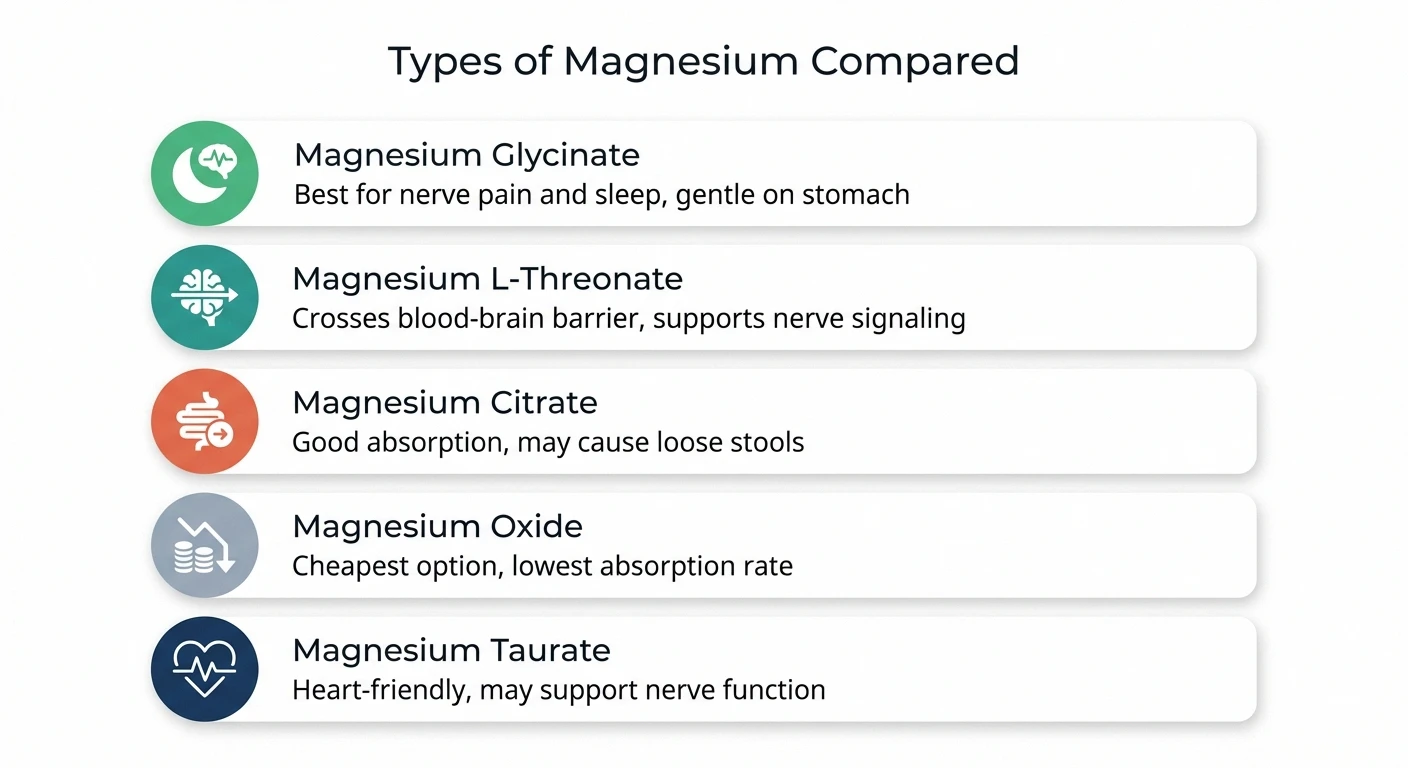
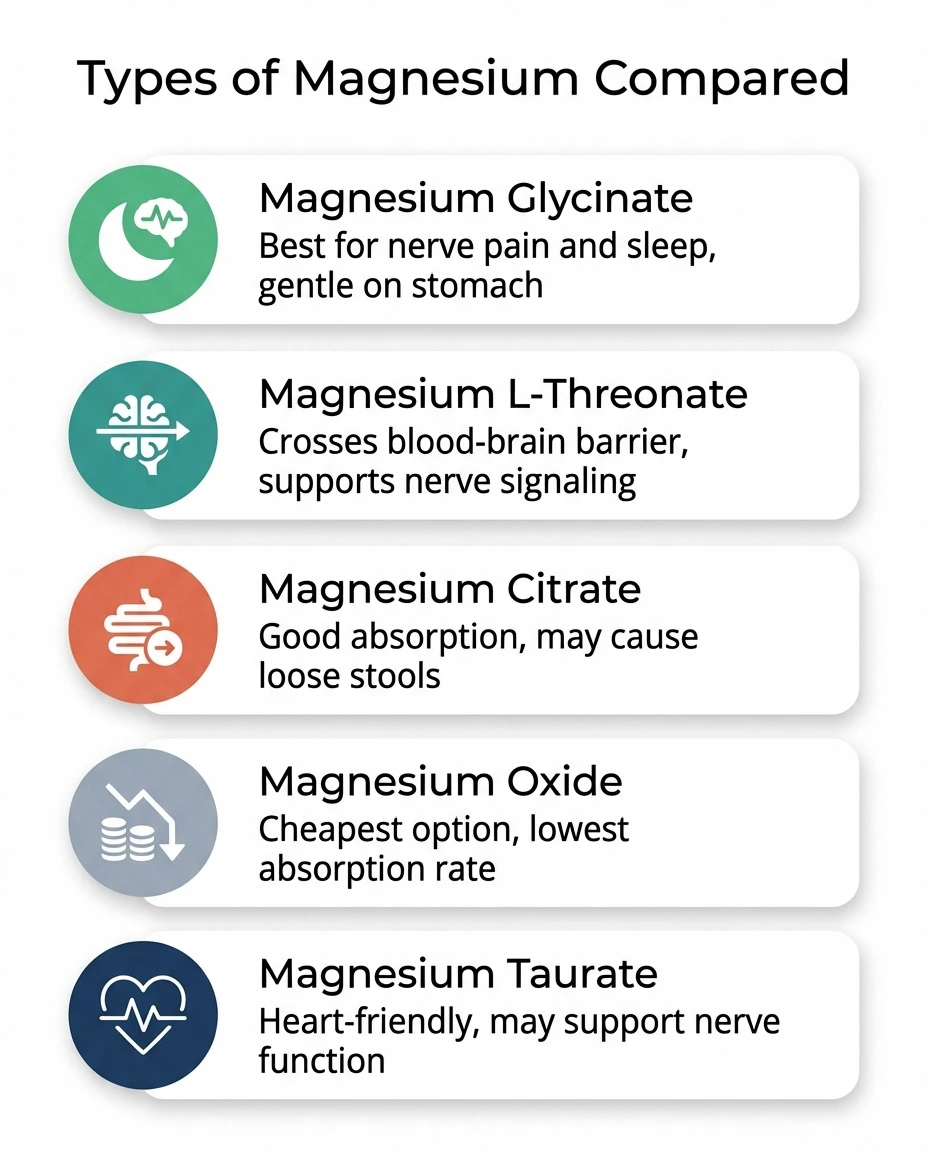
Magnesium Glycinate — The Top Choice for Neuropathy
If I had to pick just one form for someone with neuropathy, magnesium glycinate would be it. It’s magnesium bound to the amino acid glycine, which gives it two advantages: high bioavailability (your body absorbs it well) and a calming effect on the nervous system. Glycine itself is an inhibitory neurotransmitter, so it has its own nerve-calming properties.
Magnesium glycinate is also the gentlest on the stomach — a big deal if you’re already dealing with the GI side effects that many neuropathy medications can cause. It’s commonly recommended for people with chronic pain, anxiety, and sleep issues, all of which frequently accompany neuropathy.
Magnesium L-Threonate — The Brain and Nerve Specialist
Magnesium L-threonate is unique because it’s the only form shown to effectively cross the blood-brain barrier. This makes it particularly interesting for neurological conditions. It was developed by researchers at MIT and has been studied primarily for cognitive function and brain health.
For neuropathy, its ability to increase brain magnesium levels may be beneficial for central sensitization — the process where the brain and spinal cord amplify pain signals. Some oncologists specifically recommend magnesium L-threonate for chemotherapy-induced neuropathy. It’s typically more expensive than other forms, but if your neuropathy has a significant central nervous system component, it may be worth discussing with your doctor.
Magnesium Citrate — Good Absorption, Watch the Gut
Magnesium citrate is one of the most widely available and well-absorbed forms. It’s a solid general-purpose option that many people tolerate well. The one caveat: it can have a laxative effect, especially at higher doses. For some people with neuropathy who also deal with constipation (a common issue with medications like gabapentin), this might actually be a side benefit. For others, it could be a drawback.
Magnesium Chloride — The Topical Option
Magnesium chloride is highly bioavailable and is the form most commonly found in topical magnesium products — oils, sprays, lotions, and creams. The pilot study on CKD patients with neuropathy used a magnesium chloride spray, and many people in our community report finding relief from applying magnesium topically to their feet and hands.
The evidence on how well magnesium absorbs through the skin is mixed — systemic absorption varies from person to person. But for localized relief, especially for burning feet at night, many neuropathy patients find topical magnesium chloride worth trying.
Magnesium Oxide — Cheap but Poorly Absorbed
Magnesium oxide contains the highest amount of elemental magnesium per pill, which makes it look like a good deal. But here’s the problem: your body only absorbs about 4% of it. That means most of it passes straight through your digestive system (which is why it’s commonly used as a laxative). For neuropathy specifically, I wouldn’t recommend magnesium oxide as your primary form.
Magnesium Sulfate — The Epsom Salt
You probably know this one already — it’s the magnesium in Epsom salts. Soaking in an Epsom salt bath is a time-honored comfort measure for aching feet and legs, and many people with neuropathy find it soothing. While it’s not typically taken orally for neuropathy, the warm water plus magnesium combination may provide temporary relief from nerve discomfort. Think of it as a complementary approach rather than your main magnesium source.
Magnesium Taurate — Heart and Nerve Support
Magnesium taurate combines magnesium with the amino acid taurine, which has its own neuroprotective properties. This form is often recommended for cardiovascular health, but taurine’s role in nerve function makes it an interesting option for people with neuropathy — particularly those who also have heart concerns (common in diabetic patients). It’s well-absorbed and gentle on the stomach.
Quick Comparison
Here’s how these forms stack up for neuropathy:
🏆 Best Overall
Magnesium Glycinate
High absorption, calming nerve effects, gentle on stomach. Top choice for neuropathy.
🧠 Best for Brain/CNS
Magnesium L-Threonate
Only form that crosses blood-brain barrier. Good for central sensitization issues.
🧴 Best for Topical Use
Magnesium Chloride
Sprays, oils, creams for localized relief. Popular for burning feet at night.
- Best overall for neuropathy: Magnesium glycinate (high absorption, calming, gentle on stomach)
- Best for brain/central nerve issues: Magnesium L-threonate (crosses blood-brain barrier)
- Best for topical use: Magnesium chloride (sprays, oils, creams)
- Good general option: Magnesium citrate (well-absorbed, may help constipation)
- Best for soaking: Magnesium sulfate (Epsom salts)
- Best if also managing heart health: Magnesium taurate
- Least recommended for neuropathy: Magnesium oxide (poor absorption)
How Much Magnesium Should You Take for Neuropathy?
Let me be clear: I’m not a doctor, and the right dosage for you depends on factors only your healthcare provider can evaluate — your current magnesium levels, kidney function, other medications, and overall health. What I can share is what the research and clinical guidelines suggest, so you can have an informed conversation with your doctor.
The Recommended Dietary Allowance (RDA) for magnesium is:
- Adult men (19-51+): 400-420 mg/day
- Adult women (19-51+): 310-320 mg/day
- Pregnant women: 350-360 mg/day
For neuropathic pain specifically, clinical research suggests doses in the range of 300-350 mg of elemental magnesium daily — the top of that range being the NIH upper limit for supplements — often divided into two or three doses taken with meals to improve absorption and reduce stomach upset.
A few important notes on dosage:
- Start low, go slow. Many practitioners recommend starting with 100-200 mg daily and gradually increasing over a few weeks. This gives your body time to adjust and helps you avoid the most common side effect — loose stools.
- Elemental magnesium vs. total compound weight. This trips up a lot of people. When a label says “500 mg magnesium glycinate,” that doesn’t mean you’re getting 500 mg of magnesium. Elemental magnesium — the actual magnesium content — is a fraction of the total compound weight. Check the label for the elemental magnesium amount, which is what counts.
- Don’t exceed the Tolerable Upper Intake Level. The National Institutes of Health sets the upper limit for supplemental magnesium (from supplements, not food) at 350 mg/day for adults. Going higher should only be done under medical supervision.
- Timing matters. Taking magnesium with meals improves absorption. Many people find taking it in the evening helpful because of its calming, sleep-supporting effects — a welcome bonus when neuropathy pain keeps you up at night.
Remember that 2023 Frontiers in Nutrition study I mentioned? It found that both too little and too much magnesium may increase neuropathy risk. This isn’t a “more is better” situation. Work with your healthcare team to find the right amount for your body.
How to Supplement Safely: Practical Tips

After years of talking with fellow neuropathy patients and reviewing the research, here are my practical recommendations for anyone considering magnesium supplementation:
Talk to Your Doctor First
I know I keep saying this, but it’s genuinely important — especially for magnesium. People with kidney disease need to be particularly careful, as impaired kidneys can’t excrete excess magnesium properly, leading to dangerous buildup. If you take diuretics, antibiotics (tetracyclines or quinolones), bisphosphonates for bone health, or blood pressure medications, magnesium can interact with these drugs.
Talk to Your Doctor First
People with kidney disease must be especially careful with magnesium — impaired kidneys can’t excrete excess properly, leading to dangerous buildup. Also discuss with your doctor if you take diuretics, antibiotics, bisphosphonates, or blood pressure medications.
Get Your Levels Tested
Before supplementing, ask your doctor for a magnesium blood test. A serum magnesium test is standard, but an RBC (red blood cell) magnesium test may give a more accurate picture of your actual tissue stores. Knowing where you stand helps determine whether and how much to supplement.
Choose Quality Supplements
Look for supplements that have been third-party tested (USP, NSF, or ConsumerLab verified). This ensures what’s on the label is actually in the bottle. Avoid supplements with unnecessary fillers, artificial colors, or additives.
Pair with Vitamin D
Magnesium and vitamin D work together — magnesium is needed to activate vitamin D, and vitamin D enhances magnesium absorption. Since vitamin deficiencies are a common cause of neuropathy, addressing both together makes sense. Many people with neuropathy are also low in vitamin D.
Consider Combining Approaches
Some people find that combining an oral magnesium supplement (like glycinate) with topical magnesium (chloride spray or cream on the feet) gives them the best results. The oral supplement works systemically, while the topical application provides localized comfort. This is anecdotal, not proven in studies, but it’s a common strategy in our community.
Be Patient
Magnesium isn’t a quick fix. It can take 4-8 weeks of consistent supplementation before you notice changes. If you’ve been deficient for a while, it may take even longer to replenish your body’s stores. Stick with it and track your symptoms so you can have meaningful conversations with your healthcare provider about whether it’s helping.
Watch for Side Effects
The most common side effects of oral magnesium are GI-related: diarrhea, nausea, and abdominal cramping. These are usually dose-related and can be minimized by starting low, taking magnesium with food, and choosing better-absorbed forms like glycinate. If you experience any unusual symptoms — muscle weakness, very low blood pressure, difficulty breathing — stop taking it and contact your doctor immediately.
Magnesium-Rich Foods for Nerve Health
While supplements can help fill the gap, food should always be your foundation. A neuropathy-friendly diet that includes magnesium-rich foods gives you not just magnesium but a whole package of nutrients that work together to support nerve health. Here are some of the best dietary sources:

Top Magnesium-Rich Foods
- Pumpkin seeds: 156 mg per ounce — one of the richest sources available
- Almonds: 80 mg per ounce
- Spinach (cooked): 157 mg per cup
- Swiss chard (cooked): 150 mg per cup
- Dark chocolate (70%+ cacao): 65 mg per ounce
- Black beans: 120 mg per cup
- Avocado: 58 mg per avocado
- Quinoa (cooked): 118 mg per cup
- Cashews: 74 mg per ounce
- Salmon: 53 mg per 6-ounce fillet
A few things to keep in mind about dietary magnesium:
- Soil depletion is real. Modern farming practices have reduced the magnesium content in many foods compared to decades ago. Even with a healthy diet, you may not be getting as much magnesium as you think.
- Processing strips magnesium. Refined grains lose up to 80% of their magnesium content. Choosing whole grains over processed ones makes a real difference.
- Some foods block absorption. High-phytate foods (like unsoaked beans and grains), excessive caffeine, and alcohol can all reduce magnesium absorption.
- Cooking matters. Boiling vegetables causes magnesium to leach into the water. Steaming or roasting preserves more mineral content.
For many people with neuropathy, a combination of magnesium-rich foods and a targeted supplement is the most practical approach — especially if you have absorption issues or dietary restrictions.
Magnesium as Part of Your Neuropathy Toolkit
I want to be honest with you: magnesium alone is unlikely to resolve neuropathy. But that doesn’t mean it isn’t valuable. In my experience talking with hundreds of neuropathy patients, the people who do best are the ones who take a multi-pronged approach — addressing the underlying cause (whether that’s blood sugar control, nutritional deficiencies, or other factors), working with their healthcare team on appropriate medications, making lifestyle changes, and strategically using supplements to fill nutritional gaps.
Magnesium fits beautifully into that larger picture. It works alongside other evidence-based supplements like alpha-lipoic acid, B vitamins, and vitamin D. It supports the same nerve-protecting mechanisms from a different angle. And unlike many pharmaceutical options, it tends to come with minimal side effects when used appropriately.
If you’re building a supplement regimen for nerve health, magnesium deserves a place on your shortlist — especially if you haven’t had your levels checked recently. It’s one of the most common deficiencies I see in our community, and correcting it may be one of the simplest steps you can take.
 Frequently Asked Questions
 Frequently Asked Questions
The Bottom Line
Magnesium for neuropathy isn’t a magic bullet — but it may be a missing piece of the puzzle for many people. The research increasingly supports magnesium’s role in nerve function, nerve regeneration, and pain modulation. Deficiency is common, especially among people with diabetes, and correcting it is a relatively simple, low-risk step that may yield real benefits.
If you’re considering magnesium supplementation, here’s my advice as someone who has been down this road: start by getting your levels tested. Choose a well-absorbed form like magnesium glycinate or L-threonate. Start with a low dose and increase gradually. Be patient — give it at least 6-8 weeks. And most importantly, make it part of a comprehensive approach that includes working with your healthcare team, managing underlying conditions, and building a nerve-supporting diet.
Your nerves didn’t get damaged overnight, and supporting them is a long game. But every smart, evidence-based step you take — including making sure you’re not running low on something as fundamental as magnesium — moves you in the right direction.
As always, this article is for educational purposes and reflects my experience as a patient advocate. It is not medical advice. Please consult your healthcare provider before starting any new supplement, especially if you have kidney disease, take prescription medications, or are undergoing treatment for another condition.
About the Author