
When I first started looking into supplements for my own nerve pain, omega-3 fatty acids kept coming up in conversation — at support group meetings, in online forums, and even from my doctor. Fish oil is one of those supplements that seems to get recommended for everything. But does it actually help with neuropathy specifically, or is it just another bottle collecting dust in the medicine cabinet?
After years of digging through research and hearing from hundreds of people managing neuropathy, I can tell you the answer is nuanced. The evidence for omega-3s and nerve health is genuinely promising — but it comes with important caveats that most supplement websites won't tell you. Let me walk you through what we actually know.
What Are Omega-3 Fatty Acids and Why Do Nerves Need Them?
Omega-3 fatty acids are polyunsaturated fats that your body cannot manufacture on its own — you must get them from food or supplements. The three main types are EPA (eicosapentaenoic acid), DHA (docosahexaenoic acid), and ALA (alpha-linolenic acid). EPA and DHA come primarily from fatty fish, while ALA comes from plant sources like flaxseed and walnuts.
of polyunsaturated fatty acids in the brain are DHA — a key omega-3 that nerve cells need for proper membrane function
Here is why they matter for your nerves: DHA is a major structural component of nerve cell membranes. It makes up roughly 40% of the polyunsaturated fatty acids in your brain and plays a critical role in maintaining the flexibility and function of nerve cell membranes throughout your body. Without adequate DHA, nerve cells become stiffer and less efficient at transmitting signals.
EPA, on the other hand, is primarily anti-inflammatory. It helps your body produce specialized molecules called resolvins and protectins that actively calm inflammation — which matters because chronic inflammation is one of the key drivers of nerve damage in conditions like diabetic neuropathy and chemotherapy-induced neuropathy.
The Science: What Research Says About Omega-3s and Nerve Pain
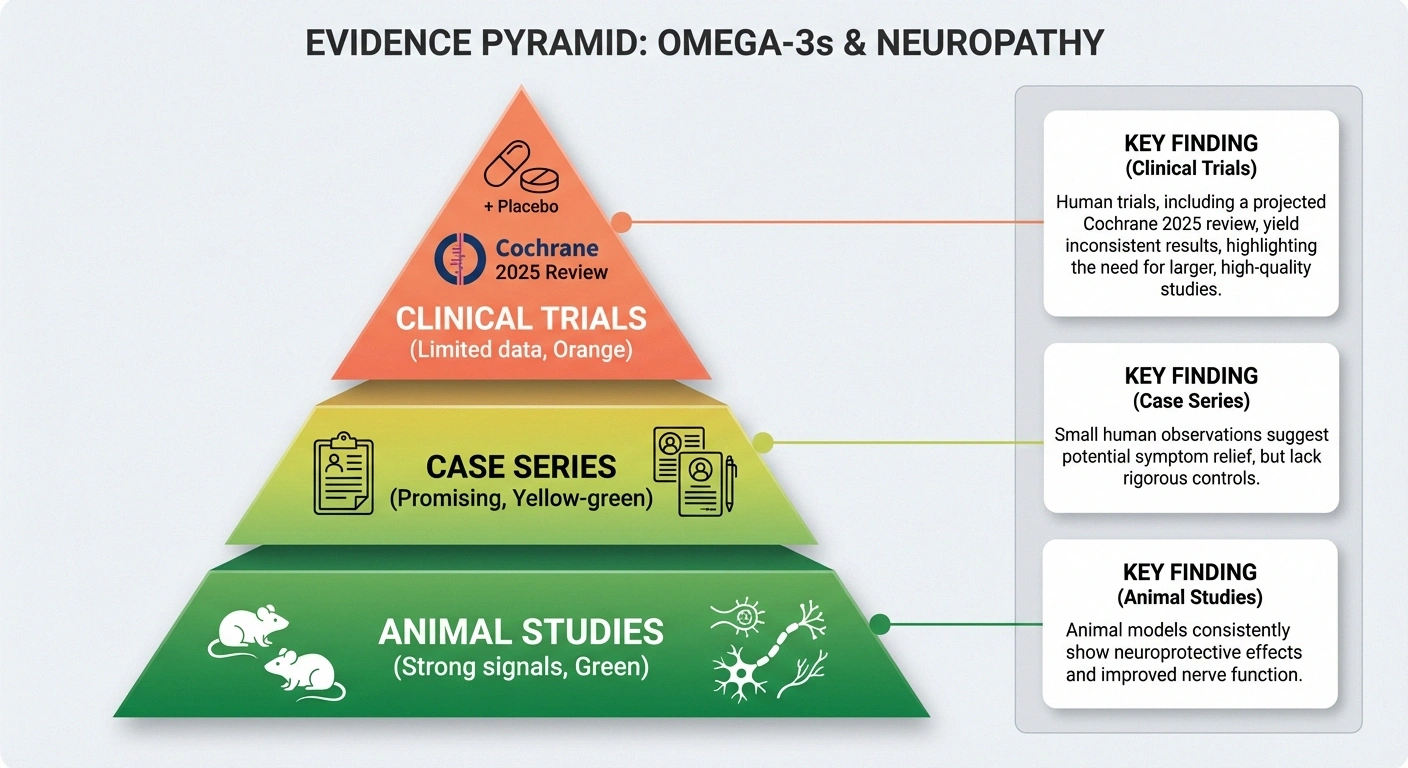
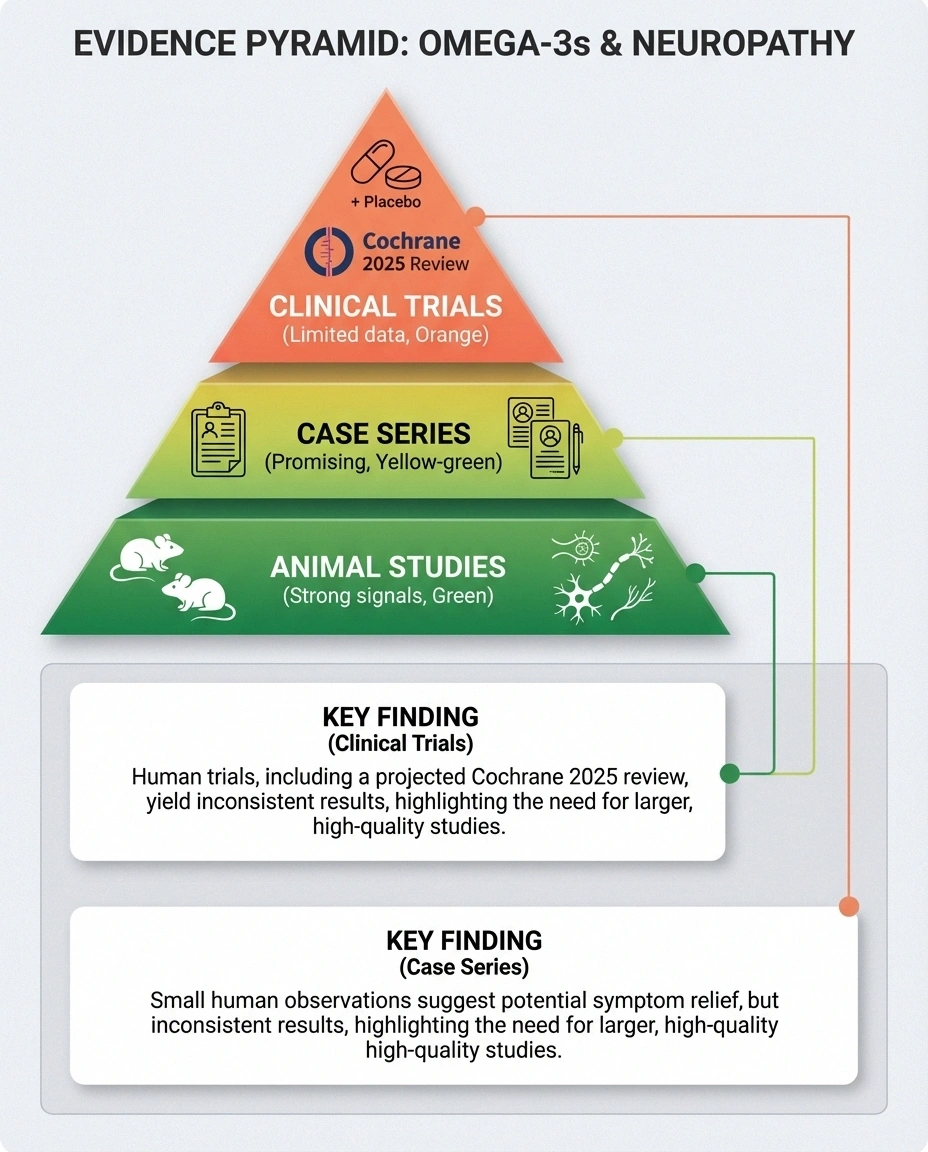
The research on omega-3 fatty acids and neuropathy falls into several categories, and it is important to understand what each level of evidence actually tells us.
Cochrane Review 2025
Only 2 clinical trials (87 total participants) have studied omega-3s for diabetic neuropathy. The Cochrane reviewers concluded there is not enough evidence yet to draw firm conclusions — not that omega-3s don't work, but that larger studies are needed.
Animal Studies: Strong Signals
Animal research has been the most encouraging. A 2017 study published in Frontiers in Pharmacology found that long-chain omega-3 supplementation accelerated nerve regeneration and prevented neuropathic pain behavior in mice after nerve injury. The fish oil group showed significantly faster nerve recovery compared to controls.
A 2025 pre-clinical study comparing different omega-3 sources (fish oil, krill oil, and algae-derived) in type 2 diabetic rats found that all sources improved markers of peripheral neuropathy, though the effects varied by source. Fish oil and krill oil showed the most consistent nerve protection.
Human Case Studies: Promising but Limited
A case series published in Clinical Journal of Pain was among the first to document omega-3 benefits in human neuropathic pain. Five patients with various types of neuropathic pain took pharmaceutical-grade fish oil supplements. All five reported meaningful pain reduction and improved function. While a case series is not the strongest evidence, it was enough to suggest that formal clinical trials were warranted.
Clinical Trials: The Honest Picture
Here is where we need to be straightforward. A 2025 Cochrane Review — the gold standard of medical evidence synthesis — looked at omega-3 supplementation for diabetic neuropathy specifically. They found only two qualifying clinical trials involving just 87 people total. Their conclusion: omega-3 supplements taken for six months “may make little or no difference” to peripheral neuropathy symptoms or impairment in diabetics.
That sounds discouraging, but context matters. The Cochrane reviewers themselves noted that the evidence was very low quality because the studies were so small. They did not conclude that omega-3s do not work — they concluded there is not enough evidence yet to know. There is an important difference.
One interesting finding: the trials did suggest possible improvement in corneal nerve health (the tiny nerve fibers in the eye that can be measured precisely), which could indicate benefits to small fiber nerves elsewhere in the body.
Chemotherapy-Induced Neuropathy: A Bright Spot
Perhaps the most compelling human evidence comes from a randomized, double-blind, placebo-controlled trial in patients receiving paclitaxel chemotherapy. Patients who took omega-3 supplements during chemotherapy had significantly less neuropathy compared to the placebo group. This suggests omega-3s may be most effective at preventing nerve damage rather than reversing it — an important distinction.
How Omega-3s May Protect Your Nerves: The Mechanisms
Understanding how omega-3s work helps explain both their potential and their limitations. The research points to several mechanisms:
Key Takeaway
Omega-3s work through five mechanisms: reducing inflammation, repairing nerve membranes, supporting myelin, improving blood flow, and reducing oxidative stress. This multi-pathway approach is why they may complement other neuropathy supplements that target different pathways.
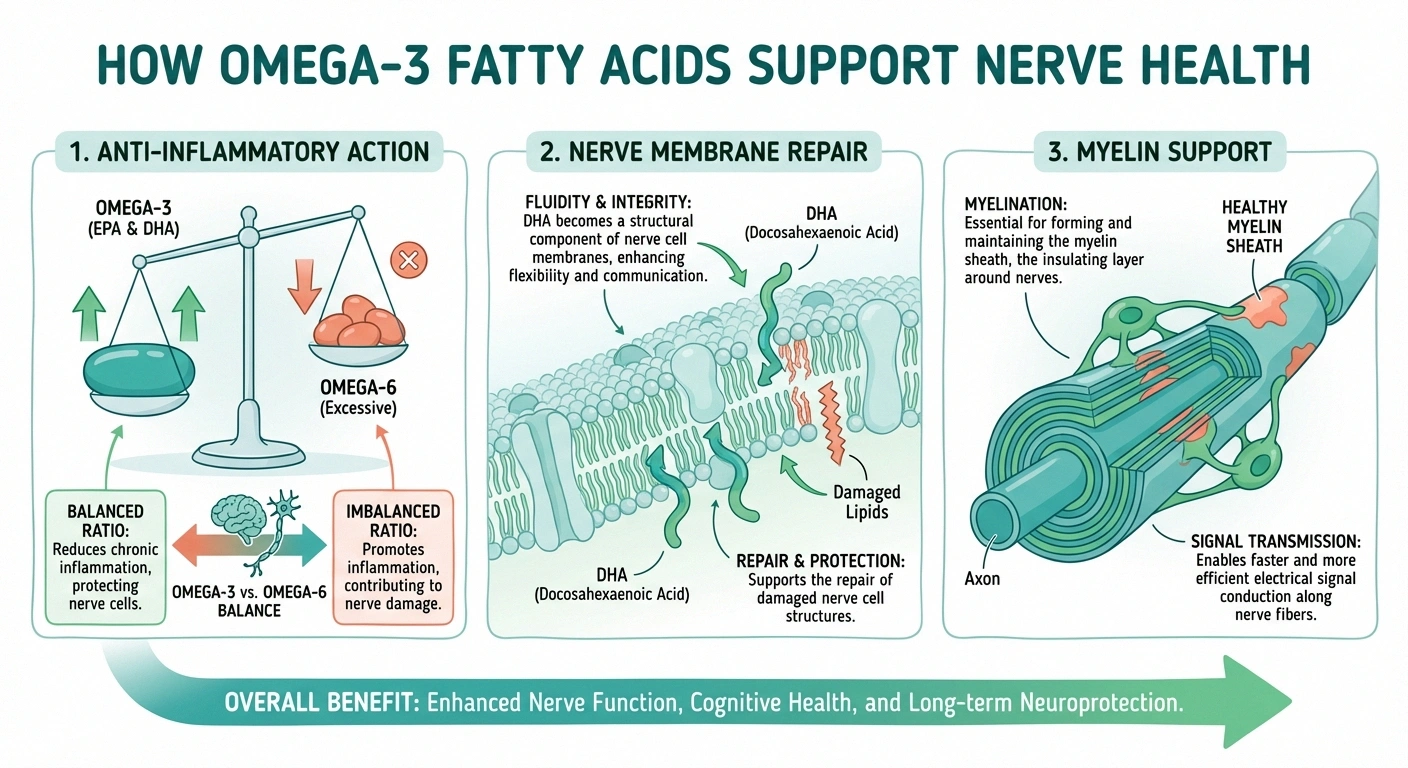
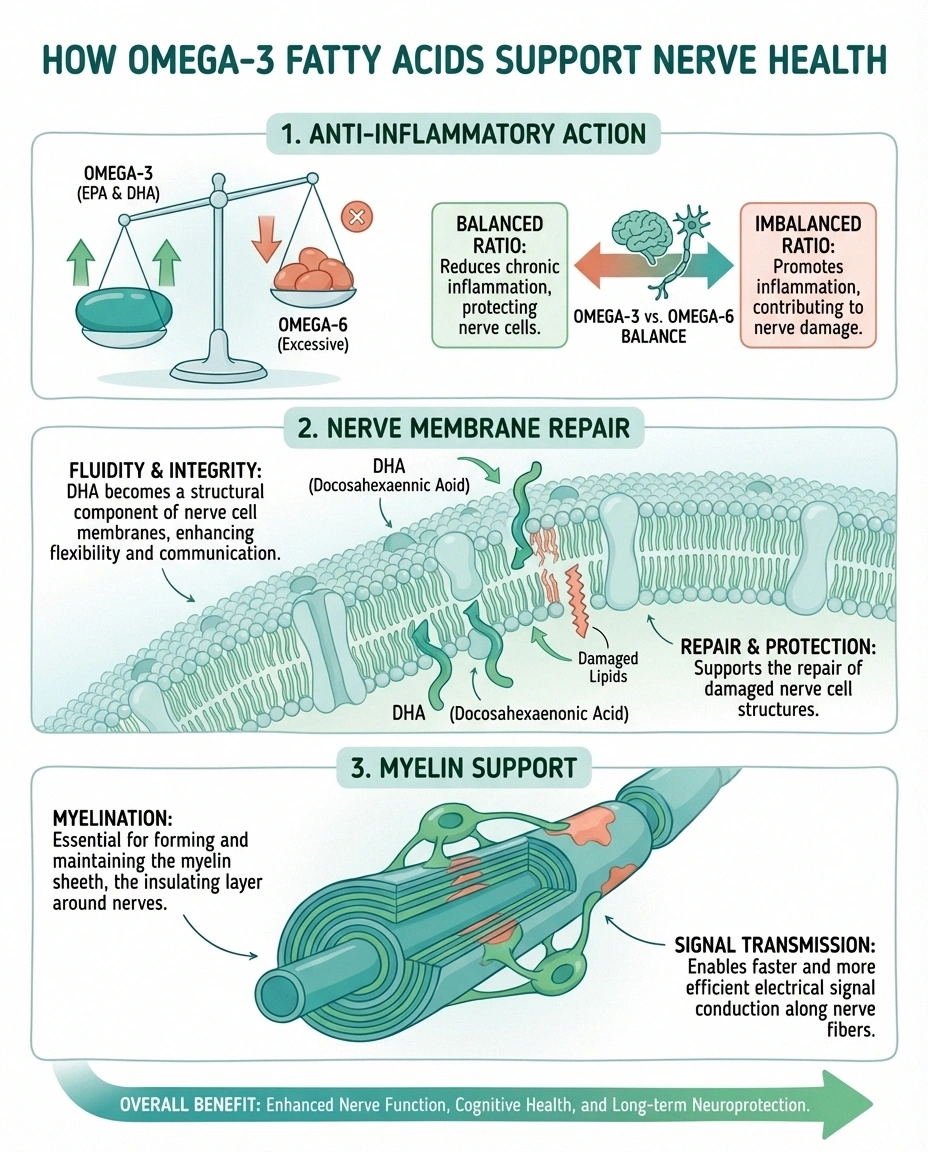
Anti-inflammatory action. Omega-3s compete with omega-6 fatty acids (which promote inflammation) for the same metabolic pathways. When you increase your omega-3 intake, your body produces more anti-inflammatory molecules and fewer pro-inflammatory ones. Since neuroinflammation drives much of the damage in neuropathy, reducing it can help slow progression.
Nerve membrane repair. DHA is incorporated directly into nerve cell membranes, improving their flexibility and signal conduction. Damaged nerves with adequate DHA may recover more efficiently.
Myelin support. The myelin sheath — the protective coating around nerve fibers — requires healthy fats for maintenance and repair. Omega-3s contribute to the fatty acid pool your body uses to maintain myelin integrity.
Blood flow improvement. Omega-3s help reduce blood viscosity and improve circulation. Since many forms of neuropathy involve reduced blood supply to nerves (particularly in diabetes), better circulation means better oxygen and nutrient delivery to nerve tissue.
Oxidative stress reduction. Omega-3s enhance antioxidant defenses in nerve tissue, helping protect against the kind of oxidative damage that contributes to progressive nerve deterioration.
Dosage: How Much Omega-3 Should You Take for Nerve Health?
There is no official recommended dose of omega-3s specifically for neuropathy. However, the research and clinical experience suggest some guidelines:
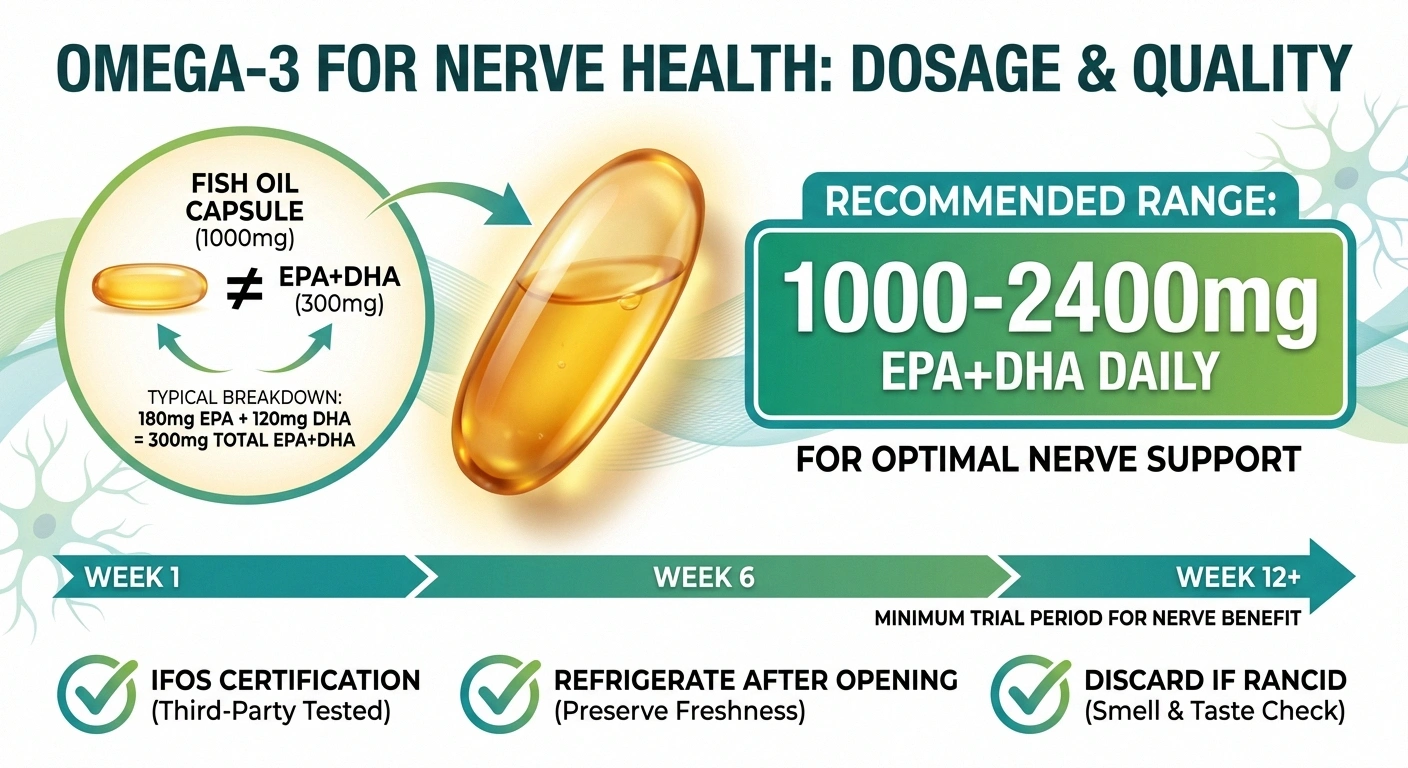
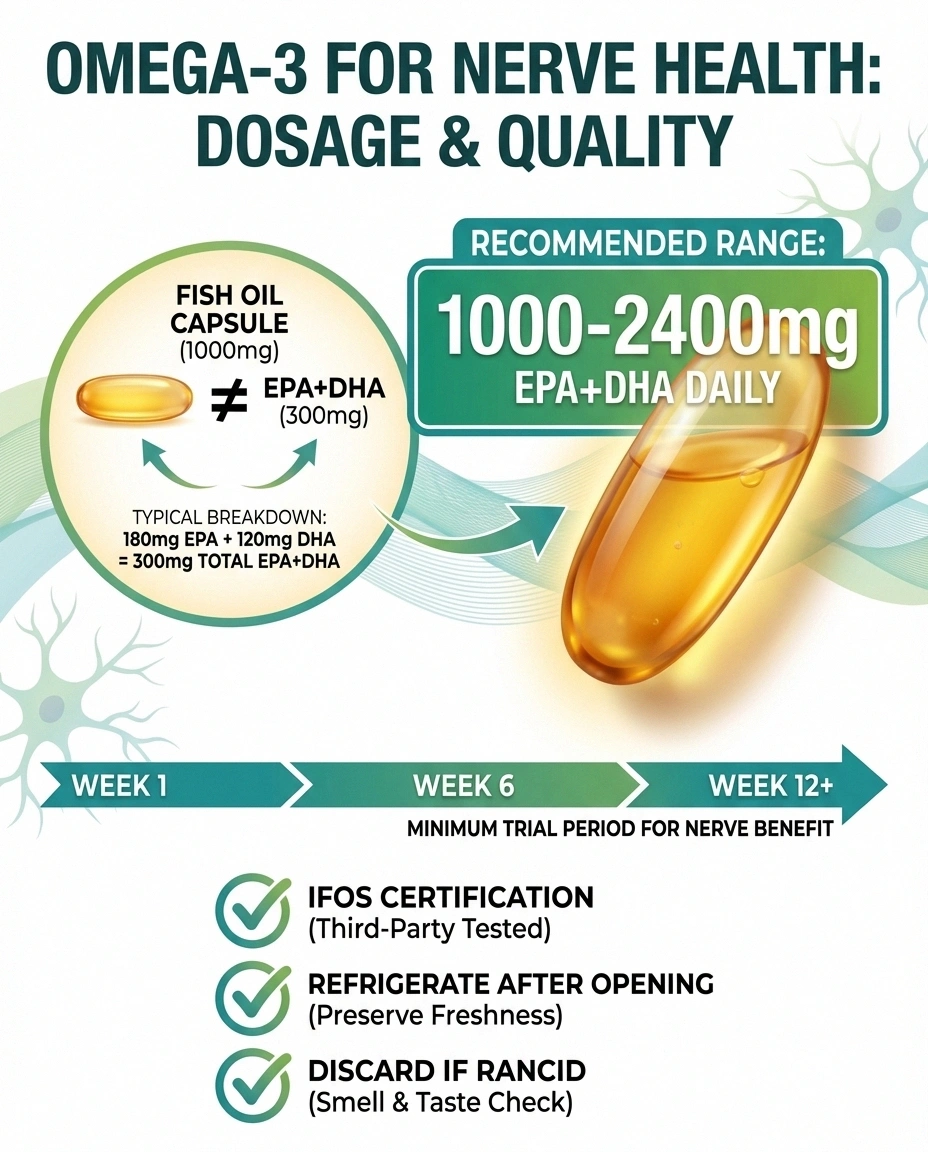
General nerve support: Most studies showing benefits used doses of 1,000 to 2,400 mg combined EPA and DHA daily. The case series showing neuropathic pain improvement used pharmaceutical-grade fish oil providing approximately 2,400 mg of EPA+DHA per day.
The EPA+DHA distinction matters. A fish oil capsule labeled “1,000 mg fish oil” may contain only 300 mg of actual EPA+DHA. You need to read the supplement facts panel and add up the EPA and DHA milligrams specifically. The total fish oil amount is not the same as the active omega-3 content.
Timeline: Do not expect overnight results. Omega-3s take time to incorporate into cell membranes and shift your inflammatory balance. Most studies showing benefits ran for at least three to six months. Give it a fair trial of at least 12 weeks before deciding whether it is helping.
Quality matters. Look for products that are third-party tested for purity (IFOS certification is the gold standard) and provide a certificate of analysis. Rancid fish oil is not only ineffective — it may actually increase oxidative stress. Store fish oil in the refrigerator after opening and discard if it develops a strong fishy smell or taste.
Food Sources vs. Supplements: Which Is Better?
In an ideal world, you would get all your omega-3s from food. The reality is that most people with neuropathy need higher amounts than diet alone typically provides. Here is how the options compare:

Best Food Sources of EPA and DHA
Fatty fish are by far the richest source. A single three-ounce serving of wild salmon provides roughly 1,500 mg of EPA+DHA. Sardines, mackerel, herring, anchovies, and trout are also excellent sources. The American Heart Association recommends at least two servings of fatty fish per week — and for people with inflammatory conditions like neuropathy, three to four servings may be more beneficial.
Plant-Based ALA Sources
Flaxseed, chia seeds, walnuts, and hemp seeds contain ALA, which your body can convert to EPA and DHA. However — and this is crucial — humans convert only about 5% of ALA to EPA and less than 1% to DHA. If you are relying on plant sources alone, you may not be getting therapeutically meaningful amounts of the omega-3s that research links to nerve benefits. Algae-derived DHA supplements are a good option for vegetarians and vegans.
When Supplements Make Sense
If you cannot eat fatty fish regularly — whether due to taste preference, mercury concerns, or dietary restrictions — a high-quality fish oil, krill oil, or algae oil supplement is a reasonable alternative. The key is ensuring you get enough EPA+DHA in absorbable form.
The Omega-6 to Omega-3 Ratio: Why It Matters
This is something most articles about omega-3s miss, and it may be the most important factor for people with neuropathy. It is not just about how much omega-3 you consume — it is about the ratio of omega-6 to omega-3 fatty acids in your diet.
Don't Just Add — Also Reduce
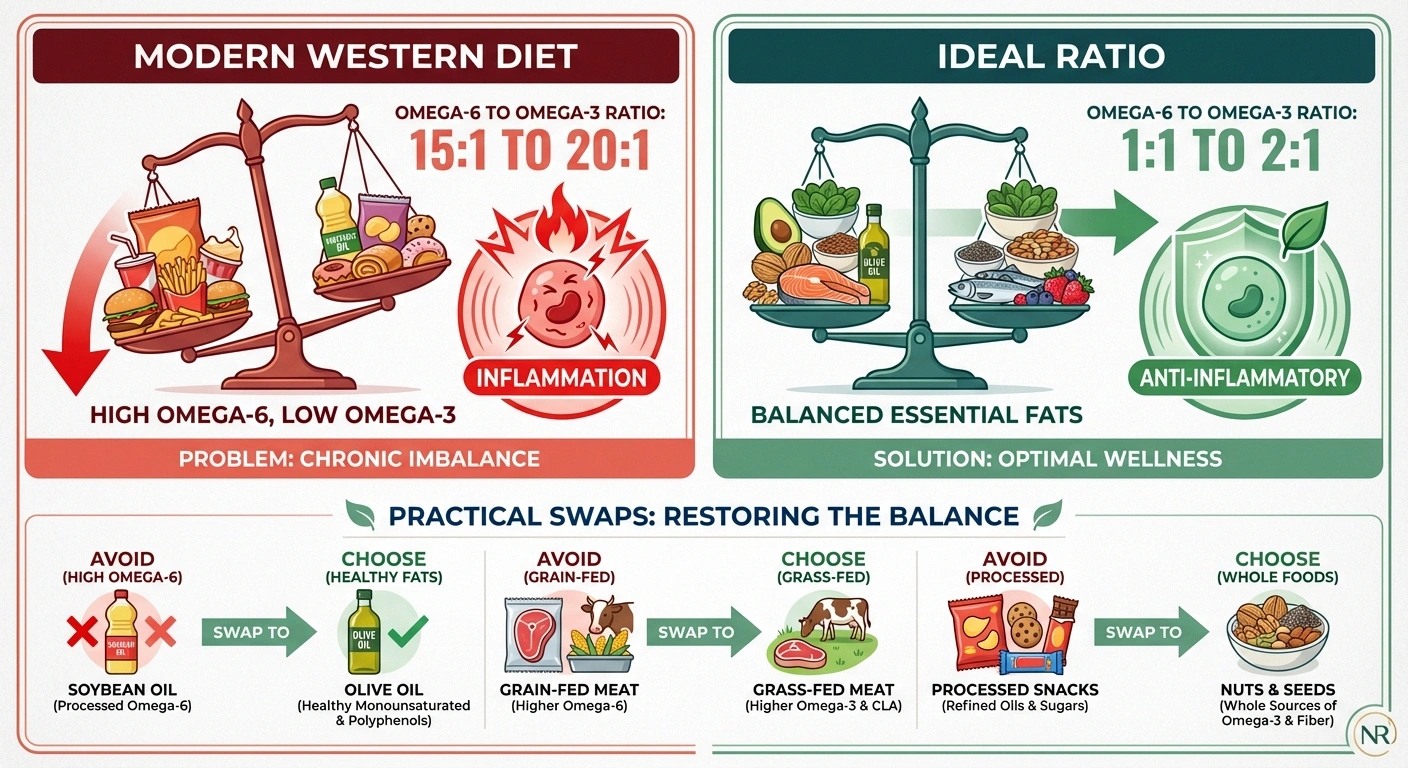
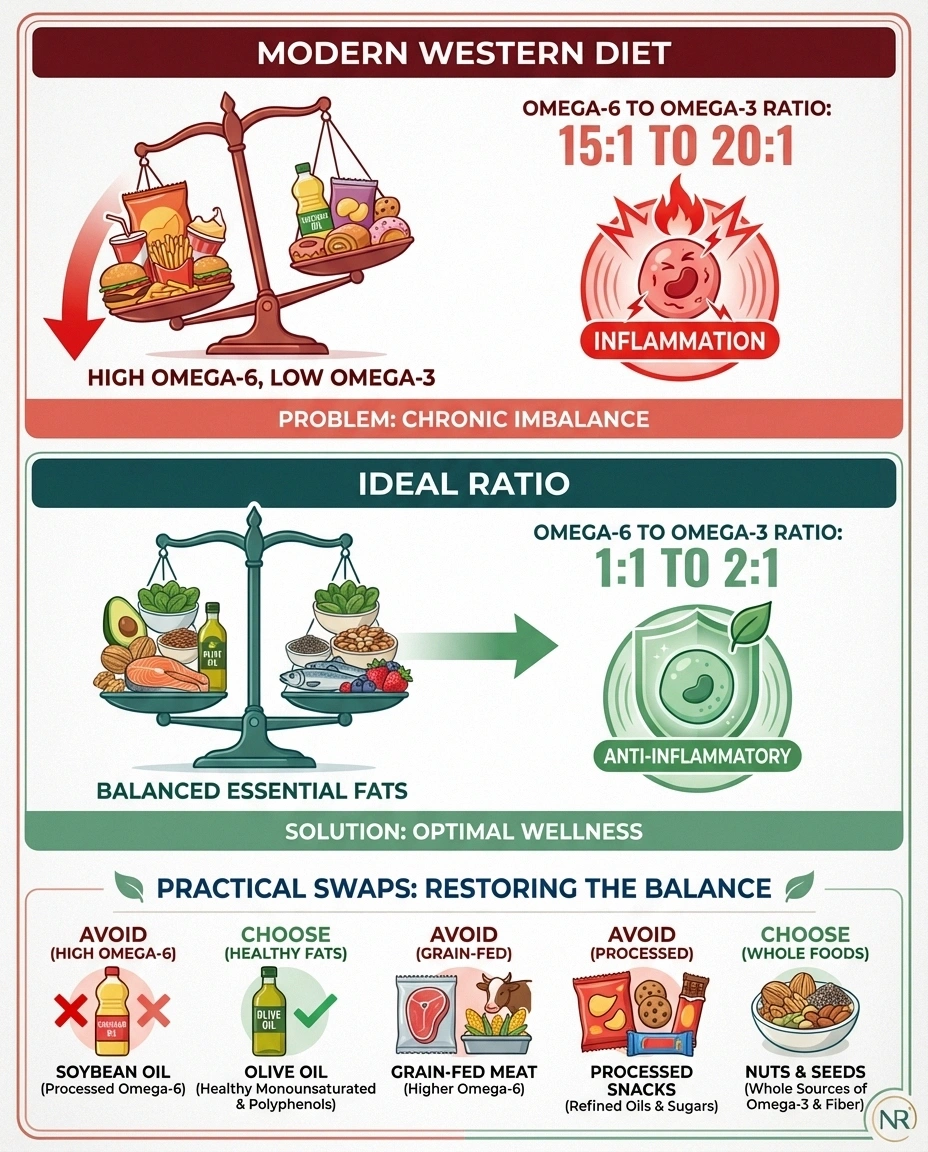
Adding omega-3 supplements without reducing omega-6 intake is like running a humidifier and dehumidifier in the same room. Cut back on soybean, corn, and sunflower oils (check processed food labels) and switch to olive oil or avocado oil for cooking.
The ideal ratio is roughly 1:1 to 2:1 (omega-6 to omega-3). Our ancestors ate this way for millennia. The typical modern Western diet? The ratio is 15:1 to 20:1 — massively skewed toward pro-inflammatory omega-6 fats from vegetable oils, processed foods, and grain-fed meat.
This imbalance creates a chronically inflammatory environment in your body — which is terrible for nerve health. Simply adding an omega-3 supplement without reducing your omega-6 intake is like running a humidifier and dehumidifier in the same room.
Practical steps to improve your ratio: reduce consumption of soybean oil, corn oil, sunflower oil, and safflower oil (check labels — they are in almost every processed food). Cook with olive oil, avocado oil, or coconut oil instead. Choose grass-fed meat and pasture-raised eggs when possible. And of course, increase your intake of fatty fish and other omega-3 rich foods.
Safety, Side Effects, and Drug Interactions
Omega-3 supplements are generally well tolerated, which is one of their advantages over many neuropathy medications. The Cochrane Review noted that omega-3s did not cause significantly more side effects than placebo. However, there are some things to be aware of:
Talk to Your Doctor
If you take blood thinners (warfarin, clopidogrel) or are scheduled for surgery, consult your healthcare provider before starting high-dose fish oil. Omega-3s have mild anticoagulant effects that may need monitoring.
Common side effects include fishy aftertaste or burps, mild digestive discomfort, and loose stools at higher doses. Taking fish oil with food and starting at a lower dose usually minimizes these issues. Enteric-coated capsules can also reduce fishy burps.
Blood thinning. Omega-3s have mild anticoagulant effects at higher doses. If you take blood thinners like warfarin or clopidogrel, or if you are scheduled for surgery, talk to your doctor before starting high-dose fish oil. Most doctors consider doses up to 3,000 mg per day safe for people on blood thinners, but individual situations vary.
Medication interactions. Fish oil may interact with blood pressure medications (it can have a mild blood pressure-lowering effect) and some diabetes medications. If you take gabapentin or pregabalin for neuropathy pain, there are no known direct interactions with omega-3s, but always inform your healthcare provider about all supplements you take.
Omega-3s as Part of Your Neuropathy Management Plan
Here is my honest take after years of following this research and hearing from people who have tried omega-3 supplementation: omega-3s are unlikely to be a standalone solution for neuropathy, but they may be a valuable supporting player in a comprehensive management strategy.

The strongest evidence suggests omega-3s may help by reducing neuroinflammation, supporting nerve membrane health, and potentially slowing progression — especially when combined with other evidence-informed approaches like alpha-lipoic acid, adequate B12 levels, blood sugar management, and regular physical activity.
If you are considering adding omega-3s to your neuropathy toolkit, discuss it with your healthcare provider — especially if you have diabetes, take blood thinners, or are undergoing chemotherapy. And remember: the foundation of nerve health is still addressing the underlying cause of your neuropathy, managing blood sugar if applicable, staying active, and working closely with your medical team.
Browse all our supplement and nutrition guides for more evidence-informed approaches to supporting your nerve health.
Frequently Asked Questions
How long does it take for omega-3s to help with neuropathy?
Most research studies showing benefits ran for three to six months. Omega-3 fatty acids need time to incorporate into nerve cell membranes and shift your body's inflammatory balance. Give supplementation at least 12 weeks before evaluating whether it is making a difference for your symptoms.

Can omega-3 fatty acids reverse nerve damage?
Current evidence does not show that omega-3s can reverse existing nerve damage. However, animal studies suggest they may support nerve regeneration and help slow further damage. The strongest human evidence is for prevention — particularly preventing chemotherapy-induced neuropathy — rather than reversing established nerve damage.
Is fish oil or krill oil better for neuropathy?
Both contain EPA and DHA and may support nerve health. Krill oil has the advantage of containing astaxanthin, a potent antioxidant, and its omega-3s are in phospholipid form which some research suggests is better absorbed. However, krill oil typically provides lower total EPA and DHA per capsule. Fish oil is more studied and more cost-effective for reaching higher therapeutic doses.
Can you take omega-3 supplements with neuropathy medications?
There are no known direct interactions between omega-3 supplements and common neuropathy medications like gabapentin, pregabalin, or duloxetine. However, omega-3s may have mild blood-thinning effects and can interact with blood thinners and blood pressure medications. Always inform your doctor about all supplements you take alongside prescription medications.
Are plant-based omega-3 sources effective for neuropathy?
Plant sources like flaxseed and walnuts contain ALA, but your body converts less than 5% of ALA to the EPA and DHA that research links to nerve benefits. For plant-based individuals, algae-derived DHA supplements are a more effective option, as algae produce DHA directly without the conversion bottleneck.
What is the best omega-3 dosage for neuropathy?
There is no officially established dose for neuropathy specifically. Research studies showing benefits typically used 1,000 to 2,400 mg of combined EPA and DHA daily. Read the supplement facts panel carefully because the total fish oil amount is not the same as the active EPA and DHA content. Start with a lower dose and work up gradually to minimize digestive side effects.
About the Author