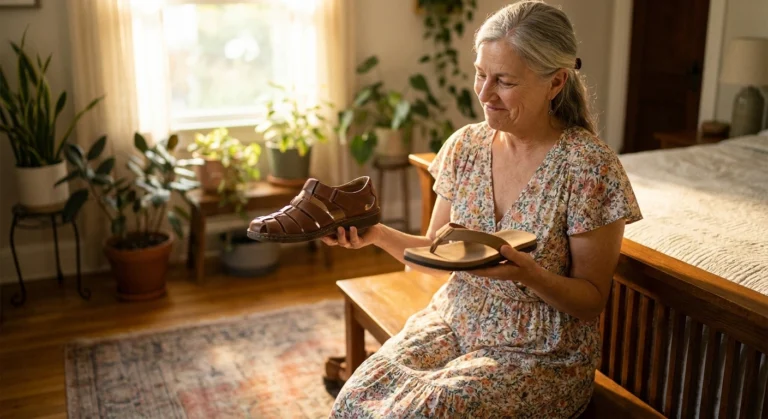
My friend Robert played guitar for forty years. Nothing fancy — mostly old folk songs at his church's informal gatherings and evenings on the back porch with his kids. When the tingling in his fingers started about three years ago, he didn't tell anyone he'd quietly put the guitar in the closet. He didn't think there was any point bringing it out again.
It wasn't until someone in our neuropathy support group mentioned she'd found ways to keep playing that Robert dug his guitar back out and started experimenting. He plays differently now — lighter strings, capo higher up the neck, not for as long at a stretch — but he plays. And those evenings on the porch with his grandkids are back.
If you're a guitarist dealing with neuropathy in your hands or fingers, I want to share what I've learned about keeping music in your life.
Why Guitar Is Particularly Challenging with Neuropathy
Guitar playing demands fine motor control, precise fingertip sensation, grip strength, and sustained hand position — exactly the things neuropathy tends to compromise. The fretting hand in particular requires pressing strings against a narrow fretboard with enough pressure to produce a clean note, and the fingers need to feel what they're doing to make real-time adjustments.
When you have neuropathy in your hands, the specific challenges tend to be:
- Reduced fingertip sensation — you can't feel the strings clearly, which affects intonation and finger positioning
- Tingling or burning that worsens during sustained playing
- Reduced grip strength — difficulty pressing strings down firmly enough, especially barre chords
- Fatigue — hands tire much faster than they used to
- Pain — for some, playing triggers or worsens neuropathic pain
- Coordination changes — reduced proprioception affects the precise fingertip placement that experienced guitarists do without thinking
None of these mean you have to stop. They mean you have to adapt — which, honestly, most guitarists spend their whole lives doing anyway.
What Famous Guitarists Have Dealt With Nerve Issues
You're not alone in this, and you're in notable company. Eric Clapton has spoken publicly about developing peripheral neuropathy in his hands and experiencing loss of feeling in his fingers — he continued to record and perform, adapting his playing style. Dave Mustaine of Megadeth dealt with radial nerve damage that threatened to end his guitar career; he relearned to play through an extensive rehabilitation process. John E. Walker, a classical guitarist, documented his nerve injury recovery in the guitar press.
Key Takeaway
A neuropathy diagnosis doesn't have to mean putting down your guitar. With the right adaptations — lighter strings, lower action, modified technique, shorter sessions — most guitarists with hand neuropathy can continue playing. The goal is adapting the activity to fit your hands, not abandoning it.
These stories matter because they demonstrate that professional-level guitarists have found ways to adapt. If it's possible at that level, it's certainly possible for the rest of us.
Guitar Setup: Making Your Instrument Easier to Play
This is often the highest-impact place to start. Many guitars — especially acoustic guitars — are set up for standard play in ways that create more demand on the fretting hand than necessary. A proper setup for neuropathy-affected hands can make a remarkable difference.
Lighter String Gauges
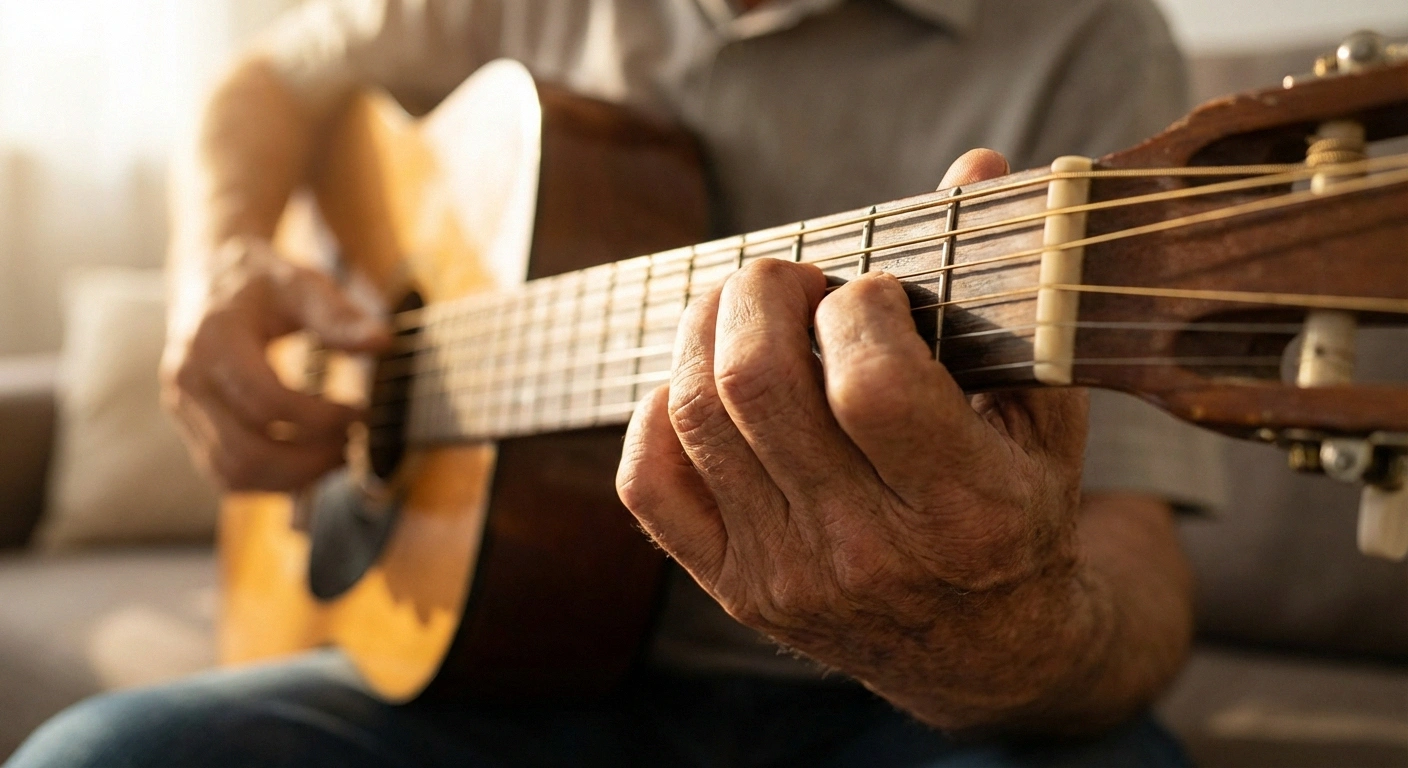
Switching to lighter string gauges reduces the pressure required to fret notes clearly. On acoustic guitar, going from medium (13s) to light (12s) or even extra-light (11s or 10s) requires significantly less finger pressure. On electric guitar, 9s or even 8s are very playable and substantially easier on weakened hands. The trade-off is slightly less volume and sustain on acoustic, but for most home players that's irrelevant.
Lower Action
Action refers to how far the strings sit above the fretboard. Lower action means less distance your fingers have to press down to make clean contact. A qualified guitar tech can lower your action at the nut and saddle for a small cost — this is possibly the single most impactful modification for players with reduced hand strength or endurance. Be careful not to go too low or you'll get buzzing, so get it done professionally.
Capo Use
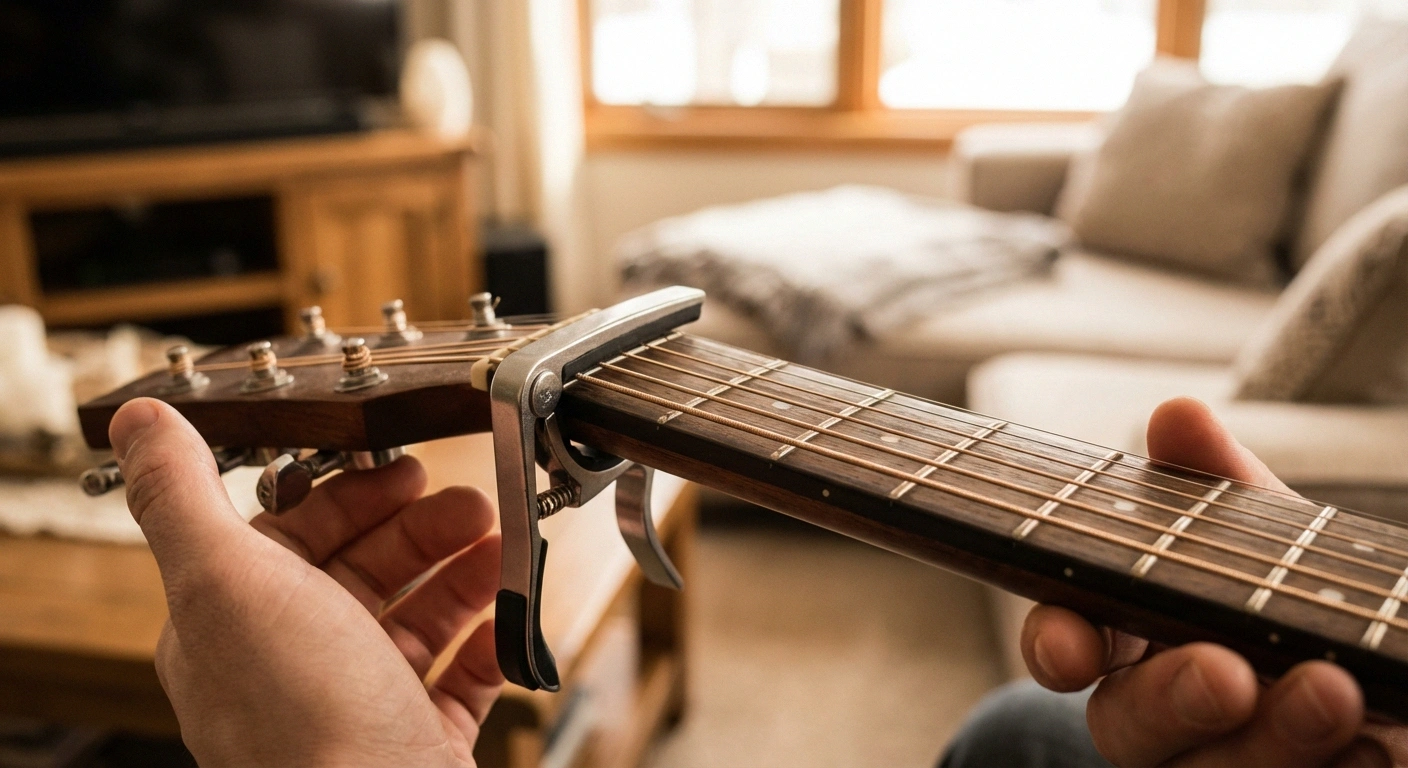
A capo clamps across all strings at a fret of your choosing, raising the pitch of the guitar without any additional finger pressure. By capoing at fret 2, 3, or 4 and using open-position chord shapes, you can play the same chord voicings you've always used but with much less fretting pressure required (because the higher up the neck you go, the less distance you press). Robert uses a capo almost every time he plays now.
Guitar Setup Checklist for Neuropathy
Light or extra-light strings — reduces fretting pressure significantly
Electric vs. Acoustic
If you play acoustic guitar, consider switching to electric for at least some of your playing. Electric guitars almost universally have lower action and lighter strings than acoustics, and they require far less finger pressure to produce a clear note. The physical demands are simply lower. An electric guitar played unplugged at low volume is still very playable.
Classical Guitar Body Position
Classical guitar technique places the guitar neck at a high angle (resting on the left knee, which is elevated by a footrest), which puts the fretting hand in a more open position with less wrist flexion. This reduces nerve compression in the wrist and can make playing more comfortable for people with hand neuropathy. Even if you don't play classical music, this position is worth experimenting with.
Technique Adaptations for Neuropathic Hands
Reduce Barre Chords
Barre chords — where the index finger presses across all six strings at once — are the most physically demanding chord type. They require significant grip strength and sustained pressure. There are usually open-position or partial barre alternatives that capture the essential notes of most barre chords. Ask your guitar teacher or look up chord inversions and voicings that avoid full barres. Guitar apps like Chord! and Ultimate Guitar show multiple voicings for any chord.
Adjust Your Picking Technique
Fingerpicking puts less sustained grip demand on the picking hand than aggressive flatpicking. Lighter touch on picking strings also reduces vibration feedback through the hand — which can be uncomfortable when sensation is altered. Experiment with different pick thicknesses too; a softer, more flexible pick often requires less grip tension.
Play More Open Tunings
Open tunings (DADGAD, Open G, Open D, etc.) allow entire chords to ring out with minimal or even zero fretting, with just a slide or occasional finger placement changing the harmony. Many beautiful arrangements are possible in open tunings that require a fraction of the hand work of standard tuning. This opens up an entirely different style of playing that may actually become a creative expansion, not just an adaptation.
Pre-Playing Warm-Up Routine
Warm hands under warm water or with a heating pad for 5–10 minutes
Lap Steel and Slide Guitar
If finger pressure on a standard guitar becomes difficult to sustain, lap steel or slide guitar is an adaptation that eliminates fretting pressure entirely. A metal or glass slide controls pitch by sliding along the strings while the picking hand handles rhythm and dynamics. Many people find this a genuinely satisfying way to keep playing guitar when fretting becomes problematic.
Slow Down and Shorten Sessions
Neuropathic hands fatigue faster. Playing for 15 minutes with full engagement is better than pushing through 45 minutes and ending in pain that takes days to settle. Short, regular playing sessions are also better for maintaining and improving skills than infrequent marathon sessions. Listen to your hands and stop before you're in pain, not after.
The Arc SG: An Assistive Device Designed for This
In 2023, Jefferson University's industrial design program developed a product called the Arc SG — an assistive fretboard attachment specifically designed for guitarists with peripheral neuropathy. The device reconfigures the fretboard geometry to maintain optimal hand positioning and elevates the playing surface, rotating it toward the fingers so the hand can maintain a more natural curve with less pressure and pain.
It's not widely available yet, but it represents the kind of purposeful adaptation engineering that this community needs. Worth keeping an eye on for future availability.
Warm-Up and Cool-Down Routines
Professional musicians are taught to warm up before playing — for people with neuropathy, this is even more important. A proper warm-up increases circulation to the hands and reduces the shock of transitioning from rest to active playing.
Stop Before You're in Pain
With reduced hand sensation, you may not feel minor injuries from string pressure or awkward positions. Inspect your fingertips after each session for cuts, blisters, or redness. Stop playing before pain starts — not after. Pushing through neuropathic pain while playing can cause flares that take days to settle.
Before Playing
- Warm your hands under warm water or with a heating pad for 5–10 minutes if they're cold or stiff
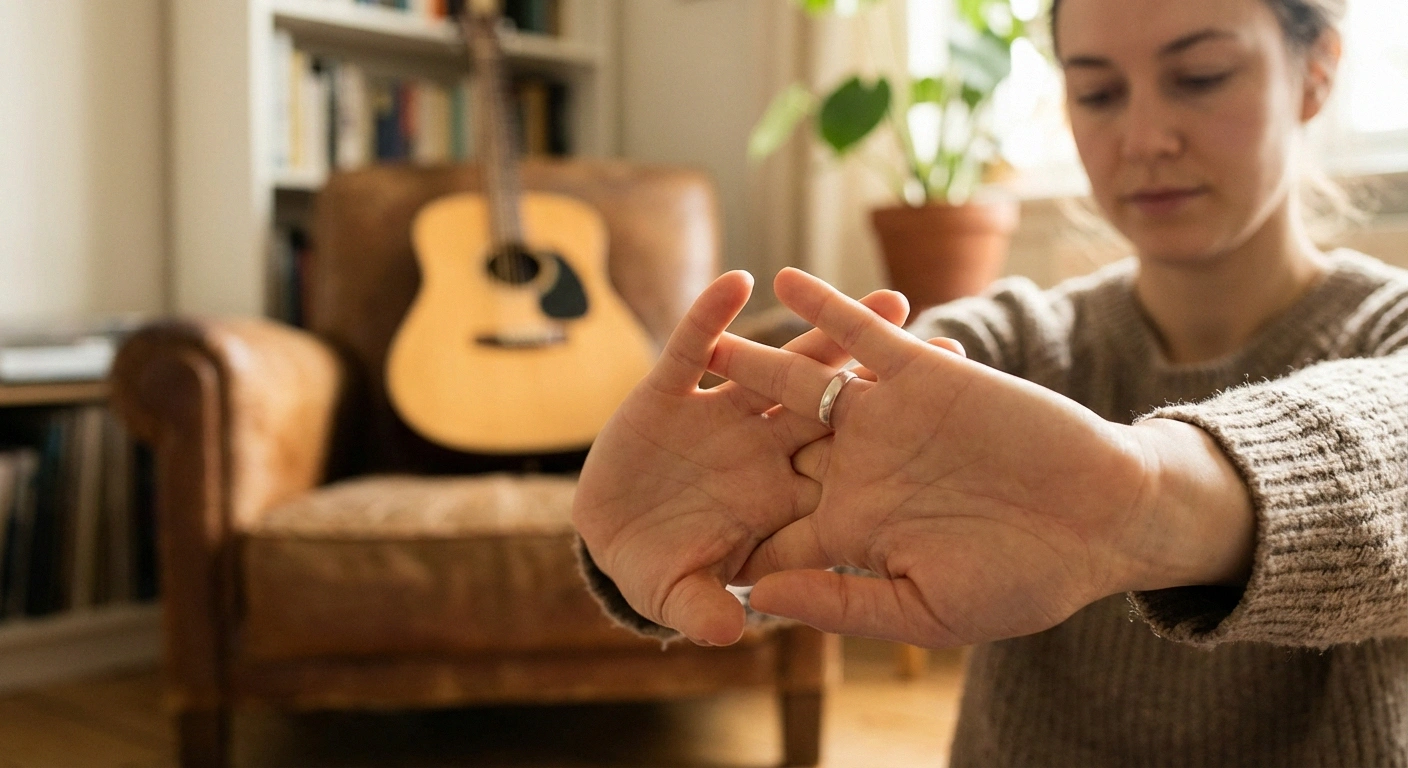
- Gently stretch each finger, extending it backward and holding for a few seconds
- Make slow, relaxed fists and open them several times
- Rotate your wrists in both directions
- Start with very light playing — simple melodies, no barre chords — for the first 5 minutes
During Playing
- Take a break every 15–20 minutes to shake out and gently stretch your hands
- Pay attention to your forearm — if the forearm muscles are cramping or tightening, that's a signal to stop
- Notice if one type of playing (barre chords, complex fingerpicking) triggers more discomfort and avoid that specific element if needed
After Playing
- Gentle cool-down stretches for the fingers, wrists, and forearms
- A foot soak-style approach for hands — soaking in warm water can be soothing after a session
- Note any symptoms that emerged or worsened during the session — this information is valuable for tracking and for discussing with your neurologist
Managing Neuropathy Symptoms That Affect Playing
Tingling and Numbness
Reduced sensation in the fingertips changes the feedback loop that experienced guitarists rely on. Some players find that slightly cooler finger temperatures reduce tingling (though cold can worsen neuropathy symptoms for some). Experimenting with playing at different times of day — when your symptoms are typically milder — can help. Many people with neuropathy find their symptoms are worse in the evening, so morning or early afternoon practice may be more productive.
Grip Strength Decline
Grip exercises between sessions can help maintain functional hand strength. Stress balls, hand gripper tools, and putty exercises are all options — our article on neuropathy in hands covers exercises specifically. Even light resistance training has documented benefits for maintaining function in neuropathic hands. Just avoid exercises that cause pain or exacerbate symptoms.
Pain Management
If playing triggers or worsens pain, talk to your neurologist about timing your pain medication around practice sessions (if you take any). Topical treatments like capsaicin cream or lidocaine gel — applied and then wiped off before playing — help some people reduce discomfort before sessions. Never apply topical anesthetics immediately before playing though, as you need some residual sensation for safe guitar play.
Talking to Your Neurologist About Guitar
This sounds obvious but is often skipped: tell your neurologist or whoever manages your neuropathy that you play guitar. This affects treatment decisions. For example:
- If hand function is a priority for you, that may influence whether physical therapy is prioritized and what it focuses on
- If certain medications cause tremor or coordination issues as side effects, that's especially relevant for a musician
- Your doctor can advise whether certain activities are safe based on your specific neuropathy type and severity
Occupational therapists who work with neuropathy patients can also specifically address hand function and dexterity — this is different from physical therapy, which focuses more on broader movement. If maintaining fine motor hand function is a priority, an OT referral is worth requesting. For more context, see our article on occupational therapy for neuropathy.
Alternative Playing Approaches Worth Exploring
Open Tunings
Full chords with minimal or zero fretting
When Playing Might Need to Pause
There are times when it's better to rest the hands than push through. These include:
- During a significant neuropathy flare where symptoms are acutely worse
- If playing consistently triggers pain that takes more than a day to settle
- If you notice new weakness developing (this should be evaluated medically, not just managed with adaptation)
- After any hand injury — reduced sensation means you might not feel minor injuries from guitar play, so inspect hands after each session
A rest period isn't giving up. It's protecting your hands so you can return to playing. Pushing through pain to the point of injury can set you back weeks or months.
Frequently Asked Questions About Guitar and Neuropathy
Can playing guitar make neuropathy worse?
For most people with typical peripheral neuropathy (not from nerve compression), playing guitar in moderation doesn't worsen the underlying condition. However, overuse, sustained awkward hand positions, or playing through pain can cause inflammation and make symptoms temporarily worse. The key is listening to your body, taking breaks, and stopping before you're in pain rather than after. If you notice progressive worsening specifically related to guitar, discuss it with your neurologist.
What guitar is easiest to play with neuropathy?
Generally, an electric guitar with a thin neck, low action, and light strings (9s or 10s) is the easiest to play physically. Among acoustics, a smaller-bodied guitar (parlor size, 000 body) with a low action and light strings is more manageable than a full dreadnought. Classical guitars have wide necks (which some find harder), but the nylon strings require much less pressure than steel strings and are worth considering.
Are there guitar teachers who specialize in adaptive techniques?
Some music therapists and adaptive music instructors specialize in working with musicians with health conditions. The American Music Therapy Association can help locate credentialed music therapists in your area. Additionally, guitar teachers who work with adult beginners often have experience with students with physical limitations. When seeking a teacher, be upfront about your neuropathy and ask about their experience with adaptive technique.
From the NR Community
“I play differently now — lighter strings, capo higher up, shorter sessions — but I play. And those evenings on the porch with my grandkids are back.”
— Support group member, NeuropathyResource.com community
What about ukulele instead of guitar?
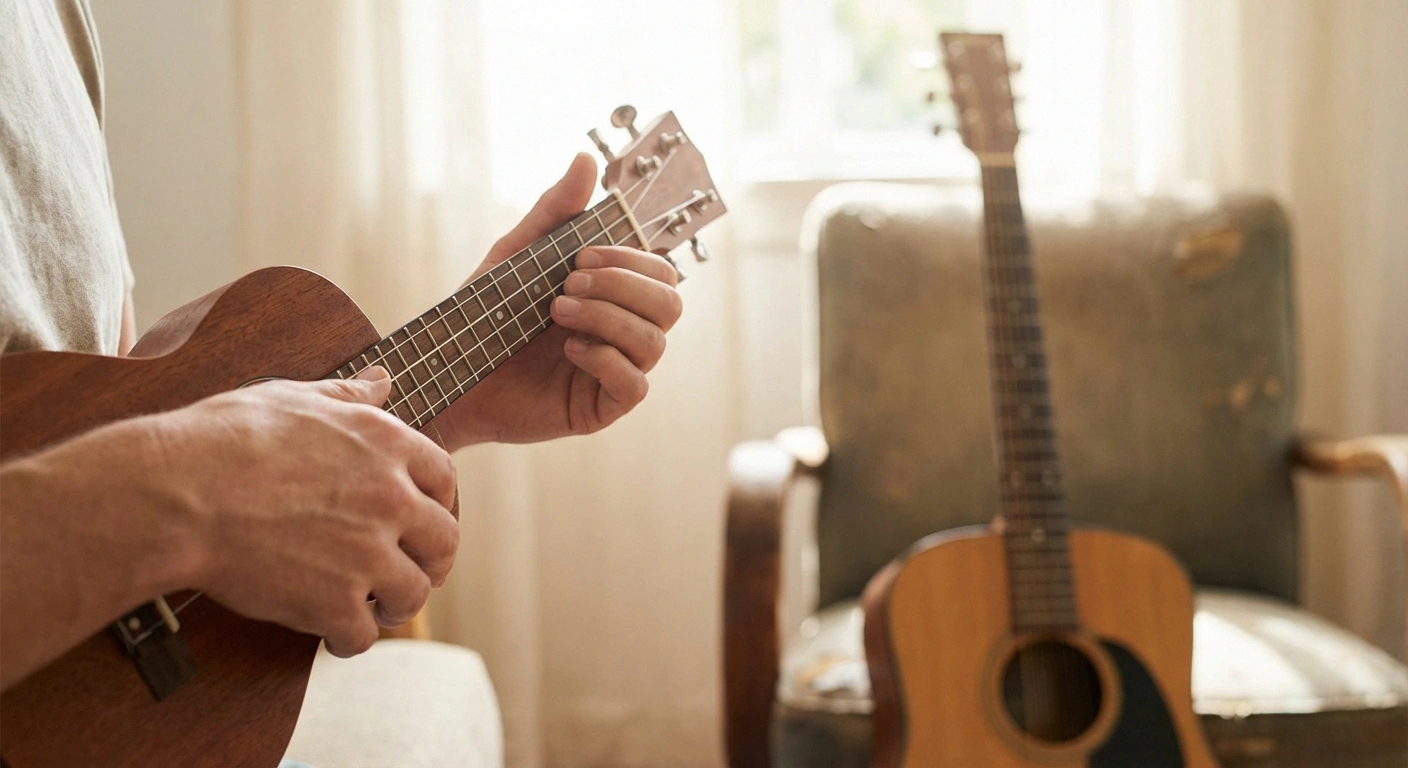
Ukulele is an excellent alternative or complement to guitar for people with neuropathy. It has only four nylon strings, a short scale length, low string tension, and most chord shapes require only one or two fingers. Many guitar chord shapes directly transfer to ukulele. If standard guitar is becoming too demanding, ukulele lets you keep playing chord-melody music with significantly less hand strain.
Should I stop playing if my fingers go numb while playing?
If you experience sudden or severe numbness that seems unusual compared to your typical neuropathy baseline, stop and rest. If numbness during playing is your usual neuropathy pattern — present but not dramatically worsening — you can often continue at a lighter intensity. The practical concern is that with reduced sensation, you may not feel string cuts or other minor hand injuries, so inspect your fingers after playing. Also watch for sustained awkward wrist positions, which can compress nerves and worsen tingling.