The first time I realized my neuropathy was affecting my driving, I was sitting at a red light. The light turned green, the cars in front of me started moving, and for a fraction of a second I couldn't feel which pedal my foot was on. I looked down, confirmed it was the brake, and moved my foot to the gas. Nobody honked. No one was hurt. But the moment stayed with me.
Driving with peripheral neuropathy is something most of us in the support group have wrestled with. It's not a question of giving up our independence — at least, not all at once. It's a question of being honest about what we can still safely do, what adjustments we can make, and what equipment exists to help us keep driving longer than we otherwise could.
This article walks through the practical safety adjustments that work for most people with neuropathy in their feet or hands, the adaptive equipment that's available when basic adjustments aren't enough, and the honest signals that it might be time to hand over the keys.
Why Neuropathy Affects Driving
The challenges aren't just about pain or numbness. They're about the specific feedback your brain has always relied on to drive a car safely:
Key Takeaway
Most people with mild to moderate neuropathy can drive safely with simple adjustments — proper footwear, seat position, and self-imposed limits. When those aren't enough, hand controls and other adaptive equipment extend safe driving for years longer.
Pedal sensing. A healthy foot tells your brain in real time which pedal you're on, how hard you're pressing, and whether your pressure is even or wobbly. Neuropathy fades that feedback. You may not feel the difference between the gas and the brake without looking, and you may not realize your foot is pressing harder or lighter than you intended.
Reaction time. If motor neuropathy has affected the muscles in your foot or leg, lifting your foot from the gas to the brake takes a fraction of a second longer than it used to. That fraction matters at highway speeds.
Foot drop. Some neuropathies — particularly peroneal neuropathy — make it hard to lift the front of the foot. That can affect both pedal control and the ability to clear the pedal completely when switching.
Hand and grip strength. If you have neuropathy in your hands, gripping the steering wheel firmly during a sudden maneuver may be harder than it looks. Loss of fine motor control can also affect using turn signals, gear shifters, and dashboard controls.
Medication side effects. Many medications used for nerve pain — gabapentin, pregabalin, opioids, tricyclics — can cause drowsiness, slowed reactions, or visual blurring. Driving while these are at peak effect is genuinely dangerous and not just for you.
Pre-Drive Quick Check
Before I start the engine, I run through a quick mental check that's become as automatic as putting on my seatbelt. It takes maybe 30 seconds:
30-Second Pre-Drive Check
Sensory check
Can I feel the floor? Can I wiggle my toes? Are my hands gripping firmly?
Symptom check
Am I in a flare today? More numb or painful than usual?
Medication check
When did I last take pain medication? Am I in a drowsy window?
Energy check
Rested enough to focus? Driving fatigued multiplies every other risk.
- Sensory check. Can I feel the floor under my feet? Can I wiggle my toes? Are my hands gripping the steering wheel firmly?
- Symptom check. Am I in a flare today? Are my feet more numb than usual? More painful? If yes, today might not be a driving day.
- Medication check. When did I last take my pain medication? Am I within the window where it tends to make me drowsy?
- Energy check. Am I rested enough to focus? Driving fatigued multiplies every other risk.
If anything feels off, the right answer is sometimes “not today.” Independence isn't about driving every day — it's about being safe behind the wheel when you do drive.
Footwear Matters More Than You Think
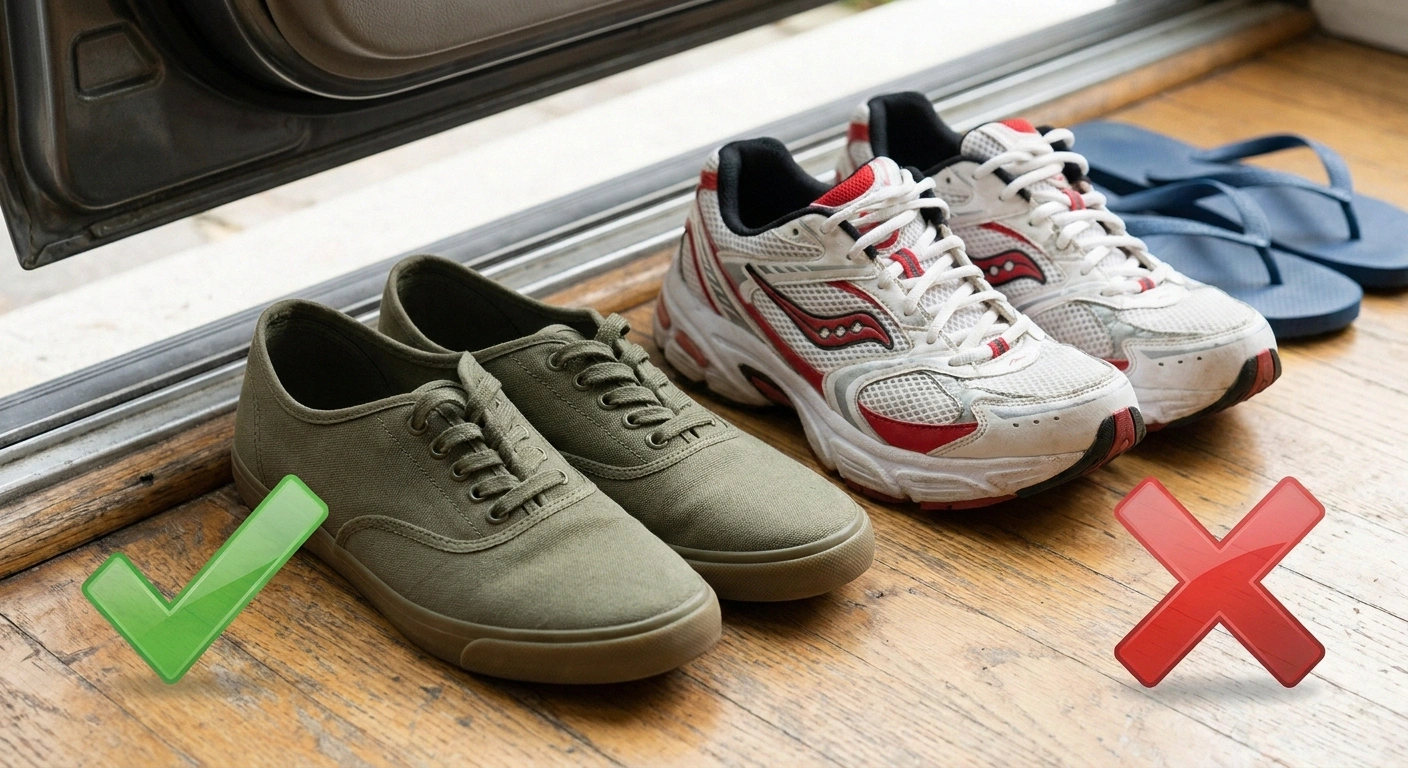
The shoes you wear when you drive change how well you can sense and control the pedals. With neuropathy reducing your foot's natural feedback, your shoes become an even bigger part of the equation.
Driving Shoes — What Works, What Doesn't
✓ Best
Firm-soled shoes with thin, flat soles — canvas sneakers, leather driving shoes, simple loafers.
✗ Avoid
Flip-flops, high heels, slippers, heavy boots, very thick athletic shoes, very wide soles.
The general rule: firm-soled shoes with thin, flat soles give the best pedal feedback. Thick, cushioned athletic shoes muffle the limited sensation you have left. Heavy boots make pedal control sloppy.
Specifically avoid:
- Flip-flops or backless shoes — they can slip off and lodge under the pedal
- High heels — change the angle of your foot on the pedal in unpredictable ways
- Slippers or house shoes — too soft, no defined edge
- Heavy work boots — too thick, slow your foot transition between pedals
- Shoes with very wide soles that might press two pedals at once
A pair of simple, flat-soled, thin-leather driving shoes — or even an inexpensive pair of canvas sneakers — kept in the car specifically for driving is one of the easiest changes you can make. Many people in my support group keep their “driving shoes” right by the driver's seat and change into them after they're in the car.
Adjust Your Setup for Safety
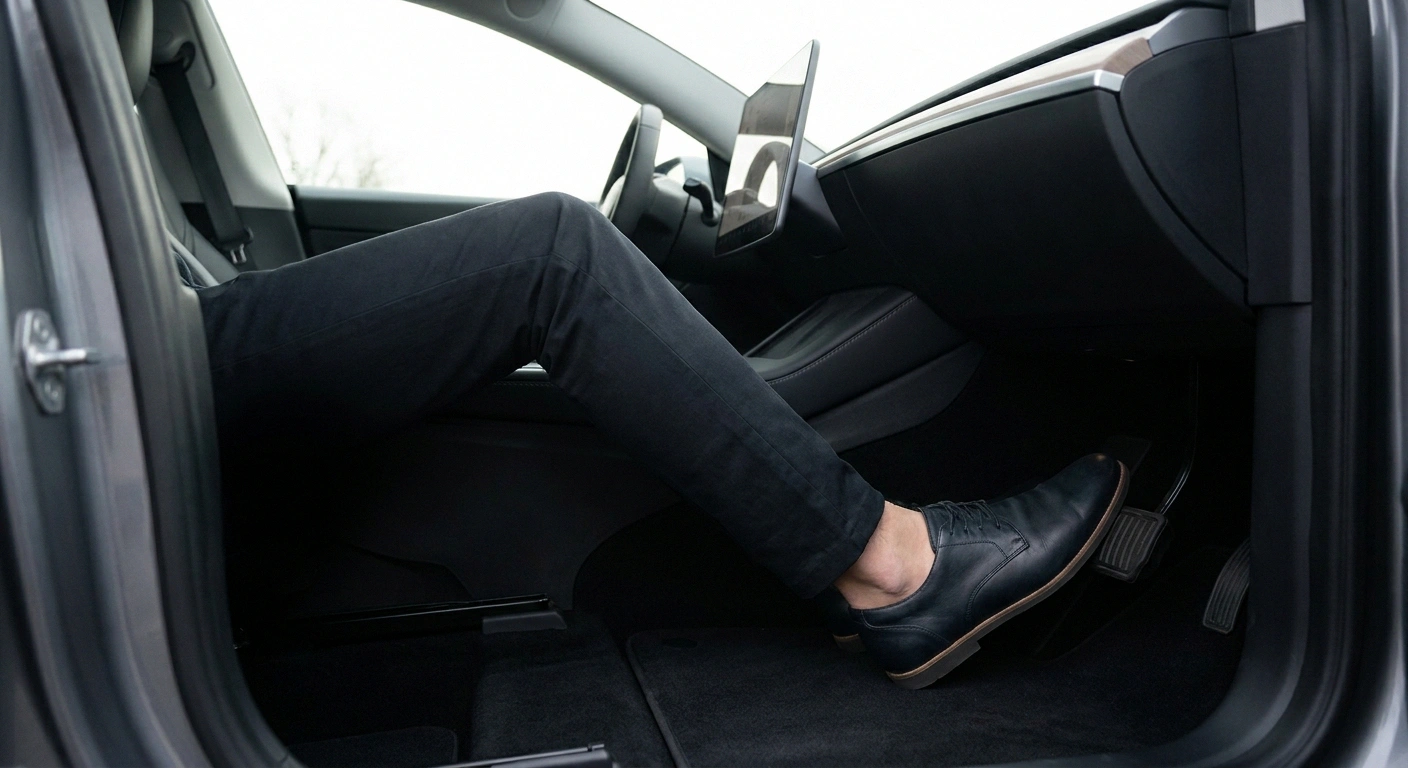
The way your seat is positioned affects how easily you can reach the pedals, which directly affects pedal control with reduced sensation. Spend a few minutes getting this right:
Seat distance. You should be able to fully press the brake pedal with your knee still slightly bent. If you're stretching to reach the pedals, fine pedal control is harder. If you're crowded against the steering wheel, you risk airbag injury.
Pedal contact. Your heel should rest naturally on the floor with the ball of your foot on the brake. You pivot your foot between gas and brake using your heel as a pivot point — don't lift your whole leg. With neuropathy, this pivot motion is often easier to control reliably than a lift-and-place motion.
Steering wheel position. Tilt-and-telescope adjustments let you bring the wheel into a position where your elbows are slightly bent when your hands are at 9-and-3. Locked elbows fatigue you faster and reduce reaction quality.
Mirrors. Adjusted properly so you minimize blind spots and don't have to twist your neck excessively, especially if neck arthritis or other issues compound your driving challenges.
Climate. A car that's too warm makes drowsiness worse — particularly if you're on sedating medications. Keep the cabin slightly cool and well-ventilated.
Adaptive Equipment for When Adjustments Aren't Enough
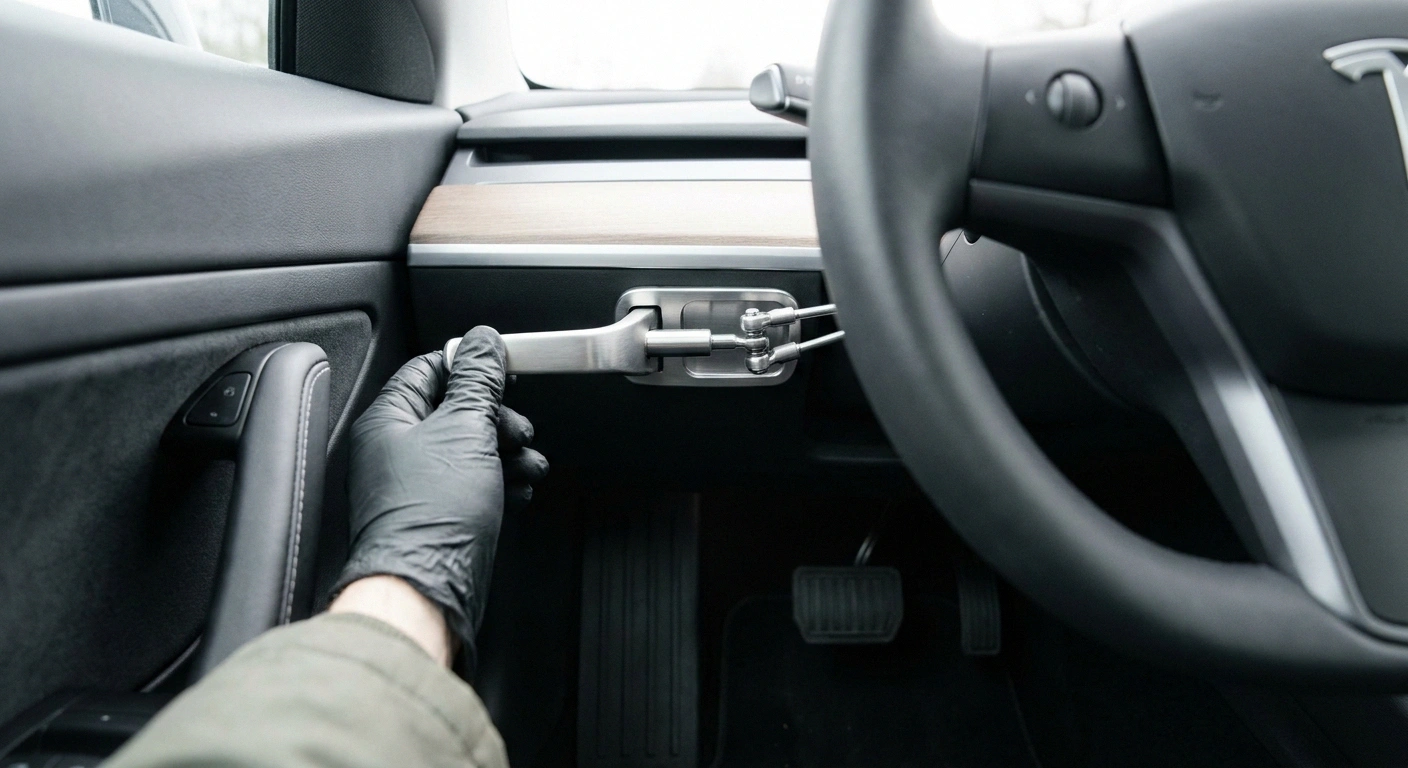
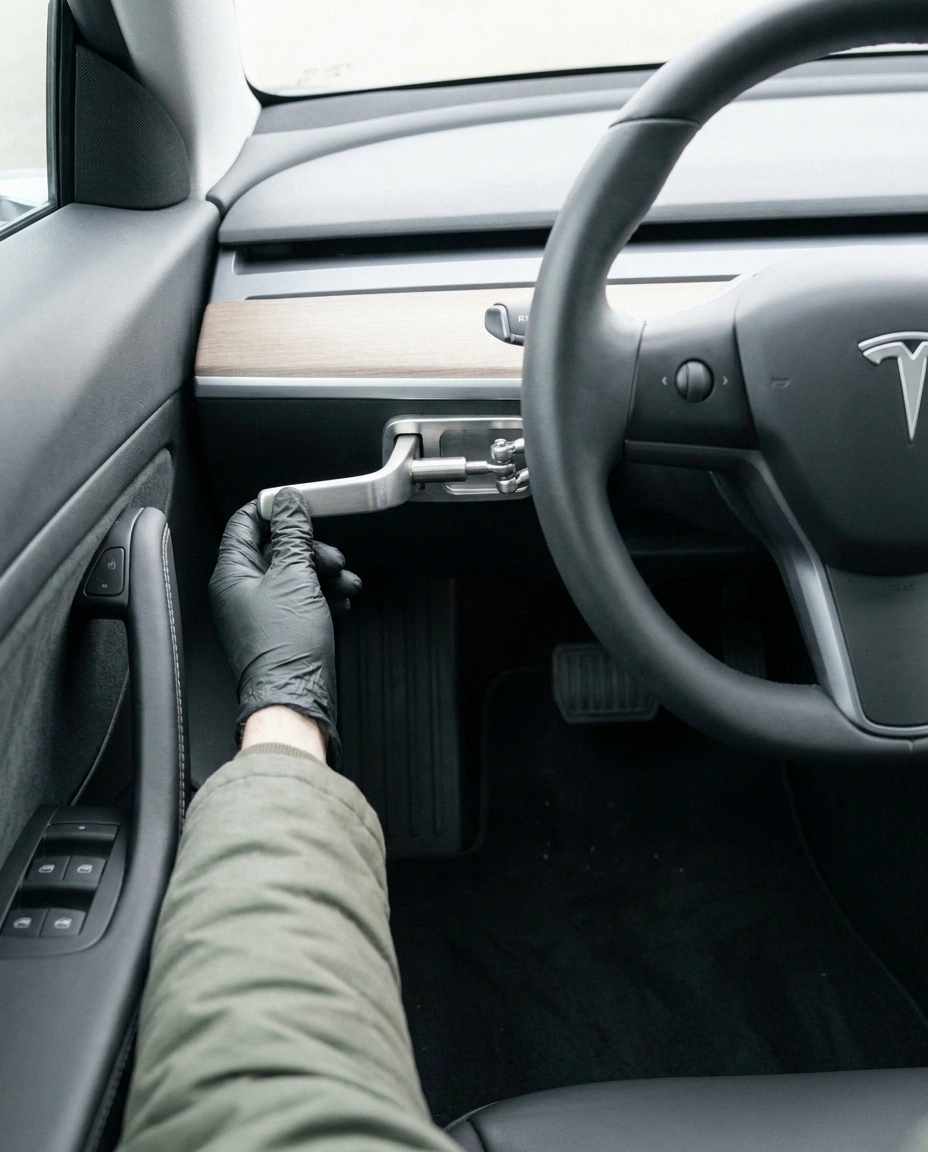
If basic adjustments don't make driving feel safe, there's a whole category of adaptive driving equipment designed for people in our situation. Some of it is simple and inexpensive; some involves significant vehicle modifications. The most common options:
Adaptive Driving Equipment — Quick Guide
Hand controls
Lever near steering column. Push forward to brake, pull back to accelerate. Most common foot-neuropathy adaptation.
Left-foot accelerator
For unilateral right-foot impairment. Drive with your unaffected foot.
Pedal extensions
Bring pedals closer when seat must be back from airbag.
Pedal guards
Prevent accidental crossover between gas and brake.
Steering wheel knob
For hand neuropathy reducing grip strength or fine motor control.
Hand controls are the most common adaptation for people whose foot neuropathy is the main issue. A lever mounted near the steering column lets you operate the gas and brake with your hand instead of your foot — typically push forward to brake, pull back or down to accelerate. After a learning curve, most people drive comfortably with hand controls. Once installed, you can still use the foot pedals if you want to, but the hand controls give you a reliable backup that doesn't depend on foot sensation.
Left-foot accelerator works for people whose right foot is significantly impaired but whose left foot is essentially normal. A second accelerator pedal is installed on the left side of the brake, and the right-side gas pedal can be folded out of the way. Switching to driving with the left foot takes practice — it feels strange at first — but most people adjust within a few weeks.
Pedal extensions are simple bolt-on extensions that bring the gas and brake pedals closer to the driver. They're useful when reaching the pedals comfortably requires a seat position too close to the airbag.
Pedal guards are barriers that prevent your foot from accidentally crossing between pedals or pressing them simultaneously. Useful if you've had near-miss incidents related to pedal confusion.
Steering wheel knobs or spinners help if hand neuropathy reduces your grip strength or fine motor control. A small knob attached to the wheel lets you steer one-handed if needed.
Backup cameras, blind-spot monitors, and parking sensors are now standard on most newer vehicles and can be retrofitted onto older ones. They compensate for some of the slower spatial awareness that often comes along with neuropathy and aging.
Most adaptive equipment can be installed by mobility-equipment specialists, and the costs range from a few hundred dollars (steering wheel knob) to several thousand dollars (full hand-control system with installation). Some health insurance plans, Veterans Affairs benefits, and state vocational rehabilitation programs cover part or all of the costs in qualifying cases.
Working with a Driver Rehabilitation Specialist
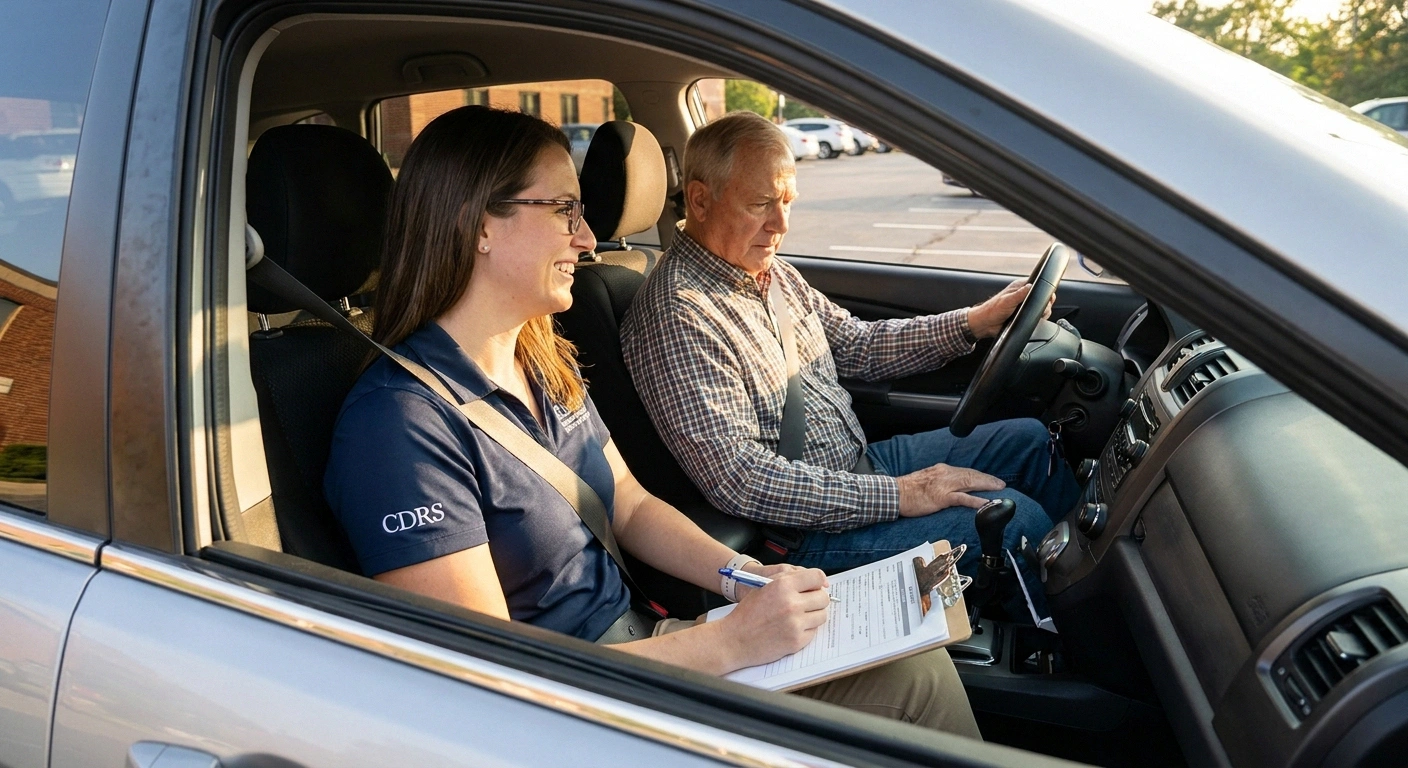
If you're not sure whether you should still be driving, or what equipment would help, the most useful resource is a certified driver rehabilitation specialist (CDRS). These are typically occupational therapists or driving instructors with additional training in evaluating drivers with medical conditions.
A driver rehab evaluation usually includes:
- An interview about your medical history, medications, and driving concerns
- Tests of reaction time, vision, and cognitive function
- Physical assessment of foot and hand sensation, strength, and range of motion
- An on-road driving test in a vehicle with dual controls (so the evaluator can intervene if needed)
- Specific recommendations: continue driving as-is, continue with adaptive equipment, retraining lessons, restricted driving, or stopping
The evaluations typically run a few hundred dollars and may be partially covered by Medicare or private insurance. They're available through hospital-based rehab programs, some independent practices, and through the Association for Driver Rehabilitation Specialists' provider directory online.
Going through a formal evaluation does two things. First, it gives you objective information about your actual driving ability — sometimes more reassuring than you'd expect, sometimes more sobering. Second, it gives you a documented opinion that supports your driving decisions, which can matter for insurance, family conversations, and (in some states) the DMV.
Smart Self-Imposed Limits
Many people in my support group keep driving safely by drawing thoughtful boundaries around when, where, and how they drive. Adjustments that don't require any equipment but still make a real difference:
- Familiar routes only. Driving routes you know reduces the cognitive load and gives you more bandwidth for monitoring your body and the road.
- Avoid rush hour. Heavy traffic with frequent stops, lane changes, and surprises is harder. Run errands at off-peak times when possible.
- Daylight only. Nighttime driving adds visual challenges that compound neuropathy-related slower reactions.
- Avoid bad weather. Rain and snow reduce traction and visibility — both magnify any control limitations from reduced foot sensation.
- Take breaks on longer drives. Fatigue is one of the biggest amplifiers of neuropathy symptoms. A 10-minute walk-around at a rest stop every hour helps.
- Avoid highway driving if your reaction time is slow or you're not confident in fast lane changes.
- One thing at a time. Don't eat, talk on the phone, or fiddle with the radio while driving. Save your attention for the road.
None of these are restrictions. They're choices. And they often let people drive safely for years longer than they otherwise would have.
Honest Signs It's Time to Hand Over the Keys
This is the section nobody wants to read, including me. But honesty matters. There are signs that the safest choice is to stop driving — not because you're a bad person, not because you've failed, but because the risks have crossed a line you wouldn't ask anyone else to accept either.
Stop Driving If Any of These Apply
Confused gas and brake more than once. Multiple near-misses. Falling asleep at the wheel. Can't keep your lane consistently. Driver rehab evaluation recommended stopping. Family members are genuinely worried and you're dismissing their concerns rather than addressing them.
Take it seriously when:
- You've had multiple near-misses or low-speed contact incidents
- You've confused the gas and brake pedals more than once
- You've fallen asleep at the wheel or felt dangerously drowsy from medications
- You can't consistently maintain your lane
- You've gotten lost on routes you've driven for years
- Your driver rehab evaluation recommended stopping
- Family members are genuinely worried, and you find yourself dismissing their concerns rather than addressing them
- You're avoiding driving in many situations because you don't feel safe — and the list keeps growing
The grief of giving up driving is real. So is the freedom of knowing you've made the right choice and can't hurt yourself or anyone else by being behind the wheel.
Life Without Driving: Better Than You Think
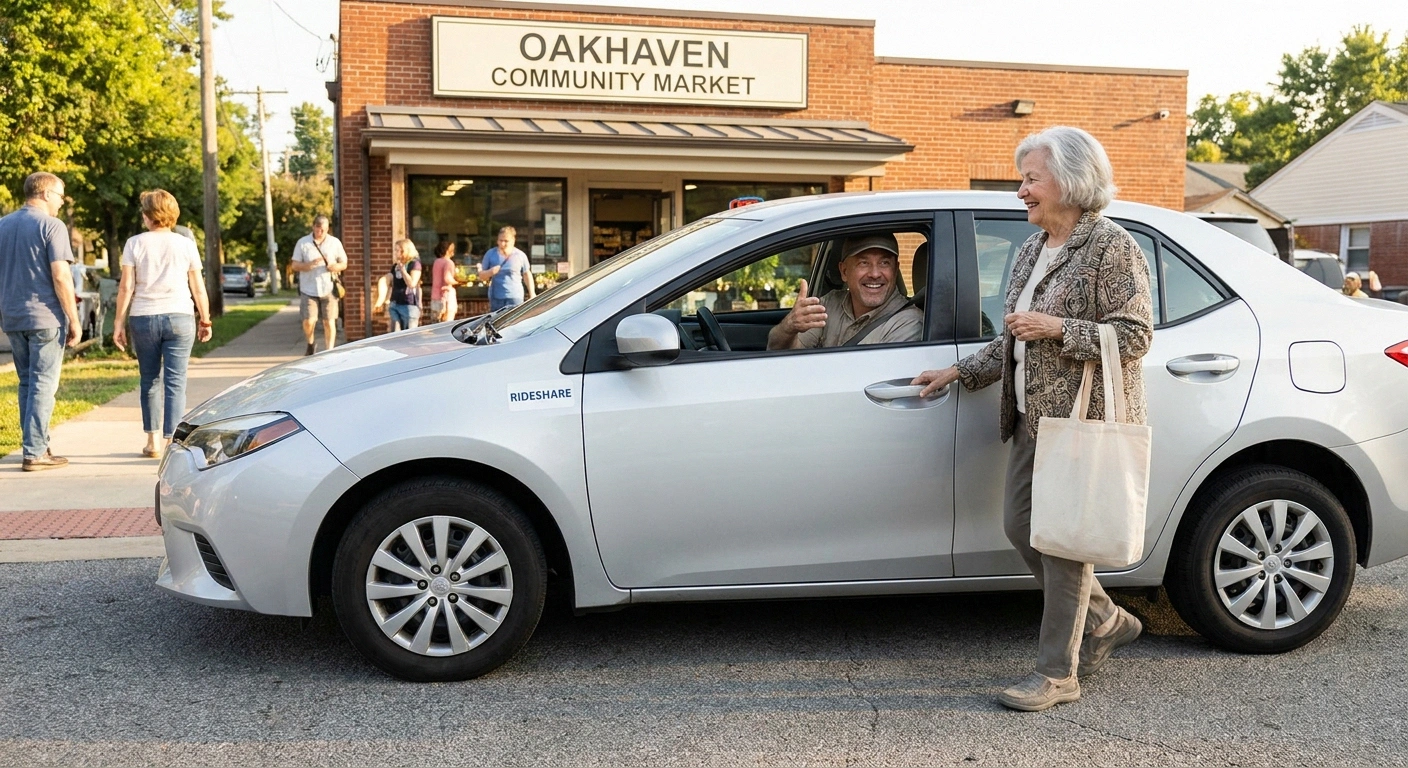
If driving is no longer safe — or if you want to start scaling back before it becomes urgent — there are more options today than there were even five years ago:
Rideshare apps like Uber and Lyft work in most areas now and can be set up by a family member who manages your account. Some areas have rideshare specifically for seniors with simpler interfaces or phone-based booking.
Senior transportation services exist in most communities — often through area Agencies on Aging, religious congregations, or volunteer programs. Many offer free or low-cost rides to medical appointments.
Paratransit services run by your local public transit system are required by law for people with disabilities that prevent them from using regular buses. The vehicles are accessible, the cost is usually low, and the service is reliable for people who plan ahead.
Grocery and medication delivery have become standard. Most pharmacies deliver, and most grocery stores have delivery or pickup options that don't require driving.
Telehealth for medical appointments has expanded dramatically. Many specialist visits, including some neurology follow-ups, can now be done from home.
Family and friend networks. The people who love you would rather drive you to a doctor's appointment than visit you in the hospital. Asking for a ride is a small thing. Accepting it gracefully is what good relationships look like.
The Bigger Picture
For most of us with neuropathy, driving will remain part of our lives for many years. The point of all this isn't to stop driving prematurely — it's to drive thoughtfully, with the small adjustments and adaptive tools that compensate for what neuropathy has changed.
Driving smart, not stopping early
Glasses don't mean failure at seeing — they're a sensible accommodation for a body that's changed. Hand controls, driving shoes, and restricted hours work the same way. Each is wisdom in action, not surrender.
I think of it the way I think of glasses. Glasses don't mean you've failed at seeing. They're just a sensible accommodation for a body that has changed. The same is true for hand controls, driving shoes, restricted hours, or eventually a rideshare app instead of car keys. Each of these is wisdom in action.
Stay curious about what tools and options exist. Stay honest about what your body is telling you. Stay connected to the people who can help you make the right calls. And keep your independence — in the form that's actually safe.
Frequently Asked Questions
Is it safe to drive with peripheral neuropathy?
Many people with mild to moderate peripheral neuropathy drive safely with adjustments to footwear, seat position, and self-imposed limits like avoiding nighttime or highway driving. Driving becomes unsafe when you cannot reliably feel or control the pedals, when reactions have slowed significantly, or when medications cause drowsiness. A driver rehabilitation specialist can give you an objective assessment of your current ability.
What kind of shoes are best for driving with neuropathy?
Firm-soled shoes with thin, flat soles work best. They give you the most pedal feedback when foot sensation is reduced. Avoid flip-flops, high heels, slippers, heavy boots, and very thick athletic shoes. Many people keep a dedicated pair of driving shoes in the car and change into them after getting in.
What is a driver rehabilitation specialist?
A driver rehabilitation specialist is typically an occupational therapist or driving instructor with additional certification in evaluating drivers with medical conditions. They assess reaction time, sensation, vision, cognition, and on-road performance, then recommend adjustments, adaptive equipment, retraining, or in some cases stopping driving. Find one through the Association for Driver Rehabilitation Specialists provider directory.
Can I get hand controls installed in my car?
Yes. Hand controls are the most common adaptive equipment for drivers with foot neuropathy. They are installed by certified mobility equipment dealers and let you operate the gas and brake with a lever near the steering column. Costs typically range from 1,500 to 3,000 dollars including installation. Some insurance, Medicare, Veterans Affairs, and state vocational rehabilitation programs cover part or all of the cost in qualifying cases.
Should I tell the DMV about my neuropathy?
Reporting requirements vary by state. Some states require self-reporting of medical conditions that affect driving, others rely on physician reports, and others allow you to continue without reporting unless you have a specific incident. Check your state's DMV rules. In general, transparent communication and documented evaluations from your medical team or a driver rehabilitation specialist serve you better than hiding the condition.
What medications make driving with neuropathy unsafe?
Several common neuropathy medications can impair driving when at peak effect, including gabapentin, pregabalin, tricyclic antidepressants like amitriptyline, opioids, and certain muscle relaxants. The first 1 to 2 weeks of starting or increasing these medications is usually the riskiest period. Avoid driving while you learn how a medication affects you, and time your driving around the lowest sedation windows once you know your pattern.
Can I still drive with foot drop from neuropathy?
Foot drop affects the ability to lift the front of the foot, which can interfere with pedal control. Many people with foot drop drive successfully with hand controls or a left-foot accelerator. A driver rehabilitation evaluation is particularly valuable in this situation to determine which adaptive equipment would work for your specific pattern of weakness.
How do I tell a family member they shouldn't be driving anymore?
This conversation is one of the hardest in caregiving. Lead with concern rather than judgment, share specific observations rather than generalizations, and offer alternatives like rideshare accounts or shared driving rather than just asking them to stop. Suggesting a driver rehabilitation evaluation gives the decision an objective basis. Bringing in a trusted physician or family doctor can also help when the family member is resistant.
About the Author