If you have neuropathy, you already know the cruel irony: the one thing your body needs most to heal — sleep — is the very thing nerve pain steals from you. The burning feet, the tingling that won’t quit, the hypersensitivity that makes even soft sheets feel like sandpaper. Night after night, you lie there wondering if you’ll ever get a full, restful eight hours again.
I’ve heard from hundreds of readers who describe the same exhausting cycle. And while there’s no mattress that will cure neuropathy, I’ve researched what actually makes a difference for nerve pain sufferers — and the right sleeping surface can be a genuine game-changer. Not because of marketing hype, but because of how your damaged nerves interact with pressure, temperature, and support while you sleep.
This guide breaks down what to look for, what to avoid, and how to choose a mattress that works with your specific symptoms — not against them.
Why Your Mattress Matters More When You Have Neuropathy
For most people, a mattress is about comfort and preference. For someone with peripheral neuropathy, it becomes a medical consideration. Here’s why:
✓ Heat worsens burning — temperature-trapping mattresses intensify symptoms
✓ Circulation needs support — too firm or too soft restricts blood flow
✓ Repositioning requires bounce — slow foam traps weakened muscles
Pressure points create pain hotspots. Damaged nerves are hypersensitive to pressure. A mattress that creates even moderate pressure points at the hips, shoulders, or heels can trigger pain that keeps you awake or wakes you repeatedly throughout the night. A 2021 study of diabetic neuropathy patients found that as neuropathy severity increased, sleep quality declined proportionally across multiple measures — time to fall asleep, total sleep duration, and sleep efficiency.
Temperature sensitivity demands regulation. Many people with neuropathy experience heightened sensitivity to temperature changes. A mattress that traps heat can worsen burning sensations in the feet and legs, turning an uncomfortable night into an unbearable one.
Circulation needs support. Poor circulation is both a cause and consequence of many types of neuropathy. A mattress that restricts blood flow — either by being too firm (creating pressure) or too soft (allowing you to sink into positions that compress blood vessels) — can intensify numbness and tingling.
Position changes require responsiveness. Neuropathy can cause muscle weakness that makes it difficult to shift positions during the night. A mattress that “traps” you — like very soft, slow-responding memory foam — can leave you stuck in one position, increasing pressure on sensitive nerves.
Key Features to Look For
After reviewing the research and hearing from our community about what works, these are the features that matter most for neuropathy sufferers:
Pressure Relief
This is the single most important factor. Your mattress needs to distribute your body weight evenly, eliminating the concentrated pressure points that trigger nerve pain. Materials like memory foam and natural latex excel at contouring to your body’s shape, cradling sensitive areas rather than pushing back against them.
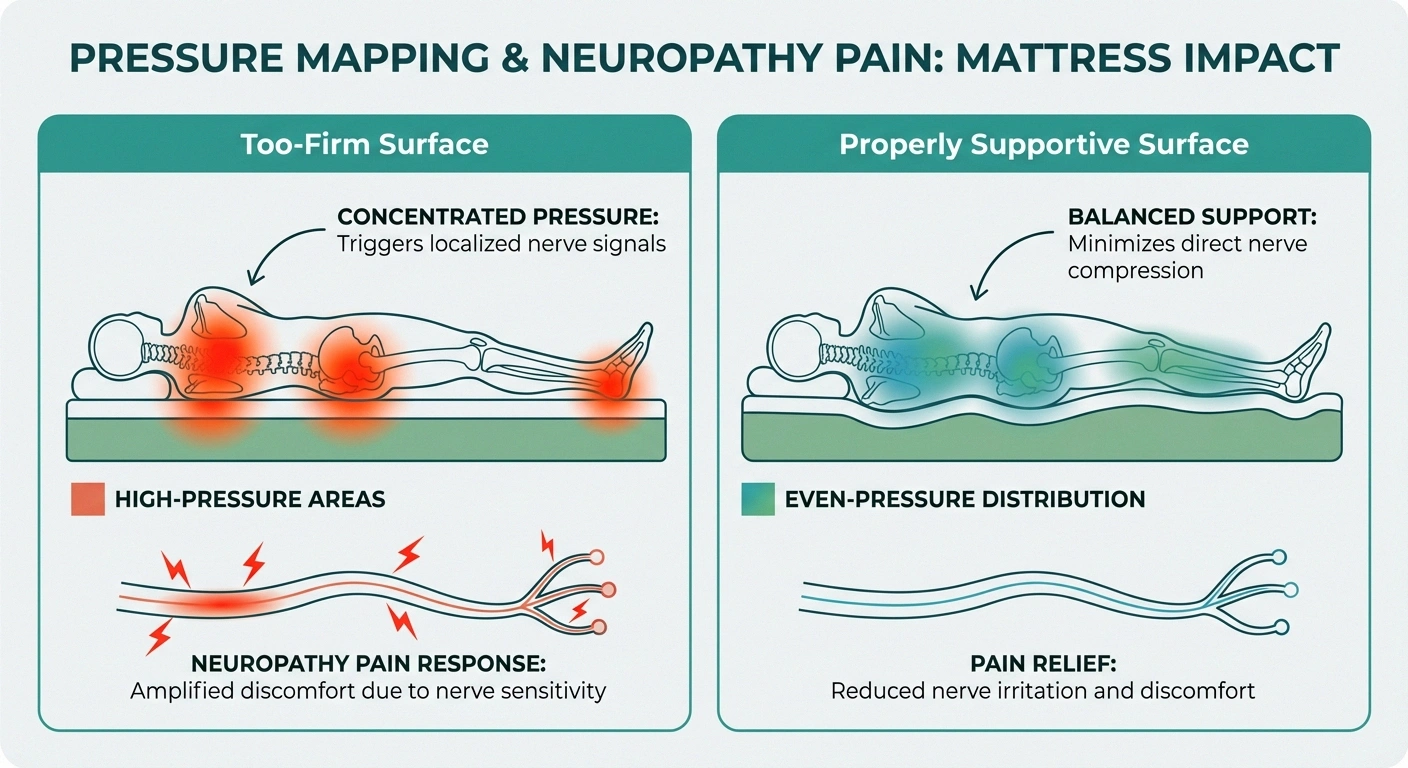
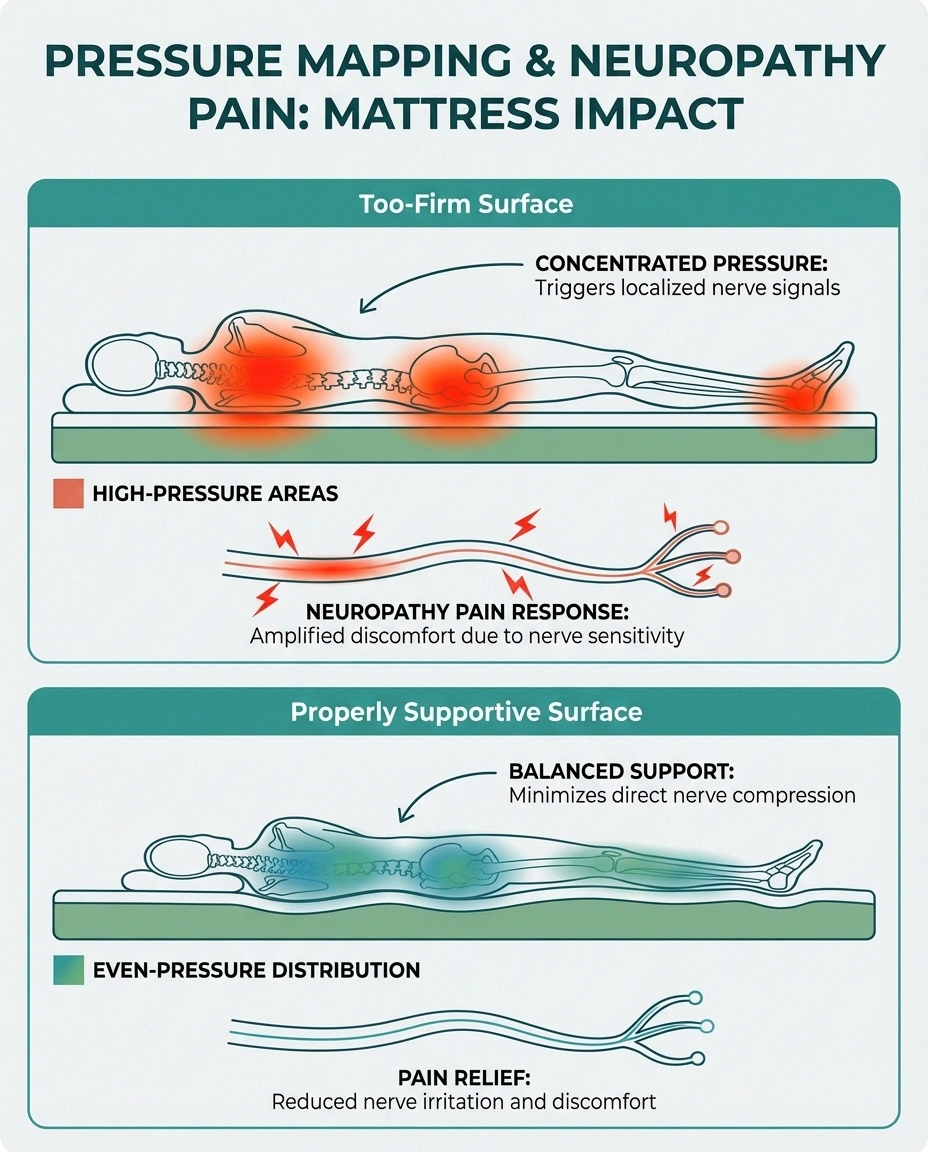
Look for mattresses that specifically highlight pressure-relief testing or zoned support systems, which provide different levels of give for different body areas — softer under shoulders and hips, firmer under the lower back.
Medium to Medium-Firm Support
The sweet spot for most neuropathy patients is a medium to medium-firm mattress (around 5-7 on a 1-10 firmness scale). This range offers enough cushioning to prevent pressure-point pain while maintaining the support needed for proper spinal alignment.
Too firm, and the mattress pushes back against sensitive nerves. Too soft, and you sink into positions that misalign your spine and compress blood vessels. Finding this balance is especially important for neuropathy in the feet, where the combination of sensitivity and reduced protective sensation creates a narrow comfort window.
Temperature Regulation
Heat is the enemy for many neuropathy sufferers. Burning sensations in the feet and hands are one of the most common neuropathy symptoms, and sleeping on a mattress that traps body heat makes them worse.
Look for cooling technologies: gel-infused memory foam, open-cell foam construction that allows airflow, phase-change material covers, or natural latex (which is inherently more breathable than synthetic foam). Innerspring and hybrid mattresses with coil systems also tend to sleep cooler due to airflow between the coils.
Responsiveness and Ease of Movement
If neuropathy has affected your muscle strength, you need a mattress that helps you move rather than hindering you. Traditional memory foam can feel like quicksand when you try to change positions. Latex, hybrid mattresses, and newer responsive foam formulations offer the pressure relief of foam with the bounce and ease of movement that makes repositioning easier during the night.
Edge Support
This may seem minor, but solid edge support matters for neuropathy patients who experience balance issues or weakness. A mattress with reinforced edges feels stable when you’re sitting on the side to get in and out of bed — reducing the risk of falls, which is a real concern for people with nerve-related balance problems.
Best Mattress Types for Neuropathy
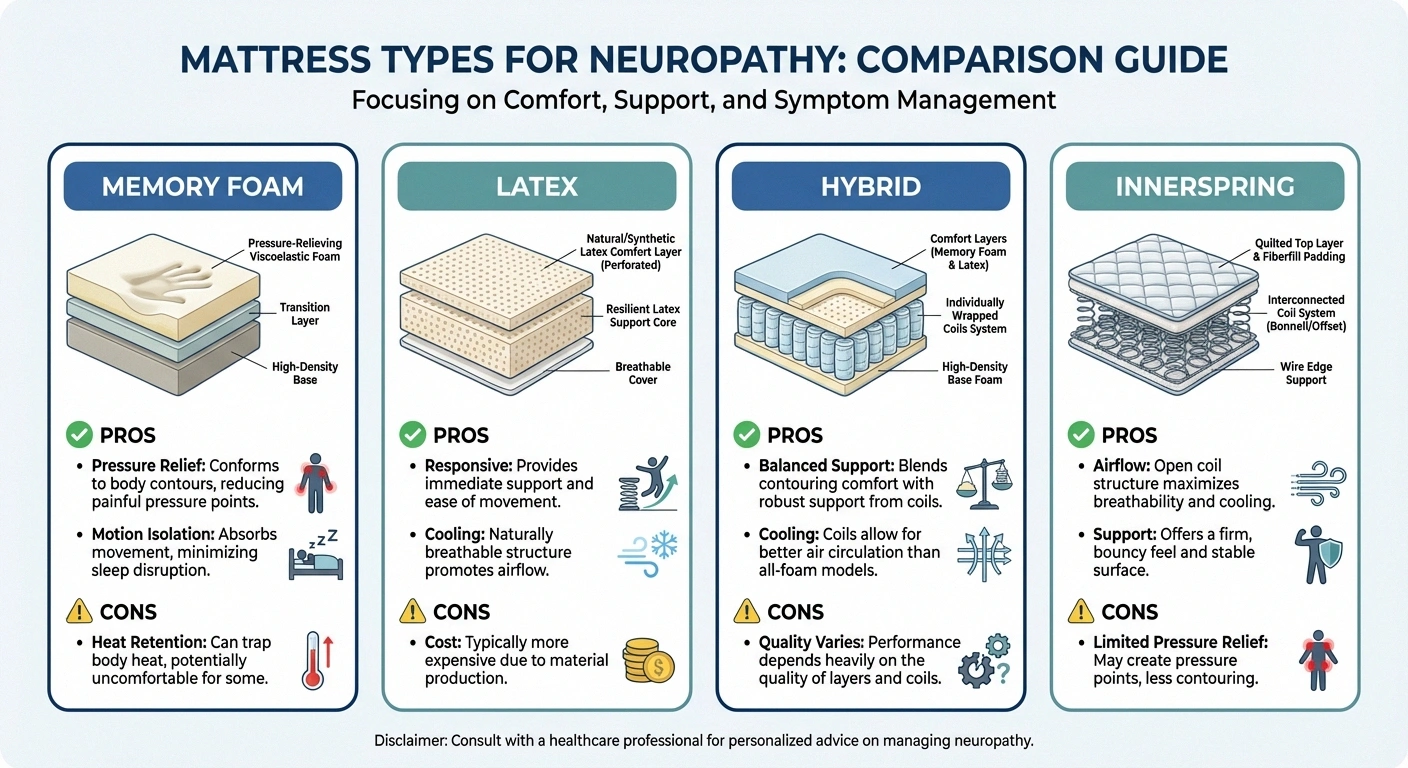
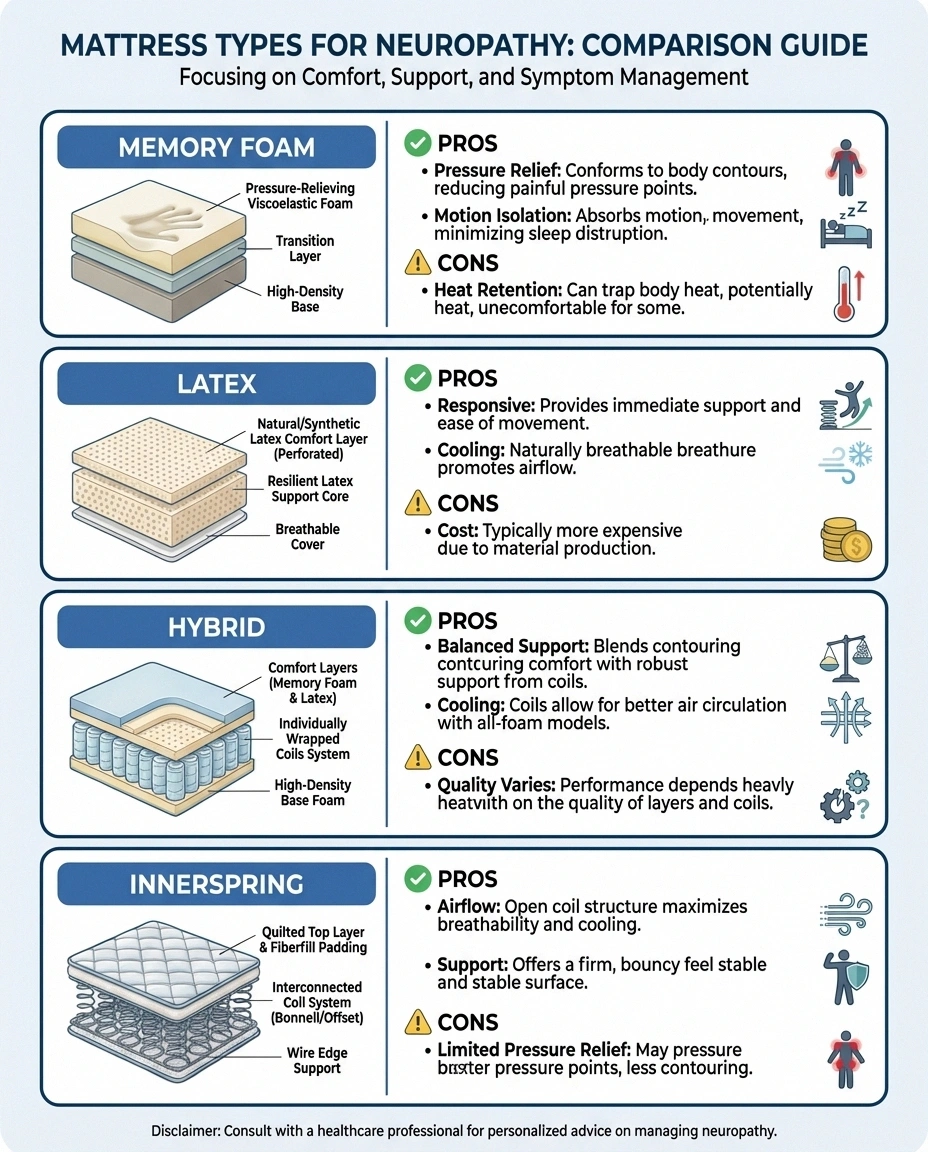
Not all mattress types are created equal when it comes to nerve pain. Here’s how the main categories compare:
Memory Foam Mattresses
Best for: Superior pressure relief and motion isolation
Memory foam excels at contouring to your body, which is exactly what hypersensitive nerves need. The foam cradles pressure points rather than pushing against them, and it absorbs motion so a partner’s movements don’t jolt you awake.
Watch out for: Traditional memory foam traps heat and can make burning neuropathy symptoms worse. It also responds slowly, making position changes harder. If you choose memory foam, look for gel-infused, copper-infused, or open-cell formulations that address the heat issue, and models specifically designed for responsiveness.
Latex Mattresses
Best for: Responsiveness, natural cooling, and durability
Natural latex offers excellent pressure relief while maintaining a responsive, buoyant feel. You get the contouring benefits of foam without the “stuck in the mattress” sensation. Latex also sleeps naturally cooler than memory foam and is inherently hypoallergenic.
Watch out for: Latex mattresses tend to be heavier and more expensive. Some people find the bouncier feel less familiar if they’re used to the “hug” of memory foam. The firmness can also feel different from synthetic foam — test before committing if possible.
Hybrid Mattresses
Best for: The best of both worlds — support, pressure relief, cooling, and responsiveness
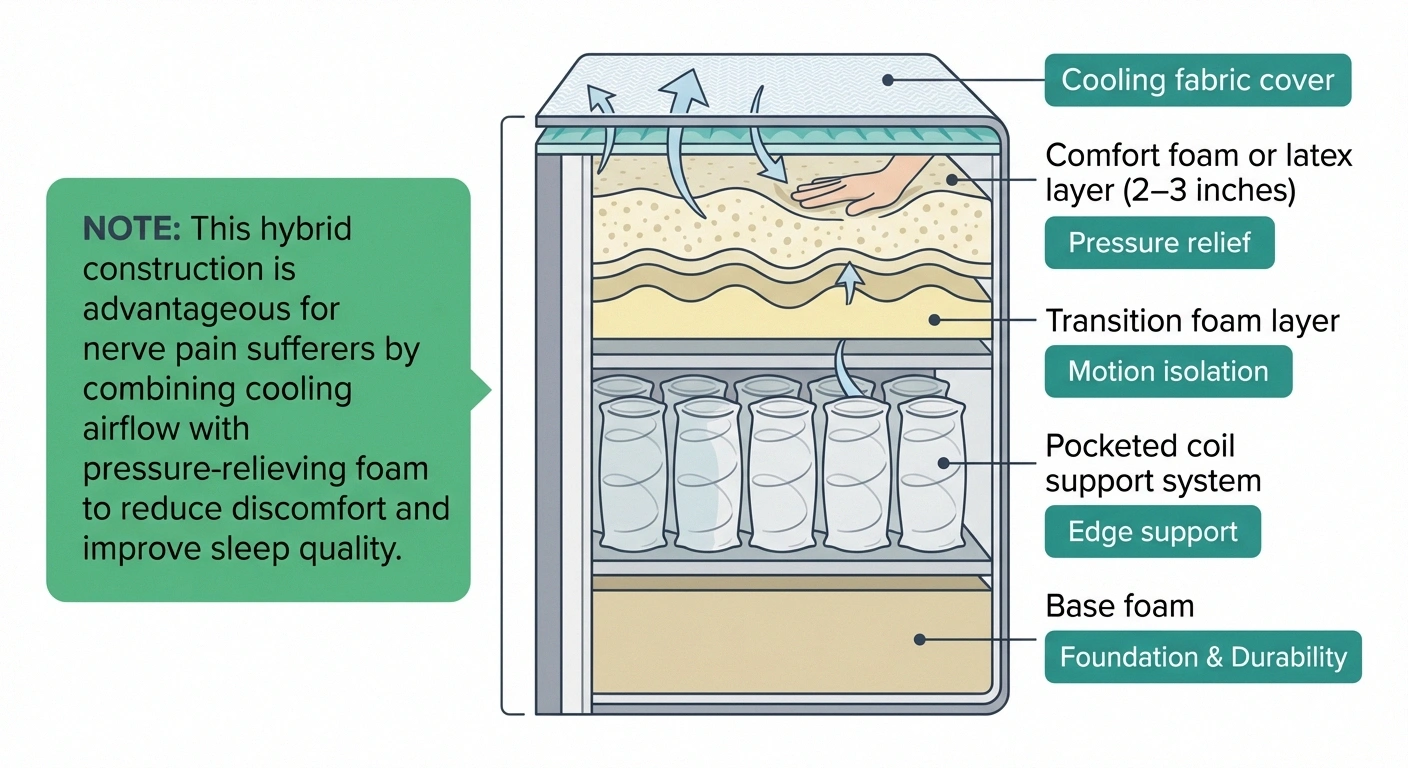
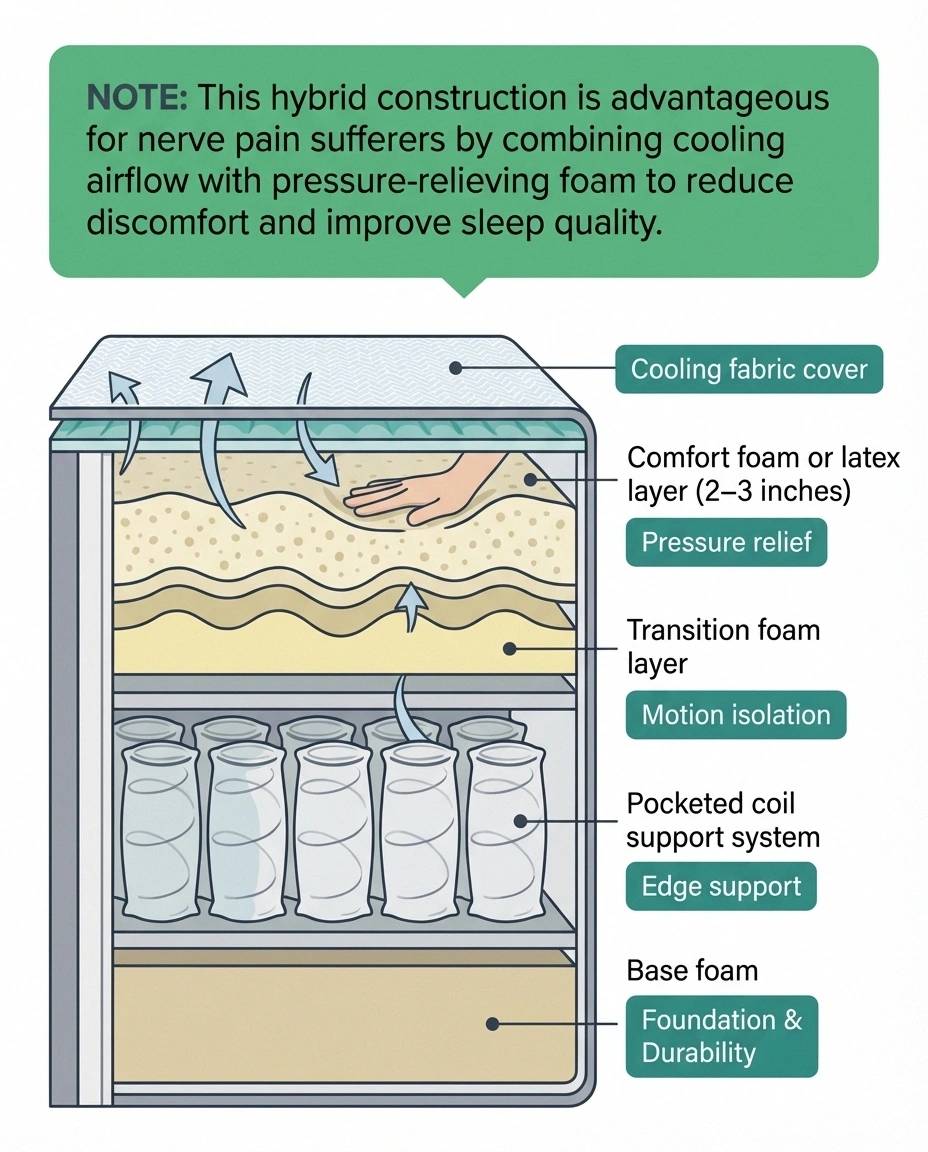
Hybrid mattresses combine a pocketed coil support system with foam or latex comfort layers on top. The coils provide excellent airflow (keeping the mattress cool), strong edge support, and a responsive feel. The foam or latex top layers deliver pressure relief and body-contouring comfort.
Watch out for: Quality varies significantly. Budget hybrids may use thin foam layers that wear out quickly, leaving you with pressure points again within a year or two. Look for models with at least 2-3 inches of quality foam or latex over the coil system.
Innerspring Mattresses
Best for: Cooling, support, and firm feel
✓ Excellent motion isolation
✗ Can trap heat
✗ Slow response
✓ Durable and natural
✗ Higher cost
✗ Heavier to handle
✓ Good airflow and cooling
✗ Quality varies widely
✗ Heavier than foam
✓ Strong support
✗ Limited pressure relief
✗ Poor motion isolation
Traditional innerspring mattresses provide good airflow and support but generally lag behind in pressure relief — the area where neuropathy patients need the most help. If you prefer the feel of an innerspring, look for pillow-top models with generous cushioning layers, or consider a high-quality mattress topper to add the pressure relief that springs alone can’t provide.
The Adjustable Bed Advantage
While not a mattress type per se, an adjustable bed base deserves special mention for neuropathy patients. The ability to elevate your legs reduces swelling and may improve circulation to your lower extremities. Elevating your upper body can help with acid reflux that’s sometimes associated with neuropathy medications like gabapentin.

Many people in our community who’ve invested in an adjustable base report significant improvements in sleep quality. The key is making sure your mattress is compatible — not all mattresses flex well on an adjustable frame. Memory foam, latex, and many hybrids work fine; traditional innerspring mattresses typically don’t.
What to Avoid
Knowing what to avoid is just as important as knowing what to look for:
❌ Dense traditional memory foam with no cooling tech
❌ Extremely firm “orthopedic” mattresses
❌ Ultra-soft pillow tops that allow deep sinking
❌ Budget innerspring with no cushioning layers
- Very firm mattresses — while they may feel supportive, they create concentrated pressure points at the hips, shoulders, and heels that aggravate nerve pain
- Very soft mattresses — excessive sinking misaligns your spine, restricts blood flow, and makes position changes difficult
- Old, sagging mattresses — a worn-out mattress loses its ability to distribute pressure evenly. If your mattress is more than 7-8 years old and you’ve noticed worsening nighttime symptoms, the mattress itself may be contributing
- Hot-sleeping mattresses — dense, traditional memory foam without cooling technology is particularly problematic for the burning sensations common in neuropathy
- Mattresses with poor motion isolation — if you share your bed, every movement from your partner can disrupt the fragile sleep that neuropathy already threatens
Sleeping Tips Beyond the Mattress
The right mattress is foundational, but these complementary strategies can further improve your sleep with neuropathy:
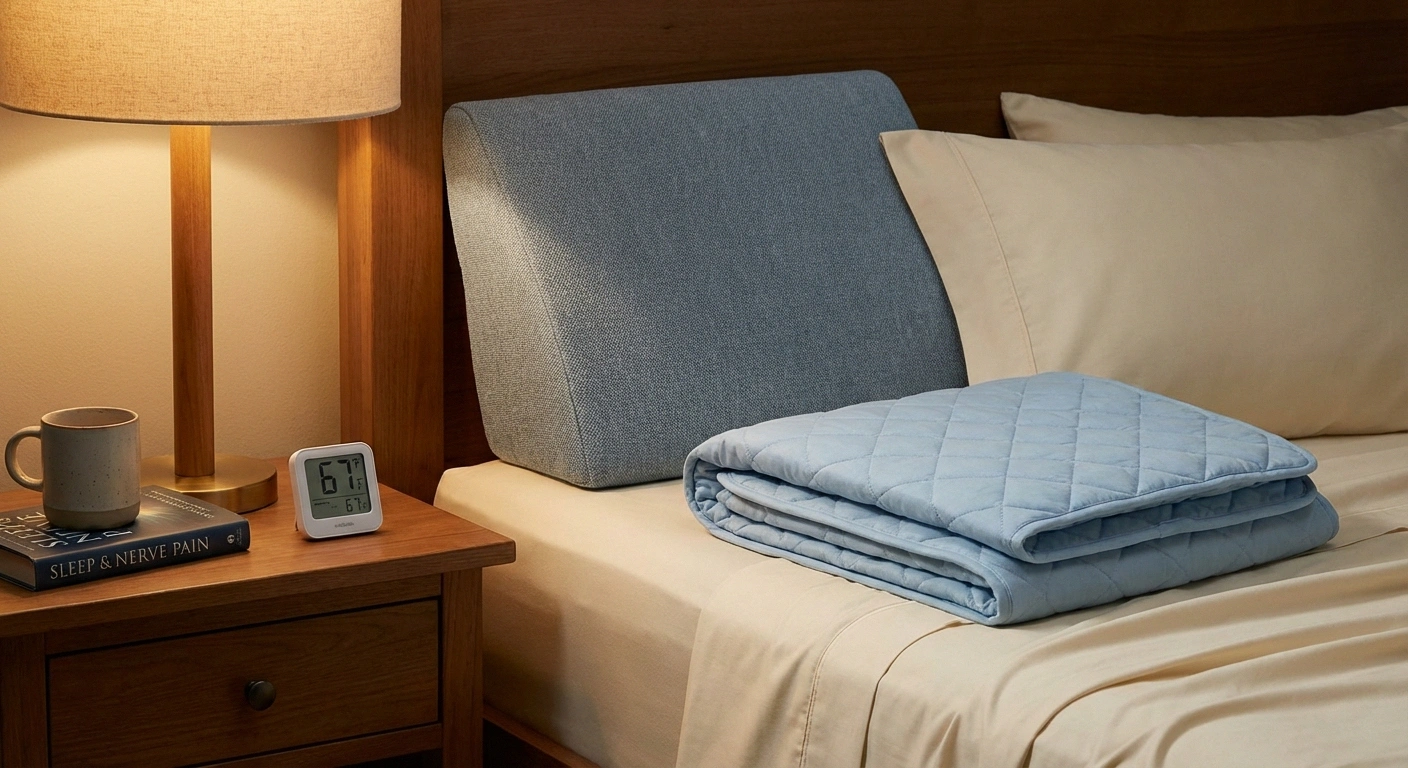
Use a mattress topper strategically. If a new mattress isn’t in the budget, a 2-3 inch memory foam or latex topper can dramatically improve the pressure relief of your current mattress. This is also a low-risk way to test whether memory foam or latex works for your body before committing to a full mattress purchase.
Elevate your legs. Even without an adjustable base, placing a wedge pillow under your knees can reduce swelling and improve circulation to neuropathy-affected feet. Many readers tell me this simple change made a noticeable difference.
Keep your bedroom cool. Aim for 65-68°F (18-20°C). A cool room works with a cooling mattress to reduce the heat that worsens burning neuropathy symptoms.
Choose the right bedding. Smooth, breathable sheets (like bamboo or TENCEL) are gentler on hypersensitive skin than rough cotton. Some neuropathy patients find that lightweight, loose blankets feel better than heavy comforters that press down on sensitive feet.
Try a bed cradle or blanket lifter. If even the weight of sheets on your feet is painful — a common neuropathy complaint — a bed cradle creates a tent-like space that keeps covers off your feet while still keeping you warm.
Establish a wind-down routine. Neuropathy symptoms often worsen in the evening. A consistent bedtime routine — warm bath, gentle stretching, relaxation exercises — can help your body transition toward sleep despite discomfort. For more comprehensive strategies, see our guide to neuropathy and sleep.
How to Choose: A Decision Framework
With so many options, here’s a practical framework to narrow your choice based on your specific symptoms:
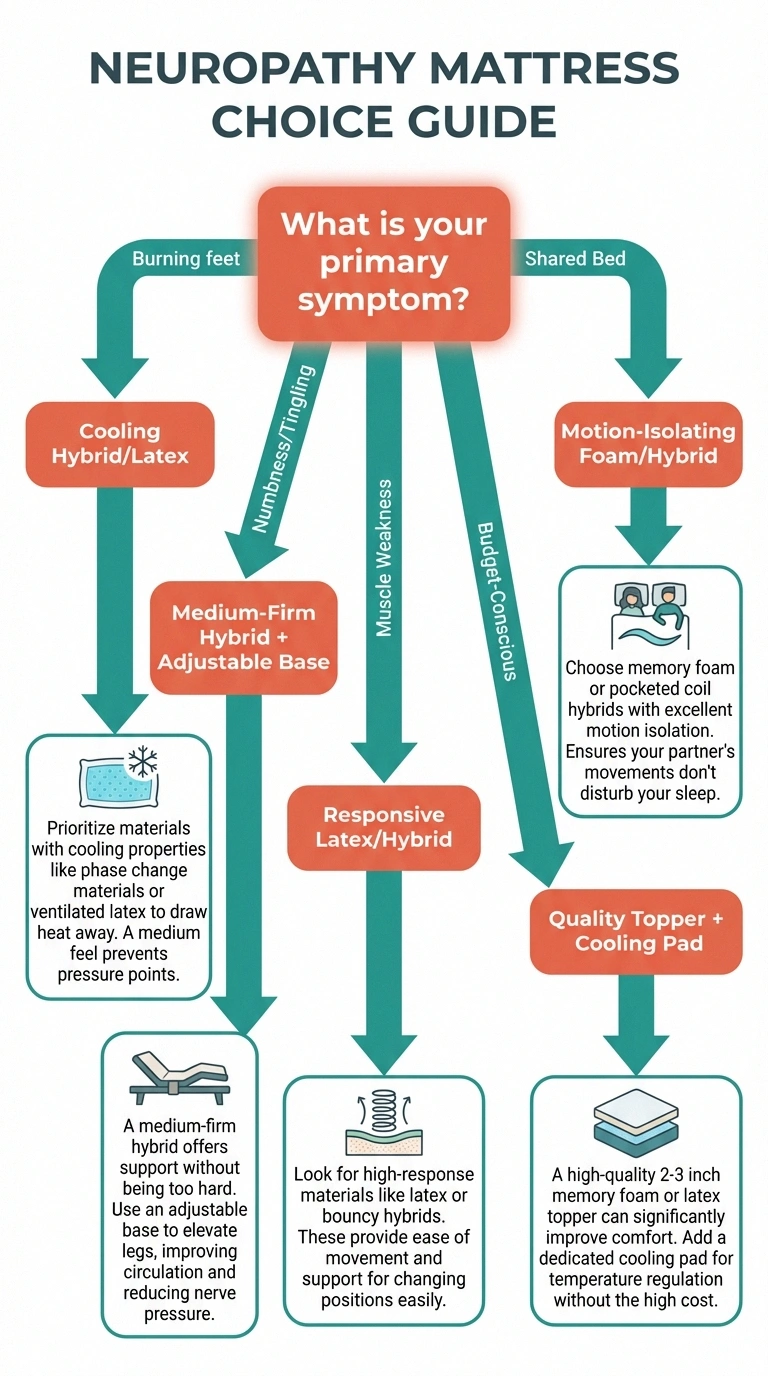
If burning feet are your primary symptom: Prioritize cooling. A gel-infused memory foam hybrid or natural latex mattress with a cooling cover will address both the heat sensitivity and pressure relief needs. Avoid traditional memory foam that traps heat.
If numbness and tingling dominate: Focus on circulation support. A medium-firm hybrid with zoned support helps maintain blood flow. Consider pairing with an adjustable base to elevate your legs at night.
If muscle weakness makes repositioning hard: Choose a responsive mattress. Latex or a responsive foam hybrid gives you the “push back” needed to change positions easily. Avoid slow-response memory foam.
If you share your bed: Motion isolation is critical on top of everything else. Memory foam and pocket-coil hybrids excel here. Traditional innerspring mattresses transfer too much motion.
If budget is tight: A high-quality 3-inch memory foam or latex topper on a supportive base mattress can deliver 80% of the benefit at a fraction of the cost. Pair with a cooling mattress pad if heat is a concern.
What About Mattress Trials?
Most online mattress companies now offer sleep trials of 90 to 365 nights. For neuropathy patients, these trials are invaluable — it’s very difficult to assess pressure relief and temperature regulation from a 10-minute showroom test. Take advantage of full trial periods and give your body at least 30 nights to adjust before making a judgment.

When evaluating during a trial, pay attention to:
- Do your symptoms improve, stay the same, or worsen in the first 2-4 weeks?
- Are you waking less frequently during the night?
- Does the mattress sleep cool enough for your symptoms?
- Can you change positions easily when you need to?
- How do your feet and hands feel in the morning compared to before?
Keep a brief sleep journal during the trial. Tracking symptoms night by night gives you concrete data to compare, rather than relying on general impressions.
Frequently Asked Questions
Is a firm or soft mattress better for neuropathy?
Neither extreme works well. Very firm mattresses create pressure points that aggravate nerve pain, while very soft mattresses restrict circulation and make repositioning difficult. Most neuropathy patients do best with a medium to medium-firm mattress that balances pressure relief with support. The ideal firmness also depends on your body weight and sleeping position.
Can a mattress actually help with neuropathy pain?
A mattress cannot cure or treat neuropathy, but it can significantly improve how well you sleep despite your symptoms. By reducing pressure points, regulating temperature, and supporting healthy circulation, the right mattress removes factors that worsen neuropathy symptoms at night. Better sleep also reduces pain sensitivity and supports nerve health, creating a positive feedback loop.
Should I get an adjustable bed for neuropathy?
An adjustable bed base can be beneficial, especially if you experience swelling in your legs or feet. Elevating your lower body improves circulation and may reduce numbness and tingling. Many people with neuropathy find that sleeping with slightly elevated legs makes a noticeable difference. Make sure your mattress is compatible with an adjustable frame before purchasing one.
How often should I replace my mattress if I have neuropathy?
Every 7-8 years is the general guideline, but neuropathy patients may need to replace sooner if they notice worsening symptoms despite no change in their medical condition. A mattress that has developed body impressions or sagging has lost its pressure-relieving properties and may be contributing to your discomfort. If you notice your sleep quality declining or your nighttime symptoms increasing, your mattress should be one of the first things you evaluate.
What kind of mattress topper helps with neuropathy?
A 2-3 inch memory foam or natural latex topper in a medium to medium-firm density typically works best. Memory foam toppers with gel infusion are especially useful if heat aggravates your symptoms. Egg-crate foam toppers are inexpensive but generally do not provide enough support or pressure relief for neuropathy patients. Avoid very thin toppers under 2 inches, as they will not significantly change how your mattress performs.
Does sleeping position matter for neuropathy?
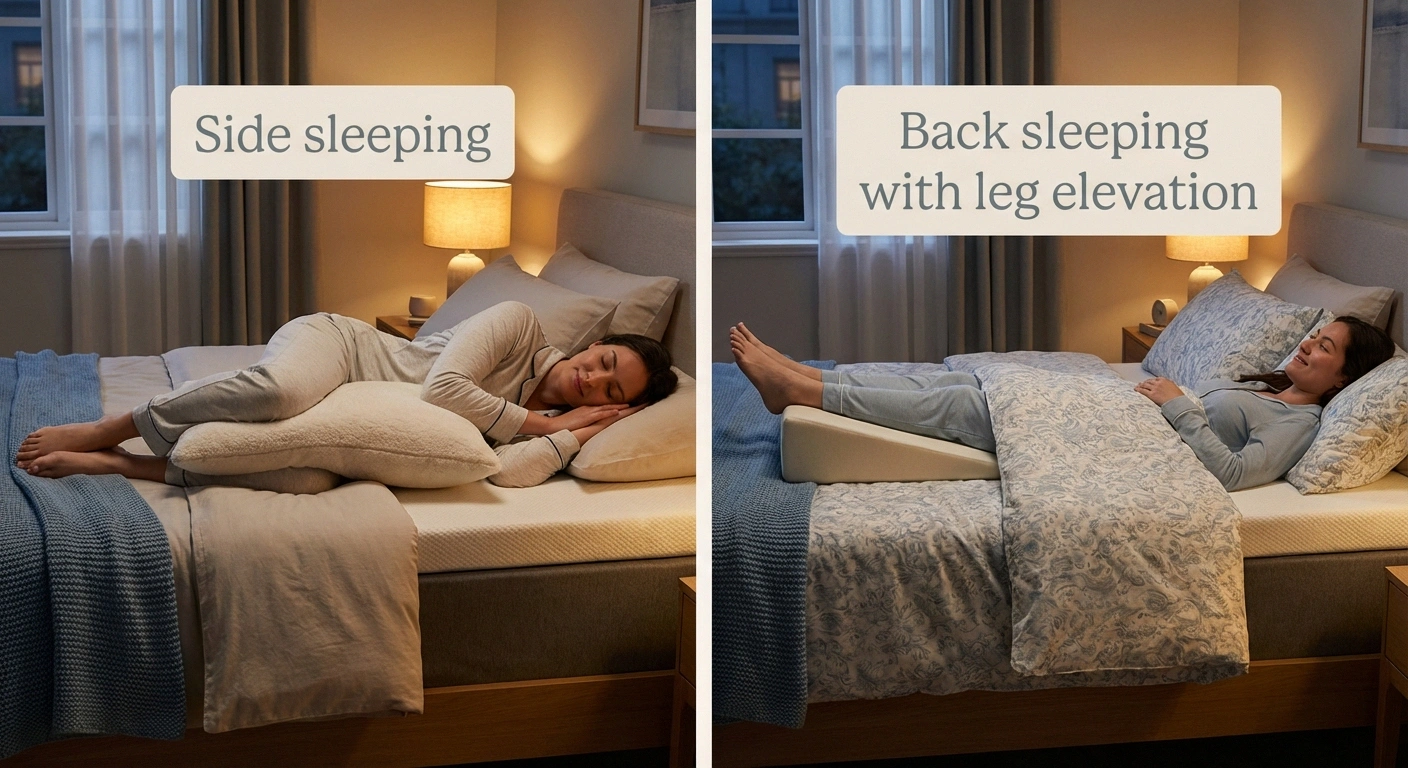
Yes. Side sleeping is generally best for spinal alignment and can reduce pressure on specific nerves, but it requires adequate cushioning at the shoulders and hips to prevent pressure-point pain. Back sleeping with slightly elevated legs can improve circulation. Stomach sleeping is generally not recommended as it can strain the spine and increase pressure on nerves. Whatever your preferred position, make sure your mattress properly supports it.
Making Your Decision
Choosing a mattress when you have neuropathy isn’t about finding a trendy brand — it’s about matching your specific symptoms with the right combination of pressure relief, temperature control, support, and responsiveness. The “best” mattress is the one that addresses your particular pain pattern and helps you sleep through the night.
If possible, take advantage of trial periods and test your chosen mattress for at least 30 nights before committing. Keep a symptom journal to track any changes. And remember that the mattress is just one piece of the puzzle — pairing it with good sleep hygiene practices, the right bedding, and appropriate medical treatment gives you the best chance at the restful sleep your body needs to manage neuropathy effectively.
Your sleep matters. Don’t accept nights of burning, tingling misery as inevitable — there are real, practical steps you can take to sleep better, starting with what you sleep on.
About the Author