For a lot of us, a worship service isn't just an item on the calendar. It's where we feel held, where the week's worries get smaller for an hour, where the people who know us by name are. So when neuropathy starts making that hour physically hard — the standing, the hard pew, the long stretch of sitting still, the walk up for communion — the loss isn't only logistical. It can feel like the condition is taking something that mattered.
I've heard this in my support group more than once, often quietly: “I just don't go as much anymore. It's too much.” And almost every time, with a few practical adjustments and — just as importantly — permission to use them without guilt, the person finds their way back. You do not have to choose between your faith community and your feet. Let's go through what actually helps.
What Makes Worship Physically Hard
It helps to name the specific challenges, because each one has a solution. The sit-stand-kneel rhythm of many services asks your body to change position repeatedly and sometimes hold a posture (standing for a long hymn, kneeling) that nerve-damaged feet and legs don't tolerate well. Hard wooden pews and metal folding chairs put pressure on sensitive areas with no cushioning. And then there's the opposite problem: sitting completely still for a long sermon can let symptoms build, because staying frozen in one position is its own kind of trigger.
Keep gently changing position, and control the surface you're on
Neither holding still nor holding a stance is good for neuropathy — circulation drops and discomfort climbs either way. There's no one perfect position. The goal is small, continuous change plus a cushioned surface.
That last point surprises people, so it's worth underlining. Neither holding still nor holding a stance is good for neuropathy — circulation drops and discomfort climbs either way. The goal isn't to find one perfect position. It's to keep gently changing and to control the surface you're on. Almost everything below comes back to those two ideas.
The Most Useful Thing You Can Do: Have a Quiet Word First
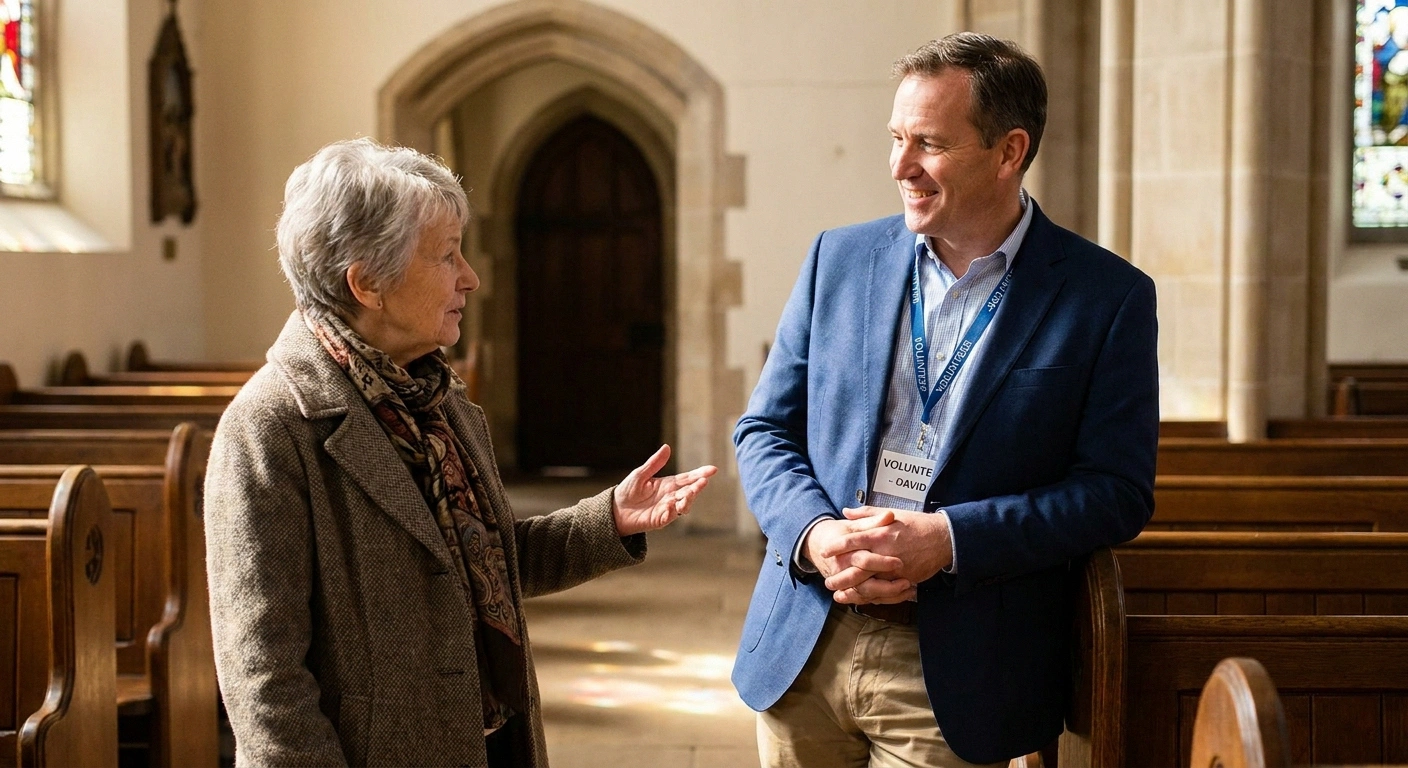
If you do only one thing from this article, make it this. Before a service — not in the middle of one — have a short, private conversation with a member of the clergy, an usher, or whoever coordinates seating. You do not owe anyone your medical history; a simple “I have a nerve condition that makes standing and hard seating difficult, and I may need to sit during standing parts or step out briefly” is plenty.
What One Quiet Word Often Unlocks
- A reserved seat with a cushion
- An aisle spot near an exit
- Communion brought to your seat
- An usher who quietly gives you space
- No more in-the-moment explanations
You don't owe anyone your medical history — one sentence, said once, in advance, is enough.
In my experience, congregations are far more eager to help than people fear. That one conversation often unlocks things you'd never have to ask for again: a reserved seat with a cushion, a spot on the aisle near an exit, an offer to bring communion to you, an usher who quietly knows to give you space. People who lead worship generally consider accommodating those who struggle to be part of the point — not an imposition on it. Saying it once, in advance, spares you a dozen awkward in-the-moment explanations.
Seat Strategy
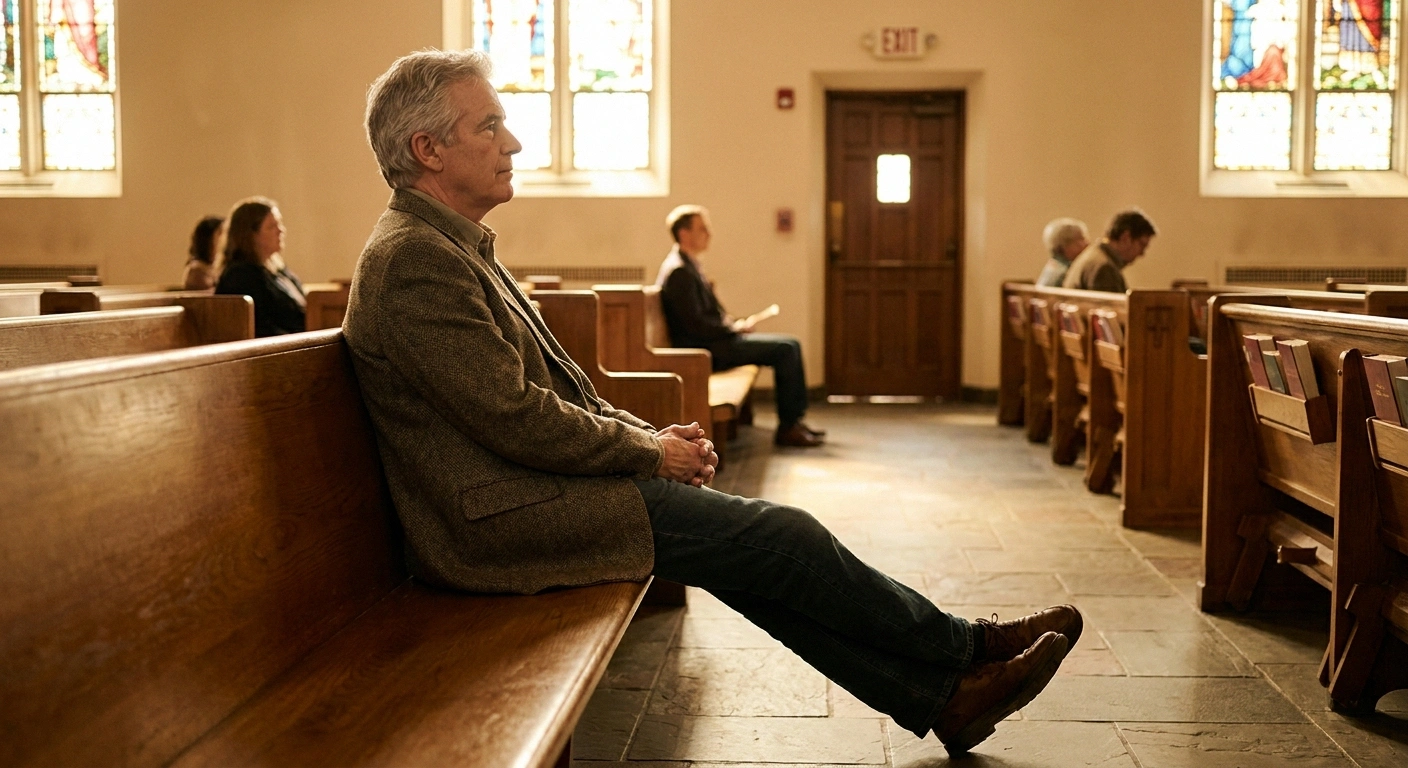
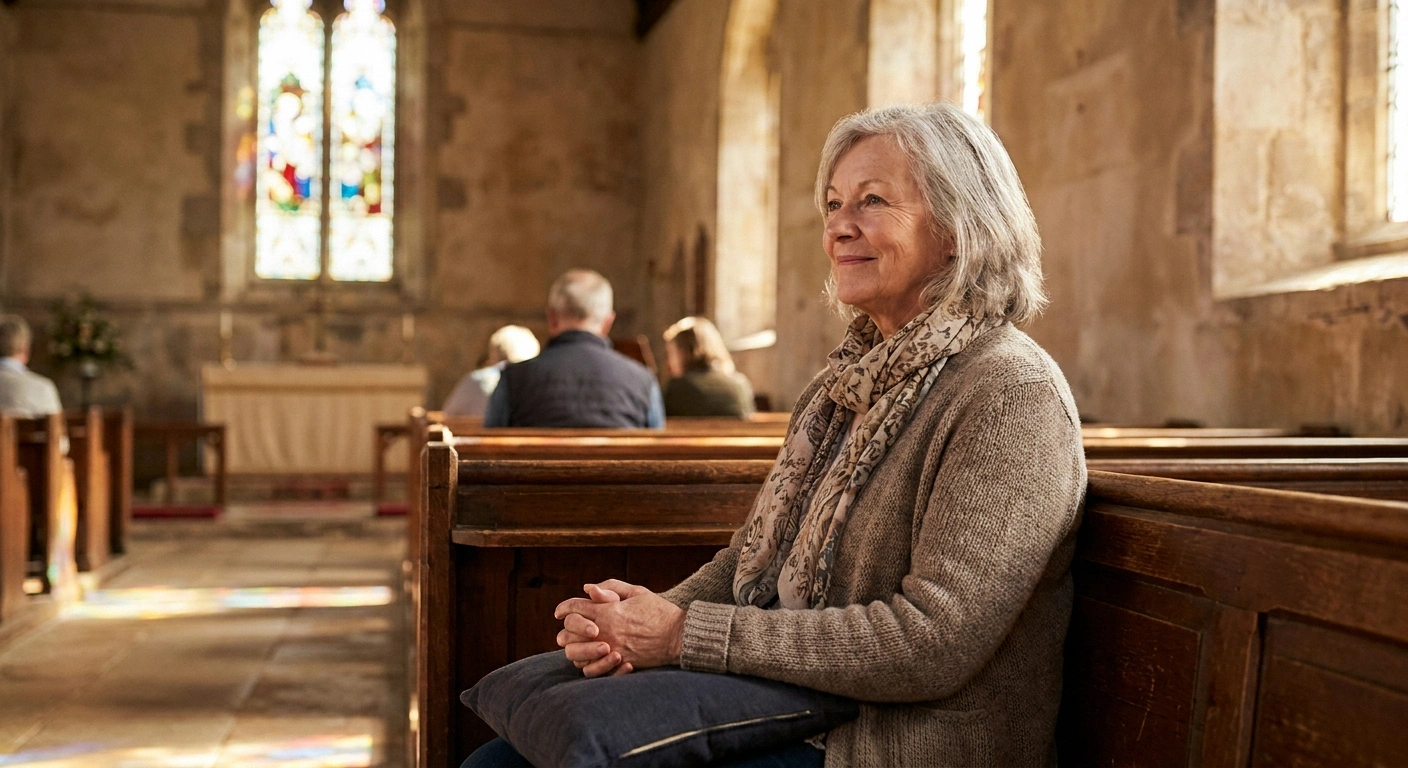
Where you sit changes everything. Arrive a little early so you actually get the seat you need rather than whatever's left. Choose an aisle seat, ideally near the back or close to a side exit. The aisle lets you extend a leg, shift, stand at the end of a pew for a moment, or step out discreetly without climbing over anyone. Being near an exit means leaving briefly to walk off a flare doesn't turn into a production.
An end seat also gives you a little more room to change your foot and leg position throughout the service, which — as we covered — is the whole game. If your congregation has chairs rather than pews, the same logic applies: pick the end of a row with space around you.
Bring Your Own Comfort
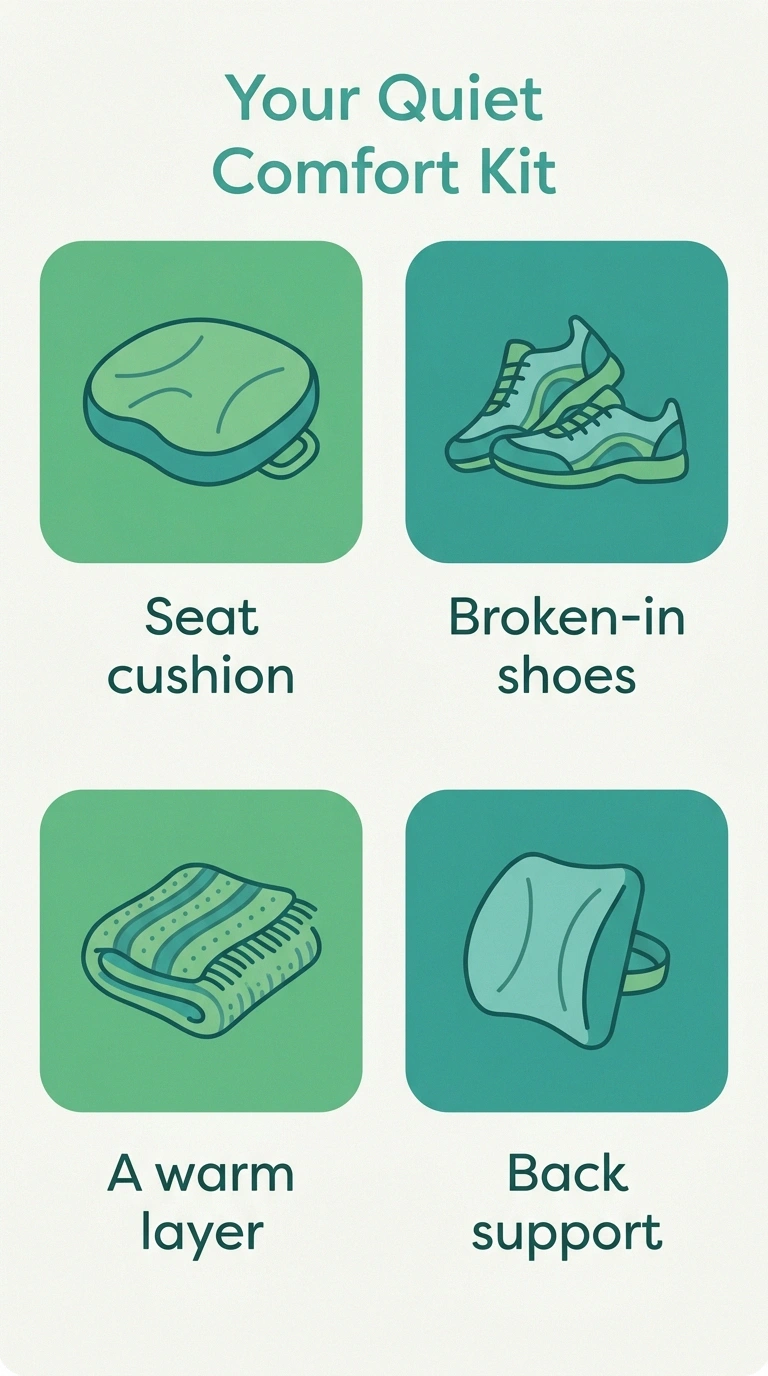
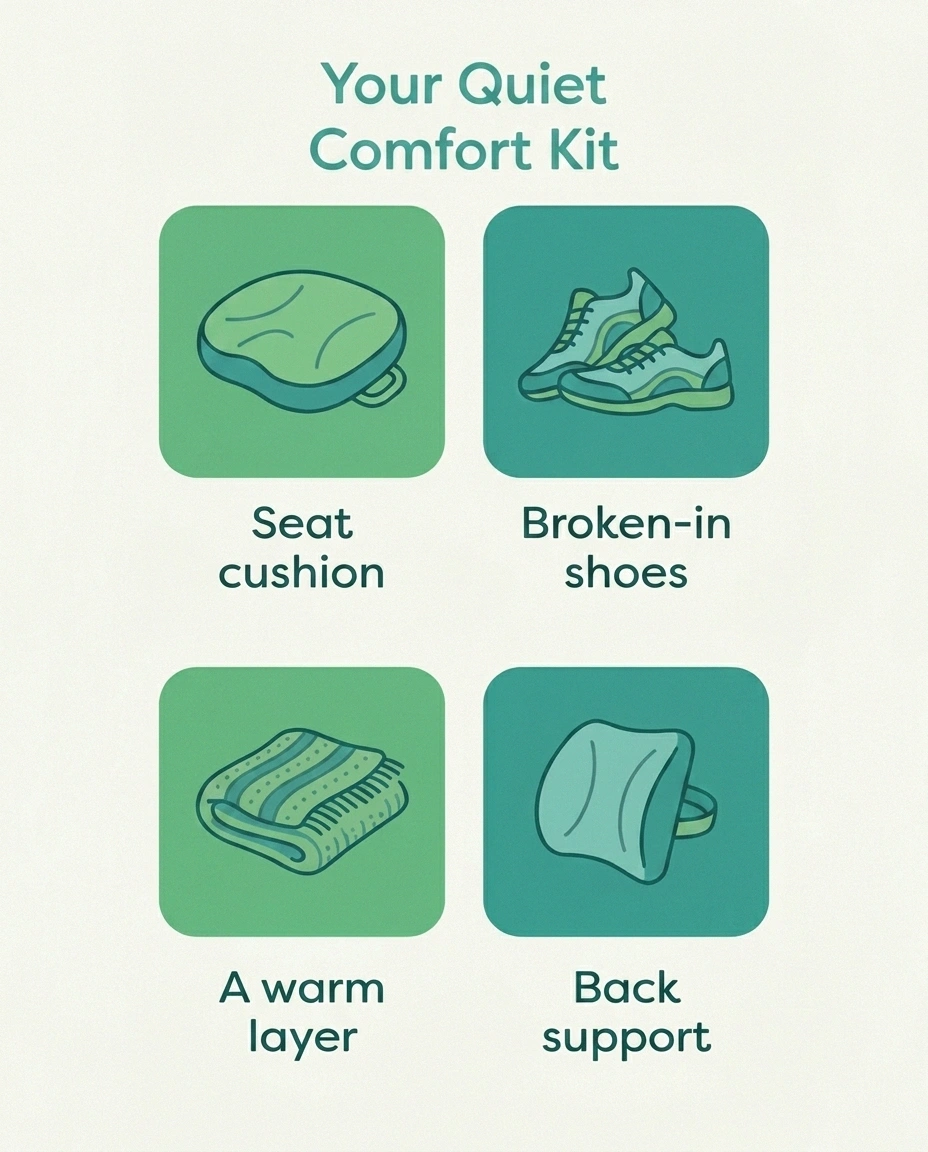
You are allowed to bring what you need. A portable seat cushion or a folded foam pad transforms a hard pew, and most are discreet enough that no one notices. A small travel cushion you can also tuck behind your lower back helps on long services. Wear supportive, well-fitting shoes you've already broken in — Sunday is not the day for new or tight footwear. Many sanctuaries also run cold, and cold reliably worsens nerve symptoms, so bring a layer or a light lap blanket and try not to sit directly under an air-conditioning vent. None of this is fussy. It's the same kind of practical preparation that helps in other long-sitting situations, like the strategies in our guide to getting through a movie comfortably with neuropathy.
Your Quiet Comfort Kit
A discreet foam pad transforms a hard pew.
Supportive and familiar — never new or tight.
Cold sanctuaries reliably worsen symptoms.
A small cushion behind the lower back on long services.
Small Movements Nobody Will Notice
Because staying frozen makes symptoms worse, the trick is to keep blood moving with motions small enough that no one around you registers them. During seated portions you can do slow ankle pumps (lifting toes, then heels), gentle toe curls inside your shoes, quiet calf raises, and small weight shifts from one side to the other. Spread over a service, these add up to meaningfully better circulation and noticeably less burning and numbness by the closing hymn. Think of it as a quiet, continuous background habit rather than an exercise you “do.”
During seated portions: slow ankle pumps (toes up, then heels), gentle toe curls inside your shoes, quiet calf raises, and small weight shifts side to side.
Spread across a whole service, these add up to meaningfully better circulation and noticeably less burning by the closing hymn.
Standing, Sitting, and Kneeling — You're Allowed to Adapt
Here's something many people need to hear plainly: it is acceptable to remain seated during standing or kneeling portions of a service. Many faith traditions explicitly make room for this on grounds of health, and those that don't formalize it almost always understand it in practice. The God your tradition describes is not keeping a tally of how many hymns you stood for.
If you want to stand for parts of it, use the pew or chair back in front of you for support, and feel free to sit back down before others do. A useful approach is to stand for the shorter standing moments and stay seated for the long ones, rather than feeling you must do all or none. Adapt the posture; keep the participation. That's not lesser worship — it's wise stewardship of a body that's doing its best.
Communion Without the Long Wait
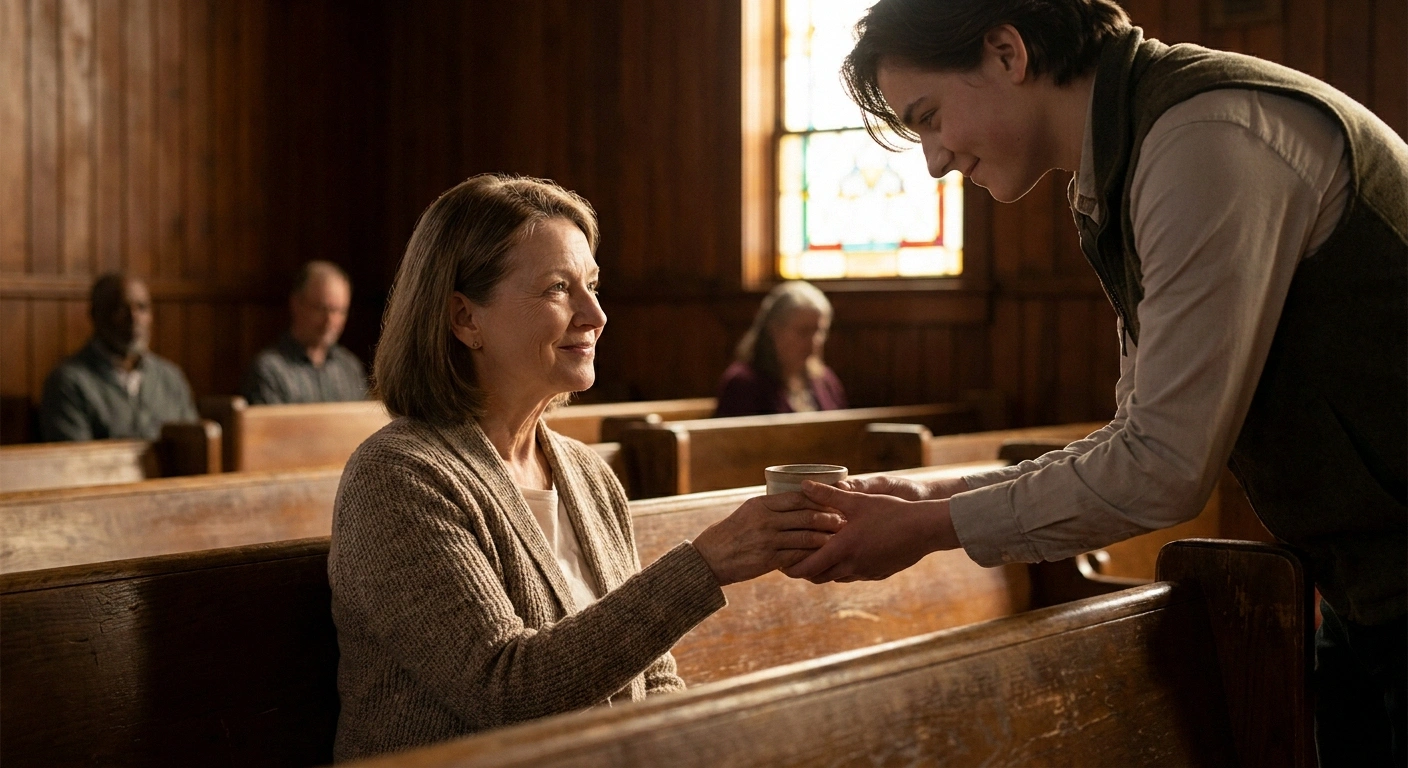
The walk and the standing line for communion is a common sticking point, and it has several good solutions. Ask in advance whether communion can be brought to your seat — in many congregations this is already routine and quietly done. If you'd rather go up, ask about going near the front or end of the line so you're not standing in a slow queue, or use a cane or rollator for the walk if that's what makes it doable. If balance on the walk is a worry, our guide to choosing a walking aid and our piece on balance and fall prevention are worth a look. The point is that this part is almost always adaptable once you ask.
Pace the Whole Outing, Not Just the Hour
The service doesn't exist in isolation — there's getting there, the fellowship time afterward, and getting home, and the whole arc needs pacing. Arrange a ride or a drop-off near the door if a long walk from parking would use up your reserves before you even sit down. Rest beforehand on a service day so you're not arriving already depleted, and plan something gentle afterward. The post-service coffee hour, with its long stretch of standing and chatting, is a frequent flare trigger; it's perfectly fine to sit during it, keep it short, or skip it on a hard day. And on a high-pain day, choosing a shorter service or a livestream is not failure — staying connected in whatever form your body allows that day is the win. The same pacing mindset that helps with family gatherings and holidays applies here.
The Part That Matters Most
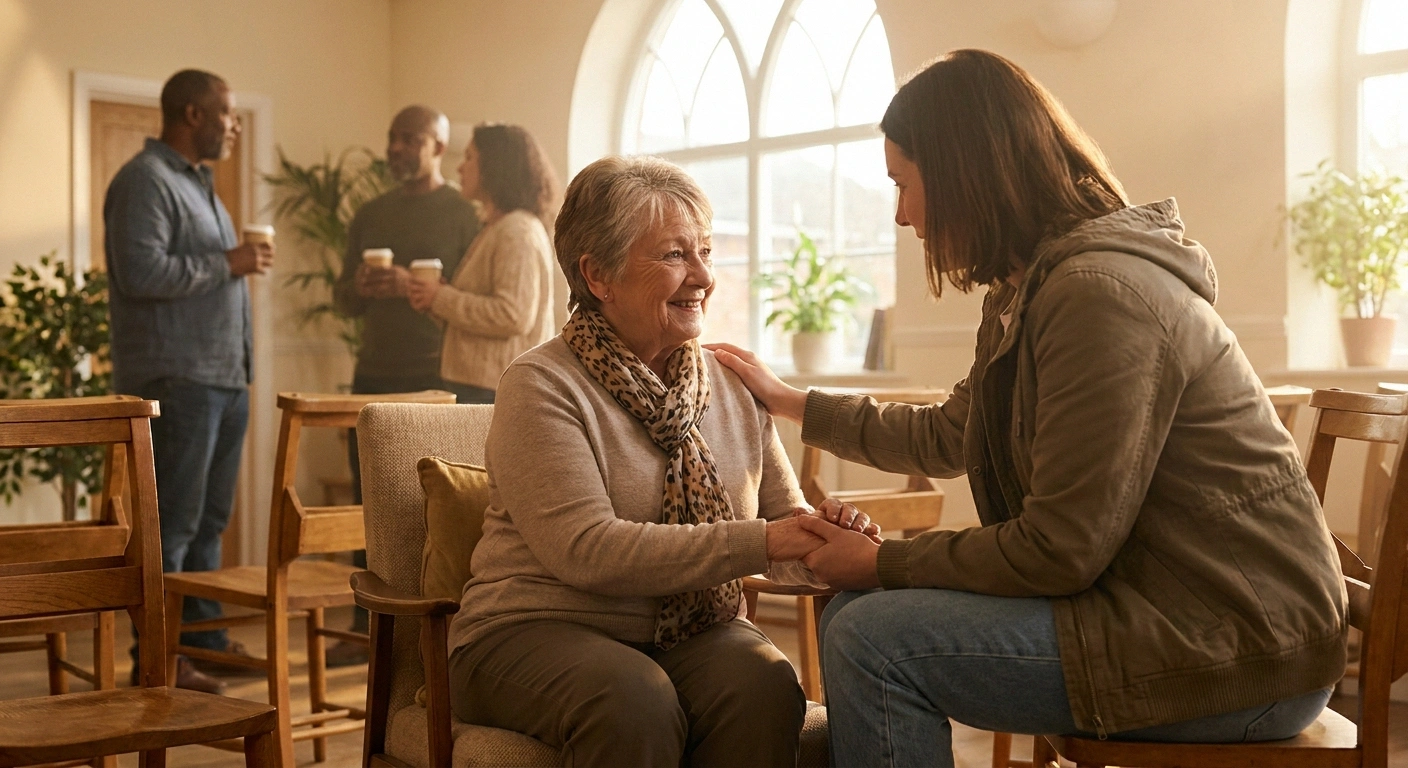
I want to end on the thing I think is actually hardest, because it isn't the cushion or the aisle seat. It's the guilt. So many people with chronic pain carry a quiet sense that sitting when others stand, leaving early, or going less often makes them somehow less faithful, less part of things, a problem in the back row.
Presence over posture
Your presence — however you can manage it, in whatever posture, for whatever portion — is what matters, not the choreography. Worship was never measured in how long you stood. You belong there. We just make the room work for you.
I'd gently offer the opposite. Your presence — however you can manage it, in whatever posture, for whatever portion — is the thing that matters, not the choreography. The people who love you in that community want you there in the way you can be, not absent in the way you think you should be. Worship has never actually been measured in how long you stood. If neuropathy has been quietly pushing you out of a place that feeds you, I hope these small adjustments help push back. And if isolation has crept in along with the pain, our piece on breaking isolation when pain keeps you home and our broader writing on neuropathy and mental health were written for exactly this. You belong there. We just have to make the room work for you.
Frequently Asked Questions
Is it okay to sit during the standing parts of a church service?
Yes. Many faith traditions explicitly allow remaining seated during standing or kneeling portions for health reasons, and those that don't formalize it almost always understand it in practice. You can stand for the shorter moments and stay seated for the long ones. Adapting your posture does not make your participation lesser, and most congregations expect and welcome this.
How can I make hard pews more comfortable with neuropathy?
Bring a portable seat cushion or folded foam pad, which is usually discreet enough that no one notices and dramatically reduces pressure on sensitive areas. A small cushion can also support your lower back. Choose an aisle or end seat so you have room to change your leg and foot position throughout the service, since staying frozen in one position worsens symptoms.
How do I take communion if I can't stand in line?
Ask a member of the clergy or an usher in advance. In many congregations, communion can be brought to your seat, and this is often already routine. Alternatives include going near the front or end of the line to avoid standing in a slow queue, or using a cane or rollator for the walk. This part of a service is almost always adaptable once you ask.
Should I tell my church about my neuropathy?
A short, private word with clergy or an usher before a service is one of the most helpful things you can do. You don't owe anyone your medical history — a simple statement that you have a nerve condition affecting standing and seating is enough. It often unlocks reserved cushioned seating, an aisle spot, and quiet understanding, sparing you repeated in-the-moment explanations.
What can I do about foot pain during a long service?
Keep blood moving with small movements no one will notice: slow ankle pumps, gentle toe curls inside your shoes, quiet calf raises, and small weight shifts. Wear supportive, broken-in shoes, bring a layer since cold sanctuaries worsen symptoms, and choose a seat where you can change position freely rather than staying locked in one posture.
How do I cope with guilt about not participating fully?
Try to reframe it: your presence, in whatever posture and for whatever portion you can manage, is what matters — not the choreography. Worship has never genuinely been measured by how long you stood. The people in your community want you there in the way you can be. On a high-pain day, a shorter service or a livestream keeps you connected and is a win, not a failure.
What if standing for worship music triggers a flare?
You can stay seated for long standing portions and stand only for shorter ones, using the pew or chair in front of you for support and sitting back down before others do if needed. Pair this with small in-seat movements during the rest of the service to keep circulation up, and pace the whole outing — including travel and fellowship time — so the service itself isn't competing with everything around it for your limited reserves.
About the Author