
If you’ve been through several rounds of neuropathy medications without finding relief — and your neurologist mentioned lamotrigine — you’re probably wondering why this particular drug, and whether it’s worth the careful titration schedule it demands. Lamotrigine, sold under the brand name Lamictal, is an antiepileptic drug that’s been on the market since 1994 and is widely used for epilepsy and bipolar disorder. It also gets tried, off-label, for several types of nerve pain.
Here’s the honest picture, because lamotrigine is one of those drugs where the marketing optimism and the actual evidence don’t match up. The mechanism made sense on paper. Several smaller trials looked encouraging in the late 1990s and early 2000s. But when researchers pooled the data carefully, the picture got more complicated — and the safety profile demands that you understand exactly what you’re getting into before you start.
Why Lamotrigine Was Tried for Nerve Pain
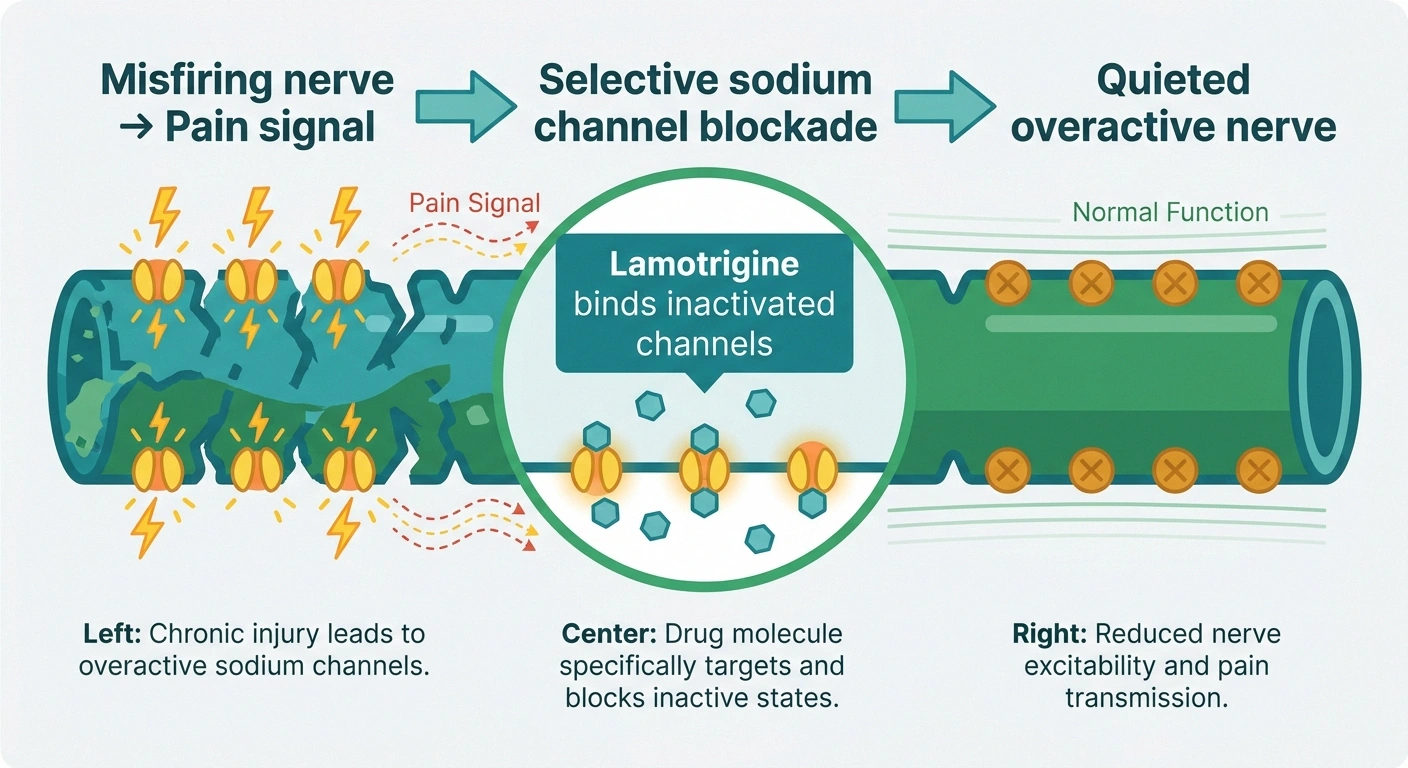
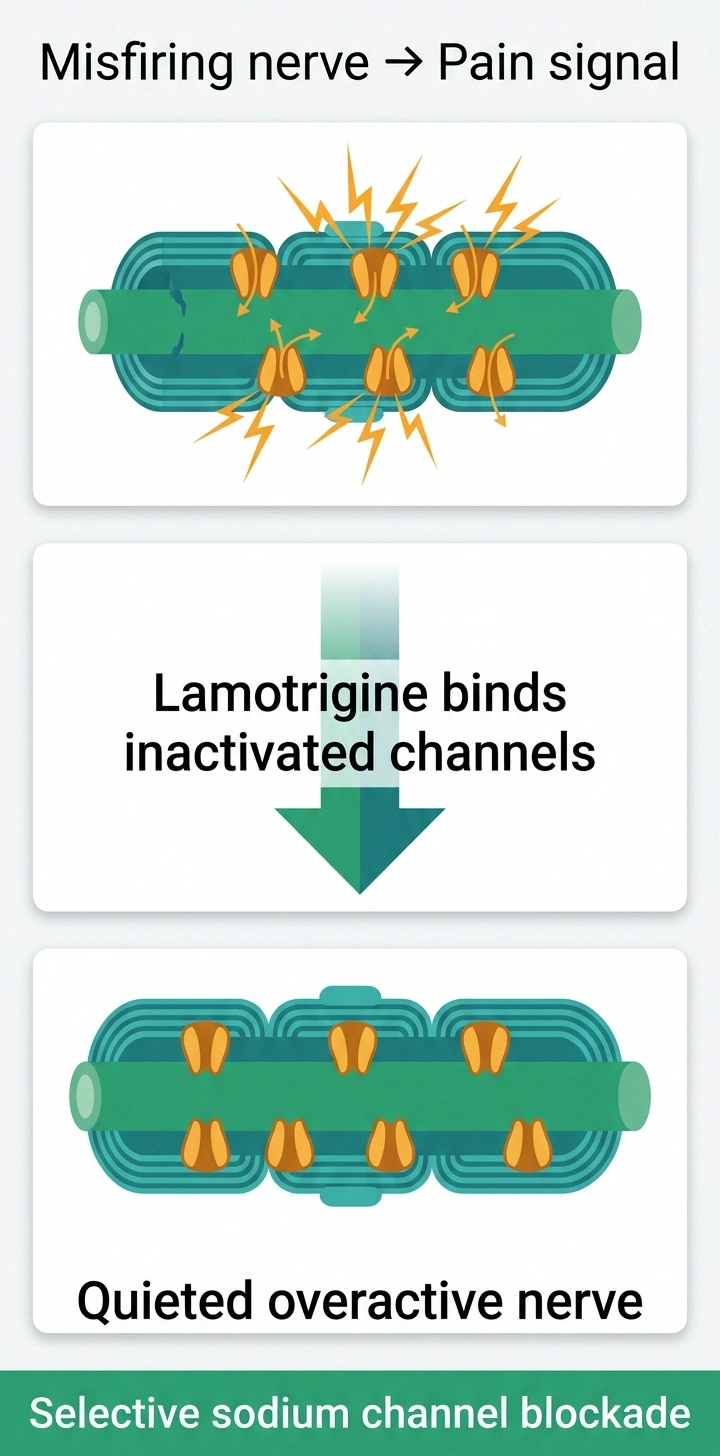
To make sense of lamotrigine’s place in the neuropathy toolkit, you have to understand what’s broken in a damaged nerve. When sensory nerves are injured — by diabetes, by chemotherapy, by a shingles outbreak, by an autoimmune attack — they start firing on their own. Without any actual touch or temperature signal coming in, the damaged nerve generates electrical activity. The sodium channels that normally open only when triggered start opening spontaneously. Your brain reads those rogue signals as pain, tingling, burning, or electric shocks.
Lamotrigine carries an FDA black-box warning for rare but life-threatening skin reactions (Stevens-Johnson syndrome, toxic epidermal necrolysis, and DRESS). About 10% of patients develop some kind of rash; serious reactions occur in roughly 1 in 1,250 adults. The risk is highest in the first 2–8 weeks, especially with fast titration or valproate co-use. Any rash in the first 8 weeks — stop the drug and contact your prescriber the same day.
Drugs that block sodium channels can dampen this misfiring. The local anesthetic lidocaine works that way. So does carbamazepine, the first-line drug for trigeminal neuralgia. Lamotrigine is in the same general family — it blocks voltage-gated sodium channels, with a preference for channels in the “inactivated” state, which makes it more selective for hyperactive nerve cells than for healthy ones. In theory, that selectivity should make it useful for neuropathic pain.
That was the theory. Researchers spent twenty years testing whether the theory held up in practice.
What the Evidence Actually Shows
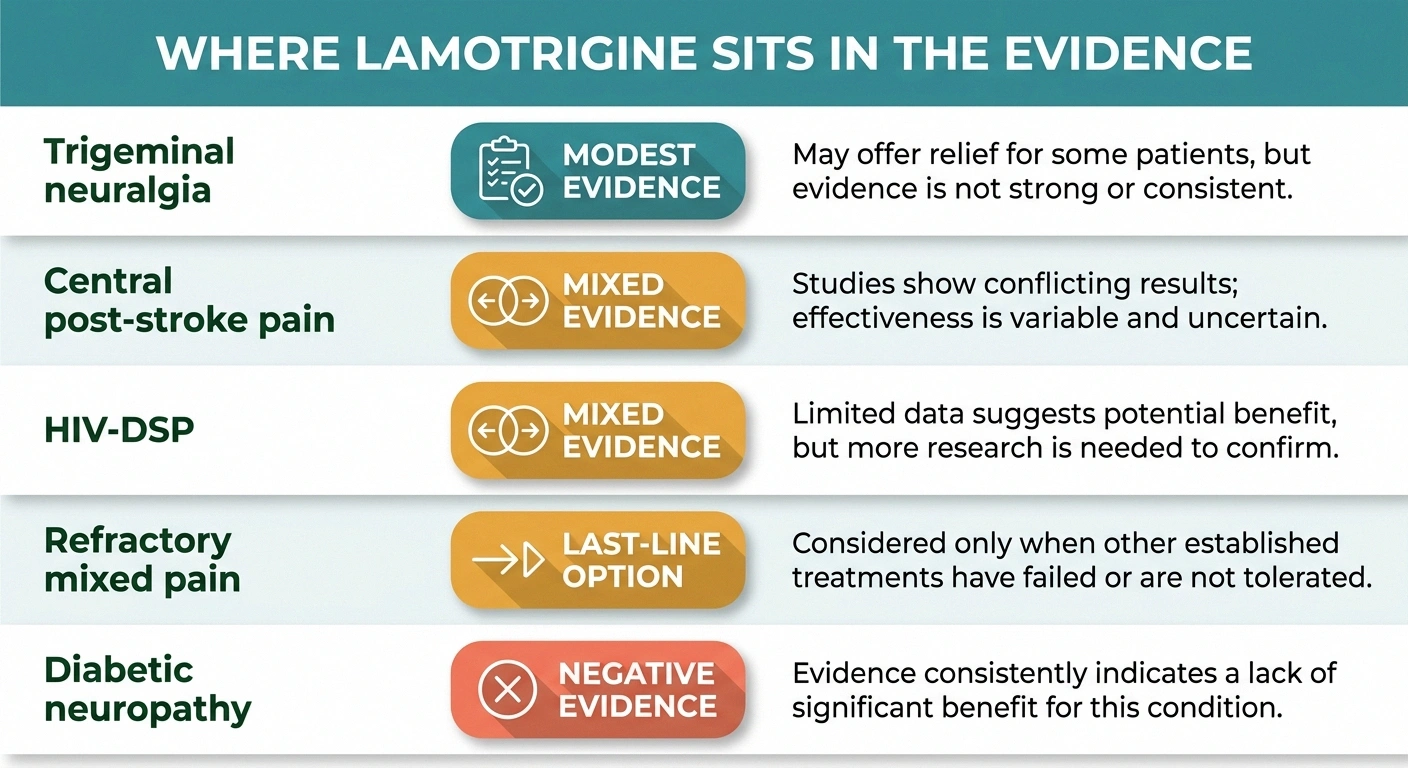
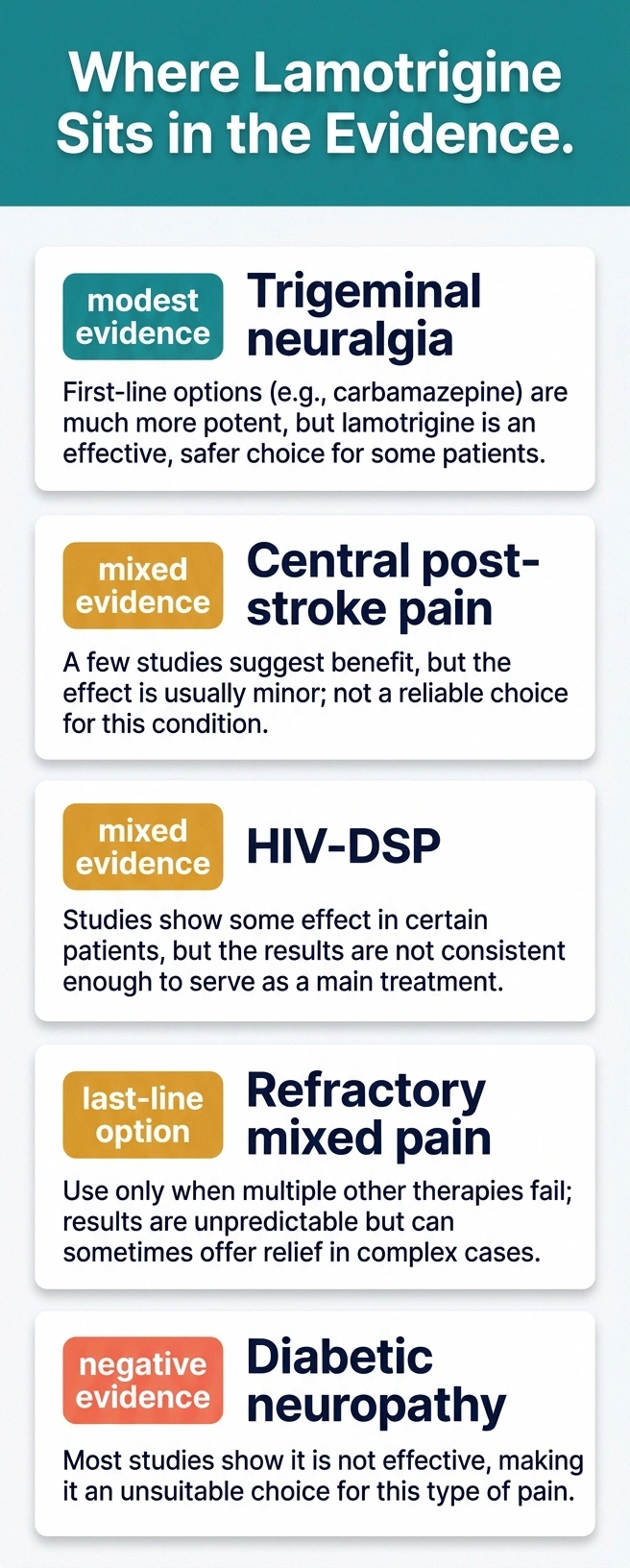
The most authoritative analysis of lamotrigine for neuropathic pain is the Cochrane review by Wiffen and colleagues, last updated with the conclusion that no further updates were expected. It pooled twelve studies covering 1,511 people with various neuropathic pain conditions, including central post-stroke pain, chemotherapy-induced neuropathy, diabetic peripheral neuropathy, HIV-related neuropathy, mixed neuropathic pain, spinal cord injury pain, and trigeminal neuralgia.
The Cochrane review of 12 studies (n=1,511) concluded:
- No convincing evidence of effectiveness at 200–400 mg/day across most neuropathic pain conditions
- Diabetic peripheral neuropathy — negative
- HIV-related distal sensory neuropathy — possibly positive on older neurotoxic antiretrovirals
- Trigeminal neuralgia — small positive signal as second-line
- Central post-stroke pain — mixed
Wiffen PJ et al., Cochrane Database 2013 (stable, no update expected).
The headline finding: there was no convincing evidence that lamotrigine was effective for neuropathic pain or fibromyalgia at doses of 200 to 400 milligrams per day. The review did not meet first-tier evidence standards — meaning the trials weren’t large enough or well-designed enough to settle the question definitively, but the signal across them was weak.
That doesn’t mean lamotrigine never helps anyone. It means that, on average, across the published research, it didn’t outperform placebo by a clinically meaningful margin in most neuropathic pain conditions.
There are a few exceptions worth knowing about:
- Trigeminal neuralgia. Smaller trials and clinical experience support lamotrigine as a reasonable second-line option in trigeminal neuralgia, particularly when carbamazepine or oxcarbazepine cannot be tolerated. The mechanism overlap is closest here.
- HIV-related distal sensory neuropathy. A 2003 trial by Simpson and colleagues found possible benefit in patients still on the older neurotoxic antiretrovirals (didanosine, stavudine, zalcitabine). The benefit didn’t replicate cleanly in patients not on those drugs.
- Central post-stroke pain. Mixed evidence with some positive trials.
- Refractory cases. When first-line drugs — gabapentin, pregabalin, duloxetine, tricyclic antidepressants — have failed or been intolerable, some neurologists still try lamotrigine as a later option.
For diabetic peripheral neuropathy specifically — the most common form of neuropathy in adults — the evidence is not encouraging. Lamotrigine is not a recommended first, second, or third-line choice in current treatment guidelines for diabetic neuropathy.
The Black-Box Warning You Need to Know About
Before going further, I have to be direct about lamotrigine’s most serious risk: severe cutaneous reactions, including Stevens-Johnson syndrome (SJS), toxic epidermal necrolysis (TEN), and drug reaction with eosinophilia and systemic symptoms (DRESS). These are not minor rashes. They are medical emergencies that can be fatal.
The FDA placed a black-box warning on lamotrigine — the strongest warning the agency issues — because of this risk. About 10% of people taking lamotrigine in clinical trials reported some kind of skin rash. The vast majority of those rashes were mild and self-limiting. But a small fraction progressed to SJS or TEN, conditions where the skin and mucous membranes blister and slough off.
Three numbers help frame the risk:
- SJS or TEN incidence in adults: approximately 0.08 percent (about 1 in 1,250 adult patients started on lamotrigine).
- SJS or TEN incidence in children: up to 0.8 percent (about 1 in 125), which is why lamotrigine is used cautiously in pediatric patients.
- Risk is highest in the first 2 to 8 weeks of treatment, especially with rapid dose escalation or interaction with valproate.
This is why lamotrigine has a mandatory slow-titration protocol. Get to the target dose gradually and the risk is much lower. Race to it and the risk climbs steeply.
The Titration Schedule (Read This Twice)
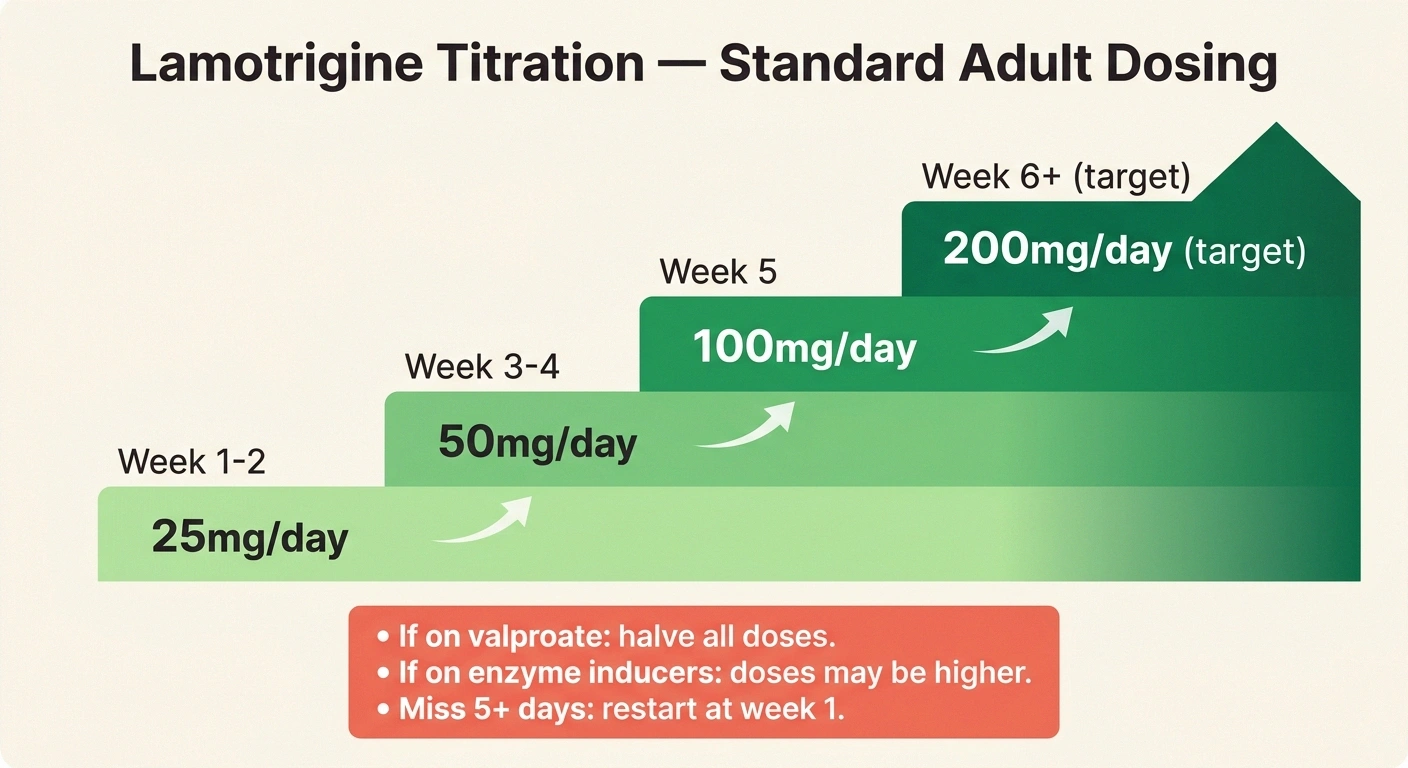
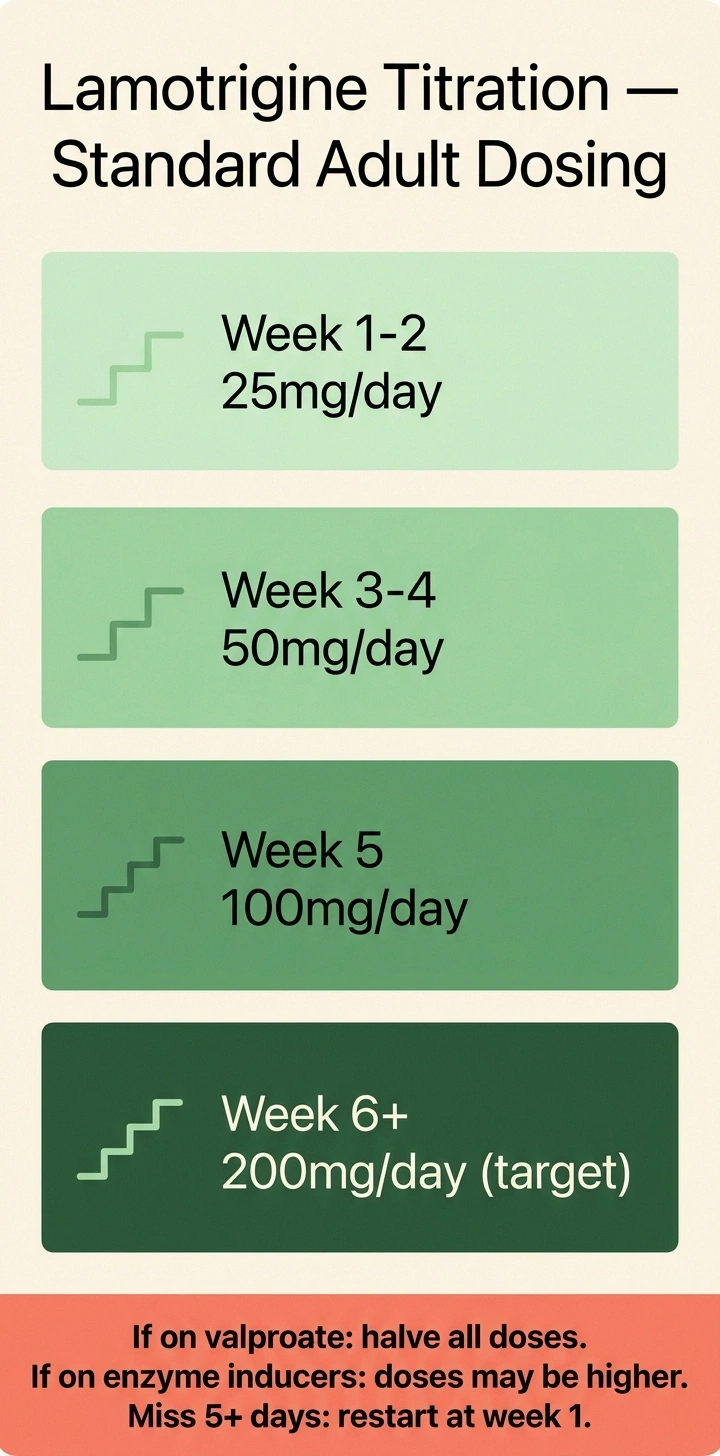
The standard adult titration for lamotrigine without other interacting medications looks like this:
⚠ If on valproate → halve all doses. If on carbamazepine/phenytoin/phenobarbital → faster titration + higher target. Miss 5+ days → restart at week 1.
- Weeks 1 and 2: 25 milligrams once daily.
- Weeks 3 and 4: 50 milligrams once daily.
- Week 5: 100 milligrams once daily.
- Week 6: 200 milligrams daily (the dose used in most neuropathic pain trials), usually split into two 100 mg doses morning and evening.
If you’re also taking valproate (Depakote, Depakene), valproate doubles lamotrigine blood levels by slowing its metabolism. The titration schedule is cut in half:
- Weeks 1 and 2: 25 milligrams every other day.
- Weeks 3 and 4: 25 milligrams once daily.
- Week 5: 50 milligrams once daily.
- Week 6 onward: 100 milligrams daily — and the target dose is lower, usually 100 to 200 mg total.
If you’re on enzyme-inducing drugs like carbamazepine, phenytoin, phenobarbital, primidone, or rifampin, your liver clears lamotrigine faster, so the schedule is more aggressive and the target higher — usually 400 mg per day, split.
The titration is not optional. Missing more than five consecutive days of lamotrigine resets the clock — you have to restart from week one rather than picking up where you left off. The reason is the same rash risk. After even a brief gap, the immune system loses tolerance, and a sudden return to the target dose can trigger SJS.
The Rash Rule

Memorize this: any rash in the first 8 weeks of lamotrigine, stop the drug and contact your prescriber the same day. Any rash that involves the mouth, eyes, lips, or genitals, or comes with fever, swollen lymph nodes, or feeling generally unwell, go to the emergency department. Don’t wait for an office appointment. Don’t wait to see if it spreads. The early hours of Stevens-Johnson syndrome can look indistinguishable from a benign drug rash — but the difference between them is the difference between a few days of itching and a week in the burn unit.
Any rash on lamotrigine that comes with ANY of these — go to the ER, do not wait:
- Mouth, eyes, lips, or genital involvement (blisters, sores)
- Fever above 100.4°F (38°C)
- Swollen lymph nodes (neck, armpits, groin)
- Feeling generally unwell — fatigue, body aches, “off”
- Rash that spreads rapidly or covers large body area
- Peeling skin or blistering
Tell the ER team: “I’m on lamotrigine and I think I may have a hypersensitivity reaction.”
This sounds dramatic. It is dramatic. The actual numerical risk is small. But because the consequence of missing it is catastrophic, every neurologist who prescribes lamotrigine drills this into patients, and you should hold onto it.
Most rashes that appear on lamotrigine are not SJS. They’re ordinary drug rashes. But the only way to know is to be seen — and the only safe move while waiting to be seen is to stop the drug.
Other Side Effects to Expect
Beyond the rare-but-serious skin reactions, lamotrigine has a fairly predictable side-effect profile during titration:
- Dizziness — often worst in the first two weeks of a dose increase, then improves.
- Headache — common, usually mild.
- Double vision or blurred vision — typically dose-related, improves if the dose is reduced.
- Ataxia (clumsy walking) — concerning in older adults who already have balance issues from neuropathy; falls risk should be discussed.
- Sleep disturbance — both insomnia and excessive sleepiness have been reported; idiosyncratic.
- Nausea or stomach upset — usually settles within a few days; taking with food helps.
- Tremor — fine hand tremor at higher doses, often dose-limiting.
Most of these side effects are dose-dependent and improve when the body adapts. Some are dose-ceiling effects — they tell you that you’ve hit your tolerable dose, even if the pain isn’t fully controlled.
Drug Interactions That Matter


Lamotrigine has several clinically important interactions that change either how much drug ends up in your bloodstream or how serious the side effect risk is:
- Valproate (Depakote, Depakene): doubles lamotrigine blood levels. Increases SJS risk. Titration is halved and target dose is lower.
- Carbamazepine, phenytoin, phenobarbital, primidone: these enzyme inducers can cut lamotrigine blood levels by 40 to 60 percent. Titration is more aggressive and target dose is higher.
- Hormonal contraceptives (estrogen-containing): reduce lamotrigine blood levels by 30 to 50 percent. During the pill-free week, lamotrigine levels rise sharply, which can cause new side effects. Continuous regimens or progesterone-only contraceptives avoid this. If you’re on lamotrigine and the pill, talk to your prescriber before changing contraceptive type.
- Rifampin and some HIV medications: can lower lamotrigine levels.
- Sertraline (Zoloft): may modestly raise lamotrigine levels.
Always give your prescriber a full list of every medication and supplement you take before starting lamotrigine — including over-the-counter drugs, hormonal contraceptives, and any herbal products. Drug interactions are a common reason lamotrigine fails: either by failing to reach therapeutic levels or by causing toxicity at standard doses.
When Lamotrigine Might Still Be Worth Trying
Given the disappointing average results, why does any neurologist prescribe lamotrigine for nerve pain? A few reasonable scenarios:
Reasonable to consider lamotrigine if:
- Trigeminal neuralgia where carbamazepine isn’t tolerated
- Central pain after stroke or spinal cord injury
- Refractory mixed neuropathic pain after first-line failures
- You’re already on it for epilepsy or bipolar disorder
Not a reasonable choice for: uncomplicated diabetic peripheral neuropathy — the evidence is too weak to justify the rash risk and titration burden when several better-supported options exist.
Trigeminal neuralgia where carbamazepine isn’t tolerated. Carbamazepine is first-line for trigeminal neuralgia and works well for most patients, but it has its own issues — hyponatremia, sedation, drug interactions, and the rare risk of aplastic anemia. Lamotrigine is one of the more reasonable second-line choices here.
Central pain after stroke or spinal cord injury. Central pain syndromes are notoriously hard to treat. The first-line options (gabapentin, pregabalin, tricyclic antidepressants) often disappoint. Lamotrigine has shown some efficacy in a few central pain trials and is sometimes added when other drugs fail.
Patients who can’t tolerate first-line options. If gabapentin and pregabalin cause unacceptable sedation, weight gain, or cognitive dulling, and tricyclics cause too much dry mouth or constipation, lamotrigine — which has a different side-effect profile — may be tried.
Patients also being treated for epilepsy or bipolar disorder. When a single drug can address two conditions, lamotrigine becomes more attractive even if its neuropathic-pain efficacy is modest.
What’s not a good reason to start lamotrigine: hearing about it from a friend or an online forum and asking your primary care doctor to prescribe it for plain diabetic neuropathy. The evidence in diabetic neuropathy is weak, the titration is demanding, and the rash risk is real.
How to Tell If Lamotrigine Is Working
If you and your neurologist decide to give lamotrigine a try, plan a structured evaluation. The drug’s slow titration means you won’t know whether it’s working for at least 8 to 12 weeks after starting. Here’s how to make the trial honest:
- Before starting, write down where your pain is now. Rate average daily pain on a 0 to 10 scale. Note how many hours of sleep you typically get. Note how many “bad pain” days per week. Note whether you can do specific activities (walking 10 minutes, standing in the kitchen, holding a book). A simple symptom diary works fine.
- At week 8 (your second week at the target dose), check in. Have your pain ratings improved by at least 30 percent? Is sleep better? Are bad days less frequent?
- If yes — continue and re-evaluate at week 16. Some responders take longer to reach maximum benefit.
- If no — talk to your prescriber. Options include going higher (300 mg, then 400 mg if not on an inducer), staying at the current dose for another month, or accepting that it isn’t working and tapering off.
- If you tape it off, taper slowly. Don’t stop lamotrigine abruptly. Reduce the dose by 25 to 50 mg every two weeks to avoid withdrawal seizures (rare but documented).
The structured approach matters because lamotrigine’s side effects are gradual, and it’s easy to drift along on a drug that isn’t helping. A planned check-in date forces an honest assessment.
Cost, Availability, and Coverage
Lamotrigine has been generic since 2009. A month of 200 mg daily (which is two 100 mg tablets per day) typically costs $10 to $30 at major pharmacies, and as little as $4 to $10 with GoodRx or similar discount programs. Insurance coverage is straightforward for the FDA-approved indications (epilepsy, bipolar). Off-label use for neuropathic pain may require a prior authorization, but is generally not difficult to get approved if your prescriber documents the reasoning.
Brand-name Lamictal is much more expensive and offers no clinical advantage. The extended-release formulation (Lamictal XR) costs significantly more and has not shown meaningful advantage over twice-daily generic immediate-release in most clinical situations.
Should You Try It?
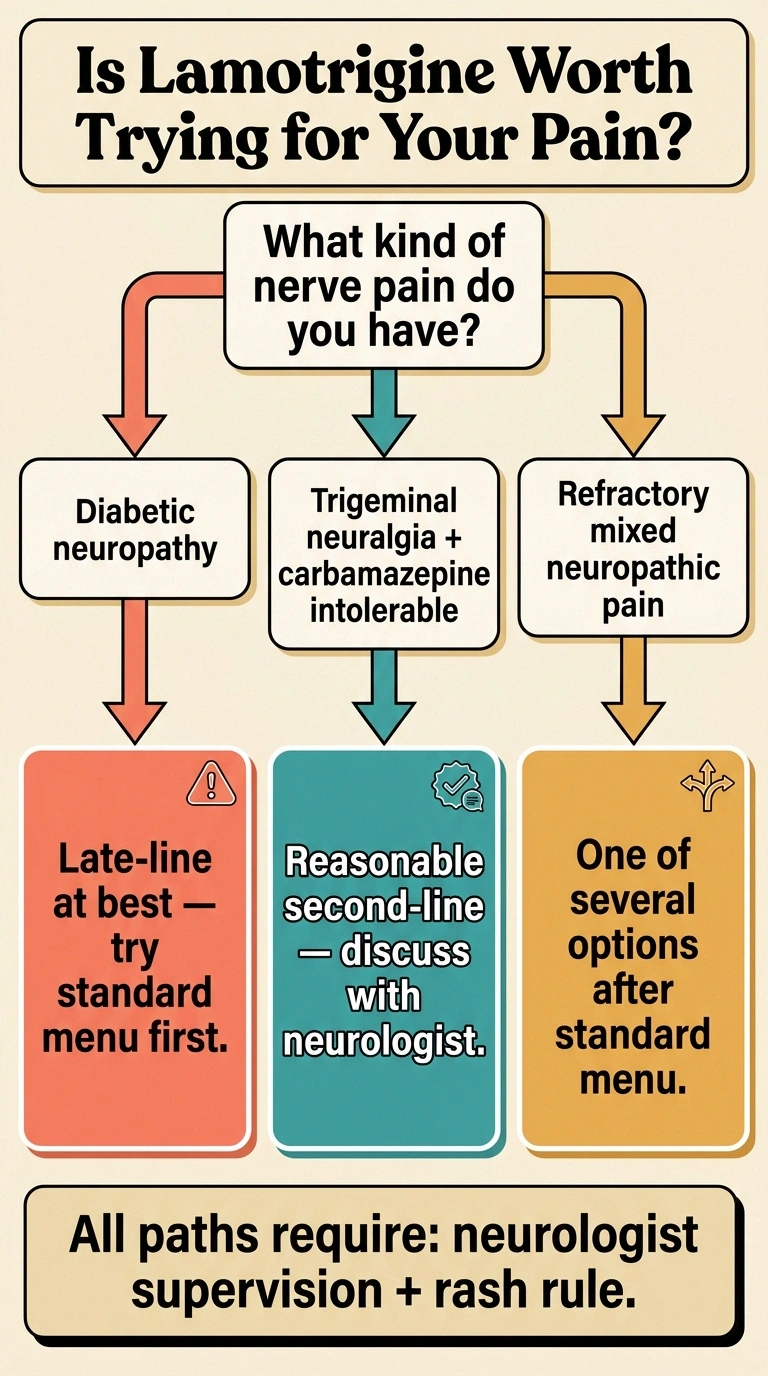
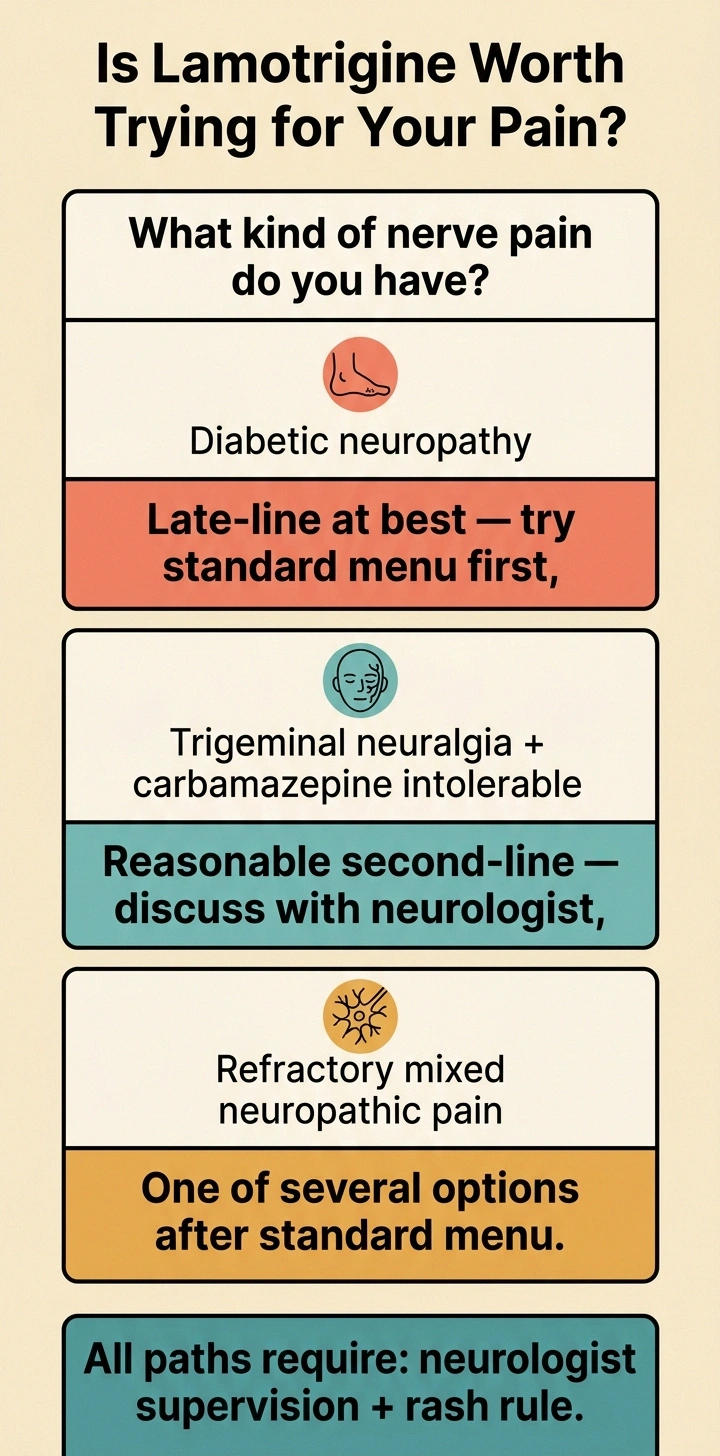
Here’s how I’d frame the decision if I were sitting across from a friend.
If you have diabetic peripheral neuropathy that hasn’t responded to first-line treatment, lamotrigine is not the next reasonable choice. There’s a long list of better-supported options to try first — dose optimization of gabapentin or pregabalin, switching to or adding duloxetine, trying a tricyclic, exploring topical lidocaine or capsaicin, considering TENS or acupuncture as adjuncts. Lamotrigine, for diabetic neuropathy, is at best a late-line option.
If you have trigeminal neuralgia and carbamazepine isn’t tolerable, lamotrigine is a reasonable second-line option to discuss with a neurologist. The mechanism fit is closer here, and a few trials are positive.
If you have refractory mixed neuropathic pain and have already cycled through the standard options, lamotrigine is one of several “after the standard menu” drugs your neurologist may consider, alongside tramadol, certain other anticonvulsants, and topical agents.
In every case, the decision should be made by a clinician who knows the rash rule, who will write you a careful titration plan, and who will make themselves available to evaluate any rash that appears in the first eight weeks. Lamotrigine is not a casual prescription. Used carefully, it’s a useful drug. Used carelessly, it can hurt you.
If you’re considering lamotrigine, talk to a neurologist — not your primary care doctor — and bring a complete medication and supplement list with you. Ask explicitly about the rash rule. Ask explicitly about the valproate interaction if relevant. And ask for a planned re-evaluation date so you’ll know whether to continue or stop.
Frequently Asked Questions
How long does lamotrigine take to work for nerve pain?
You will not reach the typical neuropathic-pain target dose of 200 mg per day until about week 6 of treatment due to the slow titration. Most evaluations of effect are made between weeks 8 and 12. If you have completed 12 weeks at 200 mg and the pain has not improved meaningfully, lamotrigine is probably not going to work for you.
What should I do if I develop a rash on lamotrigine?
Stop the drug and contact your prescriber the same day. If the rash involves the mouth, eyes, lips, or genitals, or comes with fever, swollen lymph nodes, or feeling generally unwell, go to the emergency department immediately. Do not wait to see if it spreads. Stevens-Johnson syndrome and toxic epidermal necrolysis are medical emergencies.
Can lamotrigine be used with gabapentin or pregabalin?
Yes, the two drug classes work on different targets — sodium channels for lamotrigine, calcium channels for gabapentinoids — and they have no major interaction. Combination therapy is sometimes used in refractory cases. Side effects are additive, so dizziness and sedation may worsen.
Is lamotrigine addictive?
No. Lamotrigine has no abuse potential and no withdrawal cravings. However, you should not stop it abruptly because of the risk of rebound seizures. Always taper under prescriber guidance.
Does lamotrigine cause weight gain?
Unlike pregabalin and gabapentin, which commonly cause weight gain, lamotrigine is weight-neutral for most people. A small minority report modest weight loss. This is one reason it’s sometimes preferred in patients for whom gabapentinoid weight gain has been a problem.
Can I drink alcohol while on lamotrigine?
Light to moderate alcohol use is generally considered safe with lamotrigine, but alcohol increases dizziness, sedation, and falls risk — particularly relevant in older adults with neuropathy. Heavy or binge drinking is not recommended.
Is lamotrigine safe in pregnancy?
Lamotrigine is one of the more favorable antiepileptic drugs in pregnancy, with a lower rate of major birth defects than most older agents. Blood levels fluctuate significantly during pregnancy and require monitoring. If you are pregnant or planning pregnancy, the decision to use lamotrigine for pain (an off-label indication) should weigh benefit against the rare-but-real risks of any prenatal medication exposure.
What is the highest dose of lamotrigine used for nerve pain?
Most neuropathic pain trials capped doses at 200 to 400 mg per day. Going above 400 mg adds side effects without proportional benefit in most patients. Doses above 500 mg per day should be supervised by a neurologist familiar with the drug.
Can I take lamotrigine with antidepressants?
Most antidepressants are compatible. Sertraline may modestly raise lamotrigine levels. Tricyclics like amitriptyline and nortriptyline are commonly used together with lamotrigine in refractory neuropathic pain. Discuss any combination with your prescriber.
About the Author