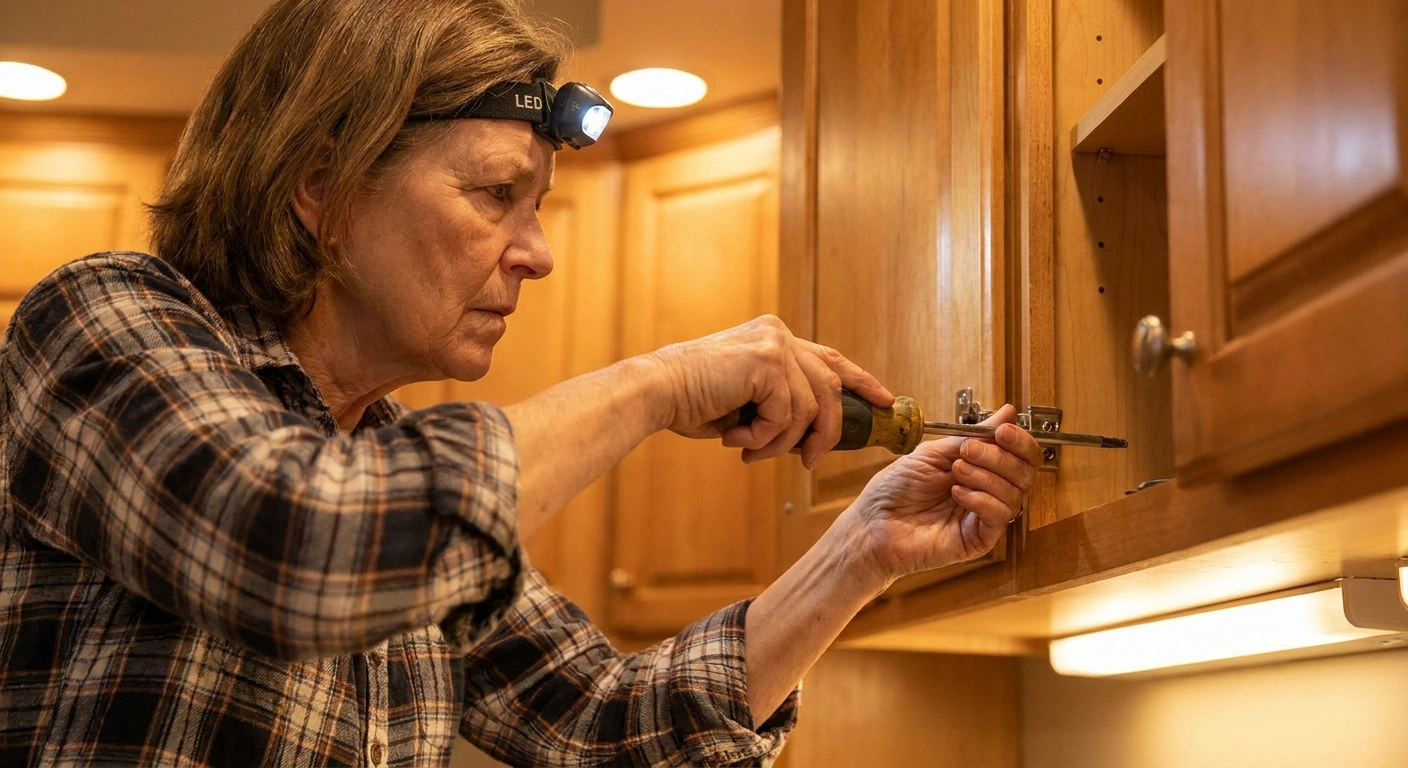
The screw on the cabinet hinge has worked loose again. Five years ago it was a thirty-second job. Now the screw slips out of your fingers twice before it’s even in the hole, the screwdriver tip keeps skating off the head, and when you finally look down there’s a red groove in your palm you never felt forming.
If that sounds familiar, you’re in good company. Numb fingers turn small household repairs into a fumble-fest, and a lot of people with neuropathy in their hands simply stop doing them. That’s a real loss — fixing things is independence, and for many of us it’s also a pleasure we’re not ready to give up.
The good news is that most of the trouble comes from a handful of predictable problems, and nearly all of them have a workaround. This is the practical, tool-by-tool guide I’ve pieced together from occupational therapy advice, workplace ergonomics research and plenty of trial and error from people in my support group. No special equipment budget required — most of these fixes cost less than a pizza.
Why Numb Fingers Make Simple Tools Hard
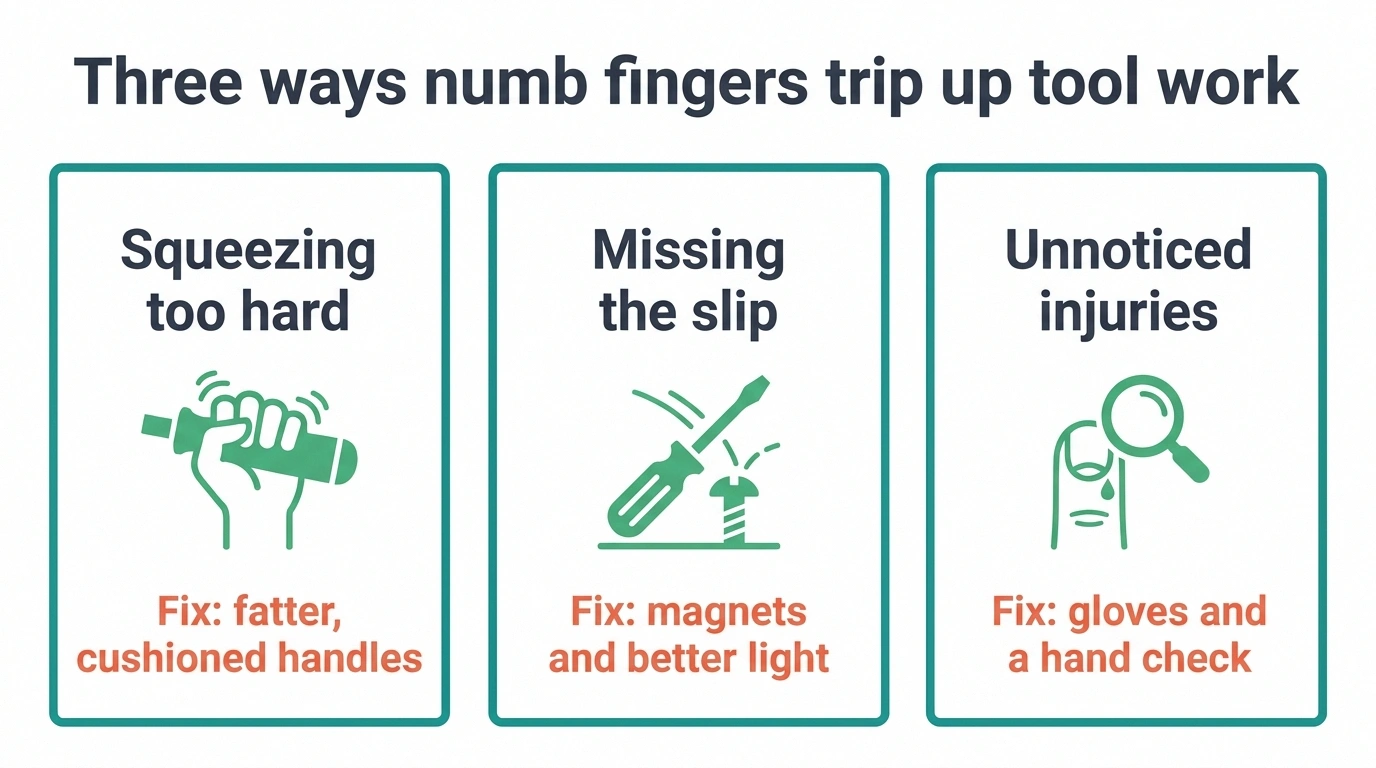
Your fingertips are packed with sensors that report pressure, slip and texture back to your brain dozens of times a second. That feedback is what lets you hold a screwdriver just firmly enough, feel a screw start to bite into wood, and notice a tool sliding before it falls. When neuropathy dulls those signals, three things tend to happen.
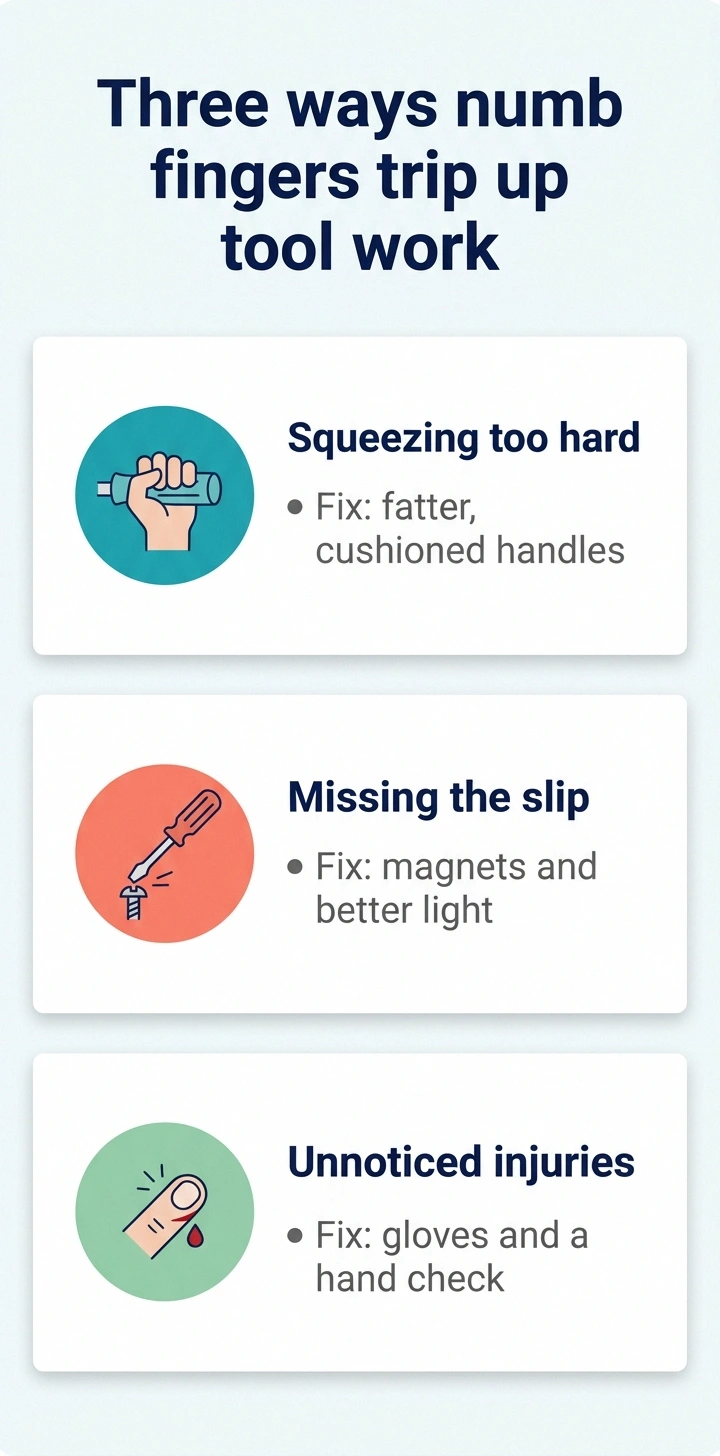
You squeeze too hard. It sounds backward, but it’s the most common pattern — without feedback telling you the grip is secure, your hand compensates by clamping down. That tires the muscles quickly, cramps the hand, and puts pressure on skin you can’t feel. My article on why your grip fails with neuropathy explains this loop in more detail.
You can’t feel the slip coming. A tool starts to rotate in your hand or a screw tips sideways, and you only find out when it’s already on the floor.
Injuries go unnoticed. A nick from a utility knife, a blister from a stiff wrench, a pinch from pliers: without pain as an alarm, small wounds get bigger before you spot them. People in online neuropathy communities describe cutting themselves while cooking without realizing it, and the same thing happens at the workbench.
The fixes below target those three problems: reduce the grip force a job needs, add other ways of knowing what your hands are doing, and protect the skin you can’t feel.
Set Up the Job Before You Pick Up a Tool
Half the battle happens before you touch anything. A few minutes of setup makes every later step easier.
- Light it brightly. When touch is unreliable, your eyes take over. A headlamp or a clamp light aimed right at the work beats the overhead bulb every time.
- Bring the work to a comfortable height. Kneeling on the floor or reaching overhead adds strain and balance trouble. Take the cabinet door off and work at the table if you can.
- Clear a landing zone. A towel or rubber mat under the work stops screws from bouncing and rolling away.
- Warm your hands first. Cold makes numb fingers clumsier. Run them under warm water for a minute before a fiddly job in a chilly garage.
- Gather everything first. Lay out every tool and part you’ll need within easy reach before you start, so you aren’t climbing down, digging through a drawer or setting a half-held part aside mid-job.
- Plan for breaks. Ergonomics guides recommend pausing, stretching and switching hands. With neuropathy, those breaks are also your chance to check your skin.
If the repair involves climbing, my guide to using ladders and step stools safely covers that part, because numb feet on a ladder rung bring their own risks.
Screwdrivers That Do More of the Work
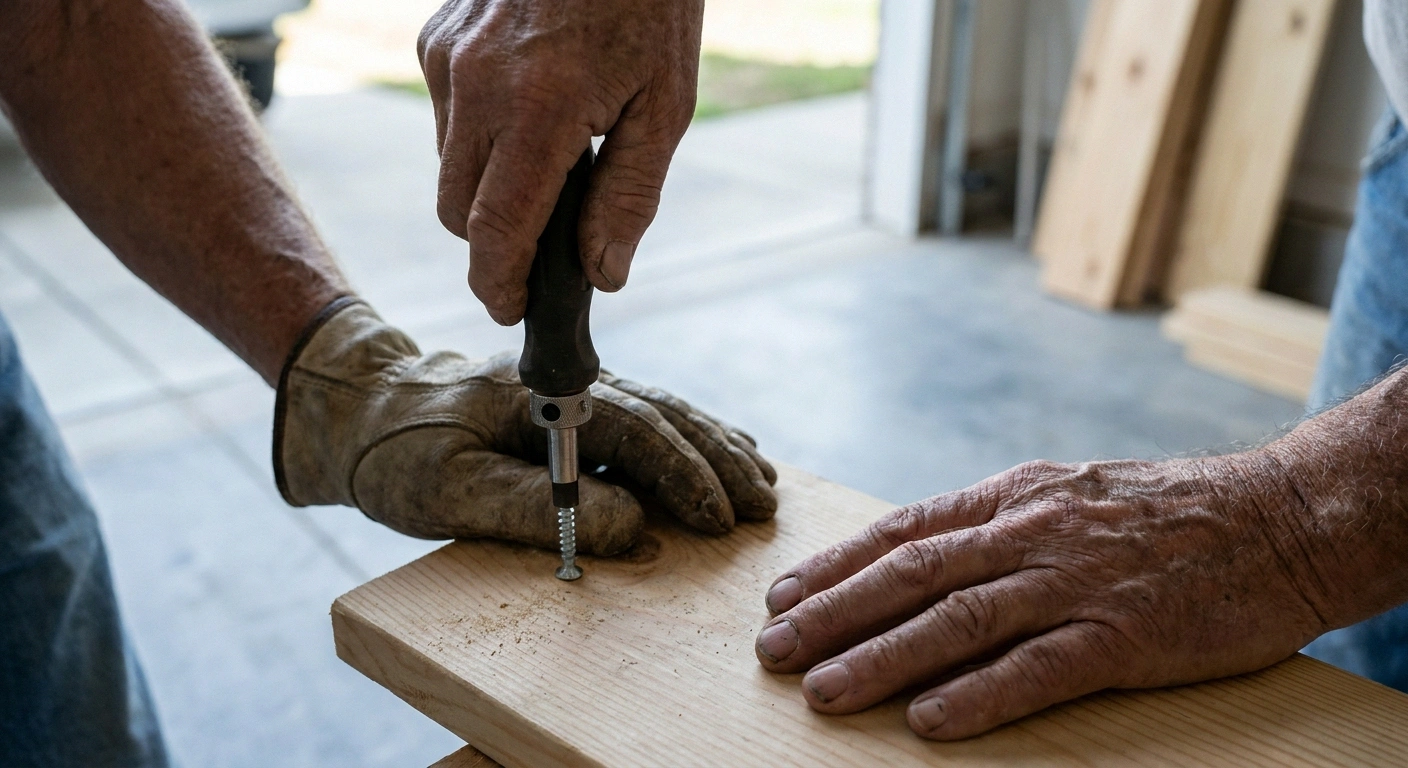
The screwdriver is the tool that frustrates people most, so it gets the longest section. A standard skinny-handled screwdriver asks a lot of your fingertips: a tight pinch to hold it, steady downward pressure, and a twisting motion that depends on feeling the screw grab. Here’s how to take each of those demands down a notch.
| Instead of | Try | Problem it solves |
|---|---|---|
| Thin-handled screwdriver | Fat cushioned ratcheting driver with a magnetic bit | Over-gripping and dropped screws |
| Adjustable wrench | Combination wrench, socket ratchet or nut driver | Slipping off the nut |
| Short pliers | Long-handled spring pliers or locking pliers | Palm pressure you can’t feel |
| Holding nails in your fingers | Magnetic nail-start hammer or a clothespin | Hammer blows on numb fingertips |
| Fixed-blade utility knife | Auto-retracting blade with a thick handle | Cuts you won’t notice right away |
Choose a fat, cushioned handle. Workplace ergonomics guidance from OSHA notes that cushioned grips improve comfort, add slip resistance and reduce the grip force needed. University ergonomics guides suggest a power-grip handle about one and a half inches across. A wide handle lets you hold the tool with your whole hand instead of your fingertips.
Build up handles you already own. Foam tubing sold for adaptive utensils, a few wraps of grip tape, or a slip-on rubber sleeve can fatten an old handle in minutes. My piece on adaptive eating utensils shows the same tubing that works on forks and spoons.
Go magnetic. A magnetized tip or a magnetic bit holder keeps the screw stuck to the driver so you’re not pinching it in place. This one change solves more dropped-screw frustration than anything else I’ve tried — and a magnetizer block costs a few dollars.
Use a ratcheting driver. A ratchet lets you turn back and forth without repositioning your grip each time. Fewer regrips means fewer chances to lose hold.
Start screws differently. Instead of holding a screw upright with your fingers, push it through a scrap of cardboard or a strip of painter’s tape, then hold the cardboard. Or start the hole first with a small awl or a drill. A screw that’s already biting stands up on its own.
Watch the screw head, not your hand. Since you can’t feel the tip seating properly, look. Make sure the bit fits the screw head snugly. A worn bit or the wrong size is the main reason the driver skates off and gouges your hand.
Consider a small cordless screwdriver. A lightweight cordless driver with a clutch (the numbered ring near the tip) stops turning once the screw is snug. That clutch does the “feeling” for you — exactly what numb fingers need. Set it low for soft woods and small screws.
Wrenches, Pliers and Hammers
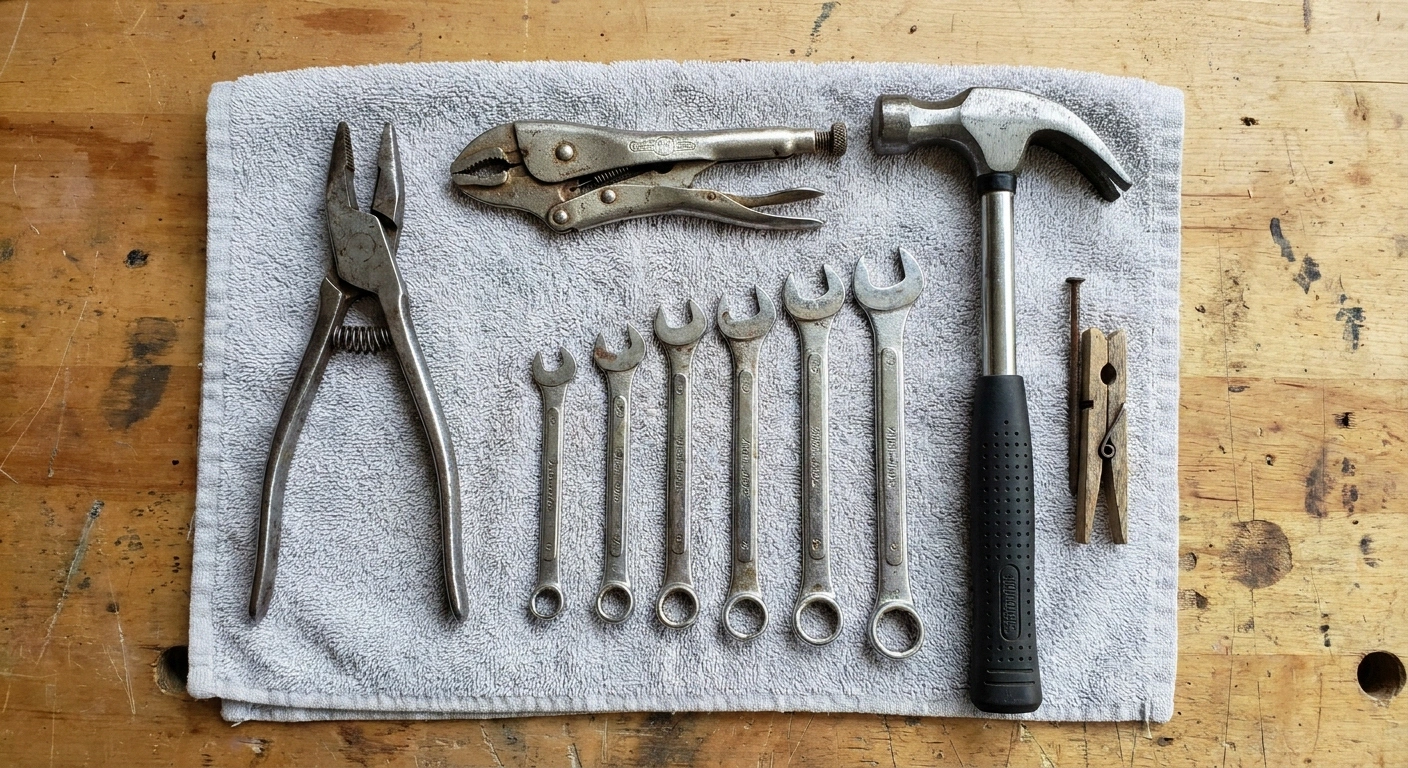
Each of these tools has its own trap for numb hands, and its own easy swap.
Wrenches. An adjustable wrench needs constant thumb pressure on the little worm gear and loves to slip. A set of combination wrenches or a socket set with a ratchet handle grips the nut on its own. Nut drivers, which look like screwdrivers with a socket on the end, are even easier for small nuts. Longer handles give more leverage, so you need less squeeze.
Pliers. Short-handled pliers press right into the palm, and ergonomics guides specifically warn against them. Choose pliers with long, cushioned handles and a spring that opens them for you, so your hand only has to close. Locking pliers are a great option: clamp them once and they hold on without any grip from you at all.
Hammers. The risk here is obvious — a missed nail lands on fingers you can’t feel well. Hold nails with needle-nose pliers, a clothespin or a strip of cardboard instead of your fingertips. A magnetic nail-starting hammer holds the nail on the head for the first tap. Choose a lighter hammer with a cushioned, non-slip grip and let it do the work.
Utility knives. Use a knife with a fat handle and a blade that retracts automatically when you let go. Always cut away from your body and your other hand, and clamp the material down so your free hand isn’t holding it near the blade.
Small Parts Without the Fumbling
Tiny screws, washers and nuts are where numb fingers struggle most. A few cheap helpers change everything:
Starting a tiny screw without pinching it
- Cut a strip of cereal-box cardboard about two inches wide.
- Push the screw through the cardboard so its point sticks out the other side.
- Hold the cardboard, not the screw, and set the point in the pilot hole.
- Drive the screw a few turns until it stands on its own.
- Tear the cardboard away and finish the job.
Your fingers stay an inch or more from the tip of the driver the whole time.
- A magnetic parts tray keeps small steel pieces from rolling away. Some people wear a magnetic wristband so parts are always within reach.
- A magnetic pickup tool retrieves dropped screws without bending down and pawing at the floor.
- Tweezers or hemostats pick up pieces your fingertips can’t grasp.
- A light-colored towel as a work surface makes small dark parts easy to see.
- Sorting cups or a muffin tin keep the parts from each step separate, so you aren’t fishing around in one pile.
For other everyday pinch-grip struggles, from bottle caps to blister packs, my guide to opening jars and stubborn packaging has more of these little tricks.
Gloves That Help Instead of Hurt

Gloves are a bit of a balancing act — protection on one side, feel on the other. They protect skin you can’t feel, but thick ones take away even more of the feedback you have left.
For most household jobs, thin work gloves with a grippy coating on the palm and fingers are the sweet spot. They add friction so tools slip less, guard against scrapes, and still let you sense a bit of what you’re holding. Padded gloves make sense for jobs with heavy gripping or vibration. Whatever you choose, fit matters. Ergonomics sources point out that loose gloves make you grip harder, which defeats the purpose.
One more glove trick from a retired machinist in my group: keep two pairs. A thin coated pair for the fiddly work, and a padded pair that goes on whenever the job turns to gripping, hauling or scraping. Swapping takes seconds, and it means you’re never stuck choosing between feel and protection for an entire afternoon. Tuck the spare pair in the toolbox lid so it’s always there when the job changes.
Leave gloves off around anything that spins, such as a drill press or a table saw, where fabric can be caught and pull your hand in. That safety rule applies to everyone.
Power Tools: Helpful, With Limits

Powered tools reduce the finger force a job needs, which is a genuine plus. A cordless drill-driver, an electric screwdriver or a powered sander can make jobs possible that hand tools no longer allow.
Put the sander down if you notice
- Tingling that’s still there 30 minutes after you stopped
- Fingertips turning white or pale, especially in the cold
- Clumsiness that’s worse than your usual baseline the next morning
Blanching fingers after vibration exposure is a recognized pattern of its own, separate from neuropathy, and worth mentioning at your next appointment. A kitchen timer set for short work blocks makes breaks automatic.
The catch is vibration. Hand-arm vibration from tools used for long stretches is a known cause of nerve symptoms in the hands on its own, and therapists advise limiting time on vibrating tools when your hand nerves are already affected. Keep sessions short, take regular breaks, choose newer tools with low-vibration designs, and stop if tingling or numbness gets worse during or after the job.
For bigger saws and shop equipment, my article on woodworking and power tool safety with neuropathy goes into guards, push sticks and setups that keep your hands well clear of the blade.
The After-Job Hand Check
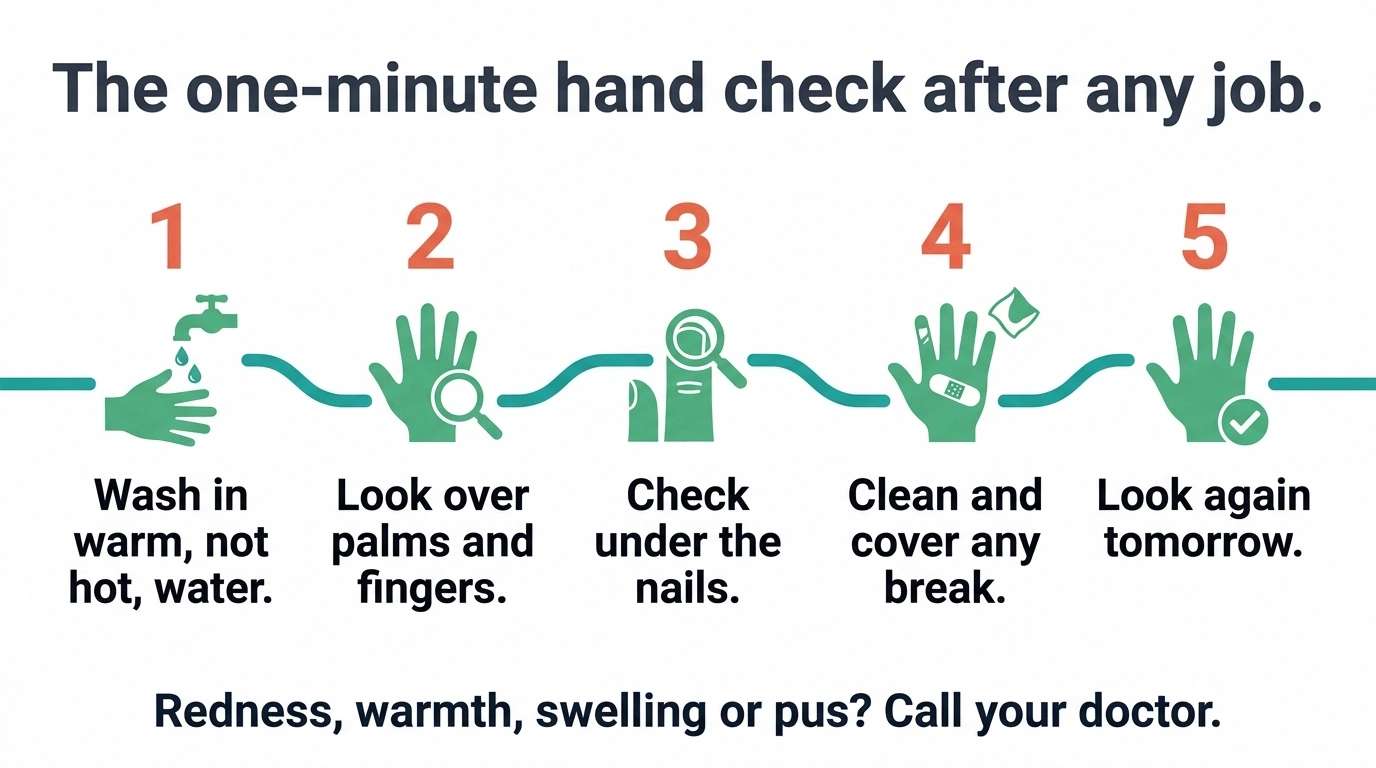
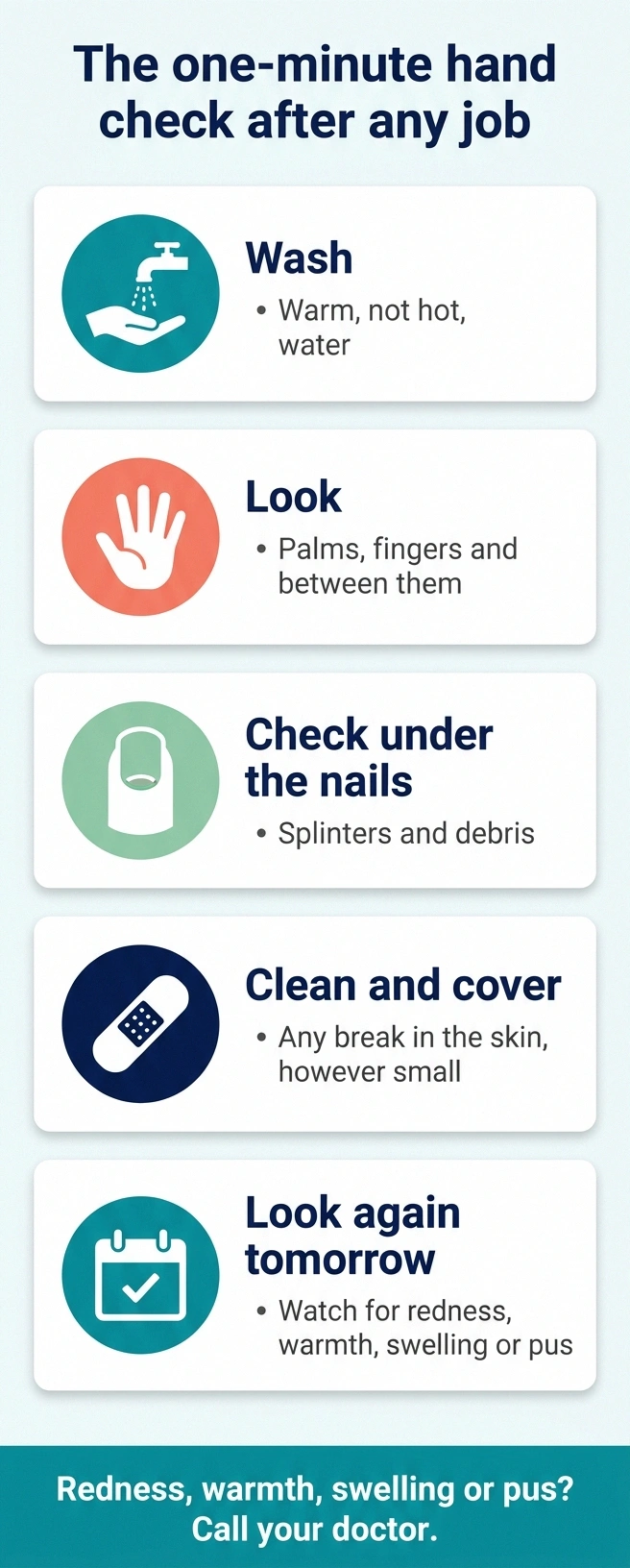
This is the habit I’d ask you to keep even if you skip everything else — truly. Since your hands can’t tell you they’ve been hurt, you have to look.
- Wash your hands with soap and warm water (test the temperature with your elbow or a thermometer, not your fingers).
- Look over palms, fingers and between the fingers in good light for cuts, splinters, blisters, red pressure marks or swelling.
- Check under your nails for splinters or debris.
- Clean and cover any break in the skin, even a small one.
- Look again the next day. Increasing redness, warmth, swelling or pus around a cut deserves a call to your doctor, especially if you have diabetes.
It takes about a minute. That minute is what keeps a scraped knuckle from becoming an infection you didn’t notice for a week. If you already do a daily foot check, add your hands to it on the days you’ve been working.
When to Bring In an Occupational Therapist
An occupational therapist, or a certified hand therapist, specializes in exactly this: keeping you able to do the tasks you care about. They can test your grip and pinch strength, recommend specific adaptive tools, show you exercises that maintain dexterity, and suggest ways to rearrange your workspace. My article on occupational therapy for neuropathy explains what a typical visit looks like and how to get a referral.
It’s worth asking for a referral if:
- You’re dropping tools or parts often, or have stopped doing jobs you used to enjoy.
- Your grip feels weak, not just numb.
- You’ve injured your hands without noticing more than once.
- Numbness is mostly in certain fingers rather than all of them, which can point to a pinched nerve such as carpal tunnel rather than neuropathy. My comparison of carpal tunnel and peripheral neuropathy explains the difference.
New weakness, numbness that spreads quickly, or changes in only one hand are worth reporting to your doctor soon rather than working around. Those patterns aren’t typical of slow neuropathy.
Numb fingers change how you work, but they don’t have to end it. With the right handles, a few magnets, better light and a minute of checking afterward, a lot of us are still the ones the family calls when the cabinet door starts to sag.
Frequently Asked Questions
What is the best screwdriver for numb fingers?
Look for a wide, cushioned handle about one and a half inches across, a magnetic tip or bit holder to keep the screw in place, and a ratcheting mechanism so you do not need to regrip. A small cordless screwdriver with a clutch setting is often the easiest option because it stops turning once the screw is snug.
Why do I grip tools so hard with neuropathy?
Numb fingertips send weaker signals about pressure and slip, so the brain cannot tell when a grip is secure. The hand compensates by squeezing harder, which tires the muscles and can cause pressure marks and blisters you do not feel.
How can I hold small screws if I cannot feel them?
Use a magnetic screwdriver tip, push the screw through a piece of cardboard or tape and hold that instead, or start the hole with an awl so the screw stands up on its own. A magnetic parts tray and tweezers also help with small pieces.
Should I wear gloves when using tools with neuropathy?
Thin, well-fitting work gloves with a grippy palm coating protect the skin while keeping some feel. Padded gloves help with heavy gripping and vibration. Avoid gloves around spinning machinery such as drill presses, where fabric can get caught.
Can power tools make hand neuropathy worse?
Long periods of vibration from power tools can cause or aggravate nerve symptoms in the hands. Keep sessions short, take breaks, choose low-vibration tools, and stop if tingling or numbness increases during or after use.
How do I check my hands for injuries after a project?
Wash your hands, then look closely at the palms, fingers, between the fingers and under the nails in good light for cuts, splinters, blisters or red marks. Clean and cover any break in the skin, and check again the next day for redness, warmth, swelling or pus.
Can an occupational therapist help with using tools?
Yes. Occupational and hand therapists can assess grip and pinch strength, recommend adaptive tools, teach dexterity exercises and suggest workspace changes. Ask for a referral if you drop things often, notice weakness, or have injured your hands without feeling it.
About the Author