The first time I dropped a mug of hot tea, I was standing alone in my kitchen and the cup hit the floor before I’d processed that I had been holding it. My hand had simply let go. I stared at the broken ceramic and the spreading puddle and thought, this is going to keep happening, isn’t it.
It did. The numbness in my hands made me unreliable around heat, sharp things, and small grips. The pain in my feet made standing through dinner prep an exercise in willpower. For about a year I cooked less and less. Frozen meals, takeout, sandwiches, repeat. I told myself it was fine. It wasn’t fine. I was eating worse, spending more, and feeling smaller in my own kitchen.
Then I started rebuilding. Not by toughing it out, but by changing the kitchen. The tools, the layout, the workflow, the assumptions about how a meal gets made. Two years in, I cook five or six dinners a week. Some are quick, some are slow-cooker projects, some are sheet-pan-and-go. None of them require me to have hands and feet I no longer have.
I’m Janet Ellis, and this is the adaptive kitchen system I’ve worked out for living with peripheral neuropathy. None of it is about giving up. All of it is about smart substitutions.
What Neuropathy Does to Cooking
Before the solutions, the problem. Neuropathy interferes with cooking in five specific ways, and recognizing which ones apply to you helps you target your changes.
5 Ways Neuropathy Disrupts the Kitchen
Adaptive kitchen tools aren’t a downgrade — they’re how you keep cooking. Every neuropathy cooking problem (numb hands, foot fatigue, heat sensitivity) has a solution under $100. The goal is not to do things the way you used to. The goal is to keep doing them.
Hand numbness and clumsiness. When sensory feedback in the fingers is reduced, you grip too hard, you grip too loosely, you don’t feel a knife slipping until it’s slipped. Fine motor tasks — peeling, pinching, measuring small amounts — become slow and frustrating.
Heat sensitivity loss. This one matters most. If your hands don’t reliably register temperature, you can burn yourself badly without realizing it until you see the damage. Hot pan handles, oven racks, simmering pots — all things you’ve used for decades — become genuinely dangerous.
Foot fatigue and pain. Standing on a hard kitchen floor for thirty minutes to chop, stir, and plate triggers a foot flare for many neuropathy patients. By the time the meal is on the table, walking has become difficult.
Cold sensitivity. Some patients have the opposite problem at the freezer — burning pain on contact with cold metal or frozen foods. Fishing through a freezer drawer becomes painful.
Reduced fine motor control. Decorating, cake work, careful measuring, and small repetitive tasks become hard. This one is less about pain and more about precision loss.
The good news: every one of these has a workaround that costs less than $100, and most of them cost much less.
Tools That Solve the Cutting Problem
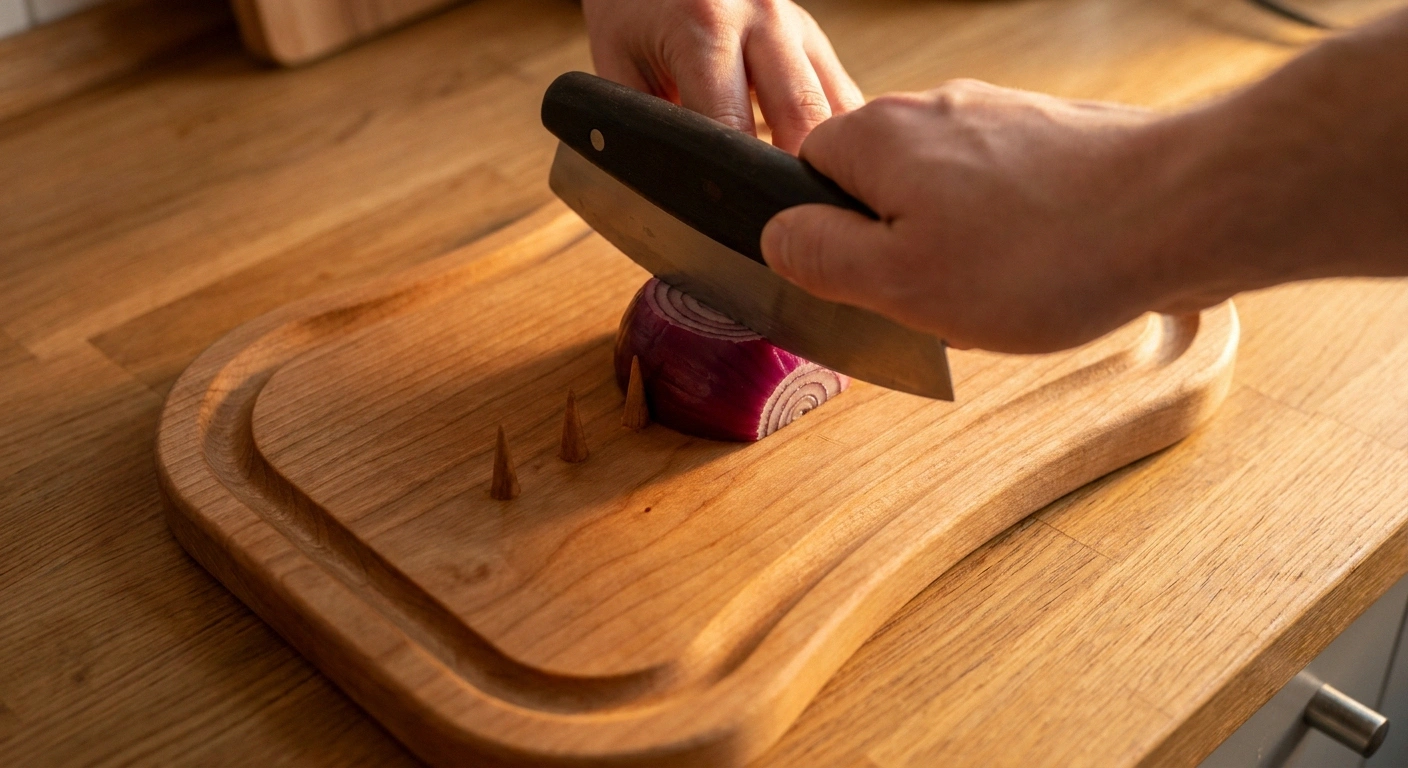
Cutting is where most patients have the first crisis. You can’t trust your hands the way you used to, and a kitchen knife is unforgiving.
If You Buy Three Things Today
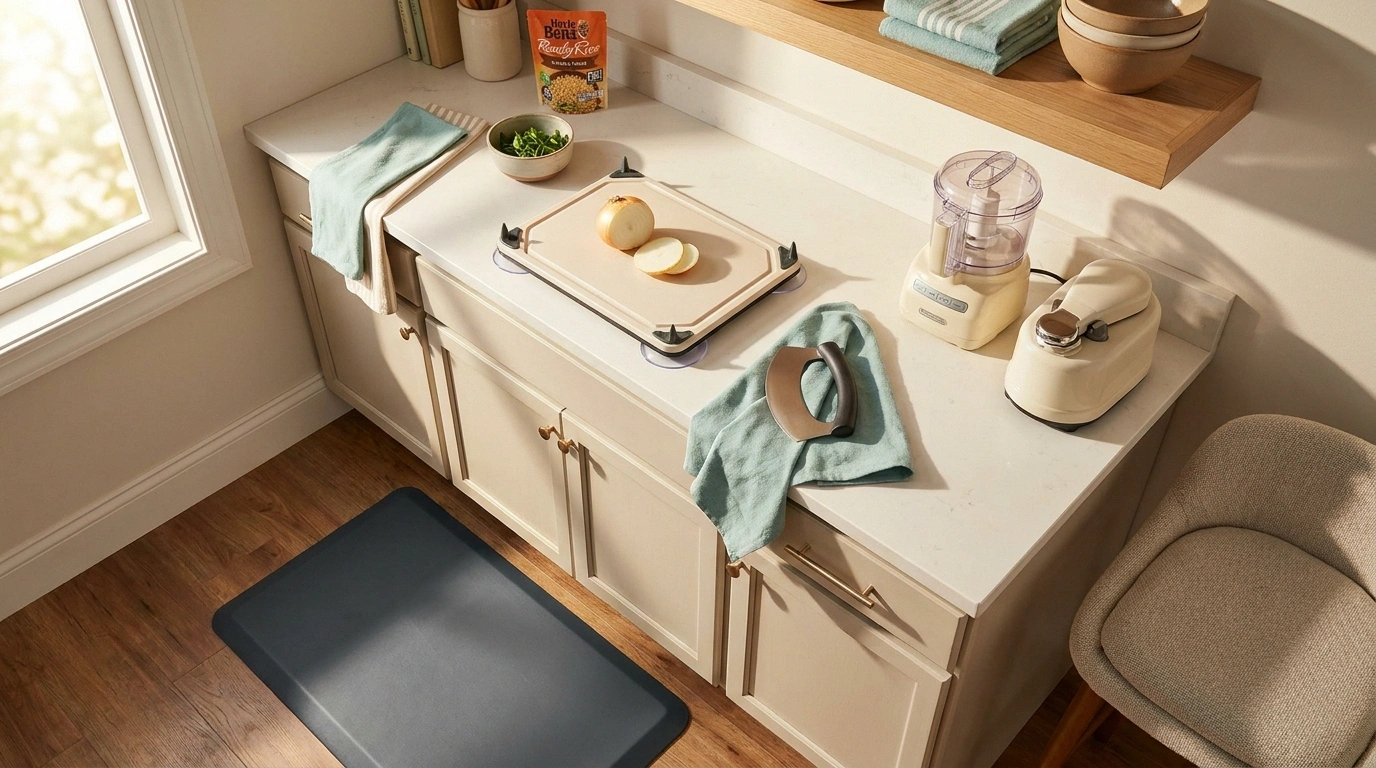
An adapted cutting board. The single best kitchen investment I’ve made. A cutting board with suction feet (so it doesn’t slide), raised edges on two sides (to brace the food), and a few short stainless spikes in one corner (to hold things like onions or potatoes while you cut) eliminates the need for the hand that would normally hold the food. One hand cuts; the other rests. About $30 to $60 depending on the brand.
A rocker knife. A curved blade with handles on both ends that you rock back and forth instead of slicing with one hand. Originally designed for stroke patients, it works beautifully for anyone with hand weakness or numbness. You can cut a chicken breast, a tomato, a sandwich, all without the precision-grip-and-slice motion. Around $20.
A mezzaluna for herbs. A two-handed half-moon blade you rock over fresh herbs to chop them. Easier on hands than a chef’s knife. About $25.
Pre-cut produce. I want to say this clearly because there’s still a stigma against it: buying pre-cut vegetables is not failure. It is energy conservation. The bag of pre-chopped onions, the container of cubed butternut squash, the diced bell peppers — all of these cost a few dollars more and save the most physically demanding part of dinner. Many neuropathy patients do all their cutting on Sunday for the week, or they buy pre-cut and skip the cutting step entirely. Both work. Neither is cheating.
Tools That Solve the Gripping Problem
If your hand can’t reliably hold something, the kitchen has to hold it for you.
Silicone grippy mats. A thin square of silicone (Dycem brand or generic) under a mixing bowl, a cutting board, or a plate keeps it from sliding. About $10 for a multi-pack. I have one under nearly everything I’m working on.
Built-up handles. Foam tubing that slips over thin utensil handles makes them larger and easier to grip without a tight pinch. A roll of foam tubing is under $15 and you can cut it to fit any utensil — knives, spatulas, peelers, the lot.
Two-handled pots. A pot with two ear handles instead of one long handle is much easier to lift, especially when full of liquid. If you’re replacing a pot anyway, choose two-handled models. They cost the same.
Anti-slip strips on pan handles. Silicone or rubberized grip wraps that fit over existing pan handles. Reduces the chance of a pan slipping out of a numb grip. About $10 for a set.
Tools That Solve the Opening Problem
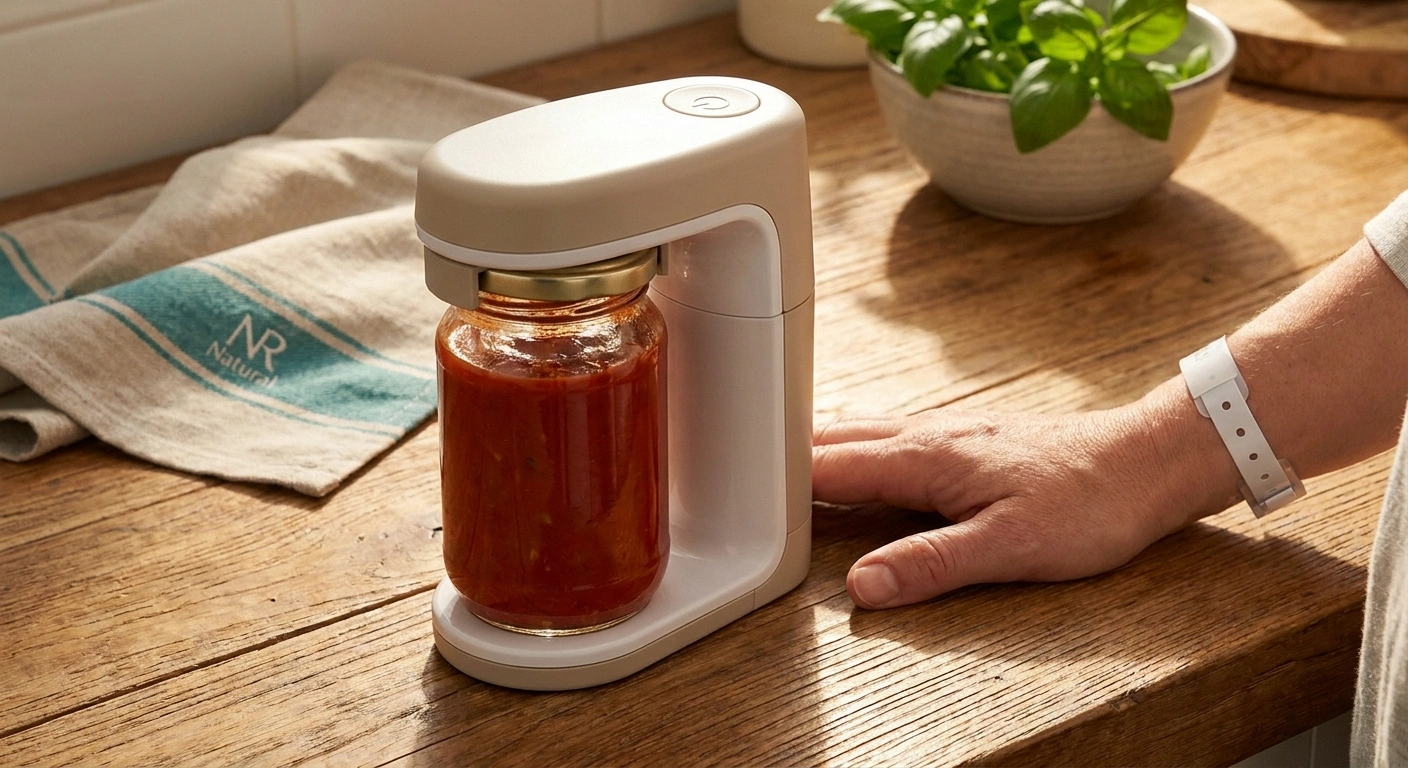
Jars are the universal frustration. So are cans, vacuum-sealed packages, and bottle caps.
An electric jar opener. Sits on the counter, you place the jar under it, push a button, and it grips and twists. Hands-free. Brands like Hamilton Beach Open Ease and One Touch retail in the $30 to $50 range. Mine has paid for itself in not having to ask my husband to come open something every other meal.
An electric can opener. Either countertop or handheld battery-powered. The handheld kind clamps on, you press a button, and it walks around the can. About $20 to $40. The countertop versions are more reliable but take up space.
Rubber jar grippers. A rubber disk you hold against a jar lid for friction. Very low-tech, very cheap, and works for moderately tight jars. About $5.
Pop-top tools. A small lever that hooks under canned-food pop-tops. About $8. The pop-top is harder than it looks if your fingers don’t bend the way they used to.
Electric Appliances Are Your Best Friends
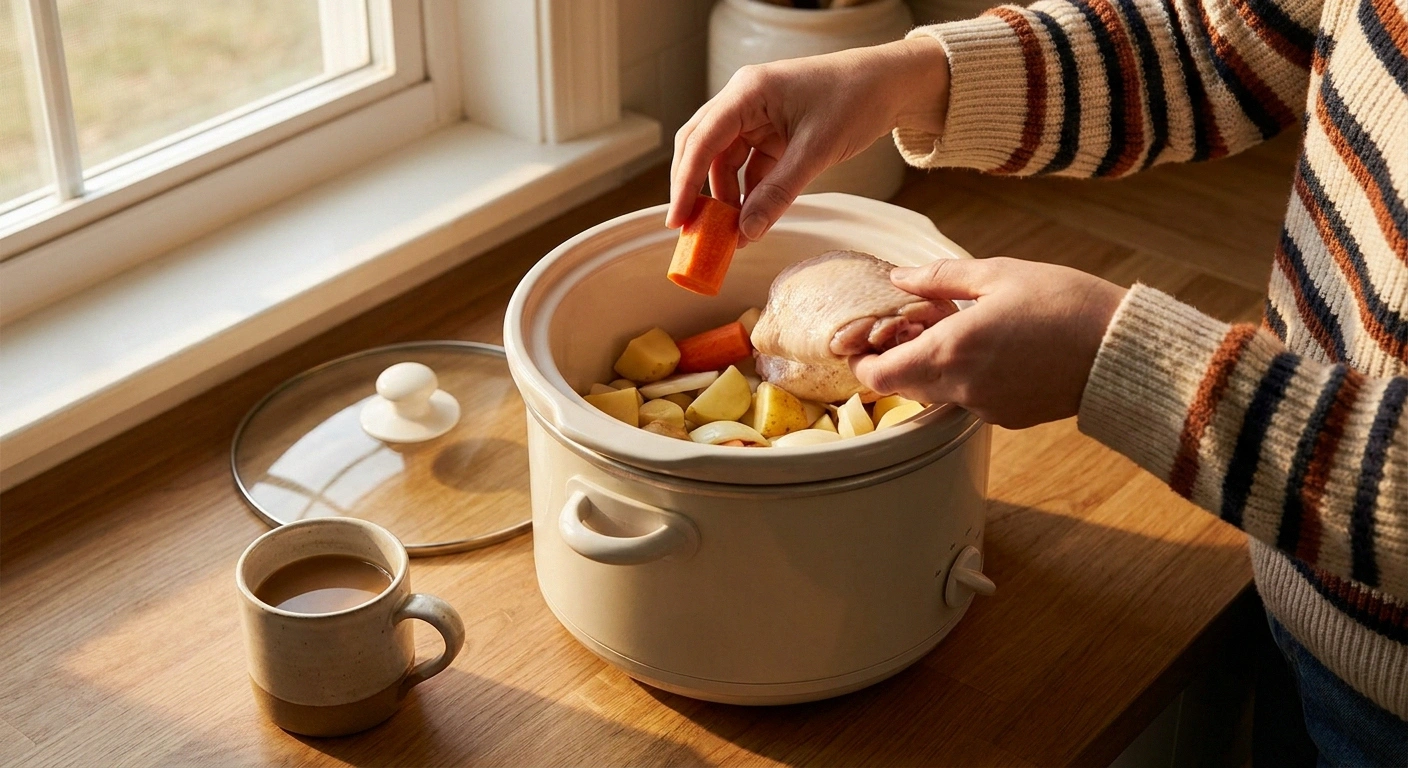
If hand strain is the bottleneck, electric does the work. There’s no virtue in chopping by hand when a food processor does it in 20 seconds.
A small food processor. Even a four-cup model handles onions, peppers, garlic, herbs, and softer vegetables. Push the button, the chopping is done. The cleanup is the only “extra” — and a small bowl rinse is much easier than ten minutes of hand chopping.
A blender or immersion blender. Soups, sauces, smoothies, and dressings without whisking or stirring at length. The immersion blender is particularly nice because you blend in the pot — no transfer, no second container.
A slow cooker. Load it in the morning, walk away, dinner is ready at six. Stews, soups, chili, pulled chicken, beans, even some grain dishes. Almost zero hand strain after the initial loading.
An Instant Pot or pressure cooker. The faster cousin of the slow cooker. Beans cooked in 30 minutes, soup in 20, a whole chicken in under an hour. The lid takes a small twist; if that’s hard, look for the models with the easier-lock lids.
An air fryer. Replaces standing-and-flipping at the stove for a lot of weeknight proteins and vegetables. Salmon, chicken thighs, broccoli, sweet potato fries — all hands-off after loading.
A stand mixer or hand mixer. If you bake at all. Replaces the gripping-and-stirring that used to define mixing.
You don’t need all of these. Most of my friends have a slow cooker, an Instant Pot, and a small food processor. That trio covers most weeknight cooking.
Solving the Foot Problem
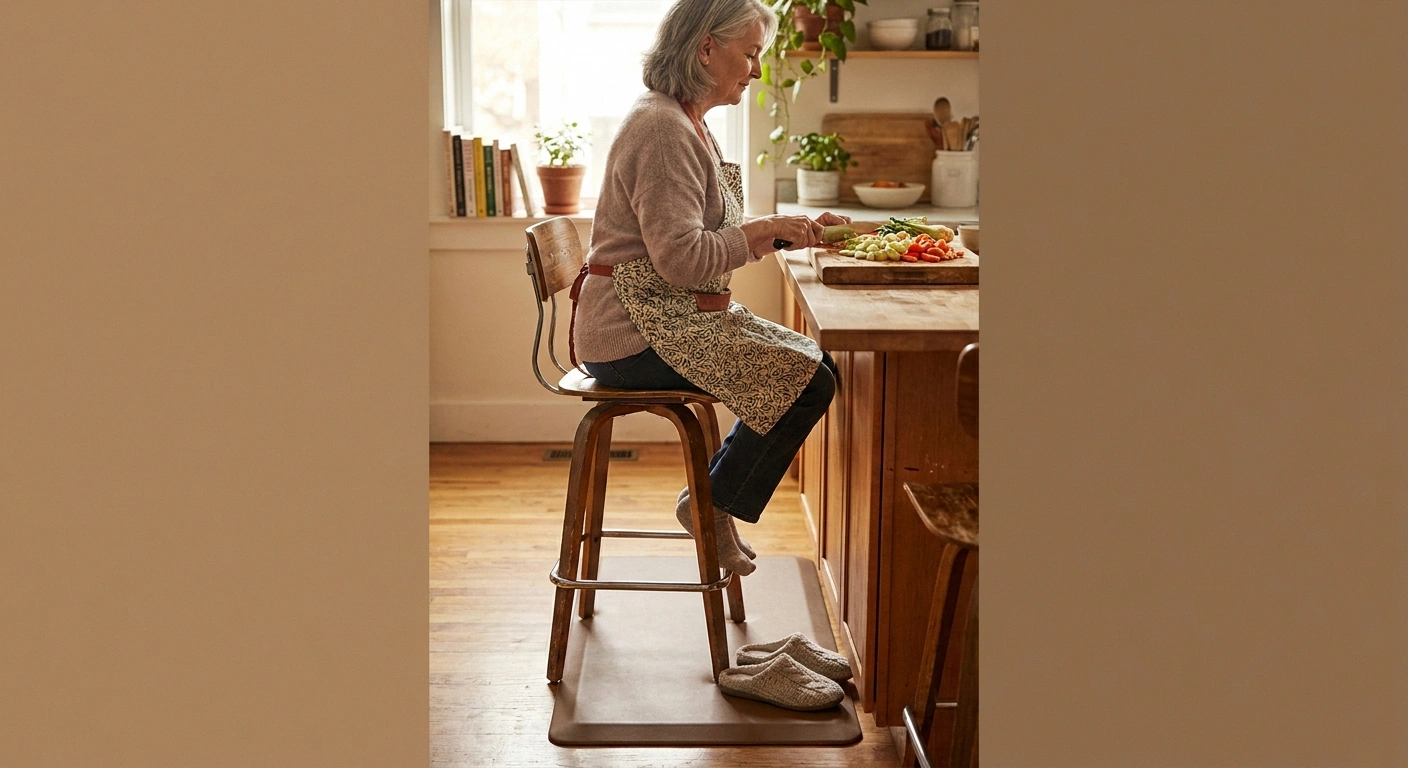
Standing for thirty minutes on a hard kitchen floor is the single most reliable way to trigger a foot flare for me. The fix is two things: a better surface and the option to sit.
Foot Fatigue Fix Stack
- Anti-fatigue gel mat at the prep zone AND at the stove (~$50 each)
- Counter-height stool — sit through prep work; no rule says you have to stand
- Roll-around stool with lockable wheels for spread-out kitchens (~$60)
- Cushioned kitchen-only shoes — never bare feet on tile
The mat alone often turns a 30-minute foot flare into a comfortable 90-minute cook.
A gel anti-fatigue kitchen mat. Not a rug. A thick gel or memory-foam mat designed for kitchen use, placed at your prep zone and another at the stove. Around $50 for a good one. The difference between concrete-on-bare-floor and a thick mat is the difference between a foot flare in 30 minutes and a comfortable 90-minute cook session.
A counter-height stool. A simple bar-height stool at the prep counter so you can sit while chopping, mixing, or assembling. Not glamorous; entirely functional. The good ones are $80 to $200; a basic one from a big-box store is $40. The point is the option to sit, not the design.
A roll-around stool with locking wheels. If your kitchen layout is more spread out, a low rolling stool lets you sit at the stove, then push to the prep zone, then to the sink. Locking wheels keep it stable. About $60. Particularly useful for patients with significant foot pain who still want to cook.
The right shoes. Not bare feet, not slippers, not socks-on-tile. Cushioned, supportive shoes designed for long standing. Many patients have a dedicated pair of kitchen-only shoes that they slip on when cooking starts.
Solving the Heat Problem
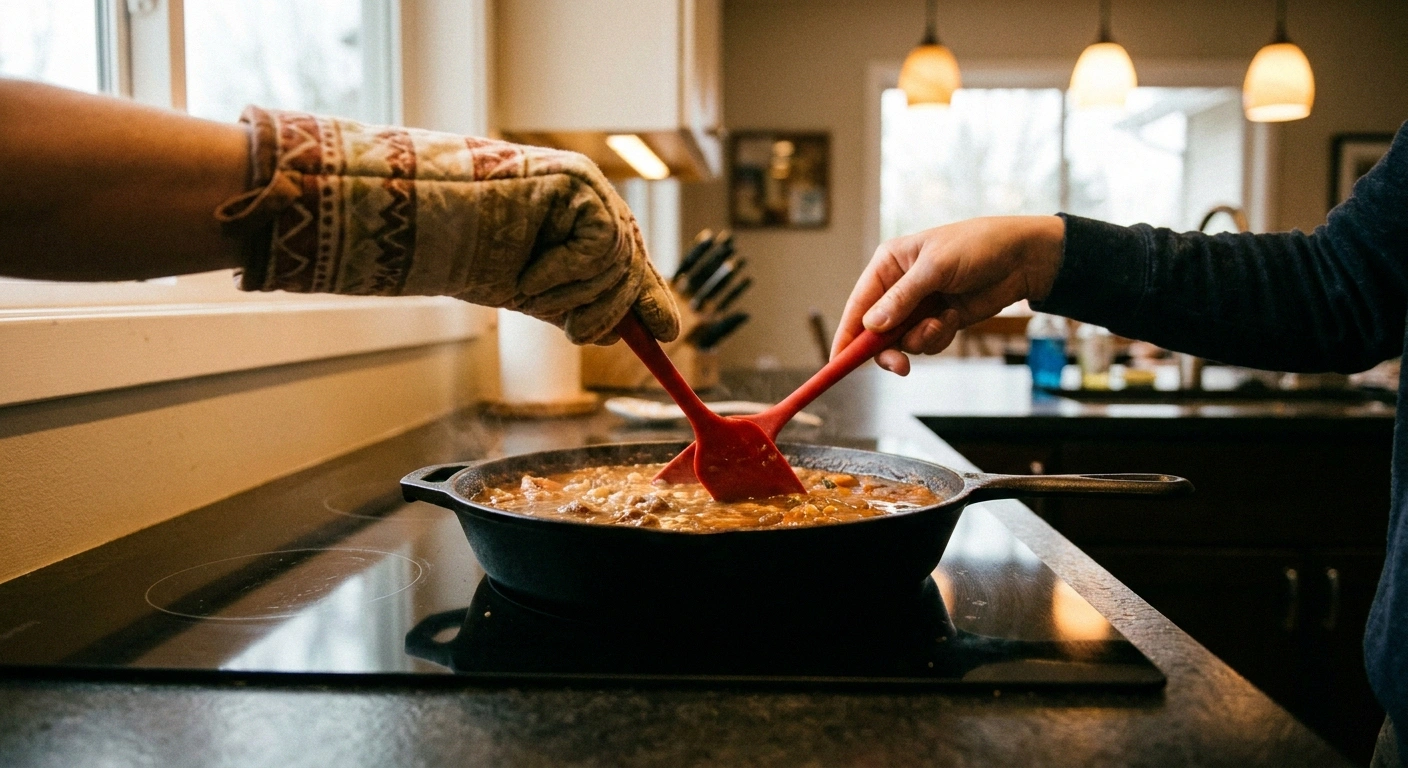
This is the safety chapter. If your hands don’t reliably feel temperature, you need the kitchen to give you the information they used to.
If your hands don’t reliably register temperature, you can burn yourself badly without realizing it. Use long-handled utensils, wrist-covering oven mitts, the back-of-hand check (not palm), and a digital thermometer instead of feel-checking. Beware empty pans on hot burners — cool-looking metal can be hot enough to burn before your nerves report it.
Long-handled utensils. Anything that goes near a flame should have a handle long enough to keep your hand far from the heat. Replace short handles with longer ones over time. The 12-inch silicone spatula is much safer than the 8-inch wooden one.
Oven mitts that cover the wrist. Not the small square pot-holder. A mitt that covers the wrist and at least the lower forearm protects against the rack burn most home cooks have at least once. About $20 for a good pair.
Induction stovetop, if you ever replace your range. The cooktop surface stays cool because it heats the pan directly via electromagnetic field. The pan gets hot; the surface around it doesn’t. For neuropathy patients, this dramatically reduces burn risk. They’re more expensive than gas or coil, but worth a serious look at the next replacement cycle.
A digital thermometer for water and oils. If you can’t tell whether water is at a simmer or a boil by feel and you can’t reliably eyeball it because your eyes are tired too, a $15 digital thermometer ends the guesswork.
Visual cues for stovetop dials. Some patients add high-contrast tape or paint to the “off” position on stove knobs because the small printed mark wears off and a numbed thumb can’t always feel the click. Tiny modification, real safety upgrade.
Get in the habit of checking with the back of the hand. The back of the hand often retains slightly better temperature sensitivity than the palm in many patients. If you’re checking whether a pan is hot, the back-of-hand hover is safer than the palm tap.
Workflow Changes That Save the Day
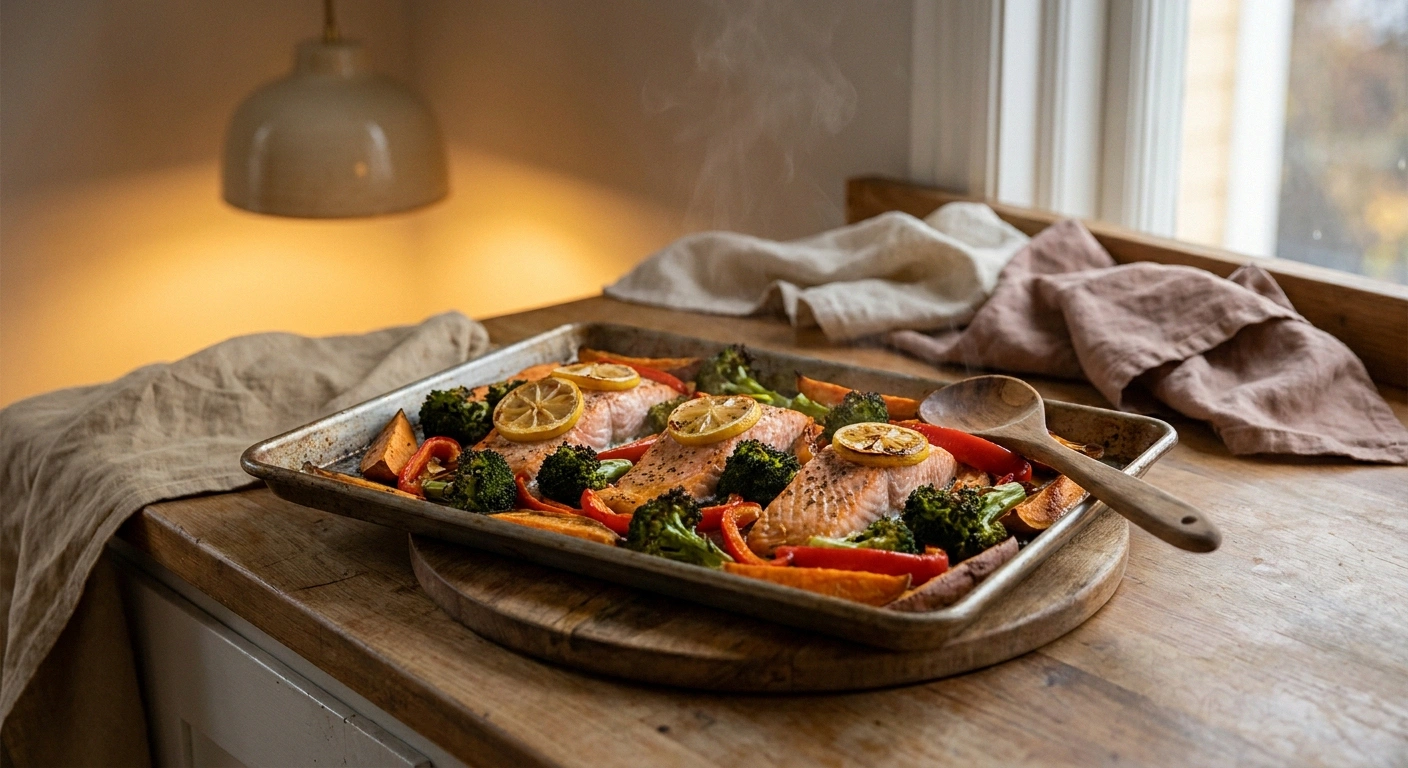
Tools matter. Workflow matters more. The way you sequence cooking can cut hand and foot strain by more than any single tool change.
6 Workflow Shifts That Cut Strain
Sit when you can. Most prep tasks can be done seated at the counter on a stool. There’s no rule that you have to stand to chop. Sit through chopping, mixing, measuring. Stand only when the stove genuinely requires it.
Mise en place before you start. Pull every ingredient, every tool, every measure out of the cabinets first. Set them on the counter where you’ll be working. Then start cooking. The repeated bend-down-and-search-for-the-cumin movements destroy more energy than the cooking itself.
Batch on good days. If today is a good hand day, a good foot day, a low-pain day — cook a double or triple batch. Soup, chili, grain salad, roasted vegetables. Future-you on a worse day eats out of your good-day reserves. This is the whole point of meal prep: smoothing the load across the week.
Slow-cooker and Instant-Pot dinners. The technology is your friend. Load in the morning when you’re freshest. Walk away. Dinner is on the table at six with no late-day standing.
Sheet-pan dinners. One pan, one trip to the oven, one cleanup. Salmon and vegetables. Chicken thighs and potatoes. Sausage and peppers. Hands-off after the loading.
Pre-shop the prep. Plan the week’s meals so the prep stacks. If three meals use chopped onion, chop all the onion at once on Sunday and store it. If three meals use roasted vegetables, roast a sheet pan on Sunday for the week.
Have a flare-day plan. Some days the kitchen is just too much. The freezer rotation, the can-of-soup-and-toast option, the rotisserie chicken from yesterday — these are not failures. They’re sustainable. The patients I know who cook the most also have the most-organized fallback plan for when they can’t.
The Grocery Strategy That Makes Cooking Possible
What you buy determines what cooking looks like. A cart full of whole-vegetable raw ingredients means a kitchen full of work. A cart that mixes raw ingredients with strategic shortcuts means a kitchen full of options.
I keep certain shortcuts in stock at all times. Pre-washed greens. Pre-cut butternut squash. Frozen riced cauliflower. Frozen mixed vegetables. Microwave rice pouches. A rotisserie chicken in the fridge most weeks. Canned beans, canned tomatoes, jarred sauces.
None of these is “less healthy” than its raw equivalent in any way that matters. They are time and energy translations. The bag of pre-washed spinach is the same spinach you would have washed yourself, minus the wash. The microwave brown rice is the same brown rice you would have cooked, minus the 45 minutes of stove standing.
For the bigger picture on how to set up a neuropathy-friendly grocery routine, see my piece on shopping with neuropathy. The kitchen and the cart are connected systems.
The Dignity Reframe
I’ll close with the part that took me the longest to accept.
Pre-cut vegetables. Slow cookers. Stools at the counter. None of it is giving up. All of it is how you keep cooking, keep hosting, keep feeding the people you love.
Using these tools is not “giving up.” It’s not a downgrade in your kitchen identity. It’s not a confession of decline. It’s adaptation, which is what intelligent humans have always done when their bodies and their environments don’t fit the way they used to.
Some of the best home cooks I know rely on a slow cooker for half their dinners. Some of the most generous hosts I know set out a board of pre-cut vegetables, hummus, and good cheese instead of a multi-course meal. The food is still good. The hospitality is still real. The connection at the table is unchanged.
What changes when you adapt the kitchen is that you keep cooking. You keep eating well. You keep feeding the people you love. The version of you that used to make every meal from raw ingredients standing at a counter for an hour is not the only version of a competent home cook.
If you take one thing from this article, take this: the goal is not to do things the way you used to. The goal is to keep doing things at all. The kitchen tools and workflows in this piece are how you keep doing them.
Frequently Asked Questions
How do I cook with neuropathy in my hands?
Adapt the tools so the kitchen does what your hands can no longer reliably do. The most useful changes for hand neuropathy: an adapted cutting board with suction feet and braces, a rocker knife instead of a chef’s knife, silicone grippy mats under bowls and boards, an electric jar opener, and a small food processor for chopping. Add foam built-up handles to thin utensils. The combined upgrade is under $200 and dramatically reduces hand strain. For the hand-pain perspective, see our piece on neuropathy in the hands.
What kitchen tools help most with neuropathy?
If I had to name three: an adapted cutting board (about $30 to $60), an electric jar opener (about $30 to $50), and a slow cooker or Instant Pot (about $50 to $100). Those three solve the most painful kitchen frustrations — cutting, opening, and prolonged stove time. After those, an anti-fatigue mat at the prep zone and a counter-height stool are the highest-leverage additions for foot fatigue.
How do I avoid burning myself when I have hand neuropathy?
The four-part approach: long-handled utensils so your hand is never near the heat, oven mitts that cover wrist and forearm, a digital thermometer instead of feel-checking water or oil, and the back-of-hand check rather than palm-tap when assessing whether a surface is hot. If you’re replacing a stove, induction is the safest option for neuropathy patients because the cooktop surface itself doesn’t heat. Be especially careful with empty pans on hot burners — the cool-looking metal can be hot enough to cause a serious burn before you feel it.
Are electric can openers safe for neuropathy?
Yes, and they are usually safer than manual can openers because you’re not relying on a sustained pinch grip while spinning a wheel. Both countertop and handheld battery-powered models work well. Handheld openers walk themselves around the can while you steady it; countertop models do almost everything for you. The lid handling at the end is the only step that requires hand involvement, and a magnetic lid lifter (often included) handles that without finger pinching.
What’s the easiest meal to make with neuropathy?
A sheet-pan dinner. Salmon or chicken thighs, plus chopped vegetables, oil and salt, into a 425-degree oven for 25 minutes. One pan, one set of dishes, almost no standing time. Close runners-up: a slow-cooker stew (load in the morning, eat in the evening), an Instant Pot soup (load and 20-minute cook), and a grain bowl assembled from pre-prepped components. None of these requires sustained hand work or prolonged standing.
Should I switch to an induction stove?
If you’re due for a stove replacement and the budget allows, yes — it’s the single biggest safety upgrade for neuropathy patients. The cooktop surface stays cool, dramatically reducing burn risk from accidental contact. If you’re not replacing your stove anytime soon, the smaller upgrades — long-handled utensils, wrist-covering oven mitts, and an attention to where your hands move near the heat — cover most of the safety gap.
Is it okay to rely on pre-cut vegetables and convenience foods?
Yes. Pre-cut vegetables are not less nutritious than vegetables you cut yourself. Microwave rice pouches are not inferior to stovetop rice. Canned beans are not lower-quality than dried beans. These products exist precisely because the prep work isn’t the nutrition; the food is. For neuropathy patients, choosing the version that gets eaten is more important than choosing the most-from-scratch version that doesn’t.
How do I keep cooking when my feet are flaring?
Sit. A counter-height stool at your prep zone, an anti-fatigue mat at the stove, and as many one-pot or sheet-pan dinners as you can manage that week. On the worst flare days, lean on the freezer rotation — soup you batched two weeks ago, frozen meatballs and microwave rice, eggs and toast. The system has to survive bad days, not just good ones. For more on managing your feet specifically, see our foot care guide.
About the Author