For the first year after my neuropathy symptoms became serious, I stopped going to restaurants entirely. It wasn’t a formal decision — more of a gradual retreat. The chairs were uncomfortable. The noise made it hard to concentrate on anything but the sensations in my feet. The menu felt like a minefield. And the social awkwardness of explaining why I couldn’t have the bread basket or the glass of wine with dinner? Exhausting.
I’ve since learned that this kind of self-imposed isolation is incredibly common among people with neuropathy, and incredibly counterproductive. Food is social. Restaurants are where we celebrate and gather and catch up with people we love. Giving that up doesn’t just affect our diet — it affects our whole quality of life.
So this article is about getting back to the table. Not perfectly, not without some adjustments, but in a way that lets you enjoy eating out without paying for it the next day.
The Neuropathy-Restaurant Challenge: What We’re Actually Navigating
Before the strategies, it helps to be honest about what makes dining out hard with neuropathy. It’s rarely just one thing:
- Menu ingredients — Sugar, alcohol, processed seed oils, and certain additives can trigger inflammatory flares or worsen symptoms directly.
- Physical discomfort — Hard chairs, cold dining rooms, long waits on your feet, tight shoes that felt fine when you left the house.
- Unpredictable timing — Eating later than usual, waiting longer between courses, disrupting your normal meal timing.
- Social pressure — Well-meaning friends urging you to “just have one” glass of wine or “try a bite” of something you know you shouldn’t.
- Limited knowledge — Not knowing what’s in dishes, hidden ingredients, or how something was cooked.
None of these are insurmountable. But knowing what you’re dealing with is the first step to dealing with it effectively.
Choose Your Restaurant Strategically
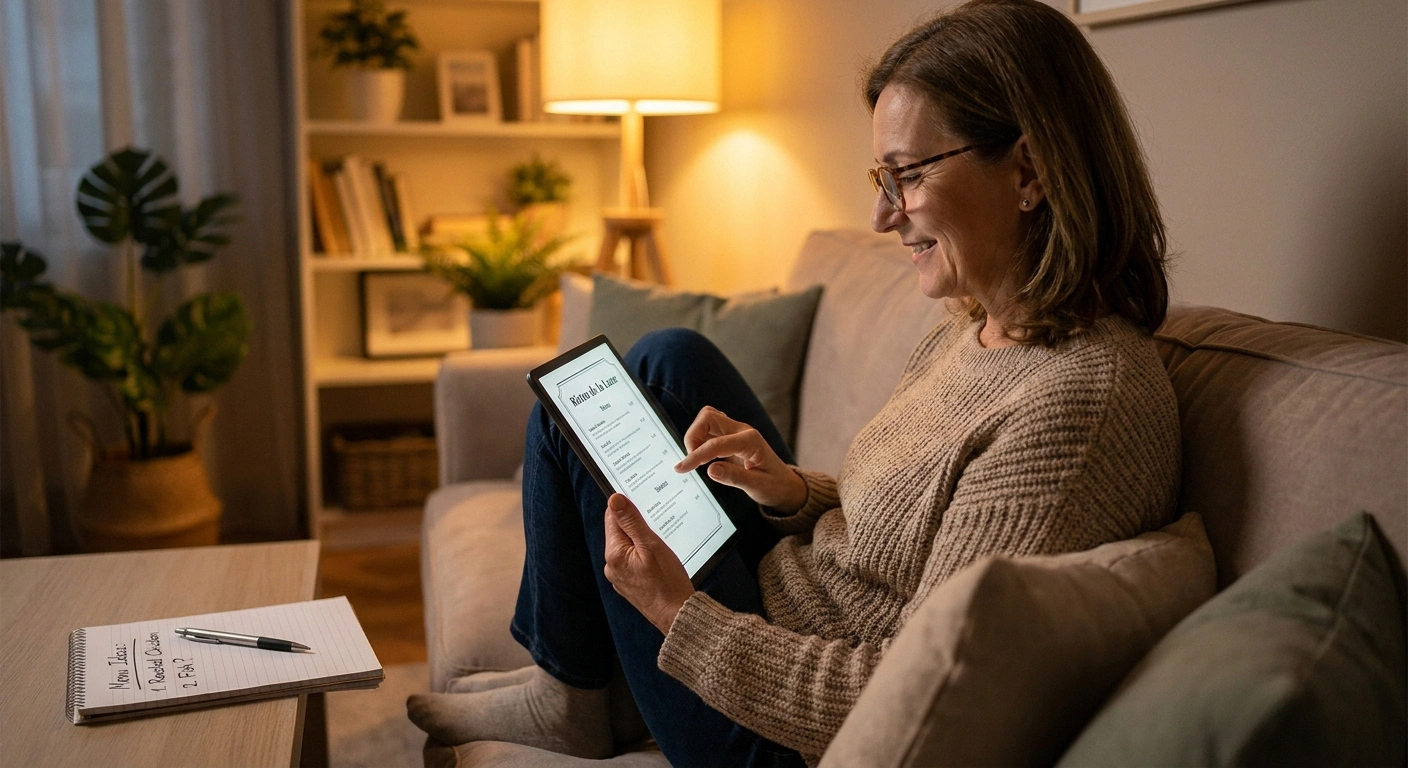
Not all restaurants are equally hospitable to eating with neuropathy — and I mean that in both the physical sense and the culinary sense. When you have a choice, it’s worth thinking about a few things before you make a reservation.
Look for menus online before you go. This is the single most impactful habit you can develop. Spending five minutes with the menu from home means you arrive with a plan rather than having to decode the menu while hungry and under social pressure. You can identify your options, flag potential problem dishes, and decide on your order before you’re at the table.
Prefer restaurants with substitution-friendly menus. Farm-to-table and Mediterranean-style restaurants tend to have more fresh vegetable preparations, grilled proteins, and olive oil-based dishes — all naturally more neuropathy-friendly. They’re also more likely to accommodate reasonable substitution requests. Fast-casual restaurants can actually be excellent choices because customization is built into the model.
Consider the physical environment. Booth seating is often more comfortable than hard chairs for people with lower-extremity neuropathy. A quieter restaurant is easier to manage if noise amplifies your sensory distress. Arriving before the rush means you’re not standing and waiting.
Call ahead when you need to. There’s no shame in calling a restaurant to ask whether they can accommodate a dish without a specific sauce, or whether they have booths available. Good restaurants are used to dietary requests and medical accommodations.
Navigating the Menu: What to Look For (and What to Avoid)
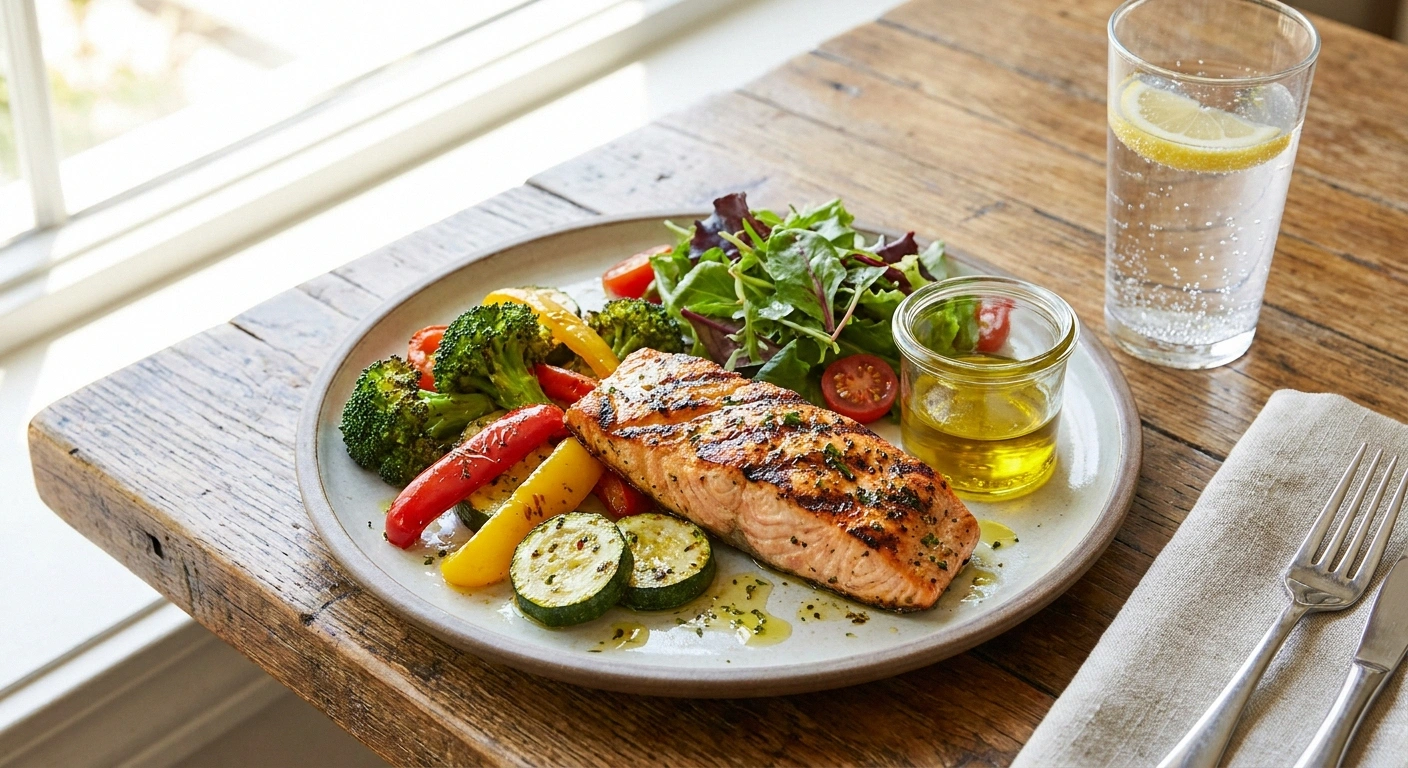
Your neuropathy diet principles don’t go on vacation when you walk into a restaurant — but they do need to translate into practical ordering decisions.
Green-light options to look for:
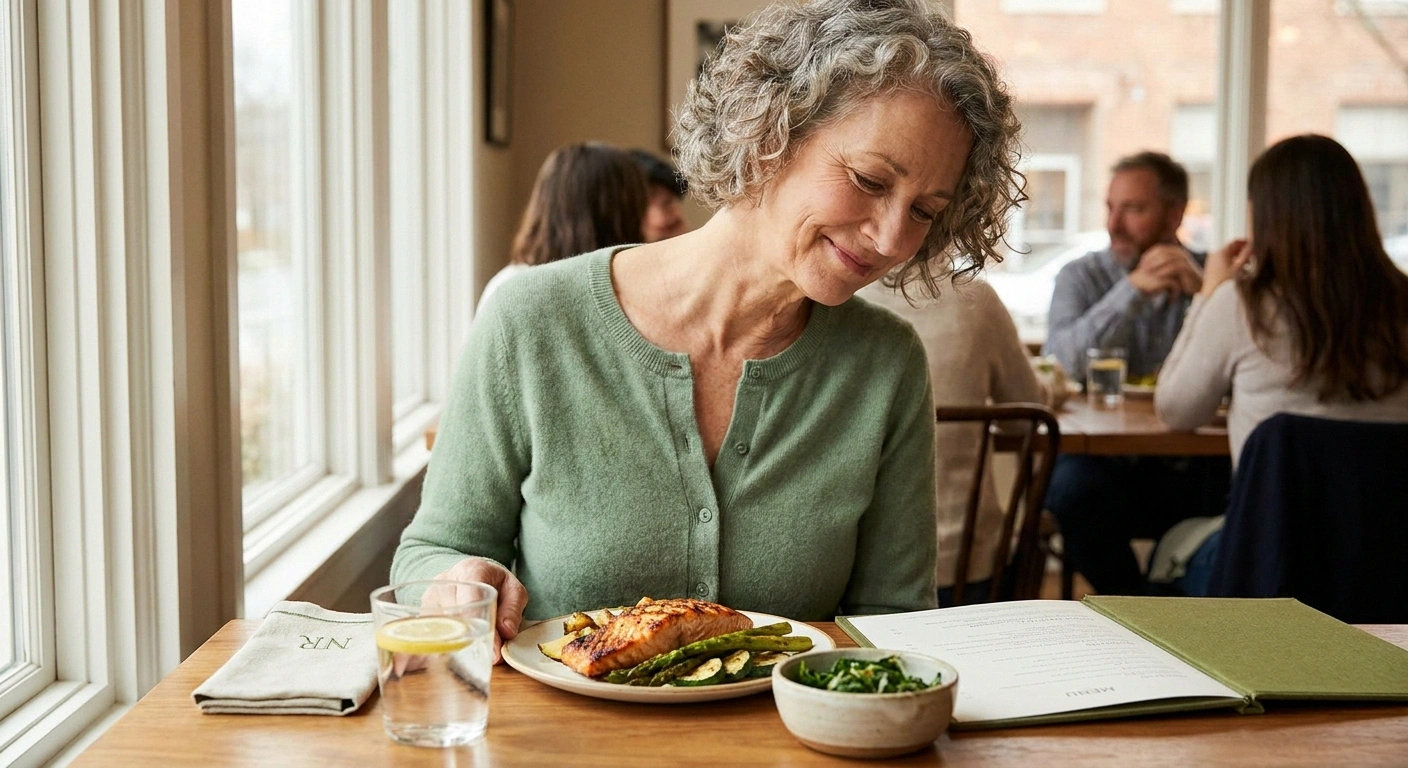
- Grilled, roasted, or baked fish or chicken (wild salmon is especially good)
- Vegetable-forward dishes dressed with olive oil and lemon
- Salads with oil-and-vinegar dressings (not cream-based)
- Whole grains: brown rice, quinoa, farro (when available)
- Bean-based dishes (lentils, chickpeas, black beans)
- Fresh fruit for dessert
Red-flag ingredients in restaurant dishes:
The hardest part of restaurant eating is the hidden ingredients — the things that don’t appear in the dish name but are lurking in the preparation. Foods that trigger neuropathy flares include refined sugar (which appears in surprising places — sauces, marinades, dressings, even savory dishes), refined carbohydrates that spike blood sugar quickly, trans fats and heavily processed oils in fried foods, and excessive sodium.
- Sauces and glazes: Many restaurant sauces — teriyaki, barbecue, sweet chili, even some “vinaigrettes” — are loaded with sugar. Ask for sauce on the side or request a preparation without glaze.
- Breaded and fried foods: Double problem of refined flour and high-heat processed oils. Swapping fried to grilled is almost always possible if you ask.
- Cream-based soups and sauces: Often contain more sodium and saturated fat than apparent.
- Bread baskets: The automatic bread basket is tempting when you’re hungry and waiting. Asking the server not to bring one removes the temptation without any awkward willpower battle.
The Alcohol Question
I know this is a sensitive one, and I’ll address it directly. Alcohol and neuropathy is a real concern — not just for the directly toxic effects of heavy drinking on peripheral nerves, but because even moderate alcohol can worsen neuropathic symptoms for some people. It can also interfere with sleep, impair balance, and interact with many neuropathy medications.
That said, one small glass of wine or a single drink is a very different thing from heavy drinking, and blanket prohibition isn’t necessarily the right answer for everyone. The key is knowing your own threshold — does one drink worsen your symptoms the next day? Then that’s your answer.
The social dimension is worth acknowledging too. The invisible pressure to drink in social settings is real, and “I’m not drinking tonight” can feel like you’re wearing a neon sign about your health. A few strategies that help:
- Order sparkling water with lemon or lime in a wine glass — it looks the part and nobody has to know it’s just water.
- Check whether the restaurant has interesting alcohol-free alternatives — many restaurants now have dedicated non-alcoholic programs with mocktails, zero-proof spirits, and quality non-alcoholic wines.
- You never owe anyone an explanation for not drinking. “I’m just not in the mood tonight” is a complete sentence.
Ordering Smart: Practical Tactics at the Table
Here are the specific phrases and tactics that have made restaurant ordering easier for me and for many people in my support group:
“Can you make that grilled instead of fried?” — Almost always yes. This single swap eliminates the most problematic preparation method.
“Can I substitute the starch for extra vegetables?” — Most restaurants will do this, often at no additional charge or a small upcharge. Trading mashed potatoes for steamed broccoli or a side salad is a meaningful upgrade for neuropathy-friendly eating.
“Can I get the dressing/sauce on the side?” — Always say yes to this. You can then control how much you use, and taste it before drowning your salad in something unexpectedly sweet.
“What oil do you cook with?” — Worth asking at higher-end restaurants. Olive oil is ideal; many use vegetable or soybean oil.
“Does this contain [ingredient]?” — Restaurants are required to disclose common allergens, but even non-allergen inquiries are legitimate. If you’re sensitive to MSG or have specific concerns, asking is appropriate.
You don’t need to explain your medical situation to ask these questions. They’re normal requests that restaurants handle all the time.
Managing Physical Comfort During the Meal
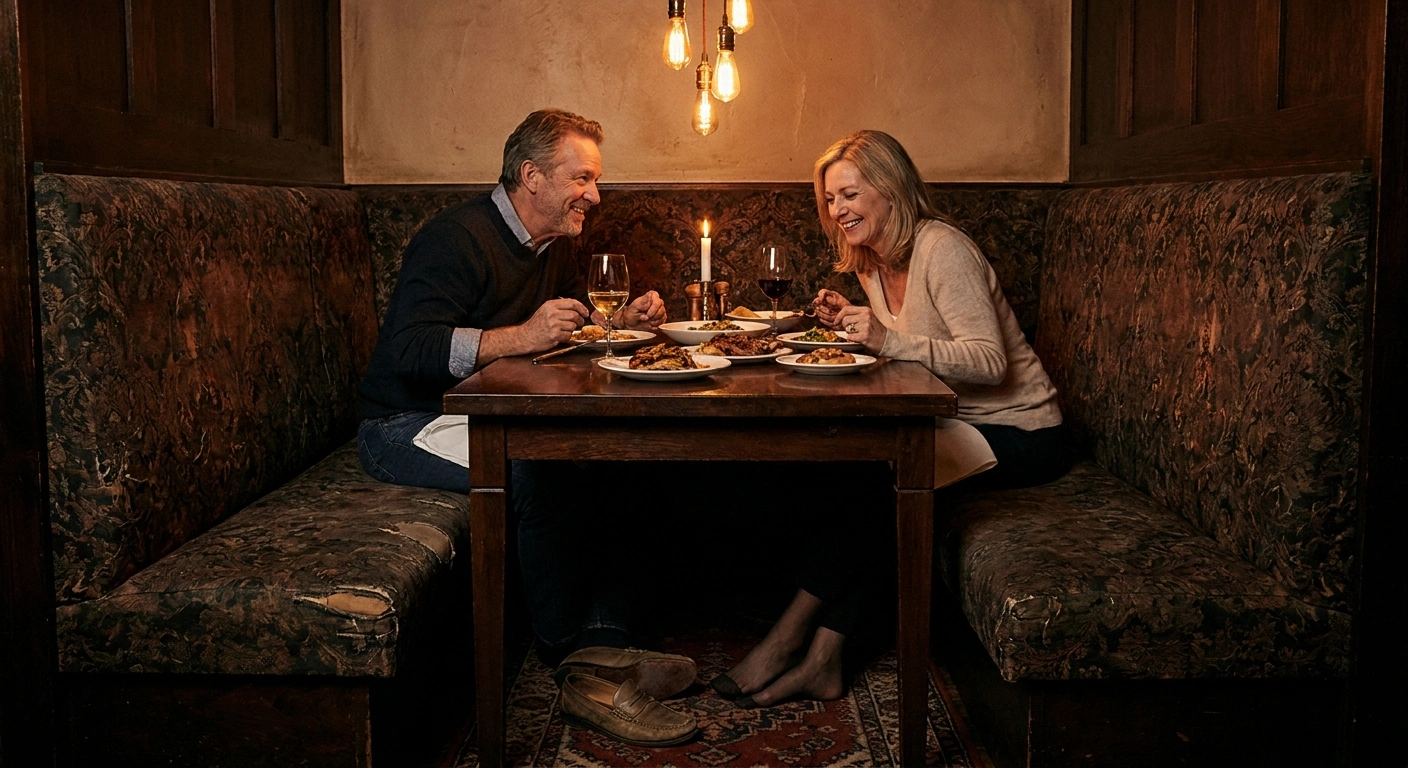
The food is only part of the equation. Physical comfort during the meal matters too.
Footwear: Wear your most comfortable shoes, even if they’re not your dressiest pair. Neuropathic feet that are constricted or stressed during a two-hour dinner are neuropathic feet that will make you pay for it later. Comfort over convention, always.
Seating: When you arrive, don’t be shy about requesting a different table if your initial seating isn’t comfortable. “Could we sit in a booth?” is a completely normal request. Many restaurants will accommodate this without question.
Temperature: Cold restaurant dining rooms can worsen cold-sensitivity symptoms. Bringing a light cardigan or layer isn’t just sensible — it means you’re not spending the meal trying to ignore the temperature instead of enjoying your food and company.
Duration management: Long dinners can be physically taxing. It’s okay to set a gentle internal timeline — if the evening is stretching past three hours and your body is sending signals, there’s no social rule that requires you to stay until the last person leaves.
Cuisine Types That Work Well for Neuropathy
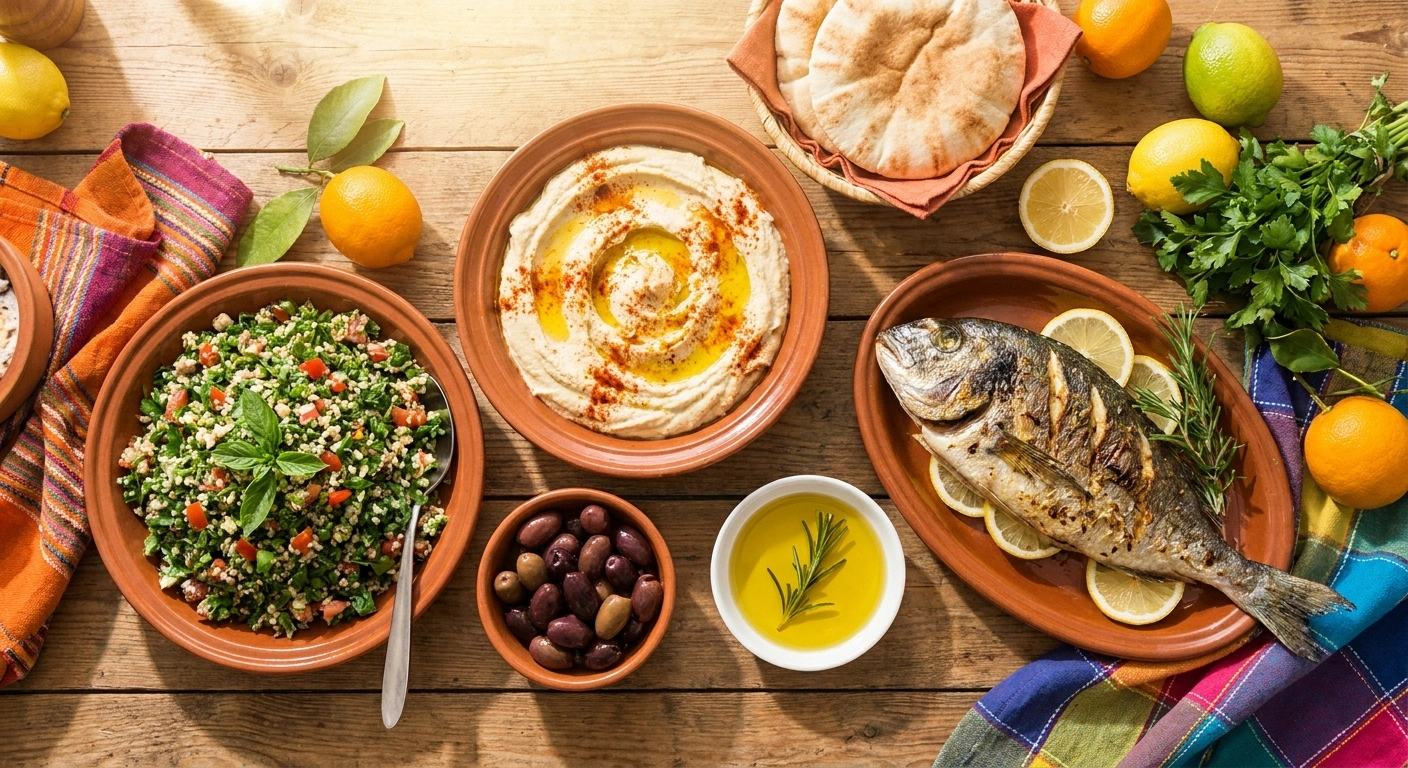
Some restaurant cuisines are naturally better suited to anti-inflammatory eating than others. When you have the choice, these tend to offer more options:
Mediterranean/Greek: Olive oil, fresh vegetables, grilled proteins, legumes. Excellent baseline. Watch out for feta (high sodium) and honey-based desserts.
Japanese: Sashimi, edamame, miso soup, steamed vegetables, brown rice bowls. High in omega-3s from fish. Watch sodium in soy sauce and sodium-heavy soups.
Vietnamese and Thai: Fresh herb-heavy dishes, rice noodles, lots of vegetables. Pho broth is often high in sodium; many dishes have hidden sugar in sauces. Grilled protein options are usually excellent.
Indian: Lentil-based dishes (dal), vegetable curries, grilled tandoori proteins. Often high in anti-inflammatory spices like turmeric and ginger. Watch out for butter-heavy preparations (butter chicken has significantly more saturated fat than it appears).
Mexican: Can be excellent with the right choices — beans, fresh salsa, grilled meats, guacamole. Chips and margaritas are the obvious pitfalls. Build-your-own bowl formats give you full control.
If a Flare Happens Anyway
Sometimes you do everything right and still have a rough night afterward. This is worth planning for rather than catastrophizing about.
Keep your at-home comfort protocols in mind as a fallback: whatever helps you manage neuropathy flare-ups at home — whether that’s a warm foot bath, your usual evening routine, a specific sleep position. Knowing you have a plan makes the risk of eating out feel less fraught.
Also: keep a mental note of what you ate and how you felt the next day. Not obsessively, but enough to identify patterns. Some people find they can eat a dish with moderate sugar with no issue; others find even a small amount sets off several difficult days. This self-knowledge is valuable. It lets you calibrate your restaurant choices over time rather than operating from either fear or blind optimism.
Bringing Neuropathy Back to the Table
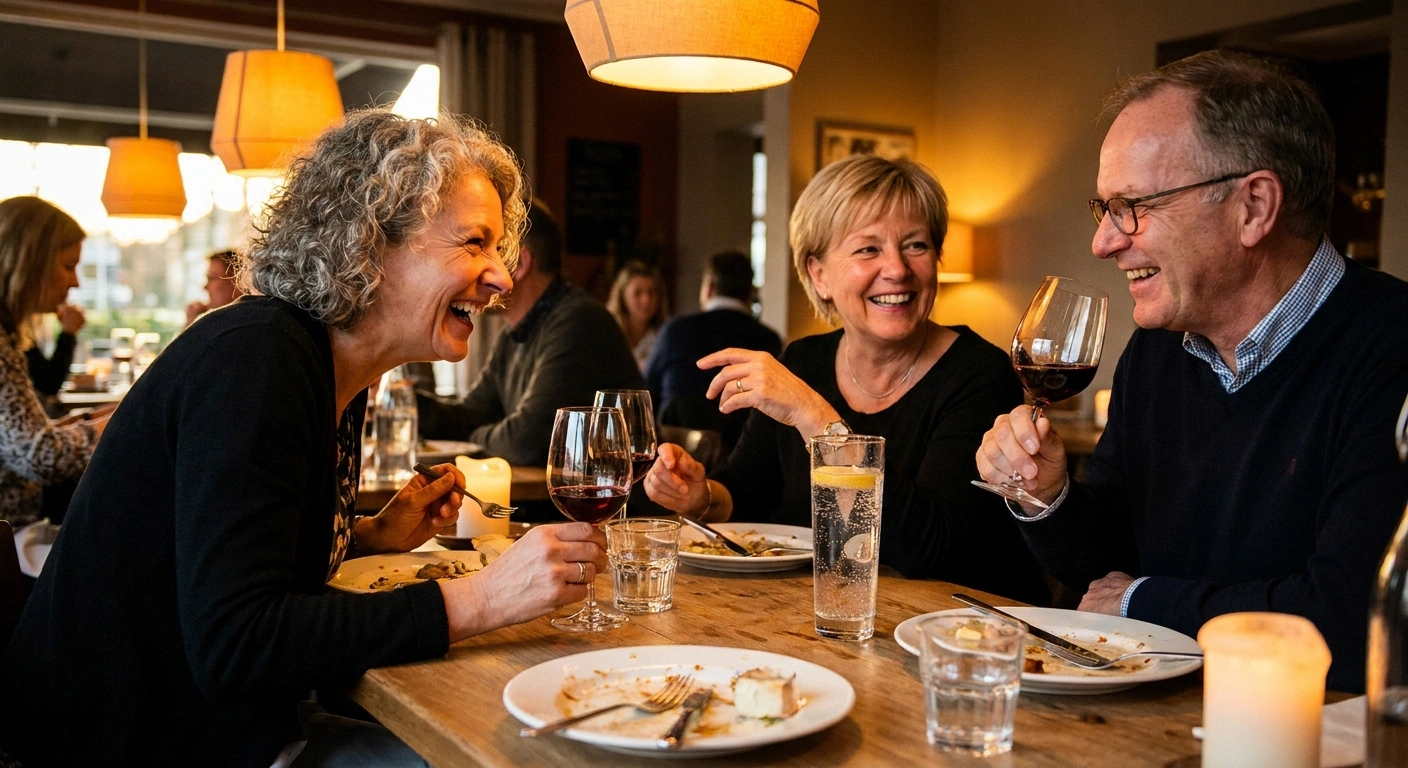
The goal isn’t a perfect neuropathy-diet dinner every time you go out. The goal is a good meal, with people you enjoy, that doesn’t make you worse. Those are achievable conditions — with a little planning, some confidence in making requests, and a willingness to protect your own comfort without apology.
Restaurants can accommodate you. They do it for food allergies, religious dietary requirements, and personal preferences every single day. A few reasonable requests from someone managing a chronic neurological condition are no different.
You belong at the table. Don’t let neuropathy take that from you.
FAQ: Neuropathy and Eating Out
What foods should I avoid when eating at a restaurant with neuropathy?
The main categories to minimize are dishes with high added sugar (glazes, sweet sauces, desserts), heavily fried foods, cream-based heavy sauces, excessive sodium, and alcohol if it affects your symptoms. Bread baskets, sweetened beverages, and processed starters are the most common hidden sugar and refined carb sources. Asking for sauces on the side gives you control over how much you consume.
Can I drink alcohol if I have neuropathy?
The answer depends on your specific situation. Alcohol directly damages peripheral nerves with heavy use, and even moderate alcohol worsens symptoms for some people. If you have alcoholic neuropathy or find that even small amounts affect your symptoms, avoiding it entirely makes sense. For others, an occasional drink with dinner may have minimal impact. Track your own response and discuss with your doctor if you’re unsure about your personal threshold.
How do I handle social pressure around eating and drinking at restaurants?
You don’t owe anyone a medical explanation. Simple responses like “I’m watching what I eat right now” or “I’m taking a break from drinking” are complete and sufficient. Ordering sparkling water with citrus in a wine glass handles the visual aspect. Most people are focused on their own meals and won’t notice or press the issue. Those who do press deserve a clear but kind boundary: your health choices aren’t up for group debate.
Which restaurant types are most neuropathy-friendly?
Mediterranean, Greek, Japanese, and Vietnamese restaurants tend to offer the most naturally neuropathy-friendly options — fresh vegetables, olive oil-based preparations, fish high in omega-3s, and legume-based dishes. Mexican restaurants can be excellent with the right choices (beans, grilled protein, fresh salsa, guacamole). The key is identifying 2-3 safe go-to options at each cuisine type you enjoy.
What substitutions can I request at restaurants?
The most useful requests are: grilled instead of fried proteins, extra vegetables instead of a starch side, dressing on the side, sauce on the side, and no bread basket. Most restaurants handle these requests without hesitation as they’re common dietary adjustments. At higher-end restaurants, asking about cooking oil is also reasonable. You don’t need to explain your medical situation to make these requests.
Should I eat before going to a restaurant with neuropathy?
Having a small healthy snack before going out can help you arrive without ravenous hunger, which makes it easier to make thoughtful menu choices and resist the bread basket while waiting for your meal. You don’t need to eat so much that you’re not hungry — just enough to take the edge off. A handful of nuts, a piece of fruit, or some vegetables 30-60 minutes before arriving works well.
About the Author