If you’ve been telling yourself “I’m fine walking barefoot — it’s only inside my own house” — I get it. I used to do the same thing. The first thing most of us do when we get home is kick off our shoes. It feels good. The floors are clean. We know every inch of the place. What could possibly go wrong?
The answer, unfortunately, is “more than you’d think.” This is one of the topics where the medical consensus is unusually clear and unusually loud: if you have neuropathy in your feet, going barefoot at home is the single biggest preventable risk for a foot injury that turns into something serious. The Mayo Clinic, the American Diabetes Association, every major podiatry organization — they all say the same thing in plain language: don’t go barefoot, even indoors.
I want to walk you through why this matters more than it sounds like it should, what kind of injuries actually happen, and — most importantly — the realistic, comfortable alternatives that won’t feel like a punishment. Because telling someone “wear shoes 24/7” without offering a comfortable solution isn’t useful advice; it’s just nagging.
Why “Just Indoors” Isn’t as Safe as It Feels
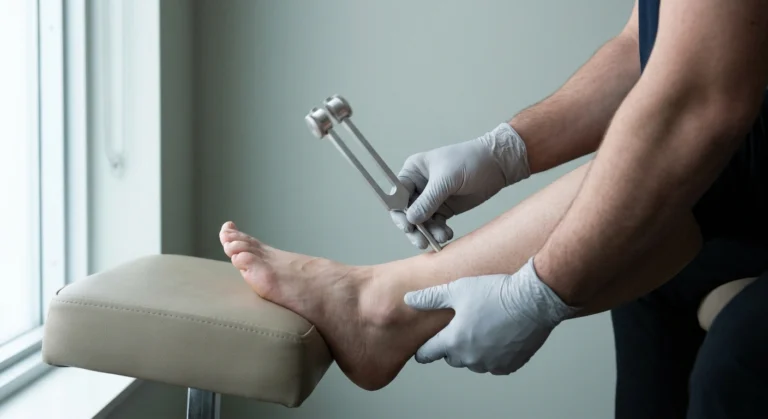
Neuropathy in the feet does something specific and sneaky: it removes your early-warning system. When you step on something sharp, normally your nerves send an instant signal — sharp, painful, danger! — and you pull your foot away within a fraction of a second. That reflex is what keeps small problems small.
When sensory nerves are damaged, that signal is muffled or completely gone. You can step on a needle, a piece of glass, a Lego, a tack, a thumbtack hidden in carpet — and feel nothing. Or feel a vague pressure that doesn’t register as “injury.” You walk on it. You go to bed. The puncture turns red, then warm, then infected. By the time you notice (often because your sock has blood on it, or someone else points out the swelling), you have a much bigger problem than the original puncture.
This is exactly how diabetic foot infections — the kind that lead to hospitalization, IV antibiotics, sometimes amputation — usually begin. They don’t start with a dramatic injury. They start with something tiny that went unfelt and unnoticed for hours or days. Research has consistently shown that the elevated foot pressure produced by barefoot walking in people with diabetes and neuropathy is an independent risk factor for foot ulceration.
“But I’d notice if I stepped on something.” Not necessarily. Patients with established sensory loss in the feet routinely don’t notice glass shards, tacks, or hot surfaces until visible damage is done. The whole point of neuropathy is that the signal you’re relying on isn’t working.
What People Actually Step On at Home
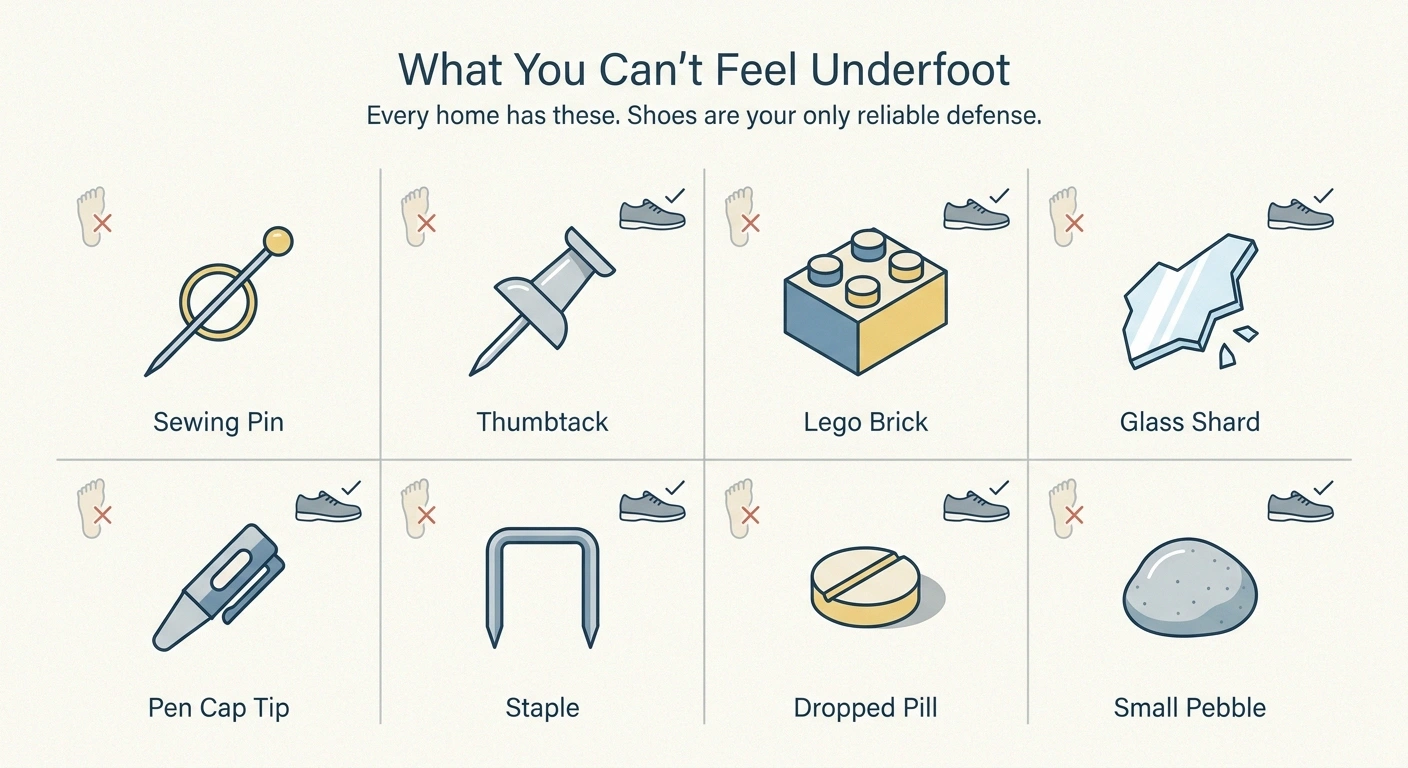
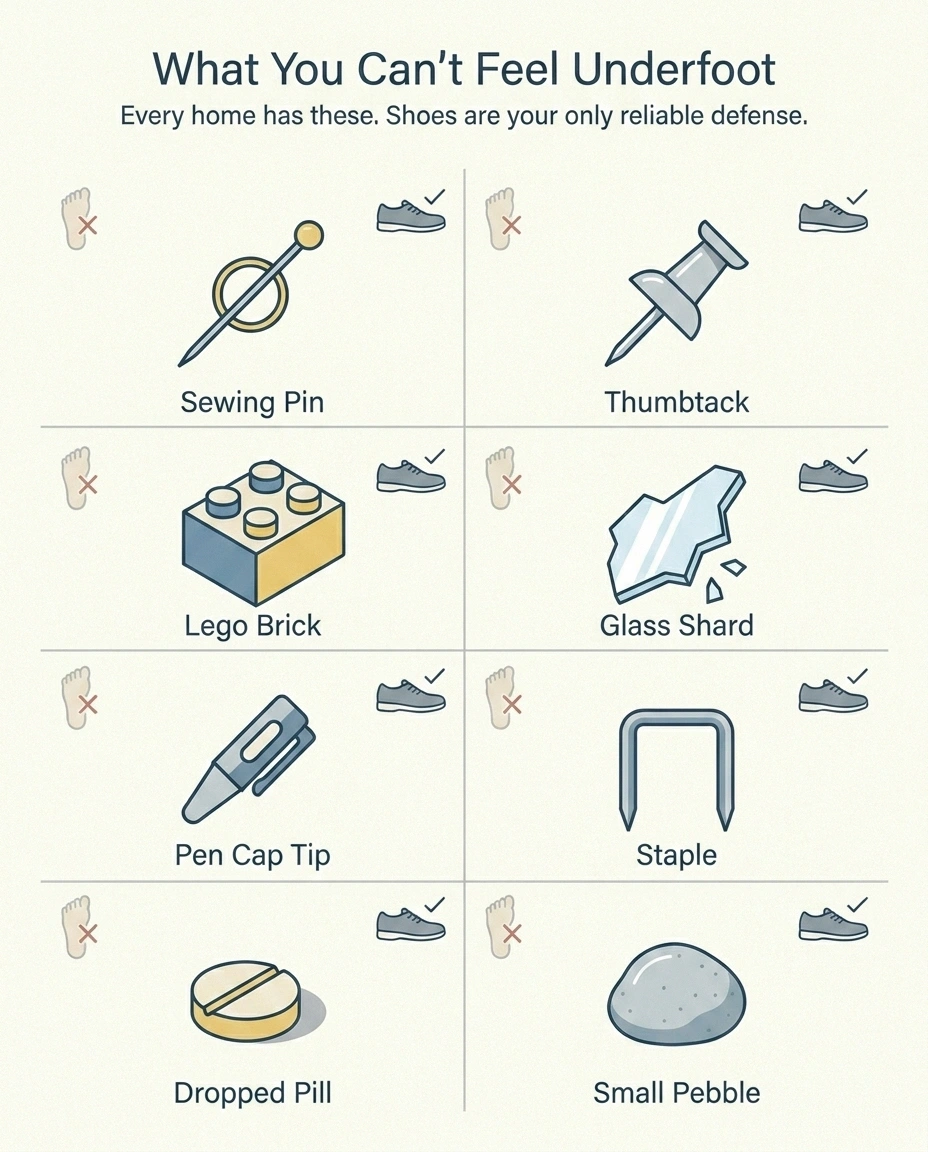
It helps to make this concrete. Here’s a sample of what readers (and I) have actually stepped on, indoors, in supposedly “safe” home environments:
- A sewing pin that fell out of a sewing project
- A thumbtack that came loose from a bulletin board months earlier
- The corner of a Lego brick a grandchild left under a couch cushion
- A small shard of glass from a dropped drinking glass three days earlier (vacuuming missed it)
- The pointed plastic tip of a pen cap
- A staple that worked its way out of carpet padding
- A dog chew-toy fragment
- A bobby pin
- The metal end of a pet leash
- A small pebble tracked in from outside
- Sun-heated tile near a south-facing window in summer (burns)
- The hot underside of an ironing board left out
- The base of a heated floor in a bathroom (burns)
None of these things sound dramatic. None of them produce a story you’d tell at a party. They’re just the small, ordinary debris of normal life. The problem isn’t that your home is unsafe. The problem is that any home has small unfelt hazards, and the protective shoe between your foot and the floor changes everything.
The Highest-Risk Spots in Your Home
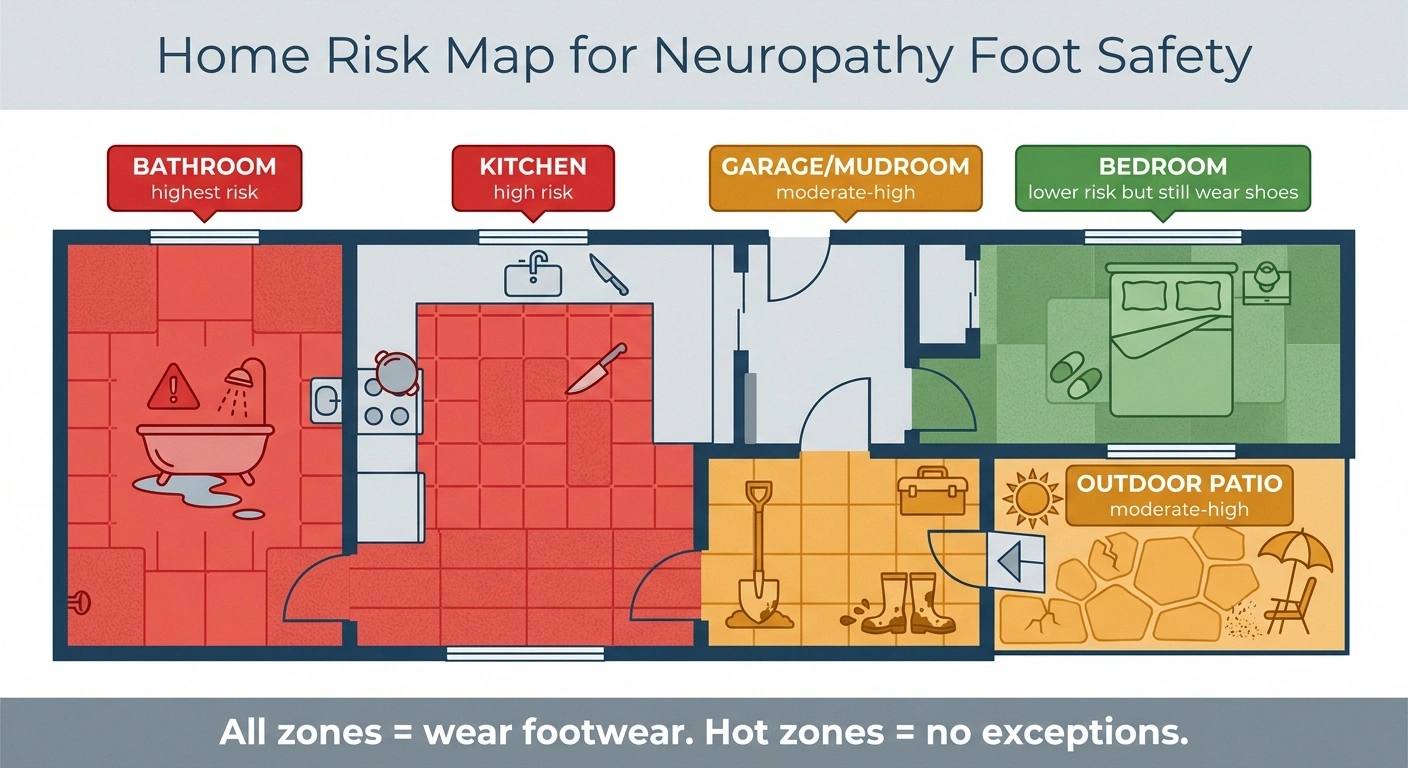
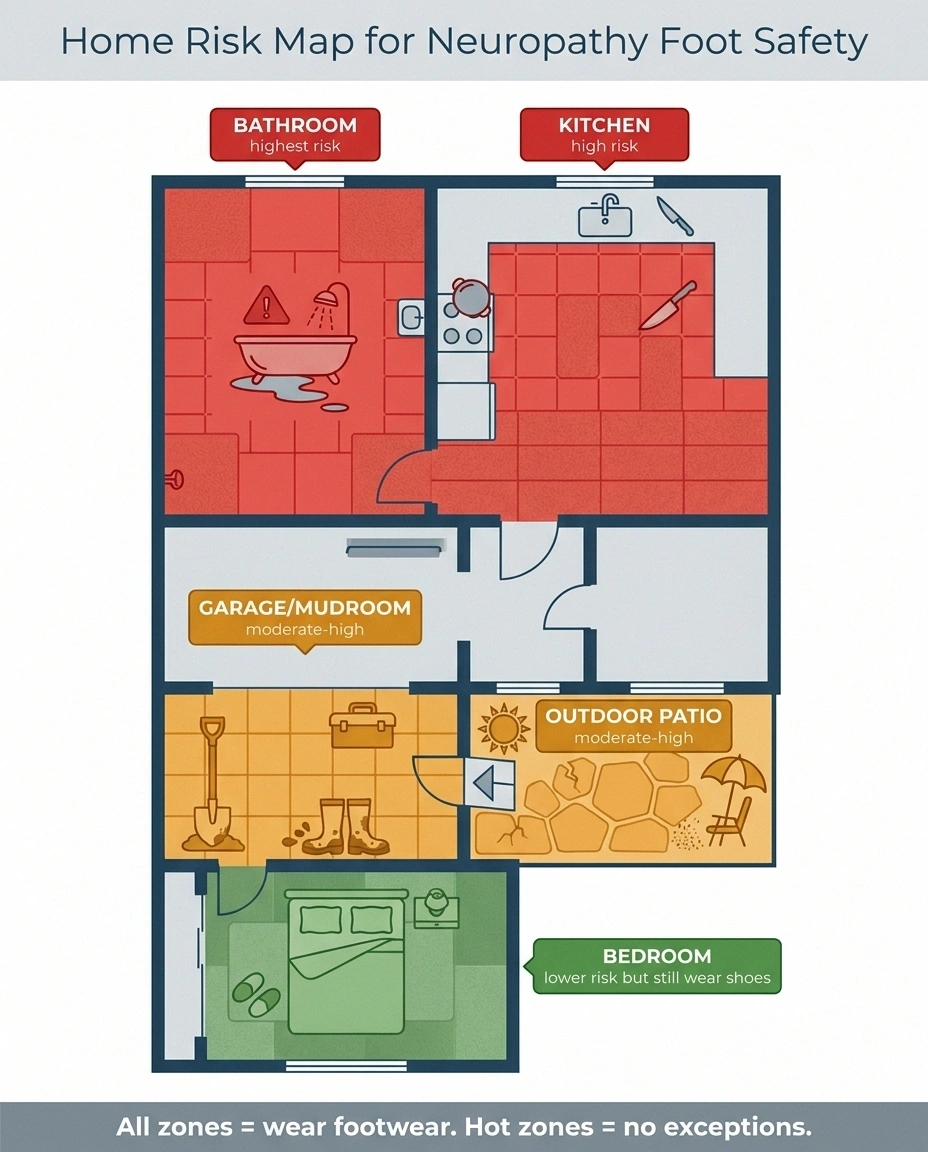
Some areas are riskier than others, and if you’re going to draw a strict no-barefoot line anywhere, these are the places where it matters most:
The Bathroom
This is the single highest-risk room. Wet floors, ceramic surfaces, hard fixtures, the possibility of dropped pills or glass, the slipperiness of soap residue, and — if you have a heated floor or a steamy shower — burn risk. Plus, bathrooms are where most falls in the home happen, and a fall when you have neuropathy is exponentially worse than a fall in a person with intact foot sensation. Always wear non-slip footwear in the bathroom, including for nighttime bathroom trips.
The Kitchen
Dropped knives, hot oil spatters, broken glass from drinking glasses, food debris on the floor, slippery wet spots, hot floors from open ovens. Plus all the small things that fall during food prep — pieces of vegetable, dry rice, bread crumbs — that you can’t feel underfoot but that can hide a hazard. Always wear shoes in the kitchen.
The Garage and Mudroom
Concrete floors stay cold (cold-induced injury risk for people with circulation issues), and these areas tend to collect debris from outdoors — small stones, lawn clippings, occasional bugs, oil drips, garden tools. Dedicated mudroom or garage shoes are worth it.
Anywhere With Pets
Pet hair on bare wet feet is a fall risk. Stray kibble underfoot. Pet claws or rough tongues can scratch unfelt skin. And in homes with pet doors or that go in and out — outdoor debris travels indoors on paws.
Outdoor Patio, Deck, or Sunroom
Hot in summer (burn risk on sun-baked surfaces — wood can reach 140°F+), splinters from wood decks, the occasional bug, dropped barbecue debris. Always shoes, even for “just stepping out.”
The Real Alternative: Comfortable Indoor Footwear
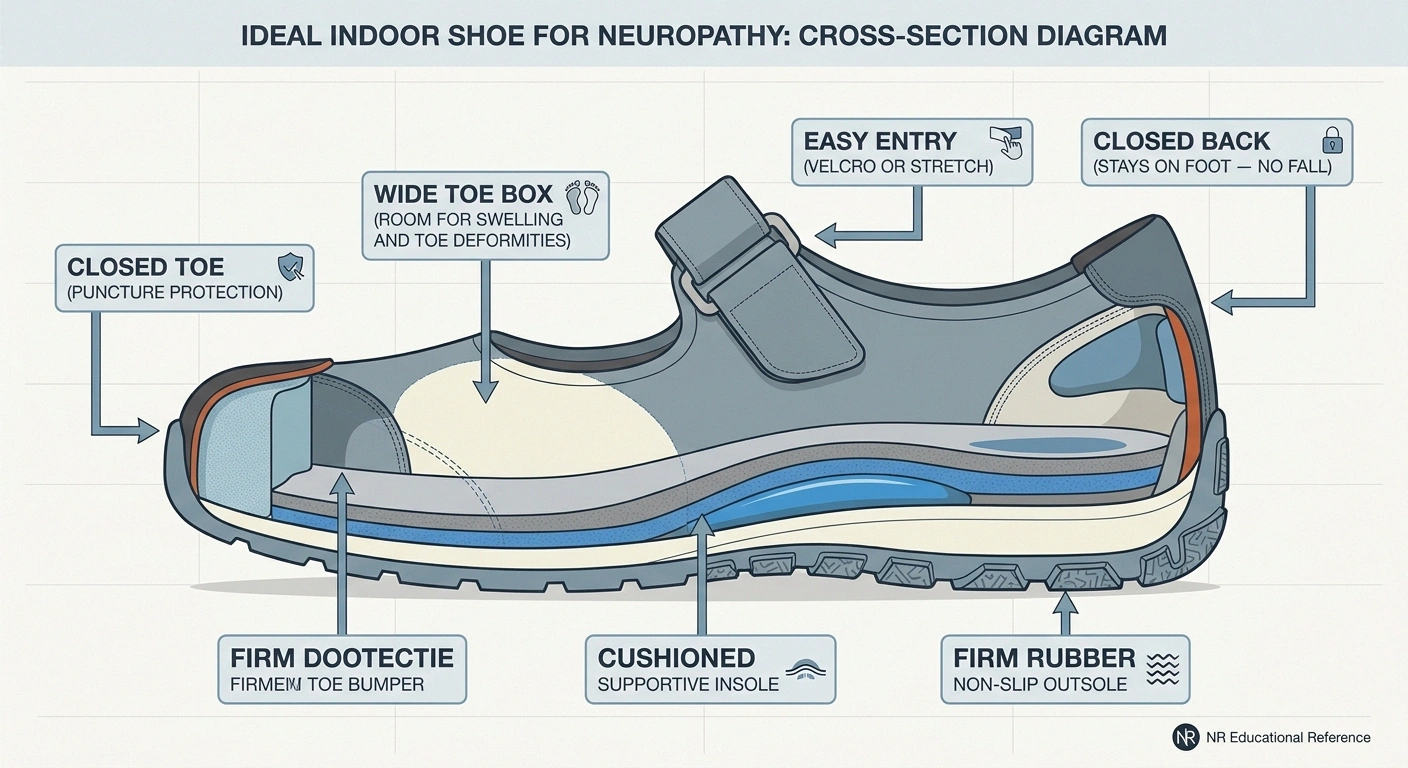
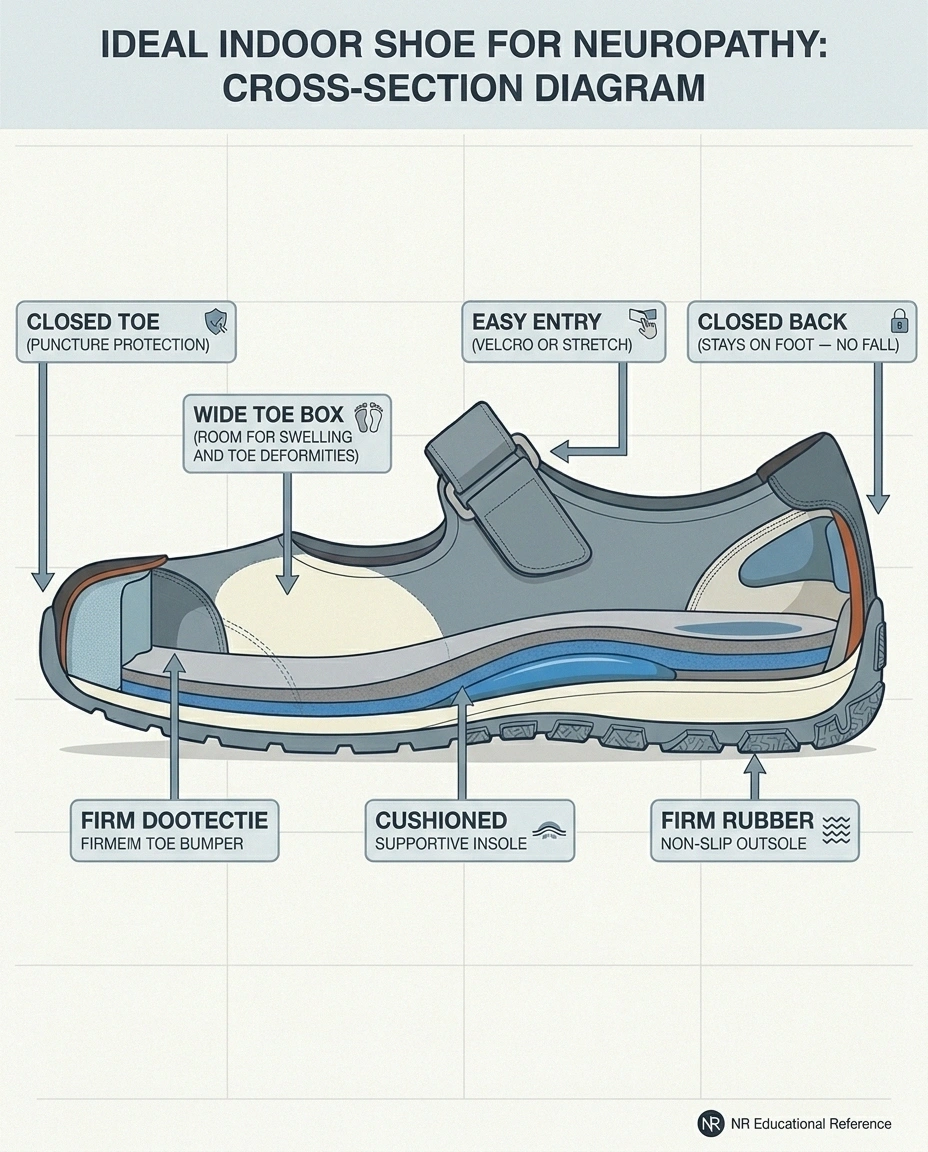
Now to the part that actually matters — what to wear so you’re protected without feeling like you’re wearing outdoor shoes all day. There are several good options, and the right one depends on your specific home and feet.
Option 1: Closed-Back Indoor Shoes or House Sneakers
The best option for most people. Look for:
- Closed toe — protects from stubbed toes and dropped objects
- Closed back (not slip-on/backless) — backless slides are a serious fall risk for people with neuropathy because they don’t stay reliably on the foot
- Firm rubber non-slip sole — not the thin felted sole of a traditional slipper
- Cushioned, supportive insole — your feet are bearing your weight all day; cushioning matters
- Wide toe box — neuropathy often comes with toe deformities, hammertoes, or swelling, and a roomy toe box prevents pressure points
- Easy to put on — Velcro, stretchable opening, or a long shoehorn-friendly design if you can’t easily bend over
- Washable, ideally
Brands like Orthofeet, Dr. Comfort, Vionic, and Hush Puppies make indoor-specific shoes designed for people with foot conditions. They look like soft sneakers, not orthopedic shoes, which matters if you’re going to actually wear them.
Option 2: Proper Slippers (Specific Kind)
Traditional slippers — the soft floppy kind your grandfather wore — are not what I’m recommending. Those have thin soles, no support, and often a backless design. For neuropathy, the slipper version of “good footwear” has:
- A hard rubber outsole with non-slip grip pattern
- A closed heel — not backless, not a “scuff” style
- Memory foam or contoured insole, not just a flat layer of felt
- Roomy toe box
- Washable upper
Brands like Acorn, Vionic, Orthofeet, and L.L. Bean’s wicked-good slipper line all make versions that meet these criteria. They’re not glamorous, but neither are emergency room visits for foot infections.
Option 3: Diabetic Socks With Non-Slip Grip (Limited Use)
Some people genuinely cannot tolerate any shoes indoors. For them, non-slip diabetic socks are a partial compromise — better than fully barefoot, worse than proper indoor shoes. Acceptable for:
- Short distances on plush carpet
- Brief trips between rooms when you’re not lingering
- People in bed or sitting most of the time
Not acceptable for:
- Walking on bare floor, tile, hardwood, or vinyl
- The bathroom, kitchen, garage, or any wet area
- Anyone with significant fall risk
If you go this route, look for socks with grippy patterns on the entire sole (not just toes), in light colors (so blood or drainage shows immediately), with seamless toes and non-binding cuffs. I have more on the topic in Socks for Neuropathy: The Complete Guide.
What About Grounding, Yoga, or Just Wanting Bare Feet Sometimes?
I want to address this honestly because I’ve seen the “you must wear shoes 100% of the time forever” advice and I know it doesn’t match how real people live.
If you have meaningful foot sensation remaining (your neuropathy is mild or in early stages), and you have a specific, controlled reason to be barefoot — yoga on your own clean mat, grounding practice on a specific patch of carpet, getting in and out of the shower, applying foot moisturizer — there’s a reasonable middle path.
The principles for safer barefoot moments:
- Confine it to one clean, controlled area. Not “wandering the house barefoot.” A dedicated yoga mat, a single clean carpeted area, the shower.
- Inspect your feet immediately after. Top, bottom, between every toe, the heels. Look for cuts, redness, or anything you don’t recognize. This is the same daily foot check covered in Your Daily Foot-Inspection Routine.
- Keep that area genuinely clean. Vacuum frequently, check for dropped items, no shoes worn in from outside in that space.
- Limit time. Short controlled exposure, not “I’ll just leave my shoes off for a few hours.”
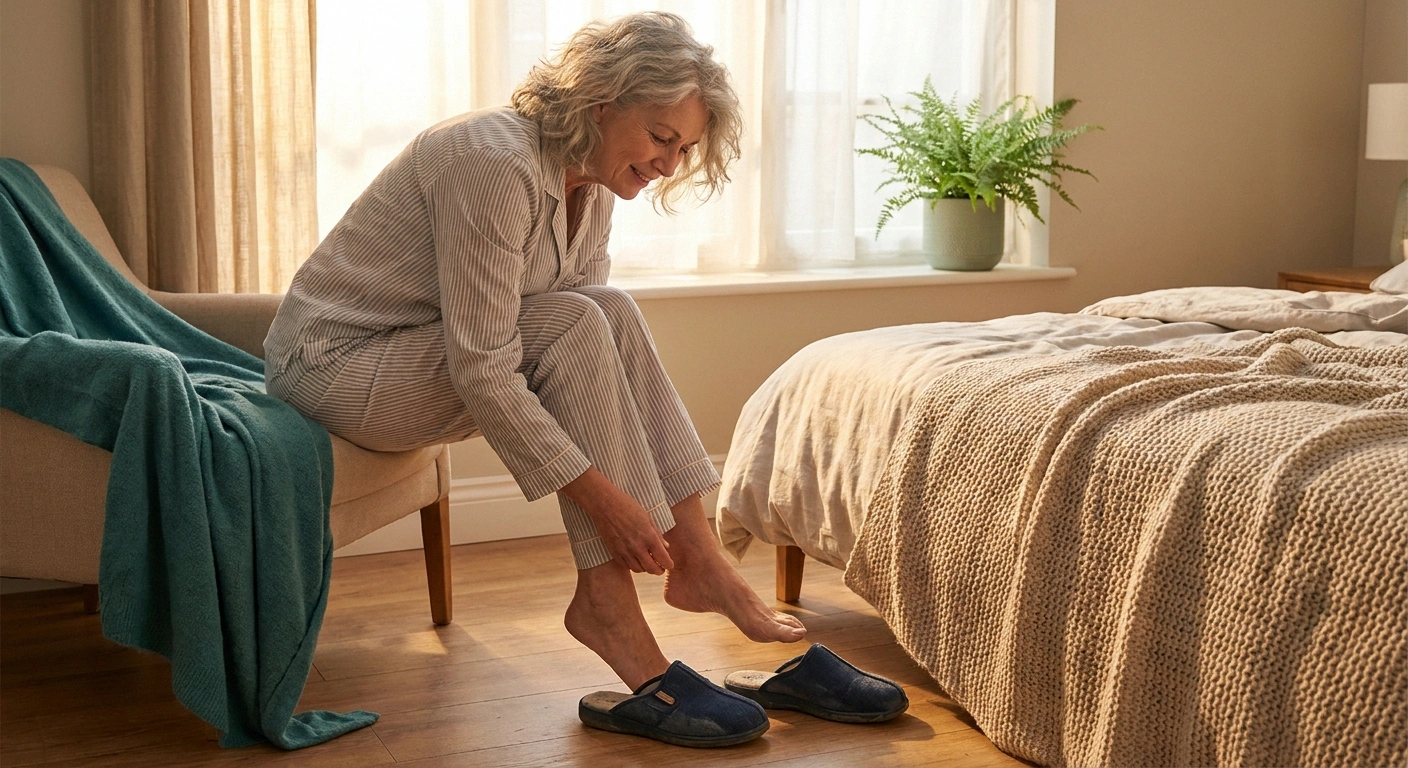
- Have shoes within reach. Slippers right next to your yoga mat or shower, ready to put on the moment you’re done.
If your neuropathy is advanced — significant numbness, history of foot wounds, prior ulcer, prior amputation, or noticeable foot deformity — even these “controlled” exceptions become too risky. In that case, the answer really is “shoes from the moment your feet hit the floor in the morning to the moment you get in bed at night.”
Making the Transition When You’ve Always Been Barefoot
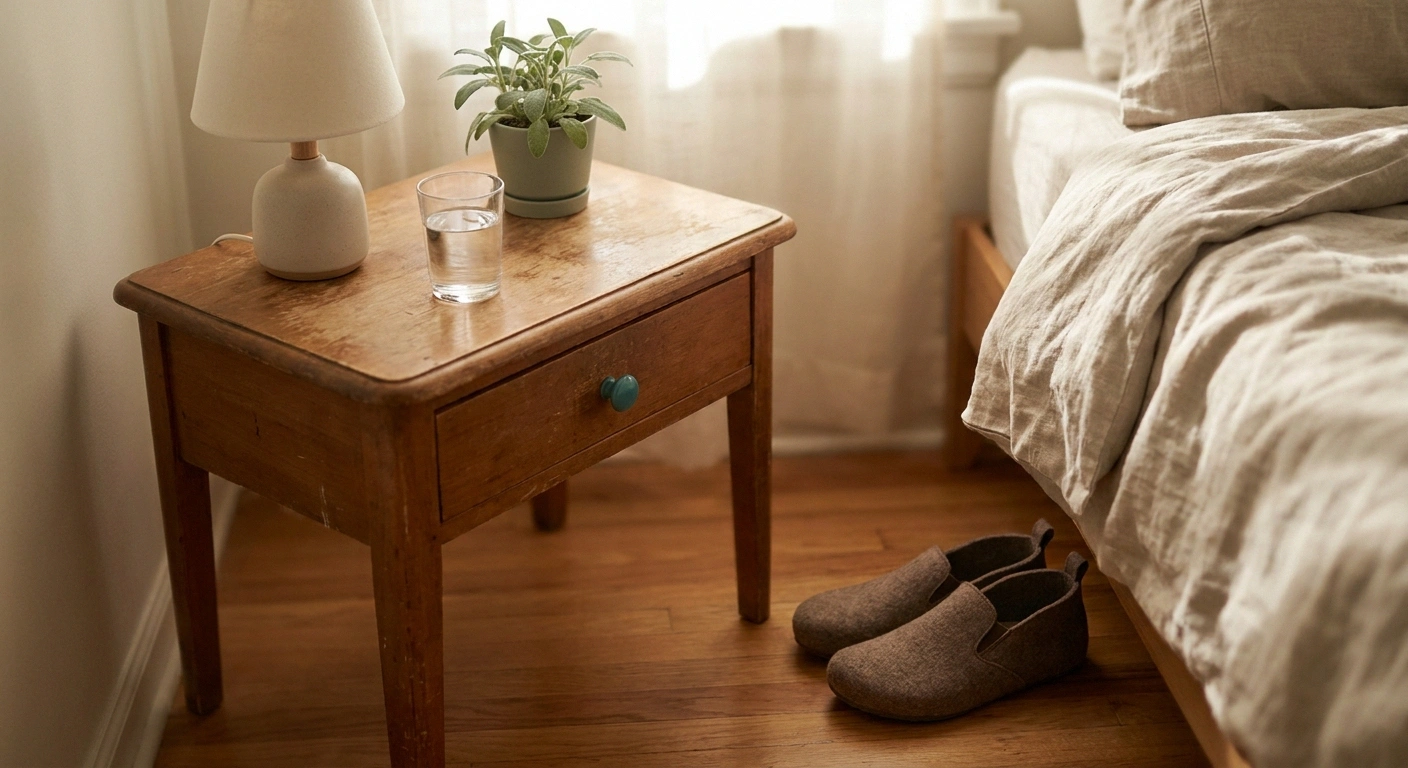
If you’ve spent decades padding around your house in your socks or bare feet, the switch feels weird. The shoes feel heavy. The slippers feel restrictive. You forget to put them on. Here’s how to make it stick.
Buy two pairs, not one. One stays by the bed for morning. One stays by the bath or shower. That way you’re never more than a few feet from acceptable footwear, no matter where you are when you realize you forgot.
Wear them in incrementally. New indoor shoes often need a few days of break-in. Start with an hour at a time, then a half day, then full-time. Trying to go from barefoot to all-day footwear in one day produces blisters and discouragement.
Find a pair you actually like the look of. If you hate how they look, you won’t wear them. Indoor footwear has come a long way — there are options that look like soft sneakers, not hospital shoes.
Get the family on board. If everyone in the house leaves shoes by the door, the cultural norm of “no shoes inside” is part of why you’re barefoot. The compromise: outdoor shoes off, dedicated indoor shoes go on. Many families do this once one person needs to, and everyone benefits — cleaner floors, no stepped-on Legos.
Address the underlying reasons you avoid shoes. If your current shoes hurt, you’ll never wear them. Talk to a podiatrist or foot specialist about the best shoes for neuropathy and consider whether you need custom orthotics, a different size, or a different style. The right pair shouldn’t be a daily struggle to wear.
One More Layer: Daily Foot Inspection
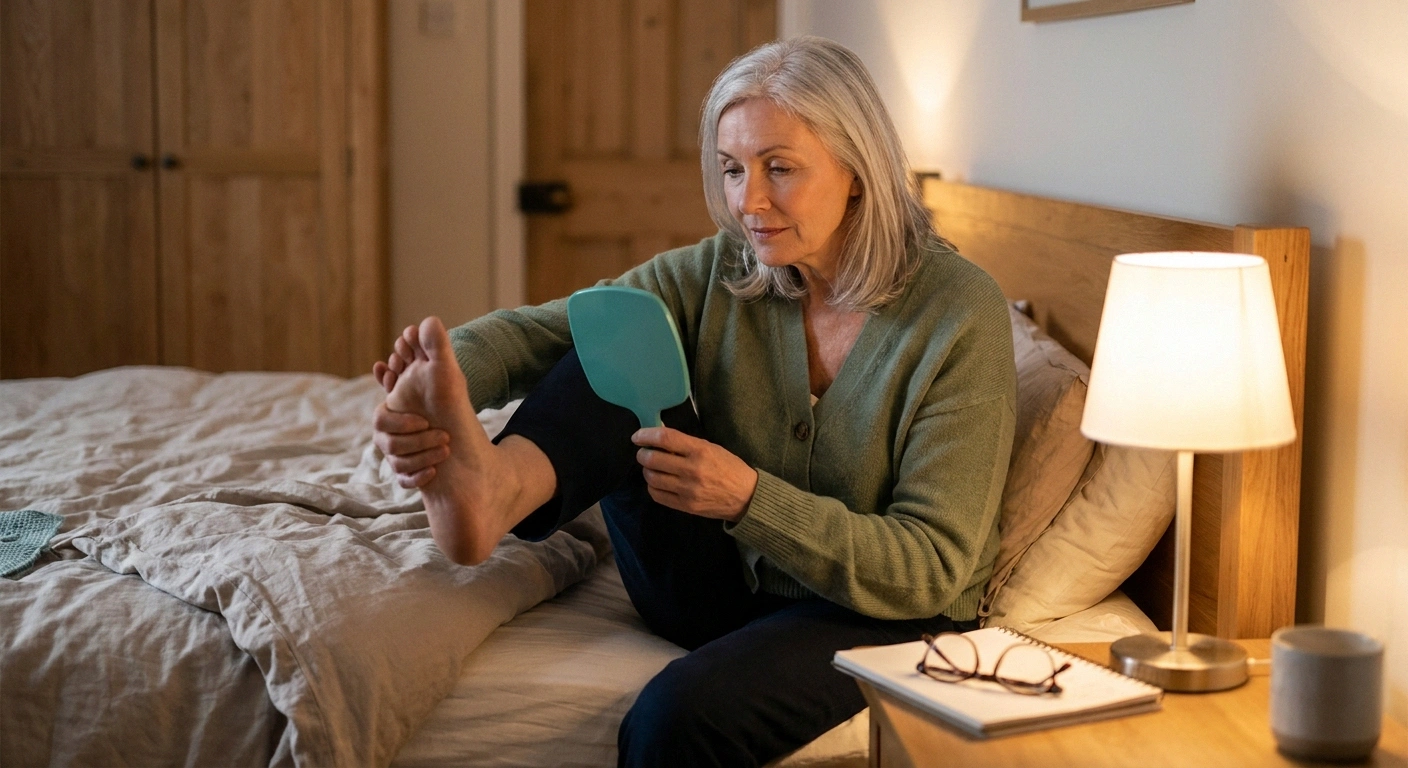
Even with great indoor footwear, the second half of foot protection is the daily check. Every night, before bed, you spend 60–90 seconds looking at the top and bottom of each foot, between the toes, and around the heels. You’re looking for redness, broken skin, blisters, swelling, color changes, or anything you don’t recognize.
This is the single highest-impact habit for people with neuropathy, and it pairs perfectly with closed-toe indoor shoes. The shoes prevent most injuries. The daily check catches the ones that slip through before they become serious. I have a full 2-minute routine in Your Daily Foot-Inspection Routine with a mirror trick that makes the bottom of the foot easy to see if you can’t bend.
The Bottom Line
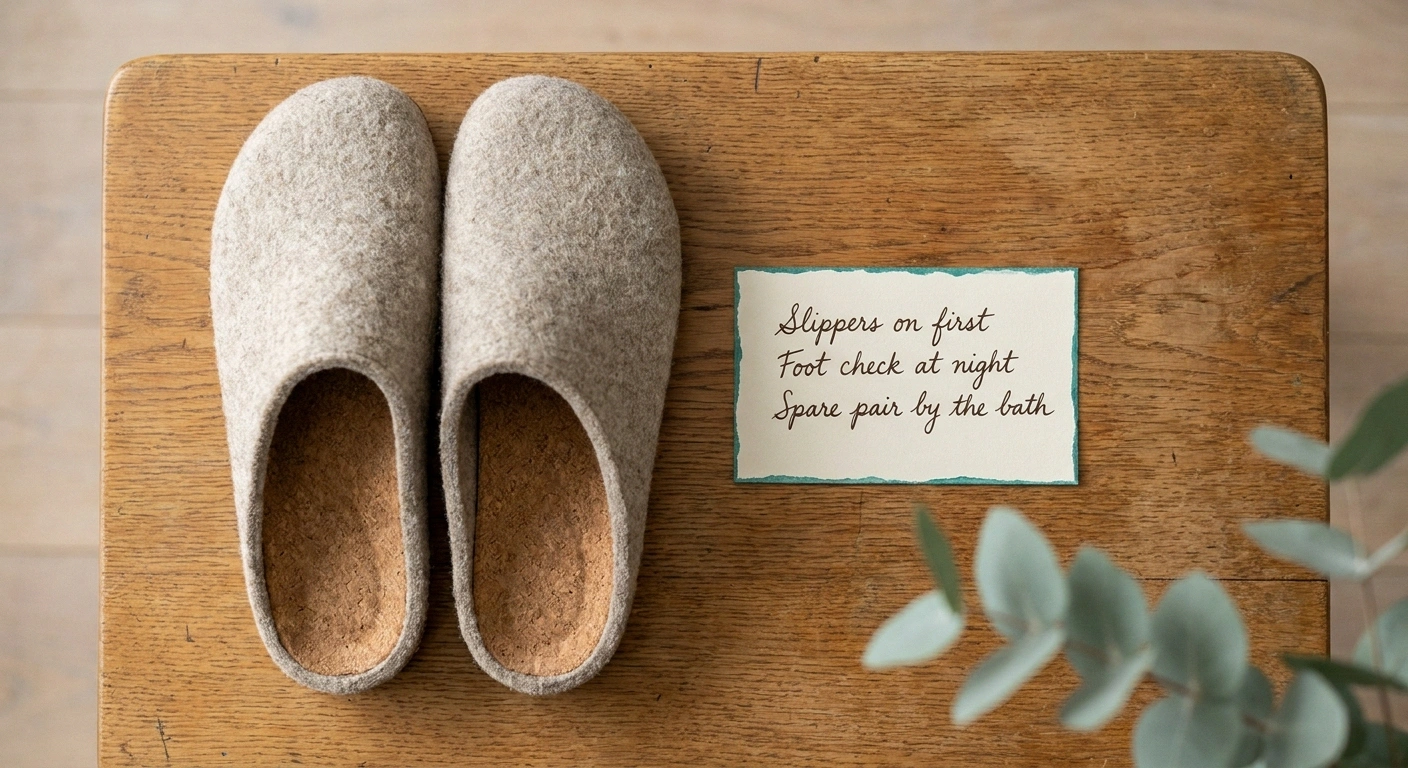
Going barefoot at home isn’t safer because the house is yours. The house is your house, and it still has tacks, glass shards, hot tiles, and small objects you can’t feel. Neuropathy doesn’t care that you’ve never had a problem before. Most people who end up with a serious foot infection had never had a serious foot problem until the day they did.
- Buy one good pair of indoor shoes today. Closed back, firm sole, cushioned insole, wide toe box.
- Put them on first thing tomorrow morning — before your feet ever touch the floor.
- Buy a second pair within the week — one by the bed, one by the bath, never far away.
- Add a 90-second foot check at night — the simple pairing that catches anything that slips through.
The fix is surprisingly small. A good pair of indoor shoes or proper slippers. Putting them on first thing in the morning. Keeping a pair by the bed and a pair by the bath. A 90-second foot check at the end of each day. That’s it. That’s the whole protocol that protects you from the most common — and most preventable — serious neuropathy complication.
It’s not glamorous. It’s not exciting. It’s exactly the kind of small, boring, consistent habit that quietly keeps people out of the hospital. If you take one thing from this article, let it be this: get yourself one good pair of indoor shoes today, and start wearing them tomorrow morning. Your future feet will thank you.
Frequently Asked Questions
Is it really that dangerous to walk barefoot at home with neuropathy?
Yes. Every major medical organization that deals with neuropathy, including the American Diabetes Association and the Mayo Clinic, specifically recommends not going barefoot, even indoors. The reason is that neuropathy removes your foot’s early-warning system. You can step on a tack, glass shard, or hot surface and not feel it. Most serious diabetic foot infections, including the ones that lead to amputation, start with a small unfelt injury at home, not with a dramatic outdoor event.
What about wearing just socks?
Socks alone are only slightly better than barefoot. Regular socks have no protective sole and no traction, so they don’t prevent punctures from sharp objects and they actually increase fall risk on smooth floors. Diabetic socks with non-slip grip on the entire sole are a partial compromise, acceptable for short distances on plush carpet, but not appropriate for hard floors, the bathroom, the kitchen, or anyone with significant fall risk.
What if my floors are completely clean?
It is almost impossible to keep a real home completely free of small hazards. Dropped pet hair, food debris, the occasional pin or tack, dust, small stones tracked in from outside, fragments of glass from drinking glasses that broke days or weeks earlier and survived vacuuming. Even a meticulously clean home has these things. The shoe protects you whether or not the floor is clean.
Can I go barefoot just in my bedroom?
It is the lowest-risk room, but not zero-risk. If you have mild neuropathy with significant remaining sensation, brief barefoot moments in a clean bedroom are usually fine. If your neuropathy is more advanced, the safest approach is to put slippers on the moment you stand up, even just to walk to the bathroom. The middle-of-the-night bathroom trip is one of the most common moments people get injured at home.
What kind of slippers should I look for?
Closed-back (not slip-on or backless), with a hard rubber outsole that grips, a cushioned supportive insole, and a wide toe box. Brands like Acorn, Vionic, Orthofeet, and L.L. Bean make slippers designed for people with foot conditions. The thin floppy traditional slipper, the kind with a felt sole and no support, is not what you want. Backless scuffs are particularly dangerous because they do not stay reliably on the foot and have been associated with falls.
What about grounding or earthing practices?
If you want to do grounding practice on a specific patch of clean carpet inside your home, with a controlled time limit and a foot check immediately afterward, it is a reasonable middle path for people with mild to moderate neuropathy. For people with advanced neuropathy, a history of foot wounds, or significant numbness, the risks outweigh the benefits and shoes are the safer call regardless of belief in grounding’s effects.
What should I do if I notice an injury during my foot check?
For a small clean break in the skin, wash with mild soap and water, apply a thin layer of antibiotic ointment, and cover with a clean bandage. Check it twice a day. If you see redness expanding, warmth, drainage, swelling, fever, or any change in color of the skin around the wound, contact your doctor that day, not next week. For diabetic patients with neuropathy, foot wounds need professional evaluation early because they can deteriorate quickly without your normal pain signals warning you.
How do I get used to wearing indoor shoes if I’ve always been barefoot?
Start by putting the shoes on first thing in the morning, before you do anything else. Keep a pair by the bed and a pair by the bathroom so you are never far from them. Wear them for an hour the first day, then half a day, then all day. Choose a style you actually like the look of — modern indoor shoes look like soft sneakers, not hospital shoes. Within about two weeks the habit becomes automatic and you will probably stop noticing them.
About the Author