
Living with neuropathy means learning to live alongside a certain level of discomfort. The burning, tingling, and numbness become part of daily life — and most of the time, they don’t require emergency care. But there are situations where neuropathy symptoms can signal something genuinely dangerous, and knowing the difference may be the most important thing in this article.
This guide isn’t about everyday symptom management. It’s about recognizing the warning signs that mean you need to stop what you’re doing and seek emergency care — or call 911 — right now. We’ll also cover the symptoms that need urgent evaluation within 24 to 48 hours (urgent but not immediately dangerous), and the symptoms that can wait for a scheduled appointment.
The Critical Distinction: Chronic Symptoms vs. Emergency Symptoms
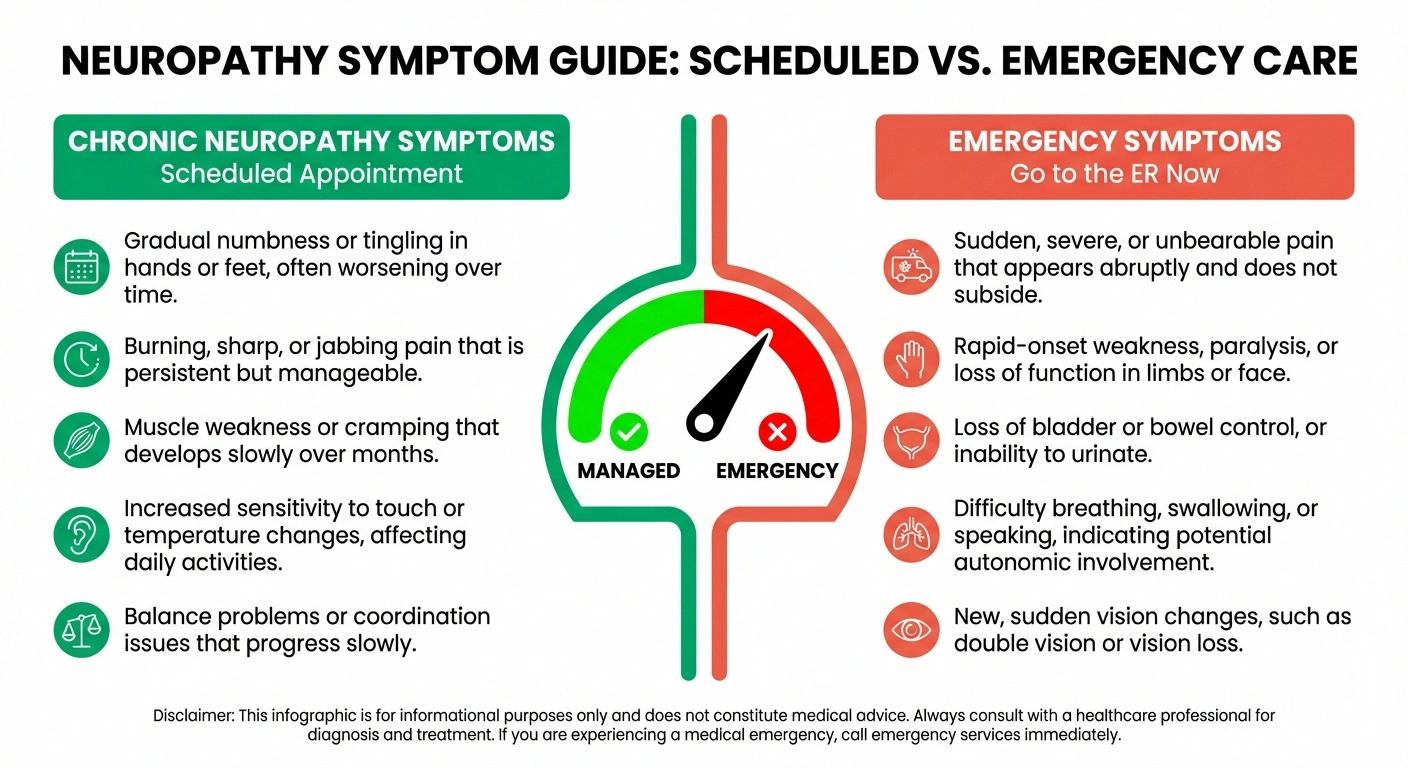
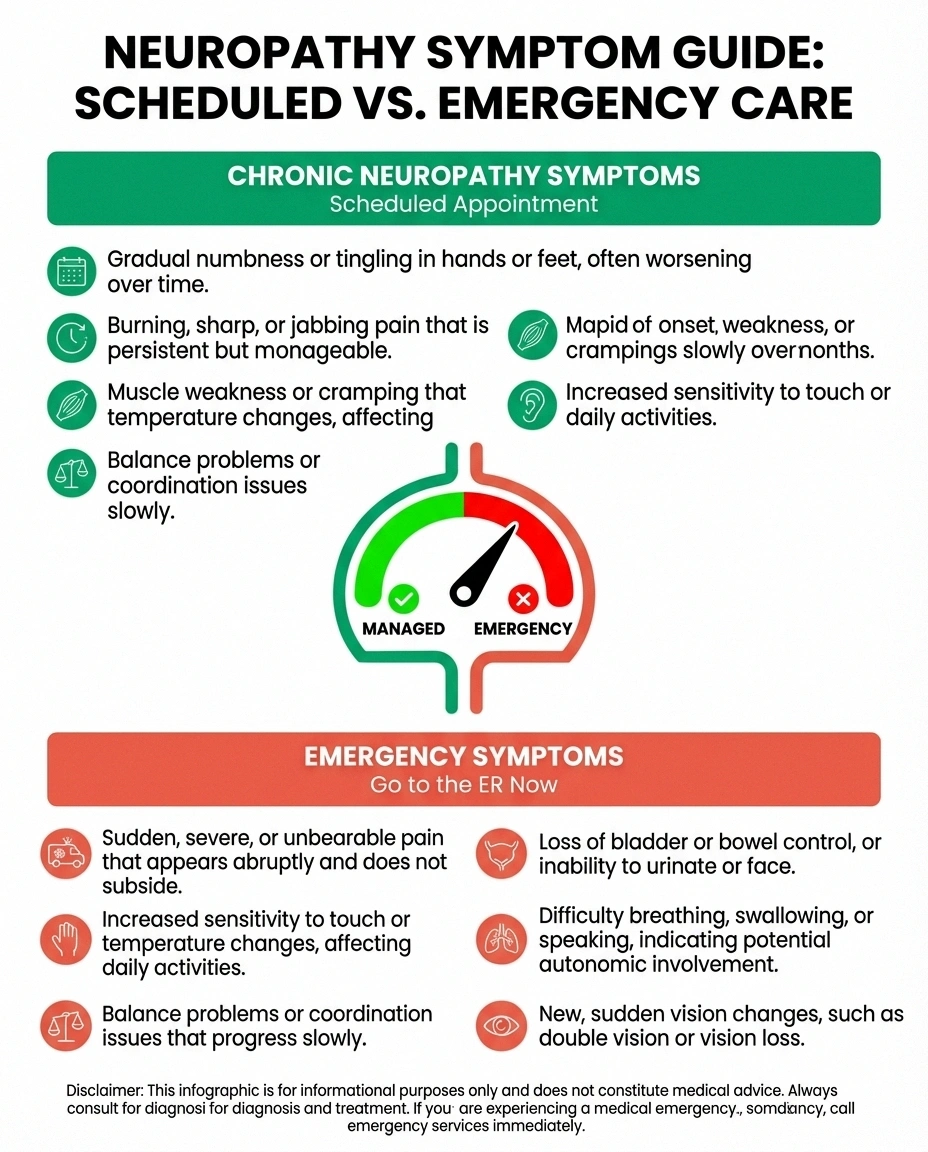
Most neuropathy symptoms are chronic — they’ve developed gradually and have been present for weeks, months, or years. These are symptoms your doctor knows about and has a treatment plan for. They may be uncomfortable and even debilitating, but they typically don’t require emergency care.
- Rapidly spreading weakness
- Difficulty breathing or swallowing
- Sudden complete bladder/bowel loss
- Fainting with heart irregularities
- Symptoms appearing in days
- Signs of infection in neuropathic area
- New symptoms + unexplained weight loss
- Severe uncontrolled pain crisis
Emergency symptoms are different. They are:
- New or sudden — appearing in hours or days rather than weeks
- Rapidly progressing — getting significantly worse over hours
- Affecting vital functions — breathing, swallowing, bladder/bowel control, or cardiac function
- Asymmetric in a new way — one side of the face, both legs simultaneously when that’s new
The key question is always: Is this my normal neuropathy, or is something new happening?
Go to the ER Immediately: Life-Threatening Neuropathy Emergencies
These symptoms require emergency care — call 911 or have someone drive you to the ER. Do not wait, do not drive yourself if symptoms are affecting your legs or coordination.
Rapidly Spreading Weakness or Paralysis
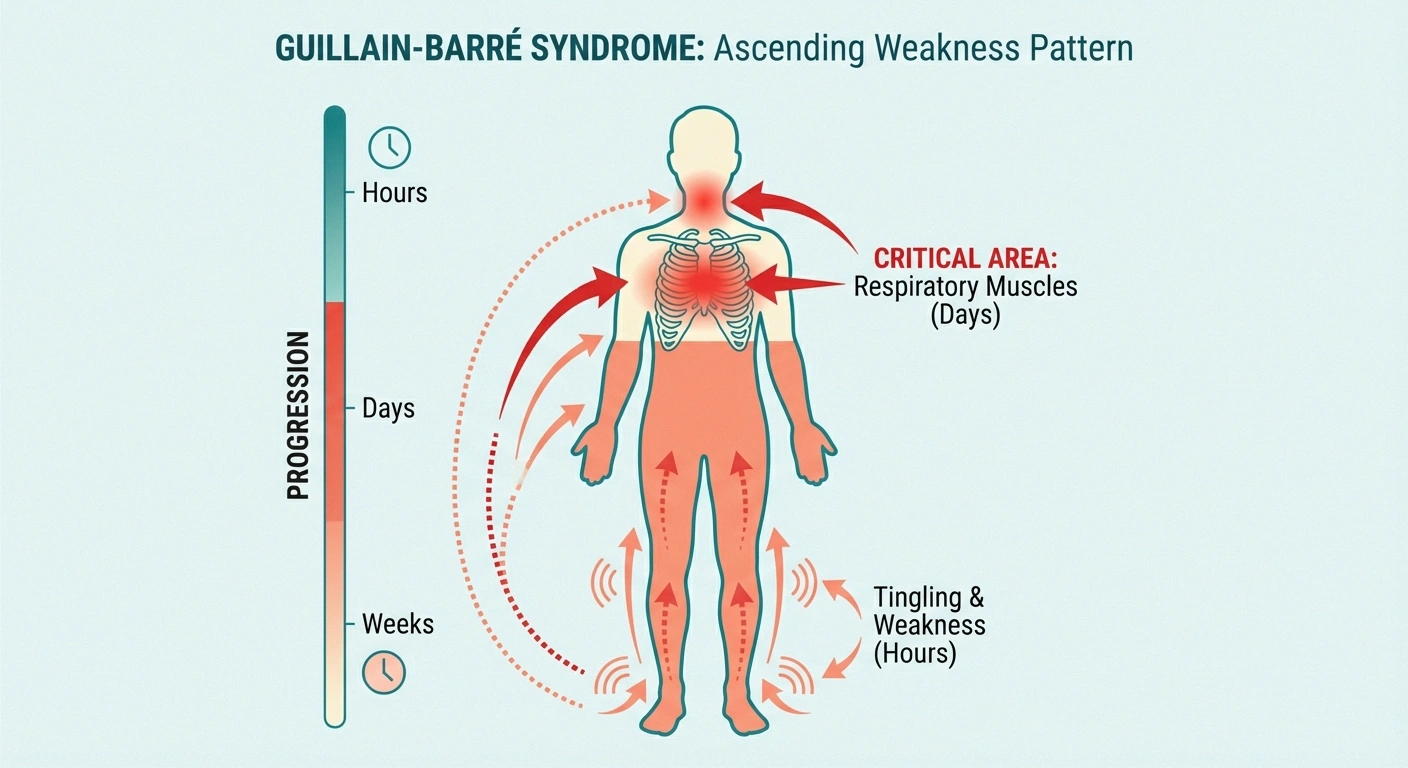
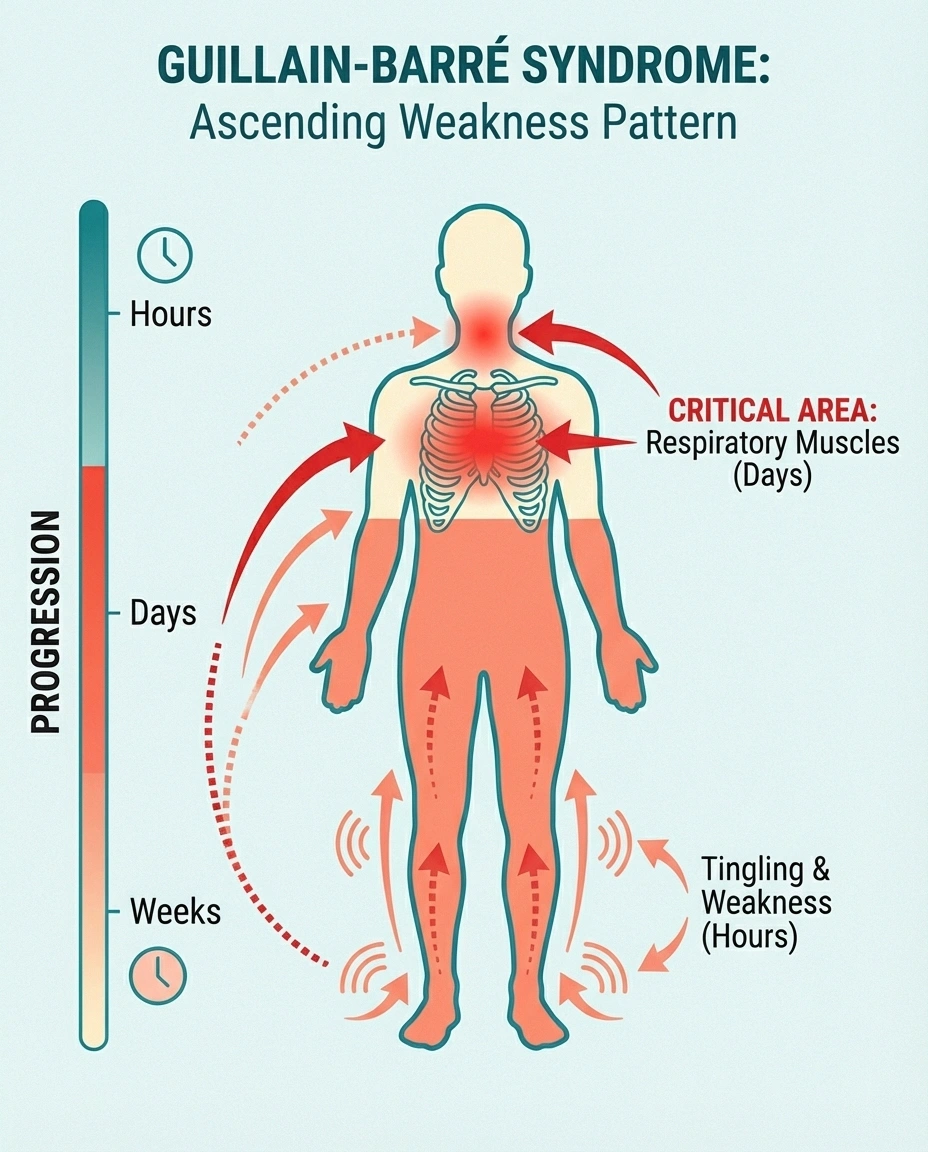
If weakness in your legs or feet suddenly spreads to your trunk, arms, or face over hours or days, this is a neurological emergency. The condition most associated with this pattern is Guillain-Barré Syndrome (GBS) — an acute inflammatory neuropathy where the immune system attacks the peripheral nerves.
GBS is the most dangerous acute neuropathy emergency. Warning pattern to watch for:
This can progress from tingling to respiratory failure within days. Time is critical. Do not wait for a regular appointment.
GBS typically starts with tingling and weakness in the legs and can progress to paralysis of the breathing muscles within days. According to the NIH’s National Institute of Neurological Disorders and Stroke, GBS “can increase in intensity over a period of hours, days, or weeks” until patients cannot use certain muscles at all. Early hospitalization is critical — patients often need respiratory monitoring and intravenous immunoglobulin (IVIG) or plasmapheresis treatment.
Warning pattern: Tingling that started in the feet now moving upward, legs feeling increasingly weak, difficulty standing up from a chair that was fine yesterday.
Difficulty Breathing or Swallowing
Any neuropathy-related symptom affecting your ability to breathe or swallow is an emergency. This can happen in GBS, autonomic neuropathy affecting the vagus nerve, or other conditions involving the cranial nerves. Shortness of breath that comes on over hours — especially combined with limb weakness — requires immediate evaluation.
Warning pattern: Feeling short of breath when lying down, difficulty getting enough air, food or liquids going down the wrong way consistently, voice becoming nasal.
Sudden Severe Bladder or Bowel Loss of Control
Sudden urinary retention (inability to urinate despite having the urge) or complete loss of bowel/bladder control that is new and acute can indicate cauda equina syndrome — compression of the spinal nerve roots — which requires emergency surgical decompression within hours to prevent permanent disability. This is not the same as chronic bladder issues many neuropathy patients experience; it’s a sudden and complete change.
Warning pattern: Suddenly cannot urinate at all, or sudden complete incontinence combined with leg weakness and numbness in the saddle area (inner thighs and groin).
Rapid Heart Rate Changes or Fainting with Neuropathy
People with autonomic neuropathy are at risk for cardiac dysrhythmias. If you have known autonomic neuropathy and experience a new rapid or irregular heart rate, fainting episodes, or significant blood pressure instability (severe dizziness or passing out when standing), seek emergency evaluation. These symptoms can indicate dangerous cardiac involvement that requires monitoring.
Seek Urgent Care Within 24–48 Hours: Serious But Not Immediately Life-Threatening
These symptoms aren’t 911-level emergencies but shouldn’t wait for a scheduled appointment that’s weeks away. Call your neurologist or go to an urgent care center or emergency department the same day or next day:

Neuropathy Symptoms That Began Suddenly Within Days
Neuropathy that develops over years is typical. Neuropathy that appeared within the past week, without an obvious cause, deserves prompt evaluation. Sudden-onset neuropathy can be caused by acute toxic exposure, medication effects, viral infections, or inflammatory conditions — many of which are treatable if caught early.
Signs of Infection in Neuropathy-Affected Areas
People with neuropathy — especially diabetic neuropathy — are at high risk for foot and leg infections because reduced sensation means injuries go unnoticed and untreated. Any of the following in a neuropathy-affected area needs same-day evaluation:
- Redness spreading from a wound or sore
- Warmth, swelling, or pus around a skin break
- Red streaks moving up the leg from a wound (cellulitis spreading)
- Fever accompanying a foot or leg wound
- A wound that smells unusual or has changed color
Untreated infections in neuropathic limbs can progress to serious tissue damage requiring amputation. The daily foot care routine for neuropathy exists precisely to catch these early — but when you find something concerning, don’t wait.
Neuropathy Symptoms Alongside Unexplained Weight Loss or Night Sweats
New or worsening neuropathy combined with unintentional weight loss, night sweats, or persistent fatigue that’s new — these can indicate underlying conditions including lymphoma, multiple myeloma, or other systemic diseases that present with neuropathy as a symptom. This combination warrants prompt medical evaluation, not just a monitoring approach.
Severe Uncontrolled Pain Crisis
If your neuropathic pain escalates to a level that is completely unmanageable and your prescribed medications are not providing any relief, going to an emergency department for acute pain management is appropriate. This is not “giving up” — it’s recognizing that pain crisis can require IV medications or interventions not available in an outpatient setting. According to a 2023 study published in PMC, patients with high pain intensity or exacerbations of chronic pain are appropriate candidates for emergency department management.
Know When It’s NOT an Emergency
One of the genuinely difficult aspects of living with neuropathy is distinguishing new emergencies from familiar chronic symptoms. These situations are uncomfortable but are typically NOT emergencies — they belong at a scheduled appointment or urgent care if significantly bothersome:
- Your usual burning or tingling that is worse than normal at night (see why neuropathy worsens at night)
- Increased sensitivity to touch that’s been an ongoing issue
- Numbness that has been present for weeks and is not spreading
- Muscle cramps in the feet or calves that are a known, chronic symptom
- Balance difficulties you’ve had for months that are not acutely worse
If you’re unsure, call your neurologist’s office or use a nurse advice line. Most practices have on-call providers who can help you triage whether to come in.
Special Considerations: Diabetic Neuropathy Emergencies
People with diabetic neuropathy have additional emergency scenarios to watch for:

Diabetic Foot Ulcers That Have Changed Rapidly
A diabetic foot ulcer that has been stable can become an emergency within 24 to 48 hours if it becomes infected. Signs of rapid deterioration — blackening of tissue (suggesting gangrene), rapidly expanding redness, fever above 101°F, or a wound that has gone from mild to severe overnight — require emergency evaluation. Do not wait for a regular podiatry appointment.
Severe Hypoglycemia with Autonomic Neuropathy
Autonomic neuropathy can mask the warning signs of low blood sugar (hypoglycemia unawareness). If you’re diabetic with autonomic neuropathy and experience confusion, altered consciousness, or seizure — check blood sugar immediately and call 911 if you cannot self-treat. The neurological symptoms of severe hypoglycemia can mimic acute neurological events.
How to Communicate Effectively in a Neuropathy Emergency
Emergency department staff see thousands of patients. When you arrive for a neuropathy-related concern, be specific and clear:
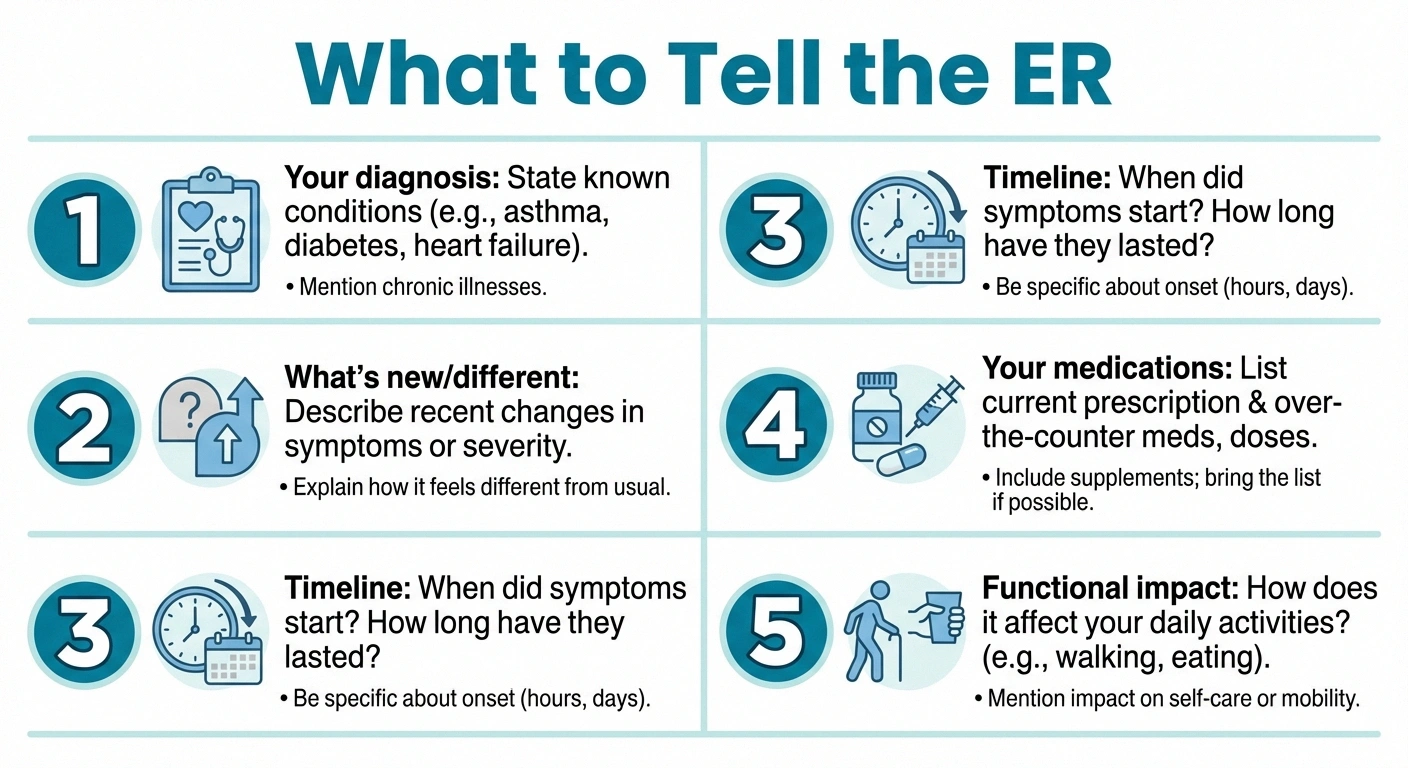
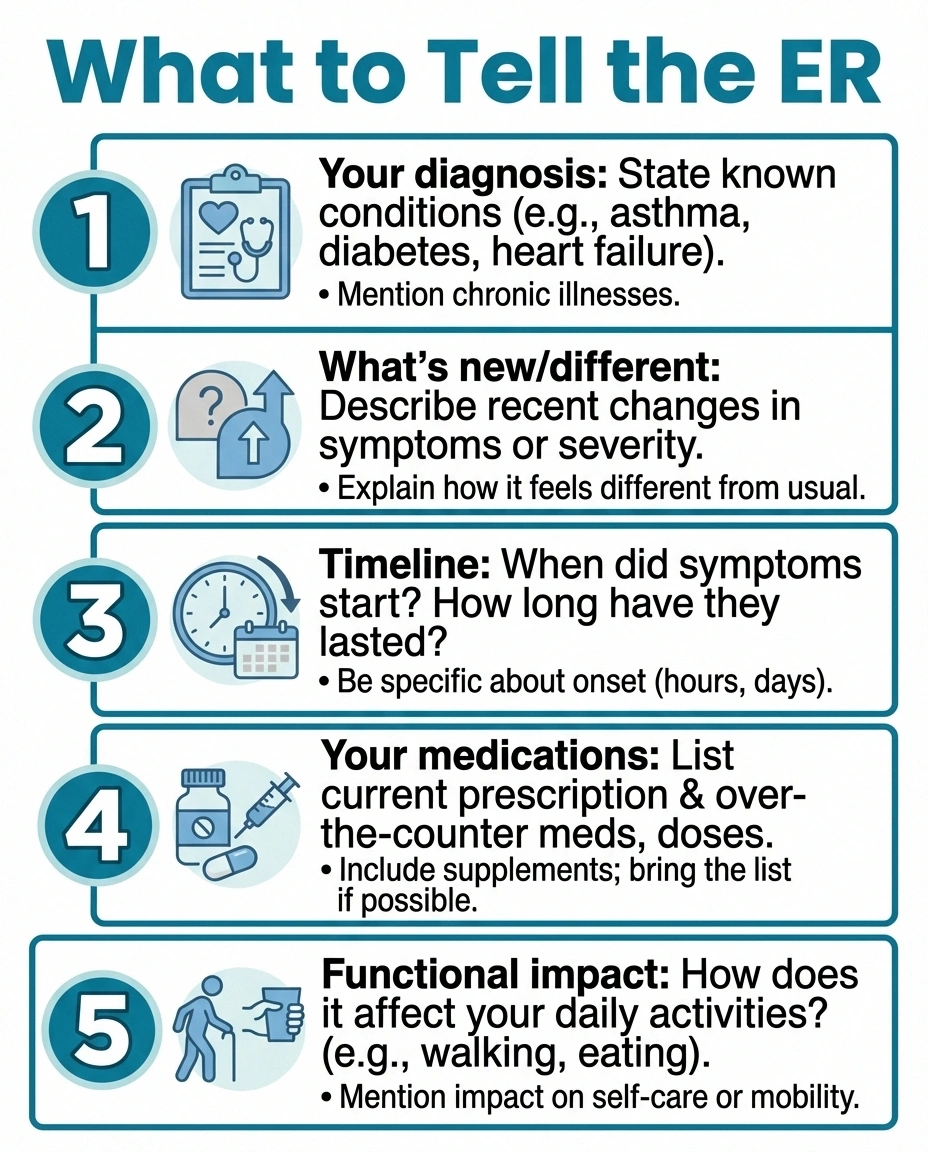
- State your known diagnosis — “I have peripheral neuropathy” gives context immediately
- Describe what’s new — “My usual symptoms are X, but since yesterday I’ve developed Y”
- Give a timeline — “Started 12 hours ago and has been getting worse”
- Mention your medications — bring your medication list or have it in a note on your phone
- Describe functional impact — “I can no longer stand on my own” carries different urgency than “I have more tingling”
If you’re going alone and your condition is severe, call 911 rather than driving. Weakness affecting the legs can impair braking response even when you feel capable of driving.
Building a Safety Plan Before You Need It
People with neuropathy — especially those with autonomic involvement or rapidly progressive forms — benefit from having an emergency plan in place before a crisis. Consider:

- A medical ID bracelet or card listing your neuropathy diagnosis and key medications
- Your neurologist’s after-hours contact saved in your phone
- A document with your medication list ready to share at an ER — take a photo so it’s always accessible
- A trusted person who knows your condition and can recognize deterioration
- Your nearest emergency facility that handles neurological emergencies (larger hospitals have better neurology resources than urgent care centers)
Taking these steps when you’re stable makes a real difference when you’re not. Most neuropathy patients will never need emergency care specifically for their nerve condition — but knowing your red lines means you’ll act fast if that changes.
Frequently Asked Questions
Can neuropathy cause a medical emergency?
Yes, in certain forms. Acute inflammatory neuropathies like Guillain-Barré Syndrome can progress to respiratory failure within days. Autonomic neuropathy can cause cardiac arrhythmias and severe blood pressure dysregulation. Diabetic neuropathy increases risk of infected foot ulcers and severe hypoglycemia. While most neuropathy is not acutely life-threatening, certain presentations require immediate emergency care.
How do I know if new neuropathy symptoms are an emergency?
Ask yourself: Is this my normal neuropathy, or is something new happening? Emergency red flags include rapidly spreading weakness, difficulty breathing or swallowing, sudden complete bladder/bowel loss of control, and neuropathy symptoms that appeared over hours rather than weeks. When in doubt, call your neurologist’s on-call line for guidance.
Should I go to the ER for severe neuropathy pain?
If your pain is completely uncontrolled and your prescribed medications are providing no relief, going to the emergency department is appropriate. Acute pain crisis can require IV medications that aren’t available outpatient. However, if your pain is your usual neuropathy pain — just bad — this is better managed through your neurologist or a pain management specialist at a scheduled appointment.
What is Guillain-Barré Syndrome, and is it related to neuropathy?
Guillain-Barré Syndrome is an acute inflammatory neuropathy where the immune system attacks the peripheral nerves. It typically starts with tingling and weakness in the legs that spreads upward over days. It is a form of peripheral neuropathy but behaves very differently from typical chronic neuropathy — it’s sudden, rapid, and can be life-threatening if the breathing muscles are affected. It requires emergency hospitalization.
My neuropathy got worse suddenly — is that an emergency?
It depends on how suddenly and what “worse” means. If you woke up with significantly worse symptoms after a bad night, that may be normal fluctuation. If symptoms have been progressing significantly over a few hours or you’ve developed new weakness, go to an ER or call your neurologist immediately. Sudden onset of new symptoms is always worth a call to your doctor’s office to triage.
The Bottom Line on Neuropathy Emergencies
Most days with neuropathy don’t involve emergencies. The condition is chronic, manageable, and for many people stable. But understanding where the lines are — what’s chronic discomfort versus what’s a red flag — is part of living safely with nerve disease.

Trust your instincts. If something feels wrong in a way that’s different from your usual symptoms, say something. Get evaluated. It is far better to make an unnecessary ER visit than to wait out something that needed immediate care.
For ongoing management, explore our resources on the stages of neuropathy and neuropathy diagnosis tests to better understand your condition and have informed conversations with your care team. And browse our complete natural remedies for peripheral neuropathy for day-to-day management strategies.
This article is for educational purposes only and does not constitute medical advice. Always consult your healthcare provider about your specific symptoms. Call 911 for life-threatening emergencies.
About the Author