If you've been managing neuropathy for a while, you already know it reaches further than your feet. It reaches into your mornings, your sleep, your moods — and if we're honest with each other, it often reaches into the bedroom, too. This is one of those topics that almost never comes up at a doctor's visit and rarely gets a column in a patient handout, but it lives in a lot of our homes.
I want to talk about it the way I wish someone had talked to me and my husband about it years ago — plainly, without embarrassment, and with real ideas you can actually try. Neuropathy changes intimacy, yes. But it does not end it. What it asks of us is different, not less.
What Neuropathy Actually Does to Sexual Function
The body's sexual response is a nerve event as much as it is an emotional one. Arousal, lubrication, erection, and orgasm all depend on signals traveling along small nerve fibers and autonomic pathways. When those nerves are damaged, the signals don't land the way they used to. Published research in Autonomic Neuroscience describes this directly: peripheral nervous system disorders, especially polyneuropathies affecting autonomic fibers, can produce loss of genital sensitivity, erectile dysfunction, reduced vaginal lubrication, and changes in ejaculation and orgasm.
A large U.S. study of men with peripheral neuropathy found a striking association with erectile dysfunction — and the authors noted the connection is often missed because clinicians are looking at the feet, not asking about anything else. In women, the conversation is even quieter. A paper on polyneuropathy and female sexual dysfunction notes that loss of sensation, reduced arousal, and painful intercourse all appear in the research, yet women are rarely asked about these symptoms.
If any of this sounds like your experience, you are not imagining it and you are not alone. In one survey, nearly half of people with neuropathic symptoms reported that those symptoms interfered with the frequency or quality of sexual activity. Many had been living with that interference for more than six months before they found a clinician willing to address it. I've linked out to our deeper piece on neuropathy and sexual dysfunction if you want the medical background in more depth.
The Emotional Weight Nobody Prepared You For
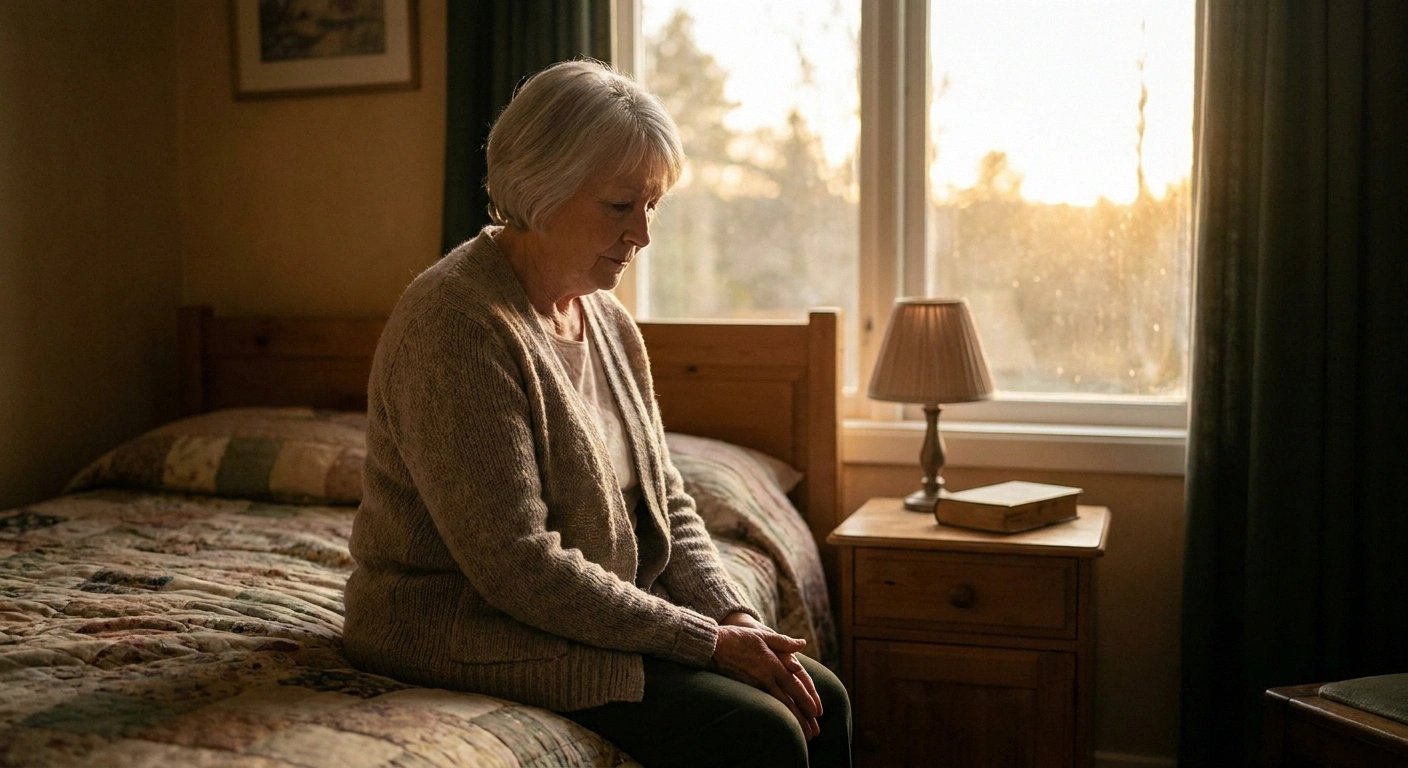
I want to acknowledge what the studies rarely measure. Chronic nerve pain is exhausting. It makes you short-tempered in ways you don't mean. It makes your body feel like a stranger. After a bad pain day, the last thing many of us want is to be touched at all. And when you refuse touch often enough, your partner starts to read it as rejection even when it isn't.
Then there's the grief. You may grieve the easy, spontaneous intimacy of your younger years. You may grieve the body you had before the burning started. There's also a quieter grief — the grief of feeling like a burden, of watching your partner tiptoe around your pain, of sensing that both of you are holding your breath.
If that describes your house, please know this is a normal part of chronic illness, not a marriage failing. We've written more about the grief that comes with neuropathy and about the emotional toll on mental health because both of these sit underneath the intimacy question more than we tend to admit.
Start With a Real Conversation (Script Included)

Most couples don't avoid this topic because they don't care. They avoid it because they don't know how to start without making each other feel worse. If that's you, here's a scaffold I've shared with women in my support group. Adjust the words to sound like yours.
Opening the door: “I've been thinking about us. I miss being close the way we used to be, and I know the pain makes it complicated. Can we talk about what might still feel good, and what doesn't?”
Saying what changed: “I'm not pulling away from you. My feet are on fire by bedtime, and I don't have anything left. It isn't about you, and I don't want you to take it that way.”
Asking your partner: “What do you miss the most? I want to know what would feel like closeness to you right now, even if it looks different from before.”
Three things matter about that conversation. Don't have it in bed — have it on a walk, in the car, or on the porch with coffee, where the setting isn't pressuring anyone. Don't have it right after an attempt that went badly. And don't try to solve everything in one talk. One honest conversation is a beginning, not a finish line.
Reframing Intimacy: It Doesn't Have to Start and End With Sex
One of the most helpful things a therapist ever said to me was this: intimacy is a much bigger category than sex, and sex is one expression of intimacy, not the only one. When chronic pain is in the picture, expanding the category gives you room to breathe.
Some couples rediscover closeness in small rituals: a ten-minute back scratch before bed, showering together without expectation, dancing in the kitchen to one slow song, reading out loud, sharing a blanket on the couch. These things matter. They keep the nervous system connected even on days when sex isn't on the table.
Sex therapists often recommend a technique called sensate focus. It's structured, non-goal-oriented touch — you take turns being the receiver and the giver, with a clear agreement that nothing is “supposed” to happen. The point is to notice what feels good without the pressure of arousal or performance. For couples where chronic pain has made sex feel anxious or disappointing, sensate focus resets the baseline. You can do the early stages yourselves with a book or an online guide; if you want structure, a sex therapist or couples counselor can walk you through it.
The Medication Question Most People Miss
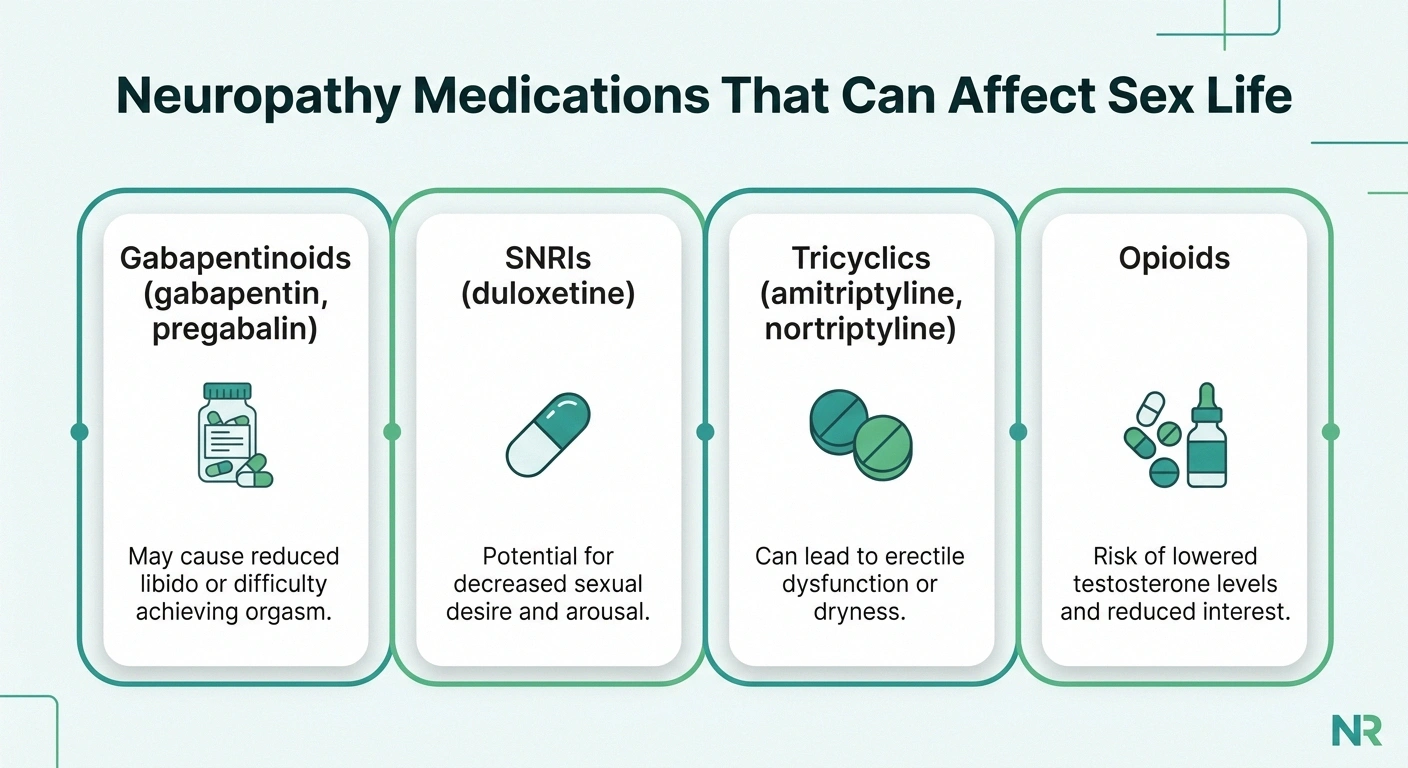
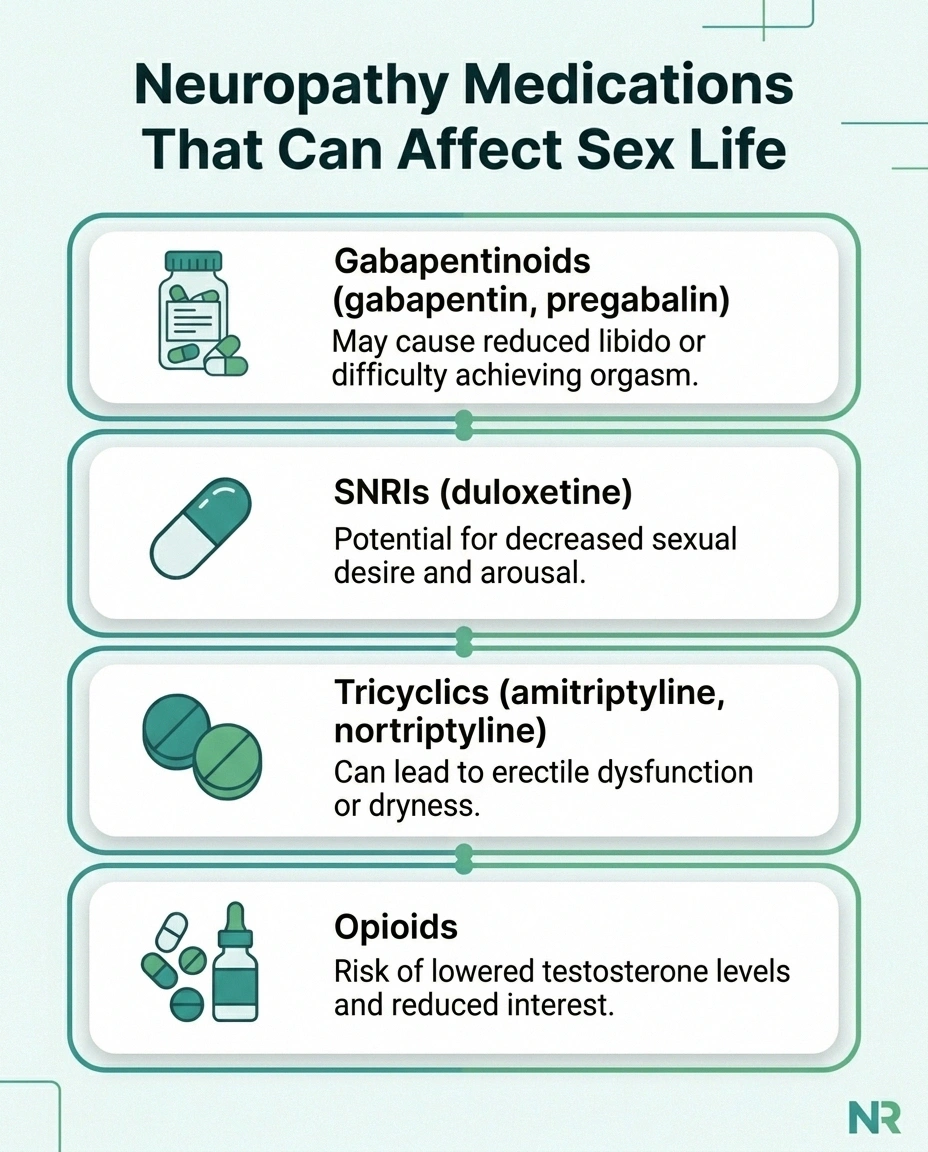
This is important, and very few patients are told about it directly. Several of the most common neuropathy medications have sexual side effects. Gabapentin and pregabalin (Lyrica) can cause reduced libido and orgasmic difficulty. Duloxetine (Cymbalta) is an SNRI antidepressant, and like other serotonergic drugs, it can delay or blunt orgasm. Tricyclics like amitriptyline can cause erectile dysfunction and vaginal dryness. Opioid pain medications suppress testosterone and libido over time.
None of this means you should stop your medication. It means that if your sex life changed around the same time your prescription started, the medication deserves a frank conversation with your prescriber. Dose adjustments, timing changes (taking a dose after intimacy rather than before), or switching to a different agent in the same class can all help. Never stop nerve pain medications abruptly — gabapentin and pregabalin require tapering.
Practical Strategies When Pain Is the Main Barrier

For many of us, the biggest obstacle isn't desire — it's that the body hurts too much for certain positions, pressure, or contact. Here's what I've seen help couples in my group.
Time it well. Most neuropathy has pattern days: better mornings, worse nights, or worse after standing a lot. Don't try to be intimate at your worst pain hours. If evenings are your flare window, mid-morning or early afternoon may be more forgiving. We've written more about the evening flare pattern because so many people with neuropathy share it.
Pre-treat the pain. A warm shower before intimacy can settle burning feet for some people (though not everyone — cold packs work better for others). Topical creams applied an hour beforehand can reduce local pain without fogging your head the way oral medication might. If you use a TENS unit, running a session 30–60 minutes before can turn the volume down on background pain.
Change positions, not expectations. Sixty-five percent of people in one survey had to change positions because of neuropathy symptoms — that's not failure, that's adaptation. Side-lying (spooning) removes pressure from the feet entirely. Propping knees with pillows reduces lumbar strain. Seated positions with the person who has foot pain on top let them control pressure and movement. A wedge pillow under the hips or back can make a real difference.
Protect sensitive areas. If your feet have allodynia (where even a sheet hurts), keep them out of the action entirely — loose socks, cotton wraps, or simply keeping them outside the covers is legitimate. Nothing about intimacy requires your feet to participate.
Use external assistance. When genital sensation is reduced by small-fiber damage, many couples find that vibrators and other devices can supplement what the nerves aren't quite picking up. This is true for men and women. There is no rule that says sex has to rely only on what nerves can deliver directly.
Addressing ED and Low Arousal Head-On
Peripheral neuropathy is one of the most common contributors to erectile dysfunction, and it's often treatable. PDE-5 inhibitors (sildenafil, tadalafil, vardenafil) work by improving blood flow and remain effective for many men with neuropathic ED. If pills don't work, vacuum erection devices, intracavernosal injections, and penile implants are all on the table. A urologist who takes neuropathy patients seriously can walk through the options without rushing you.
Women managing reduced lubrication or arousal from autonomic neuropathy have a few straightforward tools. A good-quality silicone-based lubricant (which doesn't dry out the way water-based ones can), longer time spent on arousal, and hormonal or non-hormonal vaginal moisturizers (for patients also in menopause) can all help. If orgasmic response has changed, external vibration often succeeds where other stimulation doesn't — the nerves respond to intensity even when they're not responding to lighter touch.
Autonomic neuropathy is worth reading about separately if you're curious how widely it affects these pathways — we have more detail in our piece on autonomic neuropathy.
What About the Partner Without Neuropathy?
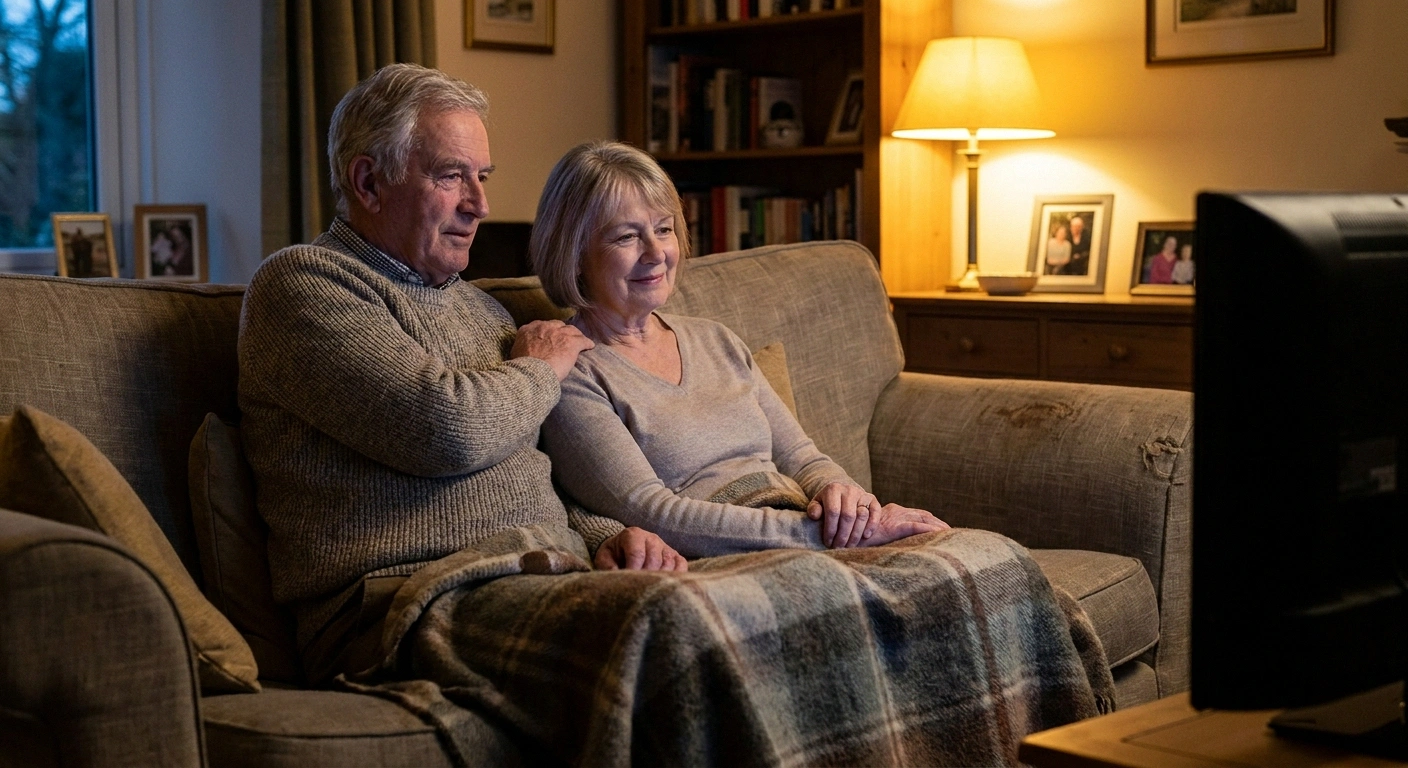
If you're the well partner reading this, first — thank you for caring enough to read. Here are the things I've heard again and again from partners that seem to help most.
Let your partner lead the conversation, but don't wait forever. If it's been weeks or months and you haven't talked about it, gentle initiation can be a relief, not pressure. Something like, “I've missed being close to you. I don't want to push, but I want you to know I've been thinking about it too.”
Don't take the “not tonight” personally. On a high-pain night, your partner's body has already been fighting for hours. Refusal is about pain, not about you. At the same time, ask what might still work — a back rub, holding hands while watching TV, sleeping close. Touch is a spectrum.
Learn the pain pattern. If you know when their good windows are, you can plan date moments around them. Protect those windows. Don't schedule tiring errands on a day you're both hoping to be close.
Finally — maintain your own well-being. Resentment in long-term chronic-illness relationships usually grows from the well partner's unmet needs, not from the ill partner's condition. Talk, exercise, see friends, get your own therapist if you need one. You're in this together, and that means both of you need tending.
When to Bring in Help
Some things improve with self-directed effort. Others need a professional. Consider outside help if:
- ✓Six+ months without physical intimacy and neither of you is okay with it
- ✓Persistent anger, avoidance, or withdrawal around the topic
- ✓Pain management isn't responding to medication adjustments
- ✓ED, lubrication, or orgasmic changes don't improve with basics
- ✓Avoiding touch altogether — not just sex
- You've gone six months or more without physical intimacy and neither of you is comfortable with that.
- One or both of you is feeling persistent anger or withdrawal around this topic.
- Pain management isn't responding to medication adjustments.
- ED, lubrication, or orgasmic changes don't improve with the basics.
- You're avoiding touch altogether, not just sex.
A good sex therapist (look for AASECT-certified) is trained for exactly this. A urologist or gynecologist familiar with neurogenic dysfunction can rule out other contributors and open up treatment options. A couples therapist can help you rebuild communication patterns that chronic pain has worn down. None of these are signs that your relationship is broken. They're signs that you're willing to invest in it.
A Final Word From Me to You

I want to say the plain thing at the end. My own marriage has had years where this was hard, and years where we found our way back to something sweet. The couples I've watched navigate neuropathy best have two things in common: they keep talking even when it's awkward, and they don't measure closeness by whether they had sex last week.
Your body is different now. That is real. But your capacity to give and receive love hasn't been damaged by any of this. Your partner still knows your face. You still know theirs. The work is finding the new shape of your intimacy, not mourning the old one forever.
If this piece helped, send it to your partner. Sometimes the hardest part of starting is having something to point to and say, “This. This is what I wanted to tell you.”
Frequently Asked Questions
Can peripheral neuropathy cause erectile dysfunction?
Yes. Peripheral neuropathy is one of the most common neurological contributors to erectile dysfunction, because erection depends on intact nerve signaling to the blood vessels of the penis. A large U.S. study found a strong association between peripheral neuropathy and ED in men. The good news is that most cases of neurogenic ED respond to PDE-5 inhibitors, vacuum devices, injections, or implants, and a urologist familiar with neuropathy can walk you through the options.
Does neuropathy affect women's sexual health too?
Yes, though it's asked about far less often. Women with polyneuropathy can experience reduced genital sensation, decreased vaginal lubrication, difficulty reaching orgasm, and sometimes pain during intercourse. Autonomic fibers that control lubrication and arousal are commonly affected in conditions like diabetic and chemotherapy-induced neuropathy. Lubricants, vaginal moisturizers, extended arousal time, and external vibration are all helpful, and a gynecologist should be part of the conversation.
Will my neuropathy medication affect my sex drive?
It might. Gabapentin and pregabalin can lower libido and affect orgasm. Duloxetine, as an SNRI, can delay or blunt orgasm. Tricyclics like amitriptyline can cause ED and vaginal dryness. Opioids reduce testosterone over time. None of this means you should stop your medication on your own — but if the change in your sex life lines up with a new prescription, bring it up with your prescriber. Dose adjustments, timing changes, or a different drug in the same class can often fix it.
What positions are most comfortable for intimacy with neuropathy pain?
The positions that work best keep weight off painful areas and let the person with neuropathy control pressure and movement. Side-lying (spooning) takes all pressure off the feet. The person with neuropathy on top lets them set pace and limit pressure. Pillows under knees, hips, or lower back reduce strain. The goal is to eliminate pressure on painful areas rather than to follow any “ideal” position.
How do I bring this up with my doctor without being embarrassed?
A simple sentence works: “My neuropathy is affecting my sex life, and I'd like to talk about it.” Most clinicians are relieved when patients raise it because they often don't know how to ask. If your primary doctor isn't the right fit, ask for a referral to a urologist, gynecologist, or sex therapist. This is a legitimate part of your care, not a side issue.
Is it normal to lose interest in sex when you have chronic pain?
Yes, completely. Chronic pain, fatigue, poor sleep, medication side effects, and the emotional weight of illness all lower libido. This isn't a character issue — it's a nervous-system issue. Libido often rebounds when pain is better controlled, sleep improves, medications are adjusted, and the couple has rebuilt communication. It rarely rebounds on its own without those supports.
Can sensate focus really help couples dealing with neuropathy?
For many couples, yes. Sensate focus was developed by sex therapists specifically to reduce performance anxiety and rebuild non-goal-oriented touch. For couples where chronic pain has made sex feel stressful or disappointing, it resets the baseline by removing the pressure to “perform.” You can do the early stages with a book or online guide, or work through it with a certified sex therapist. It's especially useful when one partner has become avoidant of touch altogether.
Should we see a sex therapist, a couples therapist, or a medical doctor?
It depends on where the main barrier is. If the barrier is physical (ED, lubrication, pain, medication side effects), start with a medical clinician — urologist, gynecologist, or your prescriber. If the barrier is communication, resentment, or a pattern of withdrawal, a couples therapist is the better fit. If the barrier is specifically sexual — performance anxiety, lost interest, avoidance of intimacy — an AASECT-certified sex therapist is worth the visit. Many couples end up using more than one of these over time.
About the Author