
My Journey Into Understanding Why My Blood Sugar Was Hurting My Nerves
The first time a doctor said the words “oxidative stress” to me, I was sitting in a paper gown on a cold exam table with my feet dangling like a kid’s. I had come in because my toes felt like they were vibrating in a shallow puddle of acidic water — that specific, prickly, wet-burn sensation that I now know is one of the calling cards of diabetic neuropathy. My A1C had crept up to 8.3. My fasting numbers were bouncing between 130 and 210 depending on what kind of week I was having. And here was this kind, harried endocrinologist explaining that my nerves were essentially being rusted from the inside out.
Rust. That was the word she used. Not scarred. Not inflamed. Rusted.
I have spent the better part of six years since that appointment reading, asking questions, joining support groups, and comparing notes with other people living with peripheral neuropathy. What I want to share with you in this article is what I wish someone had drawn out on a napkin for me that day — the actual chemistry of what high blood sugar does inside your nerves, why some interventions genuinely help, and which promises to walk right past. If you’re newer to this journey, our overview of diabetic neuropathy and how it develops is a good companion read.
What Oxidative Stress Actually Is (In Plain English)
Your body runs on oxygen the way an engine runs on gasoline. Every cell has tiny power plants called mitochondria that burn glucose in the presence of oxygen to make energy. That process is efficient, but it isn’t clean. Some of the oxygen molecules end up unstable — they’re missing an electron. Chemists call these reactive oxygen species, or ROS. In casual conversation, most of us call them free radicals.
Oxidative stress isn’t a mystical process — it’s the same chemistry that rusts iron and browns apples, just happening inside your nerves. High blood sugar tips the balance by producing free radicals faster than your body can neutralize them, and nerves are the tissue that pays the price first.
Free radicals are twitchy. They will grab an electron from just about anything to feel whole again — a strand of DNA, a fat molecule in a cell membrane, a protein doing important work. When they steal that electron, the thing they stole from gets damaged. That damage is called oxidation. It’s the exact same chemistry that turns cut apples brown and makes iron rust in a wet garage.
Your body isn’t defenseless. You produce your own antioxidants — glutathione, superoxide dismutase, catalase — and you eat more of them in vegetables, berries, nuts, and fish. In a healthy person, antioxidant defense and free radical production stay roughly balanced. Oxidative stress is the name we give to the state where free radicals are being produced faster than your defenses can neutralize them. And that, more than almost any other single factor, is what damages nerves in diabetes.
The Four Pathways: How High Blood Sugar Creates Free Radicals
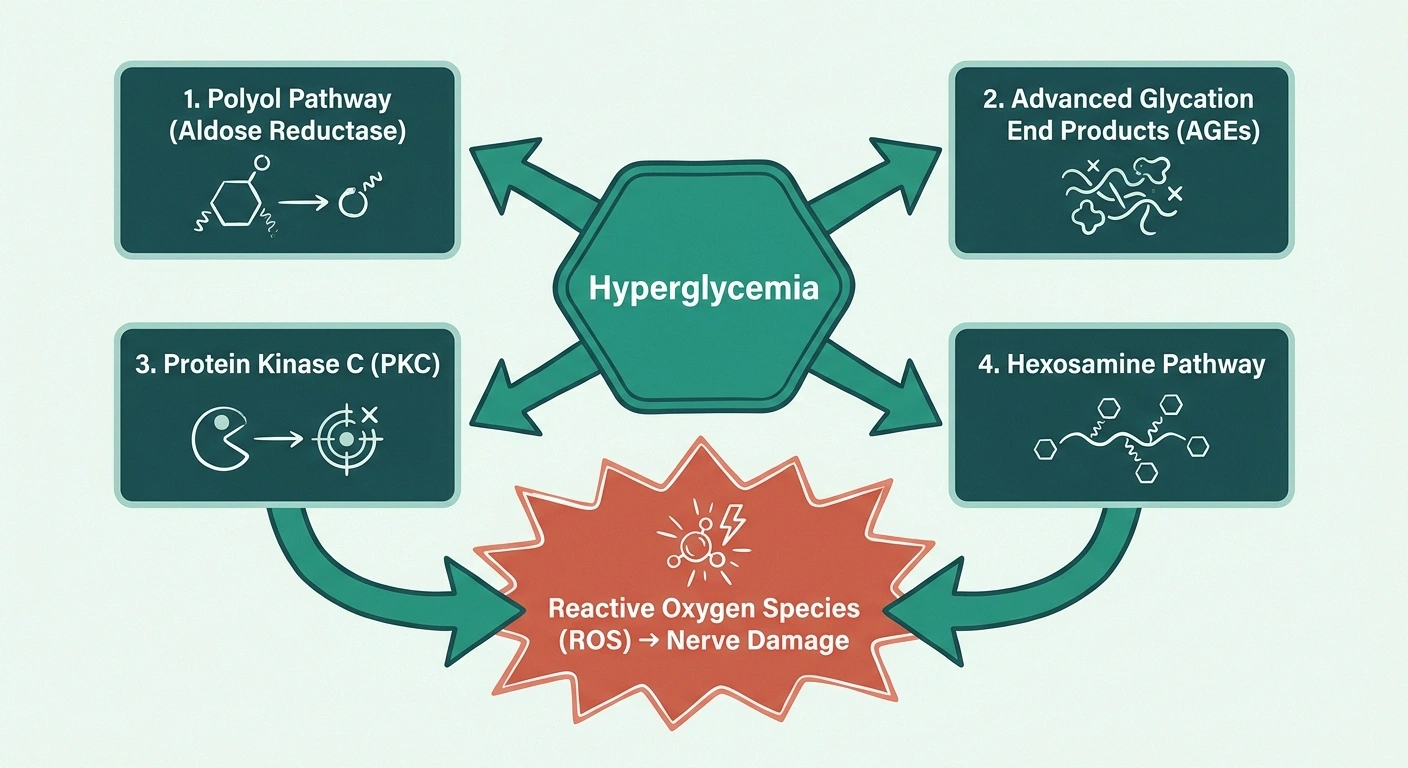
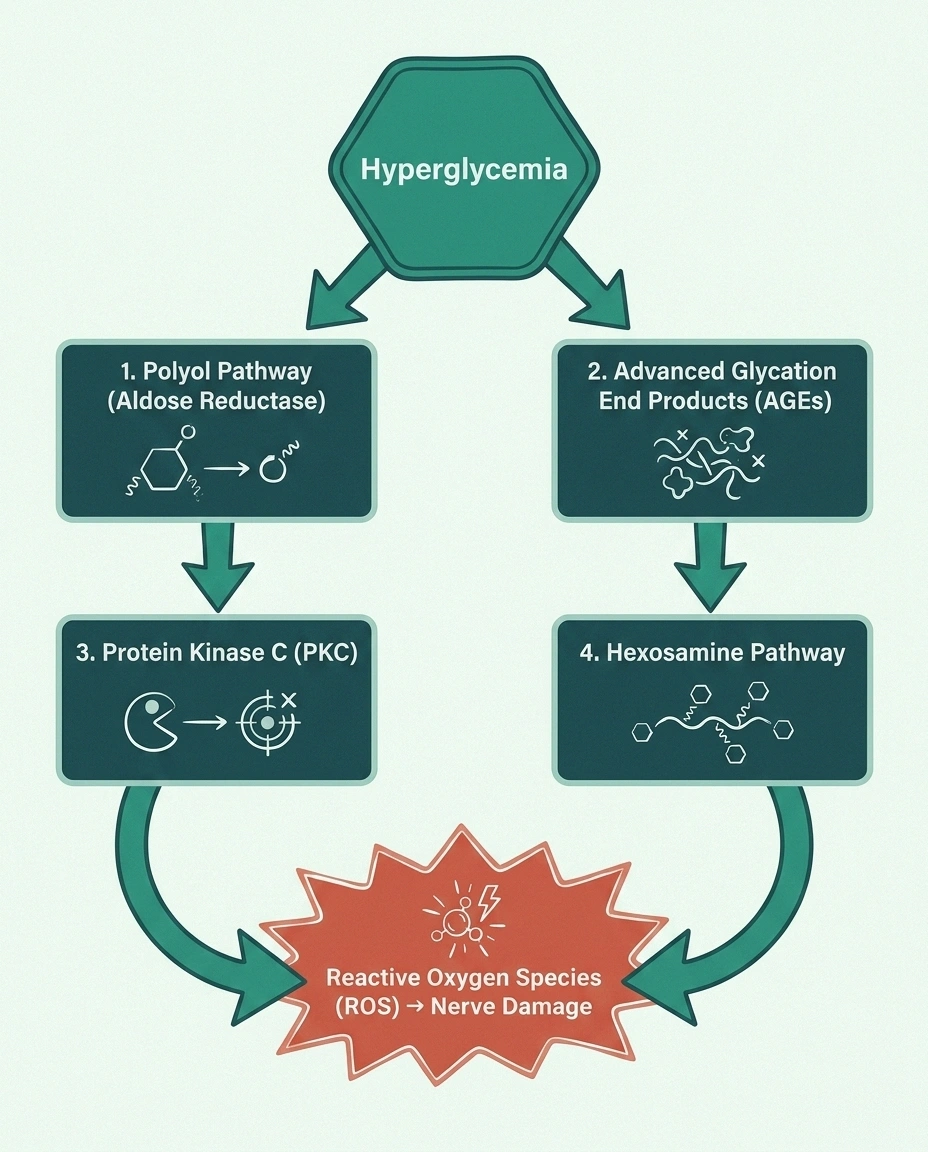
Back in 2001, a diabetes researcher named Michael Brownlee proposed what has become the accepted explanation for why hyperglycemia damages nerves, kidneys, eyes, and blood vessels. He called it the unifying mechanism. It says that when blood sugar stays high, the mitochondria in your cells produce a flood of free radicals, and that flood triggers four separate but overlapping damage pathways. Understanding these four pathways changed how I thought about my own diet and supplements.
The Four Hyperglycemia Damage Pathways at a Glance
| Pathway | Key Molecule | What It Does to Nerves |
|---|---|---|
| Polyol | Aldose reductase → sorbitol | Drains NADPH, cripples glutathione defense |
| AGEs | Advanced glycation end products | Stiffen proteins, trigger RAGE inflammation |
| PKC | Protein kinase C | Constricts vasa nervorum, drives inflammation |
| Hexosamine | UDP-GlcNAc protein modification | Alters gene expression, amplifies ROS |
1. The Polyol Pathway
When glucose piles up inside a cell faster than it can be used for energy, an enzyme called aldose reductase converts the excess into sorbitol, a sugar alcohol. Sorbitol doesn’t leave cells easily. It builds up, drags water in with it, and gets slowly converted to fructose. Along the way, the reaction burns through your cell’s supply of NADPH — which is exactly the raw material your body needs to regenerate glutathione, your master antioxidant. So high blood sugar simultaneously creates more oxidation and drains your defense against it.
2. Advanced Glycation End Products (AGEs)
When glucose molecules float around at high concentrations, they start sticking to proteins and fats they shouldn’t stick to. This is glycation. Over hours and days, those sticky attachments get chemically stable and become advanced glycation end products, or AGEs. AGEs stiffen collagen, gum up nerve membranes, and lock onto specialized receptors called RAGE that trigger inflammation and generate more free radicals. Your A1C blood test is essentially measuring one specific AGE — glycated hemoglobin.
3. The Protein Kinase C Pathway
High glucose inside cells increases a fat-related signal called diacylglycerol, which then activates a family of enzymes called protein kinase C. When PKC gets over-activated, it messes with blood vessel tone, increases inflammation, and pushes cells to produce more ROS. In the tiny blood vessels that feed your nerves, this is a disaster.
4. The Hexosamine Pathway
When glucose overflows the normal metabolic pathways, some of it gets shunted into hexosamine biosynthesis, which modifies proteins in ways that alter gene expression and shove cells toward more inflammation and more oxidative stress.
All four pathways feed the same fire. And the fuel for the fire is glucose sitting at high levels for long stretches.
Why Nerves Are Especially Vulnerable to Oxidative Damage

Not every tissue in your body reacts the same way to oxidative stress. Nerves are among the most fragile, and there are structural reasons for that.
First, peripheral nerves are long. The nerve that runs from your spine to your big toe is a single cell in some places — an axon over three feet long. Everything that cell needs, from proteins to mitochondria, has to be trucked down the axon in a very slow train. Damage anywhere along that route causes trouble.
Second, nerves are energy-hungry. They spend enormous amounts of ATP just maintaining the electrical charge across their membranes. That means they’re packed with mitochondria. More mitochondria means more places for ROS to leak out when things go wrong.
Third, nerves have weak antioxidant defense compared to organs like the liver. They can’t ramp up glutathione production the way liver cells can. When ROS surges, nerves have less margin for error.
Fourth, nerves depend on tiny blood vessels called the vasa nervorum — literally, “vessels of the nerves.” These little arteries are among the most sensitive to the damage that high blood sugar creates. When they narrow or leak, the nerves they feed start starving in slow motion. Nerves affected this way often show up as a small-fiber pattern first, hitting the tips of the toes and the soles before working upward.
How Free Radicals Wreck Schwann Cells, Axons, and Mitochondria
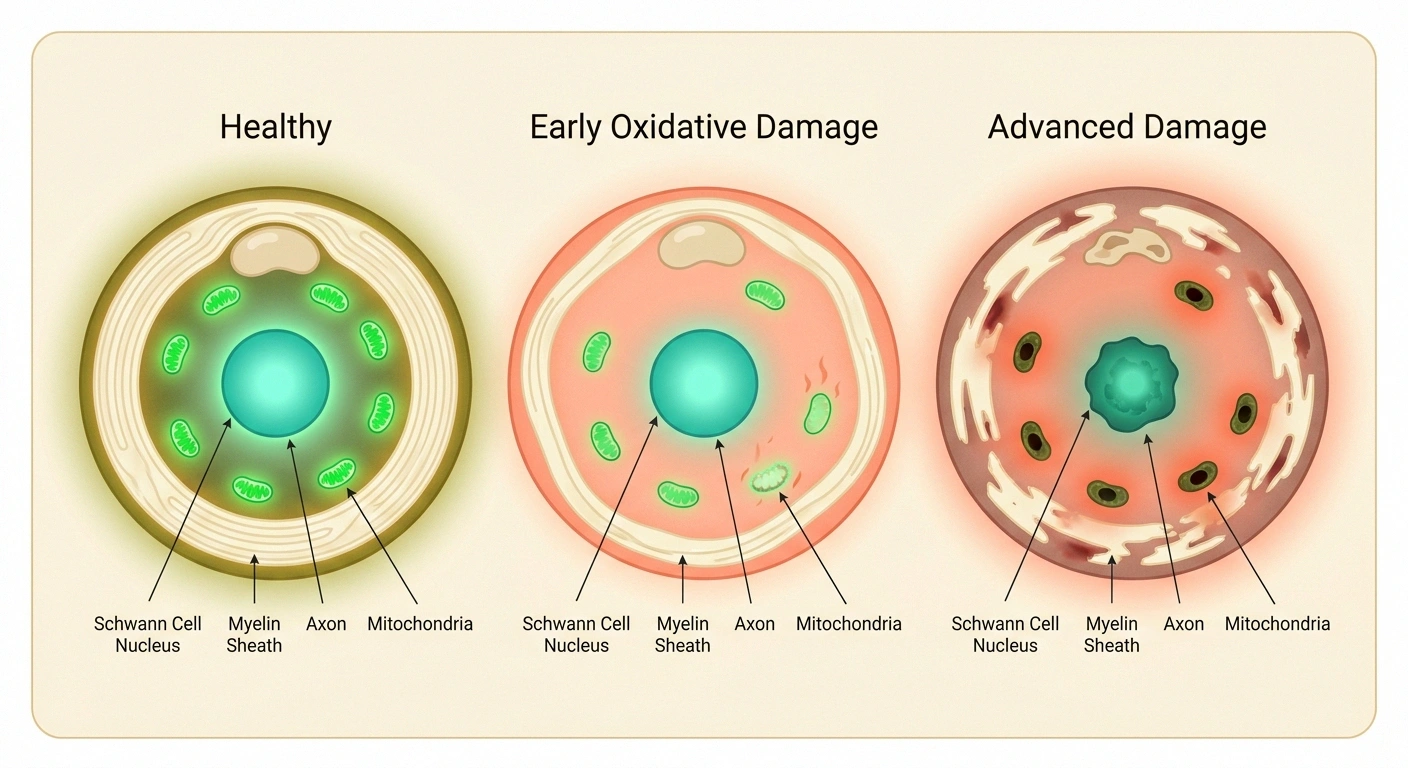
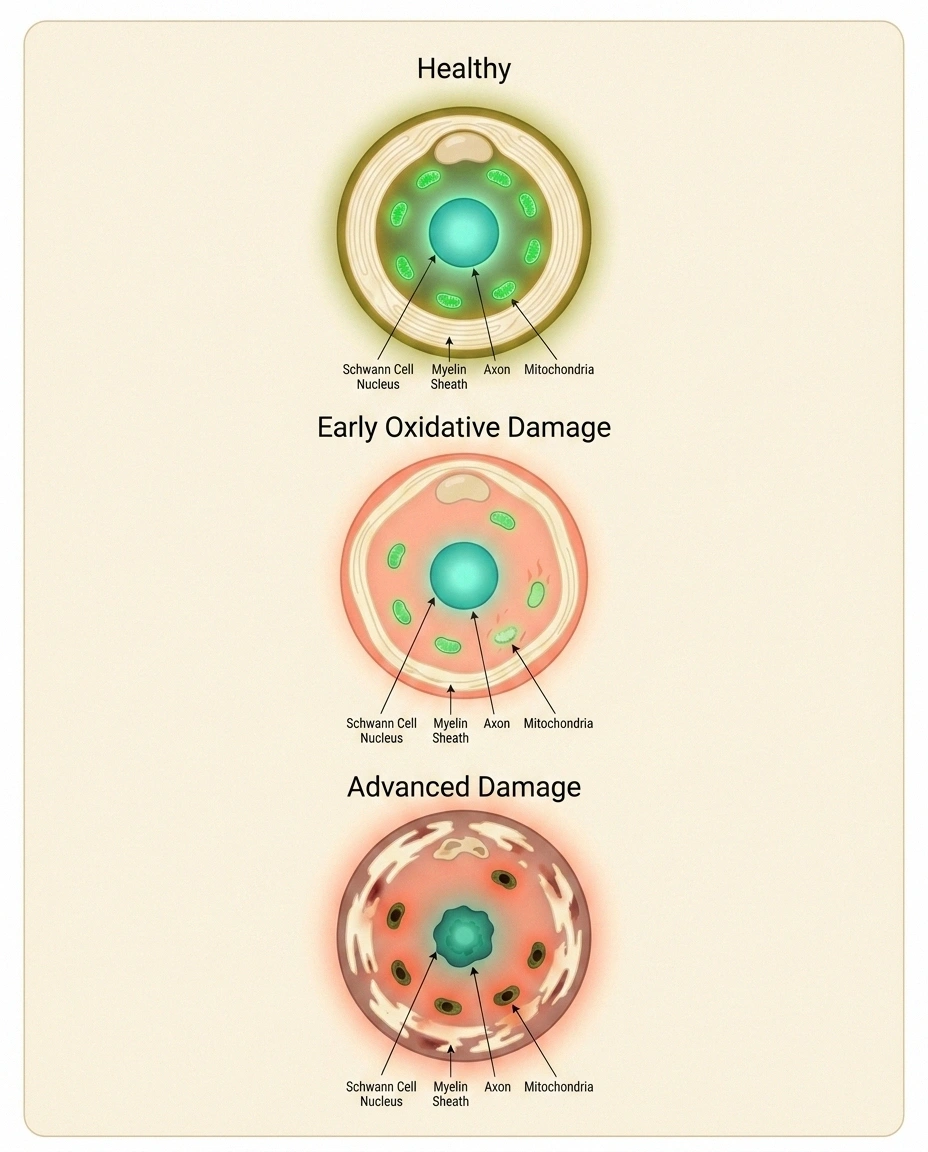
Peripheral nerves aren’t just axons — they’re wrapped in a supportive cell called a Schwann cell. Schwann cells manufacture myelin, the fatty insulation that lets nerve signals travel fast. They also feed the axon, clean up damage, and support regeneration.
The SYDNEY 2 trial found that oral alpha-lipoic acid at 600 mg per day for 5 weeks produced significant improvements in the Total Symptom Score for stabbing pain, burning, paresthesia, and numbness in patients with diabetic peripheral neuropathy — with a safety profile close to placebo.
Higher doses (1,200 mg and 1,800 mg) did not produce meaningfully better symptom scores, so 600 mg is the evidence-anchored dose.
Oxidative stress damages Schwann cells in three ugly ways. The fatty myelin membrane is a prime target for free radicals — this is called lipid peroxidation, and it strips insulation off the wire. AGE-damaged proteins accumulate inside the Schwann cell and it can’t clear them fast enough. And the Schwann cell’s own mitochondria start failing, so it can’t produce enough energy to keep the axon supplied.
The axon itself takes a hit too. The mitochondrial DNA inside those long axons has almost no repair machinery, so oxidative damage there is largely permanent. Damaged mitochondria produce even more ROS in a nasty feedback loop. Eventually the axon starts what pathologists call “dying back” — retreating from the toes upward, one millimeter at a time. That’s why the symptoms almost always start in the feet.
The Vasa Nervorum: When Tiny Blood Vessels Choke Your Nerves
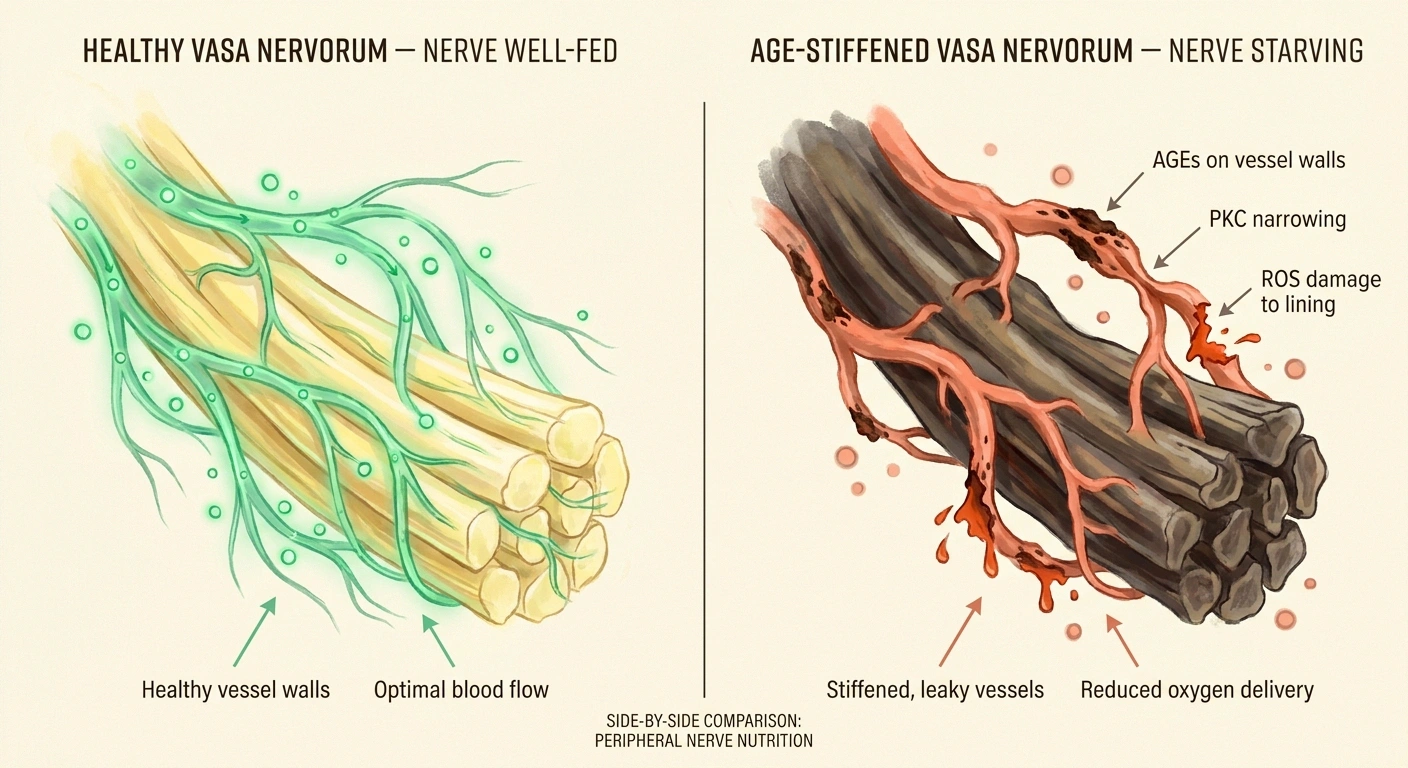
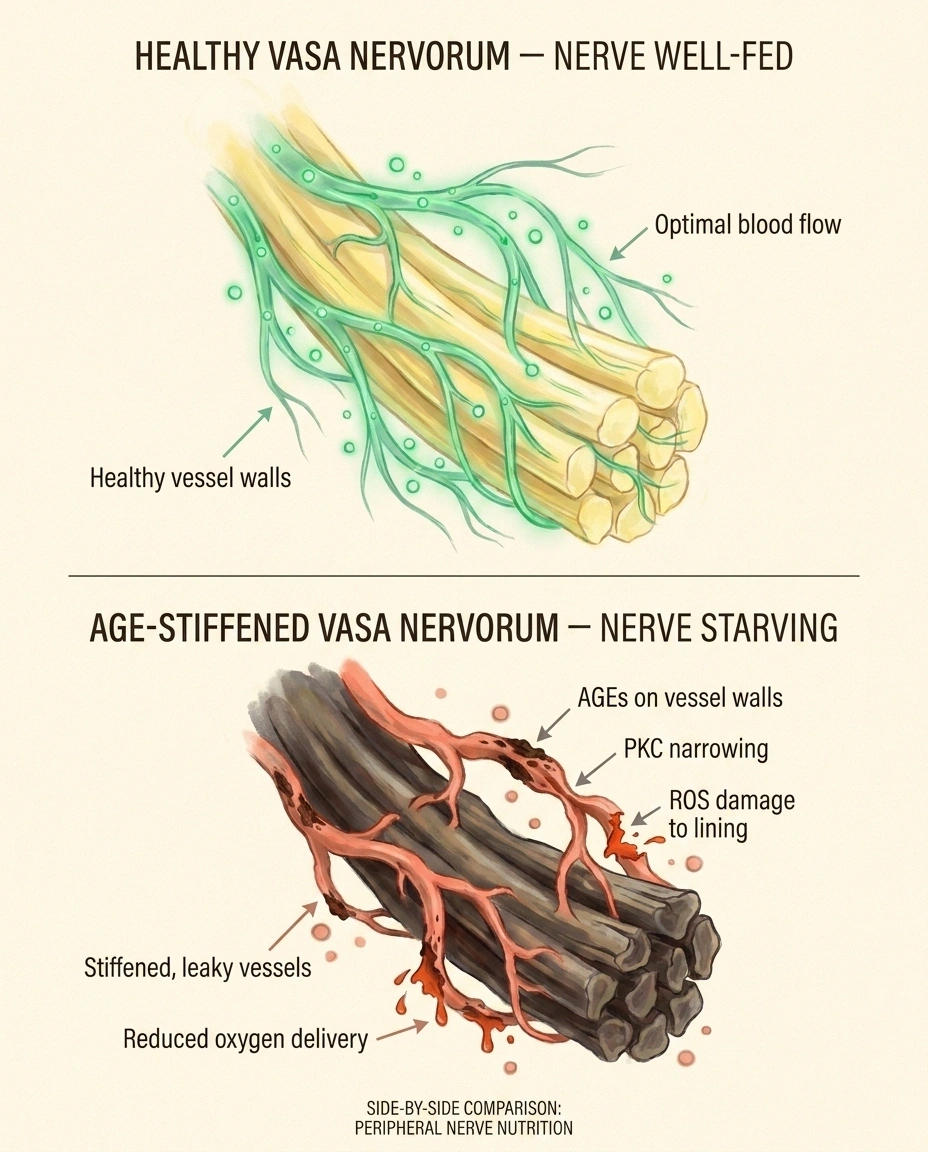
I want to spend a moment on the vasa nervorum because this is where diabetes and neuropathy really meet. Every peripheral nerve is fed by hair-thin blood vessels running alongside it. These vessels have to deliver oxygen and glucose to a very hungry tissue, and they have to do it through a distance longer than most of the other capillary beds in your body.
When AGEs stiffen the walls of these vessels, when PKC dysregulates their tone, and when ROS damages their lining — all the pathways we just walked through — the vessels narrow, get leaky, and blood flow drops. The nerve tissue downstream now has less oxygen and less glucose available. Ironically, in the presence of way too much blood sugar system-wide, the nerve itself is starving. Less oxygen means more ROS, because struggling mitochondria are the biggest ROS producers of all. It’s a spiral, not a straight line.
This microvascular angle is why interventions that improve small vessel health — moderate exercise, good sleep, blood pressure control — help nerves even when they don’t directly touch oxidation.
Why Blood Sugar Swings Hurt More Than Steady Highs

This one surprised me when I first learned it, and it changed how I ate. For years I thought “keep A1C under 7” was the whole story. It turns out that glycemic variability — how much your blood sugar bounces up and down through the day — may drive oxidative stress even harder than a steady moderate high.
Nerve-Protective Target
Time-in-range (glucose between 70 – 180 mg/dL) is emerging as a nerve-protective goal that often matters as much as the A1C number itself.
Here’s why. A sharp spike after a plate of pasta hits your cells with a wave of glucose they weren’t ready for. The mitochondria over-fire, ROS floods out, and the four damage pathways I described earlier go into overdrive. Then the crash after the spike triggers another round of stress. Two people can have the same average blood sugar and the same A1C, but the one who spikes and crashes is doing more nerve damage than the one who runs a steady, even line.
This is why continuous glucose monitors have been such a gift. Instead of guessing from finger sticks four times a day, we can see the actual shape of the curve. Chasing time-in-range — the percentage of the day your glucose stays between 70 and 180 — often matters as much as the A1C number. Our guide to a nerve-friendly eating pattern leans hard into meals that don’t create big spikes in the first place.
Practical Things That Genuinely Lower Oxidative Stress
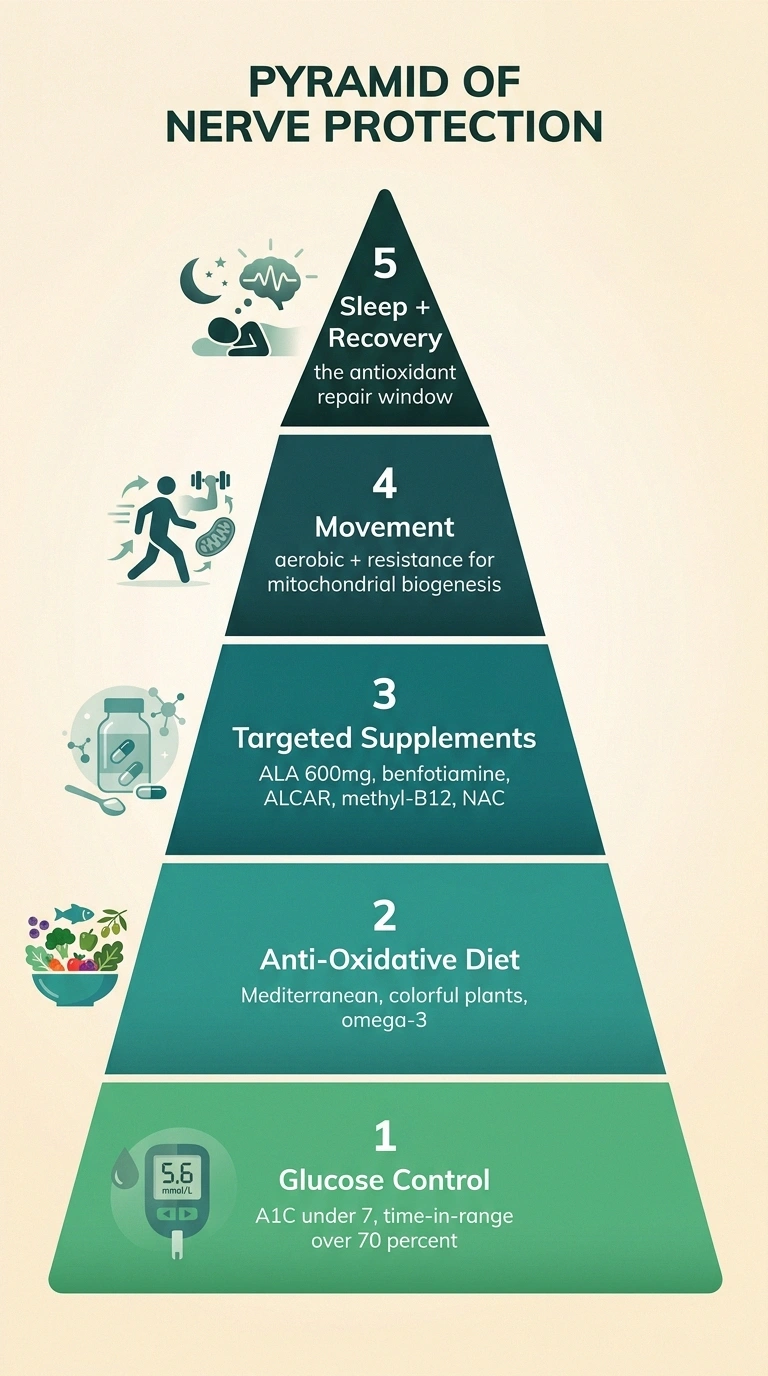
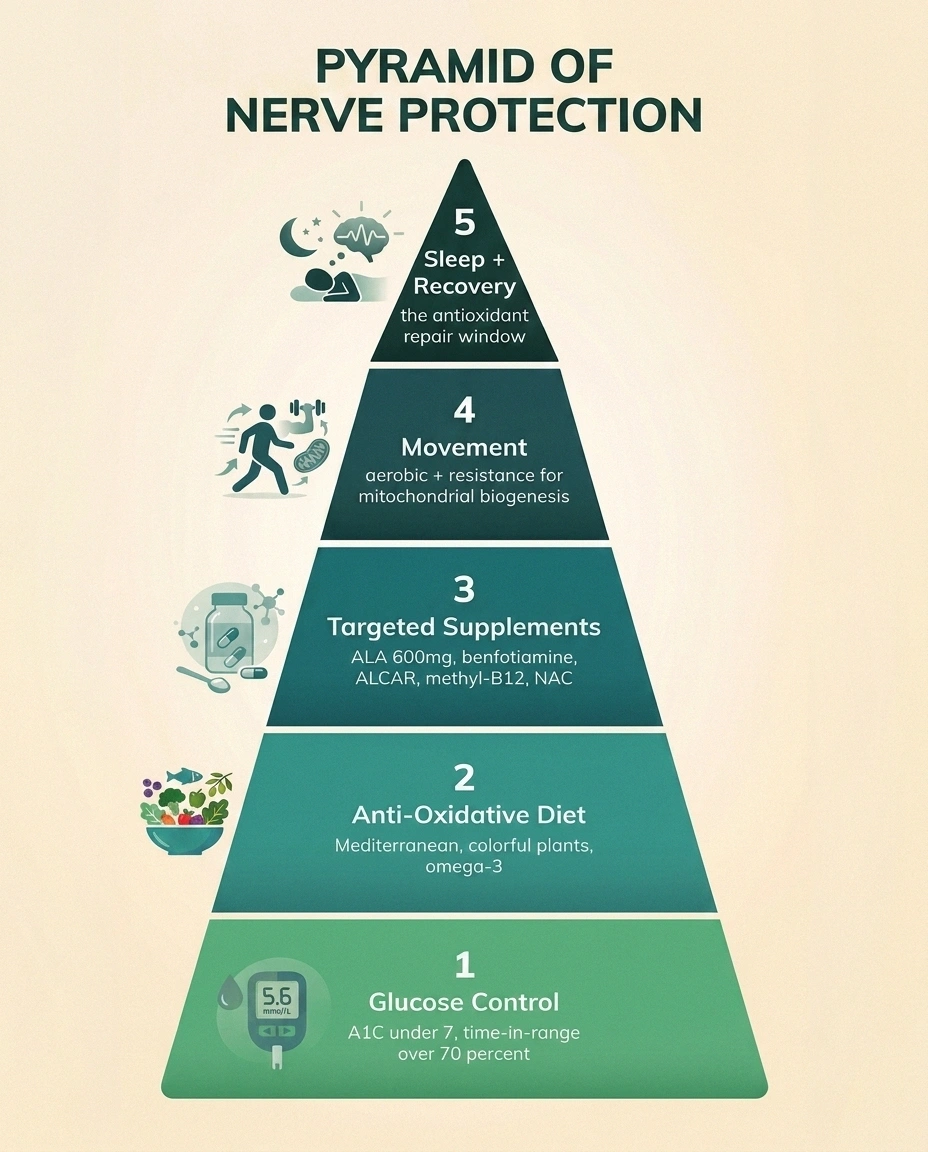
This is the part I wish someone had handed me on paper five years ago. Nothing in this list is a miracle. Every item on it has research behind it, and every item works better when combined with the others than alone.
Your 5-Step Daily Antioxidant Stack
Glucose Control (The Foundation)
- Aim for an A1C under 7 if you can do it safely, but discuss the target with your doctor — for some older adults 7.5 is safer than 6.5.
- Push for a continuous glucose monitor. Time-in-range above 70 percent is a strong nerve-protective goal.
- Don’t crash-diet or slash medication overnight. Big swings can cause different nerve problems.
Diet That Fights Oxidation
- Mediterranean pattern: olive oil, fish, nuts, legumes, vegetables, moderate fruit, minimal added sugar.
- Deeply colored plants: berries, red cabbage, spinach, kale, broccoli, tomatoes, purple potatoes. The colors are literally the antioxidants — anthocyanins, flavonoids, carotenoids.
- Omega-3 fatty acids: two servings of oily fish per week, or a good algae-based supplement if you don’t eat fish.
- Fewer ultra-processed foods: most are engineered to spike blood sugar, and many carry pre-formed AGEs from high-temperature cooking.
Supplements With Real Evidence
I’m careful with supplements. Some of the ones sold to neuropathy patients are expensive nonsense. These are the ones I’ve seen the most credible research on, and please talk to your doctor before starting any of them.
- Alpha-lipoic acid at 600 mg per day. A powerful antioxidant that regenerates other antioxidants. The SYDNEY 2 trial showed real symptom improvement at this dose. Our deep-dive on alpha-lipoic acid for neuropathy covers the R-ALA question.
- Benfotiamine. A fat-soluble form of vitamin B1 that blocks several of the hyperglycemia damage pathways at once.
- Acetyl-L-carnitine. Supports mitochondrial energy production and has neuropathy-specific trial data.
- Methylcobalamin (B12). Especially important if you’re on metformin, which lowers B12 absorption over time. Low B12 causes its own neuropathy that stacks on top of the diabetic kind. See our overview of vitamin deficiencies and nerve health.
- N-acetylcysteine (NAC). Raw material for glutathione, your master antioxidant.
The broader landscape of supplements for nerve health has more detail, including things I’d skip.
Exercise
Aerobic and resistance training together do something remarkable — they trigger mitochondrial biogenesis, the growth of new, healthy mitochondria. Newer mitochondria produce less ROS. Movement also improves blood flow through the vasa nervorum. Even a daily brisk walk of 30 minutes makes a measurable difference in nerve conduction studies in people with early diabetic neuropathy.
Sleep and Stress
Sleep is when your brain and body do most of their antioxidant repair work. Six hours or less on a chronic basis reliably raises oxidative markers in blood tests. Chronic stress does the same thing through cortisol. Short-changing sleep isn’t a moral failure — it’s a physiological hit to nerves that already can’t afford one. I use a wind-down ritual and read something dull with warm light for an hour before bed. It sounds trivial. It isn’t.
What Won’t Happen (And Why That’s Okay)
I have to be blunt here because there’s a lot of noise in the neuropathy space. A supplement, a diet, a device, a Facebook program — none of them will reverse severely damaged nerves in seven days. The real story on reversibility is nuanced: early diabetic neuropathy sometimes improves dramatically with tight glucose control and antioxidant support, especially in the first year or two. Longstanding neuropathy generally doesn’t reverse, but it can be stabilized, and symptoms can genuinely improve. Losing the sensation of burning pain from painful neuropathy is a huge quality-of-life win, even if the underlying nerve doesn’t regrow.
Any product promising to “reverse diabetic neuropathy in 7 days” or “regrow damaged nerves overnight” is selling hope, not medicine. Real nerve repair is measured in months to years, not days.
Better goals: fewer bad nights, less burning, steadier balance, and holding the line so numbness doesn’t climb further up your legs. These are wins worth chasing.
Set your bar in the right place. Fewer bad nights. Fewer burning feet. Better balance. More time before the numbness climbs another inch up your leg. These are the wins. Anyone selling you a total cure in a bottle is not your friend.
When to Talk to Your Doctor
Please don’t try to manage all of this alone. Get medical eyes on it if:
- You have new numbness, burning, or tingling anywhere and haven’t been formally diagnosed.
- Your A1C is above 8 or your fasting blood sugars are frequently above 180.
- You have a sore or blister on your foot that isn’t healing.
- Your balance is getting worse, or you’ve fallen recently.
- You take metformin and haven’t had your B12 level checked in the last year.
- You want to start any supplement while on prescription medications.
Diabetic neuropathy is one of the more manageable forms once you and your doctor have a plan. The chemistry we walked through in this article isn’t hopeless — it’s a set of levers, and you can pull several of them starting today. That’s what I wish someone had told me on that cold exam table six years ago.
Frequently Asked Questions
Can antioxidants alone reverse diabetic neuropathy?
No. Antioxidants like alpha-lipoic acid, NAC, and benfotiamine reduce oxidative stress and often improve symptoms, but they cannot outpace continuously high blood sugar. Without glucose control the damage keeps accelerating faster than any supplement can quench it. Think of antioxidants as a bucket of water on a house fire while glucose control is turning off the gas line to the fire. You need both.
How long does it take to see nerve improvement after lowering blood sugar?
Most people notice some symptom change within three to six months of getting glucose consistently into range, especially reduced burning and better sleep. Structural nerve improvement measured on nerve conduction tests is slower and can take one to two years. Very early diabetic neuropathy tends to improve more completely than long-standing neuropathy, which is why acting fast after a diagnosis matters so much.
Is alpha-lipoic acid safe to take with metformin?
For most people yes, but discuss it with your doctor. Alpha-lipoic acid can modestly lower blood sugar on its own, so combining it with a glucose-lowering medication may nudge your numbers down further. That is usually a good thing, but it means you may need to watch for lows, especially if you also take insulin or a sulfonylurea. Your doctor may want to check your B12 level at the same time since metformin depletes it.
Does oxidative stress cause neuropathy in people who aren’t diabetic?
Yes, though the drivers are different. Chemotherapy, heavy alcohol use, chronic kidney disease, some autoimmune conditions, and vitamin B12 deficiency all raise oxidative stress in nerves. The nerve vulnerabilities we described in this article are the same in every case. That is why antioxidant support and mitochondrial support are frontline strategies across almost all neuropathy types, not just diabetic.
What A1C target actually protects nerves?
Under 7 percent is the general goal for adults, but individual targets vary. Older adults, people with a history of severe lows, and people with limited life expectancy may be safer at 7.5 or even 8. Even more important than the single number is time-in-range measured by a continuous glucose monitor, ideally with more than 70 percent of your day between 70 and 180 mg per deciliter and minimal swings.
Are berries and green tea really enough antioxidants to matter?
They are meaningful but not sufficient on their own for someone with active diabetic neuropathy. A cup of blueberries, a serving of leafy greens, and a couple cups of green tea per day genuinely reduce oxidative markers in blood tests. In combination with targeted supplements like alpha-lipoic acid and benfotiamine, plus glucose control, the food layer becomes a real force multiplier. Skipping it and relying only on pills gives up an easy win.
About the Author