The first time I heard the word POEMS, I assumed someone had named a poetry workshop after a neuropathy support group. The truth is stranger and more useful. POEMS is a medical acronym for one of the rarest, most underdiagnosed, and most treatable causes of severe peripheral neuropathy — and a condition that gets mistaken for something else, namely chronic inflammatory demyelinating polyneuropathy (CIDP), more often than almost any other neuropathy on the differential diagnosis list. When that misdiagnosis lasts months or years, patients are receiving treatments that will never work because the underlying disease is not what their providers think it is. When the right diagnosis is finally made, the treatments that do work can be dramatically effective. This article exists because the gap between “labeled CIDP” and “actually POEMS” is a place where real lives can change.
I want to be careful at the outset. POEMS syndrome is genuinely rare — somewhere around three cases per million people per year — and the vast majority of patients with a CIDP diagnosis really do have CIDP. Reading this article should not send you into a panic that your diagnosis is wrong. What it should do is give you the specific findings and the specific failed-treatment patterns that ought to make any neurologist consider POEMS, so that if your situation looks like one of those cases, you can have an informed conversation about getting the workup that confirms or excludes it. The serum test that screens for POEMS — vascular endothelial growth factor, or VEGF — costs little and runs at any major reference lab. The reason it is not done routinely is partly because the condition is rare and partly because most patients never hear the question raised. Hearing it raised is what this article is for.
What POEMS Actually Stands For
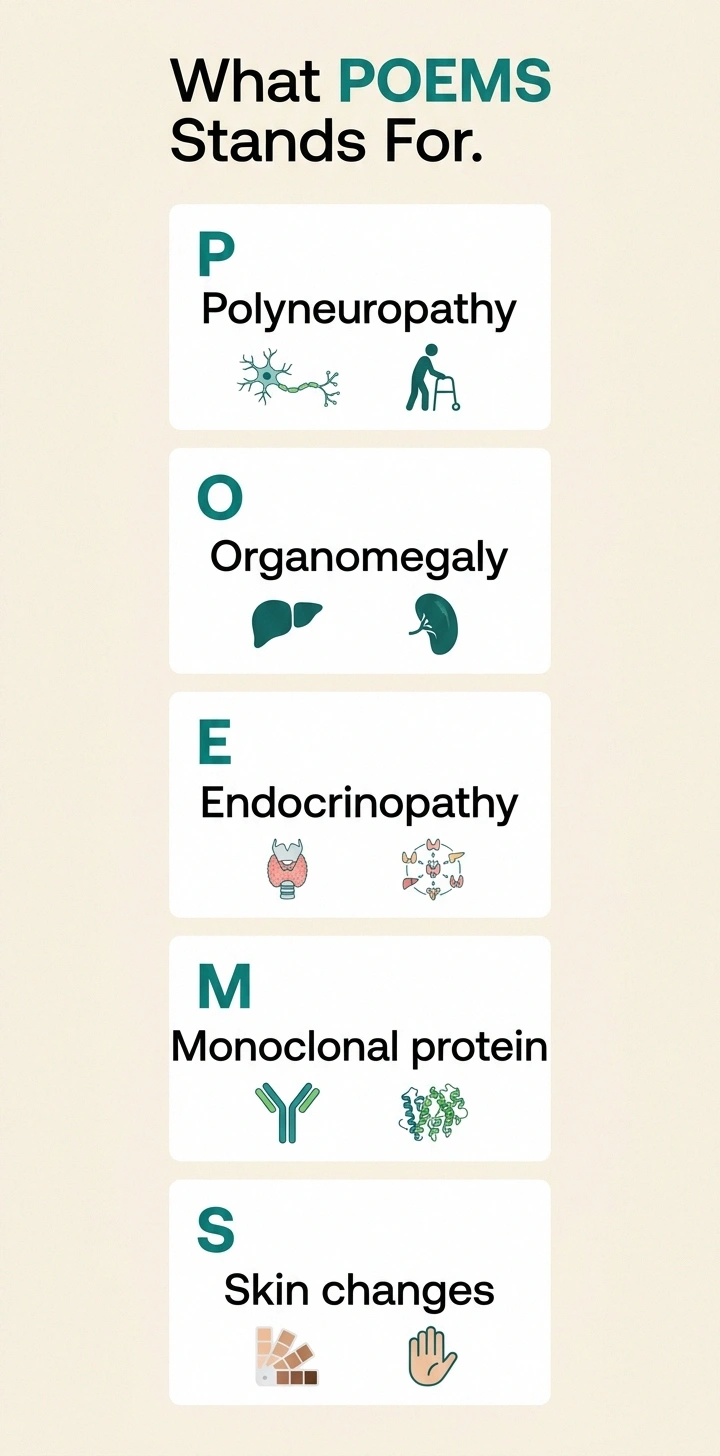
POEMS is an acronym made of the five most visible features of the syndrome. P stands for polyneuropathy — the progressive, usually demyelinating nerve damage that is the most common presenting complaint and the symptom that brings patients to neurology. O stands for organomegaly, meaning enlargement of the liver, spleen, or lymph nodes. E stands for endocrinopathy, meaning abnormal function of one or more hormone-producing glands — the thyroid, the adrenals, the gonads, or the pancreas. M stands for monoclonal protein, meaning an abnormal antibody fragment produced by a small population of clonal plasma cells in the bone marrow. S stands for skin changes — most commonly hyperpigmentation, small red angioma-like spots, increased body hair, white nails, and sometimes thickening of the skin.
The catch is that almost no patient has all five at the time they walk into the neurologist’s office. Most have severe neuropathy plus one or two of the other features, often subtle enough that the neurologist does not even register them as part of the picture. A patient may have edema in their legs that everyone assumes is from poor circulation. They may have noticed that their skin has darkened a bit, or that small red dots have appeared on their torso, but nobody asked about it. The endocrine abnormalities can be silent — a slightly low testosterone level in a man past 50 looks like normal aging, a mildly elevated TSH looks like subclinical thyroid disease. The monoclonal protein is detectable only if someone orders the specific blood test that looks for it. The constellation only comes together when a clinician thinks of POEMS and looks for it on purpose.
Why POEMS Gets Mistaken for CIDP
CIDP is the most common autoimmune chronic demyelinating neuropathy in adults. It presents with progressive symmetric weakness, distal-to-proximal in many patients, loss of reflexes, and slow nerve conduction velocities on EMG indicating demyelination. POEMS presents with progressive symmetric weakness, distal-to-proximal, loss of reflexes, and slow nerve conduction velocities on EMG indicating demyelination. The neurological exam findings overlap almost completely. The EMG findings overlap substantially. The cerebrospinal fluid analysis — done by lumbar puncture in both — shows elevated protein in both conditions. A neurologist seeing one of these patients in clinic does not have a clean visual difference to work with at the bedside. Both diagnoses look plausible, and CIDP is overwhelmingly more common, so the working diagnosis defaults to CIDP unless something specific points elsewhere.

The clinical clue that most reliably distinguishes POEMS from CIDP is the response to standard CIDP treatments. CIDP, in its classic form, responds to intravenous immunoglobulin (IVIG), to therapeutic plasma exchange, or to corticosteroids in the great majority of cases. A patient diagnosed with CIDP who gets one or two cycles of IVIG and shows measurable improvement is almost certainly a real CIDP. A patient diagnosed with CIDP who has had three cycles of IVIG, a trial of steroids, and a course of plasmapheresis and remains unchanged or continues to worsen is a patient whose diagnosis should be re-examined. POEMS does not respond to those treatments. It does not respond because the underlying problem is not autoimmune attack on the nerves — it is a paraneoplastic syndrome driven by a clone of plasma cells producing a cascade of cytokines including elevated VEGF, and treating it requires going after that plasma cell clone, not modulating the immune system.
The second clinical clue is the platelet count. About 54 percent of POEMS patients have thrombocytosis — a platelet count above the normal range, often substantially above. In CIDP, thrombocytosis appears in about 1.5 percent of patients. The median platelet count in POEMS in published series is around 467,000 per microliter, while in CIDP it sits closer to 275,000. A neurology patient on the “CIDP” track with a persistent platelet count well above 400,000 should prompt a reconsideration of the diagnosis. The platelet count is not specific — many other conditions raise it — but the combination of progressive demyelinating neuropathy plus persistent thrombocytosis is enough to suggest POEMS workup is appropriate.
The Findings That Should Trigger POEMS Testing
A clinical scenario that should send up a flare for POEMS in any neuropathy patient looks like this. The patient has progressive symmetric weakness over months. The EMG shows demyelinating features. The lumbar puncture shows elevated protein. The patient has been started on IVIG or corticosteroids and is not improving, or has improved a little and then stalled. There may be additional features that have not been connected to the neuropathy by the treating team. The patient might mention they have noticed their skin getting darker, or that their hair is growing in places it did not before. They might have a persistent low-grade leg edema that diuretics are not fully fixing. Their blood work might show a high platelet count, a slightly elevated red cell count, or mild abnormalities in the thyroid or testosterone panel. Their primary care doctor may have been treating a mild low testosterone for the last year. Any single one of these by itself does not mean POEMS, but the combination with treatment-resistant CIDP-like neuropathy is the picture.

- CIDP that has NOT responded to IVIG, plasmapheresis, or steroids over an adequate trial
- Persistent thrombocytosis (platelet count above 400,000)
- Edema or anasarca not explained by other causes
- Skin changes — hyperpigmentation, hemangiomas, hypertrichosis, white nails
- Endocrine abnormalities — low testosterone, hypothyroidism, hyperprolactinemia
- Papilledema on fundoscopic exam
The findings most specific to POEMS, in roughly the order they help a diagnosis, are: elevated serum VEGF (the single most useful screening test), a lambda light chain restricted monoclonal protein on serum immunofixation, sclerotic bone lesions on a skeletal survey or PET-CT, Castleman disease on a lymph node biopsy, and papilledema on a careful fundoscopic exam. Many neurologists will not have run a VEGF level on a CIDP patient because they have not had reason to suspect POEMS. Asking specifically for a VEGF level — and a serum protein electrophoresis with immunofixation if it has not been done — is reasonable in any neuropathy patient whose treatment is not working.
What the Right Diagnosis Looks Like
Once POEMS is suspected, the workup that confirms it is well-defined. Serum and urine protein electrophoresis with immunofixation document the monoclonal protein. Free light chain assays clarify whether the abnormal protein is restricted to lambda type, which is characteristic of POEMS. Serum VEGF is measured — a level above 200 picograms per milliliter is supportive, and POEMS patients often run far higher. A skeletal survey, sometimes a whole-body MRI or PET-CT, looks for sclerotic bone lesions, which are pathognomonic when present. CT scans of the chest, abdomen, and pelvis look for organomegaly and lymphadenopathy. Bone marrow biopsy documents the plasma cell clone. Endocrine panels document any hormonal abnormalities. Fundoscopic exam by ophthalmology documents papilledema if present. Skin examination documents the characteristic changes.
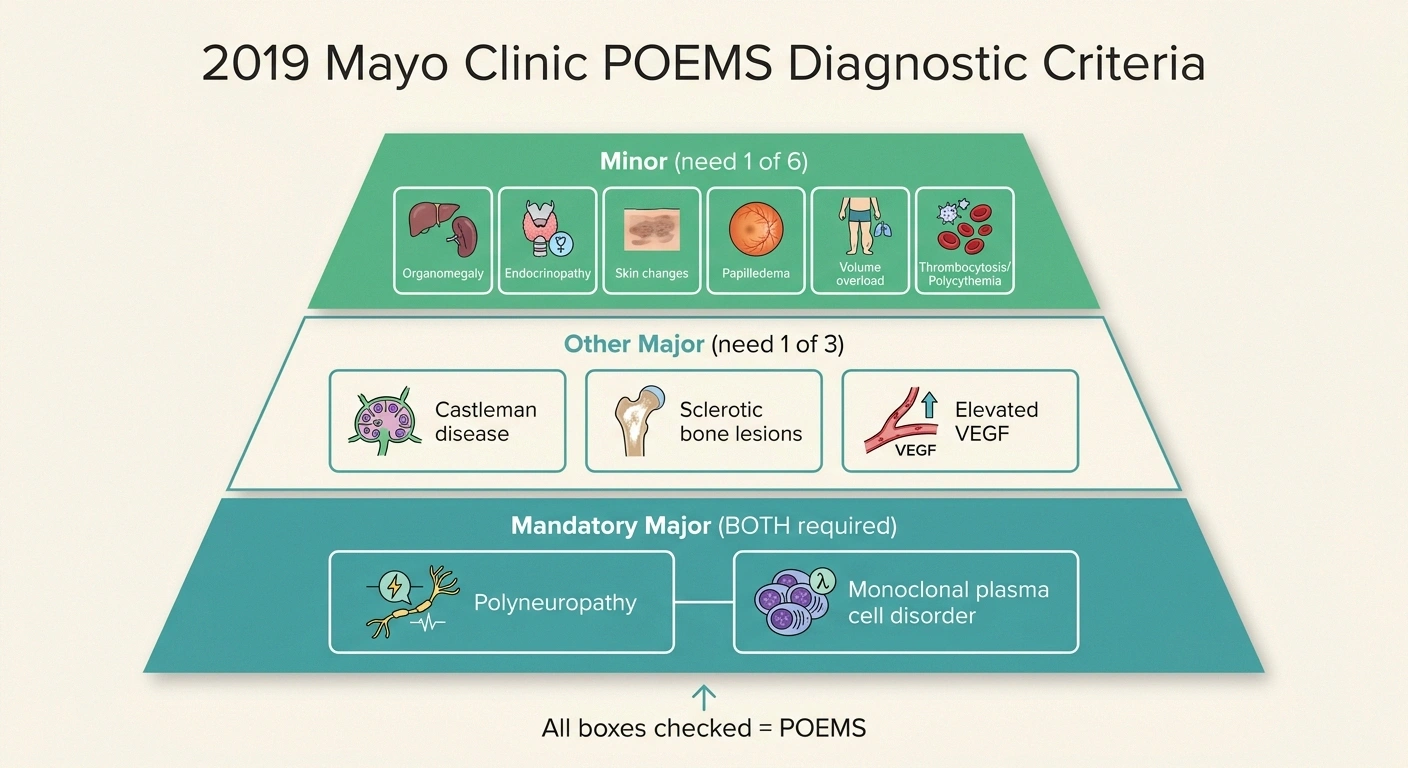
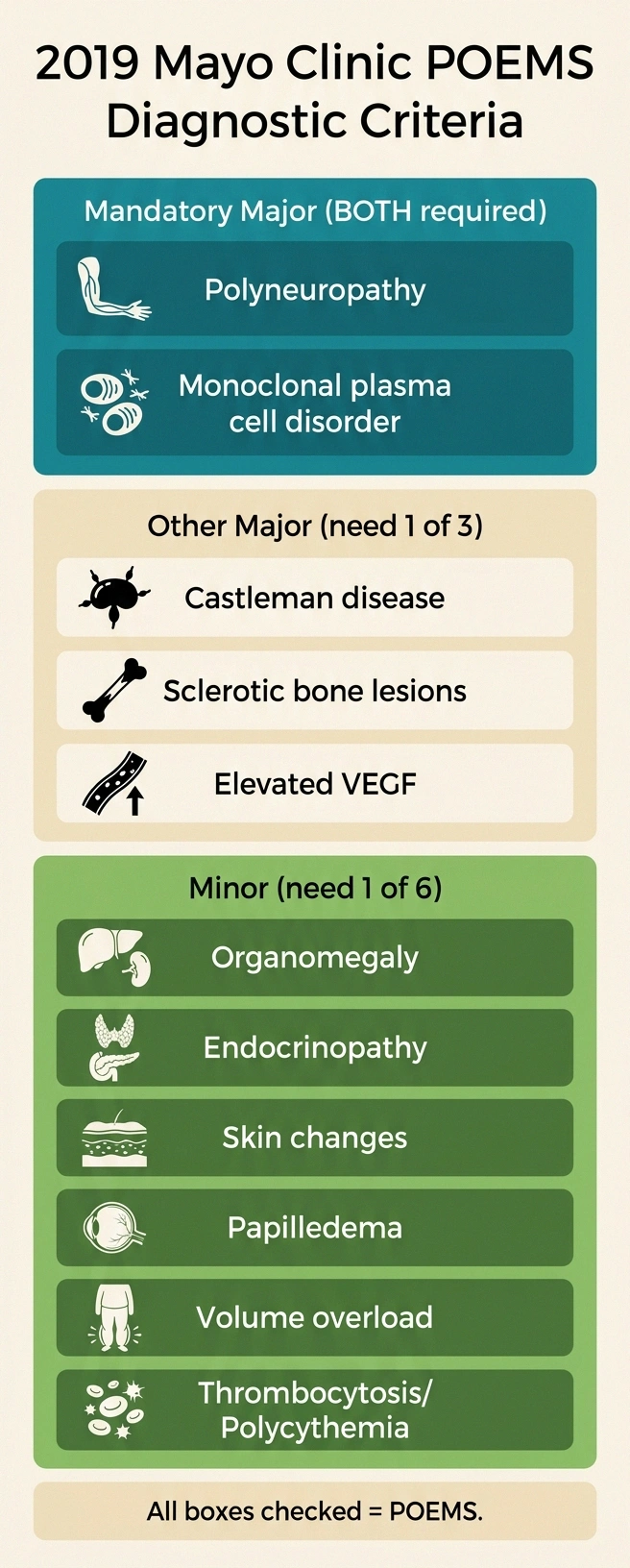
The 2019 updated Mayo Clinic diagnostic criteria require both of two mandatory major criteria — polyneuropathy and a monoclonal plasma cell disorder — plus at least one other major criterion (Castleman disease, sclerotic bone lesions, or elevated VEGF) plus at least one minor criterion (organomegaly, endocrinopathy, skin changes, papilledema, extravascular volume overload, or thrombocytosis/polycythemia). A patient who meets these criteria has POEMS. A patient who has the neuropathy and monoclonal protein but does not yet meet the full criteria is still followed closely, because the syndrome can declare itself over time.
Treatment — Why the Diagnosis Matters
The treatment for POEMS is the reason getting the diagnosis right matters so much. The aim of treatment is to eradicate the underlying plasma cell clone, which then stops producing the VEGF and other cytokines that drive the syndrome. As the cytokine levels fall, the neuropathy, the edema, the skin changes, and the endocrine abnormalities slowly improve over months to years. The pace of neurological recovery is gradual — patients are often counseled to expect improvement to continue for 12 to 24 months after VEGF normalizes — and some patients are left with permanent residual nerve damage, particularly if the diagnosis was delayed. The earlier the right treatment starts, the better the long-term neurological outcome.

Treatment selection depends on whether the disease is localized or disseminated. A patient with one or two sclerotic bone lesions, no bone marrow involvement, and no widespread disease is treated with radiation therapy aimed at the lesions, typically 40 to 50 Gray over a few weeks. Radiation in this setting often produces durable remission and good neurological recovery, because eliminating the localized plasma cell focus eliminates the source of the abnormal cytokine production. A patient with three or more sclerotic lesions, with bone marrow involvement, or with diffuse disease needs systemic therapy. The current standard for eligible patients is high-dose chemotherapy with autologous stem cell transplantation, which has produced 5-year overall survival rates in the 80 to 94 percent range in published series. The transplant-related mortality is approximately 5 percent, which is substantial, so patient selection considers age, performance status, and overall health.
Patients who are not candidates for stem cell transplant or who relapse after one have several effective options. Lenalidomide combined with dexamethasone has become one of the most widely used non-transplant regimens, with response rates in published series often above 70 percent and improvements in VEGF levels documented across multiple cohorts. Bortezomib-based regimens are used in some patients. Thalidomide was historically common but is used less now because it can worsen neuropathy. Cyclophosphamide remains a reasonable backbone in selected situations. Anti-VEGF antibody therapy with bevacizumab was tried but is approached with caution because rapidly dropping VEGF can cause endothelial cell injury and capillary leak in some patients.
What Improvement Actually Looks Like
Patients and families need a realistic picture of what neurological recovery from POEMS looks like, because the pace is slower than most expect. The VEGF level falls fairly quickly with effective treatment — often within weeks of starting therapy. The edema and the skin changes improve within months. The endocrine abnormalities often correct within months as well. The neuropathy is the slowest piece. Strength, sensation, and balance improvements come gradually over a year or two, and they come in plateaus and steps rather than steadily. Many patients regain enough strength to walk independently who could not do so at diagnosis. Many regain enough hand function to return to work. Some are left with permanent residual symptoms, particularly burning pain in the feet or persistent mild distal weakness, that they manage with medications targeted at nerve pain.

after autologous SCT
recovery after Tx
mortality risk
One pattern worth knowing: VEGF can rise before clinical relapse becomes obvious. Periodic monitoring of VEGF after treatment is standard, because catching a rising VEGF early lets the hematology team intervene before the syndrome reasserts itself. Patients in remission from POEMS typically have hematology visits every few months and serum VEGF checks at each visit. This is one of the unusual situations in chronic neuropathy where a simple blood test gives the team an early warning system.
Co-existing Conditions and the Diagnostic Conversation
One of the harder situations is the patient who has both diabetes and has developed worsening neuropathy that does not match the typical diabetic pattern. Diabetic neuropathy is the most common cause of peripheral nerve damage in the United States, and it can absolutely coexist with POEMS in the same patient. The tip-off in this combination is that the neuropathy progresses faster than expected for a diabetic, includes motor weakness out of proportion to the sensory loss, or shows demyelinating features on EMG that diabetes alone rarely produces. Diabetic neuropathy is typically axonal and length-dependent; a patient with what looks like a demyelinating pattern, marked motor involvement, or proximal weakness on top of their diabetes warrants additional workup beyond the standard diabetic workflow.
A similar reconsideration applies to patients labeled with idiopathic neuropathy — the diagnostic catch-all for nerve damage with no identified cause. Idiopathic neuropathy is generally an axonal sensory-predominant condition that progresses slowly. A patient labeled idiopathic who has motor weakness as a major feature, who progresses rapidly, or who has any of the systemic features of POEMS deserves a fresh look. The protein electrophoresis with immunofixation and the VEGF level are not standard idiopathic-neuropathy workup steps in most clinics, but they are a small investment for the chance of finding a treatable cause.
The Conversation to Have With Your Neurologist
If you are a patient with a CIDP or unexplained neuropathy diagnosis whose treatment is not working as expected, here is the conversation worth having. You do not need to argue or push hard — neurologists generally welcome a focused clinical question. Something like: “I have been on IVIG (or steroids, or plasmapheresis) for X months and I am not improving. Could we revisit the diagnosis? Specifically, has a VEGF level been checked, and a serum protein electrophoresis with immunofixation? I have been reading about POEMS syndrome and I want to make sure we have excluded it.” A thoughtful neurologist will either explain that the testing has been done and is normal — which is reassurance — or will agree that adding those tests is reasonable. Both outcomes are useful.

If POEMS testing comes back positive or suspicious, the next step is referral to a hematology team that has seen the condition before. The volume of POEMS is so low that not every hematology practice has direct experience with it, and a patient with confirmed or suspected POEMS benefits from care at a center with a relevant clinical program. Mayo Clinic, Cleveland Clinic, Memorial Sloan Kettering, MD Anderson, and a handful of academic centers have dedicated experience. Local hematologists can often co-manage with input from a referral center, which is the typical arrangement for most patients who do not live near a major medical center.
Living Through the Workup and Treatment
The period between the first suspicion of POEMS and the start of effective treatment can be hard. The diagnostic workup involves multiple specialists, multiple tests, and often weeks of uncertainty. The neuropathy continues to progress during that time in many patients. Knowing what to expect helps. The symptomatic management of the neuropathy itself — pain medications like gabapentin, duloxetine, or amitriptyline; physical therapy for strength and balance; supportive footwear and braces if foot drop has developed; safety modifications at home if balance is affected — should be running in parallel with the diagnostic workup. There is no reason to wait until the diagnosis is confirmed to address the day-to-day function. Symptomatic care does not interfere with diagnostic accuracy.
Once treatment begins, the early months focus on getting through the regimen — whether that is radiation, stem cell transplantation, or the chemotherapy schedule. The neurological improvement that everyone is waiting for is the slowest piece. Patients often feel discouraged at month three or six because the treatment seems to have helped the edema and the skin but the neuropathy is still bad. This is the expected pattern, not a sign that treatment is failing. The nerves recover slowly because the damage took months or years to accumulate. The trajectory is what matters, not the month-to-month rate. Many patients in our community who have walked this road describe the second year of recovery as the one where they noticed clear functional gains.
The Bigger Picture
POEMS syndrome is a rare disease that is, when correctly diagnosed and treated, often dramatically responsive to therapy. The barrier to good outcomes is almost always diagnostic delay rather than therapeutic limitation. Patients with progressive, severe neuropathy whose treatment is not working deserve to have POEMS considered, and the test that screens for it — a serum VEGF level paired with serum protein electrophoresis with immunofixation — is inexpensive, widely available, and quick to interpret. If your neuropathy story does not fit the textbook CIDP picture, raise the question. If you have already been worked up for POEMS and the results were negative, that is a clean answer that means something. Either way, the question is worth asking, because the gap between “untreated POEMS misdiagnosed as CIDP” and “POEMS in remission after appropriate therapy” is one of the larger gaps in neurology.
For most patients in our community, the practical lesson from this article is not “I might have POEMS” but rather “my neurologist will think to test for POEMS if it ever fits my picture, and now I know enough to recognize the conversation.” That is the right place to land. Awareness of rare conditions does not mean panicked self-diagnosis. It means knowing that the question exists so that, if your situation ever raises it, the answer can be found. For the small number of patients reading this who actually do have undiagnosed POEMS, finding the right diagnosis is the most important medical event that will happen to you this year. For the majority who do not, the article ends here as background — a story of one of the rare neuropathies that is genuinely treatable when caught.
Frequently Asked Questions
What does POEMS stand for?
POEMS stands for Polyneuropathy, Organomegaly, Endocrinopathy, Monoclonal protein, and Skin changes — the five most common features of the syndrome. Most patients do not have all five at diagnosis. The neuropathy is the most common presenting complaint, and the other features are often subtle or initially missed.
How is POEMS different from CIDP?
The neuropathy in POEMS and CIDP can look identical on the bedside exam and the EMG. The key differences are that POEMS does not respond to standard CIDP treatments like IVIG, plasmapheresis, or corticosteroids, and POEMS includes systemic features that CIDP does not — elevated VEGF, a monoclonal protein on blood testing, often thrombocytosis, skin changes, endocrine abnormalities, and sometimes sclerotic bone lesions. POEMS is treated by addressing the underlying plasma cell clone rather than by immunomodulation.
What test screens for POEMS syndrome?
The most useful screening tests are a serum VEGF level and a serum protein electrophoresis with immunofixation. Elevated VEGF (above 200 picograms per milliliter, often much higher in POEMS) combined with a lambda-restricted monoclonal protein strongly suggests POEMS. Both tests are widely available and inexpensive. A full diagnostic workup if these are abnormal includes free light chain assay, skeletal imaging, bone marrow biopsy, CT imaging for organomegaly, endocrine panels, and fundoscopic exam.
Is POEMS syndrome treatable?
Yes. POEMS is one of the more treatable causes of severe peripheral neuropathy when correctly diagnosed. Localized disease (one or two sclerotic bone lesions, no marrow involvement) is treated with radiation therapy, often with durable remission. Disseminated disease is treated with high-dose chemotherapy plus autologous stem cell transplantation, with 5-year overall survival in the 80 to 94 percent range in published series. Lenalidomide with dexamethasone and other plasma-cell-directed regimens are options for patients not eligible for transplant or who relapse.
How quickly does the neuropathy improve after POEMS treatment?
Slowly. The VEGF level often drops within weeks of starting effective treatment. Edema and skin changes typically improve within months. Endocrine abnormalities often correct within months. The neuropathy is the slowest feature to improve, with gains continuing over 12 to 24 months after VEGF normalizes. Many patients regain enough function to walk independently and return to work. Some are left with permanent residual symptoms.
Should I ask for POEMS testing if I have unexplained neuropathy?
Routine POEMS testing is not indicated for every neuropathy patient because the condition is rare. The situations where testing is appropriate are: a CIDP diagnosis that has not responded to IVIG, plasmapheresis, or corticosteroids over an adequate trial; a neuropathy with demyelinating features on EMG plus systemic features like edema, skin changes, or thrombocytosis; a rapidly progressing neuropathy in a patient with even one POEMS-suggestive feature on systemic exam. In any of these settings, asking your neurologist about a VEGF level and serum protein electrophoresis is reasonable.
Where should I get treated if I have confirmed POEMS?
POEMS is rare enough that most local hematology practices have little direct experience with it. Care at or in coordination with a center that has a dedicated POEMS program is generally preferred. Mayo Clinic, Cleveland Clinic, Memorial Sloan Kettering, MD Anderson, and a handful of other academic centers have published series and active programs. Local hematology can often co-manage with input from a referral center for patients who cannot relocate for care.
What is the long-term outlook for POEMS syndrome?
With appropriate modern treatment, the long-term outlook for POEMS is generally favorable for a serious systemic illness. Five-year overall survival after autologous stem cell transplantation in published series is in the 80 to 94 percent range. Many patients achieve durable remissions lasting many years. Periodic monitoring of VEGF levels lets the hematology team catch relapse early. The factor most predictive of good long-term outcome is timely correct diagnosis — patients diagnosed late after years of misdiagnosis as CIDP often have more permanent neurological damage than those diagnosed early.
About the Author