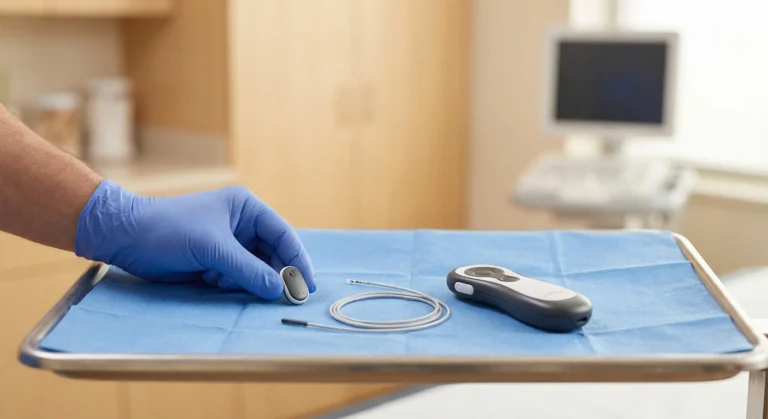
A few years ago, a man in my Tuesday support group — a retired electrician, ironically — brought in a small device about the size of a deck of cards. He clipped two wires to his ankle, pressed a button, and told the group it was the only thing besides gabapentin that had touched his foot pain in three years.
Half the room looked curious. The other half looked skeptical. I was somewhere in between.
TENS units are one of those things that have been around forever in pain management, but when it comes to neuropathy specifically, people have a lot of questions. Does it actually work for nerve pain? Is it safe when you already have damaged nerves? Will it help or make things worse?
I've spent a lot of time digging into the research and listening to people who've tried it. The answer isn't a simple yes or no — but there's enough here that it's worth your time to understand.
Browse all our treatments and therapies guides for more articles like this one.
What Is a TENS Unit and How Does It Work?
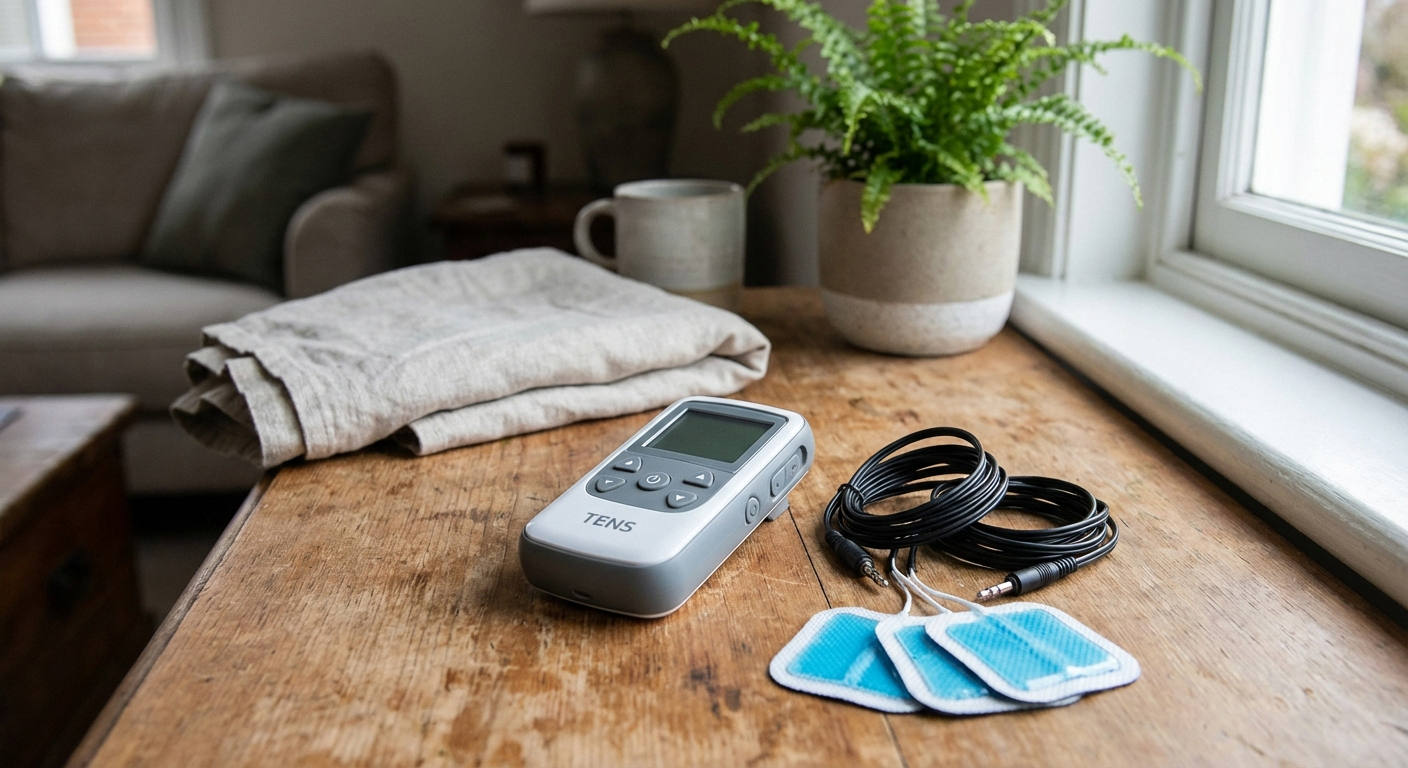
TENS stands for Transcutaneous biofeedback vs. TENS for neuropathy Nerve Stimulation. That's a mouthful, but the concept is straightforward: a small, battery-powered device sends mild scrambler therapy as an alternative to TENS impulses through pads stuck to your skin.
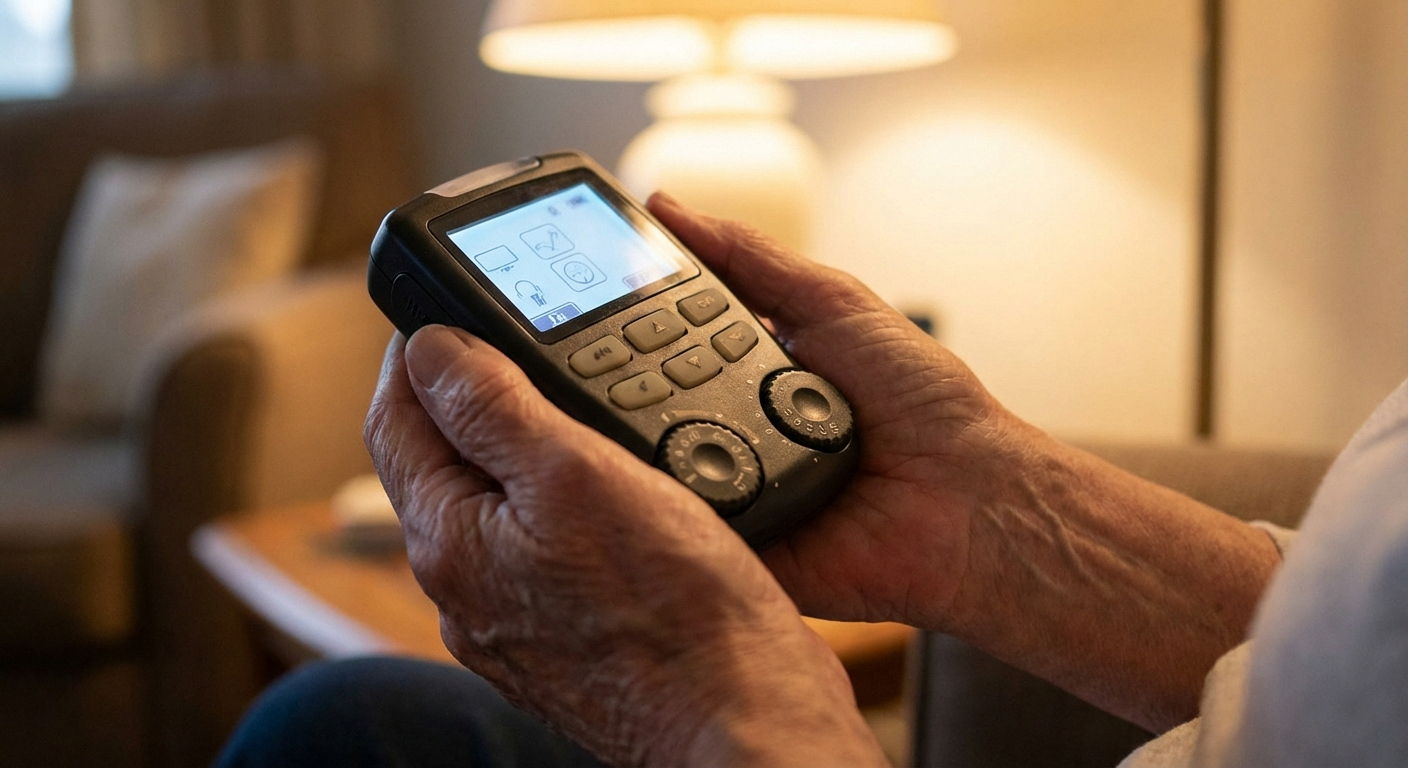
The device itself is simple — a control unit with wires that connect to adhesive electrode pads. You place the pads near the area that hurts, turn it on, and adjust the intensity until you feel a buzzing or tingling sensation. It shouldn't hurt. If it does, you've turned it up too high.
There are two main theories for why TENS works:
Gate control theory. Your spinal cord has a kind of “gate” that controls which pain signals reach your brain. The electrical impulses from TENS flood that gate with non-painful signals, blocking the painful ones. Think of it like turning up the radio to drown out a noisy neighbor.
Endorphin release. At lower frequencies, TENS may stimulate your body to release endorphins — your natural painkillers. Same mechanism behind the relief you feel after exercise or massage.
Neither mechanism repairs damaged nerves. TENS is a pain management tool, not a treatment for the underlying damage. But when your goal is getting through the day with less pain, that distinction matters a lot less than you might think.
How TENS Works
Gate Control Theory: Electrical impulses flood your spinal cord's “pain gate” with non-painful signals, blocking the painful ones from reaching your brain. Endorphin Release: At lower frequencies, TENS prompts your body to release its own natural painkillers — the same mechanism behind the relief from exercise or massage. TENS doesn't fix damaged nerves, but it can interrupt how pain is perceived.
What the Research Says About TENS and Neuropathy
Does TENS therapy help neuropathy?
Here's where it gets interesting — and a little complicated.
A Cochrane systematic review (2017) looked at the available evidence for TENS in neuropathic pain and concluded that study quality was low, making firm conclusions difficult. That sounds discouraging, but “low quality evidence” doesn't mean “it doesn't work” — it means we need better studies.
The studies we do have are promising. A randomized trial in Diabetes Care (2011) found that TENS significantly reduced pain scores in people with diabetic peripheral neuropathy compared to a sham device. A study in the European Journal of Neurology (2004) reported that TENS improved both pain and quality of life in chronic neuropathic pain patients.
What I hear from people in my groups aligns with this mixed-but-positive picture. About half who try TENS report noticeable relief. The other half say it didn't do much, or that effects faded over time. That's actually a pretty decent hit rate for a non-invasive, drug-free option with essentially no serious side effects.
The bottom line: TENS isn't a miracle device, but the evidence suggests it's worth trying.
of people who try TENS for neuropathy report noticeable pain relief — a solid hit rate for a drug-free, non-invasive option For some patients, peripheral nerve stimulation offers a more targeted approach.
How to Use a TENS Unit for Neuropathy
Using a TENS unit is simple, but placement details make the difference between “this is useless” and “this actually helps.”
Where do you put TENS pads for foot neuropathy?
For neuropathy in the feet and legs:
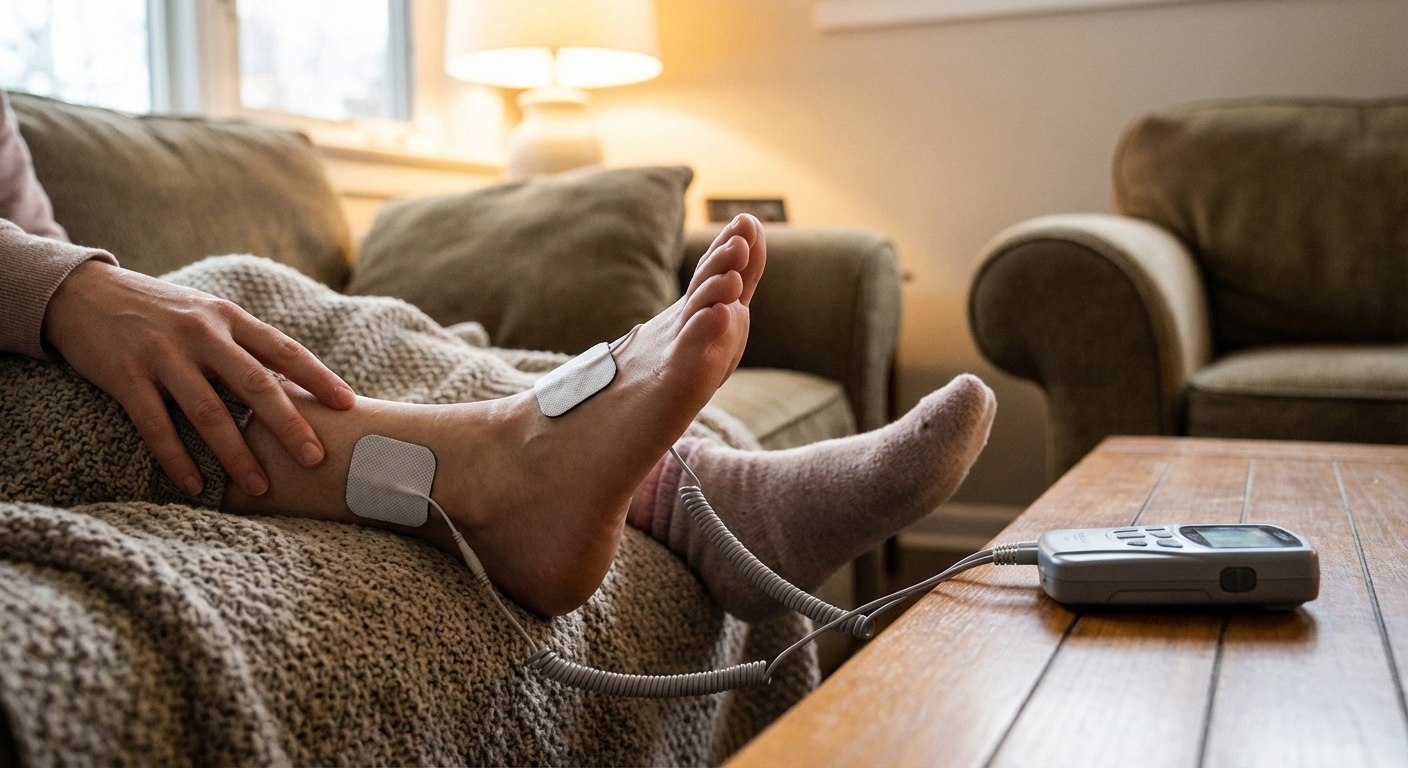
- Sole of the foot: Place one pad on the ball of the foot and another on the heel. This targets the area where most people feel burning and numbness.
- Top of the foot and ankle: One pad on top of the foot, another just above the ankle. Good for tingling and shooting pain.
- Calf placement: For neuropathy that extends up the leg, place pads on the inner and outer calf. This targets the nerve pathways running down to the feet.
- Along the nerve path: Position pads along the course of the affected nerve — one higher, one lower — so the current flows through the painful area.
General pad placement rules:
- Always use pads in pairs — the current flows between them
- Keep pads at least one inch apart
- Place them on clean, dry, intact skin — never on open wounds or irritated areas
- Experiment with placement — even a small shift can change effectiveness significantly
If you're not sure where to start, ask your doctor or physical therapist. Everyone's neuropathy is a little different.
Best TENS Settings for Neuropathic Pain
Most TENS units let you adjust three main settings: frequency (how fast the pulses fire), pulse width (how long each pulse lasts), and intensity (how strong the signal is).
For neuropathic pain specifically, here's what the research and clinical practice suggest:
Frequency:
⚡ High Frequency
80–120 Hz
Best for acute, sharp, or burning pain. Works via gate control theory — continuous tingling sensation blocks pain signals.
🌊 Low Frequency
2–10 Hz
Better for deep, aching pain. Triggers endorphin release — individual pulse or tapping sensation.
✨ Burst Mode
Best of Both
Clusters of high-frequency pulses at low-frequency rhythm. Combines both mechanisms — most effective for many neuropathy patients.
Pulse width:
- Start around 150–200 microseconds
- Wider pulses (200–300 microseconds) penetrate deeper and may work better for feet where nerves are further from the skin surface
Intensity:
- Turn it up gradually until you feel a strong but comfortable tingling
- It should never be painful
- If you have reduced sensation, start low and increase slowly
A starting point if you're new: Set frequency to 80 Hz, pulse width to 200 microseconds, and slowly increase intensity until you feel a comfortable buzzing. Adjust from there based on how you respond.
How Long and How Often to Use TENS
How often should you use a TENS unit for neuropathy?
One of the best things about TENS is that it's flexible. Unlike medications with rigid dosing schedules, you can adjust TENS use based on how you're feeling.
Session length: Most studies use 20-60 minute sessions. Start with 30 minutes and see how you respond.
Frequency of use: You can safely use TENS 2-3 times per day. A morning session and another before bed works well, since neuropathy symptoms often flare at night.
Consistency matters. Like most natural remedies for neuropathy, the cumulative benefit builds over days and weeks of regular use.
Take breaks. Don't leave it running all day — your body can adapt to the stimulation (called habituation), making it less effective. Defined sessions with breaks keep your nerves responsive.
Give it a fair trial. Try TENS consistently for at least 3-4 weeks before deciding if it works. Some people feel relief immediately; others need a couple of weeks.
Key Takeaway
Use TENS 2–3 times daily in 20–60 minute sessions. Take breaks between sessions — continuous use causes habituation (your nerves adapt and it stops working). Consistency over 3–4 weeks is what separates people who give up too soon from those who find lasting relief.

Who Should NOT Use a TENS Unit
TENS is remarkably safe for most people, but there are some important exceptions:
Talk to Your Doctor First — or Do Not Use
Do NOT use TENS if you have:
- A pacemaker or implanted defibrillator — electrical signals can interfere with cardiac devices
- An insulin pump near the electrode area
- Epilepsy — TENS on the head or neck may trigger seizures
- Active deep vein thrombosis (DVT)
Use with caution (consult your doctor) if you have:
- Severely reduced sensation — you may not feel if intensity is too high
- Skin conditions at the electrode site
- Cancer — avoid TENS over areas with known tumors
- Pregnancy — avoid over the abdomen and lower back
Never place TENS pads:
- Over the front or sides of the neck
- Over the eyes or through the chest
- On broken or irritated skin
Can TENS make nerve pain worse?
It's rare, but possible. Some people with hypersensitive neuropathy find that electrical stimulation aggravates their symptoms, especially at higher intensities. If TENS increases your pain, stop using it and try again at a lower setting. If it still bothers you, it may simply not be the right tool for your particular type of nerve pain. That's okay — there are plenty of other options.
TENS vs. Other Pain Relief Options
Is a TENS unit better than a foot massager for neuropathy?
This is a question I get all the time, and the honest answer is: they work differently, and many people benefit from both.
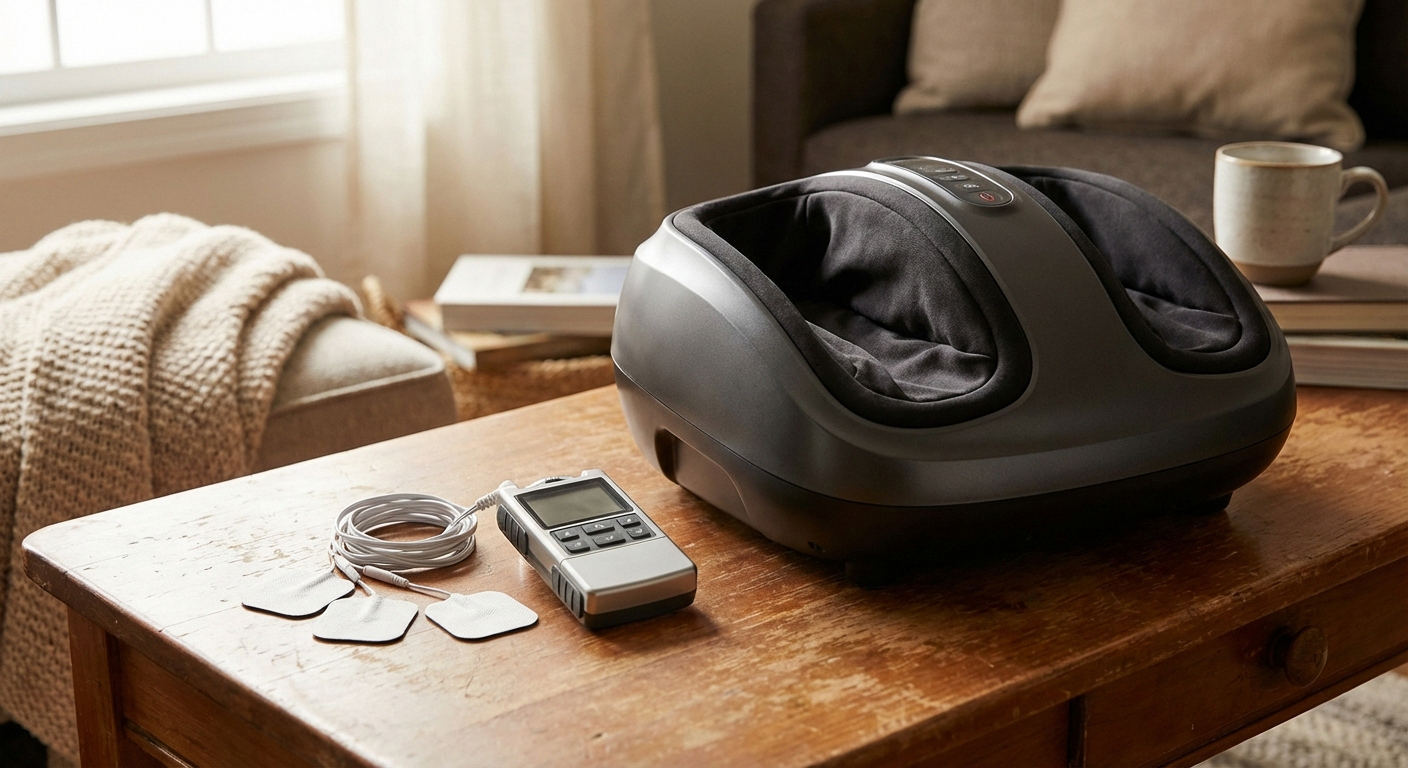
TENS vs. massage: TENS works by modulating electrical signals in your nervous system. Foot massage works by improving circulation, releasing endorphins, and reducing muscle tension. They complement each other rather than compete. Several people in my groups use a foot massager daily and add TENS during flare-ups.
💊 Medications (e.g. Gabapentin)
Can cause drowsiness, weight gain, brain fog, and dependency. Require prescriptions and regular dosage management. Effective for many, but side effects drive many people to seek red light therapy for neuropathys.
⚡ TENS Therapy
Zero systemic side effects — no drowsiness, no weight gain, no brain fog. No prescription needed. Won't replace medications in severe cases, but can reduce reliance on higher doses.
TENS vs. lidocaine patches creams: Neuropathy creams target the skin surface through capsaicin, lidocaine, or menthol. TENS targets nerve pathways more directly. They work well together — apply cream, let it absorb, then use TENS over the same area.
The real power is in stacking multiple approaches — TENS for immediate relief, massage for circulation, proper footwear for prevention, and supplements for long-term nerve support. No single tool does everything.
Choosing a TENS Unit: What to Look For
If you've decided to try TENS, here's what to consider when choosing a device:
✅ Must-Have Features
Adjustable frequency & intensity — control is essential to find what works for your symptoms
Multiple modes — continuous, burst, and modulated modes give you more options to try
Clear, large controls — important if you have hand numbness
Rechargeable battery — saves money on replacements over time
⭐ Nice-to-Have Features
Pre-set neuropathy programs — takes the guesswork out of settings
Timer function — set it and relax without watching the clock
Dual channel — treat two areas simultaneously (both feet at once)
Compact size — important if you want to use it on the go
Budget: Basic units start around $25-$35 and work perfectly well. Mid-range models ($40-$60) offer more modes and better build quality. For most people with neuropathy, that range hits the sweet spot.
Electrode pads: These are the ongoing cost. Pads lose stickiness over time and need replacing every 20-30 uses. Larger pads distribute current more evenly and are more comfortable for foot and leg use.
One thing I'd avoid: combination TENS/EMS units marketed as muscle stimulators. EMS causes muscle contraction, which isn't what you want for neuropathic pain. A dedicated TENS unit keeps things simple.
If you're unsure where to start, ask your doctor or physical therapist — many clinics have units you can try before buying. You can also take our symptom assessment to get a clearer picture of your neuropathy before exploring treatment options.
Putting It Together
The retired electrician from my Tuesday group? He's still using his TENS unit two years later. He says it's not magic — it doesn't take the pain away completely. But it takes the edge off enough that he can sit through dinner with his grandkids without wincing. That's what a good tool does. It doesn't have to be perfect. It has to be enough.
If you decide to try TENS, give it a real shot — consistent use, proper placement, patience with the settings. And if it doesn't work for you, that's fine too. There are plenty of other paths forward.
Take care of yourself, Janet
Frequently Asked Questions
About the Author