
A woman named Priya emailed me last spring with a puzzle. She'd been perfectly fine until, one morning, a patch of skin on her outer forearm suddenly felt like it was on fire. The burning lasted a few days, then faded into a numb patch about the size of a playing card. Weeks passed. Then it happened again — this time on the top of her opposite foot, in a completely different nerve territory. Her family doctor was baffled. A neurologist ordered a battery of tests, and only after a specialist finally saw her did anyone say the name of the condition out loud: Wartenberg's migrant sensory neuritis.
I'd never heard of it either. And when I went looking for a warm, plain-English explanation to send her, I couldn't find one. Everything was either a case report written for neurologists or a Wikipedia entry that read like a medical dictionary. This article is what I wish I could have handed her that first week.
If you or someone you love has been described this way — sudden burning followed by a numb patch, in one nerve at a time, coming and going — this is for you.
What Wartenberg's Migrant Sensory Neuritis Is
Wartenberg's migrant sensory neuritis, sometimes called Wartenberg's migratory sensory neuropathy, is a rare, benign condition first described in detail by the German-American neurologist Robert Wartenberg in 1958. It affects a single small sensory nerve at a time, causes sudden burning pain followed by patchy numbness in that nerve's territory, and then — the strange part — moves on. Weeks or months later, a completely different nerve, sometimes on the opposite side of the body, does the same thing.
One nerve at a time, purely sensory, migrating over time.
Wartenberg's is a rare, benign condition marked by sudden burning followed by patchy numbness in a single cutaneous nerve's territory — then, weeks or years later, a completely different nerve doing the same thing. No weakness, no life-threatening progression, no shortened life expectancy.
Three features define it:
- It's purely sensory. You feel it — burning, tingling, then numbness. Your muscles aren't affected. You don't develop weakness, and you don't have trouble moving.
- It's one nerve at a time. The symptoms map to the territory of a single cutaneous (skin-supplying) nerve, not a broad region.
- It migrates. Attacks happen in different nerves over time — sometimes days apart, sometimes years apart. There's no predictable pattern.
It's classified as a mononeuropathy, meaning a condition affecting one nerve at a time, as opposed to the more common polyneuropathies (like small fiber neuropathy) that affect many nerves symmetrically.
What It Feels Like
The typical story goes like this. Someone is doing something ordinary — gardening, sitting cross-legged on the couch, kneeling to reach a low shelf — and a sudden, sharp burning or shock-like pain hits a specific patch of skin. It's usually described as electric, hot, or knife-like. The pain can last minutes, hours, or a couple of days.
Then the pain fades and leaves numbness behind. The affected patch of skin feels dull to touch, cotton-wooly, sometimes tingly around the edges. It's confined to one nerve's territory, so if you traced the numb patch with a pen, you'd draw a very specific shape — a strip down the outer thigh, a wedge on the back of a forearm, a triangle on the top of the foot.
Over weeks to months, the sensation often returns partially or fully. Some people recover completely between attacks. Others are left with permanent patches of dulled sensation in the areas of previous episodes.
And then, at some unpredictable point later, it happens again — in a different nerve, on a different limb, sometimes years apart.
Which Nerves It Tends to Hit
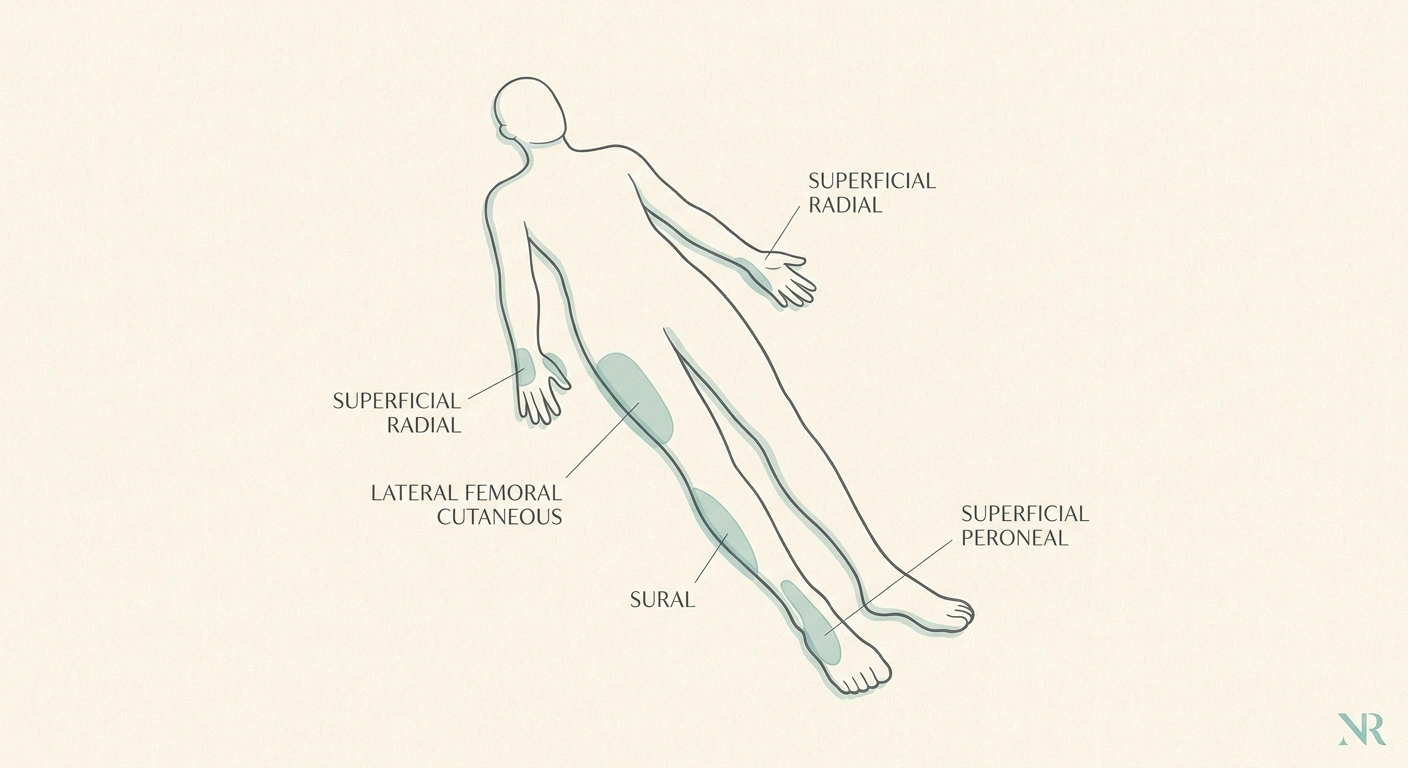
Wartenberg's has a preference for superficial cutaneous nerves — the sensory branches that travel close to the skin and cross joints, where they're vulnerable to stretch and compression. Arms are affected more often than legs, but any accessible sensory nerve can be involved.
Nerves commonly reported in the literature include:
- Lateral femoral cutaneous nerve — outer thigh (this territory overlaps with meralgia paresthetica)
- Superficial radial nerve — back of the hand and thumb
- Sural nerve — outer lower leg and side of the foot
- Superficial peroneal nerve — top of the foot and outer lower leg
- Ulnar sensory branches — pinky and ring finger side of the hand
- Cutaneous nerves of the chest, trunk, and face — less common but reported
The attacks are asymmetric — meaning if the left outer thigh is affected first, the next attack might be the right forearm rather than the corresponding spot on the other side. That asymmetry, and the “one nerve at a time” pattern, is one of the biggest clues for a neurologist trying to sort out what's going on.
What Triggers an Attack
A signature feature of Wartenberg's is that many attacks appear to be brought on by stretch or pressure on a superficial nerve. Some patients notice a clear pattern once they know to look for it:
- Kneeling for a while (gardening, praying, playing with grandchildren)
- Sitting cross-legged or with legs tucked under
- Leaning on an elbow for a long stretch
- Wearing a tight watch band or arm sleeve
- Prolonged repetitive motion (raking, painting, lifting)
- Sleeping in a position that puts pressure on an arm or leg
That said, some attacks come out of nowhere with no identifiable trigger, and the condition doesn't behave like ordinary compression injuries (which usually resolve quickly and don't migrate). The trigger is thought to be a “second hit” that unmasks an underlying vulnerability, rather than the sole cause.
What's Actually Happening at the Nerve Level
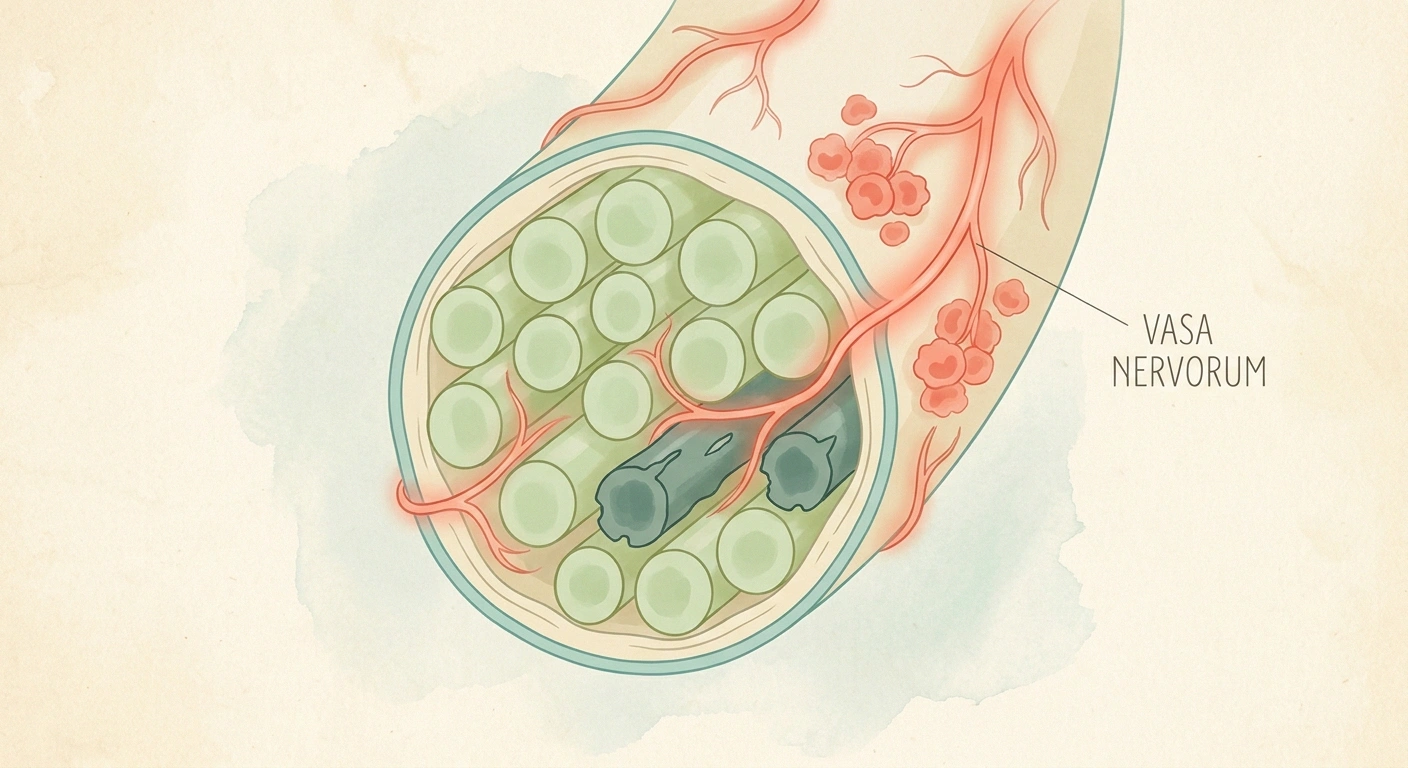
The precise cause remains unknown. What researchers have observed on biopsy of affected nerves points strongly to an immune-mediated microvasculitis — inflammation of the tiny blood vessels that feed the peripheral nerves (the vasa nervorum).
Nerve biopsies in Wartenberg's cases show Wallerian degeneration, perineurial thickening, small inflammatory cell clusters, IgG antibody deposits, and signs of localized ischemia — a picture consistent with immune-mediated microvasculitis of the vasa nervorum. It is considered the mildest, most localized form of vasculitic neuropathy.
Sources: Nicolle et al., Muscle & Nerve 2001; prospective follow-up study on Wartenberg's migrant sensory neuritis, PubMed ID 20354714.
When Wartenberg's-affected nerves have been biopsied, findings have included:
- Wallerian degeneration — the sequence of nerve fiber breakdown that follows injury
- Perineurial (nerve-sheath) thickening and inflammation
- Small clusters of inflammatory cells around the nerve
- IgG antibody deposits, suggesting immune involvement
- Signs of ischemia (reduced blood flow) to the affected fibers
This picture — inflammation, immune deposits, and small-vessel involvement — is why Wartenberg's is considered a benign, localized form of vasculitic neuropathy. It's essentially the mildest cousin of much more serious conditions like systemic vasculitis, which can affect many nerves and organs simultaneously.
Why exactly the immune system decides to attack one small sensory nerve at a time, and why it moves from nerve to nerve, no one knows. Some researchers have proposed viral or post-infectious triggers, and there have been a few reports of Wartenberg's-like symptoms after certain infections, but nothing has been established as a consistent cause.
How It's Diagnosed

The diagnosis of Wartenberg's is primarily clinical — meaning a neurologist recognizes the pattern from the history and exam. But because the pattern is unusual and mimics other conditions, testing is almost always done to rule out more serious causes.
- Clinical history — episodic burning → patchy numbness, one nerve at a time, migrating
- Neurologic exam — sensory-only findings, no motor weakness
- Nerve conduction (EMG/NCS) — reduced sensory nerve action potentials; motor conduction normal
- Blood work — rule out autoimmune, infection, diabetes, vitamin, monoclonal protein
- Skin/nerve biopsy — reserved for atypical cases only
- Neuromuscular specialist referral — often needed to confirm pattern
The clinical picture: episodes of burning followed by patchy numbness, in single cutaneous nerve distributions, migrating between different nerves over time, in a sensory-only pattern with no motor weakness.
Nerve conduction studies (EMG/NCS): Sensory nerve action potentials (SNAPs) in affected nerves are typically low-amplitude or absent, reflecting damage to sensory fibers. Motor nerve conduction is normal — because the condition doesn't touch motor fibers. This selective pattern is important diagnostic evidence.
Blood work: To rule out other causes, a neurologist will typically order autoimmune labs (ANA, ANCA, rheumatoid factor, SSA/SSB for Sjögren's, complement levels), infection screens (Lyme, hepatitis B and C, HIV), diabetes screening (A1C, fasting glucose), B12, folate, and inflammatory markers (ESR, CRP). A monoclonal protein screen (SPEP, immunofixation) is often included.
Skin or nerve biopsy: Not routinely done, but reserved for atypical cases where diagnosis remains unclear or where more serious vasculitis is suspected. Nerve biopsy carries risks (permanent numbness in the biopsied nerve's territory) and is done only when the answer will change management.
Because Wartenberg's is rare and superficially resembles both catastrophic and mundane conditions, getting the right diagnosis often takes several visits, sometimes with more than one neurologist. If your case is being worked up, a subspecialist in neuromuscular disease is the most likely doctor to have seen it before.
What It's Not (The Important Differential Diagnoses)
Wartenberg's mimics several conditions that behave very differently and need very different management. Sorting them out is the point of the workup.
Mononeuritis multiplex. This is the serious one. Mononeuritis multiplex is a pattern of multiple nerve involvement, usually driven by systemic vasculitis (like polyarteritis nodosa, granulomatosis with polyangiitis, or connective tissue disease), diabetes, or an infection. It typically involves motor as well as sensory fibers — meaning weakness and wasting, not just sensory symptoms — and it usually needs urgent immunosuppression to prevent permanent nerve damage. The key distinction: Wartenberg's is purely sensory and benign; mononeuritis multiplex causes weakness and is potentially catastrophic.
Hereditary Neuropathy with Pressure Palsies (HNPP). A genetic condition where nerves are unusually vulnerable to compression. HNPP episodes are typically triggered by identifiable pressure or minor trauma, involve both motor and sensory fibers, and run in families. Genetic testing (for the PMP22 deletion) confirms it.
Sensory ganglionopathy (sensory neuronopathy). A more diffuse, often more severe sensory condition affecting the dorsal root ganglia. Causes include Sjögren's syndrome, paraneoplastic syndromes (cancer-related), and certain drug exposures. Symptoms are usually widespread and progressive rather than fleeting.
Meralgia paresthetica. Isolated compression of the lateral femoral cutaneous nerve at the groin, causing outer-thigh numbness. This is a single-nerve compression syndrome, doesn't migrate, and often has an identifiable cause (tight belt, pregnancy, weight gain).
Multiple sclerosis. MS is a central nervous system condition, but it can cause patchy sensory symptoms that come and go. MS symptoms usually involve central pathways (spinal cord or brain), often affect vision or balance, and appear on MRI. Wartenberg's stays in the peripheral nerves.
Small fiber neuropathy. Small fiber neuropathy also affects sensory function, but it's typically bilateral, symmetric, and length-dependent — starting in the feet and moving upward gradually. Wartenberg's is asymmetric, migratory, and doesn't follow that stocking-and-glove pattern.
A good neurologist works through this list systematically. If you haven't had a clear conversation about why Wartenberg's fits better than each of these alternatives, that's a fair question to bring up at your next appointment.
Treatment: What Actually Helps

Here's the good news, and the reason Wartenberg's is called “benign”: there's rarely aggressive treatment needed, and most people do well over years even without specific therapy.
The mononeuritis multiplex look-alike is the serious one.
Wartenberg's is purely sensory and benign. Mononeuritis multiplex causes both sensory AND motor symptoms (weakness, wasting), is usually driven by systemic vasculitis, and requires urgent immunosuppression to prevent permanent nerve damage. New weakness in the setting of a Wartenberg's diagnosis is not a Wartenberg's symptom — it's a signal to re-evaluate.
Standard approach for most patients:
Symptomatic pain control during attacks. When burning pain flares, the medications used for neuropathic pain more generally can help. Gabapentin and pregabalin are common first choices; both can dampen the abnormal firing of injured sensory nerves. Tricyclic antidepressants like amitriptyline or nortriptyline are alternatives, especially if sleep is disrupted by pain. Topical lidocaine patches can sometimes cover the affected patch of skin.
Avoid known triggers. If your attacks tend to follow kneeling, prolonged pressure on an arm, or specific sleep positions, small adjustments — kneeling pads, cushions, deliberate position changes — may reduce frequency. Not every attack has a trigger, but the ones that do are worth learning.
Reassurance and monitoring. This might sound thin, but it's substantive. Knowing that this condition is benign, doesn't cause weakness, and typically doesn't shorten life is a meaningful part of treatment. Anxiety about “what's happening to me” often makes symptoms worse.
Immune-directed therapy in severe cases. A small subset of patients have frequent, severe, or debilitating attacks. Case reports describe successful use of intravenous immunoglobulin (IVIG), corticosteroids, or other immunosuppressive agents in these individuals. This is uncommon and requires a specialist familiar with vasculitic neuropathies.
What to Expect Over Time (The Prognosis)
Wartenberg's is a chronic but benign condition for most people. The typical course looks like this:
- Episodic pattern: attacks in different nerves, separated by weeks, months, or years of quiet.
- Recovery between attacks: most patients regain some or all sensation in previously affected areas.
- No progressive weakness: the condition stays sensory.
- No shortened life expectancy: Wartenberg's does not itself threaten health or longevity.
- Emotional adjustment: the unpredictability is often harder than the physical symptoms.
That last point matters. Living with something that could flare tomorrow or stay quiet for two years is exhausting in its own way. It's worth talking about — with your doctor, with people who understand, and with yourself. Chronic conditions with unpredictable attacks share a certain weight, whether it's Wartenberg's, migraine, cluster headache, or trigeminal neuralgia. If the anxiety of “will it come back tonight?” is affecting your sleep or your mood, that's a legitimate thing to bring to a mental health professional, and it doesn't mean you're overreacting. The mental-health side of nerve conditions is real and deserves care.
When to Get Re-evaluated
Wartenberg's is benign, but the diagnosis needs to hold up over time. Certain changes should send you back to your neurologist, not because they mean disaster, but because they may mean a different diagnosis has emerged:
- New weakness in the affected area or anywhere else
- Attacks becoming more frequent, longer, or more severe
- Multiple nerves involved simultaneously, not one at a time
- Fever, weight loss, night sweats, joint pain, rash, unusual fatigue
- Bowel, bladder, or breathing changes
- Loss of reflexes, muscle wasting, or trouble with fine motor tasks
- New weakness in the affected area or elsewhere. Wartenberg's is sensory only. Motor symptoms should prompt re-evaluation for mononeuritis multiplex or another condition.
- Attacks becoming more frequent, longer, or more severe.
- Multiple nerves involved simultaneously, rather than one at a time.
- New systemic symptoms: fever, weight loss, night sweats, joint pain, rash, unusual fatigue.
- Bowel, bladder, or breathing changes.
- Loss of reflexes, muscle wasting, or trouble with fine motor tasks.
These signs don't necessarily mean something ominous. But they mean the picture has changed, and a fresh look is warranted.
Practical Advice From One Nerve-Community Member to Another
A few things I've learned from listening to people with rare conditions like this one:
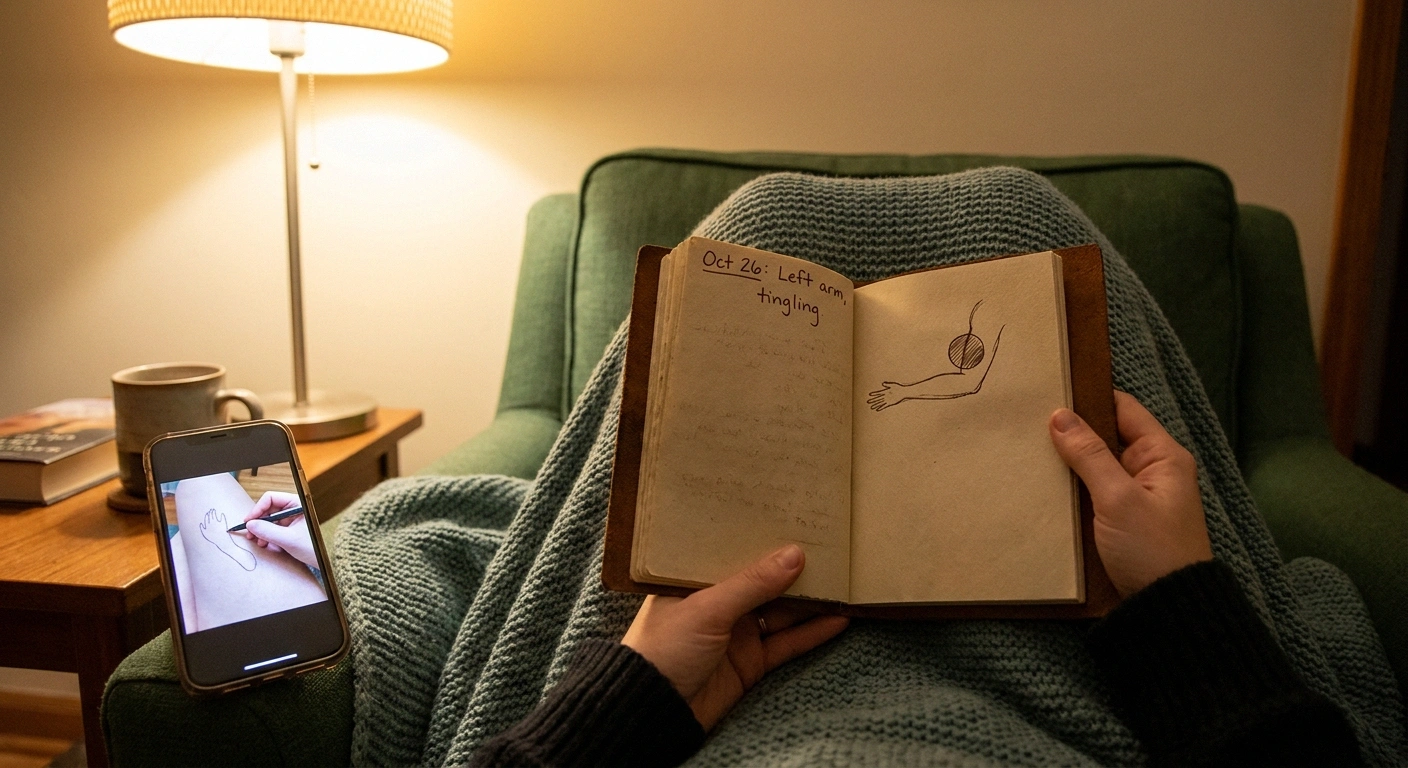
Keep a symptom journal. Date the attack, note which nerve/area, describe the sensation, list what you were doing the day before. Over months, patterns emerge that no single-day snapshot can show. Bring the journal to appointments.
Photograph the numb patch during and after an attack. Take a picture with a landmark for scale. Trace the edges if you can. This documentation can help a specialist confirm which nerve is involved, especially if your general practitioner sees you between attacks and everything looks normal.
Advocate for a neuromuscular specialist referral. If your neurologist hasn't seen a lot of Wartenberg's, a neuromuscular subspecialist at a teaching hospital may be worth the drive for at least one visit. They see enough rare conditions to recognize patterns your local doctor may not.
Understand your medications. If you're prescribed gabapentin or pregabalin for symptomatic pain control, learn the typical dosing, side effects, and interactions. Both drugs affect balance and cognition and shouldn't be started, stopped, or dose-changed abruptly.
Find someone who understands. Rare-condition communities exist online for almost everything. A community of even a few dozen people who've lived with the same thing can be enormously helpful — for practical tips, for validation, for the “you're not crazy” moments that matter more than you'd think.
Don't overreact between attacks. Every new tingle or twinge isn't a flare. Bodies produce lots of transient sensations. Notice the ones that persist and follow the pattern; let the random ones pass.
The Bigger Picture

Wartenberg's migrant sensory neuritis is a strange condition — sudden, migratory, purely sensory, and largely benign. Its rarity means it's often misdiagnosed at first, and the workup can feel drawn-out and frustrating. But once the picture is clear, most people settle into a manageable rhythm: quiet periods, occasional attacks, symptomatic treatment when needed, and reassurance that it's not the more serious things it can look like.
Excellent for most people.
Attacks in different nerves separated by weeks, months, or years. Sensation usually returns partially or fully between episodes. No motor involvement. No shortened life expectancy. Most patients settle into a manageable rhythm and live otherwise normal lives between quiet stretches.
If you've been given this diagnosis, or if you suspect it based on your symptoms, the most important thing is to get a specialist evaluation to be sure that's what you're dealing with. Rule out the imposters. Confirm the pattern. Then live your life — carefully, but not fearfully. Priya, the woman I mentioned at the start, is now three years into her Wartenberg's story. She's had four attacks total. She still gardens, still travels, still teaches yoga on weekends. She keeps a kneeling pad by the front door, tries not to sit cross-legged, and takes gabapentin during flares. Most weeks, she forgets she has it at all.
That's a reasonable outcome, and it's the one most patients with Wartenberg's eventually reach.
Frequently Asked Questions
Is Wartenberg's migrant sensory neuritis serious?
No, it's classified as a benign condition. It doesn't cause weakness, doesn't progress to widespread nerve damage in most cases, and doesn't shorten life expectancy. What makes it feel serious is the unpredictable pattern and the burning pain during attacks, but the underlying condition itself is not dangerous.
What causes Wartenberg's neuritis?
The exact cause is unknown. Biopsy findings from affected nerves suggest an immune-mediated microvasculitis — inflammation of the small blood vessels supplying peripheral sensory nerves. Some cases appear to be triggered by stretch or pressure on a superficial nerve; others happen without any identifiable trigger.
How is Wartenberg's diagnosed?
Diagnosis is based on the clinical pattern (episodic burning followed by patchy numbness in one cutaneous nerve at a time, migrating between different nerves over time), backed up by nerve conduction studies that show reduced sensory nerve action potentials in affected nerves with normal motor function. Blood work rules out other causes. Skin or nerve biopsy is reserved for atypical cases.
Will my symptoms come back after an attack?
Attacks tend to recur, but the timing is highly variable. Some people have another attack within weeks; others go years between episodes. Attacks typically affect different nerves each time. Sensation usually returns partially or fully between episodes, though some patients retain patches of numbness in areas of previous involvement.
What's the treatment?
Most patients don't need specific therapy — only symptomatic management. Gabapentin, pregabalin, tricyclic antidepressants, or topical lidocaine can help during attacks. Avoiding known triggers (kneeling, sustained pressure) may reduce frequency. Immunosuppressive therapy like IVIG or corticosteroids is reserved for the rare severe or debilitating cases.
How is Wartenberg's different from mononeuritis multiplex?
This is the most important distinction. Wartenberg's is purely sensory and benign. Mononeuritis multiplex involves both sensory and motor fibers (causing weakness), is usually caused by systemic vasculitis or other serious underlying conditions, and requires urgent immunosuppression to prevent permanent damage. Any new weakness in the setting of a Wartenberg's diagnosis should prompt re-evaluation.
Can Wartenberg's go away permanently?
Some patients experience long remissions — years without any attack — but the condition is considered chronic. There's no reliable “cure.” Most people learn to manage attacks when they occur and live otherwise normal lives in between.
About the Author