
A woman I'll call Rosa stopped me after a recent support group meeting and asked if we could talk for a few minutes in the hallway. She'd been losing weight without trying. Her stomach felt full after a few bites of dinner. She'd had bouts of nausea that the antiemetic her primary doctor prescribed wasn't really touching. Her endocrinologist had just used the word gastroparesis for the first time and handed her a prescription for something called metoclopramide.
“They told me there's a black-box warning,” she said. “I'm scared to start it. I'm also scared not to start it. I'm losing weight I can't afford to lose.”
That conversation is more common than you'd think. Diabetic gastroparesis sits at the intersection of two things many people in our community are already dealing with — long-standing diabetes and autonomic neuropathy — and metoclopramide is one of the few oral medications proven to actually move food through the stomach when the nerve signals that normally do that job have gone quiet. It works. It's also, honestly, the medication with the most worrying long-term side effect on this whole list. That tension is real, and pretending it isn't doesn't help anyone.
This guide is the honest middle. We'll walk through what gastroparesis is and why metoclopramide gets prescribed for it, what the actual movement-disorder risk looks like (not the abstract scary version, the real-numbers version), who should and shouldn't take it, what your alternatives are, and the conversation you want to have with your doctor before you start. The goal is to help you and the people in your life make this decision with your eyes open.
What Diabetic Gastroparesis Actually Is
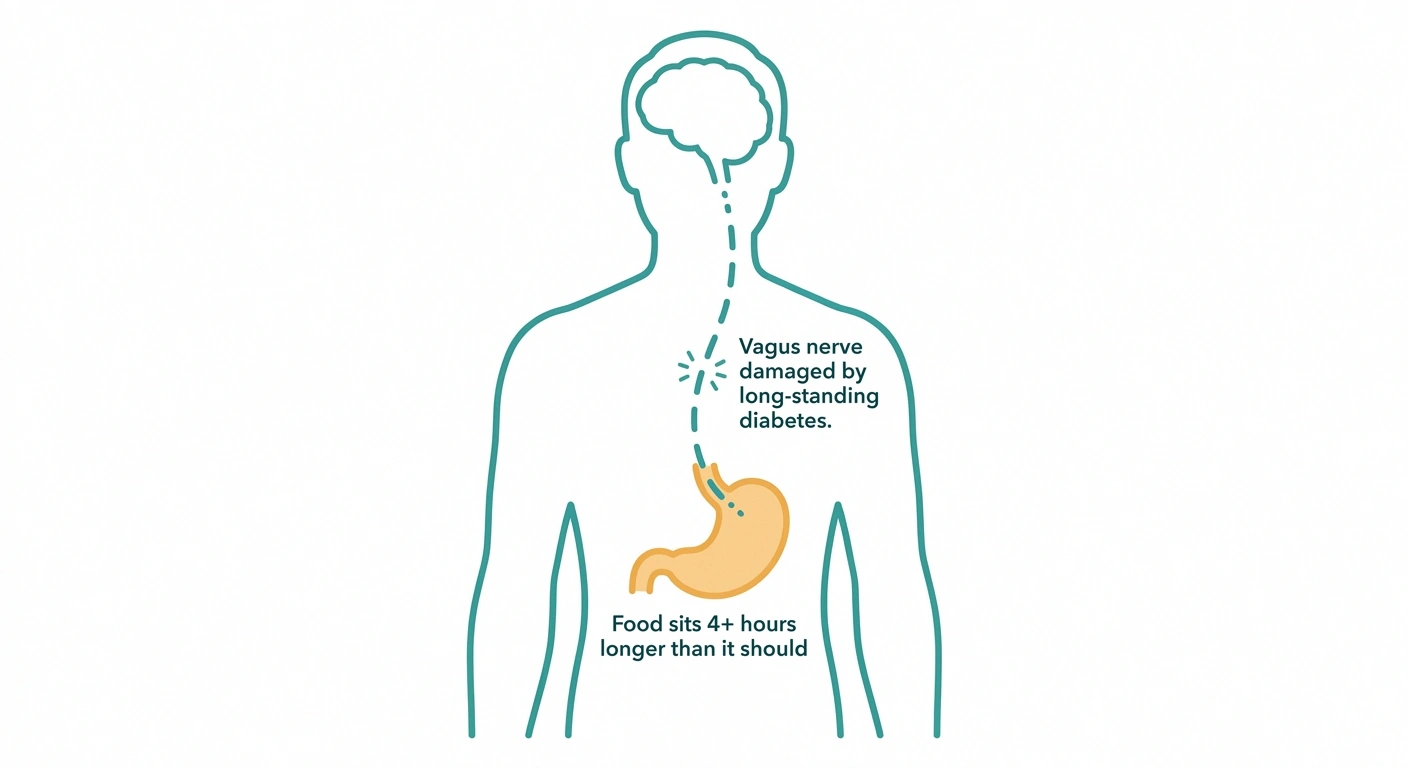
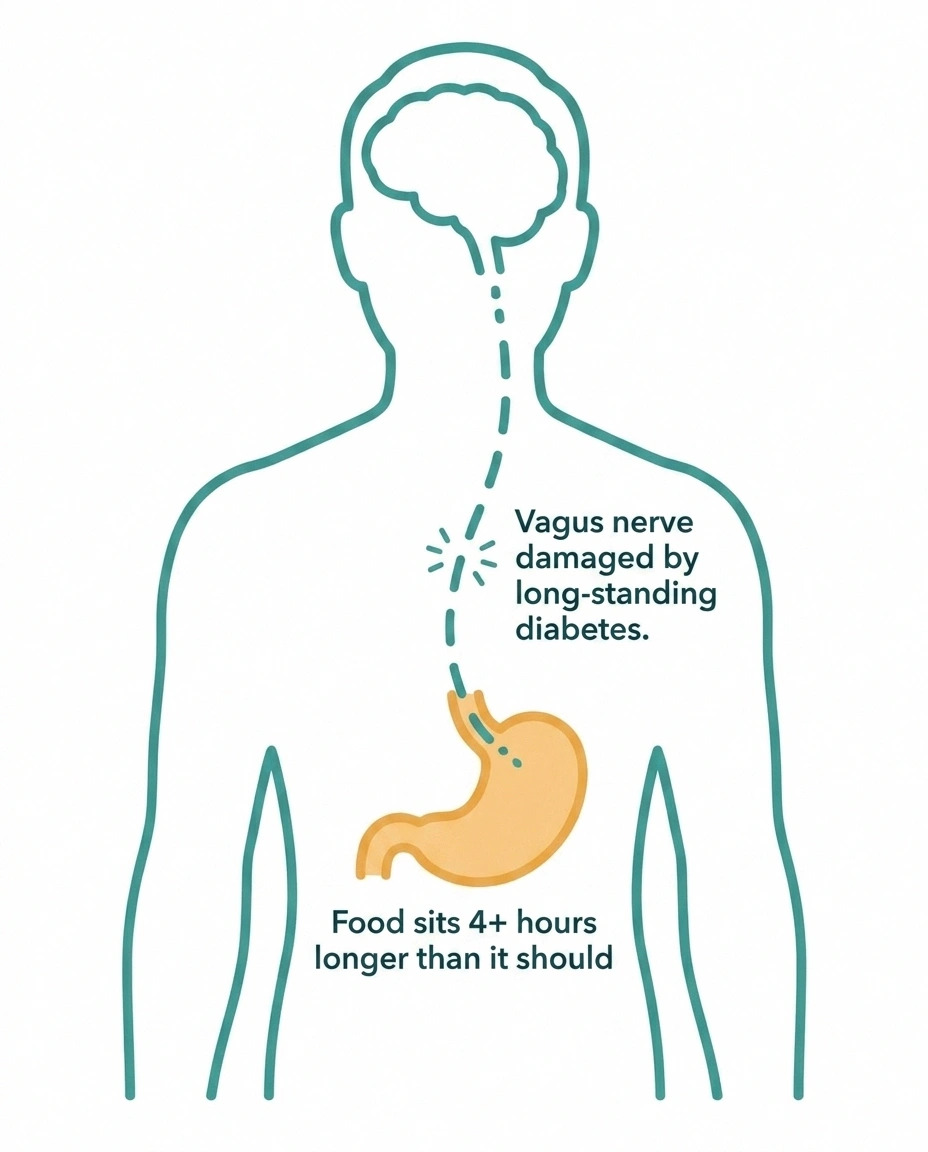
Your stomach has a built-in muscle pattern. After you swallow food, the upper part of the stomach relaxes to receive it, the lower part contracts in rhythmic waves to grind it into smaller pieces, and the pyloric valve at the bottom opens periodically to release the partly-digested food into the small intestine. The whole system is coordinated by the vagus nerve and the enteric nervous system — a dense network of nerves that runs through the gut wall.
Key Takeaway
Diabetic gastroparesis is autonomic neuropathy of the vagus nerve — the stomach simply stops emptying on schedule. Metoclopramide is the only oral FDA-approved drug for it. It works, but carries a boxed warning for an irreversible movement disorder. The smart play is almost always a short, defined course, not an open-ended prescription.
In long-standing diabetes, those nerves get damaged the same way the nerves in your feet do. Diabetic neuropathy isn't only the burning and numbness in the feet you hear about most often. It's also damage to the autonomic nerves that run your stomach, your bladder, your sweat glands, your blood-pressure regulation, your heart rate variability. When the vagal fibers that signal stomach contractions take enough damage, the stomach simply doesn't empty on schedule. Food sits there for hours longer than it should. That's gastroparesis.
The symptoms are what you'd expect from a stomach that won't empty:
- Feeling full after only a few bites (early satiety)
- Nausea, sometimes constant low-grade, sometimes severe
- Vomiting hours after eating — sometimes hours after a meal you can still recognize
- Bloating and abdominal discomfort
- Unintended weight loss
- Wildly unpredictable blood sugar control, because the carbohydrates from a meal hit your bloodstream hours later than your insulin or oral medication expects them to
- Acid reflux that doesn't respond well to acid-blocking medication alone
Diabetic gastroparesis affects an estimated 30 to 50 percent of people with type 1 diabetes and 15 to 30 percent of people with type 2 diabetes who've had the condition for many years — though most cases are mild and many go undiagnosed. The harder cases tend to show up after 10 or more years of diabetes, and the people most at risk are those who've already developed other forms of diabetic neuropathy in the feet and legs.
How Metoclopramide Works (and Why It's Often the First Drug Tried)
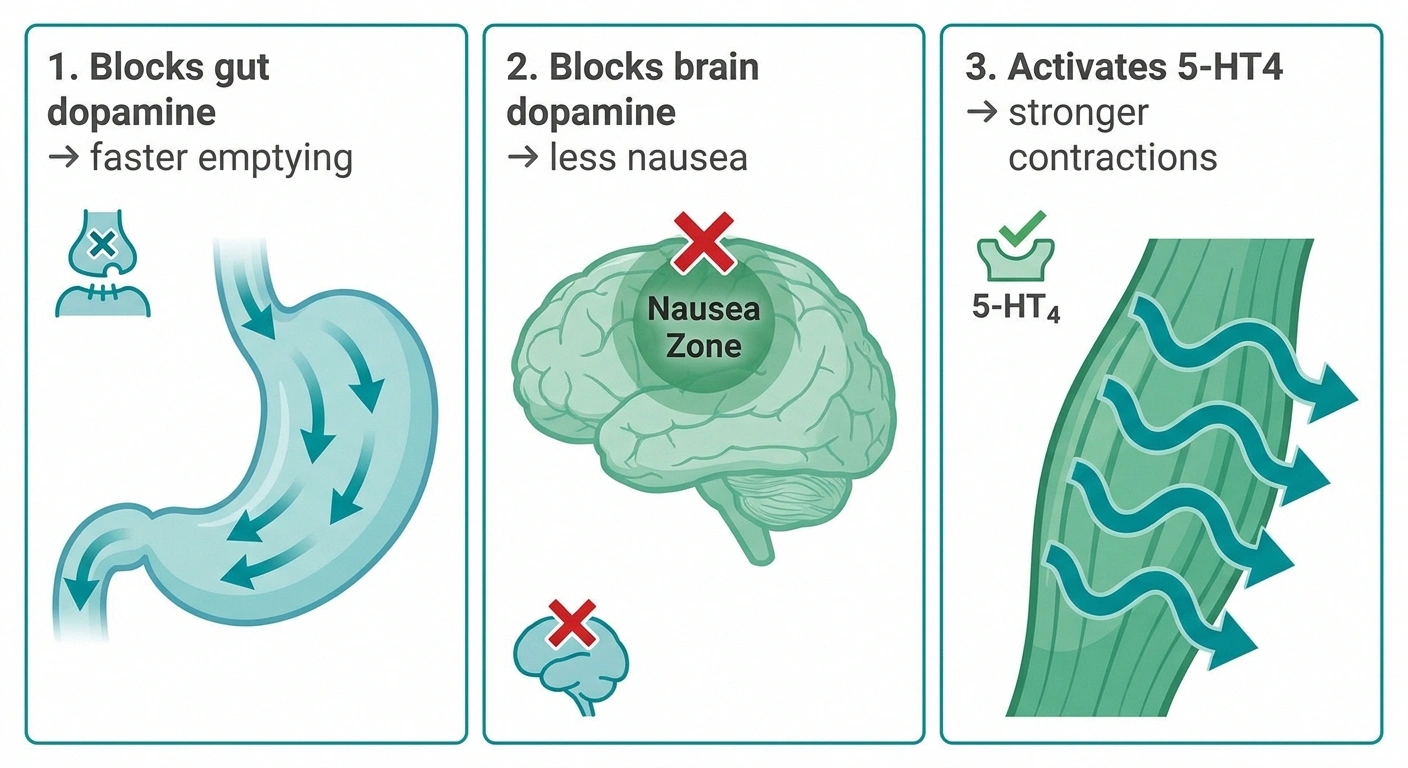
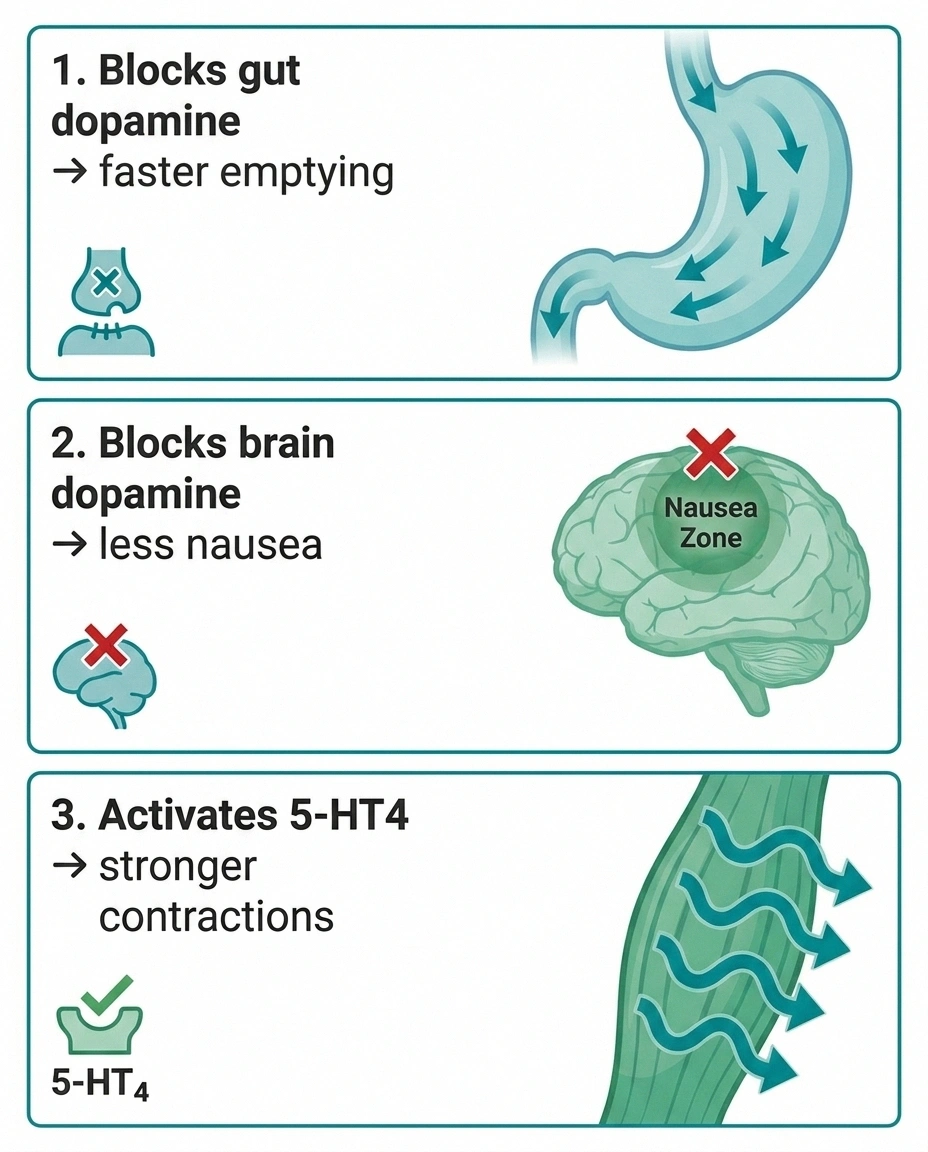
Metoclopramide (brand names include Reglan and Metozolv) was approved by the FDA in 1979 for gastroparesis and other conditions involving slow gastric emptying. It works in two ways simultaneously.
How Metoclopramide Acts on the Gut
1. Blocks dopamine D2 receptors in the gut
Dopamine normally slows stomach contractions. Removing that brake speeds emptying.
2. Blocks dopamine in the brain's nausea center
The chemoreceptor trigger zone — reduces nausea signals.
3. Activates serotonin 5-HT4 receptors
Adds a second prokinetic push that strengthens stomach muscle contractions.
First, it blocks dopamine D2 receptors in the gut and in the part of the brain that triggers nausea. In the gut, blocking dopamine increases muscle contractions in the stomach and speeds up emptying — dopamine normally slows stomach motion, so removing that brake helps things move. In the brain's chemoreceptor trigger zone, blocking dopamine reduces nausea signals.
Second, at higher concentrations it activates serotonin 5-HT4 receptors in the gut wall, which adds to the prokinetic (movement-promoting) effect.
The combination — faster gastric emptying plus reduced nausea — is exactly what someone with gastroparesis needs, which is why it's been the first-line oral prokinetic for almost five decades. As of 2026, metoclopramide remains the only oral medication FDA-approved specifically for the short-term treatment of diabetic gastroparesis. Erythromycin works as a prokinetic too, but it isn't FDA-approved for that indication. Domperidone, which is widely used in other countries for gastroparesis, is not FDA-approved in the United States and has to be obtained through a special FDA program or from a compounding pharmacy.
What does it actually do, head-to-head? In clinical studies, metoclopramide reduces the severity of nausea, vomiting, early satiety, and bloating by roughly 30 to 40 percent compared with placebo. For people whose gastroparesis is moderate to severe, that's the difference between being able to eat dinner and not being able to eat dinner. For some people, it's the difference between maintaining their weight and needing a feeding tube.
The benefit, when it works, is real. The problem is the long-term safety profile.
The Black Box Warning: Tardive Dyskinesia
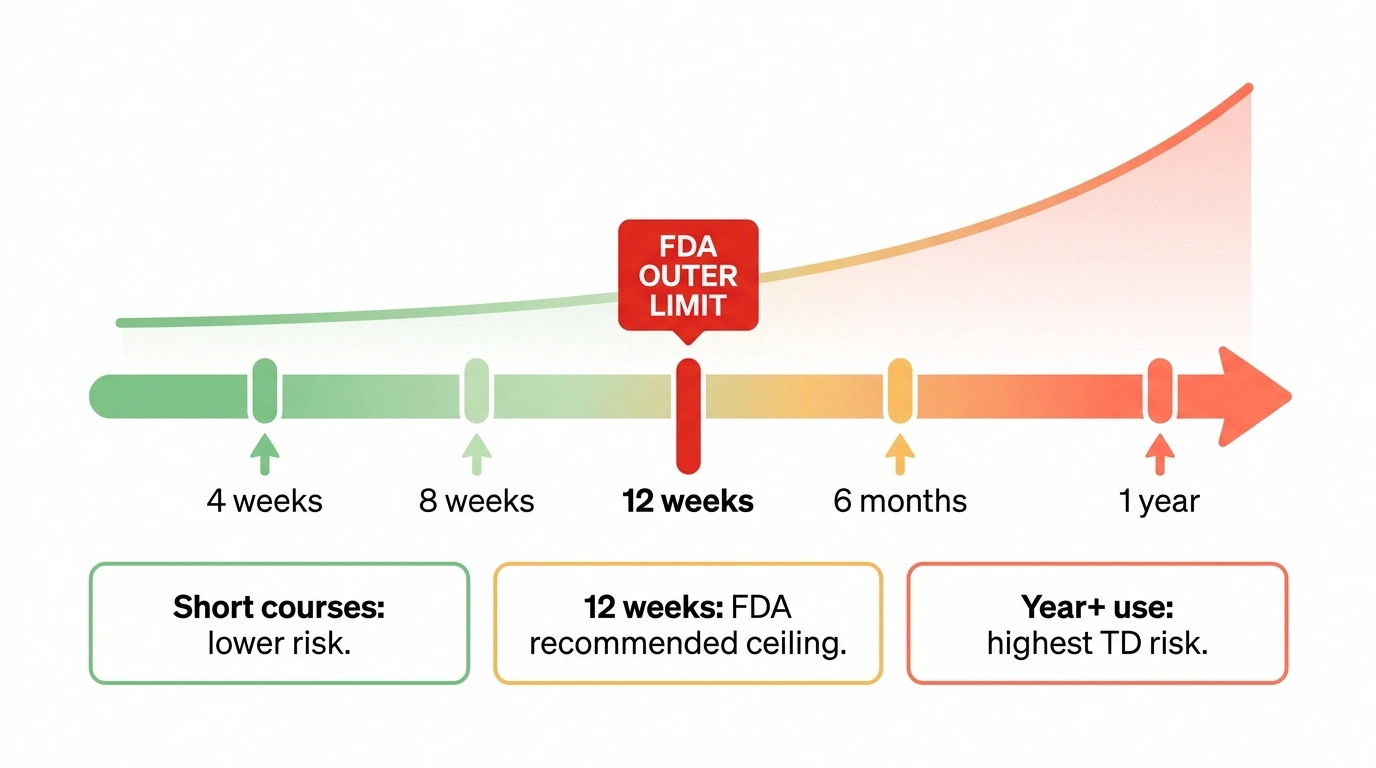
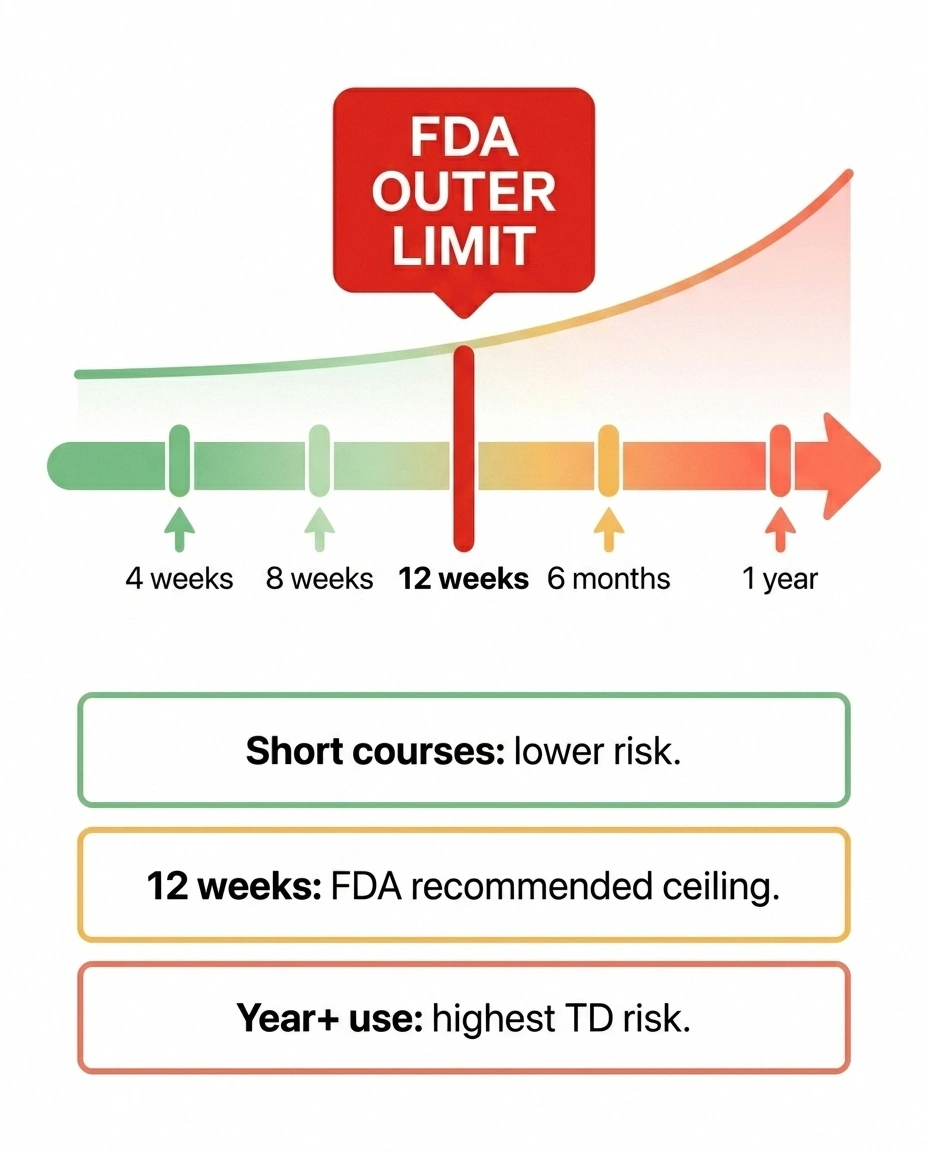
In 2009, the FDA added its strongest warning — a “boxed warning” — to metoclopramide. The warning concerns a condition called tardive dyskinesia, a movement disorder that can develop after weeks, months, or sometimes years of taking the medication, and that in many cases is irreversible even after the drug is stopped.
FDA Boxed Warning
Tardive dyskinesia — involuntary movements of the face, tongue, or limbs — develops in roughly 1–10% of long-term metoclopramide users. About half of cases do not resolve after stopping the drug.
FDA recommends limiting continuous use to 12 weeks in most patients. Higher risk in older adults, women, people with diabetes, and people with kidney impairment.
Tardive dyskinesia looks like involuntary, repetitive movements. The most common patterns are:
- Lip smacking, puckering, or pursing
- Tongue protrusion or rolling movements inside the mouth
- Grimacing, rapid eye blinking, or eyebrow movements
- Twisting or writhing movements of the fingers, hands, or feet
- In more severe cases, jerky movements of the trunk or rocking
These are not subtle in their full form. They are socially and personally distressing, they can affect speech and chewing, and they don't reliably go away when the metoclopramide is stopped. About half of cases improve within a year of stopping the drug; about half persist long-term, sometimes permanently. There is no reliably effective treatment that reverses it once it's established.
The mechanism is thought to involve long-term dopamine D2 receptor blockade in the brain. The same blockade that helps with nausea, applied for long enough, eventually causes the brain to compensate in ways that produce abnormal movements.
The actual risk numbers, since the abstract version sounds terrifying and the real numbers are more nuanced:
- The FDA's boxed warning cites tardive dyskinesia risk in roughly 1 to 10 percent of long-term users, depending on the study and the population
- Risk increases with duration of use — short courses of 12 weeks or less carry substantially lower risk than year-long courses
- Risk increases with total cumulative dose — both daily dose and duration matter
- Risk is higher in older adults (especially over 65), women, people with diabetes (yes, the very population most likely to need it), and people with kidney impairment that slows the drug's clearance
- The FDA recommends avoiding use beyond 12 weeks in most patients, with longer use reserved for cases where the benefit is judged to outweigh the risk
The 12-week guideline is important. In the original FDA labeling, metoclopramide was used much more freely, sometimes for years at a time, and the long-term tardive dyskinesia cases that prompted the 2009 boxed warning came mostly from those extended-use patterns. Short, intentional courses are a different risk picture than open-ended prescriptions that get refilled indefinitely.
Other Side Effects Worth Knowing About
Tardive dyskinesia gets the headlines, but it's not the only side effect to know about.
Who Has Higher Tardive Dyskinesia Risk
| Risk Factor | Why It Matters |
|---|---|
| Age > 65 | Brain dopamine system is more vulnerable; risk rises sharply |
| Female sex | Higher baseline risk across all dopamine-blocking medications |
| Diabetes itself | Independently increases risk — the population most likely to need the drug |
| Kidney impairment | Slows drug clearance; higher blood levels at the same dose |
| Duration of use | Cumulative exposure matters — 12-week limit is meaningful |
| Other dopamine blockers | Antipsychotics or other antiemetics add to total exposure |
Drowsiness and fatigue. Common, especially in the first few weeks. Many people describe a “fog” that improves over the first month but doesn't fully go away. Some people find that taking the dose at night helps.
Anxiety, restlessness, and akathisia. Some people develop a feeling of inner restlessness — an inability to sit still, a constant urge to move. This is a known side effect of dopamine-blocking medications and often appears within days of starting. It can be intense enough to be mistaken for an anxiety disorder. If you've started metoclopramide and you feel a new and unexplainable inability to sit calmly, this is worth reporting promptly.
Depression. Metoclopramide has been associated with new or worsening depression, particularly in people with a history of mood disorders. The connection isn't fully understood. If your mood drops noticeably after starting, that's information your doctor needs.
Acute extrapyramidal reactions. Sudden muscle stiffness, abnormal posturing, or facial spasms can occur within days of starting, particularly at higher doses or in younger patients. These usually resolve when the drug is stopped but can be alarming when they happen.
Diarrhea. The same prokinetic effect that helps the stomach can speed up the rest of the GI tract. Some loosening of stools is common; severe diarrhea is a reason to call your doctor.
Hyperprolactinemia. The dopamine blockade increases prolactin, which can cause breast tenderness, milky discharge, missed menstrual periods, or sexual dysfunction. Usually reversible when the drug is stopped.
QT prolongation. A small effect on the heart's electrical rhythm. Mostly a concern if you're on other medications that also prolong QT or if you have an underlying heart rhythm condition.
And one more that catches people off-guard: metoclopramide interacts with several commonly-prescribed medications. The list of meds that can interact, layered on top of an existing diabetes regimen, is worth a careful look in coordination with your pharmacist — see our broader overview of medications that affect the nervous system for related concerns.
Who Should Think Twice Before Starting
The 2009 boxed warning, and the consensus guidance that followed, suggest extra caution — or finding another approach entirely — in several groups:
Adults over 65. Tardive dyskinesia risk is markedly higher in older adults, and so is the risk of falls from drug-induced restlessness or drowsiness. The benefit threshold for starting metoclopramide is higher in this group.
People with a history of any movement disorder. Parkinson's disease, restless legs syndrome that's not under control, prior tardive dyskinesia from any drug, or essential tremor are all reasons to seek an alternative before starting metoclopramide.
People with active depression or recent suicidal ideation. The mood-related side effects can amplify what's already difficult to manage.
People already on other antipsychotic or dopamine-blocking medications. The combined risk of movement disorders adds up.
People with significantly reduced kidney function. Metoclopramide is cleared mostly by the kidneys. Reduced clearance means higher blood levels at the same dose, which means higher cumulative exposure and higher tardive dyskinesia risk. Dose reduction is typically required, and even then close monitoring matters.
Pregnancy considerations. Metoclopramide is sometimes used during pregnancy for severe nausea and vomiting, often considered relatively safe in that specific use, but the calculus is different when used long-term for gastroparesis. A maternal-fetal medicine consult is appropriate.
The Conversation You Want to Have With Your Doctor

If your doctor has suggested metoclopramide, or if you're reading this trying to decide whether to fill the prescription that's already in your hand, here's the conversation that gets you to a confident decision. Bring this list with you.
5 Questions to Bring to the Appointment
How sure are we this is gastroparesis, and how severe is it on the gastric-emptying study?
What dose and duration are you proposing, and will we revisit at 12 weeks?
What's the lowest dose we can start with, and what symptom are we tracking to know it's working?
What movement warning signs should I watch for, and who do I call?
What's plan B if this doesn't work or I can't tolerate it?
1. “How sure are we that this is gastroparesis, and how severe is it?”
The gold-standard test is a gastric emptying study — a four-hour scan that measures how much radiolabeled food is still in the stomach at one, two, and four hours. The severity grade (mild, moderate, severe) matters for the risk-benefit conversation. Mild gastroparesis often responds well to dietary changes alone and may not need a daily medication with a boxed warning. Getting clear on the diagnosis is the foundation for the rest of the decision.
2. “What dose and duration are you proposing, and do you intend to revisit at 12 weeks?”
You want to know if this is a short, defined course meant to break a flare and get you eating again, or an open-ended prescription. Both can be appropriate — but the conversation about side-effect monitoring and the plan to taper off is very different in each case. If the answer is open-ended, ask why, and ask what would trigger a review.
3. “What's the lowest dose we can start with, and how will we know it's working?”
Typical starting doses are 5 mg three or four times a day, often before meals and at bedtime. Some patients tolerate and respond well to lower doses. Knowing the specific symptom you're tracking — early satiety, vomiting frequency, weight — gives you both a yardstick.
4. “What movement-disorder warning signs should I watch for, and who do I call?”
Tongue movements you can't control. Facial grimacing. Restlessness or akathisia. These should trigger a same-week call to the prescriber, not a wait-and-see. Knowing who to call ahead of time — pharmacist, primary care, the prescribing specialist — saves time when you need it.
5. “What's plan B if this doesn't work or I can't tolerate it?”
Having the next step already in mind keeps you from feeling stuck if metoclopramide doesn't pan out. We'll walk through the alternatives in the next section.
What Else Is Available for Gastroparesis

Metoclopramide isn't the only option, even though it's often the first one offered. Each alternative has its own tradeoffs.
Research Says
Metoclopramide reduces nausea, vomiting, and early satiety by roughly 30–40% compared with placebo in moderate-to-severe gastroparesis.
Domperidone shows similar efficacy with substantially lower tardive dyskinesia risk — but isn't FDA-approved in the U.S. and requires an Investigational New Drug program or compounding pharmacy.
Erythromycin (an antibiotic that doubles as a prokinetic). Erythromycin stimulates motilin receptors in the stomach, triggering strong contractions. Used at low antibiotic-sub-therapeutic doses (typically 250 mg three times a day), it can dramatically speed gastric emptying. The catch: the prokinetic effect tends to wear off after a few weeks of continuous use as the motilin receptors down-regulate. It's most useful as a short-term rescue, an intermittent strategy (a week on, a week off), or for acute flares. It also interacts with many medications and can cause GI cramping.
Domperidone. Works much like metoclopramide on dopamine receptors in the gut, but crosses the blood-brain barrier poorly. That means much lower risk of tardive dyskinesia and other central nervous system side effects. It's widely available in most countries but not approved in the United States — patients can sometimes access it through an FDA Investigational New Drug program or through compounding pharmacies. Carries a separate but smaller risk of QT prolongation and cardiac arrhythmia, so an EKG before starting is standard.
Prucalopride (Motegrity). A newer 5-HT4 receptor agonist FDA-approved for chronic constipation. Off-label use for gastroparesis is growing, with promising early evidence and a cleaner side-effect profile than metoclopramide. Insurance coverage and cost are real barriers — the medication runs roughly $400 to $600 a month without insurance.
Cisapride. Was once a first-line gastroparesis drug. Pulled from the U.S. market in 2000 because of dangerous heart rhythm side effects. Available in very limited circumstances. Not typically a current option.
Tegaserod. Limited use in specific patient populations. Not commonly used for gastroparesis.
Dietary and lifestyle changes. These are not optional — they form the foundation that any medication is layered on top of. Smaller, more frequent meals; lower-fat and lower-fiber food (both slow gastric emptying further); chewing thoroughly; staying upright for at least an hour after eating; avoiding carbonated drinks; and walking gently after meals all matter. For some people with mild gastroparesis, diet alone is enough. Our broader overview of the neuropathy diet covers some of the supporting nutrition principles.
Tight blood sugar control. High blood sugar itself slows gastric emptying, even in people without established gastroparesis. Improving glucose control often improves gastroparesis symptoms by a meaningful margin. The reverse is also true — better gastric emptying makes carbohydrate absorption more predictable, which makes glucose easier to control.
Gastric electrical stimulation (Enterra device). A surgically implanted device that delivers low-amplitude electrical pulses to the stomach. Approved under a humanitarian device exemption for severe, drug-refractory gastroparesis. Helps a subset of patients significantly. Not a first-line option, but worth knowing about for severe cases.
Pyloric botox injections and pyloroplasty. When the issue is partly outlet obstruction at the pyloric valve, relaxing the valve (chemically with botox, or surgically) can help. Used in selected cases.
Nutrition support. In the most severe cases, jejunal feeding (a feeding tube that bypasses the stomach) becomes necessary. This is not failure — it's the right tool when oral nutrition isn't working and weight loss is becoming dangerous.
If You Decide to Take It: A Practical Playbook

Let's say you and your doctor have weighed the risk-benefit picture and you're going to give metoclopramide a try. Here's the framework that keeps the risk as low as it can be while giving the drug a fair chance to help.
A Safer-Use Checklist
Start at the lowest dose your doctor will prescribe. Typically 5 mg, three to four times a day, before meals and at bedtime. Some specialists start lower. Higher starting doses don't usually work better — they just raise side-effect risk.
Set a calendar reminder for week 12. Twelve weeks is the FDA-recommended outer boundary for continuous use in most patients. Put a calendar reminder on the same date you start, and use it to trigger a planned reassessment with your doctor — is it still helping, can we taper, do we need to switch?
Keep a one-page symptom log. A simple notebook entry: morning nausea (0–10), worst nausea of the day (0–10), number of times you vomited, what you were able to eat, weight if you weighed yourself. A few minutes a day, and you have real data when your doctor asks “is it helping?” instead of trying to remember the last two months.
Set up a movement-watch checklist with someone who sees you regularly. Tardive dyskinesia is often noticed by family before it's noticed by the person who has it. Ask your spouse, your daughter, your sister, your best friend to gently flag if they notice new lip-smacking, tongue movements, repetitive facial movements, or restlessness. The earlier these are caught, the better.
Avoid alcohol while taking it. Both the drowsiness and the depression risk amplify with alcohol.
Don't stop abruptly without talking to your doctor. A planned taper avoids withdrawal-like symptoms and lets you switch to an alternative if needed.
Don't double up if you miss a dose. Just take the next scheduled dose. Doubling up raises blood levels and side-effect risk without meaningful extra benefit.
If something feels off, call early. Akathisia, new mood symptoms, abnormal movements, severe diarrhea, or a heart-racing sensation are all reasons to call your prescriber the same week, not the next month.
Many people in our community use metoclopramide successfully for short, defined courses — six to twelve weeks during a gastroparesis flare, then off it again when symptoms settle. That pattern, used carefully, has a much better risk profile than open-ended daily use. For the people who do need longer-term prokinetic support, the conversation about switching to domperidone or prucalopride often comes up at the three- to six-month mark.
The Bigger Picture: Gastroparesis Is a Symptom of Something Larger
It's worth zooming out for a moment. Diabetic gastroparesis is one face of autonomic neuropathy — the damage to nerves that run the automatic functions of your body. The same damage can show up as orthostatic dizziness when you stand up, as bladder problems, as silent heart attacks (when the autonomic nerves that signal cardiac pain are blunted), as erectile dysfunction, as sweating abnormalities, and as wide swings in blood pressure.
The presence of established gastroparesis is, in a sense, a marker that the underlying nerve damage has reached a certain stage. The most important thing anyone with diabetic gastroparesis can do — beyond managing the symptoms with diet and medication — is to address the underlying driver. That means working with your diabetes team on the tightest blood sugar control you can sustainably maintain. Better glucose patterns slow the progression of all forms of diabetic neuropathy, including the autonomic kind.
Whether early diabetic autonomic nerve damage can actually be reversed is its own important conversation — the honest answer is “partly, sometimes, and the earlier the intervention the better.” We dig into that nuance in our piece on whether neuropathy can be reversed.
And then there's the mental health side. Living with a stomach that won't reliably empty, with food fear, with weight loss you didn't choose, and with a medication carrying a boxed warning is hard. Anxiety and low mood are common companions, and they make the physical symptoms feel worse. If that's part of your picture, our piece on neuropathy and mental health may be a useful read. You're not weak for finding this hard. It is hard.
The Honest Bottom Line
Metoclopramide is the only oral medication FDA-approved for diabetic gastroparesis. It works — meaningfully, for many people, in the short term. It also carries the most worrying long-term side effect of any drug commonly used in this space. That tension is real.
For most people, the smart play is a defined, monitored, short-to-medium course (a few weeks to no more than 12 weeks) at the lowest effective dose, with a clear plan for what comes next and someone in your life who knows what abnormal movements look like. For some people, the right answer is “no” — the risk profile doesn't justify the benefit given other options. For some, it's “yes, with a clear exit strategy at week 12.”
Whatever you decide, decide it with your eyes open, with your doctor's full input, and with the next step already mapped. Not because you read an article online and got scared, and not because someone handed you a prescription and you filled it without asking. The middle path here is real, and you don't have to choose between fear and blind trust.
If your nerve symptoms are also showing up elsewhere — in your feet, your hands, your balance, your sleep — the supplement and nutrition pieces matter too. Our overviews of the supplements with the best evidence for nerve health and the eating patterns that support nerve recovery are good companion reads for the bigger picture.
Frequently Asked Questions
How long can I safely take metoclopramide?
The FDA recommends no longer than 12 weeks of continuous use for most patients, because tardive dyskinesia risk rises with both cumulative dose and duration. Some patients do take it longer when the benefit clearly outweighs the risk, but those decisions should be made with the prescribing doctor and reviewed regularly. Intermittent use — courses of a few weeks during flares, with breaks in between — is generally lower risk than open-ended daily use.
What does tardive dyskinesia actually look like?
It usually starts with subtle involuntary movements of the face, mouth, or tongue — lip smacking, lip puckering, tongue rolling inside the mouth, repetitive blinking, or facial grimacing. Some people develop writhing or twisting movements of the fingers, hands, or feet. In more advanced cases, jerky movements of the trunk or constant restlessness appear. The movements are not voluntary and not easily suppressible. Family members often notice them before the affected person does. If you spot anything in this picture in yourself or someone taking metoclopramide, call the prescribing doctor the same week.
If I get tardive dyskinesia, does it go away when I stop the drug?
Sometimes, but not reliably. Roughly half of cases improve over the year after stopping the medication; roughly half persist long-term, sometimes permanently. There are some newer medications — valbenazine and deutetrabenazine — that can reduce the symptoms in some patients, but neither reliably restores normal function. The best risk reduction is avoiding the diagnosis in the first place: lowest effective dose, shortest necessary duration, and prompt reporting of any early movement signs.
Is domperidone really safer than metoclopramide?
For tardive dyskinesia risk specifically, yes — domperidone crosses the blood-brain barrier poorly, so the dopamine blockade in the brain that drives tardive dyskinesia is much weaker. The tradeoff is a real risk of QT prolongation and rare cardiac arrhythmias, which is why an EKG before starting is standard. For patients without underlying heart rhythm issues, domperidone is often a better long-term choice than metoclopramide. The catch in the United States is access — it's not FDA-approved and has to be obtained through an Investigational New Drug program or a compounding pharmacy, which complicates the practical decision.
Can I take metoclopramide and an antidepressant together?
It depends on which antidepressant. SSRIs and SNRIs can be taken together with metoclopramide in many cases, but there's an elevated risk of serotonin syndrome and a need to monitor more closely. Tricyclic antidepressants used for neuropathic pain (like nortriptyline or amitriptyline) can interact with metoclopramide's QT effects. Tell your prescriber the complete list of every medication, supplement, and over-the-counter product you take before starting — this is one of the highest-yield safety steps you can take.
Will metoclopramide help if my gastroparesis is mild?
Possibly, but mild gastroparesis often responds well to dietary changes alone — smaller and more frequent meals, lower-fat and lower-fiber food, chewing thoroughly, walking gently after eating, and keeping blood sugar in a tight range. The risk-benefit calculus for a daily medication with a boxed warning shifts when there are simpler levers available. Most specialists try diet and glucose control first, with metoclopramide reserved for moderate-to-severe symptoms that aren't responding.
Does insurance cover metoclopramide?
Yes, almost universally. The generic version has been available for decades and is among the cheapest prescription medications on the market — often a few dollars a month with insurance. The cost issue isn't with metoclopramide itself; it's with some of the alternatives like prucalopride, which can run several hundred dollars a month without coverage.
What's the relationship between gastroparesis and my blood sugar swings?
It's bidirectional and important. High blood sugar slows gastric emptying further (even in people without established gastroparesis), so poor control makes the symptoms worse. And gastroparesis makes blood sugar unpredictable, because the carbohydrates from a meal hit your bloodstream hours later than your insulin or oral medication is expecting them to. That's how some people end up with low blood sugar shortly after eating and high blood sugar three or four hours later. Continuous glucose monitoring is particularly useful in this picture — many endocrinologists strongly recommend it for patients with gastroparesis because the patterns it reveals are much harder to catch with fingerstick checks alone.
About the Author