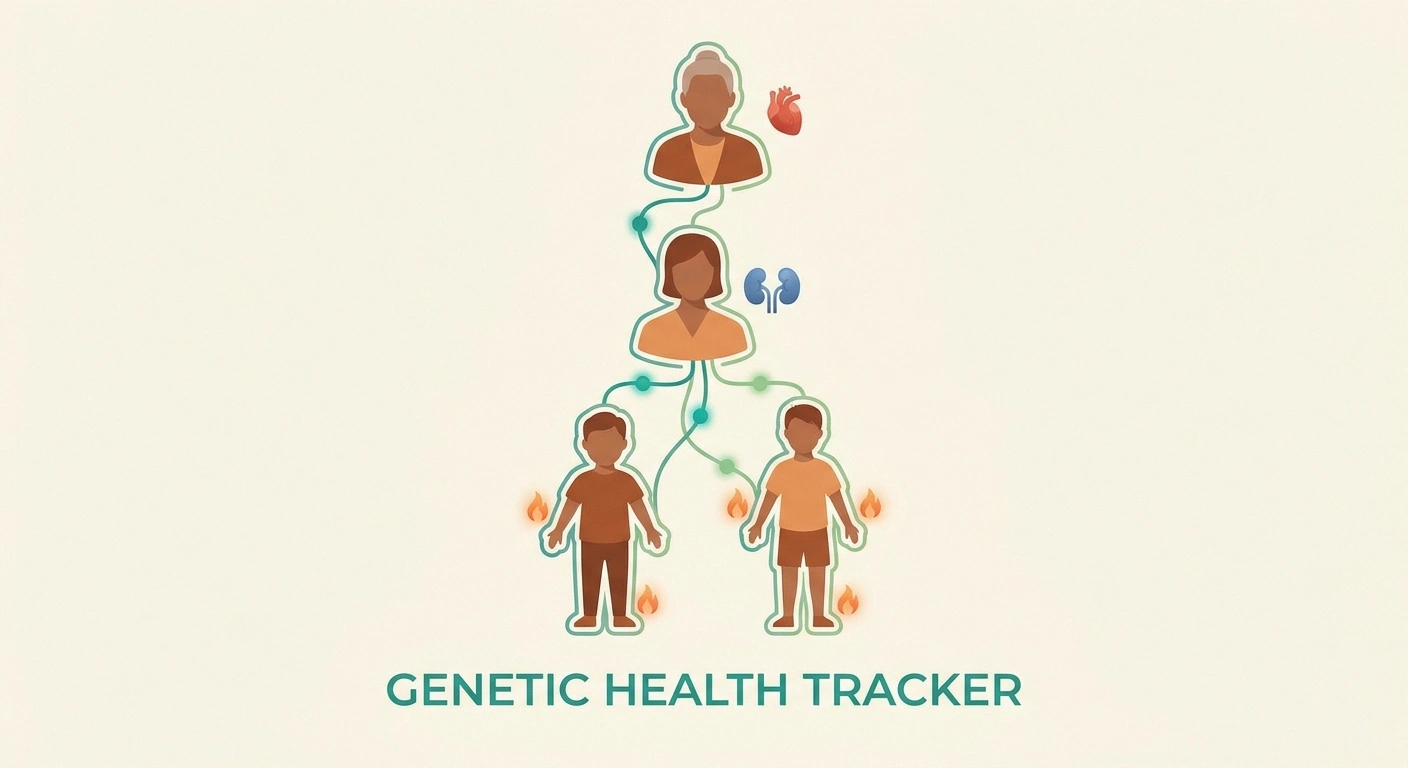
A reader wrote to me a few months ago with a question I hear more often than you might expect: “I've had burning, painful hands and feet since I was a teenager. I'm 38 now. Every doctor has told me it's anxiety, fibromyalgia, or ‘small fiber neuropathy of unknown cause.' Nothing helps. My uncle had similar pain and died of a stroke at 47. Could this be something genetic that everyone is missing?”
Her question stopped me cold, because the pattern she described — pain that starts in childhood or the teen years, runs in families, often gets dismissed for decades, and shows up alongside kidney or heart problems in relatives — is the textbook presentation of Fabry disease. And Fabry disease is one of the most under-diagnosed genetic conditions in medicine. The average time from first symptom to diagnosis is 13 to 19 years. Many people never get diagnosed at all.
If you have burning hands and feet that started young, family members with unexplained strokes or kidney failure, episodes of crushing pain triggered by heat or exercise — and a long list of doctors who could not explain it — this is an article worth reading carefully. Fabry disease is rare (somewhere between 1 in 40,000 and 1 in 117,000 by traditional estimates, with newer screening suggesting it may be more common than that). But when it is the cause of someone's nerve pain, it usually goes unrecognized for decades. And it is one of the few causes of neuropathy where a specific treatment can change the course of the disease.
Here is what Fabry disease is, why it causes such distinctive nerve pain, how the diagnosis works, and what treatment actually looks like in 2026.
What Fabry Disease Is, in Plain English
Fabry disease is a genetic disorder in which the body cannot make enough of an enzyme called alpha-galactosidase A (often shortened to alpha-Gal A). That enzyme's job is to break down a fatty molecule called Gb3 (globotriaosylceramide).
When alpha-Gal A is missing or broken, Gb3 accumulates in cells throughout the body — but it accumulates most aggressively in three places: the small nerve fibers in the skin, the lining of small blood vessels, and the cells of the kidney and heart. Over years, the buildup damages all of those tissues.
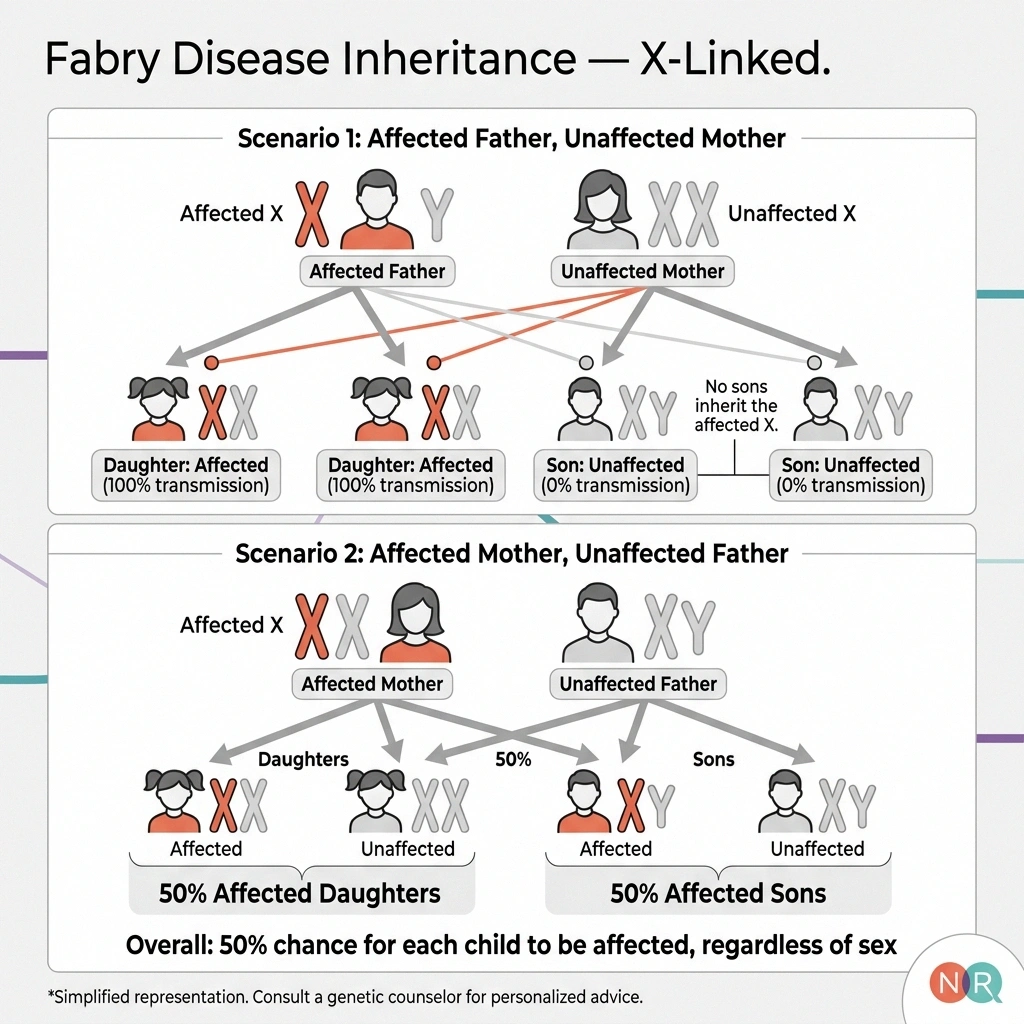
The gene that codes for alpha-Gal A sits on the X chromosome (the GLA gene). This matters in two ways:
1. Boys and men, who have only one X chromosome, tend to develop the more severe “classic” form. They usually have very low or absent enzyme activity and develop symptoms in childhood or the teen years.
2. Girls and women, who have two X chromosomes, were historically called “carriers” — but we now know that is wrong. Because of a process called X-inactivation (where one X chromosome in each cell is randomly turned off), most women with one copy of the GLA mutation develop real symptoms. The severity ranges from mild to nearly as severe as in men, depending on which X chromosome happens to be active in which tissues. Calling women “carriers” delayed their care for decades. Modern genetics calls them heterozygotes, and they are treated as patients with the disease.
So when you hear about Fabry disease running in a family, you might see a father with kidney failure in his 40s, a son with burning feet starting at age 10, a sister with episodic chest pain in her 30s, and an aunt who had a stroke at 50. Same gene mutation. Different presentations. All Fabry disease.
How Fabry Damages Nerves Specifically

The neuropathy of Fabry disease is a small-fiber neuropathy — meaning the damage targets the tiny nerve fibers in the skin that carry pain and temperature sensation. This is the same type of nerve fiber injured in small fiber neuropathy from other causes (diabetes, autoimmune, idiopathic), but the cause and the pattern of pain are different.
Three mechanisms drive it:
Direct nerve cell injury. Gb3 builds up inside the cell bodies of small sensory neurons (in the dorsal root ganglia, near the spinal cord). The accumulation damages the cell from the inside.
Vascular starvation. Gb3 also builds up in the lining of the small blood vessels that feed peripheral nerves. As the vessel walls thicken and stiffen, blood flow drops, and the nerve fibers downstream get less oxygen.
Ion channel disruption. Recent research has shown that Gb3 accumulation alters the function of sodium and TRP (transient receptor potential) channels on small sensory neurons — making them hyperexcitable. This is the mechanism behind the most distinctive symptom of Fabry: episodic crises of crushing burning pain that come out of nowhere, often triggered by heat, exercise, or fever.
The result is a small fiber neuropathy with three telltale features that, when they appear together, should put Fabry at the top of the list:
1. Acroparesthesias. Persistent burning, tingling, or pins-and-needles pain in the hands and feet — especially the palms, soles, fingertips, and toes. Starts in childhood or adolescence in most classic cases.
2. Fabry pain crises. Episodes of severe, often disabling, burning pain that can last hours or days. Usually triggered by fever, heat, exercise, stress, or — in classic cases — known precipitants. Many people remember not being able to play outside in summer as a child because the heat would set off the pain.
3. Heat intolerance and reduced sweating. Because Fabry damages the small nerve fibers that control sweating (sudomotor fibers), people often cannot sweat normally. This is called hypohidrosis or anhidrosis. They overheat quickly, can't cool themselves through exercise, and may avoid physical activity for this reason.
The Other Body Systems Fabry Hits
Nerve symptoms are usually the first to appear, but Fabry is a multi-organ disease. Knowing the constellation helps with diagnosis. The other systems involved:
Skin. Tiny dark red or purple spots called angiokeratomas often appear between the belly button and the upper thighs (“bathing suit area”) starting in the teens or 20s. They look like flat or slightly raised birthmarks, often clustered. Many people have them and never know what they mean.
Kidneys. Gb3 buildup in kidney cells causes progressive damage that can lead to kidney failure in the 30s, 40s, or 50s if untreated. This is one of the most common causes of death in Fabry disease.
Heart. Thickening of the heart muscle (especially the left ventricle), abnormal heart rhythms, and early coronary disease. Heart problems are the other major cause of death.
Brain. Stroke — often in the 30s or 40s — from Gb3 buildup in cerebral blood vessels. A young stroke is a major red flag for Fabry.
Eyes. A whorl-like pattern in the cornea called cornea verticillata that an eye doctor can see on slit-lamp exam. Painless, doesn't affect vision, but a strong clue.
GI tract. Chronic abdominal pain, diarrhea, nausea, early satiety. Often misdiagnosed for years as IBS.
Ears. Progressive hearing loss and sometimes tinnitus.
When you see a 30-year-old with burning hands and feet, episodic abdominal pain, mild proteinuria on a urinalysis, and a family history of early stroke — that's not a coincidence. That's the Fabry phenotype.
Why Fabry Gets Missed for 13+ Years
The diagnostic delay is staggering, and it has specific causes:
The symptoms are vague individually. Burning feet alone gets called “neuropathy of unknown cause.” Abdominal pain alone gets called “IBS.” Episodic pain crises get called “growing pains” or “psychosomatic.” Heat intolerance gets called “deconditioning.” None of them, in isolation, point at a specific diagnosis. It is the pattern that matters.
Childhood and adolescent onset gets dismissed. A 12-year-old who complains of burning feet is often told to walk it off, to stop being dramatic, or that it's anxiety. A 16-year-old who collapses during gym from heat-triggered pain is told to drink more water. The connection to a genetic disease is rarely made because Fabry is not on the differential for kid pain.
Women were called “carriers.” Until the early 2000s, the medical literature taught that women with Fabry were asymptomatic carriers. That has been definitively disproven, but the old teaching persists in many clinics, and women still get told their symptoms cannot be Fabry “because women don't get it.”
Family history is often incomplete. Many families have a vague memory of an uncle who died young of “heart trouble” or a grandmother who “had bad kidneys,” but the specific cause was never named. Connecting those dots back to a genetic disease takes a clinician who is paying attention.
Specialists each see their own slice. The cardiologist treats the thickened heart. The nephrologist treats the protein in the urine. The neurologist treats the burning feet. Each treats their symptom. No one steps back and asks, “Could this all be one disease?”
This is exactly why idiopathic neuropathy deserves a periodic second look, especially in younger patients — because some “idiopathic” cases are really undiagnosed Fabry, mitochondrial disease, hereditary amyloidosis, or another treatable genetic condition.
The Diagnostic Tests
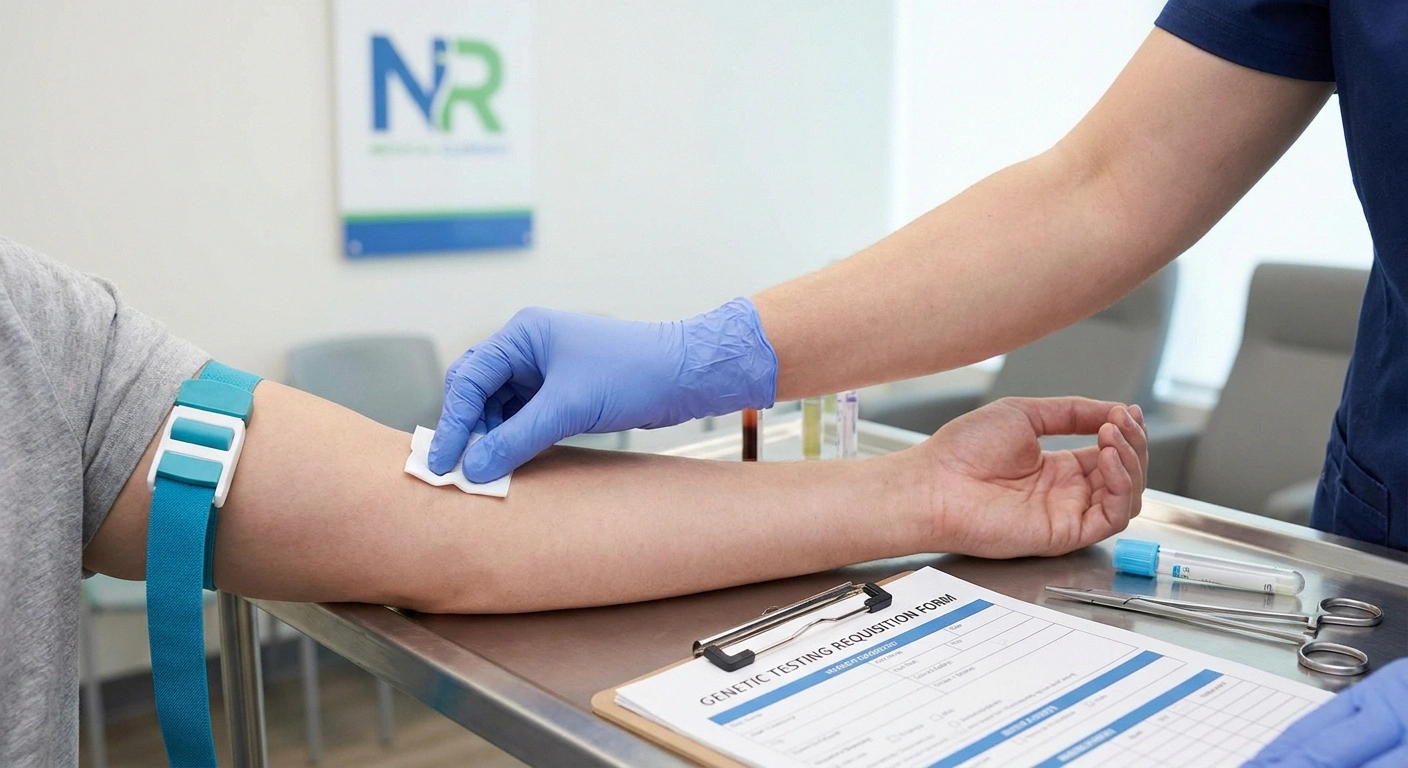
If a clinician suspects Fabry, the testing pathway is reasonably straightforward.
Step 1: Alpha-galactosidase A enzyme activity (males). A blood test that measures how much alpha-Gal A enzyme activity is present. In classic Fabry, males show very low or absent activity. This test is highly reliable for diagnosis in boys and men. It is NOT reliable in women — because women have one normal X chromosome contributing some enzyme, their levels can look normal even when they have the disease. Many women with Fabry have been given a falsely reassuring enzyme test result and sent away.
Step 2: GLA gene sequencing (everyone, mandatory for women). The GLA gene is sequenced to look for a pathogenic mutation. This is the definitive test, especially in women. If a mutation is found that is known to cause Fabry, the diagnosis is made.
Step 3: Lyso-Gb3 level (newer, useful confirmatory). A blood test for the toxic metabolite that builds up in Fabry. Elevated lyso-Gb3 supports the diagnosis and can also be used to monitor response to treatment.
Step 4: Family cascade testing. Once one person in a family is diagnosed, every first-degree relative (parents, siblings, children) should be offered genetic testing. Earlier identification means earlier treatment and dramatically better outcomes.
Supporting tests that help build the picture: kidney function and protein in the urine, echocardiogram to look at heart muscle thickness, brain MRI to look for old silent strokes, slit-lamp eye exam for cornea verticillata, hearing test, and a skin biopsy to confirm small fiber neuropathy (the same biopsy used in other small fiber cases).
Treatment: This Is the Hopeful Part

Fabry disease is one of the few hereditary neuropathies where specific disease-modifying treatment exists. There are currently three approaches:
Enzyme replacement therapy (ERT). Two recombinant alpha-Gal A enzymes have been available since 2003 — agalsidase alfa (Replagal) in many countries outside the U.S., and agalsidase beta (Fabrazyme) widely. Both are given as IV infusions every two weeks for life. ERT clears Gb3 from many tissues, slows kidney disease progression, reduces left ventricular thickness, and — importantly for nerve symptoms — reduces pain crises in many patients and modestly improves sweating function. ERT works best when started before significant organ damage has accumulated, which is why early diagnosis matters so much.
Oral pharmacological chaperone therapy (migalastat). Approved in 2018 (under the brand name Galafold), this is a small molecule that stabilizes certain misfolded versions of the alpha-Gal A enzyme and helps the body's own enzyme work better. It only works for patients with specific “amenable” mutations — about a third of all Fabry mutations. Taken as a capsule every other day. For patients with amenable mutations, it offers an alternative to lifelong IV infusions.
Gene therapy. Multiple gene therapy trials are underway, with the goal of giving the body the ability to produce alpha-Gal A on its own — potentially as a one-time treatment. Several have reported promising early results. None are approved as of mid-2026, but the field is moving fast.
Beyond the disease-modifying drugs, symptom management matters. Pain crises and chronic burning are treated with the same first-line nerve pain medications used for other small fiber neuropathies — gabapentin, pregabalin, and duloxetine are the most commonly used. Carbamazepine is sometimes effective specifically for Fabry pain in ways it is not for other neuropathies. Avoiding pain triggers (heat, dehydration, sudden exertion) helps. Heart and kidney complications are managed alongside the disease-modifying therapy.
What to Do If You Think Fabry Might Be You

If reading this article has set off alarm bells — burning hands and feet that started young, episodes of pain triggered by heat or exercise, those clustered dark spots on your skin, family members with early kidney failure or stroke — here is a practical path forward.
1. Write down your story chronologically. When did the symptoms start? What triggers them? What makes them worse or better? What does your family history actually look like — and not just first-degree relatives, but uncles, aunts, cousins? Patterns become visible on paper that don't in conversation.
2. Ask your doctor for an alpha-Gal A blood test (if you're male) or GLA gene sequencing (anyone). The script: “I have a constellation of symptoms — burning extremities since adolescence, heat intolerance, family history of early stroke / kidney failure / heart disease — that I'd like to investigate for Fabry disease. Can we order alpha-galactosidase A enzyme testing and GLA gene sequencing?” Some providers will not know what you're asking for. That's okay. They can look it up. If they refuse to consider it, you can go directly to a genetics clinic.
3. Consider a genetics clinic referral. Genetic counselors and geneticists are trained to evaluate exactly this kind of multi-system pattern. Most major medical centers have one. A referral takes the diagnostic burden off your primary care doctor or neurologist.
4. Get connected with a Fabry specialty center. Several major academic medical centers in the U.S. have dedicated Fabry programs (Mount Sinai, Mayo Clinic, Stanford, Duke, and others). The National Fabry Disease Foundation and the Fabry Support and Information Group can help connect patients with experienced providers.
5. If diagnosed, push for family screening. This is one of those rare situations where a single diagnosis can save the lives of multiple relatives. Cascade testing matters.
Living With Diagnosed Fabry

For those who have been diagnosed — and may have come here looking for community framing — a few practical points:
Fabry is a chronic, progressive condition, but it is not a death sentence and it is treatable. With early diagnosis and modern therapy, life expectancy approaches normal in many patients, and quality of life can be very good. The worst outcomes happen when the diagnosis is missed for decades and the kidneys, heart, and brain accumulate damage that can't be undone.
Pace yourself with heat and exertion. Many people with Fabry learn to plan their activities for cooler parts of the day, to use cooling vests, and to stay aggressively hydrated.
Build a multi-disciplinary care team. You need a Fabry specialist (often a geneticist or specialty internist), a cardiologist who understands Fabry, a nephrologist, a neurologist who treats small fiber neuropathy, and a primary care doctor who quarterbacks the whole thing.
Take the pain seriously and treat it. The neuropathic pain of Fabry is real, biological, and treatable. People who were told for decades it was anxiety often need both effective pain management and some time to grieve the years they spent dismissed.
Join a patient community. Connection with other Fabry patients and families turns out to be one of the most consistently helpful interventions. The mental health load of any rare disease is real, and walking it with people who understand makes a difference. Some of what we cover in neuropathy and mental health applies here too.
Why I Wrote This Article
Most of the articles on this site cover the common causes of neuropathy — diabetes, chemotherapy, autoimmune disease, vitamin deficiencies. Those are where the volume of patients sits. But every once in a while, the story of one person — a reader, a friend, a family member — opens a window onto a rarer cause that gets routinely missed.
Fabry disease is rare. But for the people who have it, the cost of the diagnostic delay is enormous. Decades of being told it's anxiety. Family members lost to “heart trouble” that turned out to be Fabry. Treatment started too late to fully protect the kidneys.
If even one reader walks into a doctor's office next week and says, “I want to be tested for Fabry disease,” and that test turns out positive — and they get treatment that protects their kidneys for the next thirty years — this article will have done its job.
If you are a clinician who stumbled onto this page, the message is simpler: small fiber neuropathy that started in childhood, heat-triggered pain crises, hypohidrosis, family history of early stroke or kidney failure — please consider Fabry disease. Order the enzyme test. Order the gene sequencing. Refer to genetics. Do not let another patient wait nineteen years.
Frequently Asked Questions
Can women really have Fabry disease, or are they just carriers?
Women can absolutely have Fabry disease and many do. The older teaching that women were “asymptomatic carriers” has been definitively disproven. Because of X-inactivation, women have a wide range of severity — some are nearly as affected as classic males, some have mild symptoms, some develop symptoms later in life. Any woman with symptoms suggestive of Fabry deserves full genetic testing, even if her enzyme level looks normal (enzyme testing is unreliable in women because of the second X chromosome).
If I have burning hands and feet that started in childhood, does that mean I have Fabry?
Not necessarily — but it's worth a careful evaluation. Childhood-onset burning extremities can have several causes, including erythromelalgia, sodium channel mutations, certain vitamin deficiencies, and other rare genetic conditions besides Fabry. The combination of childhood burning extremities, heat-triggered pain crises, and a family history of early stroke, kidney failure, or heart disease should specifically trigger Fabry testing. If you have only burning feet without those other features, Fabry is less likely but still worth ruling out.
How is Fabry disease inherited and what are the chances my kids will have it?
Fabry is X-linked. If the father has Fabry, he passes the GLA mutation to all his daughters (who will have the disease, though severity varies) and to none of his sons. If the mother has Fabry, each child has a 50 percent chance of inheriting the mutation — sons who inherit will have the classic form, daughters who inherit will have the disease with variable severity. Genetic counseling is strongly recommended for anyone diagnosed with Fabry who is planning a family.
Will enzyme replacement therapy reverse my nerve pain?
It can help, but the response varies. ERT (and migalastat for amenable mutations) often reduces the frequency and severity of acute pain crises and modestly improves sweating function. It does not usually completely eliminate chronic burning pain, especially if substantial nerve damage has already accumulated. Most patients still need symptomatic pain medications alongside their disease-modifying therapy. Starting treatment earlier — before extensive nerve fiber loss — produces better outcomes.
Why is Fabry diagnosed so late?
The average delay from first symptom to diagnosis is 13 to 19 years. The reasons: individual symptoms (burning feet, abdominal pain, fatigue, episodic crises) are non-specific and get attributed to common things like anxiety, IBS, growing pains, or “neuropathy of unknown cause.” Specialists each see their own slice without stepping back. Women were historically dismissed as carriers. Family history is often incomplete because relatives died of “heart trouble” or “kidney problems” without specific diagnoses. The pattern only becomes visible when someone connects the dots across multiple body systems and across generations.
Is there a cure for Fabry disease?
Not yet. Enzyme replacement therapy and the oral pharmacological chaperone migalastat are disease-modifying treatments that slow progression and improve symptoms but do not cure. Several gene therapy trials are underway with the goal of giving the body the lifelong ability to produce its own alpha-Gal A enzyme — potentially as a one-time treatment. Early results are promising, but no gene therapy is approved yet.
How common is Fabry disease really?
Traditional estimates put Fabry disease at 1 in 40,000 to 1 in 117,000 births for the classic form, with more frequent late-onset variants. Newborn screening programs in some countries have suggested the true prevalence — counting both classic and late-onset variants — may be as high as 1 in 1,500 to 1 in 4,000. That would make it considerably more common than previously believed and a major contributor to the pool of patients labeled with “neuropathy of unknown cause” or “early heart failure of unknown cause.”
Where can I find a Fabry disease specialist?
The National Fabry Disease Foundation (fabrydisease.org) and the Fabry Support and Information Group (fabry.org) both maintain resources for finding experienced providers. Most major academic medical centers have a metabolic or genetic specialty clinic that sees Fabry patients. A referral typically comes from a primary care doctor, neurologist, nephrologist, or cardiologist who suspects the diagnosis — or you can request a direct referral to a clinical geneticist.
About the Author