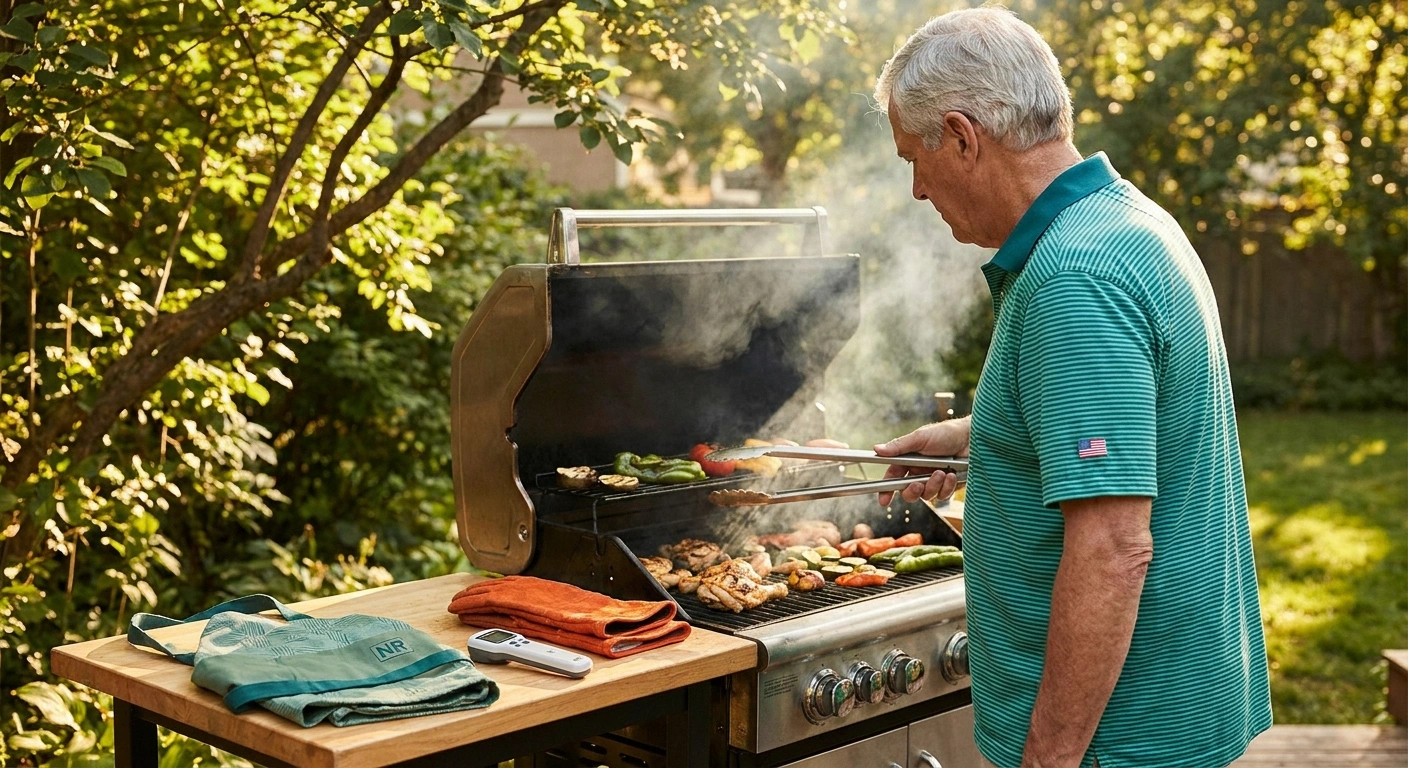
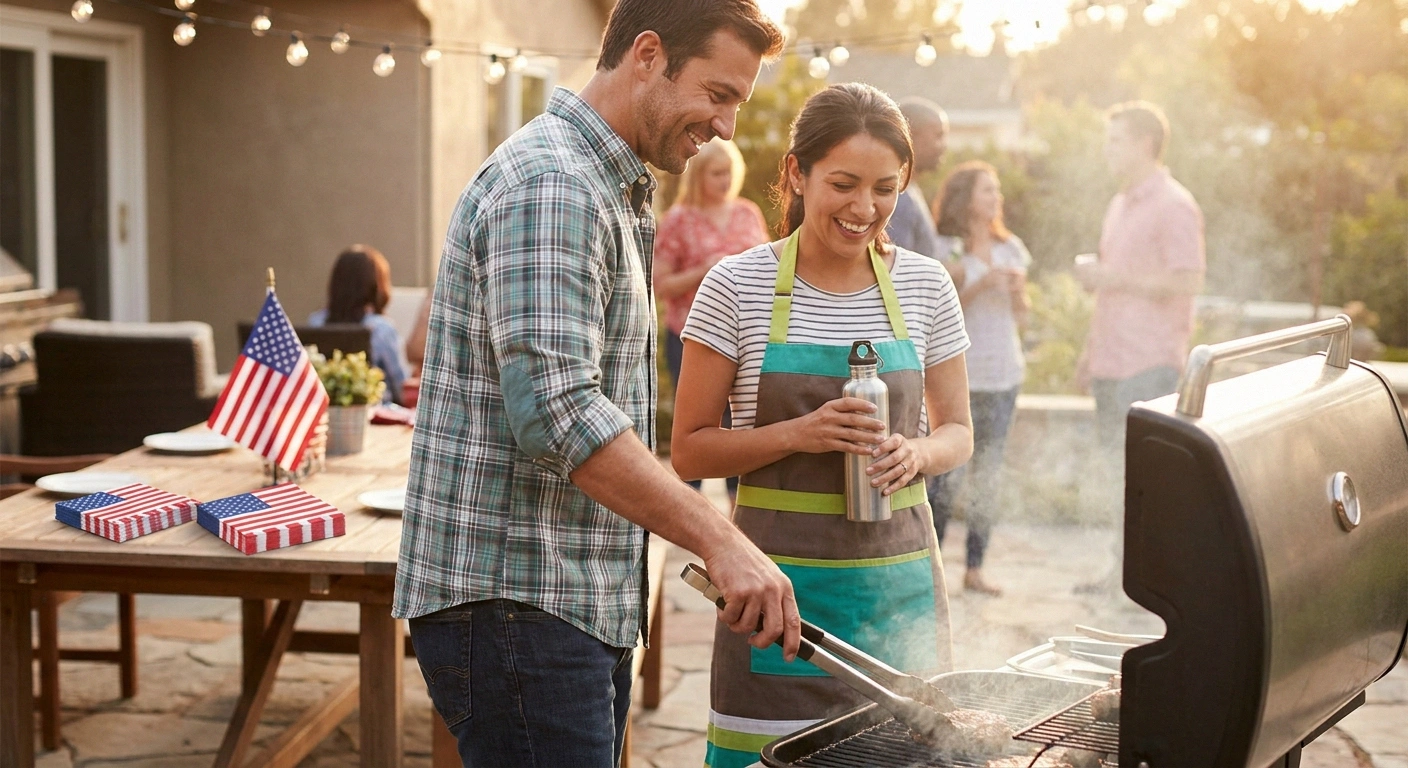
The Fourth of July is my favorite grilling weekend of the year. The neighborhood spills out into everyone's backyards. Somebody always brings the potato salad my mother-in-law used to make. And for those of us with neuropathy in our hands or feet, it's also the weekend that tests the safety habits we've built up the rest of the year.
I've been thinking about this because my friend Marcia — a diabetes-diagnosis-plus-neuropathy veteran of about eight years — got a nasty burn at last year's cookout that could have been much worse. She was flipping burgers with a short-handled spatula, wearing sandals, standing on a hot patio in full sun, with a cold drink in her free hand. Everything about the setup was working against her. When a burst of grease popped up onto her forearm, she didn't feel it happening. She only noticed the blister the next morning.
Grilling with numb hands and feet isn't inherently dangerous — millions of people with neuropathy grill safely every summer. But it does mean we can't rely on the same “ouch, that's hot” feedback loop that keeps everyone else safe. This guide walks through the specific risks, the setup that reduces them, and a simple pre-grill check I promise you'll be glad you built into your routine.
Why Grilling Deserves Extra Attention When You Have Neuropathy
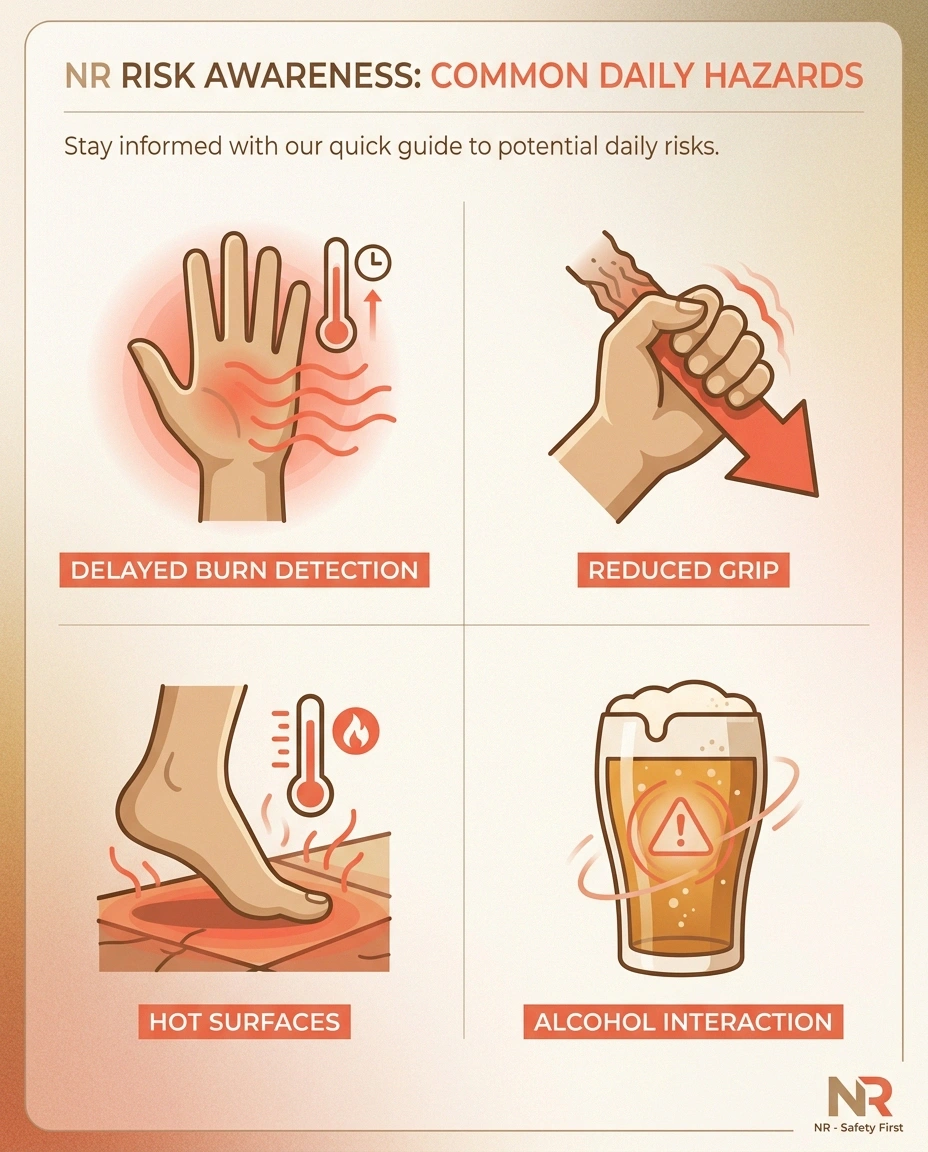
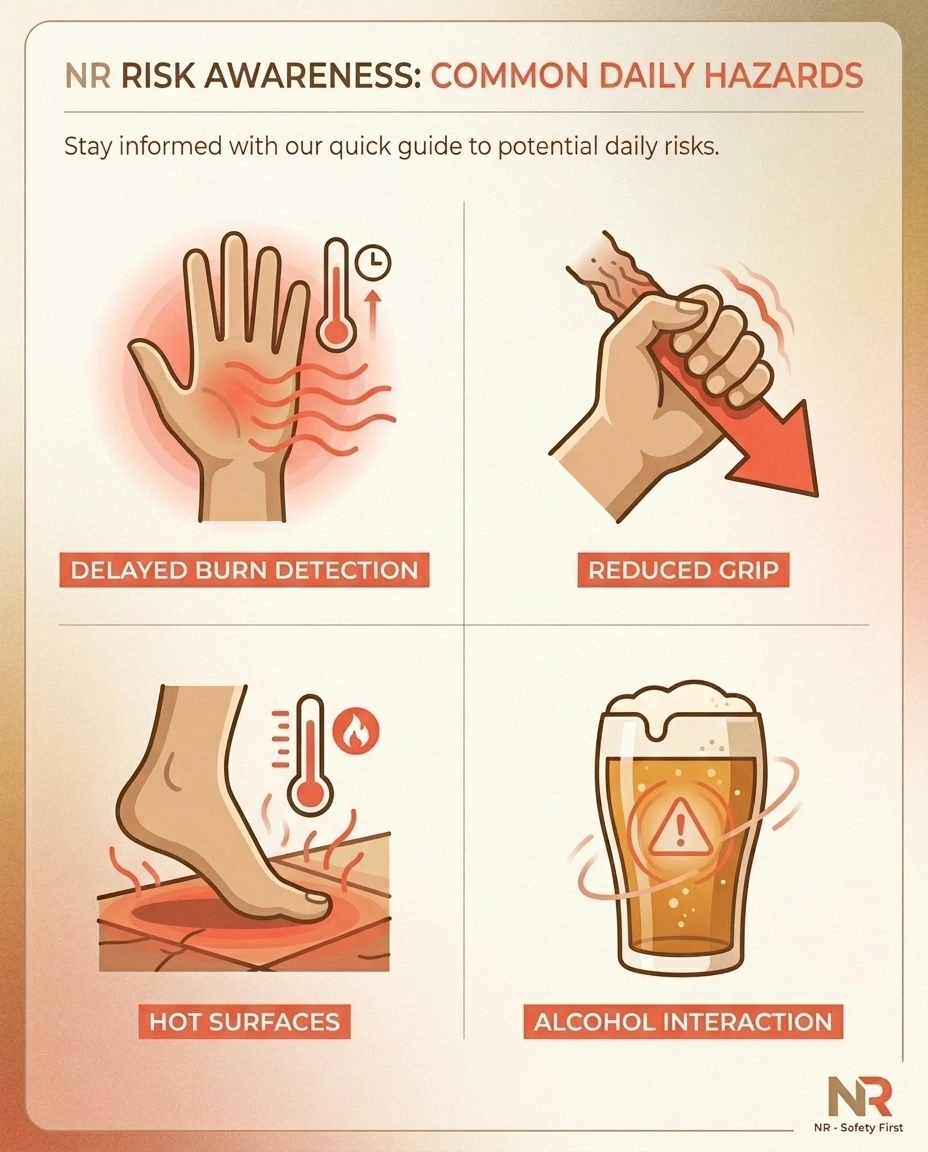
Four things stack together to raise the stakes for grillers with neuropathy. Understanding them is the first step to grilling safely.
Key Takeaway
Grilling with neuropathy is entirely doable — millions of us do it every summer. But because you can't rely on the usual “ouch, that's hot” reflex, you build safety in through setup: long-handled tools, closed-toe shoes, a two-hand technique for hot items, visual doneness cues, and a post-grill skin inspection that catches anything you didn't feel.
1. You Can't Feel a Burn Starting
This is the big one. Normal peripheral nerves send a sharp warning signal the instant your skin approaches painful heat — usually well before the temperature is high enough to cause deep damage. Neuropathy dulls or eliminates that signal in the affected areas. A splash of hot fat on your forearm, a brief brush against the grill lid, a piece of foil that's hotter than it looks — none of them may register in real time. The burn is already happening by the time you look down and see it.
2. Grip Strength Isn't Always Reliable
Neuropathy in the hands often comes with reduced fine motor control and grip strength, especially first thing in the day or when you're tired. That's usually manageable in daily life — but a grill spatula loaded with a heavy burger, or a pair of tongs holding a steaming corn cob, is a different story. A dropped tool can burn a foot, splash grease onto legs, or spill hot food onto the deck.
3. Standing Surfaces Can Be Deceptively Hot
A concrete patio in July sun can hit 130°F or more. So can dark-colored deck boards, metal grate edges, and asphalt driveways. If you're standing barefoot or in open-toe sandals with reduced sensation in your feet, you may not feel the heat until skin damage has already begun.
4. Alcohol Interacts Badly
A cold beer or two at a BBQ is one of life's genuine pleasures. But alcohol slows reaction time, blunts judgment about temperature and pain, and (over time) contributes to neuropathy progression. Combining active drinking with active grilling raises risk more than either alone.
The Five-Point Pre-Grill Safety Check
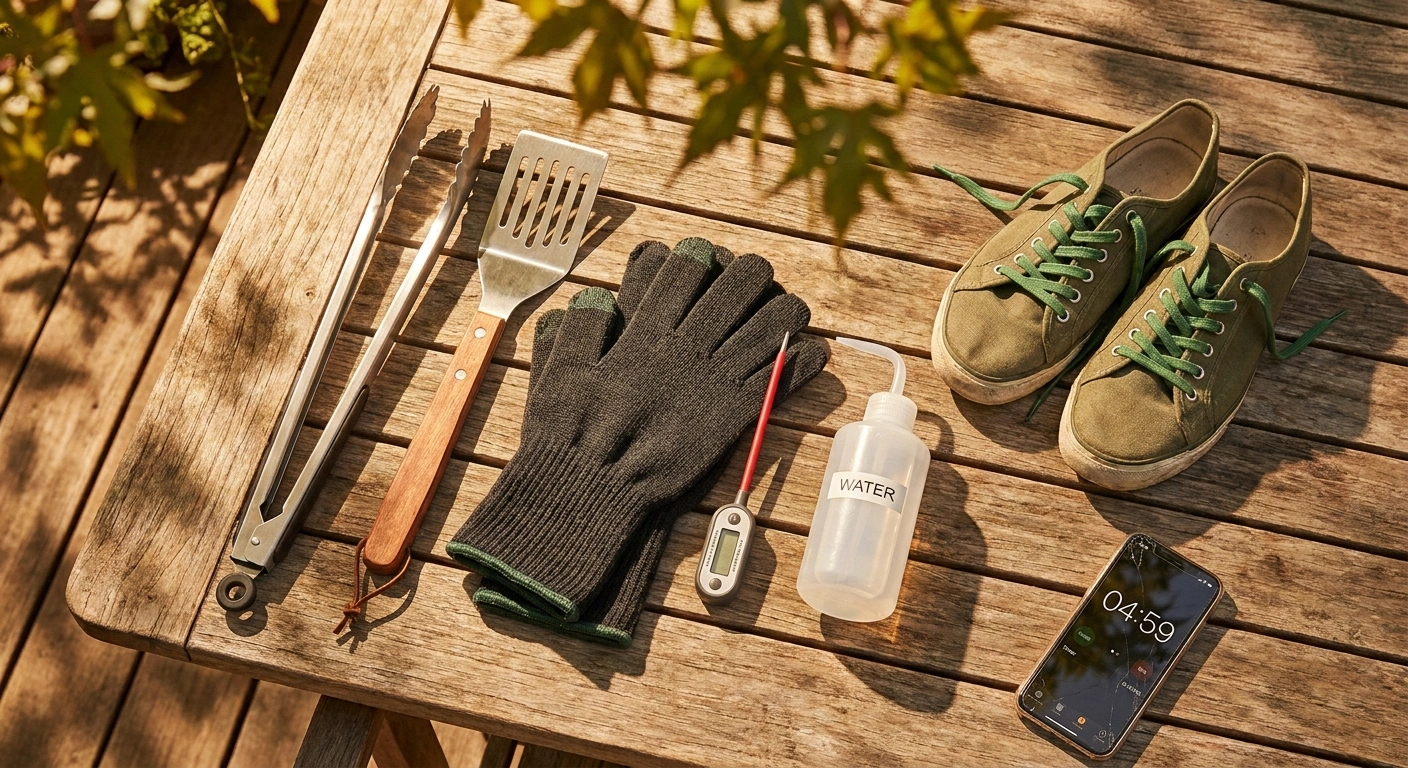
Do this every time before you light the grill. It takes about two minutes and turns most of the above risks into non-issues.
The 5-Point Pre-Grill Check
Point 1: Footwear Check
Closed-toe shoes only. No flip-flops, no sandals, no bare feet. Sneakers or lightweight closed-toe garden shoes are ideal. If you're comfortable in supportive daily shoes, wear those. This one habit prevents most burn injuries below the ankle.
Point 2: Tool Inventory
Before you light anything, pull out the tools you'll actually use and check the handles:
- Tongs: at least 14 to 16 inches long, with silicone or wood grip
- Spatula: at least 14 inches, with a comfortable non-slip handle
- Meat thermometer: instant-read digital (never test doneness by touch)
- Heat-resistant gloves (not oven mitts — proper grill gloves rated to 500°F or higher)
- Basting brush with a long handle
If any of your tools have short handles, replace them. This isn't fussy — short-handled tools put your fingers within splash range of hot fat and are a leading cause of grilling burns even in people with normal sensation.
Point 3: Station Setup
Set up a heat-resistant surface next to the grill for hot pans and finished food (a wooden cutting board, a cooling rack, or a metal serving tray on a stable table). Have a clean prep area at least three feet away for raw food handling. Keep a squirt bottle of water for small flare-ups, and a fire extinguisher (or a large box of baking soda, which smothers grease fires) within one step.
Point 4: Hydration and Shade
Heat exhaustion is a real neuropathy multiplier — dehydration makes symptoms worse for many patients. Have cold water within reach and drink it steadily. If your grill is in full sun, either move to shade or set up a shade umbrella. Long summer stints in direct sun swell hands and feet, which affects both sensation and dexterity.
Point 5: The Spotter Rule
Someone else in your household or party knows the grill is on and glances at it every 10 minutes. This isn't about not trusting yourself. It's a redundancy — if you get caught up chatting, if you turn away and forget the tongs are still on the grill grate heating up, if you overestimate how much drink you had — someone else has eyes on the situation.
The Grilling Playbook: Techniques That Reduce Risk
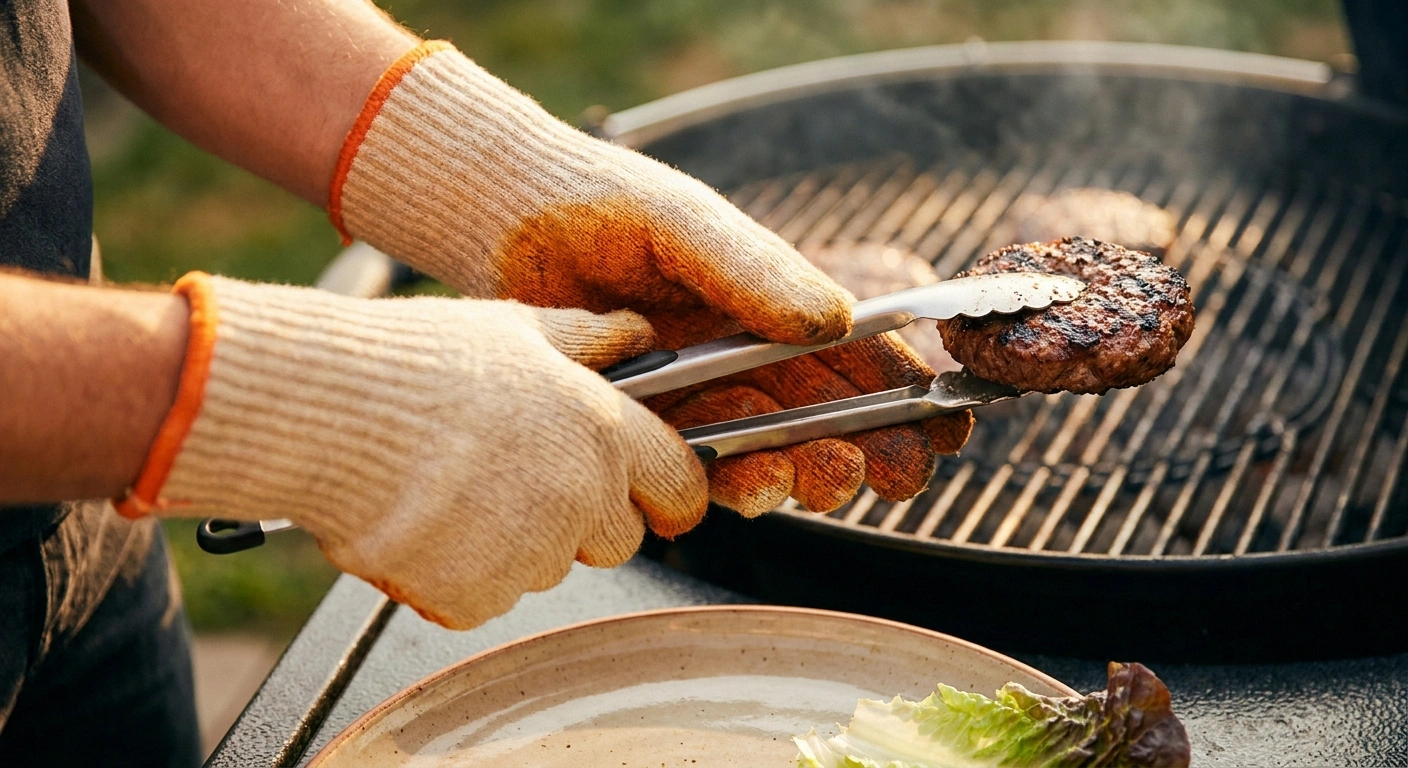
Beyond the setup, a handful of specific techniques reduce the everyday risk of burns and drops when you're actively cooking.
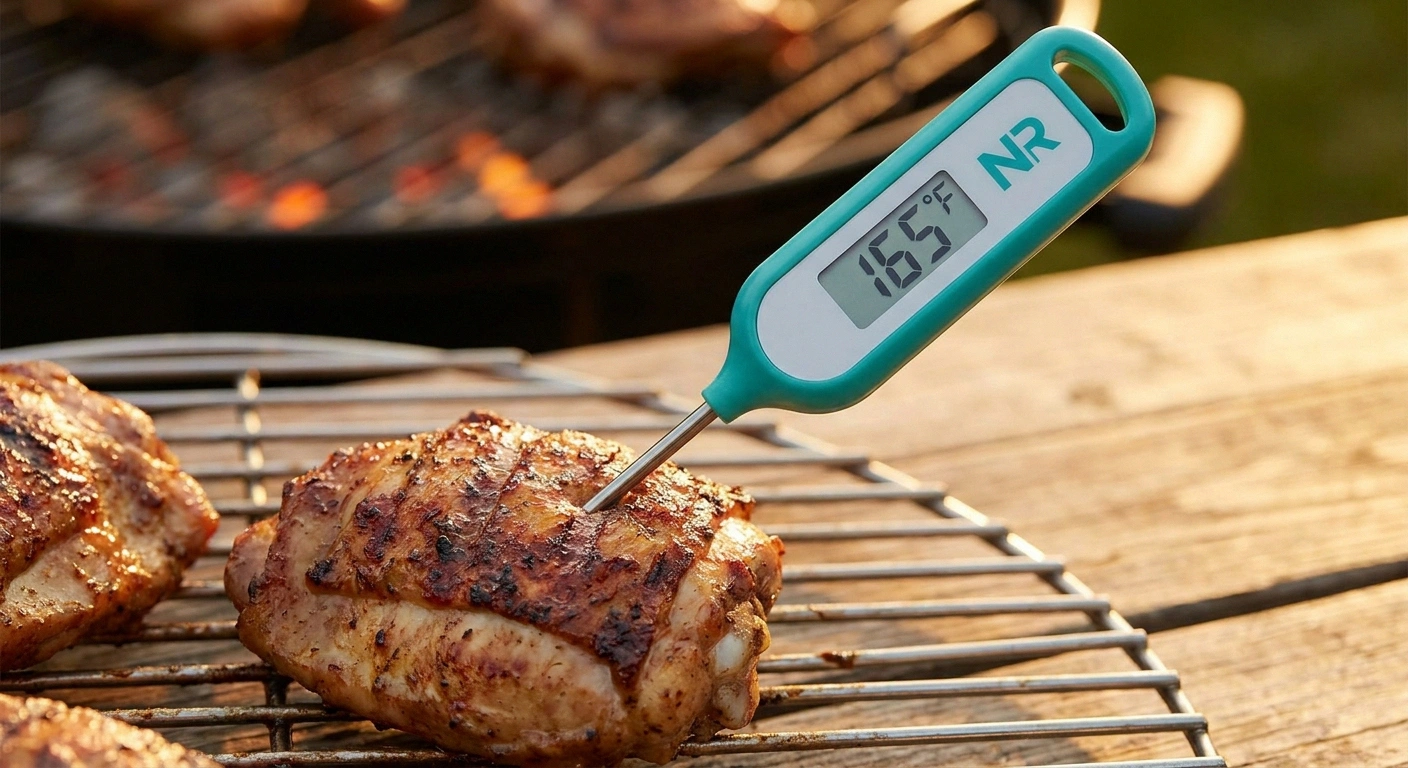
Never Test Doneness by Touch
The old-school “poke the steak to see how done it is” trick is a burn waiting to happen with numb fingers. Use an instant-read digital thermometer — 3 seconds, real number, no burn risk. It's the single easiest habit change to make grilling safer.
Always Use Two Hands With Hot Items
Even light items. Even brief motions. A spatula loaded with a burger goes to the plate with one hand on the spatula handle and one hand supporting near the food (using the grill glove). Tongs holding a sausage go to the tray with the free hand ready to steady them if grip slips. This is the single most protective technique you can build into your habit.
Never Test Doneness by Touch
The old-school “poke the steak with your finger to see how done it is” trick is a burn waiting to happen with neuropathy. Instant-read digital thermometers cost under $20 and give you a real number in three seconds. Learn the safe internal temperatures for your favorite proteins and rely on the thermometer.
Visual and Timer Cues Over Any Sensory Test
Set a phone timer for each item on the grill. Watch for color and juice cues (grill marks setting, juices running clear, char developing on onions and peppers). Don't rely on the “it looks about right” instinct — that instinct is often calibrated by feel-based feedback that you may not be getting anymore.
Move Items in Small, Deliberate Motions
Fast, sweeping movements over a hot grill increase the chance of splashing grease or catching a sleeve on the grate. Slow, deliberate lifts and slow moves toward the tray reduce both risks. This is another habit that takes about a week to feel natural.
Foil Is Hotter Than It Looks
Aluminum foil off a grill retains substantial heat and doesn't visibly change appearance as it cools. Always assume foil is hot for at least 5 minutes after removal. Use grill gloves to handle it, even if it's a small piece.
Fuel-Source Specifics
Different grills produce different specific risks. Here's a brief primer.
Grill Type Safety Snapshot
| Grill Type | Main Watch-Outs | Safer Choice? |
|---|---|---|
| Gas | Hot lid handle, flare-ups | Yes — moderate risk |
| Charcoal | Coals hot for hours, radiant heat | Higher risk |
| Pellet | Standard grate exposure | Yes — often safest |
| Open Fire | Sparks, unpredictable radiant heat | Highest risk |
Gas Grills
Gas grills heat quickly and cool slowly. The lid handle, side burner surrounds, and control knob housing can all reach uncomfortable temperatures. Check propane connections for leaks before use (a soapy water bubble test). Keep the lid closed as much as possible between food-handling to reduce flare-ups.
Charcoal Grills
Charcoal presents the highest burn risk because coals stay dangerous for hours after cooking ends and the grill body radiates heat long past the point you'd expect. Use a chimney starter rather than lighter fluid (safer to load and light). Never leave hot coals unattended, and never dispose of coals in a plastic bin — cooled ash goes in a metal container with a tight lid.
Pellet Grills
Pellet grills are among the safer options — indirect heat, contained fuel, precise temperature control. Most of the standard cautions still apply, especially around the exposed hot grate.
Open Flame / Fire Pits
Open flames throw sparks and radiate heat much less predictably than enclosed grills. If you're grilling over an open fire, wear long pants and a long-sleeve cotton shirt (not synthetic, which melts). Stand upwind. Assume every metal implement is hot until proven otherwise.
The Post-Grill Ritual (Non-Negotiable)
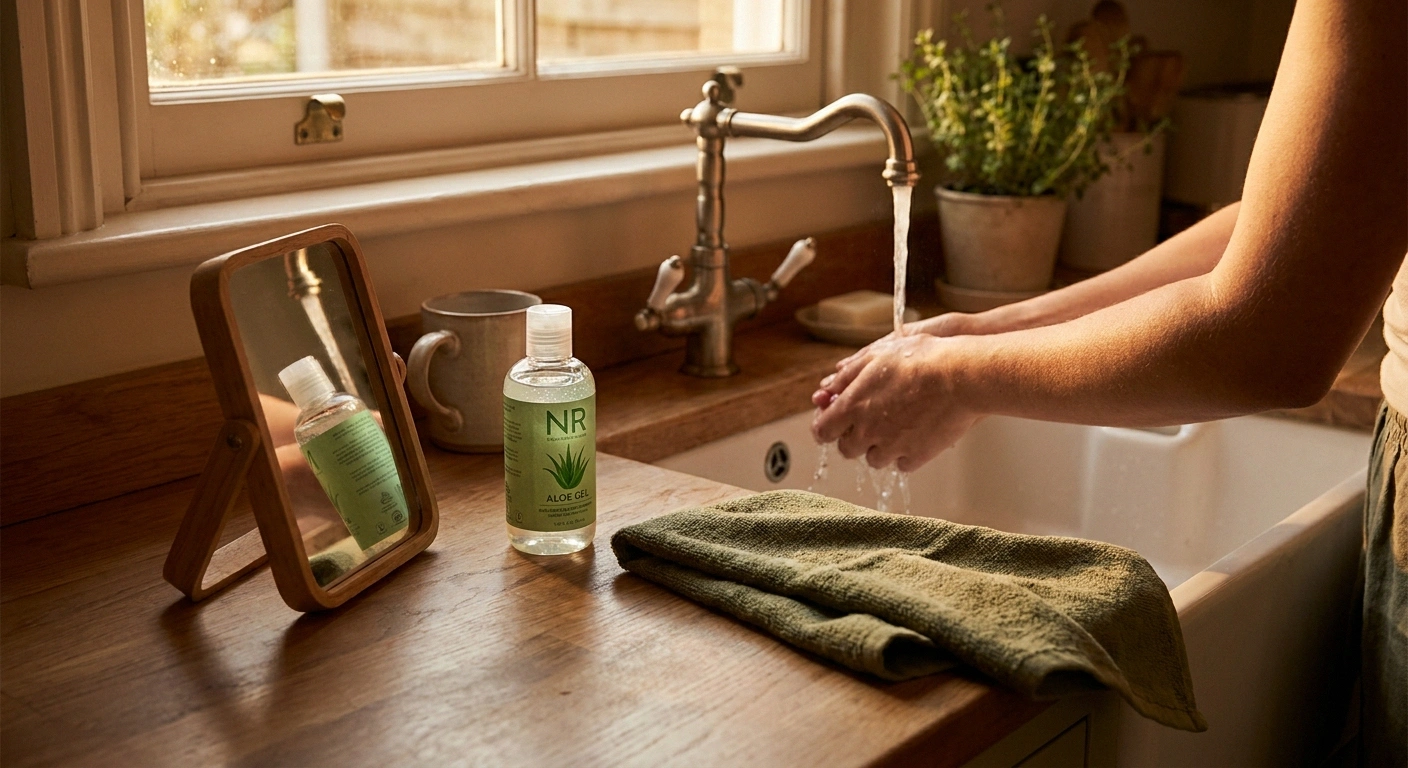
Within 30 minutes of finishing, do this. It's the safety net that catches burns you didn't feel happening.
The 30-Minute Post-Grill Check
- Cool hands and forearms under cool running water for 30 seconds
- Inspect backs of hands, fingers, forearms for redness or blisters
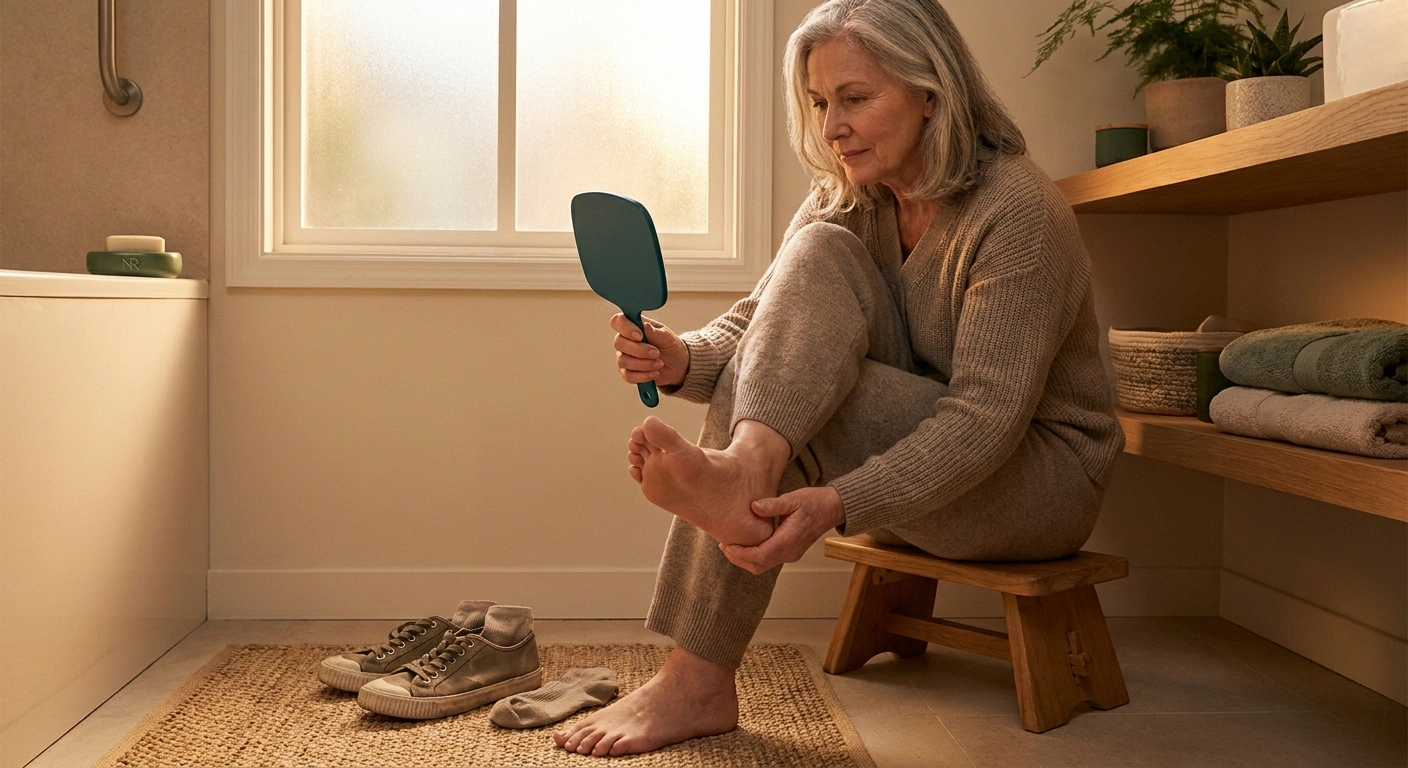
- Check feet — tops, ankles, between toes (use a mirror if needed)
- Scan calves and shins for grease splatter marks
- Treat any small burn now — call the doctor for anything blistered
Cool Your Skin
Run cool (not ice-cold) water over your hands, forearms, and any exposed skin for 30 seconds. This does two things: it soothes any minor heat exposure you didn't fully feel, and it lets you notice areas of unusual heat retention that could indicate a burn is present.
Inspect Everywhere You Might Have Been Exposed
Look carefully at:
- The backs of your hands and forearms (splash zone)
- Your fingers, including between them
- Your feet — especially the tops and ankles if you wore lower-cut shoes
- Your calves and shins if you were close to the grill
- Any spot on your arms where a sleeve was rolled up
You're looking for redness, blisters, unusual dryness, or areas of skin that look slightly different from the surrounding tissue. Because these areas may not hurt, visual inspection is your primary detection tool.
If You Find Something, Treat It Now
For a small first-degree burn (red, no blister): cool running water for 10 to 15 minutes, then aloe or an unscented moisturizer. For anything with a blister, or a burn larger than a quarter, or a burn on your feet: call your doctor's office within 24 hours. Never pop a blister — the intact skin is a barrier against infection, and infection risk in neuropathy patients (especially with diabetes) is much higher than average.
Special Considerations for Diabetes Plus Neuropathy
Diabetic neuropathy adds another layer of caution because impaired circulation and reduced immune response can turn a minor burn into a significant problem. The American Diabetes Association guidance for foot care applies with even more force in the grilling context:
If You Have Diabetes + Neuropathy: Extra Rules
- No open-toe shoes at the grill. Ever. This isn't a preference — it's a safety rule.
- Mirror-assisted or partner-assisted foot inspection after every session
- Any blister, redness, or unusual skin change on feet = same-day call to the doctor
- Keep your primary care doctor's after-hours number in your phone
- Infection risk is much higher — early attention prevents big problems
- Never grill in open-toe shoes or sandals — this is not a preference, it's a safety rule
- Do a mirror-assisted or partner-assisted foot inspection after every grilling session, checking the soles you can't easily see
- Any blister, redness, or unusual skin change on the feet needs same-day medical attention
- Keep your primary care doctor's after-hours number in your phone
This isn't overkill. Every year, primary care offices see diabetic foot ulcers that started with an unnoticed burn or blister at a summer cookout. Catching it in the first 24 hours is the difference between a small conversation and a big one.
The Buddy System for July 4 Cookouts
Big gatherings have specific traps: more people, more distractions, more alcohol, more “just watch the grill for a minute” hand-offs to well-meaning family members who don't know your safety routine. A few preventive moves:
- Designate one adult who's not drinking to be your grilling buddy. Explain the neuropathy piece briefly — most people are happy to help once they understand why.
- If someone offers to take over, hand off the tools you know are long-handled and grill-glove-friendly. Don't let them use their pocket knife as a spatula.
- Set a phone alarm to remind you to hydrate every 30 minutes in hot weather.
- Do the post-grill inspection before the second round of drinks or the fireworks — while you're still fully attentive.
The whole point of the cookout is enjoyment. These routines are what let you enjoy it without the next-morning surprise of a burn you never felt happen.
The 30-Second In-Store Test for Grilling Gear
If you're shopping for new grilling tools this summer, here's a quick test. Pick up the utensil in the store. Hold it as if you were flipping a burger — the working end of the utensil should be at least 14 inches from your grip. Try squeezing the handle firmly with a slightly numb approach (relax your grip about halfway). Does it still feel secure? Is there a silicone or wood grip that gives you traction even with a light hold? If yes, that's a keeper. If the handle is short or slick, put it back.
Pick up the tool in the store, hold it as if flipping a burger, and check:
- Working end is at least 14 inches from your grip
- Handle has silicone or wood grip texture (no slick metal)
- With a lighter grip (halfway squeeze), the handle still feels secure
- Not too heavy — you'll be holding it above hot grates
Enjoy the Grill Season
Neuropathy doesn't mean stepping away from the grill. It means bringing the same attention you already bring to other daily safety pieces — the way you check your feet, the way you inspect your hands, the way you plan your walks — into the outdoor kitchen. Once these habits are built, they become automatic, and the risk drops to something entirely manageable.
The burgers still taste like summer. The corn is still worth the wait. The Fourth of July is still my favorite grilling weekend of the year. And the folks around your table will never know you did anything special to make it safe — they'll just enjoy the food and the company, the way they should.
Frequently Asked Questions
Can I grill safely if I have neuropathy in both hands?
Yes, with the right setup. Long-handled tools, grill gloves rated for high heat, the two-hand technique for moving hot items, and a designated spotter cover most of the risk. If your grip strength is significantly reduced, consider lighter cookware, more frequent breaks, and asking a helper to move heavier items like whole roasts or full trays.
What kind of shoes should I wear when grilling?
Closed-toe shoes, always. Sneakers or supportive daily walking shoes work well. Never grill in flip-flops, sandals, or bare feet — hot grease splashes and dropped hot food can cause burns to feet you may not feel until damage is done. If you have diabetic neuropathy, this rule is non-negotiable.
How long do handles need to be on grill tools?
At least 14 to 16 inches for tongs, spatulas, and basting brushes. Longer is fine. Shorter handles put your hand within splash range of hot fat and are a leading cause of avoidable burns.
Is it safe to grill barefoot on a wooden deck?
No, even on wood. Deck boards absorb sun heat and can reach temperatures that damage the skin on numb feet before you feel anything. Concrete patios are worse, but no outdoor surface is safe for barefoot grilling in summer sun.
How do I test food doneness without touching it?
Use an instant-read digital meat thermometer. They cost under $20 and give you an accurate reading in 3 to 5 seconds. Look up safe internal temperatures for your favorite proteins (chicken 165°F, ground beef 160°F, pork 145°F with 3-minute rest, and so on). This is both safer for burn prevention and safer for food safety generally.
What should I do if I find a small burn hours after grilling?
For a small red spot without a blister: cool running water for 10 to 15 minutes, followed by aloe or unscented moisturizer. Monitor for changes over the next 24 to 48 hours. For blistered burns, burns larger than a quarter, burns on the feet, or any burn if you have diabetes, contact your doctor within 24 hours. Never pop a blister — it protects against infection, and infection risk is higher in neuropathy patients.
Can I drink alcohol at a cookout if I have neuropathy?
Moderate alcohol at social occasions is a personal decision to discuss with your doctor. From a grilling-safety standpoint, do the active grilling before or between drinks rather than while actively drinking, and do the post-grill skin inspection while you're still fully attentive. Chronic heavy drinking contributes to neuropathy progression, which is a longer-term consideration separate from the immediate cookout.
Is a pellet grill safer than a charcoal grill for neuropathy?
Generally, yes. Pellet grills offer more precise temperature control, less exposure to open flames, and reduce the “hot coals lingering for hours” risk that comes with charcoal. Gas grills are also relatively safer than charcoal from a cool-down standpoint. All grills still require the same core safety habits regardless of fuel.
What if my family member wants to help grill?
Welcome the help, but brief them: which tools are the long-handled ones, where the grill gloves are, and (if relevant) that you'll need help doing the post-grill hand and foot inspection. Most family members are happy to be part of the routine once they understand the reason. Making it a normal part of gatherings removes the awkwardness.
About the Author