If your feet feel like they’ve been packed in ice — and yet you can touch them and they feel roughly normal to the hand — you’re not imagining it. It’s one of the most disorienting parts of neuropathy: the sensation of freezing feet without the temperature to match. My own toes have felt like they belonged on the ledge of a January window while I was under a summer blanket, and it took me a long time to understand what was actually going on.
What I want to walk you through today is the physiology of that phantom cold, how to tell it apart from feet that are actually cold (which is a very different problem), and — most importantly — the safe ways to warm feet that can no longer trust a heating pad. Because the risk here isn’t just discomfort. Numb feet plus the wrong warming approach can cause a burn you don’t feel until real damage is done.
What Cold Feet Really Mean When You Have Neuropathy
Peripheral neuropathy scrambles the messengers between your feet and your brain. Some of those messengers are tiny, unmyelinated small fibers called C-fibers, and a group of thinly myelinated A-delta fibers, and together they carry temperature and pain information. When they’re damaged — from diabetes, chemotherapy, a B12 deficiency, an autoimmune process, or an unknown cause — they don’t just go silent. They misfire.
Phantom cold is a rewired signal, not a broken thermostat.
Damaged temperature nerves misfire and report “cold” while your skin is a normal 91°F. The sensation is real to you. Your skin temperature is normal. Both facts are true at the same time.
Think of it this way: a working temperature nerve sends a signal that matches the actual temperature of your skin. A damaged one might scream “freezing!” while your skin is a perfectly normal 91°F. That’s what researchers call cold allodynia or cold hypersensitivity, and it can involve up to 90% of people with certain kinds of chemotherapy-induced neuropathy in the early weeks. In diabetic and idiopathic neuropathy, it’s slower and steadier — a background chill that never quite lifts.
So the first thing to know is this: in neuropathy, feet that feel cold and feet that are cold are two different problems. Sometimes both. And they need different responses.
The Cold-Sensor That Wakes Up Too Easily
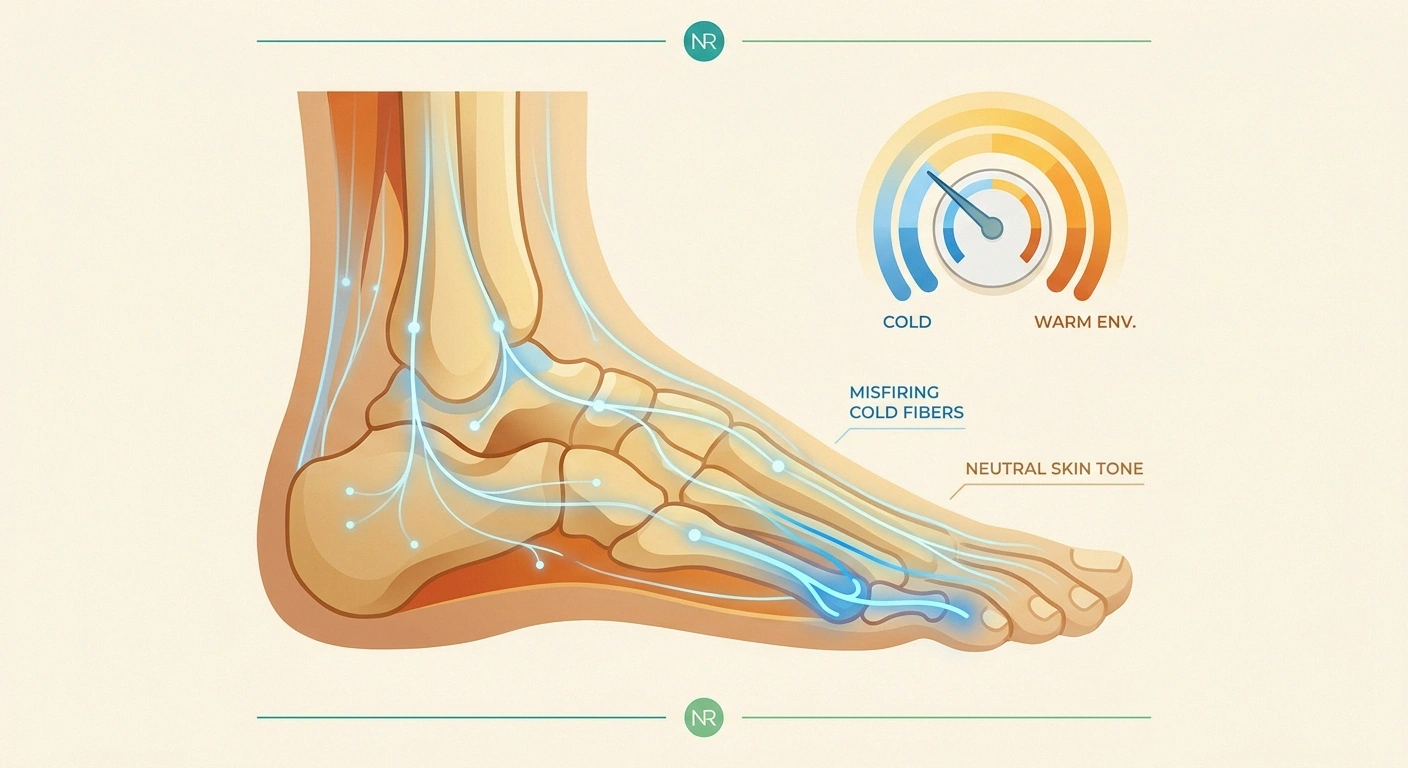
There’s a specific channel on your temperature-sensing nerves called TRPM8. It’s the same molecule that makes menthol feel cool. In a healthy nerve, TRPM8 activates around 26°C (about 79°F) — cool but not painful. After nerve injury, something interesting happens: silent cold-sensing neurons that were quiet in a healthy foot begin to fire, and existing TRPM8-carrying neurons become more numerous and more sensitive. The result is a foot that reads room temperature as icy.
This isn’t a psychological problem, and it isn’t imagination. It’s a rewired thermostat. Understanding that helped me stop feeling crazy about it. When my feet feel cold and my husband’s hand tells him they’re warm, we’re both right. The signal my nerves are sending upstairs no longer matches what the outside world is doing.
Some neuropathy types feature this cold hypersensitivity more prominently than others. Oxaliplatin — a common colon cancer chemotherapy — is famous for producing intense, immediate cold pain in the hands and feet within days of an infusion. Small fiber neuropathy from diabetes, autoimmune conditions, or unknown causes often includes a slower, background cold sensation mixed with burning. If you’d like the deeper picture on how small-fiber damage produces this mix, our overview of small fiber neuropathy walks through it.
When Your Feet Are Actually Cold — The Autonomic Piece
Some neuropathies also damage the sympathetic nerves that regulate blood flow to your skin. These are autonomic nerves, and when they’re impaired, the tiny blood vessels in your feet may not open and close as they should. Blood flow to the surface drops. Skin genuinely cools.
Now you have real cold layered on top of phantom cold. Both problems point at the same discomfort, but they respond to different things. Real cold from poor perfusion needs the underlying vascular or autonomic issue managed — and it’s a signal to ask your doctor about a vascular workup. Phantom cold responds better to gentle warming that doesn’t tax already-narrowed vessels, plus nerve-pain medication if the sensation is painful or sleep-disrupting. If you suspect autonomic involvement, our page on autonomic neuropathy covers the range of what it can do.
How to Tell Phantom Cold From Real Cold (A Home Check)
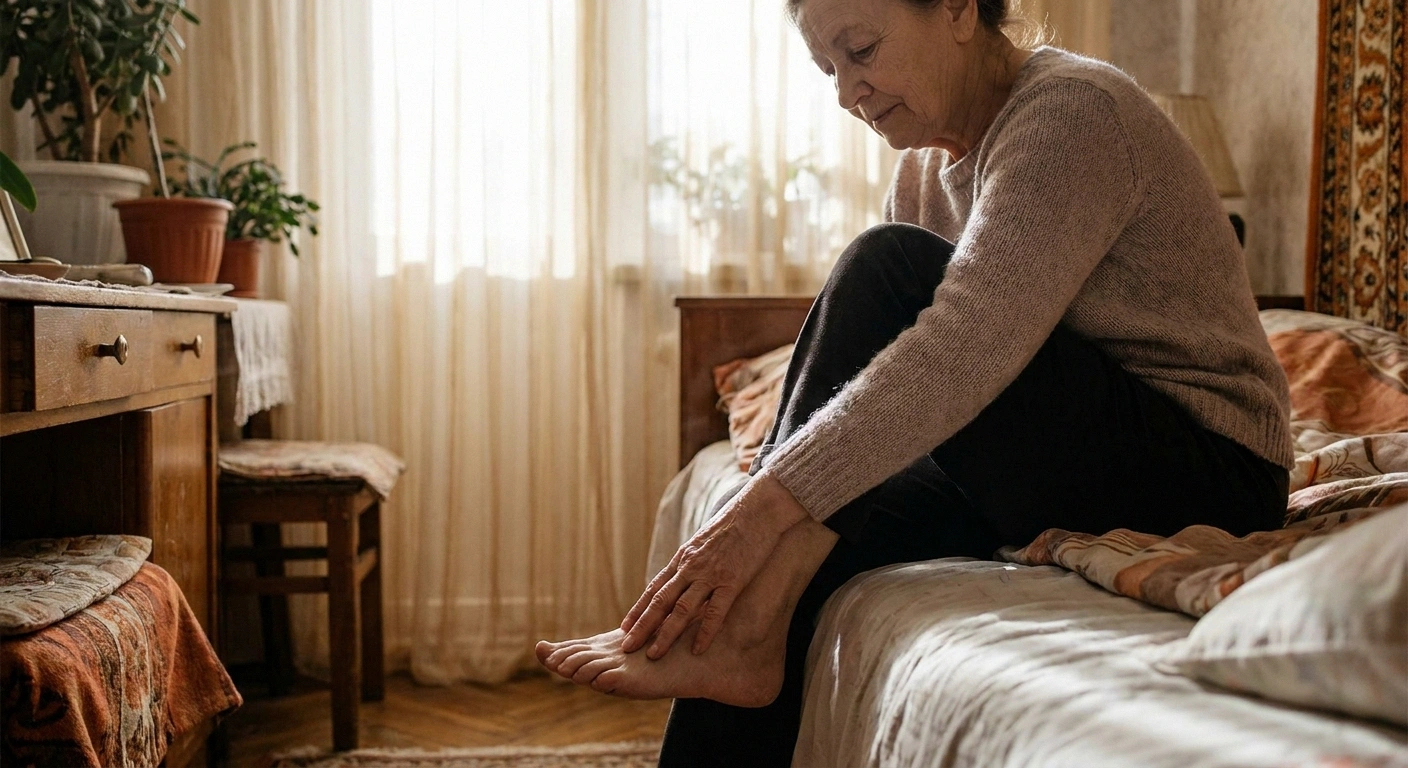
You can do a rough version of this yourself. Wash your hands and let them come to room temperature. Then place them on your feet — the top, the arch, the toes — and hold them there for a slow count of ten.
- Feet feel cold; hands say they’re warm
- Both feet, roughly symmetric
- Normal color, normal pulses
- Fluctuates by time of day, position
- Feet feel cold AND hands agree — cool to touch
- Often one side more than the other
- Pale, mottled, or bluish color
- Weak or absent pulses at the ankle
If your hands read your feet as warm: the cold sensation is likely coming from misfiring nerves. Your skin is fine. The signal isn’t.
If your hands read your feet as noticeably cool or cold: your feet actually are chilled. Look next at the color (pale? bluish? mottled? one side different from the other?), the pulses on the top of the foot and behind the ankle bone if you can feel them, and whether one side is very different from the other. Any of those findings deserves a call to your doctor.
If you can’t reliably feel your own feet with your hands (hand neuropathy makes this hard), an inexpensive infrared thermometer aimed at the top of the foot from a few inches away will give you an objective number. Under about 88°F on both feet is worth mentioning to your doctor; a big left-vs-right difference is worth mentioning sooner.
Warming Numb Feet Without Burning Them
This is the part where neuropathy changes the rules. A person with normal foot sensation who puts a heating pad on their soles will yank it off well before it burns. You may not. That’s the whole problem.
Never test warming devices with a numb foot.
Use your elbow, use a thermometer, or ask someone else. Emergency departments see burns from heating pads, hot water bottles, and 110°F foot soaks every winter. The margin between “warm” and “second-degree burn” is small — and you won’t feel it in time.
Here are the warming strategies I actually use, ranked from safest to riskiest:
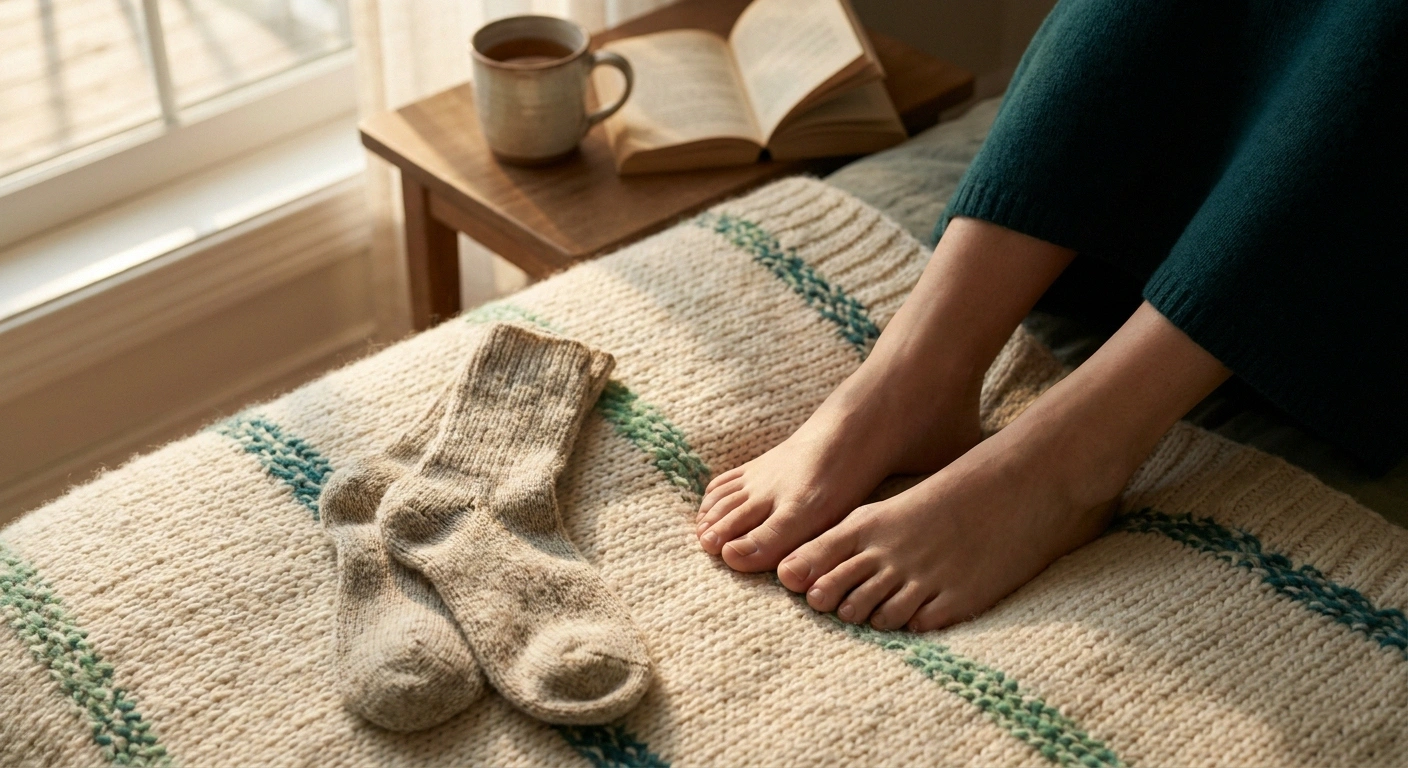
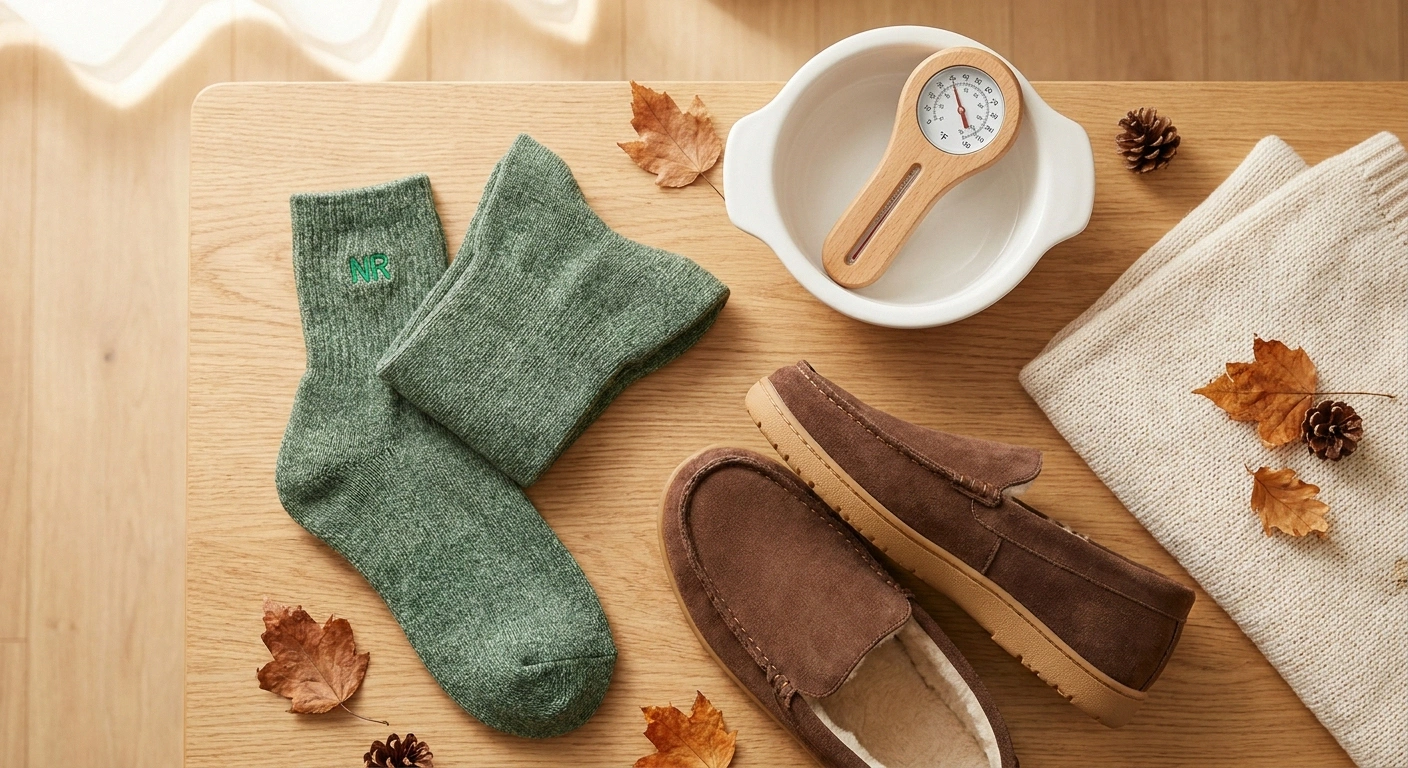
Wool socks, layered smart. A thin merino base layer with a medium wool sock over it insulates without pressure. Cotton socks trap sweat and make feet colder — swap them out. Change socks the moment they get damp.
Slippers with an actual sole and a bit of cushion. Ballet-flat house slippers are useless in winter. I like a moccasin or a slip-on with a real rubber outsole and a shearling or fleece lining that isn’t so tight it compresses circulation. Wide toe box, always.
Movement. This one sounds too simple. It works better than almost anything else. A slow ten-minute walk around the house, ankle pumps while sitting, calf raises at the kitchen counter — all of it pushes blood to the feet. If your legs will cooperate, gentle walking is worth building into your daily rhythm for a lot of reasons, and warmer feet is one of them.
A warm-not-hot foot soak. Fill a basin with water that reads between 92°F and 98°F on a bath thermometer. Never test with your feet or your fingers if either has neuropathy. Ten to fifteen minutes, dry thoroughly (especially between the toes), and apply a plain moisturizer. Our guide on neuropathy foot soaks spells out the temperatures and add-ins that are actually safe.
A hot water bottle over a blanket. Never directly on skin. Always with a blanket or two layers of towel between the bottle and your feet. And never at bedtime — you can’t feel a slow burn while you sleep.
Compression? Sometimes. Light compression socks (15-20 mmHg) can help feet feel warmer by improving circulation return. Do not use them if you have PAD, an untreated ulcer, or your doctor has said no. See our compression socks guide for the safety picture.
The Warming Habits That Send People to the ER
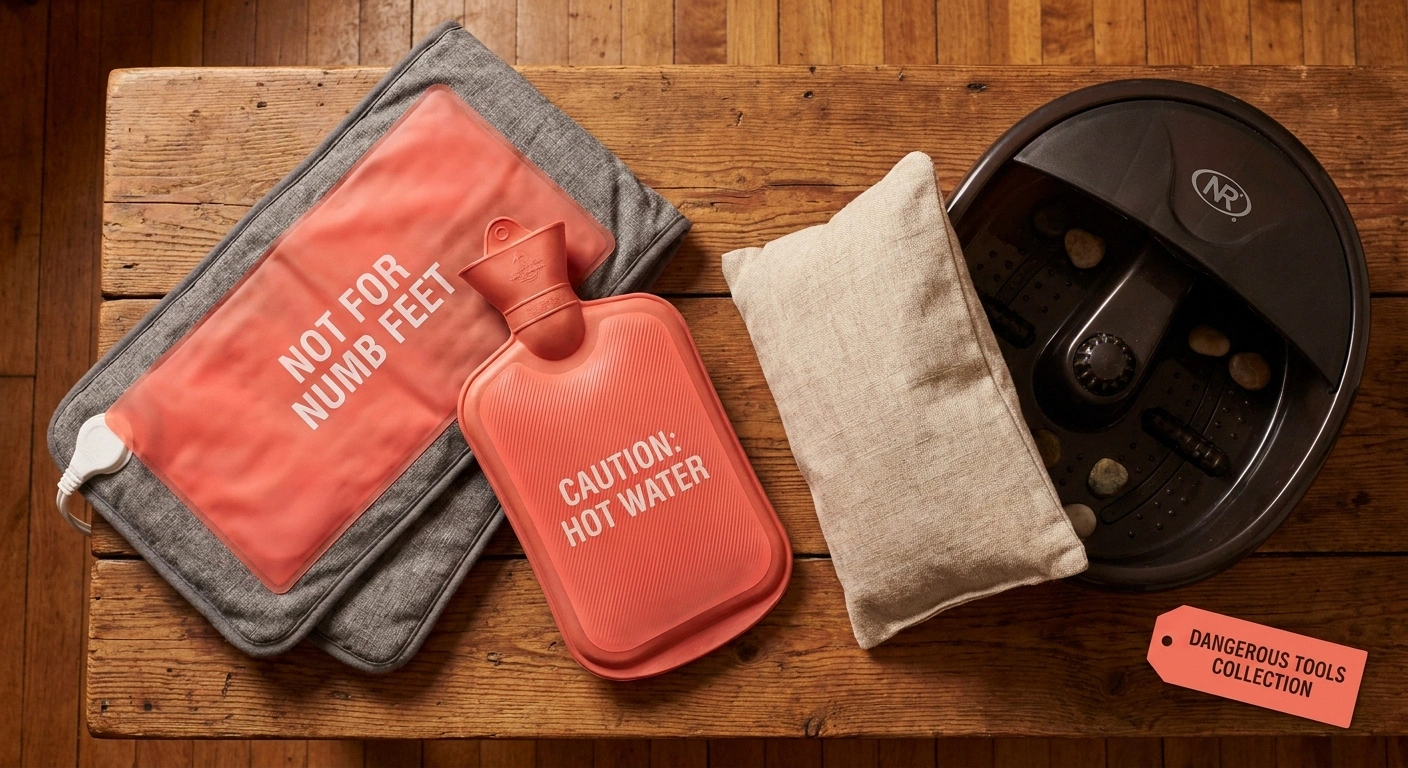
I’ve read too many case reports of neuropathy patients ending up with second- and third-degree burns from things that seemed harmless. Please, please, do not do the following:
Electric heating pads on numb skin. Not on the “low” setting. Not “just for a minute.” Heating pads produce steady, sustained temperatures that a normal foot yanks away from within seconds — and a numb foot won’t. Every dermatology and burn unit sees these.
Electric blankets touching bare feet. Same problem. If you use an electric blanket, keep socks on and set a timer to shut it off after 30 minutes.
Hot water bottles direct on skin. They cool over hours, but they start hot enough to burn.
Foot soaks over 100°F. This is the classic ER visit. A soak that feels tolerable to a numb foot can be well above safe temperature. If you don’t have a thermometer, buy one before your next soak — a $6 baby bath thermometer works fine.
Space heaters aimed at your feet. The problem here isn’t the room temperature; it’s the direct radiant heat on skin that can’t complain until damage is done.
Rice-filled microwave warmers. Uneven heating means the middle can be scalding while the edges feel warm. Skip them.
A daily foot check is your safety net. Every morning and every evening, look at both feet (a mirror on the floor helps if bending is hard). You’re looking for redness that doesn’t fade, blisters, cracks between the toes, and any spot that looks different from the day before. Anything unusual gets photographed and, if it doesn’t clear in a day, called in.
The Other Reasons Feet Get Cold — Things That Aren’t Neuropathy

Cold feet don’t automatically mean nerve damage. Several conditions produce genuinely cold feet on top of, or instead of, neuropathy — and they deserve their own workups:
Peripheral arterial disease (PAD). Narrowed leg arteries mean less blood reaches the feet. Classic signs: one foot colder than the other, absent pulses at the ankle or top of the foot, hair loss on the lower legs, skin that looks pale or shiny, cramping in the calves when walking (claudication), or wounds that won’t heal. PAD is common in the same populations that get diabetic neuropathy, so it’s often layered on top. Read more in our overview of nerve pain versus vascular pain.
Raynaud’s phenomenon. Cold-triggered spasm of small arteries, usually in fingers but sometimes toes. Classic sign: episodes where digits turn white, then blue, then red on rewarming. Both sides, often symmetric.
Hypothyroidism. Low thyroid slows metabolism and makes people feel generally cold, tired, and heavier. A simple TSH blood test tells the story.
Anemia. Low red cell count means less oxygen delivery, which affects extremities first. Common with pallor and shortness of breath on stairs.
Beta-blockers. Blood pressure medications like metoprolol and propranolol reduce blood flow to the extremities as a class effect. Not a reason to stop them, but worth mentioning to your cardiologist if your feet are freezing.
If your primary care doctor hasn’t checked pulses, ordered a basic panel, or asked about your foot temperature, it’s a perfectly reasonable ask.
When Cold Feet Become an Urgent Problem
Most neuropathy-related cold is uncomfortable but not dangerous. A few patterns are different, and they deserve a same-day call:
- Sudden severe pain in one foot + mottled or waxy skin
- Cold, pale foot with a suddenly weak or missing pulse
- Open wound turning red, warm, or spreading
- Dark, black, or purplish patch that won’t fade with warming
- Frostbite signs after outdoor exposure — waxy, grayish, hard skin
- Sudden severe pain in one foot with mottled or waxy skin — possible acute limb ischemia, an emergency.
- A cold, pale, painful foot with a suddenly weak or absent pulse — same as above.
- An open wound or blister that has changed color, is warm to the touch, or is spreading redness — possible infection.
- A discolored (dark, black, or purplish) patch on a toe or heel that doesn’t fade with warming — possible tissue damage.
- Frostbite symptoms after outdoor exposure — waxy or grayish skin, hard-feeling skin, blistering.
Any of those get an urgent visit, not a wait-and-see. Numb feet don’t warn you loudly, so the visual and thermometer checks are what catch trouble before it grows.
What Actually Helps the Underlying Cold Sensitivity
Warming the outside of the foot is one thing. Reducing the misfiring inside the nerve is another, and it’s a longer conversation with your doctor. The tools that have the most evidence:
The cold-sensing channel TRPM8 normally activates at about 26°C (79°F). After nerve injury, silent cold neurons wake up and existing TRPM8 neurons increase in both number and sensitivity — a physical rewiring that makes normal room temperature read as icy.
Sources: PLOS One 2009 (Contribution of TRPM8 and TRPA1 to Cold Allodynia); Journal of Physiology 2021 (Silent cold-sensing neurons in neuropathic pain).
Glucose control if you’re diabetic. This isn’t a fast fix, but it’s the intervention that changes the disease itself. Stable blood sugars over months and years slow nerve damage. Our diabetic neuropathy overview lays out the numbers to aim for.
Correcting B12, folate, or thyroid deficiencies. A simple set of blood tests can catch these. If a deficiency exists, treating it can reduce the phantom cold along with other symptoms. See vitamin deficiencies that cause neuropathy for the full list.
Nerve-pain medications. Gabapentin, pregabalin, duloxetine, amitriptyline, and nortriptyline all have evidence for reducing painful neuropathy symptoms including cold hypersensitivity. Cold that’s just uncomfortable doesn’t necessarily need medication, but cold that keeps you up at night or interferes with daily life is a reasonable reason to have the conversation.
Alpha-lipoic acid (ALA). An antioxidant with moderate evidence for improving diabetic neuropathy symptoms. Typical dose is 600 mg once daily. Discuss with your doctor if you’re diabetic, on blood thinners, or on thyroid medication. Our page on alpha-lipoic acid for neuropathy covers the evidence.
Regular movement. There’s real evidence that regular aerobic activity, even walking, improves nerve blood flow and symptoms in diabetic neuropathy. It’s slow, but it stacks.
Topical capsaicin or lidocaine. For localized symptoms, these can quiet down misfiring nerves in specific areas. Not a whole-body solution but useful for spot treatment.
Sleep, Cold Feet, and the Neuropathy Night Cycle

Cold sensations often get worse at night — partly because we’re not moving, partly because ambient temperature drops, and partly because there’s nothing distracting the brain from the signal. Sleeping in socks (soft merino, not tight) helps most people. A weighted blanket that isn’t too heavy on the toes helps some. A pre-sleep foot bath at 94°F for ten minutes, followed by socks and a light blanket, is a routine that turned my worst winters around.
- 7:30 pm — Foot check under lamp. Photos of anything new.
- 7:45 pm — Ten-minute foot soak at 94°F. Bath thermometer, not fingers.
- 8:00 pm — Dry thoroughly, especially between toes. Plain moisturizer.
- 8:05 pm — Merino base sock + medium wool sock.
- Bedtime — Light blanket, socks stay on, no heating pad, no hot water bottle.
If cold and pain together are keeping you awake, look at our page on why neuropathy is worse at night for the fuller mechanism and the routines that help.
A Quick Word on Circulation Boosters You’ll See Marketed
Foot vibrators, red light devices, infrared lamps, electromagnetic mats — the “circulation booster” category is enormous and largely unregulated. Some have modest evidence (red light therapy is being studied for diabetic neuropathy with mixed but promising results — see our review of red light therapy for neuropathy). Most do very little. None replace the fundamentals: managing the underlying cause, moving daily, keeping feet gently warm, and inspecting them every day.
Before spending real money on a device, ask your doctor whether they’ve seen it help their patients. Their honest answer is often more informative than the marketing copy.
Frequently Asked Questions
Can neuropathy make my feet feel cold and burning at the same time?
Yes, and it’s more common than most people think. The nerves that carry temperature and pain overlap heavily, and damaged fibers can produce mixed signals — cold in one moment, burning the next, sometimes both at once. This is a hallmark of small fiber neuropathy. It’s uncomfortable but not by itself dangerous.
Why do my feet feel cold when they’re actually warm to the touch?
Damaged cold-sensing nerve fibers, especially those carrying the TRPM8 channel, can misfire and send “cold” signals to your brain even when your skin temperature is normal. Your brain trusts the nerve. When the nerve lies, the sensation is real to you even if the temperature isn’t.
Is it safe to use a heating pad on numb feet?
No, not directly. Numb skin can’t tell you when a heating pad crosses from warm to burning, and the temperature difference between comfortable and injurious is small. If you feel you must use one, place it over a folded blanket, set the lowest setting, use a timer for no more than 15 minutes, and never fall asleep with it on your body.
What’s the safest water temperature for a foot soak with neuropathy?
Between 92°F and 98°F — warm bath temperature, never hot bath temperature. Measure with an inexpensive bath or baby thermometer. Never test with your hands or feet if either has neuropathy. Ten to fifteen minutes is enough. Dry carefully between the toes afterward.
Do compression socks help cold feet from neuropathy?
Sometimes. Light 15-20 mmHg compression can improve venous return and make feet feel warmer for some people. They’re not safe for everyone — do not use them if you have peripheral arterial disease, an unhealed foot wound, or if your doctor has advised against them. Ask before starting.
Should I be worried if only one foot is cold?
Yes, worth a call to your doctor. Asymmetric cold is a common sign of a blood-flow problem on one side (peripheral arterial disease, a clot, or a compressed vessel) rather than a symmetric nerve issue. It’s not necessarily an emergency, but it’s worth a same-week visit.
Can taking B12 help cold feet from neuropathy?
If your B12 is genuinely low, yes — correcting a real deficiency can reduce symptoms including cold sensitivity. If your B12 is normal, taking more won’t help. Ask your doctor for a serum B12 and, ideally, a methylmalonic acid level, which catches deficiencies that a plain B12 level misses. Metformin and long-term proton pump inhibitors are common causes of low B12.
Nothing on this page is medical advice. If your feet are painful, discolored, one-sidedly cold, or aren’t responding to gentle warming, please have a real doctor take a look. Janet writes as a patient advocate who has lived with neuropathy — not as a medical professional.
About the Author