
If you’ve been diagnosed with neuropathy, there’s a good chance someone has mentioned gabapentin to you. Maybe your doctor prescribed it at your last visit. Maybe you’ve seen it come up in every online forum you’ve read at 2 a.m. while your feet were burning.
Gabapentin is one of the most commonly prescribed medications for neuropathic pain, and for good reason — it helps a lot of people. But it’s also a medication that comes with real questions. Will it actually work? How long before I feel a difference? What about the side effects I keep hearing about? And what if it doesn’t help enough?
I hear these questions constantly in my support groups. Some people swear by gabapentin. Some couldn’t tolerate it. Most fall somewhere in between — it helps, but it’s not the whole answer.
Here’s what I’ve learned from years of conversations with neuropathy patients, combined with what the research actually shows.
Browse all our treatments and therapies guides for more articles like this one.
What Is Gabapentin and How Does It Help Neuropathy?
Gabapentin was originally developed as an anti-seizure medication in the 1990s. Doctors noticed early on that it also reduced nerve pain, and today it’s prescribed far more often for neuropathy than for epilepsy.
Here’s the simplified version of how it works: damaged nerves fire pain signals even when there’s nothing harmful happening. They become overexcited, sending chaotic signals to your brain that register as burning, tingling, stabbing, or electric-shock sensations. Gabapentin binds to specific calcium channels on nerve cells, calming that excessive firing.
It doesn’t fix the underlying nerve damage or regenerate nerves. What it does is turn down the volume on the pain signals — sometimes significantly.

Does gabapentin actually work for neuropathy?
The short answer: yes, for many people. But “works” needs some context.
A 2017 Cochrane review confirmed that gabapentin provides meaningful pain relief (at least 50% reduction) for roughly 30–40% of people with neuropathic pain — compared to about 20% for placebo. The number needed to treat is about 6, meaning for every six people who take it, one gets significant relief they wouldn’t have gotten otherwise.
of neuropathy patients get meaningful pain relief (≥50% reduction) from gabapentin — vs. 20% on placebo
That’s actually a decent result for chronic pain — but it also means most people will get partial relief or no meaningful benefit. What I’ve seen in my groups aligns with this. Most people say gabapentin “takes the edge off.” It doesn’t eliminate the pain, but it can make the difference between a tolerable night and a miserable one.
How Long Does Gabapentin Take to Work?

This is one of the most common sources of frustration I see. People start gabapentin, feel nothing for two weeks, and assume it’s not working.
Gabapentin typically takes 2 to 4 weeks to reach its full effect, and your doctor will start you on a low dose and gradually increase it. This slow ramp-up is intentional — it reduces side effects and gives your body time to adjust.
Some people notice mild improvement within the first week, especially with sleep. Gabapentin has a calming effect that helps you fall asleep even before the pain relief fully kicks in. But for real pain reduction, you need time at an adequate dose.
Key Takeaway
Don’t give up after one week — gabapentin typically needs 2 to 4 weeks at a therapeutic dose to show its full effect. But if you’ve been at your target dose for a full month with no improvement, it’s fair to tell your doctor it’s not working and explore alternatives.
What’s the Typical Dosage for Neuropathy?
Gabapentin dosing varies widely from person to person, and finding the right dose often involves some trial and error.
How much gabapentin should I take for nerve pain?
Most doctors start at 300 mg once daily (often at bedtime) and increase gradually. The FDA label for postherpetic neuralgia moves faster than most people expect — 300 mg on day 1, 600 mg on day 2, 900 mg on day 3 — but in practice many doctors stretch those same steps over weeks in older adults to keep the drowsiness manageable. Here is what that slower, week-by-week version usually looks like:
A Common Week-by-Week Titration
Week 1 — Start Low
300 mg once daily, taken at bedtime. This lets your body adjust to the medication while you sleep through the initial drowsiness.
Week 2 — Add a Daytime Dose
300 mg twice daily. By now, most of the startup drowsiness has eased. You’re building toward a therapeutic level in your system.
Week 3 — Three Times Daily
300 mg three times daily (900 mg total). This is the minimum effective range. Three-times-daily dosing is essential — gabapentin absorbs poorly in large single doses.
Ongoing — Titrate to Effect
For postherpetic neuralgia the FDA label titrates up to 1,800 mg/day (600 mg three times a day), and states plainly that “the additional benefit of using doses greater than 1800 mg/day was not demonstrated.” Daily doses above that belong to epilepsy dosing, not nerve pain. Always work with your doctor — never adjust on your own.
Here’s something important that not everyone knows: gabapentin has what pharmacists call “saturable absorption.” That means your body can only absorb so much at one time. Taking a single large dose doesn’t work as well as splitting it into three doses throughout the day. Above about 900 mg per dose, absorption drops significantly.
Never adjust your dose on your own. Always work with your doctor on changes. But if you’re on a low dose and not seeing results, it’s worth asking whether a higher dose might help before concluding the medication doesn’t work.
Common Side Effects (and How to Manage Them)
Side effects are the number one reason people stop gabapentin, and they’re the topic that generates the most conversation in my groups. Let’s be honest about what to expect.
Breathing Risk Worth Knowing About
In December 2019 the FDA required a new warning on gabapentin and pregabalin about serious breathing problems. The prescribing information now states that there is evidence “associating gabapentin with serious, life-threatening, or fatal respiratory depression when coadministered with CNS depressants, including opioids, or in the setting of underlying respiratory impairment.”
The risk is highest if you are over 65, if you already have reduced lung function such as COPD, or if you also take opioids, sleep medication, anti-anxiety medication, or other sedatives. That describes a lot of people reading this page, which is why it belongs here rather than buried in a leaflet.
This is not a reason to stop a medication that is helping you. It is a reason to make sure whoever prescribes your gabapentin knows every other sedating thing you take, including anything prescribed by a different doctor. Get urgent help for confusion, unusual sleepiness, bluish lips or fingertips, or breathing that turns slow or shallow.
What are the most common side effects of gabapentin?
Common Gabapentin Side Effects to Watch For
Drowsiness and fatigue — The most common complaint by far. Usually worst when starting or increasing dose. Taking the largest dose at bedtime helps manage daytime effects.
Dizziness — Especially when standing up quickly. Stay hydrated and rise slowly to minimize this.
Brain fog and difficulty concentrating — Some people describe feeling “fuzzy” or mentally slow. Extended-release gabapentin (Gralise) may cause less cognitive impairment for some people.
Weight gain — Studies suggest an average gain of 3–5 pounds, linked to increased appetite. Being proactive early is easier than reversing it later.
Swelling in hands and feet (peripheral edema) — Affects roughly 8% of people. Staying hydrated helps; mention this to your doctor if it persists.
Unsteadiness and coordination problems — Particularly concerning for older adults at risk for falls. This is an ongoing concern, not just a startup effect.
The good news: many of these side effects are worst in the first 2–3 weeks and improve as your body adjusts. Taking the largest dose at bedtime can help manage daytime drowsiness.
Practical tips from people in my groups:
- Start low and increase slowly — don’t rush the titration
- Take the bedtime dose first and give it a few days before adding daytime doses
- Stay hydrated, which helps with dizziness and swelling
- If brain fog is severe, ask your doctor about extended-release gabapentin (Gralise), which may cause less cognitive impairment for some people
- If weight gain is a concern, pay attention to appetite changes early — it’s easier to manage proactively than to reverse
Is gabapentin safe to take long term?
This question comes up a lot, and the answer is generally yes — gabapentin is considered safe for long-term use in most people. It’s not processed heavily by the liver (it’s excreted by the kidneys), which makes it gentler than many pain medications.
However, there are long-term considerations:
- Kidney function matters. Your dose may need adjusting if kidney function declines. Your doctor should monitor with periodic bloodwork.
- Dependence and withdrawal. Gabapentin can cause physical dependence — don’t stop abruptly. Taper over one to two weeks to avoid withdrawal symptoms like anxiety, insomnia, and increased pain.
- Bone health. Some emerging research suggests long-term use may affect bone density, though this evidence is preliminary.
- Fall risk. For older adults, dizziness and unsteadiness are ongoing concerns, not just startup effects.
The bottom line: gabapentin is one of the safer long-term options compared to opioids or NSAIDs, but regular check-ins with your doctor are important.

Gabapentin vs. Pregabalin (Lyrica): What’s the Difference?
Pregabalin (brand name Lyrica) is gabapentin’s close cousin. They work through the same mechanism — binding to the same calcium channels on nerve cells — but there are meaningful differences worth understanding before your next doctor visit.
💊 Gabapentin
- Absorption: Variable; decreases at higher single doses
- Dosing: Three times daily required
- Onset: 2–4 weeks to full effect
- Cost: Generic; inexpensive
- DEA status: Not scheduled (most states)
- Best for: Cost-conscious patients; first-line trial
💊 Pregabalin (Lyrica)
- Absorption: Consistent; more predictable
- Dosing: Twice daily (more convenient)
- Onset: 1–2 weeks — faster relief
- Cost: More expensive (generic available)
- DEA status: Schedule V controlled substance
- Best for: Those who didn’t respond to gabapentin; faster onset preferred
In practice, pregabalin tends to work faster and more predictably because of its better absorption. Some people who don’t respond to gabapentin do respond to pregabalin, and vice versa. If gabapentin isn’t working for you, switching to pregabalin is a reasonable next step to discuss with your doctor.
The controlled substance classification of pregabalin means it requires a slightly different prescription process, but it doesn’t mean it’s dangerous — it just reflects a slightly higher potential for misuse.
Natural Alternatives to Gabapentin
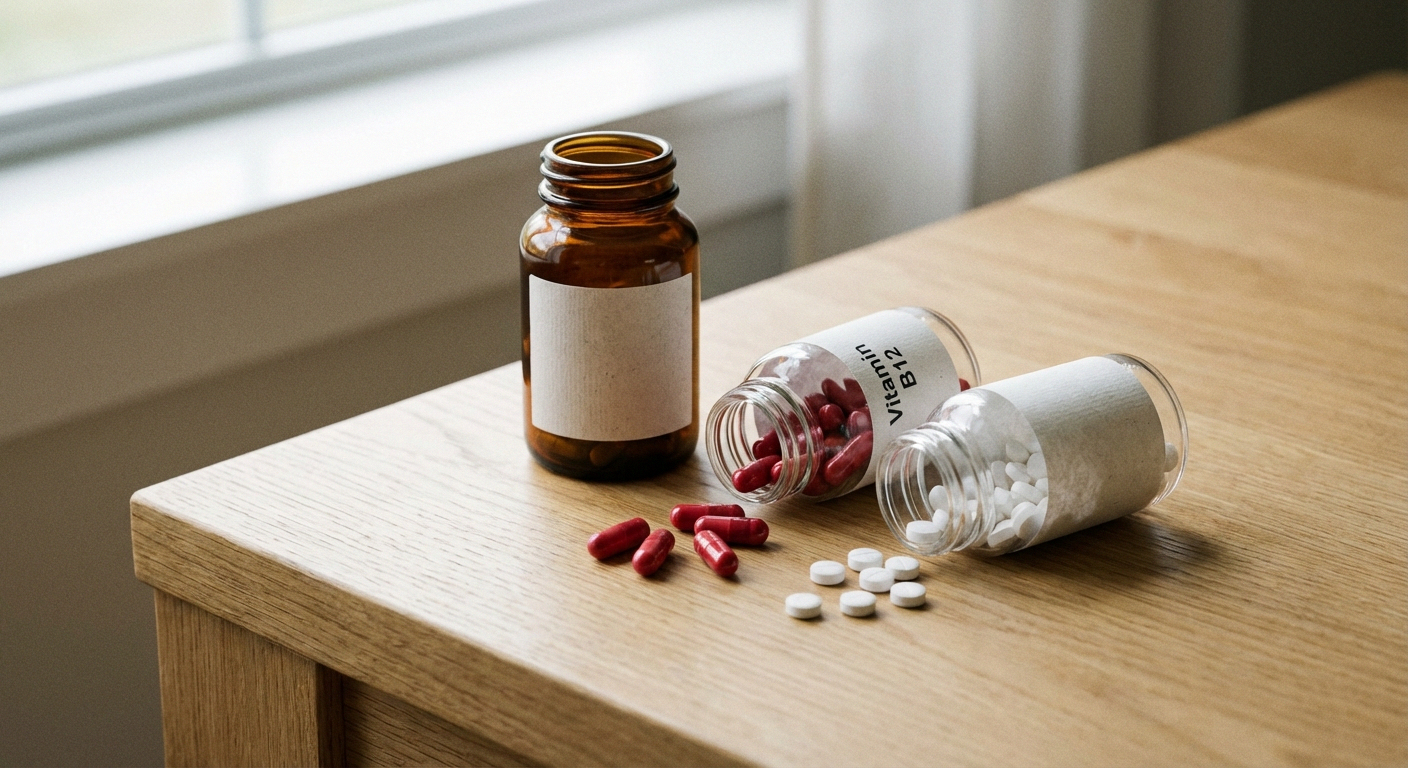
Some people can’t tolerate gabapentin, prefer to avoid prescription medications, or want to complement their medication with natural options. Here are the alternatives with the most evidence.
What can I take instead of gabapentin for nerve pain?
Alpha lipoic acid (ALA) is the supplement with the strongest clinical evidence for neuropathic pain. Several clinical trials have found that 600 mg daily can reduce symptoms of diabetic neuropathy. I’ve written a detailed breakdown in my alpha lipoic acid guide.
Acetyl-L-carnitine has shown promise for reducing neuropathic pain and may support nerve regeneration. Doses studied are typically 1,000–3,000 mg daily.
Capsaicin cream works by depleting substance P, a chemical that transmits pain signals. It’s available over-the-counter and surprisingly effective when applied consistently. I cover this and other options in my guide to neuropathy creams.
B vitamins — particularly methylcobalamin (B12) and benfotiamine (B1) — are essential for nerve health and can reduce symptoms when deficiency is a contributing factor. Check out my supplement guide for specific recommendations. Other natural remedies can also provide relief alongside medical treatment.
An important note: These options are generally better as complements to medication rather than replacements — at least for moderate to severe neuropathy. Talk to your doctor before making changes. And be cautious of products making bold claims — I looked into Nervive in my Nervive review, and the reality doesn’t always match the marketing.

Can You Take Supplements With Gabapentin?
This is a question I get almost every week: “I want to take supplements, but I’m worried about interactions with my gabapentin.”
Can you take B12 with gabapentin?
Yes. B12 (in any form, including methylcobalamin) does not interact with gabapentin, and taking them together is both safe and potentially beneficial. B12 supports nerve health through a completely different mechanism than gabapentin, so they can work as teammates rather than competitors.
How They Work Together
B12 and benfotiamine (B1) work through different mechanisms than gabapentin — supporting nerve structure rather than calming pain signals — so they are usually taken alongside it rather than instead of it. There is no good head-to-head trial showing that adding B vitamins to gabapentin improves pain scores, so treat this as a sensible pairing rather than a proven one.
Here’s a quick overview of common supplements and their compatibility with gabapentin:
- B12, B complex, benfotiamine — Safe to combine. No known interactions.
- Alpha lipoic acid — Generally safe. May enhance blood sugar lowering, so diabetics should monitor glucose.
- Magnesium — Safe, but take it 2 hours apart from gabapentin, as magnesium can reduce gabapentin absorption.
- Acetyl-L-carnitine — No known interactions.
- Turmeric/curcumin — Generally safe, though high doses may theoretically enhance gabapentin’s effects. Start low.
- CBD oil — Possible interaction. Both are processed through similar pathways and combining them may increase drowsiness. If you want to try CBD alongside gabapentin, start with a low dose and tell your doctor.
The golden rule: Always tell your doctor what supplements you’re taking. Most interactions aren’t dangerous, but your doctor needs the full picture to manage your care.
When Gabapentin Isn’t Enough: What to Ask Your Doctor
If you’ve been on an adequate dose of gabapentin for at least a month and your pain is still significantly affecting your life, it’s time for a honest conversation with your doctor. Here are questions worth asking:
- “Can we try a higher dose?” — If you’re below 1,800 mg daily, there may be room to increase.
- “Would pregabalin work better for me?” — Switching to the related drug is a logical next step.
- “What about combination therapy?” — Adding a low-dose tricyclic antidepressant (like amitriptyline) or an SNRI (like duloxetine) to gabapentin can provide better relief than either alone. A study in The Lancet (2009) showed that combining gabapentin with nortriptyline was more effective than either drug solo.
- “Are there other causes we haven’t investigated?” — Sometimes neuropathy has an underlying cause (vitamin deficiency, thyroid dysfunction, autoimmune condition) that, if treated, could reduce the pain gabapentin is trying to manage.
- “What non-medication treatments could help?” — Physical therapy, TENS units, acupuncture, and exercise all have evidence for neuropathic pain.
- “Should I see a specialist?” — If your primary care doctor has run out of options, a pain specialist or neurologist may have additional tools.
You’re not being difficult by asking these questions. You’re being your own advocate.
If you’re not sure how your symptoms are progressing or what to prioritize in your next doctor visit, my symptom assessment can help you organize your thoughts and track changes over time.
Take care of yourself, Janet
Frequently Asked Questions
About the Author