When my neurologist first suggested yoga, I almost laughed. I was dealing with burning, tingling feet that made standing difficult — how was I supposed to twist myself into pretzel shapes? But she didn’t mean the Instagram-worthy kind of yoga. She meant something gentler, more restorative. Something designed to meet my body exactly where it was. I tried it, and nearly a decade later, a gentle yoga practice remains one of the most consistently helpful things in my neuropathy toolbox. Let me share what I’ve learned — including what works, what to avoid, and how to get started even if you’ve never set foot on a yoga mat.
Browse all our exercise and movement guides for more articles like this one.
Why Yoga May Help With Neuropathy
Yoga isn’t a cure for neuropathy — I want to be upfront about that. But a growing body of research suggests it may help manage several aspects of the condition that make daily life difficult. A 2023 systematic review and meta-analysis of randomized controlled trials found an overall favorable effect of yoga on neuropathic pain, though the authors noted that more research is needed. What yoga offers isn’t a magic fix — it’s a collection of small, cumulative benefits that can add up to a meaningfully better quality of life.
1. Seated Cat-Cow (Warming Up the Spine)
Sit on the edge of a chair with feet flat on the floor. On an exhale, round your spine forward, tucking your chin — imagine creating a “C” shape with your back (cat pose). On an inhale, reverse the motion: lift your chest, gently arch your back, and look slightly upward (cow pose). Move slowly between these two positions for 8 rounds, coordinating with your breath. This gently warms up the spine and encourages circulation throughout the nervous system.

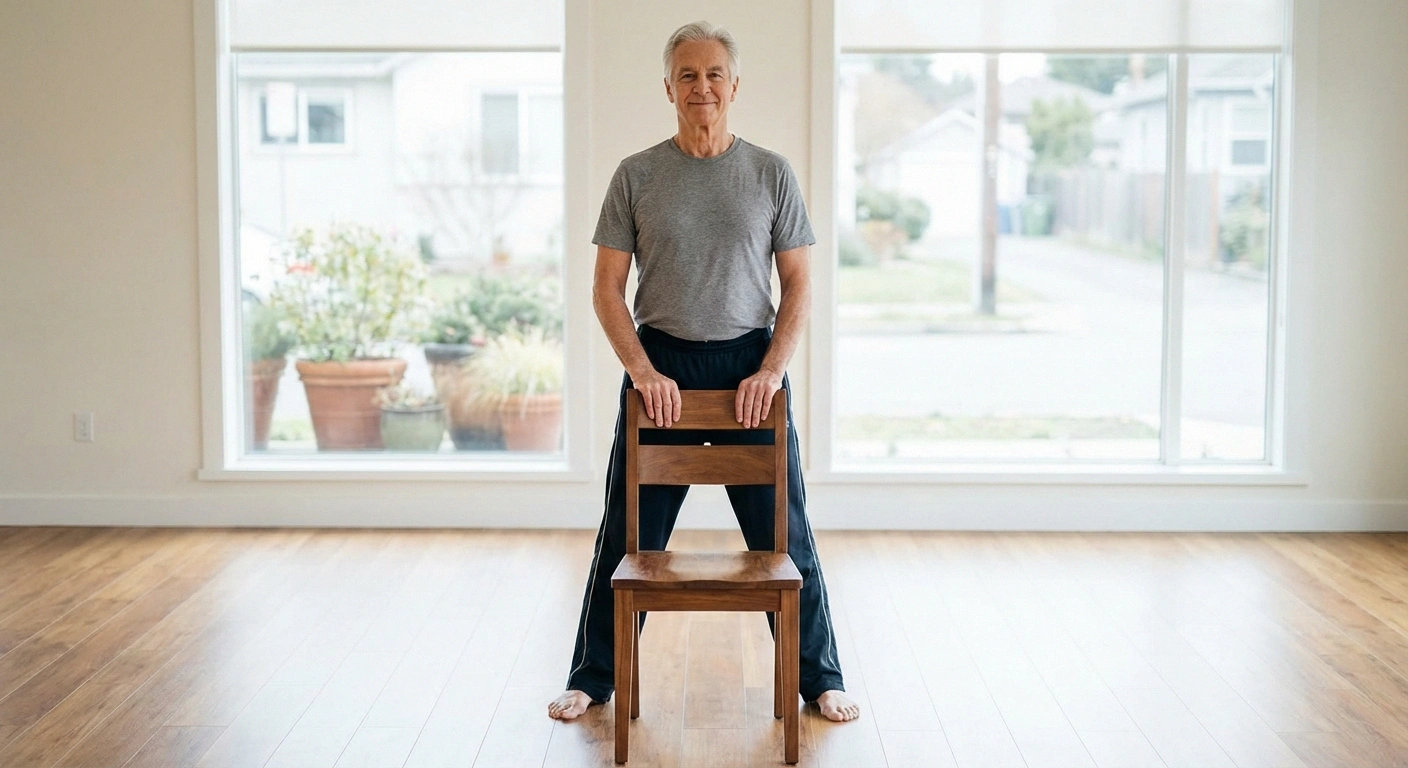
2. Chair Tadasana (Mountain Pose With Support)
Stand behind a chair with your hands resting on the back for balance. Plant your feet hip-width apart. On an inhale, slowly rise up onto the balls of your feet. On an exhale, lower your heels back down and lift your toes off the floor. Repeat for 8 rounds. This pose is excellent for building foot strength and improving proprioception — it re-trains the nerve connections between your feet and brain.
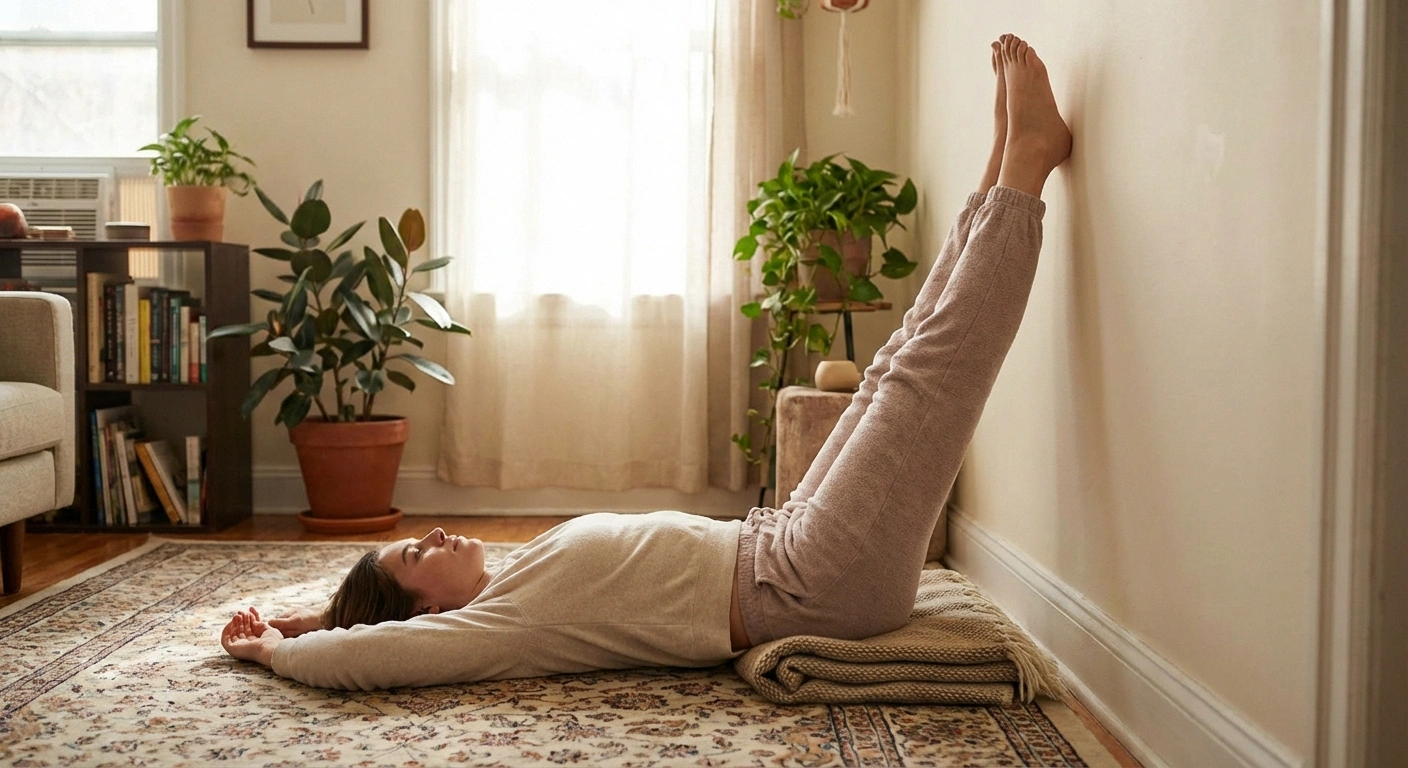
3. Viparita Karani (Legs Up the Wall)
Sit next to a wall and gently swing your legs up so they rest against the wall while you lie on your back. You can place a folded blanket under your hips for comfort. Stay for 3–5 minutes, breathing deeply. This restorative pose uses gravity to encourage blood flow back from the legs toward the heart, which may help reduce swelling and ease the heaviness that many people with neuropathy feel in their legs and feet. It’s one of my personal favorites on days when my feet are particularly troublesome.
Your Neuropathy Yoga Flow
Seated Cat-Cow
Warm up
Chair Tadasana
Balance
Legs Up Wall
Circulation
Bridge Pose
Strength
Savasana
Rest & heal
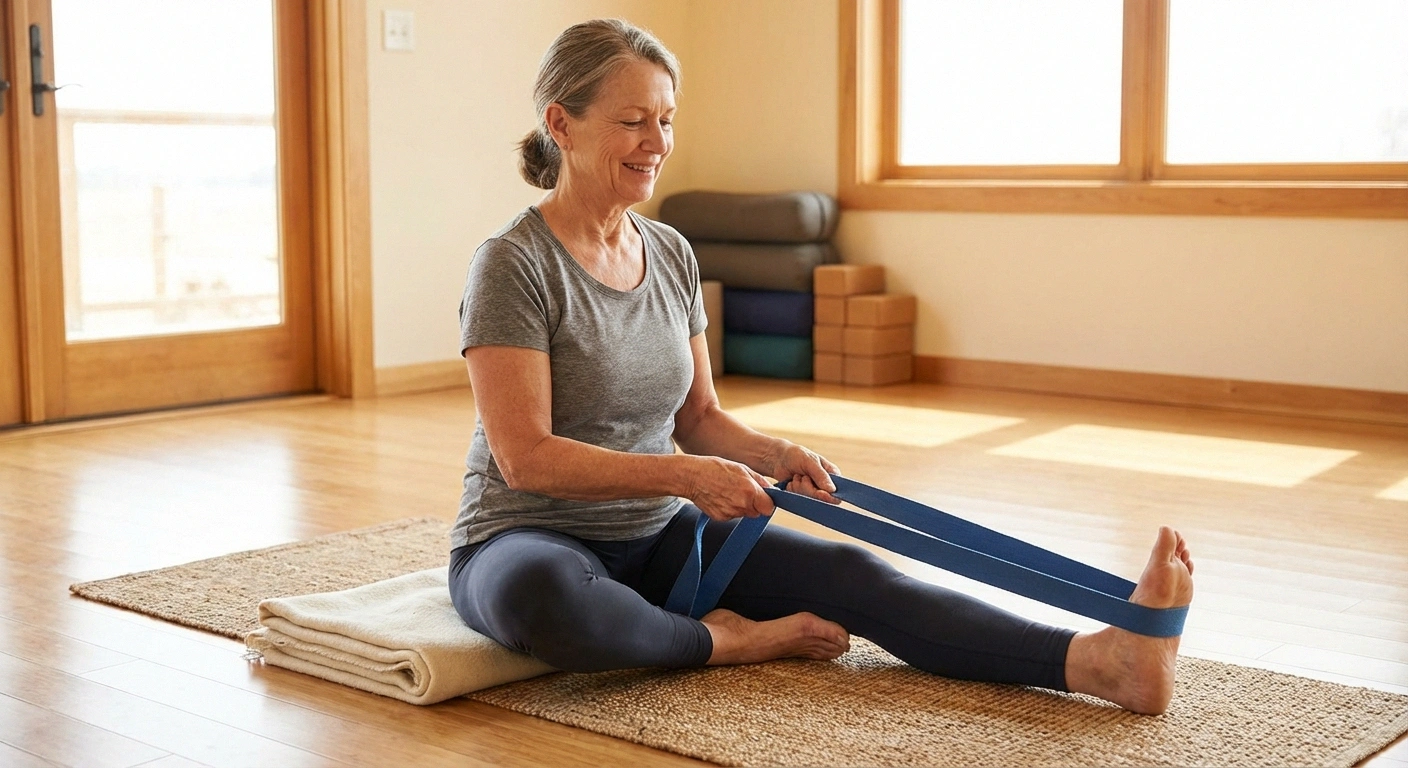
4. Calf and Hamstring Stretch With Strap
Lie on your back with one knee bent, foot on the floor. Loop a yoga strap or belt around the ball of the other foot. Gently extend that leg toward the ceiling, keeping a slight bend in the knee. Alternate between pointing your toes up and flexing your foot back toward you, holding each position for a few breaths. This stretch helps maintain flexibility in the legs while gently stimulating the nerve pathways that run from your feet up through your legs.
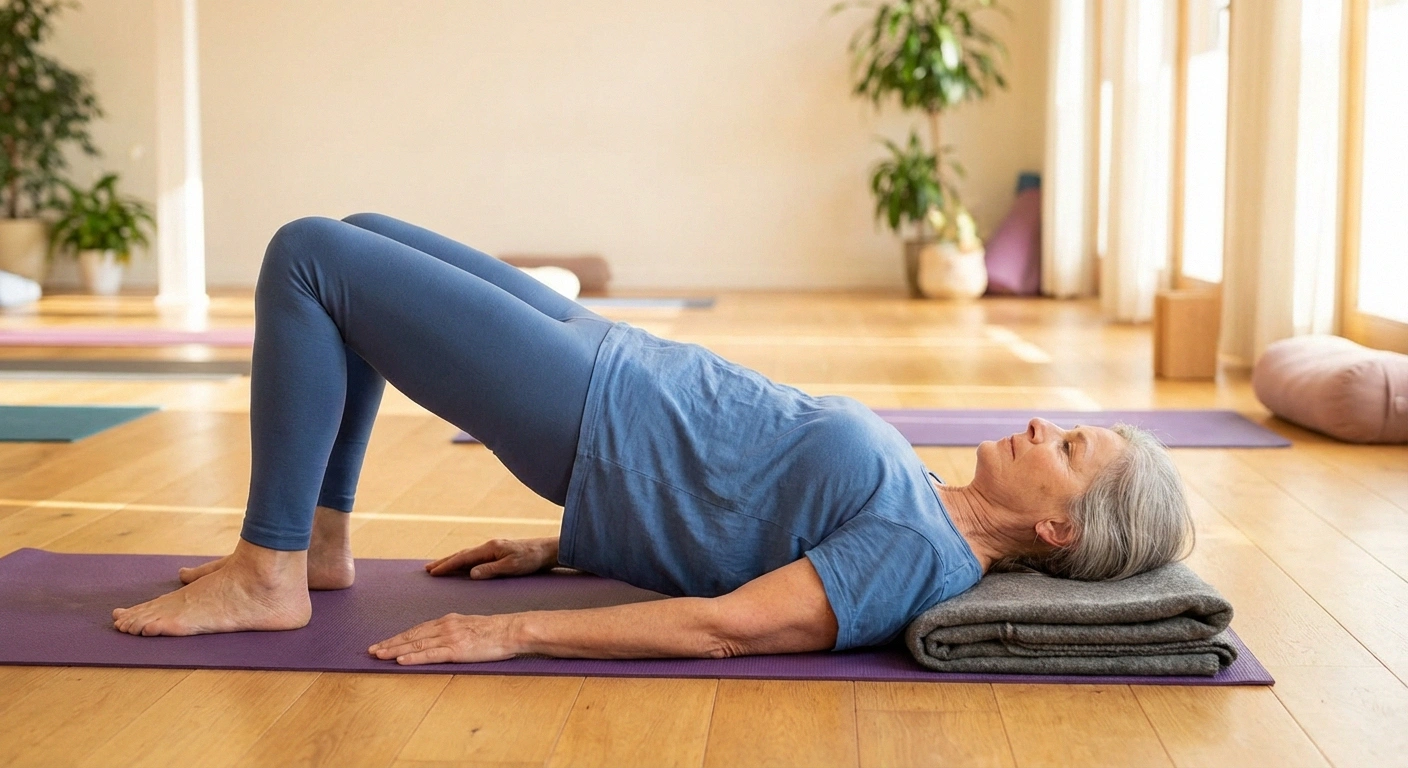
5. Setu Bandhasana (Bridge Pose)
Lie on your back with knees bent and feet flat on the floor, hip-width apart. Pressing through your feet, slowly lift your hips off the floor until your thighs are roughly parallel to the ground. Hold for 5 breaths, then slowly lower down. This pose strengthens the legs and glutes while promoting circulation through the spine and lower body. If lifting your hips feels too challenging, simply press your feet into the floor without lifting — you’ll still get the strengthening benefit.
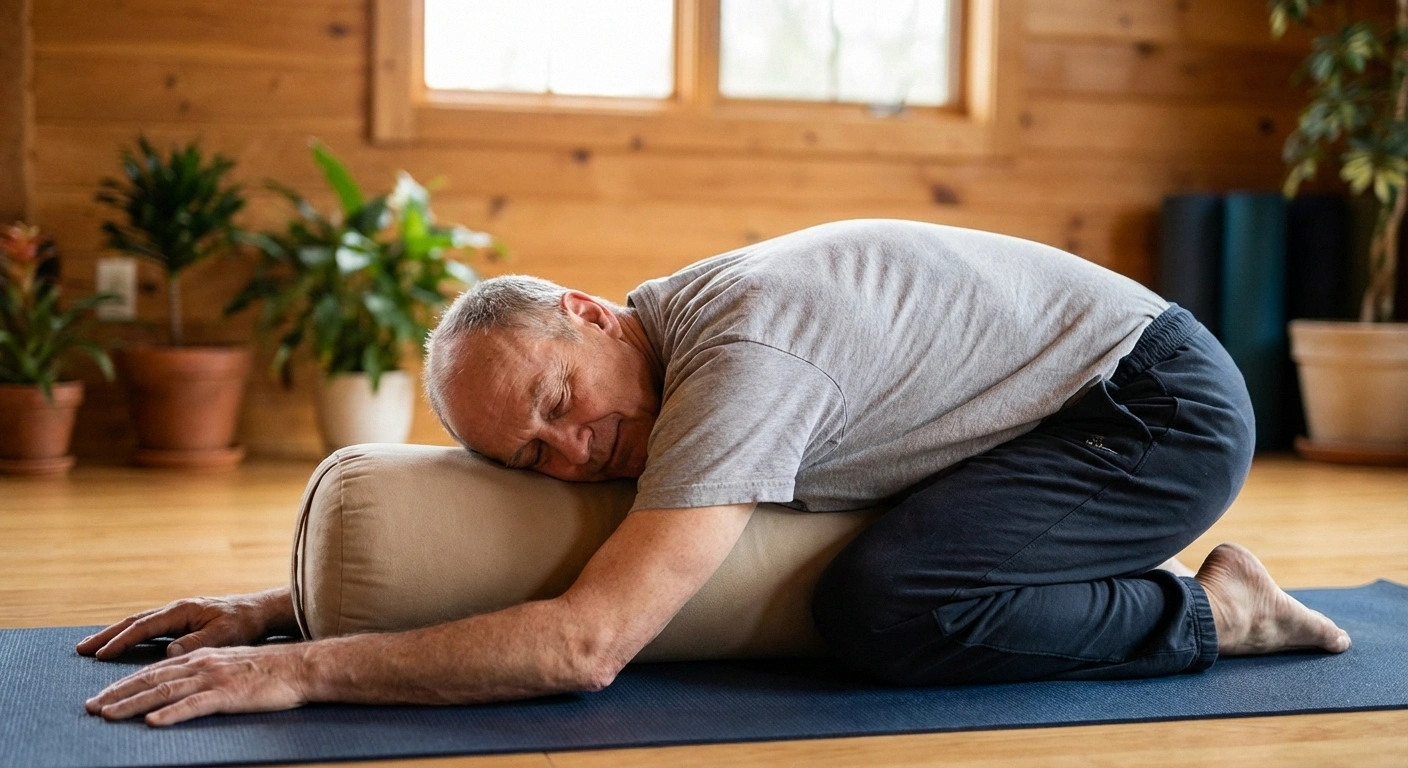
6. Balasana (Child’s Pose)
From a kneeling position, sit back on your heels and fold forward, extending your arms in front of you or resting them alongside your body. If kneeling is uncomfortable, a seated version works well: sit in a chair and fold forward, resting your arms on your thighs or letting them hang. This calming pose activates the parasympathetic nervous system, helping to reduce the stress response that can amplify neuropathic pain. Hold for 1–2 minutes.
7. Toe Yoga (Seated Toe Exercises)
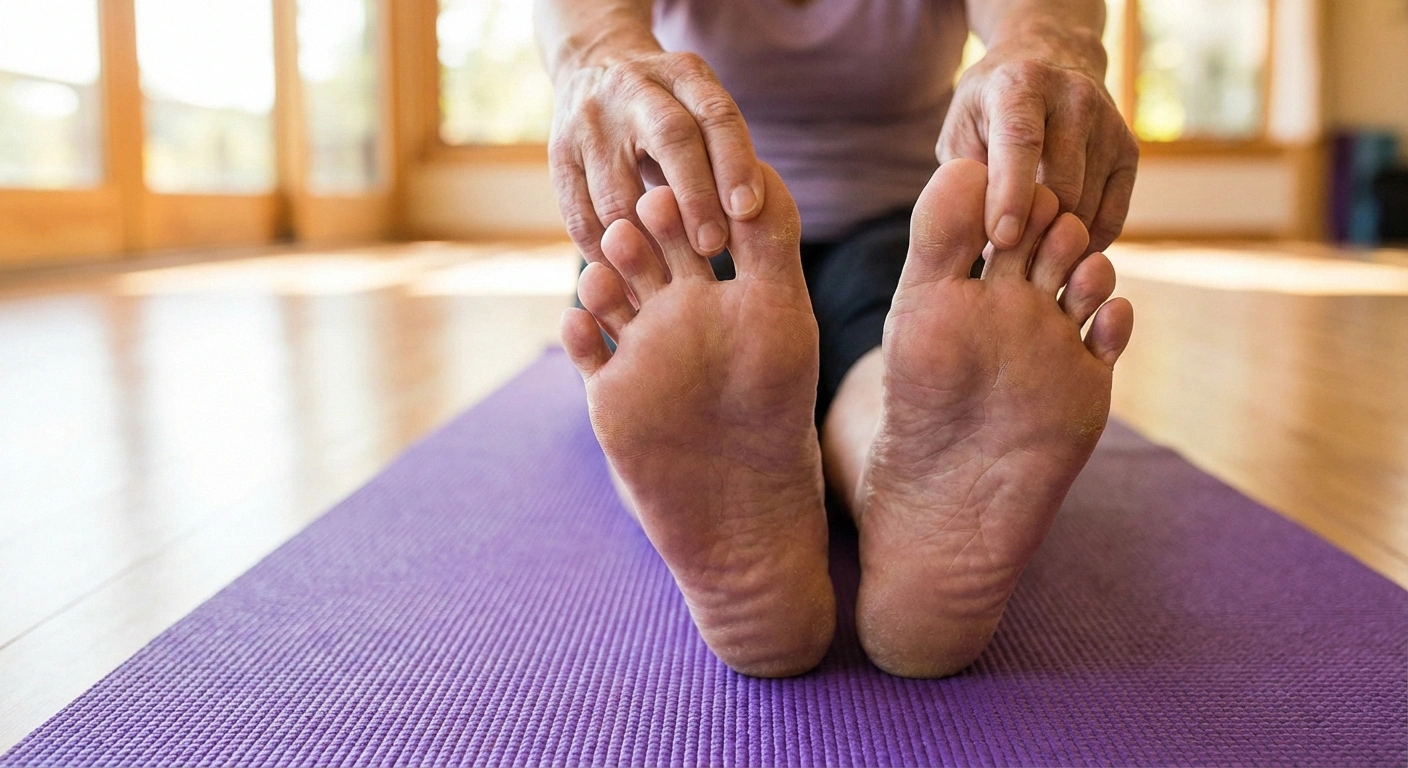
Sit in a chair with bare feet flat on the floor. Try to lift just your big toes while keeping the other toes down, then reverse — press the big toes down and lift the smaller toes. Then try spreading all toes apart as wide as possible. This isn’t traditional yoga, but yoga therapists often include these exercises because they directly stimulate the small nerves in the feet. Even if you can’t isolate the movements perfectly at first, the attempt itself sends signals to those nerve pathways, which may help maintain or improve nerve function over time.
8. Supported Savasana (Final Rest)
Lie on your back with a pillow under your head and your lower legs resting on a chair seat. Place a rolled towel under your lower back curve if needed. Close your eyes and focus on slow, deep breathing — inhale for 3–5 counts, exhale for 6–8 counts. Stay for at least 5 minutes. This extended relaxation allows your nervous system to integrate the benefits of the practice. The longer exhale activates the vagus nerve, promoting the “rest and digest” state that may support nerve healing. This is not just a cool-down — it’s a therapeutic pose in its own right.

Important Safety Tips
Yoga is generally safe, but neuropathy creates some unique considerations that you should keep in mind:
When to Stop
Stop any pose immediately if you feel sharp pain, sudden numbness increase, dizziness, or loss of balance. Neuropathy symptoms fluctuate daily — adjust your practice accordingly. “Mild stretch” is the goal; never push through pain. Talk to your doctor before starting, especially with significant balance issues or diabetic complications.
- Always use support: Keep a chair, wall, or counter within arm’s reach during standing poses. Don’t rely on your balance alone until you’re confident
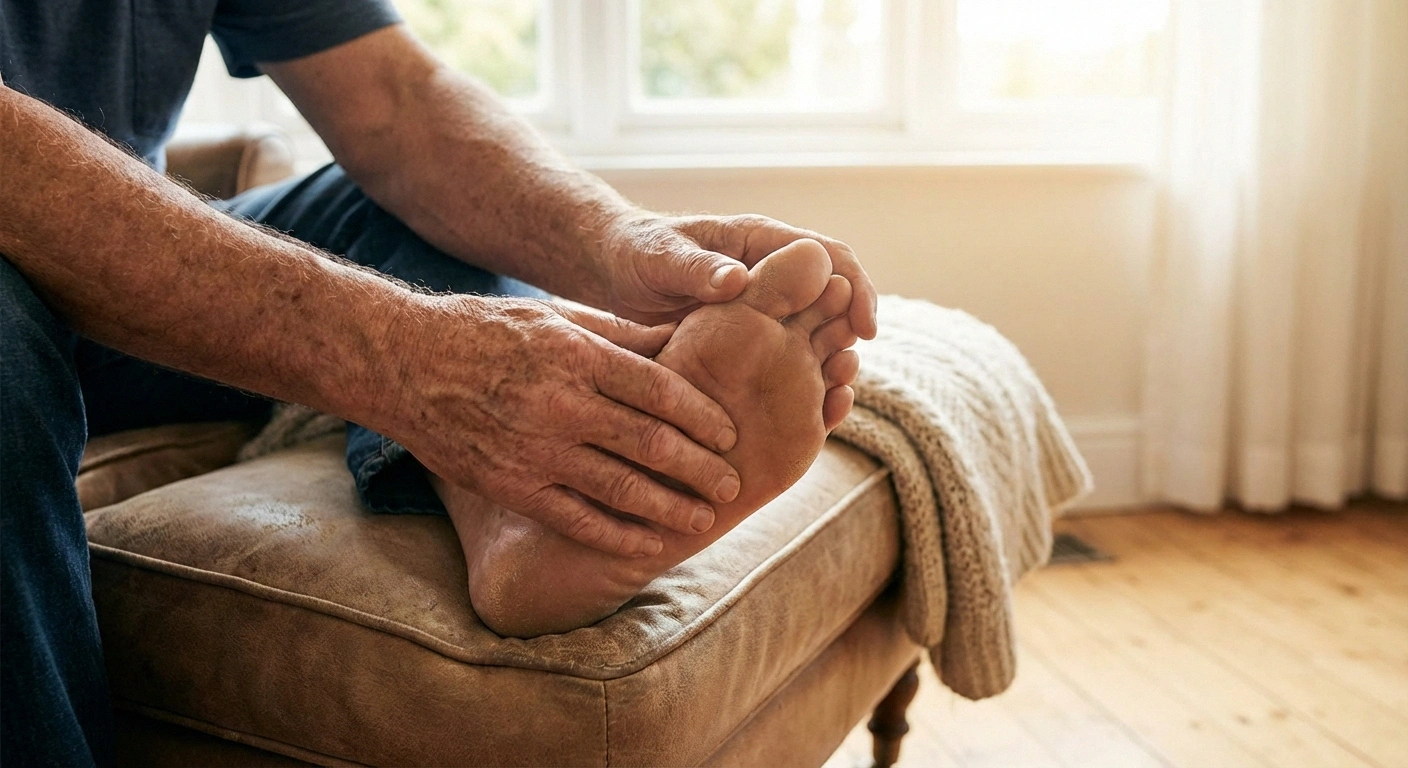
- Protect your feet: If you have reduced sensation, be careful with barefoot practice on hard floors. Consider wearing grippy socks designed for yoga, and always check your feet for injuries after practice
- Skip extreme stretches: Overstretching can damage nerves further. “Mild stretch” is the goal — you should feel gentle tension, never sharp or shooting pain
- Stay hydrated: Dehydration can worsen neuropathy symptoms and increase cramping
- Communicate with your instructor: If you’re taking a class, let the teacher know about your neuropathy before class begins so they can offer appropriate modifications
- Listen to your body day by day: Neuropathy symptoms fluctuate. What feels fine on a good day may be too much on a flare-up day. Adjust your practice accordingly
Always check with your healthcare provider before starting yoga, especially if you have diabetic neuropathy, significant balance issues, or any cardiovascular concerns. Your doctor may recommend starting with a physical therapist who can assess your baseline and suggest appropriate modifications.
Getting Started: A Practical Guide
Starting anything new with a chronic condition can feel overwhelming. Here’s my practical advice for making yoga work for you:
Research Says
A 2023 systematic review of randomized controlled trials found yoga had an overall favorable effect on neuropathic pain intensity and quality of life. While the results were not yet statistically significant — highlighting the need for more research — yoga showed advantages as an inexpensive, accessible, and low-risk complementary therapy.
Improved Blood Circulation
Many yoga poses promote blood flow to the extremities — exactly where neuropathy hits hardest. When you move through gentle stretches and hold positions, you’re encouraging fresh, oxygen-rich blood to reach your hands and feet. For nerves struggling with damage, that improved circulation may support the healing process and help deliver nutrients that nerve cells need to function.
Better Balance and Fall Prevention
This is a big one. Peripheral neuropathy, especially in the feet, can significantly impair your sense of where your body is in space (proprioception). According to the Foundation for Peripheral Neuropathy, exercise programs that include balance training can help reduce fall risk. Yoga poses that focus on weight shifting, single-leg awareness, and core stability can gradually rebuild your confidence in movement. After my first month of chair yoga, I noticed I was reaching for walls and furniture less often.
Reduced Pain and Stress
Neuropathic pain and stress feed each other in a vicious cycle. Stress amplifies pain perception, and chronic pain creates stress. The breathing techniques (pranayama) and meditative aspects of yoga may help break this cycle. Research suggests that yoga activates the endogenous opioid system — your body’s natural pain-management mechanism — while also reducing inflammatory markers that can worsen nerve damage. One study found that people with diabetic peripheral neuropathy who completed two weekly yoga sessions over two months experienced improved stress management and sleep quality.
Maintained Muscle Strength
Neuropathy can lead to muscle weakness and atrophy, particularly in the feet and lower legs. Regular yoga practice — even gentle versions — helps maintain and rebuild muscle strength without the impact stress of traditional exercise. Stronger muscles provide better support for joints and reduce the overall strain on your nervous system. Many people find that gentle exercise routines like yoga are sustainable long-term in a way that gym workouts aren’t.
Best Yoga Styles for Neuropathy
Not all yoga is created equal when you’re living with neuropathy. The style you choose matters enormously — and the wrong choice can actually make things worse. Here’s what I recommend based on my experience and what I’ve seen work in my support group.
✓ Recommended Styles
- Chair yoga — safest starting point
- Restorative yoga — deep relaxation with props
- Gentle hatha — slow pace, basic poses
- Iyengar-style — precise alignment, prop-focused
✗ Styles to Avoid
- Hot yoga (Bikram) — worsens autonomic symptoms
- Power yoga — too fast, high fall risk
- Fast vinyasa — rapid transitions, balance risk
- Ashtanga — demanding, push-through-pain culture
Recommended Styles
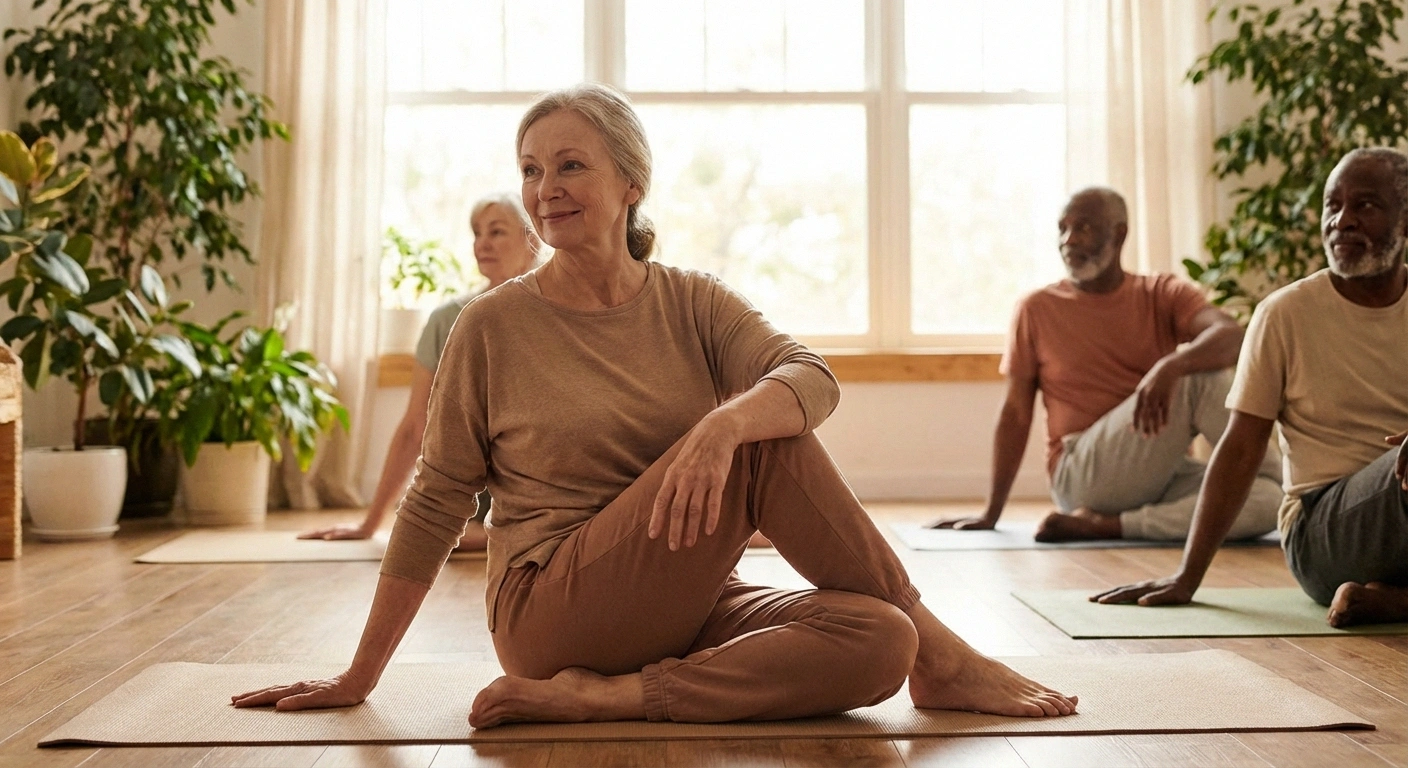
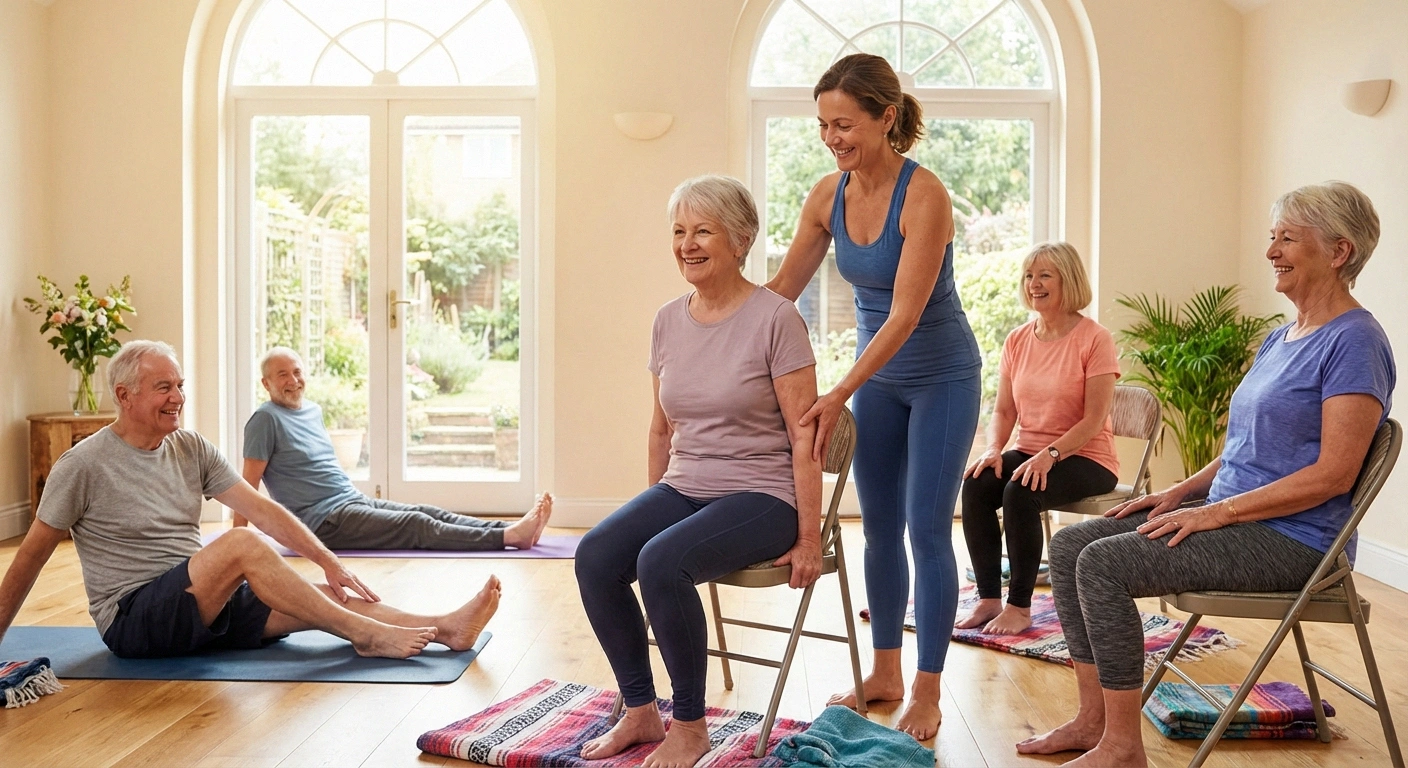
Chair yoga is my top recommendation for anyone just getting started, especially if balance is a concern. All poses are done while seated or using a chair for support. You get the benefits of stretching, breathing, and gentle strengthening without any fall risk. Many community centers and senior centers offer chair yoga classes specifically designed for people with physical limitations.
Restorative yoga uses props like blankets, bolsters, and blocks to support your body in restful positions held for longer periods. It’s deeply relaxing and focuses on activating your parasympathetic nervous system — the “rest and restore” mode that may help with nerve healing. This style is excellent for people dealing with significant pain or fatigue.
Gentle hatha yoga involves basic poses held with steady breathing. The pace is slow, and instructors typically offer modifications for different ability levels. This is a good “next step” once you’ve built some confidence with chair yoga.
Iyengar-style yoga emphasizes precise alignment and uses extensive props. The detailed attention to form can be particularly helpful for people with neuropathy, as it teaches you to be aware of exactly where your body is in space.
Styles to Approach With Caution
Avoid hot yoga (Bikram) — the high temperatures can worsen autonomic neuropathy symptoms and increase the risk of dehydration and blood pressure fluctuations. Heat can also mask pain signals, increasing injury risk.
Getting Started
Start with just 10 minutes of chair yoga, 3 times per week. You need only a sturdy chair and comfortable clothing. Many free chair yoga classes for beginners are available on YouTube. Consistency matters more than session length — a short practice you actually do beats a long one you keep putting off.
Be cautious with power yoga and fast vinyasa flows — the rapid pace doesn’t allow time for the balance adjustments that people with neuropathy need. Moving quickly between poses when you have reduced sensation in your feet is a recipe for falls.
Ashtanga yoga, with its demanding sequences and emphasis on pushing through discomfort, isn’t well-suited for people managing nerve pain. The “no pain, no gain” approach doesn’t apply to neuropathy.
8 Gentle Yoga Poses for Neuropathy
These poses are accessible for most people with neuropathy. Start with the seated options and work up to standing poses as your confidence and balance improve. Hold each pose for 5–8 slow breaths unless otherwise noted. Always stop if you feel sharp pain, dizziness, or increased numbness.
Start small: Even 10 minutes of breathing and gentle stretching, 3 times per week, is a meaningful beginning. You can build from there. The research showing benefits typically involves sessions of 30–60 minutes twice a week, but the most important thing is consistency — a short practice you actually do beats a long practice you keep putting off.
Find the right class: Look for classes labeled “gentle,” “restorative,” “chair yoga,” or “adaptive.” Many community centers, hospitals, and senior centers offer these. Online options have exploded — YouTube has excellent free chair yoga classes specifically for people with mobility challenges. Look for instructors with yoga therapy training, as they’re more likely to understand chronic health conditions.
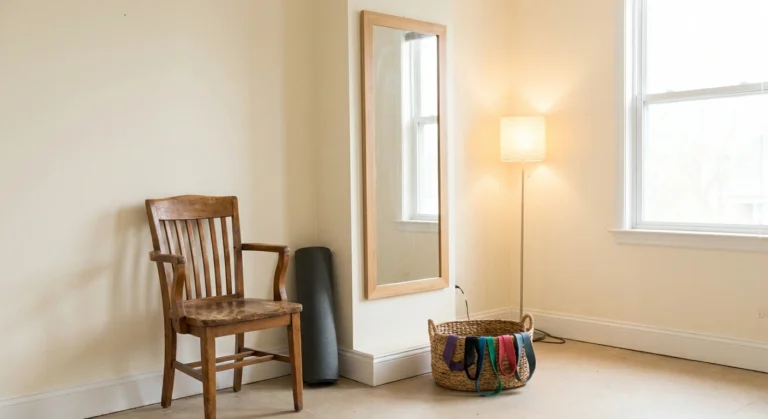
Gather minimal equipment: You don’t need much. A yoga mat (or carpet), a sturdy chair, and a yoga strap (a belt or scarf works fine) are enough to start. As you progress, you might add a bolster or blocks, but they’re not essential.
Track your progress: Keep a simple journal noting which poses you did, how you felt during and after practice, and any changes in your symptoms over time. This helps you identify what works best for your body and provides useful information for conversations with your healthcare team.
Frequently Asked Questions
Can yoga help neuropathy in the feet?
Yoga may help manage neuropathy symptoms in the feet through several mechanisms. Poses that promote blood flow to the lower extremities may support nerve health, while balance poses and toe exercises can help maintain nerve-brain connections in the feet. Yoga will not reverse existing nerve damage, but regular practice may help slow progression and improve your ability to function comfortably. Many people report reduced tingling and improved balance after several weeks of consistent practice.
What type of yoga is best for neuropathy?
Chair yoga, restorative yoga, and gentle hatha yoga are the most recommended styles for people with neuropathy. Chair yoga is ideal for beginners or anyone with significant balance concerns because all poses use a chair for support. Restorative yoga focuses on deep relaxation using props, which can help calm the nervous system and reduce pain. Avoid hot yoga, power yoga, and fast-paced vinyasa classes, as these can increase fall risk and worsen symptoms.
Is yoga safe with peripheral neuropathy?
Yes, yoga is generally safe for people with peripheral neuropathy when practiced with appropriate modifications. The key safety considerations include always having support nearby for balance, avoiding extreme stretches that could damage sensitive nerves, wearing grippy socks if you have reduced foot sensation, and choosing gentle styles rather than vigorous ones. Talk to your healthcare provider before starting, especially if you have significant balance problems or diabetic complications.
How often should you do yoga for neuropathy?
Research studies showing benefits typically involve yoga sessions two to three times per week, lasting 30 to 60 minutes each. However, even 10 to 15 minutes of daily gentle stretching and breathing can be beneficial. Consistency matters more than session length. Start with whatever feels manageable and build gradually over time. Most yoga therapists recommend at least three days per week for noticeable improvements in symptoms and balance.
Can yoga make neuropathy worse?
If practiced incorrectly, yoga could potentially worsen neuropathy symptoms. Overstretching can irritate damaged nerves, and advanced balance poses without support could lead to falls. Hot yoga can worsen autonomic neuropathy symptoms. However, when practiced gently with appropriate modifications, yoga is unlikely to make neuropathy worse. If any pose causes increased pain, numbness, or tingling, stop immediately and modify or skip that pose. The principle is gentle challenge without pushing through pain.
What yoga poses should you avoid with neuropathy?
Avoid unsupported balance poses like tree pose or warrior III until your balance is reliable. Avoid deep forward folds that compress the nerves in your legs, inversions like headstands or shoulder stands that require significant upper body strength and balance, and any pose that requires you to bear weight on numb or tingling hands. Also avoid poses that involve rapid transitions between positions, as the quick movement changes can trigger dizziness or loss of balance when proprioception is impaired.
The Bottom Line
Yoga isn’t going to cure neuropathy. But in my experience — and in the experience of many people in my support group — a gentle, consistent yoga practice can make living with neuropathy more manageable. The improved circulation, better balance, reduced stress, and maintained muscle strength add up to a real difference in daily quality of life.
The beauty of yoga for neuropathy is that it meets you where you are. Whether you’re practicing from a chair or working toward standing poses, every session is an investment in your nervous system’s health. Start gently, be patient with yourself, and give it at least 6–8 weeks before deciding whether it’s helping. Your body didn’t develop neuropathy overnight, and the benefits of movement build gradually too.
As with any new approach to managing your neuropathy, talk with your healthcare provider before you begin. They can help you determine the safest starting point and may even be able to refer you to a yoga therapist with experience in neurological conditions. You deserve every tool that might help — and yoga just might be one worth adding to your collection.
About the Author